

Acceptance- and mindfulness-based interventions for the treatment of chronic pain: a meta-analytic review
Open accessThe DOI matches its Crossref record; 139 of the 141 references it cites were found in a registry or an index, and 1 are not checked yet; 7 of the 23 sources its claims cite were checked for support.
Abstract
The number of acceptance- and mindfulness-based interventions for chronic pain, such as acceptance and commitment therapy (ACT), mindfulness-based stress reduction (MBSR), and mindfulness-based cognitive therapy (MBCT), increased in recent years. Therefore an update is warranted of our former systematic review and meta-analysis of studies that reported effects on the mental and physical health of chronic pain patients. Pubmed, EMBASE, PsycInfo and Cochrane were searched for eligible studies. Current meta-analysis only included randomized controlled trials (RCTs). Studies were rated for quality. Mean quality did not improve in recent years. Pooled standardized mean differences using the random-effect model were calculated to represent the average intervention effect and, to perform subgroup analyses. Outcome measures were pain intensity, depression, anxiety, pain interference, disability and quality of life. Included were twenty-five RCTs totaling 1285 patients with chronic pain, in which we compared acceptance- and mindfulness-based interventions to the waitlist, (medical) treatment-as-usual, and education or support control groups. Effect sizes ranged from small (on all outcome measures except anxiety and pain interference) to moderate (on anxiety and pain interference) at post-treatment and from small (on pain intensity and disability) to large (on pain interference) at follow-up. ACT showed significantly higher effects on depression and anxiety than MBSR and MBCT. Studies’ quality, attrition rate, type of pain and control group, did not moderate the effects of acceptance- and mindfulness-based interventions. Current acceptance- and mindfulness-based interventions, while not superior to traditional cognitive behavioral treatments, can be good alternatives. © 2016 Swedish Association for Behaviour Therapy.
Verified 2026-11-25 · 1 reference not checked yet
Overview
CoChat Summary
TL;DR
This meta-analysis of 25 RCTs (1285 chronic pain patients) found acceptance- and mindfulness-based interventions produced small-to-moderate benefits at post-treatment and generally larger effects at follow-up, especially for pain interference. ACT showed significantly higher effects on depression and anxiety than MBSR/MBCT, but the interventions were not superior to traditional CBT and can be considered good alternatives.
Key findings
- At post-treatment, pooled SMDs were small for pain intensity (.24, 95% CI .06–.42), depression (.43, .18–.68), disability (.40, .01–.79), and quality of life (.44, −.05–.93; p = .08, not significant); moderate for anxiety (.51, .10–.92) and pain interference (.62, .21–1.03).
- At follow-up (2–6 months), effects were small for pain intensity (.41, .14–.68) and disability (.39, .11–.67), moderate for depression (.53, .24–.82), anxiety (.59, .14–1.04), and quality of life (.66, .06–1.26), and large for pain interference (1.05, .55–1.56); all were statistically significant.
- ACT had significantly higher effects than mindfulness-based interventions on depression (SMD .82 vs. .18) and anxiety (SMD .64 vs. −.01).
- Studies’ quality, attrition rate, type of pain, and control group did not moderate effects in the abstract’s summary; subgroup analyses found (M)TAU controls had higher anxiety effects than education/support controls, and medium-quality studies had lower quality-of-life effects than low- or high-quality studies.
Methods
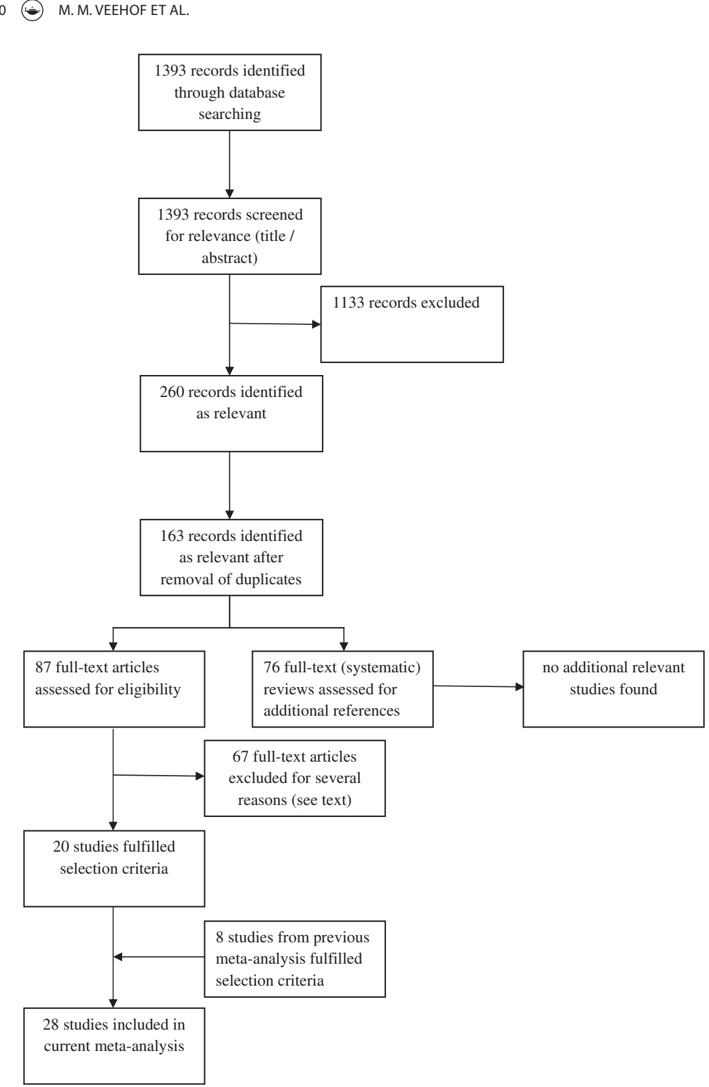
- Systematic review and meta-analysis of randomized controlled trials; searched PubMed, EMBASE, PsycInfo, and Cochrane Central Register of Controlled Trials, updating a prior search up to December 2008 with studies from January 2009 to December 2013, restricted to English-language studies.
- Main analyses included 25 RCTs totaling 1285 chronic pain patients, comparing acceptance- and mindfulness-based interventions (ACT, MBSR, MBCT, and related programs) with waitlist, (medical) treatment-as-usual, or education/support controls; five studies compared interventions with active treatments such as CBT, multidisciplinary treatment, or relaxation.
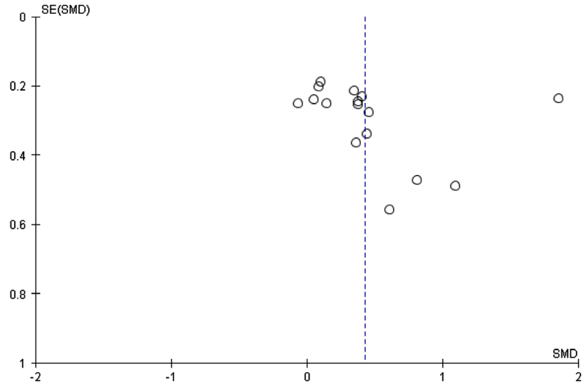
- Pooled standardized mean differences were calculated using a random-effects model; subgroup analyses examined quality score, control group, intervention type, pain type, and attrition rate; methodological quality was assessed with an 8-point scale, and funnel plots assessed publication bias.
Limitations
- The paper states that average study quality did not improve over the past six years, that quality ratings may be underestimated because criteria were scored as unmet when not reported, and that ACT and mindfulness-based treatments could only be compared at post-treatment because too few studies were available for follow-up subgroup analyses.
- The paper also states that a small number of studies were represented in some subgroup analyses.
- Evident from the text: heterogeneity was substantial for several outcomes (e.g., I² = 85% for post-treatment quality of life, 96% for some active-treatment comparisons), pain interference and anxiety had few studies (4 and 6 at post-treatment, respectively), and some indication of publication bias was found for depression.
Model-written summary. Check it against the paper before relying on it.
Integrity signals
Registry
Cites
Statistics
Figures



Verification
Claims the paper makes
6 Valid · 1 Not valid · 13 Not checked · 80 Own results and interpretations
The cited sources support only part of this claim — read each source’s verdict below.
In the paper
“Systematic reviews that qualitatively assess the efficacy of ACT, MBSR and MBCT generally find beneficial effects in chronic pain conditions (Lakhan & Schofield, 2013; McCracken & Vowles, 2014).”
What the sources say
- Partly supportedcites Lakhan & Schofield, 2013 matched to “Mindfulness-Based Therapies in the Treatment of Somatization Disorders: A Systematic Review and Meta-Analysis” (2013) sourceExperimental — accuracy not yet measured
The Discussion and Conclusions report beneficial effects of mindfulness-based therapies, including MBSR and MBCT, for some somatization conditions; pain improvement was clearest for irritable bowel syndrome. The paper does not establish a beneficial effect of ACT specifically, and its findings do not extend uniformly across chronic pain conditions. Page numbers are unavailable in our copy. (LLM, conf=0.86)
- Partly supportedcites McCracken & Vowles, 2014 matched to “Acceptance and commitment therapy and mindfulness for chronic pain: Model, process, and progress.” (2014) sourceExperimental — accuracy not yet measured
The ACT for Chronic Pain section reports positive chronic-pain trials and a meta-analysis finding acceptance- and mindfulness-based treatments at least as effective as traditional CBT. The Mindfulness section also describes symptom and emotional-functioning benefits. But the paper does not establish that qualitative systematic reviews generally found benefits for each of ACT, MBSR, and MBCT in chronic pain; its ACT systematic reviews covered mixed disorders, and the passages found do not address MBCT specifically. (LLM, conf=0.86)
plainstates an association- Asserted: passes — The authors put it forward as true.
- Checkable: passes — It can be checked against evidence.
- Load-bearing: passes — The paper’s conclusions depend on it.
- Based: passes — The paper gives a reason why it holds.
- Partly supported
Every source the paper cites for this claim was checked and supports it.
In the paper
“some impact on pain intensity may be reached because mindfulness skills have been found to influence brain mechanisms that may alter the pain experience (Zeidan et al., 2011).”
What the sources say
- Supportedcites Zeidan et al., 2011 matched to “Brain Mechanisms Supporting the Modulation of Pain by Mindfulness Meditation” (2011) source
The Discussion reports that meditation reduced pain-intensity ratings and links that relief to brain regions involved in cognitive pain modulation. Its section on multiple brain mechanisms specifically associates lower pain-intensity ratings with anterior cingulate and anterior insula activation. This supports the citing sentence’s cautious claim. (LLM, conf=0.93)
hedgedstates a possible cause- Asserted: passes — The authors put it forward as true.
- Checkable: passes — It can be checked against evidence.
- Load-bearing: unclear — It is unclear whether the paper’s conclusions depend on it.
- Based: passes — The paper gives a reason why it holds.
- Supported
Every source the paper cites for this claim was checked and supports it.
In the paper
“However, as is the case for biomedical treatment solutions, effect sizes of CBTs are modest (Williams, Eccleston, & Morley, 2012).”
What the sources say
- Supportedcites Williams, Eccleston, & Morley, 2012 matched to “Psychological therapies for the management of chronic pain (excluding headache) in adults” (2012) source
The Summary of results describes CBT effect sizes as “small to moderate.” The review also reports small effects on pain and disability compared with treatment as usual. The biomedical-treatment comparison is the citing authors’ framing, not a finding attributed to this source. (LLM, conf=0.92)
plain- Asserted: passes — The authors put it forward as true.
- Checkable: passes — It can be checked against evidence.
- Load-bearing: passes — The paper’s conclusions depend on it.
- Based: passes — The paper gives a reason why it holds.
- Supported
Every source the paper cites for this claim was checked and supports it.
In the paper
“Overall, the effect sizes found in this study were at least comparable to those found in a recent meta-analysis of CBT for chronic pain patients (Williams et al., 2012).”
What the sources say
- Supportedcites Williams et al., 2012 matched to “Psychological therapies for the management of chronic pain (excluding headache) in adults” (2012) source
The cited review reports pooled CBT effect sizes for adults with chronic pain in “Cognitive behavioural versus treatment as usual posttreatment,” including SMDs of −0.21 for pain, −0.26 for disability, and −0.38 for mood. It therefore supplies the meta-analysis benchmark cited in the sentence; whether the citing study’s effects are at least comparable depends on that study’s own results, not on this source. (LLM, conf=0.88)
plain- Asserted: passes — The authors put it forward as true.
- Checkable: passes — It can be checked against evidence.
- Load-bearing: passes — The paper’s conclusions depend on it.
- Based: passes — The paper gives a reason why it holds.
- Supported
The cited sources support only part of this claim — read each source’s verdict below.
In the paper
“However, only the effect size of mood was maintained at follow-up (Williams et al., 2012).”
What the sources say
- Partly supportedcites Williams et al., 2012 matched to “Psychological therapies for the management of chronic pain (excluding headache) in adults” (2012) sourceExperimental — accuracy not yet measured
The Summary of results says that, for CBT versus treatment as usual or waiting list, the mood effect was maintained at follow-up while pain and disability effects were not. But the unqualified claim overlooks a different comparison: the Cognitive behavioural versus active control at follow-up section reports a significant disability effect and no significant mood effect. (LLM, conf=0.87)
plain- Asserted: passes — The authors put it forward as true.
- Checkable: passes — It can be checked against evidence.
- Load-bearing: passes — The paper’s conclusions depend on it.
- Based: passes — The paper gives a reason why it holds.
- Partly supported
41 more claims
Create a free account to see all 100 claims and to verify the 1 reference still open.
- It may state two separate claims as one. 29
- Probably not a substantial claim. 30
- Not yet classified. 1
- The quote only partly states this claim. 7
Claims other papers make about this one
Each is checked against this paper’s own text: does it say what the citing paper says it does?
The cited source doesn’t support the claim as written.
In the citing paper
“whereas for the other meta-analysis the effects were non-significant (Veehof et al., 2016).”
From The empirical status of acceptance and commitment therapy: A review of meta-analyses (2020) · cites this paper as Veehof et al., 2016
Checked by a reasoning model — may be wrong.
Experimental — accuracy not yet measuredThe source backs part of the claim, not all of it — or backs it for a different population, condition or comparison.
In the citing paper
“Mindfulness-based interventions have been shown to enhance quality of life in many different chronic conditions (Demarzo et al., 2015; Crowe et al., 2016; Veehof et al., 2016; Haller et al., 2017) and we confirmed this with respect to MS in our study.”
From The effectiveness of a body-affective mindfulness intervention for multiple sclerosis patients with depressive symptoms: A randomized controlled clinical trial (2017) · cites this paper as Veehof et al., 2016
Experimental — accuracy not yet measuredThe source backs part of the claim, not all of it — or backs it for a different population, condition or comparison.
In the citing paper
“Mindfulness-based interventions are a relatively brief and cost-effective psychological treatment that have been shown to reduce depressive symptoms and improve quality of life in patients with several chronic diseases (Hofmann et al., 2010; Crowe et al., 2016; Veehof et al., 2016; Haller et al., 2017).”
From The effectiveness of a body-affective mindfulness intervention for multiple sclerosis patients with depressive symptoms: A randomized controlled clinical trial (2017) · cites this paper as Veehof et al., 2016
Experimental — accuracy not yet measuredThe source backs part of the claim, not all of it — or backs it for a different population, condition or comparison.
In the citing paper
“As such, our findings are in accordance with the theory that being mindful helps one encounter the pain experience without unnecessary elaboration, catastrophizing, or reactivity.10,15,50”
From Mindful attention is inversely associated with pain via mediation by psychological distress in orthopedic patients. (2024) · cites this paper as [50]
Experimental — accuracy not yet measuredThe source backs part of the claim, not all of it — or backs it for a different population, condition or comparison.
In the citing paper
“A meta-analysis defined MBIs with a duration of 2 weeks or less as brief. They were shown to have positive effects on negative affectivity (15).”
From Effects of a Brief Mindfulness-based Intervention in Patients with Psoriasis: A Randomized Controlled Trial (2024) · cites this paper as [15]
Experimental — accuracy not yet measured
65 more claims about this paper
Create a free account to see every claim other papers make about this one.
Self-check
Percentages, sums and reported differences re-computed from the paper’s own numbers.
Each contradiction between two passages listed here was confirmed by an independent check.
Rated major: it would touch a result — a value a result rests on, reported and recomputed p-values on opposite sides of the significance level, two passages that conflict with no sign which is right, or a cited work retracted before this paper was published.
In the paper
§ Follow-up effects
“The effects on anxiety and disability remained moderate with mean SMDs of respectively .59 (95% CI = .14, 1.04) and .39 (95% CI = .11, .67).”
§ Post-treatment effects
“| | Follow-up | 4 | Luciano et al., 2014; Wicksell et al., 2008, 2013; Wong et al., 2011 | χ 2 = 12.07, df = 3 ( p = .007); I 2 = 75% | .57 (.00, 1.14) | Z = 1.97 ( p = .05) |”
Rated major: it would touch a result — a value a result rests on, reported and recomputed p-values on opposite sides of the significance level, two passages that conflict with no sign which is right, or a cited work retracted before this paper was published.
In the paper
§ ABSTRACT
“Studies' quality, attrition rate, type of pain and control group, did not moderate the effects of acceptanceand mindfulness-based interventions.”
§ Subgroup analyses
“Finally, medium quality studies (SMD .17) showed a lower mean effect on quality of life than the low (SMD 1.01) and high (2.33) quality studies.”
Rated major: it would touch a result — a value a result rests on, reported and recomputed p-values on opposite sides of the significance level, two passages that conflict with no sign which is right, or a cited work retracted before this paper was published.
In the paper
§ ABSTRACT
“Studies' quality, attrition rate, type of pain and control group, did not moderate the effects of acceptanceand mindfulness-based interventions.”
§ Subgroup analyses
“Furthermore, studies using a (M)TAU group as the control group (SMD .85) showed a higher mean effect on anxiety than studies using an education/support group as an active control group (SDM .07).”
Rated major: it would touch a result — a value a result rests on, reported and recomputed p-values on opposite sides of the significance level, two passages that conflict with no sign which is right, or a cited work retracted before this paper was published.
In the paper
§ Follow-up effects
“The effects on depression and quality of life (slightly) increased and became moderate with mean SMDs of respectively . 53 (95% CI = .24, .82) and .66 (95% CI = .06, 1.26).”
§ Post-treatment effects
“| | Follow-up | 10 | Zautra et al., 2008 Astin et al., 2003; Luciano et al., 2014; McCracken et al., 2013; Parra-Delgado & Latorre-Posti- go, 2013; Pradhan et al., 2007; Schmidt et al., 2011; Sephton et al., 2007; Wicksell et al., 2008, | χ 2 = 30.65, df = 9 ( p = .0003); I 2 = 71% | .50 (.19, .80) | Z = 3.22 ( p = .001) |”
Rated minor: it would not touch a result — a value no result rests on, a p-value that stays on the same side of the significance level, or a conflict that is clerical, resolved elsewhere in the paper, or outside its own findings.
In the paper
§ Main findings
“the current meta-analysis which showed that the effects on all outcomes, except pain intensity, increased at follow-up.”
§ Follow-up effects
“The effects on anxiety and disability remained moderate with mean SMDs of respectively .59 (95% CI = .14, 1.04) and .39 (95% CI = .11, .67).”
1 more finding
Create a free account to see every finding of this check.
Citations
Cites
Statistical Power Analysis for the Behavioral Sciences (2nd ed.).
Lachenbruch, P. A., & Cohen, J. (1989) · Journal of the American Statistical Association · doi:10.2307/2290095 · Cited by 37,395 · cited 2×
“Cohen (Cohen, 1977) has described effect sizes .”
BackgroundStatistical Power Analysis for the Behavioral Sciences
Cohen, J. (2013) · doi:10.4324/9780203771587 · Cited by 25,373
Cochrane Handbook for Systematic Reviews of Interventions: Cochrane Book Series
(2008) · doi:10.1002/9780470712184 · Cited by 25,048
Assessing the quality of reports of randomized clinical trials: Is blinding necessary?
Jadad, A. R., Moore, R. A., Carroll, D., Jenkinson, C., Reynolds, D. J. M., Gavaghan, D. J., & McQuay, H. J. (1996) · Controlled Clinical Trials · doi:10.1016/0197-2456(95)00134-4 · Cited by 17,582 · cited 1×
“Methodological quality of included studies was independently assessed by two reviewers (MV and KS) using a 8-point scale, based on criteria by the Cochrane Collaboration (Higgins & Altman, 2008) and the validated Jadad scale (Jadad, 1996) tailored for the included studies (see Table 1).”
MethodUsing Self-Report Assessment Methods to Explore Facets of Mindfulness
Baer, R. A., Smith, G. T., Hopkins, J., Krietemeyer, J., & Toney, L. (2006) · Assessment · doi:10.1177/1073191105283504 · Cited by 7,511
(2008) · Medical Entomology and Zoology · Cited by 7,477
Acceptance and commitment therapy: model, processes and outcomes
Hayes, S. C., Luoma, J. B., Bond, F. W., Masuda, A., & Lillis, J. (2006) · Behaviour Research and Therapy · doi:10.1016/j.brat.2005.06.006 · Cited by 6,587
Shapiro, S. L., Carlson, L. E., Astin, J. A., & Freedman, B. (2006) · Journal of Clinical Psychology · doi:10.1002/jclp.20237 · Cited by 4,002
The effect of mindfulness based therapy on anxiety and depression: A meta analytic review
Hofmann, S. G., Sawyer, A. T., Witt, A. A., & Oh, D. (2010) · Journal of Consulting and Clinical Psychology · doi:10.1037/a0018555 · Cited by 3,846
(2008) · Cited by 3,790
Research works printed but not linked: 6
- Martin, K. L. (2012). The influence of pain avoidance on the experience of mindfulness training (Published doctoral dissertation). San Diego, CA: Alliant International University.
- Nash-Mc Feron, D. E. (2006). Mindfulness in the treatment of chronic headache pain. Dissertation Abstracts International: Section B: The Sciences and Engineering, 67 , 2841.
- Trompetter, H. R., Bohlmeijer, E. T., Fox, J.-P ., Schreurs, K. M. G. (2015). Psychological flexibility and catastrophising as associated change mechanisms during an online acceptance-based intervention for chronic pain. In H. Trompetter (Ed.), ACT with pain. Measurement, efficacy and mechanisms of acceptance & commitment therapy. (Unpublished disseration). Enschede: University of Twente.
- Vernon, A. D. (2011). Paying attention to values instead of pain: Chronic pain and neuropsychological functioning, as potentially mediated by acceptance of pain (Published doctoral dissertation). Berkely, CA: Wright Institute Graduate School of Psychology.
- Wicksell, R. K., Kemani, M., Jensen, K., Kosek, E., Kadetoff, D., Sorjonen, K., Ingvar, M. (2013). Acceptance and commitment therapy for fibromyalgia: A randomized controlled trial. European Journal of Pain, 17 , 599-611. · doi:10.1002/ejp.2013.17.issue-4
- Wong, C. M. (2009). Four-step mindfulness-based therapy for chronic pain: A pilot randomized controlled trial (Unpublished doctoral dissertation). The Chinese University of Hong Kong, Hong Kong.
Cited by
Items 501–600 of 731
Samperio, G. (2023) · MLS Psychology Research · doi:10.33000/mlspr.v6i1.1287 · Cited by 6
Pham, T. V., Kincade, M., & Vranceanu, A. (2023) · PubMed · Cited by 5
Meditation-Based Therapies for Chronic Neuropathy: A Systematic Review and Meta-Analysis
Babos, C. I., Leucuta, D., & Dumitrascu, D. L. (2024) · Cureus · doi:10.7759/cureus.68226 · Cited by 4
“Another shortcoming was the small number of subjects (20-40 patients) involved in some studies [27,29,32,33]; nevertheless, this kind of review helps to limit this by assessing more studies at once.”
BackgroundOther Psychiatric Disorders, Psychosocial Factors, Sleep, and Pain
Bair, M. J., & Owen‐Smith, A. A. (2024) · Oxford University Press eBooks · doi:10.1093/9780197675250.003.0006 · Cited by 5
Raasthøj, I., Jarbøl, D. E., Rasmussen, S., Carstensen, T. B. W., & Rosendal, M. (2024) · General Hospital Psychiatry · doi:10.1016/j.genhosppsych.2024.10.005 · Cited by 2
Hansen, K. A., Blakeney, E. A., & Price, C. J. (2025) · Global Advances in Integrative Medicine and Health · doi:10.1177/27536130251319244 · Cited by 3
Rhudy, J. L., Shadlow, J. O., Lowe, T. S., Stephens, L. D., Zvolensky, M. J., Garey, L., Kendzor, D. E., & Businelle, M. S. (2025) · Journal of Pain · doi:10.1016/j.jpain.2025.105329 · Cited by 2
Acceptance and Commitment Therapy for Co-occurring Mental and Chronic Health Conditions
Dindo, L. N., & Shanahan, M. L. (2025) · Psychiatric Clinics of North America · doi:10.1016/j.psc.2025.02.013 · Cited by 3
Yamin, J. B., Wilson, J. M., Pester, B., Allen, C., Yoon, J., Cornelius, M. C., Dharmendran, D., Steinhilber, K., Crago, M. A., Kazemipour, S., et al. (2025) · Frontiers in Pain Research · doi:10.3389/fpain.2025.1558753 · Cited by 2
“While these improvements may re fl ect the natural course of post-surgical recovery, they are consistent with prior research suggesting that ACT may be bene fi cial for pain management (18).”
Secular Mindfulness-Based Interventions: Efficacy and Neurobiology
Schmidtman, E. A., Hurley, R. A., & Taber, K. H. (2017) · Journal of Neuropsychiatry · doi:10.1176/appi.neuropsych.17020034 · Cited by 6
Lee, C.-H. (2019) · Journal of the Korea Academia-Industrial cooperation Society · doi:10.5762/kais.2019.20.5.109 · Cited by 2
“히 사용되고 있는 인지행동중재는 정신분석, 목표설정, 주의 전환, 문제 해결, 자기주장 훈련, 재발 관리와 같은 전략으로 행동 및 태도 변화에 도움을 준다[17].”
Zinzow, H. M., Shi, L., Rennert, L., Chen, L., Lopes, S. S., Zhang, L., Jones, K. O., Jindal, M., Stam, C., & Mclain, M. (2020) · Contemporary Clinical Trials · doi:10.1016/j.cct.2020.106182 · Cited by 3
Psychological approaches to chronic pain management: where are we coming from and where might we go?
McCracken, L. M. (2018) · Revista de la Sociedad Española del Dolor · doi:10.20986/resed.2017.3606/2017 · Cited by 2
“In other systematic reviews, including in both cases meta-analyses, the benefits of acceptance and mindfulness-based approaches (36) and ACT (37) have been supported.”
BackgroundMousavi, S. M., Shabahang, R., & Khodadadi‐Hassankiadeh, N. (2019) · Caspian Journal of Neurological Sciences · doi:10.32598/cjns.5.18.118 · Cited by 3
“Several other studies also reported the positive effects of ACT on QOL [3134], anxiety symptoms, psychological strains and distress [32-34], and depression [24].”
ResultBaghernezhad, O., Hasanzadeh, R., & Abbasi, G. (2019) · Avicenna Journal of Neuro Psych Physiology · doi:10.32598/ajnpp.4.3.320 · Cited by 2
“[26] have shown that unlike other medicinal practices, the therapy has a profound impact on decreasing pain catastrophizing experience among patients.”
BackgroundMcMindfulness in the Era of Accelerated Life
Nielsen, K. (2021) · International Review of Theoretical Psychologies · doi:10.7146/irtp.v1i1.127078 · Cited by 2
Morone, N. E., Belnap, B. H., Huang, Y., Abebe, K. Z., Rollman, B. L., & Jonassaint, C. R. (2021) · Psychosomatic Medicine · doi:10.1097/psy.0000000000000980 · Cited by 2
“Future studies should explore whether other behavioral treatment approaches that are effective for pain and mental health, such as mindfulness-based stress reduction or acceptance and commitment therapy, may be more effective for patients who do not respond to cCBT (46).”
BackgroundComprehensive Rehabilitation of Patients with Complex Regional Pain Syndrome
Hudson, J., Lake, E. S., Spruit, E., Terrell, M., Cooper, K., McFawn, C., & Gut, N. (2021) · Springer eBooks · doi:10.1007/978-3-030-75373-3_7 · Cited by 2
Introduction to Acceptance and Commitment Practices
Holland, M. L., Brock, S. E., Oren, T., & van Eckhardt, M. (2021) · Springer eBooks · doi:10.1007/978-3-030-83492-0_2 · Cited by 4
Interdisciplinary Pain Management
Robinson, R. C. (2022) · Springer eBooks · doi:10.1007/978-3-031-04990-3_9 · Cited by 2
The missing mechanistic link: Improving behavioral treatment efficacy for pediatric chronic pain
Jotwani, M. L., Wu, Z., Lunde, C. E., & Sieberg, C. B. (2022) · Frontiers in Pain Research · doi:10.3389/fpain.2022.1022699 · Cited by 3
Montesinos, F., Calderón, C., & Lobato, D. (2023) · Análisis y Modificación de Conducta · doi:10.33776/amc.v49i179.7585 · Cited by 5
Hijne, K., Gerritsen, L., Pinto, A. M., da Silva, J. A. P., van der Sluijs, J. F. V. E., & Geenen, R. (2023) · International Journal of Clinical and Health Psychology · doi:10.1016/j.ijchp.2023.100420 · Cited by 2
“Soothing influences, in turn, may be reinforced by third-wave cognitive-behavioral therapies, such as acceptance and compassion-based therapies, which have shown promising results (Austin et al., 2021; Veehof et al., 2016).”
BackgroundThe Biopsychosocial Understanding of Pain and Chronicity: History and Implications
Kaiser, U., Williams, A. C. D. C., & Kappesser, J. (2020) · Elsevier eBooks · doi:10.1016/b978-0-12-809324-5.24247-8 · Cited by 3
Does Cognitive Behavioral Therapy increase acceptance of chronic pain amongst veterans?
Cosio, D., & Ariel-Donges, A. H. (2020) · Journal of Behavioral and Cognitive Therapy · doi:10.1016/j.jbct.2020.04.002 · Cited by 3
Fostering positive emotion through self-compassion in individuals with chronic pain.
Ellsworth, M. (2018) · ThinkIR: The University of Louisville's Institutional Repository (University of Louisville) · doi:10.18297/etd/3009 · Cited by 3
Kang, H.-S., Hwang, S.-D., & Jun, S.-E. (2019) · Journal of Korean Academy of Psychiatric and Mental Health Nursing · doi:10.12934/jkpmhn.2019.28.3.271 · Cited by 1
The Future of Pain Management and Research: A Dose of Fatalism May Be Good for One's Health
Fraser, J. L. (2019) · Pain Medicine · doi:10.1093/pm/pnz047 · Cited by 1
Mindfulness-Based Interventions for Psychiatry
Ivkovic, A., Evans, S., Mirsky, P., Ashar, Y. K., & Muskin, P. R. (2024) · Tasman’s Psychiatry · doi:10.1007/978-3-030-51366-5_159 · Cited by 1
Central sensitization in chronic lumbar spine pain – possibilities of therapeutic interventions
Kosińska, B., Turczyn, P., Wesołowski, K., Tarnacka, B., & Malec‐Milewska, M. (2020) · Ból · doi:10.5604/01.3001.0014.5098 · Cited by 1
Behavioral Management for Pain in Pregnancy
Jackson, V., Ivan, I. G. I., & Choe, K. (2022) · Springer eBooks · doi:10.1007/978-3-031-06322-0_5 · Cited by 3
Södermark, M. (2023) · Linköping University medical dissertations · doi:10.3384/9789180753692 · Cited by 3
Updates in the Management of Chronic Pancreatitis
Vaněk, P., & Freeman, M. L. (2024) · Gastroenterology Clinics of North America · doi:10.1016/j.gtc.2024.08.008 · Cited by 4
Using PROMIS Methodology to Create Self-Report Measures of Mindfulness and Related Concepts
Victorson, D. E., Morone, N. E., Pilkonis, P. A., Schalet, B. D., Yu, L., Jackson, K., Dodds, N. E., Horowitz, B., Johnston, K. L., McFarland, C. E., et al. (2024) · Global Advances in Integrative Medicine and Health · doi:10.1177/27536130241290771 · Cited by 1
“8 Research evidence for the ef fi cacy of MBSR and other MBIs for improving health is mounting, particularly in the areas of chronic pain reduction, 9,10 improvement in quality of life, 11-13 and reduction of symptoms of depression and anxiety.”
Pavlacic, J. M., Meredith, L. R., Boylan, A. M., Kilpatrick, R. L., Abrams, C. M., & Rheingold, A. A. (2024) · Psychology Health & Medicine · doi:10.1080/13548506.2024.2411637 · Cited by 1
“One cognitive-behavioral, evidence-based strategy facilitating pain reduction is mindfulness (Veehof et al., 2016).”
To Move or Not to Move: Factors of Mind–Body Practice Engagement in a Population-Based Study
To, M. N., Nicotera, N., & Wang, K. (2024) · Journal of Integrative and Complementary Medicine · doi:10.1089/jicm.2024.0288 · Cited by 1
The Role of Psychologists in Treating Pelvic Pain Conditions
Gernand, A. K., Allen, D. L., Lupe, S. E., & Simons, M. L. (2025) · Clinics in Colon and Rectal Surgery · doi:10.1055/s-0045-1804499 · Cited by 2
Psychological and behavioural interventions delivered by non-psychologists
Main, C. J., Ballengee, L. A., & Beneciuk, J. M. (2025) · Current Opinion in Psychology · doi:10.1016/j.copsyc.2025.102008 · Cited by 2
Bindicsova, I., Hides, L. M., Brain, K., Hodson, F. J., Jackson, P., Jensen, M. P., Ehde, D. M., & Day, M. A. (2025) · Journal of Pain · doi:10.1016/j.jpain.2025.105429 · Cited by 3
Simione, L. (2025) · European Burn Journal · doi:10.3390/ebj6020025 · Cited by 2
“This can lead to a reduction in the perceived intensity of pain and an increase in pain tolerance [40,41].”
Pain Reprocessing Therapy – Schmerz neu denken
Kallweit, A., & Schubiner, H. H. (2025) · Der Schmerz · doi:10.1007/s00482-025-00889-3 · Cited by 3
Brotto, L. A., Zdaniuk, B., Slonecker, P., Sears, C. S., & Walker, L. M. (2025) · The Journal of Sex Research · doi:10.1080/00224499.2025.2550057 · Cited by 1
“Improvements in chronic pain acceptance are also found to mediate other types of chronic pain following mindfulness treatment (Day & Thorn, 2016; Veehof et al., 2016).”
Galiana, L., Sánchez‐Ruiz, J., Vidal‐Blanco, G., Guillén-Solà, M., & Sansó, N. (2025) · Mindfulness · doi:10.1007/s12671-025-02663-z · Cited by 1
“…of other basic abilities for healthcare practitioners (i.e., compassion, empathy, and a greater attunement to the patients’ needs), health-care institutions host a myriad of mindfulness-based interventions (Bartels-Velthuis et al., 2020; Cohen & Miller, 2009; Creswell, 2017; Veehof et al., 2016).”
Sanabria‐Mazo, J. P., Rodríguez‐Freire, C., Gallego, A., Feliu‐Soler, A., Suso‐Ribera, C., García‐Palacios, A., Hayes, S. C., Hofmann, S. G., Ciarrochi, J., McCracken, L. M., et al. (2025) · International Journal of Cognitive Behavioral Therapy · doi:10.1007/s41811-025-00268-x · Cited by 1
“…functional capacity (Yang et al., 2022), pain acceptance (Trindade et al., 2021), and psychological flexibility (Hughes et al., 2017), while also reducing pain intensity (Rosser et al., 2023), pain interference (Veehof et al., 2016), anxiety (Gandy et al., 2022), and depression (Lai et al., 2023).”
Foustoukos, T. L., Leclercq, I., Blanchard, M., & Hügle, T. (2026) · Interactive Journal of Medical Research · doi:10.2196/67523 · Cited by 3
Episodic Memory, Chiari I Malformation, Personality and Coping: The Role of Chronic Pain
Allen, P. A., Kaut, K. P., Houston, J. R., Houston, M. L., Rabinowitz, E. P., Delahanty, D. L., & Klinge, P. M. (2025) · Behavioral Sciences · doi:10.3390/bs15121678 · Cited by 1
“One of the most widely used interventions for chronic pain is Acceptance and Commitment Therapy (ACT) (Trindade et al., 2021; Veehof et al., 2016; Wicksell et al., 2013).”
Yu, X., & Potts, G. F. (2025) · Clinical EEG and Neuroscience · doi:10.1177/15500594251393583 · Cited by 1
Nooshazari, S., Khodabakhshi‐Koolaee, A., & Falsafinejad, M. R. (2025) · Preventive Care In Nursing and Midwifery Journal · doi:10.61882/pcnm.15.2.3 · Cited by 2
Ristau, J., Okobi, A., Miller, M. J., Cheng, J., Deviren, S., Schwarz, E. B., Fairchild, T., Tsoh, J. Y., Aguilera, A., Zheng-Huang, C. J., et al. (2026) · Trials · doi:10.1186/s13063-025-09402-8 · Cited by 1
“Acceptance and mindfulness-based interventions (MBI) have also received broad support, but access has been even more limited [27, 28, 36–43].”
Brennan, E., Dempster, M., Maguire, J., & Cross, J. (2026) · Psychology Health & Medicine · doi:10.1080/13548506.2025.2604273 · Cited by 2
WALSH, E. O., Hart, K., & Förster, B. (2026) · European Journal of Pain · doi:10.1002/ejp.70239 · Cited by 3
Sanabria‐Mazo, J. P., Rodríguez‐Freire, C., Royuela-Colomer, E., Ponce‐López, P., Alonso‐Coello, P., Barrios, V., Navarrete, J., Pérez‐Aranda, A., McCracken, L. M., & Luciano, J. V. (2026) · European Journal of Pain · doi:10.1002/ejp.70342 · Cited by 1
“…MBIs (Hilton et al. 2017; Lai et al. 2023; Martinez-Calderon et al. 2024; Sanabria-Mazo, Colomer-Carbonell, Fernández-Vázquez, et al. 2023; Veehof et al. 2016; Williams et al. 2020) and on psychological flexibility (Ding and Zheng 2022; Fang and Ding 2022) in chronic pain populations.”
InfluentialSolli DPS, N., & Vøllestad, J. (2018) · Scandinavian Psychologist · doi:10.15714/scandpsychol.5.e1 · Cited by 4
Behavioral Health and Chronic Pain
Iezzi, T., Duckworth, M. P., Carlson, G. E., & Turk, D. C. (2018) · Springer eBooks · doi:10.1007/978-3-319-93003-9_15 · Cited by 1
Watson, N., Demetriou, G., Cole, D., Hassenkamp, A.-M., & Thomson, D. (2019) · European Journal of Physiotherapy · doi:10.1080/21679169.2019.1598487 · Cited by 3
“One such psychological intervention is mindfulness and this is increasingly being used in health care to assist patients in managing pain, stress and anxiety and in targeting additional health, wellness and quality of life outcomes [4,5].”
BackgroundDevelopment and preliminary validation of the Chronic Pain Acceptance Questionnaire for Clinicians
Rabey, M. I., Catley, M. J., Vowles, K. E., Appleton, D., Bennett, R., & McAuley, J. H. (2020) · Scandinavian Journal of Pain · doi:10.1515/sjpain-2019-0169 · Cited by 1
“There is evidence that acceptance based interventions lead to small to moderate improvements in disability, depression, pain interference and health-related quality of life [14].”
BackgroundZuhury, S., Mason-Robbie, V., & Walklet, E. (2021) · Health Psychology Update · doi:10.53841/bpshpu.2021.30.1.14 · Cited by 1
Scott, W., & McCracken, L. M. (2019) · Cited by 1
Mannes, Z. L., Ferguson, E. G., Ennis, N., Hasin, D. S., & Cottler, L. B. (2021) · Journal of Clinical Sport Psychology · doi:10.1123/jcsp.2020-0061 · Cited by 2
Fonia, D., & Aisenberg-Shafran, D. (2022) · Journal of Clinical Psychology in Medical Settings · doi:10.1007/s10880-022-09911-7 · Cited by 2
“, 2008), and third-wave cognitive-behavioral therapies were found to be effective in chronic pain (Veehof et al., 2016).”
BackgroundThe effect of mindfulness meditation on the perceived duration of pain
Piovesan, A., Mirams, L., Poole, H. M., & Ogden, R. (2022) · Journal of Cognitive Psychology · doi:10.1080/20445911.2022.2154780 · Cited by 1
“…have been found to reduce perceived pain intensity in clinical settings with effect sizes ranging from small to moderate (Lakhan & Schofield, 2013; Veehof et al., 2016), independently of whether patients received the intervention via face-to-face or via videoconference (Gardner-Nix et al., 2008).”
BackgroundResultInfluentialArbeit mit Kognitionen, Emotionen und Verhalten in der Therapie chronischer Schmerzen
Rösel, S., & Burian, R. (2023) · Manuelle Medizin · doi:10.1007/s00337-023-00979-2 · Cited by 1
Mindfulness-Based Group Therapy for Chronic Pain Management in Older Adults
Foulk, M. A., Montagnini, M., Fitzgerald, J. T., & Ingersoll‐Dayton, B. (2023) · Clinical Gerontologist · doi:10.1080/07317115.2023.2229307 · Cited by 6
Pavlova, M., Kohut, S. A., Jordán, I., Sumpton, J. E., Schraeder, K. E., Orr, S. L., Craddock, L., Noel, M. E., & Birnie, K. A. (2024) · Clinical Practice in Pediatric Psychology · doi:10.1037/cpp0000525 · Cited by 3
Hooker, J. E., Doorley, J. D., Greenberg, J., Bakhshaie, J., Manglani, H. R., Briskin, E. A., & Vranceanu, A. (2024) · Neuro-Oncology Practice · doi:10.1093/nop/npae084 · Cited by 1
Borsutzky, S., Wilke, A.-S., Gehlenborg, J., & Moritz, S. (2025) · Frontiers in Psychiatry · doi:10.3389/fpsyt.2025.1528128 · Cited by 1
Patterson, S. L., Ruvalcaba, D., Issa, A., Rai, K., Katz, P., & Koenig, C. J. (2025) · The Journal of Rheumatology · doi:10.3899/jrheum.2024-1218 · Cited by 1
Practical Psychosocial Management of Urologic Chronic Pelvic Pain Syndromes
Tripp, D. A., Muere, A., & Nickel, J. C. (2017) · Springer eBooks · doi:10.1007/978-3-319-48464-8_3 · Cited by 1
Addressing Host Factors: Primary, Secondary, and Tertiary Prevention of Opioid Dependence
McAnally, H. B. (2017) · Springer eBooks · doi:10.1007/978-3-319-47497-7_11 · Cited by 2
Achtsamkeit in der Schmerztherapie
Diezemann, A. (2017) · PiD - Psychotherapie im Dialog · doi:10.1055/s-0043-118254 · Cited by 1
Identifying the features of partner acceptance of arthritis: A qualitative analysis
Gullickson, K. M., & LaChapelle, D. L. (2018) · Canadian Journal of Pain · doi:10.1080/24740527.2018.1485482 · Cited by 1
Acceptance and commitment therapy
Schreurs, K. M. G., Baalen, B. V., & Heuts, P. H. T. G. (2019) · Bohn Stafleu van Loghum eBooks · doi:10.1007/978-90-368-2230-5_18 · Cited by 1
Self-citationTreating chronic pain and opioid misuse disorder among underserved populations in Colorado
Medina, R., Sorrell, T. R., Techau, A., & Weiss, J. (2019) · Journal of the American Association of Nurse Practitioners · doi:10.1097/jxx.0000000000000238 · Cited by 1
Anggraini, R., & Retnaningsih (2018) · Jurnal Psikologi · doi:10.35760/psi.2018.v11i1.2076 · Cited by 1
Pain-Induced Alcohol Urge and Intention to Drink: the Role of Dispositional Mindfulness
Moskal, D., Víta, M., & Maisto, S. A. (2019) · Mindfulness · doi:10.1007/s12671-019-01272-x · Cited by 2
Gujare, S. R., & Borkar, P. (2020) · International Journal of Advanced Research · doi:10.21474/ijar01/10379 · Cited by 3
“At post treatment, small outcome was found for pain intensity, depression, disability and quality of life; and moderate effects for anxiety and pain-interference (17) .”
BackgroundNeural mechanisms in chronic pain relevant for psychiatric interventions
Berna, C., & Tracey, I. (2020) · doi:10.1093/med/9780198713005.003.0130 · Cited by 2
Acute and Chronic Pain Management in Children
Cohen, L. L., Bishop, M., Shneider, C. E., Robbertz, A. S., & Sil, S. (2020) · Issues in clinical child psychology · doi:10.1007/978-3-030-44226-2_17 · Cited by 3
Scott, W., Badenoch, J., del Solar, M. G. C. M., Brown, D. A., Kemp, H. I., McCracken, L. M., Williams, A. C. D. C., & Rice, A. S. C. (2021) · Scandinavian Journal of Pain · doi:10.1515/sjpain-2020-0149 · Cited by 1
“Meta-analyses of 25 RCTs showed that acceptance and mindfulness-based treatments are similarly associated with small to moderate improvements in pain, disability, and mood [21].”
Sahni, S., & Khan, J. S. (2021) · IntechOpen eBooks · doi:10.5772/intechopen.96546 · Cited by 2
Acceptance and Commitment Therapy and Other Third Wave Therapies
Gould, R. L., & Wetherell, J. L. (2020) · Elsevier eBooks · doi:10.1016/b978-0-12-818697-8.00024-8 · Cited by 6
Behavioral Health Interventions for CRPS
Richardson, P. A., Poupore‐King, H., Griffin, A. T., Cooley, C., & Bhandari, R. P. (2021) · Springer eBooks · doi:10.1007/978-3-030-75373-3_6 · Cited by 1
Spiritual Knowledge and Practices to Conquer Chronic Pain: A Systematic Review
Salgaonkar, S. V., Shetty, Y. C., & Singh, V. (2021) · Indian Journal of Pain · doi:10.4103/ijpn.ijpn_114_20 · Cited by 3
Karimi, M., Bagajan, K. Q., Naghsh, Z., Ghazaghi, T., & Malekzadeh, L. (2021) · Scientific Journal of Kurdistan University of Medical Sciences · doi:10.52547/sjku.26.4.117 · Cited by 1
Nagy, I., Zsido, A. N., & Teleki, S. Á. (2022) · Mentálhigiéné és Pszichoszomatika · doi:10.1556/0406.23.2022.005 · Cited by 1
Mindfulness-Based Interventions
Carlson, L. E., Moran, C., & Baydoun, M. (2022) · Oxford University Press eBooks · doi:10.1093/med/9780197583838.003.0038 · Cited by 2
Moving away from medicines: an overview of chronic pain management
Bacchus, C. (2023) · Nursing Standard · doi:10.7748/ns.2023.e11957 · Cited by 1
Tatta, J. (2022) · Internet Journal of Allied Health Sciences and Practice · doi:10.46743/1540-580x/2022.2061 · Cited by 3
Mindfulness-Based Interventions for Psychiatry
Ivkovic, A., Evans, S., Mirsky, P., Ashar, Y. K., & Muskin, P. R. (2023) · Springer eBooks · doi:10.1007/978-3-030-42825-9_159-1 · Cited by 1
Nielsen, K., & Lind, A. B. (2016) · Nordiske Udkast · doi:10.7146/nu.v44i2.141515 · Cited by 2
Douleur chronique et thérapies comportementales et cognitives (TCC)
Aguerre, C., & Henry, F. (2021) · In Press eBooks · doi:10.3917/pres.laroc.2021.01.0031 · Cited by 1
The effect of pain on human time perception
Piovesan, A. (2019) · Liverpool John Moores University · doi:10.24377/ljmu.t.00010884 · Cited by 2
Components of Psychological Flexibility and Inflexibility That Predict Risk-Taking Behaviors
Upton, S. R. (2020) · Louisiana State University · doi:10.31390/gradschool_dissertations.5306 · Cited by 1
Editorial: Neuromodulatory Interventions for Pain
Thompson, T., Heathcote, L. C., Hobson, H., & Solmi, M. (2021) · Frontiers in Neuroscience · doi:10.3389/fnins.2021.746328 · Cited by 1
“The opioid crisis has prompted a renewed interest in non-pharmacological interventions for pain, with recent promising evidence for their effectiveness (Pillai Riddell et al., 2015; Veehof et al., 2016; Thompson et al., 2017, 2019; Franco et al., 2018; Owen et al., 2020).”
BackgroundEngaging with EPIO, a digital pain self-management program: A qualitative studyPreprint
Bostrøm, K., Varsi, C., Eide, H., Børøsund, E., Kristjánsdóttir, Ó. B., Schreurs, K. M. G., Waxenberg, L. B., Weiss, K. E., Morrison, E. J. P., Nordang, E. F., et al. (2021) · Research Square · doi:10.21203/rs.3.rs-952389/v1 · Cited by 1
Self-citationAttrition Rates in Mindfulness-Based Interventions for Chronic Pain: A Meta-AnalysisPreprint
Wang, M. Y., Perera, M. P. N., Fitzgerald, P. B., Bailey, N. W., & Fitzgibbon, B. M. (2025) · bioRxiv (Cold Spring Harbor Laboratory) · doi:10.1101/2025.05.26.656251 · Cited by 1
CHARACTERISTICS OF MINDFULNESS BASED INTERVENTIONS FOR DIFFERENT PATIENT GROUPS – LITERATURE REVIEW
Majore-Dūšele, I., Paiča, I., Mārtinsone, K., & Millere, I. (2018) · SOCIETY. INTEGRATION. EDUCATION. Proceedings of the International Scientific Conference · doi:10.17770/sie2018vol1.3298 · Cited by 1
Kwon, C.-Y., Choi, E., Chung, S.-Y., & Kim, J.-W. (2016) · Journal of Oriental Neuropsychiatry · doi:10.7231/jon.2016.27.2.103
Mindfulness, pijn en gezondheid
van Burken, P. (2017) · Bohn Stafleu van Loghum eBooks · doi:10.1007/978-90-368-0699-2_8
Kabat-Zinn over mindfulness bij pijn
van Burken, P. (2017) · Bohn Stafleu van Loghum eBooks · doi:10.1007/978-90-368-0699-2_7
Metadata
- Authors
- Veehof, M. M., Trompetter, H. R., Bohlmeijer, E. T., & Schreurs, K. M. G.
- Affiliations
- Medisch Spectrum Twente (NL)
- University of Twente (NL)
- Roessingh Research and Development (NL)
- Corresponding author
- Schreurs, K. M. G.
- Venue
- Cognitive Behaviour Therapy
- Publisher
- Informa UK Limited
- Published
- 2016-01-02
- Volume
- 45
- Issue
- 1
- Pages
- 5-31
- ISSN
- 1650-6073 (ISSN-L)
- 1651-2316
- OpenAlex
- W2254182258
- Semantic Scholar
- e6ce9512bc205dfdbae68c8909df568fb0379e2d
- Cited by
- 737
- References
- 137
- Citations by year
- 2026: 48 · 2025: 64 · 2024: 55 · 2023: 77 · 2022: 90 · 2021: 96 · 2020: 102 · 2019: 74 · 2018: 60 · 2017: 50 · 2016: 19
- FWCI
- 10.02
- Type
- journal article
- Language
- en
- Open access
- hybrid
- doi.org
- Licence
- Locations
- Cognitive Behaviour Therapy (publishedVersion, cc-by-nc-nd)
- PubMed (publishedVersion)
- University of Twente Research Information (publishedVersion, other-oa)
- University of Twente Research Information (submittedVersion, other-oa)
- Topics
- Social Sciences › Psychology › Clinical Psychology › Mindfulness and Compassion Interventions
- Health Sciences › Health Professions › Physical Therapy, Sports Therapy and Rehabilitation › Musculoskeletal pain and rehabilitation
- Life Sciences › Neuroscience › Cognitive Neuroscience › Pain Management and Placebo Effect
- Keywords
- acceptance and commitment therapy, mindfulness-based stress reduction, mindfulness-based cognitive therapy, chronic pain, pain intensity, pain interference, depression, anxiety, disability, quality of life, psychological intervention
- MeSH terms
- Humans, Treatment Outcome, Chronic Pain, Mindfulness, Acceptance and Commitment Therapy
About these checks
Registry, retraction, Cites and statistics results are computed, not judged, with one exception: a printed reference that no index lists is read once by a model before it counts as a citation error. Claims are extracted by a model and kept only when their quote appears verbatim in the text; each cited source is then checked, with a model’s help, for whether it says what the claim relies on. Those verdicts can be wrong — read the claim’s quote and the cited source before relying on one.
The claim verdicts this report counts are experimental: their accuracy is not yet measured.
A language model drew the claims from the paper on 2026-09-28, under version 3 of the claim definition (model deepseek-v4.1-flash, prompt extract-v3).
A second model labelled each claim on 2026-09-28 (model jev-1.13-20260917, definition revision gold-guideline-v0.2).
Cited sources are checked with a language model’s help (gpt-6-sol).
Statistics and arithmetic are recomputed, not judged.
Confidence bands are shown only for fields calibrated on our annotated test set. None is calibrated yet, so no band is shown.
What counts as a claim ›How we measure confidence ›How we check this ›
Are you an author, or do you see a problem with this page? Request a review
Data sources
Bibliographic data: Semantic Scholar, OpenAlex, Crossref.
Contains information from the Semantic Scholar Academic Graph Datasets, made available under the ODC Attribution License (ODC-BY 1.0).
Semantic Scholar’s data is described in: Kinney, R., et al. (2023). The Semantic Scholar Open Data Platform. arXiv:2301.10140.
