

Acceptance- and mindfulness-based interventions for the treatment of chronic pain: a meta-analytic review
Open accessThe DOI matches its Crossref record; 139 of the 141 references it cites were found in a registry or an index, and 1 are not checked yet; 7 of the 23 sources its claims cite were checked for support.
Abstract
The number of acceptance- and mindfulness-based interventions for chronic pain, such as acceptance and commitment therapy (ACT), mindfulness-based stress reduction (MBSR), and mindfulness-based cognitive therapy (MBCT), increased in recent years. Therefore an update is warranted of our former systematic review and meta-analysis of studies that reported effects on the mental and physical health of chronic pain patients. Pubmed, EMBASE, PsycInfo and Cochrane were searched for eligible studies. Current meta-analysis only included randomized controlled trials (RCTs). Studies were rated for quality. Mean quality did not improve in recent years. Pooled standardized mean differences using the random-effect model were calculated to represent the average intervention effect and, to perform subgroup analyses. Outcome measures were pain intensity, depression, anxiety, pain interference, disability and quality of life. Included were twenty-five RCTs totaling 1285 patients with chronic pain, in which we compared acceptance- and mindfulness-based interventions to the waitlist, (medical) treatment-as-usual, and education or support control groups. Effect sizes ranged from small (on all outcome measures except anxiety and pain interference) to moderate (on anxiety and pain interference) at post-treatment and from small (on pain intensity and disability) to large (on pain interference) at follow-up. ACT showed significantly higher effects on depression and anxiety than MBSR and MBCT. Studies’ quality, attrition rate, type of pain and control group, did not moderate the effects of acceptance- and mindfulness-based interventions. Current acceptance- and mindfulness-based interventions, while not superior to traditional cognitive behavioral treatments, can be good alternatives. © 2016 Swedish Association for Behaviour Therapy.
Verified 2026-11-25 · 1 reference not checked yet
Overview
CoChat Summary
TL;DR
This meta-analysis of 25 RCTs (1285 chronic pain patients) found acceptance- and mindfulness-based interventions produced small-to-moderate benefits at post-treatment and generally larger effects at follow-up, especially for pain interference. ACT showed significantly higher effects on depression and anxiety than MBSR/MBCT, but the interventions were not superior to traditional CBT and can be considered good alternatives.
Key findings
- At post-treatment, pooled SMDs were small for pain intensity (.24, 95% CI .06–.42), depression (.43, .18–.68), disability (.40, .01–.79), and quality of life (.44, −.05–.93; p = .08, not significant); moderate for anxiety (.51, .10–.92) and pain interference (.62, .21–1.03).
- At follow-up (2–6 months), effects were small for pain intensity (.41, .14–.68) and disability (.39, .11–.67), moderate for depression (.53, .24–.82), anxiety (.59, .14–1.04), and quality of life (.66, .06–1.26), and large for pain interference (1.05, .55–1.56); all were statistically significant.
- ACT had significantly higher effects than mindfulness-based interventions on depression (SMD .82 vs. .18) and anxiety (SMD .64 vs. −.01).
- Studies’ quality, attrition rate, type of pain, and control group did not moderate effects in the abstract’s summary; subgroup analyses found (M)TAU controls had higher anxiety effects than education/support controls, and medium-quality studies had lower quality-of-life effects than low- or high-quality studies.
Methods
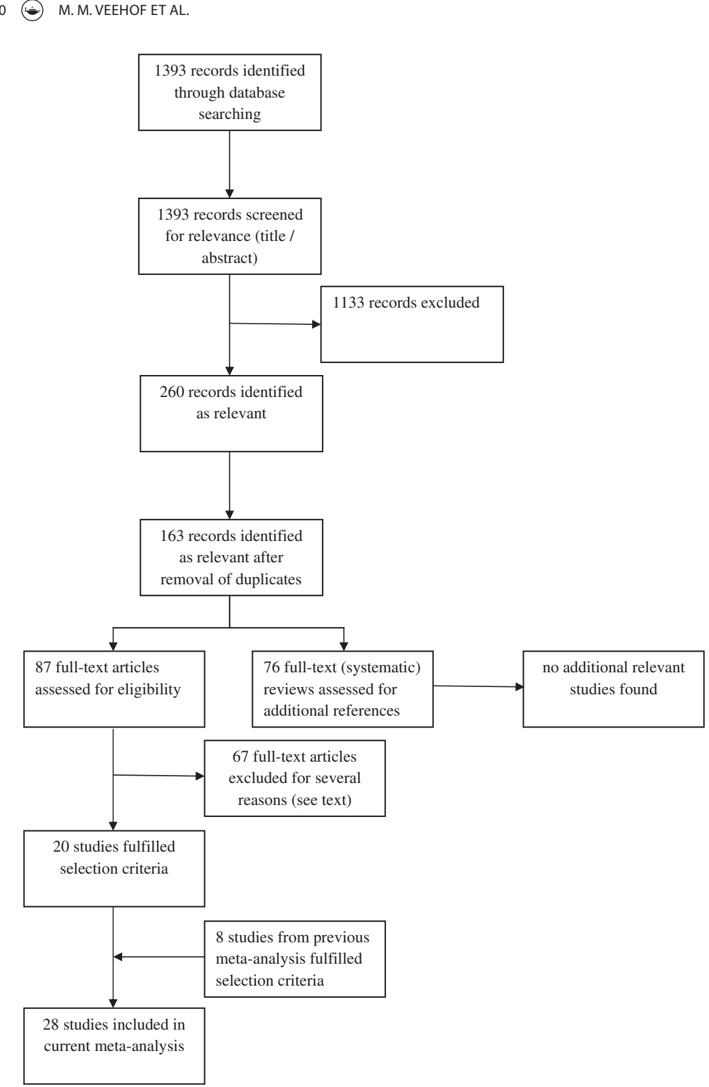
- Systematic review and meta-analysis of randomized controlled trials; searched PubMed, EMBASE, PsycInfo, and Cochrane Central Register of Controlled Trials, updating a prior search up to December 2008 with studies from January 2009 to December 2013, restricted to English-language studies.
- Main analyses included 25 RCTs totaling 1285 chronic pain patients, comparing acceptance- and mindfulness-based interventions (ACT, MBSR, MBCT, and related programs) with waitlist, (medical) treatment-as-usual, or education/support controls; five studies compared interventions with active treatments such as CBT, multidisciplinary treatment, or relaxation.
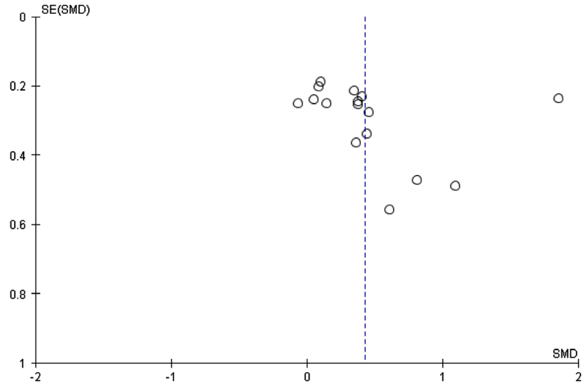
- Pooled standardized mean differences were calculated using a random-effects model; subgroup analyses examined quality score, control group, intervention type, pain type, and attrition rate; methodological quality was assessed with an 8-point scale, and funnel plots assessed publication bias.
Limitations
- The paper states that average study quality did not improve over the past six years, that quality ratings may be underestimated because criteria were scored as unmet when not reported, and that ACT and mindfulness-based treatments could only be compared at post-treatment because too few studies were available for follow-up subgroup analyses.
- The paper also states that a small number of studies were represented in some subgroup analyses.
- Evident from the text: heterogeneity was substantial for several outcomes (e.g., I² = 85% for post-treatment quality of life, 96% for some active-treatment comparisons), pain interference and anxiety had few studies (4 and 6 at post-treatment, respectively), and some indication of publication bias was found for depression.
Model-written summary. Check it against the paper before relying on it.
Integrity signals
Registry
Cites
Statistics
Figures



Verification
Claims the paper makes
6 Valid · 1 Not valid · 13 Not checked · 80 Own results and interpretations
The cited sources support only part of this claim — read each source’s verdict below.
In the paper
“Systematic reviews that qualitatively assess the efficacy of ACT, MBSR and MBCT generally find beneficial effects in chronic pain conditions (Lakhan & Schofield, 2013; McCracken & Vowles, 2014).”
What the sources say
- Partly supportedcites Lakhan & Schofield, 2013 matched to “Mindfulness-Based Therapies in the Treatment of Somatization Disorders: A Systematic Review and Meta-Analysis” (2013) sourceExperimental — accuracy not yet measured
The Discussion and Conclusions report beneficial effects of mindfulness-based therapies, including MBSR and MBCT, for some somatization conditions; pain improvement was clearest for irritable bowel syndrome. The paper does not establish a beneficial effect of ACT specifically, and its findings do not extend uniformly across chronic pain conditions. Page numbers are unavailable in our copy. (LLM, conf=0.86)
- Partly supportedcites McCracken & Vowles, 2014 matched to “Acceptance and commitment therapy and mindfulness for chronic pain: Model, process, and progress.” (2014) sourceExperimental — accuracy not yet measured
The ACT for Chronic Pain section reports positive chronic-pain trials and a meta-analysis finding acceptance- and mindfulness-based treatments at least as effective as traditional CBT. The Mindfulness section also describes symptom and emotional-functioning benefits. But the paper does not establish that qualitative systematic reviews generally found benefits for each of ACT, MBSR, and MBCT in chronic pain; its ACT systematic reviews covered mixed disorders, and the passages found do not address MBCT specifically. (LLM, conf=0.86)
plainstates an association- Asserted: passes — The authors put it forward as true.
- Checkable: passes — It can be checked against evidence.
- Load-bearing: passes — The paper’s conclusions depend on it.
- Based: passes — The paper gives a reason why it holds.
- Partly supported
Every source the paper cites for this claim was checked and supports it.
In the paper
“some impact on pain intensity may be reached because mindfulness skills have been found to influence brain mechanisms that may alter the pain experience (Zeidan et al., 2011).”
What the sources say
- Supportedcites Zeidan et al., 2011 matched to “Brain Mechanisms Supporting the Modulation of Pain by Mindfulness Meditation” (2011) source
The Discussion reports that meditation reduced pain-intensity ratings and links that relief to brain regions involved in cognitive pain modulation. Its section on multiple brain mechanisms specifically associates lower pain-intensity ratings with anterior cingulate and anterior insula activation. This supports the citing sentence’s cautious claim. (LLM, conf=0.93)
hedgedstates a possible cause- Asserted: passes — The authors put it forward as true.
- Checkable: passes — It can be checked against evidence.
- Load-bearing: unclear — It is unclear whether the paper’s conclusions depend on it.
- Based: passes — The paper gives a reason why it holds.
- Supported
Every source the paper cites for this claim was checked and supports it.
In the paper
“However, as is the case for biomedical treatment solutions, effect sizes of CBTs are modest (Williams, Eccleston, & Morley, 2012).”
What the sources say
- Supportedcites Williams, Eccleston, & Morley, 2012 matched to “Psychological therapies for the management of chronic pain (excluding headache) in adults” (2012) source
The Summary of results describes CBT effect sizes as “small to moderate.” The review also reports small effects on pain and disability compared with treatment as usual. The biomedical-treatment comparison is the citing authors’ framing, not a finding attributed to this source. (LLM, conf=0.92)
plain- Asserted: passes — The authors put it forward as true.
- Checkable: passes — It can be checked against evidence.
- Load-bearing: passes — The paper’s conclusions depend on it.
- Based: passes — The paper gives a reason why it holds.
- Supported
Every source the paper cites for this claim was checked and supports it.
In the paper
“Overall, the effect sizes found in this study were at least comparable to those found in a recent meta-analysis of CBT for chronic pain patients (Williams et al., 2012).”
What the sources say
- Supportedcites Williams et al., 2012 matched to “Psychological therapies for the management of chronic pain (excluding headache) in adults” (2012) source
The cited review reports pooled CBT effect sizes for adults with chronic pain in “Cognitive behavioural versus treatment as usual posttreatment,” including SMDs of −0.21 for pain, −0.26 for disability, and −0.38 for mood. It therefore supplies the meta-analysis benchmark cited in the sentence; whether the citing study’s effects are at least comparable depends on that study’s own results, not on this source. (LLM, conf=0.88)
plain- Asserted: passes — The authors put it forward as true.
- Checkable: passes — It can be checked against evidence.
- Load-bearing: passes — The paper’s conclusions depend on it.
- Based: passes — The paper gives a reason why it holds.
- Supported
The cited sources support only part of this claim — read each source’s verdict below.
In the paper
“However, only the effect size of mood was maintained at follow-up (Williams et al., 2012).”
What the sources say
- Partly supportedcites Williams et al., 2012 matched to “Psychological therapies for the management of chronic pain (excluding headache) in adults” (2012) sourceExperimental — accuracy not yet measured
The Summary of results says that, for CBT versus treatment as usual or waiting list, the mood effect was maintained at follow-up while pain and disability effects were not. But the unqualified claim overlooks a different comparison: the Cognitive behavioural versus active control at follow-up section reports a significant disability effect and no significant mood effect. (LLM, conf=0.87)
plain- Asserted: passes — The authors put it forward as true.
- Checkable: passes — It can be checked against evidence.
- Load-bearing: passes — The paper’s conclusions depend on it.
- Based: passes — The paper gives a reason why it holds.
- Partly supported
41 more claims
Create a free account to see all 100 claims and to verify the 1 reference still open.
- It may state two separate claims as one. 29
- Probably not a substantial claim. 30
- Not yet classified. 1
- The quote only partly states this claim. 7
Claims other papers make about this one
Each is checked against this paper’s own text: does it say what the citing paper says it does?
The cited source doesn’t support the claim as written.
In the citing paper
“whereas for the other meta-analysis the effects were non-significant (Veehof et al., 2016).”
From The empirical status of acceptance and commitment therapy: A review of meta-analyses (2020) · cites this paper as Veehof et al., 2016
Checked by a reasoning model — may be wrong.
Experimental — accuracy not yet measuredThe source backs part of the claim, not all of it — or backs it for a different population, condition or comparison.
In the citing paper
“Mindfulness-based interventions have been shown to enhance quality of life in many different chronic conditions (Demarzo et al., 2015; Crowe et al., 2016; Veehof et al., 2016; Haller et al., 2017) and we confirmed this with respect to MS in our study.”
From The effectiveness of a body-affective mindfulness intervention for multiple sclerosis patients with depressive symptoms: A randomized controlled clinical trial (2017) · cites this paper as Veehof et al., 2016
Experimental — accuracy not yet measuredThe source backs part of the claim, not all of it — or backs it for a different population, condition or comparison.
In the citing paper
“Mindfulness-based interventions are a relatively brief and cost-effective psychological treatment that have been shown to reduce depressive symptoms and improve quality of life in patients with several chronic diseases (Hofmann et al., 2010; Crowe et al., 2016; Veehof et al., 2016; Haller et al., 2017).”
From The effectiveness of a body-affective mindfulness intervention for multiple sclerosis patients with depressive symptoms: A randomized controlled clinical trial (2017) · cites this paper as Veehof et al., 2016
Experimental — accuracy not yet measuredThe source backs part of the claim, not all of it — or backs it for a different population, condition or comparison.
In the citing paper
“As such, our findings are in accordance with the theory that being mindful helps one encounter the pain experience without unnecessary elaboration, catastrophizing, or reactivity.10,15,50”
From Mindful attention is inversely associated with pain via mediation by psychological distress in orthopedic patients. (2024) · cites this paper as [50]
Experimental — accuracy not yet measuredThe source backs part of the claim, not all of it — or backs it for a different population, condition or comparison.
In the citing paper
“A meta-analysis defined MBIs with a duration of 2 weeks or less as brief. They were shown to have positive effects on negative affectivity (15).”
From Effects of a Brief Mindfulness-based Intervention in Patients with Psoriasis: A Randomized Controlled Trial (2024) · cites this paper as [15]
Experimental — accuracy not yet measured
65 more claims about this paper
Create a free account to see every claim other papers make about this one.
Self-check
Percentages, sums and reported differences re-computed from the paper’s own numbers.
Each contradiction between two passages listed here was confirmed by an independent check.
Rated major: it would touch a result — a value a result rests on, reported and recomputed p-values on opposite sides of the significance level, two passages that conflict with no sign which is right, or a cited work retracted before this paper was published.
In the paper
§ Follow-up effects
“The effects on anxiety and disability remained moderate with mean SMDs of respectively .59 (95% CI = .14, 1.04) and .39 (95% CI = .11, .67).”
§ Post-treatment effects
“| | Follow-up | 4 | Luciano et al., 2014; Wicksell et al., 2008, 2013; Wong et al., 2011 | χ 2 = 12.07, df = 3 ( p = .007); I 2 = 75% | .57 (.00, 1.14) | Z = 1.97 ( p = .05) |”
Rated major: it would touch a result — a value a result rests on, reported and recomputed p-values on opposite sides of the significance level, two passages that conflict with no sign which is right, or a cited work retracted before this paper was published.
In the paper
§ ABSTRACT
“Studies' quality, attrition rate, type of pain and control group, did not moderate the effects of acceptanceand mindfulness-based interventions.”
§ Subgroup analyses
“Finally, medium quality studies (SMD .17) showed a lower mean effect on quality of life than the low (SMD 1.01) and high (2.33) quality studies.”
Rated major: it would touch a result — a value a result rests on, reported and recomputed p-values on opposite sides of the significance level, two passages that conflict with no sign which is right, or a cited work retracted before this paper was published.
In the paper
§ ABSTRACT
“Studies' quality, attrition rate, type of pain and control group, did not moderate the effects of acceptanceand mindfulness-based interventions.”
§ Subgroup analyses
“Furthermore, studies using a (M)TAU group as the control group (SMD .85) showed a higher mean effect on anxiety than studies using an education/support group as an active control group (SDM .07).”
Rated major: it would touch a result — a value a result rests on, reported and recomputed p-values on opposite sides of the significance level, two passages that conflict with no sign which is right, or a cited work retracted before this paper was published.
In the paper
§ Follow-up effects
“The effects on depression and quality of life (slightly) increased and became moderate with mean SMDs of respectively . 53 (95% CI = .24, .82) and .66 (95% CI = .06, 1.26).”
§ Post-treatment effects
“| | Follow-up | 10 | Zautra et al., 2008 Astin et al., 2003; Luciano et al., 2014; McCracken et al., 2013; Parra-Delgado & Latorre-Posti- go, 2013; Pradhan et al., 2007; Schmidt et al., 2011; Sephton et al., 2007; Wicksell et al., 2008, | χ 2 = 30.65, df = 9 ( p = .0003); I 2 = 71% | .50 (.19, .80) | Z = 3.22 ( p = .001) |”
Rated minor: it would not touch a result — a value no result rests on, a p-value that stays on the same side of the significance level, or a conflict that is clerical, resolved elsewhere in the paper, or outside its own findings.
In the paper
§ Main findings
“the current meta-analysis which showed that the effects on all outcomes, except pain intensity, increased at follow-up.”
§ Follow-up effects
“The effects on anxiety and disability remained moderate with mean SMDs of respectively .59 (95% CI = .14, 1.04) and .39 (95% CI = .11, .67).”
1 more finding
Create a free account to see every finding of this check.
Citations
Cites
Statistical Power Analysis for the Behavioral Sciences (2nd ed.).
Lachenbruch, P. A., & Cohen, J. (1989) · Journal of the American Statistical Association · doi:10.2307/2290095 · Cited by 37,395 · cited 2×
“Cohen (Cohen, 1977) has described effect sizes .”
BackgroundStatistical Power Analysis for the Behavioral Sciences
Cohen, J. (2013) · doi:10.4324/9780203771587 · Cited by 25,373
Cochrane Handbook for Systematic Reviews of Interventions: Cochrane Book Series
(2008) · doi:10.1002/9780470712184 · Cited by 25,048
Assessing the quality of reports of randomized clinical trials: Is blinding necessary?
Jadad, A. R., Moore, R. A., Carroll, D., Jenkinson, C., Reynolds, D. J. M., Gavaghan, D. J., & McQuay, H. J. (1996) · Controlled Clinical Trials · doi:10.1016/0197-2456(95)00134-4 · Cited by 17,582 · cited 1×
“Methodological quality of included studies was independently assessed by two reviewers (MV and KS) using a 8-point scale, based on criteria by the Cochrane Collaboration (Higgins & Altman, 2008) and the validated Jadad scale (Jadad, 1996) tailored for the included studies (see Table 1).”
MethodUsing Self-Report Assessment Methods to Explore Facets of Mindfulness
Baer, R. A., Smith, G. T., Hopkins, J., Krietemeyer, J., & Toney, L. (2006) · Assessment · doi:10.1177/1073191105283504 · Cited by 7,511
(2008) · Medical Entomology and Zoology · Cited by 7,477
Acceptance and commitment therapy: model, processes and outcomes
Hayes, S. C., Luoma, J. B., Bond, F. W., Masuda, A., & Lillis, J. (2006) · Behaviour Research and Therapy · doi:10.1016/j.brat.2005.06.006 · Cited by 6,587
Shapiro, S. L., Carlson, L. E., Astin, J. A., & Freedman, B. (2006) · Journal of Clinical Psychology · doi:10.1002/jclp.20237 · Cited by 4,002
The effect of mindfulness based therapy on anxiety and depression: A meta analytic review
Hofmann, S. G., Sawyer, A. T., Witt, A. A., & Oh, D. (2010) · Journal of Consulting and Clinical Psychology · doi:10.1037/a0018555 · Cited by 3,846
(2008) · Cited by 3,790
Research works printed but not linked: 6
- Martin, K. L. (2012). The influence of pain avoidance on the experience of mindfulness training (Published doctoral dissertation). San Diego, CA: Alliant International University.
- Nash-Mc Feron, D. E. (2006). Mindfulness in the treatment of chronic headache pain. Dissertation Abstracts International: Section B: The Sciences and Engineering, 67 , 2841.
- Trompetter, H. R., Bohlmeijer, E. T., Fox, J.-P ., Schreurs, K. M. G. (2015). Psychological flexibility and catastrophising as associated change mechanisms during an online acceptance-based intervention for chronic pain. In H. Trompetter (Ed.), ACT with pain. Measurement, efficacy and mechanisms of acceptance & commitment therapy. (Unpublished disseration). Enschede: University of Twente.
- Vernon, A. D. (2011). Paying attention to values instead of pain: Chronic pain and neuropsychological functioning, as potentially mediated by acceptance of pain (Published doctoral dissertation). Berkely, CA: Wright Institute Graduate School of Psychology.
- Wicksell, R. K., Kemani, M., Jensen, K., Kosek, E., Kadetoff, D., Sorjonen, K., Ingvar, M. (2013). Acceptance and commitment therapy for fibromyalgia: A randomized controlled trial. European Journal of Pain, 17 , 599-611. · doi:10.1002/ejp.2013.17.issue-4
- Wong, C. M. (2009). Four-step mindfulness-based therapy for chronic pain: A pilot randomized controlled trial (Unpublished doctoral dissertation). The Chinese University of Hong Kong, Hong Kong.
Cited by
Items 401–500 of 731
Reynolds, K., Sommer, J. L., Roy, R., Kornelsen, J., Mackenzie, C. S., & El-Gabalawy, R. M. (2024) · Pain Management Nursing · doi:10.1016/j.pmn.2024.04.002 · Cited by 6
Sud, A., Nelson, M. L. A., Cheng, D. K.-Y., Armas, A., Foat, K., Greiver, M., Hosseiny, F., Katz, J. D., Moineddin, R., Mulsant, B. H., et al. (2020) · Trials · doi:10.1186/s13063-020-04243-z · Cited by 7
Skovbo, M. H., Agerbo, K., Jakobsen, A. S., Clausen, S. A., Langagergaard, V., & Rolving, N. (2021) · Clinical Rehabilitation · doi:10.1177/0269215521995185 · Cited by 6
Bürkle, J. J., Fendel, J. C., & Schmidt, S. (2021) · BMJ Open · doi:10.1136/bmjopen-2021-050329 · Cited by 11
Sanabria-Mazo, J. P., Colomer-Carbonell, A., Gandara-Urrutia, N., Pérez-Sutil, J. M., Noboa-Rocamora, G., Fernández-Vázquez, Ó., Val-Mariano, G., Fontana-McNally, M., Cardona-Ros, G., Feliu-Soler, A., et al. (2024) · Disability and Rehabilitation · doi:10.1080/09638288.2023.2298265 · Cited by 6
“The efficacy of ACT and BATD patients in improving emotional distress is also well established [14–18].”
Mindfulness aplicado a la atención primaria
Barceló‐Soler, A., Monreal‐Bartolomé, A., Navarro‐Gil, M., Beltrán-Ruiz, M., & García‐Campayo, J. (2018) · FMC - Formación Médica Continuada en Atención Primaria · doi:10.1016/j.fmc.2018.03.004 · Cited by 12
Update and Future Perspective of Behavioral Medicine in the Treatment for Chronic Pain
Okifuji, A., & Neikrug, A. B. (2019) · Pain Management · doi:10.2217/pmt-2017-0055 · Cited by 7
Azizi, Z., Jandaghi, G., Firoozi, M., Zia-Tohidi, A., & Ebnerasouli, S. (2021) · doi:10.1101/2021.06.04.21258338 · Cited by 6
“randomized trials and meta-analyses on their efficacy in improving mental health and quality of life and in reducing disability in CP patients (Cherkin et al., 2016; Hilton et al., 2016; Lauche et al., 2013; Veehof et al., 2016).”
MethodJäger, M., Terry, J., & Rance, J. (2021) · International Journal of Osteopathic Medicine · doi:10.1016/j.ijosm.2021.12.004 · Cited by 6
Chronic pain management group psychotherapy for psychiatric inpatients: A pilot study
Osborne, P. J., Jimenez-Torres, G. J., Landa, Y., Mahoney, J., & Madan, A. (2017) · Bulletin of the Menninger Clinic · doi:10.1521/bumc.2017.81.2.123 · Cited by 5
Sanduvete-Chaves, S., Chacón-Moscoso, S., & Cano-García, F. J. (2024) · Journal of Psychosomatic Research · doi:10.1016/j.jpsychores.2024.111888 · Cited by 4
Rabinowitz, E. P., Ripley, G., Levin, M. E., Allen, P. A., & Delahanty, D. L. (2024) · Journal of Contextual Behavioral Science · doi:10.1016/j.jcbs.2024.100828 · Cited by 5
Sharaa, H. A., Bartels, S. L., Taygar, A. S., Engman, L., Petersson, S., Flink, I. K., Boersma, K., McCracken, L. M., Simons, L. E., Vlaeyen, J. W. S., et al. (2025) · European Journal of Pain · doi:10.1002/ejp.70128 · Cited by 7
“Existing research shows strong empirical support for treatments aimed at enhancing resilience (Martinez-Calderon et al. 2024; Lai et al. 2023; Veehof et al. 2016).”
Maunder, L., Dargie, E., & Pukall, C. (2022) · Journal of Sexual Medicine · doi:10.1016/j.jsxm.2022.02.016 · Cited by 4
Venturin, D., Battimelli, A., di Cara, G., & Poser, A. (2024) · Physiotherapy Theory and Practice · doi:10.1080/09593985.2024.2336099 · Cited by 8
“ACT proves effective in reducing depression, anxiety, and managing chronic pain (Bai et al., 2020; Konstantinou et al., 2023; Veehof, Trompetter, Bohlmeijer, and Schreurs, 2016).”
Profiles of Pain Acceptance and Values-Based Action in the Assessment and Treatment of Chronic Pain
Kruger, E., Ashworth, J., Sowden, G., Hickman, J., & Vowles, K. E. (2022) · The Journal of Pain · doi:10.1016/j.jpain.2022.06.005 · Cited by 5
Raasthøj, I., Rasmussen, S., Carstensen, T. B. W., Wehberg, S., Rosendal, M., & Jarbøl, D. E. (2022) · Journal of Psychosomatic Research · doi:10.1016/j.jpsychores.2022.111140 · Cited by 9
Designing voice interfaces to support mindfulness-based pain management
Mendu, S., Fosco, S. L. D., Lanza, S. T., & Abdullah, S. (2023) · Digital Health · doi:10.1177/20552076231204418 · Cited by 4
Bell, L. V., Cornish, P., Flusk, D., Garland, S. N., & Rash, J. A. (2020) · BMJ Open · doi:10.1136/bmjopen-2019-033350 · Cited by 5
The Role of Mind–Body Approaches in Promoting Healthcare Engagement and Positive Behavior Change
Kraemer, K. M., Luberto, C. M., Hall, D. L., & Yeh, G. Y. (2020) · Respiratory medicine · doi:10.1007/978-3-030-44889-9_9 · Cited by 6
Zacharia, M., & Karekla, M. (2021) · Springer eBooks · doi:10.1007/978-3-030-68932-2_9 · Cited by 5
Goubert, L., Riddell, R. P., Simons, L. E., & Borsook, D. (2021) · Oxford University Press eBooks · doi:10.1093/med/9780198818762.003.0010 · Cited by 12
Ledermann, K., von Känel, R., Berna, C., Sprott, H., Burckhardt, M., Jenewein, J., Garland, E. L., & Martin-Sölch, C. (2021) · Trials · doi:10.1186/s13063-021-05798-1 · Cited by 9
Art Therapy Drawing Protocols for Chronic Pain: Qualitative Findings From a Mixed-Method Pilot Study
Hass‐Cohen, N., Bokoch, R. N., Goodman, K., & McAnuff, J. (2022) · Art Therapy · doi:10.1080/07421656.2022.2085491 · Cited by 7
“Optimism and acceptance protect against anxiety and depression improving chronic pain and responsiveness to treatment (Trompetter et al., 2022; Veehof et al., 2016).”
BackgroundCaron-Trahan, R., Jusseaux, A.-E., Aubin, M., Urbanowicz, R., Richebé, P., & Ogez, D. (2022) · EXPLORE · doi:10.1016/j.explore.2022.08.008 · Cited by 9
Entendiendo la Terapia de Aceptación y Compromiso: Estado actual y Bases teóricas
paliza, V. (2023) · Análisis y Modificación de Conducta · doi:10.33776/amc.v49i180.7614 · Cited by 14
Trompetter, H. R., Johnston, D. W., Johnston, M., Vollenbroek-Hutten, M. M. R., & Schreurs, K. M. G. (2019) · Journal for Person-Oriented Research · doi:10.17505/jpor.2019.11 · Cited by 7
“These aggregate improvements resonate with consistently reported positive effects of ACT for chronic pain outcomes (Hann & McCracken, 2014; Veehof et al., 2016).”
BackgroundSelf-citationChiodelli, R., de Mello, L. T. N., de Jesús, S. N., & Andretta, I. (2020) · Trends in Psychology · doi:10.1007/s43076-020-00034-2 · Cited by 9
Buhrman, M., Tillfors, M., Holländare, F., Lekström, E., Håkansson, A., & Boersma, K. (2023) · The Clinical Journal of Pain · doi:10.1097/ajp.0000000000001157 · Cited by 5
Buskbjerg, C., O'Toole, M. S., Zachariae, R., Jensen, A. B., Frederiksen, Y., Johansen, C., von Heymann, A., Speckens, A., & Johannsen, M. (2023) · BMJ Open · doi:10.1136/bmjopen-2022-066505 · Cited by 4
Garcia, M. A., Rabinowitz, E. P., Levin, M. E., Shasteen, H., Allen, P. A., & Delahanty, D. L. (2023) · Journal of Behavioral and Cognitive Therapy · doi:10.1016/j.jbct.2023.09.001 · Cited by 4
van der Horst, A., Meijer, L., van Os - Medendorp, H., Jukema, J. S., Bohlmeijer, E., Schreurs, K. M., & Kelders, S. (2024) · JMIR Formative Research · doi:10.2196/54600 · Cited by 4
“PPIs and ACT have been found to be effective in the treatment of chronic pain [30-35], improving affect and functional ability after knee surgery [21], and quicker cessation of pain and opioid use in veterans after orthopedic surgery [36].”
BackgroundSelf-citationVan Der Horst, A. Y., Bohlmeijer, E. T., Schreurs, K. M. G., & Kelders, S. M. (2023) · Frontiers in Psychology · doi:10.3389/fpsyg.2023.1117357 · Cited by 4
“Acceptance and Commitment Therapy and positive psychology have proven effective in coping with chronic pain and providing long-term skills that enhance psychological flexibility and mental well-being (A-Tjak et al., 2015; Veehof et al., 2016; Hughes et al., 2017; Peters et al., 2017; Simpson et al., 2017).”
BackgroundMethodSelf-citationInflammation and pain as interconnected targets in axial spondyloarthritis
Baraliakos, X., Navarro‐Compán, V., Ziadé, N., & Poddubnyy, D. (2026) · Nature Reviews Rheumatology · doi:10.1038/s41584-025-01348-0 · Cited by 6
“Established approaches include CBT, acceptance and commitment therapy and interventions such as mindfulness-based stress reduction 109–112 .”
Tanaka, C., Wakaizumi, K., Ninomiya, A., Tamura, N., Kosugi, S., Park, S., Sado, M., Mimura, M., & Fujisawa, D. (2023) · Psychiatry and Clinical Neurosciences Reports · doi:10.1002/pcn5.132 · Cited by 9
“7 11 A few follow ‐ up studies have shown that MBIs prevent depression recurrence and reduce anxiety even after the completion of the interventions.”
BackgroundHaun, J. N., Fowler, C. A., Venkatachalam, H. H., Alman, A. C., Ballistrea, L. M., Schneider, T., Benzinger, R. C., Melillo, C., Alexander, N. B., Klanchar, S. A., et al. (2024) · Journal of Medical Internet Research · doi:10.2196/57322 · Cited by 7
Depression and Pain: Bidirectional Relationship and Changes with Psychological Treatment
Miller-Matero, L. R. (2024) · Oxford University Press eBooks · doi:10.1093/9780197675250.003.0005 · Cited by 5
Borsutzky, S., Moritz, S., Hottenrott, B., & Gehlenborg, J. (2023) · Trials · doi:10.1186/s13063-023-07440-8 · Cited by 4
“A meta-analysis by Veehof and colleagues [52] reported significant improvements in chronic pain intensity, and chronic pain interference at medium effect sizes after acceptance- and mindfulness-based interventions compared to wait-list, medical treatment-as-usual, as well as educational and support control groups.”
BackgroundNilsson, K. L., Andersson, G., Johansson, P., & Lundgren, J. (2023) · BMC Nephrology · doi:10.1186/s12882-023-03364-2 · Cited by 5
Sanabria‐Mazo, J. P., D’Amico, F., Cardeñosa, E., Ferrer, M., Edo, S., Borràs, X., McCracken, L. M., Feliu‐Soler, A., Sanz, A., & Luciano, J. V. (2024) · Journal of Pain · doi:10.1016/j.jpain.2024.01.337 · Cited by 12
Ajluni, V. (2024) · Journal of General and Family Medicine · doi:10.1002/jgf2.725 · Cited by 7
Liao, Y., Chen, W.-S., Restya, W. P. D., Liao, Y.-C., Lin, Y., & Lin, R. (2025) · Journal of Psychosomatic Research · doi:10.1016/j.jpsychores.2025.112366 · Cited by 6
Mousavi, S. M., Mujembari, A. K., Hassani‐Abharian, P., & Pashang, S. (2018) · Iranian Rehabilitation Journal · doi:10.29252/nrip.irj.16.1.103 · Cited by 6
“(2016) have shown that accepting back pain improves quality of life of individuals suffering from chronic low back pain [30].”
BackgroundLess Control, More Flexibility
Cecil, S. (2020) · Routledge eBooks · doi:10.4324/9780367854997-17 · Cited by 4
Ferreira-Valente, A., Pimenta, F., Costa, R. M., Day, M. A., Ribeiro, J. L. P., & Jensen, M. P. (2021) · BMJ Open · doi:10.1136/bmjopen-2020-040068 · Cited by 5
Gilpin, H. R., Ratanachatchuchai, S., Novelli, D., McCracken, L. M., & Scott, W. (2022) · British Journal of Pain · doi:10.1177/20494637211073012 · Cited by 6
Validation of the Japanese version of the 8-item Chronic Pain Acceptance Questionnaire (CPAQ-8)
Fukumori, T., Fujishima, K., Iwasa, K., Takao, Y., Kobayashi, Y., & Nishie, H. (2023) · The Journal of Medical Investigation · doi:10.2152/jmi.70.88 · Cited by 3
Perceived Mindfulness and Depressive Symptoms Among People with Chronic Pain.
(2018) · PubMed · Cited by 4
Stewart, K. L., Farris, S. G., Jackson, K. M., Borsari, B. E., & Metrik, J. (2018) · Cognitive Therapy and Research · doi:10.1007/s10608-018-9950-5 · Cited by 6
Chronic Pain, Dopamine and Depression: Insights from Research on Fibromyalgia
Ledermann, K., & Martin-Söelch, C. (2021) · IntechOpen eBooks · doi:10.5772/intechopen.82576 · Cited by 6
“[78]) and have gained increasingly wide use for the treatment of chronic pain conditions including FMS, showing promising results [79, 80].”
BackgroundDeparment of Psychology and Education of Exceptional Children, F. O. L., Shahriari, Y., Ghasemzadeh, S., Deparment of Psychology and Education of Exceptional Children, F. O. P. A. E. S., Vakili, S., & Deparment of Psychology and Education of Exceptional Children, F. O. L. (2019) · Iranian Journal of Psychiatry and Clinical Psychology · doi:10.32598/ijpcp.25.3.236 · Cited by 4
Cognitive-behavioral psychotherapy of chronic pelvic pain syndrome: specifics and effeciency
Мелехин, А. И. (2020) · Experimental and Сlinical Urology · doi:10.29188/2222-8543-2020-12-1-80-94 · Cited by 6
Editorial: Pain Management in Clinical and Health Psychology
Castelnuovo, G., & Schreurs, K. (2019) · Frontiers in Psychology · doi:10.3389/fpsyg.2019.01295 · Cited by 3
“Psychological contributions play an important role in pain management (Castelnuovo et al.; Williams et al., 2012; Veehof et al., 2016).”
BackgroundSelf-citationImproved cardiorespiratory fitness after occupational rehabilitation in merged diagnostic groups
Nordstoga, A. L., Mork, P. J., & Steiro Fimland, M. (2018) · Annals of Occupational and Environmental Medicine · doi:10.1186/s40557-018-0227-y · Cited by 3
“Still, in a recent meta-analysis of acceptance- and mindfulness-based interventions for chronic pain [32], small but significant short- and”
BackgroundMartel, M.-E., Dionne, F., Pagé, M. G., & Choinière, M. (2024) · Journal of Contextual Behavioral Science · doi:10.1016/j.jcbs.2024.100760 · Cited by 3
Castaño-Asins, J. R., Sanabria-Mazo, J. P., Luciano, J. V., Barceló-Soler, A., Martín-López, L. M., Del Arco-Churruca, A., Lafuente-Baraza, J., Bulbena, A., Pérez-Solà, V., & Montes-Pérez, A. (2023) · Journal of Clinical Medicine · doi:10.3390/jcm12124066 · Cited by 3
Codeveloping a Novel Intervention for People With Post‐COVID Condition: The Balance‐ACT Study
Felton, L., Kalfas, M., Brewin, D., Beckwith, C., Khan, T., Jolley, C. J., Hart, N., Duncan, E. L., Nicholson, T. R., Witard, O. C., et al. (2025) · Health Expectations · doi:10.1111/hex.70320 · Cited by 3
“Although direct evidence for ACT in PCC is lacking, there is evidence of its effectiveness in chronic pain [27] and other long ‐ term conditions [26].”
Jotwani, M. L., Szabó, E., Comptdaer, G., Kim, A., Lunde, C. E., Pierce, M. E., Missmer, S. A., Laufer, M. R., Anchan, R. M., Burstein, R., et al. (2025) · Communications Biology · doi:10.1038/s42003-025-08952-6 · Cited by 3
“Pain-related cognitive and affective components are also linked to depression, pain-related disability, andtreatmentoutcomes 72 – 76 .”
Huang, Y., Song, Z., Xie, L., Ding, L., & Yao, Q. (2026) · Worldviews on Evidence-Based Nursing · doi:10.1111/wvn.70105 · Cited by 6
Haghshenas, H., Shaygan, M., Pasyar, N., & Rambod, M. (2024) · Iranian Journal of Nursing and Midwifery Research · doi:10.4103/ijnmr.ijnmr_327_23 · Cited by 5
“[40] Likewise, meaning in life enhances individual resilient responses [41] and is associated with improved health outcomes for patients with CP. [42,43] Therefore, designing programs to train and strengthen the creativity of patients to use problem‑oriented strategies and meaning therapy to…”
BackgroundCampbell, R., Podugu, S. D. V. P. R., & Morris, M. (2025) · Clinical Gerontologist · doi:10.1080/07317115.2025.2487008 · Cited by 6
“ACT is well established as an evidence-based treatment for chronic pain (Dahl et al., 2005; McCracken et al., 2013; Veehof et al., 2016).”
Barrado‐Moreno, V., Esteve, R., McCracken, L. M., & Ramírez‐Maestre, C. (2025) · European Journal of Pain · doi:10.1002/ejp.70048 · Cited by 5
“Moreover, ACT and MBTs interventions have proven to be beneficial approaches for CNCP in terms of physical and emotional functioning (Lai et al. 2023; McCracken 2024; Veehof et al. 2016).”
Hahne, I., Segerer, J., Zierhut, M. M., Bergmann, N., Ta, T. M. T., Hahn, E. W., & Böge, K. (2025) · Scientific Reports · doi:10.1038/s41598-025-03380-2 · Cited by 5
Kłosowska, J., Budzisz, A., Rubanets, D., Łaska, I. A., Bieniek, H., Brączyk, J., Wiercioch‐Kuzianik, K., Bajcar, E. A., Żegleń, M., Niedbał, M., et al. (2025) · Scientific Reports · doi:10.1038/s41598-025-08449-6 · Cited by 3
Non-Pharmacologic Approaches to Reducing Polypharmacy in Older Adults
Tkatch, R., Hudson, J. N., Schaeffer, J., & Yeh, C. S. (2018) · Public Policy & Aging Report · doi:10.1093/ppar/pry039 · Cited by 3
Alipour, F., Norouzi, A., Reskati, M. H., & Hosseini, S. H. (2020) · Iranian Journal of Psychiatry and Behavioral Sciences · doi:10.5812/ijpbs.102509 · Cited by 6
Gadde, U., Matthew, P., Kumar, R., Aggarwal, R., DallaPiazza, M., & Lamba, S. (2020) · MedEdPORTAL · doi:10.15766/mep_2374-8265.11056 · Cited by 3
Somohano, V. C., Shank, T. M., Manuel, J., Mallik, D., Rehder, K. L., & Bowen, S. W. (2021) · The Journal of Alternative and Complementary Medicine · doi:10.1089/acm.2021.0123 · Cited by 3
“75,76 Future studies would benefit from a longer follow-up period.”
Posttraumatic growth and pain acceptance: A profile analysis of chronic pain experience.
Ayache, R., & Goutaudier, N. (2022) · Canadian Journal of Behavioural Science/Revue canadienne des sciences du comportement · doi:10.1037/cbs0000289 · Cited by 7
Miller-Matero, L. R., Chohan, S., Gavrilova, L., Hecht, L. M., Autio, K., Tobin, E. T., & Ahmedani, B. K. (2022) · Substance Use & Misuse · doi:10.1080/10826084.2022.2096239 · Cited by 3
“Mindfulness-based and acceptance therapy have shown similar results as cognitive-behavioral therapy for improvement in pain and mood (Veehof et al., 2016).”
ResultChen, S., Rice, S., Storey, K., Keglovits, M., Devine, M., Yan, Y., & Stark, S. L. (2022) · OTJR Occupational Therapy Journal of Research · doi:10.1177/15394492221107557 · Cited by 3
“…anxiety relief programs are acceptance and commitment therapy, an intervention that uses acceptance and mindfulness strategies paired with behavior change strategies to improve psychological flexibility (Veehof et al., 2016), and exercise programs for anxiety disorders (Jayakody et al., 2014).”
BackgroundXu, X.-P., Wang, W., Wan, S., & Xiao, C. (2022) · World Journal of Clinical Cases · doi:10.12998/wjcc.v10.i26.9219 · Cited by 3
Peterson, T., & Dutton, C. (2022) · Journal of Family & Consumer Sciences · doi:10.14307/jfcs114.3.38 · Cited by 4
Pilot evaluation of a self-help ACT intervention for palliative care patients
Martin, C. L., & Pakenham, K. I. (2024) · Journal of Contextual Behavioral Science · doi:10.1016/j.jcbs.2024.100797 · Cited by 3
Tiwari, A., Villatte, J. L., Narayanan, S. S., & Falk, T. H. (2019) · International Conference on Affective Computing and Intelligent Interaction Workshops and Demos (ACIIW) · doi:10.1109/aciiw.2019.8925281 · Cited by 3
“There are over 30 RCTs demonstrating strong empirical support for pain interventions designed to improve psychological flexibility [9].”
BackgroundLundberg, T., & Melander, S. (2021) · SAGE Open · doi:10.1177/21582440211040116 · Cited by 4
“…related to the professional domain, including developing screening tools (Mehling et al., 2015), assessments (Lichtner et al., 2014), and effective treatments (Oliveira et al., 2012; Veehof et al., 2016) as well as enhancing communication (Alperstein & Sharpe, 2016; Matthias et al., 2017).”
BackgroundFlink, I. K., Strandberg, E. K., & Linton, S. J. (2017) · Scandinavian Journal of Pain · doi:10.1016/j.sjpain.2017.08.010 · Cited by 3
Maddali‐Bongi, S., Orlandi, M., Pollina, A., & Aoufy, K. E. (2019) · Alternative and Complementary Therapies · doi:10.1089/act.2019.29239.smb · Cited by 3
“53 Some of the highest-quality studies of mind-fulness interventions in chronic pain have been in patients with chronic low-back pain, 38–40 fibromyalgia, 41–43 inflam-matory rheumatic joint disease, 47,48 and rheumatoid arthritis.”
Cognitive behavioral therapy for chronic pain and opioid use disorder
Gazzola, M. G., Beitel, M., Cutter, C. J., & Barry, D. T. (2021) · Elsevier eBooks · doi:10.1016/b978-0-12-820237-1.00022-3 · Cited by 4
Sun, Y., Wang, J., Mao, F., Sun, J., Zhang, X., & Cao, F. (2022) · Current Psychology · doi:10.1007/s12144-022-03231-7 · Cited by 6
“, 2014), chronic somatic disease patients (Veehof et al., 2016; Zou et al., 2018), patients with psychiatric disorders (Goldberg et al.”
BackgroundWaldron, E. M., Miller, E. S., Wee, V., Statton, A., Moskowitz, J. T., & Burnett‐Zeigler, I. (2022) · Health & Social Care in the Community · doi:10.1111/hsc.14063 · Cited by 5
“This type of intervention has proven to be effective in aiding individuals living with chronic health conditions better manage their healthcare and improve their quality of life (Gu et al., 2015; Merkes, 2010; Veehof et al., 2016).”
An Online Therapeutic Intervention for Veterans Patients Suffering with Chronic Pain
Reilly, E. D., Volonte, M., & Bickmore, T. (2023) · IEEE Conference on Virtual Reality and 3D User Interfaces Abstracts and Workshops (VRW) · doi:10.1109/vrw58643.2023.00039 · Cited by 4
“Internet-based ACT for chronic pain can increase activity engagement and pain acceptance while decreasing pain-related distress and comorbid mood disorders [9, 38].”
BackgroundSarıtaş, S. Ç. (2020) · Journal of Cardiovascular Nursing · doi:10.5543/khd.2020.63835 · Cited by 4
Cairncross, M. (2019) · Scholarship at UWindsor (University of Windsor) · Cited by 7
Pichette-Leclerc, S., Dionne, F., & Pinard, A.-M. (2017) · Douleur et Analgesie · doi:10.1007/s11724-017-0529-9 · Cited by 2
Lam, C. N., Larach, D. B., Chou, C.-P., & Black, D. S. (2024) · Pain Medicine · doi:10.1093/pm/pnad119 · Cited by 2
Mindfulness-based approaches to mental health
Nauphal, M., Cardona, N. D., Morgan, L. P. K., & Eustis, E. H. (2023) · Encyclopedia of Mental Health · doi:10.1016/b978-0-323-91497-0.00053-9 · Cited by 2
Acceptance and commitment therapy for prevention of chronic pain after total knee arthroplasty.
Giusti, E. M., Castelnuovo, G., Manna, C., Varallo, G., Cattivelli, R., Petrachi, B. V., Stramba-Badiale, M., & Spatola, C. A. M. (2026) · Pain Medicine · doi:10.1093/pm/pnaf145 · Cited by 2
Factors Associated With Interest in Engaging in Psychological Interventions for Pain Management
Miller-Matero, L. R., Yaldo, M., Chohan, S., Zabel, C., Patel, S. R., Chrusciel, T., Salas, J., Wilson, L., Sullivan, M. D., Ahmedani, B. K., et al. (2023) · Clinical Journal of Pain · doi:10.1097/ajp.0000000000001165 · Cited by 2
“10,12,13 Although there are ef fi cacious psychological interventions available for chronic pain management, engagement in such therapies has been challenging.”
BackgroundManagement of medication overuse headache
D’Amico, D., Grazzi, L., & Tepper, S. J. (2024) · Handbook of clinical neurology · doi:10.1016/b978-0-12-823357-3.00026-4 · Cited by 3
Ehlis, A., Aas, B., Kieckhäfer, C., Schiepek, G. K., Rosenbaum, D., Theisen, C., Fallgatter, A. J., & Goldbeck, F. (2024) · Applied Psychology Health and Well-Being · doi:10.1111/aphw.12603 · Cited by 2
“ACT has been used in the treatment of depression (Bai et al., 2020), psychotic disorders (Yildiz, 2020), and chronic pain (Veehof et al., 2016).”
Azizoddin, D. R., DeForge, S. M., Zhao, J., Chen, M., SMITH, K. G. V., Schreiber, K. L., Edwards, R. R., Allsop, M. J., Baltazar, A. R., Nipp, R. D., et al. (2025) · JCO Clinical Cancer Informatics · doi:10.1200/cci-25-00228 · Cited by 3
Lim, J. H., & Ahmad, M. (2026) · Frontiers in Psychology · doi:10.3389/fpsyg.2025.1721854 · Cited by 2
“In chronic pain populations, ACT has been associated with improvements in pain acceptance, functioning, and quality of life, even when absolute pain intensity does not fully resolve (Veehof et al., 2016).”
Cultural Considerations and Tools for Treating Chronic Pain Among Hispanics/Latinos
Erazo, E. C. (2017) · Springer eBooks · doi:10.1007/978-3-319-64880-4_8 · Cited by 3
Inclusive Systemic Design for Health System Flourishment
Pennefather, P., Seaborn, K., & Fels, D. I. (2018) · Translational systems sciences · doi:10.1007/978-4-431-55639-8_3 · Cited by 3
Edwards, K. A., Reed, D. E., Anderson, D. R., Harding, K. A., Turner, A. P., Soares, B., Suri, P., & Williams, R. M. (2023) · PM&R · doi:10.1002/pmrj.12912 · Cited by 2
Behavioral and Self-Directed Treatments for Opioid Use Disorder
Insalaco, W., & Hobelmann, J. G. (2023) · Oxford University Press eBooks · doi:10.1093/oxfordhb/9780197618431.013.26 · Cited by 2
Hollyfield, S., Travers, W., Sondh, S. K., Wilczek, A., Jacobs, C. M., McCracken, L. M., & Scott, W. (2023) · Clinical Journal of Pain · doi:10.1097/ajp.0000000000001144 · Cited by 2
Manejo clínico da dor crônica: uma revisão atualizada das estratégias de tratamento
Souza, J. A. D., de Oliveira, A. P., Bertaglia, R. D. S., Pinho, S. C. B. D., Ortiz, W. M., Ribeiro, A. L. S., Centenaro, G. O., Oliveira, G. D., Guasti, E. R., Brito, L. F. T., et al. (2023) · Brazilian Journal of Health Review · doi:10.34119/bjhrv6n4-413 · Cited by 4
Metadata
- Authors
- Veehof, M. M., Trompetter, H. R., Bohlmeijer, E. T., & Schreurs, K. M. G.
- Affiliations
- Medisch Spectrum Twente (NL)
- University of Twente (NL)
- Roessingh Research and Development (NL)
- Corresponding author
- Schreurs, K. M. G.
- Venue
- Cognitive Behaviour Therapy
- Publisher
- Informa UK Limited
- Published
- 2016-01-02
- Volume
- 45
- Issue
- 1
- Pages
- 5-31
- ISSN
- 1650-6073 (ISSN-L)
- 1651-2316
- OpenAlex
- W2254182258
- Semantic Scholar
- e6ce9512bc205dfdbae68c8909df568fb0379e2d
- Cited by
- 737
- References
- 137
- Citations by year
- 2026: 48 · 2025: 64 · 2024: 55 · 2023: 77 · 2022: 90 · 2021: 96 · 2020: 102 · 2019: 74 · 2018: 60 · 2017: 50 · 2016: 19
- FWCI
- 10.02
- Type
- journal article
- Language
- en
- Open access
- hybrid
- doi.org
- Licence
- Locations
- Cognitive Behaviour Therapy (publishedVersion, cc-by-nc-nd)
- PubMed (publishedVersion)
- University of Twente Research Information (publishedVersion, other-oa)
- University of Twente Research Information (submittedVersion, other-oa)
- Topics
- Social Sciences › Psychology › Clinical Psychology › Mindfulness and Compassion Interventions
- Health Sciences › Health Professions › Physical Therapy, Sports Therapy and Rehabilitation › Musculoskeletal pain and rehabilitation
- Life Sciences › Neuroscience › Cognitive Neuroscience › Pain Management and Placebo Effect
- Keywords
- acceptance and commitment therapy, mindfulness-based stress reduction, mindfulness-based cognitive therapy, chronic pain, pain intensity, pain interference, depression, anxiety, disability, quality of life, psychological intervention
- MeSH terms
- Humans, Treatment Outcome, Chronic Pain, Mindfulness, Acceptance and Commitment Therapy
About these checks
Registry, retraction, Cites and statistics results are computed, not judged, with one exception: a printed reference that no index lists is read once by a model before it counts as a citation error. Claims are extracted by a model and kept only when their quote appears verbatim in the text; each cited source is then checked, with a model’s help, for whether it says what the claim relies on. Those verdicts can be wrong — read the claim’s quote and the cited source before relying on one.
The claim verdicts this report counts are experimental: their accuracy is not yet measured.
A language model drew the claims from the paper on 2026-09-28, under version 3 of the claim definition (model deepseek-v4.1-flash, prompt extract-v3).
A second model labelled each claim on 2026-09-28 (model jev-1.13-20260917, definition revision gold-guideline-v0.2).
Cited sources are checked with a language model’s help (gpt-6-sol).
Statistics and arithmetic are recomputed, not judged.
Confidence bands are shown only for fields calibrated on our annotated test set. None is calibrated yet, so no band is shown.
What counts as a claim ›How we measure confidence ›How we check this ›
Are you an author, or do you see a problem with this page? Request a review
Data sources
Bibliographic data: Semantic Scholar, OpenAlex, Crossref.
Contains information from the Semantic Scholar Academic Graph Datasets, made available under the ODC Attribution License (ODC-BY 1.0).
Semantic Scholar’s data is described in: Kinney, R., et al. (2023). The Semantic Scholar Open Data Platform. arXiv:2301.10140.
