

Acceptance- and mindfulness-based interventions for the treatment of chronic pain: a meta-analytic review
Open accessThe DOI matches its Crossref record; 139 of the 141 references it cites were found in a registry or an index, and 1 are not checked yet; 7 of the 23 sources its claims cite were checked for support.
Abstract
The number of acceptance- and mindfulness-based interventions for chronic pain, such as acceptance and commitment therapy (ACT), mindfulness-based stress reduction (MBSR), and mindfulness-based cognitive therapy (MBCT), increased in recent years. Therefore an update is warranted of our former systematic review and meta-analysis of studies that reported effects on the mental and physical health of chronic pain patients. Pubmed, EMBASE, PsycInfo and Cochrane were searched for eligible studies. Current meta-analysis only included randomized controlled trials (RCTs). Studies were rated for quality. Mean quality did not improve in recent years. Pooled standardized mean differences using the random-effect model were calculated to represent the average intervention effect and, to perform subgroup analyses. Outcome measures were pain intensity, depression, anxiety, pain interference, disability and quality of life. Included were twenty-five RCTs totaling 1285 patients with chronic pain, in which we compared acceptance- and mindfulness-based interventions to the waitlist, (medical) treatment-as-usual, and education or support control groups. Effect sizes ranged from small (on all outcome measures except anxiety and pain interference) to moderate (on anxiety and pain interference) at post-treatment and from small (on pain intensity and disability) to large (on pain interference) at follow-up. ACT showed significantly higher effects on depression and anxiety than MBSR and MBCT. Studies’ quality, attrition rate, type of pain and control group, did not moderate the effects of acceptance- and mindfulness-based interventions. Current acceptance- and mindfulness-based interventions, while not superior to traditional cognitive behavioral treatments, can be good alternatives. © 2016 Swedish Association for Behaviour Therapy.
Verified 2026-11-25 · 1 reference not checked yet
Overview
CoChat Summary
TL;DR
This meta-analysis of 25 RCTs (1285 chronic pain patients) found acceptance- and mindfulness-based interventions produced small-to-moderate benefits at post-treatment and generally larger effects at follow-up, especially for pain interference. ACT showed significantly higher effects on depression and anxiety than MBSR/MBCT, but the interventions were not superior to traditional CBT and can be considered good alternatives.
Key findings
- At post-treatment, pooled SMDs were small for pain intensity (.24, 95% CI .06–.42), depression (.43, .18–.68), disability (.40, .01–.79), and quality of life (.44, −.05–.93; p = .08, not significant); moderate for anxiety (.51, .10–.92) and pain interference (.62, .21–1.03).
- At follow-up (2–6 months), effects were small for pain intensity (.41, .14–.68) and disability (.39, .11–.67), moderate for depression (.53, .24–.82), anxiety (.59, .14–1.04), and quality of life (.66, .06–1.26), and large for pain interference (1.05, .55–1.56); all were statistically significant.
- ACT had significantly higher effects than mindfulness-based interventions on depression (SMD .82 vs. .18) and anxiety (SMD .64 vs. −.01).
- Studies’ quality, attrition rate, type of pain, and control group did not moderate effects in the abstract’s summary; subgroup analyses found (M)TAU controls had higher anxiety effects than education/support controls, and medium-quality studies had lower quality-of-life effects than low- or high-quality studies.
Methods
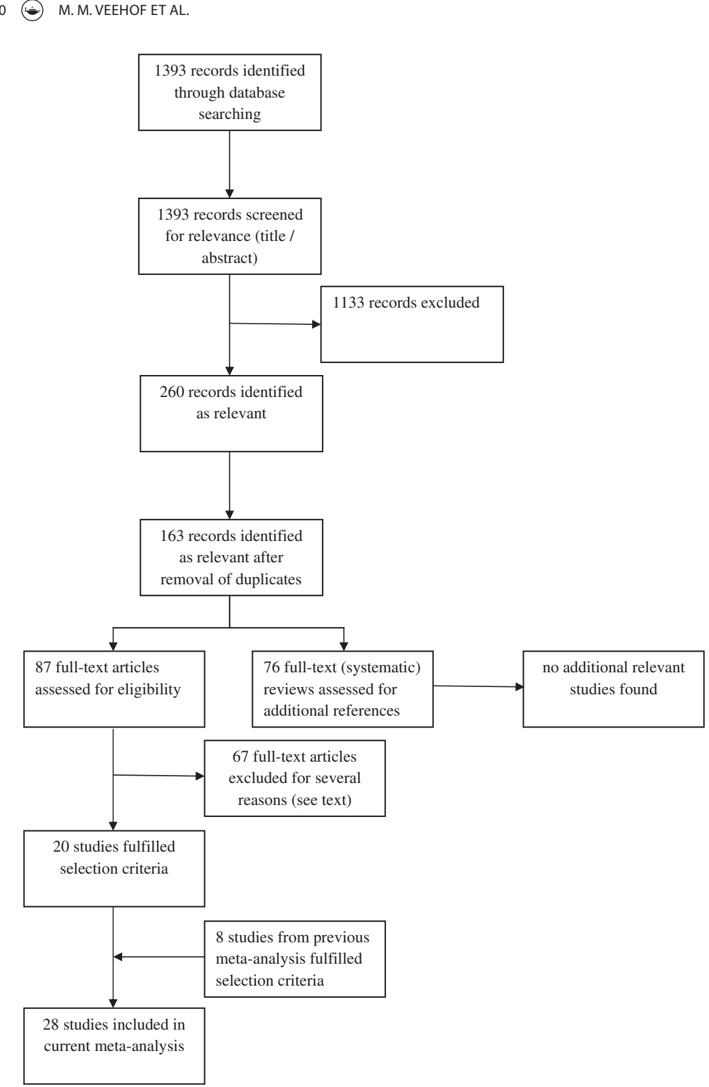
- Systematic review and meta-analysis of randomized controlled trials; searched PubMed, EMBASE, PsycInfo, and Cochrane Central Register of Controlled Trials, updating a prior search up to December 2008 with studies from January 2009 to December 2013, restricted to English-language studies.
- Main analyses included 25 RCTs totaling 1285 chronic pain patients, comparing acceptance- and mindfulness-based interventions (ACT, MBSR, MBCT, and related programs) with waitlist, (medical) treatment-as-usual, or education/support controls; five studies compared interventions with active treatments such as CBT, multidisciplinary treatment, or relaxation.
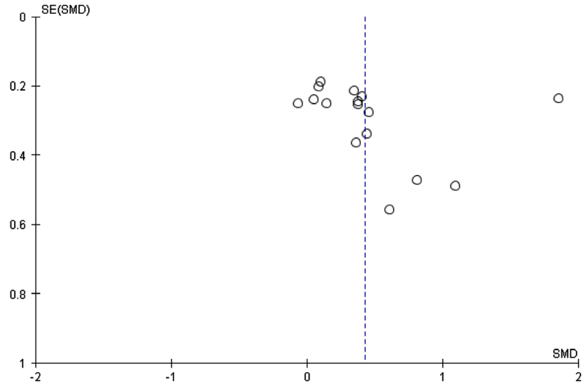
- Pooled standardized mean differences were calculated using a random-effects model; subgroup analyses examined quality score, control group, intervention type, pain type, and attrition rate; methodological quality was assessed with an 8-point scale, and funnel plots assessed publication bias.
Limitations
- The paper states that average study quality did not improve over the past six years, that quality ratings may be underestimated because criteria were scored as unmet when not reported, and that ACT and mindfulness-based treatments could only be compared at post-treatment because too few studies were available for follow-up subgroup analyses.
- The paper also states that a small number of studies were represented in some subgroup analyses.
- Evident from the text: heterogeneity was substantial for several outcomes (e.g., I² = 85% for post-treatment quality of life, 96% for some active-treatment comparisons), pain interference and anxiety had few studies (4 and 6 at post-treatment, respectively), and some indication of publication bias was found for depression.
Model-written summary. Check it against the paper before relying on it.
Integrity signals
Registry
Cites
Statistics
Figures



Verification
Claims the paper makes
6 Valid · 1 Not valid · 13 Not checked · 80 Own results and interpretations
The cited sources support only part of this claim — read each source’s verdict below.
In the paper
“Systematic reviews that qualitatively assess the efficacy of ACT, MBSR and MBCT generally find beneficial effects in chronic pain conditions (Lakhan & Schofield, 2013; McCracken & Vowles, 2014).”
What the sources say
- Partly supportedcites Lakhan & Schofield, 2013 matched to “Mindfulness-Based Therapies in the Treatment of Somatization Disorders: A Systematic Review and Meta-Analysis” (2013) sourceExperimental — accuracy not yet measured
The Discussion and Conclusions report beneficial effects of mindfulness-based therapies, including MBSR and MBCT, for some somatization conditions; pain improvement was clearest for irritable bowel syndrome. The paper does not establish a beneficial effect of ACT specifically, and its findings do not extend uniformly across chronic pain conditions. Page numbers are unavailable in our copy. (LLM, conf=0.86)
- Partly supportedcites McCracken & Vowles, 2014 matched to “Acceptance and commitment therapy and mindfulness for chronic pain: Model, process, and progress.” (2014) sourceExperimental — accuracy not yet measured
The ACT for Chronic Pain section reports positive chronic-pain trials and a meta-analysis finding acceptance- and mindfulness-based treatments at least as effective as traditional CBT. The Mindfulness section also describes symptom and emotional-functioning benefits. But the paper does not establish that qualitative systematic reviews generally found benefits for each of ACT, MBSR, and MBCT in chronic pain; its ACT systematic reviews covered mixed disorders, and the passages found do not address MBCT specifically. (LLM, conf=0.86)
plainstates an association- Asserted: passes — The authors put it forward as true.
- Checkable: passes — It can be checked against evidence.
- Load-bearing: passes — The paper’s conclusions depend on it.
- Based: passes — The paper gives a reason why it holds.
- Partly supported
Every source the paper cites for this claim was checked and supports it.
In the paper
“some impact on pain intensity may be reached because mindfulness skills have been found to influence brain mechanisms that may alter the pain experience (Zeidan et al., 2011).”
What the sources say
- Supportedcites Zeidan et al., 2011 matched to “Brain Mechanisms Supporting the Modulation of Pain by Mindfulness Meditation” (2011) source
The Discussion reports that meditation reduced pain-intensity ratings and links that relief to brain regions involved in cognitive pain modulation. Its section on multiple brain mechanisms specifically associates lower pain-intensity ratings with anterior cingulate and anterior insula activation. This supports the citing sentence’s cautious claim. (LLM, conf=0.93)
hedgedstates a possible cause- Asserted: passes — The authors put it forward as true.
- Checkable: passes — It can be checked against evidence.
- Load-bearing: unclear — It is unclear whether the paper’s conclusions depend on it.
- Based: passes — The paper gives a reason why it holds.
- Supported
Every source the paper cites for this claim was checked and supports it.
In the paper
“However, as is the case for biomedical treatment solutions, effect sizes of CBTs are modest (Williams, Eccleston, & Morley, 2012).”
What the sources say
- Supportedcites Williams, Eccleston, & Morley, 2012 matched to “Psychological therapies for the management of chronic pain (excluding headache) in adults” (2012) source
The Summary of results describes CBT effect sizes as “small to moderate.” The review also reports small effects on pain and disability compared with treatment as usual. The biomedical-treatment comparison is the citing authors’ framing, not a finding attributed to this source. (LLM, conf=0.92)
plain- Asserted: passes — The authors put it forward as true.
- Checkable: passes — It can be checked against evidence.
- Load-bearing: passes — The paper’s conclusions depend on it.
- Based: passes — The paper gives a reason why it holds.
- Supported
Every source the paper cites for this claim was checked and supports it.
In the paper
“Overall, the effect sizes found in this study were at least comparable to those found in a recent meta-analysis of CBT for chronic pain patients (Williams et al., 2012).”
What the sources say
- Supportedcites Williams et al., 2012 matched to “Psychological therapies for the management of chronic pain (excluding headache) in adults” (2012) source
The cited review reports pooled CBT effect sizes for adults with chronic pain in “Cognitive behavioural versus treatment as usual posttreatment,” including SMDs of −0.21 for pain, −0.26 for disability, and −0.38 for mood. It therefore supplies the meta-analysis benchmark cited in the sentence; whether the citing study’s effects are at least comparable depends on that study’s own results, not on this source. (LLM, conf=0.88)
plain- Asserted: passes — The authors put it forward as true.
- Checkable: passes — It can be checked against evidence.
- Load-bearing: passes — The paper’s conclusions depend on it.
- Based: passes — The paper gives a reason why it holds.
- Supported
The cited sources support only part of this claim — read each source’s verdict below.
In the paper
“However, only the effect size of mood was maintained at follow-up (Williams et al., 2012).”
What the sources say
- Partly supportedcites Williams et al., 2012 matched to “Psychological therapies for the management of chronic pain (excluding headache) in adults” (2012) sourceExperimental — accuracy not yet measured
The Summary of results says that, for CBT versus treatment as usual or waiting list, the mood effect was maintained at follow-up while pain and disability effects were not. But the unqualified claim overlooks a different comparison: the Cognitive behavioural versus active control at follow-up section reports a significant disability effect and no significant mood effect. (LLM, conf=0.87)
plain- Asserted: passes — The authors put it forward as true.
- Checkable: passes — It can be checked against evidence.
- Load-bearing: passes — The paper’s conclusions depend on it.
- Based: passes — The paper gives a reason why it holds.
- Partly supported
41 more claims
Create a free account to see all 100 claims and to verify the 1 reference still open.
- It may state two separate claims as one. 29
- Probably not a substantial claim. 30
- Not yet classified. 1
- The quote only partly states this claim. 7
Claims other papers make about this one
Each is checked against this paper’s own text: does it say what the citing paper says it does?
The cited source doesn’t support the claim as written.
In the citing paper
“whereas for the other meta-analysis the effects were non-significant (Veehof et al., 2016).”
From The empirical status of acceptance and commitment therapy: A review of meta-analyses (2020) · cites this paper as Veehof et al., 2016
Checked by a reasoning model — may be wrong.
Experimental — accuracy not yet measuredThe source backs part of the claim, not all of it — or backs it for a different population, condition or comparison.
In the citing paper
“Mindfulness-based interventions have been shown to enhance quality of life in many different chronic conditions (Demarzo et al., 2015; Crowe et al., 2016; Veehof et al., 2016; Haller et al., 2017) and we confirmed this with respect to MS in our study.”
From The effectiveness of a body-affective mindfulness intervention for multiple sclerosis patients with depressive symptoms: A randomized controlled clinical trial (2017) · cites this paper as Veehof et al., 2016
Experimental — accuracy not yet measuredThe source backs part of the claim, not all of it — or backs it for a different population, condition or comparison.
In the citing paper
“Mindfulness-based interventions are a relatively brief and cost-effective psychological treatment that have been shown to reduce depressive symptoms and improve quality of life in patients with several chronic diseases (Hofmann et al., 2010; Crowe et al., 2016; Veehof et al., 2016; Haller et al., 2017).”
From The effectiveness of a body-affective mindfulness intervention for multiple sclerosis patients with depressive symptoms: A randomized controlled clinical trial (2017) · cites this paper as Veehof et al., 2016
Experimental — accuracy not yet measuredThe source backs part of the claim, not all of it — or backs it for a different population, condition or comparison.
In the citing paper
“As such, our findings are in accordance with the theory that being mindful helps one encounter the pain experience without unnecessary elaboration, catastrophizing, or reactivity.10,15,50”
From Mindful attention is inversely associated with pain via mediation by psychological distress in orthopedic patients. (2024) · cites this paper as [50]
Experimental — accuracy not yet measuredThe source backs part of the claim, not all of it — or backs it for a different population, condition or comparison.
In the citing paper
“A meta-analysis defined MBIs with a duration of 2 weeks or less as brief. They were shown to have positive effects on negative affectivity (15).”
From Effects of a Brief Mindfulness-based Intervention in Patients with Psoriasis: A Randomized Controlled Trial (2024) · cites this paper as [15]
Experimental — accuracy not yet measured
65 more claims about this paper
Create a free account to see every claim other papers make about this one.
Self-check
Percentages, sums and reported differences re-computed from the paper’s own numbers.
Each contradiction between two passages listed here was confirmed by an independent check.
Rated major: it would touch a result — a value a result rests on, reported and recomputed p-values on opposite sides of the significance level, two passages that conflict with no sign which is right, or a cited work retracted before this paper was published.
In the paper
§ Follow-up effects
“The effects on anxiety and disability remained moderate with mean SMDs of respectively .59 (95% CI = .14, 1.04) and .39 (95% CI = .11, .67).”
§ Post-treatment effects
“| | Follow-up | 4 | Luciano et al., 2014; Wicksell et al., 2008, 2013; Wong et al., 2011 | χ 2 = 12.07, df = 3 ( p = .007); I 2 = 75% | .57 (.00, 1.14) | Z = 1.97 ( p = .05) |”
Rated major: it would touch a result — a value a result rests on, reported and recomputed p-values on opposite sides of the significance level, two passages that conflict with no sign which is right, or a cited work retracted before this paper was published.
In the paper
§ ABSTRACT
“Studies' quality, attrition rate, type of pain and control group, did not moderate the effects of acceptanceand mindfulness-based interventions.”
§ Subgroup analyses
“Finally, medium quality studies (SMD .17) showed a lower mean effect on quality of life than the low (SMD 1.01) and high (2.33) quality studies.”
Rated major: it would touch a result — a value a result rests on, reported and recomputed p-values on opposite sides of the significance level, two passages that conflict with no sign which is right, or a cited work retracted before this paper was published.
In the paper
§ ABSTRACT
“Studies' quality, attrition rate, type of pain and control group, did not moderate the effects of acceptanceand mindfulness-based interventions.”
§ Subgroup analyses
“Furthermore, studies using a (M)TAU group as the control group (SMD .85) showed a higher mean effect on anxiety than studies using an education/support group as an active control group (SDM .07).”
Rated major: it would touch a result — a value a result rests on, reported and recomputed p-values on opposite sides of the significance level, two passages that conflict with no sign which is right, or a cited work retracted before this paper was published.
In the paper
§ Follow-up effects
“The effects on depression and quality of life (slightly) increased and became moderate with mean SMDs of respectively . 53 (95% CI = .24, .82) and .66 (95% CI = .06, 1.26).”
§ Post-treatment effects
“| | Follow-up | 10 | Zautra et al., 2008 Astin et al., 2003; Luciano et al., 2014; McCracken et al., 2013; Parra-Delgado & Latorre-Posti- go, 2013; Pradhan et al., 2007; Schmidt et al., 2011; Sephton et al., 2007; Wicksell et al., 2008, | χ 2 = 30.65, df = 9 ( p = .0003); I 2 = 71% | .50 (.19, .80) | Z = 3.22 ( p = .001) |”
Rated minor: it would not touch a result — a value no result rests on, a p-value that stays on the same side of the significance level, or a conflict that is clerical, resolved elsewhere in the paper, or outside its own findings.
In the paper
§ Main findings
“the current meta-analysis which showed that the effects on all outcomes, except pain intensity, increased at follow-up.”
§ Follow-up effects
“The effects on anxiety and disability remained moderate with mean SMDs of respectively .59 (95% CI = .14, 1.04) and .39 (95% CI = .11, .67).”
1 more finding
Create a free account to see every finding of this check.
Citations
Cites
Statistical Power Analysis for the Behavioral Sciences (2nd ed.).
Lachenbruch, P. A., & Cohen, J. (1989) · Journal of the American Statistical Association · doi:10.2307/2290095 · Cited by 37,395 · cited 2×
“Cohen (Cohen, 1977) has described effect sizes .”
BackgroundStatistical Power Analysis for the Behavioral Sciences
Cohen, J. (2013) · doi:10.4324/9780203771587 · Cited by 25,373
Cochrane Handbook for Systematic Reviews of Interventions: Cochrane Book Series
(2008) · doi:10.1002/9780470712184 · Cited by 25,048
Assessing the quality of reports of randomized clinical trials: Is blinding necessary?
Jadad, A. R., Moore, R. A., Carroll, D., Jenkinson, C., Reynolds, D. J. M., Gavaghan, D. J., & McQuay, H. J. (1996) · Controlled Clinical Trials · doi:10.1016/0197-2456(95)00134-4 · Cited by 17,582 · cited 1×
“Methodological quality of included studies was independently assessed by two reviewers (MV and KS) using a 8-point scale, based on criteria by the Cochrane Collaboration (Higgins & Altman, 2008) and the validated Jadad scale (Jadad, 1996) tailored for the included studies (see Table 1).”
MethodUsing Self-Report Assessment Methods to Explore Facets of Mindfulness
Baer, R. A., Smith, G. T., Hopkins, J., Krietemeyer, J., & Toney, L. (2006) · Assessment · doi:10.1177/1073191105283504 · Cited by 7,511
(2008) · Medical Entomology and Zoology · Cited by 7,477
Acceptance and commitment therapy: model, processes and outcomes
Hayes, S. C., Luoma, J. B., Bond, F. W., Masuda, A., & Lillis, J. (2006) · Behaviour Research and Therapy · doi:10.1016/j.brat.2005.06.006 · Cited by 6,587
Shapiro, S. L., Carlson, L. E., Astin, J. A., & Freedman, B. (2006) · Journal of Clinical Psychology · doi:10.1002/jclp.20237 · Cited by 4,002
The effect of mindfulness based therapy on anxiety and depression: A meta analytic review
Hofmann, S. G., Sawyer, A. T., Witt, A. A., & Oh, D. (2010) · Journal of Consulting and Clinical Psychology · doi:10.1037/a0018555 · Cited by 3,846
(2008) · Cited by 3,790
Research works printed but not linked: 6
- Martin, K. L. (2012). The influence of pain avoidance on the experience of mindfulness training (Published doctoral dissertation). San Diego, CA: Alliant International University.
- Nash-Mc Feron, D. E. (2006). Mindfulness in the treatment of chronic headache pain. Dissertation Abstracts International: Section B: The Sciences and Engineering, 67 , 2841.
- Trompetter, H. R., Bohlmeijer, E. T., Fox, J.-P ., Schreurs, K. M. G. (2015). Psychological flexibility and catastrophising as associated change mechanisms during an online acceptance-based intervention for chronic pain. In H. Trompetter (Ed.), ACT with pain. Measurement, efficacy and mechanisms of acceptance & commitment therapy. (Unpublished disseration). Enschede: University of Twente.
- Vernon, A. D. (2011). Paying attention to values instead of pain: Chronic pain and neuropsychological functioning, as potentially mediated by acceptance of pain (Published doctoral dissertation). Berkely, CA: Wright Institute Graduate School of Psychology.
- Wicksell, R. K., Kemani, M., Jensen, K., Kosek, E., Kadetoff, D., Sorjonen, K., Ingvar, M. (2013). Acceptance and commitment therapy for fibromyalgia: A randomized controlled trial. European Journal of Pain, 17 , 599-611. · doi:10.1002/ejp.2013.17.issue-4
- Wong, C. M. (2009). Four-step mindfulness-based therapy for chronic pain: A pilot randomized controlled trial (Unpublished doctoral dissertation). The Chinese University of Hong Kong, Hong Kong.
Cited by
Items 601–700 of 731
Chronic Pain and Exercise : Studies on pain intensity, biochemistry, adherence and attitudes
Karlsson, L. (2017) · Linköping University medical dissertations · doi:10.3384/diss.diva-137076
“The opposite of avoidance of activity could be described in terms of acceptance and commitment as included in Acceptance and Commitment Therapy (ACT) [132, 133, 135], a method earlier applied on chronic pain research [242, 243].”
MethodHenry, F. (2017) · Douleurs Évaluation - Diagnostic - Traitement · doi:10.1016/j.douler.2017.07.004
Westendorp (2017) · Research Publications (Maastricht University) · doi:10.26481/dis.20171221tw
Wolter, D. K. (2016) · Deutsches Ärzteblatt international · doi:10.3238/arztebl.2016.0661b
Symptom Management in Lung Cancer
Nathani, N., & Arenberg, D. A. (2018) · Elsevier eBooks · doi:10.1016/b978-0-323-48565-4.00014-x
Hartman, T. O., & Tak, L. M. (2018) · Bohn Stafleu van Loghum eBooks · doi:10.1007/978-90-368-2174-2_11
Reflection-impulsivity: a cognitive perspective on binge drinking
Bridgman, T. (2018) · Figshare
Compassion in the Treatment for Chronic Pain: an Ethical Imperative with Neurobiological Effects
Palao, Á., Zarcero, M. T., Muñoz‐Sanjosé, A., González, C. R., Vidal-Villegas, M. P., Mediavilla, R., & Vega, B. R. (2019) · Mindfulness · doi:10.1007/s12671-019-01157-z · Cited by 1
Spithoff, S. M. (2019) · TSpace (University of Toronto)
Hyväksymis- ja omistautumisterapian työkalujen hyödyntäminen terveyssosiaalityössä
Kauravaara, K. (2020) · Janus Sosiaalipolitiikan ja sosiaalityön tutkimuksen aikakauslehti · doi:10.30668/janus.83399 · Cited by 2
“1996; Hayes 2016; Wegner 1994.)”
Emotion Regulation Repertoire: Which Strategies Drive Mental Health?
Schmitt, M. E. (2018) · Cited by 1
Robinson, R. C., & Chong, J. (2020) · Springer eBooks · doi:10.1007/978-3-030-39982-5_16
Saracutu, M. M. (2019) · Cronfa (Swansea University) · doi:10.23889/suthesis.54524
“In addition, effect sizes ranged from small (on all outcomes except anxiety and pain interference) to moderate (on anxiety and pain interference) at post-treatment and from small (on pain intensity and disability) to large (on pain interference) at follow-up (Veehof et al., 2016).”
BackgroundInfluentialP.425 Analgesic effect of atomoxetine - selective norepinephrine reuptake inhibitor
Vilmosh, N., Kandilarov, I., Georgieva, M., et al. (2020) · European Neuropsychopharmacology · doi:10.1016/j.euroneuro.2020.09.313
Making sense of pain in sports physiotherapy
O’Shaughnessy, D., & Jones, L. E. (2020) · Elsevier eBooks · doi:10.1016/b978-0-7020-7489-9.00009-0 · Cited by 1
Effect of Mindfulness Intervention on Examination Anxiety of Medical Students
韦, 天. (2020) · Advances in Social Sciences · doi:10.12677/ass.2020.912289
Senior WISE intervention: Gender differences in bodily pain and trait anxiety
McDougall, G. J., Pituch, K. A., Martorella, G., & Monroe, T. B. (2021) · Archives of Psychiatric Nursing · doi:10.1016/j.apnu.2021.05.001
Insomnia Symptoms in Chronic Pain : Clinical presentation, risk and treatment
Wiklund, T. (2021) · Linköping University medical dissertations · doi:10.3384/diss.diva-175373
The Impact of Acceptance & Commitment Group Therapy on Pain-Related Acceptance in Veterans
Cosio, D. (2021) · doi:10.36959/784/426
“Research has found that ACT for chronic pain increases pain acceptance, psychological flexibility, and functioning [10,11].”
BackgroundPsychosocial interventions for pediatric pain management
Uhl, K., Wright, L. A., Coakley, R. M., & Logan, D. E. (2021) · Oxford University Press eBooks · doi:10.1093/med/9780198818762.003.0051
Abwechslungsreiche Therapiematerialien für die Behandlung von Patienten mit chronischen Schmerzen
Bräscher, A. (2020) · Zeitschrift für Klinische Psychologie und Psychotherapie · doi:10.1026/1616-3443/a000549
Taheri, A. A., Foroughi, A., Davoudi, M., Heshmati, K., Mohammdpour, M., & Khoramnia, S. (2021) · Shenakht Journal of Psychology and Psychiatry · doi:10.32598/shenakht.8.2.143
Cognitive and Behaviorally Oriented Psychotherapies for Fibromyalgia
Williams, D. A. (2021) · Springer eBooks · doi:10.1007/978-3-030-78638-0_13
Behavioural and psychosocial interventions for pain management
Winger, J. G., Keeler, C. E., & Keefe, F. J. (2021) · Oxford University Press eBooks · doi:10.1093/med/9780198821328.003.0045 · Cited by 1
Guidelines for diagnosis and treatment of patients with neck pain – Part 2
Grazio, S., Perović, D., Kavanagh, H. S., Vlak, T., Schnurrer-Luke-Vrbanić, T., Grubišić, F., Božić, B., Kauzlarić, N., Bilić, V., Karlović, D., et al. (2021) · Liječnički vjesnik · doi:10.26800/lv-143-9-10-1
Proeschold‐Bell, R. J., Eagle, D. E., Tice, L. C., Yao, J., Rash, J. A., Choi, J. Y., Stringfield, B., & Labrecque, S. M. (2021) · Research Square · doi:10.21203/rs.3.rs-1056451/v1
A(pp)ceptance: Increasing physicians’ acceptance for chronic pain apps (Preprint)Preprint
Hein, H. J., Glombiewski, J. A., Rief, W., & Riecke, J. (2021) · doi:10.2196/preprints.35270
(2017) · De Boeck Supérieur eBooks · doi:10.3917/dbu.isnar.2017.01.0195
Research Progress of Chronic Pain and Memory Bias
左, 锡. (2022) · Advances in Social Sciences · doi:10.12677/ass.2022.111009 · Cited by 1
Psychosocial Chronic Pain Management
Day, M. A. (2017) · Wiley eBooks · doi:10.1002/9781119257875.ch2
(2021) · Elsevier eBooks · doi:10.1016/b978-2-294-77182-8.00028-3
Piskorz, J., Froń, K., Hoppe-Gosik, J., & Czub, M. (2022) · Integrative and Complementary Therapies · doi:10.1089/ict.2022.29006.jpi
Sheen, M., Yekani, H. A. K., & Jordan, T. R. (2022) · Teaching of Psychology · doi:10.1177/00986283211041339
Herbert, M. S., Tynan, M., Lang, A. J., et al. (2022) · SSRN Electronic Journal · doi:10.2139/ssrn.4057808
Bantel, C. (2018) · Faculty Opinions – Post-Publication Peer Review of the Biomedical Literature · doi:10.3410/f.732783304.793553564
Dionne, F., & Veillette, J. (2021) · Dunod eBooks · doi:10.3917/dunod.dionn.2021.01.0298
Hohenschurz‐Schmidt, D., Scott, W., Park, C., Christopoulos, G., Vogel, S. K., & Draper‐Rodi, J. (2022) · Der Schmerz · doi:10.1007/s00482-022-00659-5 · Cited by 1
Bending Not Breaking: Flexibility and mindfulness as resilience factors for pain and recovery
Meesters, A. (2022) · Research Publications (Maastricht University) · doi:10.26481/dis.20220928am · Cited by 1
James, C. (2022) · Digital Commons - URI (University of Rhode Island) · doi:10.23860/diss-james-ciara-2022 · Cited by 1
Chronic Pain: Third Wave Case Conceptualizations
Vowles, K. E. (2022) · Springer eBooks · doi:10.1007/978-3-031-11677-3_30
Chronic Pain: Perspective on the Second Wave
Adams, L. M., & Turk, D. C. (2022) · Springer eBooks · doi:10.1007/978-3-031-11677-3_29 · Cited by 1
Matsuura, J. T., Panos, J. S., & Earles, J. E. (2022) · Springer eBooks · doi:10.1007/978-3-031-12063-3_9
A Psychological Approach to Functional Illness
Carlson, A. A., & Tkachuk, G. A. (2023) · Springer eBooks · doi:10.1007/978-3-031-12998-8_19 · Cited by 1
Bendelin, N. (2023) · Linköping University medical dissertations · doi:10.3384/9789180750288 · Cited by 1
Les pratiques psychocorporelles (ou mind-body) dans les rhumatismes inflammatoires chroniques
Sibilia, J., Berna, F. S., Bloch, J.-G., & Scherlinger, M. (2023) · Revue du Rhumatisme · doi:10.1016/j.rhum.2023.05.002 · Cited by 1
Effects of visual arts on persistent pain: A systematic reviewPreprint
Lee, W. H. M., Gholamrezaei, A., & Pourkazemi, F. (2023) · medRxiv · doi:10.1101/2023.05.24.23290506 · Cited by 2
“Psychological interventions for persistent pain Psychological interventions such as cognitive-behavioural therapy (CBT), acceptance and commitment therapy (ACT), and mindfulness, can help to deal with persistent pain (Hughes et al., 2017; Knoerl et al., 2016; Veehof et al., 2016).”
BackgroundNeuropsychiatric Factors Involved in the Development of Fibromyalgia: A Literature Review
Gómez, M. I. (2023) · Orthopedics and Rheumatology Open Access Journal · doi:10.19080/oroaj.2023.22.556078 · Cited by 1
Mindfulness and virtual reality technology in the treatment of chronic back pain
Bofanova, N. S. (2023) · Russian Journal of Pain · doi:10.17116/pain20232104156
Alhassanin, D. H., Elbadry, A. A., Mohamed, N. K., & Ezz, H. A. A. (2023) · International Journal of Medical Anesthesiology · doi:10.33545/26643766.2023.v6.i4a.434
“ Psychological therapies: including cognitive behavioral therapy (CBT), have been found to have positive benefits on anxiety, sadness, and mood disturbance, which are major variables in the progression of persistent pain [32] .”
BackgroundZerth, S. F., Hein, H. J., Glombiewski, J. A., Rief, W., & Riecke, J. (2023) · BMC Digital Health · doi:10.1186/s44247-023-00053-w
“ACT is an intensively-researched therapy method [9] that appears to be effective in treating chronic pain [10] with even very brief interventions having positive effects [11].”
BackgroundPolyvyannaya, N. (2024) · Habaršy. Psihologiâ seriâsy · doi:10.51889/2959-5967.2023.77.4.001 · Cited by 1
Directive clinique no 445 : Gestion de la douleur pelvienne chronique
Allaire, C., Yong, P. J., Bajzak, K. I., Jarrell, J. F., Lemos, N. L. B. M., Miller, C., Morin, M., Nasr‐Esfahani, M., Singh, S. S., & Chen, I. (2024) · Journal of Obstetrics and Gynaecology Canada · doi:10.1016/j.jogc.2023.102284
The Role of Mindfulness-Based Interventions in Treating Depression among Population Subgroups
Saiuk, N., Kołodziej, M., Kozicz, M. A., Mądry, W., Mazurkiewicz, A., Męczyńska, J., Seredyński, T., Wojciechowska, A., Marcicka, J., & Salasa, W. (2024) · Journal of Education Health and Sport · doi:10.12775/jehs.2024.66.007
“PubMed and Google Scholar databases were searched, and among studies fully addressing the issue, we found 3 cross-sectional studies[77–79], 1 pre-post study[80], 3 randomized controlled trials (RCTs)[81–83], and 1 meta-analytic review[84].”
BackgroundAshtiani, M. C., Fattahi, N., Balali, D., Alavi, S. H., & Mahmoudzadeh, M. (2024) · Journal of Assessment and Research in Applied Counseling · doi:10.61838/kman.jarac.6.1.10 · Cited by 11
王, 文. (2024) · Advances in Psychology · doi:10.12677/ap.2024.144252
González-Moreno, J., MONTERO, C. P., Manos, D., Martínez, S. G., & Cantero-García, M. (2024) · Current Psychology · doi:10.1007/s12144-024-06012-6 · Cited by 2
“Notably, investigations reveal that individuals receiving ACT for chronic pain report noteworthy reductions in pain-related anxiety and depression, coupled with enhancements in physical functioning and over-all quality of life (Veehof et al., 2016; Wicksell et al., 2009).”
Hahne, I., Segerer, J., Zierhut, M. M., et al. (2024) · Research Square · doi:10.21203/rs.3.rs-4313238/v1
Tratamiento del dolor persistente, evidencias
Dalmau-Roig, A., Castaño-Asins, J. R., & Morral, A. (2024) · Formacion Medica Continuada En Atencion Primaria · doi:10.1016/j.fmc.2024.05.003
Piracha, N. Z., & Wong, K. G. (2024) · Springer eBooks · doi:10.1007/978-3-031-54281-7_21 · Cited by 1
Didehban, R., Zemestani, M., Asmundson, G. J. G., & Bakhshaie, J. (2024) · Journal of Contextual Behavioral Science · doi:10.1016/j.jcbs.2024.100818 · Cited by 1
Damci, A., den Hollander, M., Hoeijmakers, J. G. J., Faber, C. G., Goossens, M. E. J. B., & Verbunt, J. (2024) · Frontiers in Neurology · doi:10.3389/fneur.2024.1493326 · Cited by 2
Azizoddin, D. R., DeForge, S. M., Edwards, R. R., Baltazar, A. R., Schreiber, K. L., Allsop, M. J., Banson, J., Oseuguera, G., Businelle, M. S., Tulsky, J. A., et al. (2024) · JCO Clinical Cancer Informatics · doi:10.1200/cci.24.00111 · Cited by 3
Yamin, J. B., Pester, B., Kommu, R., Allen, C., Dharmendran, D., Steinhilber, K., Crago, M. A., Kazemipour, S., Franqueiro, A. R., Fentazi, D., et al. (2024) · Contemporary Clinical Trials · doi:10.1016/j.cct.2024.107785
Darling, L. N., Lee, K., & Otis, J. D. (2025) · Cambridge University Press eBooks · doi:10.1017/9781009086264.009
Acceptance and commitment therapy (ACT) for pediatric chronic non-cancer pain: A systematic review
Serrano‐Ibáñez, E. R., Houghton, J. L., Ruiz-Párraga, G. T., Esteve, R., Ramírez‐Maestre, C., & López-Martínez, A. E. (2025) · Journal of Contextual Behavioral Science · doi:10.1016/j.jcbs.2025.100873 · Cited by 1
10.1016/b978-0-323-63668-1.00074-4
(2000) · Time to knit · doi:10.1016/b978-0-323-63668-1.00074-4
Prasad, S., Pipitone, O., Wong, M., & Jones, J. D. (2025) · Musculoskeletal Care · doi:10.1002/msc.70076 · Cited by 1
Bassimtabar, A. (2025) · Springer eBooks · doi:10.1007/978-3-662-70334-2_1
Untersuchung und Therapie von Schmerzen
Bassimtabar, A. (2025) · Springer eBooks · doi:10.1007/978-3-662-70334-2_5
Fueled from Within: How Meditation Forges the Inner Tools Required for Change
Swami, S., & Steinborn, M. (2025) · Springer eBooks · doi:10.1007/978-3-031-70680-6_20
Castaño-Asins, J. R., Sanabria‐Mazo, J. P., Royuela-Colomer, E., Luciano, J. V., Polanco, M., & Montes, A. (2025) · Revista de la Sociedad Española del Dolor · doi:10.20986/resed.2025.4214/2025
Pharmacological and behavioral pain treatment strategies for patients with opioid use disorder
Ameral, V., Hickey, T. R., Reilly, E. D., Patterson, J. A., & Sofuoglu, M. (2025) · Expert Opinion on Pharmacotherapy · doi:10.1080/14656566.2025.2506688 · Cited by 1
“Mindfulness-based treatments have demonstrated effectiveness in managing chronic pain in individuals without OUD [88,89] and have also been explored for the prevention of long-term opioid medication use [90].”
Influence of mindfulness training on attention processing in individuals with chronic painPreprint
Wang, M. Y., Bailey, N. W., Fitzgerald, P. B., & Fitzgibbon, B. M. (2025) · medRxiv · doi:10.1101/2025.05.28.25328533
Liu, T., Kanagawa, H. S., Lee, J. K. Q., Leung, D. K. Y., Wong, S. M. Y., Kwok, W.-W., Wong, G. H. Y., & Lum, T. Y. S. (2025) · BJPsych Open · doi:10.1192/bjo.2025.10062 · Cited by 1
Baker, M., Martin, S. C., Ghriwati, N. A., Little, P., Struemph, K. L., Tyndal, T., Tonsgard, J. H., MacKenzie, C., Schorry, E. K., Walsh, K. S., et al. (2025) · Journal of Health Psychology · doi:10.1177/13591053251343023
“Studies have found benefits in acceptance as a coping style to pain across various chronic pain conditions (Veehof et al., 2016), as well as in adolescents and adults with NF1 and pNFs (Martin et al., 2021).”
Surendran, G., & Jose, T. P. (2025) · Fatigue Biomedicine Health & Behavior · doi:10.1080/21641846.2025.2531722
“This aligns with previous research suggesting that PF plays an important role in adaptive functioning and coping strategies, potentially mitigating the impact of chronic conditions such as CFS [15,22,23].”
Mun, C. J., Contreras, E., Xiao, Y., Eckert, R., Harting, A., Damera, S., Perez, I., Pandey, H. K., Mardian, A. S., LoVecchio, F., et al. (2025) · Pilot and Feasibility Studies · doi:10.1186/s40814-025-01692-8 · Cited by 1
“They are among the most widely utilized mind–body interventions for chronic pain due to their favorable safety profile [5] and generally robust efficacy for chronic pain [6].”
Geisser, M. E., & Theisen‐Goodvich, M. E. (2025) · Oxford University Press eBooks · doi:10.1093/oxfordhb/9780197525456.013.0010
Bassimtabar, A. (2025) · Springer eBooks · doi:10.1007/978-3-662-71562-8_1
Examination and Treatment of Pain
Bassimtabar, A. (2025) · Springer eBooks · doi:10.1007/978-3-662-71562-8_5
Kłosowska, J., Niedbał, M., Budzisz, A., Łaska, I. A., Bajcar, E. A., Badzińska, J., Bieniek, H., Brączyk, J., Rubanets, D., Wiercioch‐Kuzianik, K., et al. (2025) · Experimental Gerontology · doi:10.1016/j.exger.2025.112886
Integrating Motivational Interviewing and Mindfulness in Chronic Pain Management
Panchal, H. D. (2025) · Oxford University Press eBooks · doi:10.1093/med/9780197631010.003.0008
Yang, M., Lu, L., Tong, Y., Liang, Q., Huang, Q., Yang, Y., & Li, H. (2025) · Medicine · doi:10.1097/md.0000000000043936 · Cited by 2
“[7] This geographic disparity raises concerns regarding the applicability of existing evidence to populations experiencing a high burden of chronic pain.”
Liu, B., Zhang, Y., Wong, Z. Y., Li, B., Wang, J., Zhang, W., & Tian, K. (2025) · Medicine · doi:10.1097/md.0000000000046016 · Cited by 1
Safavi‐Abbasi, S., Venezia, E., Sughrue, M. E., & Dibaj, P. (2025) · Discover Psychology · doi:10.1007/s44202-025-00525-2 · Cited by 3
“Mindfulness meditation, which emphasizes self-regulation and overall quality of life improvement, may offer a comprehensive approach aligned with the biopsychosocial model of CLBP [21].”
Chen, Y., Li, Y., Sun, J., Xu, W., & Du, S. (2025) · Pain Management Nursing · doi:10.1016/j.pmn.2025.12.002
Buskbjerg, C. R., Johannsen, M., Nørskov, C. S., Jensen, A. B., Frederiksen, Y., Egerod, I., Guastaferro, K., Johansen, C., von Heymann, A., Speckens, A. E. M., et al. (2025) · Scandinavian Journal of Psychology · doi:10.1111/sjop.70063
Jensen, M. P., Ciol, M. A., Gertz, K. J., Ehde, D. M., Hakimian, S., Day, M. A., Pettet, M. W., Turner, A. P., Sarabosing, C. G., & Williams, R. M. (2026) · Journal of Pain · doi:10.1016/j.jpain.2025.106176 · Cited by 2
Wang, S., Gao, M., Yang, Y., Sun, M., Zhang, D., Luo, Y., Wang, J., & Zheng, R. (2026) · Mindfulness · doi:10.1007/s12671-025-02746-x
“Observation is the dimension where significant differences are most likely to appear after the intervention (Veehof et al., 2016).”
Tse, M. Y. M., He, J., Kwok, T. T. O., & Ho, S. (2026) · JMIR Research Protocols · doi:10.2196/80542
“The ability of patients to accept pain sensations, rather than attempting to fight them, has been associated with greater reductions in pain interference [20].”
Albajes, K., Barrios, V., Keegan, E. G., Queraltó, J. M., Miracco, M., & Jones, L. E. (2026) · Journal of Contextual Behavioral Science · doi:10.1016/j.jcbs.2026.100975
Lee, C. Y., Park, J., Miao, H., & Ahn, H. B. (2026) · medRxiv · doi:10.64898/2026.02.02.26345407
Akkoç, O., & Alkar, Ö. Y. (2026) · Klinik Psikoloji Dergisi · doi:10.57127/kpd.26024438.1741374 · Cited by 1
Mindfulness, disapproval, and morality
Mitchell, L. (2026) · Philosophical Psychology · doi:10.1080/09515089.2026.2654008
La conscience émotionnelle. Sa fonction dans l’autisme
Arnaud, S. (2018) · theses.fr (ABES) · doi:10.70675/c352894dz747bz4135zbeceza9aada92c36e · Cited by 1
Psychological Treatments: Cognitive Behavioral and Behavioral Interventions
McElligott, C. (2025) · Elsevier eBooks · doi:10.1016/b978-0-443-10583-8.00016-7
Sanyer, M. M., Garland, E. L., Barke, A., & Kleinstäuber, M. (2026) · Clinical Journal of Pain · doi:10.1097/ajp.0000000000001395
Castaño-Asins, J. R., Sanabria‐Mazo, J. P., Navarrete, J., Martín‐Lopez, L. M., Vilà-Canet, G., Isart, A., Arco-Churruca, A. D., Lafuente, J., Parramón, G., Fonseca, F., et al. (2026) · European Journal of Pain · doi:10.1002/ejp.70293
“…ACT would yield greater improvements across primary and secondary outcomes compared to TAU alone (Castaño-Asins et al. 2025; Nadinda et al. 2022; Veehof et al. 2016) and (2) improvements in primary and secondary outcomes would be mediated by increases in psychological flexibility and pain…”
Metadata
- Authors
- Veehof, M. M., Trompetter, H. R., Bohlmeijer, E. T., & Schreurs, K. M. G.
- Affiliations
- Medisch Spectrum Twente (NL)
- University of Twente (NL)
- Roessingh Research and Development (NL)
- Corresponding author
- Schreurs, K. M. G.
- Venue
- Cognitive Behaviour Therapy
- Publisher
- Informa UK Limited
- Published
- 2016-01-02
- Volume
- 45
- Issue
- 1
- Pages
- 5-31
- ISSN
- 1650-6073 (ISSN-L)
- 1651-2316
- OpenAlex
- W2254182258
- Semantic Scholar
- e6ce9512bc205dfdbae68c8909df568fb0379e2d
- Cited by
- 737
- References
- 137
- Citations by year
- 2026: 48 · 2025: 64 · 2024: 55 · 2023: 77 · 2022: 90 · 2021: 96 · 2020: 102 · 2019: 74 · 2018: 60 · 2017: 50 · 2016: 19
- FWCI
- 10.02
- Type
- journal article
- Language
- en
- Open access
- hybrid
- doi.org
- Licence
- Locations
- Cognitive Behaviour Therapy (publishedVersion, cc-by-nc-nd)
- PubMed (publishedVersion)
- University of Twente Research Information (publishedVersion, other-oa)
- University of Twente Research Information (submittedVersion, other-oa)
- Topics
- Social Sciences › Psychology › Clinical Psychology › Mindfulness and Compassion Interventions
- Health Sciences › Health Professions › Physical Therapy, Sports Therapy and Rehabilitation › Musculoskeletal pain and rehabilitation
- Life Sciences › Neuroscience › Cognitive Neuroscience › Pain Management and Placebo Effect
- Keywords
- acceptance and commitment therapy, mindfulness-based stress reduction, mindfulness-based cognitive therapy, chronic pain, pain intensity, pain interference, depression, anxiety, disability, quality of life, psychological intervention
- MeSH terms
- Humans, Treatment Outcome, Chronic Pain, Mindfulness, Acceptance and Commitment Therapy
About these checks
Registry, retraction, Cites and statistics results are computed, not judged, with one exception: a printed reference that no index lists is read once by a model before it counts as a citation error. Claims are extracted by a model and kept only when their quote appears verbatim in the text; each cited source is then checked, with a model’s help, for whether it says what the claim relies on. Those verdicts can be wrong — read the claim’s quote and the cited source before relying on one.
The claim verdicts this report counts are experimental: their accuracy is not yet measured.
A language model drew the claims from the paper on 2026-09-28, under version 3 of the claim definition (model deepseek-v4.1-flash, prompt extract-v3).
A second model labelled each claim on 2026-09-28 (model jev-1.13-20260917, definition revision gold-guideline-v0.2).
Cited sources are checked with a language model’s help (gpt-6-sol).
Statistics and arithmetic are recomputed, not judged.
Confidence bands are shown only for fields calibrated on our annotated test set. None is calibrated yet, so no band is shown.
What counts as a claim ›How we measure confidence ›How we check this ›
Are you an author, or do you see a problem with this page? Request a review
Data sources
Bibliographic data: Semantic Scholar, OpenAlex, Crossref.
Contains information from the Semantic Scholar Academic Graph Datasets, made available under the ODC Attribution License (ODC-BY 1.0).
Semantic Scholar’s data is described in: Kinney, R., et al. (2023). The Semantic Scholar Open Data Platform. arXiv:2301.10140.
