

Adaptation to tolerate high doses of arabinoxylan is associated with fecal levels of Bifidobacterium longum
Open accessThe DOI matches its Crossref record; 74 of the 75 references it cites were found in a registry or an index; 7 of the 95 sources its claims cite were checked for support.
Abstract
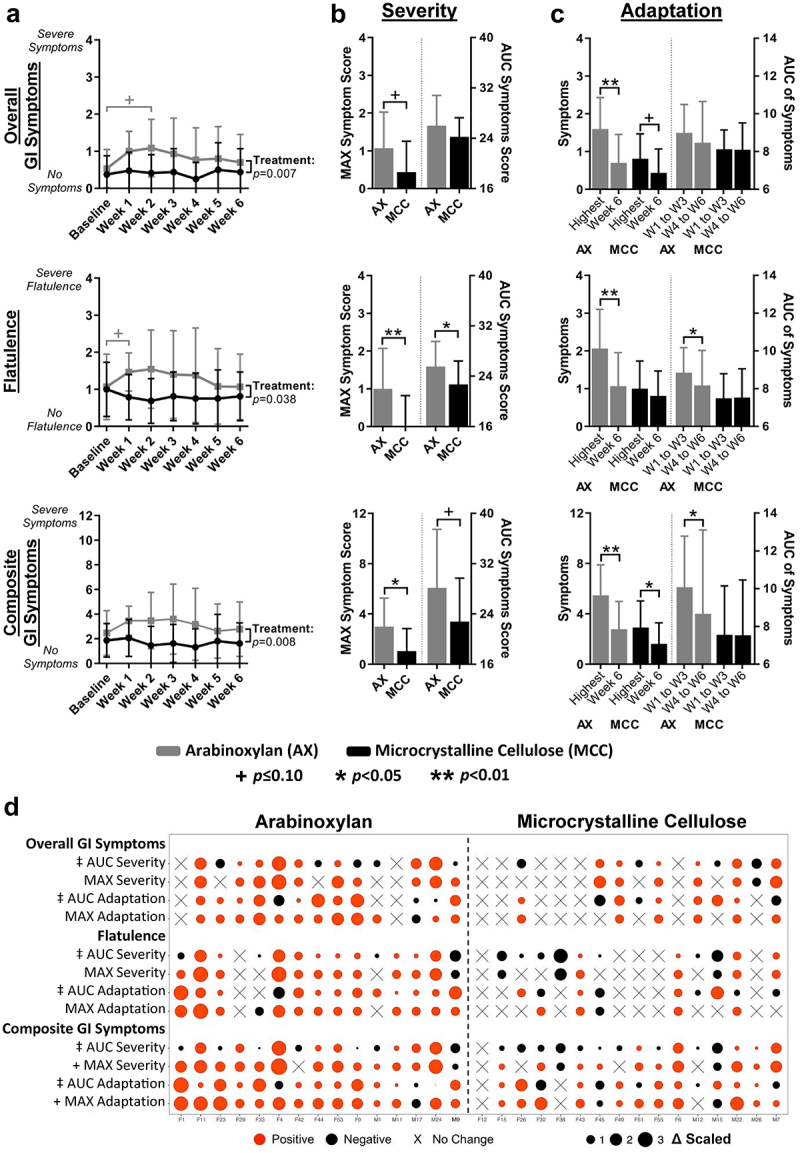
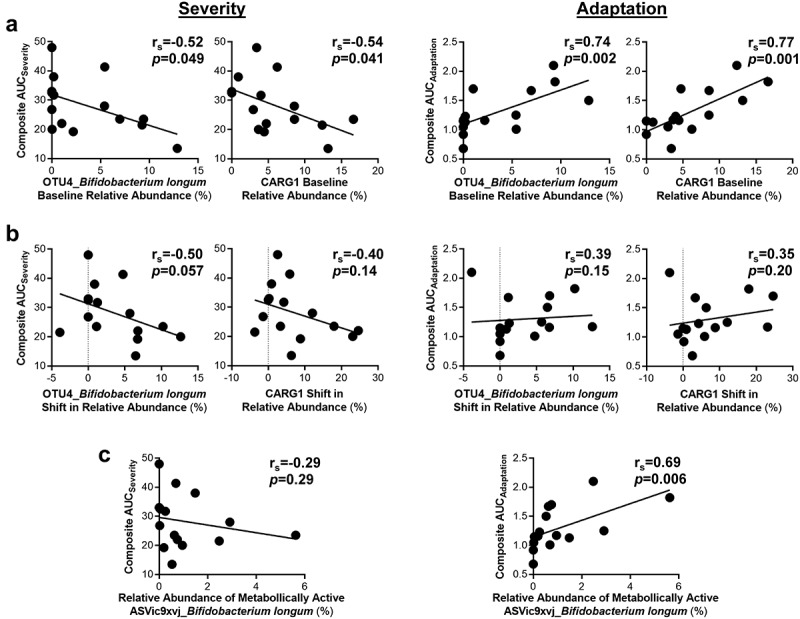
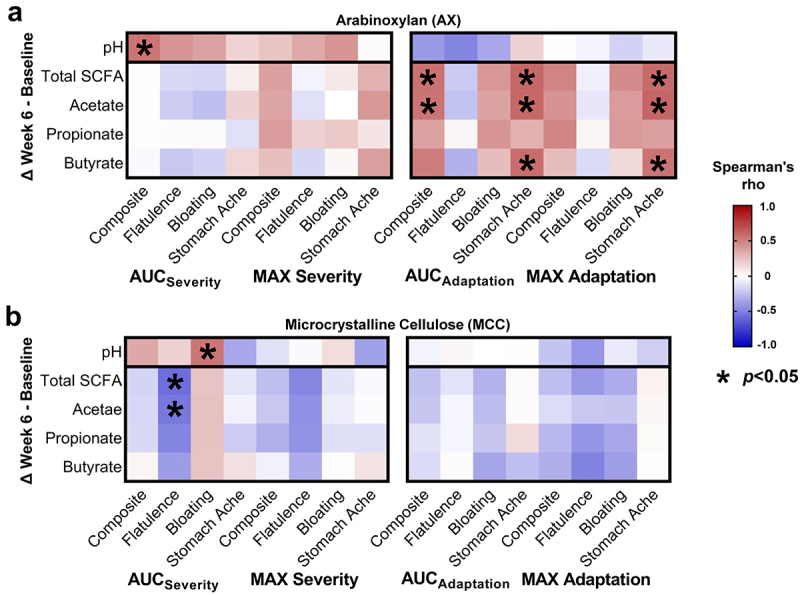
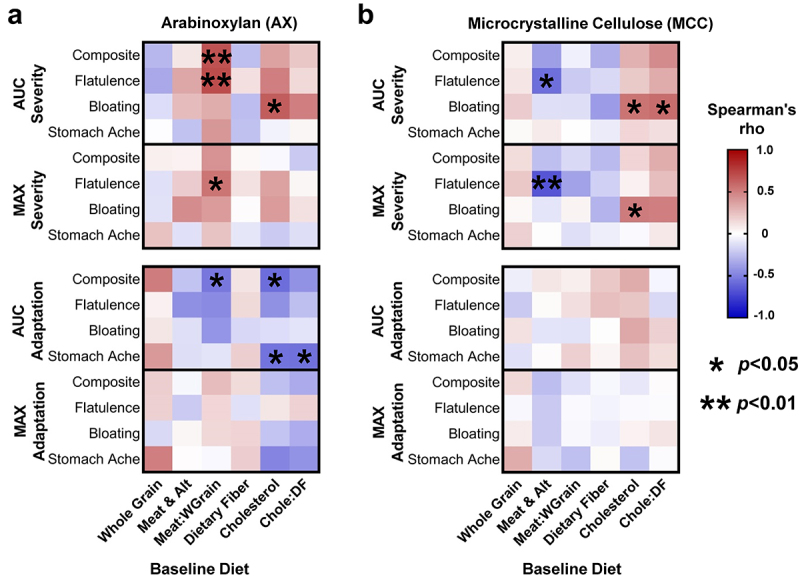
Dietary fiber supplements are a strategy to close the ‘fiber gap’ and induce targeted modulations of the gut microbiota. However, higher doses of fiber supplements cause gastrointestinal (GI) symptoms that differ among individuals. What determines these inter-individual differences is insufficiently understood. Here we analyzed findings from a six-week randomized controlled trial that evaluated GI symptoms to corn bran arabinoxylan (AX; n = 15) relative to non-fermentable microcrystalline cellulose (MCC; n = 16) at efficacious supplement doses of 25 g/day (females) or 35 g/day (males) in adults with excess weight. Self-reported flatulence, bloating, and stomach aches were evaluated weekly. Bacterial taxa involved in AX fermentation were identified by bioorthogonal non-canonical amino acid tagging. Associations between GI symptoms, fecal microbiota features, and diet history were systematically investigated. AX supplementation increased symptoms during the first three weeks relative to MCC (p < 0.05, Mann-Whitney tests), but subjects ‘adapted’ with symptoms reverting to baseline levels toward the end of treatment. Symptom adaptations were individualized and correlated with the relative abundance of Bifidobacterium longum at baseline (rs = 0.74, p = 0.002), within the bacterial community that utilized AX (rs = 0.69, p = 0.006), and AX-induced shifts in acetate (rs = 0.54, p = 0.039). Lower baseline consumption of animal-based foods and higher whole grains associated with less severity and better adaptation. These findings suggest that humans do ‘adapt’ to tolerate efficacious fiber doses, and this process is linked to their microbiome and dietary factors known to interact with gut microbes, providing a basis for the development of strategies for improved tolerance of dietary fibers.
Overview
CoChat Summary
## TL;DR
In this 6-week exploratory randomized controlled trial, high-dose long-chain corn bran arabinoxylan (AX) caused moderate gastrointestinal symptoms versus microcrystalline cellulose, but most participants adapted within the intervention period. Better AX tolerance was associated with higher fecal abundance of *Bifidobacterium longum*, greater fecal acidification/acetate, and a more plant-forward baseline diet.
## Key findings
- Thirty-eight volunteers with excess weight were enrolled; 31 completed and were analyzed per protocol (21 females, 10 males), with AX given at 25 g/day for females and 35 g/day for males over 6 weeks.
- AX increased overall symptoms, flatulence, bloating, stomach ache, and composite GI scores versus microcrystalline cellulose (generalized estimated equation models, treatment effect *p* < 0.05). Flatulence AUC severity was higher for AX (*p* = 0.045), and composite AUC severity trended higher (*p* < 0.1).
- Symptoms improved over time during AX: flatulence, bloating, stomach ache, and composite ratings at week 6 were lower than the peak values, and weeks 1–3 were significantly worse than weeks 4–6 for flatulence and composite scores (*p* = 0.02 for both), indicating adaptation within 6 weeks.
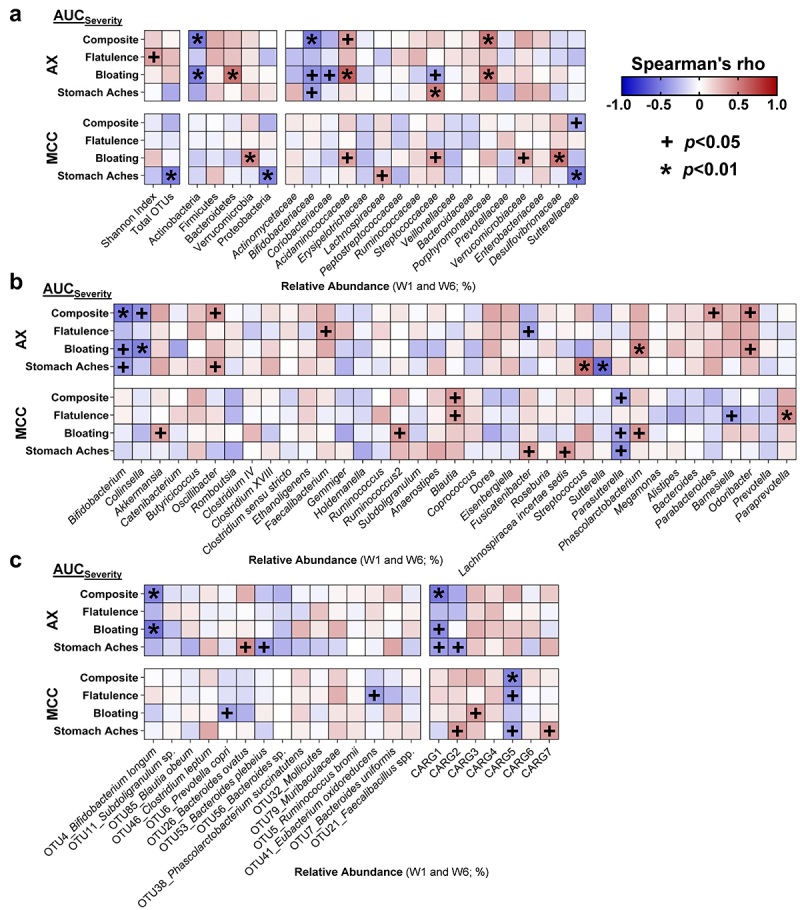
- Higher fecal *B. longum* abundance was associated with better AX tolerance: during AX, *B. longum* correlated negatively with composite severity (*r*ₛ = -0.48, *p* = 0.007) and bloating severity (*r*ₛ = -0.54, *p* = 0.002); baseline *B. longum* also correlated with lower bloating AUC severity (*r*ₛ = -0.67, *p* = 0.007) and better composite AUC adaptation (*r*ₛ = 0.74, *p* = 0.002).
- Fecal acidification and SCFA shifts also tracked with tolerance: fecal acidification correlated with lower composite AUC severity for AX (*r*ₛ = 0.54, *p* = 0.039), and composite AUC adaptation correlated with total SCFAs (*r*ₛ = 0.55, *p* = 0.036) and acetate (*r*ₛ = 0.54, *p* = 0.039).
- A more plant-forward baseline diet was linked to better AX tolerance: a higher meat/meat alternatives to whole grains ratio correlated with higher composite (*r*ₛ = 0.68, *p* = 0.007) and flatulence (*r*ₛ = 0.70, *p* = 0.005) AUC severity and lower composite AUC adaptation (*r*ₛ = -0.54, *p* = 0.042).
## Methods
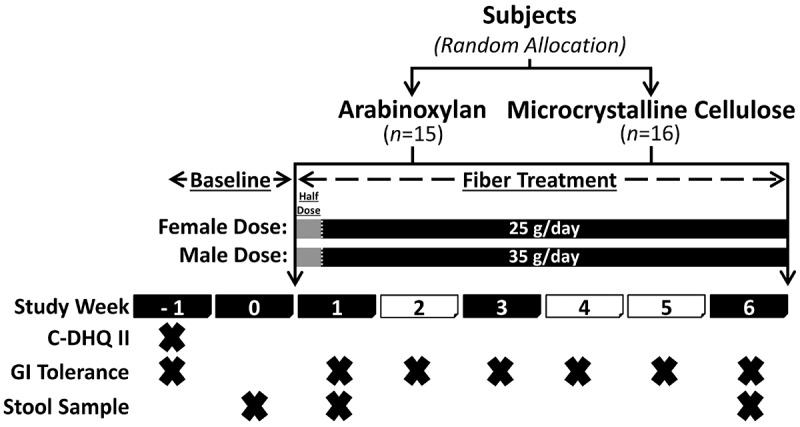
- Exploratory 6-week RCT registered as NCT02322112; participants with excess weight were assigned to AX or non-fermentable microcrystalline cellulose control, with daily doses of 25 g (females) or 35 g (males).
- Per-protocol sample: 31 completers aged 33 ± 9 years with BMI 28.7 ± 2.3 kg/m²; baseline diet was assessed by the Canadian Diet History Questionnaire II, adjusted for total calories.
- GI symptoms were rated weekly on 0–4 scales for overall symptoms, flatulence, bloating, and stomach ache; severity and adaptation were quantified using MAX and AUC-based scores. Associations with fecal microbiota, fecal pH/SCFAs, and baseline diet were tested using generalized estimating equations, Mann-Whitney/Wilcoxon tests, and Spearman correlations; BONCAT plus 16S rRNA sequencing was used to identify AX-active bacterial consortia.
## Limitations
- The paper states this was an exploratory RCT and notes that the design does not allow causal inferences between symptom adaptation and the gut microbiota.
- The authors also state that future studies are needed, including more sophisticated methods such as whole-metagenome/shotgun sequencing with ingestible gas-sensing capsules, to evaluate mechanisms of adaptation.
- Evident from the text: the AX and MCC groups were compared using data from protocol completers rather than all enrolled participants, and several analyses rely on correlations across a small sample (31 completers), which limits generalizability and causal interpretation.
Model-written summary. Check it against the paper before relying on it.
Integrity signals
Registry
Cites
Statistics
Figures
Verification
Claims the paper makes
4 Valid · 1 Not valid · 45 Not checked · 66 Own results and interpretations
The cited sources that could be checked couldn’t confirm or dispute this claim.
In the paper
“To our knowledge, effects of long-chain AXs on gastrointestinal (GI) symptoms have not been assessed beyond 15 g/day, 36”
What the sources say
- Could not verifycites [36] matched to “Reinforcement of intestinal epithelial barrier by arabinoxylans in overweight and obese subjects: A randomized controlled trial” (2018) sourceExperimental — accuracy not yet measured
The indexed Abstract (page not given) describes a trial using 7.5 and 15 g/day of arabinoxylans, but it does not say whether gastrointestinal symptoms were assessed or whether other studies assessed them above 15 g/day. Searches for gastrointestinal symptoms, tolerability, and doses beyond 15 g/day found no passage establishing that limit. (LLM, conf=0.70)
hedged- Asserted: passes — The authors put it forward as true.
- Checkable: passes — It can be checked against evidence.
- Load-bearing: passes — The paper’s conclusions depend on it.
- Based: passes — The paper gives a reason why it holds.
- Could not verify
A result the paper reports from its own data — it cites no other source for it, so there is none to check. The quote shows it is in the paper.
In the paper
“Accordingly, flatulence area under the curve severity (AUC severity ) scores ( i.e. , overall flatulence severity during the intervention) were higher for AX relative to MCC ( p = 0.045)”
plain- Asserted: passes — The authors put it forward as true.
- Checkable: passes — It can be checked against evidence.
- Load-bearing: unclear — It is unclear whether the paper’s conclusions depend on it.
- Based: passes — The paper gives a reason why it holds.
A result the paper reports from its own data — it cites no other source for it, so there is none to check. The quote shows it is in the paper.
In the paper
“In contrast, positive correlations were detected between the family Porphyromonadaceae and composite (r s = 0.52, p = 0.003) and bloating (r s = 0.50, p = 0.005) severity”
plainstates an association- Asserted: passes — The authors put it forward as true.
- Checkable: passes — It can be checked against evidence.
- Load-bearing: unclear — It is unclear whether the paper’s conclusions depend on it.
- Based: passes — The paper gives a reason why it holds.
A result the paper reports from its own data — it cites no other source for it, so there is none to check. The quote shows it is in the paper.
In the paper
“Although no associations were detected between pH and SCFA shifts ( p > 0.1, data not shown)”
plain- Asserted: passes — The authors put it forward as true.
- Checkable: passes — It can be checked against evidence.
- Load-bearing: unclear — It is unclear whether the paper’s conclusions depend on it.
- Based: passes — The paper gives a reason why it holds.
A result the paper reports from its own data — it cites no other source for it, so there is none to check. The quote shows it is in the paper.
In the paper
“The ratio of meat/meat alternatives to whole grains was further shown to positively correlate with MAX flatulence severity (r s = 0.54, p = 0.04).”
plainstates an association- Asserted: passes — The authors put it forward as true.
- Checkable: passes — It can be checked against evidence.
- Load-bearing: unclear — It is unclear whether the paper’s conclusions depend on it.
- Based: passes — The paper gives a reason why it holds.
42 more claims
Create a free account to see all 116 claims and to verify the 88 references still open.
- Probably not a substantial claim. 37
- It may state two separate claims as one. 47
- The quote only partly states this claim. 1
Self-check
Percentages, sums and reported differences re-computed from the paper’s own numbers.
Each contradiction between two passages listed here was confirmed by an independent check.
Rated minor: it would not touch a result — a value no result rests on, a p-value that stays on the same side of the significance level, or a conflict that is clerical, resolved elsewhere in the paper, or outside its own findings.
In the paper
“maximum absolute change (MAX) severity scores ( i.e ., highest symptoms rating over entire treatment period)”
“the MAX severity score was calculated by subtracting baseline ratings from the highest reported rating during weeks 1 to 5”
Citations
Cites
Diet rapidly and reproducibly alters the human gut microbiome
David, L. A., Maurice, C. F., Carmody, R. N., Gootenberg, D. B., Button, J. E., Wolfe, B. E., Ling, A. V., Devlin, A. S., Varma, Y., Fischbach, M. A., et al. (2014) · Nature · doi:10.1038/nature12820 · Cited by 10,100
Linking long-term dietary patterns with gut microbial enterotypes
Wu, G. D., Chen, J., Hoffmann, C., Bittinger, K., Chen, Y.-Y., Keilbaugh, S. A., Bewtra, M., Knights, D., Walters, W. A., Knight, R., et al. (2011) · Science · doi:10.1126/science.1208344 · Cited by 6,513
Total energy intake: implications for epidemiologic analyses.
WILLETT, W., & STAMPFER, M. J. (1986) · American Journal of Epidemiology · doi:10.1093/oxfordjournals.aje.a114366 · Cited by 2,751
RE: “TOTAL ENERGY INTAKE: IMPLICATIONS FOR EPIDEMIOLOGIC ANALYSES”
Palmgren, J., & Kushi, L. H. (1991) · American Journal of Epidemiology · doi:10.1093/oxfordjournals.aje.a115841 · Cited by 2,711
The impact of dietary fiber on gut microbiota in host health and disease
Makki, K., Deehan, E. C., Walter, J., & Bäckhed, F. (2018) · Cell Host & Microbe · doi:10.1016/j.chom.2018.05.012 · Cited by 2,517
Self-citationCarbohydrate quality and human health: a series of systematic reviews and meta-analyses
Reynolds, A., Mann, J., Cummings, J., Winter, N., Mete, E., & Te Morenga, L. (2019) · The Lancet · doi:10.1016/s0140-6736(18)31809-9 · Cited by 1,630
O’Mahony, L., McCarthy, J., Kelly, P., Hurley, G., Luo, F., Chen, K., O’Sullivan, G. C., Kiely, B., Collins, J. K., Shanahan, F., et al. (2005) · Gastroenterology · doi:10.1053/j.gastro.2004.11.050 · Cited by 1,448 · cited 1×
“59 62 Although cause and effect relationships and mechanisms cannot be established in our study, several aspects of the metabolism of Bifidobacterium provide a potential explanation for reduced gas production rates during AX fermentation.”
Dietary fibre in gastrointestinal health and disease
Gill, S. K., Rossi, M., Bajka, B., & Whelan, K. (2021) · Nature Reviews Gastroenterology & Hepatology · doi:10.1038/s41575-020-00375-4 · Cited by 979
Whorwell, P. J., Altringer, L., Morel, J., Bond, Y., Charbonneau, D., O'Mahony, L., Kiely, B., Shanahan, F., & Quigley, E. M. M. (2006) · The American Journal of Gastroenterology · doi:10.1111/j.1572-0241.2006.00734.x · Cited by 799
Martínez, I., Kim, J., Duffy, P. R., Schlegel, V. L., & Walter, J. (2010) · PLoS ONE · doi:10.1371/journal.pone.0015046 · Cited by 645
Self-citationBolte, L. A., Vich Vila, A., Imhann, F., Collij, V., Gacesa, R., Peters, V., Wijmenga, C., Kurilshikov, A., Campmans-Kuijpers, M. J. E., Fu, J., et al. (2021) · Gut · doi:10.1136/gutjnl-2020-322670 · Cited by 595 · cited 1×
“53,55,66 For instance, higher intakes of animal proteins and fats have been linked to greater relative abundances of the family Porphyromonadaceae and genera Odoribacter , Parabacteroides , and Bacteroides .”
Hamaker, B. R., & Tuncil, Y. E. (2014) · Journal of Molecular Biology · doi:10.1016/j.jmb.2014.07.028 · Cited by 580
Dietary fibre and whole grains in diabetes management: Systematic review and meta-analyses
Reynolds, A. N., Akerman, A. P., & Mann, J. (2020) · PLOS Medicine · doi:10.1371/journal.pmed.1003053 · Cited by 567
Deehan, E. C., Yang, C., Perez-Muñoz, M. E., Nguyen, N. K., Cheng, C. C., Triador, L., Zhang, Z., Bakal, J. A., & Walter, J. (2020) · Cell Host & Microbe · doi:10.1016/j.chom.2020.01.006 · Cited by 539
Self-citationWu, G. D., Compher, C., Chen, E. Z., Smith, S. A., Shah, R. D., Bittinger, K., Chehoud, C., Albenberg, L. G., Nessel, L., Gilroy, E., et al. (2016) · Gut · doi:10.1136/gutjnl-2014-308209 · Cited by 512 · cited 1×
“53,55,66 For instance, higher intakes of animal proteins and fats have been linked to greater relative abundances of the family Porphyromonadaceae and genera Odoribacter , Parabacteroides , and Bacteroides .”
Diet and the development of the human intestinal microbiome
Voreades, N., Kozil, A., & Weir, T. L. (2014) · Frontiers in Microbiology · doi:10.3389/fmicb.2014.00494 · Cited by 498
The ancestral and industrialized gut microbiota and implications for human health
Sonnenburg, E. D., & Sonnenburg, J. L. (2019) · Nature Reviews Microbiology · doi:10.1038/s41579-019-0191-8 · Cited by 489
CODEX-aligned dietary fiber definitions help to bridge the ‘fiber gap’
Jones, J. M. (2014) · Nutrition Journal · doi:10.1186/1475-2891-13-34 · Cited by 422
Variable responses of human microbiomes to dietary supplementation with resistant starch
Venkataraman, A., Sieber, J. R., Schmidt, A. W., Waldron, C., Theis, K. R., & Schmidt, T. M. (2016) · Microbiome · doi:10.1186/s40168-016-0178-x · Cited by 384
GUYONNET, D., CHASSANY, O., DUCROTTE, P., PICARD, C., MOURET, M., MERCIER, C. ‐., & MATUCHANSKY, C. (2007) · Alimentary Pharmacology & Therapeutics · doi:10.1111/j.1365-2036.2007.03362.x · Cited by 365
Jalanka-Tuovinen, J., Salonen, A., Nikkilä, J., Immonen, O., Kekkonen, R., Lahti, L., Palva, A., & de Vos, W. M. (2011) · PLoS ONE · doi:10.1371/journal.pone.0023035 · Cited by 340 · cited 1×
“59 62 Although cause and effect relationships and mechanisms cannot be established in our study, several aspects of the metabolism of Bifidobacterium provide a potential explanation for reduced gas production rates during AX fermentation.”
Davis, L. M. G., Martínez, I., Walter, J., Goin, C., & Hutkins, R. W. (2011) · PLoS ONE · doi:10.1371/journal.pone.0025200 · Cited by 318
Self-citationEffects of inulin on faecal bifidobacteria in human subjects
Kruse, H.-P., Kleessen, B., & Blaut, M. (1999) · British Journal of Nutrition · doi:10.1017/s0007114599001622 · Cited by 307
Interindividual variability in gut microbiota and host response to dietary interventions
Healey, G. R., Murphy, R., Brough, L., Butts, C. A., & Coad, J. (2017) · Nutrition Reviews · doi:10.1093/nutrit/nux062 · Cited by 292
Genomic Insights into Bifidobacteria
Lee, J.-H., & O'Sullivan, D. J. (2010) · Microbiology and Molecular Biology Reviews · doi:10.1128/mmbr.00004-10 · Cited by 281
Gastrointestinal Effects of Low-Digestible Carbohydrates
Grabitske, H. A., & Slavin, J. L. (2009) · Critical Reviews in Food Science and Nutrition · doi:10.1080/10408390802067126 · Cited by 267
Rethinking healthy eating in light of the gut microbiome
Armet, A. M., Deehan, E. C., O’Sullivan, A. F., Mota, J. F., Field, C. J., Prado, C. M., Lucey, A. J., & Walter, J. (2022) · Cell Host & Microbe · doi:10.1016/j.chom.2022.04.016 · Cited by 252 · cited 2×
“6–”
Self-citationDeehan, E. C., Duar, R. M., Armet, A. M., Perez-Muñoz, M. E., Jin, M., & Walter, J. (2017) · Microbiology Spectrum · doi:10.1128/microbiolspec.bad-0019-2017 · Cited by 221
Self-citationThe Fiber Gap and the Disappearing Gut Microbiome: Implications for Human Nutrition
Deehan, E. C., & Walter, J. (2016) · Trends in Endocrinology & Metabolism · doi:10.1016/j.tem.2016.03.001 · Cited by 220
Self-citationDavis, L. M. G., Martínez, I., Walter, J., & Hutkins, R. (2010) · International Journal of Food Microbiology · doi:10.1016/j.ijfoodmicro.2010.10.007 · Cited by 219
Self-citationIntestinal gases: influence on gut disorders and the role of dietary manipulations
Kalantar-Zadeh, K., Berean, K. J., Burgell, R. E., Muir, J. G., & Gibson, P. R. (2019) · Nature Reviews Gastroenterology & Hepatology · doi:10.1038/s41575-019-0193-z · Cited by 219
Hernot, D. C., Boileau, T. W., Bauer, L. L., Middelbos, I. S., Murphy, M. R., Swanson, K. S., & Fahey, G. C. (2009) · Journal of Agricultural and Food Chemistry · doi:10.1021/jf802484j · Cited by 203
Thompson, S. V., Hannon, B. A., An, R., & Holscher, H. D. (2017) · The American Journal of Clinical Nutrition · doi:10.3945/ajcn.117.163246 · Cited by 201 · cited 1×
“18,19 Purified fibers can be used in foods or as supplements to close the fiber gap, 8,10,20 but it remains unknown whether modern humans would tolerate ancestral amounts of fiber.”
Hiel, S., Bindels, L. B., Pachikian, B. D., Kalala, G., Broers, V., Zamariola, G., Chang, B. P. I., Kambashi, B., Rodriguez, J., Cani, P. D., et al. (2019) · The American Journal of Clinical Nutrition · doi:10.1093/ajcn/nqz001 · Cited by 197 · cited 1×
“67,68 Overall, these findings provide further support that the gut microbiota can adapt toward dietary fiber to attenuate GI symptoms and suggest that habitual diet might be an important factor in this process that contributes to personalized tolerance of fibers.”
Effects of dietary fibre on metabolic health and obesity
Deehan, E. C., Mocanu, V., & Madsen, K. L. (2024) · Nature Reviews Gastroenterology & Hepatology · doi:10.1038/s41575-023-00891-z · Cited by 191
Self-citationNguyen, N. K., Deehan, E. C., Zhang, Z., Jin, M., Baskota, N., Perez-Muñoz, M. E., Cole, J., Tuncil, Y. E., Seethaler, B., Wang, T., et al. (2020) · Microbiome · doi:10.1186/s40168-020-00887-w · Cited by 189
Self-citationPerman, J. A., Modler, S., & Olson, A. C. (1981) · Journal of Clinical Investigation · doi:10.1172/jci110079 · Cited by 186
O'Keefe, S. J. (2019) · The Lancet Gastroenterology & Hepatology · doi:10.1016/s2468-1253(19)30257-2 · Cited by 186
Rumpagaporn, P., Reuhs, B. L., Kaur, A., Patterson, J. A., Keshavarzian, A., & Hamaker, B. R. (2015) · Carbohydrate Polymers · doi:10.1016/j.carbpol.2015.04.041 · Cited by 184
Kaur, A., Rose, D. J., Rumpagaporn, P., Patterson, J. A., & Hamaker, B. R. (2011) · Journal of Food Science · doi:10.1111/j.1750-3841.2011.02172.x · Cited by 173
Review article: dietary fibre in the era of microbiome science
O’Grady, J., O’Connor, E. M., & Shanahan, F. (2019) · Alimentary Pharmacology & Therapeutics · doi:10.1111/apt.15129 · Cited by 172
Hydrogen cross-feeders of the human gastrointestinal tract
Smith, N. W., Shorten, P. R., Altermann, E. H., Roy, N. C., & McNabb, W. C. (2019) · Gut Microbes · doi:10.1080/19490976.2018.1546522 · Cited by 165
Arabinoxylans, gut microbiota and immunity
Mendis, M., Leclerc, E., & Simsek, S. (2016) · Carbohydrate Polymers · doi:10.1016/j.carbpol.2015.11.068 · Cited by 165
Subdoligranulum variabile gen. nov., sp. nov. from human feces
Holmstrøm, K., Collins, M. D., Møller, T., Falsen, E., & Lawson, P. A. (2004) · Anaerobe · doi:10.1016/j.anaerobe.2004.01.004 · Cited by 163
Clemens, R., Kranz, S., Mobley, A. R., Nicklas, T. A., Raimondi, M. P., Rodriguez, J. C., Slavin, J. L., & Warshaw, H. S. (2012) · Journal of Nutrition · doi:10.3945/jn.112.160176 · Cited by 136
Intestinal gas production by the gut microbiota: A review
Mutuyemungu, E., Singh, M., Liu, S. T. H., & Rose, D. J. (2022) · Journal of Functional Foods · doi:10.1016/j.jff.2022.105367 · Cited by 130
Tolerance of low-digestible carbohydrates: a general view
Livesey, G. (2001) · British Journal of Nutrition · doi:10.1079/bjn2000257 · Cited by 127
Effects of Partially Hydrolyzed Guar Gum Intake on Human Intestinal Microflora and Its Metabolism
Okubo, T., Ishihara, N., Takahashi, H., Fujisawa, T., Kim, M., Yamamoto, T., & Mitsuoka, T. (1994) · Bioscience, Biotechnology, and Biochemistry · doi:10.1271/bbb.58.1364 · Cited by 127
Anal gas evacuation and colonic microbiota in patients with flatulence: effect of diet
Manichanh, C., Eck, A., Varela, E., Roca, J., Clemente, J. C., González, A., Knights, D., Knight, R., Estrella, S., Hernandez, C., et al. (2014) · Gut · doi:10.1136/gutjnl-2012-303013 · Cited by 125
Babiker, R., Merghani, T. H., Elmusharaf, K., Badi, R. M., Lang, F., & Saeed, A. M. (2012) · Nutrition Journal · doi:10.1186/1475-2891-11-111 · Cited by 123
McInerney, M., Csizmadi, I., Friedenreich, C. M., Uribe, F. A., Nettel‐Aguirre, A., McLaren, L., Potestio, M. L., Sandalack, B. A., & McCormack, G. R. (2016) · BMC Public Health · doi:10.1186/s12889-016-3631-7 · Cited by 119
Long-term gastrointestinal tolerance of NUTRIOSE®FB in healthy men
Pasman, W. J., Wils, D., Saniez, M.-H., & Kardinaal, A. F. M. (2006) · European Journal of Clinical Nutrition · doi:10.1038/sj.ejcn.1602418 · Cited by 118
Elucidating the role of the gut microbiota in the physiological effects of dietary fiber
Deehan, E. C., Zhang, Z., Riva, A., Armet, A. M., Perez-Muñoz, M. E., Nguyen, N. K., Krysa, J. A., Seethaler, B., Zhao, Y.-Y., Cole, J., et al. (2022) · Microbiome · doi:10.1186/s40168-022-01248-5 · Cited by 100
Self-citationReview of whole grain and dietary fiber recommendations and intake levels in different countries
Miller, K. B. (2020) · Nutrition Reviews · doi:10.1093/nutrit/nuz052 · Cited by 94
Riva, A., Rasoulimehrabani, H., Cruz-Rubio, J. M., Schnorr, S. L., von Baeckmann, C., Inan, D., Nikolov, G., Herbold, C. W., Hausmann, B., Pjevac, P., et al. (2023) · Nature Communications · doi:10.1038/s41467-023-43448-z · Cited by 86
Self-citationGastrointestinal Effects and Tolerance of Nondigestible Carbohydrate Consumption
Mysonhimer, A. R., & Holscher, H. D. (2022) · Advances in Nutrition · doi:10.1093/advances/nmac094 · Cited by 83
Acacia Gum is a Bifidogenic Dietary Fibre with High Digestive Tolerance in Healthy Humans
Cherbut, C., Michel, C., Raison, V., Kravtchenko, T., & Severine, M. (2003) · Microbial Ecology in Health and Disease · doi:10.1080/08910600310014377 · Cited by 78
Salden, B. N., Troost, F. J., Wilms, E., Truchado, P., Vilchez-Vargas, R., Pieper, D. H., Jáuregui, R., Marzorati, M., van de Wiele, T., Possemiers, S., et al. (2018) · Clinical Nutrition · doi:10.1016/j.clnu.2017.01.024 · Cited by 77
Csizmadi, I., Boucher, B. A., Siou, G. L., Massarelli, I., Rondeau, I., Garriguet, D., Koushik, A., Elenko, J., & Subar, A. F. (2016) · Public Health Nutrition · doi:10.1017/s1368980016001506 · Cited by 77
Kok, C. R., Rose, D., & Hutkins, R. (2023) · Annual Review of Food Science and Technology · doi:10.1146/annurev-food-060721-015516 · Cited by 73
Vermorel, M., Coudray, C., Wils, D., Sinaud, S., Tressol, J. C., Montaurier, C., Vernet, J., Brandolini, M., Bouteloup‐Demange, C., & Rayssiguier, Y. (2004) · European Journal of Nutrition · doi:10.1007/s00394-004-0477-z · Cited by 66
Armet, A. M., Deehan, E. C., Thöne, J. V., Hewko, S. J., & Walter, J. (2020) · Advances in Nutrition · doi:10.1093/advances/nmz074 · Cited by 63
Self-citationTannock, G. W., & Liu, Y. (2019) · Journal of the Royal Society of New Zealand · doi:10.1080/03036758.2019.1657471 · Cited by 59
Hess, A. L., Benítez‐Páez, A., Blædel, T., Larsen, L. H., Iglesias, J. R., Madera, C., Sanz, Y., & Larsen, T. M. (2019) · European Journal of Nutrition · doi:10.1007/s00394-019-02099-x · Cited by 58
Gastrointestinal tolerance and utilization of agave inulin by healthy adults
Holscher, H. D., Doligale, J. L., Bauer, L. L., Gourineni, V., Pelkman, C. L., Fahey, G. C., & Swanson, K. S. (2014) · Food & Function · doi:10.1039/c3fo60666j · Cited by 53
Metabolic adaptation of colonic microbiota to galactooligosaccharides: a proof‐of‐concept‐study
Mego, M., Manichanh, C., Accarino, A. M., Campos, D., Pozuelo, M., Varela, E., Vulevic, J., Tzortzis, G., Gibson, G. R., Guarner, F., et al. (2017) · Alimentary Pharmacology & Therapeutics · doi:10.1111/apt.13931 · Cited by 51
Koecher, K. J., Noack, J. A., Timm, D. A., Klosterbuer, A. S., Thomas, W., & Slavin, J. L. (2014) · Journal of Agricultural and Food Chemistry · doi:10.1021/jf404688n · Cited by 47
Xu, H., Reuhs, B. L., Cantu-Jungles, T. M., Tunçil, Y. E., Kaur, A., Terekhov, A. I., Martens, E. C., & Hamaker, B. R. (2022) · Carbohydrate Polymers · doi:10.1016/j.carbpol.2022.119435 · Cited by 46
Fan, S., Zhang, Z., Zhao, Y., Daglia, M., Zhang, J., Zhu, Y., Bai, J., Zhu, L., & Xiao, X. (2022) · Current Opinion in Food Science · doi:10.1016/j.cofs.2022.100959 · Cited by 43
Self-citationMego, M., Accarino, A. M., Tzortzis, G., Vulevic, J., Gibson, G. R., Guarner, F., & Azpiroz, F. (2017) · Neurogastroenterology & Motility · doi:10.1111/nmo.13080 · Cited by 40
Bacterial modulation of visceral sensation: mediators and mechanisms
Lomax, A. E., Pradhananga, S., Sessenwein, J. L., & O’Malley, D. (2019) · American Journal of Physiology-Gastrointestinal and Liver Physiology · doi:10.1152/ajpgi.00052.2019 · Cited by 38
Causality in dietary interventions—building a case for gut microbiota
Lam, Y. Y., Zhang, C., & Zhao, L. (2018) · Genome Medicine · doi:10.1186/s13073-018-0573-y · Cited by 37
The role of tension receptors in colonic mechanosensitivity in humans
Corsetti, M., Gevers, A.-M., Caenepeel, P., & Tack, J. (2004) · Gut · doi:10.1136/gut.2004.038786 · Cited by 36
Fermentability of Novel Type-4 Resistant Starches in In Vitro System
Erickson, J. M., Carlson, J. L., Stewart, M., & Slavin, J. L. (2018) · Foods · doi:10.3390/foods7020018 · Cited by 35
Cited by
Deehan, E. C., Antwan, S. A., Witwer, R. S., Guerra, P. G., John, T., & Monheit, L. (2024) · Advances in Nutrition · doi:10.1016/j.advnut.2024.100329 · Cited by 77
Self-citationMaldonado-Gómez, M. X., Ng, K. M., Drexler, R. A., Conner, A. M. S., Vierra, C. G., Krishnakumar, N., Gerber, H. M., Taylor, Z. R., Treon, J. L., Ellis, M., et al. (2025) · mBio · doi:10.1128/mbio.00470-25 · Cited by 9
Blecksmith, S. E., Kalanetra, K. M., Weng, C.-Y., Suarez, C., Sitepu, I. R., Tang, Y., Cheang, S. E., Jiang, S., Cernioglo, K., Damian-Medina, K., et al. (2025) · Food & Function · doi:10.1039/d5fo00947b · Cited by 4
Advances in the Functional Activity, Mechanisms, and Bioavailability of Corn Bioactive Compounds
Wu, J., Zhao, J., Guo, A., Meng, S., Cai, D., Zheng, M., Liu, H., Wen, C., & Liu, J. (2025) · Comprehensive Reviews in Food Science and Food Safety · doi:10.1111/1541-4337.70363 · Cited by 4
Advanced Understanding of Dietary Fiber With Omics
Park, S., Park, J., Lee, Y. S., Shin, N., & Yang, M. (2025) · Food Supplements and Biomaterials for Health · doi:10.52361/fsbh.2025.5.e13 · Cited by 4
Metadata
- Authors
- Deehan, E. C., Zhang, Z., Nguyen, N. K., Perez-Muñoz, M. E., Cole, J., Riva, A., Berry, D., Prado, C. M., & Walter, J.
- Affiliations
- University of Nebraska–Lincoln (US)
- University of Alberta (CA)
- Department of Agricultural, Food and Nutritional Science, University of Alberta, Edmonton, Canada
- University of Vienna (AT)
- Corresponding author
- Deehan, Edward C.
- Walter, Jens
- ORCID
- Venue
- Gut Microbes
- Publisher
- Informa UK Limited
- Published
- 2024-06-11
- Volume
- 16
- Issue
- 1
- Pages
- 2363021-2363021
- ISSN
- 1949-0976 (ISSN-L)
- 1949-0984
- PMC
- PMC11174067
- OpenAlex
- W4399529977
- Cited by
- 15
- References
- 75
- Citations by year
- 2026: 7 · 2025: 7 · 2024: 1
- FWCI
- 2.04
- Type
- journal article
- Language
- en
- Open access
- gold
- doi.org
- Licence
- Locations
- Gut Microbes (publishedVersion, cc-by)
- PubMed Central (publishedVersion, cc-by)
- PubMed (publishedVersion)
- Lincoln (University of Nebraska) (submittedVersion)
- Digital Access to Libraries (submittedVersion, other-oa)
- DOAJ (DOAJ: Directory of Open Access Journals) (submittedVersion, cc-by-sa)
- Funders
- European Research Council (FunKeyGut 741623)
- Canadian Institutes of Health Research
- Science Foundation Ireland Centre (APC/SFI/12/RC/2273_P2)
- Science Foundation Ireland Professorship (19/RP/6853)
- Topics
- Life Sciences › Biochemistry, Genetics and Molecular Biology › Molecular Biology › Gut microbiota and health
- Health Sciences › Nursing › Nutrition and Dietetics › Food composition and properties
- Health Sciences › Nursing › Nutrition and Dietetics › Microbial Metabolites in Food Biotechnology
- Keywords
- arabinoxylan, Bifidobacterium longum, gut microbiota, gastrointestinal symptoms, acetate, dietary fiber fermentation, microcrystalline cellulose, whole grains, overweight
- MeSH terms
- Gastrointestinal Microbiome, Bifidobacterium longum, Adaptation, Physiological, Adult, Aged, Dietary Fiber, Feces, Female, Fermentation, Humans, Male, Middle Aged, Xylans, Dietary Supplements
About these checks
Registry, retraction, Cites and statistics results are computed, not judged, with one exception: a printed reference that no index lists is read once by a model before it counts as a citation error. Claims are extracted by a model and kept only when their quote appears verbatim in the text; each cited source is then checked, with a model’s help, for whether it says what the claim relies on. Those verdicts can be wrong — read the claim’s quote and the cited source before relying on one.
The claim verdicts this report counts are experimental: their accuracy is not yet measured.
A language model drew the claims from the paper on 2026-10-11, under version 3 of the claim definition (model deepseek-v4.1-flash, prompt extract-v3).
A second model labelled each claim on 2026-10-11 (model jev-1.13-20260917, definition revision gold-guideline-v0.2).
Cited sources are checked with a language model’s help (gpt-6-sol).
Statistics and arithmetic are recomputed, not judged.
Confidence bands are shown only for fields calibrated on our annotated test set. None is calibrated yet, so no band is shown.
What counts as a claim ›How we measure confidence ›How we check this ›
Are you an author, or do you see a problem with this page? Request a review
Data sources
Bibliographic data: Semantic Scholar, OpenAlex, Crossref.
Contains information from the Semantic Scholar Academic Graph Datasets, made available under the ODC Attribution License (ODC-BY 1.0).
Semantic Scholar’s data is described in: Kinney, R., et al. (2023). The Semantic Scholar Open Data Platform. arXiv:2301.10140.
