

Virtual reality exposure therapy for posttraumatic stress disorder (PTSD): a meta-analysis
Open accessThe DOI matches its Crossref record; 67 of the 68 references it cites were found in a registry or an index; none of the 35 sources its claims cite is checked for support yet.
Abstract
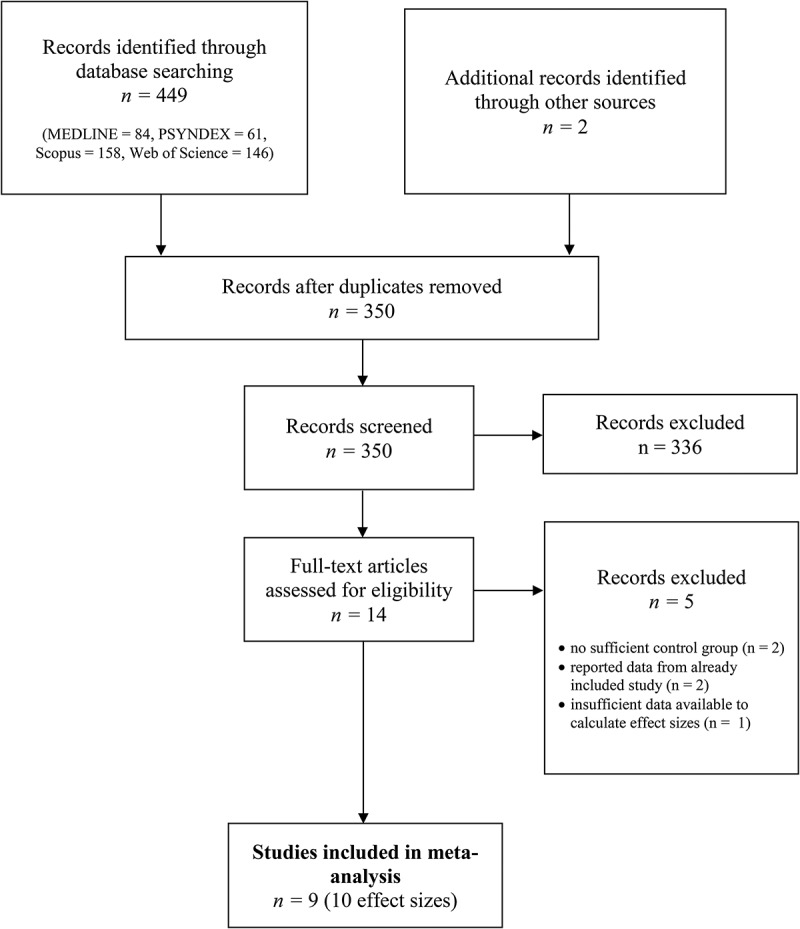
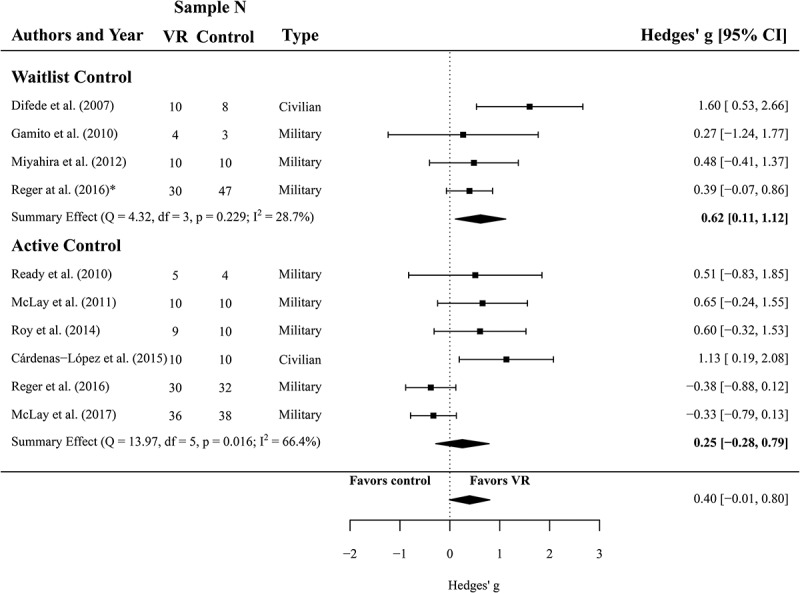
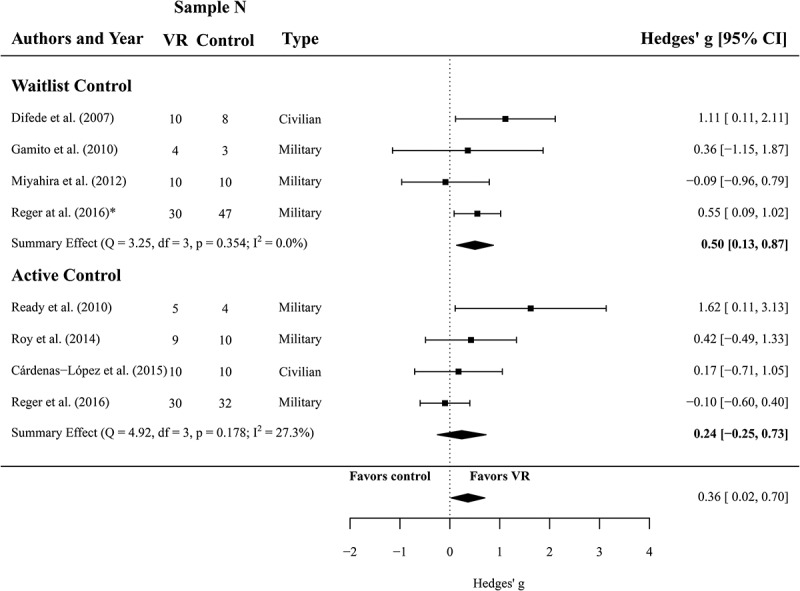
Contrary to specific phobias, for which Virtual Reality Exposure Therapy (VRET) constitutes an effective treatment, uncertainty still exists regarding the usefulness of VRET for posttraumatic stress disorder (PTSD). Therefore, this meta-analysis investigated the efficacy of VRET for PTSD as compared to waitlist and active comparators. A literature search yielded nine controlled studies encompassing 296 participants (124 VRET, 172 controls). The differences between conditions regarding the primary outcome of PTSD symptom severity and the secondary outcome of depressive and anxiety symptoms post-treatment were calculated using Hedges’ g. Compared to waitlist controls, VRET showed a significantly better outcome for PTSD symptoms (g = 0.62, p = .017) and depressive symptoms (g = 0.50, p = .008). There was no significant difference between VRET and active comparators regarding PTSD symptoms (g = 0.25, p = .356) and depressive symptoms (g = 0.24, p = .340) post-treatment. No significant effects emerged for anxiety symptoms. These findings suggest that VRET may be as effective as active comparators for PTSD patients. However, the results must be interpreted with caution due to the limited number of trials and the substantial number of – predominantly male – military service members studied. Additional controlled trials, considering a wider range of trauma types and balanced gender, are required to strengthen the evidence.
Overview
CoChat Summary
## TL;DR
This meta-analysis of 9 controlled trials (296 participants) found that virtual reality exposure therapy (VRET) improved PTSD and depressive symptoms versus waitlist controls, but not versus active comparators. The evidence was judged preliminary because the trials were small, mostly involved male military samples, and had limited reporting of important factors like adverse effects and follow-up.
## Key findings
- Across 9 controlled trials, the sample included 296 participants: 124 in VRET conditions and 172 in control groups.
- Versus waitlist controls, VRET showed a significant benefit for PTSD symptom severity: Hedges’ g = 0.62, 95% CI 0.11 to 1.12, p = .017; heterogeneity was low/non-important (I² = 29).
- Versus waitlist controls, VRET also improved depressive symptoms: g = 0.50, 95% CI 0.13 to 0.87, p = .008; heterogeneity was I² = 0.
- Versus active controls, VRET did not differ significantly for PTSD symptoms (g = 0.25, 95% CI −0.28 to 0.79, p = .356), depressive symptoms (g = 0.24, p = .340), or anxiety symptoms versus either waitlist (g = 0.47, p = .387) or active controls (g = −0.26, p = .241).
## Methods
- Systematic search of MEDLINE, PSYNDEX, Scopus, and Web of Science from database inception to December 2018, plus Google Scholar alerts and author contact to capture preprints/unpublished studies.
- Included controlled trials of VR-based treatment in PTSD samples diagnosed by DSM-IV, DSM-5, or ICD-10; no restrictions on age, trauma type, comorbidity, medication, language, or publication status.
- Effect sizes were calculated as Hedges’ g and pooled with random-effects models; PTSD symptom severity was the primary outcome, with depression and anxiety as secondary outcomes.
## Limitations
- The paper states that small sample sizes and the restricted number of controlled trials limit firm conclusions.
- The paper states that medication was poorly reported: only one study specified concurrent medication, and many studies gave no details; 4 studies reported medication was stable during intervention.
- The paper states that no included study reported long-term follow-up, and none provided information about adverse treatment effects.
- Evident from the text: the evidence is based mostly on predominantly male military samples, with only 2 of 9 studies including civilians, which limits generalizability.
Model-written summary. Check it against the paper before relying on it.
Integrity signals
Registry
Cites
Statistics
Figures
Verification
Claims the paper makes
0 Valid · 0 Not valid · 21 Not checked · 42 Own results and interpretations
A result the paper reports from its own data — it cites no other source for it, so there is none to check. The quote shows it is in the paper.
In the paper
“A literature search yielded nine controlled studies encompassing 296 participants (124 VRET, 172 controls).”
- Also stated in: § Study characteristics · plain
“In total, nine controlled trials were included with a total of 296 participants (124 in VR treatment conditions, 172 in control groups).”
§ Virtual reality exposure therapy for posttraumatic stress disorder (PTSD): a meta-analysis > Abstract
plainn = 296- Asserted: passes — The authors put it forward as true.
- Checkable: passes — It can be checked against evidence.
- Load-bearing: passes — The paper’s conclusions depend on it.
- Based: passes — The paper gives a reason why it holds.
- Also stated in: § Study characteristics · plain
A result the paper reports from its own data — it cites no other source for it, so there is none to check. The quote shows it is in the paper.
In the paper
“none of the studies reported any treatment-related adverse effects (e.g. worsening of symptoms or attempted suicide) over the course of the studies.”
§ Virtual reality exposure therapy for posttraumatic stress disorder (PTSD): a meta-analysis > Results > Study characteristics
plainn = 296- Asserted: passes — The authors put it forward as true.
- Checkable: passes — It can be checked against evidence.
- Load-bearing: unclear — It is unclear whether the paper’s conclusions depend on it.
- Based: passes — The paper gives a reason why it holds.
A result the paper reports from its own data — it cites no other source for it, so there is none to check. The quote shows it is in the paper.
In the paper
“Compared to waitlist controls, VRET showed a significantly better outcome for PTSD symptoms (g = 0.62, p = .017) and depressive symptoms (g = 0.50, p = .008).”
- Also stated in: § Efficacy of VRET regarding depressive symptoms · plain
“For the comparison between VRET and waitlist controls (N = 54 and N = 68, respectively, k = 4), we found a significant summary effect of g = 0.50 (CI 0.13 to 0.87, p = .008) and low, non-significant heterogeneity of I2 = 0 (Q(3) = 3.25, p = .354), all in favour of VRET.”
§ Virtual reality exposure therapy for posttraumatic stress disorder (PTSD): a meta-analysis > Abstract
plainstates a causen = 110 ·- Asserted: passes — The authors put it forward as true.
- Checkable: passes — It can be checked against evidence.
- Load-bearing: passes — The paper’s conclusions depend on it.
- Based: passes — The paper gives a reason why it holds.
- Rests on an assumption not shown here.
- Also stated in: § Efficacy of VRET regarding depressive symptoms · plain
A result the paper reports from its own data — it cites no other source for it, so there is none to check. The quote shows it is in the paper.
In the paper
“Again, no significant effect was found in this comparison: g = −0.26 (CI −0.70 to 0.18, p = .241).”
§ Virtual reality exposure therapy for posttraumatic stress disorder (PTSD): a meta-analysis > Results > Efficacy of VRET regarding anxiety symptoms
plainn = 82- Asserted: passes — The authors put it forward as true.
- Checkable: passes — It can be checked against evidence.
- Load-bearing: passes — The paper’s conclusions depend on it.
- Based: passes — The paper gives a reason why it holds.
- Rests on an assumption not shown here.
A result the paper reports from its own data — it cites no other source for it, so there is none to check. The quote shows it is in the paper.
In the paper
“The meta-analysis revealed a non-significant effect of g = 0.47 (CI −0.60 to 1.54, p = .387).”
§ Virtual reality exposure therapy for posttraumatic stress disorder (PTSD): a meta-analysis > Results > Efficacy of VRET regarding anxiety symptoms
plainn = 84- Asserted: passes — The authors put it forward as true.
- Checkable: passes — It can be checked against evidence.
- Load-bearing: passes — The paper’s conclusions depend on it.
- Based: passes — The paper gives a reason why it holds.
- Rests on an assumption not shown here.
26 more claims
Create a free account to see all 63 claims and to verify the 35 references still open.
- It may state two separate claims as one. 24
- Probably not a substantial claim. 14
- The quote only partly states this claim. 1
Claims other papers make about this one
Each is checked against this paper’s own text: does it say what the citing paper says it does?
The source backs part of the claim, not all of it — or backs it for a different population, condition or comparison.
In the citing paper
“They found that anxiety decreased among patients who used VR, while it increased in those who did not apply it.”
From Novel non-pharmacological strategies for managing dentophobia in adult patients - literature review (2024) · cites this paper as [10]
Experimental — accuracy not yet measuredThe source backs part of the claim, not all of it — or backs it for a different population, condition or comparison.
In the citing paper
“Notably, 92% of participants reported decreased anxiety”
From Novel non-pharmacological strategies for managing dentophobia in adult patients - literature review (2024) · cites this paper as [10]
Experimental — accuracy not yet measuredThe source backs part of the claim, not all of it — or backs it for a different population, condition or comparison.
In the citing paper
“In several non-ICU–related mental health disorders, VR exposure is accepted as an effective treatment and user-friendly modality (14, 15).”
From Virtual Reality to Improve Sequelae of the Postintensive Care Syndrome: A Multicenter, Randomized Controlled Feasibility Study (2021) · cites this paper as [14]
Experimental — accuracy not yet measuredThe source backs part of the claim, not all of it — or backs it for a different population, condition or comparison.
In the citing paper
“Also, in the non-ICU setting, randomized studies to determine the optimal number of VR sessions studies are lacking, and the studies have not reported long-term follow-up results, which further limit the ability to justify the number of VR sessions (14, 39).”
From Virtual Reality to Improve Sequelae of the Postintensive Care Syndrome: A Multicenter, Randomized Controlled Feasibility Study (2021) · cites this paper as [14]
Experimental — accuracy not yet measuredThe check wasn’t confident either way, so it gives no verdict — never disputed.
In the citing paper
“100% wanted to use VR in future surgical treatments”
From Novel non-pharmacological strategies for managing dentophobia in adult patients - literature review (2024) · cites this paper as [10]
Experimental — accuracy not yet measured
2 more claims about this paper
Create a free account to see every claim other papers make about this one.
Statistics recomputed
Every reported test result, recomputed from its test statistic and degrees of freedom. A result shows as not adding up only once an independent check has confirmed it.
- ConsistentQ(3) = 4.32reported p = .229 · recomputed p = .229
“Q(3) = 4.32, p = .229”
- ConsistentQ(5) = 13.97reported p = .016 · recomputed p = .016
“Q(5) = 13.97, p = .016”
- ConsistentQ(3) = 3.25reported p = .354 · recomputed p = .355
“Q(3) = 3.25, p = .354”
- ConsistentQ(3) = 4.92reported p = .178 · recomputed p = .178
“Q(3) = 4.92, p = .178”
Self-check
Percentages, sums and reported differences re-computed from the paper’s own numbers.
Self-check results appear here once an independent check has confirmed them.
Citations
Cites
Diagnostic and Statistical Manual of Mental Disorders
American Psychiatric Association (2013) · doi:10.1176/appi.books.9780890425596 · Cited by 116,369
Statistical Power Analysis for the Behavioral Sciences
Muller, K. (1989) · Technometrics · doi:10.1080/00401706.1989.10488618 · Cited by 99,167
Bias in meta-analysis detected by a simple, graphical test
Egger, M., Smith, G. D., Schneider, M., & Minder, C. (1997) · BMJ · doi:10.1136/bmj.315.7109.629 · Cited by 56,722
An inventory for measuring depression
BECK, A. T. (1961) · Archives of General Psychiatry · doi:10.1001/archpsyc.1961.01710120031004 · Cited by 38,032
Statistical Power Analysis for the Behavioral Sciences (2nd ed.).
Lachenbruch, P. A., & Cohen, J. (1989) · Journal of the American Statistical Association · doi:10.2307/2290095 · Cited by 37,395 · cited 2×
“Following general convention (Cohen, 1988), an effect size an effect size of 0.”
BackgroundInfluential(1970) · Cited by 24,983
Conducting Meta-Analyses in R with the metafor Package
Viechtbauer, W. (2010) · Journal of Statistical Software · doi:10.18637/jss.v036.i03 · Cited by 20,464 · cited 1×
“The calculations of the effect sizes and the subsequent meta-analysis were then conducted using the package metafor for R (Viechtbauer, 2010).”
MethodDiagnostic and Statistical Manual of Mental Disorders, 5th ed.
Carter, M. J. (2014) · Therapeutic Recreation Journal · Cited by 15,169
Journal of Clinical Psychiatry
(2018) · Journal of Clinical Psychiatry · doi:10.5505/kpd · Cited by 13,651
Sterne, J. A. C., Sutton, A. J., Ioannidis, J. P. A., Terrin, N., Jones, D. R., Lau, J., Carpenter, J., Rucker, G., Harbord, R. M., Schmid, C. H., et al. (2011) · BMJ · doi:10.1136/bmj.d4002 · Cited by 7,709 · cited 1×
“Furthermore, guidelines for conducting funnel plot asymmetry tests recommend the inclusion of at least 10 studies to maintain sufficient power for distinguishing chance from real asymmetry (Egger, Smith, Schneider, & Minder, 1997; Sterne et al., 2011).”
Background
Research works printed but not linked: 3
- Derogatis L. R. (1994). SCL-90-R: Administration, scoring and procedures manual. Minneapolis, MN: National Computer Systems.
- International Society for Traumatic Stress Studies (2018). Posttraumatic stress disorder prevention and treatment guidelines: Methodology and recommendations. Retrieved from http://www.istss.org/treating-trauma/new-istss-prevention-and-treatment-guidelines.aspx 31283056
- Weathers F., Litz B., Herman D., Huska J., & Keane T. (1993, 10). The PTSD checklist (PCL): Reliability, validity, and diagnostic utility. Paper presented at the Annual Convention of the International Society for Traumatic Stress Studies, San Antonio, TX.
Cited by
How the nursing profession should adapt for a digital future
Booth, R. G., Strudwick, G., McBride, S., O’Connor, S., & Solano López, A. L. (2021) · BMJ · doi:10.1136/bmj.n1190 · Cited by 330
Virtual reality in psychiatric disorders: A systematic review of reviews
Cieślik, B., Mazurek, J., Rutkowski, S., Kiper, P., Turolla, A., & Szczepańska-Gieracha, J. (2020) · Complementary Therapies in Medicine · doi:10.1016/j.ctim.2020.102480 · Cited by 240
Virtual reality in the diagnostic and therapy for mental disorders: A systematic review
Wiebe, A., Kannen, K., Selaskowski, B., Mehren, A., Thöne, A.-K., Pramme, L., Blumenthal, N., Li, M., Asché, L., Jonas, S., et al. (2022) · Clinical Psychology Review · doi:10.1016/j.cpr.2022.102213 · Cited by 223
Eshuis, L. V., van Gelderen, M. J., van Zuiden, M., Nijdam, M. J., Vermetten, E., Olff, M., & Bakker, A. (2021) · Journal of Psychiatric Research · doi:10.1016/j.jpsychires.2020.11.030 · Cited by 167
Virtual Reality Aided Therapy towards Health 4.0: A Two-Decade Bibliometric Analysis
Liu, Z., Ren, L., Xiao, C., Zhang, K., & Demian, P. (2022) · International Journal of Environmental Research and Public Health · doi:10.3390/ijerph19031525 · Cited by 142
“Further, there were a number of review studies, such as literature reviews [45,59–64], systematic reviews [65], and meta-analyses [66,67].”
BackgroundThe use of virtual reality in psychiatry: A review
Kim, S., & Kim, E. (2020) · Journal of the Korean Academy of Child and Adolescent Psychiatry · doi:10.5765/jkacap.190037 · Cited by 99
Challenges and opportunities of digital health in a post-COVID19 world
Manteghinejad, A., & Javanmard, S. H. (2021) · Journal of Research in Medical Sciences · doi:10.4103/jrms.jrms_1255_20 · Cited by 127
“Creating new worlds only in small places with specific pieces of training aims to improve the disabilities is one the main reasons that VRs and ARs are used in this field.[38,39]”
Modrego‐Alarcón, M., del Hoyo, Y. L., García‐Campayo, J., Pérez‐Aranda, A., Navarro‐Gil, M., Beltrán-Ruiz, M., Morillo, H., Delgado-Suárez, I., Oliván-Arévalo, R., & Montero‐Marín, J. (2021) · Behaviour Research and Therapy · doi:10.1016/j.brat.2021.103866 · Cited by 122
Schröder, D., Wrona, K. J., Müller, F., Heinemann, S., Fischer, F., & Dockweiler, C. (2023) · Journal of Behavior Therapy and Experimental Psychiatry · doi:10.1016/j.jbtep.2023.101893 · Cited by 85
Vlake, J. H., van Bommel, J., Wils, E.-J., Bienvenu, J., Hellemons, M. E., Korevaar, T. I., Schut, A. F., Labout, J. A., Schreuder, L. L., van Bavel, M. P., et al. (2022) · Journal of Medical Internet Research · doi:10.2196/32368 · Cited by 84
“Although an average of 8-14 sessions is used in nonhospital settings, we previously demonstrated that sepsis survivors desire a median of only one session [20,46,47].”
Kim, Y., Park, H., Kim, H., Kim, J., & Seo, K. (2022) · Information Processing & Management · doi:10.1016/j.ipm.2022.103093 · Cited by 113
“Failure to respond well to technostress can negatively impact the user experience (Sharma & Gupta, 2022) and productivity (Rachmawati et al., 2021).”
BackgroundJung, T. H., Cho, J., Han, D. D., Ahn, S. J., Gupta, M., Das, G., Heo, C. Y., Loureiro, S. M. C., Σιγάλα, Μ., Trunfio, M., et al. (2023) · Computers in Human Behavior · doi:10.1016/j.chb.2023.108039 · Cited by 107
Høeg, E. R., Povlsen, T. M., Bruun‐Pedersen, J. R., Lange, B. S., Nilsson, N. C., Haugaard, K. B., Faber, S. M., Hansen, S. W., Kimby, C. K., & Serafin, S. (2021) · Frontiers in Virtual Reality · doi:10.3389/frvir.2021.647993 · Cited by 92
“, 2017); Post-traumatic stress disorder (PTSD); (Rothbaum et al., 2001; Difede et al., 2007; Kothgassner et al., 2019); acute and chronic pain treatment (Gold et al.”
BackgroundA decennial review of psychotraumatology: what did we learn and where are we going?
Olff, M., Amstadter, A., Armour, C., Birkeland, M. S., Bui, E., Cloitre, M., Ehlers, A., Ford, J. D., Greene, T., Hansen, M., et al. (2019) · European Journal of Psychotraumatology · doi:10.1080/20008198.2019.1672948 · Cited by 78
“Research into the use of virtual reality has continued to develop (Kothgassner et al., 2019; Rizzo & Shilling, 2017), evolving in recent years to incorporate cognitive-motor components as an innovative element in a personalized virtual interactive intervention, aimed at individuals with…”
BackgroundBenrimoh, D. A., Chheda, F. D., & Margolese, H. C. (2022) · JMIR Mental Health · doi:10.2196/40410 · Cited by 82
“VR programs have been proven to be of value in treating some mental health conditions such as phobias and posttraumatic stress disorder [2,3], although a 2019 meta-analysis concluded that VR may be equivalent to active comparators for posttraumatic stress disorder (with the caveat that this was based on a limited numb…”
Li, F., Xiang, H., Lu, J., Chen, Z., Huang, C., & Yuan, X. (2020) · Physiology & Behavior · doi:10.1016/j.physbeh.2020.113026 · Cited by 71
Mazza, M., Kammler-Sücker, K. I., Leménager, T., Kiefer, F., & Lenz, B. (2021) · Translational Psychiatry · doi:10.1038/s41398-021-01739-3 · Cited by 85
“VR simulations are already successfully employed in exposurebased treatments of other mental illnesses such as anxiety disorders [19] and posttraumatic stress disorder [20].”
BackgroundMazgelytė, E., Rekienė, V., Dereškevičiūtė, E., Petrėnas, T., Songailienė, J., Utkus, A., Chomentauskas, G., & Karčiauskaitė, D. (2021) · Healthcare · doi:10.3390/healthcare9121729 · Cited by 76
“Similar results were described in the meta-analysis investigating the efficiency of virtual reality exposure therapy (VRET) for post-traumatic stress disorder (PTSD): comparing with waitlist controls, VRET significantly alleviated PTSD symptom severity and improved depressive symptoms; however, the comparison of VRET…”
ResultKothgassner, O. D., Goreis, A., Bauda, I., Ziegenaus, A., Glenk, L. M., & Felnhofer, A. (2022) · Wiener klinische Wochenschrift · doi:10.1007/s00508-021-01991-z · Cited by 64
Self-citationHeo, S., & Park, J.-H. (2022) · International Journal of Environmental Research and Public Health · doi:10.3390/ijerph192315911 · Cited by 61
“Specifically, in a sample of United States (US) veterans, the social costs were estimated at $923 million for two years [2,6,7].”
BackgroundResultInfluentialKothgassner, O. D., & Felnhofer, A. (2021) · neuropsychiatrie · doi:10.1007/s40211-020-00349-7 · Cited by 61
Self-citationKritikos, I., Alevizopoulos, G. A., & Koutsouris, D. (2021) · Frontiers in Human Neuroscience · doi:10.3389/fnhum.2021.596980 · Cited by 79
“…et al., 2019), Social Anxiety (Kampmann et al., 2016; Kim et al., 2017; Chesham et al., 2018), Post-Traumatic Stress Disorder (Beidel et al., 2019; Kothgassner et al., 2019; Loucks et al., 2019), Schizophrenia (Ruse et al., 2014; Spanlang et al., 2019; Gainsford et al., 2020), Alcohol/Drug…”
Virtual and Augmented Simulations in Mental Health
Carlson, C. G. (2023) · Current Psychiatry Reports · doi:10.1007/s11920-023-01438-4 · Cited by 74
Essentials of Informed Consent to Psychedelic Medicine
Marks, M., Brendel, R. W., Shachar, C., & Cohen, I. G. (2024) · JAMA Psychiatry · doi:10.1001/jamapsychiatry.2024.0184 · Cited by 61
Provider experiences of virtual reality in clinical treatment
Vincent, C., Eberts, M., Naik, T., Gulick, V., & O’Hayer, C. V. (2021) · PLOS ONE · doi:10.1371/journal.pone.0259364 · Cited by 52
“Providers who received this feedback reported using VR to treat specific phobia (n = 3), social phobia (n = 3), acute pain/anxiety (n = 3), chronic pain (n = 2), generalized anxiety disorder (n = 2), panic disorder (n = 2), pain disorder (n = 2) and PTSD (n = 1).”
BackgroundResultInfluentialGoreis, A., Felnhofer, A., Kafka, J. X., Probst, T., & Kothgassner, O. D. (2020) · Frontiers in Neuroscience · doi:10.3389/fnins.2020.00003 · Cited by 49
Self-citationBrown, T., Nauman Vogel, E., Adler, S., Bohon, C., Bullock, K., Nameth, K., Riva, G., Safer, D. L., & Runfola, C. D. (2020) · Journal of Medical Internet Research · doi:10.2196/16386 · Cited by 49
“Meta-analyses also reveal moderate effect sizes for VR exposure therapy over waitlist controls in PTSD [48,49] and show the benefit of VR exposure therapy in the assessment or treatment of acute stress disorder and paranoia [51].”
BackgroundOlff, M., Hein, I. M., Amstadter, A. B., Armour, C., Birkeland, M. S., Bui, É., Cloître, M., Ehlers, A., Ford, J. D., Greene, T., et al. (2025) · European Journal of Psychotraumatology · doi:10.1080/20008066.2025.2458406 · Cited by 76
“Research has also explored ways that virtual reality may have a key role in delivery of PTSD interventions, especially exposure to trauma reminders and feared situations (Eshuis et al., 2021; Kothgassner et al., 2019; Rizzo & Shilling, 2017).”
Ma, L., Mor, S., Anderson, P. L., Baños, R. M., Botella, C., Bouchard, S., Cárdenas-López, G., Donker, T., Fernández-Álvarez, J., Lindner, P., et al. (2021) · Cognitive Behaviour Therapy · doi:10.1080/16506073.2021.1939410 · Cited by 44
“Meta-analyses have shown that VR-EBT is as effective as in vivo exposure-based therapy for the majority of these disorders (Carl et al., 2019; Kothgassner et al., 2019; Opriş et al., 2012; Wechsler et al., 2019).”
MethodAlmedhesh, S. A., Elgzar, W. T., Ibrahim, H. A., & Osman, H. A. (2022) · Saudi Medical Journal · doi:10.15537/smj.2022.43.4.20210921 · Cited by 60
Machine learning methods for the study of cybersickness: a systematic review
Yang, A. H. X., Kasabov, N. K., & Çakmak, Y. Ö. (2022) · Brain Informatics · doi:10.1186/s40708-022-00172-6 · Cited by 50
Flanagan, K., & Saikia, M. J. (2023) · Sensors · doi:10.3390/s23208482 · Cited by 55
Vlake, J. H., Van Bommel, J., Wils, E.-J., Korevaar, T. I. M., Bienvenu, O. J., Klijn, E., Gommers, D., & van Genderen, M. E. (2021) · Critical Care Explorations · doi:10.1097/cce.0000000000000538 · Cited by 41
“This is considerably less than the average number (8–14 sessions) reported in the non-ICU setting (14).”
Art making and virtual reality: A comparison study of physiological and psychological outcomes
Richesin, M. T., Baldwin, D. R., & Wicks, L. A. M. (2021) · The Arts in Psychotherapy · doi:10.1016/j.aip.2021.101823 · Cited by 48
Vianez, A., Marques, A. J., & de Almeida, R. S. (2022) · International Journal of Environmental Research and Public Health · doi:10.3390/ijerph19010464 · Cited by 58
Extended reality for biomedicine
Yuan, J., Hassan, S. S., Wu, J., Koger, C. R., Packard, R. R. S., Shi, F., Fei, B., & Ding, Y. (2023) · Nature Reviews Methods Primers · doi:10.1038/s43586-023-00198-y · Cited by 44
Maximizing the impact of virtual reality exposure therapy for anxiety disorders
Anderson, P. L., & Molloy, A. (2020) · Current Opinion in Psychology · doi:10.1016/j.copsyc.2020.10.001 · Cited by 38
Advances in targeting central sensitization and brain plasticity in chronic pain
Bazzari, A. H., & Bazzari, F. H. (2022) · The Egyptian Journal of Neurology Psychiatry and Neurosurgery · doi:10.1186/s41983-022-00472-y · Cited by 48
“These include recovery from stroke [104], improving motor function in cerebral palsy [105], managing post-traumatic stress disorder [106], alleviating perioperative pain and anxiety [107], treatment of phobias [108] and management of acute and chronic pain [109] especially phantom-limb pain [110].”
BackgroundSocial Robots for Supporting Post-traumatic Stress Disorder Diagnosis and Treatment
Laban, G., Ben‐Zion, Z., & Cross, E. S. (2022) · Frontiers in Psychiatry · doi:10.3389/fpsyt.2021.752874 · Cited by 51
Felnhofer, A., Pfannerstill, F., Gänsler, L., Kothgassner, O. D., Humer, E., Büttner, J., & Probst, T. (2025) · Frontiers in Psychiatry · doi:10.3389/fpsyt.2025.1549090 · Cited by 35
Self-citationVirtual Trauma Interventions for the Treatment of Post-traumatic Stress Disorders: A Scoping Review
Knaust, T., Felnhofer, A., Kothgassner, O. D., Höllmer, H., Gorzka, R.-J., & Schulz, H. (2020) · Frontiers in Psychology · doi:10.3389/fpsyg.2020.562506 · Cited by 46
“In addition to the general cost-efficiency debate, the mostexamined virtual trauma intervention is VRET (Carl et al., 2018; Deng et al., 2019; Kothgassner et al., 2019).”
BackgroundMethodResultInfluentialSelf-citationDouble Trouble: Treatment Considerations for Patients with Comorbid PTSD and Depression
Rosen, V., Ortiz, N. F., & Nemeroff, C. B. (2020) · Current Treatment Options in Psychiatry · doi:10.1007/s40501-020-00213-z · Cited by 42
Vlake, J. H., van Bommel, J., Hellemons, M. E., Wils, E.-J., Gommers, D., & van Genderen, M. E. (2021) · Frontiers in Medicine · doi:10.3389/fmed.2020.629086 · Cited by 35
Advances in PTSD Treatment Delivery: the Role of Digital Technology in PTSD Treatment
Kuhn, E., & Owen, J. E. (2020) · Current Treatment Options in Psychiatry · doi:10.1007/s40501-020-00207-x · Cited by 34
Jiménez, I. A. C., Olivetti, E. C., Vezzetti, E., Moos, S., Celeghin, A., & Marcolin, F. (2024) · Neural Computing and Applications · doi:10.1007/s00521-024-10240-z · Cited by 38
“VR environments have shown promise in the treatment of conditions such as post-traumatic stress disorder (PTSD), phobias, anxiety [28–30] and emotion disorders in general [31].”
Herz, R. S. (2021) · Brain Sciences · doi:10.3390/brainsci11081070 · Cited by 42
“Recently, several comprehensive reviews and meta-analyses on the value of VRET have shown that VRET significantly reduces PTSD symptoms and is an efficacious treatment [3,4].”
BackgroundVlake, J. H., van Bommel, J., Wils, E., Korevaar, T. I. M., Hellemons, M. E., Schut, A. F., Labout, J. A. M., Schreuder, L. L., Gommers, D. A. M. P. J., & van Genderen, M. E. (2021) · Trials · doi:10.1186/s13063-021-05271-z · Cited by 34
Cuijpers, P. J., Harrer, M., & Furukawa, T. A. (2026) · World Psychiatry · doi:10.1002/wps.70002 · Cited by 37
“There is also some support for the effects of VR in the treatment of PTSD when com pared to passive controls 100,101 , and there are promising results in the treatment of eating disorders, substance use disorders, schizo phrenia, and attention deficit/hyperactivity disorder (ADHD) 99,102 .”
Psychological therapy using virtual reality for treatment of driving phobia: a systematic review
Elphinston, R. A., Vaezipour, A., Fowler, J. A., Russell, T. G., & Sterling, M. (2023) · Disability and Rehabilitation · doi:10.1080/09638288.2022.2069293 · Cited by 27
Ghiţă, A., Hernández-Serrano, O., Fernández-Ruiz, J., Moreno, M., Monràs, M., Ortega, L., Mondón, S., Teixidor, L., Gual, A., Gacto‐Sánchez, M., et al. (2021) · Frontiers in Psychology · doi:10.3389/fpsyg.2021.543586 · Cited by 27
Blanco, D., Roberts, R., Gannoni, A. F., & Cook, S. (2023) · Clinical Child Psychology and Psychiatry · doi:10.1177/13591045231204082 · Cited by 29
“Reviews reported similar effectiveness to treatment as usual and to conventional interventions (e.g., Cieslik et al., 2020) or active controls (e.g., for PTSD, Kothgassner et al., 2019).”
MethodHawajri, O., Lindberg, J., & Suominen, S. (2023) · Issues in Mental Health Nursing · doi:10.1080/01612840.2023.2190051 · Cited by 31
“Theoretical acceptance of digital treatment methods Studies show openness to treatment technology gives better results from the state of therapy used (Kothgassner et al., 2019).”
MethodSpytska, L. V. (2024) · SSM - Mental Health · doi:10.1016/j.ssmmh.2024.100351 · Cited by 42
Treatment of Psychiatric Problems After Traumatic Brain Injury
Fann, J. R., Quinn, D. K., & Hart, T. (2021) · Biological Psychiatry · doi:10.1016/j.biopsych.2021.07.008 · Cited by 33
Effects of Immersive Virtual Reality Content Type to Mindfulness and Physiological Parameters
Min, S., Moon, J.-G., Cho, C., & Kim, G. J. (2020) · ACM Symposium on Virtual Reality Software and Technology (VRST) · doi:10.1145/3385956.3418942 · Cited by 28
“This is not to discount the effect of 2D based media or other traditional methods (waitlist or active control) [19] toward eliciting certain emotion and one’s physiological state [20].”
BackgroundEmotional self-regulation, virtual reality and neurofeedback
Pinheiro, J., de Almeida, R. S., & Marques, A. J. (2021) · Computers in Human Behavior Reports · doi:10.1016/j.chbr.2021.100101 · Cited by 26
Using Virtual Reality as Support to the Learning Process of Forensic Scenarios
Khalilia, W. M., Gombár, M., Palková, Z., Palko, M., Valíček, J., & Harničárová, M. (2022) · IEEE Access · doi:10.1109/access.2022.3196471 · Cited by 25
Cooper, S. E., Dunsmoor, J. E., Koval, K. A., Pino, E. R., & Steinman, S. A. (2022) · Psychophysiology · doi:10.1111/psyp.14242 · Cited by 26
Virtual Reality Exposure Simulation for Student Veteran Social Anxiety and PTSD: A Case Study
Trahan, M. H., Morley, R. H., Nason, E. E., Rodrigues, N., Huerta, L., & Metsis, V. (2021) · Clinical Social Work Journal · doi:10.1007/s10615-020-00784-7 · Cited by 28
“Thus, mechanisms for symptom reduction involve recurring confrontation with anxietyprovoking stimuli (in vivo or imaginal) that elicit the fear structure’s activation to attain habituation and eliminate fearful and anxious reactions (Kothgassner et al. 2019).”
BackgroundZhang, J., Chen, M., Yan, J., Wang, C., Deng, H., Wang, J., Gu, J., Wang, D., Li, W., & Wang, C. (2023) · BMC Psychiatry · doi:10.1186/s12888-023-05426-z · Cited by 27
“…been widely used in the study of a variety of mental disorders, such as anxiety disorders [24] (especially phobias) [25, 26], post-traumatic stress disorder [27, 28], substance use disorders [29, 30], gambling disorders [31, 32], eating disorders [33, 34], and autism spectrum disorders [35, 36].”
BackgroundOng, T., Barrera, J. F., Sunkara, C., Soni, H., Ivanova, J., Cummins, M. R., Schuler, K. R., Wilczewski, H., Welch, B. M., & Bunnell, B. E. (2024) · Frontiers in Virtual Reality · doi:10.3389/frvir.2024.1332874 · Cited by 23
Virtual Reality Interventions for Mental Health
Kothgassner, O. D., Reichmann, A., & Bock, M. M. (2023) · Current Topics in Behavioral Neurosciences · doi:10.1007/7854_2023_419 · Cited by 19
Self-citationJavanbakht, A., Hinchey, L. M.-E., Gorski, K., Ballard, A., Ritchie, L., & Amirsadri, A. (2024) · European Journal of Psychotraumatology · doi:10.1080/20008066.2024.2418248 · Cited by 29
“The heterogeneity of trauma experiences and high programming costs for developing exposure scenarios, however, have limited VR therapies to primarily combat-related scenarios (Kothgassner et al., 2019).”
Sadeghian, S., & Hassenzahl, M. (2021) · Designing Interactive Systems Conference · doi:10.1145/3461778.3462111 · Cited by 30
“The application of VR for stress management is well established and known among serious VR applications [16].”
BackgroundNamazinia, M., Mohajer, S., Abbaspour, S., López, V., & Sarboozi-hoseinabadi, T. (2024) · The Journal of Vascular Access · doi:10.1177/11297298231225755 · Cited by 24
“19,37,39 The growing population of adult patients undergoing HD in Iran highlights the importance of conducting research to identify effective distraction methods for pain reduction in this population.”
Chen, Y., Xie, S.-Y., Chen, C., & Lu, D. (2021) · Molecular Brain · doi:10.1186/s13041-021-00860-0 · Cited by 27
Wray, T. B., & Emery, N. N. (2022) · Substance Use & Misuse · doi:10.1080/10826084.2022.2092148 · Cited by 24
“Meta-analyses have also shown that VR-assisted therapies for anxiety disorders are at least as effective as traditional treatments (Kothgassner et al., 2019; Powers & Emmelkamp, 2008).”
BackgroundMethodVirtual reality exposure therapy
Sherrill, A. M., & ROTHBAUM, B. O. (2022) · Elsevier eBooks · doi:10.1016/b978-0-323-91497-0.00023-0 · Cited by 20
Ezawa, I. D., Hollon, S. D., & Robinson, N. (2023) · JMIR Mental Health · doi:10.2196/42377 · Cited by 18
“Although there is a robust literature that demonstrates evidence for the use of VR without connecting to the metaverse in mental health treatment (specifically in treating posttraumatic stress disorder and specific phobias) [16,17], there remains a gap in the literature exploring the use of VR metaverse interventions…”
BackgroundImmersive interfaces for clinical applications: current status and future perspective
Chenais, N. A. L., & Görgen, A. (2024) · Frontiers in Neurorobotics · doi:10.3389/fnbot.2024.1362444 · Cited by 26
Virtual reality as a psychotherapeutic tool: current uses and limitations
Asiain, J., Braun, M., & Roussos, A. (2021) · British Journal of Guidance and Counselling · doi:10.1080/03069885.2021.1885008 · Cited by 24
“Kothgassner et al. (2019) have recently published a meta-analysis focused on VRET for PTSD.”
BackgroundResultFolke, S., Roitmann, N. C., Poulsen, S., & Andersen, S. B. (2023) · Cyberpsychology Behavior and Social Networking · doi:10.1089/cyber.2022.0236 · Cited by 21
“12,13 Moreover, younger persons with PTSD who have grown up with digital gaming technology may be more attracted to and comfortable with such treatment approaches.”
Compassion-Focused Technologies: Reflections and Future Directions
Day, J. J., Finkelstein, J., Field, B. A., Matthews, B., Kirby, J. N., & Doty, J. R. (2021) · Frontiers in Psychology · doi:10.3389/fpsyg.2021.603618 · Cited by 18
Jesus, B. J. D., Perreault, L., Lopes, M. K. S., Roberge, M.-C., de Oliveira, A. A., & Falk, T. H. (2023) · Frontiers in Virtual Reality · doi:10.3389/frvir.2023.1261093 · Cited by 23
Kanstrup, M., Singh, L., Leehr, E. J., Göransson, K. E., Pihlgren, S. A., Iyadurai, L., Dahl, O., Falk, A., Lindström, V., Hadziosmanovic, N., et al. (2024) · BMC Medicine · doi:10.1186/s12916-024-03569-8 · Cited by 20
“For example, virtual reality (VR) may hold promise, with accumulating positive evidence for immersive PTSD treatments using VR to increase the patient’s sense of presence [94, 95].”
BackgroundAI and Technology in Grief Support: Clinical Implications and Ethical Considerations
Yang, N., & Khanna, G. J. (2025) · The Counseling Psychologist · doi:10.1177/00110000251352568 · Cited by 19
“…technological approaches, such as VR, are employed to create immersive experiences within exposure therapy, demonstrating promising outcomes in the treatment of posttraumatic stress disorder (PTSD) and potential for broader clinical applications (Kothgassner et al., 2019; Rizzo & Shilling, 2017).”
PTSD and complex PTSD, current treatments and debates: a review of reviews
Billings, J., & Nicholls, H. (2025) · British Medical Bulletin · doi:10.1093/bmb/ldaf015 · Cited by 20
“Interesting recent developments in virtual reality and associated research is reflected in three reviews and meta-analyses which have been published in this area in the last 5 years [70–72].”
Rajpal, S. (2025) · Journal of Computer and Communications · doi:10.4236/jcc.2025.1310001 · Cited by 15
Enhancing Agency in Posttraumatic Stress Disorder Therapies Through Sensorimotor Technologies
Adrien, V., Bosc, N., Peccia-Galletto, C., Diot, T., Claverie, D., Reggente, N., Trousselard, M., Bui, É., Baubet, T., & Schoeller, F. (2024) · Journal of Medical Internet Research · doi:10.2196/58390 · Cited by 16
“However, various meta-analyses did not find any difference in clinical efficacy between conventional VRET and other psychotherapies [10-12], although some found moderate effects [200].”
Vlake, J. H., van Bommel, J., Wils, E., Korevaar, T. I. M., Hellemons, M. E., Klijn, E., Schut, A. F., Labout, J. A. M., van Bavel, M. P., van Mol, M. M. C., et al. (2021) · BMJ Open · doi:10.1136/bmjopen-2021-049704 · Cited by 17
Tackling hyperarousal: an integrative multimodal approach
Krupnik, V. (2021) · Cognitive Neuropsychiatry · doi:10.1080/13546805.2021.1907177 · Cited by 16
“Virtual reality-based exposure therapy (VRET) is an efficacious treatment comparable to prolonged exposure (Kothgassner et al., 2019).”
BackgroundSmits, M., Ludden, G., Verbeek, P., & van Goor, H. (2022) · Journal of Responsible Innovation · doi:10.1080/23299460.2022.2076986 · Cited by 17
Воловик, М. Г., Belova, A. N., Kuznetsov, A., Полевая, А. В., Vorobyova, O. V., & Khalak, M. E. (2023) · Современные технологии в медицине · doi:10.17691/stm2023.15.1.08 · Cited by 63
Gonda, X., Döme, P., Erdelyi-Hamza, B., Krause, S., Elek, L. P., Sharma, S., & Tarazi, F. I. (2022) · European Neuropsychopharmacology · doi:10.1016/j.euroneuro.2022.05.010 · Cited by 15
Horvat, M., Jović, A., & Burnik, K. (2022) · Applied Sciences · doi:10.3390/app12157864 · Cited by 17
Digital Twin and Virtual Reality, Augmented Reality, and Mixed Reality
Pandey, P. K., Pandey, P. K., Mahajan, S., Paul, J., & Iyer, S. S. (2024) · Elsevier eBooks · doi:10.1016/b978-0-443-28884-5.00013-0 · Cited by 26
Szekely, R., Mason, O. J., Frohlich, D. M., & Barley, E. A. (2023) · Behaviour and Information Technology · doi:10.1080/0144929x.2023.2232049 · Cited by 17
“…(Baghaei et al. 2021; Chitale et al. 2022), disordered eating (Clus et al. 2018), psychosis (Schroeder et al. 2022), and post-traumatic stress (Kothgassner et al. 2019), but also more widely in the education of healthcare professionals (Kyaw et al. 2019; Mäkinen et al. 2022; Ruthenbeck and…”
Vlake, J. H., Wils, E., van Bommel, J., Korevaar, T. I. M., Gommers, D. A. M. P. J., & van Genderen, M. E. (2021) · Critical Care Explorations · doi:10.1097/cce.0000000000000388 · Cited by 19
“Virtual reality (VR) mitigates some of the limitations of traditional exposure therapies and is extensively implemented in the clinical psychology field to treat mental health disorders, including PTSD and anxiety (12, 13).”
BackgroundLee, H. Y., Hyun, S. E., & Oh, B. (2022) · Korean Journal of Neurotrauma · doi:10.13004/kjnt.2023.19.e1 · Cited by 16
Thaysen‐Petersen, D., Hammerum, S. K., Vissing, A.-C., Oestrich, I. H., Nordentoft, M., Düring, S. W., & Fink‐Jensen, A. (2024) · Frontiers in Psychiatry · doi:10.3389/fpsyt.2024.1337898 · Cited by 19
Grief and virtual reality: continuing bonds with virtual avatars
Rovetta, F. F., & Valentini, D. (2025) · Phenomenology and the Cognitive Sciences · doi:10.1007/s11097-025-10072-9 · Cited by 20
“Encouraging results pertaining to VRET concern the treatment of PTSD, social anxiety, and more (Kothgassner et al., 2019; Morina et al., 2023).”
Lee, M., & Cha, C. (2020) · Worldviews on Evidence-Based Nursing · doi:10.1111/wvn.12478 · Cited by 18
“The use of virtual reality has been reported to have a positive influence on alleviating post-traumatic stress disorder (PTSD), depression (Kothgassner et al., 2019), and anger (Beidel et al., 2019).”
BackgroundExtended reality for biomedicine
Yuan, J., Hassan, S. S., Wu, J., Koger, C. R., Packard, R. R. S., Shi, F., Fei, B., & Ding, Y. (2023) · Nature Reviews Methods Primers · doi:10.1038/s43586-023-00208-z · Cited by 21
Examining the potential of VR program Tilt Brush in reducing anxiety
Tan, J., Kannis‐Dymand, L., & Jones, C. M. (2022) · Virtual Reality · doi:10.1007/s10055-022-00711-w · Cited by 15
“VR techniques have been implemented in the treatment of phobias (Botella et al. 2017), post-traumatic stress disorder (PTSD; Kothgassner et al. 2019), anxiety disorders (Chan et al. 2021; Rothbaum et al. 2002; Parsons and Rizzo 2008; Eijlers et al. 2019), depression (Falconer et al. 2016),…”
MethodZabik, N. L., Peters, C., Iadipaolo, A. S., Marusak, H. A., & Rabinak, C. A. (2022) · Behavioural Brain Research · doi:10.1016/j.bbr.2022.114154 · Cited by 12
Thaysen‐Petersen, D., Hammerum, S. K., Vissing, A.-C., Arnfred, B. T., Nordahl, R., Adjorlu, A., Nordentoft, M., Oestrich, I. H., Düring, S. W., & Fink‐Jensen, A. (2023) · BMJ Open · doi:10.1136/bmjopen-2022-068658 · Cited by 14
Halaçlı, B., & Topeli, A. (2021) · TURKISH JOURNAL OF MEDICAL SCIENCES · doi:10.3906/sag-2106-306 · Cited by 11
“Virtual reality is a relatively new technique that has been proven to be effective for treating several psychological impairments by supporting possible delusional memories which mainly cause psychological distress [26].”
BackgroundVerdi, E. K., Katz, A. C., Gramlich, M. A., ROTHBAUM, B. O., & Reger, G. M. (2023) · Journal of Psychiatric Research · doi:10.1016/j.jpsychires.2023.09.011 · Cited by 13
Effectiveness of immersive VR therapy in reducing stress-associated symptoms in Ukraine
Kukharuk, O., Tkalich, K., Kamash, N., & Georgiou, O. (2025) · European Journal of Psychotraumatology · doi:10.1080/20008066.2025.2488097 · Cited by 13
“However, as high-lighted by Kothgassner et al. (2019), direct comparisons between VRET and traditional exposure therapies are complicated by variability in individual responses, gender differences in treatment outcomes, and the need for trained therapists to guide exposure-based sessions…”
Medical Students’ Experiences With Virtual Reality Simulation Training: Qualitative Study
Sharma, V., Park, S., Voinescu, A., & Jacobs, C. (2026) · JMIR Medical Education · doi:10.2196/74301 · Cited by 15
“This is consistent with studies showing the efficacy of VR-based training in promoting self-directed and active learning in simulated environments [18,71].”
Metadata
- Authors
- Kothgassner, O. D., Goreis, A., Kafka, J. X., Van Eickels, R. L., Plener, P. L., & Felnhofer, A.
- Affiliations
- Medical University of Vienna (AT)
- University of Vienna (AT)
- University of Vienna
- Universität Ulm (DE)
- Corresponding author
- Kothgassner, Oswald D.
- ORCID
- Venue
- European Journal of Psychotraumatology
- Publisher
- Informa UK Limited
- Published
- 2019-08-19
- Volume
- 10
- Issue
- 1
- Pages
- 1654782-1654782
- ISSN
- 2000-8066 (ISSN-L)
- PMC
- PMC6713125
- OpenAlex
- W2969556502
- Cited by
- 246
- References
- 68
- Citations by year
- 2026: 39 · 2025: 43 · 2024: 47 · 2023: 34 · 2022: 34 · 2021: 32 · 2020: 16 · 2019: 1
- FWCI
- 3.29
- Type
- journal article
- Language
- en
- Open access
- gold
- doi.org
- Licence
- Locations
- European Journal of Psychotraumatology (publishedVersion, cc-by-nc)
- PubMed Central (publishedVersion, cc-by-nc)
- PubMed (publishedVersion)
- DOAJ (DOAJ: Directory of Open Access Journals) (submittedVersion, cc-by-sa)
- Funders
- public, commercial, or not-for-profit
- Topics
- Social Sciences › Psychology › Clinical Psychology › Posttraumatic Stress Disorder Research
- Physical Sciences › Computer Science › Human-Computer Interaction › Virtual Reality Applications and Impacts
- Social Sciences › Psychology › Experimental and Cognitive Psychology › Anxiety, Depression, Psychometrics, Treatment, Cognitive Processes
- Keywords
- virtual reality exposure therapy, post-traumatic stress disorder, PTSD symptom severity, depressive symptoms, anxiety symptoms, treatment efficacy, military personnel, trauma exposure
About these checks
Registry, retraction, Cites and statistics results are computed, not judged, with one exception: a printed reference that no index lists is read once by a model before it counts as a citation error. Claims are extracted by a model and kept only when their quote appears verbatim in the text; each cited source is then checked, with a model’s help, for whether it says what the claim relies on. Those verdicts can be wrong — read the claim’s quote and the cited source before relying on one.
A language model drew the claims from the paper on 2026-10-11, under version 3 of the claim definition (model deepseek-v4.1-flash, prompt extract-v3).
A second model labelled each claim on 2026-10-11 (model jev-1.13-20260917, definition revision gold-guideline-v0.2).
Statistics and arithmetic are recomputed, not judged.
Confidence bands are shown only for fields calibrated on our annotated test set. None is calibrated yet, so no band is shown.
What counts as a claim ›How we measure confidence ›How we check this ›
Are you an author, or do you see a problem with this page? Request a review
Data sources
Bibliographic data: Semantic Scholar, OpenAlex, Crossref.
Contains information from the Semantic Scholar Academic Graph Datasets, made available under the ODC Attribution License (ODC-BY 1.0).
Semantic Scholar’s data is described in: Kinney, R., et al. (2023). The Semantic Scholar Open Data Platform. arXiv:2301.10140.
