

CD133-directed CAR T cells for advanced metastasis malignancies: A phase I trial
Open accessThe DOI matches its Crossref record; 42 of the 42 references it cites were found in a registry or an index.
Abstract
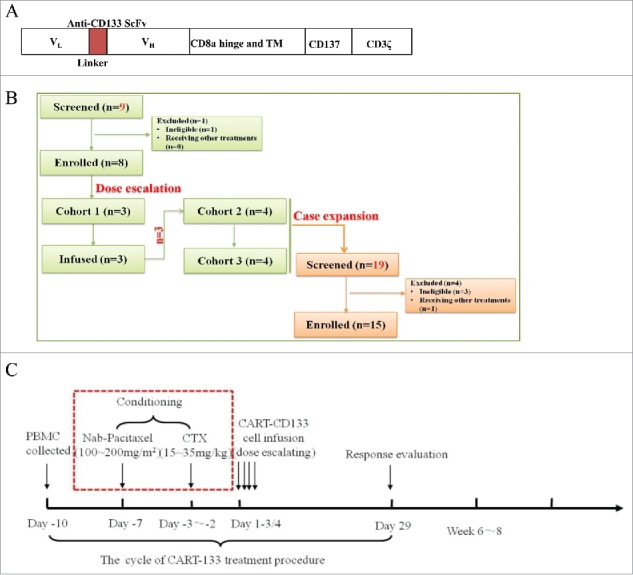
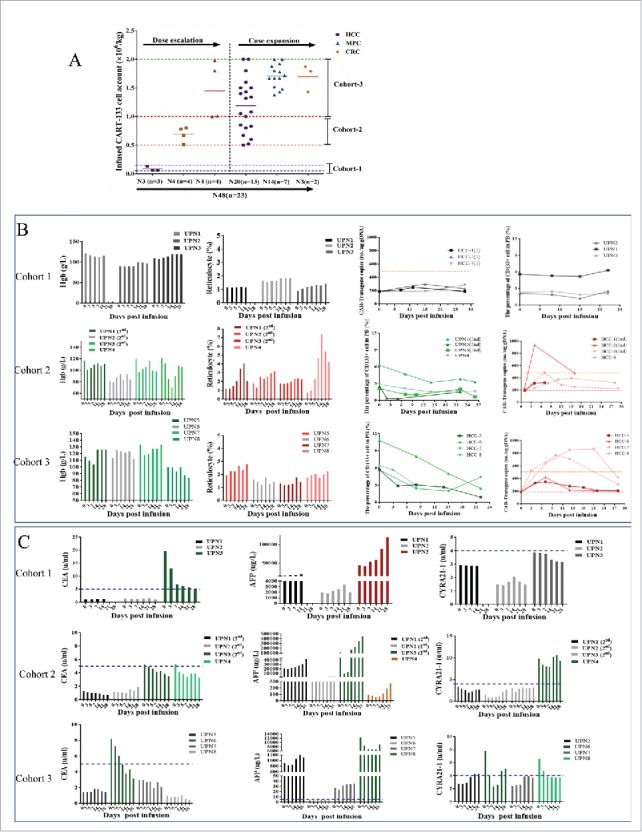
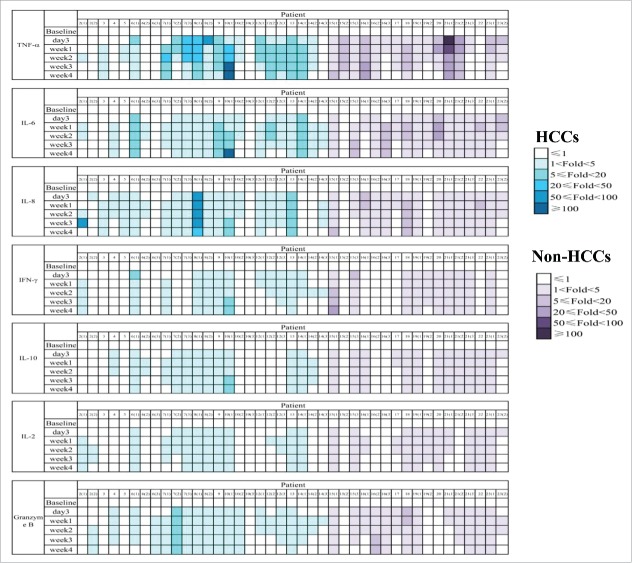
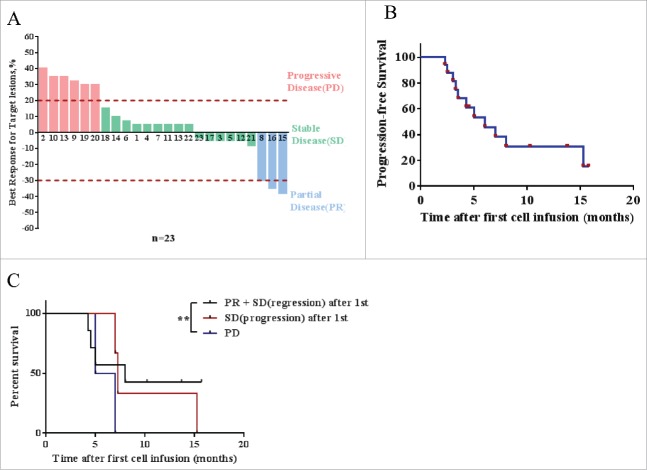
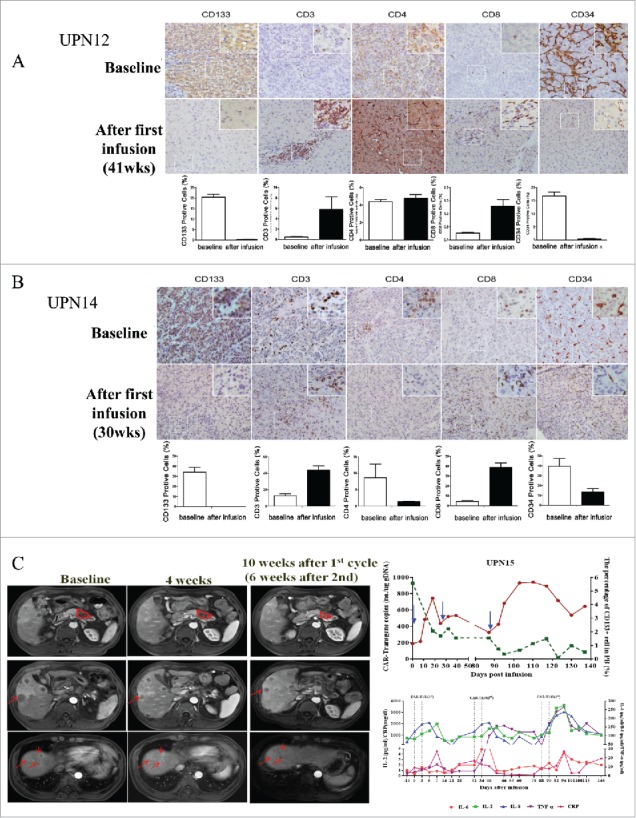
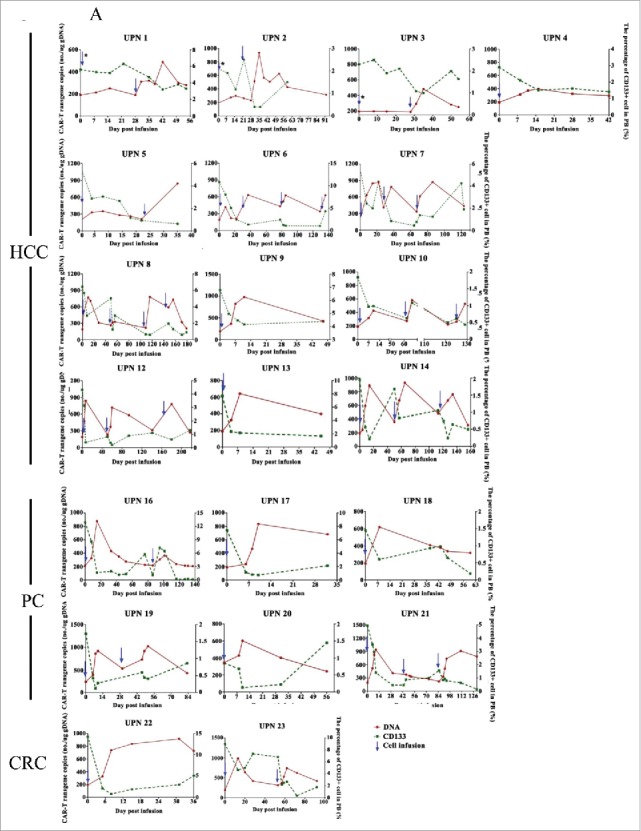
Expressed by cancer stem cells of various epithelial cell origins, CD133 is an attractive therapeutic target for cancers. Autologous chimeric antigen receptor-modified T-cell directed CD133 (CART-133) was first tested in this trial. The anti-tumor specificity and the postulated toxicities of CART-133 were first assessed. Then, we conducted a phase I clinical study in which patients with advanced and CD133-positive tumors received CART-133 cell-infusion. We enrolled 23 patients (14 with hepatocellular carcinoma [HCC], 7 with pancreatic carcinomas, and 2 with colorectal carcinomas). The 8 initially enrolled patients with HCC were treated by a CART-133 cell dose escalation scheme (0.05–2 × 10⁶/kg). The higher CAR-copy numbers and its reverse relationship with the count of CD133+ cells in peripheral blood led to the determination of an acceptable cell dose is 0.5–2 × 10⁶/kg and reinfusion cycle in 23 patients. The primary toxicity is a decrease in hemoglobin/platelet (≤ grade 3) that is self-recovered within 1 week. Of 23 patients, three achieved partial remission, and 14 achieved stable disease. The 3-month disease control rate was 65.2%, and the median progression-free survival was 5 months. Repeated cell infusions seemed to provide a longer period of disease stability, especially in patients who achieved tumor reduction after the first cell-infusion. 21 out of 23 patients had not developed detectable de novo lesions during this term. Analysis of biopsied tissues by immunohistochemistry showed CD133+ cells were eliminated after CART-133 infusions. This trial showed the feasibility, controllable toxicities, and effective activity of CART-133 transfer for treating patients with CD133-postive and late-stage metastasis malignancies.
Overview
The claims and statistics of this paper haven’t been checked yet.
Free: it reads the open-access text and checks the first 5 claims that cite a source we can check. Create a free account to check every claim.
Integrity signals
Registry
Cites
Statistics
Figures
Verification
Claims the paper makes
The claims and statistics of this paper haven’t been checked yet.
Free: it reads the open-access text and checks the first 5 claims that cite a source we can check. Create a free account to check every claim.
Claims other papers make about this one
Each is checked against this paper’s own text: does it say what the citing paper says it does?
The cited source says what the claim attributes to it.
In the citing paper
“CAR-T cells currently under development for targeting colorectal CSCs include CD133-, EpCAM-, or CD166-directed CAR-T cells [229,230,231,232].”
From Mechanisms and Strategies to Overcome Drug Resistance in Colorectal Cancer (2025) · cites this paper as [229]
Self-check
Percentages, sums and reported differences re-computed from the paper’s own numbers.
The self-check needs the paper’s full text.
Citations
Cites
New response evaluation criteria in solid tumours: revised RECIST guideline (version 1.1)
Eisenhauer, E. A., Therasse, P., Bogaerts, J., Schwartz, L. H., Sargent, D., Ford, R., Dancey, J., Arbuck, S., Gwyther, S., Mooney, M., et al. (2009) · European Journal of Cancer · doi:10.1016/j.ejca.2008.10.026 · Cited by 29,534 · cited 1×
“1 and immune-related response criteria.(25) Adverse events were documented and graded based on the Common Terminology Criteria for Adverse Events version 4.”
MethodSorafenib in advanced hepatocellular carcinoma
Llovet, J. M., Ricci, S., Mazzaferro, V., Hilgard, P., Gane, E., Blanc, J.-F., de Oliveira, A. C., Santoro, A., Raoul, J.-L., Forner, A., et al. (2008) · New England Journal of Medicine · doi:10.1056/nejmoa0708857 · Cited by 13,097
Stem cells, cancer, and cancer stem cells
Reya, T., Morrison, S. J., Clarke, M. F., & Weissman, I. L. (2001) · Nature · doi:10.1038/35102167 · Cited by 9,738 · cited 1×
“Moreover, CD133 is a marker of cancer stem cells (CSCs) and endothelial progenitor cells (EPCs) that had been verified to participate in tumor metastasis and recurrence.(20,21) These characteristics make CD133 a reasonable target for immunotherapy for patients with advanced CD133-postive tumors.”
BackgroundSorafenib in Advanced Hepatocellular Carcinoma
정, 재. (2008) · Cited by 5,586
Bruix, J., Qin, S., Merle, P., Granito, A., Huang, Y.-H., Bodoky, G., Pracht, M., Yokosuka, O., Rosmorduc, O., Breder, V., et al. (2017) · The Lancet · doi:10.1016/s0140-6736(16)32453-9 · Cited by 3,653
Clarke, M. F., Dick, J. E., Dirks, P. B., Eaves, C. J., Jamieson, C. H. M., Jones, D. L., Visvader, J., Weissman, I. L., & Wahl, G. M. (2006) · Cancer Research · doi:10.1158/0008-5472.can-06-3126 · Cited by 3,051 · cited 1×
“Moreover, CD133 is a marker of cancer stem cells (CSCs) and endothelial progenitor cells (EPCs) that had been verified to participate in tumor metastasis and recurrence.(20,21) These characteristics make CD133 a reasonable target for immunotherapy for patients with advanced CD133-postive tumors.”
BackgroundCancer Regression and Autoimmunity in Patients After Clonal Repopulation with Antitumor Lymphocytes
Dudley, M. E., Wunderlich, J. R., Robbins, P. F., Yang, J. C., Hwu, P., Schwartzentruber, D. J., Topalian, S. L., Sherry, R., Restifo, N. P., Hubicki, A. M., et al. (2002) · Science · doi:10.1126/science.1076514 · Cited by 2,823 · cited 1×
“Lymphocytes and interstitial cell clearance can contribute to the expansion of CART cells in vivo and infiltrate the solid tumor.(6,34,35) Therefore, lymphocyte clearance and reduced tumor load conditioning regimens are necessary under the premise that patients can tolerate a conditioning chemotherapy regimen to enhan…”
BackgroundCurrent concepts in the diagnosis and management of cytokine release syndrome.
Lee, D. W., Gardner, R., Porter, D. L., Louis, C. U., Ahmed, N., Jensen, M., Grupp, S. A., & Mackall, C. L. (2014) · Blood · doi:10.1182/blood-2014-05-552729 · Cited by 2,806 · cited 2×
“Cytokines release syndrome (CRS) graded and managed based on a previous report from Lee et al.(26) Dose-limiting toxicity (DLT) was defined as any grade 3 or above toxicity was considered possibly or likely related to CART-133 cells.”
MethodEfficacy and Toxicity Management of 19-28z CAR T Cell Therapy in B Cell Acute Lymphoblastic Leukemia
Davila, M. L., Riviere, I., Wang, X., Bartido, S., Park, J., Curran, K., Chung, S. S., Stefanski, J., Borquez-Ojeda, O., Olszewska, M., et al. (2014) · Science Translational Medicine · doi:10.1126/scitranslmed.3008226 · Cited by 2,476
Self-citationZou, W., Wolchok, J. D., & Chen, L. (2016) · Science Translational Medicine · doi:10.1126/scitranslmed.aad7118 · Cited by 2,400 · cited 1×
“PD-L1 pathway using anti-PD-1 therapy is considered an important approach with potential benefits in solid tumors.(39,40)”
Method
Cited by
Items 201–300 of 341
Wang, H., & Pan, W. (2022) · Molecular and Cellular Biochemistry · doi:10.1007/s11010-022-04568-0 · Cited by 13
“In an investigation of two CRC patients with lymph node metastasis and some others with various solid tumors treated with CART-133 cells, the outcomes showed that following treatment, there was no considerable inflammatory response in the lymph nodes, colon, lung, liver, and pancreas [90].”
BackgroundAn, J., Hu, X., & Liu, F. (2023) · Frontiers in Oncology · doi:10.3389/fonc.2023.1114621 · Cited by 13
CAR-T cell therapy: Advances in digestive system malignant tumors
Xu, N., Wu, Z., Pan, J., Xu, X. L., & Wei, Q. (2024) · Molecular Therapy Oncology · doi:10.1016/j.omton.2024.200872 · Cited by 18
Self-citationZhao, Y., Qin, C., Chen, L., Li, Z., Zhao, B., Li, T., Zhang, X., & Wang, W. (2024) · Biochimica et Biophysica Acta (BBA) - Reviews on Cancer · doi:10.1016/j.bbcan.2024.189183 · Cited by 16
Advances in Novel Targeted Therapies for Pancreatic Adenocarcinoma
Hoang, T. A., & Tsang, E. S. (2025) · Journal of Gastrointestinal Cancer · doi:10.1007/s12029-024-01149-w · Cited by 18
“A phase 1 trial of CAR T-cell directed against CD133, a cancer stem cell marker highly expressed in PDAC, showed 3/7 patients with SD, 2/7 patients with PR and 2/7 patients with PD [109].”
Hepatocellular carcinoma stem cells: the current state of small molecule-based inhibitors
Neves, S. P., Bomfim, L. M., & Bezerra, D. P. (2025) · Cell Death and Disease · doi:10.1038/s41419-025-07983-5 · Cited by 15
“Furthermore, Wang et al. [33] reported that a phase 2, open-label, single-arm clinical trial of CD133-targeted chimeric antigen receptor T (CAR-T) cell treatment was effective and safe for patients with advanced HCC. Huang et al. [34] demonstrated that an anti-CD3/anti-CD133 bispeci fi c antibody…”
Hepatocellular Carcinoma: Current Therapeutic Algorithm for Localized and Advanced Disease
Jose, A., Bavetta, M. G., Martinelli, E., Bronte, F., Giunta, E. F., & Manu, K. A. (2022) · Journal of Oncology · doi:10.1155/2022/3817724 · Cited by 13
Chimeric Antigen Receptor Therapy: How Are We Driving in Solid Tumors?
Greenbaum, U., Yalniz, F., Srour, S. A., Rezvani, K., Singh, H., Olson, A. L., Blumenschein, G. R., Hong, D. S., Shpall, E. J., & Kebriaei, P. (2020) · Transplantation and Cellular Therapy · doi:10.1016/j.bbmt.2020.06.020 · Cited by 11
Kasahara, Y., Shin, C., Kubo, N., Mihara, K., Iwabuchi, H., Takachi, T., Imamura, M., Saitoh, A., & Imai, C. (2020) · Clinical & Translational Immunology · doi:10.1002/cti2.1147 · Cited by 11
“CAR-T cells targeting other molecules including carcinoembryonic antigen (CEA) and CD133 have been reported to be feasible, but significant tumor shrinkage has not yet been achieved.(10,11) One major obstacle in exploiting CAR-T technology for the novel treatment of refractory solid tumors is a paucity of appropriate…”
BackgroundCAR T-cells for pediatric solid tumors: where to go from here?
Trautmann, T., Yakobian, N., & Nguyen, R. (2024) · Cancer and Metastasis Reviews · doi:10.1007/s10555-024-10214-6 · Cited by 12
Advancing Immunotherapy in Pancreatic Cancer: A Brief Review of Emerging Adoptive Cell Therapies
Sherpally, D., & Manne, A. (2025) · Cancers · doi:10.3390/cancers17040589 · Cited by 13
Immuno-oncology for Hepatocellular Carcinoma
Armstrong, S. A., & He, A. R. (2020) · Clinics in Liver Disease · doi:10.1016/j.cld.2020.07.007 · Cited by 10
Georgiou‐Siafis, S. K., Miliotou, Α. N., Ntenti, C., Pappas, I. S., & Papadopoulou, L. C. (2022) · Biomedicines · doi:10.3390/biomedicines10112885 · Cited by 10
“In addition, high-edge CAR immunotherapy is being developed for solid tumors as well, with clinical studies being performed with excellent remission results in ovarian [8], breast [9], prostate [10], brain [11], renal [12], gastric [13], pancreatic [14], lung [15], liver [16] and colorectal cancer [17].”
BackgroundChimeric antigen receptor-T cells immunotherapy for targeting breast cancer
Rahimmanesh, I., & Khanahmad, H. (2021) · Research in Pharmaceutical Sciences · doi:10.4103/1735-5362.323911 · Cited by 10
“showed that CD133-expressing tumors were eradicated both in vitro and in xenograft tumor model after CAR-modified T-cell directed by CD133 infusions (12).”
BackgroundKhorasani, A. B. S., Sanaei, M., Pourbagheri‐Sigaroodi, A., Ghaffari, S. H., & Bashash, D. (2021) · International Immunopharmacology · doi:10.1016/j.intimp.2021.108260 · Cited by 11
Sangsuwannukul, T., Supimon, K., Chieochansin, T., Choomee, K., Sujjitjoon, J., Junking, M., & Yenchitsomanus, P. (2022) · PLoS ONE · doi:10.1371/journal.pone.0265773 · Cited by 10
Wang, X., Qiu, W., Liu, H., He, M., He, W., Zhan, L., Wu, Z., Xu, X. M., & Chen, P. (2023) · Cancer Biology and Medicine · doi:10.20892/j.issn.2095-3941.2023.0033 · Cited by 13
“1, human CD137, and CD3 ζ signaling domains, as previously described 31 .”
BackgroundSelf-citationCancer stem cells: Masters of all traits
Leck, L. Y. W., El-Aziz, Y. S. A., McKelvey, K. J., Park, K. C., Sahni, S., Lane, D. J. R., Skoda, J., & Jansson, P. J. (2024) · Biochimica et Biophysica Acta (BBA) - Molecular Basis of Disease · doi:10.1016/j.bbadis.2024.167549 · Cited by 12
Yang, C., You, J., Wang, Y., Chen, S., Tang, Y., Chen, H., Zhong, H., Song, R., Long, H., Xiang, T., et al. (2024) · Frontiers in Immunology · doi:10.3389/fimmu.2024.1499731 · Cited by 11
Self-citationThe Era of Gene Therapy: The Advancement of Lentiviral Vectors and Their Pseudotyping
Jargalsaikhan, B.-E., Muto, M., & Ema, M. (2025) · Viruses · doi:10.3390/v17081036 · Cited by 14
Bhutani, B., Sharma, V., Ganguly, N. K., & Rana, R. (2025) · Biomedicine & Pharmacotherapy · doi:10.1016/j.biopha.2025.117987 · Cited by 11
Current status and hurdles for CAR-T cell immune therapy
Zhao, R., Cui, Y., Li, S., Qin, L., & Li, P. (2019) · Blood Science · doi:10.1097/bs9.0000000000000025 · Cited by 12
In vitro 3D liver tumor microenvironment models for immune cell therapy optimization
Lam, M. S. Y., Reales‐Calderón, J. A., Ow, J. R., Adriani, G., & Pavesi, A. (2021) · APL Bioengineering · doi:10.1063/5.0057773 · Cited by 10
Althafar, Z. M. (2025) · Frontiers in Pharmacology · doi:10.3389/fphar.2025.1614325 · Cited by 8
Stem cell therapy for hepatocellular carcinoma and end-stage liver disease
Abdellateif, M. S., & Zekri, A. N. (2023) · Journal of the Egyptian National Cancer Institute · doi:10.1186/s43046-023-00194-z · Cited by 8
“One of these studies was the development of CD133-directed CAR T cells in the treat-ment of patients with advanced HCC [60].”
BackgroundAberrant stem cell and developmental programs in pediatric leukemia
Ling, R. E., Cross, J. W., & Roy, A. (2024) · Frontiers in Cell and Developmental Biology · doi:10.3389/fcell.2024.1372899 · Cited by 12
Hou, J., Uejima, T., Tanaka, M., Son, Y. L., Hanada, K., Kukimoto‐Niino, M., Yamaguchi, S., Hashimoto, S., Yokoyama, S., Takemori, T., et al. (2024) · Neuro-Oncology · doi:10.1093/neuonc/noae226 · Cited by 10
Short Time to Market and Forward Planning Will Enable Cell Therapies to Deliver R&D Pipeline Value
Krishna, D., Rittié, L., Tran, H. T., Zheng, X., Chen-Rogers, C.-E., McGillivray, A., Clay, T. D., Ketkar, A., & Tarnowski, J. (2021) · Human Gene Therapy · doi:10.1089/hum.2020.212 · Cited by 8
Feng, Z., Xu, F., Liu, Y., Xu, H., Wu, F., Chen, X., & Xia, H. (2021) · Hepatoma Research · doi:10.20517/2394-5079.2020.107 · Cited by 9
“CAR-T cells targeting CD133 have shown the feasibility of treating advanced HCC, with controllable toxicity and effective activity([92]).”
BackgroundSelf-citationRiegg, F., Lutz, M. S., Schmied, B. J., Heitmann, J. S., Queudeville, M., Lang, P., Jung, G., Salih, H. R., & Märklin, M. (2021) · Cancers · doi:10.3390/cancers13071632 · Cited by 7
“Particularly CD133 CAR T cell products have partly reached the stage of clinical evaluation [41,42].”
BackgroundConceptual Development of Immunotherapeutic Approaches to Gastrointestinal Cancer
Aderonke, A. B., Ibrahim, R. B., & Huang, Y. (2019) · International Journal of Molecular Sciences · doi:10.3390/ijms20184624 · Cited by 9
Mahanti, K., & Bhattacharyya, S. (2023) · Translational research · doi:10.1016/j.trsl.2023.10.003 · Cited by 7
Knopik-Skrocka, A., Sempowicz, A., & Piwócka, O. (2024) · EXCLI journal · doi:10.17179/excli2024-6972 · Cited by 15
“However, the results of phase I clinical trial NCT02541370 (Wang et al., 2018) demonstrated the positive effect of CD-133 + -CAR-T in patients with hepatocellular carcinoma, and metastasis did not develop.”
BackgroundRen, T., & Huang, Y. B. (2024) · Naunyn-Schmiedeberg s Archives of Pharmacology · doi:10.1007/s00210-024-03443-7 · Cited by 10
“CD133 CAR-T cells were produced, and their application showed remarkable lytic capabilities and strong pro-inflammatory cytokine production against CD133 + HCC cells (Wang et al. 2018).”
Development of CAR-T Therapies and Personalized Vaccines for the Treatment of Cholangiocarcinoma
Li, D., Andaloori, L., Crowe, M., Lin, S., Hong, J., Zaidi, N., & Ho, M. (2024) · American Journal Of Pathology · doi:10.1016/j.ajpath.2024.10.021 · Cited by 7
Zhao, Z., Zhang, J., Bian, J., & Lu, X. (2022) · Annals of Translational Medicine · doi:10.21037/atm-21-5019 · Cited by 8
Shen, J., Yang, D., & Ding, Y. (2022) · Cancers · doi:10.3390/cancers14205018 · Cited by 9
“A phase 1 clinical trial involving CD133-targeted CAR-T cells for advanced HCC (NCT02541370) demonstrated its feasibility, manageable toxicity, and efficacy [35].”
BackgroundPetersburg, J. R., Vallera, D. A., & Wagner, C. R. (2022) · Molecular Cancer Therapeutics · doi:10.1158/1535-7163.mct-22-0515 · Cited by 7
CAR-T cells: the Chinese experience
Wang, L.-Q., Yin, E. T. S., Zhao, H., Ni, F., Hu, Y., & Huang, H. (2020) · Expert Opinion on Biological Therapy · doi:10.1080/14712598.2020.1790521 · Cited by 7
Thảo, Đ. T., Minh, L. N., Anh, T. T. M., Nga, N. T., Hue, P. T. K., & Kiệm, P. V. (2021) · Natural Product Communications · doi:10.1177/1934578x21998184 · Cited by 7
“Wang found that chimeric antigen receptordirected CD133 therapy for patients with hepatocellular carcinomas and colorectal cancers was effective in clinical trials.(15) From this study, we also realized that the PMCs inhibited CSCs more effectively than did unconjugated piperine.”
BackgroundGenetic heterogeneity of liver cancer stem cells
Kim, M., Jo, K.-W., Kim, H., Han, M., & Oh, S. (2022) · Anatomy & Cell Biology · doi:10.5115/acb.22.161 · Cited by 10
Sheng, Y., Li, Y., Liu, Q., Peng, Y., Tan, J., Li, W., Mao, W., Wei, W., Chang, Y., Cao, L., et al. (2025) · British Journal of Cancer · doi:10.1038/s41416-025-03114-1 · Cited by 9
Antitumor Effect of Peptide–Camptothecin Conjugate Targeting CD133 Protein
Yang, T., Du, M., Zhu, M., Wang, Y., Fei, Y., Zhao, Y. Q., Ma, J., Fan, R., Dai, F., Chen, J., et al. (2024) · Bioconjugate Chemistry · doi:10.1021/acs.bioconjchem.4c00485 · Cited by 6
Self-citationHypoxia, Stem Cells and Cancer Stem Cells
Manian, M., Taherian, M., Nickho, H., Nejad, A. E., & Shaverdi, S. (2024) · Stem cell biology and regenerative medicine · doi:10.1007/978-3-031-74842-4_3 · Cited by 8
Cancer Stem Cells in Tumor Microenvironment of Adenocarcinoma of the Stomach, Colon, and Rectum
Islas, J. F., Quiroz-Reyes, A. G., González, P. D., Franco-Villareal, H., Delgado-Gallegos, J. L., Garza-Treviño, E. N., & González-Villarreal, C. A. (2022) · Cancers · doi:10.3390/cancers14163948 · Cited by 6
Chen, W., Zhang, X., Yan, Y., Sun, X., & Li, L. (2023) · Hepatoma Research · doi:10.20517/2394-5079.2022.52 · Cited by 6
Expanded Alternatives of CRISPR–Cas9 Applications in Immunotherapy of Colorectal Cancer
Arroyo-Olarte, R. D., Mejía-Muñoz, A., & León‐Cabrera, S. (2023) · Molecular Diagnosis & Therapy · doi:10.1007/s40291-023-00680-z · Cited by 9
Yao, Z., Kang, K., Li, P., Yin, L., Tong, R., Yi, L., Song, Y., Luo, R., Wu, Y., Liu, S., et al. (2026) · Molecular Therapy · doi:10.1016/j.ymthe.2025.12.068 · Cited by 6
“33,39 The immune checkpoint pathway has been recognized as a corner-stone of cancer immunology, and the development of PD-1/PD-L1 antibodies led to the renaissance of immunotherapy.”
Pourmasoumi, P., Pourmasoumi, A., Zamani, F., Amini, A., & Shokri, S. (2026) · Cancer Management and Research · doi:10.2147/cmar.s580320 · Cited by 5
“…antigens such as B7-H3, CD133, and HER2 have faced similar hurdles with antigen variability and difficulties in overcoming the BBB. 43,54,55 Yuan et al discussed how these trials emphasize the critical need for improving CAR-T cell delivery methods, including direct intracerebral…”
Evolving Treatments and Resistance Mechanisms in Prostate Cancer Therapeutics
Reddy, G. S., Kumar, A., Sharma, N. K., Samanta, K., Pramanik, D., Karampudi, N. B. R., & Kar, P. (2026) · ACS Pharmacology & Translational Science · doi:10.1021/acsptsci.5c00757 · Cited by 5
Cancer stem cell-immune cell crosstalk in the tumor microenvironment for liver cancer progression
Ma, Y., Lv, H., Xing, F., Xiang, W., Wu, Z., Feng, Q., Wang, H., & Yang, W. (2024) · Frontiers of Medicine · doi:10.1007/s11684-023-1049-z · Cited by 7
Self-citationChen, Z., Qi, H., Xue, Y., Zhang, Y., Zhang, Z., Xu, S., Liao, S., Zeng, X., Wu, J., Lv, X., et al. (2025) · MedComm – Oncology · doi:10.1002/mog2.70015 · Cited by 7
Cell Therapy for Liver Disease: From Promise to Reality
Khan, S., Khan, R. S., & Newsome, P. N. (2020) · Seminars in Liver Disease · doi:10.1055/s-0040-1717096 · Cited by 5
Current Clinical Landscape of Immunotherapeutic Approaches in Pancreatic Cancer Treatment
Farhangnia, P., Ghomi, S. M., Mollazadehghomi, S., & Delbandi, A. (2023) · Interdisciplinary cancer research · doi:10.1007/16833_2023_163 · Cited by 5
Appelbaum, J., Pinto, N. R., & Orentas, R. J. (2019) · Elsevier eBooks · doi:10.1016/b978-0-323-66181-2.00011-1 · Cited by 6
The advancement of immunotherapy in hepatocellular carcinoma
Ni, L., Feng, Y., & Dong, C. (2020) · Hepatoma Research · doi:10.20517/2394-5079.2020.14 · Cited by 7
“This trial suggests that the infusion of CA133-CAR-T cells may be of value in treating CD133 advanced cancers([40]).”
BackgroundTechnological innovations promote cancer stem cell-based translational research
Yang, Z., Liao, W., Wang, W., Shi, W., Jiao, Z., & Yu, Z. (2025) · Cancer Letters · doi:10.1016/j.canlet.2025.217949 · Cited by 5
Xue, L.-M., Liu, Y., Liu, W.-C., & Phang, K. C. (2025) · International Immunopharmacology · doi:10.1016/j.intimp.2025.115948 · Cited by 5
Self-citationCircular RNA in hepatocellular carcinoma: emerging therapeutic strategies
Jazbec, G., & Režen, T. (2025) · Frontiers in Immunology · doi:10.3389/fimmu.2025.1722576 · Cited by 5
Cancer stem cells and drug resistance in cancer: molecular mechanisms and therapeutic targets
Hamdy, H., 李有洲, Li, C. J., Li, Z., Liu, X. W., Sun, E., Safwat, D., Shen, J., Li, H., & Sun, J. (2026) · Molecular Biomedicine · doi:10.1186/s43556-026-00516-2 · Cited by 4
“CD133-directed CAR-T cells have entered Phase II clinical trials, whereas EpCAM-targeted CAR-T therapies are currently undergoing early-stage clinical evaluation [148, 149].”
Advances in CAR-T cell therapy for malignant solid tumors
Liu, J., Tu, X., Liu, L., & Fang, W. J. (2022) · Journal of Zhejiang University (Medical Sciences) · doi:10.3724/zdxbyxb-2022-0044 · Cited by 5
Revolutionizing Cancer Treatment: Unveiling the Power of CAR T-cell Therapy
Barjasteh, A. H., Saebi, M., Mahmoudi, M., Kheder, R. K., Hashemy, S. I., Forouzanfar, F., & Esmaeili, S. (2025) · Current Pharmaceutical Design · doi:10.2174/0113816128336391241107112957 · Cited by 5
Shi, X., & Wu, H. (2022) · European Journal of Inflammation · doi:10.1177/1721727x221078727 · Cited by 5
“In addition to its great success in treating hematological malignancies, CAR-T cell therapy has made promising achievements in the treatment of solid tumors and immune system diseases (Table 1).(9-37) Numerous phase I clinical trials are underway.”
BackgroundChimeric Antigen Receptor T Cell Therapy For Solid Tumors
Hsu, J., Yang, Y., Gergis, M., Bi, X., Yi, D., & Gergis, U. S. (2022) · Hematology/Oncology and Stem Cell Therapy · doi:10.56875/2589-0646.1028 · Cited by 4
“cinoma patients, respectively; 3 patients achieved partial remission; and 14 patients had stable disease [35].”
BackgroundAdvances and considerations in the use of immunotherapies for primary hepato-biliary malignancies
Gorji, L., Brown, Z. J., & Pawlik, T. M. (2023) · Surgical Oncology · doi:10.1016/j.suronc.2023.102031 · Cited by 4
A topography of immunotherapies against gastrointestinal malignancies
Dhasmana, A., DHASMANA, S., Kotnala, S., ANUKRITI, A., Kashyap, V. K., SHAJI, P. D., Laskar, P., Sheema, K. H. A. N., Pellicano, R., Fagoonee, S., et al. (2021) · Panminerva Medica · doi:10.23736/s0031-0808.21.04541-9 · Cited by 5
Xu, X. M. (2022) · Research Square · doi:10.21203/rs.3.rs-1227221/v1 · Cited by 4
CAR-T in the Treatment of Solid Tumors—A Review of Current Research and Future Perspectives
Picheta, N., Piekarz, J., Daniłowska, K., Szklener, K., & Mańdziuk, S. (2025) · International Journal of Molecular Sciences · doi:10.3390/ijms26199486 · Cited by 7
“A phase I study was conducted, enrolling 23 patients, including 14 with hepatocellular carcinoma (HCC), 7 with pancreatic cancer, and 2 with colorectal cancer [38].”
Fan, Y.-Y., Liu, Y.-L., Liu, X.-F., Jiang, S.-Q., Yang, H., Zhang, H.-R., Wei, P., & Huang, Q.-R. (2025) · Cancer Immunology Immunotherapy · doi:10.1007/s00262-025-04267-x · Cited by 3
“3D and supplementary videos 7–9).”
Self-citationShen, S., Ruan, Z., Jiang, B., Qiu, W., Zhang, F., & Shu, R. (2026) · Frontiers in Immunology · doi:10.3389/fimmu.2026.1764452 · Cited by 6
Tumor cell stemness in gastrointestinal cancer: regulation and targeted therapy
Yang, K., & Yi, T. (2024) · Frontiers in Molecular Biosciences · doi:10.3389/fmolb.2023.1297611 · Cited by 5
Crosstalk between thyroid CSCs and immune cells: basic principles and clinical implications
Li, X., Han, H., Yang, K., Li, S., Ma, L., Yang, Z. R., & Zhao, Y. (2024) · Frontiers in Immunology · doi:10.3389/fimmu.2024.1476427 · Cited by 3
Self-citationWang, Z., Zou, P., Chen, Z., Hou, J., Son, Y. L., Yamashita, D., & Kondo, T. (2025) · British Journal of Cancer · doi:10.1038/s41416-025-03007-3 · Cited by 4
Cai, M.-N., Chen, D., Chen, X., Gu, Y., Liao, C.-H., Xiao, L.-X., Wang, J., Lin, B., Huang, Y., & Lian, Y. (2024) · Cellular Oncology · doi:10.1007/s13402-024-00972-4 · Cited by 6
Biomarker Targeting of Colorectal Cancer Stem Cells
Caparosa, E. M., Stem, J., Snook, A. E., & Waldman, S. A. (2019) · Biomarkers in Medicine · doi:10.2217/bmm-2019-0227 · Cited by 3
Low-dose HDACi potentiates anti-tumor activity of macrophages in immunotherapy
Li, X., Dai, H., & Wang, H. (2021) · OncoImmunology · doi:10.1080/2162402x.2021.1935668 · Cited by 3
Self-citationDarvish-Damavandi, M., Zhou, Y., & Buczacki, S. J. A. (2022) · Elsevier eBooks · doi:10.1016/b978-0-12-821618-7.00076-6 · Cited by 3
Current status and future prospects of immunotherapy for pancreatic ductal adenocarcinoma
Lou, Y., Zhou, H., Liu, F., Chang, R., Chen, Z., Dong, C., Liu, J., Tang, X. Y., Yang, Q., Lu, C., et al. (2026) · Journal of Cancer Research and Therapeutics · doi:10.4103/jcrt.jcrt_1142_25 · Cited by 2
Self-citationZhao, C.-X., Wang, S., & Li, K. (2026) · Acta Pharmacologica Sinica · doi:10.1038/s41401-026-01860-3 · Cited by 4
“…IL-15, or IL-18) can promote T cell proliferation, resist exhaustion, activate endogenous immune cells, and inhibit immunosuppressive subsets such as myeloid-derived suppressor cells and regulatory T cells (Treg), remodeling the suppressive TME into a pro-in fl ammatory microenvironment [157, 158].”
Colorectal cancer stem cells: overview and potential targeted therapy
Amălinei, C., Pricope, D. L., & Grigoraş, A. (2023) · Elsevier eBooks · doi:10.1016/b978-0-443-13212-4.00018-0 · Cited by 2
Zhu, X., Yin, X., Liu, W., Yu, C., Xia, S., Cao, Y., Jiang, L., Guo, Z., Zhang, M., & Zhang, H. (2025) · Immunotherapy · doi:10.1080/1750743x.2025.2533112 · Cited by 2
“Overall, 3 patients achieved stable disease, 2 with partial remission, and the remaining 2 with disease progression [30].”
A Head Start: CAR-T Cell Therapy for Primary Malignant Brain Tumors
Tschernia, N. P., & Khagi, S. (2020) · Current Treatment Options in Oncology · doi:10.1007/s11864-020-00772-6 · Cited by 2
How Do We Meet the Challenge of Chimeric Antigen Receptor T-Cell Therapy for Solid Tumors?
Schoenfeld, A. J., & O'Cearbhaill, R. E. (2021) · The Cancer Journal · doi:10.1097/ppo.0000000000000516 · Cited by 2
To be or not to be: The double-edged sword roles of liver progenitor cells
Yan, Z.-J., Chen, L., & Wang, H. (2023) · Biochimica et Biophysica Acta (BBA) - Reviews on Cancer · doi:10.1016/j.bbcan.2023.188870 · Cited by 3
Ren, H., Elliott, N., Lye, B., Shohan, M. U. S., Cross, J. W., Field, L. M., Ponnusamy, K., Rice, S., Jackson, T., Leontari, I., et al. (2025) · bioRxiv (Cold Spring Harbor Laboratory) · doi:10.1101/2025.01.22.633541 · Cited by 2
CAR-T Therapy Can Be a Useful Treatment Modality for More Than Just Hematologic Malignancies
Ikegame, K. (2024) · Internal Medicine · doi:10.2169/internalmedicine.4235-24 · Cited by 1
“The second trial administered CAR-T targeting CD133 to 23 patients with CD133-positive tumors, including pancreatic cancer, resulting in two partial responses (PR), three stable diseases (SD), and two progressive diseases (PD) in seven patients with pancreatic cancer (NCT02541370) (11).”
The Role of CAR-T Cells in Targeting Cancer Stem Cells
Maali, A., & Sharifzadeh, Z. (2024) · Stem cell biology and regenerative medicine · doi:10.1007/978-3-031-74842-4_13 · Cited by 2
Engineering adoptive cell therapy for solid tumors
Sanjary, M., Shokati, A., Rahnama, M. A., Khaseb, S., & Ahmadvand, M. (2025) · Medical Oncology · doi:10.1007/s12032-025-03067-8 · Cited by 1
“A phase I trial with CD133-tar-geted CAR-T cells showed partial responses and stable disease in several patients[209].”
Targeting intratumoral heterogeneity in pancreatic cancer with sequential TIL infusions
Arruda, L. C. M., Karbach, J., Kiselicki, D., Sinelnikov, E., Gustavus, D., Hoffmeister, H., Atmaca, A., & Jäger, E. (2026) · Cytotherapy · doi:10.1016/j.jcyt.2026.102141 · Cited by 1
Tan, J., Wen, T., Liu, J. S., & Ru, X. (2026) · Journal of Hematology & Oncology · doi:10.1186/s13045-026-01828-0 · Cited by 2
“Nevertheless, stable disease was the most frequent best response, while hyperbilirubinemia in patients with pre-existing biliary obstruction raised concerns about potential on-target, off-tumor toxicity [521].”
Translational insights and clinical challenges of targeting cancer stem cells
Ahmed, M., Al-Haidari, A., Agarwal, S., Sun, J., Hammarlund, E. U., Rönnstrand, L., Pienta, K. J., Tatlı, Ö., & Kazi, J. U. (2026) · Signal Transduction and Targeted Therapy · doi:10.1038/s41392-026-02887-y · Cited by 2
Endocrine Toxicities of Immunotherapy
Pandey, M. R., Goyal, I., & Ernstoff, M. S. (2020) · Elsevier eBooks · doi:10.1016/b978-0-323-67241-2.00018-5 · Cited by 1
Novel Therapeutics Targeting Cancer Stem Cell Surface Markers
Gamage, S. M. K., Ranaweera, C. D., Maduwage, K. P., Cheng, T. T., Islam, F., & Gopalan, V. (2023) · Springer eBooks · doi:10.1007/978-981-99-3185-9_10 · Cited by 1
Xie, H. (2024) · International Conference on Biological Engineering and Medical Science (ICBioMed) · doi:10.1117/12.3012936 · Cited by 2
Frontiers and challenges of immune cell therapy research in solid tumors
Xing, X., Wang, Z., Wu, M. P., & Yao, G. (2024) · Chinese Science Bulletin (Chinese Version) · doi:10.1360/tb-2024-0428 · Cited by 2
Kulemzin, S. V., Gorchakov, A. A., & Taranin, A. V. (2019) · Cellular Therapy and Transplantation · doi:10.18620/ctt-1866-8836-2019-8-4-19-28 · Cited by 1
Immunotherapy for Hepatocellular Carcinoma
Li, X. (2020) · Novel Approaches in Cancer Study · doi:10.31031/nacs.2020.04.000580 · Cited by 1
Self-citationApproches d’immunothérapie cellulaire T dans les tumeurs solides
Baulu, E., Dougé, A., Chuvin, N., Bay, J., & Depil, S. (2021) · Bulletin du Cancer · doi:10.1016/j.bulcan.2021.06.004 · Cited by 1
Henze, J. (2021) · eDiss (Georg-August-Universität Göttingen) · doi:10.53846/goediss-8758 · Cited by 1
Microphysiological vascularized solid tumor model for drugs and cell therapies screeningPreprint
Reales‐Calderón, J. A., Lam, M. S. Y., Ow, J. R., Aw, J., Tan, D., Adriani, G., & Pavesi, A. (2022) · Research Square · doi:10.21203/rs.3.rs-1853599/v1 · Cited by 1
Metadata
- Authors
- Wang, Y., Chen, M., Wu, Z., Tong, C., Dai, H., Guo, Y., Liu, Y., Huang, J., Lv, H., Luo, C., Feng, K.-C., Yang, Q.-M., Li, X.-L., & Han, W.
- Affiliations
- Chinese PLA General Hospital (CN)
- Department of Bio-therapeutic, Chinese PLA General Hospital, Beijing, China
- Department of Molecular & Immunology, Chinese PLA General Hospital, Beijing, China
- Corresponding author
- Han, Weidong
- Venue
- OncoImmunology
- Publisher
- Informa UK Limited
- Published
- 2018-05-07
- Volume
- 7
- Issue
- 7
- Pages
- e1440169
- ISSN
- 2162-4011 (ISSN-L)
- 2162-402X
- PMC
- PMC5993480
- OpenAlex
- W2790863559
- Cited by
- 338
- References
- 42
- Citations by year
- 2026: 25 · 2025: 37 · 2024: 50 · 2023: 48 · 2022: 57 · 2021: 47 · 2020: 39 · 2019: 26 · 2018: 9
- FWCI
- 11.37
- Type
- journal article
- Language
- en
- Open access
- gold
- doi.org
- Licence
- cc-by-nc-nd
- Locations
- OncoImmunology (publishedVersion, cc-by-nc-nd)
- Europe PMC (PubMed Central) (publishedVersion, cc-by-nc-nd)
- PubMed Central (publishedVersion, cc-by-nc-nd)
- PubMed (publishedVersion)
- DOAJ (DOAJ: Directory of Open Access Journals) (submittedVersion, cc-by-sa)
- Funders
- National Key Research and Developement Program of Chinas (2016YFC1303501 2016YFC1303504)
- Science and Technology Planning Project of Beijing City (Z151100003915076)
- Topics
- Health Sciences › Medicine › Oncology › CAR-T cell therapy research
- Life Sciences › Immunology and Microbiology › Immunology › Immunotherapy and Immune Responses
- Life Sciences › Biochemistry, Genetics and Molecular Biology › Biotechnology › Bacterial Cancer Therapy
- Keywords
- CD133, chimeric antigen receptor T cells, CAR T-cell therapy, cancer stem cells, hepatocellular carcinoma, pancreatic cancer, colorectal cancer, metastatic cancer, dose escalation, hematologic toxicity, disease control rate
About these checks
Registry, retraction, Cites and statistics results are computed, not judged, with one exception: a printed reference that no index lists is read once by a model before it counts as a citation error. Claims are extracted by a model and kept only when their quote appears verbatim in the text; each cited source is then checked, with a model’s help, for whether it says what the claim relies on. Those verdicts can be wrong — read the claim’s quote and the cited source before relying on one.
Statistics and arithmetic are recomputed, not judged.
Confidence bands are shown only for fields calibrated on our annotated test set. None is calibrated yet, so no band is shown.
What counts as a claim ›How we measure confidence ›How we check this ›
Are you an author, or do you see a problem with this page? Request a review
Data sources
Bibliographic data: Semantic Scholar, OpenAlex, Crossref.
Contains information from the Semantic Scholar Academic Graph Datasets, made available under the ODC Attribution License (ODC-BY 1.0).
Semantic Scholar’s data is described in: Kinney, R., et al. (2023). The Semantic Scholar Open Data Platform. arXiv:2301.10140.
