

CD133-directed CAR T cells for advanced metastasis malignancies: A phase I trial
Open accessThe DOI matches its Crossref record; 42 of the 42 references it cites were found in a registry or an index.
Abstract
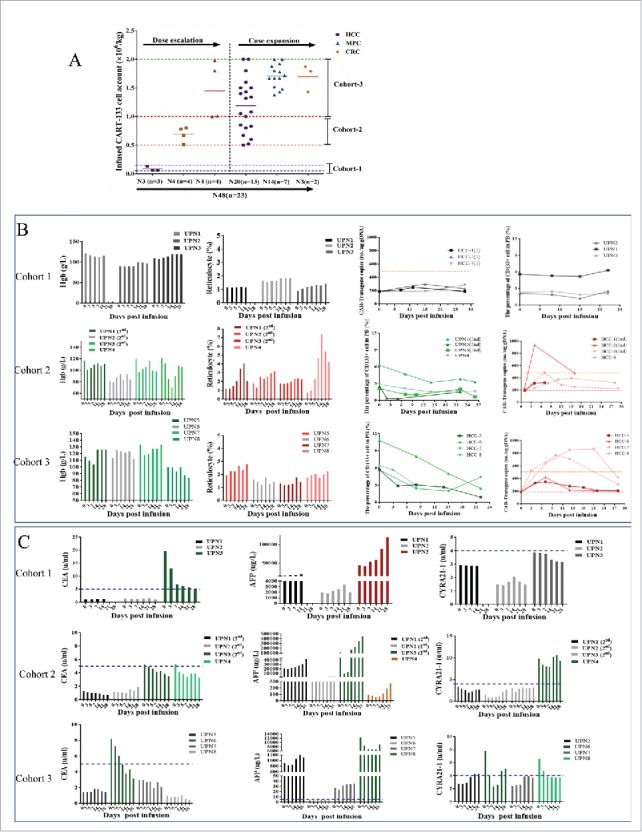
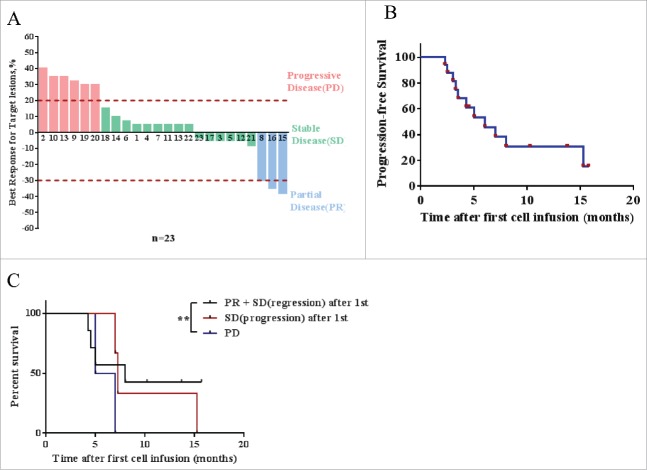
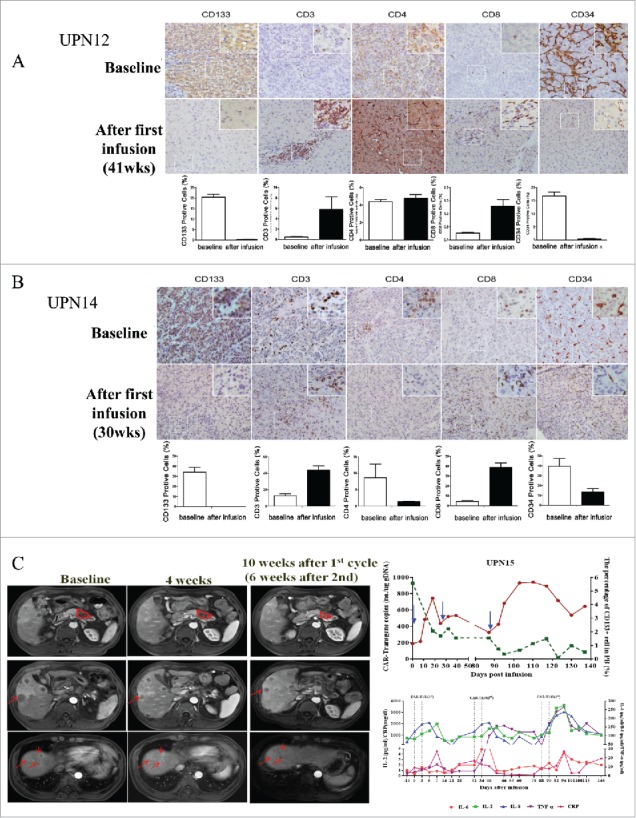
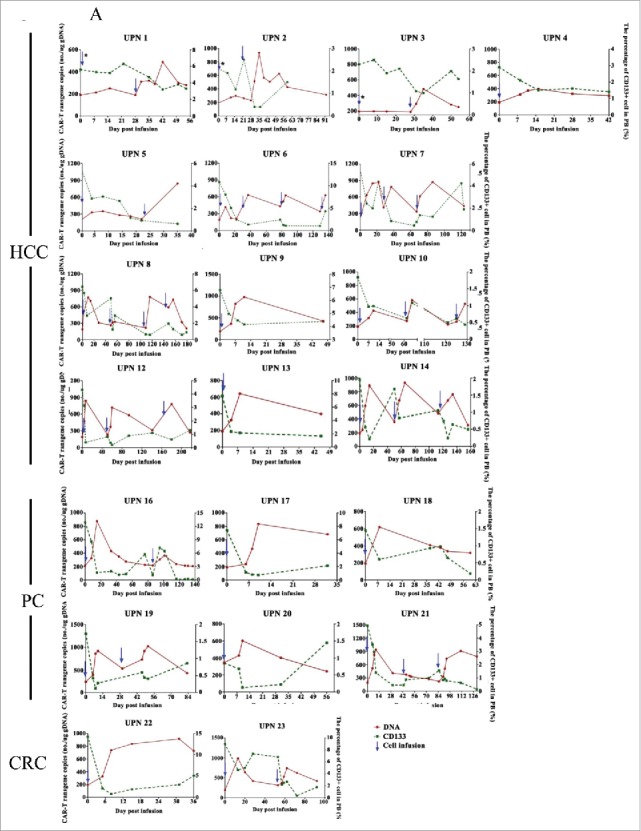
Expressed by cancer stem cells of various epithelial cell origins, CD133 is an attractive therapeutic target for cancers. Autologous chimeric antigen receptor-modified T-cell directed CD133 (CART-133) was first tested in this trial. The anti-tumor specificity and the postulated toxicities of CART-133 were first assessed. Then, we conducted a phase I clinical study in which patients with advanced and CD133-positive tumors received CART-133 cell-infusion. We enrolled 23 patients (14 with hepatocellular carcinoma [HCC], 7 with pancreatic carcinomas, and 2 with colorectal carcinomas). The 8 initially enrolled patients with HCC were treated by a CART-133 cell dose escalation scheme (0.05–2 × 10⁶/kg). The higher CAR-copy numbers and its reverse relationship with the count of CD133+ cells in peripheral blood led to the determination of an acceptable cell dose is 0.5–2 × 10⁶/kg and reinfusion cycle in 23 patients. The primary toxicity is a decrease in hemoglobin/platelet (≤ grade 3) that is self-recovered within 1 week. Of 23 patients, three achieved partial remission, and 14 achieved stable disease. The 3-month disease control rate was 65.2%, and the median progression-free survival was 5 months. Repeated cell infusions seemed to provide a longer period of disease stability, especially in patients who achieved tumor reduction after the first cell-infusion. 21 out of 23 patients had not developed detectable de novo lesions during this term. Analysis of biopsied tissues by immunohistochemistry showed CD133+ cells were eliminated after CART-133 infusions. This trial showed the feasibility, controllable toxicities, and effective activity of CART-133 transfer for treating patients with CD133-postive and late-stage metastasis malignancies.
Overview
The claims and statistics of this paper haven’t been checked yet.
Free: it reads the open-access text and checks the first 5 claims that cite a source we can check. Create a free account to check every claim.
Integrity signals
Registry
Cites
Statistics
Figures
Verification
Claims the paper makes
The claims and statistics of this paper haven’t been checked yet.
Free: it reads the open-access text and checks the first 5 claims that cite a source we can check. Create a free account to check every claim.
Claims other papers make about this one
Each is checked against this paper’s own text: does it say what the citing paper says it does?
The cited source says what the claim attributes to it.
In the citing paper
“CAR-T cells currently under development for targeting colorectal CSCs include CD133-, EpCAM-, or CD166-directed CAR-T cells [229,230,231,232].”
From Mechanisms and Strategies to Overcome Drug Resistance in Colorectal Cancer (2025) · cites this paper as [229]
Self-check
Percentages, sums and reported differences re-computed from the paper’s own numbers.
The self-check needs the paper’s full text.
Citations
Cites
New response evaluation criteria in solid tumours: revised RECIST guideline (version 1.1)
Eisenhauer, E. A., Therasse, P., Bogaerts, J., Schwartz, L. H., Sargent, D., Ford, R., Dancey, J., Arbuck, S., Gwyther, S., Mooney, M., et al. (2009) · European Journal of Cancer · doi:10.1016/j.ejca.2008.10.026 · Cited by 29,534 · cited 1×
“1 and immune-related response criteria.(25) Adverse events were documented and graded based on the Common Terminology Criteria for Adverse Events version 4.”
MethodSorafenib in advanced hepatocellular carcinoma
Llovet, J. M., Ricci, S., Mazzaferro, V., Hilgard, P., Gane, E., Blanc, J.-F., de Oliveira, A. C., Santoro, A., Raoul, J.-L., Forner, A., et al. (2008) · New England Journal of Medicine · doi:10.1056/nejmoa0708857 · Cited by 13,097
Stem cells, cancer, and cancer stem cells
Reya, T., Morrison, S. J., Clarke, M. F., & Weissman, I. L. (2001) · Nature · doi:10.1038/35102167 · Cited by 9,738 · cited 1×
“Moreover, CD133 is a marker of cancer stem cells (CSCs) and endothelial progenitor cells (EPCs) that had been verified to participate in tumor metastasis and recurrence.(20,21) These characteristics make CD133 a reasonable target for immunotherapy for patients with advanced CD133-postive tumors.”
BackgroundSorafenib in Advanced Hepatocellular Carcinoma
정, 재. (2008) · Cited by 5,586
Bruix, J., Qin, S., Merle, P., Granito, A., Huang, Y.-H., Bodoky, G., Pracht, M., Yokosuka, O., Rosmorduc, O., Breder, V., et al. (2017) · The Lancet · doi:10.1016/s0140-6736(16)32453-9 · Cited by 3,653
Clarke, M. F., Dick, J. E., Dirks, P. B., Eaves, C. J., Jamieson, C. H. M., Jones, D. L., Visvader, J., Weissman, I. L., & Wahl, G. M. (2006) · Cancer Research · doi:10.1158/0008-5472.can-06-3126 · Cited by 3,051 · cited 1×
“Moreover, CD133 is a marker of cancer stem cells (CSCs) and endothelial progenitor cells (EPCs) that had been verified to participate in tumor metastasis and recurrence.(20,21) These characteristics make CD133 a reasonable target for immunotherapy for patients with advanced CD133-postive tumors.”
BackgroundCancer Regression and Autoimmunity in Patients After Clonal Repopulation with Antitumor Lymphocytes
Dudley, M. E., Wunderlich, J. R., Robbins, P. F., Yang, J. C., Hwu, P., Schwartzentruber, D. J., Topalian, S. L., Sherry, R., Restifo, N. P., Hubicki, A. M., et al. (2002) · Science · doi:10.1126/science.1076514 · Cited by 2,823 · cited 1×
“Lymphocytes and interstitial cell clearance can contribute to the expansion of CART cells in vivo and infiltrate the solid tumor.(6,34,35) Therefore, lymphocyte clearance and reduced tumor load conditioning regimens are necessary under the premise that patients can tolerate a conditioning chemotherapy regimen to enhan…”
BackgroundCurrent concepts in the diagnosis and management of cytokine release syndrome.
Lee, D. W., Gardner, R., Porter, D. L., Louis, C. U., Ahmed, N., Jensen, M., Grupp, S. A., & Mackall, C. L. (2014) · Blood · doi:10.1182/blood-2014-05-552729 · Cited by 2,806 · cited 2×
“Cytokines release syndrome (CRS) graded and managed based on a previous report from Lee et al.(26) Dose-limiting toxicity (DLT) was defined as any grade 3 or above toxicity was considered possibly or likely related to CART-133 cells.”
MethodEfficacy and Toxicity Management of 19-28z CAR T Cell Therapy in B Cell Acute Lymphoblastic Leukemia
Davila, M. L., Riviere, I., Wang, X., Bartido, S., Park, J., Curran, K., Chung, S. S., Stefanski, J., Borquez-Ojeda, O., Olszewska, M., et al. (2014) · Science Translational Medicine · doi:10.1126/scitranslmed.3008226 · Cited by 2,476
Self-citationZou, W., Wolchok, J. D., & Chen, L. (2016) · Science Translational Medicine · doi:10.1126/scitranslmed.aad7118 · Cited by 2,400 · cited 1×
“PD-L1 pathway using anti-PD-1 therapy is considered an important approach with potential benefits in solid tumors.(39,40)”
Method
Cited by
Items 101–200 of 341
Ponterio, E., Maria, R. D., & Haas, T. L. (2020) · Frontiers in Immunology · doi:10.3389/fimmu.2020.565631 · Cited by 40
Fang, X., Yan, Q., Liu, S., & Guan, X. (2022) · International Journal of Molecular Sciences · doi:10.3390/ijms232012327 · Cited by 43
Targeting PIM Kinases Affects Maintenance of CD133 Tumor Cell Population in Hepatoblastoma
Stafman, L. L., Williams, A. P., Garner, E. F., Aye, J. M., Stewart, J. E., Yoon, K. J., Whelan, K. F., & Beierle, E. A. (2018) · Translational Oncology · doi:10.1016/j.tranon.2018.10.008 · Cited by 38
Tumor Microenvironment Composition and Related Therapy in Hepatocellular Carcinoma
Li, Z., Zhang, Z., Fang, L., Zhao, J., Niu, Z., Chen, H., & Cao, G. (2023) · Journal of Hepatocellular Carcinoma · doi:10.2147/jhc.s436962 · Cited by 43
CAR-T-Cell-Based Cancer Immunotherapies: Potentials, Limitations, and Future Prospects
Choudhery, M. S., Arif, T., Mahmood, R., & Harris, D. T. (2024) · Journal of Clinical Medicine · doi:10.3390/jcm13113202 · Cited by 42
“Two patients achieved a 50% response while nine had persistent disease [134].”
BackgroundRadionuclide-based molecular imaging allows CAR-T cellular visualization and therapeutic monitoring
Shao, F., Long, Y., Ji, H., Jiang, D., Lei, P., & Lan, X. (2021) · Theranostics · doi:10.7150/thno.56989 · Cited by 40
“Because a treatment cycle of CAR-T therapy usually lasts for several weeks [55, 56], even if the imaging timeframe of the direct labeling approach can reach 96 h [48] or 6 d [52] after probe infusion, it is still insufficient for longitudinal imaging and obtaining information about the in vivo kinetics of CAR-T cells…”
BackgroundCAR-T therapy and targeted treatments: Emerging combination strategies in solid tumors
Liu, J., Jiao, X., Ma, D., Fang, Y., & Gao, Q. (2024) · Med · doi:10.1016/j.medj.2024.03.001 · Cited by 41
Abdelsalam, I. M., Awadein, N. E.-S., & Ashour, M. (2018) · Journal of Ethnopharmacology · doi:10.1016/j.jep.2018.09.034 · Cited by 36
Therapeutic Targeting Strategies of Cancer Stem Cells in Gastrointestinal Malignancies
Sonbol, M. B., Ahn, D. H., & Bekaii‐Saab, T. (2019) · Biomedicines · doi:10.3390/biomedicines7010017 · Cited by 39
“1 study (NCT02541370) assessing safety and efficacy of CART-133 cell infusion in CD 133-positive tumors [34].”
BackgroundCAR T cell therapy in solid tumors: a short review
Umut, Ö., Gottschlich, A., Endres, S., & Kobold, S. (2021) · memo - Magazine of European Medical Oncology · doi:10.1007/s12254-021-00703-7 · Cited by 44
MLL-rearranged infant leukaemia: A ‘thorn in the side’ of a remarkable success story
Rice, S., & Roy, A. (2020) · Biochimica et Biophysica Acta (BBA) - Gene Regulatory Mechanisms · doi:10.1016/j.bbagrm.2020.194564 · Cited by 37
Balsano, R., Zanuso, V., Pirozzi, A., Rimassa, L., & Bozzarelli, S. (2023) · Current Oncology · doi:10.3390/curroncol30040293 · Cited by 37
“Results showed two PRs, three SDs, two PDs out of seven patients, and a 40% tumor reduction for 4 months in a patient with multiple metastases at diagnosis [56].”
BackgroundCortese, M., Torchiaro, E., D'Andrea, A., Petti, C., Invrea, F., Franco, L., Donini, C., Leuci, V., Leto, S. M., Vurchio, V., et al. (2024) · Molecular Therapy · doi:10.1016/j.ymthe.2024.06.023 · Cited by 36
Identification, Culture and Targeting of Cancer Stem Cells
Herreros‐Pomares, A. (2022) · Life · doi:10.3390/life12020184 · Cited by 39
“For CD133, a phase I study of CAR-T cells targeting CD133 in 23 patients with advanced-stage hepatocellular, pancreatic, or colorectal carcinoma revealed a manageable toxicity profile, mainly with grade ≤ 3 decreases in hemoglobin levels and/or platelet counts that recovered rapidly and spontaneously, as well as signs…”
BackgroundMacLean, M. R., Walker, O. L., Arun, R. P., Fernando, W., & Marcato, P. (2024) · International Journal of Molecular Sciences · doi:10.3390/ijms25074102 · Cited by 35
Chan, L. Y., Dass, S. A., Tye, G. J., Imran, S. A. M., Zaman, W. S. W. K., & Nordin, F. (2022) · Biomedicines · doi:10.3390/biomedicines10040804 · Cited by 39
“Based on the results, CD133 CAR-T cells may prevent the occurrence of new metastasis, but additional studies would be required [44].”
BackgroundMethodInfluentialPortal vein tumor thrombosis in hepatocellular carcinoma: molecular mechanism and therapy
Zhou, X.-H., Li, J., Zheng, T., Chen, H., Cai, C., Ye, S., Gao, B., & Xue, T. (2022) · Clinical & Experimental Metastasis · doi:10.1007/s10585-022-10188-1 · Cited by 35
“CD133 Tumorigenesis Notch1 signaling pathway Not [58] CART-133 CD133-directed CART [83]”
BackgroundProstate Cancer Stem Cells: The Role of CD133
Yang, J., Aljitawi, O. S., & Veldhuizen, P. J. V. (2022) · Cancers · doi:10.3390/cancers14215448 · Cited by 34
“In recent phase I clinical trial for CART-CD133 therapy [116], 23 patients were enrolled, including 14 hepatocellular carcinomas (HCC), 7 pancreatic carcinomas, and 2 colorectal carcinomas.”
BackgroundChimeric Antigen Receptor T Cell Therapy for Hepatocellular Carcinoma: Where Do We Stand?
Aggeletopoulou, I., Kalafateli, M., & Triantos, C. K. (2024) · International Journal of Molecular Sciences · doi:10.3390/ijms25052631 · Cited by 36
“Also, these cells significantly inhibited tumor growth in vivo, and the tumor tissue exhibited a higher level of CAR gene copies compared to other groups [111].”
BackgroundCAR-NK cells for gastrointestinal cancer immunotherapy: from bench to bedside
Zhu, X., Xue, J., Jiang, H., & Xue, D. (2024) · Molecular Cancer · doi:10.1186/s12943-024-02151-3 · Cited by 33
“More clinical trials have proven that immune therapy with CD133 CAR T cells is safe and they did not report any serious side effects [92, 93].”
BackgroundDas, S., Babu, A., Medha, T., Ramanathan, G., Mukherjee, A. G., Wanjari, U. R., Murali, R., Kannampuzha, S., Gopalakrishnan, A. V., Renu, K., et al. (2023) · Medical Oncology · doi:10.1007/s12032-023-01997-9 · Cited by 41
“[77] Adaptive immunotherapy Treatment that eradicates cancer using immune system cells NCT02541370 CART-cell Malignancies”
BackgroundAbken, H. (2025) · Nature Reviews Gastroenterology & Hepatology · doi:10.1038/s41575-025-01062-y · Cited by 37
Cellular Immunotherapy Targeting Cancer Stem Cells: Preclinical Evidence and Clinical Perspective
Donini, C., Rotolo, R., Proment, A., Aglietta, M., Sangiolo, D., & Leuci, V. (2021) · Cells · doi:10.3390/cells10030543 · Cited by 29
“A phase I trial tested CD133directed CAR T cells for advanced metastasis malignancies (HCC, pancreatic, and colorectal cancers): this study reported outcomes between partial remission and stable disease with controlled toxicity [120].”
BackgroundAndreou, T., Neophytou, C., Kalli, M., Mpekris, F., & Stylianopoulos, T. (2025) · Frontiers in Immunology · doi:10.3389/fimmu.2025.1638186 · Cited by 30
Towards precision medicine: linking genetic and cellular heterogeneity in gastric cancer
Carrasco‐García, E., García-Puga, M., Arévalo, S., & Matheu, A. (2018) · Therapeutic Advances in Medical Oncology · doi:10.1177/1758835918794628 · Cited by 34
Innovative CAR-T Cell Therapy for Solid Tumor; Current Duel between CAR-T Spear and Tumor Shield
Jo, Y., Ali, L. A., Shim, J. A., Lee, B. H., & Hong, C. (2020) · Cancers · doi:10.3390/cancers12082087 · Cited by 30
“A phase 1 clinical trial successfully showed the elimination of a CD133+ tumor, but CD133− tumor relapse was observed [174].”
BackgroundUnmasking the Deceptive Nature of Cancer Stem Cells: The Role of CD133 in Revealing Their Secrets
Pospieszna, J., Dams‐Kozlowska, H., Udomsak, W., Murias, M., & Kucińska, M. (2023) · International Journal of Molecular Sciences · doi:10.3390/ijms241310910 · Cited by 34
Can CD133 Be Regarded as a Prognostic Biomarker in Oncology: Pros and Cons
Gisina, A. M., Kim, Y. S., Yarygin, K. N., & Lupatov, A. Y. (2023) · International Journal of Molecular Sciences · doi:10.3390/ijms242417398 · Cited by 28
“In another colorectal cancer study, the immunohistochemical analysis of the CD133 expression in 142 primary and 75 peritoneal lesions identified CD133 in 55% and 40% of the tumor samples, respectively.”
BackgroundAdoptive T-Cell Therapy in Advanced Colorectal Cancer: A Systematic Review
Juat, D. J., Hachey, S. J., Billimek, J., Rosario, M. P. D., Nelson, E. L., Hughes, C. C. W., & Zell, J. A. (2022) · The Oncologist · doi:10.1093/oncolo/oyab038 · Cited by 28
“3 12 (6-36) 6 4 (80) 4 (80) 2 (40) 1 (20) 11”
Lam, M. S. Y., Reales‐Calderón, J. A., Ow, J. R., Aw, J., Tan, D., Vijayakumar, R., Ceccarello, E., Tabaglio, T., Lim, Y. T., Chien, W. L., et al. (2023) · Nature Communications · doi:10.1038/s41467-023-36160-5 · Cited by 27
Application of adoptive cell therapy in hepatocellular carcinoma
Wu, D., & Li, Y. (2023) · Immunology · doi:10.1111/imm.13677 · Cited by 30
“This study demonstrates the feasibility of CART-133 adoptive transfer for the treat-ment of CD133-positive malignancies [75].”
BackgroundInfluentialAdvances in CAR-T therapy for central nervous system tumors
Zhou, D., Zhu, X., & Xiao, Y. (2024) · Biomarker Research · doi:10.1186/s40364-024-00679-6 · Cited by 29
“CD133 is a transmembrane glycoprotein widely recognized as a crucial marker of malignant tumor recurrence and poor prognosis, and it is expressed in a variety of malignant tumors, including hepatocellular carcinoma, pancreatic cancer, and gastric cancer [81].”
BackgroundClinical and molecular dissection of CAR T cell resistance in pancreatic cancer
Aznar, M. A., Good, C. R., Barber-Rotenberg, J. S., Agarwal, S., Wilson, W. V., Watts, A., Zhang, Z., Gonzales, D. M., Donahue, G., Hwang, W.-T., et al. (2025) · Cell Reports Medicine · doi:10.1016/j.xcrm.2025.102301 · Cited by 40
“48,49 Our findings align with other clinical trials targeting MSLN 16,17 and CD133, 50 where safety was achieved, but efficacy was modest.”
Mata, M., & Gottschalk, S. M. (2019) · Drugs · doi:10.1007/s40265-019-01071-7 · Cited by 28
Molecular Mechanisms of snoRNA-IL-15 Crosstalk in Adipocyte Lipolysis and NK Cell Rejuvenation
Zhang, Y., Zhao, Z., Huang, L. A., Liu, Y., Yao, J., Sun, C., Li, Y., Zhang, Z., Ye, Y., Yuan, F., et al. (2022) · Cell Metabolism · doi:10.1016/j.cmet.2023.05.009 · Cited by 28
Self-citationAdoptive cell therapy for solid tumors: Chimeric antigen receptor T cells and beyond
Moreno, V., Hernández, T., de Miguel, M., Doger, B., & Calvo, E. (2021) · Current Opinion in Pharmacology · doi:10.1016/j.coph.2021.05.004 · Cited by 26
Advanced therapeutic modalities in hepatocellular carcinoma: Novel insights
Shokoohian, B., Negahdari, B., Es, H. A., Abedi‐Valugerdi, M., Baghaei, K., Agarwal, T., Maiti, T. K., Hassan, M., Najimi, M., & Vosough, M. (2021) · Journal of Cellular and Molecular Medicine · doi:10.1111/jcmm.16875 · Cited by 23
Chimeric Antigen Receptor T-Cell Therapy for Solid Tumors: The Past and the Future
Srour, S. A., & Akın, S. (2022) · Journal of Immunotherapy and Precision Oncology · doi:10.36401/jipo-22-7 · Cited by 26
“2018 CD133-positive tumors CD133 23 3 PR, 14 SD Wang et al([56])”
BackgroundSingh, D., Khan, M. A., & Siddique, H. R. (2022) · Biochemical Pharmacology · doi:10.1016/j.bcp.2022.114955 · Cited by 23
Sun, H., Xing, C., Jiang, S., Yu, K., Dai, S., Kong, H., Jin, Y., Shan, Y., Yang, W., Wang, Z., et al. (2022) · Frontiers in Immunology · doi:10.3389/fimmu.2022.963031 · Cited by 34
Cao, Y., Efetov, S. K., He, M., Fu, Y., Beeraka, N. M., Zhang, J., Zhang, X., Bannimath, N., & Chen, K. (2023) · Archivum Immunologiae et Therapiae Experimentalis · doi:10.1007/s00005-023-00684-x · Cited by 25
“In another clinical trial with CAR-T cell-based therapy focused on CD133 (NCT02541370), a total of 23 patients were involved in this study, including two CRC patients who showed no signs of having the disease (Wang et al. 2018).”
BackgroundUpdate on immune‐based therapy strategies targeting cancer stem cells
Izadpanah, A., Mohammadkhani, N., Masoudnia, M., Ghasemzad, M., Saeedian, A., Mehdizadeh, H., Poorebrahim, M., & Ebrahimi, M. (2023) · Cancer Medicine · doi:10.1002/cam4.6520 · Cited by 26
Prostate Cancer Stem Cells: Biology and Treatment Implications
Koukourakis, I. M., Platoni, K., Kouloulias, V., Arelaki, S., & Zygogianni, A. G. (2023) · International Journal of Molecular Sciences · doi:10.3390/ijms241914890 · Cited by 33
Yagel, G., Rimini, D., von Locquenghien, M., Avellino, R., Barboy, O., Chalan, P., Granot, G., Xie, K., Shlomi-Loubaton, S., Sheban, F., et al. (2026) · Cancer Cell · doi:10.1016/j.ccell.2025.11.009 · Cited by 32
Mathan, S. V., & Singh, R. P. (2025) · Cancers · doi:10.3390/cancers17132100 · Cited by 25
“Clinical investigations have assessed the effectiveness of CAR-T cells directed against specific targets in various cancers, including AML, ALL, ovarian, colorectal, pancreatic, liver, brain, and breast cancers [276,277].”
Qian, S., Villarejo‐Campos, P., Castellano, I. G., Hernández‐Villafranca, S., García‐Olmo, D., González-Soares, S., Guadalajara, H., Jiménez-Galanes, S., & Qian, C. (2022) · Frontiers in Immunology · doi:10.3389/fimmu.2022.841425 · Cited by 21
Wang, H., Wang, X., Ye, X., Ju, Y., Cao, N., Wang, S., & Cai, J. (2022) · BMC Cancer · doi:10.1186/s12885-022-09861-1 · Cited by 22
CAR Based Immunotherapy of Solid Tumours—A Clinically Based Review of Target Antigens
Maher, J. F., & Davies, D. M. (2023) · Biology · doi:10.3390/biology12020287 · Cited by 23
“Three PRs were achieved, and the main toxicities observed were transient cytopaenias and hyperbilirubinaemia (due to the worsening of pre-existing biliary tract obstruction) [146].”
BackgroundCAR T Cell Therapy in Pancreaticobiliary Cancers: a Focused Review of Clinical Data
Anwar, M. Y., Williams, G. R., & Paluri, R. K. (2020) · Journal of Gastrointestinal Cancer · doi:10.1007/s12029-020-00457-1 · Cited by 23
Gu, Y., Yi, Z., Zhou, Z., Wang, J., Li, S., Zhu, P., Liu, N., Xu, Y., He, L., Wang, Y., et al. (2024) · Nature Communications · doi:10.1038/s41467-024-50987-6 · Cited by 27
Self-citationTumor tough, therapy smarter: Rethinking CAR-T for pancreatic cancer
Guirguis, D. A., Hasan, F. N., Morris, N., Alabd, A., Tawfik, P. M. S., Pramanik, K. C., & Pandey, M. K. (2025) · Seminars in Oncology · doi:10.1016/j.seminoncol.2025.152411 · Cited by 25
Cha, J., Chan, L.-C., Wang, Y., Chu, Y., Wang, C., Lee, H., Xia, W., Shyu, W., Liu, S., Yao, J., et al. (2022) · Journal of Biological Chemistry · doi:10.1016/j.jbc.2022.101817 · Cited by 24
“CgFoxn1/CrlNarl nude mice bearing orthotopic MDA-MB231/luc cells xenograft (42, 43).”
MethodSelf-citationAdvances in Targeted Immunotherapy for Hepatobiliary Cancers
Ruff, S. M., Shannon, A. H., & Pawlik, T. M. (2022) · International Journal of Molecular Sciences · doi:10.3390/ijms232213961 · Cited by 25
“In this study, three patients achieved remission and fourteen patients had stable disease [62].”
BackgroundKheyrolahzadeh, K., Tohidkia, M. R., Tarighatnia, A., Shahabi, P., Nader, N. D., & Aghanejad, A. (2023) · Life Sciences · doi:10.1016/j.lfs.2023.121917 · Cited by 21
Tang, H., Cao, Y., Zhou, Y., Ma, Y., Jiang, H., Zhang, H., Jiang, L., Yang, Q.-X., Tang, X.-M., Yang, C. K., et al. (2024) · Journal of Advanced Research · doi:10.1016/j.jare.2024.01.014 · Cited by 22
Self-citationShebbo, S., Binothman, N., Darwaish, M., Niaz, H. A., Abdulal, R. H., Borjac, J., Hashem, A. M., & Mahmoud, A. B. (2024) · Frontiers in Immunology · doi:10.3389/fimmu.2024.1350208 · Cited by 23
“In a phase I/II trial (NCT02541370) on CAR-T immunotherapy, CRC-manipulated CD133 was used as an antigen.”
BackgroundInterconnection of CD133 Stem Cell Marker with Autophagy and Apoptosis in Colorectal Cancer
Sípos, F., & Műzes, G. (2024) · International Journal of Molecular Sciences · doi:10.3390/ijms252011201 · Cited by 21
“These CAR T cells are engineered to bind to CD133 and trigger a robust immune response, thereby eliminating CSCs that contribute to cancer relapse and metastasis [132–134].”
BackgroundWang, Y., Zhao, Y., Li, M., Hou, H., Jian, Z., Li, W., Li, P., Ma, F., Liu, M., Liu, H., et al. (2023) · Frontiers in Immunology · doi:10.3389/fimmu.2023.1180001 · Cited by 23
Self-citationDougé, A., El-Ghazzi, N., Lemal, R., & Rouzaire, P. (2023) · Molecular Cancer Therapeutics · doi:10.1158/1535-7163.mct-23-0310 · Cited by 26
Qian, S., Chen, J., Zhao, Y., Zhu, X., Dai, D., Qin, L., Hong, J., Xu, Y., Yang, Z., Li, Y., et al. (2023) · Cytotherapy · doi:10.1016/j.jcyt.2023.10.007 · Cited by 20
Schmied, B. J., Riegg, F., Zekri, L., Große‐Hovest, L., Bühring, H., Jung, G., & Salih, H. R. (2019) · Cancers · doi:10.3390/cancers11060789 · Cited by 23
“In addition, the first two clinical phase I studies evaluating CD133 targeting therapeutics—anti-CD133 CAR-T cells and DC-based CD133 vaccination—did not reveal any unbearable toxicity against healthy CD133 expressing cells [36,37].”
BackgroundPancreatic cancer in 2025: Have we found a solution?
Tonini, V., & Zanni, M. (2025) · World Journal of Gastroenterology · doi:10.3748/wjg.v31.i43.111433 · Cited by 26
“Several phase I studies[199-203] have evaluated the use of autologous CAR-T cells against claudin 18.2.”
InfluentialChulpanova, D. S., Rizvanov, A. A., & Solovyeva, V. V. (2022) · International Journal of Molecular Sciences · doi:10.3390/ijms24010395 · Cited by 18
Tang, H. K. C., Wang, B., Tan, H. X., Sarwar, M. A., Baraka, B., Shafiq, T., & Rao, A. R. (2023) · Cells · doi:10.3390/cells12121586 · Cited by 21
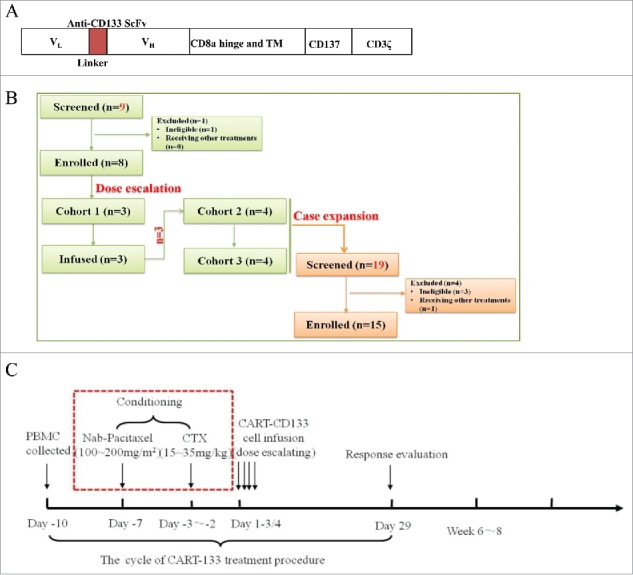
“A phase 1–2 clinical trial, conducted in China, of a second-generation anti-CD133 specific CAR T-cell therapy (expressing the CD3-zeta chain and CD137) produced using lentiviral transduction found encouraging insights that this form of cellular therapy could lead to clinical benefits [84].”
BackgroundCan immunotherapy reinforce chemotherapy efficacy? a new perspective on colorectal cancer treatment
He, X., Lan, H., Jin, K., & Liu, F. (2023) · Frontiers in Immunology · doi:10.3389/fimmu.2023.1237764 · Cited by 23
Current Situation and Prospect of Adoptive Cellular Immunotherapy for Malignancies
Zhao, D. H., Zhu, D., Cai, F., Jiang, M., Liu, X., Li, T., & Zheng, Z. (2023) · Technology in Cancer Research & Treatment · doi:10.1177/15330338231204198 · Cited by 24
Application of Immunotherapy in Hepatocellular Carcinoma
Miao, L., Zhang, Z., Ren, Z., & Li, Y. (2021) · Frontiers in Oncology · doi:10.3389/fonc.2021.699060 · Cited by 18
Combination immunotherapy for pancreatic cancer: challenges and future considerations
Gössling, G. C. D. L., Zhen, D. B., Pillarisetty, V. G., & Chiorean, E. G. (2022) · Expert Review of Clinical Immunology · doi:10.1080/1744666x.2022.2120471 · Cited by 19
Toward a comprehensive solution for treating solid tumors using T-cell receptor therapy: A review
Ma, P., Jiang, Y., Zhao, G., Wang, W., Xing, S., Tang, Q., Miao, H., Fang, H., Chao, S., Yuan, F., et al. (2024) · European Journal of Cancer · doi:10.1016/j.ejca.2024.114224 · Cited by 19
Targeting cancer stem cells with CAR-based immunotherapy: biology, evidence, and future directions
Hadiloo, K., Mostanadi, P., Asadzadeh, A., Taremi, S., & Esmaeilzadeh, A. (2025) · Cancer Cell International · doi:10.1186/s12935-025-03846-3 · Cited by 20
“These findings support the idea that if the therapy is administered earlier, after surgery, patients may experience higher survival rates [135].”
Liang, Z., Wu, B., Ji, Z., Liu, W.-T., Shi, D., Chen, X., Wei, Y., & Jiang, J. (2021) · Cancer Letters · doi:10.1016/j.canlet.2021.05.003 · Cited by 17
Cutmore, L. C., Brown, N. F., Raj, D., Chauduri, S., Wang, P., Maher, J. F., Wang, Y., Lemoine, N. R., & Marshall, J. F. (2020) · Pancreatology · doi:10.1016/j.pan.2020.02.006 · Cited by 22
Self-citationKunihiro, A. G., Sarrett, S. M., Lastwika, K. J., Solan, J. L., Pisarenko, T., Keinänen, O. M., Rodríguez, C. M. A., Taverne, L. R., Fitzpatrick, A. L., Li, C. I., et al. (2022) · Journal of Nuclear Medicine · doi:10.2967/jnumed.121.263511 · Cited by 17
Mesenchymal Stromal Cell-Based Targeted Therapy Pancreatic Cancer: Progress and Challenges
Ma, Z., Hua, J., Liu, J., Zhang, B., Wang, W., Yu, X., & Xu, J. (2023) · International Journal of Molecular Sciences · doi:10.3390/ijms24043559 · Cited by 21
Anti-Cancer Stem-Cell-Targeted Therapies in Prostate Cancer
Gogola, S., Rejzer, M., Bahmad, H. F., Alloush, F., Omarzai, Y., & Poppiti, R. (2023) · Cancers · doi:10.3390/cancers15051621 · Cited by 22
“further supported the feasibility, controllable toxicities, and effectiveness of CD133-targeted therapy for a number of highly metastatic malignancies [106].”
BackgroundShuford, R. A., Cairns, A., & Moaven, O. (2020) · Cancers · doi:10.3390/cancers12113481 · Cited by 19
“Within this cohort of patients, 13% had partial remission, 61% had stable disease and there was a median PFS of 5 months after treatment [127].”
BackgroundCurrent state of CAR-T cell therapies for solid tumors
Rosa, R. C. A., Liu, J., Lu, C., Abou‐El‐Enein, M., Murad, J. P., & Priceman, S. J. (2026) · Med · doi:10.1016/j.medj.2026.101028 · Cited by 31
Cancer cell targeting by CAR-T cells: A matter of stemness
D’Accardo, C., Porcelli, G., Mangiapane, L. R., Modica, C., Pantina, V. D., Roozafzay, N., Franco, S. D., Gaggianesi, M., Veschi, V., Iacono, M. L., et al. (2022) · Frontiers in Molecular Medicine · doi:10.3389/fmmed.2022.1055028 · Cited by 20
“In a preclinical study, CD133 CAR-T cells were associated with cisplatin.”
BackgroundInfluentialColorectal Cancer Stem Cells and Targeted Agents
Zhao, H., Han, R., Wang, Z., Xian, J., & Bai, X. (2023) · Pharmaceutics · doi:10.3390/pharmaceutics15122763 · Cited by 18
The missing link between cancer stem cells and immunotherapy
Ali, L. S., Attia, Y. A. M., Mourad, S., Halawa, E. M., AbdElghaffar, N. H., Shokry, S., Attia, O. M., Makram, M., Wadan, A. S., Negm, W. A., et al. (2024) · Current Medical Research and Opinion · doi:10.1080/03007995.2024.2407963 · Cited by 20
“In breast cancer, the CSC-dendritic cell vaccine has been found to stimulate and activate CD8 þ and CD45 þ T-cells, eliciting a cytotoxic T lymphocyte (CTL)-mediated anti-cancer immune response 129 .”
Engineering nanotheranostic strategies for liver cancer
Cao, L., Zhu, Y., Wu, Z., Wang, G., & Cheng, H. (2021) · World Journal of Gastrointestinal Oncology · doi:10.4251/wjgo.v13.i10.1213 · Cited by 17
Self-citationTherapeutic Targeting of Gastrointestinal Cancer Stem Cells
Stem, J., Flickinger, J. C., Merlino, D. J., Caparosa, E. M., Snook, A. E., & Waldman, S. A. (2019) · Regenerative Medicine · doi:10.2217/rme-2018-0146 · Cited by 18
Vasudevan, J., Vijayakumar, R., Reales‐Calderón, J. A., Lam, M. S. Y., Ow, J. R., Aw, J., Tan, D., Tan, A. T., Bertoletti, A., Adriani, G., et al. (2025) · Biomaterials · doi:10.1016/j.biomaterials.2025.123175 · Cited by 16
Pancreatic cancer: failures and hopes—a review of new promising treatment approaches
Cereda, V., & D'Andrea, M. R. (2025) · Exploration of Targeted Anti-tumor Therapy · doi:10.37349/etat.2025.1002299 · Cited by 23
Classic versus innovative strategies for immuno-therapy in pancreatic cancer
Formelli, M. G., Palloni, A., Tavolari, S., Deiana, C., Andrini, E., Marco, M. D., Campana, D., Lamberti, G., & Brandi, G. (2025) · Advanced Drug Delivery Reviews · doi:10.1016/j.addr.2025.115671 · Cited by 20
Akhuba, L. G., Tigai, Z. G., & Shek, D. (2022) · Biomedicines · doi:10.3390/biomedicines10123196 · Cited by 19
“Finally, a phase 1 basket trial (NCT02541370) elucidated the role of anti-CD133 CAR T-cell therapy [50].”
BackgroundRathinavel, T., Vasuki, S., Sindhu, S. M., Mothilal, T. M., Srimathi, V., Poornima, B., Bhuvaneswari, M., & Hariharan, M. (2024) · Molecular Biotechnology · doi:10.1007/s12033-024-01090-0 · Cited by 20
“Some of the known antigen are being in research analysis for pac CAR-T cell therapy mainly MUC1 [47], fibroblast activation protein (FAP), PSCA [44].”
Cellular therapy for the treatment of solid tumors
Grimes, J. M., Carvajal, R. D., & Muranski, P. J. (2021) · Transfusion and Apheresis Science · doi:10.1016/j.transci.2021.103056 · Cited by 19
Advances in adoptive cellular therapy for colorectal cancer: A narrative review
Yi, X., & Hu, W. (2022) · Annals of Translational Medicine · doi:10.21037/atm-22-6196 · Cited by 14
“In addition, repeated cell infusions provided a longer period of disease stability, especially in patients who achieved tumor shrinkage after the first cell infusion (52).”
Cancer Stem Cells Decide the Fate of Cancer Immunotherapy by Remodeling Tumor Microenvironment
Chakraborty, S., Basak, U., Mukherjee, S., Mukherjee, S., & Das, T. (2025) · Cancer Control · doi:10.1177/10732748251381441 · Cited by 17
“For instance, CD133-directed CAR-T cells in hepatocellular carcinoma, pancreatic carcinomas, colorectal carcinoma, and glioma and showed transient tumor reduction, but antigen loss led to escape and relapse, 290-292 thereby demonstrating a classic example of preclinical-clinical disconnect.”
CAR-T cell therapy in hepatocellular carcinoma: from mechanistic insights to clinical translation
Elahi, R., Idrissi, Y. A., & Saeed, A. (2025) · Cancer Treatment Reviews · doi:10.1016/j.ctrv.2025.103046 · Cited by 18
Radioimmunoconjugates in the age of modern immuno-oncology
Nasr, D., Kumar, P. A., Zerdan, M. B., Ghelani, G. H., Dutta, D., Graziano, S. L., & Lim, S. H. (2022) · Life Sciences · doi:10.1016/j.lfs.2022.121126 · Cited by 13
Esmaeilzadeh, A., Hadiloo, K., Jabbari, M., & Elahi, R. (2023) · Life Sciences · doi:10.1016/j.lfs.2023.122381 · Cited by 20
Ju, A., Choi, S., Jeon, Y., & Kim, K. (2024) · Brain Tumor Research and Treatment · doi:10.14791/btrt.2024.0037 · Cited by 15
Stem Cells as Therapeutic Targets in Colorectal Cancer
Zalewski, A., Snook, A. E., & Waldman, S. A. (2021) · Personalized Medicine · doi:10.2217/pme-2020-0099 · Cited by 15
Highlighting novel targets in immunotherapy for liver cancer
Ruff, S. M., Shannon, A. H., Beane, J. D., & Pawlik, T. M. (2022) · Expert Review of Gastroenterology & Hepatology · doi:10.1080/17474124.2022.2150841 · Cited by 17
“strated that repeated cell infusions correlated with longer periods of disease stability; three patients achieved remission and fourteen patients had stable disease [60].”
BackgroundEngineered TCR T-cell therapy targeting mass spectrometry-identified natural epitope in PDAC
Wang, J., Zhang, T., Li, P., Gai, J., Chen, S. Y., Espinoza, G., Kung, H., Zhang, R., Fujiwara, K., Fu, J. L., et al. (2023) · Cancer Letters · doi:10.1016/j.canlet.2023.216366 · Cited by 14
Mandriani, B., Pellè, E., Pezzicoli, G., Strosberg, J., Abate‐Daga, D., Guarini, A., Cives, M., & Porta, C. (2021) · Cancer Treatment Reviews · doi:10.1016/j.ctrv.2021.102288 · Cited by 14
Genetically Modified T-Cell Therapy for Osteosarcoma: Into the Roaring 2020s
DeRenzo, C., & Gottschalk, S. (2020) · Advances in Experimental Medicine and Biology · doi:10.1007/978-3-030-43032-0_10 · Cited by 12
CAR-T cells in solid tumors: engineering, biomarkers, translational pathways and the road ahead
Shaer, N. S. H. A., Masoud, I., Tleyjeh, A., Al-Attas, A. A., Al-Attas, M. A., Khan, M. I., & Yaqinuddin, A. (2026) · Frontiers in Immunology · doi:10.3389/fimmu.2026.1796675 · Cited by 17
“…only three patients achieved partial responses (13%), while fourteen experienced stable disease (61%), corresponding to a 3-month disease control rate of 65.2% and a median progression-free survival of 5 months (151), while treatment-related toxicities were primarily reversible hematologic events.”
Influential
Metadata
- Authors
- Wang, Y., Chen, M., Wu, Z., Tong, C., Dai, H., Guo, Y., Liu, Y., Huang, J., Lv, H., Luo, C., Feng, K.-C., Yang, Q.-M., Li, X.-L., & Han, W.
- Affiliations
- Chinese PLA General Hospital (CN)
- Department of Bio-therapeutic, Chinese PLA General Hospital, Beijing, China
- Department of Molecular & Immunology, Chinese PLA General Hospital, Beijing, China
- Corresponding author
- Han, Weidong
- Venue
- OncoImmunology
- Publisher
- Informa UK Limited
- Published
- 2018-05-07
- Volume
- 7
- Issue
- 7
- Pages
- e1440169
- ISSN
- 2162-4011 (ISSN-L)
- 2162-402X
- PMC
- PMC5993480
- OpenAlex
- W2790863559
- Cited by
- 338
- References
- 42
- Citations by year
- 2026: 25 · 2025: 37 · 2024: 50 · 2023: 48 · 2022: 57 · 2021: 47 · 2020: 39 · 2019: 26 · 2018: 9
- FWCI
- 11.37
- Type
- journal article
- Language
- en
- Open access
- gold
- doi.org
- Licence
- cc-by-nc-nd
- Locations
- OncoImmunology (publishedVersion, cc-by-nc-nd)
- Europe PMC (PubMed Central) (publishedVersion, cc-by-nc-nd)
- PubMed Central (publishedVersion, cc-by-nc-nd)
- PubMed (publishedVersion)
- DOAJ (DOAJ: Directory of Open Access Journals) (submittedVersion, cc-by-sa)
- Funders
- National Key Research and Developement Program of Chinas (2016YFC1303501 2016YFC1303504)
- Science and Technology Planning Project of Beijing City (Z151100003915076)
- Topics
- Health Sciences › Medicine › Oncology › CAR-T cell therapy research
- Life Sciences › Immunology and Microbiology › Immunology › Immunotherapy and Immune Responses
- Life Sciences › Biochemistry, Genetics and Molecular Biology › Biotechnology › Bacterial Cancer Therapy
- Keywords
- CD133, chimeric antigen receptor T cells, CAR T-cell therapy, cancer stem cells, hepatocellular carcinoma, pancreatic cancer, colorectal cancer, metastatic cancer, dose escalation, hematologic toxicity, disease control rate
About these checks
Registry, retraction, Cites and statistics results are computed, not judged, with one exception: a printed reference that no index lists is read once by a model before it counts as a citation error. Claims are extracted by a model and kept only when their quote appears verbatim in the text; each cited source is then checked, with a model’s help, for whether it says what the claim relies on. Those verdicts can be wrong — read the claim’s quote and the cited source before relying on one.
Statistics and arithmetic are recomputed, not judged.
Confidence bands are shown only for fields calibrated on our annotated test set. None is calibrated yet, so no band is shown.
What counts as a claim ›How we measure confidence ›How we check this ›
Are you an author, or do you see a problem with this page? Request a review
Data sources
Bibliographic data: Semantic Scholar, OpenAlex, Crossref.
Contains information from the Semantic Scholar Academic Graph Datasets, made available under the ODC Attribution License (ODC-BY 1.0).
Semantic Scholar’s data is described in: Kinney, R., et al. (2023). The Semantic Scholar Open Data Platform. arXiv:2301.10140.
