

Interaction of tumor-associated macrophages and cancer chemotherapy
Open accessThe DOI matches its Crossref record; 123 of the 124 references it cites were found in a registry or an index.
Abstract
It has been recently recognized that the tumor microenvironment (TME) is an essential factor that defines the efficiency of chemotherapy. The local TME, consisting of immune cells with diverse phenotypes and functions, can strongly modulate the response to chemotherapy. Tumor-associated macrophages (TAMs) that display pronounced heterogeneity and phenotypic plasticity are the major innate immune component in the microenvironment of solid tumors. In our review, we elucidate the complex role of TAMs in the progression of different types of solid tumors, summarize the current knowledge about the effects of different anticancer chemotherapeutic agents on monocytes/macrophages, and describe the mechanisms of chemotherapy resistance mediated by TAMs.
Overview
The claims and statistics of this paper haven’t been checked yet.
Free: it reads the open-access text and checks the first 5 claims that cite a source we can check. Create a free account to check every claim.
Integrity signals
Registry
Cites
Statistics
Figures
Verification
Claims the paper makes
The claims and statistics of this paper haven’t been checked yet.
Free: it reads the open-access text and checks the first 5 claims that cite a source we can check. Create a free account to check every claim.
Claims other papers make about this one
Each is checked against this paper’s own text: does it say what the citing paper says it does?
The cited source says what the claim attributes to it.
In the citing paper
“Clinical studies and experimental animal models suggest that TAM commonly plays a pro-tumoral role in various ways [89, 96, 97].”
From Tumor microenvironment complexity and therapeutic implications at a glance (2020) · cites this paper as [89]
In the citing paper
“Importantly, M2 TAMs have been linked to tumor progression, metastases (Han et al, 2021), and resistance to conventional chemotherapeutics (Larionova et al, 2019) in multiple tumors.”
From Autophagy in major human diseases (2021) · cites this paper as Larionova et al, 2019
Self-check
Percentages, sums and reported differences re-computed from the paper’s own numbers.
The self-check needs the paper’s full text.
Citations
Cites
Macrophage plasticity and polarization: in vivo veritas
Sica, A., & Mantovani, A. (2012) · Journal of Clinical Investigation · doi:10.1172/jci59643 · Cited by 6,335 · cited 2×
“TAMs are able to support cancer stem cell functions.(13,20) Cancer stem cells (CSCs) represent a tumor subset with an”
BackgroundMultidrug resistance in cancer: role of ATP–dependent transporters
Gottesman, M. M., Fojo, T., & Bates, S. E. (2002) · Nature Reviews Cancer · doi:10.1038/nrc706 · Cited by 5,536 · cited 1×
“ABC transporters, aberrant transcription factor nuclear factor-κB (NF-κB) activity, and the mechanisms of damaged DNA repair.(7,86,87) CT can also lead to the selective expansion of resistant cancer clones.”
BackgroundMacrophage Diversity Enhances Tumor Progression and Metastasis
Qian, B.-Z., & Pollard, J. W. (2010) · Cell · doi:10.1016/j.cell.2010.03.014 · Cited by 5,188 · cited 9×
“The blockage of these molecular pathways increased the efficacy of cisplatin and carboplatin.65 Cyclophosphamide (CTX) was found to enhance the production of the pro-inflammatory cytokines IL-6 and IL12 and to decrease the production of the anti-inflammatory cytokines IL-10 and TGF-b in mouse peritoneal macrophages in…”
BackgroundInfluentialCancer drug resistance: an evolving paradigm
Holohan, C., Van Schaeybroeck, S., Longley, D. B., & Johnston, P. G. (2013) · Nature Reviews Cancer · doi:10.1038/nrc3599 · Cited by 4,681 · cited 1×
“acteristics of tumor cells and their sensitivity or resistance to therapeutic agents.(2) On average, only 40–60% of the cancer patients benefit from antitumor chemotherapy (CT).”
BackgroundMacrophages in Tissue Repair, Regeneration, and Fibrosis
Wynn, T. A., & Vannella, K. M. (2016) · Immunity · doi:10.1016/j.immuni.2016.02.015 · Cited by 4,481
Tumor-Associated Macrophages: From Mechanisms to Therapy
Noy, R., & Pollard, J. W. (2014) · Immunity · doi:10.1016/j.immuni.2014.06.010 · Cited by 4,089 · cited 5×
“immune component of the microenvironment are the tumorassociated macrophages (TAMs).(12) There are two main directions of phenotypic and functional macrophage polarization:”
BackgroundInfluentialGreaves, M., & Maley, C. C. (2012) · Nature · doi:10.1038/nature10762 · Cited by 3,162 · cited 1×
“CT can also lead to the selective expansion of resistant cancer clones.(88) It was found that myeloid cells, particularly TAMs, gener-”
BackgroundDeNardo, D. G., Brennan, D. J., Rexhepaj, E., Ruffell, B., Shiao, S. L., Madden, S. F., Gallagher, W. M., Wadhwani, N., Keil, S. D., Junaid, S. A., et al. (2011) · Cancer Discovery · doi:10.1158/2159-8274.cd-10-0028 · Cited by 1,715 · cited 3×
“mouse mammary tumors and combination chemotherapy (cyclophosphamide, methotrexate, and 5-fluorouracil) in breast cancer xenografts in immunodeficient mice.(108) Genetic knockout of CSF-1, the use of neutralizing antibodies, low molecular weight”
BackgroundImmunological aspects of cancer chemotherapy
Zitvogel, L., Apetoh, L., Ghiringhelli, F., & Kroemer, G. (2008) · Nature Reviews Immunology · doi:10.1038/nri2216 · Cited by 1,712 · cited 2×
“foci by inducing apoptosis or necrosis or blocking uncontrolled cancer cell proliferation.(1) The outcome of cytostatic treatment depends on the biological (including genetic) char-”
BackgroundDoxorubicin pathways: pharmacodynamics and adverse effects
Thorn, C. F., Oshiro, C., Marsh, S., Hernandez-Boussard, T., McLeod, H., Klein, T. E., & Altman, R. B. (2011) · Pharmacogenetics and Genomics · doi:10.1097/fpc.0b013e32833ffb56 · Cited by 1,648 · cited 1×
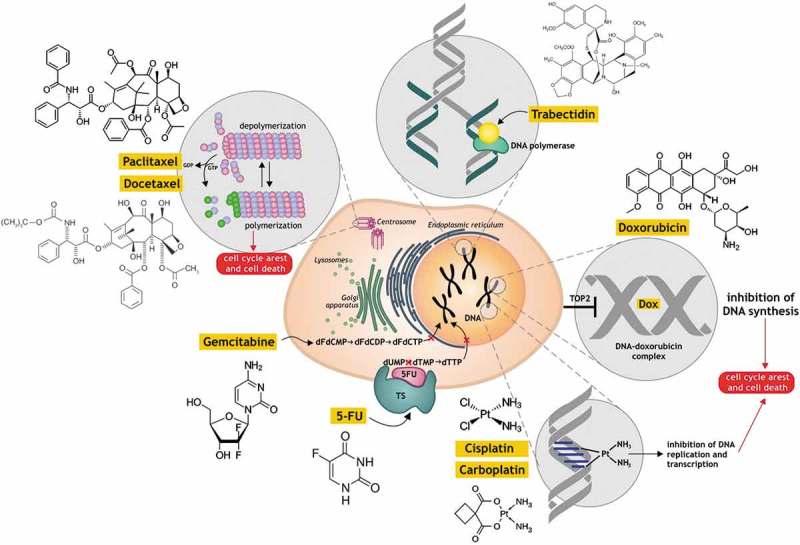
“helix from being resealed and thereby inhibiting DNA replication.(79) Taxanes (paclitaxel and docetaxel) target tubulin and stabilize the microtubule polymer, protecting”
Background
Cited by
Items 201–300 of 334
Taxol: Occurrence, chemistry, and understanding its molecular mechanisms
Swamy, M. K., & Vasamsetti, B. M. K. (2021) · Elsevier eBooks · doi:10.1016/b978-0-323-90951-8.00009-6 · Cited by 13
Sheban, F. (2023) · Frontiers in Immunology · doi:10.3389/fimmu.2023.1183578 · Cited by 11
“Standard of care cancer treatment such as chemotherapy was also shown to affect TAMs phenotype (66, 85, 86).”
BackgroundKitamura, T. (2023) · Essays in Biochemistry · doi:10.1042/ebc20230002 · Cited by 11
Emerging immunologic approaches as cancer anti-angiogenic therapies
Azimi, M., Manavi, M. S., Afshinpour, M., Khorram, R., Vafadar, R., Rezaei‐Tazangi, F., Arabzadeh, D., Arabzadeh, S., Ebrahimi, N., & Aref, A. R. (2024) · Clinical & Translational Oncology · doi:10.1007/s12094-024-03667-2 · Cited by 10
“Since then, ongoing studies have demonstrated that TAMs are capable of secreting numerous proangiogenic growth factors, most importantly VEGF, and accelerating degradation rate of perivascular ECM through upregulation of secretion of a range of enzymes from MMP superfamily [7].”
Hélaine, C., Ferré, A. E., Leblond, M. M., Pérès, E. A., Bernaudin, M., Valable, S., & Petit, E. (2020) · Cancers · doi:10.3390/cancers12123585 · Cited by 10
“The vascular and inflammatory microenvironment of these tumors may be remodeled by the conventional treatment of GB, which includes RCT [35,36].”
BackgroundCalero‐Pérez, P., Wu, S., Arús, C., & Candiota, A. P. (2021) · Cancers · doi:10.3390/cancers13112663 · Cited by 10
“In the majority of solid tumours, progression is associated with a phenotype prevalence changing from M1 to M2 [64], which can trigger the suppression of effector T cell immunity, improved tumour cell survival, promotion of angiogenesis, and chemoresistance [65].”
BackgroundLicărete, E., Rauca, V. F., Lupuţ, L., Pătraș, L., Sesărman, A., & Banciu, M. (2019) · Oncology Reports · doi:10.3892/or.2019.7346 · Cited by 11
“Moreover, in mouse models for breast and lung cancer, the administration of cyclophosphamide, paclitaxel and DOX, was shown to promote the protumor phenotype of TAMs (46).”
BackgroundOh, H.-J., Min, G.-H., Kim, D., Shin, S.-B., & Yim, H. (2025) · International Journal of Biological Sciences · doi:10.7150/ijbs.115097 · Cited by 9
“In the TME, M2-like TAMs reside and functions as anti-inflammatory and tumor-supporting macrophages [5].”
Sajjadi, S. F., Salehi, N., & Sadeghi, M. (2024) · PLoS ONE · doi:10.1371/journal.pone.0306220 · Cited by 9
Larionova, I., Iamshchikov, P. S., Казакова, А., Rakina, M. A., Menyalo, M., Enikeeva, K., Альбертовна, Р. Г., Вакилевна, Ш. Ю., Павлов, В. Н., Виллерт, А. Б., et al. (2024) · Frontiers in Immunology · doi:10.3389/fimmu.2024.1414716 · Cited by 9
Self-citationЖукова, О. В., Kovaleva, T. F., Архипова, Е. В., Ryabov, S. A., & Mukhina, I. V. (2020) · Biomedical Reports · doi:10.3892/br.2020.1354 · Cited by 9
Breaking the niche: multidimensional nanotherapeutics for tumor microenvironment modulation
Swetha, K. L., Maravajjala, K. S., Li, S., Singh, M. S., & Roy, A. (2022) · Drug Delivery and Translational Research · doi:10.1007/s13346-022-01194-7 · Cited by 9
“Many of these drugs have shown promising efficacy in preclinical or clinical studies [51, 52].”
BackgroundZhong, W., Kokhaei, P., Mulder, T. A., Ghaderi, A., Moshfegh, A., Lundin, J., Palma, M., Schultz, J., Olin, T., Österborg, A., et al. (2024) · Cancers · doi:10.3390/cancers16223821 · Cited by 8
“The interaction between tumor cells and the tumor microenvironment (TME) is important for the growth of tumor cells and treatment sensitivity [4,5].”
Wang, Y., Xie, S., Wu, F., Chen, Y., Bai, B., Bian, J., & Gao, X. H. (2024) · Frontiers in Molecular Biosciences · doi:10.3389/fmolb.2024.1463061 · Cited by 9
Ivanović, T., Božić, D., Benzon, B., Čapkun, V., Vukojević, K., & Durdov, M. G. (2023) · Biomedicines · doi:10.3390/biomedicines11030709 · Cited by 8
“The presence and density of tumor-associated macrophages are correlated with poor prognosis and resistance to GC treatment [10].”
BackgroundWu, X., Tang, N., Zhao, Q., & Xiong, J. (2024) · Bioengineering & Translational Medicine · doi:10.1002/btm2.10654 · Cited by 8
Souid, S., Aissaoui, D., Srairi‐Abid, N., & Essafi‐Benkhadir, K. (2020) · Current Drug Targets · doi:10.2174/1389450121666200128161733 · Cited by 8
Shen, Y., Wang, J., Hua, Q., & Dong, M. (2025) · Journal of Inflammation Research · doi:10.2147/jir.s557312 · Cited by 7
“21 Thus reduced LMR may be associated with poor tumor prognosis.”
Saraswat, I., & Goel, A. (2024) · Current Pharmaceutical Design · doi:10.2174/0113816128348771240925100639 · Cited by 8
P2X7 receptor in macrophage polarization and its implications in neuroblastoma tumor behavior
Bento, C. A., Arnaud-Sampaio, V. F., Glaser, T., Adinolfi, E., Coutinho‐Silva, R., Ulrich, H., & Lameu, C. (2024) · Purinergic Signalling · doi:10.1007/s11302-024-10051-w · Cited by 10
“TAMs are essential for drug resistance [66], so it is very important to understand the role of P2X7 in this context to improve therapeutic management.”
Stabilin-1 in Tumor-Associated Macrophages: A Potential Therapeutic Target in Cancer Immunotherapy
Gurung, J. L., Tamang, R. L., Madduri, L. S. V., Bennett, R. G., Harris, E. N., Denton, P. W., & McVicker, B. L. (2025) · Biology · doi:10.3390/biology14091198 · Cited by 8
“Increasing evidence implies that the TME drives drug resistance with the accumulation of myeloid cells and immunosuppressive M2 macrophages [72].”
Mitochondrial–Stem Cell Connection: Providing Additional Explanations for Understanding Cancer
Martinez, P., Baghli, I., Gourjon, G., & Seyfried, T. N. (2024) · Metabolites · doi:10.3390/metabo14040229 · Cited by 7
“…that CSCs cannot be targeted and represent ≈ 2% of the total tumor mass [109,110,251,252], the vast majority of tumor-forming cells (bulk cancer cells, macrophages, etc.) can die after conventional therapies [231,253,254], allowing the reduction or even temporary disappearance of the tumor [255].”
BackgroundExpanding horizons in cancer therapy by immunoconjugates targeting tumor microenvironments
Fattahi, A. S., Jafari, M., Farahavar, G., Abolmaali, S. S., & Tamaddon, A. M. (2024) · Critical Reviews in Oncology/Hematology · doi:10.1016/j.critrevonc.2024.104437 · Cited by 7
Prognostic significance of the neutrophil to lymphocyte ratio in locally advanced breast cancer
Alshamsan, B., Elshenawy, M. A., Aseafan, M., Fahmy, N., Badran, A. A., Elhassan, T. A. M., Alsayed, A., Suleman, K., & Al‐Tweigeri, T. (2024) · Oncology Letters · doi:10.3892/ol.2024.14562 · Cited by 7
Zaidi, N. E., Shazali, N. A. H., Leow, T. C., Osman, M. A., Ibrahim, K., Edward, M. J., & Rahman, N. M. A. N. A. (2019) · Journal of Visualized Experiments · doi:10.3791/60281 · Cited by 7
Kovacs, L., Cabral, P., & Chammas, R. J. (2020) · PLoS ONE · doi:10.1371/journal.pone.0240455 · Cited by 7
“TAMs are composed of distinct populations with features that depend on a variety of factors including the type of cancer, tumor stage, and location [10].”
BackgroundGougousis, S., Petanidis, S., Poutoglidis, A., Tsetsos, N., Vrochidis, P., Skoumpas, I., Argyriou, N., Katopodi, T., & Domvri, K. (2022) · Oncology Letters · doi:10.3892/ol.2022.13317 · Cited by 9
“Another significant factor contributing to HNC development are TAMs, which exhibit important functions in facilitating the metastatic cascade of tumor cells (86).”
BackgroundPore, A. A., Dhanasekara, C. S., Navaid, H. B., Vanapalli, S. A., & Rahman, R. L. (2023) · Bioengineering · doi:10.3390/bioengineering10040485 · Cited by 7
“Similarly, TAMs have been shown to have prognostic utility, and higher counts are associated with higher rates of pCR; however, they pose the same problem of requiring repeated tissue biopsies [22,27,28].”
BackgroundThe Significance of Relationships in Developmental Psychopathology and Youth Mental Health
Fleck, L., Fuchs, A. K., & Kaess, M. (2023) · Psychopathology · doi:10.1159/000529417 · Cited by 6
Immune gene signatures as prognostic criteria for cancer patients
Larionova, I., & Таширева, Л. А. (2023) · Therapeutic Advances in Medical Oncology · doi:10.1177/17588359231189436 · Cited by 7
Self-citationNeutrophil extracellular traps modulate chemotherapy efficacy and its adverse side effects
Mousset, A., & Albrengues, J. (2024) · Biology of the Cell · doi:10.1111/boc.202400031 · Cited by 6
Yamanaka, K., Koma, Y., Urakami, S., Takahashi, R., Nagamata, S., Omori, M., Torigoe, R., Yokoo, H., Nakanishi, T., Ishihara, N., et al. (2024) · International Journal of Molecular Sciences · doi:10.3390/ijms251910598 · Cited by 7
Dual identity of tumor-associated macrophage in regulated cell death and oncotherapy
Shao, Y., Wang, Y., Su, R., Pu, W., Chen, S., Fu, L., Yu, H., & Qiu, Y. (2023) · Heliyon · doi:10.1016/j.heliyon.2023.e17582 · Cited by 7
“Furthermore, 5-fluorouracil and gemcitabine also disrupt RNA and DNA synthesis, thereby promoting the M1 phenotype in TAMs [157].”
BackgroundKim, H., Jung, S., Bang, Y. H., Kim, J., Kim, H. J., Lee, H. E., Hyung, J., Yoo, C., Kim, W. T., Yoon, M.-J., et al. (2025) · Journal for ImmunoTherapy of Cancer · doi:10.1136/jitc-2024-010455 · Cited by 5
Deciphering Radiotherapy Resistance: A Proteomic Perspective
Perico, D., & Mauri, P. (2025) · Proteomes · doi:10.3390/proteomes13020025 · Cited by 6
“TAMs are key players in innate immunity within the TME, driving tumor growth, angiogenesis, metastasis, and regrowth after chemotherapy or radiotherapy [77].”
Unraveling tumor cell‑tumor microenvironment crosstalk through antibody array technologies (Review)
Wang, Y., Luo, S., Hua, D., & Huang, R.-P. (2025) · International Journal of Oncology · doi:10.3892/ijo.2025.5787 · Cited by 5
“These cells, which are derived from peripheral blood mononuclear cells, differentiate into macrophages when stimulated by various factors secreted by tumor and stromal cells, such as chemokines, cytokines and growth factors (21).”
Gayan, S., Teli, A., Sonawane, A., & Dey, T. (2023) · Advanced Biology · doi:10.1002/adbi.202300271 · Cited by 6
Wang, J., Lu, Y., Wang, Z., & Pei, W. (2025) · Iranian journal of pharmaceutical research · doi:10.5812/ijpr-160886 · Cited by 4
“For example, shifts in cellular states or the presence of other immune cells, such as tumor-associated macrophages (TAMs) or myeloid-derived suppressor cells (MDSCs), could alter cytokine secretion and drug sensitivity (28, 29).”
Gebuza, M., Górczyńska, J., Paczos, W., Pieczara, S., Rekiel, K., Urbanowicz, P., Kulbacki, M., Novickij, V., & Kulbacka, J. (2025) · Archives of Biochemistry and Biophysics · doi:10.1016/j.abb.2025.110599 · Cited by 4
Microbes, macrophages, and melanin: a unifying theory of disease as exemplified by cancer
Berg, S. Z., & Berg, J. (2025) · Frontiers in Immunology · doi:10.3389/fimmu.2024.1493978 · Cited by 7
Sakai, S. A., Nomura, R., Nagasawa, S., Chi, S., Suzuki, A., Suzuki, Y., Imai, M., Nakamura, Y., Yoshino, T., Ishikawa, S., et al. (2025) · PLoS Computational Biology · doi:10.1371/journal.pcbi.1012854 · Cited by 4
“For example, immunohistochemical pathological analysis has shown that intratumoral macrophages stained by CD68 are correlated with malignancy [32,33] and that intertumoral microvessel density assessed based on CD31, which reflects angiogenesis, is a key poor prognosis factor [34,35].”
Recent Developments in the Study of the Microenvironment of Cancer and Drug Delivery
Chaudhary, B., Kumar, P., Arya, P., Singla, D., Kumar, V., Kumar, D., Roshan, S., Wadhwa, S., Gulati, M., Singh, S. K., et al. (2022) · Current Drug Metabolism · doi:10.2174/1389200224666230110145513 · Cited by 5
Patysheva, M. R., Stakheyeva, M. N., Larionova, I., Fedorov, A. A., Kzhyshkowska, J. G., & Чердынцева, Н. В. (2023) · Experimental Oncology · doi:10.32471/exp-oncology.2312-8852.vol-41-no-3.13597 · Cited by 5
Self-citationTargeting the Tumor-Associated Macrophages for ‘Normalizing’ Cancer
Kzhyshkowska, J. G., Grigoryeva, E., & Larionova, I. (2020) · Human perspectives in health sciences and technology · doi:10.1007/978-3-030-32857-3_11 · Cited by 4
Self-citationA Simple, Novel Prognostic Score in Platinum Sensitive Relapsed Ovarian Cancer
Goenka, L., Nakka, T., Dubashi, B., Kayal, S., Penumadu, P., Chaturvedula, L., Veena, P., Durairaj, J., & Ganesan, P. (2021) · American Journal of Clinical Oncology · doi:10.1097/coc.0000000000000830 · Cited by 4
Kagawa, Y., Nakai, T., Taki, T., Hashimoto, H., Tanaka, Y., Sakai, T., Shibata, Y., Izumi, H., Nosaki, K., Udagawa, H., et al. (2023) · Cancer Science · doi:10.1111/cas.15848 · Cited by 4
Relationship between CD 163 Tumor-Associated Macrophages and Colorectal-Cancer Stem Cell Markers
Rey, I., Putra, A. B., Lindarto, D., & Yusuf, F. (2021) · Open Access Macedonian Journal of Medical Sciences · doi:10.3889/oamjms.2021.7188 · Cited by 5
The RXR Agonist MSU-42011 Reduces Tumor Burden in a Murine Preclinical NF1-Deficient Model
Hung, P., Moerland, J. A., Leal, A. S., Aleiwi, B., Ellsworth, E. L., Clapp, D. W., Staedtke, V., Bai, R.-Y., & Liby, K. T. (2025) · Cancers · doi:10.3390/cancers17121920 · Cited by 4
Clavero, A. L., Kopsida, M., Arendt, N., Lennernäs, H., Sjöblom, M., & Heindryckx, F. (2025) · Biomedicine & Pharmacotherapy · doi:10.1016/j.biopha.2025.118859 · Cited by 3
Ye, W., Ali, E., Pavlov, S., Červenková, L., Ambrożkiewicz, F., Vyčítal, O., Hošek, P., Zitricky, F., Daum, O., Liška, V., et al. (2026) · World Journal of Gastroenterology · doi:10.3748/wjg.v32.i10.115130 · Cited by 3
Guan, Y., Zhao, J., Hou, S., Sun, Y., Yao, Y., Long, Z., Zhou, J., & Duan, C. (2026) · Journal of Materials Chemistry B · doi:10.1039/d6tb00272b · Cited by 3
Kenanoğlu, S., Akalın, H., Aslan, D., İnanç, M., Öztürk, F., & Dündar, M. (2024) · Gene Reports · doi:10.1016/j.genrep.2024.102020 · Cited by 4
Koskenniemi, A., Huusko, T., Routila, J., Jalkanen, S., Hollmén, M., Vainío, P. J., & Ventelä, S. (2025) · Oral Oncology · doi:10.1016/j.oraloncology.2025.107287 · Cited by 3
Candiota, A. P., & Arús, C. (2022) · Metabolites · doi:10.3390/metabo12030243 · Cited by 3
“Proper elicitation of the immune system during brain tumor therapy can change the balance of some cell phenotypes [30] or the proportion/infiltration of different immune system elements [31].”
BackgroundЕвгеньевич, Ф. В., Новоселова, А. В., Starodubtseva, N. L., Patysheva, M. R., Larionova, I., Rakina, M. A., Bragina, O., & Kzhyshkowska, J. G. (2022) · Bulletin of Russian State Medical University · doi:10.24075/brsmu.2022.049 · Cited by 3
Self-citationSharif, P. M., Khoshbin, A. P., Nasrollahzadeh, E., Keshavarz‐Fathi, M., & Rezaei, N. (2023) · Elsevier eBooks · doi:10.1016/b978-0-12-818006-8.00003-7 · Cited by 8
Fernandes, B., Antunes, I. F., Prasad, K., Vazquez-Matias, D. A., de Mattos, E. P., Szymański, W., Jeckel, C. M. M., de Vries, E. F. J., & Elsinga, P. H. (2024) · Nuclear Medicine and Biology · doi:10.1016/j.nucmedbio.2024.108946 · Cited by 3
Lower melanoma pulmonary metastatic burden in obese mice: role of FGF-21
Fonseca, M., Soares, R., & Coelho, P. (2021) · Melanoma Research · doi:10.1097/cmr.0000000000000781 · Cited by 3
Granai, M., Mundo, L., Akarca, A. U., Siciliano, M. C., Rizvi, H., Mancini, V., Onyango, N., Nyagol, J. A., Othieno-Abinya, N. A., Maha, I., et al. (2020) · Infectious Agents and Cancer · doi:10.1186/s13027-020-00304-9 · Cited by 3
Prieto‐Domínguez, N., Goel, P., Ojo, O. A., Moretto, K., Holtzhausen, A., Humphryes, A., Zhou, X., Kuznetsova, V., Dempsey, F., Pittman, K., et al. (2025) · Cancer Immunology Research · doi:10.1158/2326-6066.cir-24-0335 · Cited by 3
Youssry, S., Ghoneim, H. M., Barakat, R., & ElAlfy, E. (2025) · Scientific Reports · doi:10.1038/s41598-025-88719-5 · Cited by 2
O’Connell, F., Mylod, E., Donlon, N. E., Davern, M., Butler, C., O’Connor, N., Menon, M. S., Donohoe, C. L., Ravi, N., Doherty, D. G., et al. (2025) · Translational Oncology · doi:10.1016/j.tranon.2025.102302 · Cited by 2
“Anti-inflammatory or tumour associated macrophages (TAMs) have been reported to be induced by chemotherapy [25] as well as mediating chemoresistance [26].”
Rusiecka, B., Piwócka, O., & Knopik-Skrocka, A. (2025) · Reports of Practical Oncology & Radiotherapy · doi:10.5603/rpor.106149 · Cited by 2
“Moreover, immune cells, including TAMs, can strongly modulate the response of CCs to chemotherapy [13] and immunosuppression [14].”
Dezauzier, R., Fomina, A., & Dittrich, P. S. (2025) · Lab on a Chip · doi:10.1039/d5lc00210a · Cited by 2
Napoleon, J. V., Alfar, R. A., Zhang, F., Raine, E. A., Wolt, T. A., & Low, P. S. (2026) · Journal of Medicinal Chemistry · doi:10.1021/acs.jmedchem.5c03277 · Cited by 3
Purinergic Signaling in Brain Tumors
Bento, C. A., Guimarães, L. M. F., Arnaud-Sampaio, V. F., Rabelo, I. L. A., Juvenal, G. D. A., Ulrich, H., & Lameu, C. (2023) · Springer eBooks · doi:10.1007/978-3-031-26945-5_13 · Cited by 2
Macrophage-mimetic nanomedicines for the treatment of diseases
Witika, B. A., Matafwali, S. K., & Makoni, P. A. (2023) · Elsevier eBooks · doi:10.1016/b978-0-323-91763-6.00017-5 · Cited by 2
Grupińska, J., Budzyń, M., Janowski, J., Brzeziński, J., Gryszczyńska, B., Leporowska, E., Formanowicz, D., & Kycler, W. (2024) · Advances in Medical Sciences · doi:10.1016/j.advms.2024.02.006 · Cited by 2
Shiraishi, T., Tominaga, T., Nonaka, T., Takamura, Y., Oishi, K., Hashimoto, S., Nöda, K., Ono, R., Hisanaga, M., Takeshita, H., et al. (2024) · Surgery Today · doi:10.1007/s00595-024-02875-1 · Cited by 3
“On the other hand, they exhibit pro-cancerous properties, such as suppression of acquired immunity, facilitating angiogenesis, invasion, and migration, all of which can result in tumor invasion and metastasis [27].”
Martin-Aubert, S., Avrillon, K., Tournier, N., Bordat, A., Tran, V. L., Ibrahim, N., Kereselidze, D., Jégo, B., Potiron, L., Tsapis, N., et al. (2024) · Journal of Controlled Release · doi:10.1016/j.jconrel.2024.12.050 · Cited by 2
Wu, J., Luo, D., & Li, S. (2022) · Breast Cancer Targets and Therapy · doi:10.2147/bctt.s363114 · Cited by 2
“Recent studies have shown that chemotherapy sensitivity and prognosis are largely dependent on the interaction of cancer cells with different components of the tumor microenvironment (TME), especially with tumor-infiltrating immune cells (TICs).(10,11) In ER-negative tumors, the presence of CD8 T cells and activated m…”
BackgroundA Proteome-Wide Gain-of-Function Atlas Mapping the Landscape of Chemotherapy ResponsePreprint
Jo, K. B., Alruwaili, M., Kim, D.-E., Koh, Y., You, K., Kim, J., Kim, H., Sane, S., Guo, Y., Coté, A. G., et al. (2025) · bioRxiv (Cold Spring Harbor Laboratory) · doi:10.1101/2025.09.02.673780 · Cited by 2
Jenei, V., Zsuzsa, M., Stigelmayer, Á., Debreceni, Z., Bácsi, A., Mázló, A., & Koncz, G. (2025) · International Journal of Molecular Sciences · doi:10.3390/ijms26189202 · Cited by 1
“To optimize such combination strategies, it is essential to understand how chemotherapy influences the TME, particularly the macrophages residing within it [7].”
Chitinase-like Proteins YKL-40 and YKL-39 in Colorectal Cancer
Ivanova, T., Kazakova, M., Dikov, D., Dzhambov, A. M., Nikolay, B., Atanasov, B. T., & Sarafian, V. S. (2026) · Cells · doi:10.3390/cells15030263 · Cited by 1
“It was shown that their variable expression is influenced by cancer type, disease stage, and intratumoral heterogeneity [22].”
Li, H., Cheng, Y., Meng, Y., 梁楠, 黄斯诚, 凌湘力, Lin, X., & Su, X. (2026) · Breast Cancer Targets and Therapy · doi:10.2147/bctt.s626034 · Cited by 1
Wang, T., Yang, D., Wu, J., Zhao, X., Dong, W., Zhang, H., Lei, T., Li, J., Dan, Y., Li, T., et al. (2026) · npj Precision Oncology · doi:10.1038/s41698-026-01622-8 · Cited by 3
The M1/M2 Test System for Determining Macrophage Phenotypes
Surkova, D., Vishnyakova, P., Киселева, В. В., Elchaninov, A. V., & Fatkhudinov, T. (2026) · International Journal of Molecular Sciences · doi:10.3390/ijms27167488 · Cited by 1
“Several widely used chemotherapeutic drugs, including docetaxel (Taxotere), cisplatin, doxorubicin (Adriamycin), and gemcitabine, have been reported to induce a protumoral M2 phenotype in TAMs, thereby contributing to the development of tumor cell chemore-sistance [98].”
Tumor-Associated Macrophages: Therapeutic Targets of Cancer
Li, Y., Zhang, X., Zeng, X. L., Wang, S., & Wang, H. (2022) · Springer eBooks · doi:10.1007/978-3-030-84164-5_13 · Cited by 1
Tumor microenvironment manipulation and cancer metastasis (taming the beast)
Khamis, Y., & Arafat, W. O. (2022) · Elsevier eBooks · doi:10.1016/b978-0-12-821789-4.00003-5 · Cited by 1
Zheng, Q., Cheng, K., Jin, H., Zhang, W., & Rao, G. (2022) · Future Medicinal Chemistry · doi:10.4155/fmc-2022-0054 · Cited by 1
Евгеньевич, Ф. В., Новоселова, А. В., Starodubtseva, N. L., Patysheva, M. R., Larionova, I., Rakina, M. A., Дмитриевна, Б. О., & Kzhyshkowska, J. G. (2022) · Вестник Российского государственного медицинского университета · doi:10.24075/vrgmu.2022.049 · Cited by 1
Self-citationOsobennosti profilya aminokislot v monocitah pri rake molochnoj zhelezy
Новоселова, А. В., Юшина, М. Н., Patysheva, M. R., Prostakishina, E. A., Bragina, O., Garbukov, E., & Kzhyshkowska, J. G. (2022) · Вестник Российского государственного медицинского университета · doi:10.24075/brsmu.2022.064 · Cited by 1
Self-citationLin, A., Mou, W., Zhu, L., Yang, T., Zhou, C., Zhang, J., & Luo, P. (2023) · Cancer Innovation · doi:10.1002/cai2.84 · Cited by 1
“The tumor microenvironment (TME) is closely linked to chemotherapeutic drug resistance, and the local TME consisting of immune cells with different phenotypes and functions can strongly impact the response to chemotherapy [9].”
BackgroundMacrophages - Molecular Pathways and Immunometabolic Processes
Mezouar, S., & Mège, J. (2024) · IntechOpen eBooks · doi:10.5772/intechopen.1000415 · Cited by 4
Perspective Chapter: Monocytes on the Interface of Metabolic Disorders and Colorectal Cancer
Kazakova, E., Larionova, I., Sudarskikh, T., & Kzhyshkowska, J. G. (2024) · IntechOpen eBooks · doi:10.5772/intechopen.1007011 · Cited by 1
Self-citationYang, P., & Li, Y. (2025) · Investigational New Drugs · doi:10.1007/s10637-025-01514-x · Cited by 1
“M1 macrophages can promote inflammation and tumour killing, while M2 macrophages lose their immune function against tumour cells [61, 62].”
Yu, F., Zhou, Q., Zhou, Y. Y., Xie, Y., Zhang, P., He, W., Yu, W., Wu, Y., Cheng, A., Liu, H., et al. (2021) · Research Square · doi:10.21203/rs.3.rs-638003/v1 · Cited by 1
Eslami, M., Davarpanah, A., Rismanbaf, A., Taghizadeh‐Hesary, F., Dorgaleleh, S., Memarsadeghi, O., Nayernia, K., & Behnam, B. (2023) · Preprints.org · doi:10.20944/preprints202306.0602.v1 · Cited by 1
Papargyris, L. (2019) · theses.fr (ABES) · doi:10.70675/bd1f051czaa9ez43d1z996dz1ea888022071 · Cited by 1
Bionanomateriais para o cruzamento de barreira biológica e entrega controlada
Ribovski, L. (2020) · Digital Library of Theses and Dissertations (Universidade de São Paulo) · doi:10.11606/t.76.2020.tde-29092020-101056
Granai, M., Mundo, L., Akarca, A. U., Siciliano, M. C., Rizvi, H., Sorrentino, E., Mancini, V., Ibrahim, M., Margielewska, S., Wei, W., et al. (2020) · Preprints.org · doi:10.20944/preprints202001.0195.v1
Characteristics and therapy of advanced cancer diseases
Taghizadeh, H. (2021)
Profile of Tumor Necrosis Factor Alpha Levels in Childhood Malignancy with Febrile Neutropenia
Sianturi, T. P., Wardhani, P., & Ugrasena, I. D. G. (2022) · INDONESIAN JOURNAL OF CLINICAL PATHOLOGY AND MEDICAL LABORATORY · doi:10.24293/ijcpml.v28i3.1886
The Mechanisms and Overcoming Strategies of the Radioresistance in Head and Neck Cancer
Han, M. W. (2023) · Korean Journal of Otorhinolaryngology - Head and Neck Surgery · doi:10.3342/kjorl-hns.2022.01102
Tanaka, T., Umemura, S., Miyoshi, T., Nakai, T., Noritake, O., Suzuki, J., Tane, K., Samejima, J., Aokage, K., Mimaki, S., et al. (2023) · Pathology International · doi:10.1111/pin.13365
Wang, J., Zhang, Z., Fan, Y., Jia, C., Chen, Z., Chen, X., Shen, H., Zhang, F., Luo, Z., & Liu, Y. (2023) · Research Square · doi:10.21203/rs.3.rs-3214905/v1
Research Progress on Colorectal Cancer Me-tastasis Mechanisms and Targeted Therapy
王, 玥. (2024) · Advances in Clinical Medicine · doi:10.12677/acm.2024.141137
Physiopathologie de l'échinococcose alvéolaire : IL-33 et pistes thérapeutiques
Autier, B. (2022) · theses.fr (ABES) · doi:10.70675/9e3715c7z07abz4456z99a0z0af8f982e6f1
Metadata
- Authors
- Larionova, I., Cherdyntseva, N., Liu, T., Patysheva, M., Rakina, M., & Kzhyshkowska, J.
- Affiliations
- Russian Academy of Sciences (RU)
- Laboratory of Translational Cellular and Molecular Biomedicine, National Research Tomsk State University, Tomsk, Russia
- Heidelberg University (DE)
- National Research Tomsk State University (RU)
- Corresponding author
- Kzhyshkowska, Julia
- Venue
- OncoImmunology
- Publisher
- Informa UK Limited
- Published
- 2019-04-13
- Volume
- 8
- Issue
- 7
- Pages
- e1596004
- ISSN
- 2162-4011 (ISSN-L)
- 2162-402X
- PMC
- PMC6527283
- OpenAlex
- W2939258716
- Semantic Scholar
- 8f5cbb95ef5c1d3cfafe7cc4d10590316cab3f6f
- Cited by
- 322
- References
- 124
- Citations by year
- 2026: 18 · 2025: 37 · 2024: 53 · 2023: 46 · 2022: 65 · 2021: 59 · 2020: 37 · 2019: 7
- FWCI
- 3.62
- Type
- journal article
- Language
- en
- Open access
- gold
- doi.org
- Licence
- Locations
- OncoImmunology (publishedVersion, cc-by-nc-nd)
- PubMed Central (publishedVersion, cc-by-nc-nd)
- PubMed (publishedVersion)
- DOAJ (DOAJ: Directory of Open Access Journals) (submittedVersion, cc-by-sa)
- Funders
- Russian Science Foundation
- Topics
- Life Sciences › Immunology and Microbiology › Immunology › Immune cells in cancer
- Health Sciences › Medicine › Oncology › Cancer Cells and Metastasis
- Life Sciences › Biochemistry, Genetics and Molecular Biology › Cancer Research › Cancer, Stress, Anesthesia, and Immune Response
- Keywords
- tumor-associated macrophages, tumor microenvironment, chemotherapy response, chemoresistance, solid tumors, monocytes, macrophage heterogeneity, phenotypic plasticity, innate immunity
About these checks
Registry, retraction, Cites and statistics results are computed, not judged, with one exception: a printed reference that no index lists is read once by a model before it counts as a citation error. Claims are extracted by a model and kept only when their quote appears verbatim in the text; each cited source is then checked, with a model’s help, for whether it says what the claim relies on. Those verdicts can be wrong — read the claim’s quote and the cited source before relying on one.
Statistics and arithmetic are recomputed, not judged.
Confidence bands are shown only for fields calibrated on our annotated test set. None is calibrated yet, so no band is shown.
What counts as a claim ›How we measure confidence ›How we check this ›
Are you an author, or do you see a problem with this page? Request a review
Data sources
Bibliographic data: Semantic Scholar, OpenAlex, Crossref.
Contains information from the Semantic Scholar Academic Graph Datasets, made available under the ODC Attribution License (ODC-BY 1.0).
Semantic Scholar’s data is described in: Kinney, R., et al. (2023). The Semantic Scholar Open Data Platform. arXiv:2301.10140.
