

Interaction of tumor-associated macrophages and cancer chemotherapy
Open accessThe DOI matches its Crossref record; 123 of the 124 references it cites were found in a registry or an index.
Abstract
It has been recently recognized that the tumor microenvironment (TME) is an essential factor that defines the efficiency of chemotherapy. The local TME, consisting of immune cells with diverse phenotypes and functions, can strongly modulate the response to chemotherapy. Tumor-associated macrophages (TAMs) that display pronounced heterogeneity and phenotypic plasticity are the major innate immune component in the microenvironment of solid tumors. In our review, we elucidate the complex role of TAMs in the progression of different types of solid tumors, summarize the current knowledge about the effects of different anticancer chemotherapeutic agents on monocytes/macrophages, and describe the mechanisms of chemotherapy resistance mediated by TAMs.
Overview
The claims and statistics of this paper haven’t been checked yet.
Free: it reads the open-access text and checks the first 5 claims that cite a source we can check. Create a free account to check every claim.
Integrity signals
Registry
Cites
Statistics
Figures
Verification
Claims the paper makes
The claims and statistics of this paper haven’t been checked yet.
Free: it reads the open-access text and checks the first 5 claims that cite a source we can check. Create a free account to check every claim.
Claims other papers make about this one
Each is checked against this paper’s own text: does it say what the citing paper says it does?
The cited source says what the claim attributes to it.
In the citing paper
“Clinical studies and experimental animal models suggest that TAM commonly plays a pro-tumoral role in various ways [89, 96, 97].”
From Tumor microenvironment complexity and therapeutic implications at a glance (2020) · cites this paper as [89]
In the citing paper
“Importantly, M2 TAMs have been linked to tumor progression, metastases (Han et al, 2021), and resistance to conventional chemotherapeutics (Larionova et al, 2019) in multiple tumors.”
From Autophagy in major human diseases (2021) · cites this paper as Larionova et al, 2019
Self-check
Percentages, sums and reported differences re-computed from the paper’s own numbers.
The self-check needs the paper’s full text.
Citations
Cites
Macrophage plasticity and polarization: in vivo veritas
Sica, A., & Mantovani, A. (2012) · Journal of Clinical Investigation · doi:10.1172/jci59643 · Cited by 6,335 · cited 2×
“TAMs are able to support cancer stem cell functions.(13,20) Cancer stem cells (CSCs) represent a tumor subset with an”
BackgroundMultidrug resistance in cancer: role of ATP–dependent transporters
Gottesman, M. M., Fojo, T., & Bates, S. E. (2002) · Nature Reviews Cancer · doi:10.1038/nrc706 · Cited by 5,536 · cited 1×
“ABC transporters, aberrant transcription factor nuclear factor-κB (NF-κB) activity, and the mechanisms of damaged DNA repair.(7,86,87) CT can also lead to the selective expansion of resistant cancer clones.”
BackgroundMacrophage Diversity Enhances Tumor Progression and Metastasis
Qian, B.-Z., & Pollard, J. W. (2010) · Cell · doi:10.1016/j.cell.2010.03.014 · Cited by 5,188 · cited 9×
“The blockage of these molecular pathways increased the efficacy of cisplatin and carboplatin.65 Cyclophosphamide (CTX) was found to enhance the production of the pro-inflammatory cytokines IL-6 and IL12 and to decrease the production of the anti-inflammatory cytokines IL-10 and TGF-b in mouse peritoneal macrophages in…”
BackgroundInfluentialCancer drug resistance: an evolving paradigm
Holohan, C., Van Schaeybroeck, S., Longley, D. B., & Johnston, P. G. (2013) · Nature Reviews Cancer · doi:10.1038/nrc3599 · Cited by 4,681 · cited 1×
“acteristics of tumor cells and their sensitivity or resistance to therapeutic agents.(2) On average, only 40–60% of the cancer patients benefit from antitumor chemotherapy (CT).”
BackgroundMacrophages in Tissue Repair, Regeneration, and Fibrosis
Wynn, T. A., & Vannella, K. M. (2016) · Immunity · doi:10.1016/j.immuni.2016.02.015 · Cited by 4,481
Tumor-Associated Macrophages: From Mechanisms to Therapy
Noy, R., & Pollard, J. W. (2014) · Immunity · doi:10.1016/j.immuni.2014.06.010 · Cited by 4,089 · cited 5×
“immune component of the microenvironment are the tumorassociated macrophages (TAMs).(12) There are two main directions of phenotypic and functional macrophage polarization:”
BackgroundInfluentialGreaves, M., & Maley, C. C. (2012) · Nature · doi:10.1038/nature10762 · Cited by 3,162 · cited 1×
“CT can also lead to the selective expansion of resistant cancer clones.(88) It was found that myeloid cells, particularly TAMs, gener-”
BackgroundDeNardo, D. G., Brennan, D. J., Rexhepaj, E., Ruffell, B., Shiao, S. L., Madden, S. F., Gallagher, W. M., Wadhwani, N., Keil, S. D., Junaid, S. A., et al. (2011) · Cancer Discovery · doi:10.1158/2159-8274.cd-10-0028 · Cited by 1,715 · cited 3×
“mouse mammary tumors and combination chemotherapy (cyclophosphamide, methotrexate, and 5-fluorouracil) in breast cancer xenografts in immunodeficient mice.(108) Genetic knockout of CSF-1, the use of neutralizing antibodies, low molecular weight”
BackgroundImmunological aspects of cancer chemotherapy
Zitvogel, L., Apetoh, L., Ghiringhelli, F., & Kroemer, G. (2008) · Nature Reviews Immunology · doi:10.1038/nri2216 · Cited by 1,712 · cited 2×
“foci by inducing apoptosis or necrosis or blocking uncontrolled cancer cell proliferation.(1) The outcome of cytostatic treatment depends on the biological (including genetic) char-”
BackgroundDoxorubicin pathways: pharmacodynamics and adverse effects
Thorn, C. F., Oshiro, C., Marsh, S., Hernandez-Boussard, T., McLeod, H., Klein, T. E., & Altman, R. B. (2011) · Pharmacogenetics and Genomics · doi:10.1097/fpc.0b013e32833ffb56 · Cited by 1,648 · cited 1×
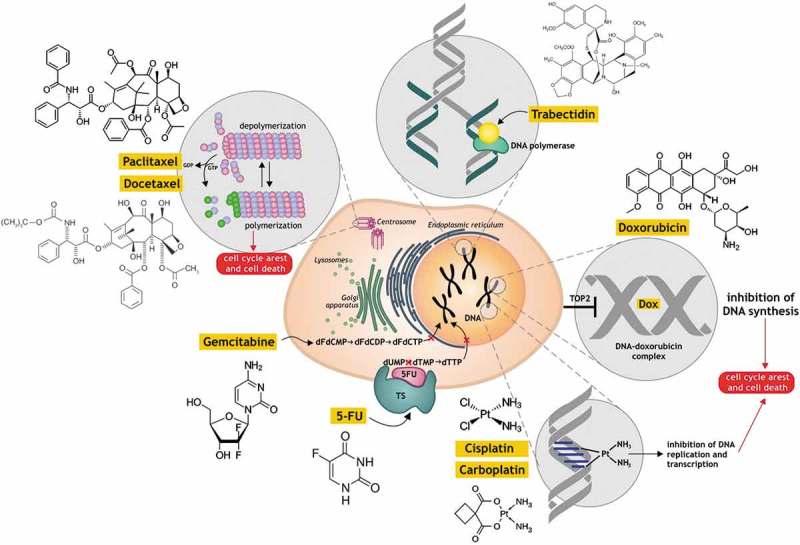
“helix from being resealed and thereby inhibiting DNA replication.(79) Taxanes (paclitaxel and docetaxel) target tubulin and stabilize the microtubule polymer, protecting”
BackgroundHow Taxol/paclitaxel kills cancer cells
Weaver, B. A. (2014) · Molecular Biology of the Cell · doi:10.1091/mbc.e14-04-0916 · Cited by 1,547 · cited 1×
“it from disassembly, which blocks mitosis and reverses to the G0 phase of the cell cycle without cell division.(80) Alkylating agents (cisplatin, oxaliplatin, carboplatin, which”
BackgroundMacrophages and Therapeutic Resistance in Cancer
Ruffell, B., & Coussens, L. M. (2015) · Cancer Cell · doi:10.1016/j.ccell.2015.02.015 · Cited by 1,474 · cited 1×
“Cathepsin B is important in the trafficking of TNF-α-containing vesicles to the surface of macrophages, which mediates chemoprotection through NF-κβ activation, or indirectly through IL-6 expression and STAT3 activation.(107) Macrophage-derived cathepsins”
BackgroundGhiringhelli, F., Menard, C., Puig, P. E., Ladoire, S., Roux, S., Martin, F., Solary, E., Le Cesne, A., Zitvogel, L., & Chauffert, B. (2007) · Cancer Immunology, Immunotherapy · doi:10.1007/s00262-006-0225-8 · Cited by 1,241 · cited 3×
“Activates NK-dependent antitumor immunity in cancer patients.(70)”
BackgroundNeutralizing Tumor-Promoting Chronic Inflammation: A Magic Bullet?
Coussens, L. M., Zitvogel, L., & Palucka, A. K. (2013) · Science · doi:10.1126/science.1232227 · Cited by 1,079 · cited 1×
“M2 macrophages are known to have strong tumor-supporting functions as they contribute to the establishment of a local immunosuppressive microenvironment.(98) Macrophage-mediated resistance to paclitaxel, doxorubicin and etoposide was found in coculture studies combining mammary carcinoma cell lines and bone marrow-der…”
BackgroundDirect Visualization of Macrophage-Assisted Tumor Cell Intravasation in Mammary Tumors
Wyckoff, J. B., Wang, Y., Lin, E. Y., Li, J.-F., Goswami, S., Stanley, E. R., Segall, J. E., Pollard, J. W., & Condeelis, J. (2007) · Cancer Research · doi:10.1158/0008-5472.can-06-1823 · Cited by 1,053 · cited 7×
“The blockage of these molecular pathways increased the efficacy of cisplatin and carboplatin.65 Cyclophosphamide (CTX) was found to enhance the production of the pro-inflammatory cytokines IL-6 and IL12 and to decrease the production of the anti-inflammatory cytokines IL-10 and TGF-b in mouse peritoneal macrophages in…”
BackgroundInfluentialMacrophages in Tumor Microenvironments and the Progression of Tumors
Hao, N.-B., Lü, M.-H., Fan, Y.-H., Cao, Y.-L., Zhang, Z.-R., & Yang, S.-M. (2012) · Clinical and Developmental Immunology · doi:10.1155/2012/948098 · Cited by 1,003
Mitchem, J. B., Brennan, D. J., Knolhoff, B. L., Belt, B. A., Zhu, Y., Sanford, D. E., Belaygorod, L., Carpenter, D., Collins, L., Piwnica-Worms, D., et al. (2013) · Cancer Research · doi:10.1158/0008-5472.can-12-2731 · Cited by 943 · cited 1×
“improves the efficacy of gemcitabine therapy and reduces the number of metastases by activating antitumor T cell responses.(117) The combination of TAM depletion and chemotherapy”
BackgroundBracci, L., Schiavoni, G., Sistigu, A., & Belardelli, F. (2014) · Cell Death & Differentiation · doi:10.1038/cdd.2013.67 · Cited by 928 · cited 2×
“Cytostatic agents can stimulate the antigenic properties of cancer cells, facilitating their recognition by the immune system and can also enhance the systemic effects of chemotherapy, resulting in immunosuppressive cell depletion.(10,11) The key cells of the immune system that define the intratumoral immune status an…”
BackgroundResultRole of tumor-associated macrophages in tumor progression and invasion
Mantovani, A., Schioppa, T., Porta, C., Allavena, P., & Sica, A. (2006) · Cancer and Metastasis Reviews · doi:10.1007/s10555-006-9001-7 · Cited by 888 · cited 6×
“induce angiogenesis, lymphangiogenesis, stromal remodeling, metastasis, and suppression of immunity.(22,23) TAMs express molecules that directly affect cancer cell prolifera-”
BackgroundInfluentialRole of Macrophage Targeting in the Antitumor Activity of Trabectedin
Germano, G., Frapolli, R., Belgiovine, C., Anselmo, A., Pesce, S., Liguori, M., Erba, E., Uboldi, S., Zucchetti, M., Pasqualini, F., et al. (2013) · Cancer Cell · doi:10.1016/j.ccr.2013.01.008 · Cited by 864 · cited 5×
“resulted in macrophage depletion in tumor tissues, which was suggested as an essential mechanism of the antitumor activity of trabectedin.(78)”
BackgroundInfluentialB7-H4 expression identifies a novel suppressive macrophage population in human ovarian carcinoma
Kryczek, I., Zou, L., Rodriguez, P., Zhu, G., Wei, S., Mottram, P., Brumlik, M., Cheng, P., Curiel, T., Myers, L., et al. (2006) · The Journal of Experimental Medicine · doi:10.1084/jem.20050930 · Cited by 748 · cited 2×
“Blocking B7-H4 or depleting B7-H4+ TAMs may represent a novel strategy to enhance T cell immunity in cancer.(12,112) In human ovarian cancer, the inhibition of B7-H4 was found to contribute to tumor regression.”
BackgroundMa, Y., Adjemian, S., Mattarollo, S. R., Yamazaki, T., Aymeric, L., Yang, H., Portela Catani, J. P., Hannani, D., Duret, H., Steegh, K., et al. (2013) · Immunity · doi:10.1016/j.immuni.2013.03.003 · Cited by 699
Medrek, C., Pontén, F., Jirström, K., & Leandersson, K. (2012) · BMC Cancer · doi:10.1186/1471-2407-12-306 · Cited by 647
Zheng, P., Chen, L., Yuan, X., Luo, Q., Liu, Y., Xie, G., Ma, Y., & Shen, L. (2017) · Journal of Experimental & Clinical Cancer Research · doi:10.1186/s13046-017-0528-y · Cited by 629 · cited 2×
“Exosomes are considered to act as extracellular communicators between tumor cells and the tumor microenvironment.(100) As shown by Zheng et al.”
BackgroundRole of tumor associated macrophages in tumor angiogenesis and lymphangiogenesis
Riabov, V., Gudima, A., Wang, N., Mickley, A., Orekhov, A., & Kzhyshkowska, J. (2014) · Frontiers in Physiology · doi:10.3389/fphys.2014.00075 · Cited by 628 · cited 3×
“tion, including epidermal growth factor (EGF), members of the fibroblast growth factor (FGF) family, and transforming growth factor beta (TGFβ).(14,24) The ability of TAMs to promote tumor progression and accelerate vessel growth is mediated through the upregulation and release of several”
BackgroundSelf-citationThe interaction of anticancer therapies with tumor-associated macrophages
Mantovani, A., & Allavena, P. (2015) · Journal of Experimental Medicine · doi:10.1084/jem.20150295 · Cited by 616 · cited 5×
“The application of chemotherapeutic agents can also be cytotoxic for monocytes and macrophages, as in the case of the DNA-damaging agent trabectedin (Figure 1), which has strong antitumor activity.(89) In transplantable tumor models of fibrosarcoma, ovarian carcinoma, and Lewis lung carcinoma, treatment with trabected…”
BackgroundInfluentialSpecialized roles for cysteine cathepsins in health and disease
Reiser, J., Adair, B., & Reinheckel, T. (2010) · Journal of Clinical Investigation · doi:10.1172/jci42918 · Cited by 580 · cited 1×
“partment and are responsible for the proteolytic degradation of a wide variety of intracellular and extracellular substances.(102) Cathepsins can be secreted by malignant cells and cells of the”
BackgroundCellular Responses to Cisplatin‐Induced DNA Damage
Basu, A., & Krishnamurthy, S. (2010) · Journal of Nucleic Acids · doi:10.4061/2010/201367 · Cited by 569 · cited 1×
“This process is irreversible and leads to cell apoptosis.(81) 5-Fluorouracil (5-FU) acts as an inhibitor of thymidylate”
BackgroundHigh Macrophage Infiltration along the Tumor Front Correlates with Improved Survival in Colon Cancer
Forssell, J., Öberg, A., Henriksson, M. L., Stenling, R., Jung, A., & Palmqvist, R. (2007) · Clinical Cancer Research · doi:10.1158/1078-0432.ccr-06-2073 · Cited by 566 · cited 1×
“that high levels of CD68+ TAMs localized in the tumor/ stroma line were correlated with better survival in colon cancer.(35) In another study of 208 patients with colorectal”
BackgroundMacrophages and cathepsin proteases blunt chemotherapeutic response in breast cancer
Shree, T., Olson, O. C., Elie, B. T., Kester, J. C., Garfall, A. L., Simpson, K., Bell-McGuinn, K. M., Zabor, E. C., Brogi, E., & Joyce, J. A. (2011) · Genes & Development · doi:10.1101/gad.180331.111 · Cited by 541 · cited 4×
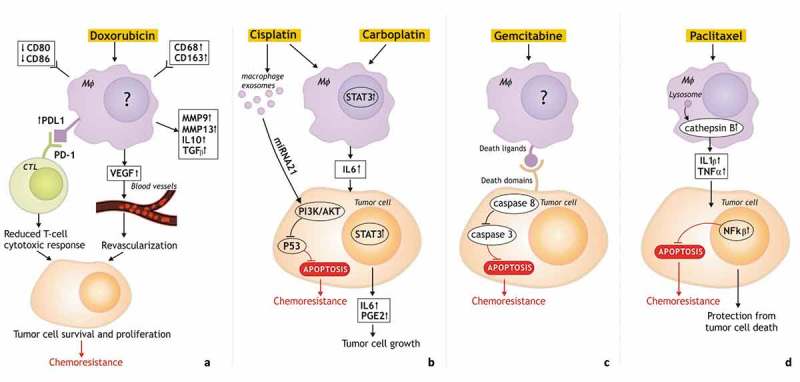
“that macrophages contribute to breast cancer resistance to therapy via the secretion of cathepsins.(90) Cathepsin B is important in the trafficking of TNF-α-containing vesicles to the surface of macrophages, which mediates chemoprotection through NF-κβ activation, or indirectly through IL-6 expression and STAT3 activa…”
BackgroundInfluentialPerivascular M2 Macrophages Stimulate Tumor Relapse after Chemotherapy
Hughes, R., Qian, B.-Z., Rowan, C., Muthana, M., Keklikoglou, I., Olson, O. C., Tazzyman, S., Danson, S., Addison, C., Clemons, M., et al. (2015) · Cancer Research · doi:10.1158/0008-5472.can-14-3587 · Cited by 518 · cited 6×
“Chemoresistance and chemotherapy-induced immunosuppression can result in the relapse of tumors and is critical for survival in cancer patients.(7,85) In the past few”
BackgroundInfluentialKodumudi, K. N., Woan, K., Gilvary, D. L., Sahakian, E., Wei, S., & Djeu, J. Y. (2010) · Clinical Cancer Research · doi:10.1158/1078-0432.ccr-10-0733 · Cited by 500 · cited 3×
“MDSCs, which can enhance the cytotoxic T cell responses in tumors.(63) In mouse tumor models, treatment with trabectedin led to a significant reduction in the number of monocytes (CD45+ CD11b+ CD115+) in the bloodstream, mature monocytes”
BackgroundInfluentialKaufmann, M., von Minckwitz, G., Mamounas, E. P., Cameron, D., Carey, L. A., Cristofanilli, M., Denkert, C., Eiermann, W., Gnant, M., Harris, J. R., et al. (2012) · Annals of Surgical Oncology · doi:10.1245/s10434-011-2108-2 · Cited by 482 · cited 2×
“On average, only 40–60% of the cancer patients benefit from antitumor chemotherapy (CT).(3,4) Drug”
BackgroundJinushi, M., Chiba, S., Yoshiyama, H., Masutomi, K., Kinoshita, I., Dosaka-Akita, H., Yagita, H., Takaoka, A., & Tahara, H. (2011) · Proceedings of the National Academy of Sciences · doi:10.1073/pnas.1106645108 · Cited by 479 · cited 1×
“demonstrated that the in vivo resistance of pancreatic ductal adenocarcinoma cells (PDAC) to carboplatin was associated with STAT3 signaling and macrophageproduced IL6 promoting tumor cell growth.(99) (Figure 2(b)) There is evidence that the exosomes of M2-macrophages are”
BackgroundNakasone, E. S., Askautrud, H. A., Kees, T., Park, J.-H., Plaks, V., Ewald, A. J., Fein, M., Rasch, M. G., Tan, Y.-X., Qiu, J., et al. (2012) · Cancer Cell · doi:10.1016/j.ccr.2012.02.017 · Cited by 478 · cited 5×
“In contrast, CCR2 null mice responded better to treatment with doxorubicin or cisplatin.(75) Therefore, the impact of the chemotherapy-induced infiltration of monocytes/macrophages in the tumor site is still controversial and depends on the nature”
BackgroundInfluentialThe Role of Tumor Microenvironment in Chemoresistance: To Survive, Keep Your Enemies Closer
Senthebane, D. A., Rowe, A., Thomford, N. E., Shipanga, H., Munro, D., Mazeedi, M. A. M. A., Almazyadi, H. A. M., Kallmeyer, K., Dandara, C., Pepper, M. S., et al. (2017) · International Journal of Molecular Sciences · doi:10.3390/ijms18071586 · Cited by 399
Soares, K. C., Rucki, A. A., Wu, A. A., Olino, K., Xiao, Q., Chai, Y., Wamwea, A., Bigelow, E., Lutz, E., Liu, L., et al. (2015) · Journal of Immunotherapy · doi:10.1097/cji.0000000000000062 · Cited by 398 · cited 1×
“inhibited by the addition of the vaccine or a low dose of cyclophosphamide to the PD-1 blockade.(111) B7-H4 is a member of the B7 superfamily that is expressed on TAMs and implicated in the suppression of T cells.”
BackgroundDiverse Functions of Macrophages in Different Tumor Microenvironments
Yang, M., McKay, D., Pollard, J. W., & Lewis, C. E. (2018) · Cancer Research · doi:10.1158/0008-5472.can-18-1367 · Cited by 387 · cited 1×
“CD206 and CD163 are the most frequently used biomarkers to histologically identify the M2 phenotypes of TAMs in tumor tissues.(15) Zhang et al.”
BackgroundAllavena, P., & Mantovani, A. (2012) · Clinical and Experimental Immunology · doi:10.1111/j.1365-2249.2011.04515.x · Cited by 384 · cited 3×
“tion, including epidermal growth factor (EGF), members of the fibroblast growth factor (FGF) family, and transforming growth factor beta (TGFβ).(14,24) The ability of TAMs to promote tumor progression and accelerate vessel growth is mediated through the upregulation and release of several”
BackgroundVasiljeva, O., Papazoglou, A., Krüger, A., Brodoefel, H., Korovin, M., Deussing, J., Augustin, N., Nielsen, B. S., Almholt, K., Bogyo, M., et al. (2006) · Cancer Research · doi:10.1158/0008-5472.can-05-4463 · Cited by 375 · cited 1×
“growth and invasion of tumor cells into surrounding tissue and vasculature.(104,105) Cathepsins were found to be overex-”
BackgroundRole of gemcitabine in cancer therapy
Toschi, L., Finocchiaro, G., Bartolini, S., Gioia, V, & Cappuzzo, F. (2005) · Future Oncology · doi:10.1517/14796694.1.1.7 · Cited by 373 · cited 3×
“three phosphates, becomes pharmacologically active as gemcitabine triphosphate (dFdCTP) and is incorporated into new DNA strands.(83) Trabectedin binds to the minor groove of the DNA, causing the DNA helix to bend toward the major groove, which causes the inhibition of transcription and reparation.”
BackgroundTherapeutic monoclonal antibodies
Breedveld, F. (2000) · The Lancet · doi:10.1016/s0140-6736(00)01034-5 · Cited by 359 · cited 1×
“overall response rate was significantly greater in the group of patients treated with trastuzumab (anti-HER-2 monoclonal antibodies) and chemotherapy.(109) Weir et al.”
BackgroundChen, J. J. W., Yao, P., Yuan, A., Hong, T.-M., Shun, C., Kuo, M., Lee, Y.-C., & Yang, P. (2003) · PubMed · Cited by 352
Dijkgraaf, E. M., Heusinkveld, M., Tummers, B., Vogelpoel, L. T. C., Goedemans, R., Jha, V., Nortier, J. W. R., Welters, M. J. P., Kroep, J. R., & van der Burg, S. H. (2013) · Cancer Research · doi:10.1158/0008-5472.can-12-3542 · Cited by 346 · cited 3×
“including doxorubicin (adriamycin), platinum compounds, 5-fluorouracil (5-FU), gemcitabine, and paclitaxel.(65,89) The major mechanisms of chemotherapy resistance are illustrated”
BackgroundSemiglazov, V. F., Semiglazov, V. V., Dashyan, G. A., Ziltsova, E. K., Ivanov, V. G., Bozhok, A. A., Melnikova, O. A., Paltuev, R. M., Kletzel, A., & Berstein, L. M. (2007) · Cancer · doi:10.1002/cncr.22789 · Cited by 333 · cited 1×
“the eradication of micrometastases after surgical treatment, which results in an increase in patient survival and a prolongation of disease-free (metastases-free) period.(60) Table 1.”
BackgroundWeizman, N., Krelin, Y., Shabtay-Orbach, A., Amit, M., Binenbaum, Y., Wong, R. J., & Gil, Z. (2014) · Oncogene · doi:10.1038/onc.2013.357 · Cited by 281 · cited 1×
“level of apoptosis, particularly by decreasing the activation of caspase-3.(101) (Figure 2(c)) Numerous studies have demonstrated that cathepsins play”
BackgroundAharinejad, S., Paulus, P., Sioud, M., Hofmann, M., Zins, K., Schäfer, R., Stanley, E. R., & Abraham, D. (2004) · Cancer Research · doi:10.1158/0008-5472.can-04-0961 · Cited by 281 · cited 1×
“blockade of colony-stimulating factor-1 (CSF-1) was shown to limit macrophage infiltration and improve the response of breast cancer xenografts in mice to chemotherapy.(113,114) Paclitaxel was found to improve the survival of mammary tumor-bearing mice in combination with the blockade of macrophage recruitment with CS…”
BackgroundDi Caro, G., Cortese, N., Castino, G. F., Grizzi, F., Gavazzi, F., Ridolfi, C., Capretti, G., Mineri, R., Todoric, J., Zerbi, A., et al. (2016) · Gut · doi:10.1136/gutjnl-2015-309193 · Cited by 275 · cited 4×
“Gemcitabine Pancreas cancer, nonsmall cell lung cancer, bladder cancer, soft-tissue sarcoma, metastatic breast cancer, ovarian cancer Re-education of Mɸ to the antitumour phenotype by an upregulation of the expression of the M1 markers HLA-DR, CD40, CCR7, a downregulation of the expression of M2 markers CD163 and CD20…”
BackgroundInfluentialTumor-infiltrating macrophages (CD68(+) cells) and prognosis in malignant uveal melanoma.
Mäkitie, T., Summanen, P. A., Tarkkanen, A. H. A., & Kivelä, T. (2001) · PubMed · Cited by 273
Tumour-infiltrating macrophages and clinical outcome in breast cancer
Mahmoud, S. M. A., Lee, A. H. S., Paish, E. C., Macmillan, R. D., Ellis, I. O., & Green, A. R. (2012) · Journal of Clinical Pathology · doi:10.1136/jclinpath-2011-200355 · Cited by 268 · cited 2×
“cantly associated with worse breast cancer-specific survival and shorter DFS.(32) A study of 100 breast cancer samples demonstrated a significant association of CD68+ TAM infiltration with TNM”
BackgroundTrial watch: Chemotherapy with immunogenic cell death inducers
Vacchelli, E., Senovilla, L., Eggermont, A., Fridman, W. H., Galon, J., Zitvogel, L., Kroemer, G., & Galluzzi, L. (2013) · OncoImmunology · doi:10.4161/onci.23510 · Cited by 265
5-FU Metabolism in Cancer and Orally-Administrable 5-FU Drugs
Miura, K., Kinouchi, M., Ishida, K., Fujibuchi, W., Naitoh, T., Ogawa, H., Ando, T., Yazaki, N., Watanabe, K., Haneda, S., et al. (2010) · Cancers · doi:10.3390/cancers2031717 · Cited by 260 · cited 1×
“sphate (dUMP) to form thymidine monophosphate (dTMP), which in turn blocks the synthesis of the pyrimidine thymidine that is required for DNA replication.(82) Gemcitabine, after the attachment of the”
BackgroundPaulus, P., Stanley, E. R., Schäfer, R., Abraham, D., & Aharinejad, S. (2006) · Cancer Research · doi:10.1158/0008-5472.can-05-3523 · Cited by 231 · cited 1×
“blockade of colony-stimulating factor-1 (CSF-1) was shown to limit macrophage infiltration and improve the response of breast cancer xenografts in mice to chemotherapy.(113,114) Paclitaxel was found to improve the survival of mammary tumor-bearing mice in combination with the blockade of macrophage recruitment with CS…”
BackgroundLan, C., Huang, X., Lin, S., Huang, H., Cai, Q., Wan, T., Lu, J., & Liu, J. (2013) · Technology in Cancer Research & Treatment · doi:10.7785/tcrt.2012.500312 · Cited by 227
Trabectedin, a drug acting on both cancer cells and the tumour microenvironment
D’Incalci, M., Badri, N., Galmarini, C. M., & Allavena, P. (2014) · British Journal of Cancer · doi:10.1038/bjc.2014.149 · Cited by 218 · cited 1×
“Trabectedin binds to the minor groove of the DNA, causing the DNA helix to bend toward the major groove, which causes the inhibition of transcription and reparation.(84) Chemoresistance and chemotherapy-induced immunosuppression can result in the relapse of tumors and is critical for survival in cancer patients.”
BackgroundYuan, Z.-Y., Luo, R.-Z., Peng, R.-J., Wang, S.-S., & Xue, C. (2014) · OncoTargets and Therapy · doi:10.2147/ott.s61838 · Cited by 214 · cited 1×
“Triple-negative breast cancer (TNBC) with a large number of infiltrating CD68+ TAMs had a high risk of distant metastasis and low rates of disease-free survival (DFS) and overall survival (OS).(31) In another study of breast tumors, high numbers of CD68 macrophages were signifi-”
BackgroundLinde, N., Lederle, W., Depner, S., van Rooijen, N., Gutschalk, C. M., & Mueller, M. M. (2012) · The Journal of Pathology · doi:10.1002/path.3989 · Cited by 195 · cited 2×
“entiate into TAMs (M2 macrophages) under the influence of IL-4.(118) The removal of these macrophages inhibits growth, angiogenesis, and tumor invasion.”
BackgroundCathepsin B and its role(s) in cancer progression
Podgorski, I., & Sloane, B. F. (2003) · Biochemical Society Symposia · doi:10.1042/bss0700263 · Cited by 195 · cited 2×
“prognosis and the invasive phenotype of colon and bladder cancers, esophageal adenocarcinomas, and breast cancer.(104,106) Shree et al.”
BackgroundMolecular pathways and targets in cancer-related inflammation
Mantovani, A., Garlanda, C., & Allavena, P. (2010) · Annals of Medicine · doi:10.3109/07853890903405753 · Cited by 185 · cited 1×
“damage DNA in tumor cells results in immunogenic cell death (ICD) due to the expression of neoantigens on tumor cells following cellular DNA disruption.(17) Carboplatin is a platinum compound with DNA-damaging agents.”
BackgroundLiu, Z., Kuang, W., Zhou, Q., & Zhang, Y. (2018) · International Journal of Molecular Medicine · doi:10.3892/ijmm.2018.3923 · Cited by 184 · cited 3×
“22,23 TAMs also secrete a number of cytokines and chemokines, such as CCL3, CCL4, CCL5, CCL22, TGFβ, and IL10, which recruit natural regulatory T cells (nTreg) to the tumor microenvironment and suppress CD4+ and CD8 + T cell effector functions.12,21 TAMs are able to support cancer stem cell functions.13,20 Cancer stem…”
BackgroundBaghdadi, M., Wada, H., Nakanishi, S., Abe, H., Han, N., Putra, W. E., Endo, D., Watari, H., Sakuragi, N., Hida, Y., et al. (2016) · Cancer Research · doi:10.1158/0008-5472.can-16-1170 · Cited by 180
Sensitizing Protective Tumor Microenvironments to Antibody-Mediated Therapy
Pallasch, C. P., Leskov, I., Braun, C. J., Vorholt, D., Drake, A., Soto-Feliciano, Y. M., Bent, E. H., Schwamb, J., Iliopoulou, B., Kutsch, N., et al. (2014) · Cell · doi:10.1016/j.cell.2013.12.041 · Cited by 179 · cited 2×
“VEGF and TNF that enhanced the recruitment and phagocytic activity of monocytes/macrophages.(68) In the B16F10 mouse model of melanoma, combined chemotherapy (vin-”
BackgroundMultiple Roles for Cysteine Cathepsins in Cancer
Joyce, J. A., & Hanahan, D. (2004) · Cell Cycle · doi:10.4161/cc.3.12.1289 · Cited by 173 · cited 2×
“tumor microenvironment, such as fibroblasts and macrophages.(103) In cancer, cathepsins, particularly cathepsin”
BackgroundJaveed, A., Ashraf, M., Riaz, A., Ghafoor, A., Afzal, S., & Mukhtar, M. M. (2009) · European Journal of Pharmaceutical Sciences · doi:10.1016/j.ejps.2009.08.009 · Cited by 172 · cited 2×
“Such activity of PTX-treated TAMs can result in the suppression of tumor growth and the enhancement of immune cell function against tumors.(61)”
BackgroundSevenich, L., Schurigt, U., Sachse, K., Gajda, M., Werner, F., Müller, S., Vasiljeva, O., Schwinde, A., Klemm, N., Deussing, J., et al. (2010) · Proceedings of the National Academy of Sciences · doi:10.1073/pnas.0907240107 · Cited by 172 · cited 1×
“prognosis and the invasive phenotype of colon and bladder cancers, esophageal adenocarcinomas, and breast cancer.(104,106) Shree et al.”
BackgroundCancer stem cells and tumor-associated macrophages: a roadmap for multitargeting strategies
Raggi, C., Mousa, H. S., Correnti, M., Sica, A., & Invernizzi, P. (2015) · Oncogene · doi:10.1038/onc.2015.132 · Cited by 161
Molecular & Cellular Proteomics
(2021) · Molecular & Cellular Proteomics · doi:10.1074/mcp · Cited by 158
Trial Watch: Chemotherapy with immunogenic cell death inducers
Vacchelli, E., Aranda, F., Eggermont, A., Galon, J., Sautès-Fridman, C., Cremer, I., Zitvogel, L., Kroemer, G., & Galluzzi, L. (2014) · OncoImmunology · doi:10.4161/onci.27878 · Cited by 150 · cited 1×
“Cytostatic agents can stimulate the antigenic properties of cancer cells, facilitating their recognition by the immune system and can also enhance the systemic effects of chemotherapy, resulting in immunosuppressive cell depletion.(10,11) The key cells of the immune system that define the intratumoral immune status an…”
BackgroundZhang, H., Wang, X., Shen, Z., Xu, J., Qin, J., & Sun, Y. (2014) · Gastric Cancer · doi:10.1007/s10120-014-0422-7 · Cited by 147
Ong, S., Tan, Y., Beretta, O., Jiang, D., Yeap, W., Tai, J. J. Y., Wong, W., Yang, H., Schwarz, H., Lim, K., et al. (2012) · European Journal of Immunology · doi:10.1002/eji.201141825 · Cited by 145 · cited 1×
“activated cytotoxic Th1 cells, mediating the antitumor immune response.(28,54) In a study of 446 patients with colorectal cancer treated in the Department of Surgery, Umea”
BackgroundBuhtoiarov, I. N., Sondel, P. M., Wigginton, J. M., Buhtoiarova, T. N., Yanke, E. M., Mahvi, D. A., & Rakhmilevich, A. L. (2011) · Immunology · doi:10.1111/j.1365-2567.2010.03357.x · Cited by 143 · cited 4×
“ODN)) treatment resulted in the enrichment of an M1polarized TAM subpopulation.(69) This TAM subpopulation was characterized by the upregulation of molecules asso-”
BackgroundInfluentialMacrophages limit chemotherapy
Palma, M. D., & Lewis, C. E. (2011) · Nature · doi:10.1038/472303a · Cited by 142
Role of chitinase-like proteins in cancer
Kzhyshkowska, J. G., Yin, S., Liu, T., Riabov, V., & Larionova, I. (2016) · Biological Chemistry · doi:10.1515/hsz-2015-0269 · Cited by 141
Self-citationSugimura, K., Miyata, H., Tanaka, K., Takahashi, T., Kurokawa, Y., Yamasaki, M., Nakajima, K., Takiguchi, S., Mori, M., & Doki, Y. (2015) · Journal of Surgical Oncology · doi:10.1002/jso.23881 · Cited by 140 · cited 3×
“(two courses of 5-fluorouracil (5-FU), cisplatin, and adriamycin), the infiltration of CD68+ and CD163+ macrophages in tumor mass significantly correlates with tumor depth, lymphatic and venous invasion, and poor prognosis.(66) Treatment with cyclophosphamide (CTX), paclitaxel (PTX) and doxor-”
BackgroundInfluentialHigh serum YKL-40 level in patients with small cell lung cancer is related to early death
Johansen, J. S., Drivsholm, L., Price, P. A., & Christensen, I. J. (2004) · Lung Cancer · doi:10.1016/j.lungcan.2004.05.010 · Cited by 139
High serum YKL‐40 level after surgery for colorectal carcinoma is related to short survival
Cintin, C., Johansen, J. S., Christensen, I. J., Price, P. A., Sørensen, S., & Nielsen, H. J. (2002) · Cancer · doi:10.1002/cncr.10644 · Cited by 135
Zhang, W., Wang, X., Gao, S.-T., Chen, C., Xu, X., Sun, Q., Zhou, Z.-H., Wu, G.-Z., Yu, Q., Xu, G., et al. (2017) · Journal of Surgical Research · doi:10.1016/j.jss.2017.09.035 · Cited by 130
Malesci, A., Bianchi, P., Celesti, G., Basso, G., Marchesi, F., Grizzi, F., Di Caro, G., Cavalleri, T., Rimassa, L., Palmqvist, R., et al. (2017) · OncoImmunology · doi:10.1080/2162402x.2017.1342918 · Cited by 124
Prognostic Value of Diametrically Polarized Tumor-Associated Macrophages in Renal Cell Carcinoma
Xu, L., Zhu, Y., Chen, L., An, H., Zhang, W., Wang, G., Lin, Z., & Xu, J. (2014) · Annals of Surgical Oncology · doi:10.1245/s10434-014-3601-1 · Cited by 120
Alishekevitz, D., Gingis-Velitski, S., Kaidar-Person, O., Gutter-Kapon, L., Scherer, S. D., Raviv, Z., Merquiol, E., Ben-Nun, Y., Miller, V., Rachman-Tzemah, C., et al. (2016) · Cell Reports · doi:10.1016/j.celrep.2016.09.083 · Cited by 114 · cited 1×
“giogenesis can be achieved by inhibiting the activity of macrophages via blocking the VEGF-C/VEGFR3 axis in chemotherapy-treated tumors.(119) Duhamel M and colleagues demonstrated a new therapeutic strategy combining paclitaxel and proprotein convertase 1/ 3 (PC1/3) inhibition to switch macrophages toward an antitumor…”
BackgroundProtecting the normal in order to better kill the cancer
Liu, B., Ezeogu, L., Zellmer, L., Yu, B., Xu, N., & Liao, D. J. (2015) · Cancer Medicine · doi:10.1002/cam4.488 · Cited by 113 · cited 1×
“On average, only 40–60% of the cancer patients benefit from antitumor chemotherapy (CT).(3,4) Drug”
BackgroundWang, B., Xu, D., Yu, X.-J., Ding, T., Rao, H., Zhan, Y., Zheng, L., & Li, L. (2011) · Annals of Surgical Oncology · doi:10.1245/s10434-011-1609-3 · Cited by 112 · cited 2×
“5-fluorouracil Colon cancer, esophageal cancer, stomach cancer, pancreatic cancer, breast cancer, and cervical cancer, head and neck cancer Antimetabolites Analog of pyrimidine nucleoside Disrupting DNA and/or RNA synthesis In gastric cancer high amount of TAMs correlate with prolonged survival.(76) In patients with s…”
BackgroundZhang, J., Yan, Y., Yang, Y., Wang, L., Li, M., Wang, J., Liu, X., Duan, X., & Wang, J. (2016) · Medicine · doi:10.1097/md.0000000000002636 · Cited by 109
Page, C. L., Marineau, A., Bonza, P. K., Rahimi, K., Cyr, L., Labouba, I., Madore, J., Delvoye, N., Mes‐Masson, A., Provencher, D. M., et al. (2012) · PLoS ONE · doi:10.1371/journal.pone.0038541 · Cited by 107 · cited 1×
“A positive correlation between CD206+ TAM macrophage infiltration and poor survival rates was found for ovarian cancer, renal cell carcinoma, and hepatocellular carcinoma.(39,40) Similarly, an increased density of CD163+ was found in the advanced stages of ovarian cancer,multiplemyeloma,”
BackgroundTumor associated macrophages in gynecologic cancers
Krishnan, V., Schaar, B. T., Tallapragada, S., & Dorigo, O. (2018) · Gynecologic Oncology · doi:10.1016/j.ygyno.2018.01.014 · Cited by 95 · cited 4×
“believed that resident macrophages are the first to be reprogrammed by growing tumors into pro-tumoral phenotypes.(18) TAMs originating from resident macrophages can mediate DNA damage, transformation and the survival of transformed cells and cancer-related inflammation.”
BackgroundInfluentialBipolar Tumor-Associated Macrophages in Ovarian Cancer as Targets for Therapy
Gupta, V., Yull, F., & Khabele, D. (2018) · Cancers · doi:10.3390/cancers10100366 · Cited by 91 · cited 2×
“recruited to tumor tissue by growth factors and chemokines, such as M-CSF, CCL2, and CCL5.(18,19) The tumor microenvironment affects the programming of both resident and infil-”
BackgroundMozaffari, F., Lindemalm, C., Choudhury, A., Björneklett, H. G., Helander, I., Lekander, M., Mikaelsson, E., Nilsson, B. R., Ojutkangas, M.-L., Österborg, A., et al. (2007) · British Journal of Cancer · doi:10.1038/sj.bjc.6603840 · Cited by 90 · cited 2×
“In patients with advanced pancreatic cancer an overall increase in CD14+ monocytes was observed.(9) In pancreatic adenocarcinoma high levels of CD68+ TAMs were associated with a better prognosis.”
BackgroundTargeting the tumor stroma in hepatocellular carcinoma
Heindryckx, F., & Gerwins, P. (2014) · World Journal of Hepatology · doi:10.4254/wjh.v7.i2.165 · Cited by 89 · cited 1×
“tion of inhibiting tumor growth and reducing the risk of metastasis.(121) Such a strategy can lead to the possibility of using macro-”
BackgroundMolecular mechanisms of drug resistance in tumours
Harrison, D. J. (1995) · The Journal of Pathology · doi:10.1002/path.1711750103 · Cited by 84 · cited 1×
“ABC transporters, aberrant transcription factor nuclear factor-κB (NF-κB) activity, and the mechanisms of damaged DNA repair.(7,86,87) CT can also lead to the selective expansion of resistant cancer clones.”
BackgroundApplying ecological and evolutionary theory to cancer: a long and winding road
Thomas, F., Fisher, D., Fort, P., Marie, J., Daoust, S., Roche, B., Grunau, C., Cosseau, C., Mitta, G., Baghdiguian, S., et al. (2013) · Evolutionary Applications · doi:10.1111/eva.12021 · Cited by 81 · cited 1×
“resistance in surviving cancer cells, in fact, leads to an inability to achieve complete pathological regression.(5) However, even when complete pathological regression is achieved, tumors can relapse in 10–40% of the cases.”
BackgroundLiu, T., Larionova, I., Литвяков, Н. В., Riabov, V., Zavyalova, M. V., Tsyganov, M. M., Buldakov, M. A., Song, B., Moganti, K., Вадимовна, К. П., et al. (2018) · OncoImmunology · doi:10.1080/2162402x.2018.1436922 · Cited by 79 · cited 2×
“recruiting factor in breast cancer tumors, after neoadjuvant chemotherapy (NAC) is predictive for the increased risk of distant metastasis and for a poor response to NAC.(52) In patients who received anthracycline-containing NAC, the absence of”
BackgroundSelf-citationThe role of tumor-associated macrophages in breast carcinoma invasion and metastasis.
Yang, J., Li, X., Liu, X., & Liu, Y. (2015) · Europe PMC (PubMed Central) · Cited by 77
Stromal cell‐derived CSF‐1 blockade prolongs xenograft survival of CSF‐1‐negative neuroblastoma
Abraham, D., Zins, K., Sioud, M., Lucas, T., Schäfer, R., Stanley, E. R., & Aharinejad, S. (2010) · International Journal of Cancer · doi:10.1002/ijc.24859 · Cited by 75 · cited 7×
“The blockage of these molecular pathways increased the efficacy of cisplatin and carboplatin.65 Cyclophosphamide (CTX) was found to enhance the production of the pro-inflammatory cytokines IL-6 and IL12 and to decrease the production of the anti-inflammatory cytokines IL-10 and TGF-b in mouse peritoneal macrophages in…”
BackgroundInfluentialKnorr, T., Obermayr, F., Bartnik, E., Zien, A., & Aigner, T. G. (2003) · Annals of the Rheumatic Diseases · doi:10.1136/ard.62.10.995 · Cited by 74 · cited 1×
“sidered a biological marker for the progression of osteoarthritis.(59) Recently, we identified that an elevated gene expression of YKL-39, a new pro-angiogenic and monocyte-”
BackgroundCarcinoma origin dictates differential skewing of monocyte function
Bögels, M., Braster, R., Nijland, P. G., Gül, N., van de Luijtgaarden, W., Fijneman, R. J. A., Meijer, G. A., Jimenez, C. R., Beelen, R. H. J., & van Egmond, M. (2012) · OncoImmunology · doi:10.4161/onci.20427 · Cited by 73 · cited 6×
“induce the secretion of tolerogenic cytokines in human monocyte-derived macrophages, while intestinal carcinoma cells stimulate the secretion of inflammatory cytokines.(22) In Table 1, we summarized the latest results concerning the tumor-promoting and antitumor activities of TAMs in different”
BackgroundInfluentialHuang, W.-C., Chan, M.-L., Chen, M., Tsai, T., & Chen, Y.-J. (2016) · Oncotarget · doi:10.18632/oncotarget.8101 · Cited by 66
Prognostic value of diametrically polarized tumor-associated macrophages in multiple myeloma
Chen, X., Chen, J., Zhang, W., Sun, R., Liu, T., Zheng, Y., & Wu, Y. (2017) · Oncotarget · doi:10.18632/oncotarget.22340 · Cited by 58
Self-citationRiabov, V., Yin, S., Song, B., Avdic, A., Schledzewski, K., Ovsiy, I., Gratchev, A., Verdiell, M. L., Sticht, C., Schmuttermaier, C., et al. (2016) · Oncotarget · doi:10.18632/oncotarget.8857 · Cited by 57 · cited 2×
“important roles in the clearance of “unwanted” selfsubstances.(47) The expression of stabilin-1 was found on alternatively activated macrophages.”
BackgroundSelf-citationOverexpression of YKL-40 is an independent prognostic marker in gastric cancer
Bi, J., Lau, S., Lv, Z.-L., Xie, D., Li, W., Lai, Y.-R., Zhong, J.-M., Wu, H.-Q., Su, Q., He, Y.-L., et al. (2009) · Human Pathology · doi:10.1016/j.humpath.2009.07.005 · Cited by 55
Bryniarski, K., Szczepanik, M., Ptak, M., Zemelka‐Wiącek, M., & Ptak, W. (2009) · Pharmacological Reports · doi:10.1016/s1734-1140(09)70098-2 · Cited by 55 · cited 2×
“12 and to decrease the production of the anti-inflammatory cytokines IL-10 and TGF-b in mouse peritoneal macrophages in vivo, potentiating immune responses by activating Th1 cells and antigen-specific macrophages.(67) DOX and CTX can activate macrophages to maintain the antitumor response in breast and leukemia models.”
BackgroundAdministration of Cyclophosphamide Changes the Immune Profile of Tumor-bearing Mice
Liu, P., Jaffar, J., Hellström, I., & Hellström, K. E. (2009) · Journal of Immunotherapy · doi:10.1097/cji.0b013e3181b56af4 · Cited by 50 · cited 2×
“Stimulates the recruitment of DCs, macrophages and NK cells to the tumor site.(70,71) Activates NK-dependent antitumor immunity in cancer patients.”
BackgroundCD163 as a novel target gene of STAT3 is a potential therapeutic target for gastric cancer
Cheng, Z., Zhang, D., Gong, B., Wang, P., & Liu, F. (2017) · Oncotarget · doi:10.18632/oncotarget.20244 · Cited by 50
Cao, Q., Yan, X., Chen, K., Huang, Q., Melancon, M. P., Lopez, G., Cheng, Z., & Li, C. (2018) · Biomaterials · doi:10.1016/j.biomaterials.2017.10.036 · Cited by 49 · cited 1×
“TAMs mediated the clearance of chemotherapy-induced apoptotic tumor cells.(97) A metronomic CTX regimen was shown to stimulate the recruitment of DCs, macrophages,”
BackgroundShu, Q., Ge, Y., Ma, H., Gao, X., Pan, J., Liu, D., Xu, G., Ma, J., & Jia, W. (2016) · Journal of Cellular and Molecular Medicine · doi:10.1111/jcmm.12787 · Cited by 48 · cited 1×
“A positive correlation between CD206+ TAM macrophage infiltration and poor survival rates was found for ovarian cancer, renal cell carcinoma, and hepatocellular carcinoma.(39,40) Similarly, an increased density of CD163+ was found in the advanced stages of ovarian cancer,multiplemyeloma,”
BackgroundStakheyeva, M., Riabov, V., Mitrofanova, I., Litviakov, N., Choynzonov, E., Cherdyntseva, N., & Kzhyshkowska, J. (2017) · Current Pharmaceutical Design · doi:10.2174/1381612823666170714161703 · Cited by 45 · cited 2×
“based on the balanced synergistic action of cytostatic agents and innovative immunomodulatory approaches.(6,12)”
BackgroundSelf-citationЛитвяков, Н. В., Tsyganov, M. M., Larionova, I., Ibragimova, M. K., Deryusheva, I. V., Вадимовна, К. П., Slonimskaya, E. M., Frolova, I. G., Чойнзонов, Е. Л., Чердынцева, Н. В., et al. (2018) · Cancer Chemotherapy and Pharmacology · doi:10.1007/s00280-018-3594-8 · Cited by 42 · cited 2×
“Triple-negative breast cancer (TNBC) with a large number of infiltrating CD68+ TAMs had a high risk of distant metastasis and low rates of disease-free survival (DFS) and overall survival (OS).31 In another study of breast tumors, high numbers of CD68 macrophages were significantly associated with worse breast cancer-…”
BackgroundSelf-citationBuldakov, M. A., Zavyalova, M. V., Krakhmal, N. V., Телегина, Н. С., Vtorushin, S. V., Larionova, I., Riabov, V., Yin, S., Song, B., Чердынцева, Н. В., et al. (2015) · Immunobiology · doi:10.1016/j.imbio.2015.09.011 · Cited by 41 · cited 1×
“in cases with lymph node (LN) metastases compared to negative LN, both without NAC and after NAC in BC patients.(16,34) The opposite results, indicating an antitumor effect of”
ResultSelf-citationChauhan, P., Sodhi, A., & Shrivastava, A. (2008) · Immunobiology · doi:10.1016/j.imbio.2008.07.012 · Cited by 41 · cited 2×
“like receptor (TLR)-2 and TLR-4 genes, and the activation of the mitogen-activated protein (MAP) kinases and NF-kB pathways.(64) The increased antigen-presenting ability of peri-”
BackgroundLarionova, I., Zavyalova, M. V., Телегина, Н. С., Buldakov, M. A., Riabov, V., Чердынцева, Н. В., & Kzhyshkowska, J. G. (2016) · Immunobiology · doi:10.1016/j.imbio.2016.08.001 · Cited by 41 · cited 1×
“in cases with lymph node (LN) metastases compared to negative LN, both without NAC and after NAC in BC patients.(16,34) The opposite results, indicating an antitumor effect of”
ResultSelf-citationM2-macrophage infiltration and macrophage traits of tumor cells in urinary bladder cancer
Aljabery, F. A.-S., Olsson, H., Gimm, O., Jahnson, S., & Shabo, I. (2017) · Urologic Oncology Seminars and Original Investigations · doi:10.1016/j.urolonc.2017.11.020 · Cited by 40
The role of carboplatin in the neoadjuvant chemotherapy treatment of triple negative breast cancer
Castrellon, A. B., Pidhorecky, I., Valero, V., & Raez, L. E. (2017) · Oncology Reviews · doi:10.4081/oncol.2017.324 · Cited by 39 · cited 1×
“Carboplatin is a platinum compound with DNA-damaging agents.(91) An increased tumor pathological complete response (pCR) was shown in 53.”
BackgroundWeir, G. M., Hrytsenko, О., Quinton, T., Berinstein, N. L., Stanford, M. M., & Mansour, M. (2016) · Journal for ImmunoTherapy of Cancer · doi:10.1186/s40425-016-0169-2 · Cited by 33 · cited 1×
“activity of tumor-infiltrating antigen-specific T cells in a murine tumor model expressing HPV16 E7 (C3).(110) Soares”
BackgroundDuhamel, M., Rose, M., Rodet, F., Murgoci, A., Zografidou, L., Régnier‐Vigouroux, A., Abeele, F. V., Kobeissy, F. H., Nataf, S., Pays, L., et al. (2018) · Molecular & Cellular Proteomics · doi:10.1074/mcp.ra117.000443 · Cited by 32
Stabilin-1 expression in tumor associated macrophages
David, C. N., Nance, J. P., Hubbard, J. A., Hsu, M. S., Binder, D. K., & Wilson, E. H. (2012) · Brain Research · doi:10.1016/j.brainres.2012.08.048 · Cited by 31 · cited 1×
“The expression of stabilin-1 was found on alternatively activated macrophages.(56) A high number of stabilin-1 + TAMs was found in metastasizing primary human breast tumors and was shown to support tumor growth in a mammary adenocarcinoma mouse model.”
BackgroundImmunological effects of chemotherapy in spontaneous breast cancers
Kroemer, G., Galluzzi, L., & Zitvogel, L. (2013) · OncoImmunology · doi:10.4161/onci.27158 · Cited by 25 · cited 2×
“Doxorubicin (Adriamycin) Breast cancer, bladder cancer, stomach cancer, lung adenocarcinoma, ovarian cancer, soft tissue sarcoma, multiple myeloma, Kaposi’s sarcoma, lymphoma, acute lymphocytic leukemia Anthracyclines Intercalate between base pairs of nucleic acids Inhibition of RNA and DNA synthesis Causes the ICD of…”
BackgroundSingh, R. A., & Sodhi, A. (1998) · Immunology & Cell Biology · doi:10.1046/j.1440-1711.1998.00769.x · Cited by 24 · cited 2×
“release of soluble factors, such as IL-1, IL-6, and IL-8, and TNF-a.(93) Cisplatin-activated murine peritoneal macrophages in coculture with L929 cells were able to release the tumor”
BackgroundCorrelation between macrophage infiltration and prognosis of ovarian cancer-a preliminary study.
Zhu, Y.-F., Gao, J., & Gao, G. (2016) · Biomedical Research-tokyo · Cited by 21
Chauhan, P., Sodhi, A., & Tarang, S. (2006) · Anti-Cancer Drugs · doi:10.1097/cad.0b013e3280104b11 · Cited by 16 · cited 3×
“cell-specific cytotoxic factors FasL and TNF and to facilitate the apoptosis of tumor cells.(94) The induction of tumor cell death by apoptosis was also confirmed by an enhanced activa-”
BackgroundYKL ‐40 protein in osteosarcoma tumor tissue
Thorn, A., Daugaard, S., Christensen, L. H., Christensen, I. J., & Petersen, M. M. (2016) · Apmis · doi:10.1111/apm.12524 · Cited by 11
Su, Y., Hung, C., Lam, H.-B., Chang, Y., & Yang, P. (2018) · Clinical Medicine Insights Oncology · doi:10.1177/1179554918794672 · Cited by 11 · cited 2×
“In the BrighTNess trial, the pCR rate in TNBC increased from 31% without carboplatin to 58% with carboplatin.(92) In gastric cancer, a high amount of TAMs before treatment correlated with prolonged survival in”
BackgroundUnsuspected allies: Chemotherapy teams up with immunity to fight cancer
Laoui, D., Overmeire, E. V., & Ginderachter, J. A. V. (2013) · European Journal of Immunology · doi:10.1002/eji.201344042 · Cited by 10 · cited 2×
“site after lapatinib/doxorubicin treatment correlated with reduced tumor growth.(74) Nakasone and colleagues showed that in MMTV-PyMT”
BackgroundBasal Cell Carcinoma Presenting as a Nonhealing Wound
Owen, W. R., & Thurs, K. (2009) · Advances in Skin & Wound Care · doi:10.1097/01.asw.0000358640.76210.49 · Cited by 4
CHITINASE-LIKE PROTEINS AS PROMISING MARKERS IN CANCER PATIENTS
Larionova, I., Sevastyanova, T. N., Rakina, A. A., Чердынцева, Н. В., & Kzhyshkowska, J. G. (2018) · Siberian Journal of Oncology · doi:10.21294/1814-4861-2018-17-4-99-105 · Cited by 3
Self-citation
Cited by
Macrophages in immunoregulation and therapeutics
Chen, S., Saeed, A. F. U. H., Liu, Q., Jiang, Q., Xu, H., Xiao, G. G., Rao, L., & Duo, Y. (2023) · Signal Transduction and Targeted Therapy · doi:10.1038/s41392-023-01452-1 · Cited by 2,229
“The precise ways in which chemotherapy affects macrophages remain unclear.(375) As an alternative, activated M2 macrophages may mediate chemoresistance by shielding tumor cells from chemotherapy’s harmful effects via the secretion of growth factors and inhibiting cell death signaling pathways.”
BackgroundTumor microenvironment as a therapeutic target in cancer
Xiao, Y., & Yu, D. (2021) · Pharmacology & Therapeutics · doi:10.1016/j.pharmthera.2020.107753 · Cited by 1,957
Tumor microenvironment complexity and therapeutic implications at a glance
Baghban, R., Roshangar, L., Jahanban-Esfahlan, R., Seidi, K., Ebrahimi-Kalan, A., Jaymand, M., Kolahian, S., Javaheri, T., & Zare, P. (2020) · Cell Communication and Signaling · doi:10.1186/s12964-020-0530-4 · Cited by 1,784
“Based on their origin and half-life, they are (i) long-living embryonically (yolk sac)-derived tissue-resident macrophages and (ii) short-lived circulating monocyte-derived macrophages derived from bone marrow and recruited to tumor tissue by growth factors and chemokines, such as, CCL2, CCL5, and macrophage colony-st…”
BackgroundAutophagy in major human diseases
Klionsky, D. J., Petroni, G., Amaravadi, R. K., Baehrecke, E. H., Ballabio, A., Boya, P., Bravo‐San Pedro, J. M., Cadwell, K., Cecconi, F., Choi, A. M. K., et al. (2021) · The EMBO Journal · doi:10.15252/embj.2021108863 · Cited by 1,585
M1/M2 macrophages and their overlaps – myth or reality?
Strizova, Z., Benesova, I., Bartolini, R., Novysedlak, R., Cecrdlova, E., Foley, L. K., & Striz, I. (2023) · Clinical Science · doi:10.1042/cs20220531 · Cited by 612
Metadata
- Authors
- Larionova, I., Cherdyntseva, N., Liu, T., Patysheva, M., Rakina, M., & Kzhyshkowska, J.
- Affiliations
- Russian Academy of Sciences (RU)
- Laboratory of Translational Cellular and Molecular Biomedicine, National Research Tomsk State University, Tomsk, Russia
- Heidelberg University (DE)
- National Research Tomsk State University (RU)
- Corresponding author
- Kzhyshkowska, Julia
- Venue
- OncoImmunology
- Publisher
- Informa UK Limited
- Published
- 2019-04-13
- Volume
- 8
- Issue
- 7
- Pages
- e1596004
- ISSN
- 2162-4011 (ISSN-L)
- 2162-402X
- PMC
- PMC6527283
- OpenAlex
- W2939258716
- Semantic Scholar
- 8f5cbb95ef5c1d3cfafe7cc4d10590316cab3f6f
- Cited by
- 322
- References
- 124
- Citations by year
- 2026: 18 · 2025: 37 · 2024: 53 · 2023: 46 · 2022: 65 · 2021: 59 · 2020: 37 · 2019: 7
- FWCI
- 3.62
- Type
- journal article
- Language
- en
- Open access
- gold
- doi.org
- Licence
- Locations
- OncoImmunology (publishedVersion, cc-by-nc-nd)
- PubMed Central (publishedVersion, cc-by-nc-nd)
- PubMed (publishedVersion)
- DOAJ (DOAJ: Directory of Open Access Journals) (submittedVersion, cc-by-sa)
- Funders
- Russian Science Foundation
- Topics
- Life Sciences › Immunology and Microbiology › Immunology › Immune cells in cancer
- Health Sciences › Medicine › Oncology › Cancer Cells and Metastasis
- Life Sciences › Biochemistry, Genetics and Molecular Biology › Cancer Research › Cancer, Stress, Anesthesia, and Immune Response
- Keywords
- tumor-associated macrophages, tumor microenvironment, chemotherapy response, chemoresistance, solid tumors, monocytes, macrophage heterogeneity, phenotypic plasticity, innate immunity
About these checks
Registry, retraction, Cites and statistics results are computed, not judged, with one exception: a printed reference that no index lists is read once by a model before it counts as a citation error. Claims are extracted by a model and kept only when their quote appears verbatim in the text; each cited source is then checked, with a model’s help, for whether it says what the claim relies on. Those verdicts can be wrong — read the claim’s quote and the cited source before relying on one.
Statistics and arithmetic are recomputed, not judged.
Confidence bands are shown only for fields calibrated on our annotated test set. None is calibrated yet, so no band is shown.
What counts as a claim ›How we measure confidence ›How we check this ›
Are you an author, or do you see a problem with this page? Request a review
Data sources
Bibliographic data: Semantic Scholar, OpenAlex, Crossref.
Contains information from the Semantic Scholar Academic Graph Datasets, made available under the ODC Attribution License (ODC-BY 1.0).
Semantic Scholar’s data is described in: Kinney, R., et al. (2023). The Semantic Scholar Open Data Platform. arXiv:2301.10140.
