

Surrogate markers of intestinal dysfunction associated with survival in advanced cancers
Open accessThe DOI matches its Crossref record; 58 of the 58 references it cites were found in a registry or an index.
Abstract
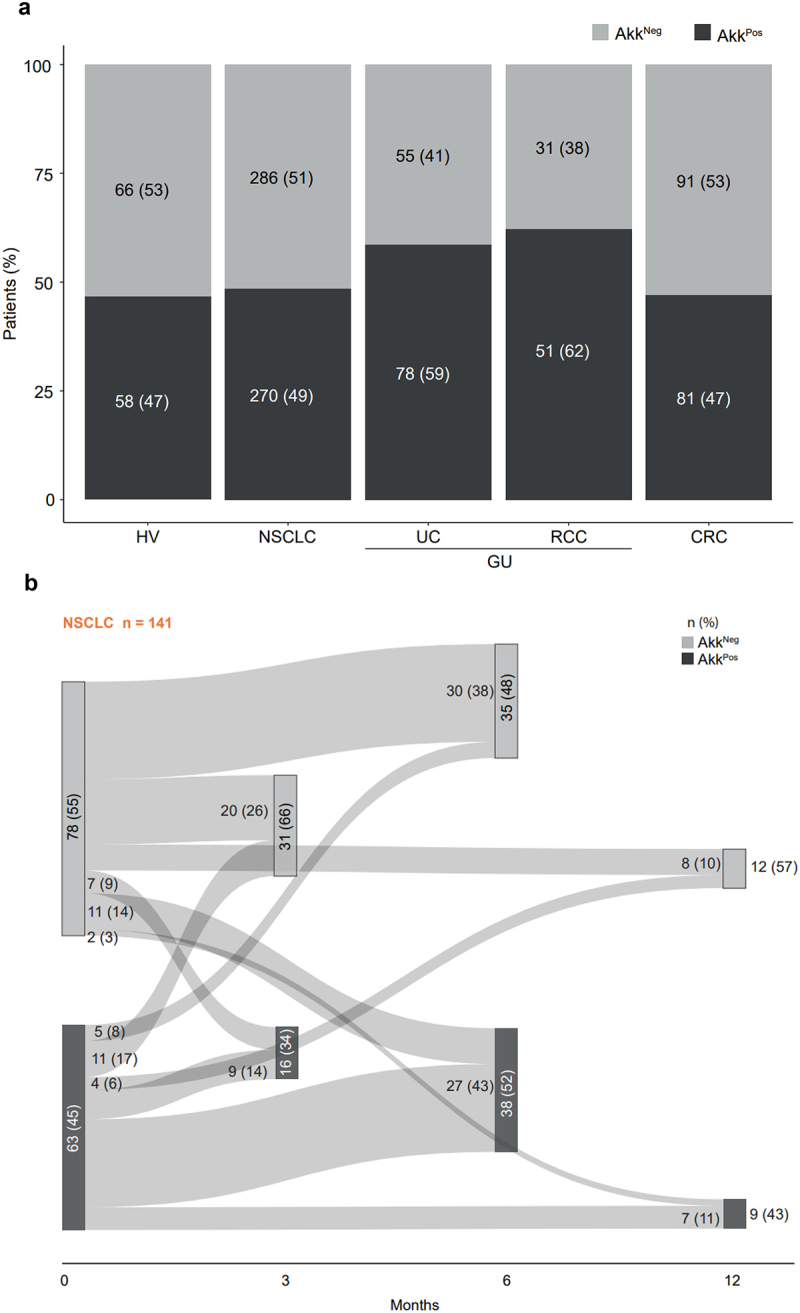
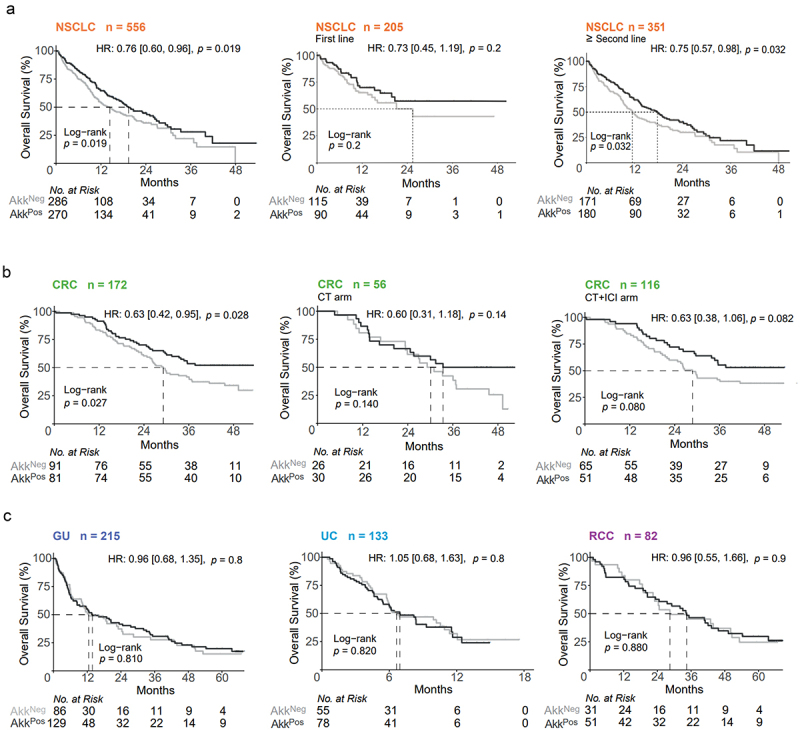
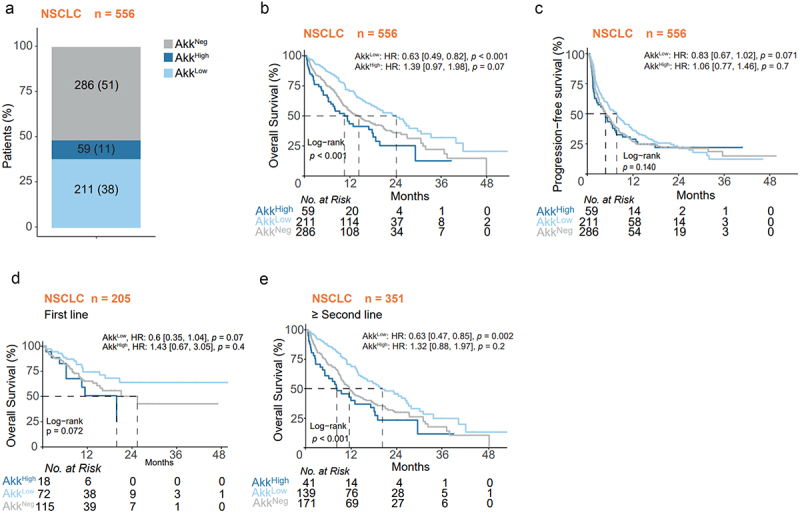
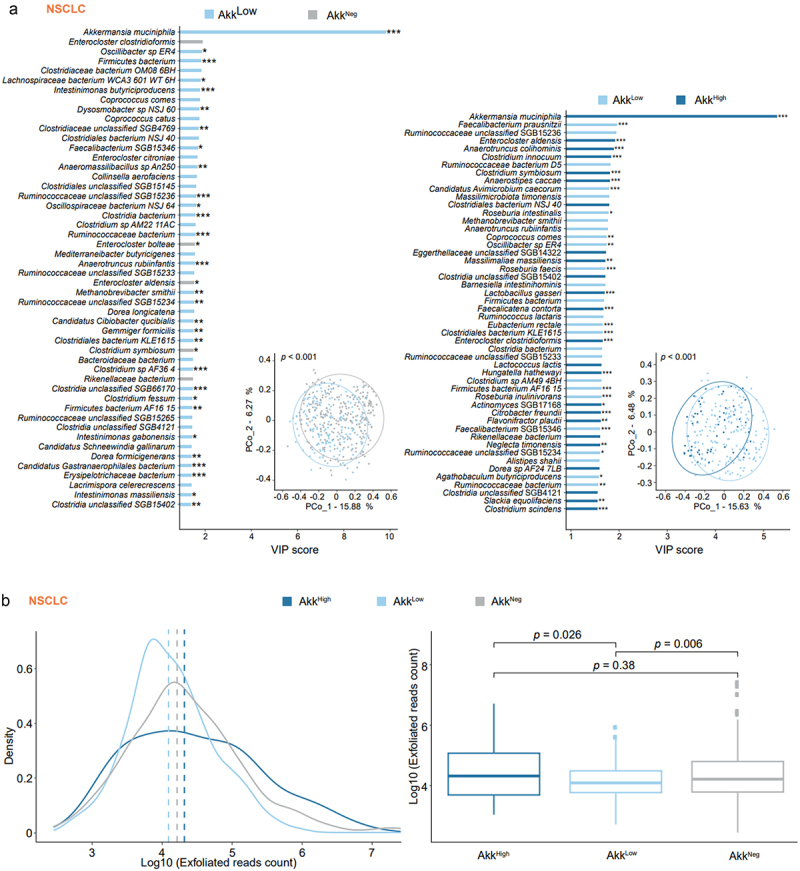
Deviations in the diversity and composition of the gut microbiota are called “gut dysbiosis”. They have been linked to various chronic diseases including cancers and resistance to immunotherapy. Stool shotgun based-metagenomics informs on the ecological composition of the gut microbiota and the prevalence of homeostatic bacteria such as Akkermansia muciniphila (Akk), while determination of the serum addressin MAdCAM-1 instructs on endothelial gut barrier dysfunction. Here we examined patient survival during chemo-immuno-therapy in 955 cancer patients across four independent cohorts of non-small cell lung (NSCLC), genitourinary (GU) and colorectal (CRC) cancers, according to hallmarks of gut dysbiosis. We show that Akk prevalence represents a stable and favorable phenotype in NSCLC and CRC cancer patients. Over-dominance of Akk above the healthy threshold was observed in dismal prognosis in NSCLC and GU and mirrored an immunosuppressive gut ecosystem and excessive intestinal epithelial exfoliation in NSCLC. In CRC, the combination of a lack of Akk and low sMAdCAM-1 levels identified a subset comprising 28% of patients with reduced survival, independent of the immunoscore. We conclude that gut dysbiosis hallmarks deserve integration within the diagnosis toolbox in oncological practice.
Overview
The claims and statistics of this paper haven’t been checked yet.
Free: it reads the open-access text and checks the first 5 claims that cite a source we can check. Create a free account to check every claim.
Integrity signals
Registry
Cites
Statistics
Figures
Verification
Claims the paper makes
The claims and statistics of this paper haven’t been checked yet.
Free: it reads the open-access text and checks the first 5 claims that cite a source we can check. Create a free account to check every claim.
Claims other papers make about this one
Each is checked against this paper’s own text: does it say what the citing paper says it does?
The source backs part of the claim, not all of it — or backs it for a different population, condition or comparison.
In the citing paper
“Although not yet used clinically, stool miRNA panels are a novel dimension of the “exfoliome” of the gut epithelium that could furnish indirect readouts of microbiome status in disease.24,132”
From Gut dysbiosis in oncology: a risk factor for immunoresistance (2026) · doi:10.1038/s41422-025-01212-6 · cites this paper as [24]
Experimental — accuracy not yet measuredIn the citing paper
“Indeed, this trichotomic observation indicates a more complicated, non-linear relationship with anti-tumor immunity.24”
From Gut dysbiosis in oncology: a risk factor for immunoresistance (2026) · doi:10.1038/s41422-025-01212-6 · cites this paper as [24]
In the citing paper
“Our lab recently reported that low baseline sMAdCAM-1 levels are strongly associated with gut dysbiosis in cancer patients.4,24”
From Gut dysbiosis in oncology: a risk factor for immunoresistance (2026) · doi:10.1038/s41422-025-01212-6 · cites this paper as [24]
In the citing paper
“Notably, this “abnormal” relative abundance is accompanied by an increased “exfoliome” (exfoliated host cells and DNA in the stool) and relative dominance of the Enterocloster genus (Birebent et al., 2025).”
From Microbiota-centered interventions to boost immune checkpoint blockade therapies (2025) · cites this paper as Birebent et al., 2025
Self-check
Percentages, sums and reported differences re-computed from the paper’s own numbers.
The self-check needs the paper’s full text.
Citations
Cites
Gut microbiome influences efficacy of PD-1-based immunotherapy against epithelial tumors
Routy, B., Le Chatelier, E., Derosa, L., Duong, C. P. M., Alou, M. T., Daillère, R., Fluckiger, A., Messaoudene, M., Rauber, C., Roberti, M. P., et al. (2018) · Science · doi:10.1126/science.aan3706 · Cited by 5,671 · cited 4×
“10 In particular, Akkermansia muciniphila 5,17 Lachnospiraceae (including Roseburia spp., Coprococcus spp., Dorea spp . among others), and Oscillospiraceae family members (such as Faecalibacterium prausnitzii , R. bromii, R. bicirculans ) were associated with clinical benefit to ICI, while oral…”
InfluentialSelf-citationGut microbiome modulates response to anti-PD-1 immunotherapy in melanoma patients
Gopalakrishnan, V., Spencer, C. N., Nezi, L., Reuben, A., Andrews, M. C., Karpinets, T. V., Prieto, P. A., Vicente, D., Hoffman, K., Wei, S. C., et al. (2018) · Science · doi:10.1126/science.aan4236 · Cited by 4,812
Self-citationCross-talk between Akkermansia muciniphila and intestinal epithelium controls diet-induced obesity
Everard, A., Belzer, C., Geurts, L., Ouwerkerk, J. P., Druart, C., Bindels, L. B., Guiot, Y., Derrien, M., Muccioli, G. G., Delzenne, N. M., et al. (2013) · Proceedings of the National Academy of Sciences · doi:10.1073/pnas.1219451110 · Cited by 4,511 · cited 1×
“41,45 50 A proof-of-concept study with 40 patients, showed that pasteurized, but not alive, MucT (10 10 cells per day for 3 months) markedly improved insulin sensitivity and cholesterol levels, altered metabolic profiles, and promoted lipid beta-oxidation.”
The commensal microbiome is associated with anti-PD-1 efficacy in metastatic melanoma patients
Matson, V., Fessler, J., Bao, R., Chongsuwat, T., Zha, Y., Alegre, M.-L., Luke, J. J., & Gajewski, T. F. (2018) · Science · doi:10.1126/science.aao3290 · Cited by 3,107 · cited 1×
“5,7,19 To minimize these confounding factors, we focused on advanced non-small cell lung cancer (NSCLC), renal cell carcinoma (RCC) and urothelial cancer (UC) which share GOMS, 5,17,18 in particular the immunogenic Akkermansia muciniphila ( Akk) and two species interacting groups (SIG) of bacteria…”
Depommier, C., Everard, A., Druart, C., Plovier, H., Van Hul, M., Vieira-Silva, S., Falony, G., Raes, J., Maiter, D., Delzenne, N. M., et al. (2019) · Nature Medicine · doi:10.1038/s41591-019-0495-2 · Cited by 2,357 · cited 1×
“44,51 This pioneering and successful trial using this food supplement in metabolic disorders paves the way to the development of live biotherapeutics as potential drugs to be applied in the subset of cancer patients lacking endogenous A. muciniphila .”
Plovier, H., Everard, A., Druart, C., Depommier, C., Van Hul, M., Geurts, L., Chilloux, J., Ottman, N., Duparc, T., Lichtenstein, L., et al. (2017) · Nature Medicine · doi:10.1038/nm.4236 · Cited by 2,204
Gut microbiota dysbiosis contributes to the development of hypertension
Li, J., Zhao, F., Wang, Y., Chen, J., Tao, J., Tian, G., Wu, S., Liu, W., Cui, Q., Geng, B., et al. (2017) · Microbiome · doi:10.1186/s40168-016-0222-x · Cited by 1,685 · cited 1×
“43 Cani’s group explored these connections in rodents and in T2D/obese patients in Microbes4U© study.”
Blanco-Míguez, A., Beghini, F., Cumbo, F., McIver, L. J., Thompson, K. N., Zolfo, M., Manghi, P., Dubois, L., Huang, K. D., Thomas, A. M., et al. (2023) · Nature Biotechnology · doi:10.1038/s41587-023-01688-w · Cited by 1,442
Self-citationYachida, S., Mizutani, S., Shiroma, H., Shiba, S., Nakajima, T., Sakamoto, T., Watanabe, H., Masuda, K., Nishimoto, Y., Kubo, M., et al. (2019) · Nature Medicine · doi:10.1038/s41591-019-0458-7 · Cited by 1,429 · cited 1×
“This may be due to distinct microbiota and biofilms associated with the colon tumorigenesis, 53 and/or to a relative loss of health-associated bacteria such as Christensenellaceae, Oscillospiraceae, Lachnospiraceae family members.”
Thomas, A. M., Manghi, P., Asnicar, F., Pasolli, E., Armanini, F., Zolfo, M., Beghini, F., Manara, S., Karcher, N., Pozzi, C., et al. (2019) · Nature Medicine · doi:10.1038/s41591-019-0405-7 · Cited by 1,030 · cited 1×
“54 The shedding of MAdCAM-1, first described 20 years ago, occurs in the gut lymphoid tissues but also in the liver (in humans but not in mice).”
Self-citationDavis, A. A., & Patel, V. G. (2019) · Journal for ImmunoTherapy of Cancer · doi:10.1186/s40425-019-0768-9 · Cited by 960
Tumor Mutational Burden as a Predictive Biomarker in Solid Tumors
Sha, D., Jin, Z., Budczies, J., Kluck, K., Stenzinger, A., & Sinicrope, F. A. (2020) · Cancer Discovery · doi:10.1158/2159-8290.cd-20-0522 · Cited by 859
Li, J., Lin, S., Vanhoutte, P. M., Woo, C. W., & Xu, A. (2016) · Circulation · doi:10.1161/circulationaha.115.019645 · Cited by 775
Derosa, L., Routy, B., Thomas, A. M., Iebba, V., Zalcman, G., Friard, S., Mazieres, J., Audigier-Valette, C., Moro-Sibilot, D., Goldwasser, F., et al. (2022) · Nature Medicine · doi:10.1038/s41591-021-01655-5 · Cited by 685 · cited 4×
“Ancestry, race, ethnicity, socioeconomic were excluded due to France’s Data Protection Act No. 78–17.”
InfluentialSelf-citationHealthspan and lifespan extension by fecal microbiota transplantation into progeroid mice
Bárcena, C., Valdés-Mas, R., Mayoral, P., Garabaya, C., Durand, S., Rodríguez, F., Fernández-García, M. T., Salazar, N., Nogacka, A. M., Garatachea, N., et al. (2019) · Nature Medicine · doi:10.1038/s41591-019-0504-5 · Cited by 661
Wang, L., Tang, L., Feng, Y., Zhao, S., Han, M., Zhang, C., Yuan, G., Zhu, J., Cao, S., Wu, Q., et al. (2020) · Gut · doi:10.1136/gutjnl-2019-320105 · Cited by 630 · cited 1×
“41 47–50 A proof-of-concept study with 40 patients, showed that pasteurized, but not alive, MucT (10 10 cells per day for 3 months) markedly improved insulin sensitivity and cholesterol levels, altered metabolic profiles, and promoted lipid beta-oxidation.”
Microbiome of prebiotic-treated mice reveals novel targets involved in host response during obesity
Everard, A., Lazarevic, V., Gaïa, N., Johansson, M., Ståhlman, M., Backhed, F., Delzenne, N. M., Schrenzel, J., François, P., & Cani, P. D. (2014) · The ISME Journal · doi:10.1038/ismej.2014.45 · Cited by 598
The Microbiota of the Gut in Preschool Children With Normal and Excessive Body Weight
Karlsson, C. L. J., Önnerfält, J., Xu, J., Molin, G., Ahrné, S., & Thorngren‐Jerneck, K. (2012) · Obesity · doi:10.1038/oby.2012.110 · Cited by 534
Bian, X., Wu, W., Yang, L., Lv, L., Wang, Q., Li, Y., Ye, J., Fang, D., Wu, J., Jiang, X., et al. (2019) · Frontiers in Microbiology · doi:10.3389/fmicb.2019.02259 · Cited by 530
Targeting the gut and tumor microbiota in cancer
Park, E. M., Chelvanambi, M., Bhutiani, N., Kroemer, G., Zitvogel, L., & Wargo, J. A. (2022) · Nature Medicine · doi:10.1038/s41591-022-01779-2 · Cited by 496
Self-citationMcCulloch, J. A., Davar, D., Rodrigues, R. R., Badger, J. H., Fang, J. R., Cole, A. M., Balaji, A. K., Vetizou, M., Prescott, S. M., Fernandes, M. R., et al. (2022) · Nature Medicine · doi:10.1038/s41591-022-01698-2 · Cited by 472 · cited 3×
“We then focused on the “exfoliome”, originally described in a melanoma cohort, 19 where noninvasive transcriptomics of shed intestinal epithelial cells were analyzed in fecal samples.”
Derosa, L., Routy, B., Fidelle, M., Iebba, V., Alla, L., Pasolli, E., Segata, N., Desnoyer, A., Pietrantonio, F., Ferrere, G., et al. (2020) · European Urology · doi:10.1016/j.eururo.2020.04.044 · Cited by 398 · cited 1×
“…factors, we focused on advanced non-small cell lung cancer (NSCLC), renal cell carcinoma (RCC) and urothelial cancer (UC) which share GOMS, 5,17,18 in particular the immunogenic Akkermansia muciniphila ( Akk) and two species interacting groups (SIG) of bacteria – one harmful (SIG1) and one…”
InfluentialSelf-citationHakozaki, T., Richard, C., Elkrief, A., Hosomi, Y., Benlaïfaoui, M., Mimpen, I., Terrisse, S., Derosa, L., Zitvogel, L., Routy, B., et al. (2020) · Cancer Immunology Research · doi:10.1158/2326-6066.cir-20-0196 · Cited by 316
Self-citationKlebsiella species: Taxonomy, hypervirulence and multidrug resistance
Dong, N., Yang, X., Chan, E. W.-C., Zhang, R., & Chen, S. (2022) · eBioMedicine · doi:10.1016/j.ebiom.2022.103998 · Cited by 313
Antoniotti, C., Rossini, D., Pietrantonio, F., Catteau, A., Salvatore, L., Lonardi, S., Boquet, I., Tamberi, S., Marmorino, F., Moretto, R., et al. (2022) · The Lancet Oncology · doi:10.1016/s1470-2045(22)00274-1 · Cited by 280
Self-citationStein-Thoeringer, C. K., Saini, N. Y., Zamir, E., Blumenberg, V., Schubert, M.-L., Mor, U., Fante, M. A., Schmidt, S., Hayase, E., Hayase, T., et al. (2023) · Nature Medicine · doi:10.1038/s41591-023-02234-6 · Cited by 255
Ruutu, T., Eriksson, B., Remes, K., Juvonen, E., Volin, L., Remberger, M., Parkkali, T., Hägglund, H., & Ringdén, O. (2002) · Blood · doi:10.1182/blood-2001-12-0159 · Cited by 251 · cited 1×
“57,58 While FXR inhibition reduces GVHD, it is tempting to speculate that FXR activation could enhance ICI effects in settings of gut dysbiosis or low MAdCAM-1.”
A microbiota-modulated checkpoint directs immunosuppressive intestinal T cells into cancers
Fidelle, M., Rauber, C., Alves Costa Silva, C., Tian, A.-L., Lahmar, I., de La Varende, A.-L. M., Zhao, L., Thelemaque, C., Lebhar, I., Messaoudene, M., et al. (2023) · Science · doi:10.1126/science.abo2296 · Cited by 243 · cited 7×
“54 The shedding of MAdCAM-1, first described 20 years ago, occurs in the gut lymphoid tissues but also in the liver (in humans but not in mice).”
InfluentialSelf-citationRoberti, M. P., Yonekura, S., Duong, C. P. M., Picard, M., Ferrere, G., Tidjani Alou, M., Rauber, C., Iebba, V., Lehmann, C. H. K., Amon, L., et al. (2020) · Nature Medicine · doi:10.1038/s41591-020-0882-8 · Cited by 208
Self-citationDerosa, L., Iebba, V., Silva, C. A. C., Piccinno, G., Wu, G., Lordello, L., Routy, B., Zhao, N., Thelemaque, C., Birebent, R., et al. (2024) · Cell · doi:10.1016/j.cell.2024.05.029 · Cited by 198 · cited 2×
“23 Another simple method to assess gut dysbiosis involves a gut-specific marker of endothelial barrier integrity, the soluble mucosal addressin cell adhesion molecule-1 (sMAdCAM-1).”
Self-citationIntestinal microbiota influences clinical outcome and side effects of early breast cancer treatment
Terrisse, S., Derosa, L., Iebba, V., Ghiringhelli, F., Vaz-Luis, I., Kroemer, G., Fidelle, M., Christodoulidis, S., Segata, N., Thomas, A. M., et al. (2021) · Cell Death & Differentiation · doi:10.1038/s41418-021-00784-1 · Cited by 172
Self-citationMicrobiota-Centered Interventions: The Next Breakthrough in Immuno-Oncology?
Derosa, L., Routy, B., Desilets, A., Daillère, R., Terrisse, S., Kroemer, G., & Zitvogel, L. (2021) · Cancer Discovery · doi:10.1158/2159-8290.cd-21-0236 · Cited by 170
Self-citationA gut microbial signature for combination immune checkpoint blockade across cancer types
Gunjur, A., Shao, Y., Rozday, T., Klein, O., Mu, A., Haak, B. W., Markman, B., Kee, D., Carlino, M. S., Underhill, C., et al. (2024) · Nature Medicine · doi:10.1038/s41591-024-02823-z · Cited by 165 · cited 1×
“…benefit to ICI, while oral taxa ( Streptococcus spp., Veillonella spp., Actinomyces spp.), Hungatella hathewayi , Proteobacteria spp . and 19–22 The development of diagnostic tools for gut dysbiosis has been hampered by confounding factors affecting the consensual definition of clinically…”
Ma, S., Shungin, D., Mallick, H., Schirmer, M., Nguyen, L. H., Kolde, R., Franzosa, E., Vlamakis, H., Xavier, R., & Huttenhower, C. (2022) · Genome biology · doi:10.1186/s13059-022-02753-4 · Cited by 164
Karcher, N., Nigro, E., Punčochář, M., Blanco-Míguez, A., Ciciani, M., Manghi, P., Zolfo, M., Cumbo, F., Manara, S., Golzato, D., et al. (2021) · Genome Biology · doi:10.1186/s13059-021-02427-7 · Cited by 159
Self-citationGut OncoMicrobiome Signatures (GOMS) as next-generation biomarkers for cancer immunotherapy
Thomas, A. M., Fidelle, M., Routy, B., Kroemer, G., Wargo, J. A., Segata, N., & Zitvogel, L. (2023) · Nature Reviews Clinical Oncology · doi:10.1038/s41571-023-00785-8 · Cited by 141 · cited 1×
“10 In particular, Akkermansia muciniphila 5,17 Lachnospiraceae (including Roseburia spp., Coprococcus spp., Dorea spp . among others), and Oscillospiraceae family members (such as Faecalibacterium prausnitzii , R. bromii, R. bicirculans ) were associated with clinical benefit to ICI, while oral…”
Self-citationMSPminer: abundance-based reconstitution of microbial pan-genomes from shotgun metagenomic data
Plaza Oñate, F., Le Chatelier, E., Almeida, M., Cervino, A. C. L., Gauthier, F., Magoulès, F., Ehrlich, S. D., & Pichaud, M. (2019) · Bioinformatics · doi:10.1093/bioinformatics/bty830 · Cited by 135
Nassar, A. H., Adib, E., Abou Alaiwi, S., El Zarif, T., Groha, S., Akl, E. W., Nuzzo, P. V., Mouhieddine, T. H., Perea-Chamblee, T., Taraszka, K., et al. (2022) · Cancer Cell · doi:10.1016/j.ccell.2022.08.022 · Cited by 121
Yonekura, S., Terrisse, S., Alves Costa Silva, C., Lafarge, A., Iebba, V., Ferrere, G., Goubet, A.-G., Fahrner, J.-E., Lahmar, I., Ueda, K., et al. (2022) · Cancer Discovery · doi:10.1158/2159-8290.cd-21-0999 · Cited by 112 · cited 1×
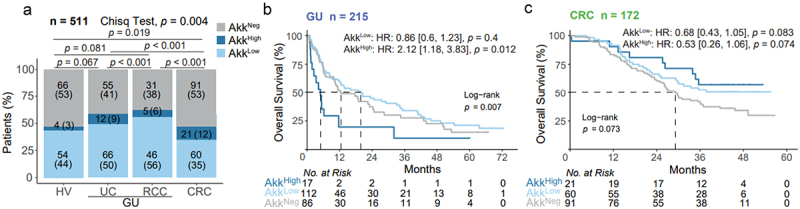
“23,52 In CRC patients, where 12% are Akk9226 High and 53% Akk9226 Neg , only patients with Akk9226 Neg exhibited a reduced overall survival.”
Self-citationGhiringhelli, F., Bibeau, F., Greillier, L., Fumet, J.-D., Ilie, A., Monville, F., Laugé, C., Catteau, A., Boquet, I., Majdi, A., et al. (2023) · EBioMedicine · doi:10.1016/j.ebiom.2023.104633 · Cited by 107 · cited 1×
“38”
Self-citationRuutu, T., Juvonen, E., Remberger, M., Remes, K., Volin, L., Mattsson, J., Nihtinen, A., Hägglund, H., & Ringdén, O. (2014) · Biology of Blood and Marrow Transplantation · doi:10.1016/j.bbmt.2013.10.014 · Cited by 84 · cited 1×
“57,58 While FXR inhibition reduces GVHD, it is tempting to speculate that FXR activation could enhance ICI effects in settings of gut dysbiosis or low MAdCAM-1.”
Terrisse, S., Goubet, A.-G., Ueda, K., Thomas, A. M., Quiniou, V., Thelemaque, C., Dunsmore, G., Clave, E., Gamat-Huber, M., Yonekura, S., et al. (2022) · Journal for ImmunoTherapy of Cancer · doi:10.1136/jitc-2021-004191 · Cited by 80
Self-citationAkkermansia muciniphila Improves Host Defense Against Influenza Virus Infection
Hu, X., Zhao, Y., Yang, Y. P., Gong, W., Sun, X., Yang, L., Zhang, Q., & Jin, M. (2021) · Frontiers in Microbiology · doi:10.3389/fmicb.2020.586476 · Cited by 79
Akkermansia muciniphila Exerts Strain-Specific Effects on DSS-Induced Ulcerative Colitis in Mice
Liu, Q., Lu, W., Tian, F., Zhao, J., Zhang, H., Hong, K., & Yu, L. (2021) · Frontiers in Cellular and Infection Microbiology · doi:10.3389/fcimb.2021.698914 · Cited by 78 · cited 1×
“41 47–50 A proof-of-concept study with 40 patients, showed that pasteurized, but not alive, MucT (10 10 cells per day for 3 months) markedly improved insulin sensitivity and cholesterol levels, altered metabolic profiles, and promoted lipid beta-oxidation.”
Lindner, S., Miltiadous, O., Ramos, R. J. J. F., Paredes, J., Kousa, A. I., Dai, A., Fei, T., Lauder, E., Frame, J., Waters, N. R., et al. (2024) · Nature Microbiology · doi:10.1038/s41564-024-01617-w · Cited by 77 · cited 1×
“56 Chenodeoxycholic acid (CDCA) stimulated T cell activation, while UDCA inhibited it, paving the way to the potential efficacy of UDCA to reduce alloreactivity-related death rates during allogeneic hematopoietic stem cell transplantation.”
Depommier, C., Everard, A., Druart, C., Maiter, D., Thissen, J.-P., Loumaye, A., Hermans, M. P., Delzenne, N. M., de Vos, W. M., & Cani, P. D. (2021) · Gut Microbes · doi:10.1080/19490976.2021.1994270 · Cited by 55 · cited 1×
“44,51 This pioneering and successful trial using this food supplement in metabolic disorders paves the way to the development of live biotherapeutics as potential drugs to be applied in the subset of cancer patients lacking endogenous A. muciniphila .”
Daillère, R., Derosa, L., Bonvalet, M., Segata, N., Routy, B., Gariboldi, M., Budinská, E., De Vries, I. J. M., Naccarati, A. G., Zitvogel, V., et al. (2020) · OncoImmunology · doi:10.1080/2162402x.2020.1774298 · Cited by 38
Self-citationBaltussen, J. C., Welters, M. J. P., Verdegaal, E. M. E., Kapiteijn, E., Schrader, A. M. R., Slingerland, M., Liefers, G., van der Burg, S. H., Portielje, J. E. A., & de Glas, N. A. (2021) · Cancers · doi:10.3390/cancers13246366 · Cited by 34 · cited 1×
“4 12–16 Studies on Gut OncoMicrobiome Signatures (GOMS) in meta-analyses reveal differences between cancer patients and healthy volunteers (HV), potentially aiding in the identification of responders from non-responders to ICI.”
Bacterial DNAemia is associated with serum zonulin levels in older subjects
Gargari, G., Mantegazza, G., Taverniti, V., Bo’, C. D., Bernardi, S., Andrés‐Lacueva, C., González‐Domínguez, R., Kroon, P. A., Winterbone, M. S., Cherubini, A., et al. (2021) · Scientific Reports · doi:10.1038/s41598-021-90476-0 · Cited by 32
Dietary modulation of the gut microbiome as an immunoregulatory intervention
Matson, V. Z., & Gajewski, T. F. (2022) · Cancer Cell · doi:10.1016/j.ccell.2022.02.014 · Cited by 28
Bioassay detects soluble MAdCAM‐1 in body fluids
Leung, E. Y., Lehnert, K., Kanwar, J. R., Yang, Y., Mon, Y., McNeil, H. P., & Krissansen, G. W. (2004) · Immunology and Cell Biology · doi:10.1111/j.0818-9641.2004.01247.x · Cited by 26 · cited 2×
“55 In tumor-bearing mice, secondary bile acids (like lithocholic acid (LCA) and ursodeoxycholic acid (UDCA) downregulate ileal MAdCAM-1, 24 potentially affecting ICI efficacy.”
Gut Microbiota–Related Biomarkers in Immuno-Oncology
Silva, C. A. C., Fidelle, M., Almonte, A. A., Derosa, L., & Zitvogel, L. (2025) · Annual Review of Pharmacology and Toxicology · doi:10.1146/annurev-pharmtox-061124-102218 · Cited by 22
Self-citationAntoniotti, C., Rossini, D., Pietrantonio, F., Salvatore, L., Marmorino, F., Ambrosini, M., Lonardi, S., Bensi, M., Moretto, R., Tamberi, S., et al. (2023) · Journal of Clinical Oncology · doi:10.1200/jco.2023.41.16_suppl.3500 · Cited by 19 · cited 1×
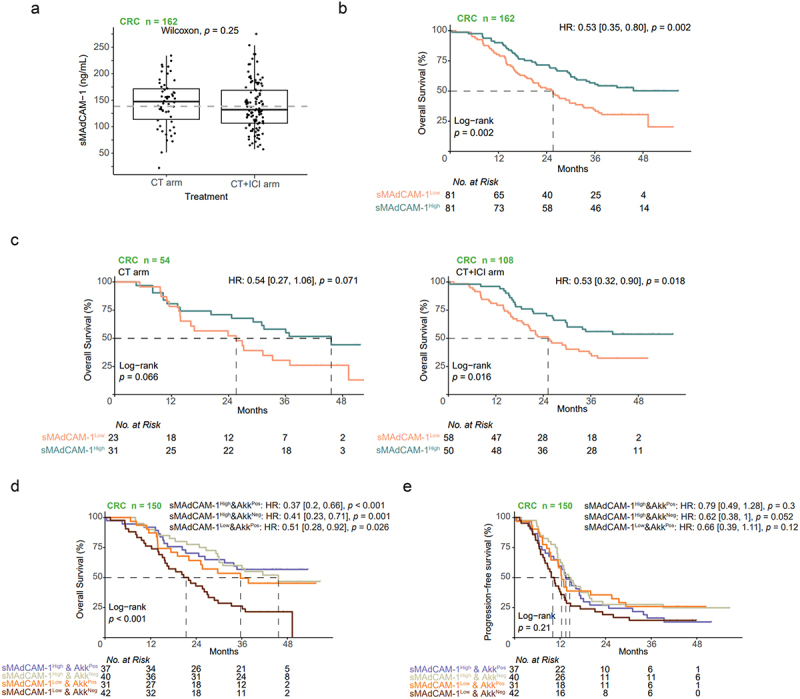
“In other words, an interaction between chemoimmunotherapy arm and Immunoscore was observed, as previously described, 33 but not with sMAdCAM-1 nor Akk levels.”
Self-citationUpdated Metagenomic Species Pan-genomes (MSPs) of the human gastrointestinal microbiota
Plaza Onate, F., Pons, N., Gauthier, F., Almeida, M., Ehrlich, S. D., & Chatelier, E. L. (2021) · Recherche Data Gouv France · doi:10.15454/flanup · Cited by 17
Complete Genome Sequence of Klebsiella pneumoniae Jumbo Phage Miami
Mora, D., Lessor, L. E., Le, T., Clark, J., Gill, J. J., & Liu, M. (2021) · Microbiology Resource Announcements · doi:10.1128/mra.01404-20 · Cited by 14
A catalog of genes and species of the human oral microbiota
Chatelier, E. L., Almeida, M., Plaza Oñate, F., Pons, N., Gauthier, F., Ghozlane, A., Ehrlich, S. D., Witherden, E. A., & Gomez-Cabrero, D. (2021) · Recherche Data Gouv France · doi:10.15454/wq4utv · Cited by 14
Sonpavde, G., Sternberg, C. N., Loriot, Y., Marabelle, A., Lee, J., Fléchon, A., Roubaud, G., Pouessel, D., Zagonel, V., Calabrò, F., et al. (2022) · European Journal of Cancer · doi:10.1016/j.ejca.2021.12.012 · Cited by 13
Akkermansia beyond muciniphila - emergence of new species Akkermansia massiliensis sp. nov.
Kumar, R., Hasselwander, O., Kane, H., & Hibberd, A. A. (2024) · Microbiome Research Reports · doi:10.20517/mrr.2024.28 · Cited by 11
Research works printed but not linked: 1
- Yonekura S. Cancer induces a stress ileopathy depending on B-adrenergic receptors and promoting dysbiosis that contribute to carcinogenesis. Cancer Discov Candisc. 2021; doi: 10.1158/ 2159-8290.CD-21-0999 . · DOI · Paper page
Cited by
Duttagupta, S., Messaoudene, M., Hunter, S., Desîlets, A., Jamal, R., Mihalcioiu, C. L. D., Belkaïd, W., Marcoux, N., Fidelle, M., Suissa, D., et al. (2026) · Nature Medicine · doi:10.1038/s41591-025-04186-5 · Cited by 126
“Among R patients, a concomitant relative depletion of deleterious bacteria 14,30,31 , including E. lavalensis , Clostridium scindens and C. innocuum , was observed after FMT compared to baseline (Fig.”
InfluentialSelf-citationPorcari, S., CICCARESE, C., Heidrich, V., Rondinella, D., Quaranta, G., Severino, A., Arduini, D., Buti, S., Fornarini, G., Primi, F., et al. (2026) · Nature Medicine · doi:10.1038/s41591-025-04189-2 · Cited by 71
“Notably, an overabundance of A. muciniphila was previously associated with resistance to ICIs and was highlighted as an indirect sign of dysbiosis (as observed in patients with a history of antibiotic exposure) 24,27 .”
InfluentialSelf-citationChen, C., Su, Q., Zi, M., Hua, X., & Zhang, Z. (2025) · npj Biofilms and Microbiomes · doi:10.1038/s41522-025-00818-3 · Cited by 51
“Clinically, its depletion is associated with gut dysbiosis and reduced survival in CRC patients, underscoring its potential as both a therapeutic target and prognostic biomarker 93 .”
Gut dysbiosis in oncology: a risk factor for immunoresistance
(2026) · doi:10.1038/s41422-025-01212-6 · Cited by 24
“24 In this review, we examine the evolving conceptual frameworks for de fi ning and measuring dysbiosis in the context of ICI therapy.”
InfluentialSelf-citationMicrobiota-centered interventions to boost immune checkpoint blockade therapies
Almonte, A. A., Thomas, S., & Zitvogel, L. (2025) · Journal of Experimental Medicine · doi:10.1084/jem.20250378 · Cited by 19
Self-citation
Metadata
- Authors
- Birebent, R., Drubay, D., Alves Costa Silva, C., Marmorino, F., Vitali, G., Piccinno, G., Hurtado, Y., Bonato, A., Belluomini, L., Messaoudene, M., Routy, B., Fidelle, M., Zalcman, G., Mazieres, J., Audigier-Valette, C., Moro-Sibilot, D., Goldwasser, F., Scherpereel, A., Pegliasco, H., Ghiringhelli, F., Reni, A., Barlesi, F., Albiges, L., Planchard, D., Martinez, S., Besse, B., Segata, N., Cremolini, C., Zitvogel, L., Iebba, V., & Derosa, L.
- Affiliations
- Inserm (FR)
- Université Paris-Saclay (FR)
- Gustave Roussy Cancer Campus, ClinicObiome
- University of Pisa (IT)
- University of Trento (IT)
- University of Verona (IT)
- Centre Hospitalier de l’Université de Montréal (CA)
- Bichat-Claude Bernard Hospital, AP-HP, Université Paris Cité
- Centre Hospitalier Universitaire de Toulouse
- Centre Hospitalier Intercommunal Toulon-La Seyne-sur-Mer (FR)
- Centre Hospitalier Universitaire
- Université Paris Cité (FR)
- European Hospital (IT)
- Centre Hospitalier Intercommunal Aix-Pertuis (FR)
- Institut Gustave Roussy (FR)
- Corresponding author
- Derosa, Lisa
- ORCID
- Birebent, Roxanne
- Drubay, Damien
- Marmorino, Federica
- Piccinno, Gianmarco
- Bonato, Adele
- Belluomini, Lorenzo
- Messaoudene, Meriem
- Routy, Bertrand
- Fidelle, Marine
- Audigier-Valette, Clarisse
- Goldwasser, François
- Scherpereel, Arnaud
- Ghiringhelli, François
- Reni, Anna
- Albiges, Laurence
- Planchard, David
- Besse, Benjamin
- Segata, Nicola
- Cremolini, Chiara
- Zitvogel, Laurence
- Iebba, Valerio
- Derosa, Lisa
- Venue
- OncoImmunology
- Publisher
- Informa UK Limited
- Published
- 2025-04-06
- Volume
- 14
- Issue
- 1
- Pages
- 2484880-2484880
- ISSN
- 2162-4011 (ISSN-L)
- 2162-402X
- PMC
- PMC11980478
- OpenAlex
- W4409204557
- Cited by
- 21
- References
- 58
- Citations by year
- 2026: 15 · 2025: 6
- FWCI
- 6.31
- Type
- journal article
- Language
- en
- Open access
- gold
- doi.org
- Licence
- Locations
- OncoImmunology (publishedVersion, cc-by-nc)
- PubMed Central (publishedVersion, cc-by-nc)
- PubMed (publishedVersion)
- HAL (submittedVersion, cc-by-nc)
- CINECA IRIS Institutial research information system (University of Pisa) (submittedVersion)
- ArTS Archivio della ricerca di Trieste (University of Trieste https://www.units.it/) (submittedVersion, cc-by-nc)
- DOAJ (DOAJ: Directory of Open Access Journals) (submittedVersion, cc-by-sa)
- Iris (University of Trento) (submittedVersion, cc-by-nc)
- Funders
- European Research Council
- Topics
- Life Sciences › Biochemistry, Genetics and Molecular Biology › Molecular Biology › Gut microbiota and health
- Health Sciences › Medicine › Oncology › Cancer Immunotherapy and Biomarkers
- Health Sciences › Medicine › Gastroenterology › Gastrointestinal motility and disorders
- Keywords
- gut dysbiosis, Akkermansia muciniphila, MAdCAM-1, intestinal barrier dysfunction, cancer survival, non-small cell lung cancer, colorectal cancer, genitourinary cancer, immune score, immunosuppression, prognostic factors, gut microbiota
- MeSH terms
- Gastrointestinal Microbiome, Akkermansia, Aged, Carcinoma, Non-Small-Cell Lung, Female, Humans, Lung Neoplasms, Male, Middle Aged, Prognosis, Urogenital Neoplasms, Colorectal Neoplasms, Dysbiosis
About these checks
Registry, retraction, Cites and statistics results are computed, not judged, with one exception: a printed reference that no index lists is read once by a model before it counts as a citation error. Claims are extracted by a model and kept only when their quote appears verbatim in the text; each cited source is then checked, with a model’s help, for whether it says what the claim relies on. Those verdicts can be wrong — read the claim’s quote and the cited source before relying on one.
Statistics and arithmetic are recomputed, not judged.
Confidence bands are shown only for fields calibrated on our annotated test set. None is calibrated yet, so no band is shown.
What counts as a claim ›How we measure confidence ›How we check this ›
Are you an author, or do you see a problem with this page? Request a review
Data sources
Bibliographic data: Semantic Scholar, OpenAlex, Crossref.
Contains information from the Semantic Scholar Academic Graph Datasets, made available under the ODC Attribution License (ODC-BY 1.0).
Semantic Scholar’s data is described in: Kinney, R., et al. (2023). The Semantic Scholar Open Data Platform. arXiv:2301.10140.
