

Welcome to the destination! Social media influencers as cogent determinant of travel decision: A systematic literature review and conceptual framework
Open accessThe DOI matches its Crossref record; 95 of the 95 references it cites were found in a registry or an index; 9 of the 38 sources its claims cite were checked for support.
Abstract
Sharing online content on social media platforms has opened the door to a new era of marketing communication in many fields, including tourism. This paper concentrates on the role of social media influencers’ (SMI’s) content, their follower ratio and regular engagement in travel decision-making keeping trust as a mediating factor. Emerald, Google Scholar, ResearchGate, and Scopus are used to conduct a comprehensive literature search. To do so, this study conducts a comprehensive systematic review of 36 publications on social media, influencers and travel decision-making using the Scientific Procedures and Rationales for Systematic Literature Reviews protocol. The proposed conceptual model offers insights into how travellers embrace the attributes of social media influencers while making travel decisions. Building on the framework and the respective constructs proposed in the present study contributes to augmenting social engagement characteristics of SMIs to strengthen the tourism business ecosystem for the future. There is a need for a partnership between SMIs and destination marketing organisations (DMOs), which would tap into their vast potential. DMOs can leverage the power of SMIs to connect with potential travellers and cultivate dependable relationships with their followers by understanding the relationship between the elements that affect travellers’ decision-making during the trip planning process.
Overview
CoChat Summary
TL;DR
This systematic review synthesizes 36 studies on social media influencers and travel decisions, proposing a conceptual model in which content generation/sharing, follower ratio, post reviews, and influencer replies build trust and influence travel decision-making. It argues trust mediates the relationship between SMI attributes and travel decisions, with implications for destination marketing organisations.
Key findings
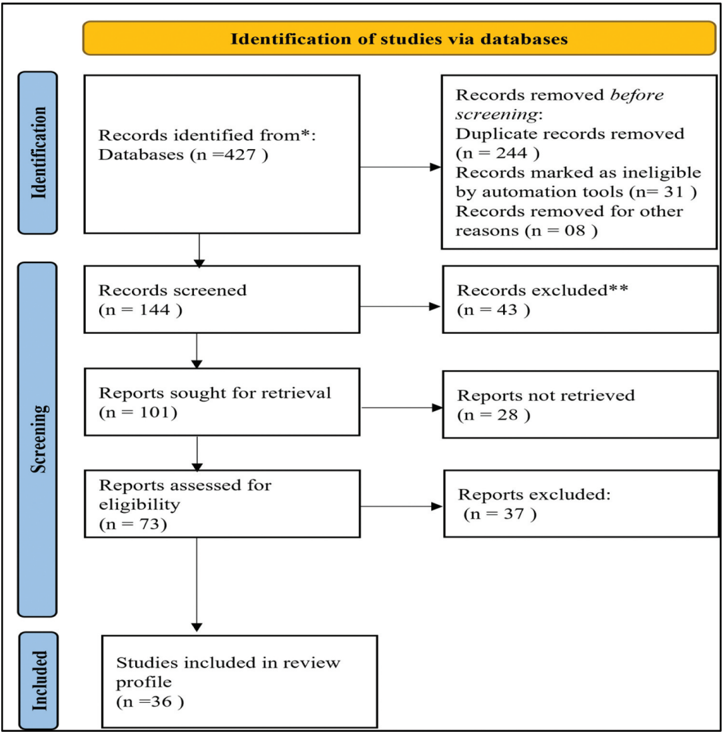
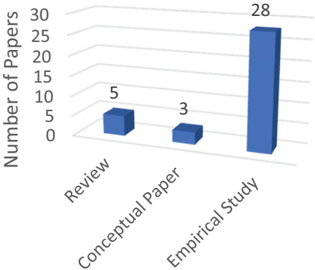
- The review included 36 primary studies from an initial 427 articles; among the reviewed studies, 28 were empirical, 3 conceptual, and 5 review papers. The paper reports 101 total references, including 6 from relevant organisational reports.
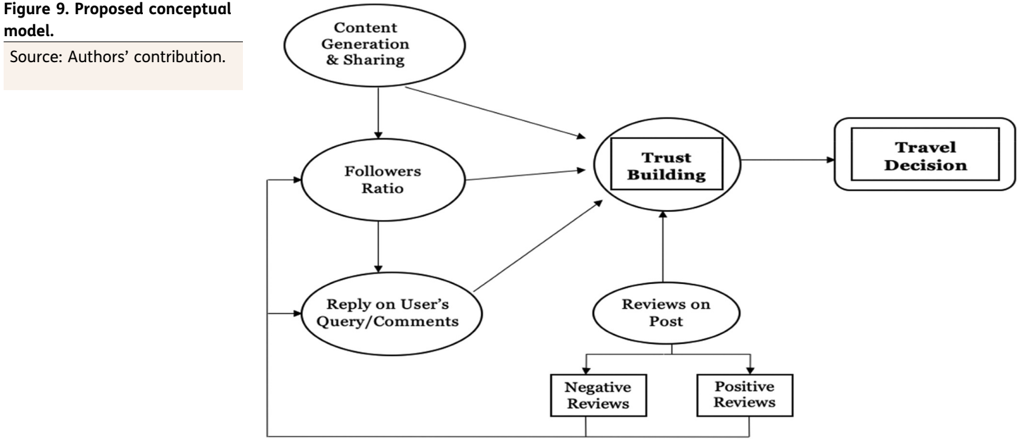
- The proposed conceptual model identifies content generation and sharing, follower ratio, reviews on influencers’ posts, and influencers’ replies to users’ queries as antecedents of trust building, which has a direct relationship with travel decision-making; trust is positioned as a mediating factor.
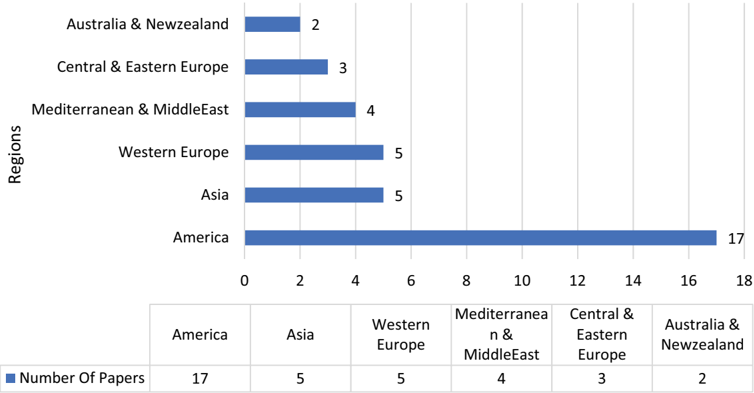
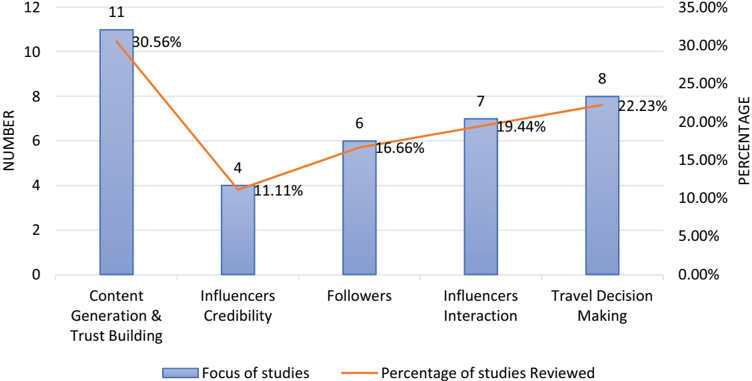
- Focus of reviewed studies: content generation & trust building 11 (30.56%), travel decision-making 8 (22.23%), influencers interaction 7 (17.44%), followers 6 (16.66%), and influencers’ credibility 4 (11.11%). Regionally, America accounted for 17 studies, Asia 5, Western Europe 5, Mediterranean & Middle East 4, Central & Eastern Europe 3, and Australia & New Zealand 2.
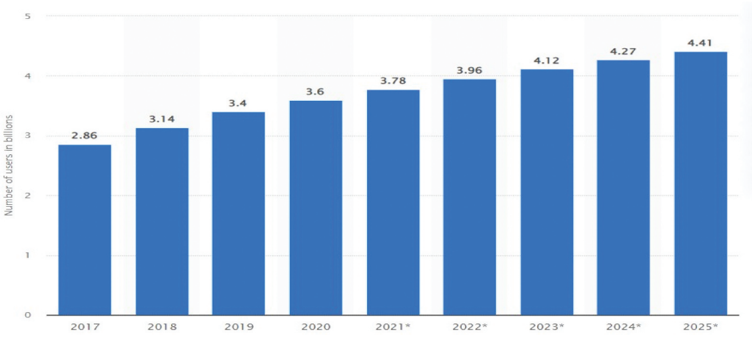
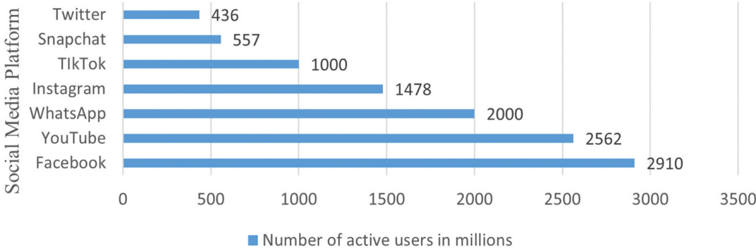
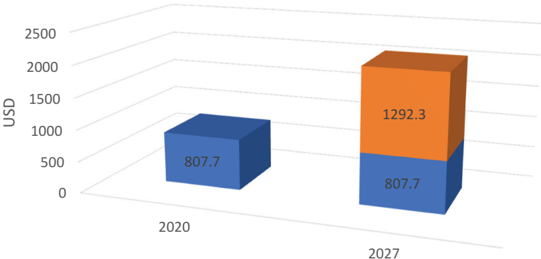
- Context reported: more than 3.96 billion people worldwide used social media in January 2022, compared with 3.40 billion in 2019, with an anticipated 4.41 billion users by 2025; the online trip booking market was expected to grow from US$807.7 billion in 2020 to US$2.1 trillion by 2027 at a CAGR of 14.3%.
Methods
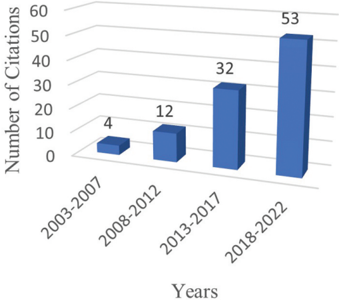
- Systematic literature review following Denyer and Tranfield’s five-step methodology and the SPAR-4-SLR protocol; databases included Emerald, Scopus, ResearchGate, and Google Scholar, with Boolean keyword searches and a publication window of 2003–2022.
- Screening reduced 427 initial articles to 144 after filters, then to 73 after title/abstract review, and finally to 36 primary studies after full-text evaluation. Two authors independently coded articles, with disagreements resolved through discussion; Fleiss’ Kappa was 0.86, and citation chaining was used.
- Analysis involved descriptive tabulations, statistics, and discussion, leading to a proposed conceptual framework based on the reviewed literature.
Limitations
- Stated in the paper: the research is purely a systematic literature review limited to published research articles; inclusion and exclusion criteria are generally based on the authors’ understanding of the literature and generally lack empirical results, though the authors mitigated this by proposing a verifiable conceptual model.
- Evident from the text: the conceptual model is proposed but not empirically tested; the future research agenda advises researchers to validate the proposed conceptual model empirically.
- Evident from the text: the search relied on selected databases and English-language, peer-reviewed published articles, which may limit coverage of non-English or non-peer-reviewed literature.
Model-written summary. Check it against the paper before relying on it.
Integrity signals
Registry
Cites
Statistics
Figures







Verification
Claims the paper makes
6 Valid · 5 Not valid · 18 Not checked · 31 Own results and interpretations
The cited sources support only part of this claim — read each source’s verdict below.
In the paper
“The relationship between followers and influencers has a good impact on emotional dimensions as well”
§ Welcome to the destination! Social media influencers as cogent determinant of travel decision: A systematic literature review and conceptual framework > 7. Discussion and conclusion
What the sources say
- Not matchedcites Cole, 2019
An author–year citation the paper’s reference list doesn’t settle. We don’t search these by name.
- Partly supportedcites Purwandari et al., 2022 matched to “The Effect of Interaction between Followers and Influencers on Intention to Follow Travel Recommendations from Influencers in Indonesia Based on Follower-Influencer Experience and Emotional Dimension” (2022) sourceExperimental — accuracy not yet measured
Section 3.2.4 proposes that follower–influencer relationships could improve pleasure, arousal, and dominance. But the Discussion (Section 5) reports an effect on pleasure, not on arousal or dominance. The claim is therefore too broad if it refers to emotional dimensions as a whole. (LLM, conf=0.88)
plainstates a cause- Asserted: passes — The authors put it forward as true.
- Checkable: passes — It can be checked against evidence.
- Load-bearing: unclear — It is unclear whether the paper’s conclusions depend on it.
- Based: passes — The paper gives a reason why it holds.
- Not matched
The cited sources support only part of this claim — read each source’s verdict below.
In the paper
“The interactive relationship between influencers and their respective followers encourages the need in the mind of the followers to utilize or follow what the influencer does (De Veirman et al., 2017;Taillon et al., 2020;X. W. Wang et al., 2019).”
§ Welcome to the destination! Social media influencers as cogent determinant of travel decision: A systematic literature review and conceptual framework > 7. Discussion and conclusion
What the sources say
- Partly supportedcites De Veirman et al., 2017 matched to “Marketing through Instagram influencers: the impact of number of followers and product divergence on brand attitude” (2017) sourceExperimental — accuracy not yet measured
The Introduction describes influencers as trusted tastemakers whose product posts can affect their audience, and the theoretical background discusses social influence on consumption. Neither section establishes that an interactive influencer–follower relationship creates a need for followers to use products or imitate the influencer. (LLM, conf=0.78)
- Not checked — no full text of the sourcecites Taillon et al., 2020 matched to “Understanding the relationships between social media influencers and their followers: the moderating role of closeness” (2020) source
- Not checked — no full text of the sourcecites X. W. Wang et al., 2019 matched to “The relationships among community experience, community commitment, brand attitude, and purchase intention in social media” (2019) source
plainstates a cause- Asserted: passes — The authors put it forward as true.
- Checkable: passes — It can be checked against evidence.
- Load-bearing: passes — The paper’s conclusions depend on it.
- Based: passes — The paper gives a reason why it holds.
- Partly supported
Every source the paper cites for this claim was checked and supports it.
In the paper
“Likeability is an essential quality for the influencer (De Veirman et al., 2017).”
§ Welcome to the destination! Social media influencers as cogent determinant of travel decision: A systematic literature review and conceptual framework > 7. Discussion and conclusion
What the sources say
- Supportedcites De Veirman et al., 2017 matched to “Marketing through Instagram influencers: the impact of number of followers and product divergence on brand attitude” (2017) source
The Introduction says that, to increase a marketing message’s impact, brands should seek a likeable influencer rather than consider reach alone. This supports the claim that likeability is an important quality for an influencer. (LLM, conf=0.91)
plain- Asserted: passes — The authors put it forward as true.
- Checkable: passes — It can be checked against evidence.
- Load-bearing: unclear — It is unclear whether the paper’s conclusions depend on it.
- Based: passes — The paper gives a reason why it holds.
- Supported
A result the paper reports from its own data — it cites no other source for it, so there is none to check. The quote shows it is in the paper.
In the paper
“Out of which profile of 36 studies directly related to this research are included for a systematic review based on identification, screening and inclusion and exclusion criteria using the Prisma framework.”
§ Welcome to the destination! Social media influencers as cogent determinant of travel decision: A systematic literature review and conceptual framework > 4.1. Study characteristics
plain- Asserted: passes — The authors put it forward as true.
- Checkable: passes — It can be checked against evidence.
- Load-bearing: passes — The paper’s conclusions depend on it.
- Based: passes — The paper gives a reason why it holds.
- Rests on an assumption not shown here.
A result the paper states — it cites no source for it, so there is none to check. The quote shows it is in the paper.
In the paper
“This resulted in a total of 36 primary studies used as the basis of this SLR.”
§ Welcome to the destination! Social media influencers as cogent determinant of travel decision: A systematic literature review and conceptual framework > 3.3.1. Study selection and evaluation
plain- Asserted: passes — The authors put it forward as true.
- Checkable: passes — It can be checked against evidence.
- Load-bearing: passes — The paper’s conclusions depend on it.
- Based: passes — The paper gives a reason why it holds.
- Rests on an assumption not shown here.
9 more claims
Create a free account to see all 60 claims and to verify the 8 references still open.
- It may state two separate claims as one. 23
- Borderline: one of the tests for a substantial claim is unclear. 1
- Probably not a substantial claim. 38
Self-check
Percentages, sums and reported differences re-computed from the paper’s own numbers.
Rated minor: it would not touch a result — a value no result rests on, a p-value that stays on the same side of the significance level, or a conflict that is clerical, resolved elsewhere in the paper, or outside its own findings.
In the paper
“7(17.44%)studies focusing on Travel Decision-Making and Influencers Interaction, respectively.”
§ Welcome to the destination! Social media influencers as cogent determinant of travel decision: A systematic literature review and conceptual framework > 11. Future research agenda
Reported 17.44 · recomputed 19.444444
Citations
Cites
Users of the world, unite! The challenges and opportunities of Social Media
Kaplan, A. M., & Haenlein, M. (2010) · Business Horizons · doi:10.1016/j.bushor.2009.09.003 · Cited by 17,875 · cited 1×
“This phenomenon is exacerbated by the fact that SM provides cost-effective communication and widespread demographic reach when compared to traditional communication mediums (Kaplan & Haenlein, 2010), which attracts DMOs to utilize it as a means of promoting destinations (Hays et al., 2013).”
BackgroundBuhalis, D., & Law, R. (2008) · Tourism Management · doi:10.1016/j.tourman.2008.01.005 · Cited by 5,903 · cited 2×
“The term “Travel 2.0” refers to the evolution of the leisure industry into a new generation of social interactions and online platforms that have influenced how customers find, evaluate, and use goods and services online (Buhalis & Law, 2008; Hudson & Thal, 2013).”
BackgroundInfluentialUnderstanding customer experience throughout the customer journey
Lemon, K. N., & Verhoef, P. C. (2016) · Journal of Marketing · doi:10.1509/jm.15.0420 · Cited by 5,765 · cited 1×
“Consumers decide what to buy, how to order it, and how to pay for the choice (Lemon & Verhoef, 2016).”
BackgroundGuidance on Conducting a Systematic Literature Review
Xiao, Y., & Watson, M. (2019) · Journal of Planning Education and Research · doi:10.1177/0739456x17723971 · Cited by 3,467
Role of social media in online travel information search
Xiang, Z., & Gretzel, U. (2010) · Tourism Management · doi:10.1016/j.tourman.2009.02.016 · Cited by 3,274
Electronic word-of-mouth in hospitality and tourism management
Litvin, S. W., Goldsmith, R. E., & Pan, B. (2008) · Tourism Management · doi:10.1016/j.tourman.2007.05.011 · Cited by 3,267
Lou, C., & Yuan, S. (2019) · Journal of Interactive Advertising · doi:10.1080/15252019.2018.1533501 · Cited by 2,795 · cited 1×
“As a result, the importance of information gleaned from social media and fellow users is higher than ever (Lou & Yuan, 2019).”
BackgroundThe SAGE handbook of organizational research methods
Buchanan, D., & Bryman, A. E. (2009) · Cited by 2,559
De Veirman, M., Cauberghe, V., & Hudders, L. (2017) · International Journal of Advertising · doi:10.1080/02650487.2017.1348035 · Cited by 2,548
Scientific procedures and rationales for systematic literature reviews (SPAR‐4‐SLR)
Paul, J., Lim, W. M., O’Cass, A., Hao, A. W., & Bresciani, S. (2021) · International Journal of Consumer Studies · doi:10.1111/ijcs.12695 · Cited by 2,364 · cited 3×
“Following that, in accordance with the best practices suggested by Denyer and Tranfield (2009), Paul et al. (2021), Paul and Criado (2020), two authors independently read the title and abstract of each paper, primarily to determine whether or not they corroborate with the purpose of our study.”
BackgroundMethod
Research works printed but not linked: 4
- 2. Alic, A., Pestek, A., & Sadinlija, A. (2017). Use of social media influencers in tourism (pp. 177-189).
- 36. Hanifah, R. D. (2019). The influence of Instagram travel influencer on visiting decision of tourist destinations for generation Y, China Asean Tourism Education Alliance (CATEA) international conference" uniting conservation, community, and sustainable tourism facing tourism 4.0" 2019.
- 41. Hu, F. H., & Wei, G. (2013), The impact of the knowledge sharing in social media on consumer behaviour. ICEB 2013 Proceedings, The Thirteenth International Conference on Electronic Business, Singapore, December 1-4, 2013, pp. 71-102.
- 102. Yazdanifard, R., & Yee, L. T. (2014). Impact of social net- working sites on hospitality and tourism industries. Global Journal of Human Social Science: E-Economics, 14(8), 47-56.
Cited by
Social Media Influencer Marketing: A Systematic Literature Review Using TCM and ADO Framework
Pushparaj, P., & Kushwaha, B. P. (2024) · International Journal of Consumer Studies · doi:10.1111/ijcs.13098 · Cited by 61
How does travel social media influencer humour influence viewers’ visit intention?
Li, F. (., & Zhou, Z. (2024) · Current Issues in Tourism · doi:10.1080/13683500.2023.2291114 · Cited by 39
“Various factors in fl uencing trust in SMIs were identi fi ed by Saini et al. (2023), including SMI ’ s content, follower ratio, review on posts, and replies to user queries.”
How does blockchain impact sustainable food security? Insights from literature review
Arora, S., Oberoi, S., Nabi, T., & Verma, B. (2024) · International Journal of Information Management Data Insights · doi:10.1016/j.jjimei.2024.100276 · Cited by 28
Self-citationPourazad, N., Stocchi, L., & Simmonds, L. (2025) · Information Technology & Tourism · doi:10.1007/s40558-025-00330-6 · Cited by 22
Hossain, R., Al- Amin, A. A., Mani, L., Islam, M. M., Poli, T. A., & Milon, M. N. U. (2024) · WSEAS TRANSACTIONS ON BUSINESS AND ECONOMICS · doi:10.37394/23207.2024.21.114 · Cited by 16
Kansra, P., Oberoi, S., Singh, N. K., & Choi, H. (2024) · Sustainability · doi:10.3390/su16219359 · Cited by 23
Self-citationSocial Media and Its Influence on Travel Decision Making
Saini, H., Kumar, P., & Verma, R. (2024) · Advances in hospitality, tourism and the services industry (AHTSI) book series · doi:10.4018/979-8-3693-3972-5.ch011 · Cited by 19
Self-citationSerrano, J. C., Campos-Núñez, F., Vidal-Silva, C. L., Veneros-Alquinta, D., Zuñiga-Contreras, F., & Ahumada-Gutierrez, D. (2025) · Frontiers in Communication · doi:10.3389/fcomm.2025.1649647 · Cited by 22
How non-Muslim tourists experience halal tourism in Lombok, Indonesia
Yasin, M., Azizurrohman, M., Herman, L. E., Haneng, J. J., Damarwulan, L. M., & Rahayu, S. E. P. (2025) · Current Issues in Tourism · doi:10.1080/13683500.2025.2510446 · Cited by 25
Travel influencers and their social identity: a phenomenological approach
Li, J., Jing, S., Shang, Y., Li, A., & Cheng, M. (2024) · Current Issues in Tourism · doi:10.1080/13683500.2024.2419554 · Cited by 22
Shan, J., & Xu, H. (2025) · Journal of Product & Brand Management · doi:10.1108/jpbm-05-2024-5151 · Cited by 25
Metaverse and Consumer Behavior: A Systematic Literature Review and Future Research Agenda
Yin, C., & Do, K. (2025) · International Journal of Consumer Studies · doi:10.1111/ijcs.70097 · Cited by 17
Latip, M. S. A., Rahman, A. E. A., Noh, I., Mohamad, M. A., & Zahari, M. S. M. (2025) · Journal of Hospitality and Tourism Technology · doi:10.1108/jhtt-06-2024-0356 · Cited by 10
How Travel Influencer and Social Media Influence Tourist Travel Decision to Ubud
Rahjasa, P. S. L., Prasasti, G., & Apriliani, K. M. (2024) · TRJ Tourism Research Journal · doi:10.30647/trj.v8i1.243 · Cited by 28
Influencer Voices: Exploring How Recommendations Drive Tourism Intent
Rajput, A., & Gandhi, A. V. (2024) · International Conference on Automation and Computation (AUTOCOM) · doi:10.1109/autocom60220.2024.10486181 · Cited by 17
How Social Media Influencers Drive Tourist Motivation and Engagement: The Case of Nature Tourism
Juliana, J., Djakasaputra, A., Pramezwary, A., Lemy, D. M., & Anwar, M. M. (2025) · Journal of Quality Assurance in Hospitality & Tourism · doi:10.1080/1528008x.2025.2602787 · Cited by 12
The Impact of Social Media on Tourist Destination Choices: A Quantitative Analysis
Wibisono, R. D., & Lale, J. (2024) · OPSearch American Journal of Open Research · doi:10.58811/opsearch.v3i6.116 · Cited by 9
Marjerison, R. K., Kim, J. M., Jun, J. Y., Liu, H., & Kuan, G. (2024) · Sustainability · doi:10.3390/su162410882 · Cited by 13
Azhar, K. A., Shah, Z., Ahmed, H., & Iqbal, N. (2024) · Market Forces · doi:10.51153/mf.v19i1.652 · Cited by 13
Singgalen, Y. A. (2024) · JURNAL MEDIA INFORMATIKA BUDIDARMA · doi:10.30865/mib.v8i1.7323 · Cited by 8
Information and value? Impulsive travel by social media involvement
Zhou, J., & Ho, H.-W. (2025) · Asia Pacific Journal of Marketing and Logistics · doi:10.1108/apjml-02-2025-0210 · Cited by 5
Psychology and Its Implications on Tourism Sector with Reference to Tea Model
Semwal, R. L., & Sharma, S. (2023) · Springer international handbooks of education · doi:10.1007/978-981-99-3895-7_22-1 · Cited by 2
Exploring the Beauty of Seven Sisters of India: Role of Travel Influencers in Tourism
Sharma, S., & Kumar, N. (2025) · Tourism on the verge · doi:10.1007/978-3-031-88582-2_4 · Cited by 3
Influencer: Sumber Daya Promosi yang Ramah Wisatawan Milenial
Siryayasa, I. N., Sudarmi, S., Ridwan, M., Salim, M. A. M., & Rahmayanti, F. (2024) · Briliant Jurnal Riset dan Konseptual · doi:10.28926/briliant.v9i1.1797 · Cited by 11
Zorlu, Ö., Avan, A., & Mazan, İ. (2025) · Tourism and Hospitality Research · doi:10.1177/14673584251389488 · Cited by 3
The Power of Social Media: Unveiling its Impact on Millennial Travel Choices
Jamir, W., Jasrotia, A., & Kumar, S. (2025) · IGI Global eBooks · doi:10.4018/979-8-3373-2145-5.ch011 · Cited by 6
The beauty economy: mediating role of brand love in Indonesia’s skincare market
Muhajir, M. N. A., Kasman, A. M., Erwin, E., Amir, M. F., Ramadhani, A., Masnur, I., & Fitra, S. (2026) · International Journal of Pharmaceutical and Healthcare Marketing · doi:10.1108/ijphm-02-2025-0018 · Cited by 11
Relationship Between Social Media and Tourist Satisfaction: Destination Attributes as a Mediator
Utapao, K., James, D., Suvanno, S., & Nunez, G. M. (2025) · Journal of Creative Communications · doi:10.1177/09732586241306871 · Cited by 2
Gkikas, D. C., & Theodoridis, P. K. (2026) · Springer proceedings in business and economics · doi:10.1007/978-3-032-12968-0_85 · Cited by 2
The decline of trust: why do tourists no longer believe in travel social media influencers?
Luong, T. (2025) · Tourism Recreation Research · doi:10.1080/02508281.2025.2569861 · Cited by 1
Ibragimov, I. A., Kadagidze, L., & Urushadze, M. (2026) · Journal of Marketing Management (JMM) · doi:10.15640/jmm.v14p1
Psychology and Its Implications on Tourism Sector with Reference to Tea Model
Semwal, R. L., & Sharma, S. (2024) · Springer international handbooks of education · doi:10.1007/978-981-97-4318-6_22 · Cited by 1
Blurring the Lines: How Social Media Travel Influencers Navigate Organic and Sponsored Content
Saini, H., Kumar, P., & Kalia, P. (2026) · Tourism Planning & Development · doi:10.1080/21568316.2026.2642806 · Cited by 1
Self-citationZhou, L., & Xue, F. (2026) · Tourism Recreation Research · doi:10.1080/02508281.2026.2670300
Janik, A., & Ryszko, A. (2026) · Information Technology & Tourism · doi:10.1007/s40558-026-00387-x · Cited by 2
Yaşar, E., Ergen, F. D., & Arıkan, E. (2026) · Journal of Tourism Theory and Research · doi:10.24288/jttr.1968044
Batubara, M. H. (2025) · Priviet Social Sciences Journal · doi:10.55942/pssj.v5i11.670
A New Frontier in the Digital Medical Tourism Marketing in Saudi Arabia
Elgammal, I., & Bokhari, R. M. (2025) · Advances in computational intelligence and robotics book series · doi:10.4018/979-8-3373-5332-6.ch003 · Cited by 1
Benyahia, M., Aouad, A. B., Mahieddine, A., Cunha, M. N., & Mirčetić, V. (2026) · Tourism and Hospitality · doi:10.3390/tourhosp7100323
Like me or not, follow me – motivation and follower engagement among Indian travel influencers
Arya, V., Kokatnur, P., Agarwal, S., & Islam, T. (2025) · Journal of Tourism and Cultural Change · doi:10.1080/14766825.2025.2540366 · Cited by 1
Digital Storytelling and Tourist Behavior: A Narrative Review of Content, Trust, and Engagement
Gkikas, D. C., & Theodoridis, P. K. (2026) · Springer proceedings in business and economics · doi:10.1007/978-3-032-12968-0_86 · Cited by 1
孙, 杰. (2026) · Computer Science and Application · doi:10.12677/csa.2026.169286
When the match is right: how influencer–brand–follower congruence drives travel purchase behavior
Gamage, T. C., Tajeddini, K., Hameed, W. U., & Abeysekera, N. (2026) · Journal of Hospitality and Tourism Technology · doi:10.1108/jhtt-08-2025-0684 · Cited by 2
Asamoah, E. O., Ba, F., Uwayin, U. J., & Ramos, C. M. Q. (2025) · Advances in marketing, customer relationship management, and e-services book series · doi:10.4018/979-8-3693-9461-8.ch015
Metadata
- Authors
- Saini, H., Kumar, P., & Oberoi, S.
- Affiliations
- Lovely Professional University (IN)
- Symbiosis International University (IN)
- Corresponding author
- Saini, Harish
- Venue
- Cogent Social Sciences
- Publisher
- Informa UK Limited
- Published
- 2023-07-24
- Volume
- 9
- Issue
- 1
- ISSN
- 2331-1886 (ISSN-L)
- OpenAlex
- W4385248135
- Cited by
- 51
- References
- 94
- Citations by year
- 2026: 13 · 2025: 19 · 2024: 16 · 2023: 3
- FWCI
- 2.56
- Type
- journal article
- Language
- en
- Open access
- gold
- doi.org
- Licence
- cc-by
- creativecommons.org/licenses/by/4.0/ (vor)
- doi.org/10.1080/policies-text-data-mining (tdm)
- Locations
- Cogent Social Sciences (publishedVersion, cc-by)
- DOAJ (DOAJ: Directory of Open Access Journals) (submittedVersion, cc-by-sa)
- Topics
- Social Sciences › Business, Management and Accounting › Marketing › Digital Marketing and Social Media
- Social Sciences › Business, Management and Accounting › Tourism, Leisure and Hospitality Management › Diverse Aspects of Tourism Research
- Social Sciences › Business, Management and Accounting › Marketing › Consumer Behavior and Marketing Influence
- Keywords
- social media influencers, travel decision-making, destination marketing organizations, influencer marketing, trust, follower engagement, trip planning, destination image, conceptual framework
About these checks
Registry, retraction, Cites and statistics results are computed, not judged, with one exception: a printed reference that no index lists is read once by a model before it counts as a citation error. Claims are extracted by a model and kept only when their quote appears verbatim in the text; each cited source is then checked, with a model’s help, for whether it says what the claim relies on. Those verdicts can be wrong — read the claim’s quote and the cited source before relying on one.
The claim verdicts this report counts are experimental: their accuracy is not yet measured.
A language model drew the claims from the paper on 2026-10-10, under version 3 of the claim definition (model deepseek-v4.1-flash, prompt extract-v3).
A second model labelled each claim on 2026-10-10 (model jev-1.13-20260917, definition revision gold-guideline-v0.2).
Cited sources are checked with a language model’s help (gpt-6-sol).
Statistics and arithmetic are recomputed, not judged.
Confidence bands are shown only for fields calibrated on our annotated test set. None is calibrated yet, so no band is shown.
What counts as a claim ›How we measure confidence ›How we check this ›
Are you an author, or do you see a problem with this page? Request a review
Data sources
Bibliographic data: Semantic Scholar, OpenAlex, Crossref.
Contains information from the Semantic Scholar Academic Graph Datasets, made available under the ODC Attribution License (ODC-BY 1.0).
Semantic Scholar’s data is described in: Kinney, R., et al. (2023). The Semantic Scholar Open Data Platform. arXiv:2301.10140.
