

Dishevelled activates Ca2+ flux, PKC, and CamKII in vertebrate embryos
Open accessThe DOI matches its Crossref record; 48 of the 48 references it cites were found in a registry or an index.
Abstract
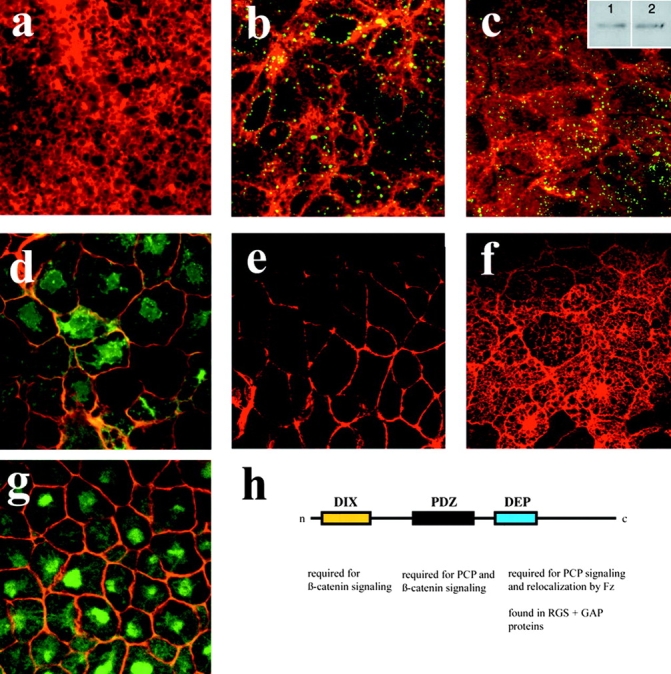
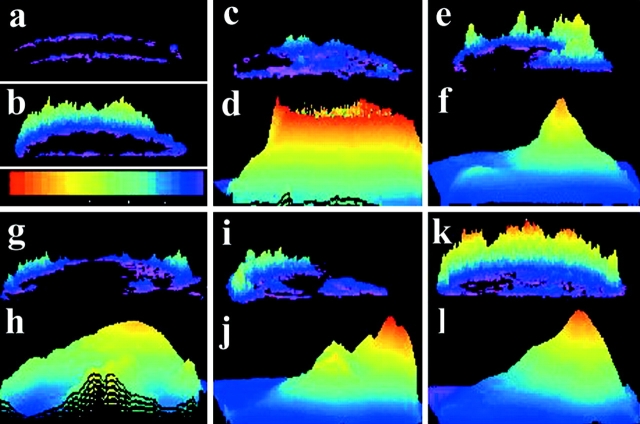
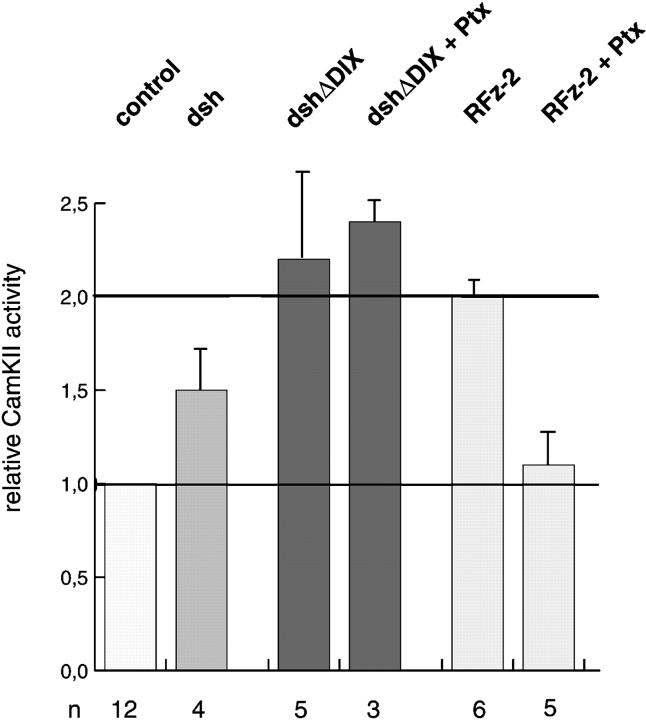
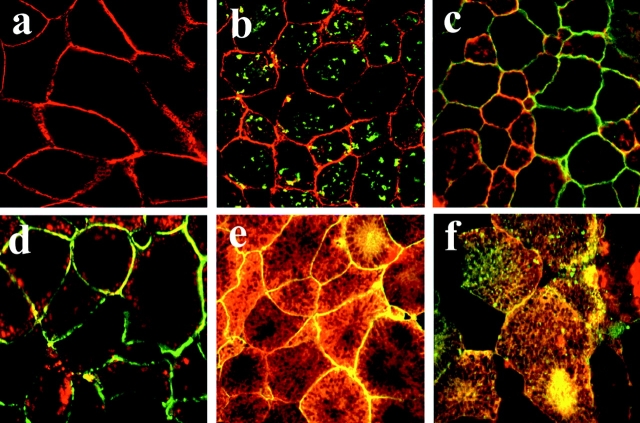
Wnt ligands and Frizzled (Fz) receptors have been shown to activate multiple intracellular signaling pathways. Activation of the Wnt–β-catenin pathway has been described in greatest detail, but it has been reported that Wnts and Fzs also activate vertebrate planar cell polarity (PCP) and Wnt–Ca2+ pathways. Although the intracellular protein Dishevelled (Dsh) plays a dual role in both the Wnt–β-catenin and the PCP pathways, its potential involvement in the Wnt–Ca2+ pathway has not been investigated. Here we show that a Dsh deletion construct, XDshΔDIX, which is sufficient for activation of the PCP pathway, is also sufficient for activation of three effectors of the Wnt–Ca2+ pathway: Ca2+ flux, PKC, and calcium/calmodulin-dependent protein kinase II (CamKII). Furthermore, we find that interfering with endogenous Dsh function reduces the activation of PKC by Xfz7 and interferes with normal heart development. These data suggest that the Wnt–Ca2+ pathway utilizes Dsh, thereby implicating Dsh as a component of all reported Fz signaling pathways.
Overview
The claims and statistics of this paper haven’t been checked yet.
Free: it reads the open-access text and checks the first 5 claims that cite a source we can check. Create a free account to check every claim.
Integrity signals
Registry
Cites
Statistics
Figures
Verification
Claims the paper makes
The claims and statistics of this paper haven’t been checked yet.
Free: it reads the open-access text and checks the first 5 claims that cite a source we can check. Create a free account to check every claim.
Claims other papers make about this one
Each is checked against this paper’s own text: does it say what the citing paper says it does?
In the citing paper
“The calcium release and intracellular accumulation activates several Ca2+ sensitive proteins, including protein kinase C (PKC)96 and calcium/calmodulin-dependent kinase II (CamKII).97”
From Wnt signal transduction pathways (2008) · cites this paper as [96]
Self-check
Percentages, sums and reported differences re-computed from the paper’s own numbers.
The self-check needs the paper’s full text.
Citations
Cites
G PROTEINS: TRANSDUCERS OF RECEPTOR-GENERATED SIGNALS
Gilman, A. G. (1987) · Annual Review of Biochemistry · doi:10.1146/annurev.bi.56.070187.003151 · Cited by 6,381 · cited 2×
“The A protomer subunit of pertussis toxin (PTX) catalyzes the ADP ribosylation of specific G protein subunits of the G i family and prevents the interaction of the receptor and G protein (Gilman, 1987).”
BackgroundThe extended protein kinase C superfamily
MELLOR, H., & PARKER, P. J. (1998) · Biochemical Journal · doi:10.1042/bj3320281 · Cited by 1,538 · cited 1×
“sengers Ca 2 and/or diacylglycerol (Mellor and Parker, 1998; Sheldahl et al., 1999).”
Silberblick/Wnt11 mediates convergent extension movements during zebrafish gastrulation
Heisenberg, C.-P., Tada, M., Rauch, G.-J., Saúde, L., Concha, M. L., Geisler, R., Stemple, D. L., Smith, J. C., & Wilson, S. W. (2000) · Nature · doi:10.1038/35011068 · Cited by 1,013 · cited 5×
“One construct, Dsh DIX, which is not competent to activate the Wnt– -catenin pathway but can signal via the PCP pathway, has been found to rescue loss of Wnt-11 function during gastrulation in Xenopus (Tada and Smith, 2000) and zebrafish (Heisenberg et al., 2000).”
BackgroundInfluentialZebrafish Prickle, a Modulator of Noncanonical Wnt/Fz Signaling, Regulates Gastrulation Movements
Veeman, M. T., Slusarski, D. C., Kaykas, A., Louie, S. H., & Moon, R. T. (2003) · Current Biology · doi:10.1016/s0960-9822(03)00240-9 · Cited by 945 · cited 4×
“However, activation of the Wnt–Ca 2 pathway has also been implicated in the regulation of convergent extension movements (Torres et al., 1996; Kühl et al., 2001), and its effectors (Ca 2 , PKC, and CamKII) act downstream of Wnts and Fzs that reportedly also activate the PCP pathway (Kühl et al., 2000a; Medina et al.,…”
BackgroundSelf-citationKühl, M., Sheldahl, L. C., Park, M., Miller, J. R., & Moon, R. T. (2000) · Trends in Genetics · doi:10.1016/s0168-9525(00)02028-x · Cited by 861 · cited 8×
“XDsh DIX activates CamKII in a PTX-insensitive manner As a third independent assay for the activation of the Wnt– Ca2 pathway, we monitored activation of CamKII (Kühl et al., 2000a).”
BackgroundMethodSelf-citationHabas, R., Kato, Y., & He, X. (2001) · Cell · doi:10.1016/s0092-8674(01)00614-6 · Cited by 842 · cited 2×
“Finally, data from PCP signaling in flies suggest that activation of the small GTPase Rho and jun-N-terminal kinase (JNK) lies downstream of Dsh (for review see Adler and Lee, 2001).”
BackgroundCdc42 regulates GSK-3β and adenomatous polyposis coli to control cell polarity
Etienne-Manneville, S., & Hall, A. (2003) · Nature · doi:10.1038/nature01423 · Cited by 835 · cited 1×
“In regulation of cell polarity, it is interesting that Cdc42 acts through an atypical PKC complex (Etienne-Manneville and Hall, 2003).”
BackgroundBoutros, M., Paricio, N., Strutt, D. I., & Mlodzik, M. (1998) · Cell · doi:10.1016/s0092-8674(00)81226-x · Cited by 801 · cited 2×
“1 h), and analysis of Dsh deletion constructs and Drosophila genetics have been used to separate the role of Dsh in the Wnt– -catenin pathway versus the PCP pathway (Axelrod et al., 1998; Boutros et al., 1998; Penton et al., 2002).”
MethodDishevelled controls cell polarity during Xenopus gastrulation
Wallingford, J. B., Rowning, B. A., Vogeli, K. M., Rothbächer, U., Fraser, S. E., & Harland, R. M. (2000) · Nature · doi:10.1038/35011077 · Cited by 751 · cited 2×
“That the PCP pathway is downstream of Wnt signaling in vertebrates was first suggested when Dsh was found to affect Wnt and Fz function during gastrulation in zebrafish (Heisenberg et al., 2000) and Xenopus (Tada and Smith, 2000; Wallingford et al., 2000).”
BackgroundMechanism and function of signal transduction by the Wnt/β-catenin and Wnt/Ca2+ pathways
Miller, J. R., Hocking, A. M., Brown, J. D., & Moon, R. T. (1999) · Oncogene · doi:10.1038/sj.onc.1203245 · Cited by 691 · cited 1×
“Wnts are a large family of secreted signaling molecules that play a number of important roles during animal development (for review see Miller et al., 1999).”
BackgroundSelf-citation
Cited by
Zhan, T., Rindtorff, N., & Boutros, M. (2017) · Oncogene · doi:10.1038/onc.2016.304 · Cited by 2,626
Wnt signal transduction pathways
Komiya, Y., & Habas, R. (2008) · Organogenesis · doi:10.4161/org.4.2.5851 · Cited by 1,528
Veeman, M. T., Axelrod, J. D., & Moon, R. T. (2003) · Developmental Cell · doi:10.1016/s1534-5807(03)00266-1 · Cited by 1,359
Self-citationLDL receptor-related proteins 5 and 6 in Wnt/β-catenin signaling:Arrows point the way
He, X., Semenov, M., Tamai, K., & Zeng, X. (2004) · Development · doi:10.1242/dev.01117 · Cited by 1,044
“Mlodzik, 1999), and that may also be required for Fz activation of PKC (Sheldahl et al., 2003).”
BackgroundInfluentialDishevelled: The hub of Wnt signaling
Gao, C., & Chen, Y.-G. (2010) · Cellular Signalling · doi:10.1016/j.cellsig.2009.11.021 · Cited by 755
Metadata
- Authors
- Sheldahl, L. C., Slusarski, D. C., Pandur, P., Miller, J. R., Kühl, M., & Moon, R. T.
- Affiliations
- Howard Hughes Medical Institute (US)
- University of Iowa (US)
- Universität Ulm (DE)
- University of Minnesota (US)
- 3Abteilung für Biochemie, Universität Ulm, 89069 Ulm, Germany
- Venue
- The Journal of Cell Biology
- Publisher
- Rockefeller University Press
- Published
- 2003-05-26
- Volume
- 161
- Issue
- 4
- Pages
- 769-777
- ISSN
- 0021-9525 (ISSN-L)
- 1540-8140
- PMC
- PMC2199364
- OpenAlex
- W2033984390
- Cited by
- 350
- References
- 48
- Citations by year
- 2026: 3 · 2025: 5 · 2024: 9 · 2023: 11 · 2022: 10 · 2021: 8 · 2020: 14 · 2019: 5 · 2018: 8 · 2017: 7 · 2016: 13 · 2015: 15 · 2014: 17 · 2013: 16 · 2012: 17
- FWCI
- 9.31
- Type
- journal article
- Language
- en
- Open access
- bronze
- doi.org
- Locations
- The Journal of Cell Biology (publishedVersion)
- PubMed Central (publishedVersion, cc-by-nc-sa)
- PubMed (publishedVersion)
- Funders
- Eunice Kennedy Shriver National Institute of Child Health and Human Development (R01 HD 2 7525, R01HD027525)
- Topics
- Life Sciences › Biochemistry, Genetics and Molecular Biology › Molecular Biology › Wnt/β-catenin signaling in development and cancer
- Life Sciences › Biochemistry, Genetics and Molecular Biology › Molecular Biology › Developmental Biology and Gene Regulation
- Life Sciences › Biochemistry, Genetics and Molecular Biology › Molecular Biology › Hedgehog Signaling Pathway Studies
- Keywords
- Dishevelled, Frizzled receptors, planar cell polarity, Wnt/β-catenin signaling, calcium flux, protein kinase C, calcium/calmodulin-dependent protein kinase II, heart development, vertebrate embryos, DIX domain
- MeSH terms
- Dishevelled Proteins, Animals, Calcium, Embryo, Nonmammalian, Phosphoproteins, Protein Kinase C, RNA, Messenger, Xenopus laevis, Zebrafish, Blotting, Western, In Situ Hybridization, Calcium-Calmodulin-Dependent Protein Kinases, Xenopus Proteins, Pertussis Toxin, Adaptor Proteins, Signal Transducing, Calcium-Calmodulin-Dependent Protein Kinase Type 2
About these checks
Registry, retraction, Cites and statistics results are computed, not judged, with one exception: a printed reference that no index lists is read once by a model before it counts as a citation error. Claims are extracted by a model and kept only when their quote appears verbatim in the text; each cited source is then checked, with a model’s help, for whether it says what the claim relies on. Those verdicts can be wrong — read the claim’s quote and the cited source before relying on one.
Statistics and arithmetic are recomputed, not judged.
Confidence bands are shown only for fields calibrated on our annotated test set. None is calibrated yet, so no band is shown.
What counts as a claim ›How we measure confidence ›How we check this ›
Are you an author, or do you see a problem with this page? Request a review
Data sources
Bibliographic data: Semantic Scholar, OpenAlex, Crossref.
Contains information from the Semantic Scholar Academic Graph Datasets, made available under the ODC Attribution License (ODC-BY 1.0).
Semantic Scholar’s data is described in: Kinney, R., et al. (2023). The Semantic Scholar Open Data Platform. arXiv:2301.10140.
