

The DOI matches its Crossref record; 51 of the 52 references it cites were found in a registry or an index.
The mammalian Scribble polarity protein regulates epithelial cell adhesion and migration through E-cadherin
Open accessAbstract
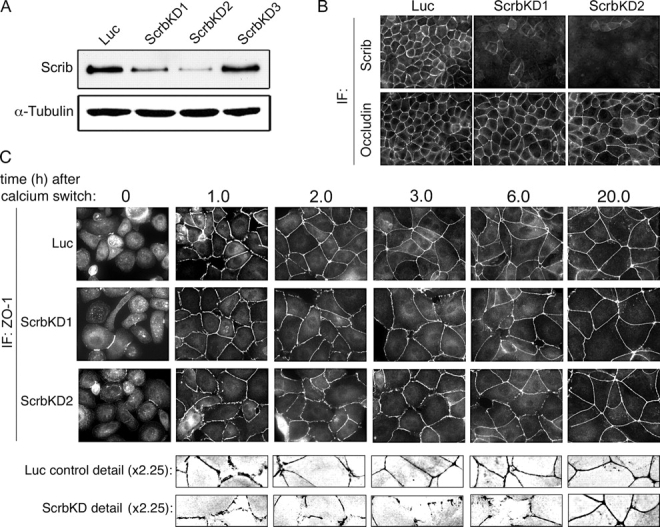
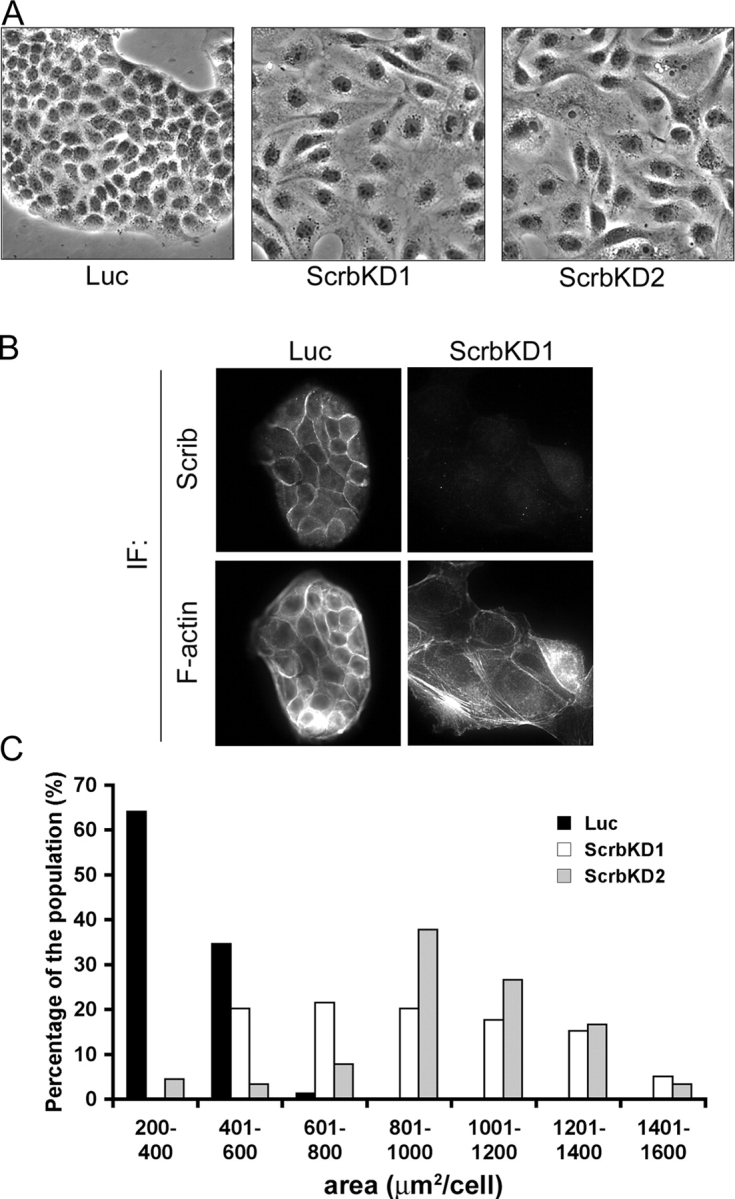
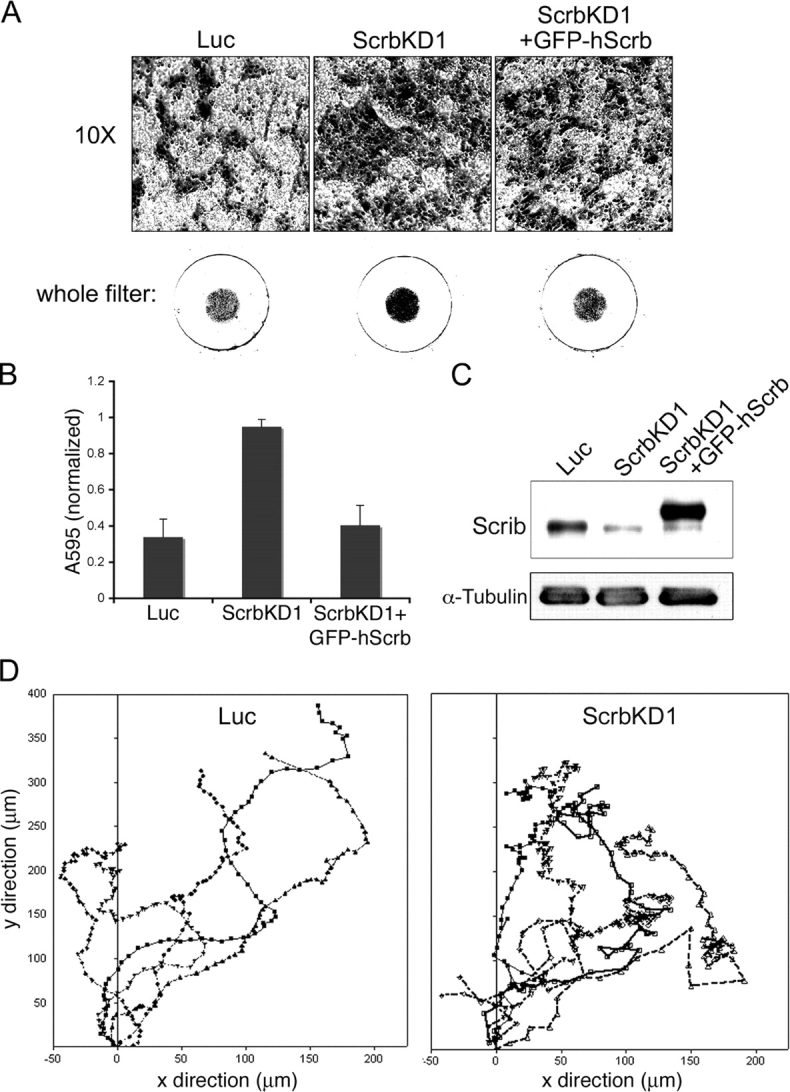
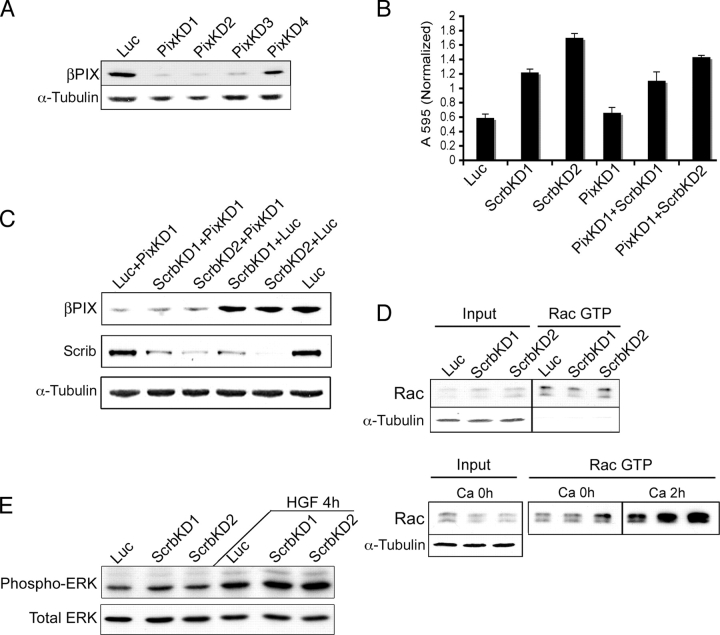
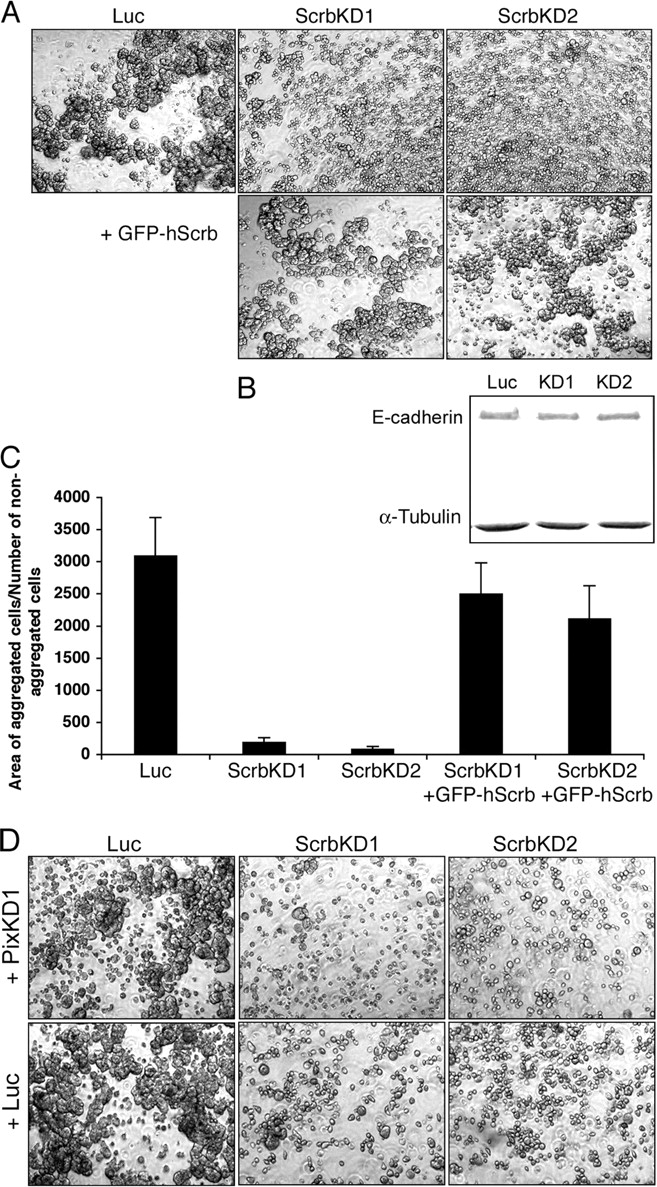
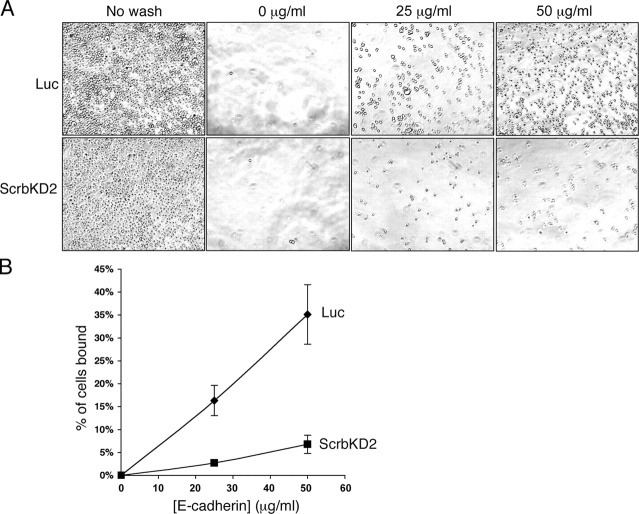
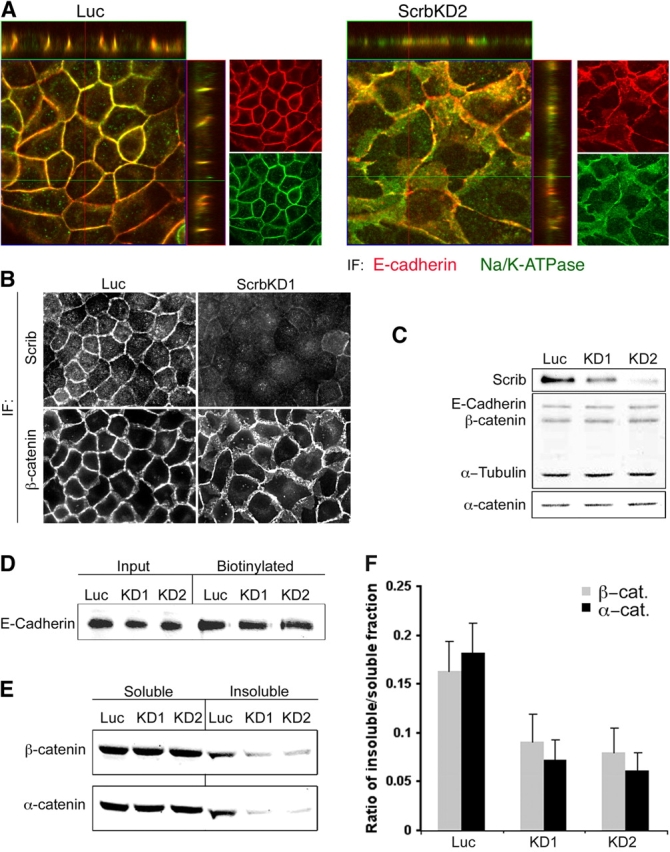
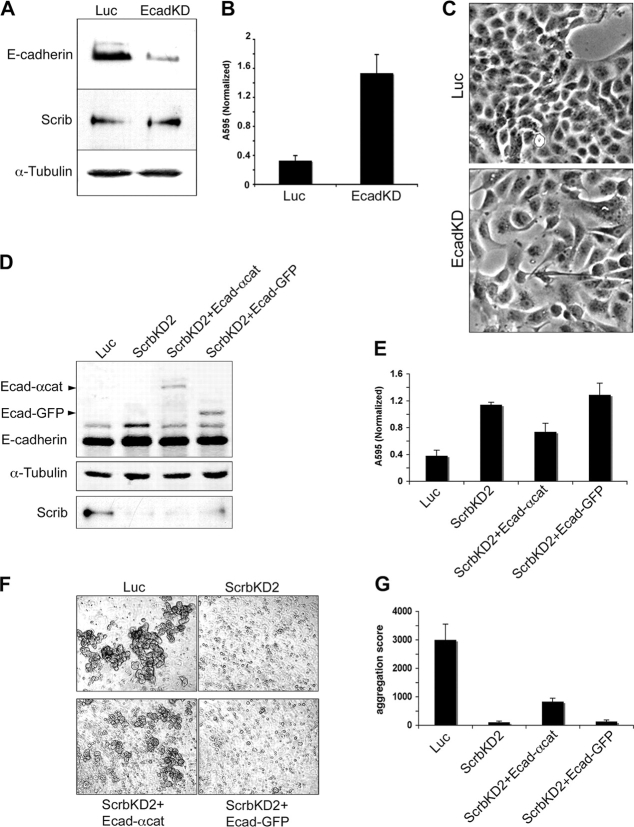
Scribble (Scrib) is a conserved polarity protein required in Drosophila melanogaster for synaptic function, neuroblast differentiation, and epithelial polarization. It is also a tumor suppressor. In rodents, Scrib has been implicated in receptor recycling and planar polarity but not in apical/basal polarity. We now show that knockdown of Scrib disrupts adhesion between Madin–Darby canine kidney epithelial cells. As a consequence, the cells acquire a mesenchymal appearance, migrate more rapidly, and lose directionality. Although tight junction assembly is delayed, confluent monolayers remain polarized. These effects are independent of Rac activation or Scrib binding to βPIX. Rather, Scrib depletion disrupts E-cadherin–mediated cell–cell adhesion. The changes in morphology and migration are phenocopied by E-cadherin knockdown. Adhesion is partially rescued by expression of an E-cadherin–α-catenin fusion protein but not by E-cadherin–green fluorescent protein. These results suggest that Scrib stabilizes the coupling between E-cadherin and the catenins and are consistent with the idea that mammalian Scrib could behave as a tumor suppressor by regulating epithelial cell adhesion and migration.
Overview
The claims and statistics of this paper haven’t been checked yet.
Run the check — free, no account needed. It reads the open-access text and checks the sources it cites.
Integrity signals
Registry
Cites
Statistics
Figures
Verification
Claims the paper makes
The claims and statistics of this paper haven’t been checked yet.
Run the check — free, no account needed. It reads the open-access text and checks the sources it cites.
Claims other papers make about this one
Each is checked against this paper’s own text: does it say what the citing paper says it does?
In the citing paper
“In MDCK cells, the consequences of Scribble knockdown depend on the level of protein reduction. Moderate reduction reduces Ecad-dependent cell adhesion and delays both the mesenchymal-to-epithelial transition and tight junction assembly. However, cells eventually polarize and become epithelial (Qin et al., 2005).”
From Scribble: A master scaffold in polarity, adhesion, synaptogenesis, and proliferation (2019) · cites this paper as Qin et al., 2005
Self-check
Percentages, sums and reported differences re-computed from the paper’s own numbers.
The self-check needs the paper’s full text.
Citations
Cites
Rational siRNA design for RNA interference
Reynolds, A., Leake, D., Boese, Q., Scaringe, S., Marshall, W. S., & Khvorova, A. (2004) · Nature Biotechnology · doi:10.1038/nbt936 · Cited by 2,094
Epithelial–mesenchymal transitions in development and pathologies
Thiery, J. P. (2003) · Current Opinion in Cell Biology · doi:10.1016/j.ceb.2003.10.006 · Cited by 1,710
Regulation of the small GTP‐binding protein Rho by cell adhesion and the cytoskeleton
Ren, X. D., Kiosses, W. B., & Schwartz, M. A. (1999) · The EMBO Journal · doi:10.1093/emboj/18.3.578 · Cited by 1,573
Regulation of cadherin-mediated adhesion in morphogenesis
Gumbiner, B. M. (2005) · Nature Reviews Molecular Cell Biology · doi:10.1038/nrm1699 · Cited by 1,523
Self-citationCooperative Regulation of Cell Polarity and Growth by Drosophila Tumor Suppressors
Bilder, D. H., Li, M., & Perrimon, N. (2000) · Science · doi:10.1126/science.289.5476.113 · Cited by 935
Woods, D. F., & Bryant, P. J. (1991) · Cell · doi:10.1016/0092-8674(81)90009-x · Cited by 898
Regulation of Cadherin Adhesive Activity
Gumbiner, B. M. (2000) · The Journal of Cell Biology · doi:10.1083/jcb.148.3.399 · Cited by 787
Self-citationSander, E., van Delft, S. V., ten Klooster, J. T., Reid, T., van der Kammen, R. A., Michiels, F., & Collard, J. G. (1998) · Journal of Cell Biology · doi:10.1083/jcb.143.5.1385 · Cited by 729
Adaptation of core mechanisms to generate cell polarity
Nelson, W. J. (2003) · Nature · doi:10.1038/nature01602 · Cited by 716
Identification of Vangl2 and Scrb1 as planar polarity genes in mammals
Montcouquiol, M., Rachel, R. A., Lanford, P. J., Copeland, N. G., Jenkins, N. A., & Kelley, M. W. (2003) · Nature · doi:10.1038/nature01618 · Cited by 705
Research works printed but not linked: 1
- 1999, J. Cell Biol., 146, 219
Cited by
Sorted by citations
Molecular mechanisms of epithelial–mesenchymal transition
Lamouille, S., Xu, J., & Derynck, R. (2014) · Nature Reviews Molecular Cell Biology · doi:10.1038/nrm3758 · Cited by 8,091
Cadherins and cancer: how does cadherin dysfunction promote tumor progression?
Jeanes, A., Gottardi, C. J., & Yap, A. S. (2008) · Oncogene · doi:10.1038/onc.2008.343 · Cited by 791
Tight junctions/adherens junctions: basic structure and function
Niessen, C. M. (2007) · Journal of Investigative Dermatology · doi:10.1038/sj.jid.5700865 · Cited by 756
Epithelial–mesenchymal transition in tumor metastasis
Yeung, K. T., & Yang, J. (2016) · Molecular Oncology · doi:10.1002/1878-0261.12017 · Cited by 744
Organization and execution of the epithelial polarity programme
Rodriguez-Boulan, E. J., & Macara, I. G. (2014) · Nature Reviews Molecular Cell Biology · doi:10.1038/nrm3775 · Cited by 727
Self-citationThe Mammalian Blood-Testis Barrier: Its Biology and Regulation
Mruk, D. D., & Cheng, C. Y. (2015) · Endocrine Reviews · doi:10.1210/er.2014-1101 · Cited by 723
Epithelial-mesenchymal transition in tissue repair and fibrosis
Stone, R. C., Pastar, I., Ojeh, N. O., Chen, V., Liu, S., Garzon, K. I., & Tomic‐Canic, M. (2016) · Cell and Tissue Research · doi:10.1007/s00441-016-2464-0 · Cited by 591
Cell Polarity in Eggs and Epithelia: Parallels and Diversity
Johnston, D. S., & Ahringer, J. (2010) · Cell · doi:10.1016/j.cell.2010.05.011 · Cited by 505
Assémat, E., Bazellières, E., Pallesi‐Pocachard, E., Bivic, A. L., & Massey‐Harroche, D. (2007) · Biochimica et Biophysica Acta (BBA) - Biomembranes · doi:10.1016/j.bbamem.2007.08.029 · Cited by 500
Shapiro, I. M., Cheng, A. W., Flytzanis, N. C., Balsamo, M., Condeelis, J. S., Oktay, M. H., Burge, C. B., & Gertler, F. B. (2011) · PLoS Genetics · doi:10.1371/journal.pgen.1002218 · Cited by 476
Crosstalk between small GTPases and polarity proteins in cell polarization
Iden, S., & Collard, J. G. (2008) · Nature Reviews Molecular Cell Biology · doi:10.1038/nrm2521 · Cited by 451
Zhan, L., Rosenberg, A., Bergami, K. C., Yu, M., Xuan, Z., Jaffe, A. B., Allred, C., & Muthuswamy, S. K. (2008) · Cell · doi:10.1016/j.cell.2008.09.045 · Cited by 436
Cell polarity in development and cancer
Wodarz, A., & Näthke, I. S. (2007) · Nature Cell Biology · doi:10.1038/ncb433 · Cited by 411
Loss of Cell Polarity Drives Tumor Growth and Invasion through JNK Activation in Drosophila
Igaki, T., Pagliarini, R. A., & Xu, T. (2006) · Current Biology · doi:10.1016/j.cub.2006.04.042 · Cited by 370
Reelin, Rap1 and N-cadherin orient the migration of multipolar neurons in the developing neocortex
Jossin, Y., & Cooper, J. A. (2011) · Nature Neuroscience · doi:10.1038/nn.2816 · Cited by 332
Montcouquiol, M., Sans, N., Huss, D., Kach, J., Dickman, J. D., Forge, A., Rachel, R. A., Copeland, N. G., Jenkins, N. A., Bogani, D., et al. (2006) · The Journal of Neuroscience · doi:10.1523/jneurosci.4680-05.2006 · Cited by 322
Jakobsen, L., Vanselow, K., Skogs, M., Toyoda, Y., Lundberg, E. K., Poser, I., Falkenby, L. G., Bennetzen, M. V., Westendorf, J., Nigg, E. A., et al. (2011) · The EMBO Journal · doi:10.1038/emboj.2011.63 · Cited by 325
Control of tumourigenesis by the Scribble/Dlg/Lgl polarity module
Humbert, P. O., Grzeschik, N. A., Brumby, A. M., Galea, R. C., Elsum, I. A., & Richardson, H. E. (2008) · Oncogene · doi:10.1038/onc.2008.341 · Cited by 323
Kim, D., Xing, T., Yang, Z., Dudek, R. W., Lu, Q., & Chen, Y. (2017) · Journal of Clinical Medicine · doi:10.3390/jcm7010001 · Cited by 326
Apical–basal polarity and the control of epithelial form and function
Buckley, C. E., & St Johnston, D. (2022) · Nature Reviews Molecular Cell Biology · doi:10.1038/s41580-022-00465-y · Cited by 295
Polarity proteins in migration and invasion
Etienne‐Manneville, S. (2008) · Oncogene · doi:10.1038/onc.2008.347 · Cited by 313
The canonical Wnt signalling pathway and its APC partner in colon cancer development
Schneikert, J., & Behrens, J. (2006) · Gut · doi:10.1136/gut.2006.093310 · Cited by 302
Capaldo, C., & Macara, I. G. (2006) · Molecular Biology of the Cell · doi:10.1091/mbc.e06-05-0471 · Cited by 258
Self-citationUnderstanding the structure and function of the immunological synapse.Preprint
Dustin, M. L., Chakraborty, A., & Shaw, A. (2010) · Cold Spring Harbor Perspectives in Biology · doi:10.1101/cshperspect.a002311 · Cited by 265
Aranda, V., Haire, T., Nolan, M. E., Calarco, J. P., Rosenberg, A. Z., Fawcett, J. P., Pawson, T. J., & Muthuswamy, S. K. (2006) · Nature Cell Biology · doi:10.1038/ncb1485 · Cited by 247
“You Shall Not Pass”—tight junctions of the blood brain barrier
Bauer, H., Krizbai, I. A., Bauer, H., & Traweger, A. (2014) · Frontiers in Neuroscience · doi:10.3389/fnins.2014.00392 · Cited by 255
Osmani, N., Vitale, N., Borg, J.-P., & Etienne-Manneville, S. (2006) · Current Biology · doi:10.1016/j.cub.2006.10.026 · Cited by 239
Loss of the Par3 Polarity Protein Promotes Breast Tumorigenesis and Metastasis
McCaffrey, L. M., Montalbano, J., Mihai, C., & Macara, I. G. (2012) · Cancer Cell · doi:10.1016/j.ccr.2012.10.003 · Cited by 225
Self-citationMechanical cell competition kills cells via induction of lethal p53 levels
Wagstaff, L., Goschorska, M., Kozyrska, K., Duclos, G., Kuciński, I., Chessel, A., Hampton-O’Neil, L. A., Bradshaw, C. R., Allen, G. E., Rawlins, E. L., et al. (2016) · Nature Communications · doi:10.1038/ncomms11373 · Cited by 217
Warzecha, C. C., Shen, S., Xing, Y., & Carstens, R. P. (2009) · RNA Biology · doi:10.4161/rna.6.5.9606 · Cited by 208
NCAM‐induced focal adhesion assembly: a functional switch upon loss of E‐cadherin
Lehembre, F., Yilmaz, M., WICKI, A. N., Schomber, T., Strittmatter, K., Ziegler, D., Kren, A., Went, P., Derksen, P. W. B., Berns, A. J. M., et al. (2008) · The EMBO Journal · doi:10.1038/emboj.2008.178 · Cited by 194
p120-ctn: A nexus for contextual signaling via Rho GTPases
Anastasiadis, P. Z. (2006) · Biochimica et Biophysica Acta (BBA) - Molecular Cell Research · doi:10.1016/j.bbamcr.2006.08.040 · Cited by 201
Dow, L. E., Kauffman, J. S., Caddy, J., Peterson, A. S., Jane, S. M., Russell, S. M., & Humbert, P. O. (2007) · Oncogene · doi:10.1038/sj.onc.1210016 · Cited by 187
A Unique Role for Nonmuscle Myosin Heavy Chain IIA in Regulation of Epithelial Apical Junctions
Ivanov, A. I., Bachar, M., Babbin, B. A., Adelstein, R. S., Nusrat, A., & Parkos, C. A. (2007) · PLoS ONE · doi:10.1371/journal.pone.0000658 · Cited by 178
Rho GTPases in collective cell migration
Zegers, M. M., & Friedl, P. (2014) · Small GTPases · doi:10.4161/sgtp.28997 · Cited by 184
CCM1 regulates vascular-lumen organization by inducing endothelial polarity
Lampugnani, M. G., Orsenigo, F., Rudini, N., Maddaluno, L., Boulday, G., Chapon, F., & Dejana, E. (2010) · Journal of Cell Science · doi:10.1242/jcs.059329 · Cited by 180
Maintenance and modulation of T cell polarity
Krummel, M. F., & Macara, I. G. (2006) · Nature Immunology · doi:10.1038/ni1404 · Cited by 180
Self-citationRewiring cell polarity signaling in cancer
Halaoui, R., & McCaffrey, L. M. (2014) · Oncogene · doi:10.1038/onc.2014.59 · Cited by 183
The epithelial polarity program: machineries involved and their hijacking by cancer
Tanos, B. E., & Rodriguez-Boulan, E. (2008) · Oncogene · doi:10.1038/onc.2008.345 · Cited by 176
Dow, L. E., Elsum, I. A., King, C. L., Kinross, K. M., Richardson, H. E., & Humbert, P. O. (2008) · Oncogene · doi:10.1038/onc.2008.219 · Cited by 171
Loss of Scribble causes cell competition in mammalian cells
Norman, M., Wisniewska, K. A., Lawrenson, K., Garcia-Miranda, P., Tada, M., Kajita, M., Mano, H., Ishikawa, S., Ikegawa, M., Shimada, T., et al. (2012) · Journal of Cell Science · doi:10.1242/jcs.085803 · Cited by 170
Paving the Rho in cancer metastasis: Rho GTPases and beyond
Jansen, S. R., Gosens, R., Wieland, T., & Schmidt, M. (2017) · Pharmacology & Therapeutics · doi:10.1016/j.pharmthera.2017.09.002 · Cited by 171
Scribble participates in Hippo signaling and is required for normal zebrafish pronephros development
Skouloudaki, K., Puetz, M., Simons, M., Courbard, J.-R., Boehlke, C., Hartleben, B., Engel, C., Moeller, M. J., Englert, C., Bollig, F., et al. (2009) · Proceedings of the National Academy of Sciences · doi:10.1073/pnas.0811691106 · Cited by 163
Werme, K., Wigerius, M., & Johansson, M. (2008) · Cellular Microbiology · doi:10.1111/j.1462-5822.2007.01076.x · Cited by 164
Organization of multiprotein complexes at cell–cell junctions
Ebnet, K. (2008) · Histochemistry and Cell Biology · doi:10.1007/s00418-008-0418-7 · Cited by 174
The Scribble and Par complexes in polarity and migration: friends or foes?
Humbert, P. O., Dow, L. E., & Russell, S. M. (2006) · Trends in Cell Biology · doi:10.1016/j.tcb.2006.10.005 · Cited by 160
Cell Polarity as a Regulator of Cancer Cell Behavior Plasticity
Muthuswamy, S. K., & Xue, B. (2011) · Annual Review of Cell and Developmental Biology · doi:10.1146/annurev-cellbio-092910-154244 · Cited by 145
Cell polarity signaling in the plasticity of cancer cell invasiveness
Gandalovičová, A., Vomastek, T., Rösel, D., & Brábek, J. (2016) · Oncotarget · doi:10.18632/oncotarget.7214 · Cited by 156
Polarity in Mammalian Epithelial MorphogenesisPreprint
Roignot, J., Xu, P., & Mostov, K. E. (2013) · Cold Spring Harbor Perspectives in Biology · doi:10.1101/cshperspect.a013789 · Cited by 156
Warzecha, C. C., & Carstens, R. P. (2012) · Seminars in Cancer Biology · doi:10.1016/j.semcancer.2012.04.003 · Cited by 144
New insights into cadherin function in epidermal sheet formation and maintenance of tissue integrity
Tinkle, C. L., Pasolli, H. A., Stokes, N., & Fuchs, E. V. (2008) · Proceedings of the National Academy of Sciences · doi:10.1073/pnas.0807374105 · Cited by 138
Phillips, H. M., Rhee, H. J., Murdoch, J. N., Hildreth, V., Peat, J. D., Anderson, R. H., Copp, A. J., Chaudhry, B., & Henderson, D. J. (2007) · Circulation Research · doi:10.1161/circresaha.106.142406 · Cited by 133
Polarity protein alterations in carcinoma: a focus on emerging roles for polarity regulators
Huang, L., & Muthuswamy, S. K. (2010) · Current Opinion in Genetics & Development · doi:10.1016/j.gde.2009.12.001 · Cited by 135
Stephens, R., Lim, K., Portela, M., Kvansakul, M., Humbert, P. O., & Richardson, H. E. (2018) · Journal of Molecular Biology · doi:10.1016/j.jmb.2018.01.011 · Cited by 132
Puvirajesinghe, T. M., Bertucci, F., Jain, A., Scerbo, P., Belotti, E., Audebert, S., Sebbagh, M., Lopez, M., Brech, A., Finetti, P., et al. (2016) · Nature Communications · doi:10.1038/ncomms10318 · Cited by 130
Self-citationAnastas, J. N., Biechele, T. L., Robitaille, M., Muster, J., Allison, K. H., Angers, S., & Moon, R. T. (2011) · Oncogene · doi:10.1038/onc.2011.528 · Cited by 130
Adherens Junctions on the Move—Membrane Trafficking of E-CadherinPreprint
Brüser, L., & Bogdan, S. (2017) · Cold Spring Harbor Perspectives in Biology · doi:10.1101/cshperspect.a029140 · Cited by 135
Scribble: A master scaffold in polarity, adhesion, synaptogenesis, and proliferation
Bonello, T. T., & Peifer, M. (2019) · Journal of Cell Biology · doi:10.1083/jcb.201810103 · Cited by 127
“However, cells eventually polarize and become epithelial (Qin et al., 2005).”
BackgroundCell Extrusion: A Stress-Responsive Force for Good or Evil in Epithelial Homeostasis
Ohsawa, S., Vaughen, J. P., & Igaki, T. (2018) · Developmental Cell · doi:10.1016/j.devcel.2018.01.009 · Cited by 124
Polarity Regulators and the Control of Epithelial Architecture, Cell Migration, and Tumorigenesis
Dow, L. E., & Humbert, P. O. (2007) · International review of cytology · doi:10.1016/s0074-7696(07)62006-3 · Cited by 123
Role of Lgl/Dlg/Scribble in the regulation of epithelial junction, polarity and growth
Yamanaka, T. (2008) · Frontiers in bioscience · doi:10.2741/3182 · Cited by 120
Golebiewski, L., Liu, H., Javier, R. T., & Rice, A. P. (2011) · Journal of Virology · doi:10.1128/jvi.05070-11 · Cited by 120
Cell polarity proteins: common targets for tumorigenic human viruses
Javier, R. T. (2008) · Oncogene · doi:10.1038/onc.2008.352 · Cited by 118
Scrib regulates PAK activity during the cell migration process
Nola, S., Sebbagh, M., Marchetto, S., Osmani, N., Nourry, C., Audebert, S., Navarro, C., Rachel, R. A., Montcouquiol, M., Sans, N., et al. (2008) · Human Molecular Genetics · doi:10.1093/hmg/ddn248 · Cited by 115
Protein complexes that control renal epithelial polarity
Pieczynski, J. N., & Margolis, B. L. (2011) · American Journal of Physiology-Renal Physiology · doi:10.1152/ajprenal.00615.2010 · Cited by 110
E-Cadherin-Mediated Cell Coupling Is Required for Apoptotic Cell Extrusion
Lubkov, V., & Bar‐Sagi, D. (2014) · Current Biology · doi:10.1016/j.cub.2014.02.057 · Cited by 108
Apicobasal polarity of brain endothelial cells
Worzfeld, T., & Schwaninger, M. (2015) · Journal of Cerebral Blood Flow & Metabolism · doi:10.1177/0271678x15608644 · Cited by 104
Tumor-educated mesenchymal stem cells promote pro-metastatic phenotype
Hill, B. S., Pelagalli, A., Passaro, N., & Zannetti, A. (2017) · Oncotarget · doi:10.18632/oncotarget.20265 · Cited by 111
PDZ domains: the building blocks regulating tumorigenesis
Subbaiah, V. K., Kranjec, C., Thomas, M., & Banks, L. (2011) · Biochemical Journal · doi:10.1042/bj20110903 · Cited by 102
VEGF and Angiopoietin-1 exert opposing effects on cell junctions by regulating the Rho GEF Syx
Ngok, S. P., Geyer, R. K., Liu, M., Kourtidis, A., Agrawal, S., Wu, C., Seerapu, H. R., Lewis‐Tuffin, L. J., Moodie, K. L., Deborah, H., et al. (2012) · The Journal of Cell Biology · doi:10.1083/jcb.201207009 · Cited by 97
Itallie, C. M. V., Tietgens, A. J., Aponte, A. M., Fredriksson, K., Fanning, A. S., Guček, M., & Anderson, J. M. (2013) · Journal of Cell Science · doi:10.1242/jcs.140475 · Cited by 96
Reischauer, S., Levesque, M. P., Nüsslein‐Volhard, C., & Sonawane, M. (2009) · PLoS Genetics · doi:10.1371/journal.pgen.1000720 · Cited by 92
Stucke, V. M., Timmerman, E., Vandekerckhove, J. S., Gevaert, K., & Hall, A. (2007) · Molecular Biology of the Cell · doi:10.1091/mbc.e06-11-0980 · Cited by 92
Polarity Proteins and Cell–Cell Interactions in the Testis
Wong, E. W. P., & Cheng, Y. C. (2009) · International Review of Cell and Molecular Biology · doi:10.1016/s1937-6448(09)78007-4 · Cited by 91
Elsum, I. A., Martin, C., & Humbert, P. O. (2013) · Journal of Cell Science · doi:10.1242/jcs.129387 · Cited by 87
McCrea, P. D., Gu, D., & Balda, B. (2009) · Cold Spring Harbor Perspectives in Biology · doi:10.1101/cshperspect.a002923 · Cited by 87
The PIX–GIT complex: A G protein signaling cassette in control of cell shape
Frank, S. R., & Hansen, S. H. (2008) · Seminars in Cell and Developmental Biology · doi:10.1016/j.semcdb.2008.01.002 · Cited by 89
vandenBerg, A. L., & Sassoon, D. A. (2009) · Development · doi:10.1242/dev.034066 · Cited by 88
APT2 Inhibition Restores Scribble Localization and S -Palmitoylation in Snail-Transformed Cells
Hernandez, J. L., Davda, D., Kit, M. C. S., Majmudar, J. D., Won, S. J., Gang, M., Pasupuleti, S. C., Choi, A. I., Bartkowiak, C. M., & Martin, B. R. (2017) · Cell chemical biology · doi:10.1016/j.chembiol.2016.12.007 · Cited by 82
Gödde, N., Galea, R. C., Elsum, I. A., & Humbert, P. O. (2010) · Journal of Mammary Gland Biology and Neoplasia · doi:10.1007/s10911-010-9180-2 · Cited by 85
Yates, L. L., Schnatwinkel, C., Hazelwood, L., Chessum, L., Paudyal, A., Hilton, H., Romero, M. R., Wilde, J., Bogani, D., Sanderson, J., et al. (2013) · Developmental Biology · doi:10.1016/j.ydbio.2012.11.012 · Cited by 78
Petrova, Y. I., Spano, M. M., & Gumbiner, B. M. (2012) · Molecular Biology of the Cell · doi:10.1091/mbc.e11-12-1060 · Cited by 76
Self-citationThe cell polarity regulator hScrib controls ERK activation through a KIM site-dependent interaction
Nagasaka, K., Pim, D., Massimi, P., Thomas, M., Tomaić, V, Subbaiah, V. K., Kranjec, C., Nakagawa, S., Yano, T., Taketani, Y., et al. (2010) · Oncogene · doi:10.1038/onc.2010.265 · Cited by 75
Endothelial Cell-to-Cell Junctions: Adhesion and Signaling in Physiology and PathologyPreprint
Lampugnani, M. G. (2012) · Cold Spring Harbor Perspectives in Medicine · doi:10.1101/cshperspect.a006528 · Cited by 81
Tumor suppressor scribble regulates assembly of tight junctions in the intestinal epithelium
Ivanov, A. I., Young, C., Beste, K. D., Capaldo, C. T., Humbert, P. O., Brennwald, P., Parkos, C. A., & Nusrat, A. (2010) · The American Journal of Pathology · doi:10.2353/ajpath.2010.090220 · Cited by 73
Self-citationZebrafish neural tube morphogenesis requires Scribble-dependent oriented cell divisions
Žigman, M., Trinh, L. A., Fraser, S. E., & Moens, C. B. (2011) · Current Biology · doi:10.1016/j.cub.2010.12.005 · Cited by 71
The planar polarity protein Scribble1 is essential for neuronal plasticity and brain function
Moreau, M. M., Piguel, N., Papouin, T., Koehl, M., Durand, C. M., Rubio, M. E., Loll, F., Richard, E. M., Mazzocco, C., Racca, C., et al. (2010) · Journal of Neuroscience · doi:10.1523/jneurosci.6007-09.2010 · Cited by 69
Vimentin Regulates Scribble Activity by Protecting It from Proteasomal Degradation
Phua, D. C. Y., Humbert, P. O., & Hunziker, W. (2009) · Molecular Biology of the Cell · doi:10.1091/mbc.e08-02-0199 · Cited by 68
Lohia, M., Qin, Y., & Macara, I. G. (2012) · PLoS ONE · doi:10.1371/journal.pone.0051130 · Cited by 64
Self-citationHuman tumour viruses and the deregulation of cell polarity in cancer
Banks, L., Pim, D., & Thomas, M. (2012) · Nature reviews. Cancer · doi:10.1038/nrc3400 · Cited by 69
Wang, X., Dong, B., Zhang, K., Ji, Z., Cheng, C., Zhao, H., Sheng, Y., Li, X., Fan, L., Xue, W., et al. (2018) · PLOS Genetics · doi:10.1371/journal.pgen.1007609 · Cited by 66
Reinterpreting polarity and cancer: The changing landscape from tumor suppression to tumor promotion
Saito, Y., Desai, R., & Muthuswamy, S. K. (2018) · Biochimica et Biophysica Acta (BBA) - Reviews on Cancer · doi:10.1016/j.bbcan.2017.12.001 · Cited by 68
Polarity Protein Complex Scribble/Lgl/Dlg And Epithelial Cell Barriers
Su, W.-H., Mruk, D. D., Wong, E. W. P., Lui, W., & Cheng, C. Y. (2013) · Advances in experimental medicine and biology · doi:10.1007/978-1-4614-4711-5_7 · Cited by 78
Pathogenesis of periodontitis – A potential role for epithelial-mesenchymal transition
Saliem, S. S., Bede, S. Y. H., Cooper, P. R., Abdulkareem, A. A., Milward, M. R., & Abdullah, B. H. (2022) · Japanese Dental Science Review · doi:10.1016/j.jdsr.2022.09.001 · Cited by 75
Llgl1 connects cell polarity with cell-cell adhesion in embryonic neural stem cells
Jossin, Y., Lee, M., Klezovitch, O., Kon, E., Cossard, A., Lien, W.-H., Fernandez, T. E., Cooper, J. A., & Vasioukhin, V. (2017) · Developmental Cell · doi:10.1016/j.devcel.2017.05.002 · Cited by 54
Homeostatic Signaling by Cell–Cell Junctions and Its Dysregulation during Cancer Progression
Yu, Y., & Elble, R. C. (2016) · Journal of Clinical Medicine · doi:10.3390/jcm5020026 · Cited by 62
Godde, N. J., Sheridan, J. M., Smith, L. K., Pearson, H. B., Britt, K. L., Galea, R. C., Yates, L. L., Visvader, J. E., & Humbert, P. O. (2014) · PLoS Genetics · doi:10.1371/journal.pgen.1004323 · Cited by 60
Lelièvre, S. A. (2010) · Journal of Mammary Gland Biology and Neoplasia · doi:10.1007/s10911-010-9168-y · Cited by 58
Andreeva, A. Y., Lee, J., Lohia, M., Wu, X., Macara, I. G., & Lu, X. (2014) · Developmental Cell · doi:10.1016/j.devcel.2014.02.008 · Cited by 58
Self-citationXiong, X., Xu, Q., Huang, Y., Singh, R. D., Anderson, R. A., Leof, E. B., Hu, J., & Ling, K. (2011) · Molecular Biology of the Cell · doi:10.1091/mbc.e11-05-0449 · Cited by 61
Metadata
- Authors
- Qin, Y., Capaldo, C., Gumbiner, B. M., & Macara, I. G.
- Affiliations
- University of Virginia (US)
- Venue
- The Journal of Cell Biology
- Publisher
- Rockefeller University Press
- Published
- 2005-12-12
- Volume
- 171
- Issue
- 6
- Pages
- 1061-1071
- ISSN
- 0021-9525 (ISSN-L)
- 1540-8140
- PMC
- PMC2171311
- OpenAlex
- W2052131905
- Cited by
- 285
- References
- 52
- Citations by year
- 2026: 10 · 2025: 5 · 2024: 9 · 2023: 12 · 2022: 11 · 2021: 10 · 2020: 8 · 2019: 15 · 2018: 12 · 2017: 18 · 2016: 17 · 2015: 13 · 2014: 16 · 2013: 15 · 2012: 26
- FWCI
- 7.98
- Type
- journal article
- Language
- en
- Open access
- green
- www.ncbi.nlm.nih.gov
- Licence
- cc-by-nc-sa
- Locations
- The Journal of Cell Biology (publishedVersion)
- PubMed Central (publishedVersion, cc-by-nc-sa)
- PubMed (publishedVersion)
- Funders
- National Cancer Institute (P01CA040042, CA 040042)
- National Institute of General Medical Sciences (GM 070902, R01GM070902)
- Topics
- Health Sciences › Medicine › Immunology and Allergy › Cell Adhesion Molecules Research
- Life Sciences › Biochemistry, Genetics and Molecular Biology › Cell Biology › Cellular Mechanics and Interactions
- Life Sciences › Biochemistry, Genetics and Molecular Biology › Cell Biology › Hippo pathway signaling and YAP/TAZ
- Keywords
- Scribble, epithelial polarity, E-cadherin, cell-cell adhesion, cell migration, tight junction assembly, catenins, alpha-catenin, mesenchymal transition, tumor suppressor, MDCK cells, planar cell polarity, betaPIX
- MeSH terms
- Animals, Cell Adhesion, Cell Count, Cell Movement, Cells, Cultured, Dogs, Epithelial Cells, Fluorescent Antibody Technique, Humans, Membrane Proteins, Phenotype, Protein Binding, Transfection, Cadherins, Microscopy, Confocal, Cell Cycle Proteins, Guanine Nucleotide Exchange Factors, Gene Silencing, Tumor Suppressor Proteins, RNA Interference, alpha Catenin, Rho Guanine Nucleotide Exchange Factors
About these checks
Registry, retraction, Cites and statistics results are computed, not judged, with one exception: a printed reference that no index lists is read once by a model before it counts as a citation error. Claims are extracted by a model and kept only when their quote appears verbatim in the text; each cited source is then checked, with a model’s help, for whether it says what the claim relies on. Those verdicts can be wrong — read the claim’s quote and the cited source before relying on one.
Statistics and arithmetic are recomputed, not judged.
Confidence bands are shown only for fields calibrated on our annotated test set. None is calibrated yet, so no band is shown.
What counts as a claim ›How we measure confidence ›How we check this ›
Are you an author, or do you see a problem with this page? Request a review
