

Resolvins
Open accessThe DOI matches its Crossref record; 62 of the 62 references it cites were found in a registry or an index.
Abstract
Aspirin (ASA) is unique among current therapies because it acetylates cyclooxygenase (COX)-2 enabling the biosynthesis of R-containing precursors of endogenous antiinflammatory mediators. Here, we report that lipidomic analysis of exudates obtained in the resolution phase from mice treated with ASA and docosahexaenoic acid (DHA) (C22:6) produce a novel family of bioactive 17R-hydroxy-containing di- and tri-hydroxy-docosanoids termed resolvins. Murine brain treated with aspirin produced endogenous 17R-hydroxydocosahexaenoic acid as did human microglial cells. Human COX-2 converted DHA to 13-hydroxy-DHA that switched with ASA to 17R-HDHA that also proved a major route in hypoxic endothelial cells. Human neutrophils transformed COX-2-ASA–derived 17R-hydroxy-DHA into two sets of novel di- and trihydroxy products; one initiated via oxygenation at carbon 7 and the other at carbon 4. These compounds inhibited (IC50 ∼50 pM) microglial cell cytokine expression and in vivo dermal inflammation and peritonitis at ng doses, reducing 40–80% leukocytic exudates. These results indicate that exudates, vascular, leukocytes and neural cells treated with aspirin convert DHA to novel 17R-hydroxy series of docosanoids that are potent regulators. These biosynthetic pathways utilize omega-3 DHA and EPA during multicellular events in resolution to produce a family of protective compounds, i.e., resolvins, that enhance proresolution status.
Overview
The claims and statistics of this paper haven’t been checked yet.
Free: it reads the open-access text and checks the first 5 claims that cite a source we can check. Create a free account to check every claim.
Integrity signals
Registry
Cites
Statistics
Figures



Verification
Claims the paper makes
The claims and statistics of this paper haven’t been checked yet.
Free: it reads the open-access text and checks the first 5 claims that cite a source we can check. Create a free account to check every claim.
Claims other papers make about this one
Each is checked against this paper’s own text: does it say what the citing paper says it does?
The source backs part of the claim, not all of it — or backs it for a different population, condition or comparison.
In the citing paper
“These lipid mediators can selectively stop neutrophil infiltration; increase monocyte recruitment and macrophage phagocytosis; stimulate the expression of genes important for antimicrobial defense; and promote the exit of phagocytes from the inflamed sites [100–103].”
From Transition from inflammation to proliferation: a critical step during wound healing (2016) · cites this paper as [100]
Experimental — accuracy not yet measuredThe source backs part of the claim, not all of it — or backs it for a different population, condition or comparison.
In the citing paper
“Prostaglandin E2 (PGE2) and D2 rapidly initiate the resolution process by inducing the expression of lipid mediators with both anti-inflammatory and pre-resolution functions, e.g., lipoxins [96, 97], resolvins and protectins [98–100], a process known as lipid-mediator class switch [97].”
From Transition from inflammation to proliferation: a critical step during wound healing (2016) · cites this paper as [100]
Experimental — accuracy not yet measuredThe source backs part of the claim, not all of it — or backs it for a different population, condition or comparison.
In the citing paper
“These lipid mediators can selectively stop neutrophil infiltration; increase monocyte recruitment and macrophage phagocytosis; stimulate the expression of genes important for antimicrobial defense; and promote the exit of phagocytes from the inflamed sites [100–103].”
From Transition from inflammation to proliferation: a critical step during wound healing (2016) · cites this paper as [100]
Experimental — accuracy not yet measuredThe source backs part of the claim, not all of it — or backs it for a different population, condition or comparison.
In the citing paper
“These lipid mediators can selectively stop neutrophil infiltration; increase monocyte recruitment and macrophage phagocytosis; stimulate the expression of genes important for antimicrobial defense; and promote the exit of phagocytes from the inflamed sites [100–103].”
From Transition from inflammation to proliferation: a critical step during wound healing (2016) · cites this paper as [100]
Experimental — accuracy not yet measuredThe cited source says what the claim attributes to it.
In the citing paper
“These lipid mediators can selectively stop neutrophil infiltration; increase monocyte recruitment and macrophage phagocytosis; stimulate the expression of genes important for antimicrobial defense; and promote the exit of phagocytes from the inflamed sites [100–103].”
From Transition from inflammation to proliferation: a critical step during wound healing (2016) · cites this paper as [100]
Self-check
Percentages, sums and reported differences re-computed from the paper’s own numbers.
The self-check needs the paper’s full text.
Citations
Cites
Inflammation. Basic principles and clinical correlates
(1989) · Biomedicine & Pharmacotherapy · doi:10.1016/0753-3322(89)90156-x · Cited by 2,393
Leukotrienes and Lipoxins: Structures, Biosynthesis, and Biological Effects
Samuelsson, B., Dahlén, S.-E., Lindgren, J. Å., Rouzer, C. A., & Serhan, C. N. (1987) · Science · doi:10.1126/science.2820055 · Cited by 2,233 · cited 7×
“Like other LO-derived eicosanoids, LXs are potent-local acting in subnanomolar levels with precise stereochemical requirements for evoking their actions (4, 9).”
BackgroundMethodInfluentialSelf-citation(1999) · PubMed · Cited by 2,062
Robbins pathologic basis of disease
Cotran, R. S., Kumar, V., & Collins, T. (1989) · Medical Entomology and Zoology · Cited by 1,944
Lipid mediator class switching during acute inflammation: signals in resolution
Levy, B. D., Clish, C. B., Schmidt, B., Gronert, K., & Serhan, C. N. (2001) · Nature Immunology · doi:10.1038/89759 · Cited by 1,453
Self-citationMarchioli, R., Barzi, F., Bomba, E., Chieffo, C., Di Gregorio, D., Di Mascio, R., Franzosi, M. G., Geraci, E., Levantesi, G., Maggioni, A. P., et al. (2002) · Circulation · doi:10.1161/01.cir.0000014682.14181.f2 · Cited by 1,311
Inducible cyclooxygenase may have anti-inflammatory properties
Gilroy, D. W., Colville-Nash, P. R., Willis, D., Chivers, J., Paul-Clark, M. J., & Willoughby, D. A. (1999) · Nature Medicine · doi:10.1038/9550 · Cited by 1,242
Serhan, C. N., Clish, C. B., Brannon, J., Colgan, S. P., Chiang, N., & Gronert, K. (2000) · The Journal of Experimental Medicine · doi:10.1084/jem.192.8.1197 · Cited by 1,189
Self-citationBlood Levels of Long-Chain n–3 Fatty Acids and the Risk of Sudden Death
Albert, C. M., Campos, H., Stampfer, M. J., Ridker, P. M., Manson, J. E., Willett, W. C., & Ma, J. (2002) · New England Journal of Medicine · doi:10.1056/nejmoa012918 · Cited by 1,146 · cited 3×
“It is noteworthy that both patient groups received aspirin in the GISSI trial while comparing tocopherol versus omega-3 supplementation (20) as did a significant number of participants in the most recent Physician Health study report (18).”
BackgroundGunstone, F. D., Harwood, J. L., & Padley, F. B. (1994) · Cited by 1,010
Fish consumption and major depression
Hibbeln, J. R. (1998) · The Lancet · doi:10.1016/s0140-6736(05)79168-6 · Cited by 896 · cited 1×
“An extensive literature, accrued for several decades, implicates omega-3 fatty acids such as EPA (C20:5) and docosahexaenoic acid (DHA, C22:6) as beneficial in several human diseases including atherosclerosis, asthma, cardiovascular, cancer (for a review, see reference 15), and, more recently, mental depression (16, 1…”
BackgroundNational Trends in the Outpatient Treatment of Depression
Olfson, M. (2002) · JAMA · doi:10.1001/jama.287.2.203 · Cited by 847 · cited 1×
“An extensive literature, accrued for several decades, implicates omega-3 fatty acids such as EPA (C20:5) and docosahexaenoic acid (DHA, C22:6) as beneficial in several human diseases including atherosclerosis, asthma, cardiovascular, cancer (for a review, see reference 15), and, more recently, mental depression (16, 1…”
BackgroundcDNA cloning and functional activity of a glucocorticoid-regulated inflammatory cyclooxygenase.
O'Banion, M. K., Winn, V. D., & Young, D. A. (1992) · Proceedings of the National Academy of Sciences · doi:10.1073/pnas.89.11.4888 · Cited by 821
Docosahexaenoic Acid, a Ligand for the Retinoid X Receptor in Mouse Brain
Urquiza, A. M. D., Liu, S., Sjöberg, M., Zetterström, R. H., Griffiths, W., Sjövall, J., & Perlmann, T. (2000) · Science · doi:10.1126/science.290.5499.2140 · Cited by 742 · cited 2×
“However, it is not clear from the results of these studies (21, 51, 52) or of the many reported clinical trials whether DHA is precursor to potent bioactive structures that are responsible for the many reported properties attributed to DHA itself in regulating biological systems of interest.”
BackgroundResultClària, J., & Serhan, C. N. (1995) · Proceedings of the National Academy of Sciences · doi:10.1073/pnas.92.21.9475 · Cited by 700
Self-citationSchmedtje, J. F., Ji, Y.-S., Liu, W.-L., DuBois, R. N., & Runge, M. S. (1997) · Journal of Biological Chemistry · doi:10.1074/jbc.272.1.601 · Cited by 668
Epoxygenase Pathways of Arachidonic Acid Metabolism
Zeldin, D. C. (2001) · Journal of Biological Chemistry · doi:10.1074/jbc.r100030200 · Cited by 654 · cited 5×
“8) that likely represents inactivation pathway products as with LTs such as formation of 20- OH-LTB4, a product of omega-oxidation of LTB4 (2, 3, 6).”
BackgroundInfluentialBiomechanical activation of vascular endothelium as a determinant of its functional phenotype
García-Cardeña, G., Comander, J., Anderson, K. R., Blackman, B. R., & Gimbrone, M. A. (2001) · Proceedings of the National Academy of Sciences · doi:10.1073/pnas.071052598 · Cited by 523 · cited 1×
“COX-2 is induced in most inflammatory cell types, but can also be constitutive in neural and vascular tissue (44, 56).”
BackgroundSalem, N., Wegher, B., Mena, P., & Uauy, R. (1996) · Proceedings of the National Academy of Sciences · doi:10.1073/pnas.93.1.49 · Cited by 482 · cited 1×
“The levels of DHA increase in adult human brain with age, which is required for optimal neural development (49) and DHA is rapidly esterified in retinal epithelium photoreceptors as well as into the phospholipids of resting human neutrophils (28, 50).”
BackgroundDocosahexaenoic acid is a strong inhibitor of prostaglandin but not leukotriene biosynthesis.
Corey, E. J., Shih, C., & Cashman, J. R. (1983) · Proceedings of the National Academy of Sciences · doi:10.1073/pnas.80.12.3581 · Cited by 419 · cited 2×
“Unlike COX-1, shown earlier not to convert DHA (43), results with recombinant COX-2 in Table I and Fig.”
BackgroundResultShinmura, K., Tang, X.-L., Wang, Y., Xuan, Y.-T., Liu, S.-Q., Takano, H., Bhatnagar, A., & Bolli, R. (2000) · Proceedings of the National Academy of Sciences · doi:10.1073/pnas.97.18.10197 · Cited by 381 · cited 3×
“It is also noteworthy that DHA is cardioprotective in the ischemic heart (22) and that COX-2 is involved in preconditioning (19) as well as resolution (12).”
BackgroundWorkshop on the Essentiality of and Recommended Dietary Intakes for Omega-6 and Omega-3 Fatty Acids
Simopoulos, A. P., Leaf, A., & Salem, N. (1999) · Journal of the American College of Nutrition · doi:10.1080/07315724.1999.10718888 · Cited by 362
Design of Lipoxin A4 Stable Analogs That Block Transmigration and Adhesion of Human Neutrophils
Serhan, C. N., Maddox, J. F., Petasis, N. A., Akritopoulou-Zanze, I., Papayianni, A., Brady, H. R., Colgan, S. P., & Madara, J. L. (1995) · Biochemistry · doi:10.1021/bi00044a041 · Cited by 327 · cited 3×
“mediators derived from arachidonate in vivo and prepared by total organic synthesis provide further evidence for their roles in promoting resolution (37).”
BackgroundSelf-citationHeterogeneity of therapeutic responses in asthma
Drazen, J. M., Silverman, E. K., & Lee, T. H. (2000) · British Medical Bulletin · doi:10.1258/0007142001903535 · Cited by 318 · cited 1×
“The heightened awareness that unresolved inflammation is important in many chronic disorders including heart disease, atherosclerosis, asthma, and Alzheimer’s disease (23, 24) leads us to question whether omega-3 utilization during ASA therapy is converted to endogenous bioactive compounds relevant in human disease an…”
BackgroundZiboh, V. A., Miller, C. C., & Cho, Y. (2000) · The American Journal of Clinical Nutrition · doi:10.1093/ajcn/71.1.361s · Cited by 310 · cited 1×
“Our findings with 17R-HDHA are of interest because the S isomer 17S-HDHA, a product of 15-LO, can inhibit human neutrophil 5-LO production of LTs from endogenous substrate (47).”
BackgroundLibby, P. (2002) · Scientific American · doi:10.1038/scientificamerican0502-46 · Cited by 304 · cited 2×
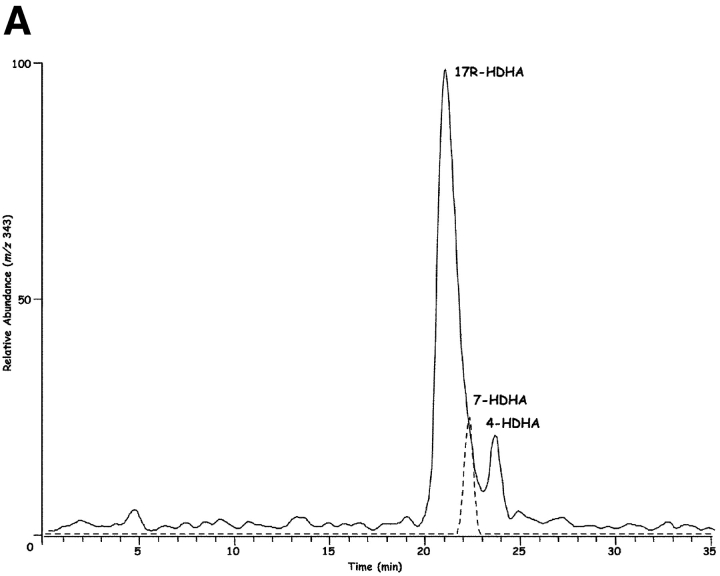
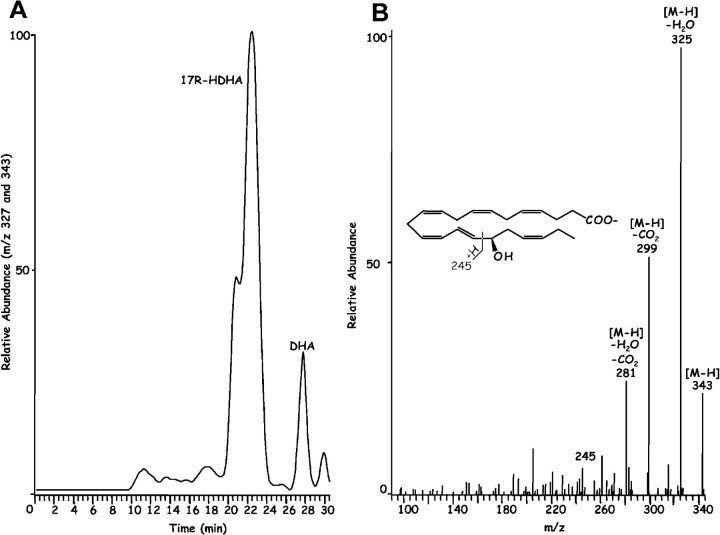
“Hypoxia is also known to induce COX-2 (45), and hypoxic endothelial cells exposed to cytokine IL-1 , as endothelial cells might encounter at inflammatory loci or with ischemic events (23), treated with aspirin were a source of 17R-HDHA (Fig.”
BackgroundCanny, G., Levy, O., Furuta, G. T., Narravula-Alipati, S., Sisson, R. B., Serhan, C. N., & Colgan, S. P. (2002) · Proceedings of the National Academy of Sciences · doi:10.1073/pnas.052533799 · Cited by 295
Self-citationMaddox, J. F., & Serhan, C. N. (1996) · The Journal of experimental medicine · doi:10.1084/jem.183.1.137 · Cited by 294 · cited 1×
“Emergence of the finding that arachidonic acid-derived LXs inhibit PMN trafficking and serve as endogenous antiinflammatory mediators while activating monocytes in a nonphlogistic fashion (11, 59), as well as accelerating the uptake of apoptotic PMN by macrophages at sites of inflammation (28), indicates that not all…”
BackgroundSelf-citationEnzyme with dual lipoxygenase activities catalyzes leukotriene A4 synthesis from arachidonic acid.
Shimizu, T., Rådmark, O., & Samuelsson, B. (1984) · Proceedings of the National Academy of Sciences · doi:10.1073/pnas.81.3.689 · Cited by 290 · cited 1×
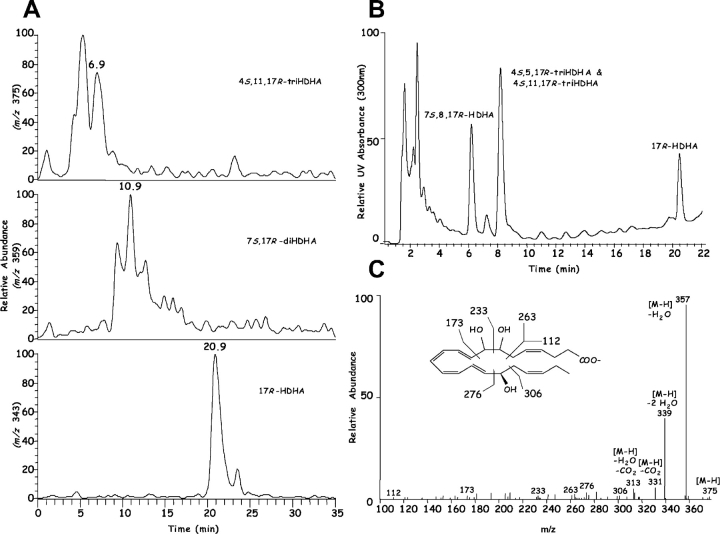
“The mechanism used by PMNs to convert the 17R-HDHA precursor appeared similar to that established and identified for the epoxide generating capacity of the human PMN 5-lipoxgenase, which performs both a lipoxygenation and epoxidation step (2, 4) as demonstrated with the potato 5–LO (46).”
MethodLee, T. H., Mencia-Huerta, J. M., Shih, C., Corey, E. J., Lewis, R. A., & Austen, K. F. (1984) · Journal of Clinical Investigation · doi:10.1172/jci111612 · Cited by 270 · cited 1×
“DHA can also be converted by human neutrophils to 7S-HDHA that does not stimulate chemotaxis (31), and retina converts DHA to both mono- and dihydroxy products via LO(s) (28).”
BackgroundGum, P. A., Thamilarasan, M., Watanabe, J., Blackstone, E. H., & Lauer, M. S. (2001) · JAMA · doi:10.1001/jama.286.10.1187 · Cited by 238 · cited 1×
“It is now clear from numerous studies that aspirin has beneficial effects in and apart from other nonsteroidal antiinflammatory drugs (57, 58).”
BackgroundLipoxin A4 modulates transmigration of human neutrophils across intestinal epithelial monolayers.
Colgan, S. P., Serhan, C. N., Parkos, C. A., Delp-Archer, C., & Madara, J. L. (1993) · Journal of Clinical Investigation · doi:10.1172/jci116601 · Cited by 211 · cited 2×
“(34) and incubations with HMVEC monolayers (1, 2, or 3 passages) seeded ( 2 10 5 cells/cm 2 ) on polycarbonate permeable supports precoated with 0.”
BackgroundMethodSelf-citationThe cardiovascular protective role of docosahexaenoic acid
McLennan, P., Howe, P., Abeywardena, M., Muggli, R., Raederstorff, D., Mano, M., Rayner, T., & Head, R. (1996) · European Journal of Pharmacology · doi:10.1016/0014-2999(95)00861-6 · Cited by 198 · cited 4×
“It is also noteworthy that DHA is cardioprotective in the ischemic heart (22) and that COX-2 is involved in preconditioning (19) as well as resolution (12).”
BackgroundInfluential(1990) · Elsevier eBooks · doi:10.1016/b978-0-12-584552-6.x5001-0 · Cited by 195
Oxidoreductases in Lipoxin A4 Metabolic Inactivation
Clish, C. B., Levy, B. D., Chiang, N., Tai, H.-H., & Serhan, C. N. (2000) · Journal of Biological Chemistry · doi:10.1074/jbc.m002863200 · Cited by 184
Self-citationLipoxins: revelations on resolution
McMahon, B. A., Mitchell, S., Brady, H. R., & Godson, C. (2001) · Trends in Pharmacological Sciences · doi:10.1016/s0165-6147(00)01771-5 · Cited by 148
Unorthodox routes to prostanoid formation: new twists in cyclooxygenase-initiated pathways
Serhan, C. N., & Oliw, E. (2001) · Journal of Clinical Investigation · doi:10.1172/jci13375 · Cited by 146 · cited 5×
“Like other LO-derived eicosanoids, LXs are potent-local acting in subnanomolar levels with precise stereochemical requirements for evoking their actions (4, 9).”
BackgroundInfluentialSelf-citationBandeira-Melo, C., Serra, M. F., Diaz, B. L., Cordeiro, R. S. B., Silva, P. M. R., Lenzi, H. L., Bakhle, Y. S., Serhan, C. N., & Martins, M. A. (2000) · The Journal of Immunology · doi:10.4049/jimmunol.164.2.1029 · Cited by 135 · cited 4×
“It is also noteworthy that DHA is cardioprotective in the ischemic heart (22) and that COX-2 is involved in preconditioning (19) as well as resolution (12).”
BackgroundInfluentialSelf-citationSamuelsson, B. (1983) · Bioscience Reports · doi:10.1007/bf01133779 · Cited by 128
Proceedings of the AOCS Short Course on Polyunsaturated Fatty Acids and Eicosanoids
Eicosanoids, & Lands, W. E. M. (1987) · AOCS Publishing eBooks · Cited by 127
Fischer, S., von Schacky, C., Siess, W., Strasser, T., & Weber, P. C. (1984) · Biochemical and Biophysical Research Communications · doi:10.1016/s0006-291x(84)80193-x · Cited by 121
Xiao, G., Tsai, A.-L., Palmer, G., Boyar, W. C., Marshall, P. J., & Kulmacz, R. J. (1997) · Biochemistry · doi:10.1021/bi962476u · Cited by 121
Miller, C. C., Tang, W., Ziboh, V. A., & Fletcher, M. P. (1991) · Journal of Investigative Dermatology · doi:10.1111/1523-1747.ep12515911 · Cited by 92
Rowlinson, S. W., Crews, B. C., Goodwin, D. C., Schneider, C., Gierse, J. K., & Marnett, L. J. (2000) · Journal of Biological Chemistry · doi:10.1074/jbc.275.9.6586 · Cited by 87 · cited 7×
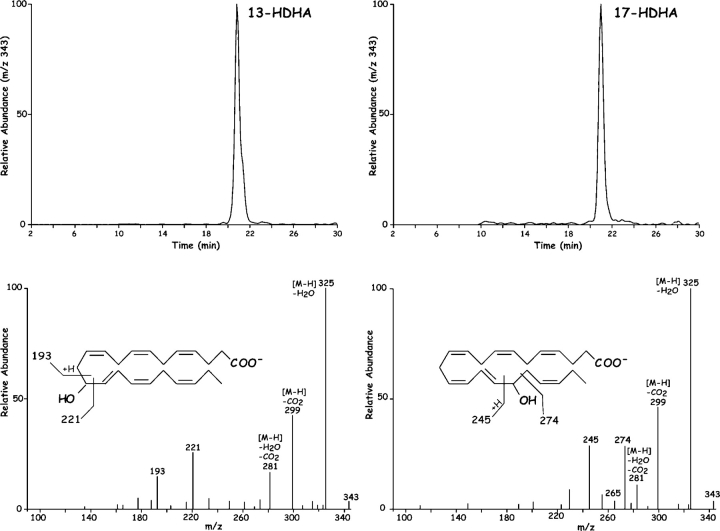
“, m/z 193 and m/z 221) and, when COX-2 was treated with aspirin to acetylate serine within the catalytic site (1, 26, 42), DHA was enzymatically converted to 17R-HDHA (Fig.”
BackgroundMethodInfluentialReich, E. E., Zackert, W. E., Brame, C. J., Chen, Y., Roberts, L. J., Hachey, D. L., Montine, T. J., & Morrow, J. D. (2000) · Biochemistry · doi:10.1021/bi992000l · Cited by 84 · cited 1×
“While not a substrate for COX-1 (43), oxidized isoprostane-like compounds can also be produced from DHA that appear to reflect oxidative free radical catalyzed events (54).”
BackgroundPOLING, J. S., VICINI, S., ROGAWSKI, M. A., & SALEM, N. (1996) · Neuropharmacology · doi:10.1016/0028-3908(96)00127-x · Cited by 80
Freedman, S. D., Weinstein, D., Blanco, P. G., Martinez-Clark, P. O., Urman, S., Zaman, M. M., Morrow, J. D., & Álvarez, J. G. (2002) · Journal of Applied Physiology · doi:10.1152/japplphysiol.00927.2001 · Cited by 71
Les Prix Nobel : Nobel Prizes, presentations, biographies and lectures
Nobelstiftelsen (1982) · Almqvist & Wiksell International eBooks · Cited by 70
Qiu, F.-H., Devchand, P. R., Wada, K., & Serhan, C. N. (2001) · The FASEB Journal · doi:10.1096/fj.01-0576fje · Cited by 63
Self-citationTherapeutic Roles Of Selective Cox-2 Inhibitors
Vane, J. R., & Botting, R. M. (2001) · Medical Entomology and Zoology · Cited by 58
Yergey, J. A., Kim, H. Y., & Salem, N. (1986) · Analytical Chemistry · doi:10.1021/ac00298a016 · Cited by 55
Transcellular Regulation of Eicosanoid Biosynthesis
Gronert, K., Clish, C. B., Romano, M., & Serhan, C. N. (2003) · Eicosanoid Protocols · doi:10.1385/1-59259-263-5:119 · Cited by 54 · cited 1×
“(36) and used here essentially as reported for elucidation of novel”
MethodSelf-citationLipoxygenation of Docosahexaenoic Acid by the Rat Pineal Body
Sawazaki, S., Salem, N., & Kim, H. (1994) · Journal of Neurochemistry · doi:10.1046/j.1471-4159.1994.62062437.x · Cited by 48 · cited 2×
“For example, 17S-HDHA is generated via 15-lipoxygenation or via autooxidation in racemic 50:50 ratio of R/S mixtures (40, 41).”
BackgroundHaemostasis in Fish – An Evolutionary Perspective
Rowley, A. F., Hill, D. J., Ray, C. E., & Munro, R. C. (1997) · Thrombosis and Haemostasis · doi:10.1055/s-0038-1655943 · Cited by 46
Rosenberg, I. H. (2002) · New England Journal of Medicine · doi:10.1056/nejm200204113461502 · Cited by 38 · cited 1×
“It is now clear from numerous studies that aspirin has beneficial effects in and apart from other nonsteroidal antiinflammatory drugs (57, 58).”
BackgroundBazan, N. G., Turco, E., & Gordon, W. C. (1993) · Canadian Journal of Physiology and Pharmacology · doi:10.1139/y93-103 · Cited by 34
Cell-Cell Interactions in the Release of Inflammatory Mediators
Wong, P. Y.-K., & Serhan, C. N. (1991) · Advances in experimental medicine and biology · doi:10.1007/978-1-4684-6024-7 · Cited by 29
Self-citationPalmantier, R., & Borgeat, P. (1991) · Advances in experimental medicine and biology · doi:10.1007/978-1-4684-6024-7_4 · Cited by 21
George, H. J., Dyk, D. E. V., Straney, R. A., Trzăskos, J. M., & Copeland, R. A. (1996) · Protein Expression and Purification · doi:10.1006/prep.1996.0003 · Cited by 20
Acylation of docosahexaenoic acid into phospholipids by intact human neutrophils
Tou, J. (1986) · Lipids · doi:10.1007/bf02535694 · Cited by 18
Whelan, J., Reddanna, P., Nikolaev, V., Hildenbrandt, G. R., & Reddy, C. C. (1990) · Elsevier eBooks · doi:10.1016/b978-0-12-584552-6.50022-7 · Cited by 5
Research works printed but not linked: 1
- De Caterina, R., S. Endres, S.D. Kristensen, and E.B. Schmidt, editors. 1993. N-3 Fatty Acids and Vascular Disease. Springer-Verlag, London. pp. 1–166.
Cited by
Pro-resolving lipid mediators are leads for resolution physiology
Serhan, C. N. (2014) · Nature · doi:10.1038/nature13479 · Cited by 3,041
Self-citationResolving inflammation: dual anti-inflammatory and pro-resolution lipid mediators
Serhan, C. N., Chiang, N., & Van Dyke, T. E. (2008) · Nature Reviews Immunology · doi:10.1038/nri2294 · Cited by 2,932
Self-citationInflammation and tumor progression: signaling pathways and targeted intervention
Zhao, H., Wu, L., Yan, G., Chen, Y., Zhou, M., Wu, Y., & Li, Y. (2021) · Signal Transduction and Targeted Therapy · doi:10.1038/s41392-021-00658-5 · Cited by 2,792
Resolution of inflammation: the beginning programs the end
Serhan, C. N., & Savill, J. (2005) · Nature Immunology · doi:10.1038/ni1276 · Cited by 2,552
Self-citationn−3 Polyunsaturated fatty acids, inflammation, and inflammatory diseases
Calder, P. C. (2006) · The American Journal of Clinical Nutrition · doi:10.1093/ajcn/83.6.1505s · Cited by 2,525
Metadata
- Authors
- Serhan, C. N., Hong, S., Gronert, K., Colgan, S. P., Devchand, P. R., Mirick, G., & Moussignac, R.-L.
- Affiliations
- Brigham and Women's Hospital (US)
- Venue
- The Journal of Experimental Medicine
- Publisher
- Rockefeller University Press
- Published
- 2002-10-21
- Volume
- 196
- Issue
- 8
- Pages
- 1025-1037
- ISSN
- 0022-1007 (ISSN-L)
- 1540-9538
- PMC
- PMC2194036
- OpenAlex
- W2162465757
- Cited by
- 1,650
- References
- 62
- Citations by year
- 2026: 40 · 2025: 45 · 2024: 65 · 2023: 61 · 2022: 68 · 2021: 75 · 2020: 101 · 2019: 78 · 2018: 81 · 2017: 81 · 2016: 84 · 2015: 94 · 2014: 100 · 2013: 112 · 2012: 92
- FWCI
- 30.40
- Type
- journal article
- Language
- en
- Open access
- bronze
- doi.org
- Locations
- The Journal of Experimental Medicine (publishedVersion)
- PubMed Central (publishedVersion, cc-by-nc-sa)
- PubMed (publishedVersion)
- Funders
- National Institutes of Health (4r37gm038765-19, DE13499, GM 38765, P01-DE13499)
- National Institute of General Medical Sciences (GM 38765, R01GM038765, R37-GM038765)
- National Institute of Diabetes and Digestive and Kidney Diseases (K01DK060583)
- National Institute of Dental and Craniofacial Research (P01 DE 13499, P01DE013499)
- Topics
- Health Sciences › Nursing › Nutrition and Dietetics › Fatty Acid Research and Health
- Health Sciences › Medicine › Pharmacology (medical) › Inflammatory mediators and NSAID effects
- Life Sciences › Biochemistry, Genetics and Molecular Biology › Biochemistry › Eicosanoids and Hypertension Pharmacology
- Keywords
- resolvins, aspirin, cyclooxygenase-2, docosahexaenoic acid, omega-3 fatty acids, inflammation resolution, microglia, neutrophils, eicosanoid biosynthesis, anti-inflammatory mediators, peritonitis, skin inflammation, leukocyte recruitment
- MeSH terms
- Animals, Aspirin, Biological Factors, Humans, Inflammation, Tumor Cells, Cultured, Signal Transduction, Fatty Acids, Omega-3, Mice
About these checks
Registry, retraction, Cites and statistics results are computed, not judged, with one exception: a printed reference that no index lists is read once by a model before it counts as a citation error. Claims are extracted by a model and kept only when their quote appears verbatim in the text; each cited source is then checked, with a model’s help, for whether it says what the claim relies on. Those verdicts can be wrong — read the claim’s quote and the cited source before relying on one.
Statistics and arithmetic are recomputed, not judged.
Confidence bands are shown only for fields calibrated on our annotated test set. None is calibrated yet, so no band is shown.
What counts as a claim ›How we measure confidence ›How we check this ›
Are you an author, or do you see a problem with this page? Request a review
Data sources
Bibliographic data: Semantic Scholar, OpenAlex, Crossref.
Contains information from the Semantic Scholar Academic Graph Datasets, made available under the ODC Attribution License (ODC-BY 1.0).
Semantic Scholar’s data is described in: Kinney, R., et al. (2023). The Semantic Scholar Open Data Platform. arXiv:2301.10140.
