

Resolvins
Open accessThe DOI matches its Crossref record; 62 of the 62 references it cites were found in a registry or an index.
Abstract
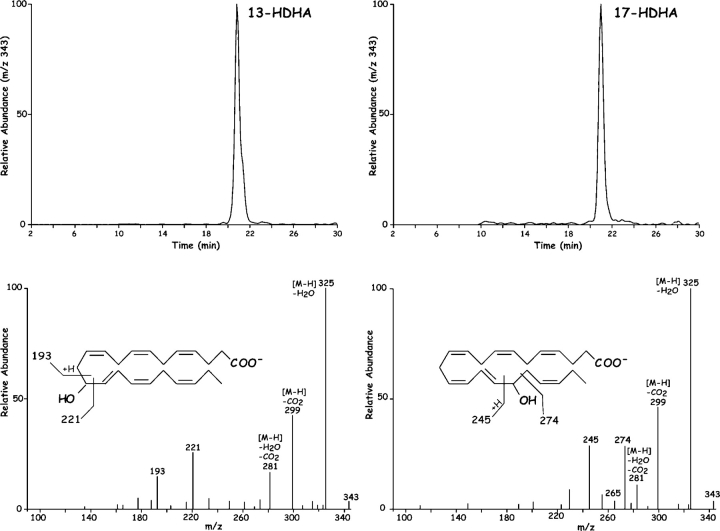
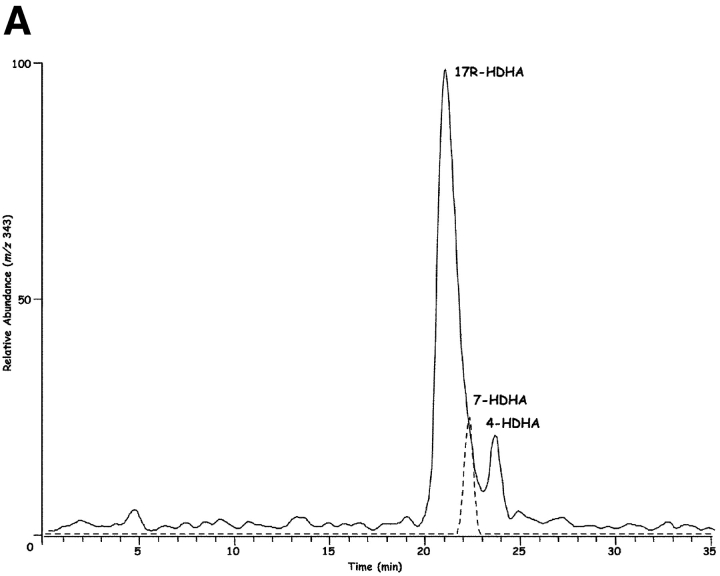
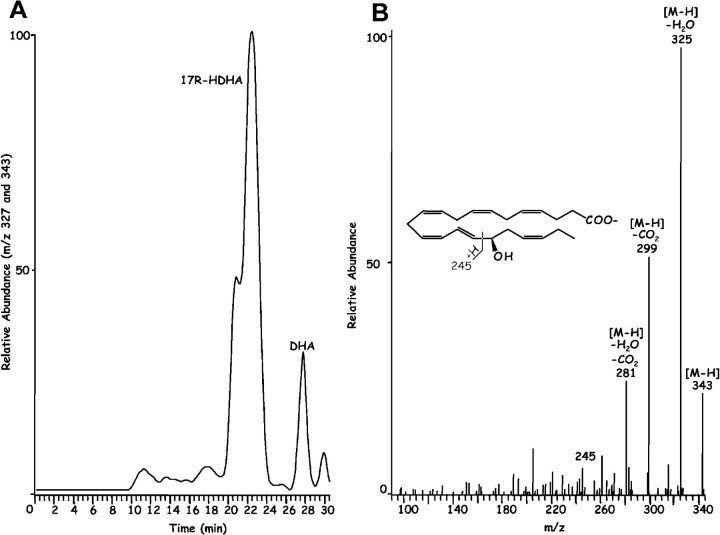
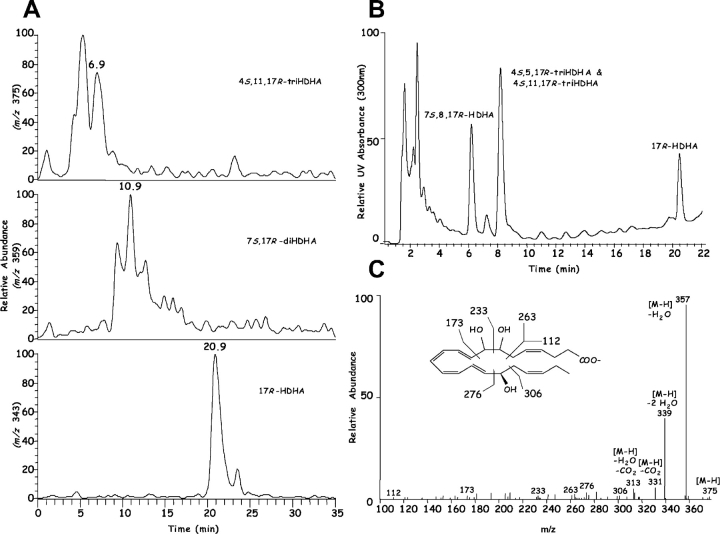
Aspirin (ASA) is unique among current therapies because it acetylates cyclooxygenase (COX)-2 enabling the biosynthesis of R-containing precursors of endogenous antiinflammatory mediators. Here, we report that lipidomic analysis of exudates obtained in the resolution phase from mice treated with ASA and docosahexaenoic acid (DHA) (C22:6) produce a novel family of bioactive 17R-hydroxy-containing di- and tri-hydroxy-docosanoids termed resolvins. Murine brain treated with aspirin produced endogenous 17R-hydroxydocosahexaenoic acid as did human microglial cells. Human COX-2 converted DHA to 13-hydroxy-DHA that switched with ASA to 17R-HDHA that also proved a major route in hypoxic endothelial cells. Human neutrophils transformed COX-2-ASA–derived 17R-hydroxy-DHA into two sets of novel di- and trihydroxy products; one initiated via oxygenation at carbon 7 and the other at carbon 4. These compounds inhibited (IC50 ∼50 pM) microglial cell cytokine expression and in vivo dermal inflammation and peritonitis at ng doses, reducing 40–80% leukocytic exudates. These results indicate that exudates, vascular, leukocytes and neural cells treated with aspirin convert DHA to novel 17R-hydroxy series of docosanoids that are potent regulators. These biosynthetic pathways utilize omega-3 DHA and EPA during multicellular events in resolution to produce a family of protective compounds, i.e., resolvins, that enhance proresolution status.
Overview
The claims and statistics of this paper haven’t been checked yet.
Free: it reads the open-access text and checks the first 5 claims that cite a source we can check. Create a free account to check every claim.
Integrity signals
Registry
Cites
Statistics
Figures



Verification
Claims the paper makes
The claims and statistics of this paper haven’t been checked yet.
Free: it reads the open-access text and checks the first 5 claims that cite a source we can check. Create a free account to check every claim.
Claims other papers make about this one
Each is checked against this paper’s own text: does it say what the citing paper says it does?
The source backs part of the claim, not all of it — or backs it for a different population, condition or comparison.
In the citing paper
“These lipid mediators can selectively stop neutrophil infiltration; increase monocyte recruitment and macrophage phagocytosis; stimulate the expression of genes important for antimicrobial defense; and promote the exit of phagocytes from the inflamed sites [100–103].”
From Transition from inflammation to proliferation: a critical step during wound healing (2016) · cites this paper as [100]
Experimental — accuracy not yet measuredThe source backs part of the claim, not all of it — or backs it for a different population, condition or comparison.
In the citing paper
“Prostaglandin E2 (PGE2) and D2 rapidly initiate the resolution process by inducing the expression of lipid mediators with both anti-inflammatory and pre-resolution functions, e.g., lipoxins [96, 97], resolvins and protectins [98–100], a process known as lipid-mediator class switch [97].”
From Transition from inflammation to proliferation: a critical step during wound healing (2016) · cites this paper as [100]
Experimental — accuracy not yet measuredThe source backs part of the claim, not all of it — or backs it for a different population, condition or comparison.
In the citing paper
“These lipid mediators can selectively stop neutrophil infiltration; increase monocyte recruitment and macrophage phagocytosis; stimulate the expression of genes important for antimicrobial defense; and promote the exit of phagocytes from the inflamed sites [100–103].”
From Transition from inflammation to proliferation: a critical step during wound healing (2016) · cites this paper as [100]
Experimental — accuracy not yet measuredThe source backs part of the claim, not all of it — or backs it for a different population, condition or comparison.
In the citing paper
“These lipid mediators can selectively stop neutrophil infiltration; increase monocyte recruitment and macrophage phagocytosis; stimulate the expression of genes important for antimicrobial defense; and promote the exit of phagocytes from the inflamed sites [100–103].”
From Transition from inflammation to proliferation: a critical step during wound healing (2016) · cites this paper as [100]
Experimental — accuracy not yet measuredThe cited source says what the claim attributes to it.
In the citing paper
“These lipid mediators can selectively stop neutrophil infiltration; increase monocyte recruitment and macrophage phagocytosis; stimulate the expression of genes important for antimicrobial defense; and promote the exit of phagocytes from the inflamed sites [100–103].”
From Transition from inflammation to proliferation: a critical step during wound healing (2016) · cites this paper as [100]
Self-check
Percentages, sums and reported differences re-computed from the paper’s own numbers.
The self-check needs the paper’s full text.
Citations
Cites
Inflammation. Basic principles and clinical correlates
(1989) · Biomedicine & Pharmacotherapy · doi:10.1016/0753-3322(89)90156-x · Cited by 2,393
Leukotrienes and Lipoxins: Structures, Biosynthesis, and Biological Effects
Samuelsson, B., Dahlén, S.-E., Lindgren, J. Å., Rouzer, C. A., & Serhan, C. N. (1987) · Science · doi:10.1126/science.2820055 · Cited by 2,233 · cited 7×
“Like other LO-derived eicosanoids, LXs are potent-local acting in subnanomolar levels with precise stereochemical requirements for evoking their actions (4, 9).”
BackgroundMethodInfluentialSelf-citation(1999) · PubMed · Cited by 2,062
Robbins pathologic basis of disease
Cotran, R. S., Kumar, V., & Collins, T. (1989) · Medical Entomology and Zoology · Cited by 1,944
Lipid mediator class switching during acute inflammation: signals in resolution
Levy, B. D., Clish, C. B., Schmidt, B., Gronert, K., & Serhan, C. N. (2001) · Nature Immunology · doi:10.1038/89759 · Cited by 1,453
Self-citationMarchioli, R., Barzi, F., Bomba, E., Chieffo, C., Di Gregorio, D., Di Mascio, R., Franzosi, M. G., Geraci, E., Levantesi, G., Maggioni, A. P., et al. (2002) · Circulation · doi:10.1161/01.cir.0000014682.14181.f2 · Cited by 1,311
Inducible cyclooxygenase may have anti-inflammatory properties
Gilroy, D. W., Colville-Nash, P. R., Willis, D., Chivers, J., Paul-Clark, M. J., & Willoughby, D. A. (1999) · Nature Medicine · doi:10.1038/9550 · Cited by 1,242
Serhan, C. N., Clish, C. B., Brannon, J., Colgan, S. P., Chiang, N., & Gronert, K. (2000) · The Journal of Experimental Medicine · doi:10.1084/jem.192.8.1197 · Cited by 1,189
Self-citationBlood Levels of Long-Chain n–3 Fatty Acids and the Risk of Sudden Death
Albert, C. M., Campos, H., Stampfer, M. J., Ridker, P. M., Manson, J. E., Willett, W. C., & Ma, J. (2002) · New England Journal of Medicine · doi:10.1056/nejmoa012918 · Cited by 1,146 · cited 3×
“It is noteworthy that both patient groups received aspirin in the GISSI trial while comparing tocopherol versus omega-3 supplementation (20) as did a significant number of participants in the most recent Physician Health study report (18).”
Background
Research works printed but not linked: 1
- De Caterina, R., S. Endres, S.D. Kristensen, and E.B. Schmidt, editors. 1993. N-3 Fatty Acids and Vascular Disease. Springer-Verlag, London. pp. 1–166.
Cited by
Pro-resolving lipid mediators are leads for resolution physiology
Serhan, C. N. (2014) · Nature · doi:10.1038/nature13479 · Cited by 3,041
Self-citationResolving inflammation: dual anti-inflammatory and pro-resolution lipid mediators
Serhan, C. N., Chiang, N., & Van Dyke, T. E. (2008) · Nature Reviews Immunology · doi:10.1038/nri2294 · Cited by 2,932
Self-citationInflammation and tumor progression: signaling pathways and targeted intervention
Zhao, H., Wu, L., Yan, G., Chen, Y., Zhou, M., Wu, Y., & Li, Y. (2021) · Signal Transduction and Targeted Therapy · doi:10.1038/s41392-021-00658-5 · Cited by 2,792
Resolution of inflammation: the beginning programs the end
Serhan, C. N., & Savill, J. (2005) · Nature Immunology · doi:10.1038/ni1276 · Cited by 2,552
Self-citationn−3 Polyunsaturated fatty acids, inflammation, and inflammatory diseases
Calder, P. C. (2006) · The American Journal of Clinical Nutrition · doi:10.1093/ajcn/83.6.1505s · Cited by 2,525
Transition from inflammation to proliferation: a critical step during wound healing
Landén, N. X., Li, D., & Ståhle, M. (2016) · Cellular and Molecular Life Sciences · doi:10.1007/s00018-016-2268-0 · Cited by 1,980
Omega‐3 polyunsaturated fatty acids and inflammatory processes: nutrition or pharmacology?
Calder, P. C. (2013) · British Journal of Clinical Pharmacology · doi:10.1111/j.1365-2125.2012.04374.x · Cited by 1,347
Resolvins in inflammation: emergence of the pro-resolving superfamily of mediators
Serhan, C. N., & Levy, B. D. (2018) · Journal of Clinical Investigation · doi:10.1172/jci97943 · Cited by 1,344
Self-citationThe Opposing Effects of N-3 and n-6 Fatty Acids
Schmitz, G., & Ecker, J. (2008) · Progress in Lipid Research · doi:10.1016/j.plipres.2007.12.004 · Cited by 1,245
Regulation of the Inflammatory Response in Cardiac Repair
Frangogiannis, N. G. (2012) · Circulation Research · doi:10.1161/circresaha.111.243162 · Cited by 1,194
Omega-3 Fatty Acids and Inflammatory Processes
Calder, P. C. (2010) · Nutrients · doi:10.3390/nu2030355 · Cited by 1,116
Wall, R., Ross, R. P., Fitzgerald, G. F., & Stanton, C. (2010) · Nutrition Reviews · doi:10.1111/j.1753-4887.2010.00287.x · Cited by 1,101
Emerging targets in neuroinflammation-driven chronic pain
Ji, R.-R., Xu, Z.-Z., & Gao, Y.-J. (2014) · Nature Reviews Drug Discovery · doi:10.1038/nrd4334 · Cited by 1,101
Resolution of in flammation: state of the art, definitions and terms
Serhan, C. N., Brain, S. D., Buckley, C. D., Gilroy, D. W., Haslett, C., O'Neill, L. A. J., Perretti, M., Rossi, A. G., & Wallace, J. L. (2007) · The FASEB Journal · doi:10.1096/fj.06-7227rev · Cited by 1,045
“Additionally, the widely used aspirin jump-starts resolution by making up for its loss in prostaglandin production, which plays key roles in resolution, by instead generating the epimeric version of lipid mediators (25), such as the aspirin-triggered lipoxins (recently reviewed in ref.”
BackgroundSelf-citationHong, S., Gronert, K., Devchand, P. R., Moussignac, R.-L., & Serhan, C. N. (2003) · Journal of Biological Chemistry · doi:10.1074/jbc.m300218200 · Cited by 1,000
Self-citationSerhan, C. N. (2007) · Annual Review of Immunology · doi:10.1146/annurev.immunol.25.022106.141647 · Cited by 997
Self-citationResolvins and protectins in inflammation resolution
Serhan, C. N., & Petasis, N. A. (2011) · Chemical Reviews · doi:10.1021/cr100396c · Cited by 996
Self-citationDyall, S. C. (2015) · Frontiers in Aging Neuroscience · doi:10.3389/fnagi.2015.00052 · Cited by 943
“, 2014), and consitent with the formation of resolvins from DHA (Serhan et al., 2002), aspirin acetylation of COX-2 also significantly increases production of EFOXs.”
BackgroundInfluentialArita, M., Bianchini, F., Aliberti, J., Sher, A., Chiang, N., Hong, S., Yang, R., Petasis, N. A., & Serhan, C. N. (2005) · The Journal of Experimental Medicine · doi:10.1084/jem.20042031 · Cited by 922
“Recently, we uncovered a novel family of aspirin-triggered bioactive lipids biosynthesized during the spontaneous resolution phase of acute inflammation in vivo, coined the resolvins (resolution-phase interaction products), which are potent autacoids that now may provide molecular means that underlie -3 PUFA’s protect…”
BackgroundSelf-citationMaresins: Novel macrophage mediators with potent antiinflammatory and proresolving actions
Serhan, C. N., Yang, R., Martinod, K., Kasuga, K., Pillai, P. S., Porter, T. F., Oh, S. F., & Spite, M. (2009) · Journal of Experimental Medicine · doi:10.1084/jem.20081880 · Cited by 908
Self-citationMechanisms of Action of (n-3) Fatty Acids,
Calder, P. C. (2012) · The Journal of Nutrition · doi:10.3945/jn.111.155259 · Cited by 871
Proresolving Lipid Mediators and Mechanisms in the Resolution of Acute Inflammation
Buckley, C. D., Gilroy, D. W., & Serhan, C. N. (2014) · Immunity · doi:10.1016/j.immuni.2014.02.009 · Cited by 807
“…and functional assessment with isolated human cells has uncovered bioactive products identified within the resolution phase of acute sterile inflammation (illustrated in top panel of Figure 1) that activate pro-resolving mechanisms (Hong et al., 2003; Serhan et al., 2000; Serhan et al., 2002).”
BackgroundInfluentialSelf-citationMarcheselli, V. L., Hong, S., Lukiw, W. J., Tian, X. H., Gronert, K., Musto, A., Hardy, M., Gimenez, J. M., Chiang, N., Serhan, C. N., et al. (2003) · Journal of Biological Chemistry · doi:10.1074/jbc.m305841200 · Cited by 802
Self-citationAdvances in Our Understanding of Oxylipins Derived from Dietary PUFAs
Gabbs, M., Leng, S., Devassy, J. G., Monirujjaman, M., & Aukema, H. M. (2015) · Advances in Nutrition · doi:10.3945/an.114.007732 · Cited by 798
“DHA also has been shown to yield hydroxy Oxylipins 517 FAs nonenzymatically (e.g., 8-HDoHE) (99, 100), and 13- HDoHE can be formed via COX2 (26).”
BackgroundInfluentialSpecialized pro-resolving mediators: endogenous regulators of infection and inflammation
Basil, M. C., & Levy, B. D. (2016) · Nature Reviews Immunology · doi:10.1038/nri.2015.4 · Cited by 791
Yan, Y., Jiang, W., Spinetti, T., Tardivel, A., Castillo, R., Bourquin, C., Guarda, G., Tian, Z., Tschopp, J., & Zhou, R. (2013) · Immunity · doi:10.1016/j.immuni.2013.05.015 · Cited by 784
“years, some enzymatic oxygenated products generated from u-3 FAs have been shown to exert anti-inflammatory activity and contribute functionally to the resolution of inflammation (Arita et al., 2007; Serhan et al., 2002; Spite et al., 2009).”
BackgroundMicroglia in Pain: Detrimental and Protective Roles in Pathogenesis and Resolution of Pain
Chen, G., Zhang, Y.-Q., Qadri, Y. J., Serhan, C. N., & Ji, R.-R. (2018) · Neuron · doi:10.1016/j.neuron.2018.11.009 · Cited by 780
Self-citationInflammatory Resolution: new opportunities for drug discovery
Gilroy, D. W., Lawrence, T., Perretti, M., & Rossi, A. G. (2004) · Nature Reviews Drug Discovery · doi:10.1038/nrd1383 · Cited by 772
“DHA and EPA — omega-3 fatty-acid constituents of fish oils — were shown recently to be metabolized during the resolving phase of an aspirin-treated TNF-α-induced inflammation to potent anti-inflammatory products, aptly named resolvin”
BackgroundResolvin D1 binds human phagocytes with evidence for proresolving receptors
Krishnamoorthy, S., Recchiuti, A., Chiang, N., Yacoubian, S., Lee, C.-H., Yang, R., Petasis, N. A., & Serhan, C. N. (2010) · Proceedings of the National Academy of Sciences · doi:10.1073/pnas.0907342107 · Cited by 730
“RvD1 limits PMN infiltration at nanogram levels in murine peritonitis and blocks transendothelial migration of human PMNs (8, 12) as well as enhances phagocytosis by human macrophages (MΦ) (13).”
BackgroundMethodSelf-citationResolvin D2 is a potent regulator of leukocytes and controls microbial sepsis
Spite, M., Norling, L. V., Summers, L., Yang, R., Cooper, D., Petasis, N. A., Flower, R. J., Perretti, M., & Serhan, C. N. (2009) · Nature · doi:10.1038/nature08541 · Cited by 695
Self-citationThe role of neutrophils during intestinal inflammation
Fournier, B. M., & Parkos, C. A. (2012) · Mucosal Immunology · doi:10.1038/mi.2012.24 · Cited by 671
Infection regulates pro-resolving mediators that lower antibiotic requirements
Chiang, N., Fredman, G., Bäckhed, F., Oh, S. F., Vickery, T., Schmidt, B. A., & Serhan, C. N. (2012) · Nature · doi:10.1038/nature11042 · Cited by 664
Self-citationDyall, S. C., Balas, L., Bazan, N. G., Brenna, J. T., Chiang, N., da Costa Souza, F., Dalli, J., Durand, T., Galano, J.-M., Lein, P. J., et al. (2022) · Progress in Lipid Research · doi:10.1016/j.plipres.2022.101165 · Cited by 660
“D-series resolvins: RvDs are biosynthesized from DHA; they are potent immunoresolvents active in the picomolar to low nanomolar concentrations [93,94].”
BackgroundSelf-citationEssential Fatty Acids: Biochemistry, Physiology and Pathology
Das, U. N. (2006) · Biotechnology Journal · doi:10.1002/biot.200600012 · Cited by 650
“Murine brain cells expressing COX-2, when treated with aspirin, enzymatically transformed DHA to a 17R series of hydroxy DHAs (HDHAs) that, in turn, is enzymatically converted by PMNs to di- and tri-hydroxy containing docosanoids [91].”
BackgroundResolution of Inflammation: What Controls Its Onset?
Sugimoto, M. A., Sousa, L. P., Pinho, V., Perretti, M., & Teixeira, M. M. (2016) · Frontiers in Immunology · doi:10.3389/fimmu.2016.00160 · Cited by 638
Polyunsaturated fatty acids and inflammation
Calder, P. C. (2006) · Prostaglandins, Leukotrienes and Essential Fatty Acids · doi:10.1016/j.plefa.2006.05.012 · Cited by 638
The Mouse Retina as an Angiogenesis Model
Stahl, A., Connor, K. M., Sapieha, P., Chen, J., Dennison, R. J., Krah, N. M., Seaward, M. R., Willett, K. L., Aderman, C. M., Guerin, K. I., et al. (2010) · Investigative Opthalmology & Visual Science · doi:10.1167/iovs.10-5176 · Cited by 603
“Cyclooxygenase (Cox)-2, one of the key metabolizing enzymes for -3 and -6 PUFAs, has been independently identified as a strong modulator of proliferative retinopathy in the OIR retina(128); Serhan et al.(129) showed that Cox-2 modulation via aspirin can generate anti-inflammatory lipid mediators of the resolvin class.”
BackgroundMacrophage proresolving mediator maresin 1 stimulates tissue regeneration and controls pain
Serhan, C. N., Dalli, J., Karamnov, S., Choi, A., Park, C., Xu, Z., Ji, R., Zhu, M., & Petasis, N. A. (2012) · The FASEB Journal · doi:10.1096/fj.11-201442 · Cited by 595
“(46), a mediator we elucidated earlier in resolving inflammatory exudates (15, 41).”
BackgroundSelf-citationThe resolution code of acute inflammation: Novel pro-resolving lipid mediators in resolution
Serhan, C. N., Chiang, N., & Dalli, J. (2015) · Seminars in Immunology · doi:10.1016/j.smim.2015.03.004 · Cited by 583
Self-citationThe resolution of inflammation
Buckley, C. D., Gilroy, D. W., Serhan, C. N., Stockinger, B., & Tak, P. P. (2013) · Nature Reviews Immunology · doi:10.1038/nri3362 · Cited by 560
Self-citationMechanisms underlying the cardioprotective effects of omega-3 polyunsaturated fatty acids
Adkins, Y., & Kelley, D. S. (2010) · The Journal of Nutritional Biochemistry · doi:10.1016/j.jnutbio.2009.12.004 · Cited by 557
González-Périz, A., Horrillo, R., Ferré, N., Gronert, K., Dong, B., Morán-Salvador, E., Titos, E., Martínez-Clemente, M., López-Parra, M., Arroyo, V., et al. (2009) · The FASEB Journal · doi:10.1096/fj.08-125674 · Cited by 555
“However, in recent years, -3-PUFAs have been demonstrated to serve as substrates for the conversion to a novel series of lipid mediators designated resolvins and protectins, which mediate the protective and beneficial actions underlying the effects of -3-PUFAs (11-15).”
BackgroundSelf-citationSerhan, C. N. (2017) · The FASEB Journal · doi:10.1096/fj.201601222r · Cited by 555
“) Low-dose aspirin triggers the 17R and 18R/S epimers of the Rvs (9, 53) and 17R-epimer protectins (165, 166).”
BackgroundSelf-citationDalli, J., & Serhan, C. N. (2012) · Blood · doi:10.1182/blood-2012-04-423525 · Cited by 547
Self-citationLipid Mediators in the Resolution of Inflammation
Serhan, C. N., Chiang, N., Dalli, J., & Levy, B. D. (2015) · Cold Spring Harbor Perspectives in Biology · doi:10.1101/cshperspect.a016311 · Cited by 544
“We also learned that n-3 essential fatty acids are substrates within these inflammatory resolving exudates for the biosynthesis of potent antiinflammatory and proresolving mediators (Serhan et al. 2002; Hong et al. 2003).”
BackgroundSelf-citationPeriodontitis: a host‐mediated disruption of microbial homeostasis. Unlearning learned concepts
Bartold, P. M., & Van Dyke, T. E. (2013) · Periodontology 2000 · doi:10.1111/j.1600-0757.2012.00450.x · Cited by 540
“This process leads to the release of cytokines, which stop neutrophil migration to the inflammatory site, attract monocytes that do not release proinflammatory mediators, enhance phagocytosis of bacteria and apoptotic cells by macrophages, direct the movement of phagocytes away from the site via the lymphatics and sti…”
BackgroundResolvin D1 and Its Aspirin-triggered 17R Epimer
Sun, Y.-P., Oh, S. F., Uddin, J., Yang, R., Gotlinger, K., Campbell, E., Colgan, S. P., Petasis, N. A., & Serhan, C. N. (2007) · Journal of Biological Chemistry · doi:10.1074/jbc.m609212200 · Cited by 537
Self-citationInflammation and its Resolution as Determinants of Acute Coronary Syndromes
Libby, P., Tabas, I., Fredman, G., & Fisher, E. A. (2014) · Circulation Research · doi:10.1161/circresaha.114.302699 · Cited by 521
Fatty acids and inflammation: The cutting edge between food and pharma
Calder, P. C. (2011) · European Journal of Pharmacology · doi:10.1016/j.ejphar.2011.05.085 · Cited by 516
“EPA and DHA also give rise to resolvins and related compounds (e.g. protectins) through pathways involving COX and LOX enzymes (Serhan et al., 2000, 2002, 2003, 2008).”
BackgroundRossi, A. G., Sawatzky, D. A., Walker, A., Ward, C., Sheldrake, T. A., Riley, N. A., Caldicott, A., Martinez-Losa, M., Walker, T. R., Duffin, R., et al. (2006) · Nature Medicine · doi:10.1038/nm1468 · Cited by 509
Anti-Inflammatory and Proresolving Lipid Mediators
Serhan, C. N., Yacoubian, S., & Yang, R. (2008) · Annual Review of Pathology: Mechanisms of Disease · doi:10.1146/annurev.pathmechdis.3.121806.151409 · Cited by 507
Self-citationThe relationship between the fatty acid composition of immune cells and their function
Calder, P. C. (2008) · Prostaglandins, Leukotrienes and Essential Fatty Acids · doi:10.1016/j.plefa.2008.09.016 · Cited by 499
“EPA and DHA also give rise to resolvins through pathways involving cyclooxygenase and lipoxygenase enzymes [72,73].”
BackgroundSerhan, C. N., Dalli, J., Colas, R. A., Winkler, J. W., & Chiang, N. (2015) · Biochimica et Biophysica Acta (BBA) - Molecular and Cell Biology of Lipids · doi:10.1016/j.bbalip.2014.08.006 · Cited by 492
Self-citationCircadian rhythm as a therapeutic target
Ruan, W., Yuan, X., & Eltzschig, H. K. (2021) · Nature Reviews Drug Discovery · doi:10.1038/s41573-020-00109-w · Cited by 486
Specialized pro-resolving lipid mediators in the inflammatory response: An update
Bannenberg, G., & Serhan, C. N. (2010) · Biochimica et Biophysica Acta (BBA) - Molecular and Cell Biology of Lipids · doi:10.1016/j.bbalip.2010.08.002 · Cited by 464
“Given the ability of acetylated COX-2 to accept both AA and EPA as substrates for a single oxygenation reaction to form epimeric fatty acid hydroperoxides, DHA was subsequently tested and recognized as a substrate for acetylated COX-2 as well [92].”
BackgroundSelf-citationResolvins, Specialized Proresolving Lipid Mediators, and Their Potential Roles in Metabolic Diseases
Spite, M., Clària, J., & Serhan, C. N. (2014) · Cell Metabolism · doi:10.1016/j.cmet.2013.10.006 · Cited by 464
“LOX, lipoxygenase; RvD1, resolvin D1; PD1, protectin D1; MaR1, maresin 1. be re-established (Serhan et al., 2000; Levy et al., 2001; Serhan et al., 2002; Serhan and Savill, 2005).”
BackgroundSelf-citationHasturk, H., Kantarci, A., Goguet-Surmenian, E., Blackwood, A., Andry, C., Serhan, C. N., & Van Dyke, T. E. (2007) · The Journal of Immunology · doi:10.4049/jimmunol.179.10.7021 · Cited by 461
“A rapidly emerging body of evidence demonstrates that endogenous mediators actively participate in dampening host responses to orchestrate resolution of inflammation (33, 34).”
BackgroundSelf-citationThe Lipid Mediator Protectin D1 Inhibits Influenza Virus Replication and Improves Severe Influenza
Morita, M., Kuba, K., Ichikawa, A., Nakayama, M., Katahira, J., Iwamoto, R., Watanebe, T., Sakabe, S., Daidoji, T., Nakamura, S., et al. (2013) · Cell · doi:10.1016/j.cell.2013.02.027 · Cited by 459
“PD1 was identified in self-limited resolving inflammatory exudates in vivo (Serhan et al., 2002), where it regulates the innate local response and stimulates resolution.”
BackgroundPolyunsaturated fatty acids, inflammatory processes and inflammatory bowel diseases
Calder, P. C. (2008) · Molecular Nutrition & Food Research · doi:10.1002/mnfr.200700289 · Cited by 457
Serhan, C. N., Gotlinger, K., Hong, S., Lu, Y., Siegelman, J., Baer, T., Yang, R., Colgan, S. P., & Petasis, N. A. (2006) · The Journal of Immunology · doi:10.4049/jimmunol.176.3.1848 · Cited by 455
“The biosynthesis of 7,17-diHDHA in inflammatory exudates (3, 18) and its formation from DHA or 17-hydroxy-DHA with isolated human neutrophils suggested that the biosynthesis of this compound involved formation via double dioxygenation (18).”
BackgroundMethodResultInfluentialSelf-citationSerhan, C. N. (2005) · Prostaglandins, Leukotrienes and Essential Fatty Acids · doi:10.1016/j.plefa.2005.05.002 · Cited by 454
Self-citationThe role of the immune system in the generation of neuropathic pain
Calvo, M., Dawes, J. M., & Bennett, D. L. (2012) · The Lancet Neurology · doi:10.1016/s1474-4422(12)70134-5 · Cited by 445
Bazan, N. G., Molina, M. F., & Gordon, W. C. (2011) · Annual Review of Nutrition · doi:10.1146/annurev.nutr.012809.104635 · Cited by 441
Specialized pro-resolving mediator network: an update on production and actions
Chiang, N., & Serhan, C. N. (2020) · Essays in Biochemistry · doi:10.1042/ebc20200018 · Cited by 438
Self-citationRvE1 protects from local inflammation and osteoclastmediated bone destruction in periodontitis
Hasturk, H., Kantarci, A., Ohira, T., Arita, M., Ebrahimi, N., Chiang, N., Petasis, N. A., Levy, B. D., Serhan, C. N., & Van Dyke, T. E. (2006) · The FASEB Journal · doi:10.1096/fj.05-4724fje · Cited by 435
“The temporal and spatial separation in the biosynthesis of lipid mediators derived from arachidonic acid has led to the realization of distinct functional properties of lipoxins (LX) as proresolution signals in the inflammatory eicosanoid cascade (1, 4, 5).”
BackgroundSelf-citationEndogenous pro‐resolving and anti‐inflammatory lipid mediators: a new pharmacologic genus
Serhan, C. N., & Chiang, N. (2008) · British Journal of Pharmacology · doi:10.1038/sj.bjp.0707489 · Cited by 431
“These results indicate that PD1 is a potent, stereoselective anti-inflammatory molecule (Serhan et al., 2002, 2006a; Hong et al., 2003).”
BackgroundMethodInfluentialSelf-citationHaworth, O., Cernadas, M., Yang, R., Serhan, C. N., & Levy, B. D. (2008) · Nature Immunology · doi:10.1038/ni.1627 · Cited by 424
Self-citationNovel Lipid Mediators and Resolution Mechanisms in Acute Inflammation
Serhan, C. N. (2010) · The American Journal of Pathology · doi:10.2353/ajpath.2010.100322 · Cited by 421
Self-citationColas, R. A., Shinohara, M., Dalli, J., Chiang, N., & Serhan, C. N. (2014) · American Journal of Physiology-Cell Physiology · doi:10.1152/ajpcell.00024.2014 · Cited by 421
Self-citationLayé, S., Nadjar, A., Joffre, C., & Bazinet, R. P. (2018) · Pharmacological Reviews · doi:10.1124/pr.117.014092 · Cited by 420
“These lipid mediators have both anti-inflammatory and proresolving properties without immune suppression (Serhan et al., 2002, 2008, 2014).”
BackgroundMerched, A. J., Ko, K., Gotlinger, K. H., Serhan, C. N., & Chan, L. (2008) · The FASEB Journal · doi:10.1096/fj.08-112201 · Cited by 414
“More recently, the resolvins and protectins were identified as novel families of chemical mediators derived from eicosapentaenoic acid (EPA) and docosahexaenoic acid (DHA) (5, 33, 34).”
BackgroundSelf-citationTitos, E., Rius, B., González-Périz, A., López-Vicario, C., Morán-Salvador, E., Martínez-Clemente, M., Arroyo, V., & Clària, J. (2011) · The Journal of Immunology · doi:10.4049/jimmunol.1100225 · Cited by 412
“DHA, arachidonic acid, and resolvin D1 (7S,8R,17S-trihydroxy-docosa4Z,9E,11E,13Z,15E,19Z-hexaenoic acid) (13, 17), were from Cayman Chemicals (Ann Arbor, MI).”
Immunomodulation by omega-3 fatty acids
Calder, P. C. (2007) · Prostaglandins Leukotrienes and Essential Fatty Acids · doi:10.1016/j.plefa.2007.10.015 · Cited by 402
Balić, A., Vlašić, D., Žužul, K., Marinović, B., & Bukvić Mokos, Z. (2020) · International Journal of Molecular Sciences · doi:10.3390/ijms21030741 · Cited by 400
Association of Cystic Fibrosis with Abnormalities in Fatty Acid Metabolism
Freedman, S. D., Blanco, P. G., Zaman, M. M., Shea, J. C., Ollero, M., Hopper, I. K., Weed, D. A., Gelrud, A., Regan, M. M., Laposata, M., et al. (2004) · New England Journal of Medicine · doi:10.1056/nejmoa021218 · Cited by 395
Pharmacology and therapeutics of omega-3 polyunsaturated fatty acids in chronic inflammatory disease
Yates, C. M., Calder, P. C., & Ed Rainger, G. (2014) · Pharmacology & Therapeutics · doi:10.1016/j.pharmthera.2013.10.010 · Cited by 395
Rethinking inflammation: neural circuits in the regulation of immunity
Olofsson, P. S., Rosas‐Ballina, M., Levine, Y. A., & Tracey, K. J. (2012) · Immunological Reviews · doi:10.1111/j.1600-065x.2012.01138.x · Cited by 393
“Within the immune system, inhibitory cytokines, soluble cytokine receptors, lipoxins and resolvins, as well as glucocorticoids and other hormones, can constrain activity and promote resolution (5, 6).”
BackgroundNatural resolution of inflammation
Freire, M. O., & Van Dyke, T. E. (2013) · Periodontology 2000 · doi:10.1111/prd.12034 · Cited by 388
Identification of resolvin D2 receptor mediating resolution of infections and organ protection
Chiang, N., Dalli, J., Colas, R. A., & Serhan, C. N. (2015) · Journal of Experimental Medicine · doi:10.1084/jem.20150225 · Cited by 383
“RvD2 was identified and isolated from murine selfresolving exudates during the resolution phase of self-limited acute inflammation in vivo (Serhan et al., 2002).”
BackgroundSelf-citationResolvins and protectins in the termination program of acute inflammation
Ariel, A., & Serhan, C. N. (2007) · Trends in Immunology · doi:10.1016/j.it.2007.02.007 · Cited by 381
Self-citationBazan, N. G. (2006) · Brain Pathology · doi:10.1111/j.1750-3639.2005.tb00513.x · Cited by 365
Novel Lipid Mediators Promote Resolution of Acute Inflammation: Impact of Aspirin and Statins
Spite, M., & Serhan, C. N. (2010) · Circulation Research · doi:10.1161/circresaha.110.223883 · Cited by 365
Self-citationn -3 Fatty acids, inflammation and immunity: new mechanisms to explain old actions
Calder, P. C. (2013) · Proceedings of the Nutrition Society · doi:10.1017/s0029665113001031 · Cited by 364
Multi-targeted therapy of cancer by omega-3 fatty acids
Berquin, I. M., Edwards, I. J., & Chen, Y. Q. (2008) · Cancer Letters · doi:10.1016/j.canlet.2008.03.044 · Cited by 364
“Besides eicosanoids, marine n-3 PUFAs can also be metabolized to resolvins and protectins [45,46].”
BackgroundRatnayake, W. M. N., & Galli, C. (2009) · Annals of Nutrition and Metabolism · doi:10.1159/000228994 · Cited by 363
“However, DHA-derived bioactive docosanoids, termed D-series resolvins and protectins (neuroprotectins D1) by COX-2 and LOX have been identified [Serhan et al., 2002; Bazan, 2007; Lee and Hwang, 2008].”
BackgroundProtectin D1 Is Generated in Asthma and Dampens Airway Inflammation and Hyperresponsiveness
Levy, B. D., Kohli, P., Gotlinger, K., Haworth, O., Hong, S., Kazani, S., Israel, E., Haley, K. J., & Serhan, C. N. (2007) · The Journal of Immunology · doi:10.4049/jimmunol.178.1.496 · Cited by 359
“Discussion In this study, we identify PD1 as a natural product of a new C22:6 signaling pathway (3, 5) during respiratory tract inflammation that displays potent counterregulatory actions on key asthma phenotypes, namely airway levels of proinflammatory peptide and lipid mediators, airway mucus, leukocyte accumulation…”
BackgroundSelf-citationMiles, E. A., & Calder, P. C. (2012) · British Journal of Nutrition · doi:10.1017/s0007114512001560 · Cited by 352
Serhan, C. N., Arita, M., Hong, S., & Gotlinger, K. (2004) · Lipids · doi:10.1007/s11745-004-1339-7 · Cited by 349
Self-citation15d-PGJ2: The anti-inflammatory prostaglandin?
Scher, J. U., & Pillinger, M. H. (2005) · Clinical Immunology · doi:10.1016/j.clim.2004.09.008 · Cited by 348
Defective lipoxin-mediated anti-inflammatory activity in the cystic fibrosis airway
Karp, C. L., Flick, L. M., Park, K. W., Softic, S., Greer, T. M., Keledjian, R., Yang, R., Uddin, J., Guggino, W. B., Atabani, S. F., et al. (2004) · Nature Immunology · doi:10.1038/ni1056 · Cited by 344
“A class of anti-inflammatory lipid mediators called 'resolvins', sharing many of the biological activities of lipoxins, are generated from ω-3 fatty acid”
BackgroundEmerging roles of resolvins in the resolution of inflammation and pain
Ji, R.-R., Xu, Z.-Z., Strichartz, G., & Serhan, C. N. (2011) · Trends in Neurosciences · doi:10.1016/j.tins.2011.08.005 · Cited by 344
“Protectins, another class of endogenous molecules that include neuroprotectin D1, were also isolated from resolving inflammatory exudes [46].”
BackgroundSelf-citationResolution of inflammation: An organizing principle in biology and medicine
Panigrahy, D., Gilligan, M. M., Serhan, C. N., & Kashfi, K. (2021) · Pharmacology & Therapeutics · doi:10.1016/j.pharmthera.2021.107879 · Cited by 340
Self-citationOld and new generation lipid mediators in acute inflammation and resolution
Stables, M. J., & Gilroy, D. W. (2011) · Progress in Lipid Research · doi:10.1016/j.plipres.2010.07.005 · Cited by 334
Are all n-3 polyunsaturated fatty acids created equal?
Anderson, B. M., & Ma, D. W. (2009) · Lipids in Health and Disease · doi:10.1186/1476-511x-8-33 · Cited by 334
Resolvin D Series and Protectin D1 Mitigate Acute Kidney Injury
Duffield, J. S., Hong, S., Vaidya, V. S., Lu, Y., Fredman, G., Serhan, C. N., & Bonventre, J. V. (2006) · The Journal of Immunology · doi:10.4049/jimmunol.177.9.5902 · Cited by 334
“During the resolution of inflammation in mice treated with aspirin, endothelial-neutrophil (PMN) interactions were required for the generation of some of these compounds by human cells (23).”
BackgroundMethodInfluentialSelf-citationResolution phase lipid mediators of inflammation: agonists of resolution
Serhan, C. N., & Chiang, N. (2013) · Current Opinion in Pharmacology · doi:10.1016/j.coph.2013.05.012 · Cited by 331
Self-citationAcute Lung Injury: How Macrophages Orchestrate Resolution of Inflammation and Tissue Repair
Herold, S., Mayer, K., & Lohmeyer, J. (2011) · Frontiers in Immunology · doi:10.3389/fimmu.2011.00065 · Cited by 328
“Resolvins and protectins represent another class of pro-resolving lipid mediators derived from omega-3 PUFA, eicosapentaenoic acid (EPA), and docosahexaenoic acid (DHA; Serhan et al., 2002, 2008; Ariel and Serhan, 2007).”
BackgroundPolyunsaturated fatty acids and inflammation
Calder, P. C. (2005) · Biochemical Society Transactions · doi:10.1042/bst0330423 · Cited by 327
Chiang, N., & Serhan, C. N. (2017) · Molecular Aspects of Medicine · doi:10.1016/j.mam.2017.03.005 · Cited by 324
“…bioactions and biosynthetic origins as in the resolution phase interaction products that function in catabasis to return the host tissues from leukocyte defensive position with microbial invaders to normal functions (Serhan et al., 2000; Serhan et al., 2002; Hong et al., 2003; and reviewed in refs.”
BackgroundSelf-citationTargeting the “Cytokine Storm” for Therapeutic Benefit
D'Elia, R. V., Harrison, K., Oyston, P. C., Lukaszewski, R. A., & Clark, G. C. (2013) · Clinical and Vaccine Immunology · doi:10.1128/cvi.00636-12 · Cited by 324
“What separates these molecules from the traditional anti-inflammatory compounds is their ability to promote resolution without necessarily dampening down the inflammatory response (104).”
Background
Metadata
- Authors
- Serhan, C. N., Hong, S., Gronert, K., Colgan, S. P., Devchand, P. R., Mirick, G., & Moussignac, R.-L.
- Affiliations
- Brigham and Women's Hospital (US)
- Venue
- The Journal of Experimental Medicine
- Publisher
- Rockefeller University Press
- Published
- 2002-10-21
- Volume
- 196
- Issue
- 8
- Pages
- 1025-1037
- ISSN
- 0022-1007 (ISSN-L)
- 1540-9538
- PMC
- PMC2194036
- OpenAlex
- W2162465757
- Cited by
- 1,650
- References
- 62
- Citations by year
- 2026: 40 · 2025: 45 · 2024: 65 · 2023: 61 · 2022: 68 · 2021: 75 · 2020: 101 · 2019: 78 · 2018: 81 · 2017: 81 · 2016: 84 · 2015: 94 · 2014: 100 · 2013: 112 · 2012: 92
- FWCI
- 30.40
- Type
- journal article
- Language
- en
- Open access
- bronze
- doi.org
- Locations
- The Journal of Experimental Medicine (publishedVersion)
- PubMed Central (publishedVersion, cc-by-nc-sa)
- PubMed (publishedVersion)
- Funders
- National Institutes of Health (4r37gm038765-19, DE13499, GM 38765, P01-DE13499)
- National Institute of General Medical Sciences (GM 38765, R01GM038765, R37-GM038765)
- National Institute of Diabetes and Digestive and Kidney Diseases (K01DK060583)
- National Institute of Dental and Craniofacial Research (P01 DE 13499, P01DE013499)
- Topics
- Health Sciences › Nursing › Nutrition and Dietetics › Fatty Acid Research and Health
- Health Sciences › Medicine › Pharmacology (medical) › Inflammatory mediators and NSAID effects
- Life Sciences › Biochemistry, Genetics and Molecular Biology › Biochemistry › Eicosanoids and Hypertension Pharmacology
- Keywords
- resolvins, aspirin, cyclooxygenase-2, docosahexaenoic acid, omega-3 fatty acids, inflammation resolution, microglia, neutrophils, eicosanoid biosynthesis, anti-inflammatory mediators, peritonitis, skin inflammation, leukocyte recruitment
- MeSH terms
- Animals, Aspirin, Biological Factors, Humans, Inflammation, Tumor Cells, Cultured, Signal Transduction, Fatty Acids, Omega-3, Mice
About these checks
Registry, retraction, Cites and statistics results are computed, not judged, with one exception: a printed reference that no index lists is read once by a model before it counts as a citation error. Claims are extracted by a model and kept only when their quote appears verbatim in the text; each cited source is then checked, with a model’s help, for whether it says what the claim relies on. Those verdicts can be wrong — read the claim’s quote and the cited source before relying on one.
Statistics and arithmetic are recomputed, not judged.
Confidence bands are shown only for fields calibrated on our annotated test set. None is calibrated yet, so no band is shown.
What counts as a claim ›How we measure confidence ›How we check this ›
Are you an author, or do you see a problem with this page? Request a review
Data sources
Bibliographic data: Semantic Scholar, OpenAlex, Crossref.
Contains information from the Semantic Scholar Academic Graph Datasets, made available under the ODC Attribution License (ODC-BY 1.0).
Semantic Scholar’s data is described in: Kinney, R., et al. (2023). The Semantic Scholar Open Data Platform. arXiv:2301.10140.
