

The DOI matches its Crossref record; 58 of the 58 references it cites were found in a registry or an index.
Transcriptional Adaptation of Mycobacterium tuberculosis within Macrophages
Open accessAbstract
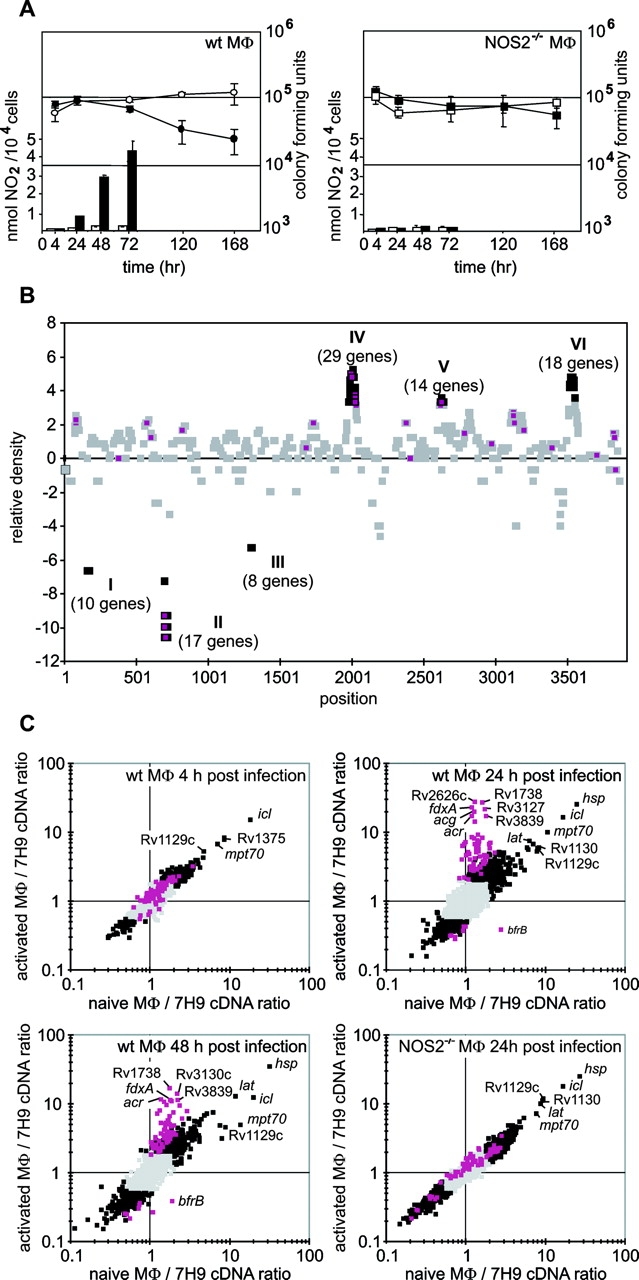
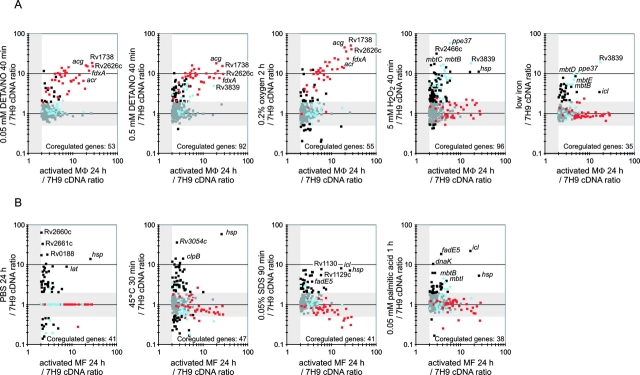
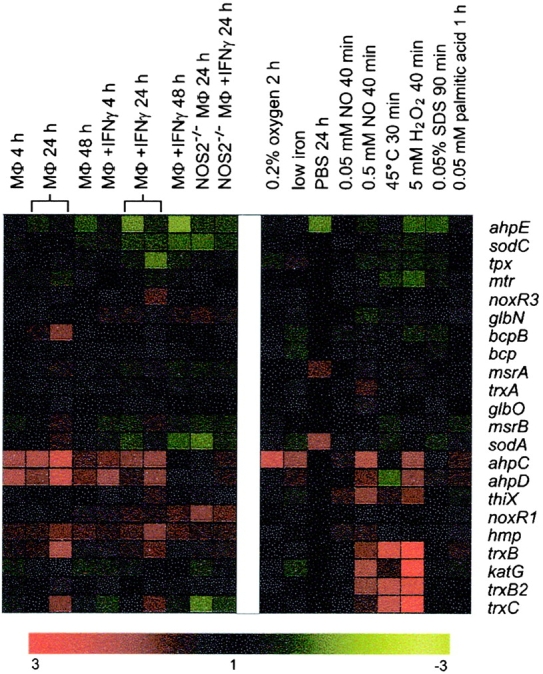
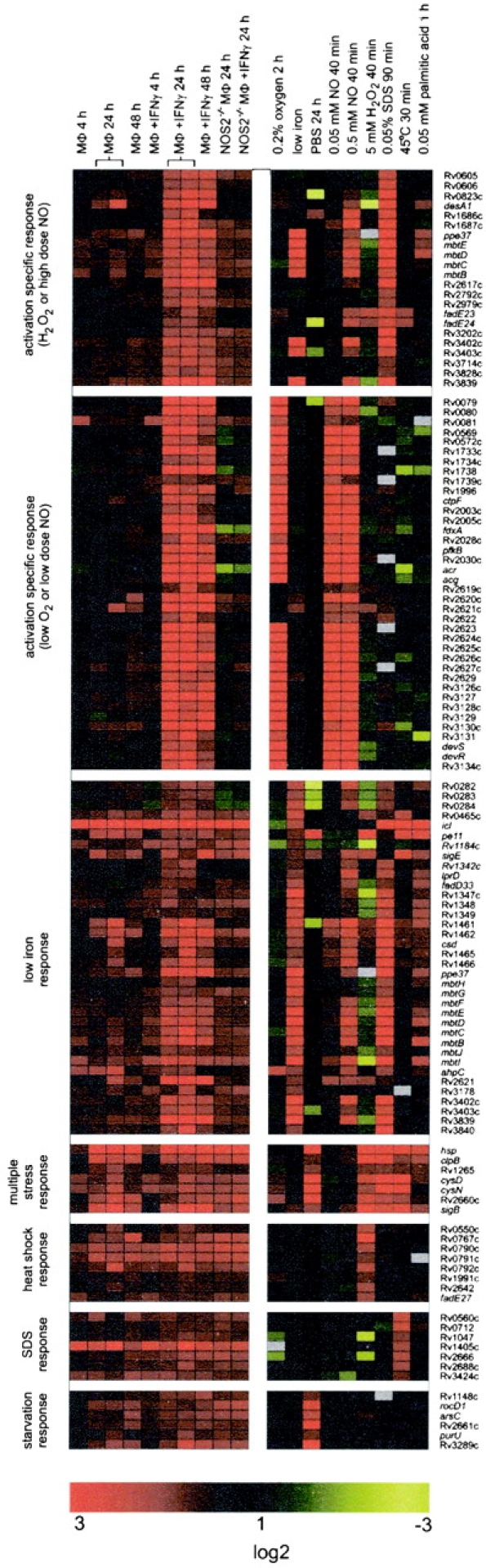
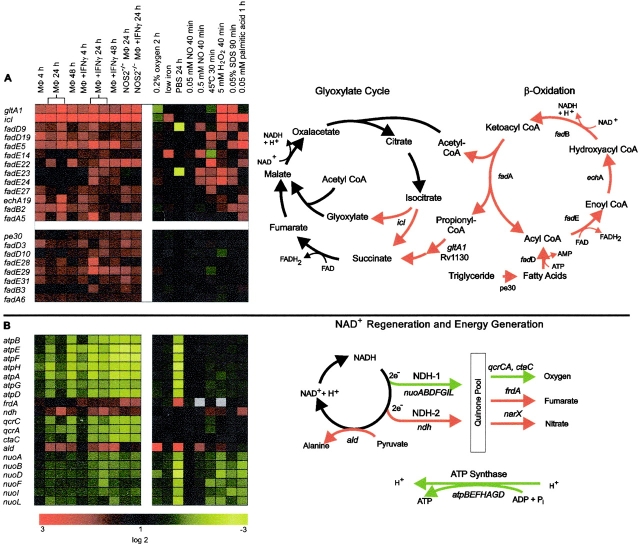
Little is known about the biochemical environment in phagosomes harboring an infectious agent. To assess the state of this organelle we captured the transcriptional responses of Mycobacterium tuberculosis (MTB) in macrophages from wild-type and nitric oxide (NO) synthase 2–deficient mice before and after immunologic activation. The intraphagosomal transcriptome was compared with the transcriptome of MTB in standard broth culture and during growth in diverse conditions designed to simulate features of the phagosomal environment. Genes expressed differentially as a consequence of intraphagosomal residence included an interferon γ– and NO-induced response that intensifies an iron-scavenging program, converts the microbe from aerobic to anaerobic respiration, and induces a dormancy regulon. Induction of genes involved in the activation and β-oxidation of fatty acids indicated that fatty acids furnish carbon and energy. Induction of σE-dependent, sodium dodecyl sulfate–regulated genes and genes involved in mycolic acid modification pointed to damage and repair of the cell envelope. Sentinel genes within the intraphagosomal transcriptome were induced similarly by MTB in the lungs of mice. The microbial transcriptome thus served as a bioprobe of the MTB phagosomal environment, showing it to be nitrosative, oxidative, functionally hypoxic, carbohydrate poor, and capable of perturbing the pathogen's cell envelope.
Overview
The claims and statistics of this paper haven’t been checked yet.
Run the check — free, no account needed. It reads the open-access text and checks the sources it cites.
Integrity signals
Registry
Cites
Statistics
Figures
Verification
Claims the paper makes
The claims and statistics of this paper haven’t been checked yet.
Run the check — free, no account needed. It reads the open-access text and checks the sources it cites.
Claims other papers make about this one
Each is checked against this paper’s own text: does it say what the citing paper says it does?
The cited source says what the claim attributes to it.
In the citing paper
“Several studies have reported that nuo is down-regulated in M. tuberculosis during mouse lung infection (18), survival in macrophages (19), in both non-replicating persistence (NRP)-1 (1% oxygen saturation) and NRP-2 (0.06% oxygen saturation) relative to aerated mid-log growth (18), and upon starvation in vitro (20).”
From Energetics of Respiration and Oxidative Phosphorylation in Mycobacteria (2014) · cites this paper as [19]
The cited source says what the claim attributes to it.
In the citing paper
“In contrast, fumarate reductase, nitrate reductase and NDH-2 are all upregulated under these conditions (19).”
From Energetics of Respiration and Oxidative Phosphorylation in Mycobacteria (2014) · cites this paper as [19]
The cited source says what the claim attributes to it.
In the citing paper
“Transcriptional analysis of M. tuberculosis in the macrophage (phagosomal environment) has revealed that NDH-1, menaquinol-cytochrome c oxidoreductase and the ATP synthase are all down-regulated when compared to cells growing exponentially, suggesting that there is a reduced need for energy generation during bacteriostasis i.e., the growth state of intraphagosomal M. tuberculosis (19).”
From Energetics of Respiration and Oxidative Phosphorylation in Mycobacteria (2014) · cites this paper as [19]
The cited source says what the claim attributes to it.
In the citing paper
“In M. tuberculosis, the atp operon is downregulated during growth in macrophages (19), the mouse lung and in cells exposed to NO or hypoxia (18).”
From Energetics of Respiration and Oxidative Phosphorylation in Mycobacteria (2014) · cites this paper as [19]
In the citing paper
“the fight of the host against the pathogen in M. tuberculosis infection involves several levels including containment of the microbe, generation of radicals and a hostile, acidic environment, deprivation from essential nutrients, formation of anti-mycobacterial peptides and cytokines which strengthen host responses by attracting other immune cells, down to cell damage and suicidal activities of MO”
From Macrophage defense mechanisms against intracellular bacteria (2015) · cites this paper as [5]
In the citing paper
“Accordingly, transcriptional analysis of macrophages and M. tuberculosis has demonstrated that Mycobacteria regulate a myriad of genes to secure a sufficient supply of iron within the cell, whereas macrophages aim to restrict the availability of this metal by different mechanisms (5).”
From Macrophage defense mechanisms against intracellular bacteria (2015) · cites this paper as [5]
Self-check
Percentages, sums and reported differences re-computed from the paper’s own numbers.
The self-check needs the paper’s full text.
Citations
Cites
In silico prediction of protein-protein interactions in human macrophages
Souiai, O., Guerfali, F. Z., Miled, S. B., Brun, C., & Benkahla, A. (2014) · BMC Research Notes · doi:10.1186/1756-0500-7-157 · Cited by 10,785
Significance analysis of microarrays applied to the ionizing radiation response
Tusher, V. G., Tibshirani, R., & Chu, G. (2001) · Proceedings of the National Academy of Sciences · doi:10.1073/pnas.091062498 · Cited by 10,568
Deciphering the biology of Mycobacterium tuberculosis from the complete genome sequence
Cole, S. T., Brosch, R., Parkhill, J., Garnier, T., Churcher, C., Harris, D., Gordon, S. V., Eiglmeier, K., Gas, S., Barry, C. E., et al. (1998) · Nature · doi:10.1038/31159 · Cited by 7,847
Mechanisms of phagocytosis in macrophages
Aderem, A., & Underhill, D. M. (1999) · Annual Review of Immunology · doi:10.1146/annurev.immunol.17.1.593 · Cited by 2,854
Escherichia coli and Salmonella.
Neidhart, F. C. (1996) · Cited by 1,577
Common themes in microbial pathogenicity revisited
Finlay, B. B., & Falkow, S. (1997) · Microbiology and Molecular Biology Reviews · doi:10.1128/mmbr.61.2.136-169.1997 · Cited by 1,474
Nathan, C., & Shiloh, M. U. (2000) · Proceedings of the National Academy of Sciences · doi:10.1073/pnas.97.16.8841 · Cited by 1,469
Self-citationBetts, J. C., Lukey, P. T., Robb, L. C., McAdam, R. A., & Duncan, K. (2002) · Molecular Microbiology · doi:10.1046/j.1365-2958.2002.02779.x · Cited by 1,395
McKinney, J. D., zu Bentrup, K. H., Muñoz‐Elías, E. J., Miczák, A., Chen, B., Chan, W.-T., Swenson, D. L., Sacchettini, J. C., Jacobs, W. R., & Russell, D. G. (2000) · Nature · doi:10.1038/35021074 · Cited by 1,361
Flynn, J., & Chan, J. (2003) · Annual Review of Immunology · doi:10.1146/annurev.immunol.19.1.93 · Cited by 1,144
Research works printed but not linked: 1
- 1997, Microbiol. Mol. Biol. Rev., 61, 136
Cited by
Sorted by citations
The spectrum of latent tuberculosis: rethinking the biology and intervention strategies
Barry, C. E., Boshoff, H. I., Dartois, V. A., Dick, T., Ehrt, S., Flynn, J. L., Schnappinger, D., Wilkinson, R. J., & Young, D. B. (2009) · Nature Reviews Microbiology · doi:10.1038/nrmicro2236 · Cited by 1,441
Self-citationMacrophage defense mechanisms against intracellular bacteria
Weiss, G., & Schaible, U. E. (2015) · Immunological Reviews · doi:10.1111/imr.12266 · Cited by 989
Inhibition of Respiration by Nitric Oxide Induces a Mycobacterium tuberculosis Dormancy Program
Voskuil, M. I., Schnappinger, D., Visconti, K. C., Harrell, M. I., Dolganov, G., Sherman, D. R., & Schoolnik, G. K. (2003) · The Journal of Experimental Medicine · doi:10.1084/jem.20030205 · Cited by 975
Self-citationSkin microbiota–host interactions
Chen, Y. E., Fischbach, M. A., & Belkaid, Y. (2018) · Nature · doi:10.1038/nature25177 · Cited by 815
Muñoz‐Elías, E. J., & McKinney, J. D. (2005) · Nature Medicine · doi:10.1038/nm1252 · Cited by 760
Mycobacterium tuberculosis: success through dormancy
Gengenbacher, M., & Kaufmann, S. H. E. (2012) · FEMS Microbiology Reviews · doi:10.1111/j.1574-6976.2012.00331.x · Cited by 722
Genome-wide requirements for Mycobacterium tuberculosis adaptation and survival in macrophages
Rengarajan, J., Bloom, B. R., & Rubin, E. J. (2005) · Proceedings of the National Academy of Sciences · doi:10.1073/pnas.0503272102 · Cited by 679
El Kasmi, K. C., Qualls, J. E., Pesce, J. T., Smith, A. M., Thompson, R. W., Henao-Tamayo, M., Basaraba, R. J., König, T., Schleicher, U., Koo, M.-S., et al. (2008) · Nature Immunology · doi:10.1038/ni.1671 · Cited by 646
Virulence factors of the Mycobacterium tuberculosis complex
Forrellad, M. A., Klepp, L. I., Gioffré, A., y García, J. S., Morbidoni, H. R., Santangelo, M. D. L. P., Cataldi, A. A., & Bigi, F. (2013) · Virulence · doi:10.4161/viru.22329 · Cited by 676
The Transcriptional Responses of Mycobacterium tuberculosis to Inhibitors of Metabolism
Boshoff, H. I., Myers, T. G., Copp, B. R., McNeil, M., Wilson, M. A., & Barry, C. E. (2004) · Journal of Biological Chemistry · doi:10.1074/jbc.m406796200 · Cited by 603
Insights into host responses against pathogens from transcriptional profiling
Jenner, R. G., & Young, R. A. (2005) · Nature Reviews Microbiology · doi:10.1038/nrmicro1126 · Cited by 588
Persistent bacterial infections: the interface of the pathogen and the host immune system
Monack, D. M., Mueller, A., & Falkow, S. (2004) · Nature Reviews Microbiology · doi:10.1038/nrmicro955 · Cited by 583
van der Geize, R., Yam, K. C., Heuser, T., Wilbrink, M. H., Hara, H., Anderton, M. C., Sim, E., Dijkhuizen, L., DAVIES, J. E., Mohn, W. W., et al. (2007) · Proceedings of the National Academy of Sciences · doi:10.1073/pnas.0605728104 · Cited by 552
Drug Tolerance in Replicating Mycobacteria Mediated by a Macrophage-Induced Efflux Mechanism
Adams, K. N., Takaki, K. K., Connolly, L. E., Wiedenhoft, H., Winglee, K., Humbert, O., Edelstein, P. H., Cosma, C. L., & Ramakrishnan, L. (2011) · Cell · doi:10.1016/j.cell.2011.02.022 · Cited by 522
A multistage tuberculosis vaccine that confers efficient protection before and after exposure
Aagaard, C., Hoang, T. T. K. T., Dietrich, J., Cardona, P.-J., Izzo, A. A., Dolganov, G., Schoolnik, G. K., Cassidy, J. P., Billeskov, R., & Andersen, P. L. (2011) · Nature Medicine · doi:10.1038/nm.2285 · Cited by 531
Self-citationRao, S. P. S., Alonso, S., Rand, L., Dick, T., & Pethe, K. (2008) · Proceedings of the National Academy of Sciences · doi:10.1073/pnas.0711697105 · Cited by 517
Ramage, H. R., Connolly, L. E., & Cox, J. S. (2009) · PLoS Genetics · doi:10.1371/journal.pgen.1000767 · Cited by 509
The Enduring Hypoxic Response of Mycobacterium tuberculosis
Rustad, T. R., Harrell, M. I., Liao, R., & Sherman, D. R. (2008) · PLoS ONE · doi:10.1371/journal.pone.0001502 · Cited by 491
Metarhizium spp., Cosmopolitan Insect-Pathogenic Fungi: Mycological Aspects
Roberts, D. W., & Leger, R. J. S. (2004) · Advances in applied microbiology · doi:10.1016/s0065-2164(04)54001-7 · Cited by 478
Manzanillo, P. S., Shiloh, M. U., Portnoy, D. A., & Cox, J. S. (2012) · Cell Host & Microbe · doi:10.1016/j.chom.2012.03.007 · Cited by 467
Vaccines against Tuberculosis: Where Are We and Where Do We Need to Go?
Ottenhoff, T. H. M., & Kaufmann, S. H. E. (2012) · PLoS Pathogens · doi:10.1371/journal.ppat.1002607 · Cited by 467
The phagosome: compartment with a license to kill
Haas, A. (2007) · Traffic · doi:10.1111/j.1600-0854.2006.00531.x · Cited by 450
Tuberculosis — metabolism and respiration in the absence of growth
Boshoff, H. I. M., & Barry, C. E. (2005) · Nature Reviews Microbiology · doi:10.1038/nrmicro1065 · Cited by 448
Deb, C., Lee, C., Dubey, V. S., Daniel, J., Abomoelak, B., Sirakova, T. D., Pawar, S., Rogers, L. M., & Kolattukudy, P. E. (2009) · PLoS ONE · doi:10.1371/journal.pone.0006077 · Cited by 447
Cytological and Transcript Analyses Reveal Fat and Lazy Persister-Like Bacilli in Tuberculous Sputum
Garton, N. J., Waddell, S. J., Sherratt, A. L., Lee, S., Smith, R. J., Senner, C. E., Hinds, J., Rajakumar, K., Adegbola, R. A., Besra, G. S., et al. (2008) · PLoS Medicine · doi:10.1371/journal.pmed.0050075 · Cited by 442
Self-citationThe Mycobacterium tuberculosis regulatory network and hypoxia
Galagan, J. E., Minch, K., Peterson, M., Lyubetskaya, A., Azizi, E., Sweet, L., Gomes, A., Rustad, T., Dolganov, G., Glotova, I., et al. (2013) · Nature · doi:10.1038/nature12337 · Cited by 431
Self-citationColijn, C., Brandes, A., Zucker, J., Lun, D. S., Weiner, B., Farhat, M. R., Cheng, T., Moody, D. B., Murray, M. B., & Galagan, J. E. (2009) · PLoS Computational Biology · doi:10.1371/journal.pcbi.1000489 · Cited by 436
Host Evasion and Exploitation Schemes of Mycobacterium tuberculosis
Cambier, C. J., Falkow, S., & Ramakrishnan, L. (2014) · Cell · doi:10.1016/j.cell.2014.11.024 · Cited by 454
Tuberculosis Pathogenesis and Immunity
Philips, J. A., & Ernst, J. (2011) · Annual Review of Pathology Mechanisms of Disease · doi:10.1146/annurev-pathol-011811-132458 · Cited by 438
Nathan, C. (2004) · Nature · doi:10.1038/431899a · Cited by 412
Self-citationRohde, K. H., Abramovitch, R. B., & Russell, D. G. (2007) · Cell Host & Microbe · doi:10.1016/j.chom.2007.09.006 · Cited by 395
Host cell-free growth of the Q fever bacterium Coxiella burnetii
Omsland, A., Cockrell, D. C., Howe, D., Fischer, E. R., Virtaneva, K. I., Sturdevant, D. E., Porcella, S. F., & Heinzen, R. A. (2009) · Proceedings of the National Academy of Sciences · doi:10.1073/pnas.0812074106 · Cited by 407
Carbon metabolism of intracellular bacterial pathogens and possible links to virulence
Eisenreich, W., Dandekar, T., Heesemann, J., & Goebel, W. (2010) · Nature Reviews Microbiology · doi:10.1038/nrmicro2351 · Cited by 410
Pathogenesis of HIV-1 and Mycobacterium tuberculosis co-infection
Bell, L. C. K., & Noursadeghi, M. (2017) · Nature Reviews Microbiology · doi:10.1038/nrmicro.2017.128 · Cited by 416
Walters, S. B., Dubnau, E., Kolesnikova, I., Laval, F., Daffé, M., & Smith, I. (2006) · Molecular Microbiology · doi:10.1111/j.1365-2958.2006.05102.x · Cited by 385
Controlling gene expression in mycobacteria with anhydrotetracycline and Tet repressor
Ehrt, S. (2005) · Nucleic Acids Research · doi:10.1093/nar/gni013 · Cited by 383
Self-citationde Carvalho, L. P. S., Fischer, S. M., Marrero, J., Nathan, C., Ehrt, S., & Rhee, K. Y. (2010) · Chemistry & Biology · doi:10.1016/j.chembiol.2010.08.009 · Cited by 375
Self-citationInterplay between mycobacteria and host signalling pathways
Koul, A., Herget, T., Klebl, B., & Ullrich, A. (2004) · Nature Reviews Microbiology · doi:10.1038/nrmicro840 · Cited by 360
Diarylquinolines Are Bactericidal for Dormant Mycobacteria as a Result of Disturbed ATP Homeostasis
Koul, A., Vranckx, L., Dendouga, N., Balemans, W., Van den Wyngaert, I., Vergauwen, K., Göhlmann, H. W. H., Willebrords, R., Poncelet, A., Guillemont, J., et al. (2008) · Journal of Biological Chemistry · doi:10.1074/jbc.m803899200 · Cited by 364
Mycobacterium tuberculosis and the environment within the phagosome
Rohde, K. H., Yates, R. M., Purdy, G. E., & Russell, D. G. (2007) · Immunological Reviews · doi:10.1111/j.1600-065x.2007.00547.x · Cited by 374
Daniel, J., Deb, C., Dubey, V. S., Sirakova, T. D., Abomoelak, B., Morbidoni, H. R., & Kolattukudy, P. E. (2004) · Journal of Bacteriology · doi:10.1128/jb.186.15.5017-5030.2004 · Cited by 407
The temporal expression profile of Mycobacterium tuberculosis infection in mice
Talaat, A. M., Lyons, R., Howard, S. T., & Johnston, S. A. (2004) · Proceedings of the National Academy of Sciences · doi:10.1073/pnas.0306023101 · Cited by 361
Persistent bacterial infections, antibiotic tolerance, and the oxidative stress response
Grant, S. S., & Hung, D. T. (2013) · Virulence · doi:10.4161/viru.23987 · Cited by 371
Heterogeneity in tuberculosis pathology, microenvironments and therapeutic responses
Lenaerts, A. J. M., Barry, C. E., & Dartois, V. A. (2015) · Immunological Reviews · doi:10.1111/imr.12252 · Cited by 371
Muñoz‐Elías, E. J., Upton, A. M., Cherian, J., & McKinney, J. D. (2006) · Molecular Microbiology · doi:10.1111/j.1365-2958.2006.05155.x · Cited by 370
Biosynthesis and Functions of Mycothiol, the Unique Protective Thiol of Actinobacteria
Newton, G. L., Buchmeier, N. A., & Fahey, R. C. (2008) · Microbiology and Molecular Biology Reviews · doi:10.1128/mmbr.00008-08 · Cited by 361
The Response of Mycobacterium Tuberculosis to Reactive Oxygen and Nitrogen Species
Voskuil, M. I., Bartek, I. L., Visconti, K. C., & Schoolnik, G. K. (2011) · Frontiers in Microbiology · doi:10.3389/fmicb.2011.00105 · Cited by 339
Self-citationMarrero, J., Rhee, K. Y., Schnappinger, D., Pethe, K., & Ehrt, S. (2010) · Proceedings of the National Academy of Sciences · doi:10.1073/pnas.1000715107 · Cited by 352
Self-citationCsoR is a novel Mycobacterium tuberculosis copper-sensing transcriptional regulator
Liu, T., Ramesh, A., Ma, Z., Ward, S. K., Zhang, L., George, G. N., Talaat, A. M., Sacchettini, J. C., & Giedroc, D. P. (2007) · Nature Chemical Biology · doi:10.1038/nchembio844 · Cited by 338
Mycobacterial Esx-3 is required for mycobactin-mediated iron acquisition
Siegrist, M. S., Unnikrishnan, M., McConnell, M. J., Borowsky, M. L., Cheng, T., Siddiqi, N., Fortune, S. M., Moody, D. B., & Rubin, E. J. (2009) · Proceedings of the National Academy of Sciences · doi:10.1073/pnas.0900589106 · Cited by 347
Structure and function of the complex formed by the tuberculosis virulence factors CFP‐10 and ESAT‐6
Renshaw, P. S., Lightbody, K. L., Veverka, V., Muskett, F. W., Kelly, G. P., Frenkiel, T. A., Gordon, S. V., Hewinson, R. G., Burke, B., Norman, J. C., et al. (2005) · The EMBO Journal · doi:10.1038/sj.emboj.7600732 · Cited by 329
Ancestral antibiotic resistance in Mycobacterium tuberculosis
Morris, R. P., Nguyen, L., Gatfield, J., Visconti, K. C., Nguyen, K. T., Schnappinger, D., Ehrt, S., Liu, Y., Heifets, L. B., Pieters, J., et al. (2005) · Proceedings of the National Academy of Sciences · doi:10.1073/pnas.0505446102 · Cited by 334
Self-citationChristophe, T., Jackson, M., Jeon, H. K., Fenistein, D., Contreras-Domínguez, M., Kim, J. C., Genovesio, A., Carralot, J., Ewann, F., Kim, E. H., et al. (2009) · PLoS Pathogens · doi:10.1371/journal.ppat.1000645 · Cited by 325
Iron at the interface of immunity and infection
Nairz, M., Haschka, D., Demetz, E., & Weiss, G. (2014) · Frontiers in Pharmacology · doi:10.3389/fphar.2014.00152 · Cited by 325
Iron metabolism in the anemia of chronic disease
Weiss, G. (2009) · Biochimica et Biophysica Acta (BBA) - General Subjects · doi:10.1016/j.bbagen.2008.08.006 · Cited by 322
Immunology of Mycobacterium tuberculosis Infections
Sia, J. K., & Rengarajan, J. (2019) · Microbiology Spectrum · doi:10.1128/microbiolspec.gpp3-0022-2018 · Cited by 337
Major roles of isocitrate lyase and malate synthase in bacterial and fungal pathogenesis
Dunn, M. F., Ramírez‐Trujillo, J. A., & Hernández-Lucas, I. (2009) · Microbiology · doi:10.1099/mic.0.030858-0 · Cited by 305
Shi, L., Sohaskey, C. D., Kana, B. D., Dawes, S., North, R. J., Mizrahi, V., & Gennaro, M. L. (2005) · Proceedings of the National Academy of Sciences · doi:10.1073/pnas.0507850102 · Cited by 301
Advances in tuberculosis vaccine strategies
Skeiky, Y. A. W., & SADOFF, J. C. (2006) · Nature Reviews Microbiology · doi:10.1038/nrmicro1419 · Cited by 298
Koul, A., Vranckx, L., Dhar, N., Göhlmann, H. W. H., Özdemir, E., Neefs, J., Schulz, M., Lü, P., Mørtz, E., McKinney, J. D., et al. (2014) · Nature Communications · doi:10.1038/ncomms4369 · Cited by 298
Griffin, J. E., Pandey, A. K., Gilmore, S. A., Mizrahi, V., McKinney, J. D., Bertozzi, C. R., & Sassetti, C. M. (2012) · Chemistry & Biology · doi:10.1016/j.chembiol.2011.12.016 · Cited by 289
Mycobacterium tuberculosis and the intimate discourse of a chronic infection
Russell, D. G. (2011) · Immunological Reviews · doi:10.1111/j.1600-065x.2010.00984.x · Cited by 302
Control of M. tuberculosis ESAT-6 Secretion and Specific T Cell Recognition by PhoP
Frigui, W., Bottai, D., Majlessi, L., Monot, M., Josselin, E., Brodin, P. M., Garnier, T., Gicquel, B., Martı́n, C., Leclerc, C., et al. (2008) · PLoS Pathogens · doi:10.1371/journal.ppat.0040033 · Cited by 294
Pisu, D., Huang, L., Grenier, J. K., & Russell, D. G. (2020) · Cell Reports · doi:10.1016/j.celrep.2019.12.033 · Cited by 289
Eoh, H., & Rhee, K. Y. (2013) · Proceedings of the National Academy of Sciences · doi:10.1073/pnas.1219375110 · Cited by 278
NTM drug discovery: status, gaps and the way forward
Wu, M.-L., Aziz, D. B., Dartois, V. A., & Dick, T. (2018) · Drug Discovery Today · doi:10.1016/j.drudis.2018.04.001 · Cited by 291
Leistikow, R. L., Morton, R. A., Bartek, I. L., Frimpong, I., Wagner, K., & Voskuil, M. I. (2009) · Journal of Bacteriology · doi:10.1128/jb.00926-09 · Cited by 279
Self-citationRohde, K. H., Veiga, D. F. T., Caldwell, S., Balázsi, G., & Russell, D. G. (2012) · PLoS Pathogens · doi:10.1371/journal.ppat.1002769 · Cited by 270
Leyten, E. M. S., Lin, M. Y., Franken, K. L. M. C., Friggen, A. H., Prins, C., van Meijgaarden, K. E., Voskuil, M. I., Weldingh, K. N., Andersen, P. L., Schoolnik, G. K., et al. (2006) · Microbes and Infection · doi:10.1016/j.micinf.2006.03.018 · Cited by 268
Self-citationCarbon metabolism of intracellular bacteria
Muñoz‐Elías, E. J., & McKinney, J. D. (2005) · Cellular Microbiology · doi:10.1111/j.1462-5822.2005.00648.x · Cited by 277
VanderVen, B. C., Fahey, R. J., Lee, W., Liu, Y., Abramovitch, R. B., Memmott, C., Crowe, A. M., Eltis, L. D., Perola, E., Deininger, D. D., et al. (2015) · PLoS Pathogens · doi:10.1371/journal.ppat.1004679 · Cited by 271
Self-citationHautefort, I., Thompson, A., Ygberg, S. E., Parker, M. L., Lucchini, S., Danino, V., Bongaerts, R. J., Ahmad, N., Rhen, M., & Hinton, J. C. D. (2008) · Cellular Microbiology · doi:10.1111/j.1462-5822.2007.01099.x · Cited by 264
Rodríguez, G. M., & Smith, I. (2005) · Journal of Bacteriology · doi:10.1128/jb.188.2.424-430.2006 · Cited by 257
Savvi, S., Warner, D. F., Kana, B. D., McKinney, J. D., Mizrahi, V., & Dawes, S. S. (2008) · Journal of Bacteriology · doi:10.1128/jb.01767-07 · Cited by 261
Iron metabolism and the innate immune response to infection
Johnson, E. E., & Wessling-Resnick, M. (2012) · Microbes and Infection · doi:10.1016/j.micinf.2011.10.001 · Cited by 253
Hypoxia: a window into Mycobacterium tuberculosis latency
Rustad, T. R., Sherrid, A. M., Minch, K. J., & Sherman, D. R. (2009) · Cellular Microbiology · doi:10.1111/j.1462-5822.2009.01325.x · Cited by 261
Bordbar, A., Lewis, N. E., Schellenberger, J., Palsson, B. Ø., & Jamshidi, N. (2010) · Molecular Systems Biology · doi:10.1038/msb.2010.68 · Cited by 250
Homolka, S., Niemann, S., Russell, D. G., & Rohde, K. H. (2010) · PLoS Pathogens · doi:10.1371/journal.ppat.1000988 · Cited by 250
Latent Tuberculosis Infection: Myths, Models, and Molecular Mechanisms
Dutta, N. K., & Karakousis, P. C. (2014) · Microbiology and Molecular Biology Reviews · doi:10.1128/mmbr.00010-14 · Cited by 256
Fumarate Reductase Activity Maintains an Energized Membrane in Anaerobic Mycobacterium tuberculosis
Watanabe, S., Zimmermann, M., Goodwin, M. B., Sauer, U., Barry, C. E., & Boshoff, H. I. (2011) · PLoS Pathogens · doi:10.1371/journal.ppat.1002287 · Cited by 246
Genomic insights into tuberculosis
Galagan, J. E. (2014) · Nature Reviews Genetics · doi:10.1038/nrg3664 · Cited by 251
Unique Transcriptome Signature of Mycobacterium tuberculosis in Pulmonary Tuberculosis
Rachman, H., Strong, M. J., Ulrichs, T., Grode, L., Schuchhardt, J., Mollenkopf, H., Kosmiadi, G., Eisenberg, D., & Kaufmann, S. (2006) · Infection and Immunity · doi:10.1128/iai.74.2.1233-1242.2006 · Cited by 251
Wang, Q., Yang, M., Xiao, J., Wu, H., Wang, X., Lv, Y., Xu, L., Zheng, H., Wang, S., Zhao, G., et al. (2009) · PLoS ONE · doi:10.1371/journal.pone.0007646 · Cited by 244
Arnvig, K. B., Comas, I., Thomson, N. R., Houghton, J., Boshoff, H. I., Croucher, N. J., Rose, G., Perkins, T. T., Parkhill, J., Dougan, G., et al. (2011) · PLoS Pathogens · doi:10.1371/journal.ppat.1002342 · Cited by 243
Mycobacterial outer membranes: in search of proteins
Niederweis, M., Danilchanka, O., Huff, J., Hoffmann, C., & Engelhardt, H. (2010) · Trends in Microbiology · doi:10.1016/j.tim.2009.12.005 · Cited by 244
Reed, M. B., Gagneux, S., DeRiemer, K., Small, P. M., & Barry, C. E. (2007) · Journal of Bacteriology · doi:10.1128/jb.01670-06 · Cited by 245
Karakousis, P. C., Yoshimatsu, T., Lamichhane, G., Woolwine, S. C., Nuermberger, E. L., Grosset, J. H. E., & Bishai, W. R. (2004) · The Journal of Experimental Medicine · doi:10.1084/jem.20040646 · Cited by 237
A phylogenomic analysis of the Actinomycetales mce operons
Casali, N., & Riley, L. W. (2007) · BMC Genomics · doi:10.1186/1471-2164-8-60 · Cited by 236
Unique Flexibility in Energy Metabolism Allows Mycobacteria to Combat Starvation and Hypoxia
Berney, M., & Cook, G. M. (2010) · PLoS ONE · doi:10.1371/journal.pone.0008614 · Cited by 235
Expression and localization of hepcidin in macrophages: a role in host defense against tuberculosis
Sow, F. B., Florence, W. C., Satoskar, A. R., Schlesinger, L. S., Zwilling, B. S., & Lafuse, W. P. (2007) · Journal of Leukocyte Biology · doi:10.1189/jlb.0407216 · Cited by 229
The σ factors ofMycobacterium tuberculosis
Rodrigue, S., Provvedi, R., Jacques, P., Gaudreau, L. R., & Manganelli, R. (2006) · FEMS Microbiology Reviews · doi:10.1111/j.1574-6976.2006.00040.x · Cited by 228
Yam, K. C., D’Angelo, I., Kalscheuer, R., Zhu, H., Wang, J.-X., Snieckus, V. A., Ly, L. H., Converse, P. J., Jacobs, W. R., Strynadka, N. C. J., et al. (2009) · PLoS Pathogens · doi:10.1371/journal.ppat.1000344 · Cited by 225
PhoP: A Missing Piece in the Intricate Puzzle of Mycobacterium tuberculosis Virulence
Gonzalo‐Asensio, J., Mostowy, S., Harders-Westerveen, J., Huygen, K., Hernández‐Pando, R., Thole, J. E. R., Behr, M. A., Gicquel, B., & Martı́n, C. (2008) · PLoS ONE · doi:10.1371/journal.pone.0003496 · Cited by 228
Heme Oxygenase-1-derived Carbon Monoxide Induces the Mycobacterium tuberculosis Dormancy Regulon
Kumar, A., Deshane, J. S., Crossman, D. K., Bolisetty, S., Yan, B., Kramnik, I., Agarwal, A., & Steyn, A. J. C. (2008) · Journal of Biological Chemistry · doi:10.1074/jbc.m802274200 · Cited by 218
The Effect of the Host’s Iron Status on Tuberculosis
Boelaert, J. R., Vandecasteele, S. J., Appelberg, R., & Gordeuk, V. R. (2007) · The Journal of Infectious Diseases · doi:10.1086/518040 · Cited by 217
Identification of a copper-binding metallothionein in pathogenic mycobacteria
Gold, B., Deng, H., Bryk, R., Vargas, D., Eliezer, D., Roberts, J., Jiang, X., & Nathan, C. (2008) · Nature Chemical Biology · doi:10.1038/nchembio.109 · Cited by 217
Self-citationMycobacterium tuberculosis Senses Host-Derived Carbon Monoxide during Macrophage Infection
Shiloh, M. U., Manzanillo, P. S., & Cox, J. S. (2008) · Cell Host & Microbe · doi:10.1016/j.chom.2008.03.007 · Cited by 217
σ Factors and Global Gene Regulation inMycobacterium tuberculosis
Manganelli, R., Provvedi, R., Rodrigue, S., Beaucher, J., Gaudreau, L. R., & Smith, I. (2004) · Journal of Bacteriology · doi:10.1128/jb.186.4.895-902.2004 · Cited by 215
Letting SleepingdosLie: Does Dormancy Play a Role in Tuberculosis?
Chao, M. C., & Rubin, E. J. (2010) · Annual Review of Microbiology · doi:10.1146/annurev.micro.112408.134043 · Cited by 218
Energetics of Respiration and Oxidative Phosphorylation in Mycobacteria
Cook, G. M., Hards, K., Vilchèze, C., Hartman, T., & Berney, M. (2014) · Microbiology Spectrum · doi:10.1128/microbiolspec.mgm2-0015-2013 · Cited by 212
Metadata
- Authors
- Schnappinger, D., Ehrt, S., Voskuil, M. I., Liu, Y., Mangan, J. A., Monahan, I. M., Dolganov, G., Efron, B., Butcher, P. D., Nathan, C., & Schoolnik, G. K.
- Affiliations
- Cornell University (US)
- 3Department of Microbiology and Immunology, Weill Medical College and Graduate Programs in
- Stanford Medicine (US)
- St George's, University of London (GB)
- University of California, San Francisco (US)
- Stanford University (US)
- Corresponding author
- Schnappinger, Dirk
- ORCID
- Venue
- The Journal of Experimental Medicine
- Publisher
- Rockefeller University Press
- Published
- 2003-09-01
- Volume
- 198
- Issue
- 5
- Pages
- 693-704
- ISSN
- 0022-1007 (ISSN-L)
- 1540-9538
- PMC
- PMC2194186
- OpenAlex
- W2007097682
- Cited by
- 1,420
- References
- 58
- Citations by year
- 2026: 26 · 2025: 35 · 2024: 46 · 2023: 32 · 2022: 55 · 2021: 41 · 2020: 37 · 2019: 68 · 2018: 63 · 2017: 65 · 2016: 61 · 2015: 96 · 2014: 90 · 2013: 75 · 2012: 96
- FWCI
- 31.28
- Type
- journal article
- Language
- en
- Open access
- bronze
- doi.org
- Locations
- The Journal of Experimental Medicine (publishedVersion)
- PubMed Central (publishedVersion, cc-by-nc-sa)
- PubMed (publishedVersion)
- St George's Online Research Archive (St George's University of London) (acceptedVersion)
- Funders
- Hearst Foundations
- Deutsche Forschungsgemeinschaft
- National Institutes of Health
- Defense Advanced Research Projects Agency
- Advanced Research Projects Agency
- Medical Research Council
- National Heart, Lung, and Blood Institute (R01HL068525, HL 61241, HL68525, R01HL061241)
- National Institute of Allergy and Infectious Diseases (R01AI044826, AI-44826)
- Topics
- Health Sciences › Medicine › Infectious Diseases › Tuberculosis Research and Epidemiology
- Health Sciences › Medicine › Epidemiology › Mycobacterium research and diagnosis
- Life Sciences › Biochemistry, Genetics and Molecular Biology › Genetics › Bacterial Genetics and Biotechnology
- Keywords
- Mycobacterium tuberculosis, macrophages, nitric oxide synthase 2, interferon-gamma, iron scavenging, anaerobic respiration, fatty acid beta-oxidation, sigma E, cell envelope damage, hypoxia, nitrosative stress, tuberculosis pathogenesis
- MeSH terms
- Animals, Macrophages, Mycobacterium tuberculosis, Phagosomes, RNA, Bacterial, Transcription, Genetic, Gene Expression Regulation, Bacterial, Mice
About these checks
Registry, retraction, Cites and statistics results are computed, not judged, with one exception: a printed reference that no index lists is read once by a model before it counts as a citation error. Claims are extracted by a model and kept only when their quote appears verbatim in the text; each cited source is then checked, with a model’s help, for whether it says what the claim relies on. Those verdicts can be wrong — read the claim’s quote and the cited source before relying on one.
Statistics and arithmetic are recomputed, not judged.
Confidence bands are shown only for fields calibrated on our annotated test set. None is calibrated yet, so no band is shown.
What counts as a claim ›How we measure confidence ›How we check this ›
Are you an author, or do you see a problem with this page? Request a review
