

The DOI matches its Crossref record; 22 of the 22 references it cites were found in a registry or an index.
A role for human skin–resident T cells in wound healing
Open accessAbstract
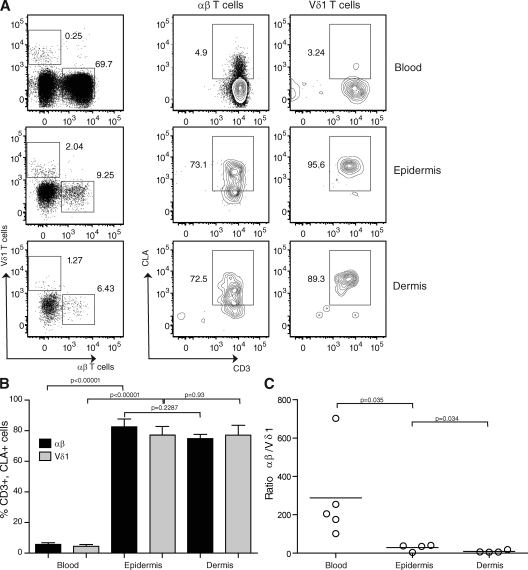
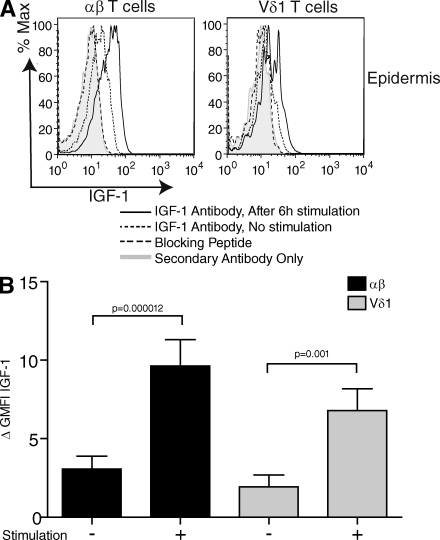
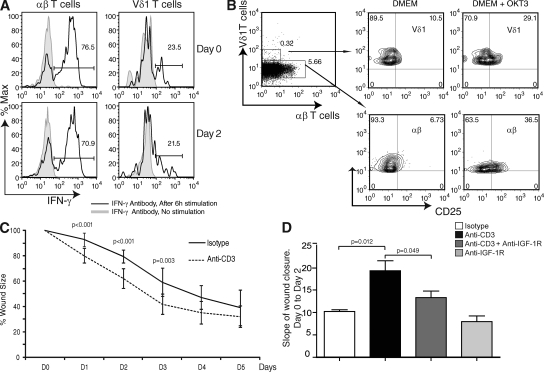
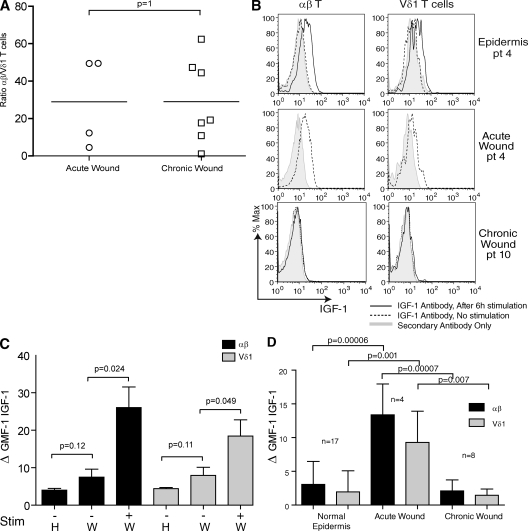
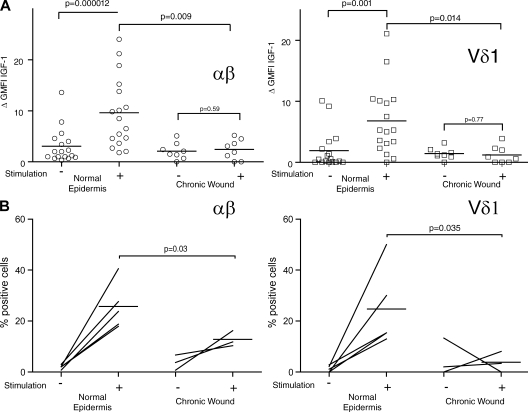
Epidermal T cells have been shown to play unique roles in tissue homeostasis and repair in mice through local secretion of distinct growth factors in the skin. Human epidermis contains both αβ+ and γδ+ T cells whose functional capabilities are not understood. We demonstrate that human epidermal T cells are able to produce insulin-like growth factor 1 (IGF-1) upon activation and promote wound healing in a skin organ culture model. Moreover, an analysis of the functional capabilities of T cells isolated from acute versus chronic wounds revealed a striking difference. Both αβ+ and Vδ1+ T cells isolated from acute wounds actively produced IGF-1, demonstrating that they are activated during tissue damage to participate in wound repair. In contrast, IGF-1 production could not be detected in T cells isolated from chronic wounds. In fact, skin T cells isolated from chronic wounds were refractory to further stimulation, suggesting an unresponsive state. Collectively, these results define a novel role for human epidermis–resident T cells in wound healing and provide new insight into our understanding of chronic wound persistence.
Overview
The claims and statistics of this paper haven’t been checked yet.
Run the check — free, no account needed. It reads the open-access text and checks the sources it cites.
Integrity signals
Registry
Cites
Statistics
Figures
Verification
Claims the paper makes
The claims and statistics of this paper haven’t been checked yet.
Run the check — free, no account needed. It reads the open-access text and checks the sources it cites.
Claims other papers make about this one
Each is checked against this paper’s own text: does it say what the citing paper says it does?
In the citing paper
“S. epidermidis association promoted the expression of genes associated specifically with angiogenesis, including angiogenin (Ang) and Hgf (47, 48), as well as genes that more broadly promote tissue repair, like Ceacam1, Grn, Hmox1, Igf1, and Pdgfa (49–53) (Fig. 3R).”
From MAIT cells are imprinted by the microbiota in early life and promote tissue repair (2019) · cites this paper as [49]
In the citing paper
“skin-resident T cells, which are proficient in IL-17A production, are dysfunctional in nonhealing wounds76;”
From The Innate Immune System in Acute and Chronic Wounds (2016) · cites this paper as [76]
Self-check
Percentages, sums and reported differences re-computed from the paper’s own numbers.
The self-check needs the paper’s full text.
Citations
Cites
Wound healing and its impairment in the diabetic foot
Falanga, V. (2005) · The Lancet · doi:10.1016/s0140-6736(05)67700-8 · Cited by 2,715
Upregulation of PD-1 expression on HIV-specific CD8+ T cells leads to reversible immune dysfunction
Trautmann, L., Janbazian, L., Chomont, N., Said, E. A., Gimmig, S., Bessette, B., Boulassel, M.-R., Delwart, E., Sepulveda, H., Balderas, R. S., et al. (2006) · Nature Medicine · doi:10.1038/nm1482 · Cited by 1,565
γδ Cells: A Right Time and a Right Place for a Conserved Third Way of Protection
Hayday, A. (2000) · Annual Review of Immunology · doi:10.1146/annurev.immunol.18.1.975 · Cited by 1,134
Regulation of Cutaneous Malignancy by γδ T Cells
Girardi, M., Oppenheim, D. E., Steele, C. R., Lewis, J. M., Glusac, E. J., Filler, R. B., Hobby, P., Sutton, B. J., Tigelaar, R. E., & Hayday, A. (2001) · Science · doi:10.1126/science.1063916 · Cited by 1,068
The Vast Majority of CLA+ T Cells Are Resident in Normal Skin
Clark, R. A., Chong, B., Mirchandani, N., Brinster, N. K., Yamanaka, K.-I., Dowgiert, R. K., & Kupper, T. S. (2006) · The Journal of Immunology · doi:10.4049/jimmunol.176.7.4431 · Cited by 796
A Role for Skin γδ T Cells in Wound Repair
Jameson, J., Ugarte, K., Chen, N., Yachi, P. P., Fuchs, E. V., Boismenu, R., & Havran, W. L. (2002) · Science · doi:10.1126/science.1069639 · Cited by 639
Self-citationIntraepithelial lymphocytes: exploring the Third Way in immunology
Hayday, A., Theodoridis, E., Ramsburg, E., & Shires, J. (2001) · Nature Immunology · doi:10.1038/ni1101-997 · Cited by 491
MacDonald, T. T., & Spencer, J. (1988) · The Journal of Experimental Medicine · doi:10.1084/jem.167.4.1341 · Cited by 398
Recognition of Self Antigens by Skin-Derived T Cells with Invariant γδ Antigen Receptors
Havran, W. L., Chien, Y., & Allison, J. P. (1991) · Science · doi:10.1126/science.1828619 · Cited by 359
Self-citationThe “trap” hypothesis of venous ulceration
Falanga, V., & Eaglstein, W. (1993) · The Lancet · doi:10.1016/0140-6736(93)91085-z · Cited by 330
Research works printed but not linked: 1
- Tamaki, 2001, Epidermal and dermal γδ T cells, Chem. Immunol., 79, 43
Cited by
Sorted by citations
Transition from inflammation to proliferation: a critical step during wound healing
Landén, N. X., Li, D., & Ståhle, M. (2016) · Cellular and Molecular Life Sciences · doi:10.1007/s00018-016-2268-0 · Cited by 1,980
Cellular and molecular mechanisms of skin wound healing
Peña, O. A., & Martin, P. B. (2024) · Nature Reviews Molecular Cell Biology · doi:10.1038/s41580-024-00715-1 · Cited by 1,827
Skin immune sentinels in health and disease
Nestle, F. O., Meglio, P. D., Qin, J., & Nickoloff, B. J. (2009) · Nature reviews. Immunology · doi:10.1038/nri2622 · Cited by 1,529
γδ T cell effector functions: a blend of innate programming and acquired plasticity
Bonneville, M., O'Brien, R. L., & Born, W. K. (2010) · Nature Reviews Immunology · doi:10.1038/nri2781 · Cited by 952
The burgeoning family of unconventional T cells
Godfrey, D. I., Uldrich, A. P., McCluskey, J., Rossjohn, J., & Moody, D. B. (2015) · Nature Immunology · doi:10.1038/ni.3298 · Cited by 833
Promoting tissue regeneration by modulating the immune system
Julier, Z., Park, A. J., Briquez, P. S., & Martino, M. M. (2017) · Acta Biomaterialia · doi:10.1016/j.actbio.2017.01.056 · Cited by 766
Self-RNA–antimicrobial peptide complexes activate human dendritic cells through TLR7 and TLR8
Ganguly, D., Chamilos, G., Lande, R., Gregorio, J. D., Meller, S., Facchinetti, V., Homey, B., Barrat, F. J., Żal, T., & Gilliet, M. F. (2009) · The Journal of Experimental Medicine · doi:10.1084/jem.20090480 · Cited by 777
Immune Regulation of Skin Wound Healing: Mechanisms and Novel Therapeutic Targets
Larouche, J. A., Sheoran, S., Maruyama, K., & Martino, M. M. (2018) · Advances in Wound Care · doi:10.1089/wound.2017.0761 · Cited by 667
MAIT cells are imprinted by the microbiota in early life and promote tissue repair
Constantinides, M. G., Link, V. M., Tamoutounour, S., Wong, A. C., Perez-Chaparro, P. J., Han, S.-J., Chen, Y. E., Li, K., Farhat, S., Weckel, A., et al. (2019) · Science · doi:10.1126/science.aax6624 · Cited by 567
Emerging interactions between skin stem cells and their niches
Hsu, Y., Li, L., & Fuchs, E. V. (2014) · Nature Medicine · doi:10.1038/nm.3643 · Cited by 590
Early immune events in the induction of allergic contact dermatitis
Kaplan, D. H., Igyártó, B. Z., & Gaspari, A. A. (2012) · Nature reviews. Immunology · doi:10.1038/nri3150 · Cited by 517
Dissolving microneedles: Applications and growing therapeutic potential
Sartawi, Z., Blackshields, C. A., & Faisal, W. (2022) · Journal of Controlled Release · doi:10.1016/j.jconrel.2022.05.045 · Cited by 533
The Immune Functions of Keratinocytes in Skin Wound Healing
Piipponen, M., Li, D., & Xu, N. (2020) · International Journal of Molecular Sciences · doi:10.3390/ijms21228790 · Cited by 550
γδ T Cells and the Lymphoid Stress-Surveillance Response
Hayday, A. (2009) · Immunity · doi:10.1016/j.immuni.2009.08.006 · Cited by 517
γδ T cells in homeostasis and host defence of epithelial barrier tissues
Nielsen, M. M., Witherden, D. A., & Havran, W. L. (2017) · Nature Reviews Immunology · doi:10.1038/nri.2017.101 · Cited by 479
Self-citationType 2 immunity and wound healing: evolutionary refinement of adaptive immunity by helminths
Gause, W. C., Wynn, T. A., & Allen, J. E. (2013) · Nature reviews. Immunology · doi:10.1038/nri3476 · Cited by 481
Chen, F., Liu, Z., Wu, W., Rozo, C. T., Bowdridge, S. A. A., Millman, A., van Rooijen, N., Urban, J. F., Wynn, T. A., & Gause, W. C. (2012) · Nature Medicine · doi:10.1038/nm.2628 · Cited by 440
γδ T cells: origin and fate, subsets, diseases and immunotherapy
Hu, Y., Hu, Q., Li, Y., Lu, L., Xiang, Z., Yin, Z., Kabelitz, D., & Wu, Y. (2023) · Signal Transduction and Targeted Therapy · doi:10.1038/s41392-023-01653-8 · Cited by 418
Heath, W. R., & Carbone, F. (2013) · Nature Immunology · doi:10.1038/ni.2680 · Cited by 372
The Multitasking Organ: Recent Insights into Skin Immune Function
Meglio, P. D., Perera, G. K., & Nestle, F. O. (2011) · Immunity · doi:10.1016/j.immuni.2011.12.003 · Cited by 370
Willcox, C. R., Pitard, V., Netzer, S., Couzi, L., Salim, M., Silberzahn, T., Moreau, J., Hayday, A., Willcox, B. E., & Déchanet‐Merville, J. (2012) · Nature Immunology · doi:10.1038/ni.2394 · Cited by 347
Laggner, U., Meglio, P. D., Perera, G. K., Hundhausen, C., Lacy, K. E., Ali, N., Smith, C. H., Hayday, A., Nickoloff, B. J., & Nestle, F. O. (2011) · The Journal of Immunology · doi:10.4049/jimmunol.1100804 · Cited by 324
Fgf9 from dermal γδ T cells induces hair follicle neogenesis after wounding
Gay, D. L., Kwon, O., Zhang, Z., Spata, M., Plikus, M. V., Holler, P. D., Ito, M., Yang, Z., Treffeisen, E. R., Kim, C. D., et al. (2013) · Nature Medicine · doi:10.1038/nm.3181 · Cited by 323
Persistence of skin-resident memory T cells within an epidermal niche
Zaid, A., Mackay, L. K., Rahimpour, A., Braun, A., Veldhoen, M., Carbone, F. R., Manton, J. H., Heath, W. R., & Mueller, S. N. (2014) · Proceedings of the National Academy of Sciences · doi:10.1073/pnas.1322292111 · Cited by 306
The Innate Immune System in Acute and Chronic Wounds
MacLeod, A. S., & Mansbridge, J. N. (2016) · Advances in Wound Care · doi:10.1089/wound.2014.0608 · Cited by 289
Klicznik, M. M., Morawski, P. A., Höllbacher, B., Varkhande, S. R., Motley, S., Kuri-Cervantes, L., Goodwin, E. C., Rosenblum, M. D., Long, S. A., Brachtl, G., et al. (2019) · Science Immunology · doi:10.1126/sciimmunol.aav8995 · Cited by 258
Luoma, A., Castro, C. D., Mayassi, T., Bembinster, L. A., Bai, L., Picard, D., Anderson, B., Scharf, L., Kung, J. E., Sibener, L. V., et al. (2013) · Immunity · doi:10.1016/j.immuni.2013.11.001 · Cited by 267
T cells and the skin: from protective immunity to inflammatory skin disorders
Ho, A. W., & Kupper, T. S. (2019) · Nature Reviews Immunology · doi:10.1038/s41577-019-0162-3 · Cited by 241
The role of T cells in age-related diseases
Carrasco, E., Heras, M. M. G. D. L., Gabandé‐Rodríguez, E., Desdín-Micó, G., Aranda, J. F., & Mittelbrunn, M. (2021) · Nature reviews. Immunology · doi:10.1038/s41577-021-00557-4 · Cited by 250
Innate and adaptive immune responses to cell death
Rock, K. L., Lai, J., & Kono, H. (2011) · Immunological Reviews · doi:10.1111/j.1600-065x.2011.01040.x · Cited by 226
Human cytomegalovirus elicits fetal γδ T cell responses in utero
Vermijlen, D., Brouwer, M., Donner, C., Liesnard, C., Tackoen, M., Rysselberge, M. V., Twité, N., Goldman, M., Marchant, A., & Willems, F. (2010) · The Journal of Experimental Medicine · doi:10.1084/jem.20090348 · Cited by 236
Lawand, M., Déchanet‐Merville, J., & Dieu‐Nosjean, M. (2017) · Frontiers in Immunology · doi:10.3389/fimmu.2017.00761 · Cited by 240
Kimball, A., Schaller, M. A., Joshi, A., Davis, F. M., denDekker, A. D., Boniakowski, A. E., Bermick, J., Obi, A. T., Moore, B. B., Henke, P. K., et al. (2018) · Arteriosclerosis Thrombosis and Vascular Biology · doi:10.1161/atvbaha.118.310703 · Cited by 216
Gallagher, K. A., Joshi, A., Carson, W. F., Schaller, M., Allen, R., Mukerjee, S., Kittan, N., Feldman, E. L., Henke, P. K., Hogaboam, C., et al. (2015) · Diabetes · doi:10.2337/db14-0872 · Cited by 206
Matejuk, A. (2017) · Archivum Immunologiae et Therapiae Experimentalis · doi:10.1007/s00005-017-0477-3 · Cited by 233
Innate and Adaptive Immune Responses in Wound Epithelialization
Strbo, N., Yin, N., & Stojadinovic, O. (2014) · Advances in Wound Care · doi:10.1089/wound.2012.0435 · Cited by 200
The Role of Leukocytes from L-PRP/L-PRF in Wound Healing and Immune Defense: New Perspectives
Bielecki, T., Dohan, D., Everts, P. A., & Wiczkowski, A. (2012) · Current Pharmaceutical Biotechnology · doi:10.2174/138920112800624373 · Cited by 211
γδ T Cell Update: Adaptate Orchestrators of Immune Surveillance
Hayday, A. (2019) · The Journal of Immunology · doi:10.4049/jimmunol.1800934 · Cited by 199
Detrimental dermal wound healing: What can we learn from the oral mucosa?
Glim, J. E., van Egmond, M., Niessen, F. B., Everts, V. E., & Beelen, R. H. J. (2013) · Wound Repair and Regeneration · doi:10.1111/wrr.12072 · Cited by 199
Epidermal T Cells and Wound Healing
Havran, W. L., & Jameson, J. (2010) · The Journal of Immunology · doi:10.4049/jimmunol.0902733 · Cited by 187
Self-citationTissue-resident immune cells in humans
Gray, J. I., & Farber, D. L. (2022) · Annual Review of Immunology · doi:10.1146/annurev-immunol-093019-112809 · Cited by 181
Understanding the complexity of γδ T‐cell subsets in mouse and human
Pang, D. J., Neves, J. F., Sumaria, N., & Pennington, D. J. (2012) · Immunology · doi:10.1111/j.1365-2567.2012.03582.x · Cited by 184
Oleic acid modulation of the immune response in wound healing: A new approach for skin repair
Cardoso, C. R. D. B., Favoreto, S., de Oliveira, L. L., Vancim, J. O., Barban, G. B., Ferraz, D. B., & Silva, J. S. (2010) · Immunobiology · doi:10.1016/j.imbio.2010.06.007 · Cited by 174
Skint-1 is a highly specific, unique selecting component for epidermal T cells
Barbee, S. D., Woodward, M. J., Turchinovich, G., Mention, J., Lewis, J. M., Boyden, L. M., Lifton, R. P., Tigelaar, R. E., & Hayday, A. (2011) · Proceedings of the National Academy of Sciences · doi:10.1073/pnas.1010890108 · Cited by 164
Bielecki, T., & Dohan, D. (2012) · Current Pharmaceutical Biotechnology · doi:10.2174/138920112800624292 · Cited by 156
Sensing of cell stress by human γδ TCR-dependent recognition of annexin A2
Marlin, R., Pappalardo, A., Kaminski, H., Willcox, C. R., Pitard, V., Netzer, S., Khairallah, C. F., Lomenech, A., Harly, C., Bonneville, M., et al. (2017) · Proceedings of the National Academy of Sciences · doi:10.1073/pnas.1621052114 · Cited by 165
Dendritic epidermal T cells regulate skin antimicrobial barrier function
MacLeod, A. S., Hemmers, S., Garijo, O., Chabod, M., Mowen, K., Witherden, D. A., & Havran, W. L. (2013) · Journal of Clinical Investigation · doi:10.1172/jci70064 · Cited by 152
Self-citationKadow, S., Jux, B., Zahner, S. P., Wingerath, B., Chmill, S., Clausen, B. E., Hengstler, J. G., & Esser, C. (2011) · The Journal of Immunology · doi:10.4049/jimmunol.1100912 · Cited by 150
Plasticity of γδ T Cells: Impact on the Anti-Tumor Response
Lafont, V., Sanchez, F., Laprévotte, E., Michaud, H., Gros, L., Eliaou, J.-F., & Bonnefoy, N. (2014) · Frontiers in Immunology · doi:10.3389/fimmu.2014.00622 · Cited by 154
Functions of skin-resident γδ T cells
MacLeod, A. S., & Havran, W. L. (2011) · Cellular and Molecular Life Sciences · doi:10.1007/s00018-011-0702-x · Cited by 132
Self-citationChoreographing Immunity in the Skin Epithelial Barrier
Kobayashi, T., Naik, S., & Nagao, K. (2019) · Immunity · doi:10.1016/j.immuni.2019.02.023 · Cited by 134
A multilayered immune system through the lens of unconventional T cells
Mayassi, T., Barreiro, L. B., Rossjohn, J., & Jabrì, B. (2021) · Nature · doi:10.1038/s41586-021-03578-0 · Cited by 131
γδ T Lymphocytes: An Effector Cell in Autoimmunity and Infection
Shiromizu, C. M., & Jancic, C. C. (2018) · Frontiers in Immunology · doi:10.3389/fimmu.2018.02389 · Cited by 135
Dunne, M. R., Elliott, L., Hussey, S., Mahmud, N. U., Kelly, J., Doherty, D. G., & Feighery, C. (2013) · PLoS ONE · doi:10.1371/journal.pone.0076008 · Cited by 129
Sommer, K., Wiendl, M., Müller, T. M., Heidbreder, K., Voskens, C., Neurath, M. F., & Zundler, S. (2021) · Frontiers in Medicine · doi:10.3389/fmed.2021.643973 · Cited by 125
CCL20, γδ T cells, and IL‐22 in corneal epithelial healing
Li, Z., Burns, A. R., Byeseda, S., & Smith, C. W. (2011) · The FASEB Journal · doi:10.1096/fj.11-184804 · Cited by 114
Molecular Pathophysiology of Chronic Wounds: Current State and Future DirectionsPreprint
Pastar, I., Balukoff, N. C., Marjanović, J., Chen, V. Y., Stone, R. C., & Tomic‐Canic, M. (2022) · Cold Spring Harbor Perspectives in Biology · doi:10.1101/cshperspect.a041243 · Cited by 126
Platelet Derivatives and the Immunomodulation of Wound Healing
Scopelliti, F., Cattani, C., Dimartino, V., Mirisola, C., & Cavani, A. (2022) · International Journal of Molecular Sciences · doi:10.3390/ijms23158370 · Cited by 119
Human αβ and γδ T Cells in Skin Immunity and Disease
Cruz, M. S., Diamond, A., Russell, A., & Jameson, J. (2018) · Frontiers in Immunology · doi:10.3389/fimmu.2018.01304 · Cited by 119
Self-citationXu, Z., Dong, M., Yin, S., Dong, J., Zhang, M., Tian, R., Min, W., Zeng, L. J., Qiao, H., & Chen, J. (2023) · Advanced Drug Delivery Reviews · doi:10.1016/j.addr.2023.114764 · Cited by 115
Comparative Biology of γδ T Cell Function in Humans, Mice, and Domestic Animals
Holderness, J., Hedges, J. F., Ramstead, A. G., & Jutila, M. A. (2013) · Annual Review of Animal Biosciences · doi:10.1146/annurev-animal-031412-103639 · Cited by 118
Early-life imprinting of unconventional T cells and tissue homeostasis
Constantinides, M. G., & Belkaid, Y. (2021) · Science · doi:10.1126/science.abf0095 · Cited by 108
Cancer immunotherapy by γδ T cells
Hayday, A., Déchanet‐Merville, J., Rossjohn, J., & Silva‐Santos, B. (2024) · Science · doi:10.1126/science.abq7248 · Cited by 107
Cellular origins and genetic landscape of cutaneous gamma delta T cell lymphomas
Daniels, J., Doukas, P. G., Escala, M. E. M., Ringbloom, K. G., Shih, D. J. H., Yang, J., Tegtmeyer, K., Park, J., Thomas, J. J., Selli, M. E., et al. (2020) · Nature Communications · doi:10.1038/s41467-020-15572-7 · Cited by 105
Impact of non-thermal plasma treatment on MAPK signaling pathways of human immune cell lines
Bundscherer, L., Wende, K., Jarick, K. J., Barton, A., Schmidt, A., Bekeschus, S., Hasse, S., Weltmann, K., Masur, K., & Lindequist, U. (2013) · Immunobiology · doi:10.1016/j.imbio.2013.04.015 · Cited by 103
Role of Innate Immune Cells in Psoriasis
Sato, Y., Ogawa, E., & Okuyama, R. (2020) · International Journal of Molecular Sciences · doi:10.3390/ijms21186604 · Cited by 103
T lymphocytes as critical mediators in tissue regeneration, fibrosis, and the foreign body response
Adusei, K. M., Ngo, T. B., & Sadtler, K. (2020) · Acta Biomaterialia · doi:10.1016/j.actbio.2021.04.023 · Cited by 102
Toll‐Like Receptor Expression and Function in Subsets of Human γδ T Lymphocytes
Pietschmann, K., Beetz, S., Welte, S., Martens, I., Gruen, J., Oberg, H., Wesch, D., & Kabelitz, D. (2009) · Scandinavian Journal of Immunology · doi:10.1111/j.1365-3083.2009.02290.x · Cited by 94
Innate and adaptive γδ T cells: How, when, and why
Papadopoulou, M., Sanchez, G. S., & Vermijlen, D. (2020) · Immunological Reviews · doi:10.1111/imr.12926 · Cited by 99
Interleukin-22 Promotes Wound Repair in Diabetes by Improving Keratinocyte Pro-Healing Functions
Avitabile, S., Odorisio, T., Madonna, S., Eyerich, S., Guerra, L., Eyerich, K., Zambruno, G., Cavani, A., & Cianfarani, F. (2015) · Journal of Investigative Dermatology · doi:10.1038/jid.2015.278 · Cited by 92
Moens, E., Brouwer, M., Dimova, T., Goldman, M., Willems, F., & Vermijlen, D. (2011) · Journal of Leukocyte Biology · doi:10.1189/jlb.0910501 · Cited by 93
Tissue-Resident T Cells: Dynamic Players in Skin Immunity
Mueller, S. N., Zaid, A., & Carbone, F. R. (2014) · Frontiers in Immunology · doi:10.3389/fimmu.2014.00332 · Cited by 100
Reparative T lymphocytes in organ injury
D’Alessio, F. R., Kurzhagen, J. T., & Rabb, H. (2019) · Journal of Clinical Investigation · doi:10.1172/jci124614 · Cited by 91
Emmerson, E., Campbell, L., Davies, F. C. J., Ross, N. L., Ashcroft, G. S., Krust, A., Chambon, P., & Hardman, M. J. (2012) · Journal of Investigative Dermatology · doi:10.1038/jid.2012.228 · Cited by 89
Macrophage proliferation, provenance, and plasticity in macroparasite infection
Rückerl, D., & Allen, J. E. (2014) · Immunological Reviews · doi:10.1111/imr.12221 · Cited by 87
Gomes, P. D. S., Daugėla, P., Poškevičius, L., Mariano, L. C., & Fernandes, M. H. (2019) · Journal of Oral and Maxillofacial Research · doi:10.5037/jomr.2019.10302 · Cited by 92
Ruidíaz, M. E., Messmer, D., Atmodjo, D. Y., Vose, J. G., Huang, E. J., Kummel, A. C., Rosenberg, H. L., & Gurtner, G. C. (2011) · Plastic & Reconstructive Surgery · doi:10.1097/prs.0b013e31821741ed · Cited by 90
Coeliac Disease Pathogenesis: The Uncertainties of a Well-Known Immune Mediated Disorder
Dunne, M. R., Byrne, G., Chirdo, F. G., & Feighery, C. (2020) · Frontiers in Immunology · doi:10.3389/fimmu.2020.01374 · Cited by 85
Natural Polymer‐Based Materials for Wound Healing Applications
Ho, T. T., Tran, H. A., Doan, V. K., Maitz, J., Li, Z., Wise, S. G., Lim, K. S., & Rnjak‐Kovacina, J. (2024) · Advanced NanoBiomed Research · doi:10.1002/anbr.202300131 · Cited by 93
Immune-Epithelial Cross Talk in Regeneration and Repair
Guenin‐Macé, L., Konieczny, P., & Naik, S. (2023) · Annual Review of Immunology · doi:10.1146/annurev-immunol-101721-062818 · Cited by 85
Liu, Q., Smith, C. W., Zhang, W., Burns, A. R., & Li, Z. (2012) · American Journal Of Pathology · doi:10.1016/j.ajpath.2012.04.010 · Cited by 84
Direct and Indirect Effects of Cytomegalovirus-Induced γδ T Cells after Kidney Transplantation
Couzi, L., Pitard, V., Moreau, J., Merville, P., & Déchanet‐Merville, J. (2015) · Frontiers in Immunology · doi:10.3389/fimmu.2015.00003 · Cited by 85
Re-examining the Nature and Function of Self-Reactive T cells
Richards, D. M., Kyewski, B., & Feuerer, M. (2016) · Trends in Immunology · doi:10.1016/j.it.2015.12.005 · Cited by 81
Skin-Resident T Cells Sense Ultraviolet Radiation–Induced Injury and Contribute to DNA Repair
MacLeod, A. S., Rudolph, R., Corriden, R., Ye, I., Garijo, O., & Havran, W. L. (2014) · The Journal of Immunology · doi:10.4049/jimmunol.1303297 · Cited by 77
Self-citationDermal γδ T cells – What have we learned?
O’Brien, R. L., & Born, W. K. (2015) · Cellular Immunology · doi:10.1016/j.cellimm.2015.01.011 · Cited by 76
Mechanistic Actions of microRNAs in Diabetic Wound Healing
Petkovic, M., Sørensen, A. E., Leal, E. C., Carvalho, E., & Dalgaard, L. T. (2020) · Cells · doi:10.3390/cells9102228 · Cited by 74
de Macedo, G. H. R. V., Costa, G. D. E., Oliveira, E. R., Damasceno, G. V., Mendonça, J. S. P., Silva, L. D. S., Chagas, V. L., Bazán, J. M. N., Aliança, A. S. D. S., de Miranda, R. D. C. M., et al. (2021) · Pathogens · doi:10.3390/pathogens10020148 · Cited by 75
Skin γδ T Cells and Their Function in Wound Healing
Hu, W., Shang, R., Yang, J., Chen, C., Liu, Z., Liang, G., He, W., & Luo, G. (2022) · Frontiers in Immunology · doi:10.3389/fimmu.2022.875076 · Cited by 76
Role of wound microbiome, strategies of microbiota delivery system and clinical management
Tang, Q., Xue, N., Ding, X., Tsai, K. H. ‐., Hew, J. J., Jiang, R., Huang, R., Cheng, X., Ding, X., Cheng, Y. Y., et al. (2022) · Advanced Drug Delivery Reviews · doi:10.1016/j.addr.2022.114671 · Cited by 74
Dissecting the complexity of γδ T-cell subsets in skin homeostasis, inflammation, and malignancy
Castillo‐González, R., Cibrián, D., & Sánchez‐Madrid, F. (2020) · Journal of Allergy and Clinical Immunology · doi:10.1016/j.jaci.2020.11.023 · Cited by 72
Regulation of the Wound Healing Response during Aging
Ding, X., Kakanj, P., Leptin, M., & Eming, S. A. (2021) · Journal of Investigative Dermatology · doi:10.1016/j.jid.2020.11.014 · Cited by 78
The contribution of interleukin-2 to effective wound healing
Doersch, K., DelloStritto, D. J., & Newell‐Rogers, M. K. (2016) · Experimental Biology and Medicine · doi:10.1177/1535370216675773 · Cited by 76
Merrill, E. D., Agbay, R. L. M. C., Miranda, R. N., Aung, P. P., Tetzlaff, M. T., Young, K. H., Curry, J. L., Nagarajan, P., Ivan, D. S., Prieto, V. G., et al. (2016) · The American Journal of Surgical Pathology · doi:10.1097/pas.0000000000000768 · Cited by 71
Gammadelta T Cells in Crohn’s Disease: A New Player in the Disease Pathogenesis?
Catalán‐Serra, I., Sandvik, A. K., Bruland, T., & Andreu‐Ballester, J. C. (2017) · Journal of Crohn s and Colitis · doi:10.1093/ecco-jcc/jjx039 · Cited by 71
Reproducible strategy for excisional skin-wound-healing studies in mice
Yampolsky, M., Bachelet, I., & Fuchs, Y. (2023) · Nature Protocols · doi:10.1038/s41596-023-00899-4 · Cited by 79
Harnessing donor unrestricted T-cells for new vaccines against tuberculosis
Joosten, S. A., Ottenhoff, T. H. M., Lewinsohn, D. M., Hoft, D. F., Moody, D. B., & Seshadri, C. (2019) · Vaccine · doi:10.1016/j.vaccine.2019.04.050 · Cited by 69
Taking the lead – how keratinocytes orchestrate skin T cell immunity
Klicznik, M. M., Szenes-Nagy, A. B., Campbell, D., & Gratz, I. K. (2018) · Immunology Letters · doi:10.1016/j.imlet.2018.06.009 · Cited by 71
The roles of receptor tyrosine kinases and their ligands in the wound repair process.
Müller, A.-K., Meyer, M., & Werner, S. (2012) · Seminars in Cell and Developmental Biology · doi:10.1016/j.semcdb.2012.09.015 · Cited by 70
Memory γδ T Cells–Newly Appreciated Protagonists in Infection and Immunity
Lalor, S. J., & McLoughlin, R. M. (2016) · Trends in Immunology · doi:10.1016/j.it.2016.07.006 · Cited by 70
Antsiferova, M. A., Huber, M., Meyer, M., Piwko‐Czuchra, A., Ramadan, T., MacLeod, A. S., Havran, W. L., Dummer, R., Hohl, D., & Werner, S. (2011) · Nature Communications · doi:10.1038/ncomms1585 · Cited by 66
Self-citation
Metadata
- Authors
- Toulon, A., Breton, L., Taylor, K. R., Tenenhaus, M., Bhavsar, D., Lanigan, C., Rudolph, R., Jameson, J., & Havran, W. L.
- Affiliations
- Scripps Research Institute (US)
- L'Oréal (France) (FR)
- University of California San Diego (US)
- Corresponding author
- Havran, Wendy L.
- Venue
- Journal of Experimental Medicine
- Publisher
- Rockefeller University Press
- Published
- 2009-03-23
- Volume
- 206
- Issue
- 4
- Pages
- 743-750
- ISSN
- 0022-1007 (ISSN-L)
- 1540-9538
- PMC
- PMC2715110
- OpenAlex
- W199441549
- Cited by
- 339
- References
- 22
- Citations by year
- 2026: 7 · 2025: 22 · 2024: 21 · 2023: 25 · 2022: 23 · 2021: 25 · 2020: 37 · 2019: 23 · 2018: 21 · 2017: 20 · 2016: 13 · 2015: 20 · 2014: 18 · 2013: 21 · 2012: 12
- FWCI
- 10.73
- Type
- journal article
- Language
- en
- Open access
- green
- www.ncbi.nlm.nih.gov
- Licence
- cc-by-nc-sa
- Locations
- The Journal of Experimental Medicine (publishedVersion)
- The FASEB Journal (publishedVersion)
- PubMed Central (publishedVersion, cc-by-nc-sa)
- PubMed (publishedVersion)
- The Journal of Immunology
- Funders
- National Institutes of Health
- National Institute of General Medical Sciences (GM80301, R01GM080301)
- National Institute of Allergy and Infectious Diseases (AI 36964, T32AI007244, R01AI036964)
- Topics
- Health Sciences › Medicine › Surgery › Wound Healing and Treatments
- Life Sciences › Immunology and Microbiology › Immunology › T-cell and B-cell Immunology
- Life Sciences › Immunology and Microbiology › Immunology › Psoriasis: Treatment and Pathogenesis
- Keywords
- skin wound healing, chronic wounds, γδ T cells, alpha beta T cells, insulin-like growth factor I, T cell cytokine secretion, acute wounds, T cell activation, skin repair
- MeSH terms
- Chronic Disease, Epidermis, Flow Cytometry, Humans, Insulin-Like Growth Factor I, Lymphocyte Activation, Male, Organ Culture Techniques, Skin, Skin Physiological Phenomena, T-Lymphocytes, Wound Healing, Foreskin
About these checks
Registry, retraction, Cites and statistics results are computed, not judged, with one exception: a printed reference that no index lists is read once by a model before it counts as a citation error. Claims are extracted by a model and kept only when their quote appears verbatim in the text; each cited source is then checked, with a model’s help, for whether it says what the claim relies on. Those verdicts can be wrong — read the claim’s quote and the cited source before relying on one.
Statistics and arithmetic are recomputed, not judged.
Confidence bands are shown only for fields calibrated on our annotated test set. None is calibrated yet, so no band is shown.
What counts as a claim ›How we measure confidence ›How we check this ›
Are you an author, or do you see a problem with this page? Request a review
