

The DOI matches its Crossref record; 22 of the 22 references it cites were found in a registry or an index.
A role for human skin–resident T cells in wound healing
Open accessAbstract
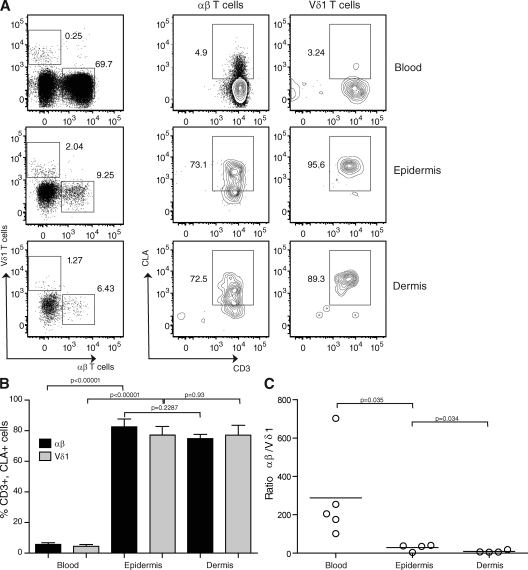
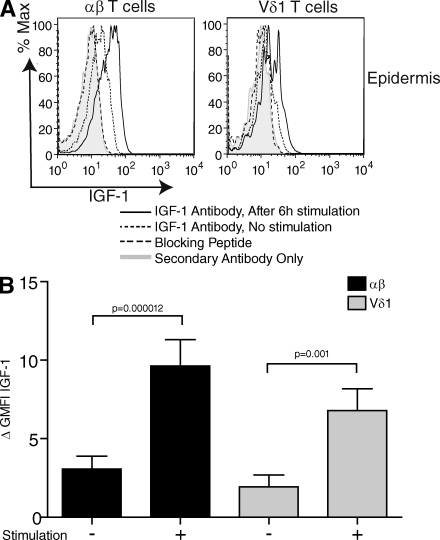
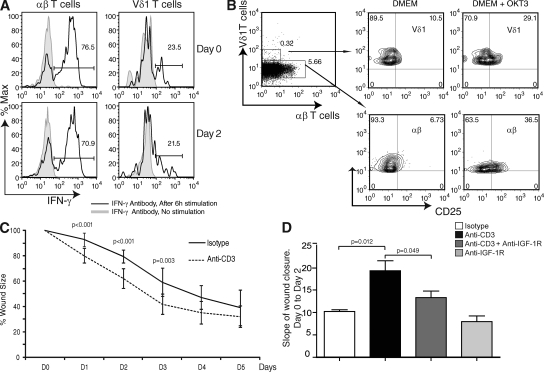
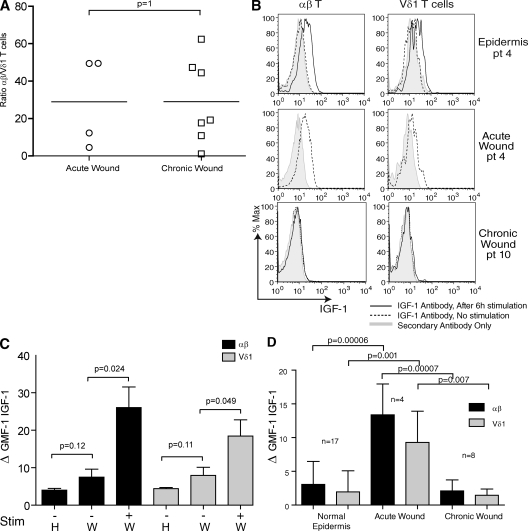
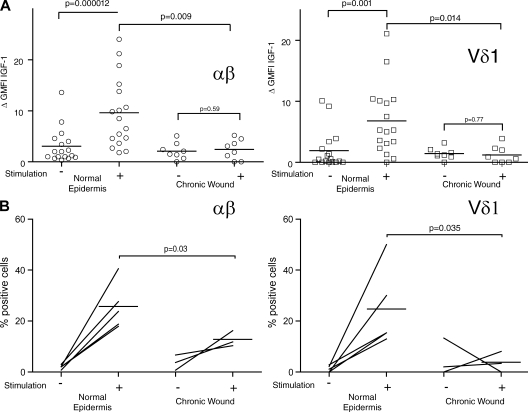
Epidermal T cells have been shown to play unique roles in tissue homeostasis and repair in mice through local secretion of distinct growth factors in the skin. Human epidermis contains both αβ+ and γδ+ T cells whose functional capabilities are not understood. We demonstrate that human epidermal T cells are able to produce insulin-like growth factor 1 (IGF-1) upon activation and promote wound healing in a skin organ culture model. Moreover, an analysis of the functional capabilities of T cells isolated from acute versus chronic wounds revealed a striking difference. Both αβ+ and Vδ1+ T cells isolated from acute wounds actively produced IGF-1, demonstrating that they are activated during tissue damage to participate in wound repair. In contrast, IGF-1 production could not be detected in T cells isolated from chronic wounds. In fact, skin T cells isolated from chronic wounds were refractory to further stimulation, suggesting an unresponsive state. Collectively, these results define a novel role for human epidermis–resident T cells in wound healing and provide new insight into our understanding of chronic wound persistence.
Overview
The claims and statistics of this paper haven’t been checked yet.
Run the check — free, no account needed. It reads the open-access text and checks the sources it cites.
Integrity signals
Registry
Cites
Statistics
Figures
Verification
Claims the paper makes
The claims and statistics of this paper haven’t been checked yet.
Run the check — free, no account needed. It reads the open-access text and checks the sources it cites.
Claims other papers make about this one
Each is checked against this paper’s own text: does it say what the citing paper says it does?
In the citing paper
“S. epidermidis association promoted the expression of genes associated specifically with angiogenesis, including angiogenin (Ang) and Hgf (47, 48), as well as genes that more broadly promote tissue repair, like Ceacam1, Grn, Hmox1, Igf1, and Pdgfa (49–53) (Fig. 3R).”
From MAIT cells are imprinted by the microbiota in early life and promote tissue repair (2019) · cites this paper as [49]
In the citing paper
“skin-resident T cells, which are proficient in IL-17A production, are dysfunctional in nonhealing wounds76;”
From The Innate Immune System in Acute and Chronic Wounds (2016) · cites this paper as [76]
Self-check
Percentages, sums and reported differences re-computed from the paper’s own numbers.
The self-check needs the paper’s full text.
Citations
Cites
Wound healing and its impairment in the diabetic foot
Falanga, V. (2005) · The Lancet · doi:10.1016/s0140-6736(05)67700-8 · Cited by 2,715
Upregulation of PD-1 expression on HIV-specific CD8+ T cells leads to reversible immune dysfunction
Trautmann, L., Janbazian, L., Chomont, N., Said, E. A., Gimmig, S., Bessette, B., Boulassel, M.-R., Delwart, E., Sepulveda, H., Balderas, R. S., et al. (2006) · Nature Medicine · doi:10.1038/nm1482 · Cited by 1,565
γδ Cells: A Right Time and a Right Place for a Conserved Third Way of Protection
Hayday, A. (2000) · Annual Review of Immunology · doi:10.1146/annurev.immunol.18.1.975 · Cited by 1,134
Regulation of Cutaneous Malignancy by γδ T Cells
Girardi, M., Oppenheim, D. E., Steele, C. R., Lewis, J. M., Glusac, E. J., Filler, R. B., Hobby, P., Sutton, B. J., Tigelaar, R. E., & Hayday, A. (2001) · Science · doi:10.1126/science.1063916 · Cited by 1,068
The Vast Majority of CLA+ T Cells Are Resident in Normal Skin
Clark, R. A., Chong, B., Mirchandani, N., Brinster, N. K., Yamanaka, K.-I., Dowgiert, R. K., & Kupper, T. S. (2006) · The Journal of Immunology · doi:10.4049/jimmunol.176.7.4431 · Cited by 796
A Role for Skin γδ T Cells in Wound Repair
Jameson, J., Ugarte, K., Chen, N., Yachi, P. P., Fuchs, E. V., Boismenu, R., & Havran, W. L. (2002) · Science · doi:10.1126/science.1069639 · Cited by 639
Self-citationIntraepithelial lymphocytes: exploring the Third Way in immunology
Hayday, A., Theodoridis, E., Ramsburg, E., & Shires, J. (2001) · Nature Immunology · doi:10.1038/ni1101-997 · Cited by 491
MacDonald, T. T., & Spencer, J. (1988) · The Journal of Experimental Medicine · doi:10.1084/jem.167.4.1341 · Cited by 398
Recognition of Self Antigens by Skin-Derived T Cells with Invariant γδ Antigen Receptors
Havran, W. L., Chien, Y., & Allison, J. P. (1991) · Science · doi:10.1126/science.1828619 · Cited by 359
Self-citationThe “trap” hypothesis of venous ulceration
Falanga, V., & Eaglstein, W. (1993) · The Lancet · doi:10.1016/0140-6736(93)91085-z · Cited by 330
Research works printed but not linked: 1
- Tamaki, 2001, Epidermal and dermal γδ T cells, Chem. Immunol., 79, 43
Cited by
Sorted by citations
Items 201–300 of 339
Improving the Wound Healing Process: Pivotal role of Mesenchymal stromal/stem Cells and Immune Cells
Sadeghi, M., Moghaddam, A., Amiri, A. M., Charoghdoozi, K., Mohammadi, M., Dehnavi, S., & Orazizadeh, M. (2025) · Stem Cell Reviews and Reports · doi:10.1007/s12015-025-10849-0 · Cited by 18
Zooming in across the Skin: A Macro-to-Molecular Panorama
Deniz, A. A. H., Abdik, E. A., Abdik, H., Aydın, S., Şahin, F., & Taşlı, P. N. (2019) · Advances in experimental medicine and biology · doi:10.1007/5584_2019_442 · Cited by 19
Unraveling Immune-Epithelial Interactions in Skin Homeostasis and Injury.
Mansfield, K. P., & Naik, S. (2020) · PubMed · Cited by 17
Šulcová, J., Maddaluno, L., Meyer, M., & Werner, S. (2015) · European Journal of Immunology · doi:10.1002/eji.201545675 · Cited by 16
The critical roles of IGFs in immune modulation and inflammation
Wang, X., Cao, L., Liu, S., Zhou, Y., Zhou, J., Zhao, W., Gao, S., Liu, R., Shi, Y., Shao, C., et al. (2024) · Cytokine · doi:10.1016/j.cyto.2024.156750 · Cited by 17
Coreceptors and Their Ligands in Epithelial γδ T Cell Biology
Witherden, D. A., Johnson, M. D., & Havran, W. L. (2018) · Frontiers in Immunology · doi:10.3389/fimmu.2018.00731 · Cited by 14
Self-citationEpidermal resident γδ T cell development and function in skin
Xu, Y., Dimitrion, P., Cvetkovski, S., Zhou, L., & Mi, Q.-S. (2021) · Cellular and Molecular Life Sciences · doi:10.1007/s00018-020-03613-9 · Cited by 15
Comparative Analysis of Human Epidermal and Peripheral Blood γδ T Cell Cytokine Profiles
Kim, K., Han, J., Lee, T. R., Shin, D. W., Chang, H., Cho, A., Choi, S. J., Jo, S. J., & Kwon, O. (2014) · Annals of Dermatology · doi:10.5021/ad.2014.26.3.308 · Cited by 15
Severe interstitial pneumonia induced by paclitaxel in a patient with adenocarcinoma of the lung.
Suzaki, N., Hiraki, A., Takigawa, N., Ueoka, H., Tanimoto, Y., Kozuki, T., Tabata, M., Kanehiro, A., Kiura, K., & Tanimoto, M. (2006) · PubMed · doi:10.18926/amo/30737 · Cited by 15
Exploring machine learning strategies for single-cell transcriptomic analysis in wound healing
Cui, J., Wang, M., Lin, C., Xu, X., & Zhang, Z. (2025) · Burns & Trauma · doi:10.1093/burnst/tkaf032 · Cited by 15
Peta, K. T., Ambele, M. A., & Pepper, M. S. (2021) · Journal of Immunology Research · doi:10.1155/2021/6649314 · Cited by 15
From the Skin to Distant Sites: T Cells in Psoriatic Disease
Reali, E., & Ferrari, D. (2023) · International Journal of Molecular Sciences · doi:10.3390/ijms242115707 · Cited by 14
Hydrofiber Dressing and Wound Repair: Review of the Literature and New Patents
Richetta, A. G., Cantisani, C., Li, V. W., Mattozzi, C., Melis, L., Gado, F. D., Giancristoforo, S., Silvestri, E., & Calvieri, S. (2011) · Recent Patents on Inflammation & Allergy Drug Discovery · doi:10.2174/187221311795399264 · Cited by 14
Get in Touch With Dendritic Epithelial T Cells!
Thelen, F., & Witherden, D. A. (2020) · Frontiers in Immunology · doi:10.3389/fimmu.2020.01656 · Cited by 14
Kolbe, K., Wittner, M., Hartjen, P., Hüfner, A.-D., Degen, O., Ackermann, C., Cords, L., Stellbrink, H., Haag, F., & Wiesch, J. S. Z. (2022) · Frontiers in Immunology · doi:10.3389/fimmu.2022.867167 · Cited by 13
The mutual regulation between γδ T cells and macrophages during wound healing
Hu, W., Zhang, X., Sheng, H., Liu, Z., Chen, Y., Huang, Y., He, W., & Luo, G. (2023) · Journal of Leukocyte Biology · doi:10.1093/jleuko/qiad087 · Cited by 13
The lymphoid cell network in the skin
Tikoo, S., Jain, R., Kurz, A. R. M., & Weninger, W. (2018) · Immunology and Cell Biology · doi:10.1111/imcb.12026 · Cited by 14
de Almeida, B. M., do Nascimento, M. F., Pereira‐Filho, R. N., de Melo, G. C., Sántos, J. C. D., de Oliveira, C. R., Gomes, M. Z., Lima, S. O., & Júnior, R. L. C. D. A. (2014) · Acta Cirúrgica Brasileira · doi:10.1590/s0102-8650201400150007 · Cited by 13
Lost in translation: mice, men and cutaneous immunity in old age
Smithey, M. J., Uhrlaub, J. L., Li, G., Vukmanovic‐Stejic, M., Akbar, A. N., & Nikolich‐Žugich, J. (2014) · Biogerontology · doi:10.1007/s10522-014-9517-0 · Cited by 13
A dual nature of γδ T cell immune memory responses
Suen, T. K., Al, B., Scarpa, A., Dorhoi, A., Netea, M. G., & Placek, K. (2025) · eLife · doi:10.7554/elife.104887 · Cited by 12
Transdermal immunotherapy: Past, present and future
Szczepanik, M., & Majewska‐Szczepanik, M. (2016) · Pharmacological Reports · doi:10.1016/j.pharep.2016.04.004 · Cited by 12
Eavesdropping on the conversation between immune cells and the skin epithelium
Bukhari, S., Mertz, A. F., & Naik, S. (2019) · International Immunology · doi:10.1093/intimm/dxy088 · Cited by 12
Skin Homeostasis and Repair: A T Lymphocyte Perspective
Rhoiney, M., Alvizo, C. R., & Jameson, J. (2023) · The Journal of Immunology · doi:10.4049/jimmunol.2300153 · Cited by 11
Self-citationShu, Y., Li, S., Du, Y., & Zheng, X. (2025) · Frontiers in Immunology · doi:10.3389/fimmu.2025.1611976 · Cited by 11
Role of Dendritic Epidermal T Cells in Cutaneous Carcinoma
Xiang, J., Qiu, M., & Zhang, H. (2020) · Frontiers in Immunology · doi:10.3389/fimmu.2020.01266 · Cited by 11
Hu, S., & Xiong, N. (2013) · The Journal of Immunology · doi:10.4049/jimmunol.1202261 · Cited by 11
A Plausible Role for Collectins in Skin Immune Homeostasis
Wang, T., Li, K., Xiao, S., & Xia, Y. (2021) · Frontiers in Immunology · doi:10.3389/fimmu.2021.594858 · Cited by 11
Activin A Inhibits Antigen-Induced Allergy in Murine Epicutaneous Sensitization
Kypriotou, M., Rivero, D., Haller, S., Mariotto, A., Huber, M., Acha‐Orbea, H., Werner, S., & Hohl, D. (2013) · Frontiers in Immunology · doi:10.3389/fimmu.2013.00246 · Cited by 11
The role of the immune system during regeneration of the central nervous system
Sabin, K. Z., & Echeverri, K. (2019) · Journal of Immunology and Regenerative Medicine · doi:10.1016/j.regen.2019.100023 · Cited by 10
Zhu, T., Zhu, L., Sheng, C., Wu, D., Gu, Q., Jiang, Z., Xu, J., Fu, G., & Jiang, Y. (2024) · BMC Immunology · doi:10.1186/s12865-024-00606-2 · Cited by 11
Farschtschi, S., Mattes, M., & Pfaffl, M. W. (2022) · Veterinary Sciences · doi:10.3390/vetsci9060255 · Cited by 10
Hu, W., Zhang, X., Liu, Z., Yang, J., Sheng, H., Liu, Z., Chen, C., Shang, R., Chen, Y., Lu, Y., et al. (2024) · iScience · doi:10.1016/j.isci.2024.109545 · Cited by 11
Lindblom, R. P. F., Lytsy, B., Sandström, C., Ligata, N., Larsson, B., Ransjö, U., & Swenne, C. L. (2015) · BMC Cardiovascular Disorders · doi:10.1186/s12872-015-0148-4 · Cited by 10
Chen, M., Xu, Z., Chen, Y., Yang, Q., Lu, R., Dong, Y., Li, X., Xie, J., Xu, R., Jia, H., et al. (2023) · Journal of Cellular and Molecular Medicine · doi:10.1111/jcmm.17766 · Cited by 9
Engineering immunomodulatory hydrogels for diabetic wound microenvironment reprogramming
Wang, S., Sun, X., Li, Y., Zhang, Z., Sun, J. X., He, Z., Luo, C., & Zhang, S. (2025) · Nano Today · doi:10.1016/j.nantod.2025.102870 · Cited by 10
Regulation of immunological tolerance by the p53-inhibitor iASPP
Akama‐Garren, E. H., Miller, P., Carroll, T. M., Tellier, M., Sutendra, G., Buti, L., Zaborowska, J., Goldin, R. D., Slee, E. A., Szele, F. G., et al. (2023) · Cell Death and Disease · doi:10.1038/s41419-023-05567-9 · Cited by 8
Yokley, B. H., Selby, S., & Posch, P. E. (2013) · The Journal of Immunology · doi:10.4049/jimmunol.1201068 · Cited by 11
(Not) Home alone: Antigen presenting cell – T Cell communication in barrier tissues
Neuwirth, T., Knapp, K., & Stary, G. (2022) · Frontiers in Immunology · doi:10.3389/fimmu.2022.984356 · Cited by 6
Akoto, C., Chan, C. Y. S., Ravi, K., Zhang, W., Vatish, M., Norris, S. A., & Hemelaar, J. (2020) · PLoS ONE · doi:10.1371/journal.pone.0235162 · Cited by 7
Semaphorins: New Cues for Skin Healing by γδ T Cells
Bonneville, M. (2012) · Immunity · doi:10.1016/j.immuni.2012.08.003 · Cited by 7
Inflammation in Wound Repair: Role and Function of Inflammation in Wound Repair
MacLeod, A. S., & Kwock, J. T. (2017) · Wiley eBooks · doi:10.1002/9781119282518.ch14 · Cited by 7
Immune-Epithelial Cell Interactions during Epidermal Regeneration, Repair, and Inflammatory Diseases
Schmitter-Sánchez, A. D., & Park, S. (2024) · International Journal of Stem Cells · doi:10.15283/ijsc23107 · Cited by 6
Isolation and Analysis of Mouse and Human Skin γδ T Cells
Gargas, S., Bshara‐Corson, S., Cruz, M. S., & Jameson, J. (2019) · Current Protocols in Immunology · doi:10.1002/cpim.92 · Cited by 6
Self-citationRole of non-classical T cells in skin immunity
Park, J. S., & Kim, J. H. (2018) · Molecular Immunology · doi:10.1016/j.molimm.2018.09.024 · Cited by 6
Diversity of T cells in the skin: Novel insights
Novak, N., Tordesillas, L., & Cabanillas, B. (2021) · International Reviews of Immunology · doi:10.1080/08830185.2021.1985116 · Cited by 6
Contributions of T Cell Signaling for Wound Healing
Meng, L., Tang, Q., Wei, D., Wei, D., Zhao, J., Shen, J., Yang, M., He, S., Huang, S., Qin, Y., et al. (2024) · Journal of Burn Care & Research · doi:10.1093/jbcr/irae151 · Cited by 5
Dual Role of Insulin-Like Growth Factor (IGF)-I in American Tegumentary Leishmaniasis
Mendes-Aguiar, C. D. O., Lopes-Siqueira, C., Pettito-Assis, F., de Oliveira, M. P., Oliveira-Neto, M. P., Pirmez, C., Da‐Cruz, A. M., & Goto, H. (2021) · Journal of Immunology Research · doi:10.1155/2021/6657785 · Cited by 5
Gestational Development of the Human Immune System
Jardine, L., van der Loeff, I. S., Haq, I., & Sproat, T. (2022) · Immunology and Allergy Clinics of North America · doi:10.1016/j.iac.2022.05.009 · Cited by 7
Reider, I. E., Lin, E. E., Krouse, T. E., Parekh, N. J., Nelson, A. M., & Norbury, C. C. (2024) · Viruses · doi:10.3390/v16030425 · Cited by 6
Manipulating inflammation to improve healing
Urao, N., & Koh, T. J. (2016) · Elsevier eBooks · doi:10.1016/b978-1-78242-455-0.00005-7 · Cited by 5
Toward Understanding Wound Immunology for High-Fidelity Skin RegenerationPreprint
Xue, Y., Reddy, S., & Garza, L. A. (2022) · Cold Spring Harbor Perspectives in Biology · doi:10.1101/cshperspect.a041241 · Cited by 5
Redefining the Skin Barrier: A Microbiome‐Integrated Multilayered Defense Model
Xia, J., Hochgerner, M., Wei, Q., Zhong, X., & Wang, J. (2025) · Barrier Immunity · doi:10.1002/dni2.70002 · Cited by 4
Battaglia, M. C., Sunshine, A. C., Luo, W., Jin, R. M., Stith, A., Lindemann, M. J., Miller, L. S., Sinha, S., Wohlfert, E. A., & Garrett‐Sinha, L. A. (2023) · Frontiers in Immunology · doi:10.3389/fimmu.2023.1208200 · Cited by 4
T cell-specific deficiency in BBSome component BBS1 interferes with selective immune responses
Stump, M., Guo, D., & Rahmouni, K. (2022) · American Journal of Physiology-Regulatory, Integrative and Comparative Physiology · doi:10.1152/ajpregu.00243.2022 · Cited by 4
Rai, V., & Agrawal, D. K. (2022) · Molecular and Cellular Biochemistry · doi:10.1007/s11010-022-04642-7 · Cited by 5
Babocs, D., Korrapati, K., Lytle, C., Gloviczki, M. L., Oderich, G. S., Melin, M. M., & Christiansen, R. (2025) · Journal of Vascular Surgery Venous and Lymphatic Disorders · doi:10.1016/j.jvsv.2025.102249 · Cited by 4
Interleukin 2 Topical Cream for Treatment of Diabetic Foot Ulcer: Experiment Protocol
Chan, S. W. S. (2015) · JMIR Research Protocols · doi:10.2196/resprot.4036 · Cited by 4
Baetz, N. W., Labroo, P., Ifediba, M. A., Miller, D., Stauffer, K., Sieverts, M., Nicodemus‐Johnson, J., Chan, E., Robinson, I., Miess, J., et al. (2023) · Tissue and Cell · doi:10.1016/j.tice.2023.102126 · Cited by 4
Behr, C., Capone, M., Couzi, L., Taupin, J., & Déchanet‐Merville, J. (2014) · The Open Immunology Journal · doi:10.2174/1874226200902010106 · Cited by 4
Celiac Disease: Background and Historical Context
Turner, G. D., Dunne, M. R., & Ryan, A. W. (2015) · Methods in molecular biology · doi:10.1007/978-1-4939-2839-2_1 · Cited by 5
Immunology: Skin T Cells Switch Identity to Protect and Heal
Ariotti, S., & Veldhoen, M. (2019) · Current Biology · doi:10.1016/j.cub.2019.01.055 · Cited by 4
Tick extracellular vesicles alter keratinocyte function in the skin epidermisPreprint
Marnin, L., Valencia, L. M., Bogale, H. N., Laukaitis-Yousey, H. J., Rolandelli, A., Ferraz, C. R., O’Neal, A. J., Schmitter-Sánchez, A. D., Bencosme-Cuevas, E., Nguyen, T.-T., et al. (2023) · bioRxiv (Cold Spring Harbor Laboratory) · doi:10.1101/2023.11.10.566612 · Cited by 4
Self-citationSingle-cell transcriptome and T cell receptor profiling of the tuberculin skin testPreprint
Turner, C. T., Rosenheim, J., Thakker, C. E., Chandran, A., Wilson, H., Venturini, C., Pollara, G., Chain, B., Tomlinson, G. S., & Noursadeghi, M. (2024) · bioRxiv (Cold Spring Harbor Laboratory) · doi:10.1101/2024.06.25.600676 · Cited by 4
Shang, M., Tang, Z., Huang, W., & Liu, Z. (2025) · Wound Repair and Regeneration · doi:10.1111/wrr.70093 · Cited by 3
Carnosic acid in topical rosemary extract enhances skin repair via TRPA1 activation
Rapp, E., Pang, J., Saeednia, B., Prouty, S. M., Reilly, C. A., & Leung, T. (2025) · JCI Insight · doi:10.1172/jci.insight.196267 · Cited by 3
γδ T cells in diabetes mellitus: dual roles and therapeutic implications
Wang, B., Li, Q., & Wang, Q. (2025) · Frontiers in Immunology · doi:10.3389/fimmu.2025.1693466 · Cited by 3
Roles of dendritic epidermal T cells in steady and different pathological states
Hao, J., Zhang, J., & Liu, Y. (2024) · Burns & Trauma · doi:10.1093/burnst/tkae056 · Cited by 3
γδ T cells in immune‐mediated kidney disease
Waterhölter, A., Krebs, C. F., & Panzer, U. (2024) · European Journal of Immunology · doi:10.1002/eji.202451069 · Cited by 5
The importance of targeting inflammation in skin regeneration
Schrementi, M. E., Chen, L., & DiPietro, L. (2018) · Elsevier eBooks · doi:10.1016/b978-0-12-810545-0.00011-5 · Cited by 3
Dysregulated inflammation in diabetic wounds
denDekker, A. D., & Gallagher, K. A. (2020) · Elsevier eBooks · doi:10.1016/b978-0-12-816413-6.00005-8 · Cited by 5
Klicznik, M. M., Morawski, P. A., Höllbacher, B., Varkhande, S. R., Motley, S., Kuri-Cervantes, L., Goodwin, E. C., Rosenblum, M. D., Long, S. A., Brachtl, G., et al. (2018) · bioRxiv (Cold Spring Harbor Laboratory) · doi:10.1101/361758 · Cited by 4
Yang, P., Bian, Z., Song, Z., Yang, C., Wang, L., & Yao, Z. (2023) · Reviews in the Neurosciences · doi:10.1515/revneuro-2023-0090 · Cited by 2
Su, C.-Y., Liu, T., Wang, H., Hughes, M. W., Chuong, C., & Yang, W.-C. (2025) · Developmental & Comparative Immunology · doi:10.1016/j.dci.2025.105326 · Cited by 4
Chauvet, M., Bourges, D., & Scotet, E. (2025) · Frontiers in Immunology · doi:10.3389/fimmu.2025.1556982 · Cited by 2
Espeleta, I., Gorgon, R. A., Sánchez‐Madrid, F., & Cibrián, D. (2025) · International review of cytology · doi:10.1016/bs.ircmb.2025.08.010 · Cited by 2
Skin aging and immunosenescence
Štrbo, N., Younis, S., Frasca, D., & Paganelli, A. (2025) · Exploration of Immunology · doi:10.37349/ei.2025.1003218 · Cited by 5
Molecular Dynamics Insights into Oil Droplet Adsorption and Penetration on the Stratum Corneum
Yuan, S., Wang, L., Liu, S., & Cao, X. (2025) · Langmuir · doi:10.1021/acs.langmuir.5c04028 · Cited by 2
Nitrite Therapy for Ischemic Syndromes
Kevil, C. G., & Lefer, D. J. (2010) · Elsevier eBooks · doi:10.1016/b978-0-12-373866-0.00018-6 · Cited by 4
Wendy Havran: Scientist, mentor, advocate
Born, W. K., Zúñiga‐Pflücker, J. C., Edelblum, K. L., Kabelitz, D., Hayday, A., Witherden, D. A., & Jameson, J. (2020) · Immunological Reviews · doi:10.1111/imr.12921 · Cited by 2
Self-citationKuenzel, N. A., Dobner, J., Reichert, D., Rossi, A., Boukamp, P., & Esser, C. (2024) · Journal of Investigative Dermatology · doi:10.1016/j.jid.2024.08.037 · Cited by 2
Deng, X., Jia, C., Chen, F., Liu, J.-Q., & ZHOU, Z. (2013) · Experimental and Therapeutic Medicine · doi:10.3892/etm.2013.1230 · Cited by 2
Skin architecture and function
Elbe‐Bürger, A. (2012) · Springer eBooks · doi:10.1007/978-3-7091-0315-9_3 · Cited by 2
[Research advances on the mechanism of dendritic epidermal T lymphocytes in wound healing].
Wang, J., Zhang, X. R., He, W. F., & Liang, G. (2021) · PubMed Central · doi:10.3760/cma.j.cn501120-20200226-00092 · Cited by 2
Skin: Immunological Defence Mechanisms
Shiu, J., Harberts, E. M., Gaspari, A. A., & Nickoloff, B. J. (2013) · Wiley eBooks · doi:10.1002/9780470015902.a0001215.pub3 · Cited by 2
Kabbani, M. S., Евгеньевна, Ф. О., Shashkova, E. Y., Men’shikova, M. V., & Shchegoleva, L. S. (2020) · Journal of Medical and Biological Research · doi:10.37482/2687-1491-z027 · Cited by 1
Reeder, T. L., Zarlenga, D. S., & Dyer, R. M. (2024) · Journal of Dairy Science · doi:10.3168/jds.2023-24577 · Cited by 1
Singh, K. (2025) · Biomolecules · doi:10.3390/biom15121682 · Cited by 1
Rodriguez, S., Padula, L., Fisher, E., Slater, B., Younis, S., Awadallah, C., Gharagozloo, A. M., Rubino, R. C., Ibrahim, M., Paidas, M., et al. (2026) · Frontiers in Immunology · doi:10.3389/fimmu.2026.1719211 · Cited by 1
Influence of fungi on epithelial homeostasis and role in inflammatory diseases
Peterson, L. F., Wang, J., Gow, N. A. R., LeibundGut‐Landmann, S., & Brewer, M. G. (2026) · Clinical Microbiology Reviews · doi:10.1128/cmr.00319-25 · Cited by 1
Gamma-Delta T Cells in the Skin
Tan, S., Tay, S. S., Sumaria, N., Roediger, B., & Weninger, W. (2017) · Springer eBooks · doi:10.1007/978-3-319-29785-9_4 · Cited by 2
Immune cells and the epidermal stem cell niche
Wang, E. C. E. (2019) · Advances in stem cells and their niches · doi:10.1016/bs.asn.2019.06.001 · Cited by 1
High incidence of adnexotropism in cytotoxic cutaneous lymphomas
Walker, C. J., Martínez‐Escala, M. E., Tan, T. L., Espinosa, M. L., & Guitart, J. (2021) · Journal of Cutaneous Pathology · doi:10.1111/cup.14017 · Cited by 1
Epidermal T cell subsets—Effect of age and antigen exposure in humans and mice
Gadsbøll, A.-S. Ø., Jee, M. H., Ahlström, M. G., Dyring‐Andersen, B., Woetmann, A., Ødum, N., Johansen, J. D., Geisler, C., & Bonefeld, C. M. (2021) · Contact Dermatitis · doi:10.1111/cod.13806 · Cited by 1
Lymphocyte responses to the polyphenol, oenothein B, and the influence of age on these responses
Ramstead, A. G. (2014) · ProQuest Demo Repository
Kawai, K. (2016) · Springer eBooks · doi:10.1007/978-4-431-55855-2_6
Tissue or Cell-Based Techniques
Ferringer, T., Elston, D. M., Park, J., Xiang, L. F., Shi, Y., Weiland, M. J., Qi, R., & Di, Z. (2016) · Springer eBooks · doi:10.1007/978-94-024-0902-4_14
Wound healing process and dipeptidyl peptidase IV
Batičić, L., Grčić, A., Pugel, E. P., Detel, D., & Varljen, J. (2017) · Medicina · doi:10.21860/medflum2017_173375
T Cell Immune Responses in Skin
Divito, S. J., & Kupper, T. S. (2017) · Springer eBooks · doi:10.1007/978-3-319-29785-9_8
The influence of low levels of fluid flow on fibroblast behaviour
Nithiananthan, S. (2017) · White Rose eTheses Online (University of Leeds, The University of Sheffield, University of York)
Metadata
- Authors
- Toulon, A., Breton, L., Taylor, K. R., Tenenhaus, M., Bhavsar, D., Lanigan, C., Rudolph, R., Jameson, J., & Havran, W. L.
- Affiliations
- Scripps Research Institute (US)
- L'Oréal (France) (FR)
- University of California San Diego (US)
- Corresponding author
- Havran, Wendy L.
- Venue
- Journal of Experimental Medicine
- Publisher
- Rockefeller University Press
- Published
- 2009-03-23
- Volume
- 206
- Issue
- 4
- Pages
- 743-750
- ISSN
- 0022-1007 (ISSN-L)
- 1540-9538
- PMC
- PMC2715110
- OpenAlex
- W199441549
- Cited by
- 339
- References
- 22
- Citations by year
- 2026: 7 · 2025: 22 · 2024: 21 · 2023: 25 · 2022: 23 · 2021: 25 · 2020: 37 · 2019: 23 · 2018: 21 · 2017: 20 · 2016: 13 · 2015: 20 · 2014: 18 · 2013: 21 · 2012: 12
- FWCI
- 10.73
- Type
- journal article
- Language
- en
- Open access
- green
- www.ncbi.nlm.nih.gov
- Licence
- cc-by-nc-sa
- Locations
- The Journal of Experimental Medicine (publishedVersion)
- The FASEB Journal (publishedVersion)
- PubMed Central (publishedVersion, cc-by-nc-sa)
- PubMed (publishedVersion)
- The Journal of Immunology
- Funders
- National Institutes of Health
- National Institute of General Medical Sciences (GM80301, R01GM080301)
- National Institute of Allergy and Infectious Diseases (AI 36964, T32AI007244, R01AI036964)
- Topics
- Health Sciences › Medicine › Surgery › Wound Healing and Treatments
- Life Sciences › Immunology and Microbiology › Immunology › T-cell and B-cell Immunology
- Life Sciences › Immunology and Microbiology › Immunology › Psoriasis: Treatment and Pathogenesis
- Keywords
- skin wound healing, chronic wounds, γδ T cells, alpha beta T cells, insulin-like growth factor I, T cell cytokine secretion, acute wounds, T cell activation, skin repair
- MeSH terms
- Chronic Disease, Epidermis, Flow Cytometry, Humans, Insulin-Like Growth Factor I, Lymphocyte Activation, Male, Organ Culture Techniques, Skin, Skin Physiological Phenomena, T-Lymphocytes, Wound Healing, Foreskin
About these checks
Registry, retraction, Cites and statistics results are computed, not judged, with one exception: a printed reference that no index lists is read once by a model before it counts as a citation error. Claims are extracted by a model and kept only when their quote appears verbatim in the text; each cited source is then checked, with a model’s help, for whether it says what the claim relies on. Those verdicts can be wrong — read the claim’s quote and the cited source before relying on one.
Statistics and arithmetic are recomputed, not judged.
Confidence bands are shown only for fields calibrated on our annotated test set. None is calibrated yet, so no band is shown.
What counts as a claim ›How we measure confidence ›How we check this ›
Are you an author, or do you see a problem with this page? Request a review
