

TNF-induced osteoclastogenesis and inflammatory bone resorption are inhibited by transcription factor RBP-J
Open accessThe DOI matches its Crossref record; 58 of the 58 references it cites were found in a registry or an index.
Abstract
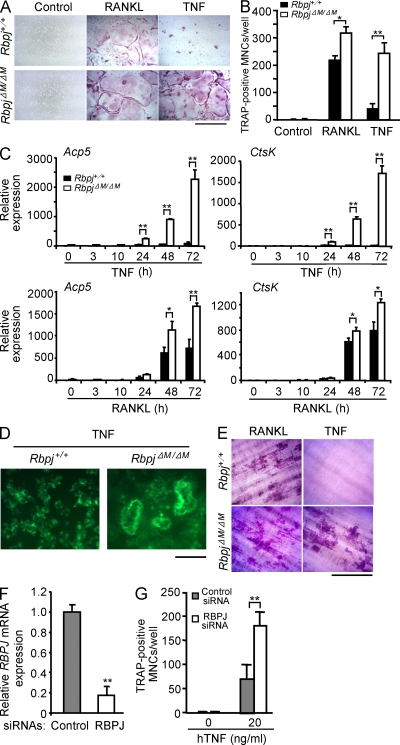
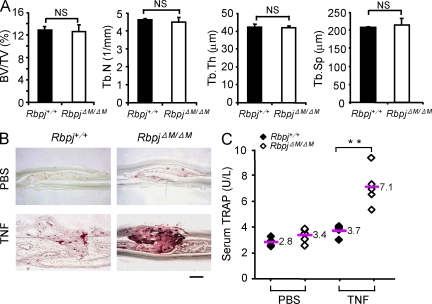
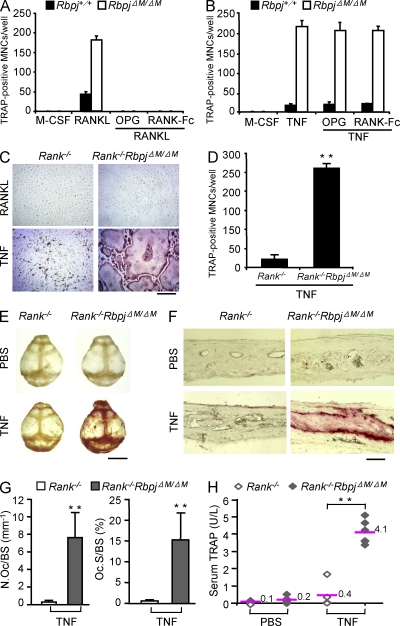
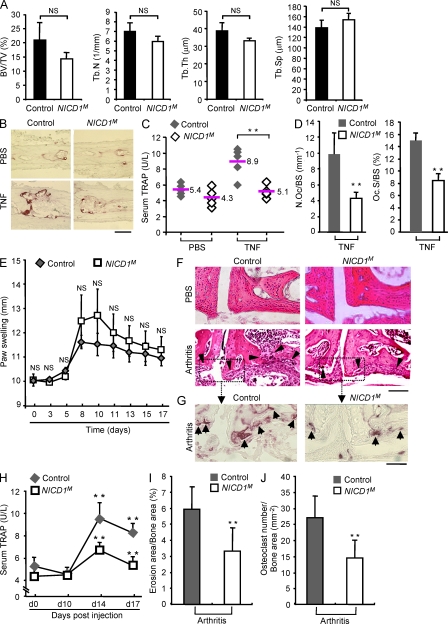
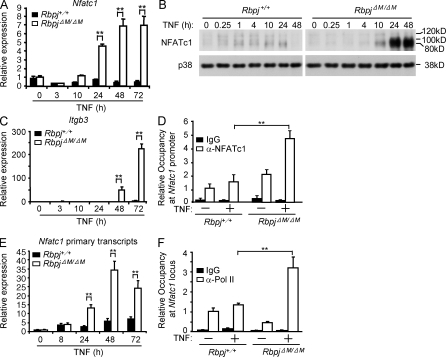
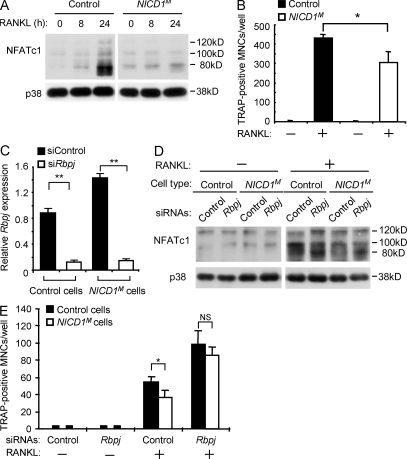
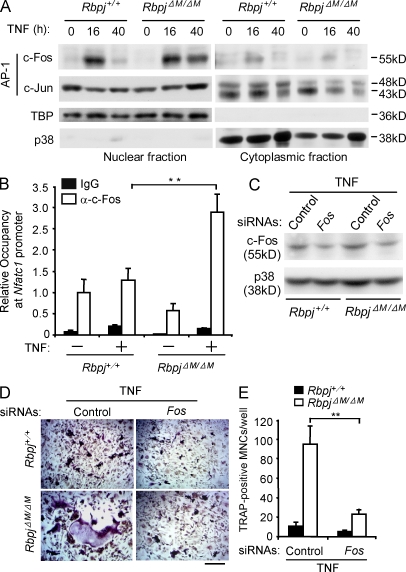
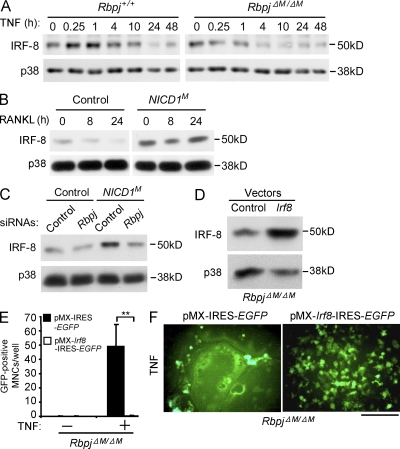
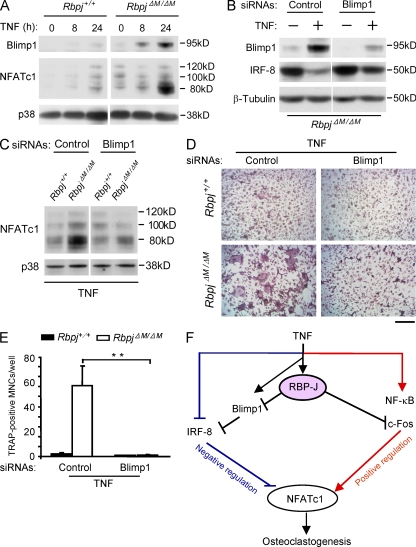
Tumor necrosis factor (TNF) plays a key role in the pathogenesis of inflammatory bone resorption and associated morbidity in diseases such as rheumatoid arthritis and periodontitis. Mechanisms that regulate the direct osteoclastogenic properties of TNF to limit pathological bone resorption in inflammatory settings are mostly unknown. Here, we show that the transcription factor recombinant recognition sequence binding protein at the J(κ) site (RBP-J) strongly suppresses TNF-induced osteoclastogenesis and inflammatory bone resorption, but has minimal effects on physiological bone remodeling. Myeloid-specific deletion of RBP-J converted TNF into a potent osteoclastogenic factor that could function independently of receptor activator of NF-κB (RANK) signaling. In the absence of RBP-J, TNF effectively induced osteoclastogenesis and bone resorption in RANK-deficient mice. Activation of RBP-J selectively in osteoclast precursors suppressed inflammatory osteoclastogenesis and arthritic bone resorption. Mechanistically, RBP-J suppressed induction of the master regulator of osteoclastogenesis (nuclear factor of activated T cells, cytoplasmic 1) by attenuating c-Fos activation and suppressing induction of B lymphocyte-induced maturation protein-1, thereby preventing the down-regulation of transcriptional repressors such as IRF-8 that block osteoclast differentiation. Thus, RBP-J regulates the balance between activating and repressive signals that regulate osteoclastogenesis. These findings identify RBP-J as a key upstream negative regulator of osteoclastogenesis that restrains excessive bone resorption in inflammatory settings.
Overview
The claims and statistics of this paper haven’t been checked yet.
Free: it reads the open-access text and checks the first 5 claims that cite a source we can check. Create a free account to check every claim.
Integrity signals
Registry
Cites
Statistics
Figures
Verification
Claims the paper makes
The claims and statistics of this paper haven’t been checked yet.
Free: it reads the open-access text and checks the first 5 claims that cite a source we can check. Create a free account to check every claim.
Claims other papers make about this one
Each is checked against this paper’s own text: does it say what the citing paper says it does?
The cited source says what the claim attributes to it.
In the citing paper
“Therefore, the above-mentioned cytokines may be related to each other in combined fashion [88,92,93,94,96,101,102,103].”
From Bone diseases in patients with chronic liver disease (2019) · cites this paper as [102]
Self-check
Percentages, sums and reported differences re-computed from the paper’s own numbers.
The self-check needs the paper’s full text.
Citations
Cites
The TNF and TNF Receptor Superfamilies
Locksley, R. M., Killeen, N., & Lenardo, M. J. (2001) · Cell · doi:10.1016/s0092-8674(01)00237-9 · Cited by 3,650
The Canonical Notch Signaling Pathway: Unfolding the Activation Mechanism
Kopan, R., & Ilagan, M. X. G. (2009) · Cell · doi:10.1016/j.cell.2009.03.045 · Cited by 3,643
Osteoimmunology: shared mechanisms and crosstalk between the immune and bone systems
Takayanagi, H. (2007) · Nature Reviews Immunology · doi:10.1038/nri2062 · Cited by 1,878 · cited 3×
“The positive signaling pathways used by the RANKL receptor RANK to activate NFATc1 are well established and include activation of canonical and noncanonical NF-B pathways, mitogen-activated kinase (MAPK) pathways leading to activation of AP-1 and CREB transcription factors, and calcium signaling; effective calcium si…”
BackgroundLam, J., Takeshita, S., Barker, J. E., Kanagawa, O., Ross, F. P., & Teitelbaum, S. L. (2000) · Journal of Clinical Investigation · doi:10.1172/jci11176 · Cited by 1,440 · cited 4×
“Recently, the importance of negative regulation of osteoclastogenesis by transcriptional repressors, including Ids, Eos, MafB, IRF-8, and Bcl6, has been appreciated (Lee et al., 2006; Hu et al., 2007; Kim et al., 2007; Zhao et al., 2009; Miyauchi et al., 2010).”
BackgroundInfluentialKobayashi, K., Takahashi, N., Jimi, E., Udagawa, N., Takami, M., Kotake, S., Nakagawa, N., Kinosaki, M., Yamaguchi, K., Shima, N., et al. (2000) · The Journal of Experimental Medicine · doi:10.1084/jem.191.2.275 · Cited by 1,304
Genome-wide association study meta-analysis identifies seven new rheumatoid arthritis risk loci
BIRAC Consortium, Stahl, E. A., YEAR Consortium, Raychaudhuri, S., Remmers, E. F., Xie, G., Eyre, S., Thomson, B. P., Li, Y., Kurreeman, F. A. S., et al. (2010) · Nature Genetics · doi:10.1038/ng.582 · Cited by 1,253 · cited 2×
“Positive signaling pathways and transcription factors that induce NFATc1 and promote osteoclastogenesis have been extensively studied and are well characterized (Takayanagi, 2007; Novack and Teitelbaum, 2008).”
BackgroundLi, J., Sarosi, I., Yan, X.-Q., Morony, S., Capparelli, C., Tan, H.-L., McCabe, S., Elliott, R., Scully, S., Van, G., et al. (2000) · Proceedings of the National Academy of Sciences · doi:10.1073/pnas.97.4.1566 · Cited by 1,119
Notch signalling regulates stem cell numbers in vitro and in vivo
Androutsellis-Theotokis, A., Leker, R. R., Soldner, F., Hoeppner, D. J., Ravin, R., Poser, S. W., Rueger, M. A., Bae, S.-K., Kittappa, R., & McKay, R. D. G. (2006) · Nature · doi:10.1038/nature04940 · Cited by 956 · cited 3×
“RBP-J activity at sites of inflammation can potentially be attenuated by cytokines that activate Jak-STAT signaling and are pathogenic in diseases such as RA (Ivashkiv and Hu, 2003; Androutsellis-Theotokis et al., 2006; Hu et al., 2008).”
BackgroundNotch–RBP-J signaling controls the homeostasis of CD8− dendritic cells in the spleen
Caton, M. L., Smith-Raska, M. R., & Reizis, B. (2007) · The Journal of Experimental Medicine · doi:10.1084/jem.20062648 · Cited by 859 · cited 2×
“, 2008), DC differentiation, and maintenance of CD8 DC populations (Caton et al., 2007).”
BackgroundNotch signaling controls multiple steps of pancreatic differentiation
Murtaugh, L. C., Stanger, B. Z., Kwan, K. M., & Melton, D. A. (2003) · Proceedings of the National Academy of Sciences · doi:10.1073/pnas.2436557100 · Cited by 782 · cited 9×
“JEM Vol. 209, No. 2 Article 325 of strongly activating RBP-J using forced expression of the Notch intracellular domain 1 (NICD1; Murtaugh et al., 2003; Zanotti et al., 2008; Tao et al., 2010).”
BackgroundMethodInfluential
Cited by
Osteoimmunology: The conceptual framework unifying the immune and skeletal systems
Okamoto, K., Nakashima, T., Shinohara, M., Negishi-Koga, T., Komatsu, N., Terashima, A., Sawa, S., Nitta, T., & Takayanagi, H. (2017) · Physiological Reviews · doi:10.1152/physrev.00036.2016 · Cited by 534
Xu, H., Zhu, J., Smith, S., Foldi, J., Zhao, B., Chung, A. Y., Outtz, H., Kitajewski, J., Shi, C., Weber, S., et al. (2012) · Nature Immunology · doi:10.1038/ni.2304 · Cited by 438
Self-citationRecent advances in osteoclast biology
Ono, T., & Nakashima, T. (2018) · Histochemistry and Cell Biology · doi:10.1007/s00418-018-1636-2 · Cited by 384
“Reports have shown that Tnfrsf11a−/− osteoclast progenitor cells are able to differentiate into osteoclasts via TNF-α stimulation under conditions in which progenitors are deficient in the transcription factor RBP-J or co-stimulated by TGF-β (Kim et al. 2005; Zhao et al. 2012).”
BackgroundNotch Signaling and the Skeleton
Zanotti, S., & Canalis, E. (2016) · Endocrine Reviews · doi:10.1210/er.2016-1002 · Cited by 321
NF-κB-Mediated Regulation of Osteoclastogenesis
Boyce, B. F., Xiu, Y., Li, J., Xing, L., & Yao, Z. (2015) · Endocrinology and Metabolism · doi:10.3803/enm.2015.30.1.35 · Cited by 299
Regulation of TNF-Induced Osteoclast Differentiation
Yao, Z., Getting, S. J., & Locke, I. C. (2021) · Cells · doi:10.3390/cells11010132 · Cited by 280
“* RBP-j Suppresses NFATc1 to inhibit OC formation [95].”
BackgroundInfluentialThe role of cytokines in inflammatory bone loss
Souza, P. P. C., & Lerner, U. H. (2013) · Immunological Investigations · doi:10.3109/08820139.2013.822766 · Cited by 269
“formation of large amounts of osteoclasts and increased serum levels of TRAP, which indicates that RBP-J might be a regulator of inflammation induced osteoclast formation, while having no importance for physiological osteoclastogenesis (Zhao et al. 2012).”
BackgroundInfluentialInflammatory osteolysis: A conspiracy against bone
Mbalaviele, G., Novack, D. V., Schett, G., & Teitelbaum, S. L. (2017) · Journal of Clinical Investigation · doi:10.1172/jci93356 · Cited by 251
“On the other hand, deletion of RBP-J, a transcription factor that inhibits osteoclast formation in the context of inflammation, enables RANKL-independent, TNF-α–induced, but not physiological, osteoclastogenesis (52).”
Role of Notch signaling in regulating innate immunity and inflammation in health and disease
Shang, Y., Smith, S., & Hu, X. (2016) · Protein & Cell · doi:10.1007/s13238-016-0250-0 · Cited by 244
“Moreover, in osteoclast precursors, Notch-RBP-J signaling is activated by TNF and in turn inhibits osteoclastogenesis and attenuates TNF-mediated inflammatory bone resorption in a feedback manner (Zhao et al., 2012).”
BackgroundSelf-citationYokota, K., Sato, K., Miyazaki, T., Aizaki, Y., Tanaka, S., Sekikawa, M., Kozu, N., Kadono, Y., Oda, H., & Mimura, T. (2021) · Arthritis & Rheumatology · doi:10.1002/art.41666 · Cited by 225
“This hypothesis has been supported by many experimental findings showing that infiltrating inflammatory cells and the cytokine milieu provide multiple routes to bone destruction (4,5).”
ResultThe Interplay Between Monocytes/Macrophages and CD4+ T Cell Subsets in Rheumatoid Arthritis
Roberts, C. A., Dickinson, A. K., & Taams, L. S. (2015) · Frontiers in Immunology · doi:10.3389/fimmu.2015.00571 · Cited by 229
“Zhao B, Grimes SN, Li S, Hu X, Ivashkiv LB. TNF-induced osteoclastogenesis and inflammatory bone resorption are inhibited by transcription factor RBPJ.”
T-Cell Mediated Inflammation in Postmenopausal Osteoporosis
Wu, D., Cline-Smith, A., Shashkova, E., Perla, A., Katyal, A., & Aurora, R. (2021) · Frontiers in Immunology · doi:10.3389/fimmu.2021.687551 · Cited by 227
Osteoclasts, Master Sculptors of Bone
Veis, D. J., & O'Brien, C. A. (2023) · Annual Review of Pathology: Mechanisms of Disease · doi:10.1146/annurev-pathmechdis-031521-040919 · Cited by 193
Common signalling pathways in macrophage and osteoclast multinucleation
Pereira, M., Petretto, E., Gordon, S., Bassett, J. H. D., Williams, G. R., & Behmoaras, J. (2018) · Journal of Cell Science · doi:10.1242/jcs.216267 · Cited by 189
“Tumour necrosis factor (TNF) is involved in pathological bone resorption (osteolysis) associated with rheumatoid arthritis (RA) and periodontitis, as well as in granulomatous diseases, such as TB and Crohn’s disease (Zhao et al., 2012; Van Deventer, 1997; Lukacs et al., 1994).”
BackgroundHuang, R.-L., Yuan, Y., Tu, J., Zou, G.-M., & Li, Q. (2014) · Cell Death & Disease · doi:10.1038/cddis.2014.101 · Cited by 182
Zhao, B. (2017) · Current Osteoporosis Reports · doi:10.1007/s11914-017-0358-z · Cited by 176
Self-citationRANKL as the master regulator of osteoclast differentiation
Takayanagi, H. (2021) · Journal of Bone and Mineral Metabolism · doi:10.1007/s00774-020-01191-1 · Cited by 175
Chloroquine reduces osteoclastogenesis in murine osteoporosis by preventing TRAF3 degradation
Xiu, Y., Xu, H., Zhao, C., Li, J., Morita, Y., Yao, Z., Xing, L., & Boyce, B. F. (2014) · Journal of Clinical Investigation · doi:10.1172/jci66947 · Cited by 164
“Similarly, TNF stimulates OC formation directly, but it also limits RANKL-and TNF-mediated OC formation by increasing cellular levels of NF-κB p100 (9) and other inhibitory proteins (4, 10).”
BackgroundRegulation of bone homeostasis: signaling pathways and therapeutic targets
Wu, Z., Li, W., Jiang, K., Lin, Z., Qian, C., Wu, M., Xia, Y., Li, N., Zhang, H., Xiao, H.-X., et al. (2024) · MedComm · doi:10.1002/mco2.657 · Cited by 151
“240 Conversely, Notch2 NICD interacts with NF-κ B, promoting the transcription of NFATc1, a key gene for osteoclasto-genesis, thus enhancing osteoclastogenesis through both direct and indirect pathways.”
BackgroundYang, Y. J., & Kim, D. J. (2021) · International Journal of Molecular Sciences · doi:10.3390/ijms22052604 · Cited by 112
“Another potent inflammatory cytokine, TNF-α, is also involved in inflammatory bone resorption by stimulating RANKL expression in osteoblasts and tissue stromal cells, in turn promoting osteoclast differentiation and activity [66].”
BackgroundTargeting the Notch Signaling Pathway in Chronic Inflammatory Diseases
CHRISTOPOULOS, P. F., Gjølberg, T. T., Krüger, S., Haraldsen, G., Andersen, J. T., & Sundlisæter, E. (2021) · Frontiers in Immunology · doi:10.3389/fimmu.2021.668207 · Cited by 117
Bone diseases in patients with chronic liver disease
Jeong, H., & Kim, D. (2019) · International Journal of Molecular Sciences · doi:10.3390/ijms20174270 · Cited by 113
“TNF also plays a key role in the pathogenesis of inflammatory bone resorption [102].”
BackgroundZhao, Y., Tian, Q., Frenkel, S. R., & Liu, C.-J. (2013) · Biomaterials · doi:10.1016/j.biomaterials.2013.05.030 · Cited by 115
“TNF-a is a key inflammatory cytokine, and is well known for inducing inflammatory bone resorption in autoimmune diseases such as rheumatoid arthritis [58].”
Osteoclast Signal Transduction During Bone Metastasis Formation
Győri, D., & Mócsai, A. (2020) · Frontiers in Cell and Developmental Biology · doi:10.3389/fcell.2020.00507 · Cited by 115
“Similarly, initial data indicated that Tnfrsf11a−/− primary bone marrow cells were capable to differentiate into osteoclasts under TNFα stimulation, when RBP-J transcription factor was deleted in the progenitors (Kim et al., 2005; Zhao et al., 2012).”
BackgroundResultNotch Signaling in Skeletal Development, Homeostasis and Pathogenesis
Zieba, J. T., Chen, Y.-T., Lee, B., & Bae, Y. (2020) · Biomolecules · doi:10.3390/biom10020332 · Cited by 102
“Osteoclastogenesis can also be induced during inflammation by TNF and further enhanced by deletion of Rbpjk in osteoclast precursors [86].”
BackgroundNOTCH inhibits osteoblast formation in inflammatory arthritis via noncanonical NF-κB
Zhang, H., Hilton, M. J., Anolik, J. H., Welle, S. L., Zhao, C., Yao, Z., Li, X., Wang, Z., Boyce, B. F., & Xing, L. (2014) · Journal of Clinical Investigation · doi:10.1172/jci68901 · Cited by 88
“NOTCH inhibition increases osteoclastogenesis (44), and myeloid-specific deletion of RBPjκ enhances TNF-induced osteoclast formation (41).”
Bone protection by inhibition of microRNA-182
Inoue, K., Deng, Z., Chen, Y., Γιαννοπούλου, Ε., Xu, R., Gong, S., Greenblatt, M. B., Mangala, L. S., Lopez‐Berestein, G., Kirsch, D. G., et al. (2018) · Nature Communications · doi:10.1038/s41467-018-06446-0 · Cited by 94
Self-citationThe flavonoid quercetin inhibits titanium dioxide (TiO2)-induced chronic arthritis in mice
Borghi, S. M., Mizokami, S. S., Pinho-Ribeiro, F. A., Fattori, V., Crespigio, J., Clemente‐Napimoga, J. T., Napimoga, M. H., Pitol, D. L., Issa, J. P. M., Fukada, S. Y., et al. (2017) · The Journal of Nutritional Biochemistry · doi:10.1016/j.jnutbio.2017.10.010 · Cited by 102
“osteoclastogenesis and inflammatory bone resorption [64], and IL-1β is closely linked with the pathogenesis of osteoarthritis, whereas its inhibition reduces the proliferation of synovial fibroblasts, the expression of COX and its products such as PGE2, and metalloproteinases in samples of human synovial tissues [65].”
BackgroundKawecki, F., Clafshenkel, W. P., Fortin, M., Auger, F. A., & Fradette, J. (2017) · Advanced Healthcare Materials · doi:10.1002/adhm.201700919 · Cited by 90
Notch in skeletal physiology and disease
CANALIS, E. M. (2018) · Osteoporosis International · doi:10.1007/s00198-018-4694-3 · Cited by 89
“osteoclast differentiation are mediated by canonical mechanisms [22].”
Notch and the regulation of osteoclast differentiation and function
Yu, J., & Canalis, E. (2020) · Bone · doi:10.1016/j.bone.2020.115474 · Cited by 81
“The genetic deletion of Notch1 in osteoclast precursors enhances osteoclastogenesis, whereas the overexpression of the NOTCH1 NICD (N1ICD) suppresses Nfatc1 transcription and osteoclast differentiation [95, 96].”
BackgroundInfluentialOsteoclasts—Key Players in Skeletal Health and Disease
Novack, D. V., & Mbalaviele, G. (2016) · Microbiology Spectrum · doi:10.1128/microbiolspec.mchd-0011-2015 · Cited by 88
“This transcription factor strongly suppresses differentiation downstream of TNF-α but not RANKL, and its removal allows robust osteolysis in response to TNF-α (216).”
BackgroundRBP-J–Regulated miR-182 Promotes TNF-α–Induced Osteoclastogenesis
Miller, C. H., Smith, S. M., Elguindy, M. M., Zhang, T., Xiang, J., Hu, X., Ivashkiv, L. B., & Zhao, B. (2016) · The Journal of Immunology · doi:10.4049/jimmunol.1502044 · Cited by 84
“Distinct from most negative regulators of osteoclast differentiation, a unique feature of RBP-J is that it plays a prominent and selective role in inhibiting TNF-a–induced osteoclastogenesis, with minimal effects on RANKL-induced osteoclastogenesis (13).”
BackgroundMethodResultInfluentialSelf-citationYao, Z., Lei, W., Duan, R., Li, Y., Luo, L., & Boyce, B. F. (2017) · Journal of Biological Chemistry · doi:10.1074/jbc.m116.771816 · Cited by 75
Taddio, A., Zennaro, F., Pastore, S., & Cimaz, R. (2017) · Pediatric Drugs · doi:10.1007/s40272-017-0226-4 · Cited by 74
“In addition, TNF can act directly on osteoclast precursors, often in synergy with RANKL, to promote osteoclastogenesis [53].”
Osteoclasts in the Inflammatory Arthritis: Implications for Pathologic Osteolysis
Jung, Y., Kang, Y. M., & Han, S. W. (2019) · Immune Network · doi:10.4110/in.2019.19.e2 · Cited by 77
“However, TNFα can induce OC differentiation in the recombination signal binding protein for immunoglobulin kappa J region (RBP-J)-deficient cells even in the absence of RANKL, suggesting RBP-J, a key mediator of signaling by the canonical Notch pathway, acts as upstream negative regulator of TNFα-mediated OC different…”
Backgroundvan der Kraan, A. G. J., Chai, R. C. C., Singh, P. P., Lang, B. J., Xu, J., Gillespie, M. T., Price, J. T., & Quinn, J. M. W. (2013) · Biochemical Journal · doi:10.1042/bj20121626 · Cited by 69
Wu, L., Zhang, G., Guo, C., Zhao, X., Shen, D., & Yang, N. (2019) · Biochemical and Biophysical Research Communications · doi:10.1016/j.bbrc.2019.10.083 · Cited by 65
Mukai, T., Ishida, S., Ishikawa, R., Yoshitaka, T., Kittaka, M., Gallant, R., Lin, Y., Rottapel, R. K., Brotto, M., Reichenberger, E., et al. (2014) · Journal of Bone and Mineral Research · doi:10.1002/jbmr.2295 · Cited by 72
“Expression of other regulators of RANKL‐induced osteoclast differentiation (Irf8, Mafb, Bcl6, Blimp1) as well as Rbpj, a nuclear DNA‐binding protein involved in TNF‐a–induced osteoclastogenesis,((26)) were not different between Sh3bp2KI/þ and Sh3bp2þ/þ BMMs (Supporting Fig.”
BackgroundAmlexanox Suppresses Osteoclastogenesis and Prevents Ovariectomy-Induced Bone Loss
Zhang, Y., Guan, H., Li, J., Fang, Z., Chen, W., & Li, F. (2015) · Scientific Reports · doi:10.1038/srep13575 · Cited by 71
Zhao, Z., Hou, X., Yin, X., Li, Y., Duan, R., Boyce, B. F., & Yao, Z. (2015) · PLOS ONE · doi:10.1371/journal.pone.0135728 · Cited by 57
“More recently, it was reported that TNF also limits OC formation through RBP-j [18] and IRF-8 [19], indicating that there are several mechanisms to restrict the destructive effects of TNF on bone.”
BackgroundZhu, H., Guo, J., Shen, Y., Dong, W., Gao, H., Miao, Y., Li, C., & Zhang, Y. (2018) · Clinical Cancer Research · doi:10.1158/1078-0432.ccr-18-0472 · Cited by 64
“Zhao and colleagues (38) reported that the transcription factor RBP-J can inhibit TNF-induced osteoclastogenesis and inflammatory bone resorption.”
BackgroundRBP-J imposes a requirement for ITAM-mediated costimulation of osteoclastogenesis
Li, S., Miller, C. H., Γιαννοπούλου, Ε., Hu, X., Ivashkiv, L. B., & Zhao, B. (2014) · Journal of Clinical Investigation · doi:10.1172/jci71882 · Cited by 62
“Consistent with previous literature (29), deletion of RBP-J enhanced the expression of NFATc1, BLIMP1, and c-FOS (Figure 3, A and B).”
InfluentialSelf-citationZhang, J., Li, Z., Si, Y., Chen, B., & Meng, J. (2014) · Differentiation · doi:10.1016/j.diff.2014.10.001 · Cited by 66
Melatonin prevents peri‑implantitis via suppression of TLR4/NF-κB
Wu, X., Qiao, S., Wang, W., Zhang, Y., Shi, J., Zhang, X., Gu, W., Zhang, X., Li, Y., Ding, X., et al. (2021) · Acta Biomaterialia · doi:10.1016/j.actbio.2021.07.017 · Cited by 62
Buhrmann, C., Popper, B., Aggarwal, B. B., & Shakibaei, M. (2020) · Cell and Tissue Research · doi:10.1007/s00441-020-03188-8 · Cited by 58
“…Biomedical Center, Core facility animal models, Ludwig-Maximilian-University Munich, 82152 Martinsried, Germany 3 Institute of Pathology, School of Medicine, Technical University of Munich, 81675 Munich, Germany 4 Inflammation Research Center, San Diego, CA 92126, USA 2017; Zhao et al. 2012).”
Foldi, J., Shang, Y., Zhao, B., Ivashkiv, L. B., & Hu, X. (2016) · Protein & Cell · doi:10.1007/s13238-016-0248-7 · Cited by 60
“Notch-RBP-J signaling has been shown to control development and differentiation of multiple myeloid lineages including granulocyte/monocyte progenitors, dendritic cells, and osteoclasts (Klinakis et al., 2011; Lewis et al., 2011; Zhao et al., 2012).”
BackgroundSelf-citationHuang, R., Yuan, Y., Tu, J., Zou, G.-M., & Li, Q. (2014) · Osteoarthritis and Cartilage · doi:10.1016/j.joca.2014.06.017 · Cited by 56
The Notch Ligand Jagged1 Regulates the Osteoblastic Lineage by Maintaining the Osteoprogenitor Pool
Lawal, R. A., Zhou, X., Batey, K., Hoffman, C. M., Georger, M. A., Radtke, F., Hilton, M. J., Xing, L., Frisch, B. J., & Calvi, L. M. (2017) · Journal of Bone and Mineral Research · doi:10.1002/jbmr.3106 · Cited by 61
“Because we previously showed that PTH increases Jagged1 RNA expression and protein in osteoblastic cells in vivo and in vitro,((17,18)) we treated 2-month-old PJag1 and WT mice with intermittent PTH(1-34).”
He, F., Guo, F., Li, Z., Yu, H., Ma, P., Zhao, J., Feng, L., Li, W., Liu, X., Qin, H., et al. (2015) · Hepatology · doi:10.1002/hep.27394 · Cited by 54
“Meanwhile, the efficiency of RBP-J deletion in liver macrophages was confirmed by quantitative PCR of genomic DNA (data not shown).(22) No significant alterations in hematopoietic development were noticed in RBP-J KO mice (data not shown).”
BackgroundCui, D., Lyu, J., Li, H., Lei, L., Bian, T., Li, L., & Yan, F. (2017) · Molecular Immunology · doi:10.1016/j.molimm.2017.08.012 · Cited by 60
“Interestingly, TNF-α activation is known to stimulate the degradation of the connective tissue matrix, activation of osteoclasts, and resorption of bone (Zhao et al., 2012; Azuma et al., 2000).”
BackgroundAltered Bone Remodeling in Psoriatic Disease: New Insights and Future Directions
Paine, A., & Ritchlin, C. T. (2018) · Calcified Tissue International · doi:10.1007/s00223-017-0380-2 · Cited by 59
“, demonstrated that myeloid-specific deletion of the transcription factor recombinant recognition sequence binding protein at the Jκ site (RBP-J) in mice reduced TNF-α induced OC differentiation by suppressing NFATc1 and attenuating AP-1 activation [27].”
Yu, Y., Bi, C., Wu, R., Yin, Y., Zhang, X., Lan, P.-H., & Chen, F. (2016) · Cell and Tissue Research · doi:10.1007/s00441-016-2437-3 · Cited by 53
Feng, G., Zheng, K., Song, D., Xu, K., Huang, D., Zhang, Y., Cao, P., Shen, S., Zhang, J., Feng, X., et al. (2016) · In Vitro Cellular & Developmental Biology - Animal · doi:10.1007/s11626-016-0070-9 · Cited by 58
“ferentiation (Zhao et al. 2012), and a good deal of pro-inflammatory cytokines including TNF-α and interleukin-1 (IL-1) can stimulate osteoclastic bone re-”
Mukai, T., Gallant, R., Ishida, S., Kittaka, M., Yoshitaka, T., Fox, D. A., Morita, Y., Nishida, K., Rottapel, R. K., & Ueki, Y. (2015) · Arthritis & Rheumatology · doi:10.1002/art.38975 · Cited by 59
“Indeed, several differences in regulatory mechanisms between RANKL- and TNF induced osteoclastogenesis have been reported (41,42).”
BackgroundKuang, W., Zheng, L., Xu, X., Lin, Y., Lin, J., Wu, J., & Tan, J. (2017) · Bone Research · doi:10.1038/boneres.2017.37 · Cited by 49
Regulation of Osteoclastogenesis and Bone Resorption by miRNAs
Inoue, K., Ng, C., Xia, Y., & Zhao, B. (2021) · Frontiers in Cell and Developmental Biology · doi:10.3389/fcell.2021.651161 · Cited by 52
Self-citationOsteopetrosis in TAK1-deficient mice owing to defective NF-κB and NOTCH signaling
Swarnkar, G., Karuppaiah, K., Mbalaviele, G., Chen, T. (.-P., & Abu‐Amer, Y. (2014) · Proceedings of the National Academy of Sciences · doi:10.1073/pnas.1415213112 · Cited by 47
“In this regard, the role of NOTCH/ RBPJ signaling in OCs has been described (36, 37).”
BackgroundResultCytokine Imbalance as a Common Mechanism in Both Psoriasis and Rheumatoid Arthritis
Tan, Y., Qiu, Q., Lu, C. C., Niu, X., Bai, Y., Jiang, C., Wang, Y., Zhou, Y., Lü, A., & Xiao, C. (2017) · Mediators of Inflammation · doi:10.1155/2017/2405291 · Cited by 49
Zhao, J., Lei, H., Wang, T., & Xiong, X. (2023) · Frontiers in Endocrinology · doi:10.3389/fendo.2023.1161402 · Cited by 51
“In addition, other studies have shown that RBP-J, a key upstream negative regulator of osteoclastogenesis, can inhibit excessive bone resorption caused by TNF-a (85).”
ResultRunx1-Mediated Regulation of Osteoclast Differentiation and Function
Soung, D. Y., Kalinowski, J., Baniwal, S. K., Jacome-Galarza, C. E., Frenkel, B., Lorenzo, J., & Drissi, H. (2014) · Molecular Endocrinology · doi:10.1210/me.2013-1305 · Cited by 41
“Recent studies also showed that RANKL signaling was necessary to inhibit transcriptional repressors of osteoclastogenesis such as Id (11), MafB (12), IRF-8 (13), BCL6 (14), and RBP-J (15) to initiate osteoclast formation and function.”
BackgroundmicroRNA‐Mediated Regulation of Bone Remodeling: A Brief Review
Liu, J., Dang, L., Wu, X., Li, D., Ren, Q., Lü, A., & Zhang, G. (2019) · JBMR Plus · doi:10.1002/jbm4.10213 · Cited by 43
“The transcription factor RBP‐J is a newly identified osteoclastogenic repressor playing a critical role in inhibiting the TNF‐α–induced osteoclast differentiation and bone resorption.((55)) Miller and colleagues((56)) recently found that miR‐182, as the most abundant miRNA in TNF‐α–induced osteoclastogenesis, was repr…”
BackgroundWang, F., Jiang, Y., Huang, X., Liu, Q., Zhang, Y., Luo, W., Zhang, F., Zhou, P., Lin, J., & Zhang, H. (2017) · Cellular Physiology and Biochemistry · doi:10.1159/000471865 · Cited by 44
RetractedRANKL-Independent Osteoclastogenesis: A Long-Standing Controversy
Tanaka, S. (2016) · Journal of Bone and Mineral Research · doi:10.1002/jbmr.3092 · Cited by 40
“In addition, Yao and colleagues((25)) and Zhao and colleagues((26)) reported that TNF-a induces strong inhibitors of osteoclasto-”
BackgroundZhang, P., Yue, K., Liu, X., Yan, X., Yang, Z., Duan, J., Xia, C., Xu, X., Zhang, M., Liang, L., et al. (2020) · Science China Life Sciences · doi:10.1007/s11427-019-1596-4 · Cited by 40
Intrinsic Restriction of TNF-Mediated Inflammatory Osteoclastogenesis and Bone Resorption
Zhao, B. (2020) · Frontiers in Endocrinology · doi:10.3389/fendo.2020.583561 · Cited by 43
“RBP-J inhibits the expression and function of NFATc1 (25), which in turn acts as an upstream regulator activating miR-182, pointing to a novel regulatory network (48).”
BackgroundSelf-citationAltered Bone Biology in Psoriatic Arthritis
Rahimi, H., & Ritchlin, C. T. (2012) · Current Rheumatology Reports · doi:10.1007/s11926-012-0259-1 · Cited by 40
“Anti–IL-17 IL-17, Th17 cells Antibody, small molecule against Th17 cells Phase 1/2 trials Inhibits inflammation and osteoclastogenesis (via effects on osteoblasts and possibly other cells) [61] Anti–IL-1 IL-1, IL receptor Antibody, fusion protein RA, sJIA, autoinflammatory conditions Inhibits inflammation and osteocla…”
BackgroundClinical relevance and functional consequences of the TNFRSF1A multiple sclerosis locus
Ottoboni, L., Frohlich, I. Y., Lee, M. H., Healy, B. C., Keenan, B. T., Xia, Z., Chitnis, T., Guttmann, C. R. G., Khoury, S. J., Weiner, H. L., et al. (2013) · Neurology · doi:10.1212/01.wnl.0000436612.66328.8a · Cited by 40
Li, Y. D., Liu, X., Li, Z., Wang, W. J., Li, Y. M., Cao, Z. P., Luan, P., Xiao, F., Gao, H. H., Guo, H., et al. (2021) · animal · doi:10.1016/j.animal.2021.100322 · Cited by 42
Mutations and altered expression ofSERPINF1in patients with familial otosclerosis
Ziff, J. L., Crompton, M., Powell, H. R. F., Lavy, J. A., Aldren, C. P., Steel, K. P., Saeed, S. R., & Dawson, S. J. (2016) · Human Molecular Genetics · doi:10.1093/hmg/ddw106 · Cited by 38
“PAX3 and RBPJ have both been shown to play inhibitory roles in bone formation, whereby persistent PAX3 expression inhibits BMP-induced osteogenesis (36) and activation of RBPJ inhibits TNF-induced osteoclastogenesis (37).”
BackgroundThe osteoclast, a target cell for microorganisms
Raynaud‐Messina, B., Vérollet, C., & Maridonneau‐Parini, I. (2019) · Bone · doi:10.1016/j.bone.2019.06.023 · Cited by 36
Thumbigere‐Math, V., Foster, B. L., Bachu, M., Yoshii, H., Brooks, S. R., Coulter, A. M., Chavez, M. B., Togi, S., Neely, A. L., Deng, Z., et al. (2019) · Journal of Bone and Mineral Research · doi:10.1002/jbmr.3690 · Cited by 34
“Among the list of negative regulators of osteoclastogenesis, RBP-J has been shown to function upstream of IRF8 and augment IRF8 expression.((37)) In this study, we noted that RBP-J expression was initially higher in Irf8 versus Irf8 BMMs at D0 (mean RPKM, 67 versus 37); however, its expression was downregulated with R…”
BackgroundRoper, P. M., Shao, C. G., & Novack, D. V. (2020) · Cells · doi:10.3390/cells9102157 · Cited by 36
Does TNF Promote or Restrain Osteoclastogenesis and Inflammatory Bone Resorption?
Zhao, B. (2018) · Critical Reviews in Immunology · doi:10.1615/critrevimmunol.2018025874 · Cited by 33
Self-citationWang, L., Zhang, T., Zhang, Z., Wang, Z., Zhou, Y., & Wang, Z. (2021) · BMC Oral Health · doi:10.1186/s12903-021-01788-6 · Cited by 31
Diet, weight, cytokines and bone health in postmenopausal women
Gunn, C. A., Weber, J. L., & Kruger, M. C. (2014) · The journal of nutrition health & aging · doi:10.1007/s12603-014-0002-x · Cited by 33
“inflammatory bone loss leading to osteoporosis (30, 56).”
Another Notch in the Belt of Rheumatoid Arthritis
Zack, S. R., Alzoubi, O., Satoeya, N., Singh, K. P., Deen, S., Nijim, W., Lewis, M., Pitzalis, C., Sweiss, N., Ivashkiv, L. B., et al. (2024) · Arthritis & Rheumatology · doi:10.1002/art.42937 · Cited by 31
“19,20 TNF α and TLRs play a crucial role in Notch signaling as they are instrumental for NF-κ B and MAPK activation in addition to chromatin modulation of the Notch target gene, HES1 .”
Self-citationFrom death to birth: how osteocyte death promotes osteoclast formation
Zhao, W., Qian, J., Li, J., Su, T., Deng, X., Fu, Y., Liang, X., & Cui, H. (2025) · Frontiers in Immunology · doi:10.3389/fimmu.2025.1551542 · Cited by 36
Mijailović, I., Nikolić, N., Krasavcevic, A. D., Čarkić, J., Milinković, I., Perić, M., Jankovic, S., Milašin, J., & Aleksic, Z. M. (2019) · Journal of Periodontology · doi:10.1002/jper.18-0755 · Cited by 29
AGS3 is involved in TNF-α medicated osteogenic differentiation of human dental pulp stem cells
Xing, J., Lian, M., Shen, Q., Feng, G., Huang, D., Lu, X., Gu, Z., Li, L., Zhang, J., Huang, S. C., et al. (2015) · Differentiation · doi:10.1016/j.diff.2015.06.001 · Cited by 27
Role of Regulators of G Protein Signaling Proteins in Bone Physiology and Pathophysiology
Jules, J., Yang, S., Chen, W., & Li, Y. (2015) · Progress in molecular biology and translational science · doi:10.1016/bs.pmbts.2015.02.002 · Cited by 29
“Consequently, recombinant recognition sequence binding protein at the Jκ site (RBP-J), one of the key inhibitors of osteoclastogenesis, functions by blocking PLC-induced [Ca]i oscillations in osteoclast precursors.(61,62) In line with the requirement for Ca, osteoclasts have an active Ca regulatory system, including a…”
BackgroundSun, T., Li, Z., Zhong, X., Cai, Z., Ning, Z., Hou, T., Xiong, L., Feng, Y., Leung, F. K. L., Lu, W. W., et al. (2018) · Journal of Cell Communication and Signaling · doi:10.1007/s12079-018-0478-y · Cited by 28
AIRE: a missing link to explain female susceptibility to autoimmune diseases
Berrih‐Aknin, S., Panse, R. L., & Dragin, N. (2017) · Annals of the New York Academy of Sciences · doi:10.1111/nyas.13529 · Cited by 29
Chronic recurrent multifocal osteomyelitis: a case report
Gicchino, M. F., Diplomatico, M., Granato, C., Capalbo, D., Marzuillo, P., Olivieri, A. N., & del Giudice, E. M. (2018) · The Italian Journal of Pediatrics/Italian journal of pediatrics · doi:10.1186/s13052-018-0463-3 · Cited by 26
Paglia, D. N., Yang, X., Kalinowski, J., Jastrzebski, S. L., Drissi, H., & Lorenzo, J. (2016) · Endocrinology · doi:10.1210/en.2015-2037 · Cited by 25
Zhou, C., Shen, S., Zhang, M., Luo, H., Zhang, Y., Wu, C., Zeng, L., & Ruan, H. (2023) · Frontiers in Medicine · doi:10.3389/fmed.2023.1235081 · Cited by 23
“For instance, TNF-α can promote OCs formation by directly interacting with both OCs along with their precursors, synergistically with RANKL (61).”
BackgroundEeles, D. G., Hodge, J. M., Singh, P. P., Schuijers, J. A., Grills, B. L., Gillespie, M. T., Myers, D. E., & Quinn, J. M. W. (2014) · Molecular and Cellular Endocrinology · doi:10.1016/j.mce.2014.10.014 · Cited by 22
RNA-binding protein Musashi2 induced by RANKL is critical for osteoclast survival
Fujiwara, T., Zhou, J. P., Ye, S., & Zhao, H. (2016) · Cell Death and Disease · doi:10.1038/cddis.2016.213 · Cited by 23
Lopalco, G., Cito, A., Iannone, F., Diekhoff, T., Poddubnyy, D., & Proft, F. N. (2025) · Frontiers in Immunology · doi:10.3389/fimmu.2025.1599995 · Cited by 22
Metabolic-epigenetic coupling in osteoclast differentiation
Ivashkiv, L. B. (2015) · Nature Medicine · doi:10.1038/nm.3815 · Cited by 21
Self-citationRegulatory network mediated by RBP‐J/NFATc1‐miR182 controls inflammatory bone resorption
Inoue, K., Hu, X., & Zhao, B. (2019) · The FASEB Journal · doi:10.1096/fj.201902227r · Cited by 21
Self-citationWang, S., Heng, B. C., Qiu, S., Deng, J., Cheung, G. S. P., Jin, L., Zhao, B., & Zhang, C. (2018) · Innate Immunity · doi:10.1177/1753425918812646 · Cited by 20
“It was reported that RBP-J negatively regulates osteoclast differentiation and bone resorption, particularly in TNF-a-induced osteoclastogenesis and inflammatory bone resorption.(18,19) It has also been found that TNF or LPS-mediated osteoclast differentiation and inflammatory bone resorption are drastically suppresse…”
BackgroundMethodSelf-citationOsteoblast-Based Therapy—A New Approach for Bone Repair in Osteoporosis: Pre-Clinical Setting
Mahmoud, N. S., Mohamed, M. R., Ali, M. A. M., Aglan, H. A., Amr, K. S., & Ahmed, H. H. (2020) · Tissue Engineering and Regenerative Medicine · doi:10.1007/s13770-020-00249-5 · Cited by 21
“Also, the decline in TNF-a production, as a result of osteoblast transplantation, promotes the inhibition of bone resorption and osteoclastogenesis [43, 44], leading to the reduction of bone turnover markers; BALP, BSP, and SOST.”
BackgroundOsteosarcopenia: epidemiology, molecular mechanisms, and management
Yi, Y.-T., Zhao, H.-F., Wang, W., & Li, X. (2025) · Frontiers in Endocrinology · doi:10.3389/fendo.2025.1577758 · Cited by 21
The Hajdu Cheney mutation sensitizes mice to the osteolytic actions of tumor necrosis factor α
Yu, J., & CANALIS, E. M. (2019) · Journal of Biological Chemistry · doi:10.1074/jbc.ra119.009824 · Cited by 18
“Our results are in contrast to previous work demonstrating that RBPJ , a component of Notch canonical signaling, inhibits TNF -induced osteoclastogenesis by suppressing Nfatc1 (49).”
ResultInfluentialDef6 Restrains Osteoclastogenesis and Inflammatory Bone Resorption
Binder, N. B., Miller, C. H., Yoshida, M., Inoue, K., Nakano, S., Hu, X., Ivashkiv, L. B., Schett, G. A., Pernis, A. B., Goldring, S. R., et al. (2017) · The Journal of Immunology · doi:10.4049/jimmunol.1601716 · Cited by 19
“2 mM rhodamine phalloidin (Sigma-Aldrich) for 60 min at 37 ̊C (26).”
BackgroundMethodInfluentialSelf-citationWang, X., Zhang, X., Han, Y., Duan, X., Wang, J., Yan, H., Wang, S.-S., Xu, Y., Zhu, Z., Wang, L., et al. (2022) · Frontiers in Endocrinology · doi:10.3389/fendo.2022.876067 · Cited by 109
Swarnkar, G., Shim, K., Nasir, A. M., Seehra, K., Chen, H.-P., Mbalaviele, G., & Abu‐Amer, Y. (2016) · Scientific Reports · doi:10.1038/srep29896 · Cited by 18
Jin, F., Zhu, Y., Liu, M., Wang, R., Cui, Y., Wu, Y., Liu, G., Wang, Y., Wang, X., & Ren, Z. (2022) · International Journal of Biological Sciences · doi:10.7150/ijbs.72487 · Cited by 16
“The deficiency of Notch cofactor Rbpjκ leads to enhanced osteoclast formation, indicating that Rbpjκ is a negative regulator of osteoclast formation [57].”
BackgroundChang, L., Lai, C., Kuo, C., Chang, B.-I., Wu, H., & Cheng, T. (2021) · Journal of Periodontology · doi:10.1002/jper.20-0732 · Cited by 18
Metadata
- Authors
- Zhao, B., Grimes, S. N., Li, S., Hu, X., & Ivashkiv, L. B.
- Affiliations
- Hospital for Special Surgery (US)
- Corresponding author
- Ivashkiv, Lionel B.
- Venue
- Journal of Experimental Medicine
- Publisher
- Rockefeller University Press
- Published
- 2012-01-16
- Volume
- 209
- Issue
- 2
- Pages
- 319-334
- ISSN
- 0022-1007 (ISSN-L)
- 1540-9538
- PMC
- PMC3280875
- OpenAlex
- W2130913446
- Cited by
- 182
- References
- 58
- Citations by year
- 2026: 2 · 2025: 7 · 2024: 11 · 2023: 10 · 2022: 15 · 2021: 19 · 2020: 14 · 2019: 18 · 2018: 14 · 2017: 20 · 2016: 15 · 2015: 9 · 2014: 14 · 2013: 7 · 2012: 7
- FWCI
- 4.75
- Type
- journal article
- Language
- en
- Open access
- green
- www.ncbi.nlm.nih.gov
- Licence
- cc-by-nc-sa
- Locations
- The Journal of Experimental Medicine (publishedVersion)
- Europe PMC (PubMed Central) (publishedVersion, cc-by-nc-sa)
- PubMed Central (publishedVersion, cc-by-nc-sa)
- PubMed (publishedVersion)
- Funders
- National Institute of Allergy and Infectious Diseases (R01AI044938)
- National Institute of Arthritis and Musculoskeletal and Skin Diseases (R01AR056729, K99AR062047, R01AR050401, R01AR046713)
- National Institute of Dental and Craniofacial Research (R01DE019420)
- Topics
- Life Sciences › Biochemistry, Genetics and Molecular Biology › Molecular Biology › Bone Metabolism and Diseases
- Health Sciences › Medicine › Rheumatology › Rheumatoid Arthritis Research and Therapies
- Health Sciences › Medicine › Rheumatology › Osteomyelitis and Bone Disorders Research
- Keywords
- RBPJ, TNF-α, osteoclastogenesis, inflammatory bone resorption, NFATc1, c-fos, BCL11A, IRF8, rheumatoid arthritis, periodontitis, transcriptional regulation, myeloid-specific deletion
- MeSH terms
- Positive Regulatory Domain I-Binding Factor 1, Interferon Regulatory Factor-8, Animals, Bone Resorption, Genetic Vectors, Osteoclasts, Retroviridae, Transcription Factors, Transduction, Genetic, Tumor Necrosis Factor-alpha, Immunoblotting, Bone Remodeling, Proto-Oncogene Proteins c-fos, Gene Deletion, DNA Primers, Mice, Knockout, Reverse Transcriptase Polymerase Chain Reaction, RNA Interference, Chromatin Immunoprecipitation, Bone Density Conservation Agents, NFATC Transcription Factors, Interferon Regulatory Factors, Mice, Immunoglobulin J Recombination Signal Sequence-Binding Protein, Real-Time Polymerase Chain Reaction
About these checks
Registry, retraction, Cites and statistics results are computed, not judged, with one exception: a printed reference that no index lists is read once by a model before it counts as a citation error. Claims are extracted by a model and kept only when their quote appears verbatim in the text; each cited source is then checked, with a model’s help, for whether it says what the claim relies on. Those verdicts can be wrong — read the claim’s quote and the cited source before relying on one.
Statistics and arithmetic are recomputed, not judged.
Confidence bands are shown only for fields calibrated on our annotated test set. None is calibrated yet, so no band is shown.
What counts as a claim ›How we measure confidence ›How we check this ›
Are you an author, or do you see a problem with this page? Request a review
Data sources
Bibliographic data: Semantic Scholar, OpenAlex, Crossref.
Contains information from the Semantic Scholar Academic Graph Datasets, made available under the ODC Attribution License (ODC-BY 1.0).
Semantic Scholar’s data is described in: Kinney, R., et al. (2023). The Semantic Scholar Open Data Platform. arXiv:2301.10140.
