

The DOI matches its Crossref record; 9 of the 9 references it cites were found in a registry or an index.
Macrophages of distinct origins contribute to tumor development in the lung
Abstract
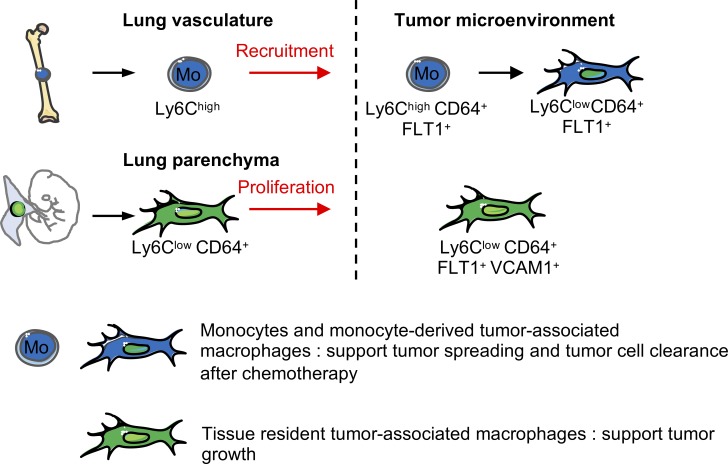
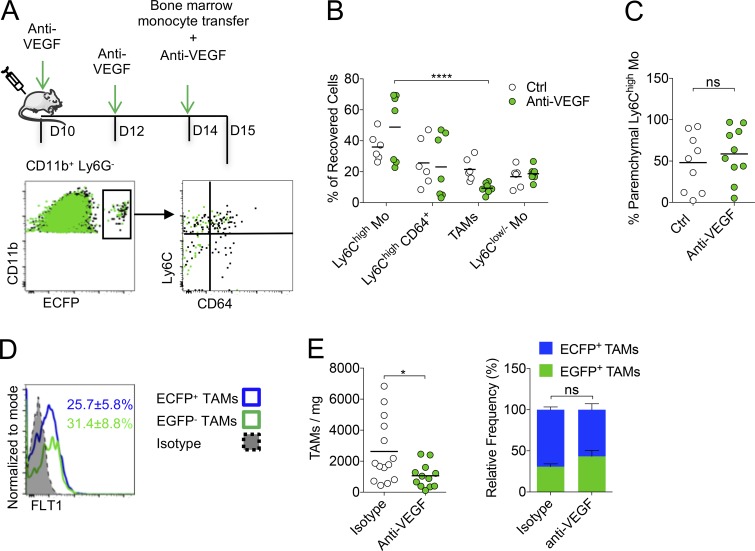
Tissue-resident macrophages can self-maintain without contribution of adult hematopoiesis. Herein we show that tissue-resident interstitial macrophages (Res-TAMs) in mouse lungs contribute to the pool of tumor-associated macrophages (TAMs) together with CCR2-dependent recruited macrophages (MoD-TAMs). Res-TAMs largely correlated with tumor cell growth in vivo, while MoD-TAMs accumulation was associated with enhanced tumor spreading. Both cell subsets were depleted after chemotherapy, but MoD-TAMs rapidly recovered and performed phagocytosis-mediated tumor clearance. Interestingly, anti-VEGF treatment combined with chemotherapy inhibited both Res and Mod-TAM reconstitution without affecting monocyte infiltration and improved its efficacy. Our results reveal that the developmental origin of TAMs dictates their relative distribution, function, and response to cancer therapies in lung tumors.
Overview
The claims and statistics of this paper haven’t been checked yet.
Run the check — free, no account needed. It reads the open-access text and checks the sources it cites.
Integrity signals
Registry
Cites
Statistics
Figures
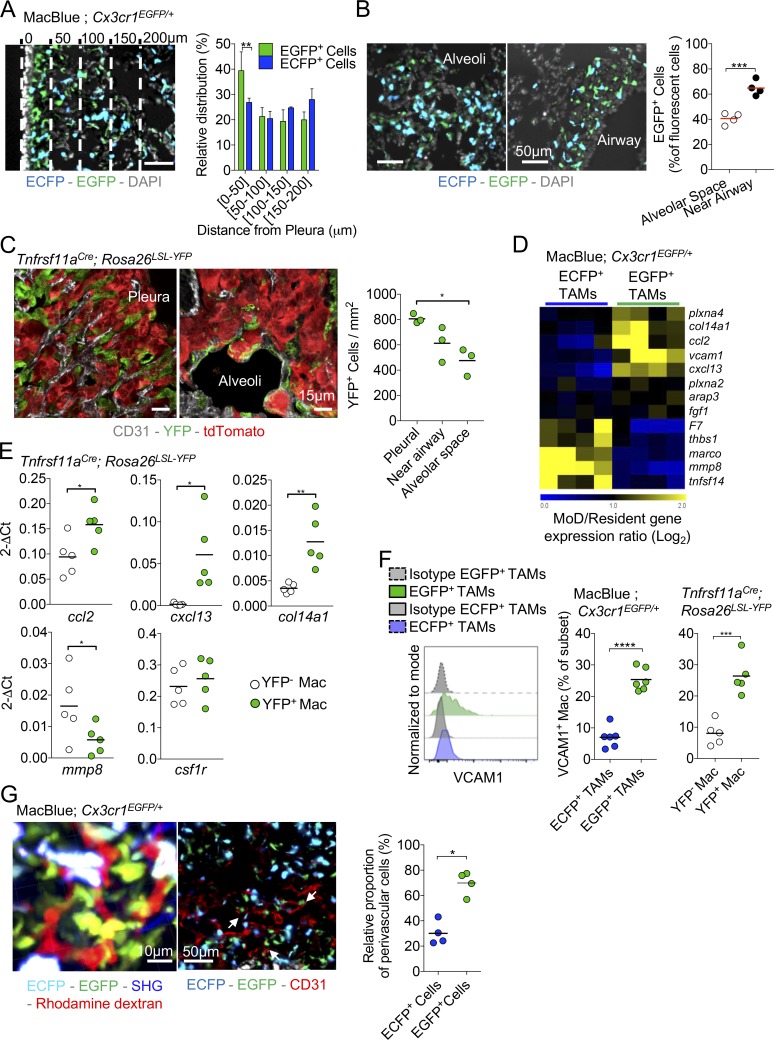
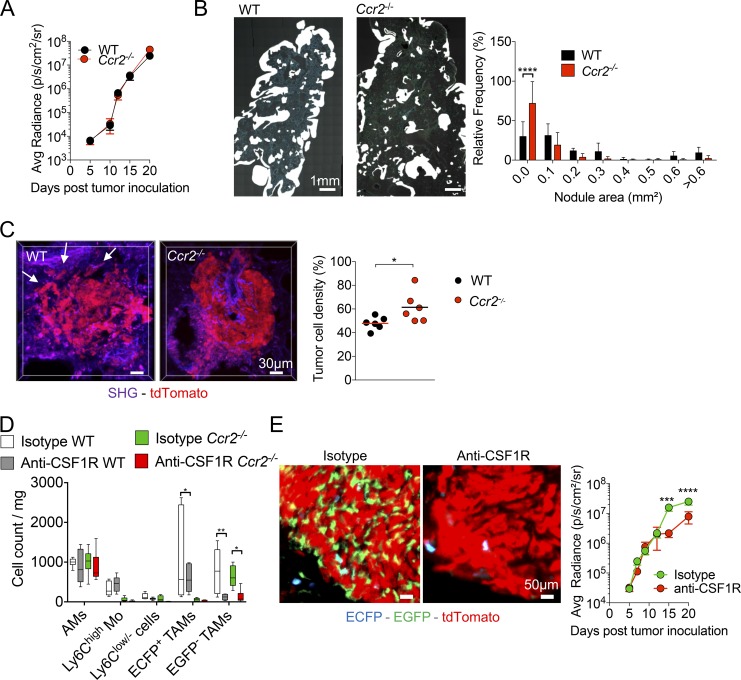
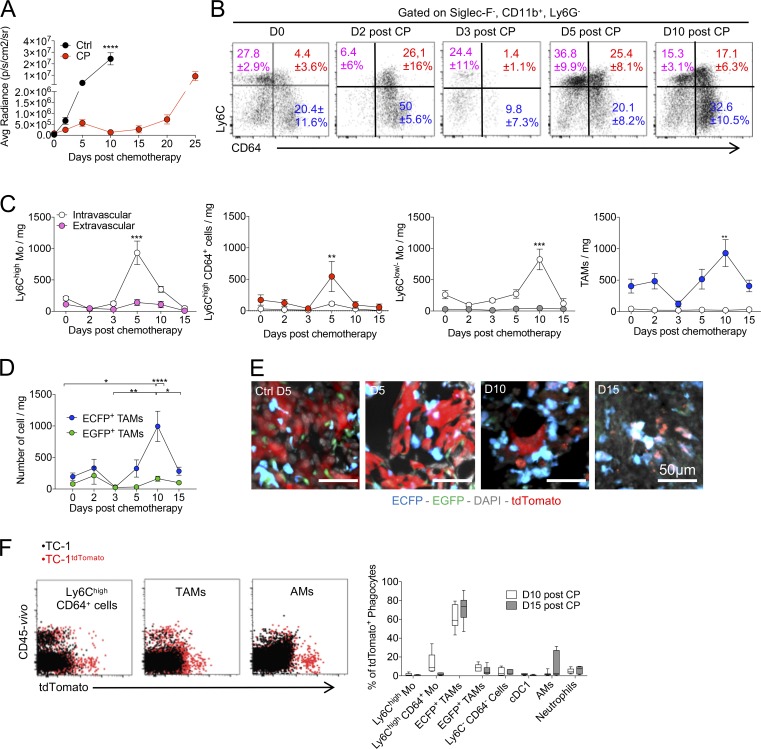
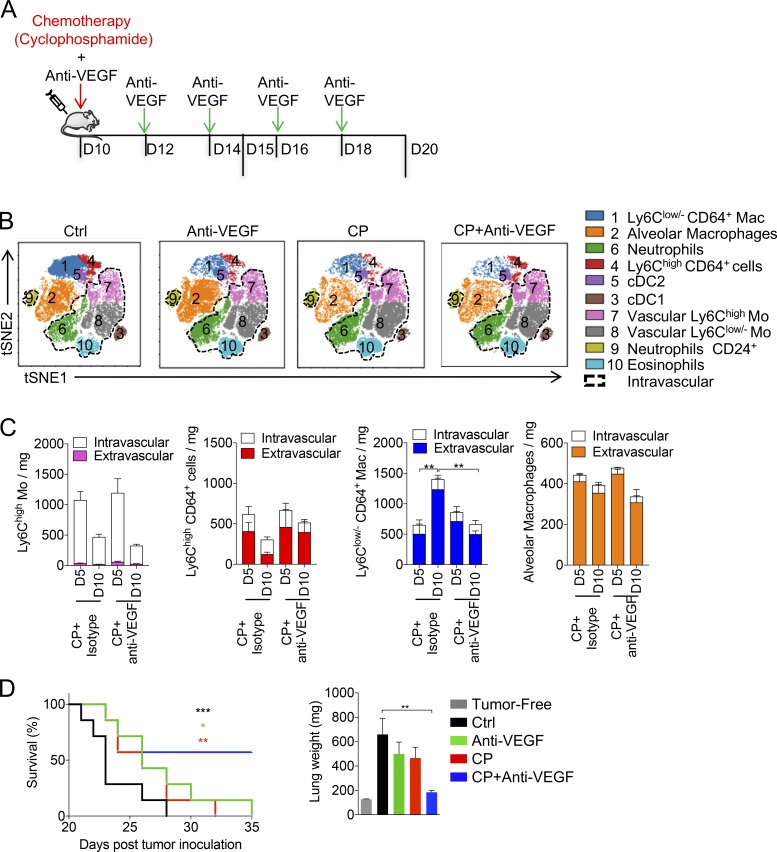
Verification
Claims the paper makes
The claims and statistics of this paper haven’t been checked yet.
Run the check — free, no account needed. It reads the open-access text and checks the sources it cites.
Claims other papers make about this one
Each is checked against this paper’s own text: does it say what the citing paper says it does?
In the citing paper
“Fetal‐derived macrophages are often recruited to tumors at early stages 240 to promote their growth 240 , 241 , 242 and metastatic spread. 243”
From Mast cell ontogeny: From fetal development to life‐long health and disease (2023) · cites this paper as [242]
Self-check
Percentages, sums and reported differences re-computed from the paper’s own numbers.
The self-check needs the paper’s full text.
Citations
Cites
TM4: a free, open-source system for microarray data management and analysis
Saeed, A. I., Sharov, V., White, J., Li, J., Liang, W., Bhagabati, N., Braisted, J., Klapa, M., Currier, T., Thiagarajan, M., et al. (2003) · BioTechniques · doi:10.2144/03342mt01 · Cited by 4,837
CCL2 recruits inflammatory monocytes to facilitate breast-tumour metastasis
Qian, B.-Z., Li, J., Zhang, H., Kitamura, T., Zhang, J., Campion, L. R., Kaiser, E. A., Snyder, L. A., & Pollard, J. W. (2011) · Nature · doi:10.1038/nature10138 · Cited by 2,874
A Lineage of Myeloid Cells Independent of Myb and Hematopoietic Stem Cells
Schulz, C., Perdiguero, E. G., Chorro, L., Szabo-Rogers, H., Cagnard, N., Kierdorf, K., Prinz, M., Wu, B., Jacobsen, S. E. W., Pollard, J. W., et al. (2012) · Science · doi:10.1126/science.1219179 · Cited by 2,578
Self-citationTissue-resident macrophages originate from yolk-sac-derived erythro-myeloid progenitors
Gomez Perdiguero, E., Klapproth, K., Schulz, C., Busch, K., Azzoni, E., Crozet, L., Garner, H., Trouillet, C., de Bruijn, M. F., Geissmann, F., et al. (2015) · Nature · doi:10.1038/nature13989 · Cited by 2,339 · cited 2×
“Distinct transcriptional programs initiated in embryonic, fetal or adult progenitors (Mass et al., 2016) and the exposure to specific tissue environments (Gosselin et al., 2014; Lavin et al., 2014) may explain the specialization and diversity of macrophages in healthy as well as neoplastic tissues.”
BackgroundSelf-citationAmir, E.-A. D., Davis, K. L., Tadmor, M. D., Simonds, E. F., Levine, J. H., Bendall, S. C., Shenfeld, D. K., Krishnaswamy, S., Nolan, G. P., & Pe'er, D. (2013) · Nature Biotechnology · doi:10.1038/nbt.2594 · Cited by 1,550
Macrophage Regulation of Tumor Responses to Anticancer Therapies
De Palma, M., & Lewis, C. E. (2013) · Cancer Cell · doi:10.1016/j.ccr.2013.02.013 · Cited by 1,079
Specification of tissue-resident macrophages during organogenesis
Mass, E., Ballesteros, I., Farlik, M., Halbritter, F., Günther, P., Crozet, L., Jacome-Galarza, C. E., Händler, K., Klughammer, J., Kobayashi, Y., et al. (2016) · Science · doi:10.1126/science.aaf4238 · Cited by 891
Self-citationA somatic mutation in erythro-myeloid progenitors causes neurodegenerative disease
Mass, E., Jacome-Galarza, C. E., Blank, T., Lazarov, T., Durham, B. H., Ozkaya, N., Pastore, A., Schwabenland, M., Chung, Y. R., Rosenblum, M. K., et al. (2017) · Nature · doi:10.1038/nature23672 · Cited by 210
Self-citationZhu, Y., Herndon, J. M., Sojka, D. K., Kim, K.-W., Knolhoff, B. L., Zuo, C., Cullinan, D. R., Luo, J., Bearden, A. R., Lavine, K. J., et al. (2017) · Immunity · doi:10.1016/j.immuni.2017.08.018 · Cited by 180
Research works printed but not linked: 48
- Barleon, 1996, Migration of human monocytes in response to vascular endothelial growth factor (VEGF) is mediated via the VEGF receptor flt-1, Blood., 87, 3336, 10.1182/blood.V87.8.3336.bloodjournal8783336 · DOI
- Boissonnas, 2013, CD8+ tumor-infiltrating T cells are trapped in the tumor-dendritic cell network, Neoplasia., 15, 85, 10.1593/neo.121572 · DOI
- Bowman, 2016, Macrophage Ontogeny Underlies Differences in Tumor-Specific Education in Brain Malignancies, Cell Reports., 17, 2445, 10.1016/j.celrep.2016.10.052 · DOI
- Broz, 2014, Dissecting the tumor myeloid compartment reveals rare activating antigen-presenting cells critical for T cell immunity, Cancer Cell., 26, 638, 10.1016/j.ccell.2014.09.007 · DOI · Paper page
- Chen, 2014, Cytobank: providing an analytics platform for community cytometry data analysis and collaboration, Curr. Top. Microbiol. Immunol., 377, 127
- Cohen, 2007, FDA drug approval summary: bevacizumab (Avastin) plus Carboplatin and Paclitaxel as first-line treatment of advanced/metastatic recurrent nonsquamous non-small cell lung cancer, Oncologist., 12, 713, 10.1634/theoncologist.12-6-713 · DOI
- Cortez-Retamozo, 2012, Origins of tumor-associated macrophages and neutrophils, Proc. Natl. Acad. Sci. USA., 109, 2491, 10.1073/pnas.1113744109 · DOI
- Dellapasqua, 2008, Metronomic cyclophosphamide and capecitabine combined with bevacizumab in advanced breast cancer, J. Clin. Oncol., 26, 4899, 10.1200/JCO.2008.17.4789 · DOI
- Doherty, 2011, The tumor necrosis factor family member LIGHT is a target for asthmatic airway remodeling, Nat. Med., 17, 596, 10.1038/nm.2356 · DOI
- Engelhardt, 2012, Marginating dendritic cells of the tumor microenvironment cross-present tumor antigens and stably engage tumor-specific T cells, Cancer Cell., 21, 402, 10.1016/j.ccr.2012.01.008 · DOI
- Franklin, 2014, The cellular and molecular origin of tumor-associated macrophages, Science., 344, 921, 10.1126/science.1252510 · DOI
- Gambardella, 2010, PI3K signaling through the dual GTPase-activating protein ARAP3 is essential for developmental angiogenesis, Sci. Signal., 3, ra76, 10.1126/scisignal.2001026 · DOI
- Gibbings, 2017, Three Unique Interstitial Macrophages in the Murine Lung at Steady State, Am. J. Respir. Cell Mol. Biol., 57, 66, 10.1165/rcmb.2016-0361OC · DOI
- Gosselin, 2014, Environment drives selection and function of enhancers controlling tissue-specific macrophage identities, Cell., 159, 1327, 10.1016/j.cell.2014.11.023 · DOI · Paper page
- Grunewald, 2006, VEGF-induced adult neovascularization: recruitment, retention, and role of accessory cells, Cell., 124, 175, 10.1016/j.cell.2005.10.036 · DOI
- Guilliams, 2013, Alveolar macrophages develop from fetal monocytes that differentiate into long-lived cells in the first week of life via GM-CSF, J. Exp. Med., 210, 1977, 10.1084/jem.20131199 · DOI
- Hamon, 2017, CX3CR1-dependent endothelial margination modulates Ly6Chigh monocyte systemic deployment upon inflammation in mice, Blood., 129, 1296, 10.1182/blood-2016-08-732164 · DOI
- Hawley, 2018, Csf1r-mApple Transgene Expression and Ligand Binding In Vivo Reveal Dynamics of CSF1R Expression within the Mononuclear Phagocyte System, J. Immunol., 200, 2209, 10.4049/jimmunol.1701488 · DOI
- Hughes, 2015, Perivascular M2 Macrophages Stimulate Tumor Relapse after Chemotherapy, Cancer Res., 75, 3479, 10.1158/0008-5472.CAN-14-3587 · DOI
- Jacquelin, 2013, CX3CR1 reduces Ly6Chigh-monocyte motility within and release from the bone marrow after chemotherapy in mice, Blood., 122, 674, 10.1182/blood-2013-01-480749 · DOI
- Ji, 1998, Antigen-specific immunotherapy for murine lung metastatic tumors expressing human papillomavirus type 16 E7 oncoprotein, Int. J. Cancer., 78, 41, 10.1002/(SICI)1097-0215(19980925)78:1<41::AID-IJC8>3.0.CO;2-X · DOI
- Jung, 2000, Analysis of fractalkine receptor CX(3)CR1 function by targeted deletion and green fluorescent protein reporter gene insertion, Mol. Cell. Biol., 20, 4106, 10.1128/MCB.20.11.4106-4114.2000 · DOI · Paper page
- Kaplan, 2005, VEGFR1-positive haematopoietic bone marrow progenitors initiate the pre-metastatic niche, Nature., 438, 820, 10.1038/nature04186 · DOI · Paper page
- Kitamura, 2015, CCL2-induced chemokine cascade promotes breast cancer metastasis by enhancing retention of metastasis-associated macrophages, J. Exp. Med., 212, 1043, 10.1084/jem.20141836 · DOI
- Kitamura, 2018, Monocytes Differentiate to Immune Suppressive Precursors of Metastasis-Associated Macrophages in Mouse Models of Metastatic Breast Cancer, Front. Immunol., 8, 2004, 10.3389/fimmu.2017.02004 · DOI
- Lavin, 2014, Tissue-resident macrophage enhancer landscapes are shaped by the local microenvironment, Cell., 159, 1312, 10.1016/j.cell.2014.11.018 · DOI · Paper page
- Lewis, 2016, The Multifaceted Role of Perivascular Macrophages in Tumors, Cancer Cell., 30, 365, 10.1016/j.ccell.2016.07.009 · DOI
- Lin, 1996, Treatment of established tumors with a novel vaccine that enhances major histocompatibility class II presentation of tumor antigen, Cancer Res., 56, 21
- Loyher, 2016, CCR2 Influences T Regulatory Cell Migration to Tumors and Serves as a Biomarker of Cyclophosphamide Sensitivity, Cancer Res., 76, 6483, 10.1158/0008-5472.CAN-16-0984 · DOI
- Maeda, 2012, Wnt5a-Ror2 signaling between osteoblast-lineage cells and osteoclast precursors enhances osteoclastogenesis, Nat. Med., 18, 405, 10.1038/nm.2653 · DOI · Paper page
- Mantovani, 2015, The interaction of anticancer therapies with tumor-associated macrophages, J. Exp. Med., 212, 435, 10.1084/jem.20150295 · DOI
- Misharin, 2013, Flow cytometric analysis of macrophages and dendritic cell subsets in the mouse lung, Am. J. Respir. Cell Mol. Biol., 49, 503, 10.1165/rcmb.2013-0086MA · DOI · Paper page
- Montero, 2012, Long-Term Complete Remission with nab-Paclitaxel, Bevacizumab, and Gemcitabine Combination Therapy in a Patient with Triple-Negative Metastatic Breast Cancer, Case Rep. Oncol., 5, 687, 10.1159/000346345 · DOI
- Motz, 2011, The parallel lives of angiogenesis and immunosuppression: cancer and other tales, Nat. Rev. Immunol., 11, 702, 10.1038/nri3064 · DOI · Paper page
- Ovchinnikov, 2008, Expression of Gal4-dependent transgenes in cells of the mononuclear phagocyte system labeled with enhanced cyan fluorescent protein using Csf1r-Gal4VP16/UAS-ECFP double-transgenic mice, J. Leukoc. Biol., 83, 430, 10.1189/jlb.0807585 · DOI
- Pollard, 2004, Tumour-educated macrophages promote tumour progression and metastasis, Nat. Rev. Cancer., 4, 71, 10.1038/nrc1256 · DOI
- Qian, 2010, Macrophage diversity enhances tumor progression and metastasis, Cell., 141, 39, 10.1016/j.cell.2010.03.014 · DOI
- Qian, 2015, FLT1 signaling in metastasis-associated macrophages activates an inflammatory signature that promotes breast cancer metastasis, J. Exp. Med., 212, 1433, 10.1084/jem.20141555 · DOI
- Rodero, 2015, Immune surveillance of the lung by migrating tissue monocytes, eLife., 4, e07847, 10.7554/eLife.07847 · DOI
- Sabatel, 2017, Exposure to Bacterial CpG DNA Protects from Airway Allergic Inflammation by Expanding Regulatory Lung Interstitial Macrophages, Immunity., 46, 457, 10.1016/j.immuni.2017.02.016 · DOI
- Saeed, 2006, TM4 microarray software suite, Methods Enzymol., 411, 134, 10.1016/S0076-6879(06)11009-5 · DOI
- Sauter, 2014, The MacBlue binary transgene (csf1r-gal4VP16/UAS-ECFP) provides a novel marker for visualisation of subsets of monocytes, macrophages and dendritic cells and responsiveness to CSF1 administration, PLoS One., 9, e105429, 10.1371/journal.pone.0105429 · DOI
- Schneider, 2014, Induction of the nuclear receptor PPAR-γ by the cytokine GM-CSF is critical for the differentiation of fetal monocytes into alveolar macrophages, Nat. Immunol., 15, 1026, 10.1038/ni.3005 · DOI
- Tamagnone, 2012, Emerging role of semaphorins as major regulatory signals and potential therapeutic targets in cancer, Cancer Cell., 22, 145, 10.1016/j.ccr.2012.06.031 · DOI
- Tan, 2016, Developmental origin of lung macrophage diversity, Development., 143, 1318, 10.1242/dev.129122 · DOI
- Trapnell, 2002, Gm-CSF regulates pulmonary surfactant homeostasis and alveolar macrophage-mediated innate host defense, Annu. Rev. Physiol., 64, 775, 10.1146/annurev.physiol.64.090601.113847 · DOI
- van de Laar, 2016, Yolk Sac Macrophages, Fetal Liver, and Adult Monocytes Can Colonize an Empty Niche and Develop into Functional Tissue-Resident Macrophages, Immunity., 44, 755, 10.1016/j.immuni.2016.02.017 · DOI
- Wyckoff, 2007, Direct visualization of macrophage-assisted tumor cell intravasation in mammary tumors, Cancer Res., 67, 2649, 10.1158/0008-5472.CAN-06-1823 · DOI
Cited by
Sorted by citations
Inflammation and cancer: triggers, mechanisms, and consequences
Greten, F. R., & Grivennikov, S. I. (2019) · Immunity · doi:10.1016/j.immuni.2019.06.025 · Cited by 3,806
Macrophages and metabolism in the tumor microenvironment
Vitale, I., Manic, G., Coussens, L. M., Kroemer, G., & Galluzzi, L. (2019) · Cell Metabolism · doi:10.1016/j.cmet.2019.06.001 · Cited by 1,837
Macrophages in health and disease
Park, M. D., Silvin, A., Ginhoux, F., & Merad, M. (2022) · Cell · doi:10.1016/j.cell.2022.10.007 · Cited by 644
Tumor-associated macrophages: potential therapeutic strategies and future prospects in cancer
Li, C., Xu, X., Wei, S., Jiang, P., Xue, L., & Wang, J. (2021) · Journal for ImmunoTherapy of Cancer · doi:10.1136/jitc-2020-001341 · Cited by 360
Tissue macrophages: origin, heterogenity, biological functions, diseases and therapeutic targets
Guan, F., Wang, R., Yi, Z., Luo, P., Liu, W., Xie, Y., Liu, Z., Xia, Z., Zhang, H., & Cheng, Q. (2025) · Signal Transduction and Targeted Therapy · doi:10.1038/s41392-025-02124-y · Cited by 371
Metadata
- Authors
- Loyher, P.-L., Hamon, P., Laviron, M., Meghraoui-Kheddar, A., Goncalves, E., Deng, Z., Torstensson, S., Bercovici, N., Baudesson de Chanville, C., Combadière, B., Geissmann, F., Savina, A., Combadière, C., & Boissonnas, A.
- Affiliations
- Sorbonne Universités, Institut National de la Santé et de la Recherche Médicale (Inserm, UMR1135), Centre National de la Recherche Scientifique (CNRS, ERL8255), Centre d’Immunologie et des Maladies Infectieuses CIMI, Paris, France 1
- Immunology Program, Sloan Kettering Institute, Memorial Sloan Kettering Cancer Center, New York, NY 4
- Inserm, U1016, Institut Cochin, CNRS UMR8104, Université Paris Descartes, Sorbonne Paris Cité, Paris, France 2
- Institut Roche, 30, Boulogne-Billancourt Cedex, France 3
- Venue
- Journal of Experimental Medicine
- Publisher
- Rockefeller University Press
- Published
- 2018-09-10
- Volume
- 215
- Issue
- 10
- Pages
- 2536-2553
- ISSN
- 0022-1007
- 1540-9538
- PMC
- PMC6170177
- Cited by
- 298
- References
- 9
- Language
- en
- Funders
- Fondation ARC pour la Recherche sur le Cancer
- Memorial Sloan Kettering Cancer Center
- Ligue Contre le Cancer
- Seventh Framework Program (FP7/2007-2013, 304810)
- Institut National de la Santé et de la Recherche Médicale
- Roche
- Fondation pour la Recherche Médicale
- NIH
- National Cancer Institute (P30CA008748)
- National Institute of Allergy and Infectious Diseases (1R01AI130345-01)
- National Heart, Lung, and Blood Institute (1 R01HL138090-01)
About these checks
Registry, retraction, Cites and statistics results are computed, not judged, with one exception: a printed reference that no index lists is read once by a model before it counts as a citation error. Claims are extracted by a model and kept only when their quote appears verbatim in the text; each cited source is then checked, with a model’s help, for whether it says what the claim relies on. Those verdicts can be wrong — read the claim’s quote and the cited source before relying on one.
Statistics and arithmetic are recomputed, not judged.
Confidence bands are shown only for fields calibrated on our annotated test set. None is calibrated yet, so no band is shown.
What counts as a claim ›How we measure confidence ›How we check this ›
Are you an author, or do you see a problem with this page? Request a review
