

Quantum gravity from causal dynamical triangulations: a review
Open accessThe DOI matches its Crossref record; 107 of the 108 references it cites were found in a registry or an index.
Abstract
This topical review gives a comprehensive overview and assessment of recent results in causal dynamical triangulations, a modern formulation of lattice gravity, whose aim is to obtain a theory of quantum gravity nonperturbatively from a scaling limit of the lattice-regularized theory. In this manifestly diffeomorphism-invariant approach one has direct, computational access to a Planckian spacetime regime, which is explored with the help of invariant quantum observables. During the last few years, there have been numerous new and important developments and insights concerning the theory’s phase structure, the roles of time, causality, diffeomorphisms and global topology, the application of renormalization group methods and new observables. We will focus on these new results, primarily in four spacetime dimensions, and discuss some of their geometric and physical implications.
Overview
The claims and statistics of this paper haven’t been checked yet.
Free: it reads the open-access text and checks the first 5 claims that cite a source we can check. Create a free account to check every claim.
Integrity signals
Registry
Cites
Statistics
Figures
Verification
Claims the paper makes
The claims and statistics of this paper haven’t been checked yet.
Free: it reads the open-access text and checks the first 5 claims that cite a source we can check. Create a free account to check every claim.
Claims other papers make about this one
Each is checked against this paper’s own text: does it say what the citing paper says it does?
The cited source says what the claim attributes to it.
In the citing paper
“Over the past decades, mounting evidence for asymptotic safety has been obtained both via the lattice Monte Carlo simulations of dynamical triangulations [24,25] and via the semi-analytical methods of the functional renormalization group (FRG) [26].”
From Charting GLOBs in asymptotically safe gravity (2026) · cites this paper as [24]
Self-check
Percentages, sums and reported differences re-computed from the paper’s own numbers.
The self-check needs the paper’s full text.
Citations
Cites
Wilson, K. G. (1974) · Physical Review D · doi:10.1103/physrevd.10.2445 · Cited by 4,507 · cited 1×
“Although realized in a different way, it can be thought of as the gravitational counterpart of the exact gauge invariance of Wilson’s timehonoured lattice formulation of QCD [108], which is also preserved, despite the lattice discretization.”
BackgroundQuantum gravity at a Lifshitz point
Hořava, P. (2009) · Physical Review D · doi:10.1103/physrevd.79.084008 · Cited by 2,666 · cited 2×
“hat this is just a lattice artefact and has no implications for the continuum limit. Firstly, although the situation resembles supercially the preferred foliation present in Horava-Lifshitz gravity [60], which is associated with a breaking of full dieomorphism invariance to an invariance under foliation-preserving die…”
BackgroundGeneral relativity without coordinates
Regge, T. (1961) · Il Nuovo Cimento · doi:10.1007/bf02733251 · Cited by 1,477 · cited 5×
“– The starting point for encoding the geometric degrees of freedom of gravity in a regularized way is Regge’s proposal to describe “general relativity without coordinates” [35], where curved spacetimes are approximated by piecewise flat, simplicial manifolds, and a discrete analogue of the Einstein equations is derive…”
BackgroundMethodInfluentialMontvay, I., & Münster, G. (1994) · Cambridge University Press eBooks · doi:10.1017/cbo9780511470783 · Cited by 1,197
Heat kernel expansion: user's manual
Vassilevich, D. V. (2003) · Physics Reports · doi:10.1016/j.physrep.2003.09.002 · Cited by 1,016 · cited 1×
“where a0 = Vg and the remaining an are integrated curvature invariants of order n [96].”
BackgroundSpectral Dimension of the Universe in Quantum Gravity at a Lifshitz Point
Hořava, P. (2009) · Physical Review Letters · doi:10.1103/physrevlett.102.161301 · Cited by 782 · cited 1×
“The initial conjecture of such a relation was based mainly on the observed (spectral) dimensional reduction at short distances [10, 66] and the presence of a foliation in both formulations.”
BackgroundRicci curvature of Markov chains on metric spaces
Ollivier, Y. (2009) · Journal of Functional Analysis · doi:10.1016/j.jfa.2008.11.001 · Cited by 712 · cited 1×
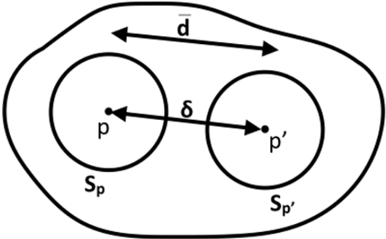
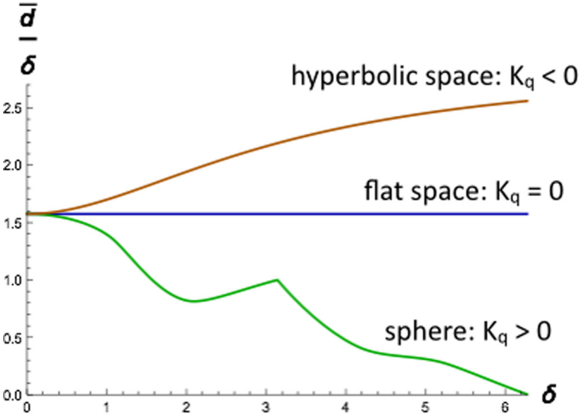
“The key idea, inspired by a classical characterization of curvature on smooth D-dimensional Riemannian spaces and later generalized to general metric spaces [102], is to compare the distance d̄ of two (D−1)-spheres with the distance δ between their centres (see Fig.”
BackgroundThe Spectral Dimension of the Universe is Scale Dependent
Ambjørn, J., Jurkiewicz, J., & Loll, R. (2005) · Physical Review Letters · doi:10.1103/physrevlett.95.171301 · Cited by 518
Self-citationEmergence of a 4D World from Causal Quantum Gravity
Ambjørn, J., Jurkiewicz, J., & Loll, R. (2004) · Physical Review Letters · doi:10.1103/physrevlett.93.131301 · Cited by 447
Self-citation
Research works printed but not linked: 8
- 20. Ellis G, Murugan J and Weltman A (ed) 2012 Foundations of Space and Time (Cambridge: Cambridge University Press)
- 22. Reuter M and Saueressig F 2019 Quantum Gravity and the Functional Renormalization Group (Cambridge: Cambridge University Press)
- 28. David F 1995 Simplicial quantum gravity and random lattices Gravitation and Quantizations. Proc. Les Houches Summer School 1992 ed J Zinn-Justin and B Julia (Amsterdam: Elsevier)
- 63. Jordan S 2013 Globally and locally causal dynamical triangulations PhD Thesis Radboud University Nijmegen
- 82. Class. Quantum Grav. 37 (2020) 013002 Topical Review
- 83. Gizbert-Studnicki J 2014 The effective action in four-dimensional CDT PhD Thesis Jagiellonian University Krakow
- 105. Görlich A 2010 Causal dynamical triangulations in four dimensions PhD Thesis Jagiellonian University Krakow
- 113. Class. Quantum Grav. 37 (2020) 013002 Topical Review
Cited by
Items 101–200 of 431
De Sitter quantum gravity within the covariant Lorentzian approach to asymptotic safety
D’Angelo, E., Ferrero, R., & Fröb, M. B. (2025) · Classical and Quantum Gravity · doi:10.1088/1361-6382/ade193 · Cited by 20
“Notably, our findings in the functional framework could be compared to the discrete counterpart of the Lorentzian version of asymptotic safety, namely causal dynamical triangulations (CDTs) [98].”
De Sitter scattering amplitudes in the Born approximation
Ferrero, R., & Ripken, C. (2022) · SciPost Physics · doi:10.21468/scipostphys.13.5.106 · Cited by 17
“Prominent examples are string theory [7], loop quantum gravity [8, 9], and asymptotically safe quantum gravity, using continuum [10–15] and discrete [16,17] methods, respectively.”
Curvature profiles for quantum gravity
Brunekreef, J., & Loll, R. (2021) · Physical review. D/Physical review. D. · doi:10.1103/physrevd.103.026019 · Cited by 16
“s has been made on the issue. CDT quantum gravity is a modern implementation of lattice gravity1, based on a nonperturbative, regularized path integral over piecewise at (triangulated) manifolds (see [2, 3] for reviews). Unlike in the standard continuum formulation of gravity using metrics or vierbeins, these spacetim…”
BackgroundSelf-citationScalar fields in causal dynamical triangulations
Ambjørn, J., Drogosz, Z., Gizbert-Studnicki, J., Görlich, A., Jurkiewicz, J., & Nèmeth, D. (2021) · Classical and Quantum Gravity · doi:10.1088/1361-6382/ac2135 · Cited by 16
Matter-Driven Change of Spacetime Topology
Ambjørn, J., Drogosz, Z., Gizbert-Studnicki, J., Görlich, A., Jurkiewicz, J., & Németh, D. (2021) · Physical Review Letters · doi:10.1103/physrevlett.127.161301 · Cited by 17
Analogue gravity simulation of superpositions of spacetimes
Barceló, C., Garay, L. J., & García-Moreno, G. (2022) · The European Physical Journal C · doi:10.1140/epjc/s10052-022-10702-5 · Cited by 16
Hamiltonian Renormalization V: Free Vector Bosons
Liegener, K., & Thiemann, T. (2021) · Frontiers in Astronomy and Space Sciences · doi:10.3389/fspas.2020.547550 · Cited by 16
“Especially considering approaches towards Quantum Gravity, it motivated proposals where the discretisation of space(-time) was assumed to be fundamental [10–15].”
MethodSuppression of spacetime singularities in quantum gravity
Borissova, J. N. (2024) · Classical and Quantum Gravity · doi:10.1088/1361-6382/ad46c0 · Cited by 14
On Characterizing the Quantum Geometry Underlying Asymptotic Safety
Kurov, A., & Saueressig, F. (2020) · Frontiers in Physics · doi:10.3389/fphy.2020.00187 · Cited by 14
“omposite operator formalism employed in this work could act as a connector between Asymptotic Safety [22, 23] and more geometric approaches to quantum gravity based on causal dynamical triangulations [75, 76] or random geometry. In d = 2 dimensions, a natural benchmark would involve a quantitative comparison of scalin…”
MethodSpikes and spines in 4D Lorentzian simplicial quantum gravity
Borissova, J. N., Dittrich, B., Qu, D., & Schiffer, M. (2024) · Journal of High Energy Physics · doi:10.1007/jhep10(2024)150 · Cited by 15
“[9] and [10] consider the two-dimensional theory and, inspired by Causal Dynamical Triangulations [11], implement a restriction on the spacetime signatures of the edges in the lattice, which does not allow for spike configurations (but does allow for other configurations with large bulk edges).”
MethodThe higher-order phase transition in toroidal CDT
Ambjørn, J., Czelusta, G., Gizbert-Studnicki, J., Görlich, A., Jurkiewicz, J., & Nèmeth, D. (2020) · Journal of High Energy Physics · doi:10.1007/jhep05(2020)030 · Cited by 16
Gravitational corrections to two-loop beta function in quantum electrodynamics
Beviláqua, L. I., Dias, M. A. F., Lehum, A. C., Senise, C. R., da Silva, A. J., & Souza, H. (2021) · Physical review. D/Physical review. D. · doi:10.1103/physrevd.104.125001 · Cited by 14
Quantum flatness in two-dimensional quantum gravity
Brunekreef, J., & Loll, R. (2021) · Physical review. D/Physical review. D. · doi:10.1103/physrevd.104.126024 · Cited by 14
“In order to evaluate this nonperturbative path integral, either analytically or numerically, one needs to analytically continue it, using the Wick rotation that is a key feature of this formulation [8, 5].”
BackgroundMethodInfluentialSelf-citationThe Fröhlich-Morchio-Strocchi mechanism and quantum gravity
Maas, A. (2020) · SciPost Physics · doi:10.21468/scipostphys.8.4.051 · Cited by 18
“Simulations in the spirit of [23–25] are most likely suited to directly answer these questions as well as functional methods [11–13, 26, 27], but this is also possible using other approaches [14, 15].”
BackgroundMethodA model of quantum gravity with emergent spacetime
Lee, S.-S. (2020) · Journal of High Energy Physics · doi:10.1007/jhep06(2020)070 · Cited by 15
Wormholes, a fluctuating cosmological constant and the Coleman mechanism
Ambjørn, J., Sato, Y., & Watabiki, Y. (2021) · Physics Letters B · doi:10.1016/j.physletb.2021.136152 · Cited by 14
Convergence of combinatorial gravity
Kelly, C., Biancalana, F., & Trugenberger, C. A. (2022) · Physical review. D/Physical review. D. · doi:10.1103/physrevd.105.124002 · Cited by 14
“The causal dynamical triangulations [11, 55] programme appears to do much better in this regard.”
BackgroundStrict renormalizability as a paradigm for fundamental physics
Buoninfante, L. (2025) · Journal of High Energy Physics · doi:10.1007/jhep07(2025)175 · Cited by 13
Quantum cosmological backreactions. I. Cosmological space adiabatic perturbation theory
Schander, S., & Thiemann, T. (2022) · Physical review. D/Physical review. D. · doi:10.1103/physrevd.105.106009 · Cited by 13
Cosmic voids and filaments from quantum gravity
Jan Ambjørn, A., Drogosz, Z., Gizbert-Studnicki, J., Görlich, A., Jurkiewicz, J., & Németh, D. (2021) · The European Physical Journal C · doi:10.1140/epjc/s10052-021-09468-z · Cited by 13
Topology induced first-order phase transitions in lattice quantum gravity
Ambjørn, J., Gizbert-Studnicki, J., Görlich, A., & Nèmeth, D. (2022) · Journal of High Energy Physics · doi:10.1007/jhep04(2022)103 · Cited by 16
“Causal Dynamical Triangulations (CDT) is a lattice formulation of quantum gravity [1, 2] based on the path integral approach of Feynman, where certain piecewise linear geometries provide the lattice structure and the UV cut-off.”
MethodLessons from the Mathematics of Two-Dimensional Euclidean Quantum Gravity
Budd, T. (2023) · Springer eBooks · doi:10.1007/978-981-19-3079-9_85-1 · Cited by 16
Scalar cosmological perturbations from quantum entanglement within Lorentzian quantum gravity
Jercher, A. F., Marchetti, L., & Pithis, A. G. A. (2024) · Physical review. D/Physical review. D. · doi:10.1103/physrevd.109.066021 · Cited by 15
The Entropic Dynamics of Quantum Scalar Fields Coupled to Gravity
Ipek, S., & Caticha, A. (2020) · Symmetry · doi:10.3390/sym12081324 · Cited by 16
“A popular class of theories postulates that the combination of quantum theory with gravity should give way to fundamentally discrete models of space and time, such as in the causal set [2] and causal dynamical triangulation [3] programs.”
BackgroundTHE COMPLEX TIMELESS EMERGENCE OF TIME IN QUANTUM GRAVITY
Oriti, D. (2023) · WORLD SCIENTIFIC (EUROPE) eBooks · doi:10.1142/9781800613775_0006 · Cited by 13
Path integral and conformal instability in nonlocal quantum gravity
Calcagni, G., & Modesto, L. (2024) · Journal of High Energy Physics · doi:10.1007/jhep07(2024)277 · Cited by 12
Monte Carlo studies of quantum cosmology by the generalized Lefschetz thimble method
Chou, C.-Y., & Nishimura, J. (2025) · Journal of High Energy Physics · doi:10.1007/jhep05(2025)142 · Cited by 16
Euclidean dynamical triangulations revisited
Asaduzzaman, M., & Catterall, S. M. (2023) · Physical review. D/Physical review. D. · doi:10.1103/physrevd.107.074505 · Cited by 12
Generalised spectral dimensions in non-perturbative quantum gravity
Reitz, M., Nèmeth, D., Rajbhandari, D., Görlich, A., & Gizbert-Studnicki, J. (2023) · Classical and Quantum Gravity · doi:10.1088/1361-6382/acd0fc · Cited by 12
“The running of the spectral dimension was first discovered in Causal Dynamical Triangulations (CDT) [9], a non-perturbative approach to quantum gravity that is defined in terms of a lattice regularisation of the gravitational path-integral [10, 11, 12].”
BackgroundLionni, L., & Marckert, J. (2021) · Mathematical Physics Analysis and Geometry · doi:10.1007/s11040-021-09410-5 · Cited by 14
“lts discussed here are in the Euclidean case, in which time is not considered. Introducing \time" can be done by requiring some additional causality condition on the D-dimensional triangulations [5, 59]. Numerical simulations seem to indicate that the continuum limit in dimension 4 has promising properties, howev…”
BackgroundTwo-time alternative to the Ashtekar-Olmedo-Singh black hole interior
García-Quismondo, A., & Marugán, G. A. M. (2022) · Physical review. D/Physical review. D. · doi:10.1103/physrevd.106.023532 · Cited by 12
Tensor network approach to 2D Lorentzian quantum Regge calculus
Ito, Y., Kadoh, D., & Sato, Y. (2022) · Physical review. D/Physical review. D. · doi:10.1103/physrevd.106.106004 · Cited by 14
“Causal dynamical triangulations is a Lorentzian version of DT, which is known as CDT (see [13,14] for recent reviews).”
BackgroundTowards exploring features of Hamiltonian renormalisation relevant for quantum gravity
Bähr, B., & Liegener, K. (2022) · Classical and Quantum Gravity · doi:10.1088/1361-6382/ac5050 · Cited by 13
IR and UV Limits of CDT and Their Relations to FRG
Ambjørn, J., Gizbert-Studnicki, J., Görlich, A., & Németh, D. (2025) · Acta Physica Polonica B · doi:10.5506/aphyspolb.55.12-a2 · Cited by 11
Why Do We Want a Theory of Quantum Gravity?
Crowther, K. (2025) · Cambridge University Press eBooks · doi:10.1017/9781108878074 · Cited by 17
Shift-symmetric Horndeski gravity in the asymptotic-safety paradigm
Eichhorn, A., dos Santos, R. R. L., & Wagner, F. (2023) · Journal of Cosmology and Astroparticle Physics · doi:10.1088/1475-7516/2023/02/052 · Cited by 17
“3 The functional renormalization group Asymptotic safety in gravity is explored with dynamical triangulations [185, 186], tensormodels [187, 188] and in spin-foam settings [189, 190].”
BackgroundQuantum Curvature as Key to the Quantum Universe
Loll, R. (2023) · Springer eBooks · doi:10.1007/978-981-19-3079-9_91-1 · Cited by 12
Self-citationSimulating CDT quantum gravity
Brunekreef, J., Loll, R., & Görlich, A. (2024) · Computer Physics Communications · doi:10.1016/j.cpc.2024.109170 · Cited by 11
Self-citationScalar cosmological perturbations from quantum gravitational entanglement
Jercher, A. F., Marchetti, L., & Pithis, A. G. A. (2024) · Classical and Quantum Gravity · doi:10.1088/1361-6382/ad6f67 · Cited by 12
Numerical and analytical analyses of a matrix model with non-pairwise contracted indices
Sasakura, N., & Takeuchi, S. (2020) · The European Physical Journal C · doi:10.1140/epjc/s10052-019-7591-9 · Cited by 11
“Stimulated by the success of CDT [8], a Lorentzian formulation of the tensor model was proposed by the current author [9, 10].”
MethodModels of the universe based on Jordan algebras
Ambjørn, J., & Watabiki, Y. (2020) · Nuclear Physics B · doi:10.1016/j.nuclphysb.2020.115044 · Cited by 11
The continuum limit of quantum gravity at first order in perturbation theory
Mitchell, A., & Morris, T. R. (2020) · Journal of High Energy Physics · doi:10.1007/jhep06(2020)138 · Cited by 14
“A somewhat similar effect is seen in the Causal Dynamical Triangulations approach to quantum gravity [59].”
Lectures on classical and quantum cosmology
Calcagni, G., Luca, M. G. D., & Fodran, T. (2022) · Corfu Summer Institute School and Workshops on Elementary Particle Physics and Gravity (CORFU) · doi:10.22323/1.406.0317 · Cited by 10
“• Causal dynamical triangulation, a path-integral quantization regularized by approximating smooth manifolds with triangulations [99, 100].”
BackgroundNeukart, F., Marx, E., & Vinokur, V. M. (2025) · Astronomy · doi:10.3390/astronomy4030016 · Cited by 11
Lorentzian quantum gravity via Pachner moves: one-loop evaluation
Borissova, J. N., & Dittrich, B. (2023) · Journal of High Energy Physics · doi:10.1007/jhep09(2023)069 · Cited by 15
“Prominent path integral approaches for quantum gravity are spin foams [1], quantum Regge gravity [2], group field theories [3], or (causal) dynamical triangulations [4], and as such they depend on a variety of choices.”
BackgroundThe microscopic structure of quantum space-time and matter from a renormalization group perspective
Eichhorn, A. (2023) · Nature Physics · doi:10.1038/s41567-023-02261-7 · Cited by 14
Nonperturbative quantum gravity in Fock representations
Thiemann, T. (2024) · Physical review. D/Physical review. D. · doi:10.1103/physrevd.110.124023 · Cited by 10
Phases of a matrix model with non-pairwise index contractions
Obster, D., & Sasakura, N. (2020) · Progress of Theoretical and Experimental Physics · doi:10.1093/ptep/ptaa085 · Cited by 10
Compact gauge fields on Causal Dynamical Triangulations: a 2D case study
Candido, A., Clemente, G., D’Elia, M., & Rottoli, F. (2021) · Journal of High Energy Physics · doi:10.1007/jhep04(2021)184 · Cited by 12
Quantum of action in entangled relativityPreprint
Minazzoli, O. (2022) · arXiv (Cornell University) · doi:10.48550/arxiv.2206.03824 · Cited by 11
“Neverthe-less, these approaches have their own open questions and challenges [6, 13].”
Physical representations of corner symmetries
Varrin, L. (2025) · Physical review. D/Physical review. D. · doi:10.1103/physrevd.111.086003 · Cited by 11
“Furthermore, entanglement entropy is well understood within this context and, with this interpretation, could correspond to the sought-after entanglement entropy between spatial regions.”
Nonperturbative Quantum Gravity, Unlocked through Computation
Loll, R. (2025) · Routledge eBooks · doi:10.4324/9781003546139-18 · Cited by 9
Self-citationCurvature correlators in nonperturbative 2D Lorentzian quantum gravity
van der Duin, J., & Loll, R. (2024) · The European Physical Journal C · doi:10.1140/epjc/s10052-024-13110-z · Cited by 10
Self-citationFractional quantum mechanics meets quantum gravity phenomenology
Varão, G., Lobo, I. P., & Bezerra, V. B. (2024) · Europhysics Letters (EPL) · doi:10.1209/0295-5075/ad8b65 · Cited by 9
“These developments have paved the way for phenomenological approaches to quantum gravity, which have matured to a point where they can now be explored through experimental and observational means.”
Spikes and spines in 3D Lorentzian simplicial quantum gravity
Borissova, J. N., Dittrich, B., Qu, D., & Schiffer, M. (2025) · Classical and Quantum Gravity · doi:10.1088/1361-6382/adaf02 · Cited by 12
“Indeed, a defining property of Causal Dynamical Triangulations [54] is that these configurations are forbidden to appear [55].”
Emergent Gravity and Gauge Interactions from a Dynamical Temporal Field
Li, B. (2025) · Reports in Advances of Physical Sciences · doi:10.1142/s2424942425500173 · Cited by 11
Black Hole Surface Gravity in Doubly Special Relativity Geometries
Relancio, J. J., & Liberati, S. (2022) · Universe · doi:10.3390/universe8020136 · Cited by 10
“Examples of these attempts are string theory [8–10], loop quantum gravity [11,12], causal dynamical triangulations [13] or causal set theory [14–16].”
Time delays, choice of energy-momentum variables, and relative locality in doubly special relativity
Carmona, J. M., Cortés, J. L., Relancio, J. J., & Reyes, M. A. (2022) · Physical review. D/Physical review. D. · doi:10.1103/physrevd.106.064045 · Cited by 9
Nakanishi–Kugo–Ojima quantization of general relativity in Heisenberg picture
Kurihara, Y. (2021) · The European Physical Journal Plus · doi:10.1140/epjp/s13360-021-01463-3 · Cited by 12
Phase profile of the wave function of canonical tensor model and emergence of large space—times
Sasakura, N. (2021) · International Journal of Modern Physics A · doi:10.1142/s0217751x21502225 · Cited by 9
“In addition to sophisticated applications of quantum field theoretical methods to general relativity [1, 2], various discretized approaches have been pursued [3, 4, 5, 6, 7, 8, 9].”
BackgroundMeasuring the homogeneity of the quantum universe
Loll, R., & Silva, A. (2023) · Physical review. D/Physical review. D. · doi:10.1103/physrevd.107.086013 · Cited by 9
“A nonperturbative path-integral approach to quantum gravity that has made significant advances in obtaining a quantitative grip on observables in a Planckian regime is that of Causal Dynamical Triangulations, or CDT for short (see [7, 8] for reviews).”
BackgroundSelf-citationThe Tensor Track VII: From Quantum Gravity to Artificial IntelligencePreprint
Ouerfelli, M., Rivasseau, V., & Tamaazousti, M. (2022) · arXiv (Cornell University) · doi:10.48550/arxiv.2205.10326 · Cited by 9
“The tensor track lies at the crossroad of several closely related approaches to quantize gravity, most notably causal dynamical triangulations [9], quantum field theory on non-noncommutative spaces [10– 12], and group field theory [13].”
Asymptotically safe quantum gravity and its phenomenology -- a reviewPreprint
Eichhorn, A. (2026) · arXiv (Cornell University) · doi:10.48550/arxiv.2606.21522 · Cited by 17
Jercher, A. F., & Steinhaus, S. (2024) · Classical and Quantum Gravity · doi:10.1088/1361-6382/ad37e9 · Cited by 8
“Such a case is similar to triangulations encountered in Causal Dynamical Triangulations (CDT) [44, 45].”
MethodDelporte, N., Sen, S., & Toriumi, R. (2024) · Journal of Physics A Mathematical and Theoretical · doi:10.1088/1751-8121/ad4d2e · Cited by 8
Quantum gravity, hydrodynamics and emergent cosmology: a collection of perspectives
Achour, J. B., Benedetti, D., Bojowald, M., Brandenberger, R., Butera, S., Ferrero, R., Giacomini, F., Giesel, K., Goeller, C., Haas, T., et al. (2024) · General Relativity and Gravitation · doi:10.1007/s10714-024-03335-4 · Cited by 9
Quantum cosmological backreactions. IV. Constrained quantum cosmological perturbation theory
Schander, S., & Thiemann, T. (2022) · Physical review. D/Physical review. D. · doi:10.1103/physrevd.105.106012 · Cited by 8
Emergence of Lie group symmetric classical spacetimes in the canonical tensor model
Kawano, T., & Sasakura, N. (2022) · Progress of Theoretical and Experimental Physics · doi:10.1093/ptep/ptac045 · Cited by 8
“Therefore, when we think of emergence of spacetimes in quantum gravity [2, 3, 4, 5, 6, 7, 8, 9, 10, 11, 12, 13, 14, 15], it would be natural to think of emergence of Lie group symmetries at the same time, or even consider them as different aspects of one phenomenon.”
BackgroundBlack hole remnants from dynamical dimensional reduction?
Saueressig, F., & Khosravi, A.-P. (2022) · Physical review. D/Physical review. D. · doi:10.1103/physrevd.105.066015 · Cited by 8
Propagators in the correlated worldline theory of quantum gravity
Wilson-Gerow, J., & Stamp, P. C. E. (2022) · Physical review. D/Physical review. D. · doi:10.1103/physrevd.105.084015 · Cited by 13
Spacetime thermodynamics in momentum-dependent geometries
Chirco, G., Liberati, S., & Relancio, J. J. (2022) · Physical review. D/Physical review. D. · doi:10.1103/physrevd.106.064048 · Cited by 8
The effective equation of state in Palatini $$f({{\mathcal {R}}})$$ cosmology
Camera, S., Capozzıello, S., Fatibene, L., & Orizzonte, A. (2023) · The European Physical Journal Plus · doi:10.1140/epjp/s13360-023-03676-0 · Cited by 8
“quantum gravity) that some modifications are naturally required (see [24, 25, 26, 27, 28, 29]).”
BackgroundModel for Emergence of Spacetime from Fluctuations
Reitz, M., Šoda, B., & Kempf, A. (2023) · Physical Review Letters · doi:10.1103/physrevlett.131.211501 · Cited by 8
Quantum Gravity from Dynamical Metric Fluctuations
Pawlowski, J. M., & Reichert, M. (2024) · Springer eBooks · doi:10.1007/978-981-99-7681-2_17 · Cited by 11
Is the present acceleration of the Universe caused by merging with other universes?
Ambjørn, J., & Watabiki, Y. (2023) · Journal of Cosmology and Astroparticle Physics · doi:10.1088/1475-7516/2023/12/011 · Cited by 9
Non-Perturbative Propagators in Quantum Gravity
Knorr, B., & Schiffer, M. (2021) · Universe · doi:10.3390/universe7070216 · Cited by 7
Quasinormal modes and shadows of black holes in infinite derivative theory of gravity
Borah, R. J., & Goswami, U. D. (2025) · The European Physical Journal C · doi:10.1140/epjc/s10052-025-14674-0 · Cited by 9
Collective excitations in quantum gravity condensates
Calcinari, A., Delhom, A., & Oriti, D. (2026) · Reports on Progress in Physics · doi:10.1088/1361-6633/aeb440 · Cited by 7
“Examples include loop quantum gravity [8, 10], spin foam models [40, 41], group field theory [34, 35], tensor models [53, 54] causal dynamical triangulations [9, 23], causal sets [11] or graphity [55] (see also [56–58] for a combinatorial approach to quantum gravity).”
Bootstrapping the critical behavior of multi-matrix models
Khalkhali, M., Pagliaroli, N., Parfeni, A., & Smith, B. (2025) · Journal of High Energy Physics · doi:10.1007/jhep02(2025)158 · Cited by 11
“Analogous ideas are used with Random Tensors [15, 60] and Random Dynamical Triangulations [1, 61] for constructing toy models of higher dimensional gravity.”
Discrete JT gravity as an Ising model
Erdmenger, J., Karl, J., Thurn, Y., Vojta, M., & Xian, Z.-Y. (2025) · Journal of High Energy Physics · doi:10.1007/jhep05(2025)165 · Cited by 10
“Since the hyperbolic plane may be viewed as a time slice of AdS 3 , we may include the Lorentzian time direction through a construction in the spirit of causal dynamical triangulation [84, 85].”
BackgroundProperties of dynamical fractal geometries in the model of causal dynamical triangulations
Ambjørn, J., Drogosz, Z., Görlich, A., & Jurkiewicz, J. (2021) · Physical review. D/Physical review. D. · doi:10.1103/physrevd.103.086022 · Cited by 8
“II we shortly define the CDT model of quantum gravity, in order to fix the notation (we refer to [1,2] for more detailed definitions).”
BackgroundApproximate treatment of noncommutative curvature in quartic matrix model
Prekrat, D., Ranković, D., Todorović-Vasović, N. K., Kováčik, S., & Tekel, J. (2023) · Journal of High Energy Physics · doi:10.1007/jhep01(2023)109 · Cited by 7
A New Perspective on Doubly Special Relativity
Carmona, J. M., Cortés, J. L., Relancio, J. J., & Reyes, M. A. (2023) · Universe · doi:10.3390/universe9030150 · Cited by 7
Stationary cosmology in group field theory
Gielen, S., & Santacruz, R. (2023) · Physical review. D/Physical review. D. · doi:10.1103/physrevd.108.026001 · Cited by 7
“[2] for the example of causal dynamical triangulations).”
BackgroundN -cutoff regularization for fields on hyperbolic space
Banerjee, R., Becker, M., & Ferrero, R. (2024) · Physical review. D/Physical review. D. · doi:10.1103/physrevd.109.025008 · Cited by 7
Gravitational observations and LQGUP
Hemeda, M., Alshal, H., Ali, A. F., & Vagenas, E. C. (2024) · Nuclear Physics B · doi:10.1016/j.nuclphysb.2024.116456 · Cited by 8
A new 2+1 coherent spin-foam vertex for quantum gravity
Simão, J. D. (2024) · Classical and Quantum Gravity · doi:10.1088/1361-6382/ad721e · Cited by 9
“This opens the door to e.g. (1) c omparative studies between the spin-foam framework and that of Causal Dynamical Triangulations [47], potentially bridging the two approaches; and (2) explorations of cosmological scenarios requiring both space-and time-like regions, as is the case for the FRW…”
One-loop effective action from the coherent state path integral of loop quantum gravity
Ferrero, R., Han, M., & Liu, H. (2025) · Physical review. D/Physical review. D. · doi:10.1103/r5gq-k1ss · Cited by 9
An event centric approach to modeling quantum systemsPreprint
Powers, S., & Stojković, D. (2023) · arXiv (Cornell University) · doi:10.48550/arxiv.2306.14922 · Cited by 7
Simons, M., Allahyarov, E., & Washburn, J. (2026) · Entropy · doi:10.3390/e28040477 · Cited by 6
An alternative formalism for modeling spin
Powers, S., & Stojković, D. (2022) · The European Physical Journal C · doi:10.1140/epjc/s10052-022-10652-y · Cited by 8
Remarks on the origin of almost-Gaussian scaling in asymptotically safe quantum gravity
Becker, M., Kurov, A., & Saueressig, F. (2024) · Physical review. D/Physical review. D. · doi:10.1103/physrevd.110.126003 · Cited by 7
Asymptotic Safety of Gravity with Matter
Eichhorn, A., & Schiffer, M. (2024) · Springer eBooks · doi:10.1007/978-981-99-7681-2_22 · Cited by 9
Stochastic dark matter: Covariant Brownian motion from Planckian discreteness
Albertini, E., Nasiri, A., & Panella, E. (2025) · Physical review. D/Physical review. D. · doi:10.1103/physrevd.111.023514 · Cited by 6
Hints for a geon from causal dynamic triangulations
Maas, A., Plätzer, S., & Pressler, F. (2026) · Physics Letters B · doi:10.1016/j.physletb.2026.140600 · Cited by 6
Approximate Killing symmetries in non-perturbative quantum gravity
Brunekreef, J., & Reitz, M. (2021) · Classical and Quantum Gravity · doi:10.1088/1361-6382/abf412 · Cited by 6
Simplicial graviton from selfdual Ashtekar variables
Wieland, W. (2023) · Classical and Quantum Gravity · doi:10.1088/1361-6382/ad027c · Cited by 6
“Many non-perturbative approaches to quantum gravity start from discrete lattice truncations [1–7].”
BackgroundMotivating semiclassical gravity: A classical-quantum approximation for bipartite quantum systems
Husain, V., Javed, I., Seahra, S. S., & Nomaan, X. (2023) · Physical review. D/Physical review. D. · doi:10.1103/physrevd.108.086033 · Cited by 8
Blitz, S., & Majid, S. (2025) · Classical and Quantum Gravity · doi:10.1088/1361-6382/ada90c · Cited by 10
“Moreover, the particular approach we use is noncommutative (or quantum) Riemannian geometry as in [13, 17–19] applied in the case of a bidi-rected graph, and is distinct from other approaches such as spin networks [20] or dynamical triangulations [21].”
Conformal cores of quantum black holes in quadratic gravity
Liu, R., Quintin, J., & Afshordi, N. (2025) · Physical review. D/Physical review. D. · doi:10.1103/physrevd.111.044031 · Cited by 6
Metadata
- Authors
- Loll, R.
- Affiliations
- Radboud University Nijmegen (NL)
- Corresponding author
- Loll, R
- ORCID
- Loll, R
- Venue
- Classical and Quantum Gravity
- Publisher
- IOP Publishing
- Published
- 2019-12-06
- Volume
- 37
- Issue
- 1
- Pages
- 013002
- ISSN
- 0264-9381 (ISSN-L)
- 1361-6382
- OpenAlex
- W2988499113
- Cited by
- 359
- References
- 103
- Citations by year
- 2026: 26 · 2025: 52 · 2024: 58 · 2023: 62 · 2022: 51 · 2021: 67 · 2020: 41 · 2019: 2
- FWCI
- 18.63
- Type
- journal article
- Language
- en
- Open access
- hybrid
- doi.org
- Licence
- cc-by
- publishingsupport.iopscience.iop.org/iop-standard/v1 (vor)
- iopscience.iop.org/info/page/text-and-data-mining (tdm)
- Locations
- Classical and Quantum Gravity (publishedVersion, cc-by)
- arXiv (Cornell University) (submittedVersion)
- Radboud Repository (Radboud University) (submittedVersion)
- arXiv (Cornell University)
- Funders
- Government of Canada
- Institut Périmètre de physique théorique
- Topics
- Physical Sciences › Physics and Astronomy › Nuclear and High Energy Physics › Noncommutative and Quantum Gravity Theories
- Physical Sciences › Physics and Astronomy › Astronomy and Astrophysics › Relativity and Gravitational Theory
- Physical Sciences › Physics and Astronomy › Nuclear and High Energy Physics › Black Holes and Theoretical Physics
- Keywords
- causal dynamical triangulations, quantum gravity, lattice gravity, non-perturbative quantum gravity, Planck scale, diffeomorphism invariance, phase structure, causality, global topology, renormalization group, quantum observables, four-dimensional spacetime
About these checks
Registry, retraction, Cites and statistics results are computed, not judged, with one exception: a printed reference that no index lists is read once by a model before it counts as a citation error. Claims are extracted by a model and kept only when their quote appears verbatim in the text; each cited source is then checked, with a model’s help, for whether it says what the claim relies on. Those verdicts can be wrong — read the claim’s quote and the cited source before relying on one.
Statistics and arithmetic are recomputed, not judged.
Confidence bands are shown only for fields calibrated on our annotated test set. None is calibrated yet, so no band is shown.
What counts as a claim ›How we measure confidence ›How we check this ›
Are you an author, or do you see a problem with this page? Request a review
Data sources
Bibliographic data: Semantic Scholar, OpenAlex, Crossref.
Contains information from the Semantic Scholar Academic Graph Datasets, made available under the ODC Attribution License (ODC-BY 1.0).
Semantic Scholar’s data is described in: Kinney, R., et al. (2023). The Semantic Scholar Open Data Platform. arXiv:2301.10140.
