

Quantum gravity from causal dynamical triangulations: a review
Open accessThe DOI matches its Crossref record; 107 of the 108 references it cites were found in a registry or an index.
Abstract
This topical review gives a comprehensive overview and assessment of recent results in causal dynamical triangulations, a modern formulation of lattice gravity, whose aim is to obtain a theory of quantum gravity nonperturbatively from a scaling limit of the lattice-regularized theory. In this manifestly diffeomorphism-invariant approach one has direct, computational access to a Planckian spacetime regime, which is explored with the help of invariant quantum observables. During the last few years, there have been numerous new and important developments and insights concerning the theory’s phase structure, the roles of time, causality, diffeomorphisms and global topology, the application of renormalization group methods and new observables. We will focus on these new results, primarily in four spacetime dimensions, and discuss some of their geometric and physical implications.
Overview
The claims and statistics of this paper haven’t been checked yet.
Free: it reads the open-access text and checks the first 5 claims that cite a source we can check. Create a free account to check every claim.
Integrity signals
Registry
Cites
Statistics
Figures
Verification
Claims the paper makes
The claims and statistics of this paper haven’t been checked yet.
Free: it reads the open-access text and checks the first 5 claims that cite a source we can check. Create a free account to check every claim.
Claims other papers make about this one
Each is checked against this paper’s own text: does it say what the citing paper says it does?
The cited source says what the claim attributes to it.
In the citing paper
“Over the past decades, mounting evidence for asymptotic safety has been obtained both via the lattice Monte Carlo simulations of dynamical triangulations [24,25] and via the semi-analytical methods of the functional renormalization group (FRG) [26].”
From Charting GLOBs in asymptotically safe gravity (2026) · cites this paper as [24]
Self-check
Percentages, sums and reported differences re-computed from the paper’s own numbers.
The self-check needs the paper’s full text.
Citations
Cites
Wilson, K. G. (1974) · Physical Review D · doi:10.1103/physrevd.10.2445 · Cited by 4,507 · cited 1×
“Although realized in a different way, it can be thought of as the gravitational counterpart of the exact gauge invariance of Wilson’s timehonoured lattice formulation of QCD [108], which is also preserved, despite the lattice discretization.”
BackgroundQuantum gravity at a Lifshitz point
Hořava, P. (2009) · Physical Review D · doi:10.1103/physrevd.79.084008 · Cited by 2,666 · cited 2×
“hat this is just a lattice artefact and has no implications for the continuum limit. Firstly, although the situation resembles supercially the preferred foliation present in Horava-Lifshitz gravity [60], which is associated with a breaking of full dieomorphism invariance to an invariance under foliation-preserving die…”
BackgroundGeneral relativity without coordinates
Regge, T. (1961) · Il Nuovo Cimento · doi:10.1007/bf02733251 · Cited by 1,477 · cited 5×
“– The starting point for encoding the geometric degrees of freedom of gravity in a regularized way is Regge’s proposal to describe “general relativity without coordinates” [35], where curved spacetimes are approximated by piecewise flat, simplicial manifolds, and a discrete analogue of the Einstein equations is derive…”
BackgroundMethodInfluentialMontvay, I., & Münster, G. (1994) · Cambridge University Press eBooks · doi:10.1017/cbo9780511470783 · Cited by 1,197
Heat kernel expansion: user's manual
Vassilevich, D. V. (2003) · Physics Reports · doi:10.1016/j.physrep.2003.09.002 · Cited by 1,016 · cited 1×
“where a0 = Vg and the remaining an are integrated curvature invariants of order n [96].”
BackgroundSpectral Dimension of the Universe in Quantum Gravity at a Lifshitz Point
Hořava, P. (2009) · Physical Review Letters · doi:10.1103/physrevlett.102.161301 · Cited by 782 · cited 1×
“The initial conjecture of such a relation was based mainly on the observed (spectral) dimensional reduction at short distances [10, 66] and the presence of a foliation in both formulations.”
BackgroundRicci curvature of Markov chains on metric spaces
Ollivier, Y. (2009) · Journal of Functional Analysis · doi:10.1016/j.jfa.2008.11.001 · Cited by 712 · cited 1×
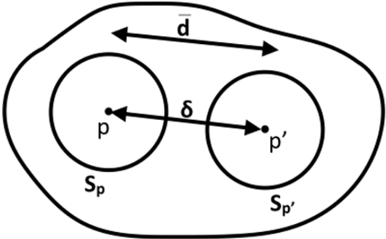
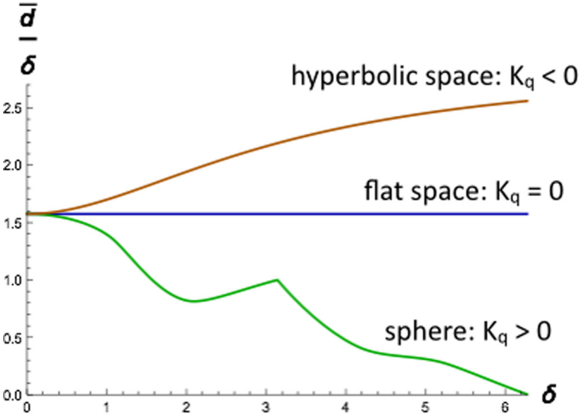
“The key idea, inspired by a classical characterization of curvature on smooth D-dimensional Riemannian spaces and later generalized to general metric spaces [102], is to compare the distance d̄ of two (D−1)-spheres with the distance δ between their centres (see Fig.”
BackgroundThe Spectral Dimension of the Universe is Scale Dependent
Ambjørn, J., Jurkiewicz, J., & Loll, R. (2005) · Physical Review Letters · doi:10.1103/physrevlett.95.171301 · Cited by 518
Self-citationEmergence of a 4D World from Causal Quantum Gravity
Ambjørn, J., Jurkiewicz, J., & Loll, R. (2004) · Physical Review Letters · doi:10.1103/physrevlett.93.131301 · Cited by 447
Self-citation
Research works printed but not linked: 8
- 20. Ellis G, Murugan J and Weltman A (ed) 2012 Foundations of Space and Time (Cambridge: Cambridge University Press)
- 22. Reuter M and Saueressig F 2019 Quantum Gravity and the Functional Renormalization Group (Cambridge: Cambridge University Press)
- 28. David F 1995 Simplicial quantum gravity and random lattices Gravitation and Quantizations. Proc. Les Houches Summer School 1992 ed J Zinn-Justin and B Julia (Amsterdam: Elsevier)
- 63. Jordan S 2013 Globally and locally causal dynamical triangulations PhD Thesis Radboud University Nijmegen
- 82. Class. Quantum Grav. 37 (2020) 013002 Topical Review
- 83. Gizbert-Studnicki J 2014 The effective action in four-dimensional CDT PhD Thesis Jagiellonian University Krakow
- 105. Görlich A 2010 Causal dynamical triangulations in four dimensions PhD Thesis Jagiellonian University Krakow
- 113. Class. Quantum Grav. 37 (2020) 013002 Topical Review
Cited by
Items 401–431 of 431
Roushan, M., Rashidi, N., & Afrakoti, I. E. P. (2026) · International Journal of Geometric Methods in Modern Physics · doi:10.1142/s0219887826501318
Pinpointing triple point of noncommutative matrix model with curvature
Prekrat, D., Bukor, B., & Tekel, J. (2026) · Journal of Physics A Mathematical and Theoretical · doi:10.1088/1751-8121/ae3bb9
“In some models, matrix elements function as fields on spacetime, while in others, spacetime itself is absent as an explicit concept.”
Causal Percolation and the Symmetry of Horizons: From Pre-Geometry to Late-Time Fragmentation
Connelly, D. T. P. (2026) · Open Journal of Philosophy · doi:10.4236/ojpp.2026.161010
Information-Driven Phase Transition on Weighted Graphs with Spontaneous Dimensional SensitivityPreprint
Dolci, V. (2026) · arXiv (Cornell University) · doi:10.48550/arxiv.2603.13896
“This is reminiscent of the scale-dependent spectral dimension found in causal dynamical triangulations (CDT) [8] and the running spectral dimension predicted by asymptotic safety [9] (see also [10] for a recent review).”
Initial conditions and backreaction effects in quantum cosmology
Schander, S. (2022) · theses.fr (ABES) · doi:10.70675/4853890dz9adcz4519zb7eeze0fb80a180e8
On the Phenomenology of Evolving Black Holes, Dark Energy and Bouncing Cosmology
Renevey, C. (2023) · theses.fr (ABES) · doi:10.70675/0dcd7b8ezb1cfz4a14z8d14z00ab7feaad6b
Existence, Complexity and Truth in a Finite UniversePreprint
Akhtman, Y. (2026) · Preprints.org · doi:10.20944/preprints202505.1779.v3
From nothingness to time, Planck's constant, and endless accretion.Preprint
van Hateren, J. H. (2026) · PhilSci-Archive (University of Pittsburgh) · doi:10.5281/zenodo.21903149
Conceptual and Geometric Foundations for a Teleparallel Approach to Quantum Gravity
Landry, A. (2026) · Axioms · doi:10.3390/axioms15060427
Sulis, W. (2026) · Entropy · doi:10.3390/e28060683
Gravitomagnetic scalar response: a transient phase transition in strong-field gravity
Giovannangelo, M. (2026) · Classical and Quantum Gravity · doi:10.1088/1361-6382/aea8c1
Geometry of Events in Deformed Cellular Spacetimes
Barak, S., & Salman, G. (2026) · Mathematics · doi:10.3390/math14142465
Statistical properties of quadrangular surfaces
Topchyan, H., Badalyan, R., & Sedrakyan, A. (2026) · Physical review. B./Physical review. B · doi:10.1103/x96b-q3pq
Finite-support admissibility and Hausdorff interface geometry
Grant, C. (2026) · Analysis and Mathematical Physics · doi:10.1007/s13324-026-01250-2
“Discrete and ordered approaches to spacetime and field structure show how continuum descriptions can arise from finite or relational data [2, 9, 12].”
Tensor-Operator Unification of Spacetime and Quantum Fields
Pradhan, S. S. (2026) · Next research. · doi:10.1016/j.nexres.2026.102256
PEÑA, A. P. (2026) · The European Physical Journal C · doi:10.1140/epjc/s10052-026-16211-z
“Causal dynamical tri-angulations define a non-perturbative sum over geometries by regulating spacetime with causally well-behaved triangulations [41–43].”
Chishtie, F. (2026) · Physics of the Dark Universe · doi:10.2139/ssrn.7327463
Long-Wavelength Lorentz-Like Propagation in a Deformable Cellular SpacePreprint
Dong, S. (2026) · Research Square · doi:10.21203/rs.3.rs-10834615/v1
Causal Quantum Spacetime Theory (CQST): A Framework for Emergent Geometry and Its Observational Test
Cotana, F. (2026) · Foundations · doi:10.3390/foundations6040044
Haug, E. G., & Spavieri, G. (2026) · High Energy Density Physics · doi:10.1016/j.hedp.2026.101322
New developments in the Renormalization Group
Baldazzi, A. (2021) · SDL
Beyond Lorentz invariance: a journey from Analogue to Hořava Gravity
Porro, F. D. (2024) · SDL · Cited by 1
Sediqi, M. L. (2026) · PhilPapers (PhilPapers Foundation) · doi:10.5281/zenodo.23135744
Facets of Gravity: A journey exploring spacetime from Planckian to cosmological scalesPreprint
Silva, A. (2026) · arXiv (Cornell University) · doi:10.48550/arxiv.2610.40908
Beyond gauge-parameter dependence: Further evidence for asymptotic safety in Scalar-Tensor theoriesPreprint
Antunes, S. M. P., & Pereira, A. D. (2026) · arXiv (Cornell University) · doi:10.48550/arxiv.2610.10791
A Unified Kinematical Framework for a Pre-Existing Fixed Four-Dimensional Voxel Spacetime
Ju, S. (n.d.) · PhilPapers (PhilPapers Foundation)
Lamoureux, M., Carmona, J. M., Cortés, J. L., Gkioni, A., Kouchner, A., & Reyes, M. A. (2026) · arXiv (Cornell University) · doi:10.48550/arxiv.2610.25214
Production of vacuum particles from relativistic scalar particles in a deformed spacetime
Deniz, Y., Şahin, O., Saltı, M., & Oktay Aydogdu, A. (2026) · Journal of Physics G Nuclear and Particle Physics · doi:10.1088/1361-6471/aeb8a3
Quasinormal modes of a scale-dependent black hole in 5D spacetime with cosmological constant
Rincón, Á., & Stuchlík, Z. (2026) · The European Physical Journal Plus · doi:10.1140/epjp/s13360-026-08418-6
Metadata
- Authors
- Loll, R.
- Affiliations
- Radboud University Nijmegen (NL)
- Corresponding author
- Loll, R
- ORCID
- Loll, R
- Venue
- Classical and Quantum Gravity
- Publisher
- IOP Publishing
- Published
- 2019-12-06
- Volume
- 37
- Issue
- 1
- Pages
- 013002
- ISSN
- 0264-9381 (ISSN-L)
- 1361-6382
- OpenAlex
- W2988499113
- Cited by
- 359
- References
- 103
- Citations by year
- 2026: 26 · 2025: 52 · 2024: 58 · 2023: 62 · 2022: 51 · 2021: 67 · 2020: 41 · 2019: 2
- FWCI
- 18.63
- Type
- journal article
- Language
- en
- Open access
- hybrid
- doi.org
- Licence
- cc-by
- publishingsupport.iopscience.iop.org/iop-standard/v1 (vor)
- iopscience.iop.org/info/page/text-and-data-mining (tdm)
- Locations
- Classical and Quantum Gravity (publishedVersion, cc-by)
- arXiv (Cornell University) (submittedVersion)
- Radboud Repository (Radboud University) (submittedVersion)
- arXiv (Cornell University)
- Funders
- Government of Canada
- Institut Périmètre de physique théorique
- Topics
- Physical Sciences › Physics and Astronomy › Nuclear and High Energy Physics › Noncommutative and Quantum Gravity Theories
- Physical Sciences › Physics and Astronomy › Astronomy and Astrophysics › Relativity and Gravitational Theory
- Physical Sciences › Physics and Astronomy › Nuclear and High Energy Physics › Black Holes and Theoretical Physics
- Keywords
- causal dynamical triangulations, quantum gravity, lattice gravity, non-perturbative quantum gravity, Planck scale, diffeomorphism invariance, phase structure, causality, global topology, renormalization group, quantum observables, four-dimensional spacetime
About these checks
Registry, retraction, Cites and statistics results are computed, not judged, with one exception: a printed reference that no index lists is read once by a model before it counts as a citation error. Claims are extracted by a model and kept only when their quote appears verbatim in the text; each cited source is then checked, with a model’s help, for whether it says what the claim relies on. Those verdicts can be wrong — read the claim’s quote and the cited source before relying on one.
Statistics and arithmetic are recomputed, not judged.
Confidence bands are shown only for fields calibrated on our annotated test set. None is calibrated yet, so no band is shown.
What counts as a claim ›How we measure confidence ›How we check this ›
Are you an author, or do you see a problem with this page? Request a review
Data sources
Bibliographic data: Semantic Scholar, OpenAlex, Crossref.
Contains information from the Semantic Scholar Academic Graph Datasets, made available under the ODC Attribution License (ODC-BY 1.0).
Semantic Scholar’s data is described in: Kinney, R., et al. (2023). The Semantic Scholar Open Data Platform. arXiv:2301.10140.
