

Quantum gravity from causal dynamical triangulations: a review
Open accessThe DOI matches its Crossref record; 107 of the 108 references it cites were found in a registry or an index.
Abstract
This topical review gives a comprehensive overview and assessment of recent results in causal dynamical triangulations, a modern formulation of lattice gravity, whose aim is to obtain a theory of quantum gravity nonperturbatively from a scaling limit of the lattice-regularized theory. In this manifestly diffeomorphism-invariant approach one has direct, computational access to a Planckian spacetime regime, which is explored with the help of invariant quantum observables. During the last few years, there have been numerous new and important developments and insights concerning the theory’s phase structure, the roles of time, causality, diffeomorphisms and global topology, the application of renormalization group methods and new observables. We will focus on these new results, primarily in four spacetime dimensions, and discuss some of their geometric and physical implications.
Overview
The claims and statistics of this paper haven’t been checked yet.
Free: it reads the open-access text and checks the first 5 claims that cite a source we can check. Create a free account to check every claim.
Integrity signals
Registry
Cites
Statistics
Figures
Verification
Claims the paper makes
The claims and statistics of this paper haven’t been checked yet.
Free: it reads the open-access text and checks the first 5 claims that cite a source we can check. Create a free account to check every claim.
Claims other papers make about this one
Each is checked against this paper’s own text: does it say what the citing paper says it does?
The cited source says what the claim attributes to it.
In the citing paper
“Over the past decades, mounting evidence for asymptotic safety has been obtained both via the lattice Monte Carlo simulations of dynamical triangulations [24,25] and via the semi-analytical methods of the functional renormalization group (FRG) [26].”
From Charting GLOBs in asymptotically safe gravity (2026) · cites this paper as [24]
Self-check
Percentages, sums and reported differences re-computed from the paper’s own numbers.
The self-check needs the paper’s full text.
Citations
Cites
Wilson, K. G. (1974) · Physical Review D · doi:10.1103/physrevd.10.2445 · Cited by 4,507 · cited 1×
“Although realized in a different way, it can be thought of as the gravitational counterpart of the exact gauge invariance of Wilson’s timehonoured lattice formulation of QCD [108], which is also preserved, despite the lattice discretization.”
BackgroundQuantum gravity at a Lifshitz point
Hořava, P. (2009) · Physical Review D · doi:10.1103/physrevd.79.084008 · Cited by 2,666 · cited 2×
“hat this is just a lattice artefact and has no implications for the continuum limit. Firstly, although the situation resembles supercially the preferred foliation present in Horava-Lifshitz gravity [60], which is associated with a breaking of full dieomorphism invariance to an invariance under foliation-preserving die…”
BackgroundGeneral relativity without coordinates
Regge, T. (1961) · Il Nuovo Cimento · doi:10.1007/bf02733251 · Cited by 1,477 · cited 5×
“– The starting point for encoding the geometric degrees of freedom of gravity in a regularized way is Regge’s proposal to describe “general relativity without coordinates” [35], where curved spacetimes are approximated by piecewise flat, simplicial manifolds, and a discrete analogue of the Einstein equations is derive…”
BackgroundMethodInfluentialMontvay, I., & Münster, G. (1994) · Cambridge University Press eBooks · doi:10.1017/cbo9780511470783 · Cited by 1,197
Heat kernel expansion: user's manual
Vassilevich, D. V. (2003) · Physics Reports · doi:10.1016/j.physrep.2003.09.002 · Cited by 1,016 · cited 1×
“where a0 = Vg and the remaining an are integrated curvature invariants of order n [96].”
BackgroundSpectral Dimension of the Universe in Quantum Gravity at a Lifshitz Point
Hořava, P. (2009) · Physical Review Letters · doi:10.1103/physrevlett.102.161301 · Cited by 782 · cited 1×
“The initial conjecture of such a relation was based mainly on the observed (spectral) dimensional reduction at short distances [10, 66] and the presence of a foliation in both formulations.”
BackgroundRicci curvature of Markov chains on metric spaces
Ollivier, Y. (2009) · Journal of Functional Analysis · doi:10.1016/j.jfa.2008.11.001 · Cited by 712 · cited 1×
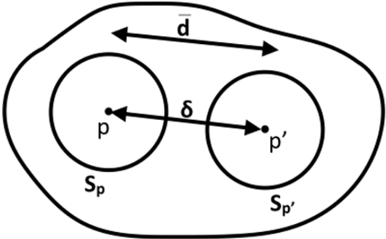
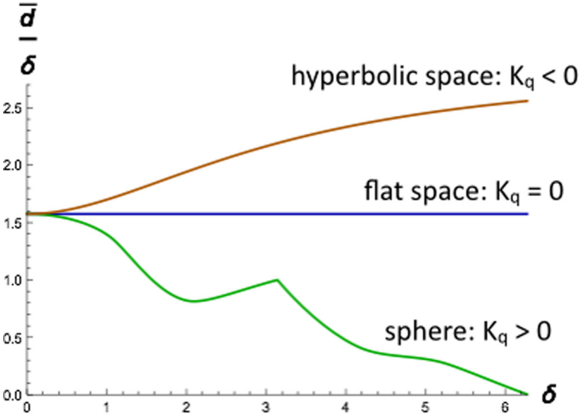
“The key idea, inspired by a classical characterization of curvature on smooth D-dimensional Riemannian spaces and later generalized to general metric spaces [102], is to compare the distance d̄ of two (D−1)-spheres with the distance δ between their centres (see Fig.”
BackgroundThe Spectral Dimension of the Universe is Scale Dependent
Ambjørn, J., Jurkiewicz, J., & Loll, R. (2005) · Physical Review Letters · doi:10.1103/physrevlett.95.171301 · Cited by 518
Self-citationEmergence of a 4D World from Causal Quantum Gravity
Ambjørn, J., Jurkiewicz, J., & Loll, R. (2004) · Physical Review Letters · doi:10.1103/physrevlett.93.131301 · Cited by 447
Self-citation
Research works printed but not linked: 8
- 20. Ellis G, Murugan J and Weltman A (ed) 2012 Foundations of Space and Time (Cambridge: Cambridge University Press)
- 22. Reuter M and Saueressig F 2019 Quantum Gravity and the Functional Renormalization Group (Cambridge: Cambridge University Press)
- 28. David F 1995 Simplicial quantum gravity and random lattices Gravitation and Quantizations. Proc. Les Houches Summer School 1992 ed J Zinn-Justin and B Julia (Amsterdam: Elsevier)
- 63. Jordan S 2013 Globally and locally causal dynamical triangulations PhD Thesis Radboud University Nijmegen
- 82. Class. Quantum Grav. 37 (2020) 013002 Topical Review
- 83. Gizbert-Studnicki J 2014 The effective action in four-dimensional CDT PhD Thesis Jagiellonian University Krakow
- 105. Görlich A 2010 Causal dynamical triangulations in four dimensions PhD Thesis Jagiellonian University Krakow
- 113. Class. Quantum Grav. 37 (2020) 013002 Topical Review
Cited by
Barceló, C., Liberati, S., & Visser, M. (2005) · Living Reviews in Relativity · doi:10.12942/lrr-2005-12 · Cited by 1,163
Quantum gravity phenomenology at the dawn of the multi-messenger era—A review
Addazi, A., Alvarez-Muniz, J., Alves Batista, R., Amelino-Camelia, G., Antonelli, V., Arzano, M., Asorey, M., Atteia, J.-L., Bahamonde, S., Bajardi, F., et al. (2022) · Progress in Particle and Nuclear Physics · doi:10.1016/j.ppnp.2022.103948 · Cited by 440
A short review of loop quantum gravity
Ashtekar, A., & Bianchi, E. (2021) · Reports on Progress in Physics · doi:10.1088/1361-6633/abed91 · Cited by 294
Critical Reflections on Asymptotically Safe Gravity
Bonanno, A., Eichhorn, A., Gies, H., Pawlowski, J. M., Percacci, R., Reuter, M., Saueressig, F., & Vacca, G. P. (2020) · Frontiers in Physics · doi:10.3389/fphy.2020.00269 · Cited by 238
Boguñá, M., Bonamassa, I., De Domenico, M., Havlin, S., Krioukov, D., & Serrano, M. Á. (2021) · Nature Reviews Physics · doi:10.1038/s42254-020-00264-4 · Cited by 213
Quantum Gravity: A Fluctuating Point of View
Pawlowski, J. M., & Reichert, M. (2021) · Frontiers in Physics · doi:10.3389/fphy.2020.551848 · Cited by 110
Fundamental physics opportunities with the next-generation Event Horizon Telescope
Ayzenberg, D., Blackburn, L., Brito, R., Britzen, S., Broderick, A. E., Carballo-Rubio, R., Cardoso, V., Chael, A., Chatterjee, K., Chen, Y., et al. (2025) · Living Reviews in Relativity · doi:10.1007/s41114-025-00057-0 · Cited by 142
Mechanism for the quantum natured gravitons to entangle masses
Bose, S., Mazumdar, A., Schut, M., & Toroš, M. (2022) · Physical review. D/Physical review. D. · doi:10.1103/physrevd.105.106028 · Cited by 137
Massive quantum systems as interfaces of quantum mechanics and gravity
Bose, S., Fuentes, I., Geraci, A. A., Khan, S. M., Qvarfort, S., Rademacher, M., Rashid, M., Toroš, M., Ulbricht, H., & Wanjura, C. C. (2025) · Reviews of Modern Physics · doi:10.1103/revmodphys.97.015003 · Cited by 160
White paper and roadmap for quantum gravity phenomenology in the multi-messenger era
Batista, R. A., Amelino-Camelia, G., Boncioli, D., Carmona, J. M., di Matteo, A., Gubitosi, G., Lobo, I. P., Mavromatos, N. E., Pfeifer, C., Rubiera-García, D., et al. (2025) · Classical and Quantum Gravity · doi:10.1088/1361-6382/ad605a · Cited by 125
Quantum General Relativity and Effective Field Theory
Donoghue, J. F. (2023) · Springer eBooks · doi:10.1007/978-981-19-3079-9_1-1 · Cited by 99
Black Holes in Asymptotically Safe Gravity
Platania, A. B. (2023) · Springer eBooks · doi:10.1007/978-981-19-3079-9_24-1 · Cited by 106
“One of their analytical realizations is the framework of the FRG [11], while corresponding lattice approaches are employed within the eucliden and causal dynamical triangulation programs [12, 13].”
MethodEssential Quantum Einstein Gravity
Baldazzi, A., & Falls, K. (2021) · Universe · doi:10.3390/universe7080294 · Cited by 54
Wang, Z.-L., & Battista, E. (2025) · The European Physical Journal C · doi:10.1140/epjc/s10052-025-13833-7 · Cited by 86
“Other research programs worth mentioning are: twistor theory [10], noncommutative geometry [11,12], Euclidean quantum gravity [13,14], causal dynamical triangulation [15], and casual set theory [16].”
Constraining power of asymptotic safety for scalar fields
Eichhorn, A., & Pauly, M. (2021) · Physical Review D · doi:10.1103/physrevd.103.026006 · Cited by 60
Graviton-mediated scattering amplitudes from the quantum effective action
Draper, T., Knorr, B., Ripken, C., & Saueressig, F. (2020) · Journal of High Energy Physics · doi:10.1007/jhep11(2020)136 · Cited by 36
“By now, there is a significant number of proposals on how to complete GR into a fundamental theory valid on all scales with String Theory [20, 21], Loop Quantum Gravity [22–24], Asymptotic Safety [25–31], Causal Dynamical Triangulations [32, 33], Causal Set Theory [34, 35], Group Field Theory [36, 37], infinite deriva…”
BackgroundQuantum Gravity Emergence from Entanglement in a Multi-Fold UniversePreprint
Maes, S. H. (2020) · OSF Preprints (OSF Preprints) · doi:10.31219/osf.io/z6ubm · Cited by 89
The Functional Renormalization Group in Quantum Gravity
Saueressig, F. (2023) · Springer eBooks · doi:10.1007/978-981-19-3079-9_16-1 · Cited by 85
Frontiers of Quantum Gravity: shared challenges, converging directionsPreprint
de Boer, J., Dittrich, B., Eichhorn, A., Giddings, S. B., Gielen, S., Liberati, S., Livine, E. R., Oriti, D., Papadodimas, K., Pereira, A. D., et al. (2022) · arXiv (Cornell University) · doi:10.48550/arxiv.2207.10618 · Cited by 63
“In causal dynamical triangulations [57] strong causality conditions are imposed which exclude topology change.”
BackgroundQuantum Gravity in 30 Questions
Loll, R., Fabiano, G., Frattulillo, D., & Wagner, F. (2022) · Corfu Summer Institute School and Workshops on Elementary Particle Physics and Gravity (CORFU) · doi:10.22323/1.406.0316 · Cited by 59
“Also, it is not a priori associated with any physical notion of time, see [100] for further discussion.”
BackgroundMethodInfluentialSelf-citationCoarse Graining Spin Foam Quantum Gravity—A Review
Steinhaus, S. (2020) · Frontiers in Physics · doi:10.3389/fphy.2020.00295 · Cited by 59
“9 This idea is inspired by a similar concept in Causal Dynamical Triangulations [70], where the distance between two vertices of the triangulation is given by the minimal number of links between them, albeit with the notable difference that each length has a specified length assigned to it.”
MethodInfluentialAsymptotically safe gravityPreprint
Eichhorn, A. (2020) · arXiv (Cornell University) · doi:10.48550/arxiv.2003.00044 · Cited by 61
Gravity in the infrared and effective nonlocal models
Belgacem, E., Dirian, Y., Finke, A., Foffa, S., & Maggiore, M. (2020) · Journal of Cosmology and Astroparticle Physics · doi:10.1088/1475-7516/2020/04/010 · Cited by 57
Basile, I., Buoninfante, L., Filippo, F. D., Knorr, B., Platania, A. B., & Tokareva, A. (2025) · SciPost Physics Lecture Notes · doi:10.21468/scipostphyslectnotes.98 · Cited by 65
The derivative expansion in asymptotically safe quantum gravity: general setup and quartic order
Knorr, B. (2021) · SciPost Physics Core · doi:10.21468/scipostphyscore.4.3.020 · Cited by 49
Quantum reference frames at the boundary of spacetime
Kabel, V., Brukner, Č., & Wieland, W. (2023) · Physical review. D/Physical review. D. · doi:10.1103/physrevd.108.106022 · Cited by 54
“In nonperturbative approaches such as Spinfoams, Loop Quantum Gravity, Group Field Theory and Quantum Regge Calculus [45, 58, 59, 72–74], a quantum spacetime consists of a discrete number of flat building blocks that are glued together with deficit angles around codimension-two corners [59, 75–80].”
BackgroundForm Factors in Quantum Gravity - contrasting non-local, ghost-free gravity and Asymptotic SafetyPreprint
Knorr, B., Ripken, C., & Saueressig, F. (2021) · CNR SOLAR (Scientific Open-access Literature Archive and Repository) (National Research Council) · doi:10.48550/arxiv.2111.12365 · Cited by 50
Renormalization in Quantum Theories of Geometry
Ambjørn, J., Gizbert-Studnicki, J., Görlich, A., Jurkiewicz, J., & Loll, R. (2020) · Frontiers in Physics · doi:10.3389/fphy.2020.00247 · Cited by 48
Self-citationMultifractional theories: An updated review
Calcagni, G. (2021) · Modern Physics Letters A · doi:10.1142/s021773232140006x · Cited by 48
Buoninfante, L., Knorr, B., Kumar, K. S., Platania, A. B., Anselmi, D., Basile, I., Bjerrum-Bohr, N. E. J., Brandenberger, R., González, M. C., Davis, A.-C., et al. (2025) · SciPost Physics Community Reports · doi:10.21468/scipostphyscommrep.11 · Cited by 55
Self-citationPredictive power of grand unification from quantum gravity
Eichhorn, A., Held, A., & WETTERICH, C. (2020) · Journal of High Energy Physics · doi:10.1007/jhep08(2020)111 · Cited by 47
“Lattice techniques [63], also with matter [64, 65] and perturbative tools [66, 67] are also employed.”
MethodQuantum Gravity from dynamical metric fluctuationsPreprint
Pawlowski, J. M., & Reichert, M. (2023) · arXiv (Cornell University) · doi:10.48550/arxiv.2309.10785 · Cited by 49
The weak-gravity bound and the need for spin in asymptotically safe matter-gravity models
de Brito, G. P., Eichhorn, A., & dos Santos, R. R. L. (2021) · Journal of High Energy Physics · doi:10.1007/jhep11(2021)110 · Cited by 43
“Moreover, lattice techniques are being used to search for asymptotic safety, which manifests as a secondorder phase transition [115].”
MethodCausality, unitarity and stability in quantum gravity: a non-perturbative perspective
Platania, A. (2022) · Journal of High Energy Physics · doi:10.1007/jhep09(2022)167 · Cited by 41
“, lattice techniques [14, 15] or the Functional Renormalization Group (FRG) [16]1.”
MethodUniversal critical behavior in tensor models for four-dimensional quantum gravity
Eichhorn, A., Lumma, J., Pereira, A. D., & Sikandar, A. (2020) · Journal of High Energy Physics · doi:10.1007/jhep02(2020)110 · Cited by 47
“1 A promising route to construct a background independent path integral consists of making a transition to discrete building blocks, as in dynamical triangulations [5], Regge calculus [6], matrix/tensor models [7–9], spin foams [10] and causal sets [11].”
BackgroundFoliated asymptotically safe gravity in the fluctuation approach
Saueressig, F., & Wang, J. (2023) · Journal of High Energy Physics · doi:10.1007/jhep09(2023)064 · Cited by 41
“In particular, the framework introduced in our work gives access to the spatially averaged correlation functions accessible in the Causal Dynamical Triangulations (CDT) program [55, 56].”
BackgroundMethodHolographic path-integral optimization
Boruch, J., Caputa, P., Ge, D., & Takayanagi, T. (2021) · Journal of High Energy Physics · doi:10.1007/jhep07(2021)016 · Cited by 41
“[89] for interesting applications in quantum gravity).”
Towards explicit discrete holography: Aperiodic spin chains from hyperbolic tilings
Basteiro, P., Giulio, G. D., Erdmenger, J., Karl, J., Meyer, R., & Xian, Z.-Y. (2022) · SciPost Physics · doi:10.21468/scipostphys.13.5.103 · Cited by 50
“This can in principle be achieved within the framework of causal dynamical triangulations [124, 125], which simulates precisely the Lorentzian gravitational path integral for such dynamical triangulations.”
BackgroundTime Functions on Lorentzian Length Spaces
Burtscher, A., & García-Heveling, L. (2024) · Annales Henri Poincaré · doi:10.1007/s00023-024-01461-y · Cited by 51
Bounds on GUP parameters from GW150914 and GW190521
Das, A., Das, S., Mansour, N. R., & Vagenas, E. C. (2021) · Physics Letters B · doi:10.1016/j.physletb.2021.136429 · Cited by 42
Replacing the Notion of Spacetime Distance by the Notion of Correlation
Kempf, A. (2021) · Frontiers in Physics · doi:10.3389/fphy.2021.655857 · Cited by 48
“, [39, 41] and also [42] which is based on the Synge function and quantum indefinite causal structures, see, e.”
BackgroundRelational observables in asymptotically safe gravity
Baldazzi, A., Falls, K., & Ferrero, R. (2022) · Annals of Physics · doi:10.1016/j.aop.2022.168822 · Cited by 38
Breitenlohner-Freedman Bound on Hyperbolic Tilings
Basteiro, P., Dusel, F., Erdmenger, J., Herdt, D., Hinrichsen, H., Meyer, R., & Schrauth, M. (2023) · Physical Review Letters · doi:10.1103/physrevlett.130.091604 · Cited by 41
Nonlinear evolution of quadratic gravity in 3+1 dimensions
Held, A., & Lim, H. S. (2023) · Physical review. D/Physical review. D. · doi:10.1103/physrevd.108.104025 · Cited by 43
How round is the quantum de Sitter universe?
Klitgaard, N., & Loll, R. (2020) · The European Physical Journal C · doi:10.1140/epjc/s10052-020-08569-5 · Cited by 35
Self-citationExploring new corners of asymptotically safe unimodular quantum gravity
de Brito, G. P., Pereira, A. D., & Vieira, A. F. (2021) · Physical review. D/Physical review. D. · doi:10.1103/physrevd.103.104023 · Cited by 39
Towards a Higgs mass determination in asymptotically safe gravity with a dark portal
Eichhorn, A., Pauly, M., & Ray, S. (2021) · Journal of High Energy Physics · doi:10.1007/jhep10(2021)100 · Cited by 43
Lectures on Naturalness, String Landscape and MultiversePreprint
Hebecker, A. (2020) · arXiv (Cornell University) · doi:10.48550/arxiv.2008.10625 · Cited by 38
“[478, 479] for reviews).”
Phantom-like dark energy from quantum gravity
Oriti, D., & Pang, X. (2021) · Journal of Cosmology and Astroparticle Physics · doi:10.1088/1475-7516/2021/12/040 · Cited by 39
Causal Dynamical Triangulations: Gateway to Nonperturbative Quantum Gravity
Ambjørn, J., & Loll, R. (2024) · Elsevier eBooks · doi:10.1016/b978-0-323-95703-8.00109-9 · Cited by 35
Self-citationAsymptotic safety in Lorentzian quantum gravity
D’Angelo, E. (2024) · Physical review. D/Physical review. D. · doi:10.1103/physrevd.109.066012 · Cited by 38
Jercher, A. F., Oriti, D., & Pithis, A. G. A. (2022) · Journal of Cosmology and Astroparticle Physics · doi:10.1088/1475-7516/2022/01/050 · Cited by 37
The Autodidactic UniversePreprint
Alexander, S., Cunningham, W. J., Lanier, J., Smolin, L., Stanojevic, S., Toomey, M. W., & Wecker, D. (2021) · arXiv (Cornell University) · doi:10.48550/arxiv.2104.03902 · Cited by 39
“The various approaches to quantum gravity, such as causal set theory [63], spin foams [89], and causal dynamical triangulations [90], have considered how a discretized EinsteinHilbert action may drive the dynamics of discrete space-times into a geometric phase, in which geometry, locality, and possibly transitivity ar…”
BackgroundComplete Barrett-Crane model and its causal structure
Jercher, A. F., Oriti, D., & Pithis, A. G. A. (2022) · Physical review. D/Physical review. D. · doi:10.1103/physrevd.106.066019 · Cited by 32
“The continuum limit of the theory is then assumed to be obtained through a second-order phase transition in the limit a → 0 [5], reflecting a conceptually different view on the lattice compared to GFT, as we are going to discuss again below.”
BackgroundMethodUltraviolet-complete quantum field theories with fractional operators
Calcagni, G., & Rachwał, L. (2023) · Journal of Cosmology and Astroparticle Physics · doi:10.1088/1475-7516/2023/09/003 · Cited by 34
“Causal dynamical triangulations [12, 13] and asymptotic safety [14–16] follow non-perturbative quantization procedures, still within the”
Backgroundde Sitter instanton from Euclidean dynamical triangulations
Bassler, S., Laiho, J., Schiffer, M., & Unmuth-Yockey, J. (2021) · Physical review. D/Physical review. D. · doi:10.1103/physrevd.103.114504 · Cited by 32
Background independent exact renormalisation
Falls, K. (2021) · The European Physical Journal C · doi:10.1140/epjc/s10052-020-08803-0 · Cited by 36
Pregeometric Spaces from Wolfram Model Rewriting Systems as Homotopy Types
Arsiwalla, X. D., & Gorard, J. (2024) · International Journal of Theoretical Physics · doi:10.1007/s10773-024-05576-0 · Cited by 34
“The former can be achieved either by sprinkling causal sets [37] or discretizing an n-dimensional Lorentzian manifold using causal n-simplices [69]; whereas, the latter is a way to obtain spin networks that are subsequently evolved to give spin foams [80].”
Effective dynamics of scalar cosmological perturbations from quantum gravity
Marchetti, L., & Oriti, D. (2022) · Journal of Cosmology and Astroparticle Physics · doi:10.1088/1475-7516/2022/07/004 · Cited by 34
Cosmological α′-corrections from the functional renormalization group
Basile, I., & Platania, A. (2021) · Journal of High Energy Physics · doi:10.1007/jhep06(2021)045 · Cited by 28
CDT Quantum Toroidal Spacetimes: An Overview
Jan Ambjørn, A., Drogosz, Z., Gizbert-Studnicki, J., Görlich, A., Jurkiewicz, J., & Nèmeth, D. (2021) · Universe · doi:10.3390/universe7040079 · Cited by 28
“Causal Dynamical Triangulations (CDT) is an attempt to formulate a non-perturbative lattice theory of quantum gravity (see [1, 2] for reviews).”
BackgroundNishimura, J., Sakai, K., & Yosprakob, A. (2023) · Journal of High Energy Physics · doi:10.1007/jhep09(2023)110 · Cited by 37
“[43, 44] and references therein for earlier works.”
Unimodular quantum gravity: steps beyond perturbation theory
de Brito, G. P., & Pereira, A. D. (2020) · Journal of High Energy Physics · doi:10.1007/jhep09(2020)196 · Cited by 27
“The regulator is quadratic in the quantum fluctuations and has the general structure ∆Sk = ∫ x φ(x)Rk(∆)φ(x), where (6)Alternatively, lattice methods can be employed as in the (Causal) Dynamical Triangulation approach [85].”
MethodAsymptotic analysis of spin-foams with timelike faces in a new parametrization
Simão, J. D., & Steinhaus, S. (2021) · Physical review. D/Physical review. D. · doi:10.1103/physrevd.104.126001 · Cited by 28
Are there ALPs in the asymptotically safe landscape?
de Brito, G. P., Eichhorn, A., & dos Santos, R. R. L. (2022) · Journal of High Energy Physics · doi:10.1007/jhep06(2022)013 · Cited by 31
“For instance, in lattice techniques, asymptotic safety manifests as a second-order phase transition [135]; there is also evidence for asymptotic safety coming from a background-independent setting defined by tensor-models [136, 137].”
BackgroundBackground independent field quantization with sequences of gravity-coupled approximants
Becker, M., & Reuter, M. (2020) · Physical review. D/Physical review. D. · doi:10.1103/physrevd.102.125001 · Cited by 29
“Along an independent line of research, similar indications were found within the Asymptotic Safety approach to Quantum Gravity [50]. of magnitude has been found in [28] by logically independent arguments based upon the functional renormalization group for gravity [1].”
BackgroundInfluential3D-space and the preferred basis cannot uniquely emerge from the quantum structure
Stoica, O. C. (2022) · Advances in Theoretical and Mathematical Physics · doi:10.4310/atmp.2022.v26.n10.a12 · Cited by 27
“The causal dynamical triangulation approach is similar, but all edges of the same length [61].”
BackgroundGeometrizing the Klein–Gordon and Dirac equations in doubly special relativity
Franchino-Viñas, S. A., & Relancio, J. J. (2023) · Classical and Quantum Gravity · doi:10.1088/1361-6382/acb4d4 · Cited by 27
“Searching for a more fundamental theory and principles, the community has developed several theoretical frameworks, such as string theory [7–9], loop quantum gravity [10, 11], causal dynamical triangulations [12], causal set theory [13–15] and functional renormalization group [16].”
Ambjørn, J., Gizbert-Studnicki, J., Görlich, A., & Nèmeth, D. (2024) · Physical review. D/Physical review. D. · doi:10.1103/physrevd.110.126006 · Cited by 28
“Four-dimensional Causal Dynamical Triangulations (CDT) attempts to provide a lattice regularization of four-dimensional quantum gravity (see [1, 2] for reviews).”
Foliated asymptotically safe gravity: Lorentzian signature fluctuations from the Wick rotation
Saueressig, F., & Wang, J. (2025) · Physical review. D/Physical review. D. · doi:10.1103/physrevd.111.106007 · Cited by 27
Lessons from conformally reduced quantum gravity
Knorr, B. (2021) · Classical and Quantum Gravity · doi:10.1088/1361-6382/abd7c2 · Cited by 26
Scattering amplitudes in affine gravity
Knorr, B., & Ripken, C. (2021) · Physical review. D/Physical review. D. · doi:10.1103/physrevd.103.105019 · Cited by 24
“Approaches in this direction include the Asymptotic Safety program [5–9], Causal Dynamical Triangulations (CDT) [10, 11], and loop quantum gravity [12–14].”
MethodGravity generated by four one-dimensional unitary gauge symmetries and the Standard Model
Partanen, M., & Tulkki, J. (2025) · Reports on Progress in Physics · doi:10.1088/1361-6633/adc82e · Cited by 38
Asymptotic safety within on-shell perturbation theory
Falls, K., & Ferrero, R. (2025) · Journal of High Energy Physics · doi:10.1007/jhep08(2025)173 · Cited by 26
“The value of the exponent can also be compared with those obtained from the NPRG [21, 23, 24] and from recent lattice studies [59] in the form of Causal Dynamical Triangulations (CDT) [60–62].”
Emergence of the circle in a statistical model of random cubic graphs
Kelly, C., Trugenberger, C. A., & Biancalana, F. (2021) · Classical and Quantum Gravity · doi:10.1088/1361-6382/abe2d8 · Cited by 27
“On the other hand, the formalism of causal dynamical triangulations—see [8, 68] for a review—has shown that alternative scaling limits exist: two-dimensional causal dynamical triangulations, for instance, is equivalent to Horava–Lifschitz gravity in two dimensions and the spectral and Hausdorff dimensions both take on…”
BackgroundClosed Timelike Curves, Singularities and Causality: A Survey from Gödel to Chronological Protection
Luminet, J. (2021) · Universe · doi:10.3390/universe7010012 · Cited by 31
“But the preservation of causality serves as a basic element of construction for two of them, namely the Causal Sets theory [61] and the Causal Dynamical Triangulations (CDT) theory [62].”
MethodForm Factors in Asymptotically Safe Quantum Gravity
Knorr, B., Ripken, C., & Saueressig, F. (2024) · Springer eBooks · doi:10.1007/978-981-19-3079-9_21-1 · Cited by 30
Hairy Taub-NUT/bolt-AdS solutions in Horndeski theory
Arratia, E., Corral, C., Figueroa, J., & Sanhueza, L. (2021) · Physical review. D/Physical review. D. · doi:10.1103/physrevd.103.064068 · Cited by 22
Becker, M., & Reuter, M. (2021) · Physical review. D/Physical review. D. · doi:10.1103/physrevd.104.125008 · Cited by 25
On the reconstruction problem in quantum gravity
Fraaije, M., Platania, A. B., & Saueressig, F. (2022) · Physics Letters B · doi:10.1016/j.physletb.2022.137399 · Cited by 26
Phase transitions in TGFT: a Landau-Ginzburg analysis of Lorentzian quantum geometric models
Marchetti, L., Oriti, D., Pithis, A. G. A., & Thürigen, J. (2023) · Journal of High Energy Physics · doi:10.1007/jhep02(2023)074 · Cited by 24
Thermal quantum gravity condensates in group field theory cosmology
Assanioussi, M., & Kotecha, I. (2020) · Physical review. D/Physical review. D. · doi:10.1103/physrevd.102.044024 · Cited by 21
“It has allowed for tangible explorations of connections of group field theory quantum gravity (which in turn is strictly related to several other approaches, including loop quantum gravity [19–22], spin foams [23, 24], causal dynamical triangulations [25], tensor models [26] and lattice quantum gravity [27]) with quan…”
BackgroundJia, D. (2022) · Classical and Quantum Gravity · doi:10.1088/1361-6382/ac4b04 · Cited by 32
Cartographing gravity-mediated scattering amplitudes: scalars and photonsPreprint
Knorr, B., Pirlo, S., Ripken, C., & Saueressig, F. (2022) · arXiv (Cornell University) · doi:10.48550/arxiv.2205.01738 · Cited by 28
“The gravitational asymptotic safety programme [1–3] (including Dynamical Triangulations [4] and Causal Dynamical Triangulations [5,6]), non-local ghost-free gravity [7], and Hořava-Lifshitz gravity [8–10] clearly advocate the first viewpoint.”
BackgroundQuantum Gravity from Dynamical Metric Fluctuations
Pawlowski, J. M., & Reichert, M. (2023) · Springer eBooks · doi:10.1007/978-981-19-3079-9_17-1 · Cited by 33
On the scaling of composite operators in asymptotic safety
Houthoff, W., Kurov, A., & Saueressig, F. (2020) · Journal of High Energy Physics · doi:10.1007/jhep04(2020)099 · Cited by 20
“1 Complementary, Monte Carlo simulations of the gravitational partition function within the Causal Dynamical Triangulation program [86, 87] have provided strong evidence for the existence of second order phase transitions [88–91].”
The phase diagram of the multi-matrix model with ABAB interaction from functional renormalization
Eichhorn, A., Pereira, A. D., & Pithis, A. G. A. (2020) · Journal of High Energy Physics · doi:10.1007/jhep12(2020)131 · Cited by 23
“In contrast, in the Euclidean and Causal Dynamical Triangulation approaches (EDT, CDT) [11, 12, 78, 79], much is already known about the phase diagram.”
BackgroundMethodDonoghue, J. F., & Menezes, G. (2021) · Journal of High Energy Physics · doi:10.1007/jhep11(2021)010 · Cited by 20
“[39] R. Loll, “Quantum Gravity from Causal Dynamical Triangulations: A Review,” Class.”
BackgroundTowards an UV fixed point in CDT gravity
Ambjørn, J., Gizbert-Studnicki, J., Görlich, A., Jurkiewicz, J., & Nèmeth, D. (2019) · Journal of High Energy Physics · doi:10.1007/jhep07(2019)166 · Cited by 21
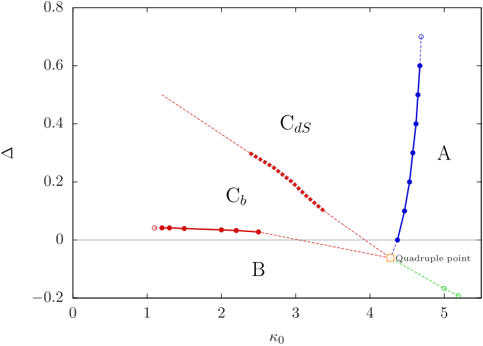
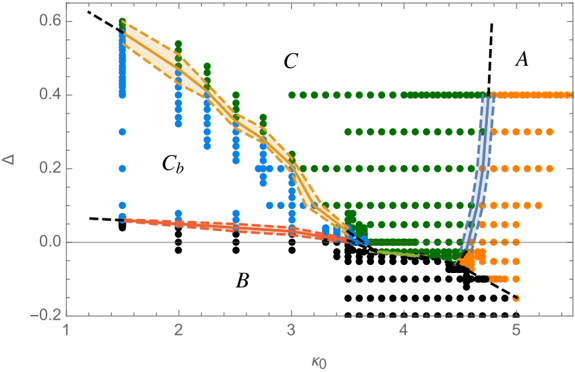
“The action is parametrized by a set of three dimensionless bare coupling constants, K0, related to the inverse gravitational constant, K4 – the dimensionless cosmological constant and ∆ – a function of the parameter α, the ratio of the spatial and time edge lengths (for a detailed discussion we refer to [35] and to th…”
BackgroundFuzzy worldlines with κ-Poincaré symmetries
Ballesteros, Á., Gubitosi, G., Gutiérrez-Sagredo, I., & Mercati, F. (2021) · Journal of High Energy Physics · doi:10.1007/jhep12(2021)080 · Cited by 19
“The new formalisms that have been developed mostly attempt to introduce some sort of discretization (see [5, 6] and references therein) or noncommutativity [7, 8, 9, 10, 11, 12, 13].”
BackgroundTowards a Unitary, Renormalizable, and Ultraviolet-Complete Quantum Theory of Gravity
Steinwachs, C. F. (2020) · Frontiers in Physics · doi:10.3389/fphy.2020.00185 · Cited by 19
“[11] R.”
BackgroundAsymptotic Safety of Gravity with Matter
Eichhorn, A., & Schiffer, M. (2023) · Springer eBooks · doi:10.1007/978-981-19-3079-9_22-1 · Cited by 27
Quantum corner symmetry: Representations and gluing
Ciambelli, L., Kowalski-Glikman, J., & Varrin, L. (2025) · Physics Letters B · doi:10.1016/j.physletb.2025.139544 · Cited by 22
“The generalization of the gluing procedure to a higher number of corners is straightforward, and is reminiscent of the setup of Causal Dynamical Triangulation, see [42, 43].”
Revisit on two-dimensional self-gravitating kinks: superpotential formalism and linear stability
Zhong, Y. (2021) · Journal of High Energy Physics · doi:10.1007/jhep04(2021)118 · Cited by 18
The spectral geometry of de Sitter space in asymptotic safety
Ferrero, R., & Reuter, M. (2022) · Journal of High Energy Physics · doi:10.1007/jhep08(2022)040 · Cited by 18
Configuration space for quantum gravity in a locally regularized path integral
Knorr, B., Platania, A. B., & Schiffer, M. (2022) · Physical review. D/Physical review. D. · doi:10.1103/physrevd.106.126002 · Cited by 17
“Practical computations are typically performed either using FRG [9, 61–63] or lattice techniques [36, 37].”
MethodAsymptotic safety, quantum gravity, and the swampland: A conceptual assessment
Basile, I., Knorr, B., Platania, A. B., & Schiffer, M. (2026) · SciPost Physics · doi:10.21468/scipostphys.20.2.027 · Cited by 24
“In particular, it entails a number of robust consequences which can be discussed beyond quantitative (but approximate) approaches involving func-3 tional renormalization [139] or dynamical triangulations [19].”
Thermal representations in group field theory: squeezed vacua and quantum gravity condensates
Assanioussi, M., & Kotecha, I. (2020) · Journal of High Energy Physics · doi:10.1007/jhep02(2020)173 · Cited by 18
“They are strictly related to various other approaches like loop quantum gravity [7–10], spin foams [11, 12], causal dynamical triangulations [13], tensor models [14] and lattice quantum gravity [15].”
BackgroundLahoche, V., Samary, D. O., & Pereira, A. D. (2020) · Physical review. D/Physical review. D. · doi:10.1103/physrevd.101.064014 · Cited by 16
“, [12]-[13] and several non-trivial results as the existence of an extended de Sitter like phase for the emergent geometry were obtained over the last years.”
BackgroundSpin foam amplitude of the black-to-white hole transition
Han, M., Qu, D., & Zhang, C. (2024) · Physical review. D/Physical review. D. · doi:10.1103/physrevd.110.124055 · Cited by 16
Metadata
- Authors
- Loll, R.
- Affiliations
- Radboud University Nijmegen (NL)
- Corresponding author
- Loll, R
- ORCID
- Loll, R
- Venue
- Classical and Quantum Gravity
- Publisher
- IOP Publishing
- Published
- 2019-12-06
- Volume
- 37
- Issue
- 1
- Pages
- 013002
- ISSN
- 0264-9381 (ISSN-L)
- 1361-6382
- OpenAlex
- W2988499113
- Cited by
- 359
- References
- 103
- Citations by year
- 2026: 26 · 2025: 52 · 2024: 58 · 2023: 62 · 2022: 51 · 2021: 67 · 2020: 41 · 2019: 2
- FWCI
- 18.63
- Type
- journal article
- Language
- en
- Open access
- hybrid
- doi.org
- Licence
- cc-by
- publishingsupport.iopscience.iop.org/iop-standard/v1 (vor)
- iopscience.iop.org/info/page/text-and-data-mining (tdm)
- Locations
- Classical and Quantum Gravity (publishedVersion, cc-by)
- arXiv (Cornell University) (submittedVersion)
- Radboud Repository (Radboud University) (submittedVersion)
- arXiv (Cornell University)
- Funders
- Government of Canada
- Institut Périmètre de physique théorique
- Topics
- Physical Sciences › Physics and Astronomy › Nuclear and High Energy Physics › Noncommutative and Quantum Gravity Theories
- Physical Sciences › Physics and Astronomy › Astronomy and Astrophysics › Relativity and Gravitational Theory
- Physical Sciences › Physics and Astronomy › Nuclear and High Energy Physics › Black Holes and Theoretical Physics
- Keywords
- causal dynamical triangulations, quantum gravity, lattice gravity, non-perturbative quantum gravity, Planck scale, diffeomorphism invariance, phase structure, causality, global topology, renormalization group, quantum observables, four-dimensional spacetime
About these checks
Registry, retraction, Cites and statistics results are computed, not judged, with one exception: a printed reference that no index lists is read once by a model before it counts as a citation error. Claims are extracted by a model and kept only when their quote appears verbatim in the text; each cited source is then checked, with a model’s help, for whether it says what the claim relies on. Those verdicts can be wrong — read the claim’s quote and the cited source before relying on one.
Statistics and arithmetic are recomputed, not judged.
Confidence bands are shown only for fields calibrated on our annotated test set. None is calibrated yet, so no band is shown.
What counts as a claim ›How we measure confidence ›How we check this ›
Are you an author, or do you see a problem with this page? Request a review
Data sources
Bibliographic data: Semantic Scholar, OpenAlex, Crossref.
Contains information from the Semantic Scholar Academic Graph Datasets, made available under the ODC Attribution License (ODC-BY 1.0).
Semantic Scholar’s data is described in: Kinney, R., et al. (2023). The Semantic Scholar Open Data Platform. arXiv:2301.10140.
