

Quantum gravity from causal dynamical triangulations: a review
Open accessThe DOI matches its Crossref record; 107 of the 108 references it cites were found in a registry or an index.
Abstract
This topical review gives a comprehensive overview and assessment of recent results in causal dynamical triangulations, a modern formulation of lattice gravity, whose aim is to obtain a theory of quantum gravity nonperturbatively from a scaling limit of the lattice-regularized theory. In this manifestly diffeomorphism-invariant approach one has direct, computational access to a Planckian spacetime regime, which is explored with the help of invariant quantum observables. During the last few years, there have been numerous new and important developments and insights concerning the theory’s phase structure, the roles of time, causality, diffeomorphisms and global topology, the application of renormalization group methods and new observables. We will focus on these new results, primarily in four spacetime dimensions, and discuss some of their geometric and physical implications.
Overview
The claims and statistics of this paper haven’t been checked yet.
Free: it reads the open-access text and checks the first 5 claims that cite a source we can check. Create a free account to check every claim.
Integrity signals
Registry
Cites
Statistics
Figures
Verification
Claims the paper makes
The claims and statistics of this paper haven’t been checked yet.
Free: it reads the open-access text and checks the first 5 claims that cite a source we can check. Create a free account to check every claim.
Claims other papers make about this one
Each is checked against this paper’s own text: does it say what the citing paper says it does?
The cited source says what the claim attributes to it.
In the citing paper
“Over the past decades, mounting evidence for asymptotic safety has been obtained both via the lattice Monte Carlo simulations of dynamical triangulations [24,25] and via the semi-analytical methods of the functional renormalization group (FRG) [26].”
From Charting GLOBs in asymptotically safe gravity (2026) · cites this paper as [24]
Self-check
Percentages, sums and reported differences re-computed from the paper’s own numbers.
The self-check needs the paper’s full text.
Citations
Cites
Wilson, K. G. (1974) · Physical Review D · doi:10.1103/physrevd.10.2445 · Cited by 4,507 · cited 1×
“Although realized in a different way, it can be thought of as the gravitational counterpart of the exact gauge invariance of Wilson’s timehonoured lattice formulation of QCD [108], which is also preserved, despite the lattice discretization.”
BackgroundQuantum gravity at a Lifshitz point
Hořava, P. (2009) · Physical Review D · doi:10.1103/physrevd.79.084008 · Cited by 2,666 · cited 2×
“hat this is just a lattice artefact and has no implications for the continuum limit. Firstly, although the situation resembles supercially the preferred foliation present in Horava-Lifshitz gravity [60], which is associated with a breaking of full dieomorphism invariance to an invariance under foliation-preserving die…”
BackgroundGeneral relativity without coordinates
Regge, T. (1961) · Il Nuovo Cimento · doi:10.1007/bf02733251 · Cited by 1,477 · cited 5×
“– The starting point for encoding the geometric degrees of freedom of gravity in a regularized way is Regge’s proposal to describe “general relativity without coordinates” [35], where curved spacetimes are approximated by piecewise flat, simplicial manifolds, and a discrete analogue of the Einstein equations is derive…”
BackgroundMethodInfluentialMontvay, I., & Münster, G. (1994) · Cambridge University Press eBooks · doi:10.1017/cbo9780511470783 · Cited by 1,197
Heat kernel expansion: user's manual
Vassilevich, D. V. (2003) · Physics Reports · doi:10.1016/j.physrep.2003.09.002 · Cited by 1,016 · cited 1×
“where a0 = Vg and the remaining an are integrated curvature invariants of order n [96].”
BackgroundSpectral Dimension of the Universe in Quantum Gravity at a Lifshitz Point
Hořava, P. (2009) · Physical Review Letters · doi:10.1103/physrevlett.102.161301 · Cited by 782 · cited 1×
“The initial conjecture of such a relation was based mainly on the observed (spectral) dimensional reduction at short distances [10, 66] and the presence of a foliation in both formulations.”
BackgroundRicci curvature of Markov chains on metric spaces
Ollivier, Y. (2009) · Journal of Functional Analysis · doi:10.1016/j.jfa.2008.11.001 · Cited by 712 · cited 1×
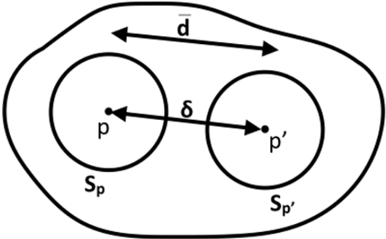
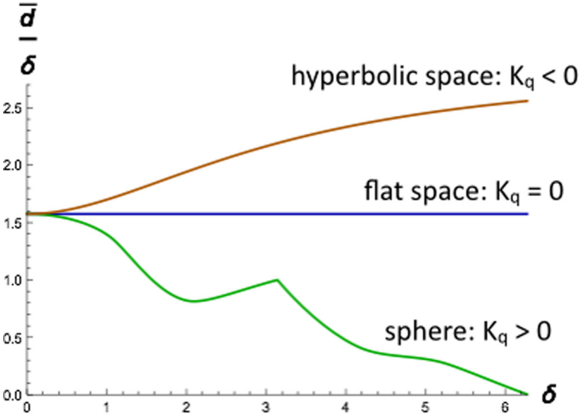
“The key idea, inspired by a classical characterization of curvature on smooth D-dimensional Riemannian spaces and later generalized to general metric spaces [102], is to compare the distance d̄ of two (D−1)-spheres with the distance δ between their centres (see Fig.”
BackgroundThe Spectral Dimension of the Universe is Scale Dependent
Ambjørn, J., Jurkiewicz, J., & Loll, R. (2005) · Physical Review Letters · doi:10.1103/physrevlett.95.171301 · Cited by 518
Self-citationEmergence of a 4D World from Causal Quantum Gravity
Ambjørn, J., Jurkiewicz, J., & Loll, R. (2004) · Physical Review Letters · doi:10.1103/physrevlett.93.131301 · Cited by 447
Self-citation
Research works printed but not linked: 8
- 20. Ellis G, Murugan J and Weltman A (ed) 2012 Foundations of Space and Time (Cambridge: Cambridge University Press)
- 22. Reuter M and Saueressig F 2019 Quantum Gravity and the Functional Renormalization Group (Cambridge: Cambridge University Press)
- 28. David F 1995 Simplicial quantum gravity and random lattices Gravitation and Quantizations. Proc. Les Houches Summer School 1992 ed J Zinn-Justin and B Julia (Amsterdam: Elsevier)
- 63. Jordan S 2013 Globally and locally causal dynamical triangulations PhD Thesis Radboud University Nijmegen
- 82. Class. Quantum Grav. 37 (2020) 013002 Topical Review
- 83. Gizbert-Studnicki J 2014 The effective action in four-dimensional CDT PhD Thesis Jagiellonian University Krakow
- 105. Görlich A 2010 Causal dynamical triangulations in four dimensions PhD Thesis Jagiellonian University Krakow
- 113. Class. Quantum Grav. 37 (2020) 013002 Topical Review
Cited by
Items 201–300 of 431
Emergence and Exclusivity of Lorentzian Signature and Unit-Norm Time from Random Chronon Dynamics
Li, B. (2025) · Reports in Advances of Physical Sciences · doi:10.1142/s2424942425500227 · Cited by 6
“Stability analyses in quantum gravity approaches [8,32] and spectral–dimension flow results [27,29] further support the emergence of three large spatial dimensions in the infrared limit.”
The String Theory Swampland in the Euclid, Square Kilometer Array, and Vera Rubin Observatory Era
Barrau, A., Renevey, C., & Martineau, K. (2021) · The Astrophysical Journal · doi:10.3847/1538-4357/abedbe · Cited by 7
Trugenberger, C. A. (2022) · Journal of High Energy Physics · doi:10.1007/jhep04(2022)019 · Cited by 6
“organized to define a foliation of the manifold they discretize into space and time, [5, 6].”
BackgroundBarman, H., Jha, S. K., & Rahaman, A. (2022) · The European Physical Journal Plus · doi:10.1140/epjp/s13360-022-03444-6 · Cited by 6
Landau Theory of Causal Dynamical Triangulations
Benedetti, D. (2023) · Springer eBooks · doi:10.1007/978-981-19-3079-9_93-1 · Cited by 6
Properties of a proposed background independent exact renormalization group
Mandric, V.-M., & Morris, T. R. (2023) · Physical review. D/Physical review. D. · doi:10.1103/physrevd.107.065012 · Cited by 6
Curvature effects in the spectral dimension of spin foams
Jercher, A. F., Steinhaus, S., & Thürigen, J. (2023) · Physical review. D/Physical review. D. · doi:10.1103/physrevd.108.066011 · Cited by 6
“Deriving observable consequences is crucial for understanding the structure of any quantum theory of gravity and of quantum space-time itself, especially when formulated using discrete structures, such as in the approaches of loop quantum gravity [2, 3], spin foams [4], tensorial group field theories [5–7], causal dyn…”
BackgroundAlena Tensor in unification applications
Ogonowski, P., & Skindzier, P. (2024) · Physica Scripta · doi:10.1088/1402-4896/ad98ca · Cited by 6
Dekhil, R., Jercher, A. F., & Pithis, A. G. A. (2025) · Physical review. D/Physical review. D. · doi:10.1103/physrevd.111.026014 · Cited by 6
Mak, M. K., Leung, C. S., & Harko, T. (2021) · Modern Physics Letters A · doi:10.1142/s0217732321500383 · Cited by 6
Loop quantum gravity boundary dynamics and S L ( 2 , C ) gauge theory
Livine, E. R. (2021) · Classical and Quantum Gravity · doi:10.1088/1361-6382/ac03f8 · Cited by 7
“For instance, that’s what happens in ’t Hooft’s polygonal quantization of 2+1-d gravity [55, 56], and that’s what is postulated in causal dynamical triangulations [57].”
The phase structure and effective action of 3D CDT at higher spatial genus
Brunekreef, J., & Nèmeth, D. (2022) · Journal of High Energy Physics · doi:10.1007/jhep09(2022)212 · Cited by 7
“A candidate approach for tackling the notoriously difficult problem of quantizing gravity is the framework of Causal Dynamical Triangulations (CDT) [1, 2].”
BackgroundAn Extension of Heron's Formula to Tetrahedra, and the Projective Nature of Its ZerosPreprint
Havel, T. F. (2022) · arXiv (Cornell University) · doi:10.48550/arxiv.2204.08089 · Cited by 6
“The possibility that these algebraic relations have a role to play in quantum mechanics [11, 33, 72] or quantum gravity [54, 67] remains to be explored.”
BackgroundThe Fröhlich–Morchio–Strocchi Mechanism: An Underestimated Legacy
Maas, A. (2023) · Springer eBooks · doi:10.1007/978-3-031-44988-8_11 · Cited by 11
Quantum General Relativity and Effective Field Theory
Donoghue, J. F. (2024) · Springer eBooks · doi:10.1007/978-981-99-7681-2_1 · Cited by 8
Quantum interferometry in external gravitational fields
Mieling, T., Morling, T., Hilweg, C., & Walther, P. (2025) · Physical Review A · doi:10.1103/8dsx-jt6b · Cited by 5
“There are multiple approaches to formulating a quantum theory of gravity, such as loop quantum gravity [1], string theory [2], and others [3–6], but also proposals for theories in which the gravitational field remains classical [7, 8].”
Castro, A., Eichhorn, A., & Gurău, R. (2026) · Journal of High Energy Physics · doi:10.1007/jhep05(2026)117 · Cited by 5
Asymptotically safe gravitational form factors from the proper-time flow equation
Glaviano, E. M. (2026) · Physical review. D/Physical review. D. · doi:10.1103/s1x9-ct53 · Cited by 6
Barceló, C., Liberati, S., & Visser, M. (2026) · Living Reviews in Relativity · doi:10.1007/s41114-026-00064-9 · Cited by 15
Geometrogenesis in GFT: An Analysis
Frauca, Á. M. (2023) · Philosophy of Physics · doi:10.31389/pop.29 · Cited by 5
Scale invariance beyond criticality within the mean-field analysis of tensorial field theories
Dekhil, R., Jercher, A. F., Oriti, D., & Pithis, A. G. A. (2024) · Journal of High Energy Physics · doi:10.1007/jhep08(2024)050 · Cited by 5
“…of particular interest for modern tensor models and tensor field theories [29] while simplicial graphs directly relate to quantum gravity approaches such as LQG [16], spin foams models [17–20], GFTs [5, 7, 8, 10], simplicial gravity path integrals [21–25] and dynamical triangulations [27, 88–91].”
BackgroundCausal structure and topology change in ( 2 + 1 )-dimensional simplicial gravity
Asante, S. K., & Borgolte, B. (2025) · Physical review. D/Physical review. D. · doi:10.1103/npd1-wkd8 · Cited by 6
“Among the most promising non-perturbative approaches of quantum gravity are those based on discrete geometric structures, such as quantum Regge calculus [1–4], Causal Dynamical Triangulations [5, 6], and spin foam models [7, 8].”
On Generalised Statistical Equilibrium and Discrete Quantum Gravity
Kotecha, I. (2022) · Springer theses · doi:10.1007/978-3-030-90969-7 · Cited by 5
“They are strictly related to various other approaches like loop quantum gravity [91,110,111], spin foams [112,113], causal dynamical triangulations [114], tensor models [131] and lattice quantum gravity [115].”
BackgroundLight ray fluctuations in simplicial quantum gravity
Jia, D. (2022) · Classical and Quantum Gravity · doi:10.1088/1361-6382/ac7026 · Cited by 5
“In causal dynamical triangulation, the topic is more accessible since the light ray path on a piecewise flat spacetime configuration is obtainable and the path integral is well specified in different dimensions [6, 7].”
Combinatorial Quantum Gravity and Emergent 3D Quantum Behaviour
Trugenberger, C. A. (2023) · Universe · doi:10.3390/universe9120499 · Cited by 6
“Even in 2D, thus, this model of quantum gravity is di ff erent from both Liouville gravity [46] (for a review see [47]) and CDTs [8, 9].”
Geometric flux formula for the gravitational Wilson loop
Klitgaard, N., Loll, R., Reitz, M., & Toriumi, R. (2020) · Classical and Quantum Gravity · doi:10.1088/1361-6382/abb874 · Cited by 5
“One strand of research that is being explored systematically in the context of Causal Dynamical Triangulations (CDT), a nonperturbative lattice approach to quantum gravity [1, 2], is the implementation and measurement of quantum Ricci curvature [3, 4, 5].”
Self-citationLorentzian spectral geometry with causal sets
Yazdi, Y. K., Letizia, M., & Kempf, A. (2020) · Classical and Quantum Gravity · doi:10.1088/1361-6382/abc3f8 · Cited by 6
“These approaches include, for example, causal set theory [1], causal dynamical triangulations [2], loop quantum gravity [3], spinfoams [4] and asymptotic safety [5].”
MethodThe cylinder amplitude in the hard dimer model on 2D causal dynamical triangulations
WHEATER, J. F., & Xavier, P. D. (2022) · Classical and Quantum Gravity · doi:10.1088/1361-6382/ac50ec · Cited by 7
“For a review of the correspondence between CDT models and quantum gravity see [9, 10].”
BackgroundNature of spatial universes in 3D Lorentzian quantum gravity
Brunekreef, J., & Loll, R. (2023) · Physical review. D/Physical review. D. · doi:10.1103/physrevd.107.026011 · Cited by 5
“If one is interested in concrete Planckian or near-Planckian results in the full, fourdimensional theory, like information on the spectra of diffeomorphism-invariant observables, Causal Dynamical Triangulations or CDT quantum gravity [2, 3] is arguably the path integral approach that is furthest developed.”
BackgroundInfluentialSelf-citationSulis, W. (2023) · Entropy · doi:10.3390/e25050803 · Cited by 5
“These include causal, dynamical triangulations, causal sets, and shape dynamics [3,48,49].”
BackgroundMuon accelerators—muon lifetime measurements as window to Planck scale physics
Lobo, I. P., & Pfeifer, C. (2023) · Classical and Quantum Gravity · doi:10.1088/1361-6382/ad0e82 · Cited by 5
“…while on theoretical side there exist several approaches to construct a self-consistent theory of quantum gravity, among the most famous and most studied are canonical quantum gravity [5], string theory [6, 7], loop quantum gravity [8], causal dynamical triangulation [9] and asymptotic safety [10].”
BackgroundRelational path integral, effective actions and quantum frame covariance in gravityPreprint
Aguilar-Gutierrez, S. E., Ferrero, R., Höhn, P. A., & Marchetti, L. (2026) · arXiv (Cornell University) · doi:10.48550/arxiv.2607.21463 · Cited by 8
Towards gauge independence in asymptotically safe quantum gravity
Falls, K., Ferrero, R., & Oglialoro, G. (2026) · Journal of High Energy Physics · doi:10.1007/jhep09(2026)194 · Cited by 4
Ultraviolet fixed point in covariant loop quantum gravity
Han, M. (2026) · Physical review. D/Physical review. D. · doi:10.1103/d8s7-jqfl · Cited by 4
Exploratory applications of the Fröhlich-Morchio-Strocchi mechanism in quantum gravity
Maas, A., Märkl, M., & Müller, M. (2023) · Physical review. D/Physical review. D. · doi:10.1103/physrevd.107.025013 · Cited by 6
Reconstructing the metric in group field theory
Gielen, S., & Mickel, L. (2024) · Classical and Quantum Gravity · doi:10.1088/1361-6382/ad5bb6 · Cited by 4
“…to choose coordinates emerge [5, 6]; the other is the extraction of relevant observables, given that there is no useful way of directly defining tensorial objects, such as curvature invariants, in the discrete setting (see, e.g. [7] for discussion in the setting of causal dynamical triangulations).”
Mushtaq, F., Xia, T., Javed, F., Ditta, A., Almutairi, B. N., Mustafa, G., & Hakimov, A. (2025) · The European Physical Journal C · doi:10.1140/epjc/s10052-025-14281-z · Cited by 5
Exploring quantum spacetime with topological data analysis
van der Duin, J., Loll, R., Schiffer, M., & Silva, A. (2026) · Physics Letters B · doi:10.1016/j.physletb.2026.140857 · Cited by 5
“The resulting “lattice quantum gravity 2.0” [5], based on causal dynamical triangulations (CDT), is now available, has been thoroughly tested and has delivered many new results (see [6, 7] for reviews).”
InfluentialSelf-citationCoherence and entanglement in a non-commutative spacetime
Lobo, I. P., Varão, G., Gubitosi, G., Rojas, M., & Bezerra, V. B. (2025) · Classical and Quantum Gravity · doi:10.1088/1361-6382/ae1ac5 · Cited by 4
“Various proposals have emerged, including string theory [1], loop quantum gravity [2], causal dynamical triangulation [3], and asymptotically safe gravity [4], among others.”
An illustration of topology change in quantum gravity using the topspin network formalism
Duston, C. L. (2020) · IOP SciNotes · doi:10.1088/2633-1357/aba5a2 · Cited by 4
Stoica, O. C. (2023) · Quantum Reports · doi:10.3390/quantum5010008 · Cited by 11
“Examples of background-free approaches to quantum gravity in which space or spacetime is discrete include causal sets [25], Regge calculus [20], causal dynamical triangulations [16], the spin network formulation of loop quantum gravity [3, 21], etc.”
BackgroundOn the gravitational diagram technique in the discrete setup
Khatsymovsky, V. M. (2023) · International Journal of Modern Physics A · doi:10.1142/s0217751x23501439 · Cited by 4
“7,8 RC was used mainly as a regularization tool, but the approach of Ref.”
MethodCharacterizing signalling: connections between causal inference and space-time geometry
Grothus, M., & Vilasini, V. (2026) · Classical and Quantum Gravity · doi:10.1088/1361-6382/ae5d1d · Cited by 4
“…in this direction could provide valuable tools for programs that aim on the discretization of space-time, as is the case for causal set quantum gravity [35] or causal dynamic triangulations [43] as at least in the limit, certain properties of light cones need be recovered by physical space-times.”
BackgroundSpectral Methods in Causal Dynamical Triangulations
Clemente, G., D’Elia, M., & Ferraro, A. (2020) · International Symposium on Lattice Field Theory (LATTICE) · doi:10.22323/1.363.0116 · Cited by 4
Kellett, M., & Morris, T. R. (2020) · Classical and Quantum Gravity · doi:10.1088/1361-6382/abab65 · Cited by 6
Spectral analysis of causal dynamical triangulations via finite element method
Caceffo, F., & Clemente, G. (2023) · Physical review. D/Physical review. D. · doi:10.1103/physrevd.107.074501 · Cited by 4
Quantum black holes as classical space factories
Iorio, A., & Smaldone, L. A. (2023) · International Journal of Modern Physics D · doi:10.1142/s0218271823500633 · Cited by 4
Quantum geometrodynamics revived I. Classical constraint algebra
Lang, T., & Schander, S. (2024) · Classical and Quantum Gravity · doi:10.1088/1361-6382/ad41b1 · Cited by 7
“Examples include Regge calculus (Regge 1961), CDT and spinfoams (Rovelli and Vidotto 2020).”
Dually Weighted Multi-matrix Models as a Path to Causal Gravity-Matter Systems
Abranches, J. L. A., Pereira, A. D., & Toriumi, R. (2024) · Annales Henri Poincaré · doi:10.1007/s00023-024-01442-1 · Cited by 8
“…renormalization group equations to quantum gravity, see, e.g., [18] and reviews [19–24] and references therein and the proper understanding of how to put quantum gravity on a lattice in a consistent fashion with causality constraints, see [25, 26] and reviews [27, 28] and references therein.”
BackgroundResultLandau Theory of Causal Dynamical Triangulations
Benedetti, D. (2024) · Springer eBooks · doi:10.1007/978-981-99-7681-2_93 · Cited by 4
First principles of consistent physicsPreprint
Tan, W. (2021) · OSF Preprints (OSF Preprints) · doi:10.31219/osf.io/cj94u · Cited by 4
Combinatorial Cell Complexes: Duality, reconstruction and causal cobordismsPreprint
Savoy, M. (2022) · arXiv (Cornell University) · doi:10.48550/arxiv.2201.12846 · Cited by 4
Causal Dynamical Triangulations: New Lattice Theory of Quantum GravityPreprint
Ambjørn, J., & Loll, R. (2026) · arXiv (Cornell University) · doi:10.48550/arxiv.2604.05641 · Cited by 6
“…gravity, there is now an implementation based on causal dynamical triangulations that successfully addresses three major technical challenges [5, 7, 4, 12]: (i) how to incorporate the dynamical nature of spacetime – by working with dynamical rather than fixed lattices, (ii) how to incorporate…”
Self-citationImproved algorithm for dynamical triangulations and simulations of finer lattices
Dai, M., Freeman, W., Laiho, J., Schiffer, M., & Unmuth-Yockey, J. (2024) · Physical Review D · doi:10.1103/physrevd.109.034518 · Cited by 3
Asymptotic safety of gravity with matter
Eichhorn, A., & Schiffer, M. (2022) · arXiv · doi:10.48550/arxiv.2212.07456 · Cited by 3
“continuum limit, has been collected in the case of Causal Dynamical Triangulations [11], see also [12–15] for recent studies in Euclidean Dynamical Triangulations.”
BackgroundInfluentialForm Factors in Asymptotically Safe Quantum Gravity
Knorr, B., Ripken, C., & Saueressig, F. (2024) · Springer eBooks · doi:10.1007/978-981-99-7681-2_21 · Cited by 8
What is the curvature of 2D Euclidean quantum gravity?
Loll, R., & Niestadt, T. (2025) · Journal of High Energy Physics · doi:10.1007/jhep04(2025)158 · Cited by 3
“(24), for integer dimension D ∈ [2 , 5], in the combinatorial ensemble, and for δ ∈ [5 , 15].”
Self-citationAsymptotic safety and canonical quantum gravity
Ferrero, R. (2025) · International Journal of Modern Physics A · doi:10.1142/s0217751x25300236 · Cited by 6
Knot invariants and indefinite causal order
Fedida, S., de la Hamette, A.-C., Kabel, V., & Brukner, Č. (2025) · Quantum · doi:10.22331/q-2025-10-06-1875 · Cited by 3
Towards theory constraints on ultralight dark matter from quantum gravity
Assant, G., Eichhorn, A., & Knorr, B. (2026) · Journal of High Energy Physics · doi:10.1007/jhep06(2026)276 · Cited by 5
“…asymptotic safety shares challenges with other quantum-gravity approaches [168, 169] and that, despite it being mostly associated with functional RG techniques, there is also significant progress using lattice techniques in causal and Euclidean dynamical triangulations, see [170–173] for reviews.”
Minisuperspace results for causal dynamical triangulations
Baytaş, B., Martin Bojowald, A., Crowe, S., & B, J. M. A. (2020) · Journal of Cosmology and Astroparticle Physics · doi:10.1088/1475-7516/2020/01/019 · Cited by 3
“ot; in the form of new simulations or evaluations motivated by theoretical predictions, testing CDTs as well as the minisuperspace approximation. 1 Introduction Causal Dynamical Triangulations (CDTs) [1, 2] are an attempt to compute gravitational transition amplitudes by utilizing a discretized version of path integra…”
Exploring black hole mechanics in cotangent bundle geometries
Relancio, J. J., & Liberati, S. (2022) · International Journal of Geometric Methods in Modern Physics · doi:10.1142/s021988782250089x · Cited by 3
“Nonetheless, in the past decades important advancements towards this aim have been accomplished leading to the construction of remarkable theoretical frameworks such as string theory [1–3], loop quantum gravity [4, 5], causal dynamical triangulations [6] or causal set theory [7–9].”
BackgroundOn the discrete version of the Kerr–Newman solution
Khatsymovsky, V. M. (2023) · International Journal of Modern Physics A · doi:10.1142/s0217751x23500252 · Cited by 3
CDT and Hořava-Lifshitz QG in Two Dimensions
Sato, Y. (2023) · Springer eBooks · doi:10.1007/978-981-19-3079-9_88-1 · Cited by 3
Scalar curvature for metric spaces: Defining curvature for quantum gravity without coordinates
van der Duin, J., & Silva, A. (2024) · Physical review. D/Physical review. D. · doi:10.1103/physrevd.110.026013 · Cited by 3
“Since it is out of the scope of this work to properly introduce all the details of CDT, we refer the reader to some extensive reviews on the matter [28, 2].”
BackgroundMethodQuantum-Only Metrics in Spherically Symmetric Gravity
Modanese, G. (2020) · Quantum Reports · doi:10.3390/quantum2020021 · Cited by 3
“In spite of big progress in loop Quantum Gravity [1, 2], asymptotic safety [3] and discrete spacetime models [4–7], “the revolution is still unfinished”, in the words of C.”
BackgroundMethodEichhorn, A., Bähr, B., & Pereira, A. D. (2021) · Frontiers in Physics · doi:10.3389/fphy.2021.686352 · Cited by 3
A Nonrelativistic Tour of String Theory
Şimşek, C. (2022) · University of Groningen research database (University of Groningen / Centre for Information Technology) · doi:10.33612/diss.219254671 · Cited by 3
Withdrawn: Quantum Dynamics under Gravitational Potential; Insights from Gravitational-RedshiftPreprint
Precious, A. I. (2024) · Preprints.org · doi:10.20944/preprints202404.0393.v3 · Cited by 3
Liashkov, M. (2025) · Preprints.org · doi:10.20944/preprints202504.1057.v1 · Cited by 5
The entropic dynamics of relativistic quantum fields in curved space-time
Ipek, S. (2021) · Scholars Archive - University at Albany (University at Albany, State University of New York) · doi:10.54014/97nf-wncv · Cited by 3
Introdução à cosmologia quântica
Delgado, P. C. M. (2023) · Cadernos de Astronomia · doi:10.47456/cad.astro.v4n2.41563 · Cited by 3
Stochastic dynamics for group field theories. II. Methods for nonequilibrium renormalization group
Lahoche, V., & Samary, D. O. (2026) · Physical review. D/Physical review. D. · doi:10.1103/kmgr-pc3w · Cited by 2
Nortier, F. (2026) · Journal of High Energy Physics · doi:10.1007/jhep03(2026)230 · Cited by 2
Networks as the fundamental constituents of the Universe
Trugenberger, C. A. (2025) · Journal of Physics Complexity · doi:10.1088/2632-072x/ae29d3 · Cited by 2
“Note that this is very di ff erent from the standard computational trick of discretizing a manifold [8, 9]: here one admits metric configurations that have nothing to do with manifolds.”
Fractal temporal dynamics in black hole accretion and quasi-periodic oscillation scaling
Yildiz, L., Kaykı, D., & Güdekli, E. (2025) · The European Physical Journal C · doi:10.1140/epjc/s10052-025-15228-0 · Cited by 2
Fermi acceleration mechanisms beyond Lorentz symmetry
Ferreira, G., Aguiar, E., Filho, A. A. A., Otoniel, E., Bezerra, V. B., & Lobo, I. P. (2026) · The European Physical Journal Plus · doi:10.1140/epjp/s13360-026-08367-0 · Cited by 2
“For instance, indications in this direction come from various quantum gravity theories, such as non-critical Liouville string theory [1, 2], loop quantum gravity [3, 4], causal dynamical triangulation [5], Horava-Lifshitz gravity [6], and 3D quantum gravity [7], among others.”
Quantum gravity and effective topology
van der Duin, J., Loll, R., Schiffer, M., & Silva, A. (2026) · The European Physical Journal C · doi:10.1140/epjc/s10052-026-15322-x · Cited by 3
“Figure 15 shows the measurement results for the CDT ensemble with volume N 2 = 200 k and time extension t tot = 179, in the range δ ∈ [ 2 , 82 ] .”
Self-citationAsymptotically safe quantum gravity: functional and lattice perspectives
Schiffer, M. (2026) · Journal of Physics Conference Series · doi:10.1088/1742-6596/3177/1/012132 · Cited by 2
“Since the loss of scales also means that the lattice spacing can be safely removed, a continuous phase transition is a necessary requirement to recover a continuum limit, see [12, 75–84] for recent reviews.”
Perturbative renormalisation group improved black hole solution and its quasinormal modes
Borah, R. J., & Goswami, U. D. (2026) · The European Physical Journal C · doi:10.1140/epjc/s10052-026-16002-6 · Cited by 3
Ambjørn, J., Sato, Y., & Tanaka, T. (2020) · Physical review. D/Physical review. D. · doi:10.1103/physrevd.101.106019 · Cited by 2
Numerical and analytical studies of a matrix model with non-pairwise contracted indices
Sasakura, N. (2020) · Corfu Summer Institute School and Workshops on Elementary Particle Physics and Gravity (CORFU) · doi:10.22323/1.376.0192 · Cited by 2
“Stimulated by the success of CDT [8], a Lorentzian formulation of the tensor model was proposed by the current author [9, 10].”
MethodHarko, T., Lake, M. J., & Mak, M. K. (2023) · Symmetry · doi:10.3390/sym15020372 · Cited by 2
Scale-invariant random geometry from mating of trees: A numerical study
Budd, T., & Castro, A. (2023) · Physical review. D/Physical review. D. · doi:10.1103/physrevd.107.026010 · Cited by 4
“Simulations suggest that four-dimensional Causal Dynamical Triangulations (CDT) [14] feature continuous phase transitions [15, 16] where one”
BackgroundScalar Fields in Four-Dimensional CDT
Görlich, A. (2023) · Springer eBooks · doi:10.1007/978-981-19-3079-9_90-1 · Cited by 2
Semiclassical and Continuum Limits of Four-Dimensional CDT
Gizbert-Studnicki, J. (2023) · Springer eBooks · doi:10.1007/978-981-19-3079-9_95-1 · Cited by 2
Continuation criterion for solutions to the Einstein equations
Vazquez, O., & Mondal, P. (2024) · Journal of Mathematical Physics · doi:10.1063/5.0180076 · Cited by 2
“In general one would not expect to have a smooth geometry at quantum level and therefore a rough spacetime metric is often desirable (there are several propositions of lattice structure of quantum spacetimes [17, 18]).”
BackgroundRetractedWood, T., Sorakivi, T., Ayres, P., & Adamatzky, A. (2024) · Biosystems · doi:10.1016/j.biosystems.2024.105278 · Cited by 3
Black Holes in Asymptotically Safe Gravity
Platania, A. B. (2024) · Springer eBooks · doi:10.1007/978-981-99-7681-2_24 · Cited by 3
Jan Smit, A. (2024) · Physical review. D/Physical review. D. · doi:10.1103/physrevd.110.126014 · Cited by 2
Symmetry enhancement in a two-logarithm matrix model and the canonical tensor model
Sasakura, N. (2021) · Progress of Theoretical and Experimental Physics · doi:10.1093/ptep/ptab034 · Cited by 2
2-LC triangulated manifolds are exponentially many
Benedetti, B., & Pavelka, M. (2023) · Annales de l’Institut Henri Poincaré D Combinatorics Physics and their Interactions · doi:10.4171/aihpd/170 · Cited by 2
“[1], [2], [17], have worked to develop a discrete version of quantum gravity.”
BackgroundTensors and Algebras: An Algebraic Spacetime Interpretation for Tensor Models
Obster, D. (2023) · Symmetry Integrability and Geometry Methods and Applications · doi:10.3842/sigma.2023.076 · Cited by 3
“Another non-perturbative way of approaching quantum gravity is done by regularising the path integral using small building blocks, which is the fundamental idea behind for instance (causal) dynamical triangulation [3, 5, 29] and the usual tensor models [2, 21, 43].”
BackgroundThree models of non-perturbative quantum-gravitational bindingPreprint
Smit, J. (2021) · arXiv (Cornell University) · doi:10.48550/arxiv.2101.01028 · Cited by 2
“Primarily for these reasons ‘causal dynamical triangulation’ (CDT) was introduced, which has a phase showing a de Sitter-type spacetime, with fluctuations enabling a determination of a renormalized Newton coupling, and furthermore a distant-dependent spectral dimension showing dimensional reduction at short distances…”
BackgroundAsymptotically safe quantum gravity: functional and lattice perspectivesPreprint
Schiffer, M. (2025) · arXiv (Cornell University) · doi:10.48550/arxiv.2509.26352 · Cited by 3
“Since the loss of scales also means that the lattice spacing can be safely removed, a continuous phase transition is a necessary requirement to recover a continuum limit, see [12, 75–84] for recent reviews.”
Charting GLOBs in asymptotically safe gravity
Del Porro, F., Pfeiffer, J., Platania, A., & Silveravalle, S. (2026) · Journal of High Energy Physics · doi:10.1007/jhep02(2026)034 · Cited by 1
“Over the past decades, mounting evidence for asymptotic safety has been obtained both via the lattice Monte Carlo simulations of dynamical triangulations [24, 25] and via the semi-analytical methods of the functional renormalization group (FRG) [26].”
Bell nonlocality in maximal-length quantum mechanics
Bosso, P., Illuminati, F., Petruzziello, L., & Wagner, F. (2023) · Physics Letters B · doi:10.1016/j.physletb.2023.138131 · Cited by 1
Nonlocal Effects in Asymptotically Safe Gravity
Nagy, S. (2024) · Symmetry · doi:10.3390/sym16081074 · Cited by 1
Yang-Mills topology on four-dimensional triangulations
Clemente, G., D’Elia, M., Németh, D., & Simonetti, G. (2026) · Physical review. D/Physical review. D. · doi:10.1103/ljx7-qpqp · Cited by 1
Quantum Curvature as Key to the Quantum Universe
Loll, R. (2024) · Springer eBooks · doi:10.1007/978-981-99-7681-2_91 · Cited by 1
Self-citation
Metadata
- Authors
- Loll, R.
- Affiliations
- Radboud University Nijmegen (NL)
- Corresponding author
- Loll, R
- ORCID
- Loll, R
- Venue
- Classical and Quantum Gravity
- Publisher
- IOP Publishing
- Published
- 2019-12-06
- Volume
- 37
- Issue
- 1
- Pages
- 013002
- ISSN
- 0264-9381 (ISSN-L)
- 1361-6382
- OpenAlex
- W2988499113
- Semantic Scholar
- c7e8906c5cd3d6d9648b60fba94fe640a4fcacc8
- Cited by
- 359
- References
- 103
- Citations by year
- 2026: 26 · 2025: 52 · 2024: 58 · 2023: 62 · 2022: 51 · 2021: 67 · 2020: 41 · 2019: 2
- FWCI
- 18.63
- Type
- journal article
- Language
- en
- Open access
- hybrid
- doi.org
- Licence
- cc-by
- publishingsupport.iopscience.iop.org/iop-standard/v1 (vor)
- iopscience.iop.org/info/page/text-and-data-mining (tdm)
- Locations
- Classical and Quantum Gravity (publishedVersion, cc-by)
- arXiv (Cornell University) (submittedVersion)
- Radboud Repository (Radboud University) (submittedVersion)
- arXiv (Cornell University)
- Funders
- Government of Canada
- Institut Périmètre de physique théorique
- Topics
- Physical Sciences › Physics and Astronomy › Nuclear and High Energy Physics › Noncommutative and Quantum Gravity Theories
- Physical Sciences › Physics and Astronomy › Astronomy and Astrophysics › Relativity and Gravitational Theory
- Physical Sciences › Physics and Astronomy › Nuclear and High Energy Physics › Black Holes and Theoretical Physics
- Keywords
- causal dynamical triangulations, quantum gravity, lattice gravity, non-perturbative quantum gravity, Planck scale, diffeomorphism invariance, phase structure, causality, global topology, renormalization group, quantum observables, four-dimensional spacetime
About these checks
Registry, retraction, Cites and statistics results are computed, not judged, with one exception: a printed reference that no index lists is read once by a model before it counts as a citation error. Claims are extracted by a model and kept only when their quote appears verbatim in the text; each cited source is then checked, with a model’s help, for whether it says what the claim relies on. Those verdicts can be wrong — read the claim’s quote and the cited source before relying on one.
Statistics and arithmetic are recomputed, not judged.
Confidence bands are shown only for fields calibrated on our annotated test set. None is calibrated yet, so no band is shown.
What counts as a claim ›How we measure confidence ›How we check this ›
Are you an author, or do you see a problem with this page? Request a review
Data sources
Bibliographic data: Semantic Scholar, OpenAlex, Crossref.
Contains information from the Semantic Scholar Academic Graph Datasets, made available under the ODC Attribution License (ODC-BY 1.0).
Semantic Scholar’s data is described in: Kinney, R., et al. (2023). The Semantic Scholar Open Data Platform. arXiv:2301.10140.
