

Quantum gravity from causal dynamical triangulations: a review
Open accessThe DOI matches its Crossref record; 107 of the 108 references it cites were found in a registry or an index.
Abstract
This topical review gives a comprehensive overview and assessment of recent results in causal dynamical triangulations, a modern formulation of lattice gravity, whose aim is to obtain a theory of quantum gravity nonperturbatively from a scaling limit of the lattice-regularized theory. In this manifestly diffeomorphism-invariant approach one has direct, computational access to a Planckian spacetime regime, which is explored with the help of invariant quantum observables. During the last few years, there have been numerous new and important developments and insights concerning the theory’s phase structure, the roles of time, causality, diffeomorphisms and global topology, the application of renormalization group methods and new observables. We will focus on these new results, primarily in four spacetime dimensions, and discuss some of their geometric and physical implications.
Overview
The claims and statistics of this paper haven’t been checked yet.
Free: it reads the open-access text and checks the first 5 claims that cite a source we can check. Create a free account to check every claim.
Integrity signals
Registry
Cites
Statistics
Figures
Verification
Claims the paper makes
The claims and statistics of this paper haven’t been checked yet.
Free: it reads the open-access text and checks the first 5 claims that cite a source we can check. Create a free account to check every claim.
Claims other papers make about this one
Each is checked against this paper’s own text: does it say what the citing paper says it does?
The cited source says what the claim attributes to it.
In the citing paper
“Over the past decades, mounting evidence for asymptotic safety has been obtained both via the lattice Monte Carlo simulations of dynamical triangulations [24,25] and via the semi-analytical methods of the functional renormalization group (FRG) [26].”
From Charting GLOBs in asymptotically safe gravity (2026) · cites this paper as [24]
Self-check
Percentages, sums and reported differences re-computed from the paper’s own numbers.
The self-check needs the paper’s full text.
Citations
Cites
Wilson, K. G. (1974) · Physical Review D · doi:10.1103/physrevd.10.2445 · Cited by 4,507 · cited 1×
“Although realized in a different way, it can be thought of as the gravitational counterpart of the exact gauge invariance of Wilson’s timehonoured lattice formulation of QCD [108], which is also preserved, despite the lattice discretization.”
BackgroundQuantum gravity at a Lifshitz point
Hořava, P. (2009) · Physical Review D · doi:10.1103/physrevd.79.084008 · Cited by 2,666 · cited 2×
“hat this is just a lattice artefact and has no implications for the continuum limit. Firstly, although the situation resembles supercially the preferred foliation present in Horava-Lifshitz gravity [60], which is associated with a breaking of full dieomorphism invariance to an invariance under foliation-preserving die…”
BackgroundGeneral relativity without coordinates
Regge, T. (1961) · Il Nuovo Cimento · doi:10.1007/bf02733251 · Cited by 1,477 · cited 5×
“– The starting point for encoding the geometric degrees of freedom of gravity in a regularized way is Regge’s proposal to describe “general relativity without coordinates” [35], where curved spacetimes are approximated by piecewise flat, simplicial manifolds, and a discrete analogue of the Einstein equations is derive…”
BackgroundMethodInfluentialMontvay, I., & Münster, G. (1994) · Cambridge University Press eBooks · doi:10.1017/cbo9780511470783 · Cited by 1,197
Heat kernel expansion: user's manual
Vassilevich, D. V. (2003) · Physics Reports · doi:10.1016/j.physrep.2003.09.002 · Cited by 1,016 · cited 1×
“where a0 = Vg and the remaining an are integrated curvature invariants of order n [96].”
BackgroundSpectral Dimension of the Universe in Quantum Gravity at a Lifshitz Point
Hořava, P. (2009) · Physical Review Letters · doi:10.1103/physrevlett.102.161301 · Cited by 782 · cited 1×
“The initial conjecture of such a relation was based mainly on the observed (spectral) dimensional reduction at short distances [10, 66] and the presence of a foliation in both formulations.”
BackgroundRicci curvature of Markov chains on metric spaces
Ollivier, Y. (2009) · Journal of Functional Analysis · doi:10.1016/j.jfa.2008.11.001 · Cited by 712 · cited 1×
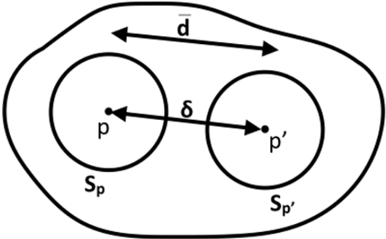
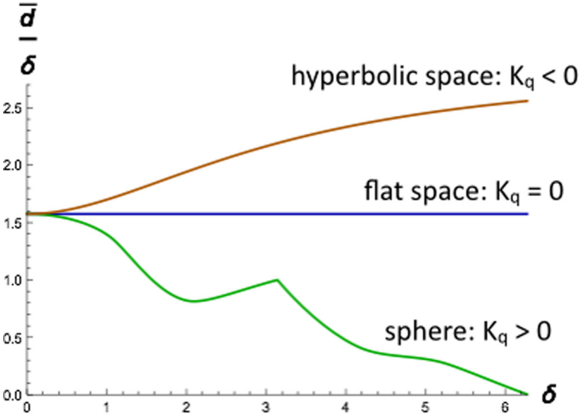
“The key idea, inspired by a classical characterization of curvature on smooth D-dimensional Riemannian spaces and later generalized to general metric spaces [102], is to compare the distance d̄ of two (D−1)-spheres with the distance δ between their centres (see Fig.”
BackgroundThe Spectral Dimension of the Universe is Scale Dependent
Ambjørn, J., Jurkiewicz, J., & Loll, R. (2005) · Physical Review Letters · doi:10.1103/physrevlett.95.171301 · Cited by 518
Self-citationEmergence of a 4D World from Causal Quantum Gravity
Ambjørn, J., Jurkiewicz, J., & Loll, R. (2004) · Physical Review Letters · doi:10.1103/physrevlett.93.131301 · Cited by 447
Self-citation
Research works printed but not linked: 8
- 20. Ellis G, Murugan J and Weltman A (ed) 2012 Foundations of Space and Time (Cambridge: Cambridge University Press)
- 22. Reuter M and Saueressig F 2019 Quantum Gravity and the Functional Renormalization Group (Cambridge: Cambridge University Press)
- 28. David F 1995 Simplicial quantum gravity and random lattices Gravitation and Quantizations. Proc. Les Houches Summer School 1992 ed J Zinn-Justin and B Julia (Amsterdam: Elsevier)
- 63. Jordan S 2013 Globally and locally causal dynamical triangulations PhD Thesis Radboud University Nijmegen
- 82. Class. Quantum Grav. 37 (2020) 013002 Topical Review
- 83. Gizbert-Studnicki J 2014 The effective action in four-dimensional CDT PhD Thesis Jagiellonian University Krakow
- 105. Görlich A 2010 Causal dynamical triangulations in four dimensions PhD Thesis Jagiellonian University Krakow
- 113. Class. Quantum Grav. 37 (2020) 013002 Topical Review
Cited by
Items 301–400 of 431
The Functional Renormalization Group in Quantum Gravity
Saueressig, F. (2024) · Springer eBooks · doi:10.1007/978-981-99-7681-2_16 · Cited by 6
Singularity-free classical theory of gravity
Das, S., Fridman, M., & Sur, S. (2025) · Physical review. D/Physical review. D. · doi:10.1103/physrevd.111.064047 · Cited by 1
Eddington-inspired Born-Infeld gravity: Constraints from the generalized parton distributions (GPDs)
Goharipour, M., Moradi, A., & Azizi, K. (2025) · Physics Letters B · doi:10.1016/j.physletb.2025.139777 · Cited by 2
Anomaly equation of the large U(1) chiral symmetry
Takeuchi, S. (2025) · Physics Letters B · doi:10.1016/j.physletb.2025.140091 · Cited by 1
“In order to overcome this, extended gravitational theories have been proposed, such as causal dynamical triangulation [1, 2], loop quantum gravity [3, 4], and superstring theory [5–7].”
Spontaneous symmetry breaking on graphs and lattices
Evnin, O. (2026) · Journal of Physics Complexity · doi:10.1088/2632-072x/ae58e3 · Cited by 1
“This most commonly involves simplicial complexes [23], but more general networks have also been considered [34–36].”
Optimizing Weighted Hodge Laplacian Flows on Simplicial Complexes
de Badyn, M. H., & Summers, T. H. (2025) · IEEE Conference on Decision and Control (CDC) · doi:10.1109/cdc57313.2025.11312795 · Cited by 1
Complementary Continuous-Discrete Time, Chronon Layering and Temporal Folding
Abishev, M., & Berkimbayev, D. (2026) · Symmetry · doi:10.3390/sym18020252 · Cited by 1
Probing modified gravitational-wave dispersion with bursts from eccentric black-hole binaries
Loutrel, N., Bailey, A. C., & Gerosa, D. (2026) · Classical and Quantum Gravity · doi:10.1088/1361-6382/ae59e4 · Cited by 1
Shushi, T. (2026) · Europhysics Letters (EPL) · doi:10.1209/0295-5075/ae5c34 · Cited by 1
Moreira, T. H., & Céleri, L. C. (2026) · Classical and Quantum Gravity · doi:10.1088/1361-6382/ae76b4 · Cited by 4
A pathway to non-perturbative quantum affine gravity
Silva, A. (2026) · Classical and Quantum Gravity · doi:10.1088/1361-6382/ae7ada · Cited by 1
“The lattice is introduced purely as an ultraviolet regulator: it explicitly breaks diffeomorphism invariance and is not dynamical, in contrast to CDTs [60, 61].”
Accelerated Expansion of the Universe as a Quantum Gravity Phenomenon
Novák, J., & Trivedi, O. (2026) · Physics · doi:10.3390/physics8030055 · Cited by 1
Discrete linear canonical evolution
Káninský, J. (2021) · Journal of Mathematical Physics · doi:10.1063/5.0038814 · Cited by 1
Häuser, J., & Dröscher, W. (2021) · Zeitschrift für Naturforschung A · doi:10.1515/zna-2021-0147 · Cited by 1
Coupling Yang--Mills with Causal Dynamical Triangulations
Clemente, G., Candido, A., D’Elia, M., & Rottoli, F. (2022) · International Symposium on Lattice Field Theory (LATTICE) · doi:10.22323/1.396.0254 · Cited by 1
TGFT condensate cosmology as an example of spacetime emergence in quantum gravity
Oriti, D. (2022) · Routledge eBooks · doi:10.4324/9781003219019-13 · Cited by 2
Musser, G. S. (2022) · SpringerBriefs in physics · doi:10.1007/978-3-031-09895-6_3 · Cited by 1
CDT and Hořava-Lifshitz QG in Two Dimensions
Sato, Y. (2024) · Springer eBooks · doi:10.1007/978-981-19-3079-9_88-2 · Cited by 1
Light ray fluctuation and lattice refinement of simplicial quantum gravity
Jia, D. (2023) · Classical and Quantum Gravity · doi:10.1088/1361-6382/acd97e · Cited by 2
“In particular, while theories such as Lorentzian simplicial quantum gravity [1], (locally) causal dynamical triangulation [2, 3], and spinfoam models [4, 5] may appear promising, they face the common outstanding task of taking the lattice refinement limit [6, 7, 8].”
A cosine rule-based discrete sectional curvature for graphs
Plessis, J. F. D., & Arsiwalla, X. D. (2023) · Journal of Complex Networks · doi:10.1093/comnet/cnad022 · Cited by 1
“This will be useful for investigating discrete models of gravity such as causal dynamical triangulation [25] and constructions of pregeometric spaces in the Wolfram model [2, 4, 5].”
Quadratic gravity potentials in de Sitter spacetime from Feynman diagrams
Ferrero, R., & Ripken, C. (2023) · Journal of High Energy Physics · doi:10.1007/jhep08(2023)199 · Cited by 1
“Of these approaches, string theory [9, 10], loop quantum gravity [11, 12], and asymptotically safe quantum gravity (see for instance [13–19] for its continuum and [20, 21] for its discrete implementation) are notable examples.”
BackgroundCDT and Hořava-Lifshitz QG in Two Dimensions
Sato, Y. (2024) · Springer eBooks · doi:10.1007/978-981-99-7681-2_88 · Cited by 1
Lessons from the Mathematics of Two-Dimensional Euclidean Quantum Gravity
Budd, T. (2024) · Springer eBooks · doi:10.1007/978-981-99-7681-2_85 · Cited by 1
Late Time Acceleration of Our Universe Caused by the Absorption of Baby Universes
Ambjørn, J., & Watabiki, Y. (2025) · Springer eBooks · doi:10.1007/978-3-031-91266-5_1 · Cited by 1
Models of Discrete Linear Evolution for Quantum SystemsPreprint
Káninský, J. (2020) · arXiv (Cornell University) · doi:10.48550/arxiv.2011.08715 · Cited by 1
“The present work is motivated in particular by lattice spacetime models based on Regge calculus [9], which have a rich history of serving to numerous discrete approaches to quantum gravity and have given rise to some well established theories like Causal Dynamical Triangulations [6, 10, 11, 12] and a few others [13].”
BackgroundMethodCoupling Yang-Mills with Causal Dynamical TriangulationsPreprint
Candido, A., Clemente, G., D’Elia, M., & Rottoli, F. (2021) · arXiv (Cornell University) · doi:10.48550/arxiv.2112.03157 · Cited by 2
Semiclassical and Continuum Limits of Four-Dimensional CDTPreprint
Gizbert-Studnicki, J. (2023) · arXiv (Cornell University) · doi:10.48550/arxiv.2301.06068 · Cited by 1
“2 For more details about the CDT formulation see [3] and review articles [4, 5, 6].”
BackgroundKarazoupis, M. (2025) · SSRN Electronic Journal · doi:10.2139/ssrn.5176314 · Cited by 1
Karazoupis, M. (2025) · Preprints.org · doi:10.20944/preprints202504.1956.v1 · Cited by 1
Karazoupis, M. (2025) · SSRN Electronic Journal · doi:10.2139/ssrn.5212532 · Cited by 1
Karazoupis, M. (2025) · SSRN Electronic Journal · doi:10.2139/ssrn.5212524 · Cited by 1
Causality as a guiding principle for physics beyond General Relativity
García-Moreno, G. (2025) · Institutional Repository of the University of Granada (University of Granada) · doi:10.48550/arxiv.2510.18419 · Cited by 1
Abranches, J., Castro, A., & Toriumi, R. (2025) · arXiv (Cornell University) · doi:10.48550/arxiv.2512.16583 · Cited by 1
Investigations on Lorentzian Spin-foams and Semiclassical Space-times
Simão, J. D. (2024) · arXiv (Cornell University) · doi:10.22032/dbt.61817 · Cited by 2
Emergent spacetime properties from entanglement
Colafrancheschi, E. (2022) · Nottingham ePrints (University of Nottingham) · Cited by 4
A Graph-Theoretic Framework for RepresentingSpacetime as Temporal Layers of Spatial GraphsPreprint
jannatipour, P. J. (2025) · SSRN Electronic Journal · doi:10.2139/ssrn.5891994 · Cited by 2
The perturbative Ricci flow in gravityPreprint
Harlander, R. V., Kluth, Y., Kohnen, J. T., & Werthenbach, H. (2026) · arXiv (Cornell University) · doi:10.48550/arxiv.2604.18678 · Cited by 1
Functional Renormalization for Random Matrix Theory: The relational background field methodPreprint
Lahoche, V., & Samary, D. O. (2026) · arXiv (Cornell University) · doi:10.48550/arxiv.2609.21031 · Cited by 1
Simplicial gravity with coordinates
D’Adda, A. (2021) · Classical and Quantum Gravity · doi:10.1088/1361-6382/abf66d
Structural and observational aspects of asymptotically safe quantum gravity
Ripken, A. C. (2020) · Radboud Repository (Radboud University)
Eichhorn, A., Percacci, R., & Saueressig, F. (2020) · Universe · doi:10.3390/universe6120235
“Moreover, renormalization group ideas related to those that Martin Reuter pioneered in the context of asymptotically safe gravity are now also used to explore the properties of spacetime in other approaches to quantum gravity, including loop quantum gravity [20], Causal Dynamical Triangulations [21,22], tensor models…”
Discrete Black HolesPreprint
Káninský, J. (2020) · arXiv (Cornell University) · doi:10.48550/arxiv.2012.11264
“They are central to a handful of significant non-perturbative path-integral approaches like causal sets [15, 26], quantum Regge calculus [27, 28] or causal dynamical triangulations [29] just to name a few.”
BackgroundAn information-theoretic view on spacetime
Saueressig, F., & Khosravi, A.-P. (2021) · Modern Physics Letters A · doi:10.1142/s021773232150067x · Cited by 1
Concluding Remarks and Some Alternative Perspectives
Hebecker, A. (2021) · Lecture notes in physics · doi:10.1007/978-3-030-65151-0_8
Nonlocal cosmological models and tests of modified gravity with gravitational waves
Belgacem, E. (2020) · Archive ouverte UNIGE (University of Geneva) · doi:10.13097/archive-ouverte/unige:149856
Beyond Quantum MechanicsPreprint
Powers, S., & Stojković, D. (2021) · arXiv (Cornell University)
(2021) · SciPost Physics Core · doi:10.21468/scipost.report.3085
(2021) · SciPost Physics Core · doi:10.21468/scipost.report.3216
Kotecha, I. (2022) · Springer theses · doi:10.1007/978-3-030-90969-7_4
Kotecha, I. (2022) · Springer theses · doi:10.1007/978-3-030-90969-7_3
Quantum gravity phenomenology at the dawn of the multi-messenger era -- A reviewPreprint
Wallet, J.-C., Addazi, A., Alvarez-Muniz, J., Batista, R. A., Amelino-Camelia, G., Antonelli, V., Arzano, M., Asorey, M., Atteia, J. L., Bahamonde, S., et al. (2021) · HAL · Cited by 8
(2021) · SciPost Physics Core · doi:10.21468/scipost.report.3327
(2021) · SciPost Physics Core · doi:10.21468/scipost.report.2954
(2021) · SciPost Physics Core · doi:10.21468/scipost.report.2953
(2022) · SciPost Physics · doi:10.21468/scipost.report.5053
Report on scipost_202205_00023v1
(2022) · SciPost Physics · doi:10.21468/scipost.report.5424
Report on scipost_202205_00023v1
(2022) · SciPost Physics · doi:10.21468/scipost.report.5560
(2022) · SciPost Physics · doi:10.21468/scipost.report.4851
Shalyt-Margolin, A. (2023) · OSF Preprints (OSF Preprints) · doi:10.31219/osf.io/x6sva
The tensor of the exact circle: reconstructing geometry
Obster, D. (2023) · Physica Scripta · doi:10.1088/1402-4896/ad0c35
“Many approaches have been tried to solve these issues [9], including reformulating renormalisation using the exact renormalisation group [10, 11, 12], reformulating gravity in terms of Ashtekar variables [13, 14], and discrete approaches [15, 16, 17, 18].”
MethodWalker, M. L. (2023) · Symmetry · doi:10.3390/sym16010004
Silvervalle, S. (2024) · Springer theses · doi:10.1007/978-3-031-48994-5_1
Withdrawn: Quantum Dynamics under Gravitational Potential; Insights from Gravitational-RedshiftPreprint
Precious, A. I. (2024) · Preprints.org · doi:10.20944/preprints202404.0393.v2
Withdrawn: Quantum Dynamics under Gravitational Potential; Insights from Gravitational-RedshiftPreprint
Precious, A. I. (2024) · Preprints.org · doi:10.20944/preprints202404.0393.v1
Withdrawn: Quantum Dynamics under Gravitational Potential; Insights from Gravitational-RedshiftPreprint
Precious, A. I. (2024) · Preprints.org · doi:10.20944/preprints202404.0393.v4
Time delay in κ-anti-de Sitter spacetime
Lobo, I. P. (2024) · Physics Letters B · doi:10.1016/j.physletb.2024.138864
“…or the quantum nature of the gravitational interaction, such as canonical quantum gravity [25], string theory [30, 31], loop quantum gravity [13], causal dynamical triangulation [27], and asymptotic safety [18], no experimental verification that validates any of these approaches has been found yet.”
BackgroundSchmidt, H. C. (2024) · Preprints.org · doi:10.20944/preprints202409.0294.v1
Das, B., Barman, H., & Rahaman, A. (2024) · Physics of the Dark Universe · doi:10.1016/j.dark.2024.101661
Frank Saueressig, B. (2024) · Elsevier eBooks · doi:10.1016/b978-0-323-95703-8.00113-0
Categorical quantum volume operator
Hahn, A., Murk, S., Singh, S., & Brennen, G. K. (2024) · Physical review. D/Physical review. D. · doi:10.1103/physrevd.110.086013 · Cited by 1
“…theory of quantum gravity that successfully reconciles general relativity and quantum field theory, background-independent theories such as loop quantum gravity (LQG) [1–3] and causal dynamical triangulations [4, 5] are widely regarded as the main contenders to string theory/M-theory.”
BackgroundScalar Fields in Four-Dimensional CDT
Görlich, A. (2024) · Springer eBooks · doi:10.1007/978-981-99-7681-2_90
Semiclassical and Continuum Limits of Four-Dimensional CDT
Gizbert-Studnicki, J. (2024) · Springer eBooks · doi:10.1007/978-981-99-7681-2_95
Liashkov, M. (2025) · OSF Preprints (OSF Preprints) · doi:10.31219/osf.io/waf5m_v1
Kempf, A. (2025) · Journal of Physics Conference Series · doi:10.1088/1742-6596/3017/1/012003
Bidirectional Time, Scalar Bridges, and Superluminal Dark SectorsPreprint
Shoara, R. (2025) · SSRN Electronic Journal · doi:10.2139/ssrn.5381742
(2025) · SciPost Physics Lecture Notes · doi:10.21468/scipost.report.11055
(2025) · SciPost Physics Community Reports · doi:10.21468/scipost.report.11449
Renormalization Group-Like Flows in Randomly Connected Tensor Networks
Sasakura, N. (2025) · Progress of Theoretical and Experimental Physics · doi:10.1093/ptep/ptaf116
“In fact there are various approaches to quantum gravity with different microscopic discrete structures, such as Regge calculus [3], loop quantum gravity [4], causal sets [5], dynamical triangulations [6], matrix model [7], tensor model [8, 9, 10, 11], quantum graphity [12], and so on.”
Planckian Discreteness and the Resolution of the BH Information Puzzle
Pérez, A., & Viollet, S. (2025) · Springer Series in Astrophysics and Cosmology · doi:10.1007/978-981-96-6170-1_14 · Cited by 1
Emergent Lorentzian geometries from spin-foams and group field theories
Jercher, A. F. (2025) · arXiv (Cornell University) · doi:10.22032/dbt.66266
Machine learning in phase transition analysis of lattice quantum gravity
Ambjørn, J., Drogosz, Z., Gizbert-Studnicki, J., Görlich, A., Németh, D., & Reitz, M. (2026) · Journal of High Energy Physics · doi:10.1007/jhep07(2026)150
Observer, Collapse of events and parallel worlds in Quantum Gravity
Simchi, H. (2019) · SCIREA Journal of Physics · doi:10.54647/physics140698
Combinatorial Quantum Gravity: Q-it From Bit?
Trugenberger, C. A. (2025) · Springer eBooks · doi:10.1007/978-3-031-91266-5_21
A Unified Theory for Mass Generation from Fractal Spacetime GeometryPreprint
Xue, J. (2025) · doi:10.14293/pr2199.002273.v1
Curvature of an arbitrary surface for discrete gravity and for $$d=2$$ pure simplicial complexes
Chamseddine, A. H., Malaeb, O., & Najem, S. (2025) · The European Physical Journal C · doi:10.1140/epjc/s10052-025-15038-4
“These include causal set theory, where spacetime is modeled as a locally finite partially ordered set [30,31], and causal dynamical triangulations (CDT), a path integral approach where spacetime is built from a collection of sim-plices with causal constraints [32,33].”
Perturbed quantum gravity bounces: Approaching inhomogeneity in group field theory
Mickel, L. (2024) · White Rose eTheses Online (University of Leeds, The University of Sheffield, University of York)
Khosravikarchi, A. (2023) · Radboud Repository (Radboud University)
Daas, J. L. Q. (2025) · Radboud Repository (Radboud University)
The renormalization group and quantum gravity
Mitchell, A. V. J. (2023) · ePrints Soton (University of Southampton)
Effects and phenomenology of cut-off physics on the primordial universe
Barca, G. (2024) · IRIS Research product catalog (Sapienza University of Rome)
An Extension of Heron’s Formula to Tetrahedra, and the Projective Nature of Its Zeros
Havel, T. F. (2023) · PhilPapers (PhilPapers Foundation)
Zooming in on the Universe: In Search of Quantum SpacetimePreprint
Brunekreef, J. (2023) · arXiv (Cornell University) · doi:10.13140/rg.2.2.25486.13124 · Cited by 1
Application of Finite Element Method to spectral observables of Causal Dynamical Triangulations
Caceffo, F. (2020) · Electronic Theses and Dissertations Repository (University of Pisa)
On the emergence of physics beyond the Standard Model from right-handed neutrinos
Nagen, A. (2025) · Nottingham ePrints (University of Nottingham)
Discrete gravitational diagram technique and corrections to the Newtonian potentialPreprint
Khatsymovsky, V. M. (2026) · arXiv (Cornell University) · doi:10.48550/arxiv.2601.03228
Metadata
- Authors
- Loll, R.
- Affiliations
- Radboud University Nijmegen (NL)
- Corresponding author
- Loll, R
- ORCID
- Loll, R
- Venue
- Classical and Quantum Gravity
- Publisher
- IOP Publishing
- Published
- 2019-12-06
- Volume
- 37
- Issue
- 1
- Pages
- 013002
- ISSN
- 0264-9381 (ISSN-L)
- 1361-6382
- OpenAlex
- W2988499113
- Cited by
- 359
- References
- 103
- Citations by year
- 2026: 26 · 2025: 52 · 2024: 58 · 2023: 62 · 2022: 51 · 2021: 67 · 2020: 41 · 2019: 2
- FWCI
- 18.63
- Type
- journal article
- Language
- en
- Open access
- hybrid
- doi.org
- Licence
- cc-by
- publishingsupport.iopscience.iop.org/iop-standard/v1 (vor)
- iopscience.iop.org/info/page/text-and-data-mining (tdm)
- Locations
- Classical and Quantum Gravity (publishedVersion, cc-by)
- arXiv (Cornell University) (submittedVersion)
- Radboud Repository (Radboud University) (submittedVersion)
- arXiv (Cornell University)
- Funders
- Government of Canada
- Institut Périmètre de physique théorique
- Topics
- Physical Sciences › Physics and Astronomy › Nuclear and High Energy Physics › Noncommutative and Quantum Gravity Theories
- Physical Sciences › Physics and Astronomy › Astronomy and Astrophysics › Relativity and Gravitational Theory
- Physical Sciences › Physics and Astronomy › Nuclear and High Energy Physics › Black Holes and Theoretical Physics
- Keywords
- causal dynamical triangulations, quantum gravity, lattice gravity, non-perturbative quantum gravity, Planck scale, diffeomorphism invariance, phase structure, causality, global topology, renormalization group, quantum observables, four-dimensional spacetime
About these checks
Registry, retraction, Cites and statistics results are computed, not judged, with one exception: a printed reference that no index lists is read once by a model before it counts as a citation error. Claims are extracted by a model and kept only when their quote appears verbatim in the text; each cited source is then checked, with a model’s help, for whether it says what the claim relies on. Those verdicts can be wrong — read the claim’s quote and the cited source before relying on one.
Statistics and arithmetic are recomputed, not judged.
Confidence bands are shown only for fields calibrated on our annotated test set. None is calibrated yet, so no band is shown.
What counts as a claim ›How we measure confidence ›How we check this ›
Are you an author, or do you see a problem with this page? Request a review
Data sources
Bibliographic data: Semantic Scholar, OpenAlex, Crossref.
Contains information from the Semantic Scholar Academic Graph Datasets, made available under the ODC Attribution License (ODC-BY 1.0).
Semantic Scholar’s data is described in: Kinney, R., et al. (2023). The Semantic Scholar Open Data Platform. arXiv:2301.10140.
