

Attributing human mortality during extreme heat waves to anthropogenic climate change
Open accessThe DOI matches its Crossref record; 35 of the 35 references it cites were found in a registry or an index.
Abstract
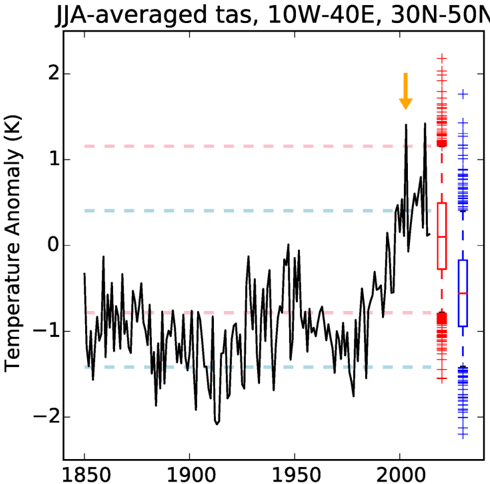
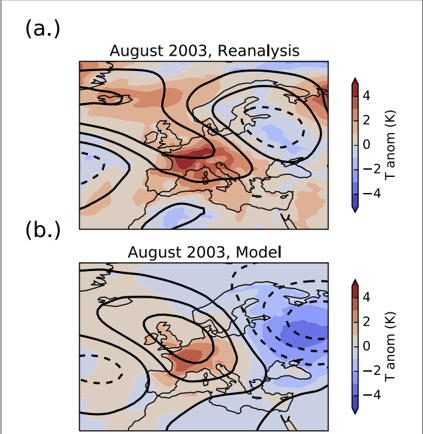
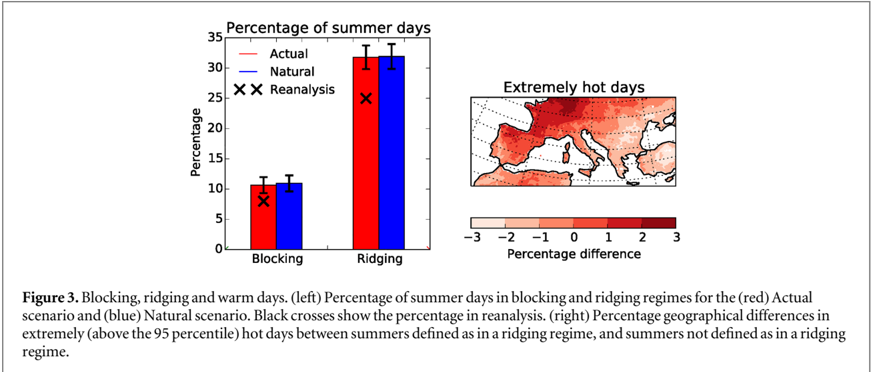
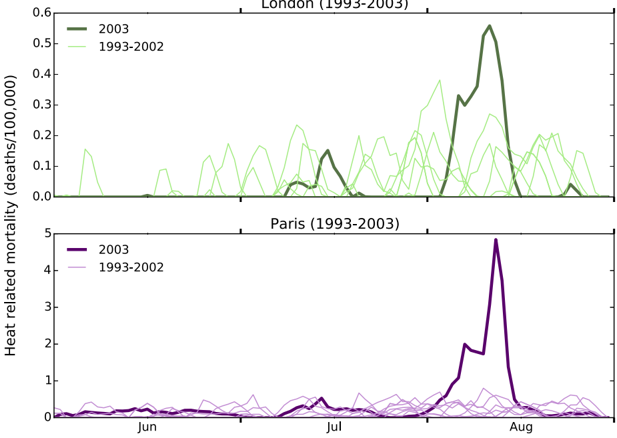
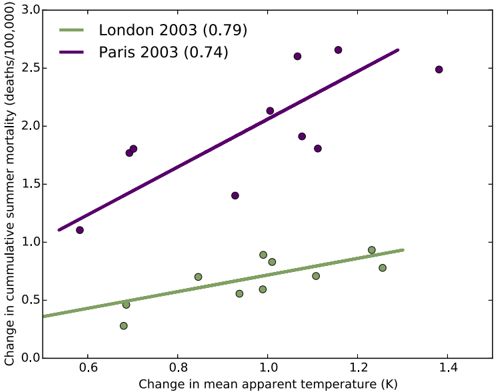
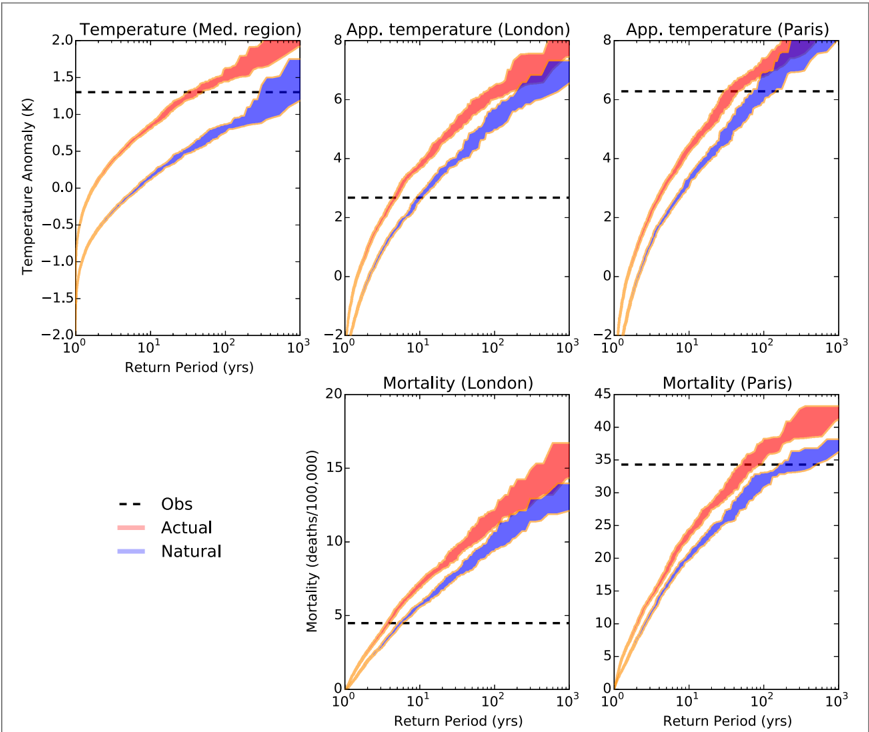
It has been argued that climate change is the biggest global health threat of the 21st century. The extreme high temperatures of the summer of 2003 were associated with up to seventy thousand excess deaths across Europe. Previous studies have attributed the meteorological event to the human influence on climate, or examined the role of heat waves on human health. Here, for the first time, we explicitly quantify the role of human activity on climate and heat-related mortality in an event attribution framework, analysing both the Europe-wide temperature response in 2003, and localised responses over London and Paris. Using publicly-donated computing, we perform many thousands of climate simulations of a high-resolution regional climate model. This allows generation of a comprehensive statistical description of the 2003 event and the role of human influence within it, using the results as input to a health impact assessment model of human mortality. We find large-scale dynamical modes of atmospheric variability remain largely unchanged under anthropogenic climate change, and hence the direct thermodynamical response is mainly responsible for the increased mortality. In summer 2003, anthropogenic climate change increased the risk of heat-related mortality in Central Paris by ∼70% and by ∼20% in London, which experienced lower extreme heat. Out of the estimated ∼315 and ∼735 summer deaths attributed to the heatwave event in Greater London and Central Paris, respectively, 64 (±3) deaths were attributable to anthropogenic climate change in London, and 506 (±51) in Paris. Such an ability to robustly attribute specific damages to anthropogenic drivers of increased extreme heat can inform societal responses to, and responsibilities for, climate change.
Overview
The claims and statistics of this paper haven’t been checked yet.
Free: it reads the open-access text and checks the first 5 claims that cite a source we can check. Create a free account to check every claim.
Integrity signals
Registry
Cites
Statistics
Figures



Verification
Claims the paper makes
The claims and statistics of this paper haven’t been checked yet.
Free: it reads the open-access text and checks the first 5 claims that cite a source we can check. Create a free account to check every claim.
Claims other papers make about this one
Each is checked against this paper’s own text: does it say what the citing paper says it does?
The cited source says what the claim attributes to it.
In the citing paper
“These studies are often conducted in the climate science disciplines and rarely take the additional step of estimating associated human health impacts9–11.”
From The burden of heat-related mortality attributable to recent human-induced climate change (2021) · cites this paper as [10]
Self-check
Percentages, sums and reported differences re-computed from the paper’s own numbers.
The self-check needs the paper’s full text.
Citations
Cites
The ERA‐Interim reanalysis: configuration and performance of the data assimilation system
Dee, D. P., Uppala, S. M., Simmons, A. J., Berrisford, P., Poli, P., Kobayashi, S., Andrae, U., Balmaseda, M. A., Balsamo, G., Bauer, P., et al. (2011) · Quarterly Journal of the Royal Meteorological Society · doi:10.1002/qj.828 · Cited by 24,480
Managing the health effects of climate change
Costello, A., Abbas, M., Allen, A., Ball, S., Bell, S., Bellamy, R., Friel, S., Groce, N., Johnson, A., Kett, M., et al. (2009) · The Lancet · doi:10.1016/s0140-6736(09)60935-1 · Cited by 3,102
Lanczos Filtering in One and Two Dimensions
Duchon, C. E. (1979) · Journal of Applied Meteorology · doi:10.1175/1520-0450(1979)018<1016:lfioat>2.0.co;2 · Cited by 2,398
Death toll exceeded 70,000 in Europe during the summer of 2003
Robine, J.-M., Cheung, S. L. K., Le Roy, S., Van Oyen, H., Griffiths, C., Michel, J.-P., & Herrmann, F. R. (2007) · Comptes Rendus. Biologies · doi:10.1016/j.crvi.2007.12.001 · Cited by 2,127
Health and climate change: policy responses to protect public health
Watts, N., Adger, W. N., Agnolucci, P., Blackstock, J., Byass, P., Cai, W., Chaytor, S., Colbourn, T., Collins, M., Cooper, A., et al. (2015) · The Lancet · doi:10.1016/s0140-6736(15)60854-6 · Cited by 2,055
Human contribution to the European heatwave of 2003
Stott, P. A., Stone, D. A., & Allen, M. R. (2004) · Nature · doi:10.1038/nature03089 · Cited by 1,735
Self-citationAnthropogenic contribution to global occurrence of heavy-precipitation and high-temperature extremes
Fischer, E. M., & Knutti, R. (2015) · Nature Climate Change · doi:10.1038/nclimate2617 · Cited by 1,427
Heat wave: a social autopsy of disaster in Chicago
(2003) · Choice Reviews Online · doi:10.5860/choice.40-4319 · Cited by 1,273
A trend-preserving bias correction – the ISI-MIP approach
Hempel, S., Frieler, K., Warszawski, L., Schewe, J., & Piontek, F. (2013) · Earth System Dynamics · doi:10.5194/esd-4-219-2013 · Cited by 1,238
High ambient temperature and mortality: a review of epidemiologic studies from 2001 to 2008
Basu, R. (2009) · Environmental Health · doi:10.1186/1476-069x-8-40 · Cited by 1,135
Research works printed but not linked: 2
- 10.1175/1520-0450(1979)018<0874:taospi>2.0.co;2 · DOI · Paper page
- Masato G 2016 On the link between Eurasian heatwaves and the upper troposphere ridges and blocking Q. J. R. Meteorol. Soc. in review
Cited by
Items 201–300 of 484
Rapid increase in the risk of heat-related mortalityPreprint
Lüthi, S., Fairless, C., Fischer, E. M., Scovronick, N., Armstrong, B., Coêlho, M. D. S. Z. S., Guo, Y. L., Guo, Y., Honda, Y., Huber, V., et al. (2022) · Research Square · doi:10.21203/rs.3.rs-2190946/v1 · Cited by 19
Lagged Soil Moisture Controls on the Persistence of Drought and Heatwaves in the United States
Tripathy, K. P., Mishra, A. K., Kumar, S. V., & Miralles, D. G. (2025) · Geophysical Research Letters · doi:10.1029/2025gl115811 · Cited by 19
Resilience: conceptualisations and challenges for effective heatwave public health planning
Nunes, A. R. (2024) · Public Health · doi:10.1016/j.puhe.2024.02.023 · Cited by 18
Impacts of 1.5ºC Global Warming on Natural and Human Systems
Hoegh‐Guldberg, O., Jacob, D., Taylor, M., Bindi, M., Brown, S., Camilloni, I. A., Diédhiou, A., Djalante, R., Ebi, K. L., Engelbrecht, F., et al. (2018) · UWA Profiles and Research Repository (University of Western Australia) · Cited by 40
Ma, R., Xie, M., Yun, W., & Zhu, D. (2020) · ISPRS International Journal of Geo-Information · doi:10.3390/ijgi9050295 · Cited by 19
Puvvula, J., Abadi, A. M., Conlon, K. C., Rennie, J., Herring, S. C., Thie, L., Rudolph, M. J., Owen, R., & Bell, J. E. (2022) · GeoHealth · doi:10.1029/2022gh000636 · Cited by 22
“At the same time, attribution of human health risk to anthropogenic climate change is limited to considering mortality as a health outcome (Mitchell et al., 2016; Vicedo-Cabrera et al., 2021).”
BackgroundGluckman, P. D., Low, F. M., & Hanson, M. A. (2020) · Evolution Medicine and Public Health · doi:10.1093/emph/eoaa042 · Cited by 20
Donnelly, M. C., Stableforth, W., Krag, A. A., & Reuben, A. (2022) · Gastroenterology · doi:10.1053/j.gastro.2022.02.020 · Cited by 17
Harrington, L. J., Frame, D. J., Hawkins, E., & Joshi, M. (2017) · Environmental Research Letters · doi:10.1088/1748-9326/aa95ae · Cited by 20
“…regimes through time (Frame et al 2017): examplesoftheimplicationsassociatedwiththisframe-work include the health impacts of added heat stress (Mitchell et al 2016,Huber et al 2017,Fischer et al 2013, Im et al 2017);economiclossesthroughlabourproduc-tivity decreases in certain regions of the…”
BackgroundMethodUnited States Heat Wave Frequency and Arctic Ocean Marginal Sea Ice Variability
Budikova, D., Ford, T. W., & Ballinger, T. J. (2019) · Journal of Geophysical Research Atmospheres · doi:10.1029/2018jd029365 · Cited by 18
“…recent studies highlight the increasingly important role of atmospheric humidity during heat waves and societal vulnerability to these events (Mitchell et al., 2016; Pal & Eltahir, 2016; Schär, 2016); the nature of heat events is dependent on local soil moisture availability and antecedent…”
BackgroundUrban Heat Islands and Their Associated Impacts on Health
Heaviside, C. (2020) · Oxford University Press eBooks · doi:10.1093/acrefore/9780199389414.013.332 · Cited by 25
“Heatwaves lead to widespread health impacts, for example the heatwave of 2003 was thought to be responsible for around 70,000 deaths across Europe (Robine et al., 2008), and heatwave mortality in cities has been attributed to anthropogenic climate change (D. Mitchell et al., 2016).”
BackgroundSelf-citationAin, J. J. (2025) · Applied Geography · doi:10.1016/j.apgeog.2025.103619 · Cited by 17
Okajima, S., Kosaka, Y., Miyasaka, T., & Ito, R. (2025) · AGU Advances · doi:10.1029/2025av001673 · Cited by 18
Increasing risk of mass human heat mortality if historical weather patterns recur
Callahan, C. W., Trok, J. T., Wilson, A. J., Gould, C. F., Heft‐Neal, S., Diffenbaugh, N. S., & Burke, M. (2025) · Nature Climate Change · doi:10.1038/s41558-025-02480-1 · Cited by 26
“…in Europe have been limited to linear scaling to capture multiple events 37 or computationally intensive custom simulations for an individual event 42 , our approach allows us to leverage an ensemble of CMIP6 simulations to predict temperature profiles resulting from different historical…”
Synergistic effects of imidacloprid and high temperature on honey bee colonies
Kim, S., Cho, S., & Lee, S. H. (2022) · Apidologie · doi:10.1007/s13592-022-00980-z · Cited by 17
Evaluating the association between heatwave vulnerability index and related deaths in Australia
Amoatey, P., Trancoso, R., Xu, Z., Darssan, D., Osborne, N. J., & Phung, D. T. (2025) · Environmental Impact Assessment Review · doi:10.1016/j.eiar.2025.107812 · Cited by 17
“Risk of death from heatwave is increasing globally because of climate change (Chen et al., 2022; Lüthi et al., 2023; Mitchell et al., 2016; Vicedo-Cabrera et al., 2021).”
Granger causal inference for climate change attribution
Risser, M. D., Ombadi, M., & Wehner, M. F. (2025) · Environmental Research Climate · doi:10.1088/2752-5295/add046 · Cited by 23
“…individual weather and climate events (Pall et al 2017, Risser and Wehner 2017, Patricola and Wehner 2018, Van Oldenborgh et al 2019), and even the impacts of individual extreme events (Mitchell et al 2016, Kirchmeier-Young et al 2017, Frame et al 2020, Wehner and Sampson 2021, Smiley et al 2022).”
Nogueira, M., & Soares, P. M. M. (2019) · Environmental Research Letters · doi:10.1088/1748-9326/ab465f · Cited by 17
Rennie, J., Bell, J. E., Kunkel, K. E., Herring, S. C., Cullen, H. M., & Abadi, A. M. (2019) · Journal of Applied Meteorology and Climatology · doi:10.1175/jamc-d-19-0076.1 · Cited by 17
The Record-Breaking High Temperature over Europe in June of 2019
Zhao, W., Zhou, N., & Chen, S. (2020) · Atmosphere · doi:10.3390/atmos11050524 · Cited by 17
Pediatric Critical Care and the Climate Emergency: Our Responsibilities and a Call for Change
Wooldridge, G., & Murthy, S. (2020) · Frontiers in Pediatrics · doi:10.3389/fped.2020.00472 · Cited by 17
“Indeed, a large survey of American Thoracic Society members indicated many had already observed health impacts of climate change among their patients (50), and other reports reveal its current adverse effect on health care and health care systems (8, 9, 54, 72).”
BackgroundBrown, P. T. (2023) · Climatic Change · doi:10.1007/s10584-023-03591-4 · Cited by 17
Spatiotemporal Distribution of Heatwave Hazards in the Chinese Mainland for the Period 1990–2019
Wu, W., Liu, Q., Li, H., & Huang, C. (2023) · International Journal of Environmental Research and Public Health · doi:10.3390/ijerph20021532 · Cited by 15
“The 2003 European heatwave caused approximately 70,000 deaths [2,5,6], and at least 5758 heat-related deaths were caused by the 2013 Chinese heatwave [7–9].”
BackgroundClimate change unevenly affects the dependence of multiple climate-related hazards in China
Zong, X., Yin, Y., & Yin, M. (2024) · npj Climate and Atmospheric Science · doi:10.1038/s41612-024-00614-4 · Cited by 15
Population Exposure Projections to Intensified Summer Heat
Park, C., & Jeong, S. (2022) · Earth s Future · doi:10.1029/2021ef002602 · Cited by 16
Ma, F., Wang, J., He, Y., Luo, Y., Zhang, R., Tian, D., Zhou, Q., & Niu, S. (2023) · The Science of The Total Environment · doi:10.1016/j.scitotenv.2023.164152 · Cited by 15
“These ECEs are likely to impose increased stress on terrestrial ecosystems world-wide and signi fi cantly disrupt ecosystem functioning (Thomas et al., 2004; Hoover et al., 2014).”
BackgroundInfluentialSingh, H. V., Joshi, N., & Suryavanshi, S. (2023) · Environmental Monitoring and Assessment · doi:10.1007/s10661-023-11663-2 · Cited by 16
“These temperature extremes have jeopardized not only human health (Haines et al., 2006; Mitchell et al., 2016; Orimoloye et al., 2019; Rahman & Zafarullah, 2020; Tong & Ebi, 2019), agricultural production (Chhogyel & Kumar, 2018; Cogato et al.”
BackgroundAssessment of Changes in Heatwave Aspects over Saudi Arabia during the Last Four Decades
Labban, A. H., Morsy, M., Abdeldym, A., Basset, H. A., & Al-Mutairi, M. (2023) · Atmosphere · doi:10.3390/atmos14111667 · Cited by 14
“The increase in HWs and their aspects have global impacts on human mortality [43–45] and negative influences on the different social and economic sectors [33,46,47].”
BackgroundRole of adaptation measures in addressing heatwave exposure in China
Han, Q., Chao, Q., Sun, S., & Shi, P. (2024) · Advances in Climate Change Research · doi:10.1016/j.accre.2024.02.001 · Cited by 16
Climate, weather, and child health: quantifying health co-benefits
Dasgupta, S., & ROBINSON, E. J. Z. (2024) · Environmental Research Letters · doi:10.1088/1748-9326/ad5d09 · Cited by 16
“…with literature that finds, for example, that drought conditions are associated with both stunting and wasting (Lieber et al 2022), and that extreme heat is linked to a broad range of negative health outcomes (Mitchell et al 2016, Mitchell 2021, Philip et al 2021, Dasgupta and Robinson 2023).”
Expert judgement reveals current and emerging UK climate-mortality burden
Mitchell, D., Lo, Y. T. E., Ball, E., Godwin, J. L., Andrews, O., Barciela, R. M., Berrang‐Ford, L., Napoli, C. D., Ebi, K. L., Fučkar, N. S., et al. (2024) · The Lancet Planetary Health · doi:10.1016/s2542-5196(24)00175-x · Cited by 18
“33 Focusing on the UK, full attribution studies only exist for heat-health, 34,35 but they show positive detection has already occurred, in line with our assessment.”
Self-citationKhan, M. O., Keesstra, S. D., Słowik-Opoka, E., Klamerus‐Iwan, A., & Liaqat, W. (2025) · Water · doi:10.3390/w17030322 · Cited by 17
Donnelly, M. C., Stableforth, W., Krag, A. A., & Reuben, A. (2022) · Journal of Hepatology · doi:10.1016/j.jhep.2022.02.012 · Cited by 15
Climate change is here: What will the profession of pharmacy do about it?
Beechinor, R. J., Overberg, A., Brown, C. S., Cummins, S., & Mordino, J. (2022) · American Journal of Health-System Pharmacy · doi:10.1093/ajhp/zxac124 · Cited by 15
Science Policy to Advance a Climate Change and Health Research Agenda in the United States
Madrigano, J., Shih, R. A., Izenberg, M., Fischbach, J. R., & Preston, B. L. (2021) · International Journal of Environmental Research and Public Health · doi:10.3390/ijerph18157868 · Cited by 15
“Although methods for detection and attribution have been applied in multiple contexts [30], few studies have applied them in the health context [31,32].”
MethodDesigning and describing climate change impact attribution studies: a guide to common approachesPreprint
Carlson, C. J., Mitchell, D., Carleton, T. A., Chersich, M., Gibb, R., Lavelle, T. E., Lukas-Sithole, M., North, M., Lippi, C. A., New, M. G., et al. (2024) · EarthArXiv (California Digital Library) · doi:10.31223/x5cd7m · Cited by 14
Self-citationA comparative analysis of accelerating humid and dry heat stress in India
Sojan, J. M., & Srinivasan, J. (2024) · Environmental Research Communications · doi:10.1088/2515-7620/ad2490 · Cited by 13
Lasky, E., Costello, S., Ndovu, A., Aguilera, R., Weiser, S. D., & Benmarhnia, T. (2024) · The Science of The Total Environment · doi:10.1016/j.scitotenv.2024.175284 · Cited by 13
Integrating effects of overheating on human health into buildings’ life cycle assessment
Monnier, R., Schalbart, P., Roux, C., & Peuportier, B. (2024) · The International Journal of Life Cycle Assessment · doi:10.1007/s11367-024-02353-3 · Cited by 13
“As climate changes, heat waves increase in intensity, frequency, and duration (Tebaldi et al. 2006), significantly affecting human health (Peng et al. 2011; Mitchell et al. 2016).”
Sharston, R., & Singh, M. (2025) · Building Services Engineering Research and Technology · doi:10.1177/01436244251339727 · Cited by 16
Observed Daily Temperature Variability and Extremes over Southeastern USA (1978–2017)
Fall, S., Coulibaly, K. M., Quansah, J. E., Afandi, G. E., & Ankumah, R. (2021) · Climate · doi:10.3390/cli9070110 · Cited by 17
Quantile Trend Regression and Its Application to Central England Temperature
Haupt, H., & Fritsch, M. (2022) · Mathematics · doi:10.3390/math10030413 · Cited by 13
Chen, X. C., Zou, Z., Hao, F., Wang, Y., Mei, C., Zhou, Y., Wang, D., & Yang, X. (2023) · Energy and Buildings · doi:10.1016/j.enbuild.2023.112975 · Cited by 13
Alternatives to air-conditioning: policies, design, technologies, behaviours
Ford, B., Mumovic, D., & Rawal, R. (2022) · Buildings and Cities · doi:10.5334/bc.256 · Cited by 13
Mechanistic origins of temperature scaling in the early embryonic cell cycle
Rombouts, J., Tavella, F., Vandervelde, A., Phong, C., Ferrell, J. E., Yang, Q., & Gelens, L. (2025) · Nature Communications · doi:10.1038/s41467-025-62918-0 · Cited by 14
Introduction to Explaining Extreme Events of 2015 from a Climate Perspective
Herring, S. C., Hoell, A., Hoerling, M. P., Kossin, J. P., Schreck, C. J., & Stott, P. A. (2016) · Bulletin of the American Meteorological Society · doi:10.1175/bams-d-16-0313.1 · Cited by 24
“…Otto put it well in a recent paper where she wrote, “The event attribution community has come a long way towards applying different methodologies and combining meteorological variables to indices of relevance to people, making impact attribution the challenge for the coming years” (Otto 2016).”
MethodProjected changes in heat wave characteristics over India
Neethu, C. S., & Ramesh, K. V. (2023) · Climatic Change · doi:10.1007/s10584-023-03618-w · Cited by 14
“Heatwavesareoneofthedeadliestnaturalhazardsinmanygeographical locationslikeAustralia(Coatesetal.2014),Europe(Mitchelletal.2016),theUS(Anderson andBell2011)andIndia(Rayetal.2021).”
BackgroundA review of intervention methods used to reduce flying-fox mortalities in heat stress events
Mo, M., & Roache, M. (2020) · Australian Mammalogy · doi:10.1071/am20038 · Cited by 12
Yu, H., Wu, D., Piao, X., Zhang, T., Yan, Y., Tian, Y., Li, Q., & Cui, X. (2020) · Environmental Research Letters · doi:10.1088/1748-9326/abd132 · Cited by 12
Stojković, M., Mijić, A., Dobson, B., Marjanović, D., & Majkić-Dursun, B. (2024) · Water Resources Management · doi:10.1007/s11269-024-03874-0 · Cited by 11
“The Weather@home framework has been effectively deployed to study extreme weather events (Pall et al. 2011) and their watershed-level impacts, such as flood damage (Schaller et al. 2016) and heat-induced mortality (Mitchell et al. 2016).”
Figliola, A., Canducci, A., Calcagni, L., & Battisti, A. (2024) · Building Research & Information · doi:10.1080/09613218.2024.2349172 · Cited by 11
“Long-term changes in weather patterns and temperatures, known as climate change, are considered one of the most serious threats of the twenty-fi rst century (Mitchell et al., 2016).”
Wang, B., He, Y., Wu, W., & Teng, F. (2025) · Advances in Climate Change Research · doi:10.1016/j.accre.2025.07.001 · Cited by 12
Stuart-Smith, R. F., Vicedo‐Cabrera, A. M., Li, S., Otto, F. E. L., Belesova, K., Haines, A., Harrington, L. J., Hess, J. J., Venkatraman, R., Wetzer, T., et al. (2025) · Climatic Change · doi:10.1007/s10584-025-04011-5 · Cited by 16
“…attribution analyses from assessing climate change influence on meteorological events to their health impacts, including on heat-related mortality (Mitchell et al. 2016; Mitchell 2016 ; Clarke et al. 2021 ; Vicedo-Cabrera et al. 2021) and the spatial extent of vector-borne disease (Gibb et al.…”
Zhao, L. F., Aiyub, K., Ata, F. M., Lam, K. C., & Sun, M. (2025) · Frontiers in Environmental Science · doi:10.3389/fenvs.2025.1590613 · Cited by 12
Characterization and outlook of climatic hazards in an agricultural area of Pakistan
Bhatti, M. T., Anwar, A. A., & Hussain, K. (2023) · Scientific Reports · doi:10.1038/s41598-023-36909-4 · Cited by 16
A process-based life cycle assessment of the climate impact of a Swedish intensive care unit
Hemberg, L., Singh, J., & Bentzer, P. (2025) · Scientific Reports · doi:10.1038/s41598-025-02789-z · Cited by 10
Recent Trends in Extreme Temperature Events Across the Contiguous United States
Ibebuchi, C. C., Lee, C. C., & Sheridan, S. C. (2024) · International Journal of Climatology · doi:10.1002/joc.8693 · Cited by 10
Perkins-Kirkpatrick, S. E., Selvey, L. A., Aglas-Leitner, P., Lansbury, N., Hundessa, S., Stone, D. A., Ebi, K. L., & Osborne, N. J. (2025) · Environmental Research Climate · doi:10.1088/2752-5295/ada8cd · Cited by 14
Can we sustain success in reducing deaths to extreme weather in a hotter world?
Mehrabi, Z., Donner, S. D., Rios, P. A. D. P., Guha‐Sapir, D., Rowhani, P., Kandlikar, M., & Ramankutty, N. (2019) · World Development Perspectives · doi:10.1016/j.wdp.2019.02.018 · Cited by 13
Gómez, I. J., & Martín-Sosa-Rodríguez, S. (2021) · Revista Mediterránea de Comunicación · doi:10.14198/medcom000024 · Cited by 13
Reported U.S. wild game consumption and greenhouse gas emissions savings
Johnson, J. L., Zamzow, B. K., Taylor, N. T., & Moran, M. D. (2020) · Human Dimensions of Wildlife · doi:10.1080/10871209.2020.1799266 · Cited by 10
Quantifying heat-related mortality attributable to human-induced climate changePreprint
Stuart-Smith, R. F., Vicedo‐Cabrera, A. M., Li, S., Otto, F. E. L., Belesova, K., Haines, A., Harrington, L. J., Hess, J. J., Venkatraman, R., Wetzer, T., et al. (2023) · Research Square · doi:10.21203/rs.3.rs-2702337/v1 · Cited by 11
Rong, L., Wu, Y., Wu, Y., Wu, R., & Yang, J. (2025) · Land · doi:10.3390/land14030631 · Cited by 9
de Wit, S. (2020) · Global communications · doi:10.11647/obp.0212.05 · Cited by 11
Jahan, S., Cauchi, J. P., Galdies, C., & Wraith, D. (2022) · Climate Risk Management · doi:10.1016/j.crm.2022.100463 · Cited by 11
Lemus-Canovas, M., Ciuró, E. M., Cearreta-Innocenti, T., Serrano‐Notivoli, R., & Royé, D. (2024) · Urban Climate · doi:10.1016/j.uclim.2024.102019 · Cited by 10
Mandú, T. B., Nascimento, A. L. D. S., Jacondino, W. D., & Gomes, A. C. D. S. (2021) · Biodiversidade Brasileira · doi:10.37002/biobrasil.v11i4.1775 · Cited by 9
Lestari, I., & Dasanto, B. D. (2019) · Agromet · doi:10.29244/j.agromet.33.1.20-29 · Cited by 9
Cao, Z., Yung, W., & Ke, Y. (2025) · eLife · doi:10.7554/elife.101302.3 · Cited by 8
Sharmin, M., Esperón‐Rodríguez, M., Clackson, L., Pfautsch, S., & Power, S. A. (2025) · Atmosphere · doi:10.3390/atmos16080899 · Cited by 9
Callahan, C. W., Trok, J. T., Wilson, A. J., Gould, C. F., Heft‐Neal, S., Burke, M., & Diffenbaugh, N. S. (2025) · Proceedings of the National Academy of Sciences · doi:10.1073/pnas.2503577122 · Cited by 10
Staszel, J., Lupa, M., Adamek, K., Wilkosz, M., Marcinkowska-Ochtyra, A., & Ochtyra, A. (2024) · Remote Sensing · doi:10.3390/rs16050836 · Cited by 8
Spatiotemporal characterization of heatwaves on an urban center using satellite-based estimates
Banjara, P., Bhattarai, S., Pandey, V. P., & Talchabhadel, R. (2024) · Theoretical and Applied Climatology · doi:10.1007/s00704-024-05026-1 · Cited by 8
“They can result from natural climatic patterns (Rahmstorf and Coumou 2011; Trenberth and Fasullo 2012; Perkins 2015) and human-induced climate change (Robinson 2001; Mitchell et al. 2006, 2016; Vogel et al. 2019; Vautard et al. 2020).”
AboulNaga, M. M., Trombadore, A., Mostafa, M., & Abouaiana, A. (2024) · Springer eBooks · doi:10.1007/978-3-031-51220-9_1 · Cited by 10
Harrington, L. J., Lewis, S. C., Perkins-Kirkpatrick, S. E., King, A. D., & Otto, F. E. L. (2018) · Environmental Research Letters · doi:10.1088/1748-9326/aaf2dc · Cited by 8
“…in fact expected to occur much more often in their community than an area average-based severity estimate suggests, the lack of investment in resilience will lead to potentially devastating (and preventable) heat-related impacts from subsequent events (Mitchell et al 2016, Gasparrini et al 2017).”
BackgroundDetermining public perceptions of a proposed national heat protection policy for Australian schools
Hyndman, B., & Zundans‐Fraser, L. (2020) · Health Promotion Journal of Australia · doi:10.1002/hpja.327 · Cited by 8
Improving attribution of extreme heat deaths through interagency cooperation
Henderson, S. B., Lamothe, F., Yao, J., Plante, C., Donaldson, S. G., Stranberg, R., Kaiser, D., & Kosatsky, T. (2022) · Canadian Journal of Public Health · doi:10.17269/s41997-022-00672-2 · Cited by 8
“Third, there is a growing need to quantify the health effects of EHE in the same way as other meteorological events, such as tropical storms, to ensure that analogous emergency responses are developed and resourced (Henderson et al., 2021; Mitchell et al., 2016).”
BackgroundHo, H. C., Wai, K. M., He, M., Chan, T., Deng, C., & Wong, M. S. (2020) · Natural Hazards · doi:10.1007/s11069-020-04003-x · Cited by 8
Quantifying heat-related mortality attributable to human-induced climate changePreprint
Stuart-Smith, R. F., Vicedo‐Cabrera, A. M., Li, S., Otto, F. E. L., Belesova, K., Haines, A., Harrington, L. J., Hess, J., Venkatraman, R., Wetzer, T., et al. (2024) · Research Square · doi:10.21203/rs.3.rs-2702337/v2 · Cited by 10
A nation-wide urban trial network of tree and shrub climate resilience
Esperon-Rodriguez, M., Power, S. A., Tjoelker, M. G., Sharmin, M., & Rymer, P. D. (2025) · Urban forestry & urban greening · doi:10.1016/j.ufug.2025.128720 · Cited by 7
Ali, A. A. B., Mitra, C., Rishal, F. H., & Hossain, R. B. (2026) · Computational Urban Science · doi:10.1007/s43762-026-00249-6 · Cited by 8
Wolf-Jacobs, A., Glock-Grueneich, N., & Uchtmann, N. (2024) · Springer eBooks · doi:10.1007/978-3-031-54790-4_16 · Cited by 10
Forest Mitigates Short-Term Health Risk of Air Pollution: Evidence from China
Liu, S., Qi, J., Xu, J., Yi, Y., Yin, P., & Zhou, M. (2024) · Environmental and Resource Economics · doi:10.1007/s10640-024-00889-4 · Cited by 7
“Climate change contributes to more frequent natural hazards including droughts, floods, forest fires, and heat waves, and is significantly threatening public health globally (Mitchell et al. 2016).”
Bueno, C. D. S., Macharete, R. R., Rodrigues, C. A., Kamia, F. D., Moreira, J., Freitas, C. R., Nascimento, M. A. D. C., & Gadelha, C. A. G. (2025) · Sustainability · doi:10.3390/su17146449 · Cited by 8
Lohani, M., Elsey, J. S., Dutton, S., & Zummo, L. (2025) · Cogent Mental Health · doi:10.1080/28324765.2025.2539201 · Cited by 7
“Greenhouse gas emissions and anthropogenic climate change have reliably influenced health and wellbeing (e.g., Ebi et al., 2017; Mitchell et al., 2016).”
Silveira, R. B., Alves, M. P. A., Barreiro, M., & Bitencourt, D. P. (2019) · Revista Brasileira de Geografia Física · doi:10.26848/rbgf.v12.4.p1259-1276 · Cited by 7
Moler, E. R. V., Kolb, T. E., Brady, A., Palmiero, B. N., Wallace, T. R., Waring, K. M., & Whipple, A. V. (2021) · Plant-Environment Interactions · doi:10.1002/pei3.10055 · Cited by 7
“Additionally, an increased duration and frequency of heat waves may lead to even further warming in the USA and abroad (Mazdiyasni & Aghakouchak, 2015; Mitchell et al., 2016).”
BackgroundClimate-Smart Tillage Practices with Straw Return to Sustain Crop Productivity
Liu, Z., Wang, N., Lü, J., Wang, L., Li, G., & Ning, T. (2022) · Agronomy · doi:10.3390/agronomy12102452 · Cited by 7
Integrating a Disaster Displacement Dimension in Climate Change Attribution
Thalheimer, L., Heinrich, D., Haustein, K., & Singh, R. (2022) · Meteorology · doi:10.3390/meteorology1040029 · Cited by 8
Kalmár, T., Kristóf, E., Hollós, R., Pieczka, I., & Pongrácz, R. (2023) · Theoretical and Applied Climatology · doi:10.1007/s00704-023-04491-4 · Cited by 7
A Framework for a Hazard Taxonomy to Support Risk Assessment of Tangible Outdoor Heritage
Battisti, A., Figliola, A., & Santarelli, M. L. (2024) · Heritage · doi:10.3390/heritage7060140 · Cited by 6
“However, the current climate change (CC) process puts at risk the fragile equilibrium that interlinks natural and human environments in CH. Long-term changes in weather patterns and temperatures, known as CC, are considered one of the most serious threats of the twenty-first century [1].”
BackgroundHeatReady Neighborhoods: A Planning Rubric for Extreme Heat
Guardaro, M., Gastelum, A., Winkle, R., Encinas, M. M., Vanos, J., Bassett, S., & Hondula, D. M. (2024) · Journal of the American Planning Association · doi:10.1080/01944363.2024.2396923 · Cited by 7
“Heat waves, the deadliest natural hazard in the United States (Adams-Fuller, 2023), are becoming more frequent and more severe due to anthropogenic climate change and urbanization (Luber & McGeehin, 2008; Marx et al., 2021; Mitchell et al., 2016).”
Nepal’s Communities Brace for Multihazard Risks
Rakhal, B., Sharma, S., Ghimire, G. R., Adhikari, T. R., & Shrestha, R. (2021) · Eos · doi:10.1029/2021eo159039 · Cited by 7
Sung, H. M., Lee, J.-H., Kim, J., Shim, S., Chung, C., & Byun, Y. (2023) · International Journal of Environmental Research and Public Health · doi:10.3390/ijerph20176694 · Cited by 6
“Moreover, AT has been applied in epidemiological studies and found to perform well in estimating thermal stress in all seasons [3,28,29].”
MethodHeatwave induced health vulnerability assessment in Bangladesh
Mehrin, M., Zuhra, F. T., & Rahman, M. M. (2024) · Environmental Research Health · doi:10.1088/2752-5309/ada17d · Cited by 7
Communication and Knowledge Transfer on Climate Change in the Philippines
Friedrich, T. (2020) · Global communications · doi:10.11647/obp.0212.03 · Cited by 8
Farrell, E., & Smyth, D. R. (2021) · European Archives of Oto-Rhino-Laryngology · doi:10.1007/s00405-021-06860-z · Cited by 6
“The deleterious consequences of waste and ultimately climate change can be seen in multiple reports and studies in the literature and range from heat related illness, air quality related illness, malnutrition from food scarcity and as we have seen with COVID19, vector-borne illness [5, 6].”
BackgroundSharma, M., Chandel, V. B. S., & Brar, K. K. (2021) · Sustainable development goals series · doi:10.1007/978-3-030-70238-0_2 · Cited by 7
Brown, A. (2016) · Nature Climate Change · doi:10.1038/nclimate3117 · Cited by 6
Regulation of freshwater use to restore ecosystems resilience
Murgatroyd, A., & Hall, J. W. (2021) · Climate Risk Management · doi:10.1016/j.crm.2021.100303 · Cited by 6
Metadata
- Authors
- Mitchell, D., Heaviside, C., Vardoulakis, S., Huntingford, C., Masato, G., P Guillod, B., Frumhoff, P., Bowery, A., Wallom, D., & Allen, M.
- Affiliations
- Public Health England (GB)
- UK Centre for Ecology & Hydrology (GB)
- University of Reading (GB)
- Union of Concerned Scientists (US)
- University of Oxford (GB)
- Venue
- Environmental Research Letters
- Publisher
- IOP Publishing
- Published
- 2016-07-01
- Volume
- 11
- Issue
- 7
- Pages
- 074006
- ISSN
- 1748-9326 (ISSN-L)
- OpenAlex
- W2471123203
- Semantic Scholar
- 20c1a9b15ac36dd32d44cbd003f7de57b7dc1956
- Cited by
- 439
- References
- 34
- Citations by year
- 2026: 27 · 2025: 62 · 2024: 51 · 2023: 56 · 2022: 55 · 2021: 60 · 2020: 47 · 2019: 29 · 2018: 24 · 2017: 25 · 2016: 3
- FWCI
- 17.00
- Type
- journal article
- Language
- en
- Open access
- gold
- doi.org
- Licence
- cc-by
- iopscience.iop.org/info/page/text-and-data-mining (tdm, 7 d)
- creativecommons.org/licenses/by/3.0/ (vor, 7 d)
- Locations
- Environmental Research Letters (publishedVersion, cc-by)
- Explore Bristol Research (publishedVersion, cc-by)
- NERC Open Research Archive (Natural Environment Research Council) (acceptedVersion)
- CentAUR (University of Reading) (submittedVersion)
- Bristol Research (University of Bristol) (submittedVersion, cc-by)
- DOAJ (DOAJ: Directory of Open Access Journals) (submittedVersion)
- Funders
- Union of Concerned Scientists (N/A)
- Topics
- Physical Sciences › Environmental Science › Health, Toxicology and Mutagenesis › Climate Change and Health Impacts
- Physical Sciences › Environmental Science › Global and Planetary Change › Climate variability and models
- Physical Sciences › Environmental Science › Global and Planetary Change › Climate Change and Environmental Impact
- Keywords
- 2003 European heatwave, heat-related mortality, anthropogenic climate change attribution, extreme heat, regional climate model simulation, London, Paris, climate responsibility
About these checks
Registry, retraction, Cites and statistics results are computed, not judged, with one exception: a printed reference that no index lists is read once by a model before it counts as a citation error. Claims are extracted by a model and kept only when their quote appears verbatim in the text; each cited source is then checked, with a model’s help, for whether it says what the claim relies on. Those verdicts can be wrong — read the claim’s quote and the cited source before relying on one.
Statistics and arithmetic are recomputed, not judged.
Confidence bands are shown only for fields calibrated on our annotated test set. None is calibrated yet, so no band is shown.
What counts as a claim ›How we measure confidence ›How we check this ›
Are you an author, or do you see a problem with this page? Request a review
Data sources
Bibliographic data: Semantic Scholar, OpenAlex, Crossref.
Contains information from the Semantic Scholar Academic Graph Datasets, made available under the ODC Attribution License (ODC-BY 1.0).
Semantic Scholar’s data is described in: Kinney, R., et al. (2023). The Semantic Scholar Open Data Platform. arXiv:2301.10140.
