

Attributing human mortality during extreme heat waves to anthropogenic climate change
Open accessThe DOI matches its Crossref record; 35 of the 35 references it cites were found in a registry or an index.
Abstract
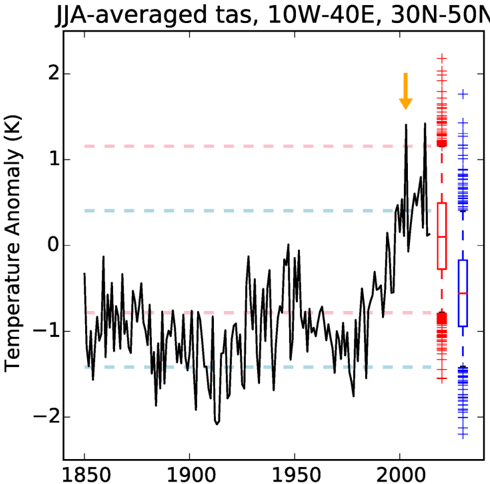
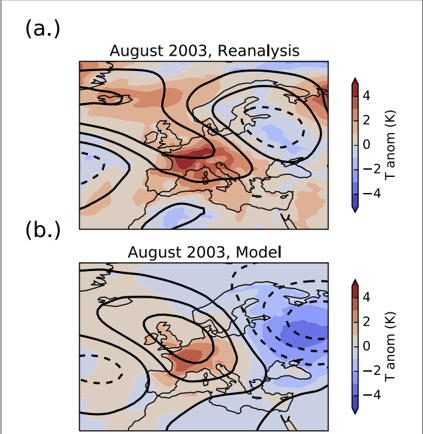
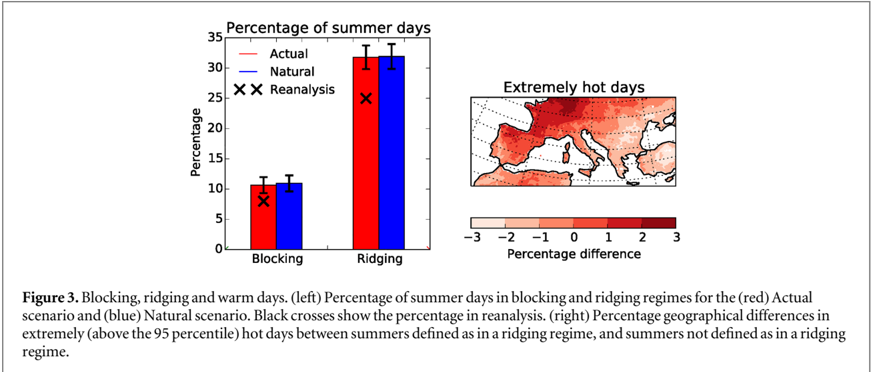
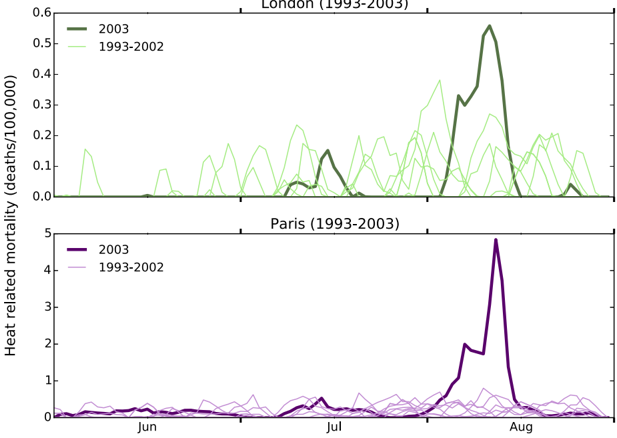
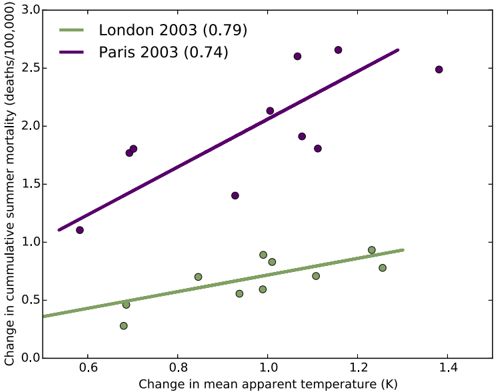
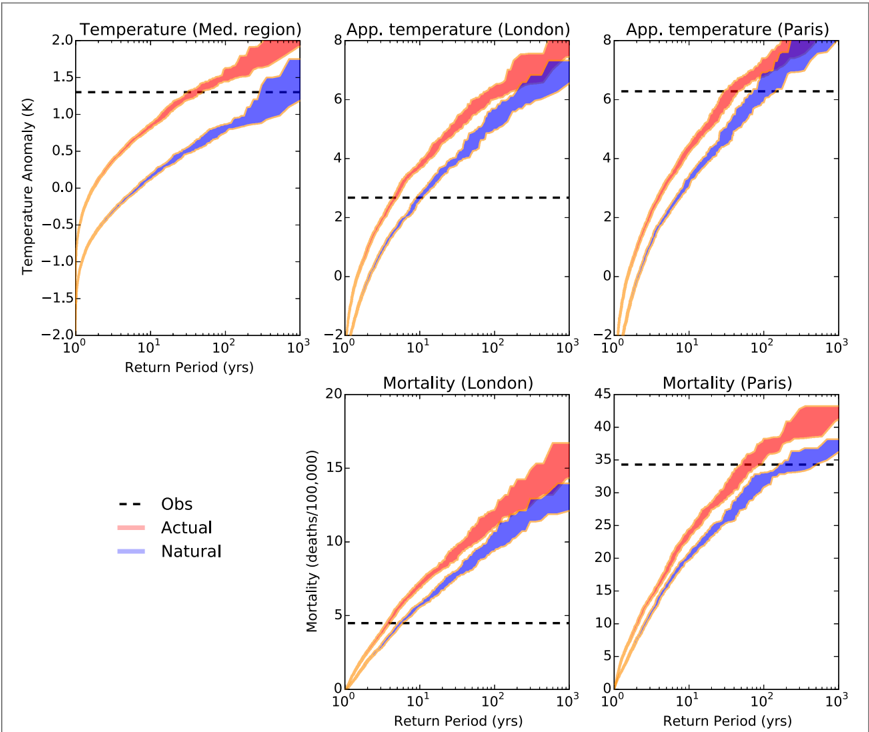
It has been argued that climate change is the biggest global health threat of the 21st century. The extreme high temperatures of the summer of 2003 were associated with up to seventy thousand excess deaths across Europe. Previous studies have attributed the meteorological event to the human influence on climate, or examined the role of heat waves on human health. Here, for the first time, we explicitly quantify the role of human activity on climate and heat-related mortality in an event attribution framework, analysing both the Europe-wide temperature response in 2003, and localised responses over London and Paris. Using publicly-donated computing, we perform many thousands of climate simulations of a high-resolution regional climate model. This allows generation of a comprehensive statistical description of the 2003 event and the role of human influence within it, using the results as input to a health impact assessment model of human mortality. We find large-scale dynamical modes of atmospheric variability remain largely unchanged under anthropogenic climate change, and hence the direct thermodynamical response is mainly responsible for the increased mortality. In summer 2003, anthropogenic climate change increased the risk of heat-related mortality in Central Paris by ∼70% and by ∼20% in London, which experienced lower extreme heat. Out of the estimated ∼315 and ∼735 summer deaths attributed to the heatwave event in Greater London and Central Paris, respectively, 64 (±3) deaths were attributable to anthropogenic climate change in London, and 506 (±51) in Paris. Such an ability to robustly attribute specific damages to anthropogenic drivers of increased extreme heat can inform societal responses to, and responsibilities for, climate change.
Overview
The claims and statistics of this paper haven’t been checked yet.
Free: it reads the open-access text and checks the first 5 claims that cite a source we can check. Create a free account to check every claim.
Integrity signals
Registry
Cites
Statistics
Figures



Verification
Claims the paper makes
The claims and statistics of this paper haven’t been checked yet.
Free: it reads the open-access text and checks the first 5 claims that cite a source we can check. Create a free account to check every claim.
Claims other papers make about this one
Each is checked against this paper’s own text: does it say what the citing paper says it does?
The cited source says what the claim attributes to it.
In the citing paper
“These studies are often conducted in the climate science disciplines and rarely take the additional step of estimating associated human health impacts9–11.”
From The burden of heat-related mortality attributable to recent human-induced climate change (2021) · cites this paper as [10]
Self-check
Percentages, sums and reported differences re-computed from the paper’s own numbers.
The self-check needs the paper’s full text.
Citations
Cites
The ERA‐Interim reanalysis: configuration and performance of the data assimilation system
Dee, D. P., Uppala, S. M., Simmons, A. J., Berrisford, P., Poli, P., Kobayashi, S., Andrae, U., Balmaseda, M. A., Balsamo, G., Bauer, P., et al. (2011) · Quarterly Journal of the Royal Meteorological Society · doi:10.1002/qj.828 · Cited by 24,480
Managing the health effects of climate change
Costello, A., Abbas, M., Allen, A., Ball, S., Bell, S., Bellamy, R., Friel, S., Groce, N., Johnson, A., Kett, M., et al. (2009) · The Lancet · doi:10.1016/s0140-6736(09)60935-1 · Cited by 3,102
Lanczos Filtering in One and Two Dimensions
Duchon, C. E. (1979) · Journal of Applied Meteorology · doi:10.1175/1520-0450(1979)018<1016:lfioat>2.0.co;2 · Cited by 2,398
Death toll exceeded 70,000 in Europe during the summer of 2003
Robine, J.-M., Cheung, S. L. K., Le Roy, S., Van Oyen, H., Griffiths, C., Michel, J.-P., & Herrmann, F. R. (2007) · Comptes Rendus. Biologies · doi:10.1016/j.crvi.2007.12.001 · Cited by 2,127
Health and climate change: policy responses to protect public health
Watts, N., Adger, W. N., Agnolucci, P., Blackstock, J., Byass, P., Cai, W., Chaytor, S., Colbourn, T., Collins, M., Cooper, A., et al. (2015) · The Lancet · doi:10.1016/s0140-6736(15)60854-6 · Cited by 2,055
Human contribution to the European heatwave of 2003
Stott, P. A., Stone, D. A., & Allen, M. R. (2004) · Nature · doi:10.1038/nature03089 · Cited by 1,735
Self-citationAnthropogenic contribution to global occurrence of heavy-precipitation and high-temperature extremes
Fischer, E. M., & Knutti, R. (2015) · Nature Climate Change · doi:10.1038/nclimate2617 · Cited by 1,427
Heat wave: a social autopsy of disaster in Chicago
(2003) · Choice Reviews Online · doi:10.5860/choice.40-4319 · Cited by 1,273
A trend-preserving bias correction – the ISI-MIP approach
Hempel, S., Frieler, K., Warszawski, L., Schewe, J., & Piontek, F. (2013) · Earth System Dynamics · doi:10.5194/esd-4-219-2013 · Cited by 1,238
High ambient temperature and mortality: a review of epidemiologic studies from 2001 to 2008
Basu, R. (2009) · Environmental Health · doi:10.1186/1476-069x-8-40 · Cited by 1,135
Research works printed but not linked: 2
- 10.1175/1520-0450(1979)018<0874:taospi>2.0.co;2 · DOI · Paper page
- Masato G 2016 On the link between Eurasian heatwaves and the upper troposphere ridges and blocking Q. J. R. Meteorol. Soc. in review
Cited by
Longer and more frequent marine heatwaves over the past century.
Oliver, E. C. J., Donat, M. G., Burrows, M. T., Moore, P. J., Smale, D. A., Alexander, L. V., Benthuysen, J. A., Feng, M., Sen Gupta, A., Hobday, A. J., et al. (2018) · Nature Communications · doi:10.1038/s41467-018-03732-9 · Cited by 2,133
Mora, C., Dousset, B., Caldwell, I. R., Powell, F. E., Geronimo, R. C., Bielecki, C. R., Counsell, C. W. W., Dietrich, B. S., Johnston, E. T., Louis, L. V., et al. (2017) · Nature Climate Change · doi:10.1038/nclimate3322 · Cited by 1,746
The burden of heat-related mortality attributable to recent human-induced climate change
Vicedo-Cabrera, A. M., Scovronick, N., Sera, F., Royé, D., Schneider, R., Tobias, A., Astrom, C., Guo, Y., Honda, Y., Hondula, D. M., et al. (2021) · Nature Climate Change · doi:10.1038/s41558-021-01058-x · Cited by 1,347
Watts, N., Amann, M., Ayeb-Karlsson, S., Belesova, K., Bouley, T., Boykoff, M., Byass, P., Cai, W., Campbell-Lendrum, D., Chambers, J., et al. (2018) · The Lancet · doi:10.1016/s0140-6736(17)32464-9 · Cited by 1,236
The Imperative for Climate Action to Protect Health
Haines, A., & Ebi, K. (2019) · New England Journal of Medicine · doi:10.1056/nejmra1807873 · Cited by 901
The Urban Heat Island: Implications for Health in a Changing Environment
Heaviside, C., Macintyre, H., & Vardoulakis, S. (2017) · Current Environmental Health Reports · doi:10.1007/s40572-017-0150-3 · Cited by 849
Self-citationProjected Marine Heatwaves in the 21st Century and the Potential for Ecological Impact
Oliver, E. C. J., Burrows, M. T., Donat, M. G., Sen Gupta, A., Alexander, L. V., Perkins-Kirkpatrick, S. E., Benthuysen, J. A., Hobday, A. J., Holbrook, N. J., Moore, P. J., et al. (2019) · Frontiers in Marine Science · doi:10.3389/fmars.2019.00734 · Cited by 679
The global costs of extreme weather that are attributable to climate change
Newman, R., & Noy, I. (2023) · Nature Communications · doi:10.1038/s41467-023-41888-1 · Cited by 575
“Some recent papers have looked at counting mortality and morbidity from heatwaves and attributing these to climate change 39 – 41 .”
BackgroundExtreme weather impacts of climate change: an attribution perspective
Clarke, B., Otto, F., Stuart-Smith, R., & Harrington, L. (2022) · Environmental Research: Climate · doi:10.1088/2752-5295/ac6e7d · Cited by 573
“…2011, Otto et al 2012), the US (Shiogama et al 2014), China (Sparrow et al 2018, Zhou et al 2019), Argentina (Hannart et al 2015), North Africa (Mitchell 2016), Australasia (Hope et al 2016), South and Southeast Asia (Azhar et al 2014, Wehner et al 2016, Mazdiyasni et al 2017, Imada et al…”
BackgroundIncrease in Compound Drought and Heatwaves in a Warming World
Mukherjee, S., & Mishra, A. K. (2021) · Geophysical Research Letters · doi:10.1029/2020gl090617 · Cited by 461
“The magnitude of the 2012 European heatwave is found even to exceed that of the 2003 summer heatwave events considered to be one of the most deadly event in the continent (Mitchell et al., 2016).”
BackgroundLake heatwaves under climate change
Woolway, R. I., Jennings, E., Shatwell, T., Golub, M., Pierson, D. C., & Maberly, S. C. (2021) · Nature · doi:10.1038/s41586-020-03119-1 · Cited by 466
Extreme heat waves under 1.5 °C and 2 °C global warming
Dosio, A., Mentaschi, L., Fischer, E. M., & Wyser, K. (2018) · Environmental Research Letters · doi:10.1088/1748-9326/aab827 · Cited by 445
“…labour productivity (e.g. Dunne et al 2013) and affect human health, with a documented relationship existing between extreme heat events and increased mortality (Garcı́a-Herrera et al 2010, Robine et al 2008, Barriopedro et al 2011, Mitchell et al 2016, Mora et al 2017, Gasparrini et al 2017).”
BackgroundClimate change will accelerate the high-end risk of compound drought and heatwave events
Tripathy, K. P., Mukherjee, S., Mishra, A. K., Mann, M. E., & Williams, A. P. (2023) · Proceedings of the National Academy of Sciences · doi:10.1073/pnas.2219825120 · Cited by 398
“, wildfires (3), agriculture (4–6), massive heat- related mortalities (7, 8), and socioeconomic catastrophes (9), than individual extremes (10).”
Slater, L. J., Anderson, B., Buechel, M., Dadson, S., Han, S., Harrigan, S., Kelder, T., Kowal, K., Lees, T., Matthews, T., et al. (2021) · Hydrology and Earth System Sciences · doi:10.5194/hess-25-3897-2021 · Cited by 357
Heat Waves: Physical Understanding and Scientific Challenges
Barriopedro, D., García‐Herrera, R., Ordóñez, C., Miralles, D. G., & Salcedo‐Sanz, S. (2023) · Reviews of Geophysics · doi:10.1029/2022rg000780 · Cited by 404
“Figure 11 illustrates an attribution study of heat-related mortality in Paris and London for summer 2003 (Mitchell et al., 2016).”
BackgroundChanges in extreme events and the potential impacts on human health
Bell, J. E., Brown, C. L., Conlon, K., Herring, S., Kunkel, K. E., Lawrimore, J., Luber, G., Schreck, C., Smith, A., & Uejio, C. (2018) · Journal of the Air & Waste Management Association · doi:10.1080/10962247.2017.1401017 · Cited by 364
“The next step with this research is trying to combine extreme event attribution with societal and economic outcomes to determine the role climate change has on producing excess health burdens and costs (Ebi et al. 2017; Mitchell et al. 2016).”
BackgroundExtreme weather events in early summer 2018 connected by a recurrent hemispheric wave-7 pattern
Kornhuber, K., Osprey, S., Coumou, D., Petri, S., Petoukhov, V., Rahmstorf, S., & Gray, L. (2019) · Environmental Research Letters · doi:10.1088/1748-9326/ab13bf · Cited by 378
Impact Forecasting to Support Emergency Management of Natural Hazards
Merz, B., Kuhlicke, C., Kunz, M., Pittore, M., Babeyko, A., Bresch, D. N., Domeisen, D. I. V., Feser, F., Koszalka, I., Kreibich, H., et al. (2020) · Reviews of Geophysics · doi:10.1029/2020rg000704 · Cited by 358
“For humanmorbidity and mortality, the studies use apparent temperature (Mitchell et al., 2016), humidity and nighttime temperatures (WMO, 2018).”
BackgroundInfluentialEkwurzel, B., Boneham, J., Dalton, M. W., Heede, R., Mera, R. J., Allen, M. R., & Frumhoff, P. C. (2017) · Climatic Change · doi:10.1007/s10584-017-1978-0 · Cited by 357
Self-citationAtmospheric blocking and weather extremes over the Euro-Atlantic sector – a review
Kautz, L.-A., Martius, O., Pfahl, S., Pinto, J. G., Ramos, A. M., Sousa, P. M., & Woollings, T. (2022) · Weather and Climate Dynamics · doi:10.5194/wcd-3-305-2022 · Cited by 337
Health, Wellbeing and the Changing Structure of Communities
(2023) · Climate Change 2022 – Impacts, Adaptation and Vulnerability · doi:10.1017/9781009325844.009 · Cited by 294
A protocol for probabilistic extreme event attribution analyses
Philip, S., Kew, S., van Oldenborgh, G. J., Otto, F., Vautard, R., van der Wiel, K., King, A., Lott, F., Arrighi, J., Singh, R., et al. (2020) · Advances in Statistical Climatology, Meteorology and Oceanography · doi:10.5194/ascmo-6-177-2020 · Cited by 328
“For cold waves and heat waves, health impacts are local, so a local definition using station data corresponds well to those impacts (e.g. van Oldenborgh et al., 2015; Mitchell et al., 2016; van Oldenborgh et al., 2018; Kew et al., 2019).”
BackgroundState-of-the-art global models underestimate impacts from climate extremes
Schewe, J., Gosling, S. N., Reyer, C., Zhao, F., Ciais, P., Elliott, J., Francois, L., Huber, V., Lotze, H. K., Seneviratne, S. I., et al. (2019) · Nature Communications · doi:10.1038/s41467-019-08745-6 · Cited by 308
Ngarambe, J., Yun, G. Y., & Santamouris, M. (2020) · Energy and Buildings · doi:10.1016/j.enbuild.2020.109807 · Cited by 261
Pathways and pitfalls in extreme event attribution
van Oldenborgh, G. J., van der Wiel, K., Kew, S., Philip, S., Otto, F., Vautard, R., King, A., Lott, F., Arrighi, J., Singh, R., et al. (2021) · Climatic Change · doi:10.1007/s10584-021-03071-7 · Cited by 277
“At the moment, quantitative attribution of impacts of anthropogenic climate change is work in progress, although a number of such studies have been published, e.g. Schaller et al. (2016) and Mitchell et al. (2016).”
BackgroundMitchell, D., AchutaRao, K., Allen, M., Bethke, I., Beyerle, U., Ciavarella, A., Forster, P. M., Fuglestvedt, J., Gillett, N., Haustein, K., et al. (2017) · Geoscientific Model Development · doi:10.5194/gmd-10-571-2017 · Cited by 250
Self-citationFrame, D. J., Rosier, S. M., Noy, I., Harrington, L. J., Carey-Smith, T., Sparrow, S. N., Stone, D. A., & Dean, S. M. (2020) · Climatic Change · doi:10.1007/s10584-020-02729-y · Cited by 268
Rapid increase in the risk of heat-related mortality
Lüthi, S., Fairless, C., Fischer, E. M., Scovronick, N., Armstrong, B., Coelho, M. D. S. Z. S., Guo, Y. L., Guo, Y., Honda, Y., Huber, V., et al. (2023) · Nature Communications · doi:10.1038/s41467-023-40599-x · Cited by 249
“Our results align well with related work although a direct comparison of numbers is hampered by different selection of reference scenarios, time scales or geographical scope 27,31 .”
BackgroundResultInfluentialVegetation cover and plant-trait effects on outdoor thermal comfort in a tropical city
Meili, N., Acero, J. A., Peleg, N., Manoli, G., Burlando, P., & Fatichi, S. (2021) · Building and Environment · doi:10.1016/j.buildenv.2021.107733 · Cited by 199
“Increasing urbanization, combined with the projected rise in global temperature due to climate change [2], is likely to further elevate temperatures in cities [2–5] with potential adverse effects on the outdoor thermal comfort (OTC) of their inhabitants [2, 6,7].”
BackgroundSchwingshackl, C., Sillmann, J., Vicedo‐Cabrera, A. M., Sandstad, M., & Aunan, K. (2021) · Earth's Future · doi:10.1029/2020ef001885 · Cited by 190
“were applied in epidemiological studies and found to perform well for estimating heat-related health impacts (e.g., Gronlund et al., 2014; Mitchell et al., 2016; Urban & Kyselý, 2014; Vaneckova et al., 2011).”
MethodArbuthnott, K. G., & Hajat, S. (2017) · Environmental Health · doi:10.1186/s12940-017-0322-5 · Cited by 193
“demonstrated that anthropogenic climate change increased the risk of excess heatrelated mortality in the 2003 heatwave by around 20% in London [77].”
BackgroundMeili, N., Manoli, G., Burlando, P., Bou-Zeid, E., Chow, W. T. L., Coutts, A. M., Daly, E., Nice, K. A., Roth, M., Tapper, N. J., et al. (2020) · Geoscientific Model Development · doi:10.5194/gmd-13-335-2020 · Cited by 186
Wouters, H., De Ridder, K., Poelmans, L., Willems, P., Brouwers, J., Hosseinzadehtalaei, P., Tabari, H., Vanden Broucke, S., van Lipzig, N. P. M., & Demuzere, M. (2017) · Geophysical Research Letters · doi:10.1002/2017gl074889 · Cited by 206
“Heat waves particularly result in excessive mortality rates [Mora et al., 2017; Mazdiyasni et al., 2017; Mitchell et al., 2016; Green et al., 2016; Cox et al., 2016; Xu et al., 2016; Tong et al., 2015; Huang et al., 2012], higher hospital admissions [Linares et al., 2017; Iñiguez et al., 2016; Díaz…”
BackgroundWell below 2 °C: Mitigation strategies for avoiding dangerous to catastrophic climate changes
Xu, Y., & Ramanathan, V. (2017) · Proceedings of the National Academy of Sciences · doi:10.1073/pnas.1618481114 · Cited by 205
Macintyre, H. L., Heaviside, C., Taylor, J., Picetti, R., Symonds, P., Cai, X.-M., & Vardoulakis, S. (2018) · Science of The Total Environment · doi:10.1016/j.scitotenv.2017.08.062 · Cited by 205
Self-citationIndoor temperature and health: a global systematic review
Tham, S., Thompson, R., Landeg, O., Murray, K. A., & Waite, T. (2020) · Public Health · doi:10.1016/j.puhe.2019.09.005 · Cited by 202
Sustainable Development, Poverty Eradication and Reducing Inequalities
(2022) · Global Warming of 1.5°C · doi:10.1017/9781009157940.007 · Cited by 178
Impacts of 1.5°C Global Warming on Natural and Human Systems
IPCC (2022) · Cambridge University Press eBooks · doi:10.1017/9781009157940.005 · Cited by 221
Ahmadalipour, A., & Moradkhani, H. (2018) · Environment International · doi:10.1016/j.envint.2018.05.014 · Cited by 161
Climate extremes in Europe at 1.5 and 2 degrees of global warming
King, A. D., & Karoly, D. J. (2017) · Environmental Research Letters · doi:10.1088/1748-9326/aa8e2c · Cited by 169
“…region for study in that it suffers from a range of high-impact climate extremes that have been, in part, related to anthropogenic climate change and have resulted in excess fatalities, large economic losses and other impacts (e.g. Pall et al 2011, Mitchell et al 2016b, Schaller et al 2016).”
BackgroundMethodInfluentialExplaining Extreme Events of 2017 from a Climate Perspective
Herring, S. C., Christidis, N., Hoell, A., Hoerling, M. P., & Stott, P. A. (2019) · Bulletin of the American Meteorological Society · doi:10.1175/bams-explainingextremeevents2017.1 · Cited by 168
Attributing changes in food insecurity to a changing climate
Dasgupta, S., & Robinson, E. J. Z. (2022) · Scientific Reports · doi:10.1038/s41598-022-08696-x · Cited by 153
“Mitchell and colleagues 32 focus on the heatwave of 2003 and estimate that anthropogenic climate change increased the risk of heat-related mortality in Central Paris by 70% and by 20% in London.”
Climate change adaptation to extreme heat: a global systematic review of implemented action
Turek‐Hankins, L. L., de Perez, E. C., Scarpa, G., Ruiz‐Díaz, R., Schwerdtle, P. N., Joe, E. T., Galappaththi, E. K., French, E. M., Austin, S. E., Singh, C., et al. (2021) · Oxford Open Climate Change · doi:10.1093/oxfclm/kgab005 · Cited by 177
Projections of tropical heat stress constrained by atmospheric dynamics
Zhang, Y., Held, I. M., & Fueglistaler, S. A. (2021) · Nature Geoscience · doi:10.1038/s41561-021-00695-3 · Cited by 156
Risk, Robustness and Water Resources Planning Under Uncertainty
Borgomeo, E., Mortazavi‐Naeini, M., Hall, J. W., & Guillod, B. P. (2018) · Earth s Future · doi:10.1002/2017ef000730 · Cited by 159
“…of climate change on the occurrence of extreme weather events (Haustein et al., 2016), flood-related property damage (Schaller et al., 2016), and heat-related mortality (Mitchell et al., 2016), but never to a water resources planning problem, which is the focus and contribution of this study.”
BackgroundHeat: a primer for public health researchers
McGregor, G. R., & Vanos, J. (2017) · Public Health · doi:10.1016/j.puhe.2017.11.005 · Cited by 155
A climate-change attribution retrospective of some impactful weather extremes of 2021
Faranda, D., Bourdin, S., Ginesta, M., Krouma, M., Messori, G., Noyelle, R., Pons, F., & Yiou, P. (2022) · Weather and Climate Dynamics · doi:10.5194/wcd-3-1311-2022 · Cited by 164
Paravantis, J. A., Santamouris, M., Cartalis, C., Efthymiou, C., & Kontoulis, N. (2017) · Sustainability · doi:10.3390/su9040606 · Cited by 145
“Climate change may well constitute the biggest global health threat of the 21st century [1,2].”
BackgroundHeaney, A. K., Stowell, J., Liu, J. C., Basu, R., Marlier, M. E., & Kinney, P. L. (2022) · GeoHealth · doi:10.1029/2021gh000578 · Cited by 141
Pappalardo, S. E., Zanetti, C., & Todeschi, V. (2023) · Landscape and Urban Planning · doi:10.1016/j.landurbplan.2023.104831 · Cited by 148
Hunfeld, N., Diehl, J. C., Timmermann, M. M., van Exter, P., Bouwens, J., Browne-Wilkinson, S., de Planque, C. A., & Gommers, D. A. M. P. J. (2022) · Intensive Care Medicine · doi:10.1007/s00134-022-06940-6 · Cited by 128
Toward impact-based monitoring of drought and its cascading hazards
AghaKouchak, A., Huning, L. S., Sadegh, M., Qin, Y., Markonis, Y., Vahedifard, F., Love, C. A., Mishra, A. K., Mehran, A., Obringer, R., et al. (2023) · Nature Reviews Earth & Environment · doi:10.1038/s43017-023-00457-2 · Cited by 139
On the attribution of the impacts of extreme weather events to anthropogenic climate change
Perkins-Kirkpatrick, S. E., Stone, D. A., Mitchell, D., Rosier, S. M., King, A. D., Lo, Y. T. E., Pástor-Paz, J., Frame, D. J., & Wehner, M. F. (2021) · Environmental Research Letters · doi:10.1088/1748-9326/ac44c8 · Cited by 129
“Extending weather event attribution to impacts is very new, yet gaining in popularity (e.g. Mitchell et al 2016, Schaller et al 2016, Kay et al 2018, Otto et al 2020, Mitchell 2021, Vicedo-Cabrera et al 2021).”
BackgroundMethodInfluentialSelf-citationATTRICI v1.1 – counterfactual climate for impact attribution
Mengel, M., Treu, S., Lange, S., & Frieler, K. (2021) · Geoscientific Model Development · doi:10.5194/gmd-14-5269-2021 · Cited by 119
The exceptional summer heat wave in Southern Europe 2017
Kew, S. F., Philip, S. Y., Jan van Oldenborgh, G., van der Schrier, G., Otto, F. E. L., & Vautard, R. (2019) · Bulletin of the American Meteorological Society · doi:10.1175/bams-d-18-0109.1 · Cited by 119
Compound Hydrometeorological Extremes: Drivers, Mechanisms and Methods
Zhang, W., Luo, M., Gao, S., Chen, W., Hari, V., & Khouakhi, A. (2021) · Frontiers in Earth Science · doi:10.3389/feart.2021.673495 · Cited by 131
“…systems (Mukherjee et al., 2020), wild fi res (Abatzoglou and Williams, 2016; AghaKouchak et al., 2020; Sutanto et al., 2020), air pollution (Tressol et al., 2008; Zhang H. et al., 2017; Wang et al., 2017; Lin et al., 2020), heat-related deaths (D ’ Ippoliti et al., 2010; Mitchell et al., 2016).”
Attributing Compound Events to Anthropogenic Climate Change
Zscheischler, J., & Lehner, F. (2021) · Bulletin of the American Meteorological Society · doi:10.1175/bams-d-21-0116.1 · Cited by 109
Early adaptation to heat waves and future reduction of air-conditioning energy use in Paris
Viguié, V., Lemonsu, A., Hallegatte, S., Beaulant, A.-L., Marchadier, C., Masson, V., Pigeon, G., & Salagnac, J. (2020) · Environmental Research Letters · doi:10.1088/1748-9326/ab6a24 · Cited by 115
Climate impacts on organisms, ecosystems and human societies: integrating OCLTT into a wider context
Pörtner, H. (2021) · Journal of Experimental Biology · doi:10.1242/jeb.238360 · Cited by 110
“Thermal performance of the European flat oyster, Ostrea edulis (Linnaeus, 1758) - explaining ecological findings under climate change.”
BackgroundInfluentialClarke, B. J., Otto, F. E. L., & Jones, R. (2021) · Climate Risk Management · doi:10.1016/j.crm.2021.100285 · Cited by 113
Integrated perspective on translating biophysical to economic impacts of climate change
Piontek, F., Drouet, L., Emmerling, J., Kompas, T., Méjean, A., Otto, C., Rising, J., Soergel, B., Taconet, N., & Tavoni, M. (2021) · Nature Climate Change · doi:10.1038/s41558-021-01065-y · Cited by 113
Drought-Heatwave Compound Events with Stronger Synergistic Effects in Drylands
Wang, C., Li, Z., Ouyang, L., Li, Y., Chen, Y., Sun, F., Liu, Y., Feng, M., Zhu, J., & Zhang, Y. (2022) · Weather and Climate Extremes · doi:10.1016/j.wace.2023.100632 · Cited by 103
Xiang, Z., Qin, H., He, B.-J., Han, G., & Chen, M. (2022) · Sustainable Cities and Society · doi:10.1016/j.scs.2022.103792 · Cited by 97
Progress of ship exhaust gas control technology
Zhao, J., Wei, Q., Wang, S., & Ren, X. (2021) · The Science of The Total Environment · doi:10.1016/j.scitotenv.2021.149437 · Cited by 97
Methods and Model Dependency of Extreme Event Attribution: The 2015 European Drought
Hauser, M., Gudmundsson, L., Orth, R., Jézéquel, A., Haustein, K., Vautard, R., van Oldenborgh, G. J., Wilcox, L., & Seneviratne, S. I. (2017) · Earth's Future · doi:10.1002/2017ef000612 · Cited by 88
“…assessments are sensitive to methodological choices (Lewis & Karoly, 2013; Shiogama et al., 2013; Otto et al., 2015; Uhe et al., 2016), it is still common to rely on a limited number of models and methods (Sippel et al., 2016; Dong et al., 2016; Schaller et al., 2016; Mitchell et al., 2016).”
BackgroundThe Role of Cooling Centers in Protecting Vulnerable Individuals from Extreme Heat
Bedi, N. S., Adams, Q. H., Hess, J. J., & Wellenius, G. A. (2022) · Epidemiology · doi:10.1097/ede.0000000000001503 · Cited by 100
Systematic attribution of heatwaves to the emissions of carbon majors
Quilcaille, Y., Gudmundsson, L., Schumacher, D. L., Gasser, T., Heede, R., Heri, C., Lejeune, Q., Nath, S., Naveau, P., Thiery, W., et al. (2025) · Nature · doi:10.1038/s41586-025-09450-9 · Cited by 106
How does climate change influence extreme weather? Impact attribution research seeks answers
Ornes, S. (2018) · Proceedings of the National Academy of Sciences · doi:10.1073/pnas.1811393115 · Cited by 88
weather@home 2: validation of an improved global–regional climate modelling system
Guillod, B. P., Jones, R., Bowery, A., Haustein, K., Massey, N., Mitchell, D., Otto, F. E. L., Sparrow, S., Uhe, P. F., Wallom, D. C. H., et al. (2017) · Geoscientific model development · doi:10.5194/gmd-10-1849-2017 · Cited by 91
Self-citationHotspots of extreme heat under global warming
Suarez‐Gutierrez, L., Müller, W. A., Li, C., & Marotzke, J. (2020) · Climate Dynamics · doi:10.1007/s00382-020-05263-w · Cited by 95
“000 additional deaths over 16 European countries during the 2003 summer (Robine et al. 2008; Laaidi et al. 2012; Mitchell et al. 2016).”
BackgroundLuo, P., Yu, B., Li, P., Liang, P., Zhang, Q., & Yang, L. (2023) · Building and Environment · doi:10.1016/j.buildenv.2023.110959 · Cited by 93
Sippel, S., Zscheischler, J., Mahecha, M. D., Orth, R., Reichstein, M., Vogel, M. M., & Seneviratne, S. I. (2017) · Earth System Dynamics · doi:10.5194/esd-8-387-2017 · Cited by 88
“…of near-surface climate and land–atmosphere interactions on the regional scale might be crucial to extract accurate and relevant information about climate extremes in the context of climatic changes in the 21st century (Mitchell et al., 2016b; Schleussner et al., 2016; Seneviratne et al., 2016).”
Holden, P. B., Rebelo, A. J., Wolski, P., Odoulami, R. C., Lawal, K. A., Kimutai, J., Nkemelang, T., & New, M. G. (2022) · Communications Earth & Environment · doi:10.1038/s43247-022-00379-9 · Cited by 85
The role of climate in the trend and variability of Ethiopia's cereal crop yields
Yang, M., Wang, G., Ahmed, K. F., Adugna, B. T., Eggen, M., Amdework, E., You, L., Koo, J., & Anagnostou, E. N. (2020) · The Science of The Total Environment · doi:10.1016/j.scitotenv.2020.137893 · Cited by 88
Carbon majors and the scientific case for climate liability
Callahan, C. W., & Mankin, J. (2025) · Nature · doi:10.1038/s41586-025-08751-3 · Cited by 104
Grand Challenges in Sustainable Cities and Health
Vardoulakis, S., & Kinney, P. L. (2019) · Frontiers in Sustainable Cities · doi:10.3389/frsc.2019.00007 · Cited by 80
“For example, 506 (±51) heatrelated deaths in Central Paris and 64 (±3) in Greater London were attributed to anthropogenic climate change during the summer of 2003 (Mitchell et al., 2016).”
BackgroundSelf-citationHarrington, L. J., & Otto, F. E. L. (2018) · Environmental Research Letters · doi:10.1088/1748-9326/aaaa99 · Cited by 86
“This analysis employs atmosphere-only model simulations using an experimental framework developed under the ‘Half a degree Additional warming, Prognosis and Projected Impacts’ (HAPPI) project (Mitchell et al 2016b).”
BackgroundMethodInfluentialPaolini, R., Zani, A., MeshkinKiya, M., Castaldo, V. L., Pisello, A. L., Antretter, F., Poli, T., & Cotana, F. (2016) · Energy and Buildings · doi:10.1016/j.enbuild.2016.11.018 · Cited by 77
Challenges to Understanding Extreme Weather Changes in Lower Income Countries
Otto, F. E. L., Harrington, L. J., Schmitt, K., Philip, S. Y., Kew, S., van Oldenborgh, G. J., Singh, R., Kimutai, J., & Wolski, P. (2020) · Bulletin of the American Meteorological Society · doi:10.1175/bams-d-19-0317.1 · Cited by 81
Climate Change: From Science to Practice
Wheeler, N., & Watts, N. (2018) · Current Environmental Health Reports · doi:10.1007/s40572-018-0187-y · Cited by 84
“1 University College London, Gower St, Bloomsbury, London WC1E 6BT, UK Current Environmental Health Reports (2018) 5:170–178”
BackgroundMethodInfluentialAttribution: How Is It Relevant for Loss and Damage Policy and Practice?
James, R., Jones, R., Boyd, E., Young, H. R., Otto, F. E. L., Huggel, C., & Fuglestvedt, J. S. (2018) · Climate risk management, policy and governance · doi:10.1007/978-3-319-72026-5_5 · Cited by 89
Tye, M. R., Dagon, K., Molina, M. J., Richter, J. H., Visioni, D., Kravitz, B., Tebaldi, C., & Tilmes, S. (2022) · Earth System Dynamics · doi:10.5194/esd-13-1233-2022 · Cited by 73
The Impact of Climate Change on Environmental Sustainability and Human Mortality
Chen, X. M., Sharma, A., & Liu, H. (2023) · Environments · doi:10.3390/environments10100165 · Cited by 81
“…wave of the summer of 2003, data analysis suggests that anthropogenic climate change caused up to seventy thousand excess deaths across Europe, increased the risk of heat-related mortality in central Paris by ~70% and by ~20% in London where they experienced the lower end of the extreme heat [2].”
Global trends in the frequency and duration of temperature extremes
Sorte, F. A. L., Johnston, A., & Ault, T. R. (2021) · Climatic Change · doi:10.1007/s10584-021-03094-0 · Cited by 74
“…is evidence that exposure to EHE adversely affects human populations (Anderson and Bell Michelle 2011; Battisti and Naylor 2009; Guo et al. 2017; Mitchell et al. 2016) and natural systems within terrestrial (Harris et al. 2018; Maxwell et al. 2019) and marine environments (Garrabou et al. 2009;…”
BackgroundUsing Detection And Attribution To Quantify How Climate Change Is Affecting Health
Ebi, K. L., Åström, C., Boyer, C. J., Harrington, L. J., Hess, J. J., Honda, Y., Kazura, E., Stuart-Smith, R. F., & Otto, F. E. L. (2020) · Health Affairs · doi:10.1377/hlthaff.2020.01004 · Cited by 77
Beggs, P. J., Zhang, Y., Bambrick, H., Berry, H. L., Linnenluecke, M. K., Trueck, S., Bi, P., Boylan, S. M., Green, D., Guo, Y., et al. (2019) · Medical Journal of Australia · doi:10.5694/mja2.50405 · Cited by 63
Coal mining and lung disease in the 21st century
LEONARD, R. A., Zulfikar, R., & Stansbury, R. C. (2019) · Current Opinion in Pulmonary Medicine · doi:10.1097/mcp.0000000000000653 · Cited by 65
“On a global scale, the high levels of greenhouse gases caused by the combustion of fossil fuels, such coal, continue to contribute to climate change with profound consequences for health [40,41].”
BackgroundMassazza, A., Teyton, A., Charlson, F., Benmarhnia, T., & Augustinavicius, J. (2022) · The Lancet Planetary Health · doi:10.1016/s2542-5196(22)00120-6 · Cited by 92
The day the 2003 European heatwave record was broken
Mitchell, D., Kornhuber, K., Huntingford, C., & Uhe, P. F. (2019) · The Lancet Planetary Health · doi:10.1016/s2542-5196(19)30106-8 · Cited by 68
Self-citationExtreme heat-related mortality avoided under Paris Agreement goals
Mitchell, D., Heaviside, C., Schaller, N., Allen, M., Ebi, K. L., Fischer, E. M., Gasparrini, A., Harrington, L., Kharin, V., Shiogama, H., et al. (2018) · Nature Climate Change · doi:10.1038/s41558-018-0210-1 · Cited by 58
Self-citationMachine learning–based extreme event attribution
Trok, J. T., Barnes, E. A., Davenport, F. V., & Diffenbaugh, N. S. (2024) · Science Advances · doi:10.1126/sciadv.adl3242 · Cited by 69
“In comparison, by analyzing 2000 regional climate model simulations with and without anthropogenic forcing, Mitchell et al. ( 60 ) found that anthropogenic forcing contributed 1.0°C to the mean temperature across continental Europe during JJA 2003.”
InfluentialExploring the Synergies between Urban Overheating and Heatwaves (HWs) in Western Sydney
Khan, H. S., Paolini, R., Santamouris, M., & Caccetta, P. A. (2020) · Energies · doi:10.3390/en13020470 · Cited by 67
“Recent findings on HWs, their causes, impact on energy, economy, and health, and its higher frequency have altered the research trend towards the identification of the potential interactions between UHIs and HWs, which affects the urban population [6,21,32].”
BackgroundVicedo‐Cabrera, A. M., de Schrijver, E., Schumacher, D. L., Ragettli, M. S., Fischer, E. M., & Seneviratne, S. I. (2023) · Environmental Research Letters · doi:10.1088/1748-9326/ace0d0 · Cited by 70
“More importantly, these extreme events are responsible for a substantial health burden, of which a large proportion can be directly attributed to anthropogenic climate change [7–9].”
BackgroundClimate Change, Hurricanes, and Health
Woodward, A. J., & Samet, J. M. (2017) · American Journal of Public Health · doi:10.2105/ajph.2017.304197 · Cited by 59
Dimitrova, A., Dimitrova, A., Mengel, M., Gasparrini, A., Lotze‐Campen, H., & Gabrysch, S. (2024) · Nature Communications · doi:10.1038/s41467-024-49890-x · Cited by 65
Persistent heat waves projected for Middle East and North Africa by the end of the 21st century
Varela, R., Rodríguez-Díaz, L., & deCastro, M. (2020) · PLoS ONE · doi:10.1371/journal.pone.0242477 · Cited by 63
Australia's Unprecedented Future Temperature Extremes Under Paris Limits to Warming
Lewis, S. C., King, A. D., & Mitchell, D. (2017) · Geophysical Research Letters · doi:10.1002/2017gl074612 · Cited by 62
Self-citationFilho, W. L., Tuladhar, L., Li, C., Balogun, A., Kovaleva, M., Abubakar, I. R., Azadi, H., & Donkor, F. K. (2022) · International Journal of Climate Change Strategies and Management · doi:10.1108/ijccsm-07-2021-0078 · Cited by 65
Sippel, S., Forkel, M., Rammig, A., Thonicke, K., Flach, M., Heimann, M., Otto, F. E. L., Reichstein, M., & Mahecha, M. D. (2017) · Environmental Research Letters · doi:10.1088/1748-9326/aa7398 · Cited by 60
“…climate simulations were used to analyse and attribute extreme climate events, such as the Russian heat wave in 2010 (Otto et al 2012), or to investigate the role of climate extremes in causing, e.g. floods (Pall et al 2011, Schaller et al 2016) and heat-health related issues (Mitchell et al 2016).”
BackgroundMethodWehner, M. F., & Sampson, C. (2021) · Climatic Change · doi:10.1007/s10584-021-03114-z · Cited by 59
Metadata
- Authors
- Mitchell, D., Heaviside, C., Vardoulakis, S., Huntingford, C., Masato, G., P Guillod, B., Frumhoff, P., Bowery, A., Wallom, D., & Allen, M.
- Affiliations
- Public Health England (GB)
- UK Centre for Ecology & Hydrology (GB)
- University of Reading (GB)
- Union of Concerned Scientists (US)
- University of Oxford (GB)
- Venue
- Environmental Research Letters
- Publisher
- IOP Publishing
- Published
- 2016-07-01
- Volume
- 11
- Issue
- 7
- Pages
- 074006
- ISSN
- 1748-9326 (ISSN-L)
- OpenAlex
- W2471123203
- Semantic Scholar
- 20c1a9b15ac36dd32d44cbd003f7de57b7dc1956
- Cited by
- 439
- References
- 34
- Citations by year
- 2026: 27 · 2025: 62 · 2024: 51 · 2023: 56 · 2022: 55 · 2021: 60 · 2020: 47 · 2019: 29 · 2018: 24 · 2017: 25 · 2016: 3
- FWCI
- 17.00
- Type
- journal article
- Language
- en
- Open access
- gold
- doi.org
- Licence
- cc-by
- iopscience.iop.org/info/page/text-and-data-mining (tdm, 7 d)
- creativecommons.org/licenses/by/3.0/ (vor, 7 d)
- Locations
- Environmental Research Letters (publishedVersion, cc-by)
- Explore Bristol Research (publishedVersion, cc-by)
- NERC Open Research Archive (Natural Environment Research Council) (acceptedVersion)
- CentAUR (University of Reading) (submittedVersion)
- Bristol Research (University of Bristol) (submittedVersion, cc-by)
- DOAJ (DOAJ: Directory of Open Access Journals) (submittedVersion)
- Funders
- Union of Concerned Scientists (N/A)
- Topics
- Physical Sciences › Environmental Science › Health, Toxicology and Mutagenesis › Climate Change and Health Impacts
- Physical Sciences › Environmental Science › Global and Planetary Change › Climate variability and models
- Physical Sciences › Environmental Science › Global and Planetary Change › Climate Change and Environmental Impact
- Keywords
- 2003 European heatwave, heat-related mortality, anthropogenic climate change attribution, extreme heat, regional climate model simulation, London, Paris, climate responsibility
About these checks
Registry, retraction, Cites and statistics results are computed, not judged, with one exception: a printed reference that no index lists is read once by a model before it counts as a citation error. Claims are extracted by a model and kept only when their quote appears verbatim in the text; each cited source is then checked, with a model’s help, for whether it says what the claim relies on. Those verdicts can be wrong — read the claim’s quote and the cited source before relying on one.
Statistics and arithmetic are recomputed, not judged.
Confidence bands are shown only for fields calibrated on our annotated test set. None is calibrated yet, so no band is shown.
What counts as a claim ›How we measure confidence ›How we check this ›
Are you an author, or do you see a problem with this page? Request a review
Data sources
Bibliographic data: Semantic Scholar, OpenAlex, Crossref.
Contains information from the Semantic Scholar Academic Graph Datasets, made available under the ODC Attribution License (ODC-BY 1.0).
Semantic Scholar’s data is described in: Kinney, R., et al. (2023). The Semantic Scholar Open Data Platform. arXiv:2301.10140.
