

Attributing human mortality during extreme heat waves to anthropogenic climate change
Open accessThe DOI matches its Crossref record; 35 of the 35 references it cites were found in a registry or an index.
Abstract
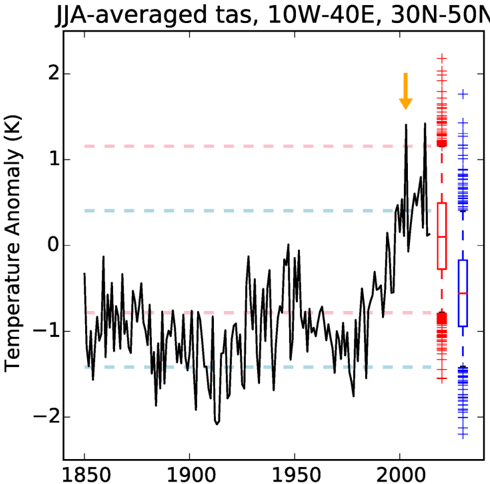
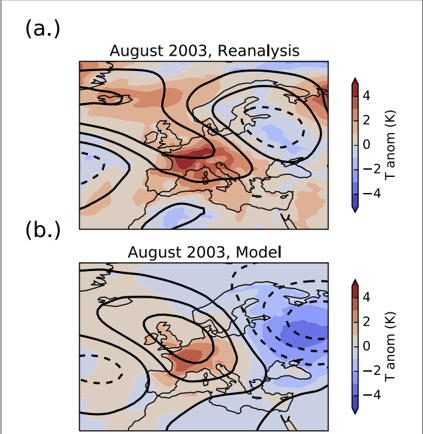
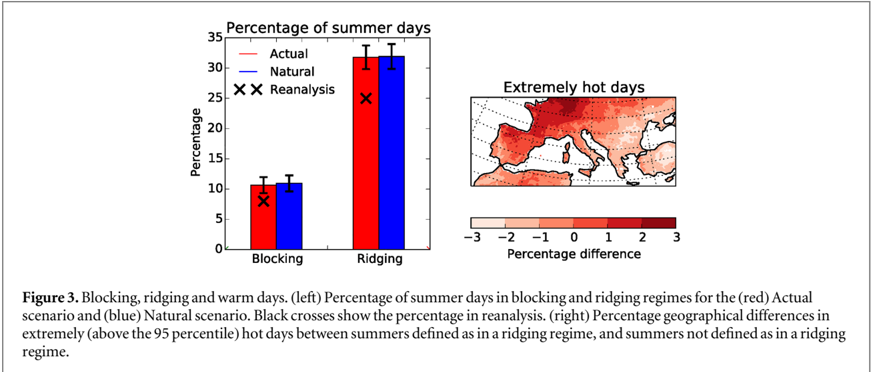
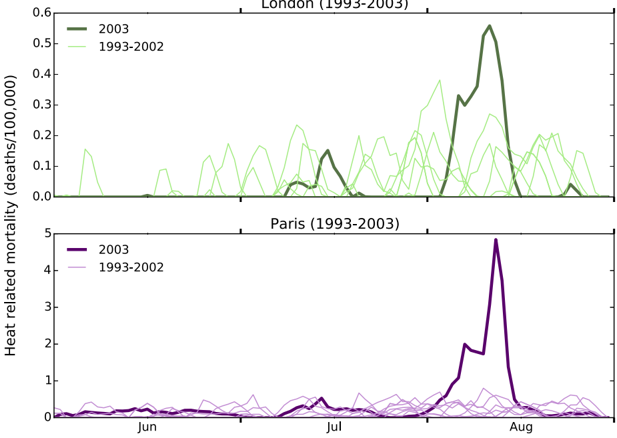
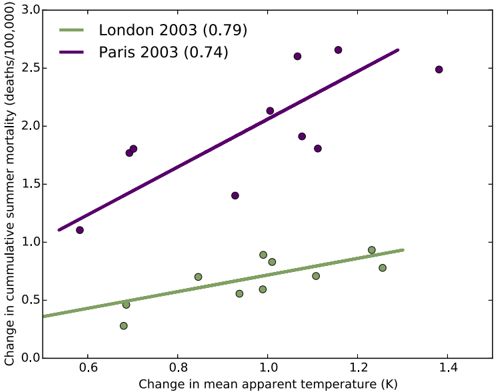
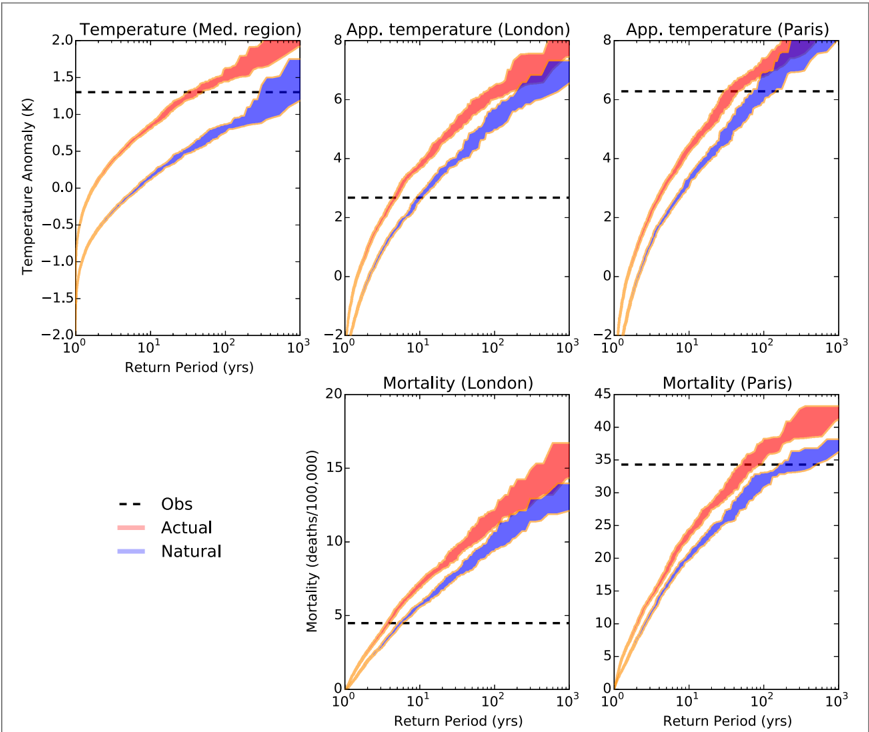
It has been argued that climate change is the biggest global health threat of the 21st century. The extreme high temperatures of the summer of 2003 were associated with up to seventy thousand excess deaths across Europe. Previous studies have attributed the meteorological event to the human influence on climate, or examined the role of heat waves on human health. Here, for the first time, we explicitly quantify the role of human activity on climate and heat-related mortality in an event attribution framework, analysing both the Europe-wide temperature response in 2003, and localised responses over London and Paris. Using publicly-donated computing, we perform many thousands of climate simulations of a high-resolution regional climate model. This allows generation of a comprehensive statistical description of the 2003 event and the role of human influence within it, using the results as input to a health impact assessment model of human mortality. We find large-scale dynamical modes of atmospheric variability remain largely unchanged under anthropogenic climate change, and hence the direct thermodynamical response is mainly responsible for the increased mortality. In summer 2003, anthropogenic climate change increased the risk of heat-related mortality in Central Paris by ∼70% and by ∼20% in London, which experienced lower extreme heat. Out of the estimated ∼315 and ∼735 summer deaths attributed to the heatwave event in Greater London and Central Paris, respectively, 64 (±3) deaths were attributable to anthropogenic climate change in London, and 506 (±51) in Paris. Such an ability to robustly attribute specific damages to anthropogenic drivers of increased extreme heat can inform societal responses to, and responsibilities for, climate change.
Overview
The claims and statistics of this paper haven’t been checked yet.
Free: it reads the open-access text and checks the first 5 claims that cite a source we can check. Create a free account to check every claim.
Integrity signals
Registry
Cites
Statistics
Figures



Verification
Claims the paper makes
The claims and statistics of this paper haven’t been checked yet.
Free: it reads the open-access text and checks the first 5 claims that cite a source we can check. Create a free account to check every claim.
Claims other papers make about this one
Each is checked against this paper’s own text: does it say what the citing paper says it does?
The cited source says what the claim attributes to it.
In the citing paper
“These studies are often conducted in the climate science disciplines and rarely take the additional step of estimating associated human health impacts9–11.”
From The burden of heat-related mortality attributable to recent human-induced climate change (2021) · cites this paper as [10]
Self-check
Percentages, sums and reported differences re-computed from the paper’s own numbers.
The self-check needs the paper’s full text.
Citations
Cites
The ERA‐Interim reanalysis: configuration and performance of the data assimilation system
Dee, D. P., Uppala, S. M., Simmons, A. J., Berrisford, P., Poli, P., Kobayashi, S., Andrae, U., Balmaseda, M. A., Balsamo, G., Bauer, P., et al. (2011) · Quarterly Journal of the Royal Meteorological Society · doi:10.1002/qj.828 · Cited by 24,480
Managing the health effects of climate change
Costello, A., Abbas, M., Allen, A., Ball, S., Bell, S., Bellamy, R., Friel, S., Groce, N., Johnson, A., Kett, M., et al. (2009) · The Lancet · doi:10.1016/s0140-6736(09)60935-1 · Cited by 3,102
Lanczos Filtering in One and Two Dimensions
Duchon, C. E. (1979) · Journal of Applied Meteorology · doi:10.1175/1520-0450(1979)018<1016:lfioat>2.0.co;2 · Cited by 2,398
Death toll exceeded 70,000 in Europe during the summer of 2003
Robine, J.-M., Cheung, S. L. K., Le Roy, S., Van Oyen, H., Griffiths, C., Michel, J.-P., & Herrmann, F. R. (2007) · Comptes Rendus. Biologies · doi:10.1016/j.crvi.2007.12.001 · Cited by 2,127
Health and climate change: policy responses to protect public health
Watts, N., Adger, W. N., Agnolucci, P., Blackstock, J., Byass, P., Cai, W., Chaytor, S., Colbourn, T., Collins, M., Cooper, A., et al. (2015) · The Lancet · doi:10.1016/s0140-6736(15)60854-6 · Cited by 2,055
Human contribution to the European heatwave of 2003
Stott, P. A., Stone, D. A., & Allen, M. R. (2004) · Nature · doi:10.1038/nature03089 · Cited by 1,735
Self-citationAnthropogenic contribution to global occurrence of heavy-precipitation and high-temperature extremes
Fischer, E. M., & Knutti, R. (2015) · Nature Climate Change · doi:10.1038/nclimate2617 · Cited by 1,427
Heat wave: a social autopsy of disaster in Chicago
(2003) · Choice Reviews Online · doi:10.5860/choice.40-4319 · Cited by 1,273
A trend-preserving bias correction – the ISI-MIP approach
Hempel, S., Frieler, K., Warszawski, L., Schewe, J., & Piontek, F. (2013) · Earth System Dynamics · doi:10.5194/esd-4-219-2013 · Cited by 1,238
High ambient temperature and mortality: a review of epidemiologic studies from 2001 to 2008
Basu, R. (2009) · Environmental Health · doi:10.1186/1476-069x-8-40 · Cited by 1,135
Research works printed but not linked: 2
- 10.1175/1520-0450(1979)018<0874:taospi>2.0.co;2 · DOI · Paper page
- Masato G 2016 On the link between Eurasian heatwaves and the upper troposphere ridges and blocking Q. J. R. Meteorol. Soc. in review
Cited by
Items 301–400 of 484
The influence of climate change on the life insurance in the EU: A panel data approach
Melnychenko, O., Kalna-Dubinyuk, T., Vovchak, O., & Гірченко, Т. (2021) · E3S Web of Conferences · doi:10.1051/e3sconf/202130707001 · Cited by 6
(2022) · Nature Climate Change · doi:10.1038/s41558-022-01462-x · Cited by 6
THE EU LIFE INSURANCE MARKET IN THE CONDITIONS OF CLIMATE CHANGE
Osadcha, T., & MELNYCHENKO, O. (2021) · CHERKASY UNIVERSITY BULLETIN ECONOMICS SCIENCES · doi:10.31651/2076-5843-2021-3-4-14 · Cited by 5
“[43] знаходить чіткі докази того, що режими зміни клімату впливають на схильність та кількість смертей на всіх континентах.”
Shakya, R., & Khan, S. (2025) · The Science of The Total Environment · doi:10.1016/j.scitotenv.2025.179117 · Cited by 5
Huber, V., Breitner-Busch, S., Feldbusch, H., Frieler, K., He, C., Matthies‐Wiesler, F., Mengel, M., Zhang, S., Peters, A., & Schneider, A. (2025) · Nature Communications · doi:10.1038/s41467-025-66681-0 · Cited by 5
Climate change has already made the United States poorer
Lemoine, D. M. (2025) · Proceedings of the National Academy of Sciences · doi:10.1073/pnas.2504376122 · Cited by 7
Moving beyond exposure: a globally comparable framework for heat risk assessment in cities
Kariyawasam, N. J., Lizana, J., & Khosla, R. (2026) · Sustainable Cities and Society · doi:10.1016/j.scs.2026.107535 · Cited by 5
Wang, Y., & Zhao, N. (2023) · Remote Sensing · doi:10.3390/rs15143627 · Cited by 6
“In the current global warming environment, scholars have observed a significant increase in heatwaves in several regions [7–10], jeopardizing rapid and sustainable global development [11–14].”
BackgroundApplication of Remote Sensing Technology in Different Natural Disasters
Wang, X. (2023) · Highlights in Science Engineering and Technology · doi:10.54097/hset.v44i.7390 · Cited by 7
Climate change and ecological public health: an integrated framework
Zeka, A., Leonardi, G. S., & Lauriola, P. (2020) · Elsevier eBooks · doi:10.1016/b978-0-12-812885-5.00010-x · Cited by 6
Change of probability density distributions of summer temperatures in different climate zones
Ouyang, X., Liao, W., & Luo, M. (2023) · Frontiers of Earth Science · doi:10.1007/s11707-022-1006-1 · Cited by 5
“More importantly, most studies have confirmed that the anthropogenic forcing contributed the most to the extreme events (Mitchell et al, 2016; Wang et al., 2017; Ma et al., 2020), especially for summer heat stress (Knutson and Ploshay, 2016).”
Weather in the Anthropocene: Extreme event attribution and a modelled nature–culture divide
Osaka, S., & Bellamy, R. (2020) · Transactions of the Institute of British Geographers · doi:10.1111/tran.12390 · Cited by 5
“For example, scientists argued in the aftermath of the 2003 European heatwave that “anthropogenic climate change increased the risk of heat‐ related mortality in central Paris by ~70% and by 20% in London” (Mitchell et al., 2016, p. 1).”
BackgroundMethodVicedo‐Cabrera, A. M., de Schrijver, E., Schumacher, D. L., Ragettli, M. S., Fischer, E. M., & Seneviratne, S. I. (2023) · Research Square · doi:10.21203/rs.3.rs-2525710/v1 · Cited by 5
Estimating the total effect of anthropogenic climate change on human health and wellbeing
Ebi, K. L., Bowen, K., Haines, A., Hess, J. J., Kovats, S. R., & Woodward, A. J. (2024) · Nature Medicine · doi:10.1038/s41591-024-03051-1 · Cited by 5
The Role of Climate Change in the Expansion of DenguePreprint
de Abreu, R. C., Fernandez, I. P., Mishra, S., Gutierrez, B., Inward, R. P. D., Mills, C. L., Ortiz, E. L., Bastos, L. S., Freitas, L. P., Carvalho, L. M., et al. (2025) · medRxiv · doi:10.1101/2025.10.06.25337235 · Cited by 5
“…to attribute human health outcomes to climate change (Ebi, Haines, et al., 2025) have focused primarily on the direct effects of heatwaves on heat-related mortality (Barnes et al., 2025; Janoš et al., 2025; Mitchell et al., 2016; Stuart-Smith et al., 2025; Vicedo-Cabrera et al., 2021, 2023).”
Self-citationForoutan, E., Niazmardi, S., & Hu, T. (2025) · Sustainable Cities and Society · doi:10.1016/j.scs.2025.106288 · Cited by 4
The Influence of Drought on Heat Wave Intensity, Duration, and Exposure
Leeper, R. D., Harrington, T. S., Palecki, M. A., Polt, K. D., Scott, E., Runkle, J. D., & Diamond, H. J. (2025) · Journal of Applied Meteorology and Climatology · doi:10.1175/jamc-d-24-0072.1 · Cited by 7
Kushwaha, R., Kumar, P., & Hisaki, Y. (2025) · Atmospheric Research · doi:10.1016/j.atmosres.2025.108367 · Cited by 7
Interplay Between Vegetation and Urban Climate in Morocco—Impact on Human Thermal Comfort
Ed-dahmany, N., Bounoua, L., Lachkham, M. A., Khebiza, M. Y., Bahi, H., & Messouli, M. (2025) · Urban Science · doi:10.3390/urbansci9080289 · Cited by 5
Sarul, M., Kocyigit, F. B., & Yılmaz, Ç. (2025) · Journal of Mediterranean Cities · doi:10.38027/mediterranean-cities_vol5no1_5 · Cited by 4
Forecast-based attribution of the role of stratospheric variability in weather extremes
Seviour, W. J. M., Finkel, J. M., Rupp, P., Mudhar, R., Butler, A. H., Garfinkel, C. I., Hitchcock, P. B., Ayarzagüena, B., Hong, D., Hyun, Y., et al. (2026) · Weather and Climate Dynamics · doi:10.5194/wcd-7-1405-2026 · Cited by 4
“Mitchell et al., 2016; Perkins-Kirkpatrick et al., 2024 .”
Clements, J. C., Harrison, S. J., Roussel, M. E., Hunt, J., Power, B.-L., & Sonier, R. (2025) · Communications Biology · doi:10.1038/s42003-025-08158-w · Cited by 4
Elsner, J. B., & Elsner, S. C. (2019) · International Journal of Climatology · doi:10.1002/joc.6308 · Cited by 4
“Heat waves are associated with excess mortality in humans (Pirard et al., 2005; Åström et al., 2013; Mitchell et al., 2016; Mora et al., 2017) and warm nighttime temperatures are linked to an increased risk of preterm births (Zhong et al., 2018).”
Fire and Climate: Connecting the Dots in British Columbia News Media
Earle, H., & Gunster, S. (2021) · Canadian Journal of Communication · doi:10.22230/cjc.2021v46n2a3845 · Cited by 6
Heat wave time of emergence patterns: a matter of definition
Padalino, C., Lickley, M. J., & Solomon, S. (2024) · Environmental Research Communications · doi:10.1088/2515-7620/ad45c2 · Cited by 4
The influence of air masses on human mortality in the contiguous United States
Lee, C. C., Silva, A., Ibebuchi, C. C., & Sheridan, S. C. (2024) · International Journal of Biometeorology · doi:10.1007/s00484-024-02745-y · Cited by 4
“In a warming world (Allan et al. 2021), heat events, in particular, are becoming increasingly likely (e.g. Mitchell et al. 2016), and thus, the need to further our understanding of the nuances of the temperature-mortality relationship cannot be overstated.”
BackgroundKoutroumanou-Kontosi, K., Cartalis, C., Hadjinicolaou, P., Constantinidou, K., Agathangelidis, I., & Lelieveld, J. (2025) · Earth Systems and Environment · doi:10.1007/s41748-025-00741-9 · Cited by 4
“Such temperature increases raise concerns among scientists regarding its impacts on the economy (Dell et al. 2012 ; Zaytsev et al. 2020 ; Zhao et al. 2016 ), human health (Kingsley et al. 2016; Mitchell et al. 2016 ), and food security (Das et al. 2019; Tull 2020 ).”
Beck, T. M., Gudmundsson, L., Schumacher, D. L., Seneviratne, S. I., Achebak, H., & Ballester, J. (2026) · Nature Health · doi:10.1038/s44360-026-00193-z · Cited by 4
We are Climate Change: Climate Debates Between Transnational and Local Discourses
Brüggemann, M., & Rödder, S. (2020) · Global communications · doi:10.11647/obp.0212.01 · Cited by 4
Myoung, B. (2021) · Environmental Research Letters · doi:10.1088/1748-9326/ac1134 · Cited by 4
Kostka, M., & Zając, A. (2022) · Energies · doi:10.3390/en15010355 · Cited by 8
Urban Sustainability: The Way Forward
Prasad, V. (2023) · Human dynamics in smart cities · doi:10.1007/978-3-031-25914-2_1 · Cited by 3
Yagoubi, Y., Nasraoui, M., Mahouachi, M., Smeti, S., Saïd, S. B., Bartkiz, A., Bouzid, K., & Atti, N. (2025) · Animal Production Science · doi:10.1071/an25008 · Cited by 3
Longato, D., & Maragno, D. (2025) · International Journal of Disaster Risk Reduction · doi:10.1016/j.ijdrr.2025.105747 · Cited by 4
Yu, W., Li, C., Royé, D., Sera, F., Ryti, N., Bell, M. L., Ebi, K. L., Woodward, A. J., Saldiva, P. H. N., Coelho, M. D. S. Z. S., et al. (2025) · One Earth · doi:10.1016/j.oneear.2025.101388 · Cited by 4
Drought as a risk amplifier: The intensifying regime of compound dry-hot events in China
Xu, P., Wang, D., Wang, Y., Singh, V. P., Qiu, J., & Fu, X. (2026) · Atmospheric Research · doi:10.1016/j.atmosres.2026.108825 · Cited by 3
Pinheiro, V. R. F., Vieira, M. M., & Mesquita, E. (2026) · Journal of Building Pathology and Rehabilitation · doi:10.1007/s41024-025-00766-7 · Cited by 3
“Climate change has emerged as one of the defining chal - lenges of the twenty-first century, characterized by the inten - sification of extreme events such as heatwaves, droughts, sea-level rise, and floods (IPCC, 2022; Mitchell et al., 2016; [1].”
Xi, D., Evangelopoulos, D., Barnes, C. R., Handakas, E., Vardavas, C. I., Katsaounou, P. A., Vineis, P., Filippidis, F. T., & Konstantinoudis, G. (2026) · Environmental Health · doi:10.1186/s12940-026-01320-9 · Cited by 3
“The first ever health heat attribution study examined the extreme European heatwaves of summer 2003 and showed that anthropogenic climate change increased the risk of heatwave-related mortality by ∼ 70% in Central Paris and by ∼ 20% in London [15].”
Barnes, C. R., Masselot, P., Xi, D., Clarke, B. J., Rayner, A., Chen, X., Wang, R., Raju, E., Theokritoff, E., Mistry, M., et al. (2026) · Nature Health · doi:10.1038/s44360-026-00209-8 · Cited by 3
Paulino, D., Correia, A., Yagui, M. M. M., Barroso, J., Liberato, M. L. R., Vivacqua, A. S., Grover, A., Bigham, J. P., & Paredes, H. (2023) · IEEE Access · doi:10.1109/access.2023.3319597 · Cited by 3
“shortfalls, and human mortality [3], [4].”
Zhang, S., Wang, W., Wu, H., Dalson, T., & Teuling, A. J. (2025) · CATENA · doi:10.1016/j.catena.2025.108740 · Cited by 4
Shapland, C. Y., Lo, Y. T. E., Leach, N. J., Lavigne, É., Tilling, K. M., & Mitchell, D. (2025) · Science Advances · doi:10.1126/sciadv.adw8268 · Cited by 5
“They estimated that the climate-attributable mortality was 20, 27, and 69 % during the summer heatwave in London (2006), Zürich (2018), and Paris (2003), respectively ( 12 , 13 ).”
Self-citationTrájer, A. J., & Páldy, A. (2021) · Egeszsegtudomany · doi:10.29179/egtud.2021.1.4-29 · Cited by 4
Taylor, O. E., Ezekiel, P. S., & Emma, V. T. (2021) · European Journal of Electrical Engineering and Computer Science · doi:10.24018/ejece.2021.5.4.346 · Cited by 3
“…essentially because of environmental change, has exacerbated the issue of expanded degrees of inconvenience and warmth stress, which can bring about heat-related mortality, particularly in socioeconomics at the outrageous closures of the populace bend (i.e., both old and younger people) [3].”
BackgroundIndoor Overheating, Climate Resilience, and Adaptation of Care Settings
Mavrogianni, A., Oikonomou, E., Tsoulou, I., Petrou, G., Davies, M., Howard, A., Gupta, R., Milojevic, A., & Wilkinson, P. (2021) · Springer eBooks · doi:10.1007/978-3-030-42462-6_12 · Cited by 4
Heat exposure and cardiorespiratory health
Li, S., Yu, P., Guo, S., & Guo, Y. (2022) · Elsevier eBooks · doi:10.1016/b978-0-12-819080-7.00005-7 · Cited by 4
(2024) · Acta Montanistica Slovaca · doi:10.46544/ams.v29i1.15 · Cited by 3
Cataldi, M., Galves, V. L. V., Sphaier, L. A., Garnés-Morales, G., Gallardo, V., Molina-Párraga, L., Montávez, J. P., & Jiménez‐Guerrero, P. (2024) · Atmosphere · doi:10.3390/atmos15121541 · Cited by 3
“HW episodes that are intense and persistent enough to directly impact human health will be referred to in this study as extreme heatwave episodes (XHWIs), drawing on previous studies that have similarly classified intense and prolonged episodes [30,31].”
Mahmud, S. (2020) · Global communications · doi:10.11647/obp.0212.06 · Cited by 4
Models and Forecasts on the Future Heat-Related Mortality Under Climate Change
Paravantis, J. A. (2022) · Advances in sustainability science and technology · doi:10.1007/978-981-19-4707-0_6 · Cited by 3
The biogeophysical impacts of land cover change on climate extremes in the Arctic and Boreal regions
Li, S., Yang, D., He, Y., Parazoo, N., & Liu, W. (2025) · Environmental Research Letters · doi:10.1088/1748-9326/adeba0 · Cited by 2
“They are frequently associated with morbidity and mortality rising (Mitchell et al 2016), crop yield reduction (García-Herrera et al 2010), massive infrastructure damage (Frame et al 2020), high insurance costs (Changnon et al 2000), and wildfires intensifying (Seidl et al 2014).”
Sarul, M., Kocyigit, F. B., & Yılmaz, Ç. (2025) · International Journal of Environmental Research · doi:10.1007/s41742-025-00847-y · Cited by 3
“In 2003, up to 70,000 European deaths in Europe were associated with extreme temperatures (Mitchell 2016 ).”
Öztürk, B., Selçuk, S. A., & Arayıcı, Y. (2025) · Architecture · doi:10.3390/architecture5030063 · Cited by 2
Climate Hazard Mortality: Diagnosing Trends and Outliers
Cael, B. B. (2025) · Geophysical Research Letters · doi:10.1029/2025gl119218 · Cited by 3
Mesoscale Soil Moisture Heterogeneity Can Locally Amplify Humid Heat
Chagnaud, G., Taylor, C. M., Jackson, L., Barber, A., Burns, H. K., Marsham, J. H., & Birch, C. E. (2026) · Geophysical Research Letters · doi:10.1029/2025gl121372 · Cited by 2
“…duration of heatwaves as a result of global warming has already caused numerous excess deaths around the world and will continue to do so, even with moderate greenhouse gases emissions (Gasparrini et al., 2017; Matthews, Raymond, et al., 2025; Mitchell et al., 2016; Vicedo‐Cabrera et al., 2021).”
Haines, A., & Frumkin, H. (2021) · Cambridge University Press eBooks · doi:10.1017/9781108698054.002 · Cited by 2
Canducci, A., Figliola, A., Calcagni, L., Calenzo, A., & Battisti, A. (2024) · Designing environments · doi:10.1007/978-3-031-50121-0_12 · Cited by 2
Synoptic Analysis and Subseasonal Predictability of an Early Heatwave in the Eastern Mediterranean
Mitropoulos, D., Pytharoulis, I., Zanis, P., & Αnagnostopoulou, C. (2024) · Atmosphere · doi:10.3390/atmos15040442 · Cited by 3
“Due to global warming, a change in heatwaves in terms of severity, frequency and duration is expected [4,5], causing economic losses [6] and increased human mortality [7,8].”
BackgroundSub-seasonal forecasting of thermal stress for Swiss river fishes during heatwaves
Bonaglia, A., Shen, C., Padrón, R. S., Bogner, K., Fopp, F., Rubin, A., Rubin, J., Adde, A., Guisan, A., Albouy, C. P., et al. (2025) · Ecological Modelling · doi:10.1016/j.ecolmodel.2025.111171 · Cited by 2
Oduniyi, O. S., Mitchell‐McCallister, D., Gao, L., Leonardo, B., & Jagadish, S. V. K. (2025) · Journal of Sustainable Agriculture and Environment · doi:10.1002/sae2.70070 · Cited by 2
Savitsky, G., Burnett, G., & Beckage, B. (2025) · Systems · doi:10.3390/systems13090727 · Cited by 2
Michalak, D. (2025) · Wydawnictwo Uniwersytetu Łódzkiego eBooks · doi:10.18778/8331-805-9 · Cited by 3
Mitigating the Risks of Rapid Event Attribution in the Gray Literature
Lewis, S. C. (2017) · Bulletin of the American Meteorological Society · doi:10.1175/bams-d-16-0320.1 · Cited by 2
Sense-Making of COP 21 among Rural and City Residents: The Role of Space in Media Reception
Hoppe, I., Silva-Schmidt, F. D., Brüggemann, M., & Arlt, D. (2020) · Global communications · doi:10.11647/obp.0212.04 · Cited by 4
Assessing trends in atmospheric circulation patterns across North America
Smith, E. T., Obarein, O. A., Sheridan, S. C., & Lee, C. C. (2020) · International Journal of Climatology · doi:10.1002/joc.6983 · Cited by 2
Urban Heat Island Mitigation Technologies
Emmanuel, R. (2021) · MDPI eBooks · doi:10.3390/books978-3-0365-0723-1 · Cited by 2
Alsamara, I., Beinert, S. F., de Jong, J. C., Klapp, M. J. B., Marewsk, V. S., & Orhan, R. (2023) · South Eastern European Journal of Public Health · doi:10.56801/seejph.vi.282 · Cited by 2
Nice, K. A. (2018) · Thesis Commons (OSF Preprints) · doi:10.31237/osf.io/d769f · Cited by 2
Battisti, A., Figliola, A., & Santarelli, M. L. (2024) · Preprints.org · doi:10.20944/preprints202401.2180.v1 · Cited by 2
Reviewing climate change attribution in UK natural hazards and their impactsPreprint
Mudhar, R., Mitchell, D., Stott, P. A., & Betts, R. (2024) · arXiv (Cornell University) · doi:10.48550/arxiv.2406.12951 · Cited by 3
Self-citationExtreme Weather Events and Local Impacts of Climate Change: The Scientific Perspective
Otto, F. E. L. (2020) · Global communications · doi:10.11647/obp.0212.07 · Cited by 1
Sokol, K. C. (2023) · Yearbook of international disaster law online · doi:10.1163/26662531_00401_012 · Cited by 1
Understanding Public Attention to Heat Wave Information
O’Flanagan, A., Senkbeil, J. C., & Keellings, D. J. (2024) · Papers in Applied Geography · doi:10.1080/23754931.2024.2388082 · Cited by 1
“Heat waves are a detrimental weather phenomenon that continue to become more intense in the warming climate (Mitchell et al. 2016).”
Transforming grey to green: Enhancing microclimates in hot arid regions with green open spaces
Hmoud, S. M., Ibrahim, H. A., & Hassan, S. A. (2025) · Edelweiss Applied Science and Technology · doi:10.55214/25768484.v9i2.4480 · Cited by 1
“Climate change simultaneously intensifies these stressors and raises the dangers to health and vulnerability [5].”
Shi, Y., & Dai, H. K. (2025) · Frontiers in Built Environment · doi:10.3389/fbuil.2025.1564833 · Cited by 1
Nature-Based Solutions for Microclimate Regulation and Human Comfort
Mosca, F., & Perini, K. (2025) · Digital innovations in architecture, engineering and construction · doi:10.1007/978-3-031-94612-7_3 · Cited by 1
Climate-Smart Technologies for Maize Cultivation
Choudhary, S., Rajpoot, S. K., Birla, D., Choudhary, M., Tripathi, A., Choudhary, M. S., & Gaber, A. (2025) · Sustainability Sciences in Asia and Africa · doi:10.1007/978-981-96-7699-6_10 · Cited by 1
The direct consequences of weather, climate and ocean extremes
Hay, J. E. (2025) · Elsevier eBooks · doi:10.1016/b978-0-323-95102-9.00005-7 · Cited by 1
Lohani, M., Zummo, L., & Janney, B. (2026) · Interdisciplinary Journal of Environmental and Science Education · doi:10.29333/ijese/17847 · Cited by 1
“…(Marlon et al., 2023) while climate change continues to be an urgent threat to mankind, causing extensive health, well-being, economic, and social harm (Cunsolo & Ellis, 2018; Ebi et al., 2017; Hsiang et al., 2017; IPCC, 2022; Liu et al., 2016; Mitchell et al., 2016; Obradovich & Minor, 2022).”
Svendsen, I. K., Rula, I., Nilsson, E., Sunde, J., Li, S., Hylander, S., Dopson, M., Forsman, A., & Salis, R. K. (2026) · ISME Communications · doi:10.1093/ismeco/ycag101 · Cited by 1
The threads of justice through the four epochs of climate change loss and damage 1824–2025
Phillips, A. (2026) · Oxford Open Climate Change · doi:10.1093/oxfclm/kgag004 · Cited by 2
Quantitative attribution of climate change effects on the 2023 North China heatwave
Shi-Quan, W. A. N., Zhi-Kuan, W. A. N. G., Xuehua, A., Ma, Q., Si-yan, D., Dai, W., Shi, N., Ying, M. A. O., & Wei-Ru, S. H. A. (2026) · Advances in Climate Change Research · doi:10.1016/j.accre.2026.04.016 · Cited by 1
Jia, H., Chen, F., Li, R. K., Chen, Y., & Wang, L. (2026) · Journal of Cleaner Production · doi:10.1016/j.jclepro.2026.148519 · Cited by 1
Freese, N., Hesse, A., Tetzlaff, B.-O., & Salloch, S. (2026) · BMC Medical Ethics · doi:10.1186/s12910-026-01516-1 · Cited by 1
Approaches, challenges and applications of climate change impact attribution
Undorf, S., Dimitrova, A., Harrington, L. J., Hegerl, G. C., Jézéquel, A., Kimutai, J., Lo, Y. T. E., Mengel, M., Perkins-Kirkpatrick, S. E., Pietroiusti, R., et al. (2026) · Nature Reviews Earth & Environment · doi:10.1038/s43017-026-00798-8 · Cited by 5
“Early climate impact attribution studies either identified climate change effects on trends in human and natural systems 124–127 or extended EEA analysis to weather event impacts such as flooding 139 and heat-related mortality 231 .”
Self-citationMukherjee, J., Mukherjee, A., & Poonia, V. (2026) · International Journal of Climatology · doi:10.1002/joc.70523 · Cited by 1
“CDHW events intensify wildfires (Sutanto et al. 2020), increase heat-related mortality (Mitchell et al. 2016), reduce crop yields (Brás et al. 2021) and exacerbate water-resource challenges.”
Ten Uses of Extreme Event Impact Attribution: An Economic Research Agenda
Noy, I. (2026) · Italian Economic Journal · doi:10.1007/s40797-026-00413-1 · Cited by 1
Valmassoi, A., Gharbia, S. S., Sabatino, S. D., Kumar, P., & Pilla, F. (2018) · Personal and Ubiquitous Computing · doi:10.1007/s00779-018-1160-3 · Cited by 1
“These areas, even with lower mean temperature, can show peaks of mortality during heat waves [23, 31, 36].”
BackgroundLong-term Trend Analysis of Extreme Temperatures in East Asia Using Quantile Regression
Kim, S.-W., Song, K., Yoo, Y.-E., Son, S., & Jeong, S.-J. (2018) · Journal of Climate Change Research · doi:10.15531/ksccr.2018.9.2.157 · Cited by 1
Climate change: challenges for public health systems
Hefele, P. (2020) · Public Health Forum · doi:10.1515/pubhef-2019-0114 · Cited by 1
“The effects of summerly heat records in Europe, such as in 2018 [4, 5], gave a first impression on what changing weather pattern will mean in regard to individual health status and collective systems of public health.”
BackgroundThe Case of “Costa del Nuuk”: Greenlanders Make Sense of Global Climate Change
Eriksen, F. C. (2020) · Global communications · doi:10.11647/obp.0212.02 · Cited by 3
Indoor Overheating, Climate Resilience, and Adaptation of Care Settings
Mavrogianni, A., Oikonomou, E., Tsoulou, I., Petrou, G., Davies, M., Howard, A., Gupta, R., Milojevic, A., & Wilkinson, P. (2021) · Springer eBooks · doi:10.1007/978-3-030-32811-5_12-1 · Cited by 2
Torrealba, C. N. (2021) · Healthy Populations Journal · doi:10.15273/hpj.v1i2.10663 · Cited by 1
Zerbe, S. (2023) · Springer eBooks · doi:10.1007/978-3-662-65658-7_19 · Cited by 1
Florez, F., Alzate-Grisales, J. A., de Córdoba, P. F., & Taborda-Giraldo, J. A. (2023) · Energies · doi:10.3390/en16062693 · Cited by 1
Hvordan menneskeskapte klimaendringer påvirker helse
Dietrichs, E. S. (2023) · Tidsskrift for Den norske legeforening · doi:10.4045/tidsskr.23.0357 · Cited by 1
Ebobenow, J., Itarngoh, N. P., Daoudi, M., & Arreyndip, N. A. (2023) · Journal of Physics Conference Series · doi:10.1088/1742-6596/2673/1/012025 · Cited by 1
“As the climate crisis worsens, with climate-related disaster events such as extreme heatwaves, floods, and tornadoes, being reported now and then [1, 2, 3, 4, 5, 6, 7, 8, 9, 10], there is a greater need for the implementation of the resolutions of the Paris Agreement.”
BackgroundUnderstanding the 2023 compound dry hazard events across the pan-Asian region
Abella, D. J., & Ahn, K. (2025) · Environmental Research Letters · doi:10.1088/1748-9326/ae08cf · Cited by 1
“…these dry hazards is complex as many potential contributors such as large-scale atmospheric patterns could influence its occurrence; however, growing evidence suggests these intensifying events are largely linked to anthropogenic activities (Mitchell et al 2016, Zscheischler and Lehner 2022).”
Novel approaches to quantify the emergence of anthropogenic climate change
Harrington, L. J. (2017) · Open Access Victoria University of Wellington | Te Herenga Waka (Figshare) · doi:10.26686/wgtn.17061872 · Cited by 1
Thalheimer, L., Cuaresma, J. C., Muttarak, R., Li, S., & Otto, F. E. L. (2024) · Research Square · doi:10.21203/rs.3.rs-4663693/v1 · Cited by 1
Metadata
- Authors
- Mitchell, D., Heaviside, C., Vardoulakis, S., Huntingford, C., Masato, G., P Guillod, B., Frumhoff, P., Bowery, A., Wallom, D., & Allen, M.
- Affiliations
- Public Health England (GB)
- UK Centre for Ecology & Hydrology (GB)
- University of Reading (GB)
- Union of Concerned Scientists (US)
- University of Oxford (GB)
- Venue
- Environmental Research Letters
- Publisher
- IOP Publishing
- Published
- 2016-07-01
- Volume
- 11
- Issue
- 7
- Pages
- 074006
- ISSN
- 1748-9326 (ISSN-L)
- OpenAlex
- W2471123203
- Semantic Scholar
- 20c1a9b15ac36dd32d44cbd003f7de57b7dc1956
- Cited by
- 439
- References
- 34
- Citations by year
- 2026: 27 · 2025: 62 · 2024: 51 · 2023: 56 · 2022: 55 · 2021: 60 · 2020: 47 · 2019: 29 · 2018: 24 · 2017: 25 · 2016: 3
- FWCI
- 17.00
- Type
- journal article
- Language
- en
- Open access
- gold
- doi.org
- Licence
- cc-by
- iopscience.iop.org/info/page/text-and-data-mining (tdm, 7 d)
- creativecommons.org/licenses/by/3.0/ (vor, 7 d)
- Locations
- Environmental Research Letters (publishedVersion, cc-by)
- Explore Bristol Research (publishedVersion, cc-by)
- NERC Open Research Archive (Natural Environment Research Council) (acceptedVersion)
- CentAUR (University of Reading) (submittedVersion)
- Bristol Research (University of Bristol) (submittedVersion, cc-by)
- DOAJ (DOAJ: Directory of Open Access Journals) (submittedVersion)
- Funders
- Union of Concerned Scientists (N/A)
- Topics
- Physical Sciences › Environmental Science › Health, Toxicology and Mutagenesis › Climate Change and Health Impacts
- Physical Sciences › Environmental Science › Global and Planetary Change › Climate variability and models
- Physical Sciences › Environmental Science › Global and Planetary Change › Climate Change and Environmental Impact
- Keywords
- 2003 European heatwave, heat-related mortality, anthropogenic climate change attribution, extreme heat, regional climate model simulation, London, Paris, climate responsibility
About these checks
Registry, retraction, Cites and statistics results are computed, not judged, with one exception: a printed reference that no index lists is read once by a model before it counts as a citation error. Claims are extracted by a model and kept only when their quote appears verbatim in the text; each cited source is then checked, with a model’s help, for whether it says what the claim relies on. Those verdicts can be wrong — read the claim’s quote and the cited source before relying on one.
Statistics and arithmetic are recomputed, not judged.
Confidence bands are shown only for fields calibrated on our annotated test set. None is calibrated yet, so no band is shown.
What counts as a claim ›How we measure confidence ›How we check this ›
Are you an author, or do you see a problem with this page? Request a review
Data sources
Bibliographic data: Semantic Scholar, OpenAlex, Crossref.
Contains information from the Semantic Scholar Academic Graph Datasets, made available under the ODC Attribution License (ODC-BY 1.0).
Semantic Scholar’s data is described in: Kinney, R., et al. (2023). The Semantic Scholar Open Data Platform. arXiv:2301.10140.
