

Evaluating the use of biomass energy with carbon capture and storage in low emission scenarios
Open accessThe DOI matches its Crossref record; 68 of the 68 references it cites were found in a registry or an index.
Abstract
Biomass Energy with Carbon Capture and Storage (BECCS) is heavily relied upon in scenarios of future emissions that are consistent with limiting global mean temperature increase to 1.5 °C or 2 °C above pre-industrial. These temperature limits are defined in the Paris Agreement in order to reduce the risks and impacts of climate change. Here, we explore the use of BECCS technologies in a reference scenario and three low emission scenarios generated by an integrated assessment model (IMAGE). Using these scenarios we investigate the feasibility of key implicit and explicit assumptions about these BECCS technologies, including biomass resource, land use, CO 2 storage capacity and carbon capture and storage (CCS) deployment rate. In these scenarios, we find that half of all global CO 2 storage required by 2100 occurs in USA, Western Europe, China and India, which is compatible with current estimates of regional CO 2 storage capacity. CCS deployment rates in the scenarios are very challenging compared to historical rates of fossil, renewable or nuclear technologies and are entirely dependent on stringent policy action to incentivise CCS. In the scenarios, half of the biomass resource is derived from agricultural and forestry residues and half from dedicated bioenergy crops grown on abandoned agricultural land and expansion into grasslands (i.e. land for forests and food production is protected). Poor governance of the sustainability of bioenergy crop production can significantly limit the amount of CO 2 removed by BECCS, through soil carbon loss from direct and indirect land use change. Only one-third of the bioenergy crops are grown in regions associated with more developed governance frameworks. Overall, the scenarios in IMAGE are ambitious but consistent with current relevant literature with respect to assumed biomass resource, land use and CO 2 storage capacity.
Overview
The claims and statistics of this paper haven’t been checked yet.
Free: it reads the open-access text and checks the first 5 claims that cite a source we can check. Create a free account to check every claim.
Integrity signals
Registry
Cites
Statistics
Figures

Verification
Claims the paper makes
The claims and statistics of this paper haven’t been checked yet.
Free: it reads the open-access text and checks the first 5 claims that cite a source we can check. Create a free account to check every claim.
Self-check
Percentages, sums and reported differences re-computed from the paper’s own numbers.
The self-check needs the paper’s full text.
Citations
Cites
Riahi, K., van Vuuren, D. P., Kriegler, E., Edmonds, J., O’Neill, B. C., Fujimori, S., Bauer, N., Calvin, K., Dellink, R., Fricko, O., et al. (2017) · Global Environmental Change · doi:10.1016/j.gloenvcha.2016.05.009 · Cited by 6,607
Self-citationKyoto Protocol to the United Nations Framework Convention on Climate Change
(2018) · International Law Documents · doi:10.1017/9781316577226.067 · Cited by 4,351
Sitch, S., Smith, B., Prentice, I. C., Arneth, A., Bondeau, A., Cramer, W., Kaplan, J. O., Levis, S., Lucht, W., Sykes, M. T., et al. (2003) · Global Change Biology · doi:10.1046/j.1365-2486.2003.00569.x · Cited by 3,238 · cited 1×
“IMAGE uses the LPJml model (Sitch et al 2003, Bondeau et al 2007) in combination with the MAGICC climate emulator model to represent the carbon cycle and climate system.”
MethodDirect Capture of CO2 from Ambient Air
Sanz-Pérez, E. S., Murdock, C. R., Didas, S. A., & Jones, C. W. (2016) · Chemical Reviews · doi:10.1021/acs.chemrev.6b00173 · Cited by 2,406 · cited 1×
“Other options include, for instance, direct air capture with storage of CO2 and enhanced weathering (some individual studies have looked into these options) (e.g. Sanz-Perez et al 2016).”
BackgroundIPCC Special Report on Renewable Energy Sources and Climate Change Mitigation
Revel, D. (2011) · OpenEdition (OpenEdition) · doi:10.58079/o8wx · Cited by 2,175
Dynamics of global forest area: Results from the FAO Global Forest Resources Assessment 2015
Keenan, R. J., Reams, G. A., Achard, F., de Freitas, J. V., Grainger, A., & Lindquist, E. (2015) · Forest Ecology and Management · doi:10.1016/j.foreco.2015.06.014 · Cited by 1,656
Beneficial biofuels—the food, energy, and environment trilemma
Tilman, D., Socolow, R., Foley, J. A., Hill, J., Larson, E., Lynd, L., Pacala, S., Reilly, J., Searchinger, T., Somerville, C., et al. (2009) · Science · doi:10.1126/science.1177970 · Cited by 1,596
Biophysical and economic limits to negative CO2 emissions
Smith, P., Davis, S. J., Creutzig, F., Fuss, S., Minx, J., Gabrielle, B., Kato, E., Jackson, R. B., Cowie, A., Kriegler, E., et al. (2016) · Nature Climate Change · doi:10.1038/nclimate2870 · Cited by 1,440 · cited 1×
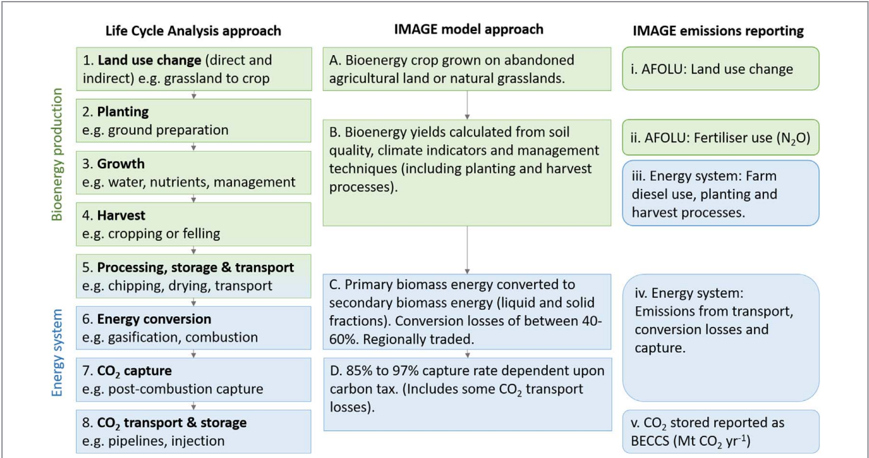
“Left column depicts the stages in a generalised BECCS system as it may be analysed in a LCA (stages 1–8) (modified from Thornley et al (2015) and Smith and Torn (2013)).”
MethodSelf-citationModelling the role of agriculture for the 20th century global terrestrial carbon balance
BONDEAU, A., SMITH, P. C., ZAEHLE, S., SCHAPHOFF, S., LUCHT, W., CRAMER, W., GERTEN, D., LOTZE‐CAMPEN, H., MÜLLER, C., REICHSTEIN, M., et al. (2007) · Global Change Biology · doi:10.1111/j.1365-2486.2006.01305.x · Cited by 1,296
The trouble with negative emissions
Anderson, K., & Peters, G. (2016) · Science · doi:10.1126/science.aah4567 · Cited by 1,252 · cited 2×
“…by IAMs in recent years, a default mitigation strategy emerges that would be consistent with the Paris Agreement’s targets: pathways show an early peak in emissions, followed by rapid emission reductions and finally a period of net negative emissions (Fuss et al 2014, Anderson and Peters 2016).”
BackgroundResult
Research works printed but not linked: 8
- 12. Carbon Sequestration Leadership Forum (CSLF) 2007 Estimation of CO 2 Storage capacity in Geological Media (Washington:
- GCCSI, 2016, The Global Storage Portfolio
- GCCSI, 2016, The Global Status of CCS: Summary Report
- Gough C, Glob. Sustain.
- Hendriks C, 2004, Ecofys Utrecht
- Jackson R, 2017, Environ. Res. Lett., 12
- Jones C D, 2016, Environ. Res. Lett., 11
- Larkin A, 2017, Clim. Policy
Cited by
The technological and economic prospects for CO2 utilization and removal
Hepburn, C., Adlen, E., Beddington, J., Carter, E. A., Fuss, S., Mac Dowell, N., Minx, J. C., Smith, P., & Williams, C. K. (2019) · Nature · doi:10.1038/s41586-019-1681-6 · Cited by 2,523
The negative emission potential of alkaline materials
Renforth, P. (2019) · Nature Communications · doi:10.1038/s41467-019-09475-5 · Cited by 403
Land-use emissions play a critical role in land-based mitigation for Paris climate targets
Harper, A. B., Powell, T., Cox, P. M., House, J., Huntingford, C., Lenton, T. M., Sitch, S., Burke, E., Chadburn, S. E., Collins, W. J., et al. (2018) · Nature Communications · doi:10.1038/s41467-018-05340-z · Cited by 335
“Emissions along the way are accounted for in the transportation and energy systems 32 in IMAGE, but are included in the JULES ef fi ciency factor.”
Evaluating climate geoengineering proposals in the context of the Paris Agreement temperature goals
Lawrence, M. G., Schäfer, S., Muri, H., Scott, V., Oschlies, A., Vaughan, N. E., Boucher, O., Schmidt, H., Haywood, J., & Scheffran, J. (2018) · Nature Communications · doi:10.1038/s41467-018-05938-3 · Cited by 305
Self-citationEnergy requirements and carbon emissions for a low-carbon energy transition
Slameršak, A., Kallis, G., & O’Neill, D. W. (2022) · Nature Communications · doi:10.1038/s41467-022-33976-5 · Cited by 297
Agriculture, Forestry and Other Land Uses (AFOLU)
(2023) · Climate Change 2022 - Mitigation of Climate Change · doi:10.1017/9781009157926.009 · Cited by 249
Uncertain storage prospects create a conundrum for carbon capture and storage ambitions
Lane, J., Greig, C., & Garnett, A. (2021) · Nature Climate Change · doi:10.1038/s41558-021-01175-7 · Cited by 199
Sharmina, M., Edelenbosch, O. Y., Wilson, C., Freeman, R., Gernaat, D. E. H. J., Gilbert, P., Larkin, A., Littleton, E. W., Traut, M., van Vuuren, D. P., et al. (2021) · Climate Policy · doi:10.1080/14693062.2020.1831430 · Cited by 178
“…from the Reference pathway to 2°C to 1.5°C. Studies acknowledge the technological limits of powering this sector with electricity (Luh et al., 2020; Vercoulen et al., 2018; Vine & Ye, 2018), compared to, for example, the transport sector (Mai et al., 2018), and suggest an increased use of…”
InfluentialSelf-citationBioenergy for climate change mitigation: Scale and sustainability
Calvin, K., Cowie, A., Berndes, G., Arneth, A., Cherubini, F., Portugal‐Pereira, J., Grassi, G., House, J. I., Johnson, F. X., Popp, A., et al. (2021) · GCB Bioenergy · doi:10.1111/gcbb.12863 · Cited by 185
“However, the specific effects depend on initial land conditions (Creutzig et al., 2015; Daioglou et al., 2017; Vaughan et al., 2018; Wicke et al., 2008), feedstock type and management practice (Davis et al., 2013).”
BackgroundImpacts of 1.5°C Global Warming on Natural and Human Systems
IPCC (2022) · Cambridge University Press eBooks · doi:10.1017/9781009157940.005 · Cited by 218
Almena, A., Thornley, P., Chong, K., & Röder, M. (2022) · Biomass and Bioenergy · doi:10.1016/j.biombioe.2022.106406 · Cited by 393
Negative emissions and international climate goals—learning from and about mitigation scenarios
Hilaire, J., Minx, J. C., Callaghan, M. W., Edmonds, J., Luderer, G., Nemet, G. F., Rogelj, J., & del Mar Zamora, M. (2019) · Climatic Change · doi:10.1007/s10584-019-02516-4 · Cited by 110
Mapping feasibilities of greenhouse gas removal: Key issues, gaps and opening up assessments
Forster, J., Vaughan, N. E., Gough, C., Lorenzoni, I., & Chilvers, J. (2020) · Global Environmental Change · doi:10.1016/j.gloenvcha.2020.102073 · Cited by 117
“Each group contains a roughly equal number of issues, the only outlier is the impact on albedo, an element previously identified as absent from models (Vaughan and Gough, 2016; Vaughan et al., 2018), but which we assessed to be possible to include in future model developments.”
BackgroundSelf-citationChallenges to the use of BECCS as a keystone technology in pursuit of 1.5⁰C
Gough, C., Garcia-Freites, S., Jones, C., Mander, S., Moore, B., Pereira, C., Röder, M., Vaughan, N., & Welfle, A. (2018) · Global Sustainability · doi:10.1017/sus.2018.3 · Cited by 98
“5 °C mitigation scenarios, whether or not they include BECCS [32].”
BackgroundSelf-citationProspects of carbon capture, utilization and storage for mitigating climate change
Roy, P., Mohanty, A. K., & Misra, M. (2023) · Environmental Science Advances · doi:10.1039/d2va00236a · Cited by 147
“11 – 13 The methods of post-combustion carbon capture include adsorption by solid materials and aqueous solutions 14 along with a ff orestation and in situ injection and storage of carbon in the form of treated biomass (biocarbon/biochar).”
Donnison, C. L., Holland, R. A., Hastings, A., Armstrong, L., Eigenbrod, F., & Taylor, G. (2020) · GCB Bioenergy · doi:10.1111/gcbb.12695 · Cited by 102
“5°C and 2°C emission pathways, with the resulting scenarios necessitating an unprecedented scale of land-use required for bioenergy crops (Smith et al., 2016; Vaughan et al., 2018).”
BackgroundTargeting carbon dioxide removal in the European Union
Geden, O., Peters, G. P., & Scott, V. (2018) · Climate Policy · doi:10.1080/14693062.2018.1536600 · Cited by 105
“…would be one of the largest CDR contributors over the course of the twenty-first century, delivering cumulative CDR of at least 50 Gt CO2, more than ten times the EU’s current annual emissions, but not more than 10% of the estimated global CDR volumes (Peters & Geden, 2017; Vaughan et al., 2018).”
BackgroundWorkman, M. H. W., Dooley, K., Lomax, G., Maltby, J., & Darch, G. J. C. (2019) · Environmental Science & Policy · doi:10.1016/j.envsci.2019.10.002 · Cited by 97
“…use emissions embedded in BECCS pathways can be large, potentially o ff setting the mitigation bene fi ts of BECCS in situations of poor governance where soil erosion, land degradation or indirect land-use change occur as a result of BECCS (Wiltshire and Davies-Barnard, 2015; Vaughan et al., 2018).”
Yang, B., Wei, Y., Liu, L.-C., Hou, Y., Zhang, K., Yang, L., & Feng, Y. (2021) · Energy Economics · doi:10.1016/j.eneco.2021.105173 · Cited by 97
Delbecq, S., Fontane, J., Gourdain, N., Planès, T., & Simatos, F. (2023) · Progress in Aerospace Sciences · doi:10.1016/j.paerosci.2023.100920 · Cited by 109
Advancing frontiers in CO2 capture: The renaissance of biomass-derived carbon materials
Umar, M., Yusuf, B. O., Aliyu, M., Hussain, I., Alhassan, A. M., Awad, M. M., Taialla, O. A., Ali, B., Alhooshani, K. R., & Ganiyu, S. A. (2024) · Coordination Chemistry Reviews · doi:10.1016/j.ccr.2024.216380 · Cited by 69
Raza, S., Orooji, Y., Ghasali, E., Hayat, A., Karimi‐Maleh, H., & Lin, H. (2022) · Journal of CO2 Utilization · doi:10.1016/j.jcou.2022.102295 · Cited by 66
Butnar, I., Li, P., Strachan, N. D., Portugal‐Pereira, J., Gambhir, A., & Smith, P. (2020) · Environmental Research Letters · doi:10.1088/1748-9326/ab5c3e · Cited by 76
The BECCS Implementation Gap–A Swedish Case Study
Fuss, S., & Johnsson, F. (2021) · Frontiers in Energy Research · doi:10.3389/fenrg.2020.553400 · Cited by 58
“While the estimates vary widely, most of the literature indicates that biomass energy could be scaled to something between 100 and 300 EJ per year by mid-century (Smith et al., 2014; Vaughan et al., 2018).”
BackgroundCCS industrial clusters: Building a social license to operate
Gough, C., & Mander, S. L. (2022) · International journal of greenhouse gas control · doi:10.1016/j.ijggc.2022.103713 · Cited by 66
Self-citationBeyond Social Acceptability: Applying Lessons from CCS Social Science to Support Deployment of BECCS
Gough, C., & Mander, S. L. (2019) · Current Sustainable/Renewable Energy Reports · doi:10.1007/s40518-019-00137-0 · Cited by 76
Self-citationDelivering carbon negative electricity, heat and hydrogen with BECCS – Comparing the options
Bui, M., Zhang, D., Fajardy, M., & Dowell, N. M. (2021) · International Journal of Hydrogen Energy · doi:10.1016/j.ijhydene.2021.02.042 · Cited by 66
Understanding the timing and variation of greenhouse gas emissions of forest bioenergy systems
Röder, M., Thiffault, É., Martínez-Alonso, C., Senez-Gagnon, F., Paradis, L., & Thornley, P. (2019) · Biomass and Bioenergy · doi:10.1016/j.biombioe.2018.12.019 · Cited by 326
A perspective on biofuels use and CCS for GHG mitigation in the marine sector
Mukherjee, A., Bruijnincx, P., & Junginger, M. (2020) · iScience · doi:10.1016/j.isci.2020.101758 · Cited by 53
Over-reliance on land for carbon dioxide removal in net-zero climate pledges
Dooley, K., Christiansen, K. L., Lund, J. F., Carton, W., & Self, A. (2024) · Nature Communications · doi:10.1038/s41467-024-53466-0 · Cited by 76
“31.”
Lehtveer, M., & Emanuelsson, A. H. (2021) · Frontiers in Climate · doi:10.3389/fclim.2021.647276 · Cited by 60
Li, L., Li, J., Peng, L., Wang, X., & Sun, S. (2023) · The Science of The Total Environment · doi:10.1016/j.scitotenv.2023.164723 · Cited by 47
Zhang, S., Zhou, S., Yang, X., Xi, W., Zheng, K., Chu, C., Ju, M., & Liu, L. (2019) · Environmental Science and Pollution Research · doi:10.1007/s11356-019-07267-4 · Cited by 50
Exploring Narratives on Negative Emissions Technologies in the Post-Paris Era
Otto, D., Thoni, T., Wittstock, F., & Beck, S. (2021) · Frontiers in Climate · doi:10.3389/fclim.2021.684135 · Cited by 51
Can biomass supply meet the demands of bioenergy with carbon capture and storage (BECCS)?
Jones, M. B., & Albanito, F. (2020) · Global Change Biology · doi:10.1111/gcb.15296 · Cited by 52
“…have been increasingly raised that ungrounded optimism in NETs potential could result in delayed reductions in gross CO2 emission, with consequent high risk of overshooting of global temperature targets (Anderson & Peters, 2016; Fuss et al., 2014; Kato & Yamagata, 2014; Vaughan et al., 2018).”
BackgroundCabral, R. P., Bui, M., & Dowell, N. M. (2019) · International journal of greenhouse gas control · doi:10.1016/j.ijggc.2019.05.020 · Cited by 52
Recognizing the Value of Collaboration in Delivering Carbon Dioxide Removal
Fajardy, M., & Dowell, N. M. (2020) · One Earth · doi:10.1016/j.oneear.2020.07.014 · Cited by 51
Shepherd, A., Littleton, E. W., Clifton‐Brown, J., Martin, M., & Hastings, A. (2020) · GCB Bioenergy · doi:10.1111/gcbb.12671 · Cited by 47
“Vaughan et al. (2018) investigated the BECCS assumptions relating to low emission scenarios, including biomass resource and land use.”
BackgroundMethodSelf-citationFörster, J., Beck, S., Borchers, M., Gawel, E., Korte, K., Markus, T., Mengis, N., Oschlies, A., Schaller, R., Stevenson, A., et al. (2022) · Frontiers in Climate · doi:10.3389/fclim.2022.758628 · Cited by 47
Cavalett, O., Norem Slettmo, S., & Cherubini, F. (2018) · Sustainability · doi:10.3390/su10114068 · Cited by 35
Freshwater requirements of large-scale bioenergy plantations for limiting global warming to 1.5 °C
Stenzel, F., Gerten, D., Werner, C., & Jägermeyr, J. (2019) · Environmental Research Letters · doi:10.1088/1748-9326/ab2b4b · Cited by 41
“…to implement such high efficiencies at the global level within the next decades due to multiple obstacles such as a lack of socio-political acceptance, policy incentives, and technological readiness (Fuss et al 2014, Reiner 2016, Fridahl and Lehtveer 2018, Gough et al 2018, Vaughan et al 2018).”
BackgroundUnlocking the potential of BECCS with indigenous sources of biomass at a national scale
Zhang, D., Bui, M., Fajardy, M., Patrizio, P., Kraxner, F., & Dowell, N. M. (2020) · Sustainable Energy & Fuels · doi:10.1039/c9se00609e · Cited by 44
Lefvert, A., & Grönkvist, S. (2023) · Energy Policy · doi:10.1016/j.enpol.2023.113882 · Cited by 39
Krause, A., Knoke, T., & Rammig, A. (2020) · GCB Bioenergy · doi:10.1111/gcbb.12675 · Cited by 41
“As the LUH2 scenarios provide no information about the application of bioenergy without CCS versus BECCS, we assume CCS being first applied in the year 2031 (Vaughan et al., 2018) and then steadily increasing to 100% in 2080.”
Low, S., & Honegger, M. (2020) · Risk Analysis · doi:10.1111/risa.13565 · Cited by 37
“Assessments dispute whether limiting BECCS to current bioenergy production levels, or using marginal land and residues (rather than food crops) can significantly forestall these risks (Vaughan et al., 2018).”
BackgroundBach, L. T., Vaughan, N. E., Law, C. S., & Williamson, P. C. (2024) · Elementa Science of the Anthropocene · doi:10.1525/elementa.2023.00034 · Cited by 41
Self-citationGautam, S., Baral, N. R., Mishra, U., & Scown, C. D. (2023) · Proceedings of the National Academy of Sciences · doi:10.1073/pnas.2312667120 · Cited by 29
“Future GHG emission scenarios that limit the mean global temperature to 1 °C or 2 °C above preindustrial era heavily rely on biomass energy with carbon capture and storage (8).”
Limits to climate action - Narratives of bioenergy with carbon capture and storage
Haikola, S., Anshelm, J., & Hansson, A. (2021) · Political Geography · doi:10.1016/j.polgeo.2021.102416 · Cited by 40
“…the debate, as well as in the way the debate is discursively limited to a conception of economic growth ill-suited for profound energy-systems change, the scenarios produced by integrated assessment models fail in the stated intent of opening radically different futures (e.g. Vaughan et al., 2018).”
Calcium looping post-combustion CO2 capture in sugarcane bagasse fuelled power plants
Neto, S. D. A., Szklo, A. S., & Rochedo, P. (2021) · International journal of greenhouse gas control · doi:10.1016/j.ijggc.2021.103401 · Cited by 31
Tree rings as indicators of climatic variation in the Trans-Mexican Volcanic Belt, central Mexico
Carlón-Allende, T., Villanueva‐Díaz, J., Castro, G. S., Mendoza, M. E., & Macías, J. L. (2020) · Ecological Indicators · doi:10.1016/j.ecolind.2020.106920 · Cited by 26
Waller, L., Rayner, T., & Chilvers, J. (2021) · Science Technology & Human Values · doi:10.1177/01622439211043568 · Cited by 28
“Such accounts present BECCS as first of all an invention that enabled energy systems models (and relatedly, the IAMs used for IPCC assessments) to solve problems relating to emissions limits and energy use (Vaughan et al. 2018).”
MethodGeosciences and the Energy Transition
Gardiner, N. J., Roberts, J. J., Johnson, G., Smıth, D. J., Bond, C. E., Knipe, R. J., Haszeldine, S., Gordon, S., & O’Donnell, M. (2023) · Earth Science Systems and Society · doi:10.3389/esss.2023.10072 · Cited by 29
Engineered CO2 Removal, Climate Restoration, and Humility
Friedmann, S. J. (2019) · Frontiers in Climate · doi:10.3389/fclim.2019.00003 · Cited by 24
“Engineered approaches to CDR include direct air capture of CO2 (Ishimoto et al., 2017; Sandalow et al., 2018), accelerated weathering of rocks (Schuiling and Krijgsman, 2006) and bioenergy plus carbon capture and storage or BECCS (Sanchez et al., 2018; Vaughan et al., 2018).”
Fire weather compromises forestation-reliant climate mitigation pathways
Jäger, F., Schwaab, J., Quilcaille, Y., Windisch, M. G., Doelman, J., Frank, S., Gusti, M. I., Havlík, P., Humpenöder, F., Augustynczik, A. L. D., et al. (2024) · Earth System Dynamics · doi:10.5194/esd-15-1055-2024 · Cited by 29
Patange, O., GARG, A. K., & Jayaswal, S. (2022) · Energy · doi:10.1016/j.energy.2022.124508 · Cited by 23
Projections of wildfire risk and activities under 1.5 °C and 2.0 °C global warming scenarios
Peng, X., Yu, M., Chen, H., Zhou, B., Shi, Y., & Yu, L. (2023) · Environmental Research Communications · doi:10.1088/2515-7620/acbf13 · Cited by 24
A study on CO2 absorption using hybrid solvents in packed columns
Kumar, R., Ahmadi, M. H., Rajak, D. K., & Nazari, M. A. (2019) · International Journal of Low-Carbon Technologies · doi:10.1093/ijlct/ctz051 · Cited by 19
Effect of atmosphere of SO2 coexisted with oxidizing gas on mercury removal under oxy-fuel condition
Shen, H., Wang, H., Shen, C., Wu, J., Zhu, Y., Shi, W., Zhang, X., & Ying, Z. (2020) · Chemosphere · doi:10.1016/j.chemosphere.2020.127525 · Cited by 18
Francini, M., Chieffallo, L., Palermo, A., & Viapiana, M. F. (2020) · Sustainability · doi:10.3390/su12229454 · Cited by 20
Analysis of Agricultural Biomass Energy Use and Greenhouse Gas Reduction Evidence from China
Li, D. (2022) · Journal of Environmental and Public Health · doi:10.1155/2022/6126944 · Cited by 16
“Many scholars have calculated and predicted the amount of biomass energy in the world [12, 13], and IPCC [14] estimated that the maximum theoretical potential of global biomass energy was about 1500EJ/a, and the maximum potential of global biomass energy technology could reach 500EJ/a by 2050.”
BackgroundInterdisciplinary challenges in bio-energy carbon capture utilization & storage deployment: A review
Yeung, F. D., Sammarchi, S., Wang, E., Gao, Q., & Li, J. (2024) · Carbon Capture Science & Technology · doi:10.1016/j.ccst.2024.100283 · Cited by 32
Eufrade-Junior, H. D. J., Leonello, E. C., Spadim, E. R., Rodrigues, S. A., de Azevedo, G. B., & Guerra, S. P. S. (2020) · Biomass and Bioenergy · doi:10.1016/j.biombioe.2020.105784 · Cited by 19
Recent Development of Biomass Energy as a Sustainable Energy Source to Mitigate Environmental Change
Haregu, S., Likna, Y., Tadesse, D., & Masi, C. (2023) · Energy, environment, and sustainability · doi:10.1007/978-981-99-3002-9_8 · Cited by 20
CO2 absorption-desorption cycles: Progress, gaps, and future
Borhani, T. N. G., Abbasi, M. R., Hosseinpour, M., Salimi, M., Afkhamipour, M., Oko, E., Campbell, K. S., & Khallaghi, N. (2024) · Carbon Capture Science & Technology · doi:10.1016/j.ccst.2024.100325 · Cited by 19
“Biomass conversion processes can have CO 2 emissions themselves; this technology is known as Biomass Energy (Bioenergy) with Carbon Capture and Storage (BECCS or BioCCS) ( Vaughan et al., 2018 ).”
Well-to-wake analysis of switchgrass to jet fuel via a novel co-fermentation of sugars and CO2
Pamula, A. S. P., Lampert, D. J., & Atiyeh, H. K. (2021) · The Science of The Total Environment · doi:10.1016/j.scitotenv.2021.146770 · Cited by 14
Sustainable Approaches to Realize Carbon Neutrality in China: A Case Study of Zhejiang Province
Shu, Y., Chen, J., Huang, Y., & Fu, W. (2022) · Journal of Marine Science and Engineering · doi:10.3390/jmse10101351 · Cited by 15
“5% of total CCS in the world in many low-emission scenarios, reflecting the probability of temperature control [84].”
BackgroundBlanc‐Betes, E., Gomez‐Casanovas, N., Hartman, M. D., Hudiburg, T. W., Khanna, M., Parton, W. J., & DeLucia, E. H. (2023) · Environmental Science & Technology · doi:10.1021/acs.est.3c05240 · Cited by 12
Anekwe, I. M. S., Tetteh, E. K., Akpasi, S. O., Joel, A. S., Armah, E. K., & Isa, Y. M. (2023) · Elsevier eBooks · doi:10.1016/b978-0-323-99429-3.00034-5 · Cited by 14
Xing, X., Xiong, Y., Wang, R., Gao, Y., Xu, S., Ciais, P., Gasser, T., Peñuelas, J., Sardans, J., Chen, J., et al. (2024) · Next Sustainability · doi:10.1016/j.nxsust.2024.100040 · Cited by 12
Alcalde, J., Johnson, G., & Roberts, J. J. (2025) · Communications Earth & Environment · doi:10.1038/s43247-025-02043-4 · Cited by 11
Energy and economic performances of stump and roots removal of eucalyptus for bioenergy
Angnes, G., de Almeida, B. O., Milan, M., & Romanelli, T. L. (2021) · Biomass and Bioenergy · doi:10.1016/j.biombioe.2021.106229 · Cited by 11
Bioenergy with carbon capture and storage
Clery, D. S., & Rackley, S. (2023) · Elsevier eBooks · doi:10.1016/b978-0-12-819663-2.00017-4 · Cited by 12
Regional variation in the effectiveness of methane-based and land-based climate mitigation options
Hayman, G. D., Comyn‐Platt, E., Huntingford, C., Harper, A., Powell, T., Cox, P. M., Collins, W. J., Webber, C. P., Lowe, J. A., Sitch, S. A., et al. (2021) · Earth System Dynamics · doi:10.5194/esd-12-513-2021 · Cited by 12
Coordinating the Deployment of Bioenergy with Carbon Capture and Storage
Schippers, E. J., da Costa, P., & Massol, O. (2022) · Science and Technology for Energy Transition · doi:10.2516/stet/2022018 · Cited by 11
From political to climate crisis
Cavalett, O. (2018) · Nature Climate Change · doi:10.1038/s41558-018-0228-4 · Cited by 10
Løvenskiold, A. C., Hu, X., Zhao, W., & Cherubini, F. (2022) · Geography and sustainability · doi:10.1016/j.geosus.2022.11.004 · Cited by 10
Advanced applications of green materials in supercapacitors
Goel, S., Munjal, M., Sharma, R. K., & Singh, G. (2021) · Elsevier eBooks · doi:10.1016/b978-0-12-820484-9.00014-3 · Cited by 12
Kicklighter, D. W., Lin, T., Zhang, J., Chen, M., Vörösmarty, C. J., Jain, A. K., & Melillo, J. M. (2023) · Frontiers in Environmental Science · doi:10.3389/fenvs.2023.1069451 · Cited by 13
“This bioenergy could be redirected to facilities for heat and power generation followed up with carbon capture and storage in geological formations (BECCS, Gough and Upham, 2011; Vaughan et al., 2018) to replace some fossil fuel use (Lippke et al.”
BackgroundSustainable use of Miscanthus for biofuel
Robson, P. R. H., Hastings, A., Brown, J. C., & McCalmont, J. P. (2020) · Burleigh Dodds series in agricultural science · doi:10.19103/as.2019.0027.15 · Cited by 10
“Notwithstanding these contributions 646 other sustainability characteristics discussed previously plus the importance of good 647 governance and the need for effective incentives are also significant factors in modelling the 648 potential of this new technology (Vaughan et al., 2018).”
BackgroundLittleton, E. W., Shepherd, A., Harper, A., Hastings, A., Vaughan, N. E., Doelman, J., van Vuuren, D. P., & Lenton, T. M. (2022) · GCB Bioenergy · doi:10.1111/gcbb.12982 · Cited by 8
“Future climate scenarios usually feature increasing use of biomass energy as a substantial and important component of total energy, in quantities significantly exceeding current supply (Rogelj et al., 2015; Vaughan et al., 2018).”
BackgroundSelf-citationHải, L. V., Hoa, P. D., Kim, J., & Lee, S. H. (2024) · Industrial Crops and Products · doi:10.1016/j.indcrop.2024.119508 · Cited by 8
Hayashi, A., Sano, F., & Akimoto, K. (2020) · Sustainability Science · doi:10.1007/s11625-020-00791-0 · Cited by 7
Jordan, M., Meisel, K., Dotzauer, M., Schindler, H., Schröder, J., Cyffka, K.-F., Dögnitz, N., Naumann, K., Schmid, C., Lenz, V., et al. (2024) · Energy Sustainability and Society · doi:10.1186/s13705-024-00464-1 · Cited by 13
Pyrolysis Chemistry and Mechanisms: Interactions of Primary Components
Chen, W., Chen, Y., Chen, H., & Yang, H. (2020) · Biofuels and biorefineries · doi:10.1007/978-981-15-2732-6_4 · Cited by 8
Alves, D. N. M., Tabarés, J. L. M., Rivo-López, E., Saavedra, Á., Fariña, M. E. A., Alonso, J., & Nunes, L. J. R. (2021) · International Journal of Sustainable Energy · doi:10.1080/14786451.2021.1899180 · Cited by 6
“When these principles are properly implemented and followed, biomass can be considered as an alternative and sustainable renewable energy source as natural resources will be able to recover (Vaughan et al. 2018; Lehtveer and Fridahl 2020).”
BackgroundAdvancing life cycle assessment of bioenergy crops with global land use models
Arvesen, A., Humpenöder, F., Gutiérrez, T. N., Gibon, T., Baustert, P., Dietrich, J. P., Stadler, K., Iordan, C.-M., Luderer, G., Popp, A., et al. (2024) · Environmental Research Communications · doi:10.1088/2515-7620/ad97ac · Cited by 6
Impact of abandoned land restoration on ecosystem services: a systematic review
Han, H., Yang, G., Ma, G., & Jian, Y. (2025) · Environmental Reviews · doi:10.1139/er-2025-0130 · Cited by 6
Negative Emissions: The Role and Response of the Climate System
JONES, C. D. (2022) · Royal Society of Chemistry eBooks · doi:10.1039/9781839165245-00027 · Cited by 5
Modeling of Ceria Reduction in a Solar Thermochemical Reactor via DEM Method
Zhang, H., & Smith, J. D. (2021) · Journal of Energy and Power Technology · doi:10.21926/jept.2101008 · Cited by 3
Shan, Y., & Lü, X. (2021) · Elsevier eBooks · doi:10.1016/b978-0-12-818862-0.00008-x · Cited by 3
Yue, H., Rao, Y., Meng, J., Zhang, X., & Chen, R. (2020) · Energy Sources Part A Recovery Utilization and Environmental Effects · doi:10.1080/15567036.2020.1843568 · Cited by 3
“…and Storage (BECCS) is heavily relied upon in scenarios of future emissions that half of the biomass resource is derived from agricultural and forestry residues and a half from dedicated bioenergy crops grown on abandoned agricultural land and expansion into grasslands (Vaughan et al. 2018).”
Hải, L. V., Kwon, G., Dadigala, R., Bandi, R., Han, S.-Y., Quang, N. D., Shin, H.-O., & Lee, S.-H. (2025) · Journal of Green Building · doi:10.3992/jgb.20.1.221 · Cited by 2
A Numerical Modeling Study on the Earth’s Surface Brightening Effect of Cirrus Thinning
Shi, X., Liu, Y., & Liu, J. (2024) · Atmosphere · doi:10.3390/atmos15020189 · Cited by 4
Andersson, D. (2024) · Futures · doi:10.1016/j.futures.2024.103397 · Cited by 4
Keiner, D., Mühlbauer, A., Gerhards, C., & Breyer, C. (2025) · Environmental Research Letters · doi:10.1088/1748-9326/adccd9 · Cited by 5
Impact of Climate Change and Abiotic Stresses on Food Crop Production
Ranjan, S., Padhan, S. R., Kumar, S., Sow, S., Roy, D. K., Sahoo, R., Gitari, H. I., & Sadhu, S. (2025) · Sustainability Sciences in Asia and Africa · doi:10.1007/978-981-96-7699-6_4 · Cited by 5
C-LLAMA 1.0: a traceable model for food, agriculture, and land use
Ball, T., Vaughan, N. E., Powell, T. W., Lovett, A. A., & Lenton, T. M. (2022) · Geoscientific model development · doi:10.5194/gmd-15-929-2022 · Cited by 3
Self-citationProjected Changes in Terrestrial Vegetation and Carbon Fluxes under 1.5 °C and 2.0 °C Global Warming
Peng, X., Yu, M., & Chen, H. (2021) · Atmosphere · doi:10.3390/atmos13010042 · Cited by 2
Heimann, T., Wähling, L.-S., Honkomp, T., Delzeit, R., Pirrone, A., Schier, F., & Weimar, H. (2025) · Environmental Research Letters · doi:10.1088/1748-9326/ada16f · Cited by 2
“Since the use of primary biomass (bioenergy crops) raises sustainability concerns (Vaughan et al 2018), it seems important to capture experts’ expectations for their potential use.”
Bio jet fuel potentials in Europe from perennial grasses from abandoned cropland
Iordan, C.-M., & Morales, M. (2026) · Biomass and Bioenergy · doi:10.1016/j.biombioe.2026.109073 · Cited by 1
Metadata
- Authors
- Vaughan, N. E., Gough, C., Mander, S., Littleton, E. W., Welfle, A., Gernaat, D. E. H. J., & van Vuuren, D. P.
- Affiliations
- University of East Anglia (GB)
- University of Manchester (GB)
- University of Exeter (GB)
- Netherlands Environmental Assessment Agency (NL)
- Corresponding author
- Vaughan, Naomi E
- ORCID
- Venue
- Environmental Research Letters
- Publisher
- IOP Publishing
- Published
- 2018-03-28
- Volume
- 13
- Issue
- 4
- Pages
- 044014
- ISSN
- 1748-9326 (ISSN-L)
- OpenAlex
- W2794779044
- Semantic Scholar
- 06722bd8b09142c753410125641688556d2cebbc
- Cited by
- 114
- References
- 68
- Citations by year
- 2026: 4 · 2025: 7 · 2024: 13 · 2023: 14 · 2022: 15 · 2021: 22 · 2020: 18 · 2019: 14 · 2018: 7
- FWCI
- 23.19
- Type
- journal article
- Language
- en
- Open access
- gold
- doi.org
- Licence
- cc-by
- iopscience.iop.org/info/page/text-and-data-mining (tdm, 1 d)
- creativecommons.org/licenses/by/3.0/ (vor, 1 d)
- Locations
- Environmental Research Letters (publishedVersion, cc-by)
- UEA Digital Repository (University of East Anglia) (submittedVersion)
- DOAJ (DOAJ: Directory of Open Access Journals) (submittedVersion)
- Utrecht University Repository (Utrecht University) (submittedVersion, other-oa)
- Figshare (submittedVersion)
- Open Research Exeter (University of Exeter) (submittedVersion, cc-by)
- Research Explorer (The University of Manchester) (submittedVersion, other-oa)
- Funders
- Natural Environment Research Council (NE/P019951/1)
- Topics
- Social Sciences › Economics, Econometrics and Finance › Economics and Econometrics › Climate Change Policy and Economics
- Physical Sciences › Chemical Engineering › Filtration and Separation › Carbon Dioxide Capture Technologies
- Physical Sciences › Engineering › Electrical and Electronic Engineering › Integrated Energy Systems Optimization
- Keywords
- bioenergy with carbon capture and storage, low-emission scenarios, climate change mitigation, CO2 storage capacity, energy crops, land use change, soil carbon loss
About these checks
Registry, retraction, Cites and statistics results are computed, not judged, with one exception: a printed reference that no index lists is read once by a model before it counts as a citation error. Claims are extracted by a model and kept only when their quote appears verbatim in the text; each cited source is then checked, with a model’s help, for whether it says what the claim relies on. Those verdicts can be wrong — read the claim’s quote and the cited source before relying on one.
Statistics and arithmetic are recomputed, not judged.
Confidence bands are shown only for fields calibrated on our annotated test set. None is calibrated yet, so no band is shown.
What counts as a claim ›How we measure confidence ›How we check this ›
Are you an author, or do you see a problem with this page? Request a review
Data sources
Bibliographic data: Semantic Scholar, OpenAlex, Crossref.
Contains information from the Semantic Scholar Academic Graph Datasets, made available under the ODC Attribution License (ODC-BY 1.0).
Semantic Scholar’s data is described in: Kinney, R., et al. (2023). The Semantic Scholar Open Data Platform. arXiv:2301.10140.
