

Contrasting phagosome pH regulation and maturation in human M1 and M2 macrophages
Open accessThe DOI matches its Crossref record; 48 of the 48 references it cites were found in a registry or an index.
Abstract
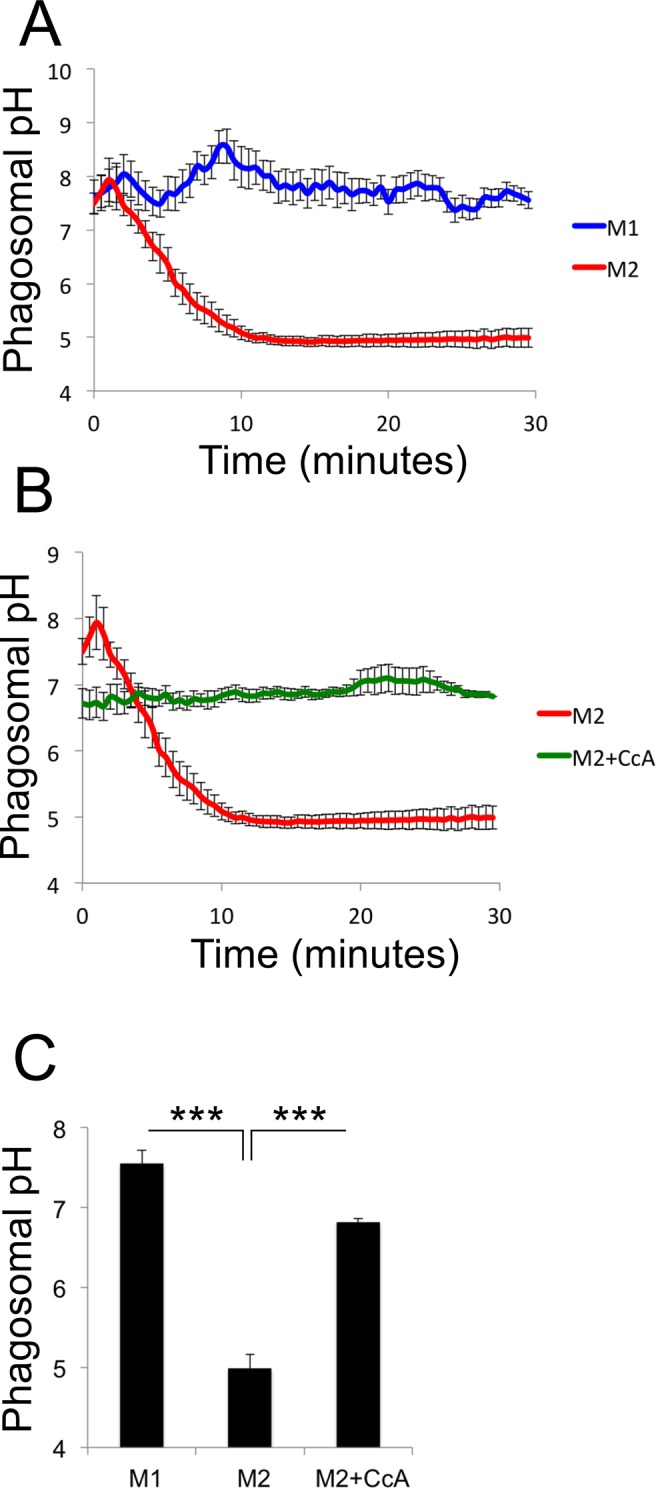
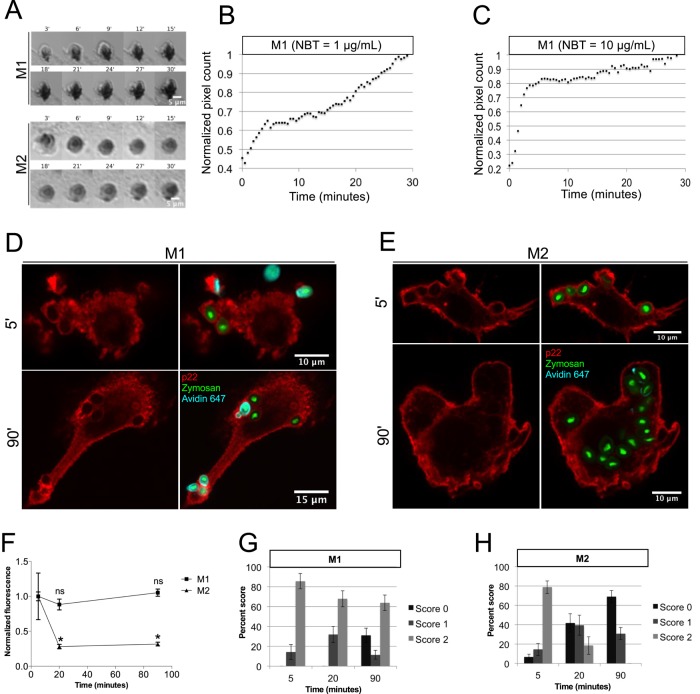
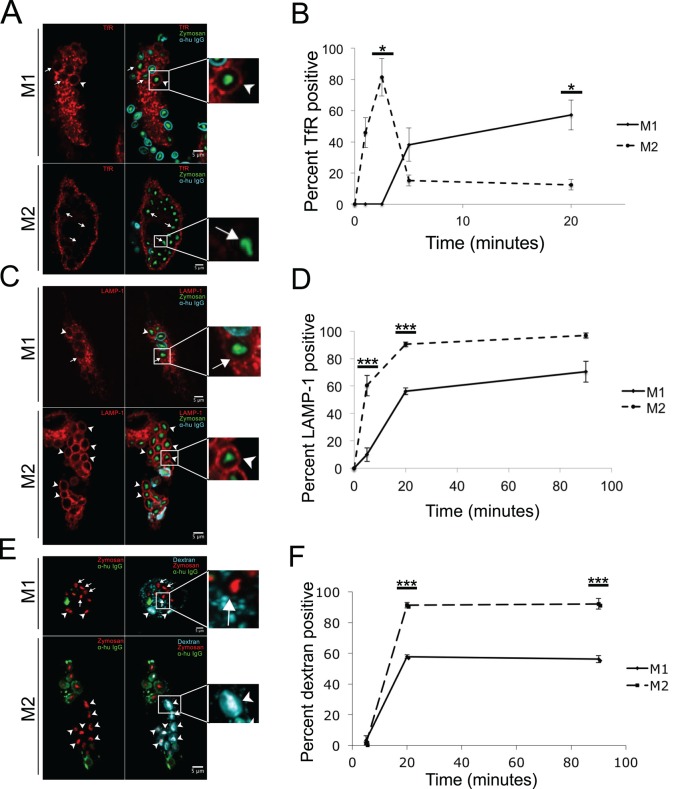
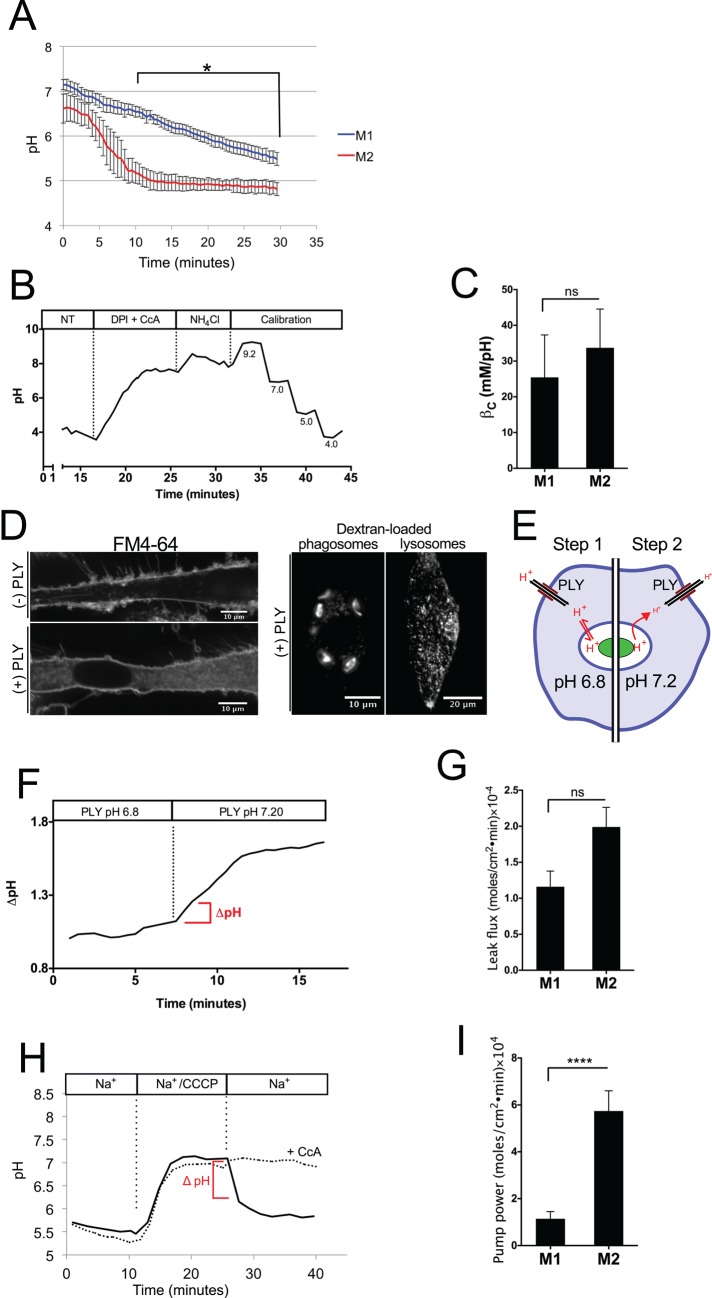
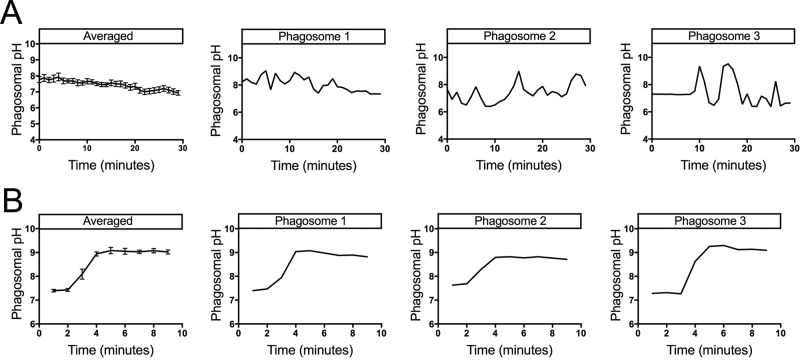
Macrophages respond to changes in environmental stimuli by assuming distinct functional phenotypes, a phenomenon referred to as macrophage polarization. We generated classically (M1) and alternatively (M2) polarized macrophages--two extremes of the polarization spectrum--to compare the properties of their phagosomes. Specifically, we analyzed the regulation of the luminal pH after particle engulfment. The phagosomes of M1 macrophages had a similar buffering power and proton (equivalent) leakage permeability but significantly reduced proton-pumping activity compared with M2 phagosomes. As a result, only the latter underwent a rapid and profound acidification. By contrast, M1 phagosomes displayed alkaline pH oscillations, which were caused by proton consumption upon dismutation of superoxide, followed by activation of a voltage- and Zn(2+)-sensitive permeation pathway, likely HV1 channels. The paucity of V-ATPases in M1 phagosomes was associated with, and likely caused by, delayed fusion with late endosomes and lysosomes. The delayed kinetics of maturation was, in turn, promoted by the failure of M1 phagosomes to acidify. Thus, in M1 cells, elimination of pathogens through deployment of the microbicidal NADPH oxidase is given priority at the expense of delayed acidification. By contrast, M2 phagosomes proceed to acidify immediately in order to clear apoptotic bodies rapidly and effectively.
Overview
The claims and statistics of this paper haven’t been checked yet.
Free: it reads the open-access text and checks the first 5 claims that cite a source we can check. Create a free account to check every claim.
Integrity signals
Registry
Cites
Statistics
Figures
Verification
Claims the paper makes
The claims and statistics of this paper haven’t been checked yet.
Free: it reads the open-access text and checks the first 5 claims that cite a source we can check. Create a free account to check every claim.
Claims other papers make about this one
Each is checked against this paper’s own text: does it say what the citing paper says it does?
The source backs part of the claim, not all of it — or backs it for a different population, condition or comparison.
In the citing paper
“In the case of A. fumigatus, this response to pH is essential, since the pH of the phagolysosome can be around 5 (409).”
From Aspergillus fumigatus and Aspergillosis in 2019 (2019) · cites this paper as [409]
Experimental — accuracy not yet measured
Self-check
Percentages, sums and reported differences re-computed from the paper’s own numbers.
The self-check needs the paper’s full text.
Citations
Cites
Exploring the full spectrum of macrophage activation
Mosser, D. M., & Edwards, J. P. (2008) · Nature Reviews Immunology · doi:10.1038/nri2448 · Cited by 9,144 · cited 2×
“We confirmed the occurrence of polarization measuring CD80 and CD200r (Supplemental Figure S1A), recently identified reliable markers for M1 and M2 cells, respectively (Jaguin et al., 2013).”
BackgroundThe chemokine system in diverse forms of macrophage activation and polarization
MANTOVANI, A., SICA, A., SOZZANI, S., ALLAVENA, P., VECCHI, A., & LOCATI, M. (2004) · Trends in Immunology · doi:10.1016/j.it.2004.09.015 · Cited by 6,534 · cited 2×
“M1 and M2 macrophages exhibit differential expression of phagocytic receptors (Mantovani et al., 2004).”
BackgroundRoos, A., & Boron, W. F. (1981) · Physiological Reviews · doi:10.1152/physrev.1981.61.2.296 · Cited by 2,511 · cited 3×
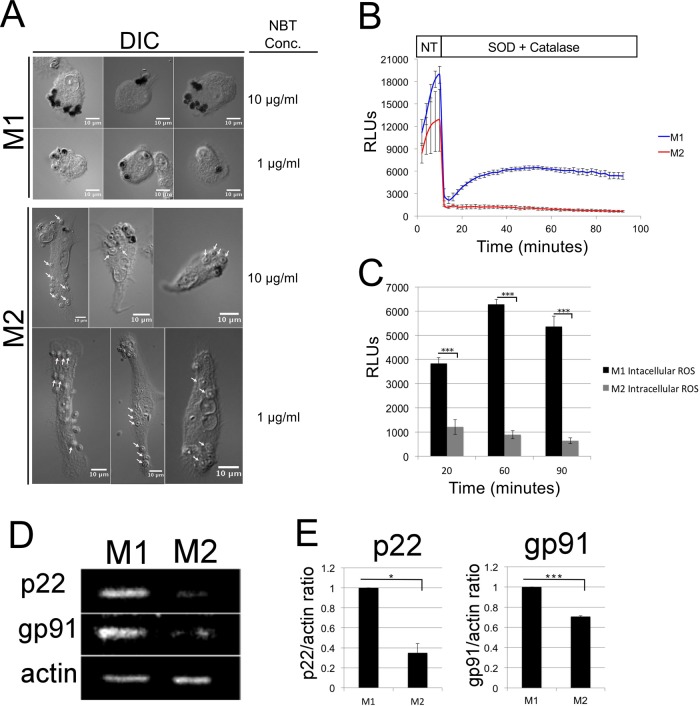
“Quantitative immunoblotting revealed that the transmembrane components of the NADPH oxidase—the gp91 and p22 subunits—are more abundant in M1 than in M2 cells (Figure 2D-E).”
BackgroundMethodTranscriptional regulation of macrophage polarization: enabling diversity with identity
Lawrence, T., & Natoli, G. (2011) · Nature Reviews Immunology · doi:10.1038/nri3088 · Cited by 2,284 · cited 4×
“The M1 phenotype is generally induced by proinflammatory cues such as bacterial infection, Toll-like receptor ligation, and exposure to the T-helper 1 cytokine interferon-γ (IFN-γ) and is characterized by an increased capacity to clear microbes and tumors, as well as by enhanced antigen-presenting efficiency (Lawrence…”
BackgroundInfluentialWink, D. A., & Mitchell, J. B. (1998) · Free Radical Biology and Medicine · doi:10.1016/s0891-5849(98)00092-6 · Cited by 1,606 · cited 1×
“Nitric oxide can react with superoxide (Wink and Mitchell, 1998; Wink et al., 1999, 2011), limiting its availability and therefore its ability to consume luminal H+.”
BackgroundPathways of Antigen Processing
Blum, J. S., Wearsch, P. A., & Cresswell, P. (2013) · Annual Review of Immunology · doi:10.1146/annurev-immunol-032712-095910 · Cited by 1,547
Modulation of macrophage phenotype by cell shape
McWhorter, F. Y., Wang, T., Nguyen, P., Chung, T., & Liu, W. F. (2013) · Proceedings of the National Academy of Sciences · doi:10.1073/pnas.1308887110 · Cited by 1,482 · cited 2×
“Quantitative immunoblotting revealed that the transmembrane components of the NADPH oxidase—the gp91 and p22 subunits—are more abundant in M1 than in M2 cells (Figure 2D-E).”
BackgroundGalli, S. J., Borregaard, N., & Wynn, T. A. (2011) · Nature Immunology · doi:10.1038/ni.2109 · Cited by 1,055 · cited 1×
“In contrast, the M2 phenotype is induced through stimulation by the STAT-6–activating cytokines interleukin-4 (IL-4) and/or IL-13 and serves homeostatic functions such as clearance of apoptotic cells and debris, tissue repair and remodeling, and suppression of inflammation (Galli et al., 2011).”
BackgroundSavina, A., Jancic, C., Hugues, S., Guermonprez, P., Vargas, P., Moura, I. C., Lennon-Duménil, A.-M., Seabra, M. C., Raposo, G., & Amigorena, S. (2006) · Cell · doi:10.1016/j.cell.2006.05.035 · Cited by 891 · cited 6×
“Once a cell was found that had bound fluorophore-labeled zymosan, pH measurements were performed by fluorescence ratiometric imaging using a filter wheel (Sutter Instruments, Novato, CA) to rapidly alternate between excitation filters.”
BackgroundMethodInfluentialNitric oxide and redox mechanisms in the immune response
Wink, D. A., Hines, H. B., Cheng, R. Y. S., Switzer, C. H., Flores-Santana, W., Vitek, M. P., Ridnour, L. A., & Colton, C. A. (2011) · Journal of Leukocyte Biology · doi:10.1189/jlb.1010550 · Cited by 765 · cited 1×
“Nitric oxide can react with superoxide (Wink and Mitchell, 1998; Wink et al., 1999, 2011), limiting its availability and therefore its ability to consume luminal H+.”
Background
Cited by
Items 101–200 of 230
The proinflammatory effects of macrophage-derived NADPH oxidase function in autoimmune diabetes
Feduska, J. M., & Tse, H. M. (2018) · Free Radical Biology and Medicine · doi:10.1016/j.freeradbiomed.2018.04.581 · Cited by 21
Sannigrahi, A., Nandi, I., Chall, S., Jawed, J. J., Halder, A., Majumdar, S., Karmakar, S., & Chattopadhyay, K. (2019) · ACS Chemical Biology · doi:10.1021/acschembio.9b00327 · Cited by 21
Seif, M., Hoppstädter, J., Breinig, F., & Kiemer, A. K. (2017) · European Journal of Pharmaceutics and Biopharmaceutics · doi:10.1016/j.ejpb.2017.03.008 · Cited by 21
Tiwari, R., Banerjee, S., Tyde, D., Saha, K. D., Ethirajan, A., Mukherjee, N., Chattopadhy, S., Pramanik, S. K., & Das, A. (2021) · Bioconjugate Chemistry · doi:10.1021/acs.bioconjchem.0c00667 · Cited by 20
Investigating Pathogenicity and Virulence of Staphylococcus pettenkoferi: An Emerging Pathogen
Plumet, L., Ahmad-Mansour, N., Huc-Brandt, S., Magnan, C., Yahiaoui-Martinez, A., Kissa, K., Pantel, A., Lavigne, J., & Molle, V. (2021) · International Journal of Molecular Sciences · doi:10.3390/ijms222413614 · Cited by 21
“The death of bacteria upon phagocytosis is due to the collaborative effort of immunological factors, involving NADPH oxidase stimulation and the generation of reactive oxygen radicals [32,33], acidification of phagosomes [34], peptidoglycan hydrolysis mediated by lysozymes, and activation of lysosomal proteases [35].”
BackgroundCao, C., Yin, H., Yang, B., Yue, Q., Wu, G., Gu, M., Zhang, Y., Yang, F., Dong, X., Wang, T., et al. (2023) · Advanced Science · doi:10.1002/advs.202304020 · Cited by 20
Andersson, A.-M., Larsson, M., Stendahl, O. I., & Blomgran, R. (2019) · Journal of Innate Immunity · doi:10.1159/000500861 · Cited by 23
Titania nanospikes activate macrophage phagocytosis by ligand-independent contact stimulation
Kartikasari, N., Yamada, M., Watanabe, J., Tiskratok, W., He, X., & Egusa, H. (2022) · Scientific Reports · doi:10.1038/s41598-022-16214-2 · Cited by 20
Regulatory Mechanism of SNAP23 in Phagosome Formation and Maturation
Hatsuzawa, K., & Sakurai, C. (2020) · Yonago acta medica · doi:10.33160/yam.2020.08.001 · Cited by 20
Mendoza‐Novelo, B., Castellano, L. E., Padilla‐Miranda, R. G., Lona‐Ramos, M. C., Cuéllar‐Mata, P., Vega‐González, A., Murguía‐Pérez, M., Mata‐Mata, J. L., & Ávila, E. E. (2016) · Journal of Biomedical Materials Research Part A · doi:10.1002/jbm.a.35825 · Cited by 18
The Role of Antigen Presentation in Tumor-Associated Macrophages
Stopforth, R. J., & Ward, E. S. (2020) · Critical Reviews in Immunology · doi:10.1615/critrevimmunol.2020034910 · Cited by 20
Koda, K., Keller, S., Kojima, R., Kamiya, M., & Urano, Y. (2022) · Analytical Chemistry · doi:10.1021/acs.analchem.2c01840 · Cited by 18
A guide to measuring phagosomal dynamics
Levin‐Konigsberg, R., & Mantegazza, A. R. (2020) · FEBS Journal · doi:10.1111/febs.15506 · Cited by 19
Duan, W., Wang, C., Jiang, Y., Sui, A., Li, Z., Wang, L., Lei, Z., Aime, S., Yu, J., & Li, C. (2023) · Advanced Healthcare Materials · doi:10.1002/adhm.202301000 · Cited by 17
Leishmania donovani Metacyclic Promastigotes Impair Phagosome Properties in Inflammatory Monocytes
Matte, C., Duque, G. A., & Descoteaux, A. (2021) · Infection and Immunity · doi:10.1128/iai.00009-21 · Cited by 22
“sumption of lumen protons by the highly active NADPH oxidase (33, 58).”
BackgroundRuan, Z., Jiang, L.-S., Li, Y., Lu, Z., Chen, X.-C., Zhang, X., & Liu, W. (2021) · Aquaculture · doi:10.1016/j.aquaculture.2021.737446 · Cited by 18
Xu, Y., Yu, Y., Zhou, Q., Xiang, Y., Chen, L., Meng, Y., She, X., Zou, F., & Meng, X. (2023) · The Science of The Total Environment · doi:10.1016/j.scitotenv.2023.164074 · Cited by 16
Nazifi, N., Tahmoorespur, M., Sekhavati, M. H., Haghparast, A., & Behroozikhah, A. M. (2019) · BMC Veterinary Research · doi:10.1186/s12917-019-2074-7 · Cited by 16
“activated macrophages (M1) initiate robust oxidative burst activity by phagocyte NADPH oxidase (Nox2) to increase the oxygen free radical (O2−) production and subsequently generating the H2O2, which is associated with the consumption of protons, or reacting with nitric oxide (NO) to create ONOO− that leads to killing…”
BackgroundTully, B. G., & Huntley, J. F. (2020) · Microorganisms · doi:10.3390/microorganisms8111639 · Cited by 16
“tularensis encounters low pH in both the macrophage phagosome and tick midgut [62,65].”
BackgroundPaun, R. A., Dumut, D. C., Centorame, A., Thuraisingam, T., Hajdúch, M., Mistrík, M., Džubák, P., Sanctis, J. B. D., Radzioch, D., & Tabrizian, M. (2022) · Pharmaceutics · doi:10.3390/pharmaceutics14030640 · Cited by 19
“In macrophages, nanoparticles are likely delivered through the phagosome via phagocytosis, a vesicle system that does not acidify in certain conditions [45,46].”
BackgroundChin, D., Flannagan, R. S., Tuffs, S. W., Chan, J. K., McCormick, J. K., & Heinrichs, D. E. (2022) · Infection and Immunity · doi:10.1128/iai.00099-22 · Cited by 17
“relative to M-CSF-derived macrophages (40).”
BackgroundThe role of macrophage ion channels in the progression of atherosclerosis
Xin, W., Singla, S., Liu, J. J., & Hong, L. (2023) · Frontiers in Immunology · doi:10.3389/fimmu.2023.1225178 · Cited by 16
Sakata, S., Miyawaki, N., McCormack, T. J., Arima, H., Kawanabe, A., Özkucur, N., Kurokawa, T., Jinno, Y., Fujiwara, Y., & Okamura, Y. (2016) · Biochimica et Biophysica Acta (BBA) - Biomembranes · doi:10.1016/j.bbamem.2016.09.008 · Cited by 16
“Timing of activation of Hv1 within specific time frame upon membrane depolarization is important for cellular functions, such as regulation of production of reactive oxygen species in phagocytes [2, 16-18].”
Dragotakes, Q., Jacobs, E., Ramirez, L. S., Yoon, O. I., Perez-Stable, C. T., Eden, H. E., Pagnotta, J., Vij, R., Bergman, A., D’Alessio, F. R., et al. (2022) · PLoS Pathogens · doi:10.1371/journal.ppat.1010697 · Cited by 15
Regulation of Neutrophil Functions by Hv1/VSOP Voltage-Gated Proton Channels
Okochi, Y., & Okamura, Y. (2021) · International Journal of Molecular Sciences · doi:10.3390/ijms22052620 · Cited by 14
“The difference in phagosomal pH between the two types of phagocytes has been explained by the amount of two proteins, NADPH oxidase and the proton pump, V-ATPase [39,40].”
BackgroundInfluentialTheranostic Properties of Crystalline Aluminum Phthalocyanine Nanoparticles as a Photosensitizer
Makarov, V., Pominova, D. V., Ryabova, A. V., Romanishkin, I. D., Voitova, A. V., Steiner, R. W., & Loschenov, V. B. (2022) · Pharmaceutics · doi:10.3390/pharmaceutics14102122 · Cited by 14
“We associate the differences in the fluorescence properties of AlPc NPs when they enter macrophages of different phenotypes with the difference in the biochemical composition of macrophage lysosomes [43].”
BackgroundImaging the Neutrophil Phagosome and Cytoplasm Using a Ratiometric pH Indicator
Foote, J. R., Levine, A. P., Béhé, P., Duchen, M. R., & Segal, A. W. (2017) · Journal of Visualized Experiments · doi:10.3791/55107 · Cited by 15
Flannagan, R. S., Watson, D. W., Surewaard, B. G. J., Kubes, P., & Heinrichs, D. E. (2018) · Cellular Microbiology · doi:10.1111/cmi.12869 · Cited by 16
Quantification of Efferocytosis by Single-cell Fluorescence Microscopy
Taruc, K., Yin, C., Wootton, D. G., & Heit, B. (2018) · Journal of Visualized Experiments · doi:10.3791/58149 · Cited by 16
Riazanski, V., Sui, Z., & Nelson, D. J. (2020) · iScience · doi:10.1016/j.isci.2020.101759 · Cited by 14
“It has been reported that, in monocytes and macrophages from these patients, the non-oxidative catabolic pathway is still intact but apparently incapable of carrying out pathogen killing efficiently and independently for some bacterial species (Chu et al., 2013).”
BackgroundTaefehshokr, N., Yin, C., & Heit, B. (2021) · PubMed · doi:10.14670/hh-18-252 · Cited by 18
Tao, P., Zhang, B., Lin, J., & Wang, S. (2021) · Annals of Translational Medicine · doi:10.21037/atm-21-6034 · Cited by 13
“Furthermore, the transcriptional and posttranscriptional mechanisms that govern the balance between M1 and M2 polarization is also reliant on the activity of lysosome in Mφ (16,17).”
The Emerging Role of Microglial Hv1 as a Target for Immunomodulation in Myelin Repair
Tang, Y., Wu, X., Li, J., Li, Y., Xu, X., Li, G., Zhang, P., Qin, C., Wu, L., Tang, Z., et al. (2023) · Aging and Disease · doi:10.14336/ad.2023.1107 · Cited by 12
“Moreover, the Hv1 channel also contributes to the cellular activation and phenotypic transformation of microglia by modulating the production of NOX-dependent ROS, the regulation of the luminal pH, and metabolic reprogramming [182, 191-193].”
BackgroundSantiago-Burgos, E. J., Stuckey, P. V., & Santiago-Tirado, F. H. (2022) · Frontiers in Cellular and Infection Microbiology · doi:10.3389/fcimb.2022.967486 · Cited by 12
“272 However, all macrophages, despite polarization, acidify their phagolysosomes to the same extent, albeit 273 with different kinetics (32).”
BackgroundMonitoring Phosphoinositide Fluxes and Effectors During Leukocyte Chemotaxis and Phagocytosis
Montaño-Rendón, F., Grinstein, S., & Walpole, G. F. W. (2021) · Frontiers in Cell and Developmental Biology · doi:10.3389/fcell.2021.626136 · Cited by 12
“between different phagocytic cells (Nordenfelt and Tapper, 2011; Canton et al., 2014).”
BackgroundSelf-citationDepierre, M., Jacquelin, L., & Niedergang, F. (2022) · Elsevier eBooks · doi:10.1016/b978-0-12-821618-7.00038-9 · Cited by 14
Wong, C., Pratiwi, F. W., Chen, P., Mou, C., & Hsu, S. (2020) · Advanced Biology · doi:10.1002/adbi.202000200 · Cited by 13
Radio-chemotherapy of glioblastoma cells promotes phagocytosis by macrophages in vitro
Lecoultre, M., Chliate, S., Espinoza, F. I., Tankov, S., Dutoit, V., & Walker, P. R. (2023) · Radiotherapy and Oncology · doi:10.1016/j.radonc.2023.110049 · Cited by 11
Ligation of FcγR Alters Phagosomal Processing of Protein via Augmentation of NADPH Oxidase Activity
Balce, D. R., Rybicka, J. M., Greene, C. J., Ewanchuk, B. W., & Yates, R. M. (2016) · Traffic · doi:10.1111/tra.12396 · Cited by 13
Vomocytosis of Cryptococcus neoformans cells from murine, bone marrow-derived dendritic cells
Pacifici, N. J., Cruz‐Acuña, M., Diener, A., Tu, A. B., Senthil, N., Han, H., & Lewis, J. S. (2023) · PLoS ONE · doi:10.1371/journal.pone.0280692 · Cited by 12
“For instance, M2 MF have been shown to undergo rapid and profound phagosomal acidification relative to M1 MFs [66].”
BackgroundSakurai, C., Itakura, M., Kinoshita, D., Arai, S., Hashimoto, H., Wada, I., & Hatsuzawa, K. (2018) · Molecular Biology of the Cell · doi:10.1091/mbc.e17-08-0523 · Cited by 13
“Similar findings have been reported in M1 (“classically activated”) macrophages that are activated by IFN-γ and/or lipopolysaccharide (LPS) but not in M2 (“alternatively activated”) macrophages (Canton et al., 2014).”
BackgroundResultInfluentialMeasuring Phagosomal pH by Fluorescence Microscopy
Canton, J., & Grinstein, S. (2016) · Methods in molecular biology · doi:10.1007/978-1-4939-6581-6_12 · Cited by 11
Self-citationHv1 channel in immune cells and pharmacology
Yan, L. Z., Liu, J. J., & Hong, L. (2025) · Pharmacological Research · doi:10.1016/j.phrs.2025.107885 · Cited by 10
“Treatment of 100 μM Zn 2+ significantly reduced superoxide production and phagosomal pH in macrophages [62,95].”
Roy, S., Sharma, A., & Ghosh, S. (2022) · Biochemical and Biophysical Research Communications · doi:10.1016/j.bbrc.2022.12.054 · Cited by 10
Kovács, T., Szabo, B. C., Chandrakanthi, K. R., Szekelyhidi, V., Nagy, P., Varga, Z., Panyi, G., & Zákány, F. (2024) · Frontiers in Immunology · doi:10.3389/fimmu.2024.1487578 · Cited by 9
Mzyk, A., Reyes-San-Martin, C., Doğan, Y., Woudstra, W., Zhang, Y., Yilmaz, E., Bron, R., de Haan-Visser, W. H., Berg‐Sørensen, K., & Schirhagl, R. (2025) · Acta Biomaterialia · doi:10.1016/j.actbio.2025.04.024 · Cited by 10
About the Transient Effects of Synthetic Amorphous Silica: An In Vitro Study on Macrophages
Torres, A., Collin‐Faure, V., Fenel, D., Sergent, J., & Rabilloud, T. (2022) · International Journal of Molecular Sciences · doi:10.3390/ijms24010220 · Cited by 9
“Moreover, it is known that different polarizations of macrophages induce different pHs in the phagosome, with M2 macrophages showing acidic phagosomes and M1 macrophages showing more neutral phagosomes [36].”
BackgroundLipin-1 restrains macrophage lipid synthesis to promote inflammation resolution
Bamgbose, T. T., Schilke, R. M., Igiehon, O. O., Nkadi, E. H., Binwal, M., Custis, D., Bharrhan, S., Schwarz, B. H., Bohrnsen, E., Bosio, C. M., et al. (2025) · The Journal of Immunology · doi:10.1093/jimmun/vkae010 · Cited by 10
Timing of Phagosome Maturation Depends on Their Transport Switching from Actin to Microtubule Tracks
Yu, Y., Zhang, Z., & Yu, Y. (2023) · The Journal of Physical Chemistry B · doi:10.1021/acs.jpcb.3c05647 · Cited by 11
Interleukin‐34 permits Porphyromonas gingivalis survival and NF‐κB p65 inhibition in macrophages
Almarghlani, A. A., Settem, R. P., Croft, A. J., Metcalfe, S., Giangreco, M., & Kay, J. G. (2022) · Molecular Oral Microbiology · doi:10.1111/omi.12366 · Cited by 10
Kendall, R. L., Ray, J. L., Hamilton, R. F., & Holian, A. (2023) · Toxicology and Applied Pharmacology · doi:10.1016/j.taap.2023.116400 · Cited by 9
Poly- d -lysine coated nanoparticles to identify pro-inflammatory macrophages
Hernandez, D. S., Schunk, H. C., Shankar, K. M., Rosales, A. M., & Suggs, L. J. (2020) · Nanoscale Advances · doi:10.1039/d0na00373e · Cited by 8
Customizable live-cell imaging chambers for multimodal and multiplex fluorescence microscopy
Tepperman, A., Zheng, D. J., Taka, M. A., Vrieze, A. M., Lam, A. L., & Heit, B. (2020) · Biochemistry and Cell Biology · doi:10.1139/bcb-2020-0064 · Cited by 8
Macrophage imaging and subset analysis using single-cell RNA sequencing
Arlauckas, S. P., Oh, N., Li, R., Weissleder, R., & Miller, M. A. (2020) · Nanotheranostics · doi:10.7150/ntno.50185 · Cited by 10
“[83] Canton J, Khezri R, Glogauer M, Grinstein S.”
BackgroundMalmberg, P., Lopes, V. R., Hulsart‐Billström, G., Gallinetti, S., Illies, C., Linder, L. K. B., & Birgersson, U. (2021) · ACS Applied Bio Materials · doi:10.1021/acsabm.1c00513 · Cited by 8
Pospisilova, M., Dreus, A., Matheova, P., Schmidtova, J., Pravdova, B., Blažíková, M., Čapek, M., & Černý, O. (2025) · PLoS Pathogens · doi:10.1371/journal.ppat.1013728 · Cited by 7
“Consistent with this, the pH of individual phagosomes in macrophages was shown to vary [48,49].”
Embryonic-Derived Myb− Macrophages Enhance Bacterial Clearance and Improve Survival in Rat Sepsis
Jerkić, M., Litvack, M. L., Gagnon, S., Otulakowski, G., Zhang, H., Rotstein, O. D., Kavanagh, B. P., Post, M., & Laffey, J. G. (2021) · International Journal of Molecular Sciences · doi:10.3390/ijms22063190 · Cited by 14
“coli particles, while reactive oxygen species (ROS) production was determined using the Zymosan/Nitroblue tetrazolium (NBT) assay [40,41].”
MethodEndotoxin Tolerance in Abdominal Aortic Aneurysm Macrophages, In Vitro: A Case–Control Study
Meital, L. T., Windsor, M., Maynard, A. E., Schulze, K., Magee, R., O’Donnell, J., Jha, P., Meital, C. Y., Perissiou, M., Coverdale, S. G. M., et al. (2020) · Antioxidants · doi:10.3390/antiox9090896 · Cited by 9
“Macrophages, derived from circulating monocytes or monocyte reservoirs in the spleen, are phagocytic immune cells with an ability to assume distinct polarization states in response to environmental stimuli [5].”
BackgroundMacrophage: A Key Player of Teleost Immune System
Sinha, R. (2022) · IntechOpen eBooks · doi:10.5772/intechopen.103804 · Cited by 7
Zhang, Y., Béland, L., Roussel, S., Bertrand, N., Hébert, S. S., & Vallières, L. (2024) · Journal of Leukocyte Biology · doi:10.1093/jleuko/qiae059 · Cited by 6
Rubis, G. D., Chakraborty, A., Paudel, K. R., Wang, C., Kannaujiya, V., Wich, P. R., Hansbro, P. M., Samuel, C. S., Oliver, B. G. G., & Dua, K. (2024) · Chemico-Biological Interactions · doi:10.1016/j.cbi.2024.111059 · Cited by 6
Olatunde, A., Abell, L., Landuyt, A. E., & Schwartz, E. H. (2018) · PLoS ONE · doi:10.1371/journal.pone.0196591 · Cited by 6
Liu, F., Meng, F., Hong, X., Giri, A. K., Asim, M. H., Chen, Z., Chen, Y., Lin, Y., He, L., Bu, Q., et al. (2025) · Advanced Healthcare Materials · doi:10.1002/adhm.202502251 · Cited by 7
Phagosome Maturation in Macrophages is Enhanced by p38α MAPK Signaling
Shah, M., Kirthivasan, N., Chakraborty, S., Krishnan, Y., & Jhunjhunwala, S. (2025) · Small · doi:10.1002/smll.202506883 · Cited by 5
Voltage-Gated Proton Channels ☆
Okamura, Y. (2016) · Elsevier eBooks · doi:10.1016/b978-0-12-809633-8.08097-3 · Cited by 5
Miyazaki, H., Kinoshita, M., Nakashima, H., Nakamura, S., & Saitoh, D. (2022) · International Journal of Molecular Sciences · doi:10.3390/ijms232112746 · Cited by 12
“M2-like macrophages promptly ensure phagosome acidification to quickly and effectively achieve bactericidal activity, whereas M1-like macrophages rely on the gradual acidification of their phagosomes [40].”
BackgroundWang, B., Cao, X., Garcia‐Mansfield, K., Zhou, J., Manousopoulou, A., Pirrotte, P., Wang, Y., Wang, L. D., & Feng, M. (2024) · Cancers · doi:10.3390/cancers16244238 · Cited by 4
Shojaei, M., Frey, B., Putz, F., Fietkau, R., Gaipl, U. S., & Derer, A. (2025) · International Journal of Molecular Sciences · doi:10.3390/ijms26146574 · Cited by 4
“In SLE, M2 macrophages are skewed toward M1 macrophages in the presence of HMGB1 and exhibit reduced phagocytosis [52], whereas M2 macrophages were found to be more efficient in clearing apoptotic cells due to phagosome acidification [53].”
Vulvovaginal Candida albicans Clinical Isolates’ Resistance to Phagocytosis In-Vitro
Faria-Gonçalves, P., Palmeira‐de‐Oliveira, A., Gaspar, C., Rodrigues, L., Palmeira‐de‐Oliveira, R., Martinez‐de‐Oliveira, J., Gonçalves, T., Palmeira‐de‐Oliveira, A., & Rolo, J. (2022) · Life · doi:10.3390/life12060838 · Cited by 4
“One of the processes involved in phagocytosis mediated by macrophages is abrupt pH differences [18].”
BackgroundWojnilowicz, M., Lázničková, P., Ju, Y., Ang, C., Tidu, F., Bendíčková, K., Forte, G., Plebanski, M., Caruso, F., Cavalieri, F., et al. (2022) · Biomaterials Advances · doi:10.1016/j.bioadv.2022.213083 · Cited by 4
Méndez-Alejandre, A., Raymond, B. B. A., Trost, M., & Marín‐Rubio, J. L. (2023) · Frontiers in Immunology · doi:10.3389/fimmu.2023.1204223 · Cited by 4
“Consistent with existing literature, our observations demonstrated that M2 macrophages showed higher phagosome maturation capacities compared to M1 macrophages (26).”
Ferritin adsorption onto chrysotile asbestos fibers influences the protein secondary structure
Zangari, M., Piccirilli, F., Vaccari, L., Radu, C., Zacchi, P., Bernareggi, A., Leone, S., Zabucchi, G., & Borelli, V. (2024) · Heliyon · doi:10.1016/j.heliyon.2024.e38966 · Cited by 3
“Subsequently, the extent of adsorption of HoloF and ApoF on Chry was compared at pHs similar to those encountered inside the macrophages ( e.g. cytosol: 7.0; phagosome early: 7.0, and phagosome late: 5.0) [52], the first cell-type that comes in contact with the fibers.”
InfluentialVivenzio, V. M., Braga, R. E., Bonardi, A., Alterio, V., Scaloni, A., Supuran, C. T., Patrauchan, M. A., Simone, G. D., & Monti, S. M. (2025) · International Journal of Biological Macromolecules · doi:10.1016/j.ijbiomac.2025.146755 · Cited by 3
“This pH value was chosen to reflect the increased acidity during phagosome maturation [88,89].”
Zhong, Z., Wang, S., Ren, Q., Jiao, X., Xu, L., Dong, X., Li, N., Guan, H., Chu, R., Yuan, M., et al. (2026) · Redox Biology · doi:10.1016/j.redox.2026.104101 · Cited by 4
“In macrophages, lysosomal function is tightly regulated by both biogenesis and acidity, and alterations in lysosomal pH profoundly impact macrophage phenotype [32].”
Hamblin, M. H., Murad, R., Boese, A. C., Huang, H., Porritt, R. A., Bobba, T., & Lee, J. (2026) · International Journal of Molecular Sciences · doi:10.3390/ijms27083657 · Cited by 3
“Fusion with lysosomes enables degradation of proteins and lipids by cathepsins and acidic hydrolases that depend on lysosomal acidification through the vacuolar H + -ATPase (V-ATPase) complex [45].”
Age-related blunting of the phagocyte arsenal and its art of killing
Das, A. S., Mishra, R., & Bhattacharya, S. (2020) · Current Molecular Biology Reports · doi:10.1007/s40610-020-00135-y · Cited by 3
Macrophage inflammatory state influences susceptibility to lysosomal damage
Wong, A. O., Marthi, M., Haag, A., Owusu, I. A., Wobus, C. E., & Swanson, J. A. (2021) · Journal of Leukocyte Biology · doi:10.1002/jlb.3a0520-325rr · Cited by 3
“For example, based on studies of human macrophages, the kinetics and extent of phagosome maturation within CA-Mφ and AAMφ differ significantly and may underlie differences in their functional roles [4].”
BackgroundSilao, F. G. S., Ryman, K., Jiang, T., Ward, M., Hansmann, N., Molenaar, C., Liu, N., Chen, C., & Ljungdahl, P. O. (2021) · PLoS Pathogens · doi:10.1371/journal.ppat.1009877 · Cited by 3
Zhao, H., Liu, Y., Zhang, J., Xie, H., Huang, H., & Zhao, L. (2025) · LWT · doi:10.1016/j.lwt.2025.118621 · Cited by 2
Erokhina, M. V., Kurynina, А. V., Щербакова, Е. А., Shaposhnikova, D., & Лепеха, Л. Н. (2020) · Вестник ЦНИИТ · doi:10.7868/s2587667820040020 · Cited by 2
Measuring Phagosomal pH by Fluorescence Microscopy
Gonzales, G. A., & Canton, J. (2023) · Methods in molecular biology · doi:10.1007/978-1-0716-3338-0_11 · Cited by 2
Self-citationProximity labeling defines the phagosome lumen proteome of murine and primary human macrophagesPreprint
Allsup, B. L., Gharpure, S., & Bryson, B. D. (2024) · bioRxiv (Cold Spring Harbor Laboratory) · doi:10.1101/2024.09.04.611277 · Cited by 3
“Further, these studies have demonstrated that the recruitment of these proteins and lipids, and thus the resulting biochemical environment of the phagosome, changes based on cell type and different phagosomal cargos 29–33 .”
BackgroundMethodInfluentialGunnarsson, C., McGinn, R. A., Hochfelder, J. B., & Bryson, B. D. (2025) · bioRxiv (Cold Spring Harbor Laboratory) · doi:10.1101/2025.10.17.683041 · Cited by 4
Neutrophil Activation Decreases Ability to Kill Oral Streptococcus gordonii
Bynum, K., Panasiewicz, M., & Kay, J. G. (2025) · Molecular Oral Microbiology · doi:10.1111/omi.70019 · Cited by 1
Macrophages as tissue scavengers, builders, and sensors
Martínez‐Pomares, L. (2026) · Function · doi:10.1152/function.108.2025 · Cited by 1
“See discussion on macrophage activation in MACROPHAGE HETEROGENEITY (15).”
Jeram, N. M., Senjor, E., Kos, J., & Nanut, M. P. (2026) · Biomolecules · doi:10.3390/biom16060824 · Cited by 1
Wilkinson, L., & Canton, J. (2021) · Journal of Visualized Experiments · doi:10.3791/62733 · Cited by 1
Self-citationDai, F., Liang, W., Liu, J., Guo, M., & Li, C. (2025) · Cellular and Molecular Life Sciences · doi:10.1007/s00018-025-05610-2 · Cited by 2
Customizable Live-Cell Imaging Chambers for Multimodal and Multiplex Fluorescence MicroscopyPreprint
Tepperman, A., Zheng, D. J., Taka, M. A., Vrieze, A. M., Lam, A. L., & Heit, B. (2020) · bioRxiv (Cold Spring Harbor Laboratory) · doi:10.1101/2020.02.19.955971 · Cited by 1
Bates, T. A., Trank-Greene, M., Wrynla, X. H., Anastas, A., Gurmessa, S. K., Merutka, I. R., Dixon, S. D., Shumate, A. D., Parson, M. A., Ingram, J. R., et al. (2023) · eLife · doi:10.7554/elife.91930.1 · Cited by 1
Bates, T. A., Trank-Greene, M., Wrynla, X. H., Anastas, A., Gurmessa, S. K., Merutka, I. R., Dixon, S. D., Shumate, A. D., Groncki, A. R., Parson, M. A., et al. (2024) · eLife · doi:10.7554/elife.91930.2 · Cited by 1
Acoustic pH sensor for dynamic ultrasound imaging of cellular acidificationPreprint
Terwiel, D., Park, B. M., Heiles, B., Waasdorp, R., Muñoz-Ibarra, E., Ara, T., Gazzola, V., & Maresca, D. (2025) · bioRxiv (Cold Spring Harbor Laboratory) · doi:10.1101/2025.01.24.634762 · Cited by 1
Muthusamy, P. V., Gupta, P., Upadhyay, N., Mani, R. V., Kaur, M., Bhaskar, B., Pillai, R. R., Kumar, T. S., Tv, A., Kulkurni, S., et al. (2026) · bioRxiv (Cold Spring Harbor Laboratory) · doi:10.64898/2026.02.05.704058 · Cited by 1
Tuning microscale, retractable, membrane-breaking protein needlesPreprint
Polka, J., & Silver, P. A. (2015) · bioRxiv (Cold Spring Harbor Laboratory) · doi:10.1101/029587
“7, some cell types do not severely acidify 186 the contents of their phagosomes (19), and in this case, R bodies engineered with increased pH 187 sensitivity (such as the RebA S88A mutant) would be advantageous.”
BackgroundTranchemontagne, Z. R. (2015) · DUNE - DigitalUNE (University of New England)
Unveil the complexity of the molecular machinery involved in erythrophagocytosis by macrophages
Santarino, I. B. (2017) · Portuguese National Funding Agency for Science, Research and Technology (RCAAP Project by FCT)
The NADPH oxidase-induced phagosomal environment of neutrophils and other phagocytes
Foote, J. R. (2019) · UCL Discovery (University College London) · Cited by 1
Importance of metabolic adaptations in intracellular persistence of Staphylococcus aureus
Tan, X. (2019) · theses.fr (ABES) · doi:10.70675/6e47b811z5956z4198zadf0zab83e2a3e90f
MicroRNAs: Markers and Mediators of Wound Healing in Diabetes
Cannizzo, C. M. (2021) · The Sydney eScholarship Repository (The University of Sydney)
Genomic analyses identify biological processes and functions between M1 and M2 macrophagesPreprint
Chang, T., Zhang, T., Gu, H., & Wang, J. (2022) · bioRxiv (Cold Spring Harbor Laboratory) · doi:10.1101/2022.02.28.482314
Metadata
- Authors
- Canton, J., Khezri, R., Glogauer, M., & Grinstein, S.
- Affiliations
- Hospital for Sick Children (CA)
- University of Toronto (CA)
- St. Michael's Hospital (CA)
- Corresponding author
- Grinstein, Sergio
- Venue
- Molecular Biology of the Cell
- Published
- 2014-11
- Volume
- 25
- Issue
- 21
- Pages
- 3330-3341
- ISSN
- 1059-1524 (ISSN-L)
- 1939-4586
- PMC
- PMC4214780
- OpenAlex
- W2323206703
- Cited by
- 221
- References
- 48
- Citations by year
- 2026: 15 · 2025: 14 · 2024: 15 · 2023: 21 · 2022: 26 · 2021: 29 · 2020: 29 · 2019: 21 · 2018: 17 · 2017: 13 · 2016: 12 · 2015: 9
- FWCI
- 5.65
- Type
- journal article
- Language
- en
- Open access
- green
- www.ncbi.nlm.nih.gov
- Licence
- cc-by-nc-sa
- Locations
- Molecular Biology of the Cell (publishedVersion)
- Europe PMC (PubMed Central) (publishedVersion, cc-by-nc-sa)
- PubMed Central (publishedVersion, cc-by-nc-sa)
- PubMed (publishedVersion)
- TSpace (University of Toronto) (submittedVersion)
- Funders
- Cystic Fibrosis Canada
- Canadian Institutes of Health Research (MOP#93634, tbo #122068, MOP7075)
- Topics
- Life Sciences › Biochemistry, Genetics and Molecular Biology › Cell Biology › Cellular transport and secretion
- Life Sciences › Immunology and Microbiology › Immunology › Phagocytosis and Immune Regulation
- Life Sciences › Immunology and Microbiology › Immunology › Immune cells in cancer
- Keywords
- phagosome maturation, macrophage polarization, M1 macrophages, M2 macrophages, phagosome acidification, proton leak, proton translocation, superoxide dismutation, Hv1 channel, V-ATPase, lysosome fusion, NADPH oxidase
- MeSH terms
- NADPH Oxidase 2, Humans, Hydrogen-Ion Concentration, Ion Channels, Lysosomes, Macrophages, Membrane Glycoproteins, Phagosomes, Reactive Oxygen Species, NADPH Oxidases, Vacuolar Proton-Translocating ATPases
About these checks
Registry, retraction, Cites and statistics results are computed, not judged, with one exception: a printed reference that no index lists is read once by a model before it counts as a citation error. Claims are extracted by a model and kept only when their quote appears verbatim in the text; each cited source is then checked, with a model’s help, for whether it says what the claim relies on. Those verdicts can be wrong — read the claim’s quote and the cited source before relying on one.
Statistics and arithmetic are recomputed, not judged.
Confidence bands are shown only for fields calibrated on our annotated test set. None is calibrated yet, so no band is shown.
What counts as a claim ›How we measure confidence ›How we check this ›
Are you an author, or do you see a problem with this page? Request a review
Data sources
Bibliographic data: Semantic Scholar, OpenAlex, Crossref.
Contains information from the Semantic Scholar Academic Graph Datasets, made available under the ODC Attribution License (ODC-BY 1.0).
Semantic Scholar’s data is described in: Kinney, R., et al. (2023). The Semantic Scholar Open Data Platform. arXiv:2301.10140.
