

Contrasting phagosome pH regulation and maturation in human M1 and M2 macrophages
Open accessThe DOI matches its Crossref record; 48 of the 48 references it cites were found in a registry or an index.
Abstract
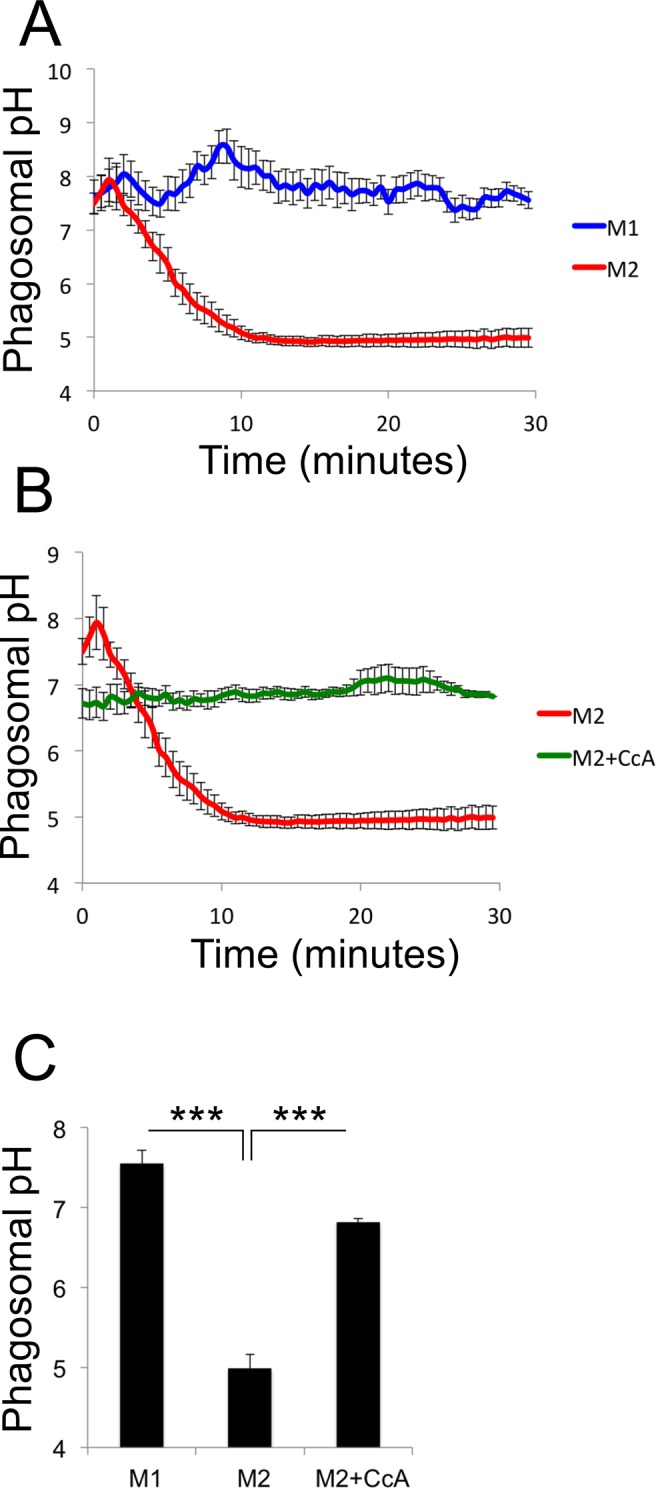
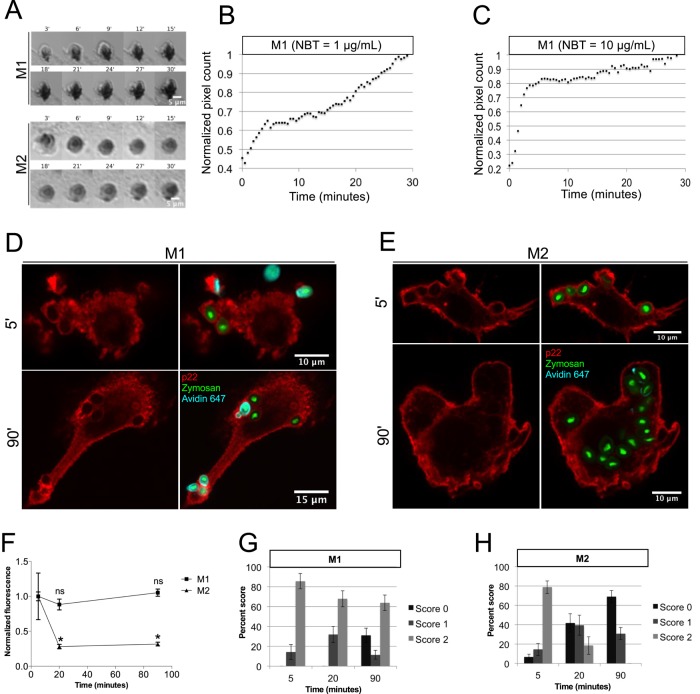
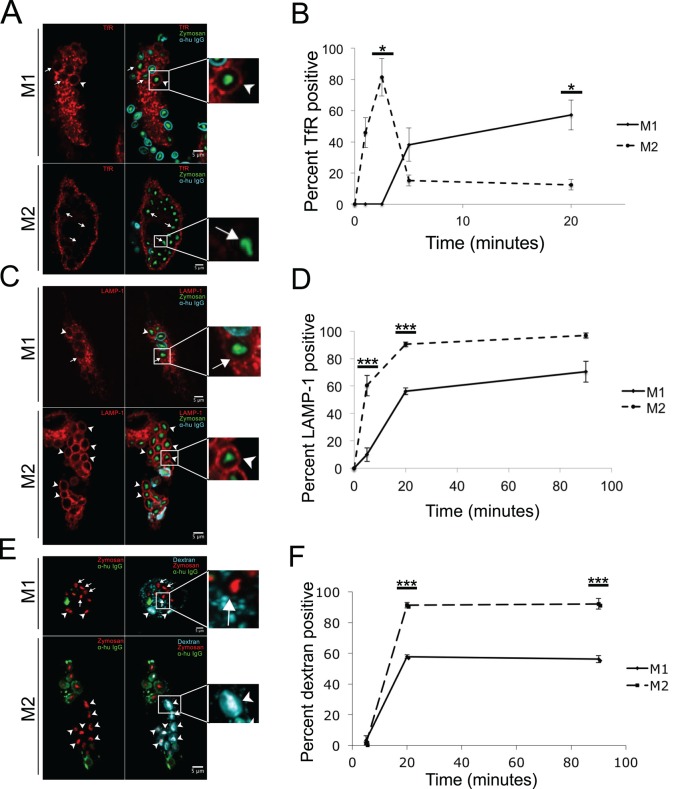
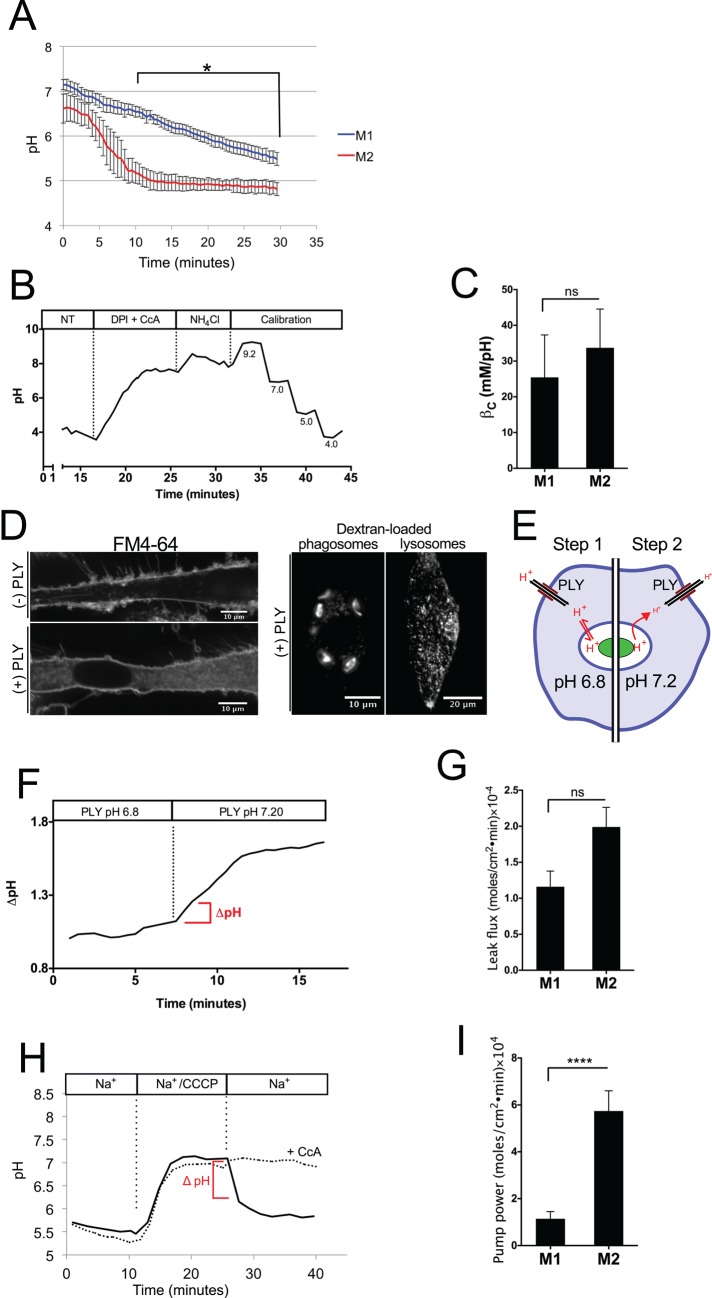
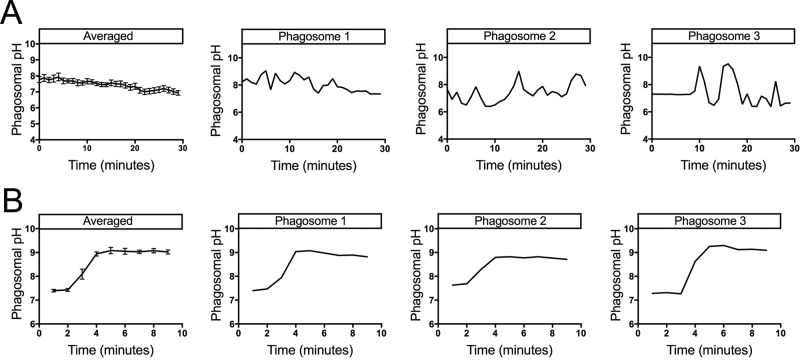
Macrophages respond to changes in environmental stimuli by assuming distinct functional phenotypes, a phenomenon referred to as macrophage polarization. We generated classically (M1) and alternatively (M2) polarized macrophages--two extremes of the polarization spectrum--to compare the properties of their phagosomes. Specifically, we analyzed the regulation of the luminal pH after particle engulfment. The phagosomes of M1 macrophages had a similar buffering power and proton (equivalent) leakage permeability but significantly reduced proton-pumping activity compared with M2 phagosomes. As a result, only the latter underwent a rapid and profound acidification. By contrast, M1 phagosomes displayed alkaline pH oscillations, which were caused by proton consumption upon dismutation of superoxide, followed by activation of a voltage- and Zn(2+)-sensitive permeation pathway, likely HV1 channels. The paucity of V-ATPases in M1 phagosomes was associated with, and likely caused by, delayed fusion with late endosomes and lysosomes. The delayed kinetics of maturation was, in turn, promoted by the failure of M1 phagosomes to acidify. Thus, in M1 cells, elimination of pathogens through deployment of the microbicidal NADPH oxidase is given priority at the expense of delayed acidification. By contrast, M2 phagosomes proceed to acidify immediately in order to clear apoptotic bodies rapidly and effectively.
Overview
The claims and statistics of this paper haven’t been checked yet.
Free: it reads the open-access text and checks the first 5 claims that cite a source we can check. Create a free account to check every claim.
Integrity signals
Registry
Cites
Statistics
Figures
Verification
Claims the paper makes
The claims and statistics of this paper haven’t been checked yet.
Free: it reads the open-access text and checks the first 5 claims that cite a source we can check. Create a free account to check every claim.
Claims other papers make about this one
Each is checked against this paper’s own text: does it say what the citing paper says it does?
The source backs part of the claim, not all of it — or backs it for a different population, condition or comparison.
In the citing paper
“In the case of A. fumigatus, this response to pH is essential, since the pH of the phagolysosome can be around 5 (409).”
From Aspergillus fumigatus and Aspergillosis in 2019 (2019) · cites this paper as [409]
Experimental — accuracy not yet measured
Self-check
Percentages, sums and reported differences re-computed from the paper’s own numbers.
The self-check needs the paper’s full text.
Citations
Cites
Exploring the full spectrum of macrophage activation
Mosser, D. M., & Edwards, J. P. (2008) · Nature Reviews Immunology · doi:10.1038/nri2448 · Cited by 9,144 · cited 2×
“We confirmed the occurrence of polarization measuring CD80 and CD200r (Supplemental Figure S1A), recently identified reliable markers for M1 and M2 cells, respectively (Jaguin et al., 2013).”
BackgroundThe chemokine system in diverse forms of macrophage activation and polarization
MANTOVANI, A., SICA, A., SOZZANI, S., ALLAVENA, P., VECCHI, A., & LOCATI, M. (2004) · Trends in Immunology · doi:10.1016/j.it.2004.09.015 · Cited by 6,534 · cited 2×
“M1 and M2 macrophages exhibit differential expression of phagocytic receptors (Mantovani et al., 2004).”
BackgroundRoos, A., & Boron, W. F. (1981) · Physiological Reviews · doi:10.1152/physrev.1981.61.2.296 · Cited by 2,511 · cited 3×
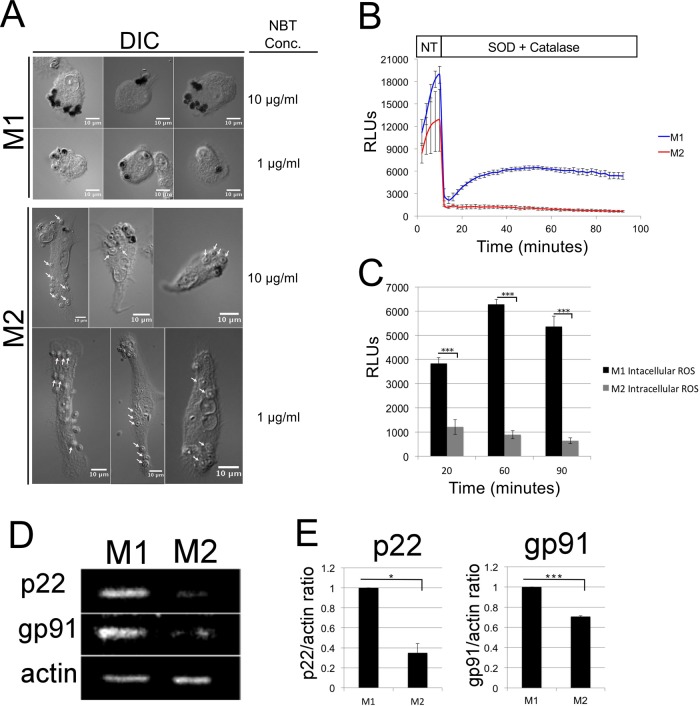
“Quantitative immunoblotting revealed that the transmembrane components of the NADPH oxidase—the gp91 and p22 subunits—are more abundant in M1 than in M2 cells (Figure 2D-E).”
BackgroundMethodTranscriptional regulation of macrophage polarization: enabling diversity with identity
Lawrence, T., & Natoli, G. (2011) · Nature Reviews Immunology · doi:10.1038/nri3088 · Cited by 2,284 · cited 4×
“The M1 phenotype is generally induced by proinflammatory cues such as bacterial infection, Toll-like receptor ligation, and exposure to the T-helper 1 cytokine interferon-γ (IFN-γ) and is characterized by an increased capacity to clear microbes and tumors, as well as by enhanced antigen-presenting efficiency (Lawrence…”
BackgroundInfluentialWink, D. A., & Mitchell, J. B. (1998) · Free Radical Biology and Medicine · doi:10.1016/s0891-5849(98)00092-6 · Cited by 1,606 · cited 1×
“Nitric oxide can react with superoxide (Wink and Mitchell, 1998; Wink et al., 1999, 2011), limiting its availability and therefore its ability to consume luminal H+.”
BackgroundPathways of Antigen Processing
Blum, J. S., Wearsch, P. A., & Cresswell, P. (2013) · Annual Review of Immunology · doi:10.1146/annurev-immunol-032712-095910 · Cited by 1,547
Modulation of macrophage phenotype by cell shape
McWhorter, F. Y., Wang, T., Nguyen, P., Chung, T., & Liu, W. F. (2013) · Proceedings of the National Academy of Sciences · doi:10.1073/pnas.1308887110 · Cited by 1,482 · cited 2×
“Quantitative immunoblotting revealed that the transmembrane components of the NADPH oxidase—the gp91 and p22 subunits—are more abundant in M1 than in M2 cells (Figure 2D-E).”
BackgroundGalli, S. J., Borregaard, N., & Wynn, T. A. (2011) · Nature Immunology · doi:10.1038/ni.2109 · Cited by 1,055 · cited 1×
“In contrast, the M2 phenotype is induced through stimulation by the STAT-6–activating cytokines interleukin-4 (IL-4) and/or IL-13 and serves homeostatic functions such as clearance of apoptotic cells and debris, tissue repair and remodeling, and suppression of inflammation (Galli et al., 2011).”
BackgroundSavina, A., Jancic, C., Hugues, S., Guermonprez, P., Vargas, P., Moura, I. C., Lennon-Duménil, A.-M., Seabra, M. C., Raposo, G., & Amigorena, S. (2006) · Cell · doi:10.1016/j.cell.2006.05.035 · Cited by 891 · cited 6×
“Once a cell was found that had bound fluorophore-labeled zymosan, pH measurements were performed by fluorescence ratiometric imaging using a filter wheel (Sutter Instruments, Novato, CA) to rapidly alternate between excitation filters.”
BackgroundMethodInfluentialNitric oxide and redox mechanisms in the immune response
Wink, D. A., Hines, H. B., Cheng, R. Y. S., Switzer, C. H., Flores-Santana, W., Vitek, M. P., Ridnour, L. A., & Colton, C. A. (2011) · Journal of Leukocyte Biology · doi:10.1189/jlb.1010550 · Cited by 765 · cited 1×
“Nitric oxide can react with superoxide (Wink and Mitchell, 1998; Wink et al., 1999, 2011), limiting its availability and therefore its ability to consume luminal H+.”
Background
Cited by
Items 201–230 of 230
Wu, L., & Eyo, U. B. (2018) · Faculty Opinions – Post-Publication Peer Review of the Biomedical Literature · doi:10.3410/f.732725584.793546013
The Mannose Receptor (CD206) and Its Siblings-The Back Story
Martínez‐Pomares, L., Mantovani, G., & Stahl, P. D. (2022) · Elsevier eBooks · doi:10.1016/b978-0-12-821618-7.00234-0 · Cited by 4
Barreto, T. L. (2020) · Digital Library of Theses and Dissertations (Universidade de São Paulo) · doi:10.11606/d.42.2020.tde-13012022-165803
Approaches to Measuring Reductive and Oxidative Events in Phagosomes
Lail, S. S., Balce, D. R., Canton, J., & Yates, R. M. (2023) · Methods in molecular biology · doi:10.1007/978-1-0716-3338-0_10
Self-citationMoncorvo, F. M. S. U., Leon, O. L. A., Curti, C., Kabri, Y., Redon, S., Torres-Santos, E. C., & Vanelle, P. (2024) · Molecules · doi:10.3390/molecules29225469
Mandal, P. K., Mahadeva, R., Chouhan, K., Slusarczyk, P., Zurawska, G., Niklewicz, M., Macias, M., Szybińska, A., Jończy, A., Liu, Z., et al. (2025) · bioRxiv (Cold Spring Harbor Laboratory) · doi:10.1101/2025.06.13.659526
The effects of age and fitness status on circulating angiogenic T-cells
Stephen, L. (2024) · Edinburgh Napier Research Repository (Edinburgh Napier University) · doi:10.17869/enu.2024.3789805
Acharige, A. M. D. S. D. (2021) · K-State Research Exchange (Kansas State University)
Early recruitment of membrane-bound DNaseX to phagocytic cups in macrophages
Pyne, A., Pandey, V., Kundu, S., Ikegami, S., & Wang, X. (2026) · eLife · doi:10.7554/elife.110907
“This timing is considerably earlier than the usual duration required for phagosomes to acquire DNase II through phagosome formation, maturation, and fusion with lysosomes, a process that typically takes tens of minutes to hours ( Canton et al., 2014 ; Peña-Ramos et al., 2022 ).”
Phagocytosis of Filamentous Fungi by Macrophages
Williams, A. L. (2022) · TSpace (University of Toronto)
The Role of Phosphoinositides During Phagosome Formation and Resolution
Montaño-Rendón, F. (2022) · TSpace (University of Toronto)
Xie, B., Lan, T., Zhang, J., Cen, L., Xi, Z., & Yang, Y. (2026) · Materials Today Advances · doi:10.1016/j.mtadv.2026.100756
De l’importance des médiateurs du stress dans le contrôle de l’immunité
Bacou, E. (2017) · theses.fr (ABES) · doi:10.70675/c3e20630z2e84z4f0ez9c4ez2ff5647f0f03
“A l’inverse, la capacité des macrophages M1 à produire des ROS est plus importante que celle des macrophages M2, notamment du fait d’une plus forte expression des sous-unités p91 et p22 de la NADPH oxydase (Canton et al., 2014).”
BackgroundInfluentialGarcía, J. D. L. G. (2020) · theses.fr (ABES) · doi:10.70675/4b1da2c6z7774z4852za778z30be72ee57f9
Rôle de la protéine HMGB1 dérivée des macrophages au cours d'une réaction inflammatoire
Piccolo, E. B. (2021) · theses.fr (ABES) · doi:10.70675/2856e006z81b0z4a9ezadcdzd2fdca1f46ab
Phagocytosis by human macrophages : modulation by the microenvironment and by human rhinoviruses
Depierre, M. (2024) · theses.fr (ABES) · doi:10.70675/3c2cef44zd5c0z4432z837cz2776a6c2ceb9
Agarwal, A., Misra, A., Saxena, S., Mohareer, K., Patel, A. B., & Banerjee, S. (2026) · bioRxiv (Cold Spring Harbor Laboratory) · doi:10.64898/2026.05.05.722917
Digest before Ingest: Early Recruitment of Membrane-bound DNaseX to Phagocytic Cups in MacrophagesPreprint
Pyne, A., Pandey, V., Kundu, S., Ikegami, S., & Wang, X. (2026) · eLife · doi:10.7554/elife.110907.1
Krejčová, G., & Bajgar, A. (2026) · Frontiers in Immunology · doi:10.3389/fimmu.2026.1882514
Pham, Q. N. N., Pattarakankul, T., Palaga, T., Vchirawongkwin, V., Sukwattanasinitt, M., Chang, Y., & Rashatasakhon, P. (2026) · Bioorganic Chemistry · doi:10.1016/j.bioorg.2026.110357
Metcalfe, S., Settem, R. P., Ovalle, E. J., Panasiewicz, M., Escobar, A., & Kay, J. G. (2026) · PLoS Pathogens · doi:10.1371/journal.ppat.1014574
“This is similar to what has been found with cytokine activation of macrophages, which leads to prolonged reactive oxygen production in macrophage phagosomes [76] and allows for increased S. gordonii survival at multiple MOIs [46,47].”
N -aldehyde modified phosphatidylethanolamines formed by lipid peroxidation inhibit efferocytosisPreprint
Fadaei, R., Bernstein, A., Wayman, E. A., Gonzalez, A. L., Tallman, K. A., Mashhadi, Z., Alli-Oluwafuyi, A. O., Dikalov, S., Linton, M. F., Vickers, K. C., et al. (2026) · bioRxiv (Cold Spring Harbor Laboratory) · doi:10.64898/2026.09.10.750792
Digest before Ingest: Early Recruitment of Membrane-bound DNaseX to Phagocytic Cups in MacrophagesPreprint
Pyne, A., Pandey, V., Kundu, S., Ikegami, S., & Wang, X. (2026) · eLife · doi:10.7554/elife.110907.2
Keck, C., Tachon, S., Sayes, F., Musiani, D., Gianetto, Q. G., Matondo, M., Vos, M. R. J., Brosch, R., & Enninga, J. (2026) · Cell Reports · doi:10.1016/j.celrep.2026.118078
Allsup, B. L., Gharpure, S., Gunnarsson, C., Stagg, M. L., & Bryson, B. D. (2026) · Science Advances · doi:10.1126/sciadv.aee3876
“Prior studies have used live-cell microscopy and fluorescence assays to demonstrate that phagosome maturation is dynamic and that the biochemical properties of the phagosome potential vary across cell types, stimuli, and cargos ( 4 – 8 ).”
Metadata
- Authors
- Canton, J., Khezri, R., Glogauer, M., & Grinstein, S.
- Affiliations
- Hospital for Sick Children (CA)
- University of Toronto (CA)
- St. Michael's Hospital (CA)
- Corresponding author
- Grinstein, Sergio
- Venue
- Molecular Biology of the Cell
- Published
- 2014-11
- Volume
- 25
- Issue
- 21
- Pages
- 3330-3341
- ISSN
- 1059-1524 (ISSN-L)
- 1939-4586
- PMC
- PMC4214780
- OpenAlex
- W2323206703
- Cited by
- 221
- References
- 48
- Citations by year
- 2026: 15 · 2025: 14 · 2024: 15 · 2023: 21 · 2022: 26 · 2021: 29 · 2020: 29 · 2019: 21 · 2018: 17 · 2017: 13 · 2016: 12 · 2015: 9
- FWCI
- 5.65
- Type
- journal article
- Language
- en
- Open access
- green
- www.ncbi.nlm.nih.gov
- Licence
- cc-by-nc-sa
- Locations
- Molecular Biology of the Cell (publishedVersion)
- Europe PMC (PubMed Central) (publishedVersion, cc-by-nc-sa)
- PubMed Central (publishedVersion, cc-by-nc-sa)
- PubMed (publishedVersion)
- TSpace (University of Toronto) (submittedVersion)
- Funders
- Cystic Fibrosis Canada
- Canadian Institutes of Health Research (MOP#93634, tbo #122068, MOP7075)
- Topics
- Life Sciences › Biochemistry, Genetics and Molecular Biology › Cell Biology › Cellular transport and secretion
- Life Sciences › Immunology and Microbiology › Immunology › Phagocytosis and Immune Regulation
- Life Sciences › Immunology and Microbiology › Immunology › Immune cells in cancer
- Keywords
- phagosome maturation, macrophage polarization, M1 macrophages, M2 macrophages, phagosome acidification, proton leak, proton translocation, superoxide dismutation, Hv1 channel, V-ATPase, lysosome fusion, NADPH oxidase
- MeSH terms
- NADPH Oxidase 2, Humans, Hydrogen-Ion Concentration, Ion Channels, Lysosomes, Macrophages, Membrane Glycoproteins, Phagosomes, Reactive Oxygen Species, NADPH Oxidases, Vacuolar Proton-Translocating ATPases
About these checks
Registry, retraction, Cites and statistics results are computed, not judged, with one exception: a printed reference that no index lists is read once by a model before it counts as a citation error. Claims are extracted by a model and kept only when their quote appears verbatim in the text; each cited source is then checked, with a model’s help, for whether it says what the claim relies on. Those verdicts can be wrong — read the claim’s quote and the cited source before relying on one.
Statistics and arithmetic are recomputed, not judged.
Confidence bands are shown only for fields calibrated on our annotated test set. None is calibrated yet, so no band is shown.
What counts as a claim ›How we measure confidence ›How we check this ›
Are you an author, or do you see a problem with this page? Request a review
Data sources
Bibliographic data: Semantic Scholar, OpenAlex, Crossref.
Contains information from the Semantic Scholar Academic Graph Datasets, made available under the ODC Attribution License (ODC-BY 1.0).
Semantic Scholar’s data is described in: Kinney, R., et al. (2023). The Semantic Scholar Open Data Platform. arXiv:2301.10140.
