

Contrasting phagosome pH regulation and maturation in human M1 and M2 macrophages
Open accessThe DOI matches its Crossref record; 48 of the 48 references it cites were found in a registry or an index.
Abstract
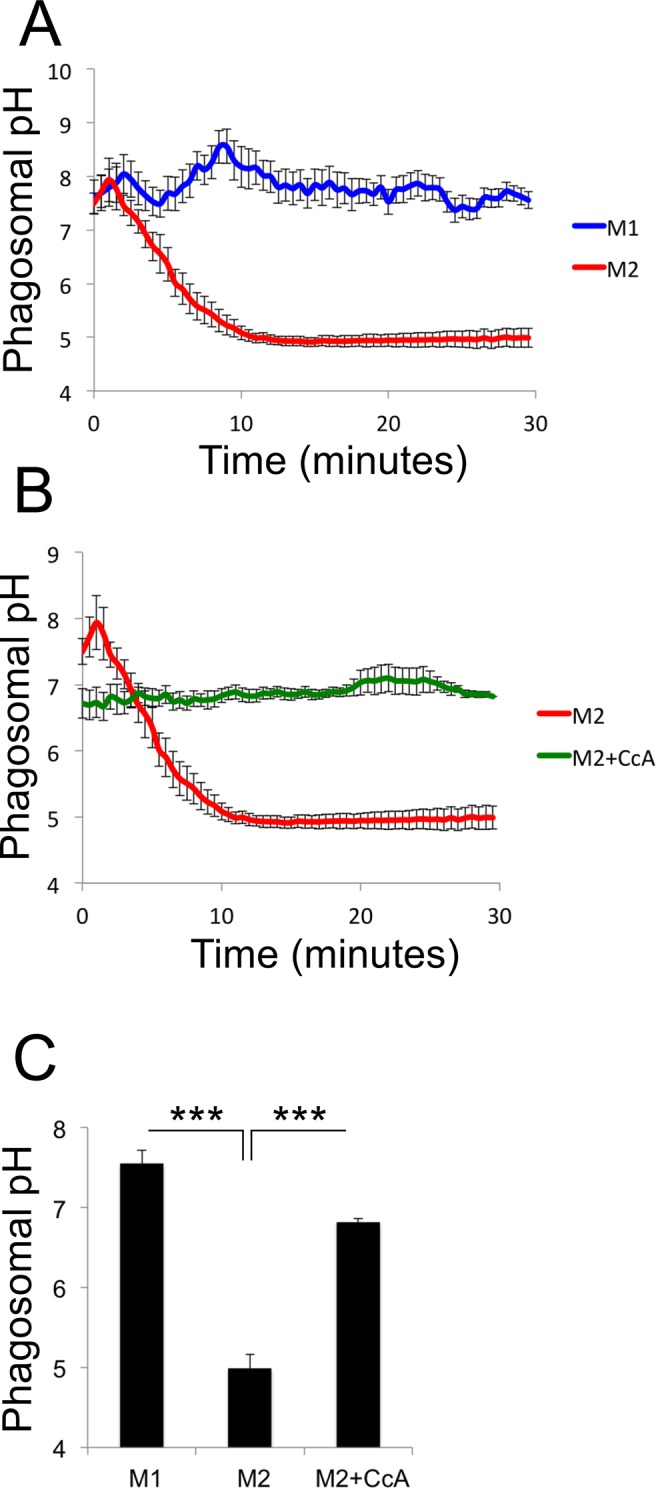
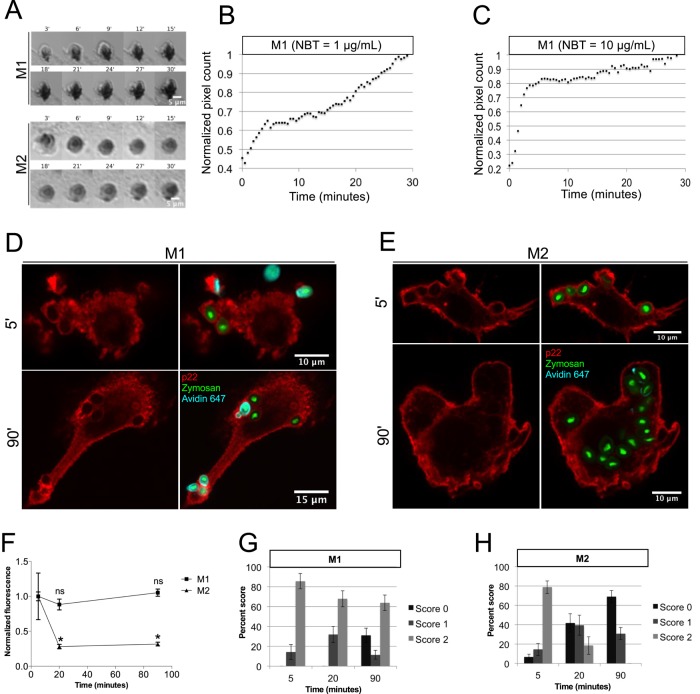
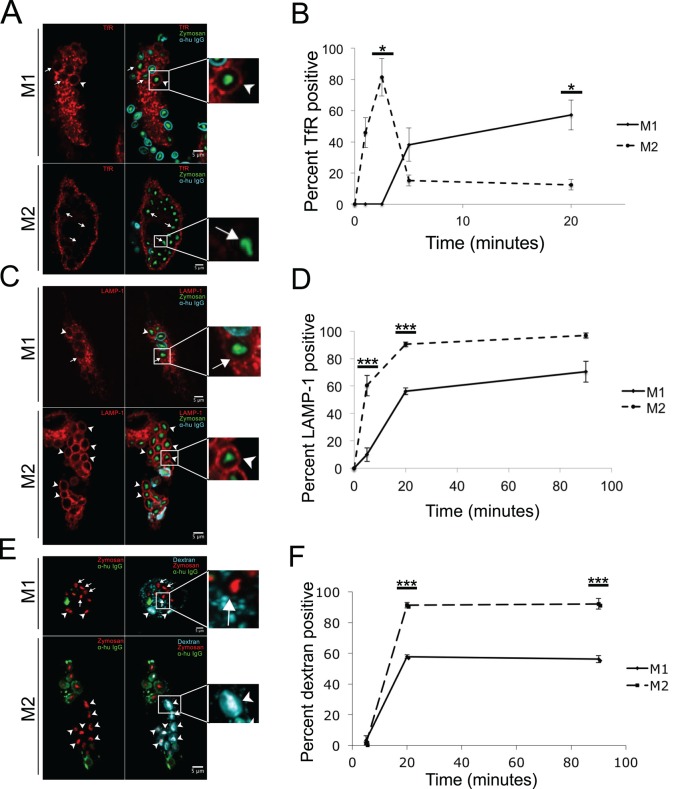
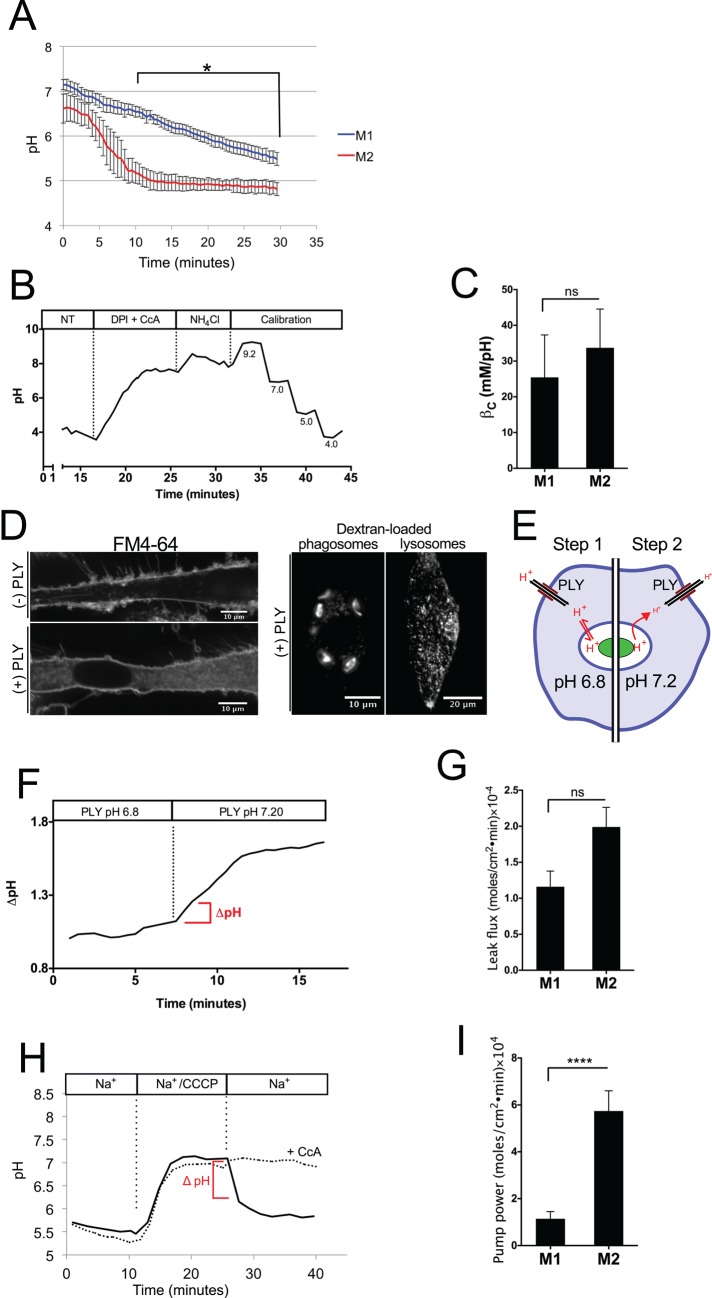
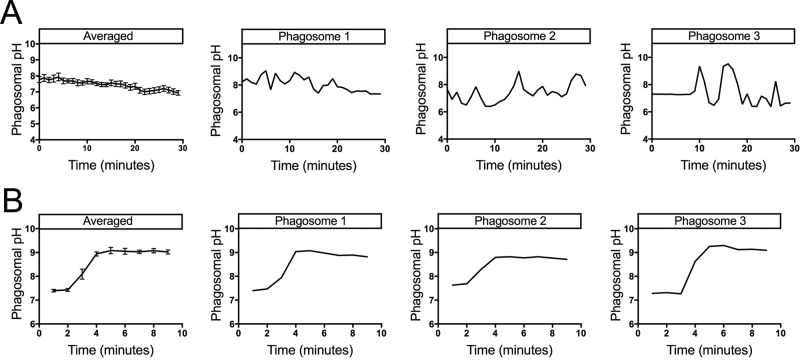
Macrophages respond to changes in environmental stimuli by assuming distinct functional phenotypes, a phenomenon referred to as macrophage polarization. We generated classically (M1) and alternatively (M2) polarized macrophages--two extremes of the polarization spectrum--to compare the properties of their phagosomes. Specifically, we analyzed the regulation of the luminal pH after particle engulfment. The phagosomes of M1 macrophages had a similar buffering power and proton (equivalent) leakage permeability but significantly reduced proton-pumping activity compared with M2 phagosomes. As a result, only the latter underwent a rapid and profound acidification. By contrast, M1 phagosomes displayed alkaline pH oscillations, which were caused by proton consumption upon dismutation of superoxide, followed by activation of a voltage- and Zn(2+)-sensitive permeation pathway, likely HV1 channels. The paucity of V-ATPases in M1 phagosomes was associated with, and likely caused by, delayed fusion with late endosomes and lysosomes. The delayed kinetics of maturation was, in turn, promoted by the failure of M1 phagosomes to acidify. Thus, in M1 cells, elimination of pathogens through deployment of the microbicidal NADPH oxidase is given priority at the expense of delayed acidification. By contrast, M2 phagosomes proceed to acidify immediately in order to clear apoptotic bodies rapidly and effectively.
Overview
The claims and statistics of this paper haven’t been checked yet.
Free: it reads the open-access text and checks the first 5 claims that cite a source we can check. Create a free account to check every claim.
Integrity signals
Registry
Cites
Statistics
Figures
Verification
Claims the paper makes
The claims and statistics of this paper haven’t been checked yet.
Free: it reads the open-access text and checks the first 5 claims that cite a source we can check. Create a free account to check every claim.
Claims other papers make about this one
Each is checked against this paper’s own text: does it say what the citing paper says it does?
The source backs part of the claim, not all of it — or backs it for a different population, condition or comparison.
In the citing paper
“In the case of A. fumigatus, this response to pH is essential, since the pH of the phagolysosome can be around 5 (409).”
From Aspergillus fumigatus and Aspergillosis in 2019 (2019) · cites this paper as [409]
Experimental — accuracy not yet measured
Self-check
Percentages, sums and reported differences re-computed from the paper’s own numbers.
The self-check needs the paper’s full text.
Citations
Cites
Exploring the full spectrum of macrophage activation
Mosser, D. M., & Edwards, J. P. (2008) · Nature Reviews Immunology · doi:10.1038/nri2448 · Cited by 9,144 · cited 2×
“We confirmed the occurrence of polarization measuring CD80 and CD200r (Supplemental Figure S1A), recently identified reliable markers for M1 and M2 cells, respectively (Jaguin et al., 2013).”
BackgroundThe chemokine system in diverse forms of macrophage activation and polarization
MANTOVANI, A., SICA, A., SOZZANI, S., ALLAVENA, P., VECCHI, A., & LOCATI, M. (2004) · Trends in Immunology · doi:10.1016/j.it.2004.09.015 · Cited by 6,534 · cited 2×
“M1 and M2 macrophages exhibit differential expression of phagocytic receptors (Mantovani et al., 2004).”
BackgroundRoos, A., & Boron, W. F. (1981) · Physiological Reviews · doi:10.1152/physrev.1981.61.2.296 · Cited by 2,511 · cited 3×
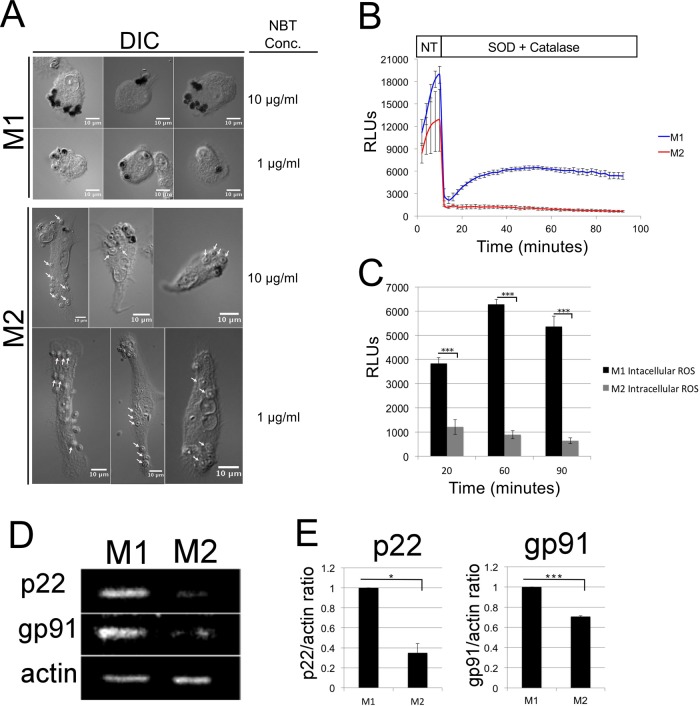
“Quantitative immunoblotting revealed that the transmembrane components of the NADPH oxidase—the gp91 and p22 subunits—are more abundant in M1 than in M2 cells (Figure 2D-E).”
BackgroundMethodTranscriptional regulation of macrophage polarization: enabling diversity with identity
Lawrence, T., & Natoli, G. (2011) · Nature Reviews Immunology · doi:10.1038/nri3088 · Cited by 2,284 · cited 4×
“The M1 phenotype is generally induced by proinflammatory cues such as bacterial infection, Toll-like receptor ligation, and exposure to the T-helper 1 cytokine interferon-γ (IFN-γ) and is characterized by an increased capacity to clear microbes and tumors, as well as by enhanced antigen-presenting efficiency (Lawrence…”
BackgroundInfluentialWink, D. A., & Mitchell, J. B. (1998) · Free Radical Biology and Medicine · doi:10.1016/s0891-5849(98)00092-6 · Cited by 1,606 · cited 1×
“Nitric oxide can react with superoxide (Wink and Mitchell, 1998; Wink et al., 1999, 2011), limiting its availability and therefore its ability to consume luminal H+.”
BackgroundPathways of Antigen Processing
Blum, J. S., Wearsch, P. A., & Cresswell, P. (2013) · Annual Review of Immunology · doi:10.1146/annurev-immunol-032712-095910 · Cited by 1,547
Modulation of macrophage phenotype by cell shape
McWhorter, F. Y., Wang, T., Nguyen, P., Chung, T., & Liu, W. F. (2013) · Proceedings of the National Academy of Sciences · doi:10.1073/pnas.1308887110 · Cited by 1,482 · cited 2×
“Quantitative immunoblotting revealed that the transmembrane components of the NADPH oxidase—the gp91 and p22 subunits—are more abundant in M1 than in M2 cells (Figure 2D-E).”
BackgroundGalli, S. J., Borregaard, N., & Wynn, T. A. (2011) · Nature Immunology · doi:10.1038/ni.2109 · Cited by 1,055 · cited 1×
“In contrast, the M2 phenotype is induced through stimulation by the STAT-6–activating cytokines interleukin-4 (IL-4) and/or IL-13 and serves homeostatic functions such as clearance of apoptotic cells and debris, tissue repair and remodeling, and suppression of inflammation (Galli et al., 2011).”
BackgroundSavina, A., Jancic, C., Hugues, S., Guermonprez, P., Vargas, P., Moura, I. C., Lennon-Duménil, A.-M., Seabra, M. C., Raposo, G., & Amigorena, S. (2006) · Cell · doi:10.1016/j.cell.2006.05.035 · Cited by 891 · cited 6×
“Once a cell was found that had bound fluorophore-labeled zymosan, pH measurements were performed by fluorescence ratiometric imaging using a filter wheel (Sutter Instruments, Novato, CA) to rapidly alternate between excitation filters.”
BackgroundMethodInfluentialNitric oxide and redox mechanisms in the immune response
Wink, D. A., Hines, H. B., Cheng, R. Y. S., Switzer, C. H., Flores-Santana, W., Vitek, M. P., Ridnour, L. A., & Colton, C. A. (2011) · Journal of Leukocyte Biology · doi:10.1189/jlb.1010550 · Cited by 765 · cited 1×
“Nitric oxide can react with superoxide (Wink and Mitchell, 1998; Wink et al., 1999, 2011), limiting its availability and therefore its ability to consume luminal H+.”
Background
Cited by
Aspergillus fumigatus and Aspergillosis in 2019
Latgé, J.-P., & Chamilos, G. (2019) · Clinical Microbiology Reviews · doi:10.1128/cmr.00140-18 · Cited by 1,400
Efferocytosis in health and disease
Doran, A. C., Yurdagul, A., & Tabas, I. (2020) · Nature Reviews Immunology · doi:10.1038/s41577-019-0240-6 · Cited by 1,066
Tan, H.-Y., Wang, N., Li, S., Hong, M., Wang, X., & Feng, Y. (2016) · Oxidative Medicine and Cellular Longevity · doi:10.1155/2016/2795090 · Cited by 657
Chen, D., Xie, J., Fiskesund, R., Dong, W., Liang, X., Lv, J., Jin, X., Liu, J., Mo, S., Zhang, T., et al. (2018) · Nature Communications · doi:10.1038/s41467-018-03225-9 · Cited by 489
Randall’s plaque and calcium oxalate stone formation: role for immunity and inflammation
Khan, S. R., Canales, B. K., & Dominguez-Gutierrez, P. R. (2021) · Nature Reviews Nephrology · doi:10.1038/s41581-020-00392-1 · Cited by 423
Role of lysosomes in physiological activities, diseases, and therapy
Zhang, Z., Yue, P., Lu, T., Wang, Y., Wei, Y., & Wei, X. (2021) · Journal of Hematology & Oncology · doi:10.1186/s13045-021-01087-1 · Cited by 356
“Mechanistically, the property of phagosomes in M1 macrophages was attributed to proton consumption upon superoxide generation by the nicotinamide adenine dinucleotide phosphate (NADPH) oxidase, intermittent opening of voltage-gated proton channel (HV1) channels, and reduced proton-pumping activity [277].”
BackgroundResultThe Role of Macrophages in Staphylococcus aureus Infection
Pidwill, G. R., Gibson, J. F., Cole, J., Renshaw, S. A., & Foster, S. J. (2021) · Frontiers in Immunology · doi:10.3389/fimmu.2020.620339 · Cited by 341
The life cycle of phagosomes: formation, maturation, and resolution
Levin, R., Grinstein, S., & Canton, J. (2016) · Immunological Reviews · doi:10.1111/imr.12439 · Cited by 317
“In contrast to M2 cells, phagosomes of human M1 macrophages, similar to neutrophils, maintain pH values close to neutrality (228, 230).”
BackgroundSelf-citationControl of Phagocytosis by Microbial Pathogens
Uribe-Querol, E., & Rosales, C. (2017) · Frontiers in Immunology · doi:10.3389/fimmu.2017.01368 · Cited by 306
“The results of this process are remodeling of the membrane, progressive acidification of the phagosome, and creation of an oxidative and degradative milieu (7, 8) (Figure 2).”
BackgroundPatterns, Receptors, and Signals: Regulation of Phagosome Maturation
Pauwels, A.-M., Trost, M., Beyaert, R., & Hoffmann, E. (2017) · Trends in Immunology · doi:10.1016/j.it.2017.03.006 · Cited by 275
Combating Implant Infections: Shifting Focus from Bacteria to Host
Amin Yavari, S., Castenmiller, S. M., van Strijp, J. A. G., & Croes, M. (2020) · Advanced Materials · doi:10.1002/adma.202002962 · Cited by 257
Macrophage Reprogramming and Cancer Therapeutics: Role of iNOS-Derived NO
Kashfi, K., Kannikal, J., & Nath, N. (2021) · Cells · doi:10.3390/cells10113194 · Cited by 225
“To amplify these effects, M1 macrophages limit nutrients, such as iron, and promote phagosome acidification to defend against harmful microorganisms [30].”
BackgroundDeng, R.-H., Zou, M.-Z., Zheng, D., Peng, S.-Y., Liu, W., Bai, X.-F., Chen, H.-S., Sun, Y., Zhou, P.-H., & Zhang, X.-Z. (2019) · ACS Nano · doi:10.1021/acsnano.9b02993 · Cited by 230
Lecoultre, M., Dutoit, V., & Walker, P. R. (2020) · Journal for ImmunoTherapy of Cancer · doi:10.1136/jitc-2020-001408 · Cited by 223
Lim, J. J., Grinstein, S., & Roth, Z. (2017) · Frontiers in Cellular and Infection Microbiology · doi:10.3389/fcimb.2017.00191 · Cited by 215
“…of the phagosomes also differ in the two main types of macrophages: while the phagosomes of anti-inflammatory macrophages acidify quickly (Canton et al., 2014), those of pro-inflammatory macrophages remain neutral and can even become alkaline, resembling the behavior of phagosomes in…”
BackgroundSelf-citationAntimicrobial Mechanisms of Macrophages and the Immune Evasion Strategies of Staphylococcus aureus
Flannagan, R., Heit, B., & Heinrichs, D. (2015) · Pathogens · doi:10.3390/pathogens4040826 · Cited by 193
“can, in fact, arrest phagosome maturation, a phenomenon that is indeed observed in human M1 macrophages [60].”
BackgroundResultInfluentialNoninflammatory Changes of Microglia Are Sufficient to Cause Epilepsy
Zhao, X., Liao, Y., Morgan, S., Mathur, R., Feustel, P., Mazurkiewicz, J., Qian, J., Chang, J., Mathern, G. W., Adamo, M. A., et al. (2018) · Cell Reports · doi:10.1016/j.celrep.2018.02.004 · Cited by 190
“We observed that phagosome acidification was accelerated in the microglia prepared from TSC1Cx3cr1CKO mice, suggesting that TSC1Cx3cr1CKO microglia tend to adopt a less inflammatory phenotype (Canton et al., 2014).”
BackgroundMethodInfluentialThe Dual Role of Myeloperoxidase in Immune Response
Arnhold, J. (2020) · International Journal of Molecular Sciences · doi:10.3390/ijms21218057 · Cited by 188
Macropinocytosis: New Insights Into Its Underappreciated Role in Innate Immune Cell Surveillance
Canton, J. (2018) · Frontiers in Immunology · doi:10.3389/fimmu.2018.02286 · Cited by 141
Self-citationBiology of Bony Fish Macrophages
Hodgkinson, J. W., Grayfer, L., & Belosevic, M. (2015) · Biology · doi:10.3390/biology4040881 · Cited by 163
“following the internalization of zymosan, in contrast with M2-driven macrophages that rapidly acidify their phagosomes [129].”
ResultDeterminants, maintenance, and function of organellar pH
Freeman, S. A., Grinstein, S., & Orlowski, J. (2022) · Physiological Reviews · doi:10.1152/physrev.00009.2022 · Cited by 140
Self-citationRegulation of decellularized matrix mediated immune response
Chakraborty, J., Roy, S., & Ghosh, S. (2020) · Biomaterials Science · doi:10.1039/c9bm01780a · Cited by 130
Aluminium adjuvants in vaccines – A way to modulate the immune response
Danielsson, R., & Eriksson, H. (2021) · Seminars in Cell and Developmental Biology · doi:10.1016/j.semcdb.2020.12.008 · Cited by 124
Cellular Responses to the Efferocytosis of Apoptotic Cells
Yin, C., & Heit, B. (2021) · Frontiers in Immunology · doi:10.3389/fimmu.2021.631714 · Cited by 114
Role of exosomes as a proinflammatory mediator in the development of EBV-associated lymphoma
Higuchi, H., Yamakawa, N., Imadome, K., Yahata, T., Kotaki, R., Ogata, J., Kakizaki, M., Fujita, K., Lu, J., Yokoyama, K., et al. (2018) · Blood · doi:10.1182/blood-2017-07-794529 · Cited by 107
Immune Sensing of Candida albicans
Bojang, E., Ghuman, H., Kumwenda, P., & Hall, R. A. (2021) · Journal of Fungi · doi:10.3390/jof7020119 · Cited by 96
“These phenomena are attributed to the increased proton consumption during superoxide dismutation, reduced granule fusion observed during reactive oxygen species (ROS) production, and increased leakiness for H+ caused by the oxidative effect of ROS [49,50].”
BackgroundHickman, E., Smyth, T., Cobos-Uribe, C., Immormino, R. M., Rebuli, M. E., Moran, T. P., Alexis, N. E., & Jaspers, I. (2023) · PLoS ONE · doi:10.1371/journal.pone.0279037 · Cited by 102
“These data agree with previous studies demonstrating increased phagocytosis of zymosan and acidification of the phagolysosome in M2 macrophages [41, 42].”
ResultA DNA-based fluorescent reporter maps HOCl production in the maturing phagosome
Thekkan, S., Jani, M. S., Cui, C., Dan, K., Zhou, G., Becker, L., & Krishnan, Y. (2018) · Nature Chemical Biology · doi:10.1038/s41589-018-0176-3 · Cited by 89
Fernández, A., Vermeren, M., Humphries, D. C., Subirós‐Funosas, R., Barth, N. D., Campana, L., MacKinnon, A. C., Feng, Y., & Vendrell, M. (2017) · ACS Central Science · doi:10.1021/acscentsci.7b00262 · Cited by 85
Rabani, R., Volchuk, A., Jerkić, M., Ormesher, L., Garcés‐Ramírez, L., Canton, J., Masterson, C. H., Gagnon, S., Tatham, K. C., Marshall, J. C., et al. (2018) · European Respiratory Journal · doi:10.1183/13993003.02021-2017 · Cited by 86
Self-citationNontuberculous Mycobacteria, Macrophages, and Host Innate Immune Response
Shamaei, M., & Mirsaeidi, M. S. (2021) · Infection and Immunity · doi:10.1128/iai.00812-20 · Cited by 81
Polarization and Repolarization of Macrophages
Brundu, S. (2015) · Journal of Clinical & Cellular Immunology · doi:10.4172/2155-9899.1000319 · Cited by 88
Keeling, E., Lotery, A. J., Tumbarello, D. A., & Ratnayaka, J. A. (2018) · Cells · doi:10.3390/cells7020016 · Cited by 82
Phagosome maturation in macrophages: Eat, digest, adapt, and repeat
Fountain, A., Inpanathan, S., Alves, P., Verdawala, M. B., & Botelho, R. J. (2021) · Advances in Biological Regulation · doi:10.1016/j.jbior.2021.100832 · Cited by 70
Biomolecular Ultrasound Imaging of Phagolysosomal Function
Ling, B., Lee, J. W., Maresca, D., Lee‐Gosselin, A., Malounda, D., Swift, M., & Shapiro, M. G. (2020) · ACS Nano · doi:10.1021/acsnano.0c05912 · Cited by 66
Determinants of Phagosomal pH During Host-Pathogen Interactions
Westman, J., & Grinstein, S. (2021) · Frontiers in Cell and Developmental Biology · doi:10.3389/fcell.2020.624958 · Cited by 70
“The buffering capacity and H+ leakage permeability remain relatively unaltered between the two subtypes, which, however, show drastic changes in V-ATPasedependent H+ pumping (Canton et al., 2014).”
BackgroundSelf-citationSkjesol, A., Yurchenko, M., Bösl, K., Gravastrand, C., Nilsen, K. E., Grøvdal, L. M., Agliano, F., Patane, F., Lentini, G., Kim, H., et al. (2019) · PLOS Pathogens · doi:10.1371/journal.ppat.1007684 · Cited by 59
Chowdhury, A. R., Sah, S., Varshney, U., & Chakravortty, D. (2022) · PLoS Pathogens · doi:10.1371/journal.ppat.1010708 · Cited by 68
Redka, D. S., Gütschow, M., Grinstein, S., & Canton, J. (2018) · Molecular Biology of the Cell · doi:10.1091/mbc.e17-06-0419 · Cited by 58
“Measuring CD1a expression, we had confirmed previously that these protocols yield preparations devoid of dendritic cells (Canton et al., 2014).”
BackgroundSelf-citationVisualizing Macrophage Phenotypes and Polarization in Diseases: From Biomarkers to Molecular Probes
Ni, D., Zhou, H., Wang, P., Xu, F., & Li, C. (2023) · Phenomics · doi:10.1007/s43657-023-00129-7 · Cited by 62
“In contrast, M2 macrophages express lower level of NOX2, leading to an acidic phago-some lumen (Canton et al. 2014).”
Dynamic Podosome-Like Structures in Nascent Phagosomes Are Coordinated by Phosphoinositides
Ostrowski, P. P., Freeman, S. A., Fairn, G., & Grinstein, S. (2019) · Developmental Cell · doi:10.1016/j.devcel.2019.05.028 · Cited by 55
Self-citationNanomedicine-based delivery strategies for nucleic acid gene inhibitors in inflammatory diseases
Fattal, E., & Fay, F. (2021) · Advanced Drug Delivery Reviews · doi:10.1016/j.addr.2021.05.019 · Cited by 60
Sheng, Y., Hu, W., Chen, S., & Zhu, X. (2024) · Frontiers in Immunology · doi:10.3389/fimmu.2024.1275203 · Cited by 59
“Over the past two decades, much has been deciphered regarding the phagocytosis of apoptotic cells (ACs) (1, 2).”
BackgroundDeCoursey, T. E. (2016) · Immunological Reviews · doi:10.1111/imr.12437 · Cited by 54
Migratory Neural Crest Cells Phagocytose Cellular Debris in the Developing Nervous System
Zhu, Y., Crowley, S. C., Latimer, A. J., Lewis, G. M., Nash, R., & Kucenas, S. (2019) · Cell · doi:10.1016/j.cell.2019.08.001 · Cited by 55
Baruah, M., Kwon, H., Cho, H., Chang, Y., & Samanta, A. (2023) · Analytical Chemistry · doi:10.1021/acs.analchem.2c05218 · Cited by 52
Phagocytosis–Inflammation Crosstalk in Sepsis: New Avenues for Therapeutic Intervention
Kohoutková, M. H., Tidu, F., Zuani, M. D., Šrámek, V., Helán, M., & Frič, J. (2020) · Shock · doi:10.1097/shk.0000000000001541 · Cited by 50
“Whereas M1-like macrophages rely mostly on the generation of superoxides to eliminate pathogens and acidify their phagosome quite slowly, M2-like macrophages promptly ensure phagosome acidification to quickly and effectively clear apoptotic cells (95).”
BackgroundJerkić, M., Masterson, C. H., Ormesher, L., Gagnon, S., Goyal, S., Rabani, R., Otulakowski, G., Zhang, H., Kavanagh, B. P., & Laffey, J. G. (2019) · Journal of Clinical Medicine · doi:10.3390/jcm8060847 · Cited by 53
“The phagocytic capacity and phagosomal superoxide production were determined using the Zymosan assay [23] (four experiments done in duplicate), as described previously [23].”
MethodMicroglial Hv1 proton channels promote white matter injuries after chronic hypoperfusion in mice
Yu, Y., Luo, X., Li, C., Ding, F., Wang, M., Xie, M., Yu, Z., Ransom, B. R., & Wang, W. (2019) · Journal of Neurochemistry · doi:10.1111/jnc.14925 · Cited by 50
Kohoutková, M. H., Lázničková, P., & Frič, J. (2020) · BioEssays · doi:10.1002/bies.202000067 · Cited by 51
“ciency than M1 macrophages, thus underlining great macrophage dissimilarity.[42,43]”
BackgroundGour, N., Yong, H. M., Magesh, A., Atakkatan, A., Andrade, F., Lajoie, S., & Dong, X. (2024) · Immunity · doi:10.1016/j.immuni.2024.01.003 · Cited by 47
Greene, C. J., Nguyen, J. A., Cheung, S., Arnold, C. R., Balce, D. R., Wang, Y., Söderholm, A., McKenna, N. T., Aggarwal, D., Campden, R. I., et al. (2022) · Nature Communications · doi:10.1038/s41467-022-30654-4 · Cited by 46
Thomas, L., Rao, Z., Gerstmeier, J., Raasch, M., Weinigel, C., Rummler, S., Menche, D., Müller, R., Pergola, C., Mosig, A. S., et al. (2017) · Biochemical Pharmacology · doi:10.1016/j.bcp.2017.02.004 · Cited by 50
Plasticity of Human THP–1 Cell Phagocytic Activity during Macrophagic Differentiation
Kurynina, А. V., Erokhina, M. V., Makarevich, O. A., Sysoeva, V., Лепеха, Л. Н., Kuznetsov, S. A., & Онищенко, Г. Е. (2018) · Biochemistry (Moscow) · doi:10.1134/s0006297918030021 · Cited by 45
Oxidative Stress, Proton Fluxes, and Chloroquine/Hydroxychloroquine Treatment for COVID-19
Klouda, C. B., & Stone, W. L. (2020) · Antioxidants · doi:10.3390/antiox9090894 · Cited by 45
“The luminal pH of phagosomes can influence their ability to inactivate microbes [14,52,53].”
BackgroundInfluentialSequential Immune Responses: The Weapons of Immunity
Mills, C. D., Ley, K. F., Buchmann, K., & Canton, J. (2015) · Journal of Innate Immunity · doi:10.1159/000380910 · Cited by 46
Self-citationDefining the proteomic landscape of cultured macrophages and their polarization continuum
Oates, T. C., Moura, P. L., Cross, S., Roberts, K., Baum, H. E., Haydn‐Smith, K. L., Wilson, M. C., Heesom, K. J., Severn, C. E., & Toye, A. M. (2023) · Immunology and Cell Biology · doi:10.1111/imcb.12687 · Cited by 46
“IFN c -induced M1 macrophages displayed the highest production of ROS as observed previously, 27,28 with a characteristic initial peak of ROS production observed before a plateau of continuous production.”
BackgroundChakraborty, J., Roy, S., Murab, S., Ravani, R., Kaur, K., Devi, S., Singh, D., Sharma, S., Mohanty, S., Dinda, A. K., et al. (2019) · ACS Biomaterials Science & Engineering · doi:10.1021/acsbiomaterials.8b00251 · Cited by 42
Autophagy proteins are not universally required for phagosome maturation
Cemma, M., Grinstein, S., & Brumell, J. H. (2016) · Autophagy · doi:10.1080/15548627.2016.1191724 · Cited by 39
“Recent studies showed that the maturation status of macrophages dictates the effects that the CYBB NADPH oxidase has on phagosome maturation.(28) Based on these findings, we hypothesize that both CYBB and ATG proteins, which are linked in phagosomal development, may have effects on phagosome maturation that are condit…”
BackgroundSelf-citationVariations in the Phagosomal Environment of Human Neutrophils and Mononuclear Phagocyte Subsets
Foote, J. R., Patel, A. A., Yona, S., & Segal, A. W. (2019) · Frontiers in Immunology · doi:10.3389/fimmu.2019.00188 · Cited by 44
Modulation of Inflammatory Mediators by Polymeric Nanoparticles Loaded with Anti-Inflammatory Drugs
Pontes-Quero, G. M., Benito-Garzón, L., Cano, J. P., Aguilar, M. R., & Vázquez‐Lasa, B. (2021) · Pharmaceutics · doi:10.3390/pharmaceutics13020290 · Cited by 43
Halogenation Activity of Mammalian Heme Peroxidases
Arnhold, J., & Malle, E. (2022) · Antioxidants · doi:10.3390/antiox11050890 · Cited by 40
Shakhbazau, A., Mishra, M. K., Chu, T., Brideau, C., Cummins, K., Tsutsui, S., Shcharbin, D., Majoral, J., Mignani, S. M., Blanchard-Desce, M. H., et al. (2015) · Macromolecular Bioscience · doi:10.1002/mabi.201500150 · Cited by 40
Bates, T. A., Trank-Greene, M., Nguyenla, X., Anastas, A., Gurmessa, S. K., Merutka, I. R., Dixon, S. D., Shumate, A. D., Groncki, A. R., Parson, M. A., et al. (2024) · eLife · doi:10.7554/elife.91930 · Cited by 39
Zhang, L., Zhang, K., Li, H., Coelho, C., Gonçalves, D. D. S., Fu, M. S., Li, X., Nakayasu, E. S., Kim, Y., Liao, W., et al. (2021) · mBio · doi:10.1128/mbio.00279-21 · Cited by 40
“MDMs and M1 phenotype MDMs were cultured according to routine protocols (43).”
MethodFerling, I., Dunn, J. D., Ferling, A., Soldati, T., & Hillmann, F. (2020) · mBio · doi:10.1128/mbio.00862-20 · Cited by 38
Wang, G. (2016) · Immunological Reviews · doi:10.1111/imr.12438 · Cited by 39
“Nonetheless, upon arrival at an infection site, phagocytes begin massive ROS production, which would drastically depolarize the membrane and trigger Hv1.”
BackgroundInfluentialMacrophage dysfunction in cystic fibrosis: Nature or nurture?
Turton, K. B., Ingram, R. J., & Valvano, M. A. (2020) · Journal of Leukocyte Biology · doi:10.1002/jlb.4ru0620-245r · Cited by 38
Al-Marzooqi, S. K., Almarzooqi, F., Sadida, H. Q., Jerobin, J., Ahmed, I., Abou‐Samra, A., Fakhro, K. A., Dhawan, P., Bhat, A. A., & Akil, A. A. (2024) · Obesity Reviews · doi:10.1111/obr.13766 · Cited by 37
“135 The gut microbiota diversity in individuals with obesity differs from that of lean, healthy individuals, impacting the severity of the inflammation.”
PCL/EUG scaffolds with tunable stiffness can regulate macrophage secretion behavior
Xue, Y., Niu, Y., Tang, B. H., & Wang, C. (2019) · Progress in Biophysics and Molecular Biology · doi:10.1016/j.pbiomolbio.2019.05.006 · Cited by 36
Su, R., Chong, G., Dong, H., Gu, J., Zang, J., He, R., Sun, J., Zhang, T., Zhao, Y., Zheng, X. W., et al. (2021) · Biomaterials · doi:10.1016/j.biomaterials.2021.121089 · Cited by 37
Kawanabe, A., & Okamura, Y. (2015) · The Journal of Physiology · doi:10.1113/jp271274 · Cited by 35
“Recent analysis of the regulation of phagosome luminal pH following particle engulfment by M2 macrophages (Canton et al. 2014) showed that phagosomal pH undergoes transient alkalization (pH 8) and then gradual acidification (pH 5) linked to NADPH oxidase activity.”
BackgroundPauls, S. D., Rodway, L. A., Winter, T., Taylor, C. G., Zahradka, P. C., & Aukema, H. M. (2019) · The International Journal of Biochemistry & Cell Biology · doi:10.1016/j.biocel.2019.105662 · Cited by 40
Silao, F. G. S., Ryman, K., Jiang, T., Ward, M., Hansmann, N., Molenaar, C., Liu, N.-N., Chen, C., & Ljungdahl, P. O. (2020) · PLOS Pathogens · doi:10.1371/journal.ppat.1008328 · Cited by 32
Rao, Z., Pace, S., Jordan, P. M., Bilancia, R., Troisi, F., Börner, F., Andreas, N., Kamradt, T., Menche, D., Rossi, A., et al. (2019) · The Journal of Immunology · doi:10.4049/jimmunol.1900236 · Cited by 35
“trasting phagosome pH regulation and maturation related to V-ATPase was demonstrated (15), and targeting of V-ATPase during polarization of human MDM elevated TNF-a release and”
BackgroundYeasts as a promising delivery platform for DNA and RNA vaccines
Silva, A. J. D., de Macêdo, L. S., Leal, L. R. S., de Jesus, A. L. S., & de Freitas, A. C. (2021) · FEMS Yeast Research · doi:10.1093/femsyr/foab018 · Cited by 36
Shang, Y., Lu, H., Liao, L., Li, S., Xiong, H., & Yao, J. (2023) · ACS Nano · doi:10.1021/acsnano.3c02657 · Cited by 32
Sušnik, E., Taladriz‐Blanco, P., Drašler, B., Balog, S., Petri‐Fink, A., & Rothen‐Rutishauser, B. (2020) · Cells · doi:10.3390/cells9092099 · Cited by 32
Measuring lysosomal pH by fluorescence microscopy
Canton, J., & Grinstein, S. (2015) · Methods in cell biology · doi:10.1016/bs.mcb.2014.10.021 · Cited by 33
Self-citationXie, X.-D., Dong, S., Liu, R., Shi, L., & Zhu, T. (2024) · Molecular Neurobiology · doi:10.1007/s12035-024-04060-4 · Cited by 31
“These include genes involved in chemotaxis, dead cell detection, engulfment, and phagosome processing [75].”
InfluentialElias, P. M., & Williams, M. L. (2016) · American Journal of Physical Anthropology · doi:10.1002/ajpa.23030 · Cited by 28
Rab17 mediates intermixing of phagocytosed apoptotic cells with recycling endosomes
Yin, C., Argintaru, D., & Heit, B. (2017) · Small GTPases · doi:10.1080/21541248.2017.1308852 · Cited by 30
“In addition, the lysosomes of macrophages polarized to the pro-efferocytic M2 phenotype acidify more strongly than lysosomes in macrophages polarized to non-efferocytic M1 phenotypes, indicating that efferocytic cargos will be highly processed by acid hydrolases, perhaps to a degree where MHC II compatible peptides ar…”
BackgroundAntibiotic-induced DNA damage results in a controlled loss of pH homeostasis and genome instability
Booth, J. A., Špírek, M., Lobie, T. A., Skarstad, K., Krejčí, L., & Bjørås, M. (2020) · Scientific Reports · doi:10.1038/s41598-020-76426-2 · Cited by 27
Kinetics of phagosome maturation is coupled to their intracellular motility
Yu, Y., Zhang, Z., Walpole, G. F. W., & Yu, Y. (2022) · Communications Biology · doi:10.1038/s42003-022-03988-4 · Cited by 26
Cappelli, G., Giovannini, D., Basso, A. L., Demurtas, O. C., Diretto, G., Santi, C., Girelli, G., Bacchetta, L., & Mariani, F. (2018) · Journal of Functional Foods · doi:10.1016/j.jff.2018.04.007 · Cited by 29
MicroRNAs as Regulators of Phagocytosis
Gierlikowski, W., & Gierlikowska, B. (2022) · Cells · doi:10.3390/cells11091380 · Cited by 25
“DNA-based therapies raise safety concerns due to potential integration into the host genome, despite some studies demonstrating that in the case of intramuscular administration the risk is negligible [43].”
BackgroundInfluentialA Tunable Protein Piston That Breaks Membranes to Release Encapsulated Cargo
Polka, J., & Silver, P. A. (2016) · ACS Synthetic Biology · doi:10.1021/acssynbio.5b00237 · Cited by 25
Machine Learning-Assisted Near-Infrared Spectral Fingerprinting for Macrophage Phenotyping
Nadeem, A., Lyons, S., Kindopp, A., Jamieson, A. M., & Roxbury, D. (2024) · ACS Nano · doi:10.1021/acsnano.4c03387 · Cited by 24
Santis, F. D., Poerio, N., Gismondi, A., Nanni, V., Marco, G. D., Nisini, R., Thaller, M. C., Canini, A., & Fraziano, M. (2019) · PLoS ONE · doi:10.1371/journal.pone.0213150 · Cited by 28
Calcium Signaling Commands Phagosome Maturation Process
Pradhan, G., Abraham, P. R., Shrivastava, R., & Mukhopadhyay, S. (2019) · International Reviews of Immunology · doi:10.1080/08830185.2019.1592169 · Cited by 25
“phages [55] and acidic pH of M1 phagosome assures the positive regulation of phagosome maturation in”
BackgroundSalvatori, O., Kumar, R., Metcalfe, S., Vickerman, M. M., Kay, J. G., & Edgerton, M. (2020) · mSphere · doi:10.1128/msphere.00689-20 · Cited by 27
“Since production of ROS by phagosomes is an important killing mechanism (39), we also examined the total release of FIG 2 C.”
BackgroundMylvaganam, S., & Freeman, S. A. (2023) · Immunological Reviews · doi:10.1111/imr.13260 · Cited by 24
“39,42 It would follow that these phagocytes are slow to digest the contents of their phagosomes and resolve the compartment when compared to macrophages and non-professional phagocytes that have a relatively minute oxidative burst.”
BackgroundThe voltage-gated proton channel Hv1/VSOP inhibits neutrophil granule release
Okochi, Y., Aratani, Y., Adissu, H. A., Miyawaki, N., Sasaki, M., Suzuki, K. T., & Okamura, Y. (2015) · Journal of Leukocyte Biology · doi:10.1189/jlb.3hi0814-393r · Cited by 24
“Potassium efflux is also known to compensate the charge imbalance caused by NADPH oxidase activation [44].”
BackgroundCroft, A. J., Metcalfe, S., Honma, K., & Kay, J. G. (2017) · Infection and Immunity · doi:10.1128/iai.00858-17 · Cited by 24
“GM-CSF-matured cells were then activated for 24 h with 10 ng/ml IFN- (BioLegend) and for 12 h with 100 ng/ml LPS (Calbiochem), and M-CSF-matured cells were activated for 2 days with 20 ng/ml IL-4 (BioLegend), as previously described (54).”
BackgroundMethodInfluentialJerkić, M., Gagnon, S., Rabani, R., Ward-Able, T., Masterson, C. H., Otulakowski, G., Curley, G. F., Marshall, J., Kavanagh, B. P., & Laffey, J. G. (2019) · Anesthesiology · doi:10.1097/aln.0000000000003018 · Cited by 23
Weathering the Storm: Harnessing the Resolution of Inflammation to Limit COVID-19 Pathogenesis
Silberberg, E., Filep, J. G., & Ariel, A. (2022) · Frontiers in Immunology · doi:10.3389/fimmu.2022.863449 · Cited by 24
“Even if this mechanism was impaired, peptides originated from apoptotic cells would still be rendered unsuitable for MHC class II presentation since phagosomes in pro-resolving macrophages are more prone to acidification than those in pro-inflammatory macrophages, resulting in a more efficient proteolysis of apoptotic…”
BackgroundLi, W., Houston, K. D., & Houston, J. P. (2017) · Scientific Reports · doi:10.1038/srep40341 · Cited by 26
Phagocytosis: strategies for macrophages to hunt Mycobacterium tuberculosis
Liu, D., Wang, J., Xu, Z., Chen, X., & Jiao, X. (2024) · One Health Advances · doi:10.1186/s44280-024-00065-9 · Cited by 22
“M2 macrophages, which are induced by the cytokine interleukin-4, rapidly reach high acidic pH levels within minutes of phagosome sealing [46].”
InfluentialA unique DNA-binding mode of African swine fever virus AP endonuclease
Chen, Y., Chen, X., Huang, Q. Z., Shao, Z., Gao, Y., Li, Y., Yang, C., Liu, H., Li, J., Wang, Q., et al. (2020) · Cell Discovery · doi:10.1038/s41421-020-0146-2 · Cited by 22
Sirtuin-dependent metabolic and epigenetic regulation of macrophages during tuberculosis
Zhang, K., Sowers, M. L., Cherryhomes, E., Singh, V. K., Mishra, A., Restrepo, B. I., Khan, A., & Jagannath, C. (2023) · Frontiers in Immunology · doi:10.3389/fimmu.2023.1121495 · Cited by 27
“It has been noted that M1-MFs have lower acidification rate and reduced proton pumping activity and thereby increased proton moving force compared to M2MFs; this facilitates M1-MFs to generate ROS and efficiently control pathogens (76).”
Background
Metadata
- Authors
- Canton, J., Khezri, R., Glogauer, M., & Grinstein, S.
- Affiliations
- Hospital for Sick Children (CA)
- University of Toronto (CA)
- St. Michael's Hospital (CA)
- Corresponding author
- Grinstein, Sergio
- Venue
- Molecular Biology of the Cell
- Published
- 2014-11
- Volume
- 25
- Issue
- 21
- Pages
- 3330-3341
- ISSN
- 1059-1524 (ISSN-L)
- 1939-4586
- PMC
- PMC4214780
- OpenAlex
- W2323206703
- Cited by
- 221
- References
- 48
- Citations by year
- 2026: 15 · 2025: 14 · 2024: 15 · 2023: 21 · 2022: 26 · 2021: 29 · 2020: 29 · 2019: 21 · 2018: 17 · 2017: 13 · 2016: 12 · 2015: 9
- FWCI
- 5.65
- Type
- journal article
- Language
- en
- Open access
- green
- www.ncbi.nlm.nih.gov
- Licence
- cc-by-nc-sa
- Locations
- Molecular Biology of the Cell (publishedVersion)
- Europe PMC (PubMed Central) (publishedVersion, cc-by-nc-sa)
- PubMed Central (publishedVersion, cc-by-nc-sa)
- PubMed (publishedVersion)
- TSpace (University of Toronto) (submittedVersion)
- Funders
- Cystic Fibrosis Canada
- Canadian Institutes of Health Research (MOP#93634, tbo #122068, MOP7075)
- Topics
- Life Sciences › Biochemistry, Genetics and Molecular Biology › Cell Biology › Cellular transport and secretion
- Life Sciences › Immunology and Microbiology › Immunology › Phagocytosis and Immune Regulation
- Life Sciences › Immunology and Microbiology › Immunology › Immune cells in cancer
- Keywords
- phagosome maturation, macrophage polarization, M1 macrophages, M2 macrophages, phagosome acidification, proton leak, proton translocation, superoxide dismutation, Hv1 channel, V-ATPase, lysosome fusion, NADPH oxidase
- MeSH terms
- NADPH Oxidase 2, Humans, Hydrogen-Ion Concentration, Ion Channels, Lysosomes, Macrophages, Membrane Glycoproteins, Phagosomes, Reactive Oxygen Species, NADPH Oxidases, Vacuolar Proton-Translocating ATPases
About these checks
Registry, retraction, Cites and statistics results are computed, not judged, with one exception: a printed reference that no index lists is read once by a model before it counts as a citation error. Claims are extracted by a model and kept only when their quote appears verbatim in the text; each cited source is then checked, with a model’s help, for whether it says what the claim relies on. Those verdicts can be wrong — read the claim’s quote and the cited source before relying on one.
Statistics and arithmetic are recomputed, not judged.
Confidence bands are shown only for fields calibrated on our annotated test set. None is calibrated yet, so no band is shown.
What counts as a claim ›How we measure confidence ›How we check this ›
Are you an author, or do you see a problem with this page? Request a review
Data sources
Bibliographic data: Semantic Scholar, OpenAlex, Crossref.
Contains information from the Semantic Scholar Academic Graph Datasets, made available under the ODC Attribution License (ODC-BY 1.0).
Semantic Scholar’s data is described in: Kinney, R., et al. (2023). The Semantic Scholar Open Data Platform. arXiv:2301.10140.
