

Stunting in childhood: an overview of global burden, trends, determinants, and drivers of decline
Open accessThe DOI matches its Crossref record; 125 of the 129 references it cites were found in a registry or an index.
Abstract
BACKGROUND: Progress has been made worldwide in reducing chronic undernutrition and rates of linear growth stunting in children under 5 y of age, although rates still remain high in many regions. Policies, programs, and interventions supporting maternal and child health and nutrition have the potential to improve child growth and development. OBJECTIVE: This article synthesizes the available global evidence on the drivers of national declines in stunting prevalence and compares the relative effect of major drivers of stunting decline between countries. METHODS: We conducted a systematic review of published peer-reviewed and gray literature analyzing the relation between changes in key determinants of child linear growth and contemporaneous changes in linear growth outcomes over time. RESULTS: Among the basic determinants of stunting assessed within regression-decomposition analyses, improvement in asset index score was a consistent and strong driver of improved linear growth outcomes. Increased parental education was also a strong predictor of improved child growth. Of the underlying determinants of stunting, reduced rates of open defecation, improved sanitation infrastructure, and improved access to key maternal health services, including optimal antenatal care and delivery in a health facility or with a skilled birth attendant, all accounted for substantially improved child growth, although the magnitude of variation explained by each differed substantially between countries. At the immediate level, changes in several maternal characteristics predicted modest stunting reductions, including parity, interpregnancy interval, and maternal height. CONCLUSIONS: Unique sets of stunting determinants predicted stunting reduction within countries that have reduced stunting. Several common drivers emerge at the basic, underlying, and immediate levels, including improvements in maternal and paternal education, household socioeconomic status, sanitation conditions, maternal health services access, and family planning. Further data collection and in-depth mixed-methods research are required to strengthen recommendations for those countries where the stunting burden remains unacceptably high.
Overview
The claims and statistics of this paper haven’t been checked yet.
Free: it reads the open-access text and checks the first 5 claims that cite a source we can check. Create a free account to check every claim.
Integrity signals
Registry
Cites
Statistics
Figures
Verification
Claims the paper makes
The claims and statistics of this paper haven’t been checked yet.
Free: it reads the open-access text and checks the first 5 claims that cite a source we can check. Create a free account to check every claim.
Claims other papers make about this one
Each is checked against this paper’s own text: does it say what the citing paper says it does?
The cited source says what the claim attributes to it.
In the citing paper
“The substantial progress in reducing the tuberculosis burden in children might reflect recent trends showing marked decreases in child mortality,54 global improvements in child nutrition outcomes,55, 56 increasing tuberculosis case finding and services for children,57, 58, 59 and continued reductions in vertical HIV transmission.60, 61”
Self-check
Percentages, sums and reported differences re-computed from the paper’s own numbers.
The self-check needs the paper’s full text.
Citations
Cites
Maternal and child undernutrition and overweight in low-income and middle-income countries
Black, R. E., Victora, C. G., Walker, S. P., Bhutta, Z. A., Christian, P., de Onis, M., Ezzati, M., Grantham-McGregor, S., Katz, J., Martorell, R., et al. (2013) · The Lancet · doi:10.1016/s0140-6736(13)60937-x · Cited by 8,475
Self-citationMaternal and child undernutrition: global and regional exposures and health consequences
Black, R. E., Allen, L. H., Bhutta, Z. A., Caulfield, L. E., de Onis, M., Ezzati, M., Mathers, C., & Rivera, J. (2008) · The Lancet · doi:10.1016/s0140-6736(07)61690-0 · Cited by 6,443 · cited 1×
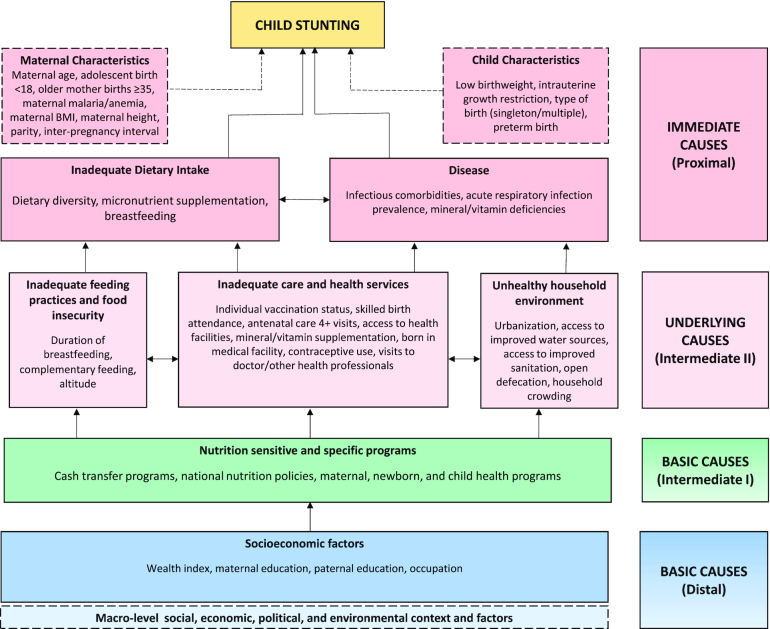
“Adapted versions of the UNICEF framework were highlighted in the Lancet Series on Maternal and Child Nutrition in 2008 (10), and expanded in 2013 (1) to incorporate the theorized effects of both nutrition-sensitive and nutrition-specific interventions.”
MethodSelf-citationDisease control priorities in developing countries
(2006) · Choice Reviews Online · doi:10.5860/choice.44-0343 · Cited by 3,628
Arimond, M., & Ruel, M. T. (2004) · The Journal of Nutrition · doi:10.1093/jn/134.10.2579 · Cited by 1,170 · cited 1×
“Inadequate dietary diversity is associated with increased odds of childhood stunting (123).”
BackgroundAn extension of the Blinder-Oaxaca decomposition technique to logit and probit models
Fairlie, R. W. (2005) · Journal of Economic and Social Measurement · doi:10.3233/jem-2005-0259 · Cited by 1,077 · cited 1×
“Some studies used extensions of Oaxaca-Blinder methods to incorporate dummy and nominal variables into the decomposition analysis (103, 104) or account for logit and probit models (105).”
MethodWagstaff, A., van Doorslaer, E., & Watanabe, N. (2003) · Journal of Econometrics · doi:10.1016/s0304-4076(02)00161-6 · Cited by 1,057
Child undernutrition, tropical enteropathy, toilets, and handwashing
Humphrey, J. H. (2009) · The Lancet · doi:10.1016/s0140-6736(09)60950-8 · Cited by 862
Role of Chlorogenic Acids in Controlling Oxidative and Inflammatory Stress Conditions
Liang, N., & Kitts, D. (2015) · Nutrients · doi:10.3390/nu8010016 · Cited by 805
Contextualising complementary feeding in a broader framework for stunting prevention
Stewart, C. P., Iannotti, L., Dewey, K. G., Michaelsen, K. F., & Onyango, A. W. (2013) · Maternal & Child Nutrition · doi:10.1111/mcn.12088 · Cited by 710
Rutstein, S. O. (2005) · International Journal of Gynecology & Obstetrics · doi:10.1016/j.ijgo.2004.11.012 · Cited by 665
Research works printed but not linked: 3
- Headey D, Hoddinott J, Park S Accounting for nutritional changes in six success stories: a regression-decomposition approach. Global Food Security. 2017; 13: 12– 20. · DOI
- Huicho L, Huayanay-Espinoza CA, Herrera-Perez E, Segura ER, de Guzman JN, Rivera-Ch M, Barros AJ Factors behind the success story of under-five stunting in Peru: a district ecological multilevel analysis. BMC Pediatr. 2017; 17(1): 29. 28103825 PMC5248498 · DOI
- Ponce N, Shimkhada R, Raub A, Daoud A, Nandi A, Richter L, Heymann J The association of minimum wage change on child nutritional status in LMICs: a quasi-experimental multi-country study. Global Public Health. 2018; 13(9): 1307– 21. 28766376 · DOI
Cited by
Items 101–200 of 380
Makhoul, Z., Ndonji, M., Long, J. M., Moore, C., Lunda, E., Mwandileya, W. S., & TAREN, D. L. (2024) · Frontiers in Public Health · doi:10.3389/fpubh.2024.1331907 · Cited by 9
Orimadegun, A. E., Jegede, A. S., Gaffey, M. F., Olufadewa, I. I., Confreda, E., Somaskandan, A., Islam, M., Keats, E. C., Ataullahjan, A., Amzat, J., et al. (2025) · American Journal of Clinical Nutrition · doi:10.1016/j.ajcnut.2025.02.022 · Cited by 15
Self-citationInfant Nutrition in Low- and Middle-Income Countries
Javaid, A., & Syed, S. (2022) · Clinics in Perinatology · doi:10.1016/j.clp.2022.02.011 · Cited by 5
Noviansyah, N., Romli, K., Mukmin, H., & Wijayanto, R. (2022) · International Journal of Public Health Science (IJPHS) · doi:10.11591/ijphs.v11i3.21383 · Cited by 5
Factors Affecting Community Knowledge Regarding Stunting in South Tangerang
Anggraeni, L. D., Suhaid, D. N., Daryati, E. I., Isnawati, Y. D., Pramesti, P. Y. W., Sunarti, S., & Uly, C. (2023) · The Malaysian Journal of Nursing · doi:10.31674/mjn.2023.v14i03.017 · Cited by 13
Zerfu, T. A., Duncan, A. J., Baltenweck, I., & McNeill, G. (2024) · Maternal and Child Nutrition · doi:10.1111/mcn.13720 · Cited by 8
Cendana, P., & Kim, S.-Y. (2025) · Asia Pacific Journal of Public Health · doi:10.1177/10105395251337970 · Cited by 10
DETERMINANTS OF STUNTING: A SYSTEMATIC REVIEW
Aminin, F., Damayanti, M., Saputri, N. A. S., & Darwitri, D. (2022) · International Journal of Social Science · doi:10.53625/ijss.v1i6.2425 · Cited by 5
“On a direct level, changes in some maternal characteristics predicted simple stunting reduction, including parity, interval interpregnancy, and mother Tall.”
BackgroundScheffler, C., & Hermanussen, M. (2023) · Human Biology and Public Health · doi:10.52905/hbph2022.3.36 · Cited by 7
Hubungan Pemanfaatan Lahan dan Konsumsi Protein Ikan Lele dengan Kejadian Stunting
Aryani, N. P., Afrida, B. R., Idyawati, S., Jannati, S. H., & Salfarina, A. L. (2023) · Jurnal Ilmiah Permas Jurnal Ilmiah STIKES Kendal · doi:10.32583/pskm.v13i3.1050 · Cited by 5
“Kondisi saat ini di masyarakat pada umumnya, makanan kita itu terlalu banyak karbohidrat dan sangat minim protein dan vitamin (Vaivada et al., 2020).”
BackgroundNutrition Transition Patterns in the Context of Global Food Systems TransformationPreprint
Carducci, B., Chen, Y., Luo, H., Webb, P., & Fanzo, J. (2024) · Research Square · doi:10.21203/rs.3.rs-4657489/v1 · Cited by 5
Setiawan, A., Syamsir, S. B., Rahmadiyah, D. C., Astuti, A., Atamou, L., Talilah, R., & Shorey, S. (2026) · International Journal of Nursing Sciences · doi:10.1016/j.ijnss.2026.02.008 · Cited by 20
“Improving maternal education has long been linked to better child growth outcomes and reduced stunting prevalence [40].”
Putri, L. D., Agustin, H., Bakti, I., & Suminar, J. R. (2025) · International Journal of Environmental Research and Public Health · doi:10.3390/ijerph22020145 · Cited by 20
“In the short term, stunting increases the incidence of pain and the risk of death; decreases children’s cognitive, motor, and verbal potential; and increases health risks and the lack of learning capacity while in school [1].”
WASH Practices in Childhood Stunting – A Narrative Review Article
Gurbani, N., Dhyani, A., Ammarah, S., & Baghel, P. (2022) · Journal of Datta Meghe Institute of Medical Sciences University · doi:10.4103/jdmimsu.jdmimsu_451_21 · Cited by 4
Awadu, J. E., Zalwango, S. K., Sikorskii, A. E., Giordani, B., Bovin, M. J., Musoke, P., & Ezeamama, A. E. (2023) · Medicine · doi:10.1097/md.0000000000032677 · Cited by 4
Jannat, K., Kader, M. A., Parvez, S. M., Thomson, R. J., Rahman, M. M., Kabir, M., Agho, K., Haque, R., & Merom, D. (2023) · Frontiers in Microbiomes · doi:10.3389/frmbi.2023.1029839 · Cited by 4
Ekayanthi, N. W. D., Susilawati, E. H., & Pramanik, N. D. (2022) · Open Access Macedonian Journal of Medical Sciences · doi:10.3889/oamjms.2022.10043 · Cited by 4
Maniragaba, V. N., Atuhaire, L. K., & Rutayisire, P. C. (2023) · Sustainability · doi:10.3390/su152014872 · Cited by 7
Aswi, A., Rahardiantoro, S., Kurnia, A., Sartono, B., Handayani, D., Nurwan, N., & Cramb, S. M. (2024) · Geospatial health · doi:10.4081/gh.2024.1321 · Cited by 4
“Research exploring stunting cases and their causal factors indicate that malnutrition in children (Vatsa et al. , 2023) and parental education (Vaivada et al. , 2020) are contributing factors.”
BackgroundRich, K., Engelbrecht, L., Wills, G., & Mphaphuli, E. B. (2024) · Maternal and Child Nutrition · doi:10.1111/mcn.13765 · Cited by 9
“While there is some conflicting evidence (Headey 2013), improved sanitation also appears to have contributed to reductions in stunting (Smith and Haddad 2015; Vaivada et al. 2020).”
Kayanda, R., Kassim, N., Ngure, F. M., Stoltzfus, R. J., & Phillips, E. L. (2024) · Nutrients · doi:10.3390/nu17010131 · Cited by 4
Jin, X., Wu, D., Ge, F., Cui, D., Jumabieke, A., Wang, X., Wang, R., Wang, N., Sun, J., Liao, W., et al. (2025) · BMC Public Health · doi:10.1186/s12889-025-22381-4 · Cited by 11
“The faltering of linear growth in IYC remains a substantial public health problem despite a better understanding of environmental and nutritional factors [11, 12].”
Magara, H. J. O., Hugel, S., & Fisher, B. L. (2025) · Foods · doi:10.3390/foods14111848 · Cited by 6
Roberts, E., Helgertz, J., & Warren, J. R. (2022) · The History of the Family · doi:10.1080/1081602x.2022.2034658 · Cited by 5
Determinan stunting pada bayi usia 0 – 24 bulan di Kabupaten Pidie: Studi kasus-kontrol
Fitraniar, I., Abdurahman, F., Abdullah, A., Maidar, M., & Ichwansyah, F. (2022) · AcTion Aceh Nutrition Journal · doi:10.30867/action.v7i2.502 · Cited by 4
Role of Intestinal Parasitic Infection in Stunting
Siagian, F. E. (2023) · South Asian Journal of Research in Microbiology · doi:10.9734/sajrm/2023/v15i2285 · Cited by 5
Cooper, G. S., Davies‐Kershaw, H., Domínguez-Salas, P., Fahmida, U., Faye, B. T., Ferguson, E., Grace, D., Häsler, B., Kadiyala, S., Konapur, A., et al. (2024) · BMJ Paediatrics Open · doi:10.1136/bmjpo-2022-001671 · Cited by 5
Jobarteh, M. L., Conway-Moore, K., Dinesh Yadav, D. M., Tata, D. T., Fahmida, U., Faye, B. T., Kulkarni, B., Saxena, D. B., & Heffernan, C. (2024) · BMJ Paediatrics Open · doi:10.1136/bmjpo-2023-002333 · Cited by 4
Mehta, K., Mukherjee, S. G., Bhattacharjee, I., Fate, K., Kachwaha, S., Rajeev, T., Kant, A., Banerjee, M., & Shet, A. (2024) · BMC Nutrition · doi:10.1186/s40795-024-00918-x · Cited by 3
“…status, underlying anemia, nutrition during pregnancy, parity, birth order, inter-pregnancy interval, and childhood factors such as dietary intake, micronutrient supplementation, breastfeeding, complementary feeding, dietary diversity, and childhood morbidities and infectious diseases [3].”
BackgroundGeorge, F., Rajeev, L. N., Bandyopadhyay, S., Baby, J., Sinha, S., Sachdev, H. S., Kurpad, A. V., & Thomas, T. S. (2024) · BMC Public Health · doi:10.1186/s12889-023-17520-8 · Cited by 4
“Inadequate dietary intake is one of the immediate underlying causes of child growth faltering and in turn stunting [16, 43, 44].”
BackgroundJoe, W., Prakash, A., Azimi, S. M. Y., Galvin, M., Murira, Z., Salamanca, G. N. P., & Sethi, V. (2025) · PLOS Global Public Health · doi:10.1371/journal.pgph.0004423 · Cited by 3
“Studies across South Asia and Africa consistently show a link between higher maternal education and reduced stunting risk [22].”
Sikov, A., & Hernández, J. (2025) · Letters in Spatial and Resource Sciences · doi:10.1007/s12076-025-00407-0 · Cited by 3
“…(WHO) child growth standards median (WHO 2018) Although a substantial reduction of the global stunting rates occurred between 1990 and 2022 from 40.2% in 1990 to 22.3% in 2022, they are still very high and present a persistent social problem in many countries (Bank 2022; Vaivada et al. 2020).”
InfluentialSahiledengle, B., Ward, P., Duko, B., Agho, K., & Mwanri, L. (2025) · PLOS Global Public Health · doi:10.1371/journal.pgph.0005008 · Cited by 7
Growth Trajectories in Infants From Families With Plant-Based or Omnivorous Dietary Patterns
Avital, K., Isakov, N. F., Shahar, D. R., Magnazi, M. B., Avraham, S. B., Tepper, S., & Hamiel, U. (2026) · JAMA Network Open · doi:10.1001/jamanetworkopen.2025.57798 · Cited by 3
Valdez-Palomares, F., Noriega, L. G., Reyes-Romo, D., Canizales‐Quinteros, S., Nambo‐Venegas, R., Salinas‐Lara, C., Tovar-Palacio, A. R., Menjívar, M., Peña‐Espinoza, B. I., Ortiz, G., et al. (2026) · Gut Microbes · doi:10.1080/19490976.2026.2651984 · Cited by 3
Sutinbuk, D., Nugraheni, S. A., Rahfiludin, M. Z., & Setyaningsih, Y. (2024) · Narra J · doi:10.52225/narra.v4i1.688 · Cited by 31
Food consumption, culture, and living environment's impact on stunting cases: A systematic review
Loihala, M., Indar, I., Syam, A., Syafar, M., Abdullah, M. T., & Muis, M. (2023) · Science, Engineering and Health Studies · doi:10.69598/sehs.17.23050021 · Cited by 3
Olakunle, A. A. (2024) · BMC Public Health · doi:10.1186/s12889-024-19327-7 · Cited by 6
“Recent data have shown that key factors accelerating children’s nutrition outcomes include maternal education and household socioeconomic status at the individual level and access to healthcare facilities at the community level [9].”
BackgroundMalnutrition among Children under Age Five in Panama: Results of the ENSPA 2019
Sosa‐Pedreschi, A., Fontes, F., Roa, R., Quintana, H. K., & Mendoza, R. M. (2024) · Annals of Global Health · doi:10.5334/aogh.4409 · Cited by 11
Haryanti, F., Hartini, S., Akhmadi, A., Andarwati, F., Risnawati, H., Pratiwi, A. N., Kusumawati, A. S., Cahyani, R. D., & Lusmilasari, L. (2024) · Belitung Nursing Journal · doi:10.33546/bnj.3481 · Cited by 41
“Childhood malnutrition, including stunting, is a leading cause of disease and death in children under five (Danaei et al., 2016; Vaivada et al., 2020).”
BackgroundModulation of miRNAs by protein intake: A novel approach to mitigating stunting in children
Sundjaya, T., Basrowi, R. W., Pratiwi, D., Amalia, N., Athallah, A. F., Cahyono, M. B. A., Wibowo, C. A., & Nurkolis, F. (2025) · Journal of Agriculture and Food Research · doi:10.1016/j.jafr.2025.101952 · Cited by 8
Aisyah, I. S., & Sudarman, S. (2021) · Community Empowerment · doi:10.31603/ce.4416 · Cited by 3
Taqwin, T., Linda, L., Kusika, S. Y., Ramadhan, K., Radhiah, S., & Bohari, B. (2022) · Open Access Macedonian Journal of Medical Sciences · doi:10.3889/oamjms.2022.8906 · Cited by 3
“1185 about stunting, use of family latrines according to health standards, improvement of sanitation infrastructure, delivery in health facilities, and health workers who assist in childbirth are factors that can increase child growth [12].”
BackgroundTeaching kindergarteners creativity with "OCCUT": Origami paper
Darmayanti, R., & Choirudin, C. (2022) · Kepompong Children Centre Journal · doi:10.62031/kccj.v1n1.8 · Cited by 7
“…program is to establish a solid groundwork for fostering children's attitudes (Liu et al., 2023; Meloni et al., 2021), knowledge (Miyashita, 2015), abilities, and creativity, essential for their adaptability to the environment and future growth and development (Melaku, 2018; Vaivada, 2020).”
BackgroundSa’pang, M., Harna, H., Swamilaksita, P. D., Tambunan, M., & Usman, S. (2024) · I-Com Indonesian Community Journal · doi:10.33379/icom.v4i1.4131 · Cited by 3
Linear growth determinants of under two years old children in Surabaya, Indonesia
Nadhiroh, S. R., Ayuningtyas, H., & Salsabil, I. S. (2024) · Clinical Epidemiology and Global Health · doi:10.1016/j.cegh.2024.101605 · Cited by 3
Mendes, M. M. E., da Silva, L. C., de Menezes, R. C. E., Florêncio, T. M. D. M. T., & Clemente, A. P. G. (2024) · British Journal Of Nutrition · doi:10.1017/s0007114524001119 · Cited by 3
“It is also associated with a decreased likelihood of stunting and an increased capacity to access and derive benefits from health interventions (48,49) .”
Sari, D. K., Rahmiwati, A., & Flora, R. (2024) · Media Publikasi Promosi Kesehatan Indonesia (MPPKI) · doi:10.56338/mppki.v7i6.5247 · Cited by 3
“(8 ).”
Baihaqi, W. M., Laela, I. N., & Darso, D. (2024) · JITK (Jurnal Ilmu Pengetahuan dan Teknologi Komputer) · doi:10.33480/jitk.v10i1.4998 · Cited by 3
“Stunting has the potential to slow down brain development, with long-term consequences such as mental retardation, lack of learning ability, and the risk of developing diabetes, hypertension, and obesity[4].”
BackgroundMasita, E. D., Suryadi, I. A., Rizki, L. K., Firdaus, F., & Hasina, S. N. (2022) · International Journal of Health Sciences · doi:10.53730/ijhs.v6n3.12338 · Cited by 3
“Healthseeking behaviour is an action carried out by individuals who experience health problems or diseases to get treatment (Haileamlak, 2018; Widayanti et al., 2020).”
BackgroundInfluentialFamily Vulnerability and Children’ Nutritional Status during COVID-19 Pandemic
Yusuf, A. M., Tenrisau, D., Hidayanti, H., Ibrahim, A. H., Bahar, A., Sarifudin, S., Tahir, Y., Adhyanti, A., & Alfiah, E. (2022) · Journal of Public Health for Tropical and Coastal Region · doi:10.14710/jphtcr.v5i2.13758 · Cited by 3
Komala, R., Febriani, W., Ariska, K., & Nurrahmawati, E. (2023) · Al-Athfaal Jurnal Ilmiah Pendidikan Anak Usia Dini · doi:10.24042/ajipaud.v6i1.16621 · Cited by 3
“A higher level of parental education can strongly predict better child growth (Vaivada et al., 2020).”
BackgroundNugraheni, W. P., Mahmudiono, T., Faisal, D. R., Purwatiningsih, Y., Lestyoningrum, S. D., Yulianti, A., Nainggolan, O., & Abihail, C. T. (2023) · Research Square · doi:10.21203/rs.3.rs-2537611/v1 · Cited by 9
Jaya, P. H. I., Izudin, A., Aditya, R., & Saptoni, S. (2025) · Asia Pacific Journal of Social Work and Development · doi:10.1080/29949769.2025.2485912 · Cited by 15
Pane, N. K., Almadany, U. H., & Sujoko, E. (2025) · PubHealth Jurnal Kesehatan Masyarakat · doi:10.56211/pubhealth.v4i1.1026 · Cited by 7
“Di antara sekian banyak faktor tersebut, status gizi ibu selama kehamilan memegang peran penting dan mendasar (Vaivada et al., 2020).”
Rahmadiani, I., Fibriana, A. I., Nisa, A. A., Shabbir, S. A., & Azam, M. (2025) · International Journal of Preventive Medicine · doi:10.4103/ijpvm.ijpvm_242_24 · Cited by 2
“[3] Stunting is a consequence of several factors that are often associated with poverty, including nutrition, health, sanitation, and the environment.”
Maisa, S. N., Seman, H. A., Azlan, N. B., Idris, S. L., Amirullah, N. A., & Sulaiman, N. (2025) · Cureus · doi:10.7759/cureus.100127 · Cited by 4
The physiology of poverty: gut microbiome and pathways to child stunting
Hlongwa, N., Rich, K., Kelly, P. M., Ngobeni, R., Stone, W., von Fintel, M., Schenck, R., Swart, R., Makhalanyane, T. P., & Burger, R. (2026) · Philosophical Transactions of the Royal Society B Biological Sciences · doi:10.1098/rstb.2025.0034 · Cited by 2
EARLY DETECTION OF CHILDREN'S DEVELOPMENT ON STUNTING TODDLERS
Kartinawati, K. T., Pradnyawati, L. G., & Dwipayana, I. M. E. (2022) · JURNAL KEDOKTERAN · doi:10.36679/kedokteran.v7i2.521 · Cited by 2
Analisis Faktor Risiko Stunting pada Anak Usia 12-59 Bulan
Noordiati, N., Hikmah, N., Wahyuni, S., Sukriani, W., & Arisani, G. (2022) · Jurnal Ilmu Kesehatan Masyarakat · doi:10.33221/jikm.v11i06.1807 · Cited by 6
Adimuntja, N. P., & Asriati, A. (2022) · Jambura Journal of Health Sciences and Research · doi:10.35971/jjhsr.v5i1.16699 · Cited by 2
Rahayu, N. K. (2023) · Bandung Conference Series Medical Science · doi:10.29313/bcsms.v3i1.6130 · Cited by 2
Picauly, I. (2023) · Journal of Maternal and Child Health · doi:10.26911/thejmch.2023.08.01.11 · Cited by 2
Machine Learning Implementations in Childhood Stunting Research: A Systematic Literature Review
Rahutomo, R., Elwirehardja, G. N., Isnan, M., Asadi, F., & Pardamean, B. (2023) · International Conference on Information Management and Technology (ICIMTech) · doi:10.1109/icimtech59029.2023.10277881 · Cited by 6
“Childhood stunting, as a public global health issue [1], [2], has been recognized as a national priority in Indonesia [3].”
BackgroundBarai, S. A., Nurmahfuzhah, N., & Defina, D. (2023) · Journal of Family Sciences · doi:10.29244/jfs.v8i2.51324 · Cited by 2
“According to Vaivada et al. (2020) and Pangaribuan et al. (2020), one of the causes of stunting children is the low socioeconomic status of the household.”
BackgroundProceedings of the 23rd International Conference of Public Health Sciences
(2024) · Journal of Health Research · doi:10.56808/2586-940x.1091 · Cited by 3
Bhadra, D. (2024) · Public Health Nutrition · doi:10.1017/s1368980024000193 · Cited by 2
Noerjoedianto, D., Ibnu, I. N., & Wisudariani, E. (2024) · Contagion Scientific Periodical Journal of Public Health and Coastal Health · doi:10.30829/contagion.v6i1.19500 · Cited by 2
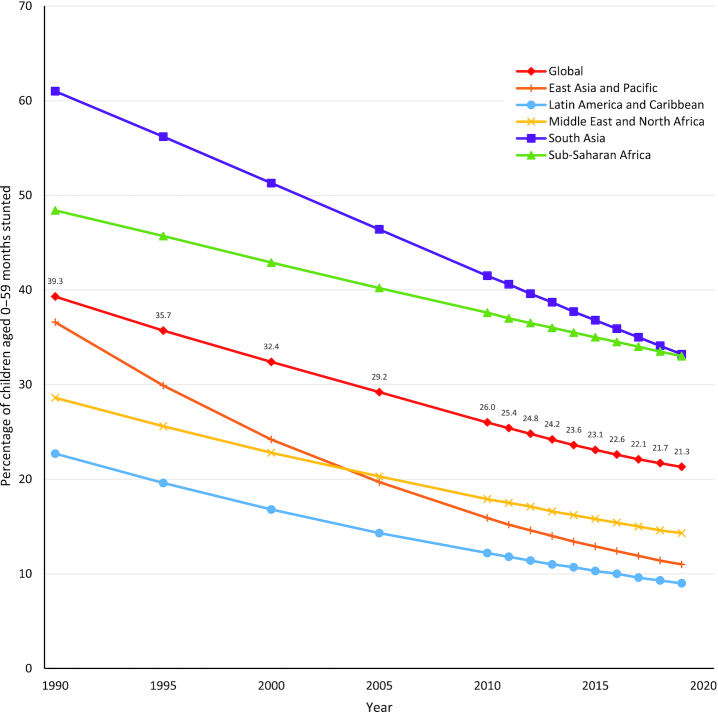
“Globally, the average reduction in the number of children experiencing stunting is 0.55% every year (Vaivada et al., 2020).”
BackgroundInfluentialDeterminants of stunting among children 6–23 months: a population-based study in Indonesia
Jokhu, L. A., Syauqy, A., Lin, L.-Y., Dieny, F. F., & Rahadiyanti, A. (2024) · Nutrition & Food Science · doi:10.1108/nfs-01-2024-0025 · Cited by 2
Willmart, A. C., Krissandiani, F. N. R., & Nadhiroh, S. R. (2024) · Media Gizi Kesmas · doi:10.20473/mgk.v13i1.2024.43-50 · Cited by 2
Krisseptiana, & Martadi, N. S. D. (2024) · Jurnal PROMKES · doi:10.20473/jpk.v12.i2.2024.218-228 · Cited by 4
“Numerous studies addressing stunting highlight a common challenge: the difficulty in obtaining pertinent data related to stunting (Hartotok et al ., 2021; Raffalli & Villalobos, 2021; Vaivada et al ., 2020).”
BackgroundStunting Prevention Based on Local Wisdom in Bantul Regency, Yogyakarta, Indonesia
Ruliyandari, R., Utami, F. P., Agustin, H., & Matahari, R. (2025) · Social medicine · doi:10.71164/socialmedicine.v18i01.2025.1657 · Cited by 5
“27, 28 However, this study found that there is still a need to increase collaboration and synergy with sectors dealing with environmental sanitation, clean water supply, education, and poverty eradication.”
Sahiledengle, B., Agho, K., Tekalegn, Y., Gomora, D., Atlaw, D., Zenbaba, D., Desta, F., Teferu, Z., Beressa, G., Mesfin, T., et al. (2025) · PLoS ONE · doi:10.1371/journal.pone.0323332 · Cited by 3
“Previous studies in Eswatini [72], Nepal [73], Ghana [74], and Ethiopia [75] highlighted that the prevalence of stunting increased with increasing age, with the lowest prevalence observed in younger children [76,77].”
Azimi, N. A., Hakim, B. N. A., Mohamed, H. J. J., Ismail, T. A. T., Zamh, Z.-H., Kueh, Y. C., Sukeri, S., & Mohamad, P. (2024) · Malaysian Journal of Medicine and Health Sciences · doi:10.47836/mjmhs.20.3.46 · Cited by 2
Sanitasi rumah dan stunting di Wilayah Kerja Puskesmas Labuan Kabupaten Donggala
Christine, C., Politon, F. V. M., & Hafid, F. (2022) · AcTion Aceh Nutrition Journal · doi:10.30867/action.v7i2.536 · Cited by 2
Faizi, N., Zubair, M. Y., & Tasleem, F. (2022) · American Journal of Human Biology · doi:10.1002/ajhb.23735 · Cited by 2
“Reductions in stunting from 44% in 2005 to 22.8% in 2012 have been noted from the state of Maharashtra in India (WHO, 2014) and other places in the world primarily through system wide improvements including Water, Sanitation and Hygiene (WASH) (Vaivada et al., 2020).”
BackgroundInfluentialFactors Influencing The Growth and Development of Children with Stunting, Scoping Review
Dwijayanti, N., & Mufdlilah, M. (2022) · Women Midwives and Midwifery · doi:10.36749/wmm.2.1.40-57.2022 · Cited by 2
“Motor skills are acquired in several factors, such as physical and neuromuscular maturation, interaction of maintenance practices, and environment (Akseer et al., 2020; Vaivada et al., 2020).”
BackgroundDoes birth season correlate with childhood stunting? An input for astrological nutrition
Endalifer, M. L., Diress, G., Endalifer, B. L., Wagaye, B., & Derseh, H. A. (2022) · BMC Pediatrics · doi:10.1186/s12887-022-03343-w · Cited by 3
“3% of children under five years were stunted [3], of this 30% of them were in Sub-Saharan Africa.”
BackgroundPengaruh Sanitasi Lingkungan Terhadap Kejadian Stunting Pada Balita
Putri, M. R., Handayani, T. Y., & Sari, D. P. (2022) · JURNAL KESEHATAN MERCUSUAR · doi:10.36984/jkm.v5i1.260 · Cited by 2
Kajian Literatur: Berhubungankah mikrobiota saluran cerna dengan stunting pada anak balita?
Simanjuntak, B. Y., Annisa, R., & Saputra, A. I. (2022) · Amerta Nutrition · doi:10.20473/amnt.v6i1sp.2022.343-351 · Cited by 16
Analisis Determinan Kejadian Stunting di Wilayah Pesisir Danau Limboto
Amalia, M. R., Nuryani, N., Talibo, S. D., Setiawan, D. I., & Alimuddin, A. (2023) · Muhammadiyah Journal of Nutrition and Food Science (MJNF) · doi:10.24853/mjnf.4.1.65-73 · Cited by 2
“Stunting berdampak pada buruknya kualitas hidup anak untuk tumbuh kembang yang optimal sesuai potensi genetiknya (1).”
Gea, W., Nababan, D., Sinaga, J., Marlindawani, J., & Anita, S. (2023) · PREPOTIF Jurnal Kesehatan Masyarakat · doi:10.31004/prepotif.v7i3.20706 · Cited by 6
Nurharlinah, N., Rosnani, R., Athiutama, A., & Enisah, E. (2024) · An Idea Health Journal · doi:10.53690/ihj.v4i02.227 · Cited by 2
Hubungan Ketahanan Pangan dan Keragaman Pangan dengan Kejadian Stunting Balita Usia 24-59 Bulan
Mumtaza, M. (2024) · Media Gizi Kesmas · doi:10.20473/mgk.v13i1.2024.93-101 · Cited by 2
Risk Factors for the Prevalence of Stunting in Young Children and Its Prevention
Linasari, D. (2021) · Advances in health sciences research/Advances in Health Sciences Research · doi:10.2991/ahsr.k.210723.042 · Cited by 2
“This condition will become a burden if the productive population works in unhealthy conditions, which will claim a higher cost of national health insurance [3,4].”
Hussain, M., Ans, M., Shahid, S., Bibi, A., & Sultan, M. A. (2022) · Pakistan Journal of Health Sciences · doi:10.54393/pjhs.v3i05.161 · Cited by 1
Siegal, K., Musau, K., Woodruff, B. A., Custer, E., Vergari, L., Anyango, H., Donkor, W., Kiprotich, M., Rohner, F., & Wegmüller, R. (2022) · Maternal and Child Nutrition · doi:10.1111/mcn.13467 · Cited by 2
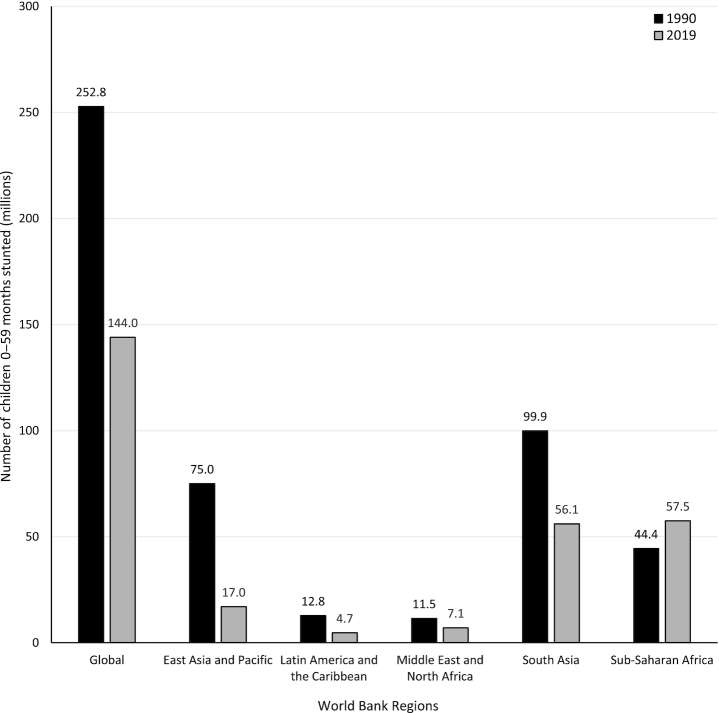
“continues to affect an estimated 21% (144 million) of children under five (Kinyoki et al., 2020; UNICEF/WHO/World Bank, 2020; Vaivada et al., 2020) and leads to a host of deleterious long‐term outcomes”
BackgroundFunctions of Agrarian Families in the Prevention of Stunting: A Literature Review
Wariin, S., Susanto, T., & Rahmawati, I. (2024) · Jurnal Keperawatan Komprehensif · doi:10.33755/jkk.v10i1.640 · Cited by 1
Astuti, Y., & Anggarawati, T. (2023) · JURNAL PENGABDIAN KEPADA MASYARAKAT SISTHANA · doi:10.55606/pkmsisthana.v5i1.388 · Cited by 1
Social realities in remote villages: Infant and young child feeding in Kirewa, Uganda
Schneider, L., Korhonen, K., Ollila, S., & Mutanen, M. L. (2024) · PLOS Global Public Health · doi:10.1371/journal.pgph.0003016 · Cited by 5
Bahwere, P., Judge, D. S., Spencer, P. R., Chiwile, F., & Mutunga, M. (2024) · PLoS ONE · doi:10.1371/journal.pone.0312433 · Cited by 4
High Blood Lead Levels as A Risk Factor of Stunting: A Study of Children in Agricultural Areas
Afandi, A., Suhartono, S., Budiyono, B., Margawati, A., & Kartini, A. (2025) · JURNAL KESEHATAN LINGKUNGAN · doi:10.20473/jkl.v17i1.2025.45-53 · Cited by 3
“Children who have undergone stunted growth will experience delays in their both physical growth and intellectual development (3).”
Fogarty, B. J., Garcia-Martínez, A., Chawla, N. V., & Servan-Mori, E. E. (2025) · Journal of Global Health · doi:10.7189/jogh.15.04065 · Cited by 10
“…health initiatives, this underscores the urgent need for specific, targeted, and sustainable actions to prevent and address a potential rise in stunting in similar settings. vidual children, as well as its adverse effects on local communities, regional populations, and entire societies [ 3 , 4 ].”
InfluentialVongsakit, S., Ohara, K., Fujita, Y., Takada, A., & Kouda, K. (2025) · Journal of PHYSIOLOGICAL ANTHROPOLOGY · doi:10.1186/s40101-025-00402-w · Cited by 4
“To assess associations of stunting with socio-demographic factors, 18 exploratory variables at the individual level and household level were selected from questionnaires (1) and (6) based on previous reports [7, 21, 22].”
Fikri, A. M., Malau, J., Kasasiah, A., Ramadhan, W. N., Safitri, N. A., Debora, P. C., Rahma, A. A., & Harianti, R. (2025) · Nutrire · doi:10.1186/s41110-025-00364-0 · Cited by 2
“While global trends in stunting have shown a decline in recent decades, the progress varies across coun-tries—some have reduced stunting by more than 30%, while others have made only minimal advances [2].”
Wang, W., Qiu, Z., Wang, F., Qiu, D., & Ye, G. (2025) · Frontiers in Pediatrics · doi:10.3389/fped.2025.1634605 · Cited by 2
“…developed regions like Europe and the U.S. have relatively lower rates of growth retardation (66, 67), largely due to high education levels, well-developed prenatal care, and adequate nutrition, which prevent adverse events during pregnancy and reduce the birth rate of stunted children (68, 69).”
Jemil, H. W., Semayneh, S. W., Kassaw, A. B., & Gashu, K. D. (2026) · PLoS ONE · doi:10.1371/journal.pone.0340221 · Cited by 2
Turner, P. C., & Phillips, E. M. (2026) · Toxins · doi:10.3390/toxins18010032 · Cited by 3
Dorzie, J. B. K., Chirawurah, D., Boah, M., & Apanga, S. (2026) · Environmental Health Insights · doi:10.1177/11786302251414761 · Cited by 1
Tyagi, S. (2026) · Discover Public Health · doi:10.1186/s12982-026-01395-2 · Cited by 1
“In line with these findings, the associations observed in the present study reinforce the need for early identification and nutritional support of women with suboptimal anthropometric status to improve birth outcomes in socio-economically disadvantaged settings [38].”
Metadata
- Authors
- Vaivada, T., Akseer, N., Akseer, S., Somaskandan, A., Stefopulos, M., & Bhutta, Z. A.
- Affiliations
- Hospital for Sick Children (CA)
- University of Toronto (CA)
- Aga Khan University (PK)
- Corresponding author
- Bhutta, Zulfiqar A
- Venue
- The American Journal of Clinical Nutrition
- Publisher
- Elsevier BV
- Published
- 2020-09
- Volume
- 112
- Issue
- Suppl 2
- Pages
- 777S-791S
- ISSN
- 0002-9165 (ISSN-L)
- PMC
- PMC7487433
- OpenAlex
- W3082627770
- Cited by
- 381
- References
- 129
- Citations by year
- 2026: 58 · 2025: 57 · 2024: 93 · 2023: 75 · 2022: 76 · 2021: 17 · 2020: 5
- FWCI
- 5.31
- Type
- journal article
- Language
- en
- Open access
- hybrid
- doi.org
- Licence
- cc-by
- www.elsevier.com/tdm/userlicense/1.0/ (tdm)
- creativecommons.org/licenses/by/4.0/ (vor)
- Locations
- American Journal of Clinical Nutrition (publishedVersion, cc-by)
- PubMed Central (publishedVersion, cc-by)
- PubMed (publishedVersion)
- eCommons - AKU (Aga Khan University) (submittedVersion, cc-by)
- Topics
- Health Sciences › Nursing › Nutrition and Dietetics › Child Nutrition and Water Access
- Health Sciences › Medicine › Pediatrics, Perinatology and Child Health › Public Health and Nutrition
- Health Sciences › Medicine › Pediatrics, Perinatology and Child Health › Global Maternal and Child Health
- Keywords
- child stunting, linear growth, malnutrition, household asset index, parental education, sanitation, open defecation, obstetric care, prenatal care, skilled birth attendance, family planning, parity, interpregnancy interval, maternal height, socioeconomic status
- MeSH terms
- Child Health, Adolescent, Child, Child Development, Child, Preschool, Female, Growth Disorders, Humans, Male, Nutritional Status
About these checks
Registry, retraction, Cites and statistics results are computed, not judged, with one exception: a printed reference that no index lists is read once by a model before it counts as a citation error. Claims are extracted by a model and kept only when their quote appears verbatim in the text; each cited source is then checked, with a model’s help, for whether it says what the claim relies on. Those verdicts can be wrong — read the claim’s quote and the cited source before relying on one.
Statistics and arithmetic are recomputed, not judged.
Confidence bands are shown only for fields calibrated on our annotated test set. None is calibrated yet, so no band is shown.
What counts as a claim ›How we measure confidence ›How we check this ›
Are you an author, or do you see a problem with this page? Request a review
Data sources
Bibliographic data: Semantic Scholar, OpenAlex, Crossref.
Contains information from the Semantic Scholar Academic Graph Datasets, made available under the ODC Attribution License (ODC-BY 1.0).
Semantic Scholar’s data is described in: Kinney, R., et al. (2023). The Semantic Scholar Open Data Platform. arXiv:2301.10140.
