

Stunting in childhood: an overview of global burden, trends, determinants, and drivers of decline
Open accessThe DOI matches its Crossref record; 125 of the 129 references it cites were found in a registry or an index.
Abstract
BACKGROUND: Progress has been made worldwide in reducing chronic undernutrition and rates of linear growth stunting in children under 5 y of age, although rates still remain high in many regions. Policies, programs, and interventions supporting maternal and child health and nutrition have the potential to improve child growth and development. OBJECTIVE: This article synthesizes the available global evidence on the drivers of national declines in stunting prevalence and compares the relative effect of major drivers of stunting decline between countries. METHODS: We conducted a systematic review of published peer-reviewed and gray literature analyzing the relation between changes in key determinants of child linear growth and contemporaneous changes in linear growth outcomes over time. RESULTS: Among the basic determinants of stunting assessed within regression-decomposition analyses, improvement in asset index score was a consistent and strong driver of improved linear growth outcomes. Increased parental education was also a strong predictor of improved child growth. Of the underlying determinants of stunting, reduced rates of open defecation, improved sanitation infrastructure, and improved access to key maternal health services, including optimal antenatal care and delivery in a health facility or with a skilled birth attendant, all accounted for substantially improved child growth, although the magnitude of variation explained by each differed substantially between countries. At the immediate level, changes in several maternal characteristics predicted modest stunting reductions, including parity, interpregnancy interval, and maternal height. CONCLUSIONS: Unique sets of stunting determinants predicted stunting reduction within countries that have reduced stunting. Several common drivers emerge at the basic, underlying, and immediate levels, including improvements in maternal and paternal education, household socioeconomic status, sanitation conditions, maternal health services access, and family planning. Further data collection and in-depth mixed-methods research are required to strengthen recommendations for those countries where the stunting burden remains unacceptably high.
Overview
The claims and statistics of this paper haven’t been checked yet.
Free: it reads the open-access text and checks the first 5 claims that cite a source we can check. Create a free account to check every claim.
Integrity signals
Registry
Cites
Statistics
Figures
Verification
Claims the paper makes
The claims and statistics of this paper haven’t been checked yet.
Free: it reads the open-access text and checks the first 5 claims that cite a source we can check. Create a free account to check every claim.
Claims other papers make about this one
Each is checked against this paper’s own text: does it say what the citing paper says it does?
The cited source says what the claim attributes to it.
In the citing paper
“The substantial progress in reducing the tuberculosis burden in children might reflect recent trends showing marked decreases in child mortality,54 global improvements in child nutrition outcomes,55, 56 increasing tuberculosis case finding and services for children,57, 58, 59 and continued reductions in vertical HIV transmission.60, 61”
Self-check
Percentages, sums and reported differences re-computed from the paper’s own numbers.
The self-check needs the paper’s full text.
Citations
Cites
Maternal and child undernutrition and overweight in low-income and middle-income countries
Black, R. E., Victora, C. G., Walker, S. P., Bhutta, Z. A., Christian, P., de Onis, M., Ezzati, M., Grantham-McGregor, S., Katz, J., Martorell, R., et al. (2013) · The Lancet · doi:10.1016/s0140-6736(13)60937-x · Cited by 8,475
Self-citationMaternal and child undernutrition: global and regional exposures and health consequences
Black, R. E., Allen, L. H., Bhutta, Z. A., Caulfield, L. E., de Onis, M., Ezzati, M., Mathers, C., & Rivera, J. (2008) · The Lancet · doi:10.1016/s0140-6736(07)61690-0 · Cited by 6,443 · cited 1×
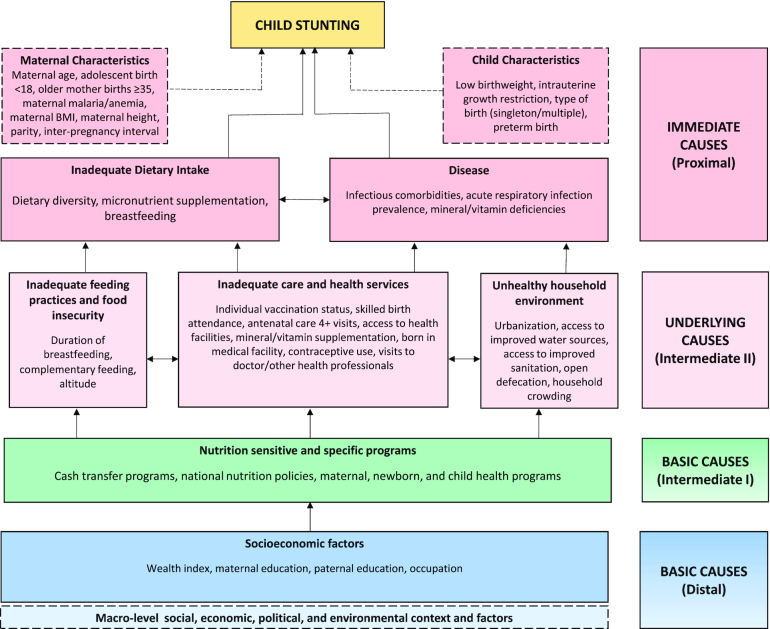
“Adapted versions of the UNICEF framework were highlighted in the Lancet Series on Maternal and Child Nutrition in 2008 (10), and expanded in 2013 (1) to incorporate the theorized effects of both nutrition-sensitive and nutrition-specific interventions.”
MethodSelf-citationDisease control priorities in developing countries
(2006) · Choice Reviews Online · doi:10.5860/choice.44-0343 · Cited by 3,628
Arimond, M., & Ruel, M. T. (2004) · The Journal of Nutrition · doi:10.1093/jn/134.10.2579 · Cited by 1,170 · cited 1×
“Inadequate dietary diversity is associated with increased odds of childhood stunting (123).”
BackgroundAn extension of the Blinder-Oaxaca decomposition technique to logit and probit models
Fairlie, R. W. (2005) · Journal of Economic and Social Measurement · doi:10.3233/jem-2005-0259 · Cited by 1,077 · cited 1×
“Some studies used extensions of Oaxaca-Blinder methods to incorporate dummy and nominal variables into the decomposition analysis (103, 104) or account for logit and probit models (105).”
MethodWagstaff, A., van Doorslaer, E., & Watanabe, N. (2003) · Journal of Econometrics · doi:10.1016/s0304-4076(02)00161-6 · Cited by 1,057
Child undernutrition, tropical enteropathy, toilets, and handwashing
Humphrey, J. H. (2009) · The Lancet · doi:10.1016/s0140-6736(09)60950-8 · Cited by 862
Role of Chlorogenic Acids in Controlling Oxidative and Inflammatory Stress Conditions
Liang, N., & Kitts, D. (2015) · Nutrients · doi:10.3390/nu8010016 · Cited by 805
Contextualising complementary feeding in a broader framework for stunting prevention
Stewart, C. P., Iannotti, L., Dewey, K. G., Michaelsen, K. F., & Onyango, A. W. (2013) · Maternal & Child Nutrition · doi:10.1111/mcn.12088 · Cited by 710
Rutstein, S. O. (2005) · International Journal of Gynecology & Obstetrics · doi:10.1016/j.ijgo.2004.11.012 · Cited by 665
Research works printed but not linked: 3
- Headey D, Hoddinott J, Park S Accounting for nutritional changes in six success stories: a regression-decomposition approach. Global Food Security. 2017; 13: 12– 20. · DOI
- Huicho L, Huayanay-Espinoza CA, Herrera-Perez E, Segura ER, de Guzman JN, Rivera-Ch M, Barros AJ Factors behind the success story of under-five stunting in Peru: a district ecological multilevel analysis. BMC Pediatr. 2017; 17(1): 29. 28103825 PMC5248498 · DOI
- Ponce N, Shimkhada R, Raub A, Daoud A, Nandi A, Richter L, Heymann J The association of minimum wage change on child nutritional status in LMICs: a quasi-experimental multi-country study. Global Public Health. 2018; 13(9): 1307– 21. 28766376 · DOI
Cited by
Items 201–300 of 380
Hadikurniawati, W., Hartomo, K. D., & Sembiring, I. (2026) · Engineering Technology & Applied Science Research · doi:10.48084/etasr.15310 · Cited by 1
“This figure is particularly striking in South Asia (30.5%), Sub-Saharan Africa (31.3%), Southeast Asia (26.4%), and Oceania (excluding Australia and New Zealand) (44.0%), where economic factors, food access, and health services remain major obstacles [2-4].”
InfluentialMobile Health Interventions for Caregivers to Prevent Stunting Among Children: A Scoping Review
Choliq, I., Fitriyani, V. R., & Lin, S. (2026) · International Journal of Nursing Practice · doi:10.1111/ijn.70117 · Cited by 1
Cultural barriers to stunting prevention: a case study of the Baduy indigenous tribe in Indonesia
Adi, Y. A., Pujihartati, S. H., Humsona, R., & Wirasisya, D. G. (2026) · Frontiers in Sociology · doi:10.3389/fsoc.2026.1724639 · Cited by 6
“…in sanitation and maternal health services have a positive correlation with enhanced child growth outcomes, underscoring the necessity for a comprehensive approach that considers both immediate health determinants and broader environmental influences on child development (Vaivada et al., 2020).”
Nesa, M. K., Babu, M. R., Tasnim, S., & Uddin, M. J. (2026) · Health Science Reports · doi:10.1002/hsr2.72087 · Cited by 1
“Better access to essential maternal health services, delivery in a medical institution or with a qualified labor support professional, and improved sanitation infrastructure contributed to significantly improved child development [15].”
Uwamahoro, E., Habtu, M., Absolomon, G., & Condo, J. U. (2026) · Scientific Reports · doi:10.1038/s41598-026-46969-x · Cited by 1
Sasmito, L., Supranoto, Indriastuti, S., Prayitno, H., & Sawir, M. (2026) · SN Social Sciences · doi:10.1007/s43545-026-01448-y · Cited by 11
“Stunting, defined as impaired growth and development in children due to chronic malnutrition, is now widely recognized as not merely a health issue, but also a governance and development challenge (Tamir et al. 2024; Vaivada et al. 2020 ).”
Yakubu, S. O., Akparibo, R., Morgan-Fallah, C., Ranjan, A., Karim, Z., Adesanmi, B., Schultz, L. B., & Bundy, D. A. P. (2026) · BMJ Global Health · doi:10.1136/bmjgh-2025-019620 · Cited by 2
Nutraceutical Interventions in Stunting: Advances, Challenges, and Prospects
Rahimah, S., Tallei, T. E., Savitri, M., Yamada, C., Kim, H. J., Choi, M., Park, M. N., Ophinni, Y., & Kim, B. (2026) · Food Science & Nutrition · doi:10.1002/fsn3.71910 · Cited by 3
“Although global prevalence has declined over recent decades, progress has slowed in many regions, particularly in Asia, Africa, and parts of Latin America (Vaivada et al. 2020).”
Roth, D. E., Watson, K. M., Qamar, H., & Bassani, D. G. (2026) · Advances in Nutrition · doi:10.1016/j.advnut.2026.100688 · Cited by 1
“…population-representative survey datasets from most LMICs, such as Demographic and Health Surveys (DHS), has enabled numerous studies of growth faltering based on analyses of age-binned data or pseudolongitudinal approaches that quantify trends by age or calendar date (i.e. secular changes) [1,42].”
Improving cadre knowledge in stunting prevention through android-based application
Indrayati, N., Musyarofah, S., Livana, P. H., & Setianingsih, S. (2022) · International Journal of Health Sciences · doi:10.53730/ijhs.v6ns9.12326 · Cited by 1
Environmental And Family Approach on Stunting: A Literature Review
Hermawan, N. S. A., Umar, M. Y., & Agustriyani, F. (2023) · Jurnal Aisyah Jurnal Ilmu Kesehatan · doi:10.30604/jika.v8is1.1720 · Cited by 2
IMPLEMENTATION OF CONVERGENCE OF CROSS-SECTORAL ACTIVITIES IN HANDLING STUNTING
Askar, A., Ramli, A. N. A., Rahman, N., & Niswaty, R. (2023) · Sosiohumaniora · doi:10.24198/sosiohumaniora.v25i2.46182 · Cited by 1
Elba, F., Hassan, H. C., Umar, N. S., & Hilmanto, D. (2023) · International Journal of Innovative Research and Scientific Studies · doi:10.53894/ijirss.v7i1.2418 · Cited by 1
“Height for an age less than two standard deviations (-2 SD) below the medium is a sign of malnutrition [1, 2].”
BackgroundMohammed, H. T. S., Nadhiroh, S. R., Ali, L. A. S., Moqbel, H. H., Alarabi, A. A., Al-Maamari, S. A., & Sari, N. M. W. (2023) · Amerta Nutrition · doi:10.20473/amnt.v7i2sp.2023.1-6 · Cited by 6
Safitri, M., Anggoro, S., & Sotyarini, R. (2023) · Proceeding International Conference of Community Service · doi:10.18196/iccs.v1i1.56 · Cited by 1
“Stunting is a nutritional problem that concerns the world, especially in poor and developing countries [6].”
BackgroundFadmi, F. R., Otok, B. W., Kuntoro, K., & Melaniani, S. (2024) · Journal of Law and Sustainable Development · doi:10.55908/sdgs.v12i2.2354 · Cited by 1
Salma, W. O., Putri, N. S., Wijaya, I. M. A. S., Selomo, C. D., & ASRIATI, A. (2022) · Jurnal Pengabdian Meambo · doi:10.56742/jpm.v1i2.34 · Cited by 1
Ferede, A., Wordofa, M. A., & Belachew, T. (2024) · PeerJ · doi:10.7717/peerj.16849 · Cited by 3
“Communities with socioeconomic and demographic problems must give nutrition, behavioral change, and communication top priority to avert iodine deficiency and stunted physical growth ( Vaivada et al., 2020 ).”
BackgroundRisnah, R., Huriati, H., Hadrayani, E., Arbianingsih, Muthahharah, Nurhidayah, N., & Purwanti, S. (2024) · Frontiers of Nursing · doi:10.2478/fon-2024-0002 · Cited by 2
Musdar, T. A., Syamsuryanita, S., & Saswini, A. A. U. (2023) · JMM (Jurnal Masyarakat Mandiri) · doi:10.31764/jmm.v7i5.17553 · Cited by 1
“Gizi yang baik erat kaitannya dengan peningkatan kesehatan bayi, anak dan ibu, dengan sistem kekebalan yang kuat, kehamilan dan persalinan yang aman, dan pengurangan risiko penyakit tidak menular yang mengarah pada umur yang lebih panjang (Vaivada et al., 2020).”
BackgroundGambaran Prevalensi Stunting di Lokus dan Non-Lokus Stunting di Kota Bogor Tahun 2021-2023
Nento, P. R., & Aries, M. (2024) · Jurnal Ilmu Gizi dan Dietetik · doi:10.25182/jigd.2024.3.1.13-20 · Cited by 1
Peran Keragaman Pangan terhadap Stunting pada Balita di Indonesia: Literature Review
Wahyuningrum, M. R., & Utari, D. M. (2024) · Media Publikasi Promosi Kesehatan Indonesia (MPPKI) · doi:10.56338/mppki.v7i2.4803 · Cited by 7
Juliyanti, V. K., Lestari, N. E., & Yuliza, E. (2024) · Journal of Language and Health · doi:10.37287/jlh.v5i1.3132 · Cited by 1
Pola Asuh Pemberian Makan Balita dalam Upaya Pencegahan Stunting di Kota Jayapura
Adimuntja, N. P. (2023) · Preventif Jurnal Kesehatan Masyarakat · doi:10.22487/preventif.v14i3.971 · Cited by 1
Nurhidayah, R., Sari, D. K., & Kusumawati, P. D. (2024) · Journal of Global Research in Public Health · doi:10.30994/jgrph.v9i1.502 · Cited by 1
“Limited access to healthcare services, poor nutrition, and unhealthy environments often contribute to health problems within these families (Beal et al., 2018; Permana et al., 2021; Stasya & Sulistiadi, 2020; Vaivada et al., 2020).”
BackgroundThe Effect of Economic Status and Mother’s Knowledge in Stunting Cases: A Systematic Review
Loihala, M., Indar, I., Syam, A., Syafar, M., Abdullah, M. T., Muis, M., Unde, A. A., & Howay, N. N. (2024) · International Journal of Religion · doi:10.61707/qebrng58 · Cited by 5
Nyofane, M., Rapotsane, M., & Moshao, M. (2024) · Pediatric Discovery · doi:10.1002/pdi3.2503 · Cited by 1
Uncovering Stunting Prevention through the Important Role of Posyandu Cadres
Anisyah, D., & Agustina, I. F. (2024) · Indonesian Journal of Public Policy Review · doi:10.21070/ijppr.v25i3.1392 · Cited by 1
Health Trends and Its Implications during the COVID-19 Pandemic in Central Visayas, Philippines
Yao, J. J., Garcia, L., & Lapa, M. M. I. M. (2024) · Asia Pacific Journal of Health Management · doi:10.24083/apjhm.v19i3.2013
Pengembangan Booklet Edukasi Ibu untuk Stimulasi dan Pencegahan Stunting pada Anak Usia Dini
Aida, Z. N., Nuroniah, P., & Hendriawan, D. (2025) · Aulad Journal on Early Childhood · doi:10.31004/aulad.v8i1.987 · Cited by 1
Yulianto, Y., Asnani, A., Karunia, R. L., & Prasetyo, J. H. (2025) · Salud Ciencia y Tecnología · doi:10.56294/saludcyt20262644 · Cited by 1
HUBUNGAN STUNTING DENGAN PERKEMBANGAN ANAK BATITA DI KECAMATAN PANJANG KOTA BANDAR LAMPUNG
Lupiana, M., Mulyani, R., Muliani, U., & Yunianto, A. E. (2021) · Jurnal Kesehatan Tambusai · doi:10.31004/jkt.v2i3.2458 · Cited by 1
Ferede, A., Belachew, T., & Wordofa, M. A. (2022) · Current Research in Nutrition and Food Science Journal · doi:10.12944/crnfsj.10.1.30 · Cited by 1
Factors Affecting Stunting in Saguling Community Health Centers, West Bandung
Nurhasanah, R., & Astuti, I. (2022) · KnE Medicine · doi:10.18502/kme.v2i2.11074 · Cited by 1
“However, according to WHO, if the stunting problem is above 20%, it becomes a public health problem [1].”
BackgroundPenyebab dan Resiko Stunting: Implikasi Terhadap Pendidikan Anak Usia Dini
Darnis, S. (2022) · Nusantara Jurnal Pendidikan Indonesia · doi:10.14421/njpi.2022.v2i2-8 · Cited by 1
Ismayanty, D., Lufar, N., & Mulyati, S. (2022) · Jurnal Pengabdian dan Pengembangan Masyarakat Indonesia · doi:10.56303/jppmi.v1i2.53 · Cited by 1
Masita, E. D., Amalia, R., Rahayu, E. P., Fernandes, A. P., da COSTA, A., Freitas, Á. F. D. C., & Hasina, S. N. (2022) · Open Access Macedonian Journal of Medical Sciences · doi:10.3889/oamjms.2022.10808 · Cited by 1
Khusuma, A. I. H., Yudhastuti, R., & Nata, J. H. (2023) · JMM (Jurnal Masyarakat Mandiri) · doi:10.31764/jmm.v7i3.14866 · Cited by 1
Suarayasa, K. (2023) · Research Review · doi:10.52845/jmrhs/2023-6-10-3 · Cited by 1
Verhagen, W., Pereira, C. C., Böhl, D., Meziere, M. E., Irfan, M. T., & Moyer, J. D. (2022) · SSRN Electronic Journal · doi:10.2139/ssrn.4064238 · Cited by 2
Patterns, prevalence and determinants of stunting among children aged 1-15 yearsPreprint
Wake, S. K., & Zewotir, T. T. (2022) · Research Square · doi:10.21203/rs.3.rs-2140794/v1 · Cited by 1
Fink, G., Lauer, J. M., Locks, L. M., Chembe, M., Henderson, S., Kumwenda, C., Sikazwe, D., Falgas‐Bagué, I., Bilima-Mulenga, T., Parkerson, D., et al. (2023) · Research Square · doi:10.21203/rs.3.rs-2816403/v1 · Cited by 2
Berde, É., Mengesha, S. T., & Amare, Z. Y. (2023) · Research Square · doi:10.21203/rs.3.rs-3020139/v1 · Cited by 3
From Policy to Impact: A 10-Year Analysis of Stunting in Ecuador (2013-2023)Preprint
Ruales, J., Carvajal, E., Morejón-Terán, Y. A., Torres, Y., Arequipa, R., Sánche, M., Herrera, E., Armijos, L., Kern, E., Sánchez, X., et al. (2024) · SSRN Electronic Journal · doi:10.2139/ssrn.4837555 · Cited by 1
Rivaz, R., Varmaghani, M., Esfehani, A. J., EhsaniTabar, F., Emami, O., Nematy, M., & Sobhani, S. R. (2026) · Research Square · doi:10.21203/rs.3.rs-8882026/v1 · Cited by 1
Yang, K. P., Wong, C. P., Khanna, S. K., & Bray, T. Μ. (2021) · Ecology of Food and Nutrition · doi:10.1080/03670244.2021.1977636
Lutfi, T. N., Adhana Riyadani Putri, W., Prabowo, A. S., Agharid, D., Maharani, H. A., Astutik, I. A., Muhammad Shalhan, A., Ammara, N. F., Noor, R. I., Alief, V. A. A., et al. (2022) · World Journal of Advanced Research and Reviews · doi:10.30574/wjarr.2022.13.1.0021
Maniragaba, V. N., Atuhaire, L. K., & Rutayisire, P. C. (2022) · medRxiv · doi:10.1101/2022.04.25.22274287
Shonchoy, A., Akram, A. A., Khan, M., Khalid, H., Mazhar, S., Khan, A., & Kurosaki, T. (2022) · SSRN Electronic Journal · doi:10.2139/ssrn.4087379
Subrata, S. A., Nurhidayah, N., Aisya, H. N., Martani, K. S. O. B., & Aryani, K. P. (2022) · Community Empowerment · doi:10.31603/ce.6607
An Adequate Dietary Diversity Can Reduce Undernutrition in Children Under Five Years of AgePreprint
Zeinalabedini, M., Zamani, B., Bellissimo, N., Nasli‐Esfahani, E., & Azadbakht, L. (2022) · SSRN Electronic Journal · doi:10.2139/ssrn.4135209
Kemala, R. R. (2022) · Gaceta Médica de Caracas · doi:10.47307/gmc.2022.130.s5.5
Septiasari, R. M., Mayasari, D., & Nadya, Y. (2023) · Jurnal Ners dan Kebidanan (Journal of Ners and Midwifery) · doi:10.26699/jnk.v10i1.art.p040-045
Sari, Y., Ramli, M. R., Baskoro, R. S., Meifina, D. R., Widjaya, K. C., Changifer, S., Hani, Y., Egasmara, K. R., Devaranty, L., Supriyadi, W. D., et al. (2023) · Smart Society Empowerment Journal · doi:10.20961/ssej.v3i1.64565
HUBUNGAN PEMBERIAN MP-ASI DAN KEJADIAN ISPA DENGAN KEJADIAN STUNTING PADA BALITA
Khairani, N., & Effendi, S. U. (2022) · Jurnal Sains Kesehatan · doi:10.37638/jsk.29.3.38-47
Arrascue, J., Oyola-Feijóo, A., Chapilliquen, D., Villanueva, D., Zapata, E., & Romaní, F. (2022) · Revista del Cuerpo Médico Hospital Nacional Almanzor Aguinaga Asenjo · doi:10.35434/rcmhnaaa.2022.154.1396 · Cited by 3
Dewi, R. K., Kusumawati, L. S., Fitriasnani, M. E., Prasetyanti, D. K., Aminah, S., Ardela, M. P., Puspita, N. L. M., Salsabila, G., & Ambar, R. S. (2023) · JURNAL KREATIVITAS PENGABDIAN KEPADA MASYARAKAT (PKM) · doi:10.33024/jkpm.v6i6.9691
Sefrina, A., & Imanah, N. D. N. (2023) · Journal of Holistic Nursing Science · doi:10.31603/nursing.v0i0.8112
“Stunting or dwarfs is a failure-to-thrive condition that happens to under five years old children due to chronic malnutrition and recurrence of infection, especially at 1000 early age (Vaivada et al., 2020).”
BackgroundFactors Causing Stunting In Toddlers Aged 0 To 5 Years In Coastal Communities
Nurhayati, N., Hutasuhut, K. Z. T., Rahmi, F., Siregar, W. A., Saraan, A., & Dalimunthe, H. S. (2023) · Enrichment Journal of Multidisciplinary Research and Development · doi:10.55324/enrichment.v1i4.27
Elkina, S., Halvadzhiyan, I., Popova, G., Avdjieva-Tzavella, D. M., Stefanova, E. M., Kaleva, N., Stoeva, I., Petrova, C., & Iotova, V. (2023) · Journal of Pediatric Endocrinology and Metabolism · doi:10.1515/jpem-2022-0584 · Cited by 2
Roza, N. (2023) · International Journal of Multidisciplinary Approach Research and Science · doi:10.59653/ijmars.v1i03.260
“4%), according to WHO data on the prevalence of stunting rates in 2018, Indonesia was the third country with the highest prevalence of stunting rates (Vaivada et al., 2020), particularly in the South-East Asian Region.”
BackgroundIntegration Cluster and Path Analysis Based on Science Data in Revealing Stunting Incidents
Marchamah, M., Fernandes, A. A. R., Solimun, S., Wardhani, N. W. S., & Putri, H. R. A. (2022) · Journal of Statistics and Data Science · doi:10.33369/jsds.v1i2.23570
“Stunting children have low mortality, morbidity, and cognitive and motor development (Vaivada et al., 2020).”
BackgroundEnvironmental and Health Campaigns to Prevent Stunting for the Younger Generation
Mansur, S., Erlita, N., Geni, G. L., Malahayati, H., & Saleh, M. S. M. (2023) · E3S Web of Conferences · doi:10.1051/e3sconf/202344007002
“(2) Sanitation and access to clean water [26], [27] are one of the focuses that you can do to prevent stunting in children.”
BackgroundEdukasi Tumbuh Kembang dan Pelatihan Pijat Bayi Pada Ibu Balita di Desa Dalo Kecamatan Ruteng
Dewi, I. R., Centis, M. C. L., Senudin, P. K., Padeng, E. P., Saputri, E. D., Farida, K., Saul, M. H., Panggur, M. K., & Jina, L. H. (2023) · JURNAL KREATIVITAS PENGABDIAN KEPADA MASYARAKAT (PKM) · doi:10.33024/jkpm.v6i11.12296
PEMBANGUNAN SANITASI UNTUK PENCEGAHAN STUNTING PADA BALITA DI KABUPATEN TAPANULI UTARA
MAISYAROH, Y. (2023) · Jurnal Pengabdian Masyarakat Aufa (JPMA) · doi:10.51933/jpma.v5i1.996
The Relationship between Sociodemographic Factors and Short Stature in Toddlers
Wulandari, I., Anggraeni, Z. E. Y., Romadhoni, R. R., Wulandari, P. N. M., Damayanti, N. A., Maharani, T., & Rohmah, N. (2023) · Adi Husada Nursing Journal · doi:10.37036/ahnj.v9i2.396
“In addition, the driving factors for short stature are the education level of mothers and fathers, household socio-economic status, sanitation conditions, access to maternal health services, and family planning (Vaivada et al., 2020),(Pratama, 2021).”
BackgroundRangkuti, J. A., Hadi, A. J., Ahmad, H., Erni Yetti, R., Sallipadang, E., Hadisaputro, R., Sudarman, S., & Sakka, L. (2023) · International Journal of Membrane Science and Technology · doi:10.15379/ijmst.v10i3.1990
Kurniawan, F., Nurwati, Jafriati, J., & Patwayati, P. (2023) · International Journal of Membrane Science and Technology · doi:10.15379/ijmst.v10i2.3106 · Cited by 2
“By providing newborns with appropriate health care, the potential risk of stunting can be reduced, creating a solid foundation for healthy growth and development during childhood [11].”
BackgroundAyuni, I. N., & Sumarmi, S. (2023) · Media Gizi Kesmas · doi:10.20473/mgk.v12i2.2023.743-752 · Cited by 2
Anwar, K., Nuraelah, A., Arini, F. A., Marjan, A. Q., Sofianita, N. I., & Ilmi, I. M. B. (2023) · ICCD · doi:10.33068/iccd.v5i1.669
Guspianto, G. (2023) · Medical Dedication (medic) Jurnal Pengabdian kepada Masyarakat FKIK UNJA · doi:10.22437/medicaldedication.v6i1.25033
Determinan Faktor Risiko Terhadap Kejadian Stunting Pada Balita
Minarti, M., Nasution, F. F. A. N., Ciselia, D., Amalia, R., & Minata, F. (2023) · J Jurnal Kebidanan Jurnal Ilmu Kesehatan Budi Mulia · doi:10.35325/kebidanan.v13i2.401
“Berdasarkan hasil penelitian ini masih terdapat hubungan bermakna antara sanitasi air bersih, Prilaku orang tua perokokdan Ibu hamil dengan riwayat KEK dengan kejadian stunting. akibat dari kekurangan gizi (Vaivada, et al.,2020)”
BackgroundDigital Innovation Approach for Stunting Knowledge and Awareness Development in Society
Nathalie, C. V., Gunawan, C., Febrianne, F., Christiawan, H., Lukmarda, J. W., Azzahra, K., Alam, I. N., & Andryani, N. A. C. (2023) · International Conference on Cybernetics and Intelligent System (ICORIS) · doi:10.1109/icoris60118.2023.10352224
“…to prevent stunting is by educating pregnant women, parents, and the general public about stunting, its symptoms, causes, and effects, as well as measures against stunting such as taking blood supplements, development in children, nutrition programs, and proper feeding practices [22][23][24][25].”
BackgroundThe Description of Functional Disorders in Children with Stunting in Puskesmas Rowosari Semarang
Munawaroh, N., Wahyudati, S., & Julianti, H. P. (2023) · Indonesian Journal of Physical Medicine and Rehabilitation · doi:10.36803/indojpmr.v12i02.389 · Cited by 1
Nurhidayah, R., Sari, D. K., Kusumawati, P. D., Mardiyani, B., & Khusna, A. (2023) · Journal of Global Research in Public Health · doi:10.30994/jgrph.v8i2.481
“The nutritional intake factor which is less than a child's daily nutritional needs coupled with infectious diseases which can easily attack children is the main factor in the emergence of malnutrition problems including stunting (Laksono et al., 2022; Vaivada et al., 2020).”
BackgroundLee, G. O., McCormick, B., Yori, P. P., Olórtegui, M. P., Caulfield, L. E., & Kosek, M. N. (2024) · American Journal of Human Biology · doi:10.1002/ajhb.24039
“…Bank Group, 2021), leading to an estimated excess of 164 000 thousand deaths and 3% of all disability adjusted life years per year (Institute for Health Metrics and Evaluation, 2019), reducing the prevalence of childhood stunting remains a major global health priority (Vaivada et al., 2020).”
BackgroundHartono, W. E., Lada, C. O., Telussa, A. S., Iswaningsih, I., & Pakereng, Y. (2024) · EAS Journal of Nutrition and Food Sciences · doi:10.36349/easjnfs.2024.v06i01.003
Relationship between Birth Weight and Nutritional Status in Stunted Toddlers
Palupi, F. H. (2024) · International Journal of Science and Research (IJSR) · doi:10.21275/sr231228091050
Picauly, I., Boeky, D. L. A., & Oematan, G. (2024) · Journal of Maternal and Child Health · doi:10.26911/thejmch.2024.09.01.04
“Limited income will result in insufficient nutritional intake resulting in the emergence of malnutrition problems (Akanda, 2020; Akseer et al., 2020; Vaivada et al., 2020).”
BackgroundFaridah, E. Z., & Ahmadi, A. (2023) · InEJ Indonesian Engagement Journal · doi:10.21154/inej.v4i2.7522
Rosmiati, R., Firmansyah, H., Rukmana, E., Sandy, Y. D., Fransiari, M. E., & Emilia, E. (2024) · JURNAL KREATIVITAS PENGABDIAN KEPADA MASYARAKAT (PKM) · doi:10.33024/jkpm.v7i3.12462 · Cited by 4
Sari, R. K., Mayangsari, C. P., Mashoedi, I. D., Intan, Y. S. N., Trisnadi, S., & Aprilyanti, D. F. (2024) · International Journal of Public Health Science (IJPHS) · doi:10.11591/ijphs.v13i2.23652 · Cited by 9
“The high proportion of long-term malnutrition in children persists worldwide [1], with the incidence reaching 22.3% or 148.1 million children [2], and it is a public health issue that must be addressed carefully and consistently [3].”
BackgroundInfluentialEDUKASI ASUPAN KALSIUM DAN VITAMIN DALAM PENCEGAHAN STUNTING PADA BALITA DI PUSKESMAS SIJUNJUNG
Marsellinda, E., & Ferilda, S. (2023) · Jurnal Mandala Pengabdian Masyarakat · doi:10.35311/jmpm.v4i2.324
Azizah, S. N., Yunelsa, A. A., Krisnadi, Z., Aziz, S. R., Wijaya, D. H. I., Fathaniah, A. B., & Suciati, I. M. (2023) · Jurnal Pengabdian Masyarakat Medika · doi:10.23917/jpmmedika.v3i2.2091 · Cited by 5
STUNTING PREVENTION STRATEGY BY IMPROVING THE NUTRITIONAL STATUS OF TODDLER : A SYSTEMATIC REVIEW
Fitriana, I., & Permatasari, D. I. (2024) · Journal of Advance Research in Medical & Health Science · doi:10.61841/hh54g211
System of stunting information centre development using waterfall method
Paradise, P., & Amrustian, M. A. (2024) · Jurnal Mandiri IT · doi:10.35335/mandiri.v12i3.263 · Cited by 1
“Even though the World Health Organization (WHO) already provides a standard of nutrition for children(WHO Team, 2014), The cases of stunting are still high and have become an important issue (Leroy & Frongillo, 2019; Vaivada et al., 2020) .”
BackgroundImplementation of The Convergence Program to Accelerate Stunting Reduction in Sibolga City
Siregar, P. A., Suraya, R., Lubis, S. R., Sitorus, M. A., & Risa, A. (2024) · Contagion Scientific Periodical Journal of Public Health and Coastal Health · doi:10.30829/contagion.v6i1.18903
“This is in line with the results of research which states the importance of long-term stunting reduction interventions that must be complemented by improvements in nutritional determinants, such as poverty, low education, disease burden, and lack of women's empowerment (Vaivada et al., 2020).”
ResultDarmawati, Dimiati, H., Fitri, A., Rizkia, M., Kiftia, M., Saffanah, N., Halifah, E., & Sufriani (2024) · Journal of Liaquat University of Medical & Health Sciences · doi:10.22442/jlumhs.2024.01119
Mulyati, S., Riandi, R., Rasyad, R. M., & Gunawan, D. (2022) · Jurnal Pengabdian Dinamika · doi:10.62870/dinamika.v9i2.17866
Wang, Y., Olukunle, J., Wallach, T. E., & Rosenbaum, J. E. (2026) · BMC Public Health · doi:10.1186/s12889-026-26988-z · Cited by 1
“…protein deficiency and EED/stunting could also explain global variation in EED and stunting rates beyond that explained by economic status: South and Central America have less stunting than sub-Saharan Africa, and several nations in South Asia have higher stunting than might be expected [33].”
LOW BIRTH WEIGHT IS RELATED TO STUNTING INCIDENTS: INDONESIAN NUTRITION STATUS SURVEY DATA ANALYSISPreprint
Rahmadiani, I., Fibriana, A. I., & Azam, M. (2024) · medRxiv · doi:10.1101/2024.06.10.24308684
“Studies have shown that an increase in asset index scores, which measure the socioeconomic status of households, is associated with improved linear growth outcomes and decreased stunting in children (Vaivada et al., 2020).”
BackgroundThe research trend of stunting prevention program: A bibliometric study
Dewi, A., Nahdiyati, D., & Dewi, T. S. (2024) · AIP conference proceedings · doi:10.1063/5.0218394
Yuningsih, Y., Sari, A. I., & Zannah, A. N. (2024) · Jurnal IDAMAN (Induk Pemberdayaan Masyarakat Pedesaan) · doi:10.31290/j.idaman.v8i1.4091
Edukasi Gizi Rmaja dan Pencegahan Stunting
Jamiyanti, A., Widyawati, Rahayu, S. M., Tambunan, I., & Pratidina, E. (2024) · Sasambo Jurnal Abdimas (Journal of Community Service) · doi:10.36312/sasambo.v6i1.1680 · Cited by 7
Sugianti, E. (2021) · JURNAL RISET GIZI · doi:10.31983/jrg.v9i2.7689
Risk Factors for Stunting in Children Aged 6-23 Months in Pandak 1 Community Health Center
Prasetya, R. D., Samodra, Y. L., & Andampury, F. S. (2024) · Trends in Medical Research · doi:10.3923/tmr.2024.65.71
“It underscores the importance of considering a range of factors, including nutritional, environmental and health-related aspects, in addressing stunting 20 .”
Erhamwilda, E., Afrianti, N., Hakim, A. L., Dillon, D., & Julia, J. (2024) · Humanities and Social Sciences Letters · doi:10.18488/73.v12i3.3811 · Cited by 4
Efektivitas Sari Kurma terhadap Peningkatan Pertumbuhan Baduta Stunting
Apriyanti, I., Lufar, N., & Rahma, N. A. (2024) · Faletehan Health Journal · doi:10.33746/fhj.v11i02.705
“Pada masa pertumbuhan, terbentuklah jaringan-jaringan baru seperti massa otot, darah, membran, dinding sel dan protoplasma, dan lain-lain yang mengakibatkan bertambahnya berat badan pada individu (Sumardjo, 2016).”
BackgroundDewi, A. P. S., Qomar, U. L., & Sumarni, S. (2024) · Jurnal Kebidanan dan Keperawatan Aisyiyah · doi:10.31101/jkk.3707
“Stunting is a condition of failure to grow experienced by in children under five caused by chronic malnutrition, especially in the first 1,000 days of life (HPK) (Vaivada et al., 2020).”
BackgroundRahyani, N. K. Y., Rahayu, S., & Manurung, S. (2024) · Research Square · doi:10.21203/rs.3.rs-4679200/v1
Metadata
- Authors
- Vaivada, T., Akseer, N., Akseer, S., Somaskandan, A., Stefopulos, M., & Bhutta, Z. A.
- Affiliations
- Hospital for Sick Children (CA)
- University of Toronto (CA)
- Aga Khan University (PK)
- Corresponding author
- Bhutta, Zulfiqar A
- Venue
- The American Journal of Clinical Nutrition
- Publisher
- Elsevier BV
- Published
- 2020-09
- Volume
- 112
- Issue
- Suppl 2
- Pages
- 777S-791S
- ISSN
- 0002-9165 (ISSN-L)
- PMC
- PMC7487433
- OpenAlex
- W3082627770
- Cited by
- 381
- References
- 129
- Citations by year
- 2026: 58 · 2025: 57 · 2024: 93 · 2023: 75 · 2022: 76 · 2021: 17 · 2020: 5
- FWCI
- 5.31
- Type
- journal article
- Language
- en
- Open access
- hybrid
- doi.org
- Licence
- cc-by
- www.elsevier.com/tdm/userlicense/1.0/ (tdm)
- creativecommons.org/licenses/by/4.0/ (vor)
- Locations
- American Journal of Clinical Nutrition (publishedVersion, cc-by)
- PubMed Central (publishedVersion, cc-by)
- PubMed (publishedVersion)
- eCommons - AKU (Aga Khan University) (submittedVersion, cc-by)
- Topics
- Health Sciences › Nursing › Nutrition and Dietetics › Child Nutrition and Water Access
- Health Sciences › Medicine › Pediatrics, Perinatology and Child Health › Public Health and Nutrition
- Health Sciences › Medicine › Pediatrics, Perinatology and Child Health › Global Maternal and Child Health
- Keywords
- child stunting, linear growth, malnutrition, household asset index, parental education, sanitation, open defecation, obstetric care, prenatal care, skilled birth attendance, family planning, parity, interpregnancy interval, maternal height, socioeconomic status
- MeSH terms
- Child Health, Adolescent, Child, Child Development, Child, Preschool, Female, Growth Disorders, Humans, Male, Nutritional Status
About these checks
Registry, retraction, Cites and statistics results are computed, not judged, with one exception: a printed reference that no index lists is read once by a model before it counts as a citation error. Claims are extracted by a model and kept only when their quote appears verbatim in the text; each cited source is then checked, with a model’s help, for whether it says what the claim relies on. Those verdicts can be wrong — read the claim’s quote and the cited source before relying on one.
Statistics and arithmetic are recomputed, not judged.
Confidence bands are shown only for fields calibrated on our annotated test set. None is calibrated yet, so no band is shown.
What counts as a claim ›How we measure confidence ›How we check this ›
Are you an author, or do you see a problem with this page? Request a review
Data sources
Bibliographic data: Semantic Scholar, OpenAlex, Crossref.
Contains information from the Semantic Scholar Academic Graph Datasets, made available under the ODC Attribution License (ODC-BY 1.0).
Semantic Scholar’s data is described in: Kinney, R., et al. (2023). The Semantic Scholar Open Data Platform. arXiv:2301.10140.
