

Effects of a diet based on inulin-rich vegetables on gut health and nutritional behavior in healthy humans
Open accessThe DOI matches its Crossref record; 55 of the 55 references it cites were found in a registry or an index.
Abstract
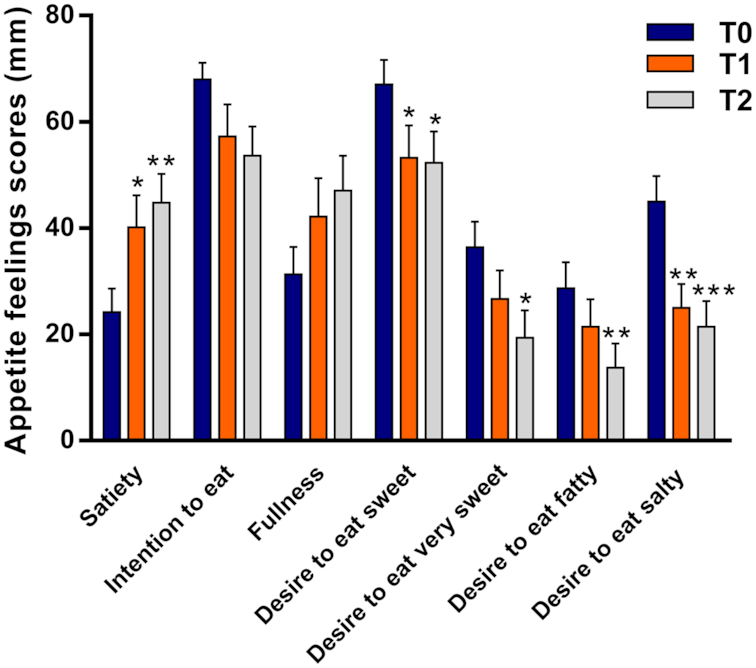
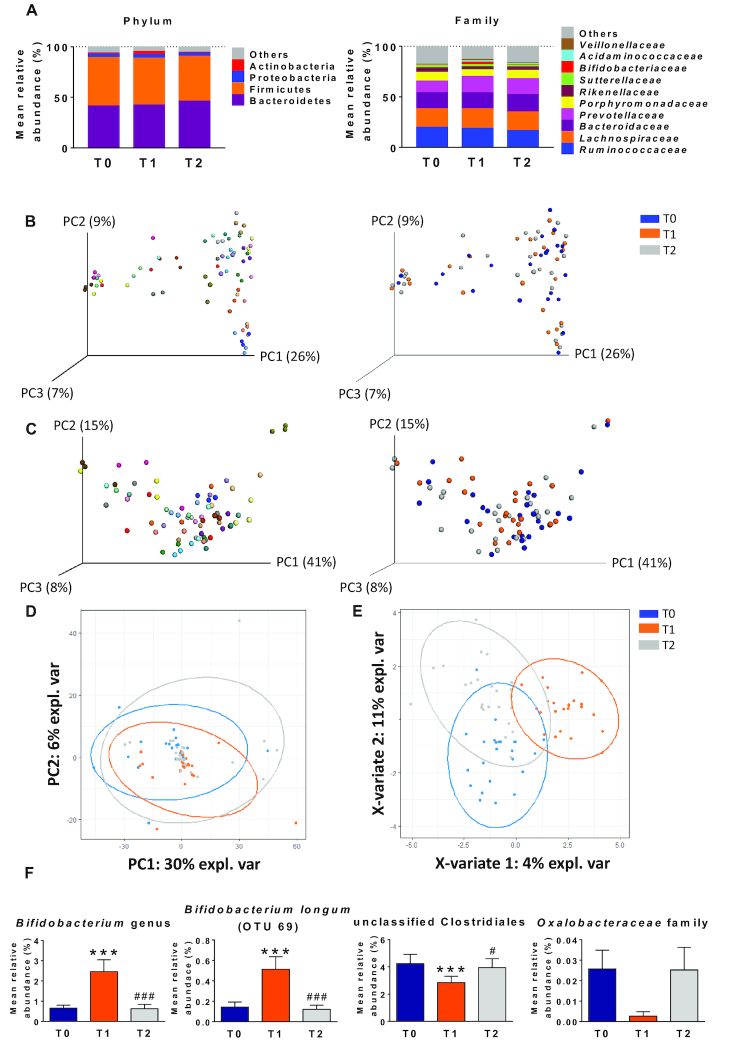
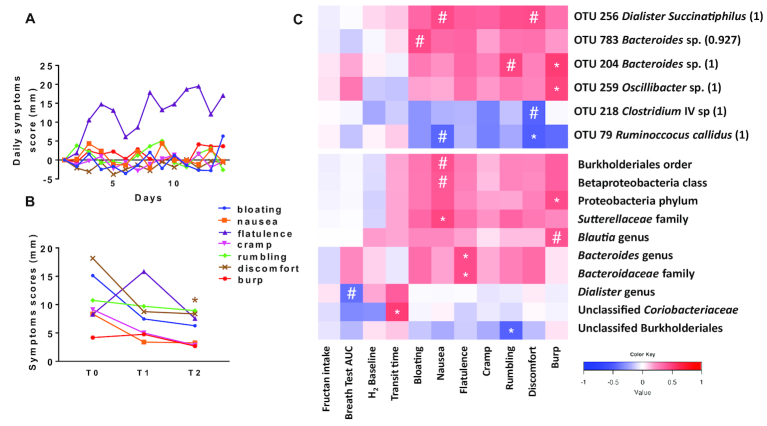
BACKGROUND: Inulin-type fructans (ITFs) are a type of fermentable dietary fiber that can confer beneficial health effects through changes in the gut microbiota. However, their effect on gut sensitivity and nutritional behavior is a matter of debate. OBJECTIVE: We evaluated the impact of consuming ITF-rich vegetables daily on gut microbiota, gastro-intestinal symptoms, and food-related behavior in healthy individuals. METHODS: A single group-design trial was conducted in 26 healthy individuals. During 2 wk, the participants were instructed to adhere to a controlled diet based on ITF-rich vegetables (providing a mean intake of 15 g ITF/d). Three test days were organized: before and after the nutritional intervention and 3 wk after returning to their usual diet. We assessed nutrient intake, food-related behavior, fecal microbiota composition, microbial fermentation, and gastrointestinal symptoms. RESULTS: The major microbial modifications during the intervention were an increased proportion of the Bifidobacterium genus, a decreased level of unclassified Clostridiales, and a tendency to decrease Oxalobacteraceae. These changes were reversed 3 wk after the intervention. The volunteers showed greater satiety, a reduced desire to eat sweet, salty, and fatty food, and a trend to increase hedonic attitudes towards some inulin-rich vegetables. Only flatulence episodes were reported during the dietary intervention, whereas intestinal discomfort, inversely associated with Clostridium cluster IV and Ruminococcus callidus, was improved at the end of the intervention. CONCLUSIONS: A higher consumption of ITF-rich vegetables allows a substantial increase in well-tolerated dietary fiber, which may in turn improve food-related behavior. Moreover, it leads to beneficial modifications of the gut microbiota composition and function. This trial is registered at clinicaltrial.gov as NCT03540550.
Overview
The claims and statistics of this paper haven’t been checked yet.
Free: it reads the open-access text and checks the first 5 claims that cite a source we can check. Create a free account to check every claim.
Integrity signals
Registry
Cites
Statistics
Figures
Verification
Claims the paper makes
The claims and statistics of this paper haven’t been checked yet.
Free: it reads the open-access text and checks the first 5 claims that cite a source we can check. Create a free account to check every claim.
Claims other papers make about this one
Each is checked against this paper’s own text: does it say what the citing paper says it does?
The source backs part of the claim, not all of it — or backs it for a different population, condition or comparison.
In the citing paper
“Many bacteria associated with ICI response have known dietary associations, such that specific dietary patterns (e.g., plant-based versus western diet) are associated with increased or decreased relative abundances of these candidate taxa.131–135”
From Melanoma and microbiota: Current understanding and future directions (2024) · cites this paper as [135]
Experimental — accuracy not yet measuredIn the citing paper
“Among the interventional studies using whole-dietary approaches published to date, only one included healthy adults as volunteers, and reported improved nutritional behaviors and intrapersonal emotional competence following a diet rich in inulin-type fructans (331).”
From Diet and the Microbiota–Gut–Brain Axis: Sowing the Seeds of Good Mental Health (2021) · cites this paper as [331]
In the citing paper
“Other groups have additionally reported positive associations between the genera Parabacteroides and Bacteroides and increased flatulence.”
From Adaptation to tolerate high doses of arabinoxylan is associated with fecal levels of Bifidobacterium longum (2024) · cites this paper as [67]
Self-check
Percentages, sums and reported differences re-computed from the paper’s own numbers.
The self-check needs the paper’s full text.
Citations
Cites
Controlling the False Discovery Rate: A Practical and Powerful Approach to Multiple Testing
Benjamini, Y., & Hochberg, Y. (1995) · Journal of the Royal Statistical Society Series B: Statistical Methodology · doi:10.1111/j.2517-6161.1995.tb02031.x · Cited by 109,482 · cited 1×
“for multiple tests according to the Benjamini and Hochberg procedure (32).”
MethodSchloss, P. D., Westcott, S. L., Ryabin, T., Hall, J. R., Hartmann, M., Hollister, E. B., Lesniewski, R. A., Oakley, B. B., Parks, D. H., Robinson, C. J., et al. (2009) · Applied and Environmental Microbiology · doi:10.1128/aem.01541-09 · Cited by 19,549 · cited 1×
“0 (26) to avoid large disparities in the number of sequences.”
BackgroundUPARSE: highly accurate OTU sequences from microbial amplicon reads
Edgar, R. C. (2013) · Nature Methods · doi:10.1038/nmeth.2604 · Cited by 16,707 · cited 1×
“1001 (27) was used to further process the sequences.”
MethodGibson, G. R., Hutkins, R., Sanders, M. E., Prescott, S. L., Reimer, R. A., Salminen, S. J., Scott, K., Stanton, C., Swanson, K. S., Cani, P. D., et al. (2017) · Nature Reviews Gastroenterology & Hepatology · doi:10.1038/nrgastro.2017.75 · Cited by 5,634
Self-citationRibosomal Database Project: data and tools for high throughput rRNA analysis
Cole, J. R., Wang, Q., Fish, J. A., Chai, B., McGarrell, D. M., Sun, Y., Brown, C. T., Porras-Alfaro, A., Kuske, C. R., & Tiedje, J. M. (2014) · Nucleic Acids Research · doi:10.1093/nar/gkt1244 · Cited by 4,367 · cited 2×
“Nonchimeric sequences were also subjected to taxonomic classification using the RDP MultiClassifier 1.1 from the Ribosomal Database Project (28) for phylum to genus characterization of the fecal microbiome.”
BackgroundInfluentialmixOmics: An R package for ‘omics feature selection and multiple data integration
Rohart, F., Gautier, B., Singh, A., & Lê Cao, K.-A. (2017) · PLOS Computational Biology · doi:10.1371/journal.pcbi.1005752 · Cited by 4,056
Gut bacteria selectively promoted by dietary fibers alleviate type 2 diabetes
Zhao, L., Zhang, F., Ding, X., Wu, G., Lam, Y. Y., Wang, X., Fu, H., Xue, X., Lu, C., Ma, J., et al. (2018) · Science · doi:10.1126/science.aao5774 · Cited by 2,304 · cited 1×
“Interestingly, a recent study showed that prebiotic supplementation in individuals with type 2 diabetes mellitus decreases gene richness in addition to a significant clinical improvement (42).”
BackgroundSwanson, K. S., Gibson, G. R., Hutkins, R., Reimer, R. A., Reid, G., Verbeke, K., Scott, K. P., Holscher, H. D., Azad, M. B., Delzenne, N. M., et al. (2020) · Nature Reviews Gastroenterology & Hepatology · doi:10.1038/s41575-020-0344-2 · Cited by 2,196
Self-citationPyrosequencing study of fecal microflora of autistic and control children
Finegold, S. M., Dowd, S. E., Gontcharova, V., Liu, C., Henley, K. E., Wolcott, R. D., Youn, E., Summanen, P. H., Granpeesheh, D., Dixon, D., et al. (2010) · Anaerobe · doi:10.1016/j.anaerobe.2010.06.008 · Cited by 977 · cited 1×
“Alterations of the gut microbiota composition have been associated with a wide variety of conditions such as obesity (1), type 2 diabetes (2), inflammatory bowel disease (3), autism (4), and behavioral disorders (5).”
BackgroundLeclercq, S., Matamoros, S., Cani, P. D., Neyrinck, A. M., Jamar, F., Stärkel, P., Windey, K., Tremaroli, V., Bäckhed, F., Verbeke, K., et al. (2014) · Proceedings of the National Academy of Sciences · doi:10.1073/pnas.1415174111 · Cited by 972 · cited 1×
“Alterations of the gut microbiota composition have been associated with a wide variety of conditions such as obesity (1), type 2 diabetes (2), inflammatory bowel disease (3), autism (4), and behavioral disorders (5).”
BackgroundSelf-citationde La Serre, C. B., Ellis, C. L., Lee, J., Hartman, A. L., Rutledge, J. C., & Raybould, H. E. (2010) · American Journal of Physiology-Gastrointestinal and Liver Physiology · doi:10.1152/ajpgi.00098.2010 · Cited by 949 · cited 1×
“Clostridiales order has been shown to increase following a high-fat diet in rats (45).”
BackgroundTowards a more comprehensive concept for prebiotics
Bindels, L. B., Delzenne, N. M., Cani, P. D., & Walter, J. (2015) · Nature Reviews Gastroenterology & Hepatology · doi:10.1038/nrgastro.2015.47 · Cited by 914 · cited 1×
“In the diet, some nondigestible carbohydrates called prebiotics are fermented by the gut microbiota, thereby conferring potential health benefits (6, 7).”
BackgroundSelf-citationScientific Opinion on Dietary Reference Values for carbohydrates and dietary fibre
EFSA Panel on Dietetic Products, N. (2010) · EFSA Journal · doi:10.2903/j.efsa.2010.1462 · Cited by 898
Dewulf, E. M., Cani, P. D., Claus, S. P., Fuentes, S., Puylaert, P. G., Neyrinck, A. M., Bindels, L. B., de Vos, W. M., Gibson, G. R., Thissen, J.-P., et al. (2013) · Gut · doi:10.1136/gutjnl-2012-303304 · Cited by 825 · cited 3×
“In that study, we included 15 obese volunteers to achieve a significant bifidogenic effect of purified inulin (34).”
BackgroundMethodSelf-citationA microbial signature for Crohn's disease
Pascal, V., Pozuelo, M., Borruel, N., Casellas, F., Campos, D., Santiago, A., Martinez, X., Varela, E., Sarrabayrouse, G., Machiels, K., et al. (2017) · Gut · doi:10.1136/gutjnl-2016-313235 · Cited by 822 · cited 1×
“Alterations of the gut microbiota composition have been associated with a wide variety of conditions such as obesity (1), type 2 diabetes (2), inflammatory bowel disease (3), autism (4), and behavioral disorders (5).”
BackgroundSystematic improvement of amplicon marker gene methods for increased accuracy in microbiome studies
Gohl, D. M., Vangay, P., Garbe, J., MacLean, A., Hauge, A., Becker, A., Gould, T. J., Clayton, J. B., Johnson, T. J., Hunter, R., et al. (2016) · Nature Biotechnology · doi:10.1038/nbt.3601 · Cited by 819 · cited 1×
“The amplicons were purified, quantified, and sequenced using an Illumina Miseq to produce 2 × 300-bp sequencing products at the University of Minnesota Genomics Center (23).”
MethodCani, P. D., Lecourt, E., Dewulf, E. M., Sohet, F. M., Pachikian, B. D., Naslain, D., De Backer, F., Neyrinck, A. M., & Delzenne, N. M. (2009) · The American Journal of Clinical Nutrition · doi:10.3945/ajcn.2009.28095 · Cited by 762 · cited 4×
“Moreover, energy intake was not changed throughout the intervention, as has been shown in several other studies (10, 37).”
BackgroundResultInfluentialSelf-citationPrebiotic inulin-type fructans induce specific changes in the human gut microbiota
Vandeputte, D., Falony, G., Vieira-Silva, S., Wang, J., Sailer, M., Theis, S., Verbeke, K., & Raes, J. (2017) · Gut · doi:10.1136/gutjnl-2016-313271 · Cited by 554 · cited 1×
“8fold increase in the Bifidobacterium genus, which has already been reported through the consumption of purified ITF in several papers (9, 34, 37, 43).”
BackgroundMultiphasic analysis of gas production kinetics for in vitro fermentation of ruminant feeds
Groot, J. C. J., Cone, J. W., Williams, B. A., Debersaques, F. M. A., & Lantinga, E. A. (1996) · Animal Feed Science and Technology · doi:10.1016/s0377-8401(96)01012-7 · Cited by 549
Nicolucci, A. C., Hume, M. P., Martínez, I., Mayengbam, S., Walter, J., & Reimer, R. A. (2017) · Gastroenterology · doi:10.1053/j.gastro.2017.05.055 · Cited by 516
Chen, K., Chen, H., Faas, M. M., de Haan, B. J., Li, J., Xiao, P., Zhang, H., Diana, J., de Vos, P., & Sun, J. (2017) · Molecular Nutrition & Food Research · doi:10.1002/mnfr.201601006 · Cited by 458
Alcock, J., Maley, C. C., & Aktipis, C. A. (2014) · BioEssays · doi:10.1002/bies.201400071 · Cited by 454
(2009) · Alimentary Pharmacology & Therapeutics · doi:10.1111/j.1365-2036.2009.03951.x · Cited by 444
A Filtering Method to Generate High Quality Short Reads Using Illumina Paired-End Technology
Eren, A. M., Vineis, J. H., Morrison, H. G., & Sogin, M. L. (2013) · PLoS ONE · doi:10.1371/journal.pone.0066643 · Cited by 348
Biesiekierski, J. R., Rosella, O., Rose, R., Liels, K., Barrett, J. S., Shepherd, S. J., Gibson, P. R., & Muir, J. G. (2011) · Journal of Human Nutrition and Dietetics · doi:10.1111/j.1365-277x.2010.01139.x · Cited by 342
Jalanka-Tuovinen, J., Salonen, A., Nikkilä, J., Immonen, O., Kekkonen, R., Lahti, L., Palva, A., & de Vos, W. M. (2011) · PLoS ONE · doi:10.1371/journal.pone.0023035 · Cited by 340 · cited 1×
“However, another study reported that Rumminococcus callidus was positively correlated with abdominal pain and bloating in healthy adults (50).”
ResultFructan and Free Fructose Content of Common Australian Vegetables and Fruit
Muir, J. G., Shepherd, S. J., Rosella, O., Rose, R., Barrett, J. S., & Gibson, P. R. (2007) · Journal of Agricultural and Food Chemistry · doi:10.1021/jf070623x · Cited by 288
Dietary non-digestible carbohydrates promote L-cell differentiation in the proximal colon of rats
Cani, P. D., Hoste, S., Guiot, Y., & Delzenne, N. M. (2007) · British Journal of Nutrition · doi:10.1017/s0007114507691648 · Cited by 274 · cited 1×
“A putative explanation for the persisting effect of an ITF-rich diet on appetite-related sensations could be the modulation of gut hormones (GLP-1, PYY) as previously shown with ITF supplementation in animal models and in humans (10, 39, 40).”
ResultSelf-citationGut microorganisms as promising targets for the management of type 2 diabetes
Delzenne, N. M., Cani, P. D., Everard, A., Neyrinck, A. M., & Bindels, L. B. (2015) · Diabetologia · doi:10.1007/s00125-015-3712-7 · Cited by 262 · cited 1×
“Alterations of the gut microbiota composition have been associated with a wide variety of conditions such as obesity (1), type 2 diabetes (2), inflammatory bowel disease (3), autism (4), and behavioral disorders (5).”
BackgroundSelf-citationBindels, L. B., Neyrinck, A. M., Claus, S. P., Le Roy, C. I., Grangette, C., Pot, B., Martinez, I., Walter, J., Cani, P. D., & Delzenne, N. M. (2016) · The ISME Journal · doi:10.1038/ismej.2015.209 · Cited by 209 · cited 2×
“Accordingly, qPCR and sequencing values were strongly correlated (Supplemental Figure 6), as reported in a previous study (24).”
MethodResultSelf-citationLow-FODMAP diet reduces irritable bowel symptoms in patients with inflammatory bowel disease
Pedersen, N., Ankersen, D. V., Felding, M., Wachmann, H., Végh, Z., Molzen, L., Burisch, J., Andersen, J. R., & Munkholm, P. (2017) · World Journal of Gastroenterology · doi:10.3748/wjg.v23.i18.3356 · Cited by 209 · cited 1×
“The gastrointestinal intolerance of fermentable nutrients is a matter of debate, since the discovery of the fact that avoiding FODMAPs (including fructo-oligosaccharides) improves symptoms associated with inflammatory bowel disease (48).”
BackgroundKleessen, B., Schwarz, S., Boehm, A., Fuhrmann, H., Richter, A., Henle, T., & Krueger, M. (2007) · British Journal of Nutrition · doi:10.1017/s0007114507730751 · Cited by 177 · cited 13×
“The transient increase in the Bifidobacterium genus, one of our key results related to the gut microbiota, was confirmed using qPCR (Supplemental Figure 6).”
BackgroundInfluentialMurugesan, S., Ulloa-Martínez, M., Martínez-Rojano, H., Galván-Rodríguez, F. M., Miranda-Brito, C., Romano, M. C., Piña-Escobedo, A., Pizano-Zárate, M. L., Hoyo-Vadillo, C., & García-Mena, J. (2015) · European Journal of Clinical Microbiology & Infectious Diseases · doi:10.1007/s10096-015-2355-4 · Cited by 170
Hume, M. P., Nicolucci, A. C., & Reimer, R. A. (2017) · American Journal of Clinical Nutrition · doi:10.3945/ajcn.116.140947 · Cited by 167 · cited 1×
“(ITFs) has been shown to exert positive health effects in humans, namely an improvement in intestinal permeability (8), a decrease in fat mass (9), an increase in the production of incretin gut peptides acting on satiety (10), and an improvement in appetite control (11).”
BackgroundOligosaccharide Profile in Fruits and Vegetables as Sources of Prebiotics and Functional Foods
Jovanovic-Malinovska, R., Kuzmanova, S., & Winkelhausen, E. (2014) · International Journal of Food Properties · doi:10.1080/10942912.2012.680221 · Cited by 154
Oxalobacter formigenes and its role in oxalate metabolism in the human gut
Stewart, C. S., Duncan, S. H., & Cave, D. R. (2004) · FEMS Microbiology Letters · doi:10.1016/s0378-1097(03)00864-4 · Cited by 146 · cited 1×
“A few studies have reported beneficial health effects for Oxalobacter formigenes, which reduces the risk of kidney stone formation with its ability to degrade oxalates (44).”
BackgroundRusso, F., Linsalata, M., Clemente, C., Chiloiro, M., Orlando, A., Marconi, E., Chimienti, G., & Riezzo, G. (2012) · Nutrition Research · doi:10.1016/j.nutres.2012.09.010 · Cited by 137 · cited 1×
“(ITFs) has been shown to exert positive health effects in humans, namely an improvement in intestinal permeability (8), a decrease in fat mass (9), an increase in the production of incretin gut peptides acting on satiety (10), and an improvement in appetite control (11).”
BackgroundCox, S. R., Prince, A. C., Myers, C. E., Irving, P. M., Lindsay, J. O., Lomer, M. C., & Whelan, K. (2017) · Journal of Crohn's and Colitis · doi:10.1093/ecco-jcc/jjx073 · Cited by 133
Reimer, R. A., Willis, H. J., Tunnicliffe, J. M., Park, H., Madsen, K. L., & Soto‐Vaca, A. (2017) · Molecular Nutrition & Food Research · doi:10.1002/mnfr.201700484 · Cited by 133 · cited 3×
“8fold increase in the Bifidobacterium genus, which has already been reported through the consumption of purified ITF in several papers (9, 34, 37, 43).”
BackgroundResultImplementation and interpretation of hydrogen breath tests
Eisenmann, A., Amann, A., Said, M., Datta, B., & Ledochowski, M. (2008) · Journal of Breath Research · doi:10.1088/1752-7155/2/4/046002 · Cited by 128 · cited 1×
“The minimum level of expired H2 required for inclusion in the study was set at 12 ppm (15).”
BackgroundSetti-Perdigão, P., Serrano, M. A. R., Flausino, O. A., Bolzani, V. S., Guimarães, M. Z. P., & Castro, N. G. (2013) · PLoS ONE · doi:10.1371/journal.pone.0082726 · Cited by 125
Anal gas evacuation and colonic microbiota in patients with flatulence: effect of diet
Manichanh, C., Eck, A., Varela, E., Roca, J., Clemente, J. C., González, A., Knights, D., Knight, R., Estrella, S., Hernandez, C., et al. (2014) · Gut · doi:10.1136/gutjnl-2012-303013 · Cited by 125
Ramnani, P., Gaudier, E., Bingham, M., van Bruggen, P., Tuohy, K. M., & Gibson, G. R. (2010) · British Journal of Nutrition · doi:10.1017/s000711451000036x · Cited by 121 · cited 13×
“The transient increase in the Bifidobacterium genus, one of our key results related to the gut microbiota, was confirmed using qPCR (Supplemental Figure 6).”
BackgroundInfluentialAuthority, E. F. S. (2010) · EFSA Journal · doi:10.2903/j.efsa.2010.1508 · Cited by 117
Gut Microbiota: A Contributing Factor to Obesity
Harakeh, S. M., Khan, I., Kumosani, T., Barbour, E., Almasaudi, S. B., Bahijri, S. M., Alfadul, S. M., Ajabnoor, G. M. A., & Azhar, E. I. (2016) · Frontiers in Cellular and Infection Microbiology · doi:10.3389/fcimb.2016.00095 · Cited by 107 · cited 2×
“Unclassifed Burkholderiales OTU 256 Dialister Succina philus (1)”
BackgroundDaud, N. M., Ismail, N. A., Thomas, E. L., Fitzpatrick, J. A., Bell, J. D., Swann, J. R., Costabile, A., Childs, C. E., Pedersen, C., Goldstone, A. P., et al. (2014) · Obesity · doi:10.1002/oby.20754 · Cited by 99 · cited 2×
“This is in line with recent studies showing that isolated ITF and oligofructose supplementation increases satiety (37) and fullness (38), and decreases reported levels of hunger (10), prospective food consumption (37, 38), and desire to eat fatty, sweet, and salty food (39).”
ResultWasalathanthri, S., Hettiarachchi, P., & Prathapan, S. (2014) · BMC Endocrine Disorders · doi:10.1186/1472-6823-14-67 · Cited by 93 · cited 6×
“We also determined the sucrose detection threshold following the multiple forced choice presentation method (see online Supplemental Methods) (22).”
MethodInfluentialEFSA Panel on Dietetic Products, N. A. A. (. (2015) · EFSA Journal · doi:10.2903/j.efsa.2015.3951 · Cited by 89
Slavin, J., & Feirtag, J. (2011) · Food Funct. · doi:10.1039/c0fo00101e · Cited by 61 · cited 1×
“Here, we observed no modification of transit time, stool frequency, or consistency, as previously reported for purified ITF in healthy subjects (47).”
ResultEren, A. M., Vineis, J. H., Morrison, H. G., & Sogin, M. L. (2013) · PLoS ONE · doi:10.1371/annotation/afa5c40d-c604-46ae-84c4-82cb92193a5e · Cited by 54
Characterization of fructans and dietary fibre profiles in raw and steamed vegetables
Kalala, G., Kambashi, B., Everaert, N., Beckers, Y., Richel, A., Pachikian, B. D., Neyrinck, A. M., Delzenne, N. M., & Bindelle, J. (2017) · International Journal of Food Sciences and Nutrition · doi:10.1080/09637486.2017.1412404 · Cited by 53
Self-citationInulin is an ideal substrate for a hydrogen breath test to measure the orocaecal transit time
Geboes, K., Luypaerts, A., Rutgeerts, P., & Verbeke, K. (2003) · Alimentary Pharmacology & Therapeutics · doi:10.1046/j.1365-2036.2003.01750.x · Cited by 45 · cited 1×
“Afterwards, subjects received an oral load of 16 g of purified ITF (Fibruline Instant, Cosucra) diluted in water and 2 pancakes, as previously described (21).”
MethodTran, T. H. T., Boudry, C., Everaert, N., Théwis, A., Portetelle, D., Daube, G., Nezer, C., Taminiau, B., & Bindelle, J. (2015) · FEMS Microbiology Ecology · doi:10.1093/femsec/fiv165 · Cited by 43 · cited 1×
“For each fecal sample, an inoculum was prepared by diluting the frozen fecal sample (1:40 dilution w/v) in preheated (37◦C) buffer solution (29).”
MethodSelf-citationOatmeal porridge: impact on microflora-associated characteristics in healthy subjects
Valeur, J., Puaschitz, N. G., Midtvedt, T., & Berstad, A. (2015) · British Journal Of Nutrition · doi:10.1017/s0007114515004213 · Cited by 28 · cited 1×
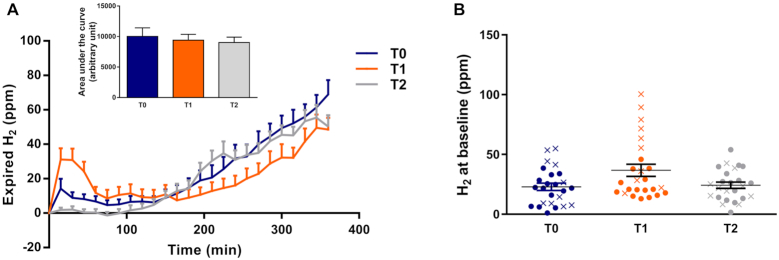
“Another study also showed that the consumption of oatmeal porridge, which is rich in fiber, for 1 week has no effect on colonic fermentation assessed by exhaled H2, despite the modification of gut microbiota activity (46).”
BackgroundSalmean, Y. A. (2017) · Food & Nutrition Research · doi:10.1080/16546628.2017.1341808 · Cited by 14
Cited by
Diet and depression: Exploring the biological mechanisms of action
Marx, W., Lane, M., Hockey, M., Aslam, H., Berk, M., Walder, K., Borsini, A., Firth, J., Pariante, C. M., Berding, K., et al. (2021) · Molecular Psychiatry · doi:10.1038/s41380-020-00925-x · Cited by 685
Self-citationDietary Fiber Intake and Gut Microbiota in Human Health
Fu, J., Zheng, Y., Gao, Y., & Xu, W. (2022) · Microorganisms · doi:10.3390/microorganisms10122507 · Cited by 394
“Interventions using inulin [72,87,96,97], guar gum [98], resistant starch [88,91,99], GOS [75,76,95,100], FOS [76], or arabinoxylan oligosaccharide (a kind of FOS) [85,101,102] consistently resulted in an increased abundance of Bifidobacterium, while intake of a specific fiber type led to the promotion of Faecalibacte…”
BackgroundDiet and the Microbiota–Gut–Brain Axis: Sowing the Seeds of Good Mental Health
Berding, K., Vlckova, K., Marx, W., Schellekens, H., Stanton, C., Clarke, G., Jacka, F., Dinan, T. G., & Cryan, J. F. (2021) · Advances in Nutrition · doi:10.1093/advances/nmaa181 · Cited by 451
The Prebiotic Potential of Inulin-Type Fructans: A Systematic Review
Hughes, R. L., Alvarado, D. A., Swanson, K. S., & Holscher, H. D. (2022) · Advances in Nutrition · doi:10.1093/advances/nmab119 · Cited by 293
“Of the included studies, clostridia abundance decreased following ITF intake in 4 studies (30, 40, 43, 55), increased in abundance in 1 study (36), and were unchanged in 2 studies (28, 54).”
BackgroundResultInfluentialFeeding gut microbes to nourish the brain: unravelling the diet–microbiota–gut–brain axis
Schneider, E., O’Riordan, K. J., Clarke, G., & Cryan, J. F. (2024) · Nature Metabolism · doi:10.1038/s42255-024-01108-6 · Cited by 272
Metadata
- Authors
- Hiel, S., Bindels, L. B., Pachikian, B. D., Kalala, G., Broers, V., Zamariola, G., Chang, B. P. I., Kambashi, B., Rodriguez, J., Cani, P. D., Neyrinck, A. M., Thissen, J.-P., Luminet, O., Bindelle, J., & Delzenne, N. M.
- Affiliations
- UCLouvain (BE)
- Université Libre de Bruxelles (BE)
- University of Liège (BE)
- Walloon Excellence in Lifesciences and Biotechnology (BE)
- Corresponding author
- Delzenne, Nathalie M
- ORCID
- Venue
- The American Journal of Clinical Nutrition
- Publisher
- Elsevier BV
- Published
- 2019-06
- Volume
- 109
- Issue
- 6
- Pages
- 1683-1695
- ISSN
- 0002-9165 (ISSN-L)
- PMC
- PMC6537941
- OpenAlex
- W2942098219
- Cited by
- 197
- References
- 55
- Citations by year
- 2026: 12 · 2025: 33 · 2024: 23 · 2023: 30 · 2022: 33 · 2021: 39 · 2020: 24 · 2019: 1
- FWCI
- 18.46
- Type
- journal article
- Language
- en
- Open access
- hybrid
- doi.org
- Licence
- cc-by-nc
- www.elsevier.com/tdm/userlicense/1.0/ (tdm)
- creativecommons.org/licenses/by-nc/4.0/ (vor)
- Locations
- American Journal of Clinical Nutrition (publishedVersion, cc-by-nc)
- PubMed Central (publishedVersion, cc-by-nc)
- PubMed (publishedVersion)
- Digital Access to Libraries (Université catholique de Louvain (UCL), l'Université de Namur (UNamur) and the Université Saint-Louis (USL-B)) (submittedVersion, other-oa)
- Dépôt institutionnel de l'Université libre de Bruxelles (Université Libre de Bruxelles) (submittedVersion, other-oa)
- Funders
- Fonds de la Recherche Scientifique (WELBIO-CGR-2017-C2)
- European Research Council (336452-ENIGMO)
- Topics
- Health Sciences › Nursing › Nutrition and Dietetics › Microbial Metabolites in Food Biotechnology
- Life Sciences › Biochemistry, Genetics and Molecular Biology › Molecular Biology › Gut microbiota and health
- Health Sciences › Medicine › Gastroenterology › Gastrointestinal motility and disorders
- Keywords
- inulin-type fructans, gut microbiota, dietary fiber, food-related behavior, satiety, gastrointestinal symptoms, flatulence, Bifidobacterium, Clostridiales, Oxalobacteraceae, Clostridium cluster IV, microbial fermentation, healthy adults
- MeSH terms
- Gastrointestinal Microbiome, Adolescent, Adult, Aged, Bacteria, Diet, Dietary Fiber, Feces, Feeding Behavior, Female, Humans, Inulin, Male, Middle Aged, Vegetables, Young Adult, Prebiotics, Healthy Volunteers
About these checks
Registry, retraction, Cites and statistics results are computed, not judged, with one exception: a printed reference that no index lists is read once by a model before it counts as a citation error. Claims are extracted by a model and kept only when their quote appears verbatim in the text; each cited source is then checked, with a model’s help, for whether it says what the claim relies on. Those verdicts can be wrong — read the claim’s quote and the cited source before relying on one.
Statistics and arithmetic are recomputed, not judged.
Confidence bands are shown only for fields calibrated on our annotated test set. None is calibrated yet, so no band is shown.
What counts as a claim ›How we measure confidence ›How we check this ›
Are you an author, or do you see a problem with this page? Request a review
Data sources
Bibliographic data: Semantic Scholar, OpenAlex, Crossref.
Contains information from the Semantic Scholar Academic Graph Datasets, made available under the ODC Attribution License (ODC-BY 1.0).
Semantic Scholar’s data is described in: Kinney, R., et al. (2023). The Semantic Scholar Open Data Platform. arXiv:2301.10140.
