

Harmonizing semantic annotations for computational models in biology
Open accessPublished version of a preprint
The DOI matches its Crossref record; 105 of the 105 references it cites were found in a registry or an index.
Abstract
Life science researchers use computational models to articulate and test hypotheses about the behavior of biological systems. Semantic annotation is a critical component for enhancing the interoperability and reusability of such models as well as for the integration of the data needed for model parameterization and validation. Encoded as machine-readable links to knowledge resource terms, semantic annotations describe the computational or biological meaning of what models and data represent. These annotations help researchers find and repurpose models, accelerate model composition and enable knowledge integration across model repositories and experimental data stores. However, realizing the potential benefits of semantic annotation requires the development of model annotation standards that adhere to a community-based annotation protocol. Without such standards, tool developers must account for a variety of annotation formats and approaches, a situation that can become prohibitively cumbersome and which can defeat the purpose of linking model elements to controlled knowledge resource terms. Currently, no consensus protocol for semantic annotation exists among the larger biological modeling community. Here, we report on the landscape of current annotation practices among the COmputational Modeling in BIology NEtwork community and provide a set of recommendations for building a consensus approach to semantic annotation.
Overview
The claims and statistics of this paper haven’t been checked yet.
Free: it reads the open-access text and checks the first 5 claims that cite a source we can check. Create a free account to check every claim.
Integrity signals
Registry
Cites
Statistics
Figures
Verification
Claims the paper makes
The claims and statistics of this paper haven’t been checked yet.
Free: it reads the open-access text and checks the first 5 claims that cite a source we can check. Create a free account to check every claim.
Claims other papers make about this one
Each is checked against this paper’s own text: does it say what the citing paper says it does?
The cited source says what the claim attributes to it.
In the citing paper
“In conclusion, provenance information provides added value to the existing list of documentation requirements and could complement and enrich the effort of “harmonizing semantic annotations for computational models in biology” [108].”
From Relating simulation studies by provenance—Developing a family of Wnt signaling models (2021) · cites this paper as [108]
Self-check
Percentages, sums and reported differences re-computed from the paper’s own numbers.
The self-check needs the paper’s full text.
Citations
Cites
Gene Ontology: tool for the unification of biology
Ashburner, M., Ball, C. A., Blake, J. A., Botstein, D., Butler, H., Cherry, J. M., Davis, A. P., Dolinski, K., Dwight, S. S., Eppig, J. T., et al. (2000) · Nature Genetics · doi:10.1038/75556 · Cited by 43,206 · cited 2×
“established knowledge resources such as UniProt [67], Chemical Entities of Biological Interest (ChEBI) [68] and the Gene Ontology [69].”
The FAIR Guiding Principles for scientific data management and stewardship
Wilkinson, M. D., Dumontier, M., Aalbersberg, I. J., Appleton, G., Axton, M., Baak, A., Blomberg, N., Boiten, J.-W., da Silva Santos, L. B., Bourne, P. E., et al. (2016) · Scientific Data · doi:10.1038/sdata.2016.18 · Cited by 18,423 · cited 1×
“Given this, we recommend that the repository’s development team interfaces not only with members of the COMBINE community but with other external data sharing/integration efforts such as the Findable, Accessible, Interoperable, Reusable [91] initiative and Bioschemas [92].”
KEGG: new perspectives on genomes, pathways, diseases and drugs
Kanehisa, M., Furumichi, M., Tanabe, M., Sato, Y., & Morishima, K. (2017) · Nucleic Acids Research · doi:10.1093/nar/gkw1092 · Cited by 8,865
Berners-Lee, T., Hendler, J., & Lassila, O. (2001) · Scientific American · doi:10.1038/scientificamerican0501-34 · Cited by 8,651 · cited 1×
“Broadly, semantic annotations are a critical feature of the vision of the Semantic Web, wherein documents are linked to metadata describing the document’s contents,thus facilitating search and retrieval as well as data interoperability [23].”
UniProt: a hub for protein information
The UniProt Consortium (2015) · Nucleic Acids Research · doi:10.1093/nar/gku989 · Cited by 5,106 · cited 3×
“established knowledge resources such as UniProt [67], Chemical Entities of Biological Interest (ChEBI) [68] and the Gene Ontology [69].”
Hucka, M., Finney, A., Sauro, H. M., Bolouri, H., Doyle, J. C., Kitano, H., Arkin, A. P., Bornstein, B. J., Bray, D., Cornish-Bowden, A., et al. (2003) · Bioinformatics · doi:10.1093/bioinformatics/btg015 · Cited by 3,060 · cited 1×
“Although much progress has been made in developing standardized model exchange formats such as the Systems Biology Markup Language (SBML) [1] and CellML [2], fundamental roadblocks associated with model reuse remain [3–6].”
Self-citationCOPASI—a COmplex PAthway SImulator
Hoops, S., Sahle, S., Gauges, R., Lee, C., Pahle, J., Simus, N., Singhal, M., Xu, L., Mendes, P., & Kummer, U. (2006) · Bioinformatics · doi:10.1093/bioinformatics/btl485 · Cited by 2,618
Stix, G. (2001) · Scientific American · doi:10.1038/scientificamerican0601-34 · Cited by 1,761
Ontology Matching: State of the Art and Future Challenges
Shvaiko, P., & Euzenat, J. (2013) · IEEE Transactions on Knowledge and Data Engineering · doi:10.1109/tkde.2011.253 · Cited by 1,148 · cited 1×
“This can be burdensome, given the increased computational cost and the challenges associated with ontology mapping and alignment [88].”
ChEBI: a database and ontology for chemical entities of biological interest
Degtyarenko, K., de Matos, P., Ennis, M., Hastings, J., Zbinden, M., McNaught, A., Alcantara, R., Darsow, M., Guedj, M., & Ashburner, M. (2007) · Nucleic Acids Research · doi:10.1093/nar/gkm791 · Cited by 1,126 · cited 1×
“established knowledge resources such as UniProt [67], Chemical Entities of Biological Interest (ChEBI) [68] and the Gene Ontology [69].”
A reference ontology for biomedical informatics: the Foundational Model of Anatomy
Rosse, C., & Mejino, J. L. V. (2003) · Journal of Biomedical Informatics · doi:10.1016/j.jbi.2003.11.007 · Cited by 1,045 · cited 3×
“Applying the SemSim architecture, an annotator can create a composite annotation that captures the variable’s biological meaning by linking the terms Chemical concentration from the Ontology of Physics for Biology (OPB) [74, 75], glucose from ChEBI, Cytoplasm from the Foundational Model of Anatomy (FMA) [76] and Type…”
Relations in biomedical ontologies
Smith, B., Ceusters, W., Klagges, B., Köhler, J., Kumar, A., Lomax, J., Mungall, C., Neuhaus, F., Rector, A. L., & Rosse, C. (2005) · Genome Biology · doi:10.1186/gb-2005-6-5-r46 · Cited by 1,018 · cited 2×
“alternative collections of qualifiers that do not have an explicit focus on linking elements in computer simulations with physical phenomena, such as the Relations Ontology [81].”
BiGG Models: A platform for integrating, standardizing and sharing genome-scale models
King, Z. A., Lu, J., Dräger, A., Miller, P., Federowicz, S., Lerman, J. A., Ebrahim, A., Palsson, B. O., & Lewis, N. E. (2016) · Nucleic Acids Research · doi:10.1093/nar/gkv1049 · Cited by 938 · cited 2×
“SemGen [17, 34], COPASI [85], JWS Online [63], CellDesigner [86] and the annotation tools used internally by the BiGG Models Database [87] and BioModels, the working group’s focus would not be to create a one-size-fits-all semantic annotation toolset, but rather provide guidance and core software infrastructure to hel…”
Self-citationThe systems biology graphical notation.
Novère, N. L., Hucka, M., Mi, H., Moodie, S., Schreiber, F., Sorokin, A., Demir, E., Wegner, K., Aladjem, M. I., Wimalaratne, S. M., et al. (2009) · Nature Biotechnology · doi:10.1038/nbt.1558 · Cited by 903 · cited 3×
“In the future,we plan to create example semantic annotations for additional COMBINE standards (e.g. NeuroML and SBGN) and post them to the COM-BINE GitHub repository as well.”
Self-citationLord, P. W., Stevens, R. D., Brass, A., & Goble, C. A. (2003) · Bioinformatics · doi:10.1093/bioinformatics/btg153 · Cited by 843
Semantic Similarity in Biomedical Ontologies
Pesquita, C., Faria, D., Falcão, A. O., Lord, P., & Couto, F. M. (2009) · PLoS Computational Biology · doi:10.1371/journal.pcbi.1000443 · Cited by 774
The BioPAX community standard for pathway data sharing
Demir, E., Cary, M. P., Paley, S., Fukuda, K., Lemer, C., Vastrik, I., Wu, G., D'Eustachio, P., Schaefer, C., Luciano, J., et al. (2010) · Nature Biotechnology · doi:10.1038/nbt.1666 · Cited by 745 · cited 1×
“However, this specification is still under development, and several implementation details must be resolved before it can be completed, including how annotations should be implemented in BioPAX [97] and SBOL documents.”
Self-citationUberon, an integrative multi-species anatomy ontology
Mungall, C. J., Torniai, C., Gkoutos, G. V., Lewis, S. E., & Haendel, M. A. (2012) · Genome biology · doi:10.1186/gb-2012-13-1-r5 · Cited by 732
Minimum information requested in the annotation of biochemical models (MIRIAM)
Novère, N. L., Finney, A., Hucka, M., Bhalla, U. S., Campagne, F., Collado-Vides, J., Crampin, E. J., Halstead, M., Klipp, E., Mendes, P., et al. (2005) · Nature Biotechnology · doi:10.1038/nbt1156 · Cited by 622 · cited 5×
“This centralized semantic annotation software package should harmonize with other annotation standards, such as the curatorial metadata standards of MIRIAM and should support compliance-checking.”
InfluentialSelf-citationMeasures of semantic similarity and relatedness in the biomedical domain
Pedersen, T., Pakhomov, S. V. S., Patwardhan, S., & Chute, C. G. (2007) · Journal of Biomedical Informatics · doi:10.1016/j.jbi.2006.06.004 · Cited by 566 · cited 1×
“Semantic annotations can also be used to quantify the similarity between model elements [27, 28, 50–54], helping to ensure that the user is presented with the most relevant models following a search.”
Semantic Annotation and Retrieval of Music and Sound Effects
Turnbull, D., Barrington, L., Torres, D., & Lanckriet, G. (2008) · IEEE Transactions on Audio, Speech, and Language Processing · doi:10.1109/tasl.2007.913750 · Cited by 483 · cited 1×
“Semantic annotations are used in many fields besides biological modeling, including the geosciences [24], music retrieval [25] and business process modeling [26].”
Rule-Based Modeling of Biochemical Systems with BioNetGen
Faeder, J. R., Blinov, M. L., & Hlavacek, W. S. (2009) · Methods in Molecular Biology · doi:10.1007/978-1-59745-525-1_5 · Cited by 425 · cited 1×
“Collectively, we represent teams developing SBML, CellML, the Simulation Experiment Description Markup Language (SED-ML) [8], the Systems Biology Graphical Notation (SBGN) [9], the Synthetic Biology Open Language (SBOL) [10], NeuroML [11, 12], rule-based modeling languages [13, 14], MultiCellDS [15], the COMBINE archi…”
LibSBML: an API Library for SBML
Bornstein, B. J., Keating, S. M., Jouraku, A., & Hucka, M. (2008) · Bioinformatics · doi:10.1093/bioinformatics/btn051 · Cited by 373 · cited 1×
“The organization and operation of the new working group would follow the model of other successful software development efforts within COMBINE, such as those that focus on developing the widely adopted SBML libraries libSBML [82] and JSBML [83].”
Self-citationGleeson, P., Crook, S., Cannon, R. C., Hines, M. L., Billings, G. O., Farinella, M., Morse, T. M., Davison, A. P., Ray, S., Bhalla, U. S., et al. (2010) · PLoS Computational Biology · doi:10.1371/journal.pcbi.1000815 · Cited by 350 · cited 3×
“In the future,we plan to create example semantic annotations for additional COMBINE standards (e.g. NeuroML and SBGN) and post them to the COM-BINE GitHub repository as well.”
Self-citationAn Overview of CellML 1.1, a Biological Model Description Language
Cuellar, A. A., Lloyd, C. M., Nielsen, P. F., Bullivant, D. P., Nickerson, D. P., & Hunter, P. J. (2003) · SIMULATION · doi:10.1177/0037549703040939 · Cited by 345 · cited 1×
“Although much progress has been made in developing standardized model exchange formats such as the Systems Biology Markup Language (SBML) [1] and CellML [2], fundamental roadblocks associated with model reuse remain [3–6].”
Self-citationWeb-based kinetic modelling using JWS Online
Olivier, B. G., & Snoep, J. L. (2004) · Bioinformatics · doi:10.1093/bioinformatics/bth200 · Cited by 326 · cited 2×
“Given that several tools already provide model annotation capabilities, including OpenCOR [84], SemGen [17, 34], COPASI [85], JWS Online [63], CellDesigner [86] and the annotation tools used internally by the BiGG Models Database [87] and BioModels, the working group’s focus would not be to create…”
Self-citationControlled vocabularies and semantics in systems biology
Courtot, M., Juty, N., Knüpfer, C., Waltemath, D., Zhukova, A., Dräger, A., Dumontier, M., Finney, A., Golebiewski, M., Hastings, J., et al. (2011) · Molecular Systems Biology · doi:10.1038/msb.2011.77 · Cited by 316 · cited 5×
“They are primarily encoded as Resource Description Framework (RDF) statements (https://www.w3.org/RDF/), although the SBML format also contains explicit constructs for associating Systems Biology Ontology [38] terms with model elements outside of the RDF content.”
InfluentialSelf-citationGaldzicki, M., Clancy, K. P., Oberortner, E., Pocock, M., Quinn, J. Y., Rodriguez, C. A., Roehner, N., Wilson, M. L., Adam, L., Anderson, J. C., et al. (2014) · Nature Biotechnology · doi:10.1038/nbt.2891 · Cited by 283 · cited 3×
“However, this specification is still under development, and several implementation details must be resolved before it can be completed, including how annotations should be implemented in BioPAX [97] and SBOL documents.”
Self-citationThe role of ontologies in biological and biomedical research: a functional perspective
Hoehndorf, R., Schofield, P. N., & Gkoutos, G. V. (2015) · Briefings in Bioinformatics · doi:10.1093/bib/bbv011 · Cited by 264 · cited 1×
“Semantic annotations can also be used to quantify the similarity between model elements [27, 28, 50–54], helping to ensure that the user is presented with the most relevant models following a search.”
SABIO-RK--database for biochemical reaction kinetics
Wittig, U., Kania, R., Golebiewski, M., Rey, M., Shi, L., Jong, L., Algaa, E., Weidemann, A., Sauer-Danzwith, H., Mir, S., et al. (2012) · Nucleic Acids Research · doi:10.1093/nar/gkr1046 · Cited by 259 · cited 1×
“Collectively, we represent teams developing SBML, CellML, the Simulation Experiment Description Markup Language (SED-ML) [8], the Systems Biology Graphical Notation (SBGN) [9], the Synthetic Biology Open Language (SBOL) [10], NeuroML [11, 12], rule-based modeling languages [13, 14], MultiCellDS [15], the COMBINE archi…”
Self-citationHucka, M., Bergmann, F. T., Chaouiya, C., Dräger, A., Hoops, S., Keating, S. M., König, M., Novère, N. L., Myers, C. J., Olivier, B. G., et al. (2019) · Journal of Integrative Bioinformatics · doi:10.1515/jib-2019-0021 · Cited by 258
Self-citationWaltemath, D., Adams, R., Bergmann, F. T., Hucka, M., Kolpakov, F., Miller, A. K., Moraru, I. I., Nickerson, D., Sahle, S., Snoep, J. L., et al. (2011) · BMC Systems Biology · doi:10.1186/1752-0509-5-198 · Cited by 257 · cited 4×
“Together with the COMBINE-maintained BioModels.net ‘qualifiers’ (https://co.mbine.org/standards/qualifiers), also known as ‘pred-icates’ or ‘relations’, they allow the construction of complete semantic annotations [65] linking elements of COMBINE formats (e.g. SBML, SED-ML or COMBINE archive metadata) to knowledge res…”
InfluentialSelf-citationAn ontology-based measure to compute semantic similarity in biomedicine
Batet, M., Sánchez, D., & Valls, A. (2011) · Journal of Biomedical Informatics · doi:10.1016/j.jbi.2010.09.002 · Cited by 237
Increased glycolytic flux as an outcome of whole-genome duplication in yeast
Conant, G. C., & Wolfe, K. H. (2007) · Molecular Systems Biology · doi:10.1038/msb4100170 · Cited by 222 · cited 1×
“One of the archives contains an SBML model retrieved from BioModels (BIOMD0000000176) that simulates glycolysis in yeast [95].”
Identifiers.org and MIRIAM Registry: community resources to provide persistent identification
Juty, N., Le Novere, N., & Laibe, C. (2012) · Nucleic Acids Research · doi:10.1093/nar/gkr1097 · Cited by 202
Self-citationScalable Simulation of Cellular Signaling Networks
Danos, V., Feret, J., Fontana, W., & Krivine, J. (2007) · Lecture Notes in Computer Science · doi:10.1007/978-3-540-76637-7_10 · Cited by 201
A Reference Ontology for Bioinformatics: The Foundational Model of Anatomy
Rosse, C., & Mejino, J. L. V. (2003) · Cited by 192
Bistable, Irregular Firing and Population Oscillations in a Modular Attractor Memory Network
Lundqvist, M., Compte, A., & Lansner, A. (2010) · PLoS Computational Biology · doi:10.1371/journal.pcbi.1000803 · Cited by 176
COMBINE archive and OMEX format: one file to share all information to reproduce a modeling project
Bergmann, F. T., Adams, R., Moodie, S., Cooper, J., Glont, M., Golebiewski, M., Hucka, M., Laibe, C., Miller, A. K., Nickerson, D. P., et al. (2014) · BMC Bioinformatics · doi:10.1186/s12859-014-0369-z · Cited by 173 · cited 1×
“Collectively, we represent teams developing SBML, CellML, the Simulation Experiment Description Markup Language (SED-ML) [8], the Systems Biology Graphical Notation (SBGN) [9], the Synthetic Biology Open Language (SBOL) [10], NeuroML [11, 12], rule-based modeling languages [13, 14], MultiCellDS [15], the COMBINE archi…”
Self-citationPath2Models: large-scale generation of computational models from biochemical pathway maps
Büchel, F., Rodriguez, N., Swainston, N., Wrzodek, C., Czauderna, T., Keller, R., Mittag, F., Schubert, M., Glont, M., Golebiewski, M., et al. (2013) · BMC Systems Biology · doi:10.1186/1752-0509-7-116 · Cited by 172
Self-citationThe Physiome Model Repository 2
Yu, T., Lloyd, C. M., Nickerson, D. P., Cooling, M. T., Miller, A. K., Garny, A., Terkildsen, J. R., Lawson, J., Britten, R. D., Hunter, P. J., et al. (2011) · Bioinformatics · doi:10.1093/bioinformatics/btq723 · Cited by 169
Self-citationProvenance: An Introduction to PROV
Moreau, L., & Groth, P. (2013) · Synthesis lectures on the semantic web · doi:10.2200/s00528ed1v01y201308wbe007 · Cited by 164
Minimal haemodynamic system model including ventricular interaction and valve dynamics
Smith, B. W., Chase, J. G., Nokes, R., Shaw, G. M., & Wake, G. C. (2003) · Medical Engineering & Physics · doi:10.1016/j.medengphy.2003.10.001 · Cited by 144 · cited 1×
“other contains a CellML model retrieved from the Physiome Model Repository that simulates hemodynamics in the human circulatory system [96].”
FAIRDOMHub: a repository and collaboration environment for sharing systems biology research
Wolstencroft, K., Krebs, O., Snoep, J. L., Stanford, N. J., Bacall, F., Golebiewski, M., Kuzyakiv, R., Nguyen, Q., Owen, S., Soiland-Reyes, S., et al. (2017) · Nucleic Acids Research · doi:10.1093/nar/gkw1032 · Cited by 130 · cited 1×
“Collectively, we represent teams developing SBML, CellML, the Simulation Experiment Description Markup Language (SED-ML) [8], the Systems Biology Graphical Notation (SBGN) [9], the Synthetic Biology Open Language (SBOL) [10], NeuroML [11, 12], rule-based modeling languages [13, 14], MultiCellDS [15], the COMBINE archi…”
Self-citationThe Systems Biology Markup Language (SBML): Language Specification for Level 3 Version 1 Core
Hucka, M., Bergmann, F. T., Dräger, A., Hoops, S., Keating, S. M., Novère, N. L., Myers, C., Olivier, B. G., Sahle, S., Schaff, J. C., et al. (2010) · Journal of Integrative Bioinformatics · doi:10.1515/jib-2015-266 · Cited by 130 · cited 1×
“Annotations within curated SBML models also follow the instructions given in SBML specification documents [66].”
Self-citationHucka, M., Nickerson, D. P., Bader, G. D., Bergmann, F. T., Cooper, J., Demir, E., Garny, A., Golebiewski, M., Myers, C. J., Schreiber, F., et al. (2015) · Frontiers in Bioengineering and Biotechnology · doi:10.3389/fbioe.2015.00019 · Cited by 116
Self-citationOpenCOR: a modular and interoperable approach to computational biology
Garny, A., & Hunter, P. J. (2015) · Frontiers in Physiology · doi:10.3389/fphys.2015.00026 · Cited by 115 · cited 3×
“Given that several tools already provide model annotation capabilities, including OpenCOR [84],”
Self-citationCannon, R. C., Gleeson, P., Crook, S., Ganapathy, G., Marin, B., Piasini, E., & Silver, R. A. (2014) · Frontiers in Neuroinformatics · doi:10.3389/fninf.2014.00079 · Cited by 112 · cited 1×
“…Markup Language (SED-ML) [8], the Systems Biology Graphical Notation (SBGN) [9], the Synthetic Biology Open Language (SBOL) [10], NeuroML [11, 12], rule-based modeling languages [13, 14], MultiCellDS [15], the COMBINE archive [16], the Semantic Simulation (SemSim) architecture [17],…”
Self-citationProtein Ontology (PRO): enhancing and scaling up the representation of protein entities
Natale, D. A., Arighi, C. N., Blake, J. A., Bona, J., Chen, C., Chen, S.-C., Christie, K. R., Cowart, J., D'Eustachio, P., Diehl, A. D., et al. (2017) · Nucleic Acids Research · doi:10.1093/nar/gkw1075 · Cited by 103 · cited 3×
“For example,UniProt might be a more useful resource compared to the Protein Ontology (PRO) [89] for a group that needs to disambiguate proteins by amino acid sequence.”
Bioschemas: From Potato Salad to Protein Annotation
Gray, A. J. G., Goble, C., & Jiménez, R. (2017) · Research Explorer (The University of Manchester) · Cited by 103
Annotation and merging of SBML models with semanticSBML
Krause, F., Uhlendorf, J., Lubitz, T., Schulz, M., Klipp, E., & Liebermeister, W. (2010) · Bioinformatics · doi:10.1093/bioinformatics/btp642 · Cited by 98 · cited 1×
“We also recommend the enhancement of existing annotation software tools [36, 93, 94] so they prevent the”
BioModels: expanding horizons to include more modelling approaches and formats
Glont, M., Nguyen, T. V. N., Graesslin, M., Hälke, R., Ali, R., Schramm, J., Wimalaratne, S. M., Kothamachu, V. B., Rodriguez, N., Swat, M. J., et al. (2018) · Nucleic Acids Research · doi:10.1093/nar/gkx1023 · Cited by 89 · cited 15×
“BioModels is a repository of publicly available models maintained at the European Molecular Biology Laboratory’s European Bioinformatics Institute (EMBL-EBI).”
InfluentialSelf-citationPAV ontology: provenance, authoring and versioning
Ciccarese, P., Soiland-Reyes, S., Belhajjame, K., Gray, A. J., Goble, C., & Clark, T. (2013) · Journal of Biomedical Semantics · doi:10.1186/2041-1480-4-37 · Cited by 87 · cited 1×
“Other types of annotations, such as those that capture provenance information [55–58], can also help researchers determine which models best meet their research needs and make comparisons between different model versions [59].”
Computational challenges of systems biology
Finkelstein, A., Hetherington, J., Li, L., Margoninski, O., Saffrey, P., Seymour, R. M., & Warner, A. E. (2004) · Computer · doi:10.1109/mc.2004.1297236 · Cited by 80 · cited 1×
“Although much progress has been made in developing standardized model exchange formats such as the Systems Biology Markup Language (SBML) [1] and CellML [2], fundamental roadblocks associated with model reuse remain [3–6].”
Modeling and Simulation Using CellDesigner
Matsuoka, Y., Funahashi, A., Ghosh, S., & Kitano, H. (2014) · Methods in molecular biology · doi:10.1007/978-1-4939-0805-9_11 · Cited by 78 · cited 2×
“SemGen [17, 34], COPASI [85], JWS Online [63], CellDesigner [86] and the annotation tools used internally by the BiGG Models Database [87] and BioModels, the working group’s focus would not be to create a one-size-fits-all semantic annotation toolset, but rather provide guidance and core software infrastructure to hel…”
PAV ontology: provenance, authoring and versioning
(2016) · Cited by 76
CellML metadata standards, associated tools and repositories
Beard, D. A., Britten, R., Cooling, M. T., Garny, A., Halstead, M. D. B., Hunter, P. J., Lawson, J., Lloyd, C. M., Marsh, J., Miller, A., et al. (2009) · Philosophical Transactions of the Royal Society A: Mathematical, Physical and Engineering Sciences · doi:10.1098/rsta.2008.0310 · Cited by 75 · cited 1×
“Annotation of CellML models is currently limited, but a collection of metadata specifications exists that provide recommendations and best practices for annotating models [72, 73].”
Self-citationUniform resolution of compact identifiers for biomedical data
Wimalaratne, S., Juty, N., Kunze, J., Janée, G., McMurry, J. A., Beard, N., Jiménez, R. C., Grethe, J. S., Hermjakob, H., Martone, M. E., et al. (2018) · Scientific Data · doi:10.1038/sdata.2018.29 · Cited by 75 · cited 1×
“These URIs are widely adopted by the biological research community, particularly to facilitate scientific data interoperability and are beginning to show uptake among high-impact publishing groups [79, 80].”
Self-citationKEGGtranslator: visualizing and converting the KEGG PATHWAY database to various formats
Wrzodek, C., Dräger, A., & Zell, A. (2011) · Bioinformatics · doi:10.1093/bioinformatics/btr377 · Cited by 74
Self-citationMultiple ontologies in action: Composite annotations for biosimulation models
Gennari, J. H., Neal, M. L., Galdzicki, M., & Cook, D. L. (2011) · Journal of Biomedical Informatics · doi:10.1016/j.jbi.2010.06.007 · Cited by 58 · cited 3×
“SemGen [17, 34], COPASI [85], JWS Online [63], CellDesigner [86] and the annotation tools used internally by the BiGG Models Database [87] and BioModels, the working group’s focus would not be to create a one-size-fits-all semantic annotation toolset, but rather provide guidance and core software infrastructure to hel…”
Self-citationCombining computational models, semantic annotations and simulation experiments in a graph database
Henkel, R., Wolkenhauer, O., & Waltemath, D. (2015) · Database · doi:10.1093/database/bau130 · Cited by 53 · cited 1×
“Similarity measures and pattern-matching algorithms can help identify relevant modeling components [28, 49], but existing proposals for cross-repository search and retrieval [32] are mostly theoretical and not yet applicable in practice.”
Self-citationA reappraisal of how to build modular, reusable models of biological systems.
Neal, M. L., Cooling, M. T., Smith, L. P., Thompson, C. T., Sauro, H. M., Carlson, B. E., Cook, D. L., & Gennari, J. H. (2014) · PLoS Computational Biology · doi:10.1371/journal.pcbi.1003849 · Cited by 49
Self-citationMultiscale Modeling and Data Integration in the Virtual Physiological Rat Project
Beard, D. A., Neal, M. L., Tabesh-Saleki, N., Thompson, C. T., Bassingtwaighte, J. B., Shimoyama, M., & Carlson, B. E. (2012) · Annals of Biomedical Engineering · doi:10.1007/s10439-012-0611-7 · Cited by 49 · cited 1×
“for semantics-based model composition wherein a model’s annotations are leveraged to automate merging and extraction tasks [33, 34].”
Self-citationWaltemath, D., & Wolkenhauer, O. (2016) · IEEE Transactions on Biomedical Engineering · doi:10.1109/tbme.2016.2555481 · Cited by 49 · cited 1×
“Although much progress has been made in developing standardized model exchange formats such as the Systems Biology Markup Language (SBML) [1] and CellML [2], fundamental roadblocks associated with model reuse remain [3–6].”
Self-citationThe systems biology format converter
Rodríguez, N., Pettit, J., Pezze, P. D., Li, L., Henry, A., van Iersel, M., Jalowicki, G., Kutmon, M., Natarajan, K. N., Tolnay, D., et al. (2016) · BMC Bioinformatics · doi:10.1186/s12859-016-1000-2 · Cited by 42 · cited 1×
“Annotations have contributed to the successful reuse and exploration of biological models and data in tasks such as comparison [27, 28], interpretation [29], retrieval [30–32], integration [33–37], simulation [38], translation between formats [29, 37, 39–42] and visualization [37, 43–45].”
The JWS online simulation database
Peters, M., Eicher, J. J., van Niekerk, D. D., Waltemath, D., & Snoep, J. L. (2017) · Bioinformatics · doi:10.1093/bioinformatics/btw831 · Cited by 42 · cited 1×
“Forexample,theSimulationDatabase[62] componentoftheJWSOnlineModelRepository[63]ortellurium-web [64] provides standardized descriptions of reproducible simulation experiments (encoded in SED-ML), manually linked to model code and, if available, original experimental datasets.”
Self-citationRetrieval, alignment, and clustering of computational models based on semantic annotations
Schulz, M., Krause, F., Le Novère, N., Klipp, E., & Liebermeister, W. (2011) · Molecular Systems Biology · doi:10.1038/msb.2011.41 · Cited by 40 · cited 1×
“Composing new models from existing models remains a mostly manual and error-prone process, and previous work has demonstrated how it can be accelerated using semantic annotations [31, 34, 36, 60].”
A kinetic core model of the glucose-stimulated insulin secretion network of pancreatic β cells
Jiang, N., Cox, R. D., & Hancock, J. M. (2007) · Mammalian Genome · doi:10.1007/s00335-007-9011-y · Cited by 39 · cited 1×
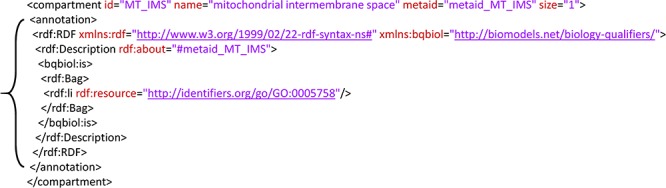
“Example RDF-based annotation from SBML model BIOMD0000000239 [71] in BioModels.”
MethodA call for virtual experiments: Accelerating the scientific process
Cooper, J., Vik, J. O., & Waltemath, D. (2015) · Progress in Biophysics and Molecular Biology · doi:10.1016/j.pbiomolbio.2014.10.001 · Cited by 38
Self-citationNickerson, D. P., Atalağ, K., de Bono, B., Geiger, J., Goble, C., Hollmann, S., Lonien, J., Müller, W., Regierer, B., Stanford, N., et al. (2016) · Interface Focus · doi:10.1098/rsfs.2015.0103 · Cited by 38
Self-citationPhysical Properties of Biological Entities: An Introduction to the Ontology of Physics for Biology
Cook, D. L., Bookstein, F. L., & Gennari, J. H. (2011) · PLoS ONE · doi:10.1371/journal.pone.0028708 · Cited by 37 · cited 1×
“[74, 75], glucose from ChEBI, Cytoplasm from the Foundational Model of Anatomy (FMA) [76] and Type B cell of pancreatic islet from the FMA.”
Self-citationJSBML 1.0: providing a smorgasbord of options to encode systems biology models
Rodriguez, N., Thomas, A., Watanabe, L., Vazirabad, I. Y., Kofia, V., Gómez, H. F., Mittag, F., Matthes, J., Rudolph, J., Wrzodek, F., et al. (2015) · Bioinformatics · doi:10.1093/bioinformatics/btv341 · Cited by 37 · cited 1×
“The organization and operation of the new working group would follow the model of other successful software development efforts within COMBINE, such as those that focus on developing the widely adopted SBML libraries libSBML [82] and JSBML [83].”
Self-citationCook, D. L., Neal, M. L., Bookstein, F. L., & Gennari, J. H. (2013) · Journal of Biomedical Semantics · doi:10.1186/2041-1480-4-41 · Cited by 34 · cited 1×
“[74, 75], glucose from ChEBI, Cytoplasm from the Foundational Model of Anatomy (FMA) [76] and Type B cell of pancreatic islet from the FMA.”
Self-citationModel annotation for synthetic biology: automating model to nucleotide sequence conversion
Mısırlı, G., Hallinan, J. S., Yu, T., Lawson, J. R., Wimalaratne, S., Cooling, M. T., & Wipat, A. (2011) · Bioinformatics · doi:10.1093/bioinformatics/btr048 · Cited by 34
Self-citationZBIT Bioinformatics Toolbox: A Web-Platform for Systems Biology and Expression Data Analysis
Römer, M., Eichner, J., Dräger, A., Wrzodek, C., Wrzodek, F., & Zell, A. (2016) · PLoS ONE · doi:10.1371/journal.pone.0149263 · Cited by 33 · cited 1×
“We also recommend the enhancement of existing annotation software tools [36, 93, 94] so they prevent the”
Self-citationSourceData: a semantic platform for curating and searching figures
Liechti, R., George, N., Götz, L., El-Gebali, S., Chasapi, A., Crespo, I., Xénarios, I., & Lemberger, T. (2017) · Nature Methods · doi:10.1038/nmeth.4471 · Cited by 33 · cited 1×
“Efforts such as the SourceData project [61], which”
Notions of similarity for systems biology models
Henkel, R., Hoehndorf, R., Kacprowski, T., Knüpfer, C. R. N., Liebermeister, W., & Waltemath, D. (2017) · Briefings in Bioinformatics · doi:10.1093/bib/bbw146 · Cited by 33
Self-citationIntegrating BioPAX pathway knowledge with SBML models
Ruebenacker, O., Moraru, I. I., Schaff, J. C., & Blinov, M. L. (2009) · IET Systems Biology · doi:10.1049/iet-syb.2009.0007 · Cited by 32 · cited 1×
“Annotations have contributed to the successful reuse and exploration of biological models and data in tasks such as comparison [27, 28], interpretation [29], retrieval [30–32], integration [33–37], simulation [38], translation between formats [29, 37, 39–42] and visualization [37, 43–45].”
Generating Systems Biology Markup Language Models from the Synthetic Biology Open Language
Roehner, N., Zhang, Z., Nguyen, T., & Myers, C. J. (2015) · ACS Synthetic Biology · doi:10.1021/sb5003289 · Cited by 32 · cited 1×
“Semantic annotations are also a key component for model-driven design of synthetic biological systems where they are used in model composition tasks when constructing optimum biological systems built from models [41, 45–48].”
Self-citationRanked retrieval of Computational Biology models
Henkel, R., Endler, L., Peters, A., Novère, N. G. L., & Waltemath, D. (2010) · BMC Bioinformatics · doi:10.1186/1471-2105-11-423 · Cited by 31 · cited 1×
“Annotations have contributed to the successful reuse and exploration of biological models and data in tasks such as comparison [27, 28], interpretation [29], retrieval [30–32], integration [33–37], simulation [38], translation between formats [29, 37, 39–42] and visualization [37, 43–45].”
Self-citationProvenance in modeling and simulation studies — Bridging gaps
Ruscheinski, A., & Uhrmacher, A. (2017) · 2017 Winter Simulation Conference (WSC) · doi:10.1109/wsc.2017.8247839 · Cited by 31
Semantics-Based Composition of Integrated Cardiomyocyte Models Motivated by Real-World Use Cases
Neal, M. L., Carlson, B. E., Thompson, C. T., James, R. C., Kim, K., Tran, K., Crampin, E. J., Cook, D. L., & Gennari, J. H. (2015) · PLoS ONE · doi:10.1371/journal.pone.0145621 · Cited by 30 · cited 2×
“SemGen [17, 34], COPASI [85], JWS Online [63], CellDesigner [86] and the annotation tools used internally by the BiGG Models Database [87] and BioModels, the working group’s focus would not be to create a one-size-fits-all semantic annotation toolset, but rather provide guidance and core software infrastructure to hel…”
Self-citationSaint: a lightweight integration environment for model annotation
Lister, A., Pocock, M., Taschuk, M. L., & Wipat, A. (2009) · Bioinformatics · doi:10.1093/bioinformatics/btp523 · Cited by 27 · cited 1×
“We also recommend the enhancement of existing annotation software tools [36, 93, 94] so they prevent the application of inconsistent annotations and can auto-suggest annotations.”
Self-citationScharm, M., Wolkenhauer, O., & Waltemath, D. (2016) · Bioinformatics · doi:10.1093/bioinformatics/btv484 · Cited by 24 · cited 1×
“Other types of annotations, such as those that capture provenance information [55–58], can also help researchers determine which models best meet their research needs and make comparisons between different model versions [59].”
Self-citationComposable Modular Models for Synthetic Biology
Mısırlı, G., Hallinan, J. S., & Wipat, A. (2014) · ACM Journal on Emerging Technologies in Computing Systems · doi:10.1145/2631921 · Cited by 23
Self-citationA Converter from the Systems Biology Markup Language to the Synthetic Biology Open Language.
Nguyen, T. T., Roehner, N., Zundel, Z., & Myers, C. (2016) · ACS Synthetic Biology · doi:10.1021/acssynbio.5b00212 · Cited by 23
Self-citationQualitative translation of relations from BioPAX to SBML qual
Büchel, F., Wrzodek, C., Mittag, F., Dräger, A., Eichner, J., Rodriguez, N., Le Novère, N., & Zell, A. (2012) · Bioinformatics · doi:10.1093/bioinformatics/bts508 · Cited by 22
Self-citationSTON: exploring biological pathways using the SBGN standard and graph databases
Touré, V., Mazein, A., Waltemath, D., Balaur, I., Saqi, M. A. S., Henkel, R., Pellet, J., & Auffray, C. (2016) · BMC Bioinformatics · doi:10.1186/s12859-016-1394-x · Cited by 22 · cited 1×
“Annotations have contributed to the successful reuse and exploration of biological models and data in tasks such as comparison [27, 28], interpretation [29], retrieval [30–32], integration [33–37], simulation [38], translation between formats [29, 37, 39–42] and visualization [37, 43–45].”
Self-citationThe CellML Metadata Framework 2.0 Specification
Cooling, M. T., & Hunter, P. J. (2015) · Berichte aus der medizinischen Informatik und Bioinformatik/Journal of integrative bioinformatics · doi:10.1515/jib-2015-260 · Cited by 21 · cited 1×
“Annotation of CellML models is currently limited, but a collection of metadata specifications exists that provide recommendations and best practices for annotating models [72, 73].”
Self-citationMısırlı, G., Cavaliere, M., Waites, W., Pocock, M., Madsen, C. K., Gilfellon, O., Honorato-Zimmer, R., Zuliani, P., Danos, V., & Wipat, A. (2015) · Bioinformatics · doi:10.1093/bioinformatics/btv660 · Cited by 20 · cited 2×
“Semantic annotations are also a key component for model-driven design of synthetic biological systems where they are used in model composition tasks when constructing optimum biological systems built from models [41, 45–48].”
Self-citationCollaborative Ontology Development for the Geosciences
Kalbasi, R., Janowicz, K., Reitsma, F., Boerboom, L. G. J., & Alesheikh, A. A. (2013) · Transactions in GIS · doi:10.1111/tgis.12070 · Cited by 18 · cited 1×
“Semantic annotations are used in many fields besides biological modeling, including the geosciences [24], music retrieval [25] and business process modeling [26].”
Self-citationNotions of similarity for systems biology models
Henkel, R., Hoehndorf, R., Kacprowski, T., Knüpfer, C. R. N., Liebermeister, W., & Waltemath, D. (2016) · Briefings in Bioinformatics · doi:10.1093/bib/bbw090 · Cited by 18 · cited 2×
“Similarity measures and pattern-matching algorithms can help identify relevant modeling components [28, 49], but existing proposals for cross-repository search and retrieval [32] are mostly theoretical and not yet applicable in practice.”
Self-citationA method for visualizing CellML models
Wimalaratne, S., Halstead, M. D. B., Lloyd, C. M., Cooling, M. T., Crampin, E. J., & Nielsen, P. F. (2009) · Bioinformatics · doi:10.1093/bioinformatics/btp495 · Cited by 17 · cited 1×
“Annotations have contributed to the successful reuse and exploration of biological models and data in tasks such as comparison [27, 28], interpretation [29], retrieval [30–32], integration [33–37], simulation [38], translation between formats [29, 37, 39–42] and visualization [37, 43–45].”
Self-citationAnnotation-based feature extraction from sets of SBML models
Alm, R., Waltemath, D., Wolfien, M., Wolkenhauer, O., & Henkel, R. (2015) · Journal of Biomedical Semantics · doi:10.1186/s13326-015-0014-4 · Cited by 16 · cited 1×
“exploration of biological models and data in tasks such as comparison [27, 28], interpretation [29], retrieval [30–32], integration [33–37], simulation [38], translation between formats [29, 37,”
Self-citationMultiCellDS: a standard and a community for sharing multicellular dataPreprint
Friedman, S. H., Anderson, A. R. A., Bortz, D. M., Fletcher, A. G., Frieboes, H. B., Ghaffarizadeh, A., Grimes, D. R., Hawkins-Daarud, A. J., Hoehme, S., Juarez, E. F., et al. (2016) · bioRxiv (Cold Spring Harbor Laboratory) · doi:10.1101/090696 · Cited by 15 · cited 2×
“Collectively, we represent teams developing SBML, CellML, the Simulation Experiment Description Markup Language (SED-ML) [8], the Systems Biology Graphical Notation (SBGN) [9], the Synthetic Biology Open Language (SBOL) [10], NeuroML [11, 12], rule-based modeling languages [13, 14], MultiCellDS [15], the COMBINE archi…”
Self-citationProvenance in modeling and simulation studies: bridging gaps
Ruscheinski, A., & Uhrmacher, A. M. (2017) · Winter Simulation Conference · doi:10.5555/3242181.3242248 · Cited by 15
The CellML Metadata Framework 2.0 Specification
Cooling, M. T., & Hunter, P. J. (2015) · PubMed · doi:10.2390/biecoll-jib-2015-260 · Cited by 14
Self-citationCOMODI: an ontology to characterise differences in versions of computational models in biology
Scharm, M., Waltemath, D., Mendes, P., & Wolkenhauer, O. (2016) · Journal of Biomedical Semantics · doi:10.1186/s13326-016-0080-2 · Cited by 14
Self-citationIdentifying frequent patterns in biochemical reaction networks: a workflow
Lambusch, F., Waltemath, D., Wolkenhauer, O., Sandkuhl, K., Rosenke, C., & Henkel, R. (2018) · Database · doi:10.1093/database/bay051 · Cited by 14 · cited 1×
“Similarity measures and pattern-matching algorithms can help identify relevant modeling components [28, 49], but existing proposals for cross-repository search and retrieval [32] are mostly theoretical and not yet applicable in practice.”
Self-citationData Integration and Semantic Enrichment of Systems Biology Models and Simulations
Chelliah, V., Endler, L., Juty, N., Laibe, C., Li, C., Rodríguez, N., & Novère, N. G. L. (2009) · Lecture notes in computer science · doi:10.1007/978-3-642-02879-3_2 · Cited by 10
Self-citationHallinan, J. S., Gilfellon, O., Mısırlı, G., & Wipat, A. (2014) · IEEE Conference on Computational Intelligence in Bioinformatics and Computational Biology (CIBCB) · doi:10.1109/cibcb.2014.6845520 · Cited by 9 · cited 1×
“Semantic annotations are also a key component for model-driven design of synthetic biological systems where they are used in model composition tasks when constructing optimum biological systems built from models [41, 45–48].”
Self-citationQualitative causal analyses of biosimulation models.
Neal, M. L., Gennari, J. H., & Cook, D. L. (2016) · PubMed · Cited by 7
Self-citationOn the road to robust data citation
(2018) · Scientific Data · doi:10.1038/sdata.2018.95 · Cited by 3
Identifying frequent patterns in biochemical reaction networks - a workflowPreprint
Lambusch, F., Waltemath, D., Olaf Wolkenhauer, A., Sandkuhl, K., Rosenke, C., & Henkel, R. (2018) · doi:10.7287/peerj.preprints.1479 · Cited by 1
Self-citationmatthiaskoenig/tellurium-web: tellurium-web-v0.2.0
König, M., & Janekg (2018) · Zenodo (CERN European Organization for Nuclear Research) · doi:10.5281/zenodo.1136218
Self-citation
Research works printed but not linked: 1
- Born M, Dörr F Weber I. User-friendly semantic annotation in business process modeling. Web Inf. Syst. Eng. 2007 Work. WISE 2007. Lect. Notes Comput. Sci., Vol. 4832, 2007, 260– 71. Springer-Verlag Berlin Heidelberg, Nancy, France.
Cited by
SBML Level 3: an extensible format for the exchange and reuse of biological models
Keating, S. M., Waltemath, D., König, M., Zhang, F., Dräger, A., Chaouiya, C., Bergmann, F. T., Finney, A., Gillespie, C. S., Helikar, T., et al. (2020) · Molecular Systems Biology · doi:10.15252/msb.20199110 · Cited by 285
“Such use of a standardized format, along with standard annotation schemes (Neal et al , 2019) and training in reproducible meth-ods, improves research workflows and is generally recognized as promoting research reproducibility (Waltemath & Wolkenhauer, 2016).”
Self-citationChrist, B., Collatz, M., Dahmen, U., Herrmann, K.-H., Höpfl, S., König, M., Lambers, L., Marz, M., Meyer, D., Radde, N., et al. (2021) · Frontiers in Physiology · doi:10.3389/fphys.2021.733868 · Cited by 46
“While mechanisms exist for the annotation of models and data with meta-data (Neal et al., 2019), and how to share experimental and clinical data with the modeling community (König et al., 2021), standards for data-model integration and corresponding workflows are lacking, and coupling models in…”
MethodSelf-citationPham, N., van Heck, R. G. A., van Dam, J. C. J., Schaap, P. J., Saccenti, E., & Diez, M. S. (2019) · Metabolites · doi:10.3390/metabo9020028 · Cited by 50
A pathway model of glucose-stimulated insulin secretion in the pancreatic β-cell
Maheshvare, M. D., Raha, S., König, M., & Pal, D. (2023) · Frontiers in Endocrinology · doi:10.3389/fendo.2023.1185656 · Cited by 63
“Adding semantic annotations to models is an essential aspect of improving their interoperability and reusability, as well as facilitating data integration for model validation and parameterization (93, 94).”
MethodSelf-citationWaltemath, D., Golebiewski, M., Blinov, M. L., Gleeson, P., Hermjakob, H., Hucka, M., Inau, E. T., Keating, S. M., König, M., Krebs, O., et al. (2020) · Journal of Integrative Bioinformatics · doi:10.1515/jib-2020-0005 · Cited by 37
“Ongoing work on harmonising semantic knowledge about computational models was discussed during the meeting [23], particularly how to realise the next step: going from recommendation to implementation of the OMEX metadata specification.”
Self-citation
Metadata
- Authors
- Neal, M. L., König, M., Nickerson, D., Mısırlı, G., Kalbasi, R., Dräger, A., Atalag, K., Chelliah, V., Cooling, M. T., Cook, D. L., Crook, S., de Alba, M., Friedman, S. H., Garny, A., Gennari, J. H., Gleeson, P., Golebiewski, M., Hucka, M., Juty, N., Myers, C., Olivier, B. G., Sauro, H. M., Scharm, M., Snoep, J. L., Touré, V., Wipat, A., Wolkenhauer, O., & Waltemath, D.
- Affiliations
- Center for Infectious Disease Research (US)
- Humboldt-Universität zu Berlin (DE)
- University of Auckland (NZ)
- Keele University (GB)
- University of Tübingen (DE)
- Auckland Bioengineering Institute, University of Auckland, Auckland, NZ
- European Bioinformatics Institute (GB)
- University of Washington (US)
- Arizona State University (US)
- German Federal Institute for Risk Assessment, Berlin, Germany
- Opto-Knowledge Systems (United States) (US)
- University College London (GB)
- Heidelberg Institute for Theoretical Studies (DE)
- California Institute of Technology (US)
- University of Utah (US)
- Systems Bioinformatics, Vrije Universiteit Amsterdam, Amsterdam, The Netherlands
- Department of Bioengineering, University of Washington, Seattle, WA, USA
- Stellenbosch University (ZA)
- Norwegian University of Science and Technology (NO)
- Department of Systems Biology and Bioinformatics, University of Rostock, Rostock, Germany
- University of Rostock (DE)
- Corresponding author
- Neal, Maxwell Lewis
- ORCID
- Neal, Maxwell Lewis
- König, Matthias
- Nickerson, David
- Mısırlı, Göksel
- Kalbasi, Reza
- Dräger, Andreas
- Chelliah, Vijayalakshmi
- Cooling, Michael T
- Crook, Sharon
- Friedman, Samuel H
- Garny, Alan
- Gennari, John H
- Gleeson, Padraig
- Golebiewski, Martin
- Hucka, Michael
- Juty, Nick
- Myers, Chris
- Olivier, Brett G
- Scharm, Martin
- Snoep, Jacky L
- Wipat, Anil
- Wolkenhauer, Olaf
- Waltemath, Dagmar
- Venue
- Briefings in Bioinformatics
- Publisher
- Oxford University Press (OUP)
- Published
- 2018-11-21
- Volume
- 20
- Issue
- 2
- Pages
- 540-550
- ISSN
- 1467-5463 (ISSN-L)
- 1477-4054
- PMC
- PMC6433895
- OpenAlex
- W2788254992
- Cited by
- 74
- References
- 105
- Citations by year
- 2026: 6 · 2025: 6 · 2024: 14 · 2023: 9 · 2022: 6 · 2021: 13 · 2020: 11 · 2019: 6 · 2018: 3
- FWCI
- 0.81
- Type
- journal article
- Language
- en
- Open access
- hybrid
- doi.org
- Licence
- Locations
- Briefings in Bioinformatics (publishedVersion, cc-by)
- bioRxiv (Cold Spring Harbor Laboratory) (acceptedVersion)
- Europe PMC (PubMed Central) (publishedVersion, cc-by)
- PubMed Central (publishedVersion, cc-by)
- VU Research Portal (publishedVersion, other-oa)
- PubMed (publishedVersion)
- Research Explorer (The University of Manchester) (publishedVersion, cc-by)
- Keele Research Repository (Keele University) (submittedVersion, cc-by)
- UCL Discovery (University College London) (submittedVersion)
- SUNScholar (Stellenbosch University) (submittedVersion)
- CaltechAUTHORS (California Institute of Technology) (submittedVersion, cc-by)
- OpenAgrar (submittedVersion, cc-by)
- Data Archiving and Networked Services (DANS) (submittedVersion, other-oa)
- Newcastle University ePrints (Newcastle Univesity) (cc-by)
- Funders
- National Institutes of Health (LM011969, GM109824, GM070923, MH106674, EB021711, GM123032, EB023912)
- German Federal Ministry of Education and Research (SEMS 031 6194, 031L0054, 031L0056)
- Aotearoa Foundation Fellowship
- Medical Technologies Centre of Research Excellence
- University of Auckland Faculty Research Development (3714350)
- European Commission (731001)
- German Federal Ministry for Economic Affairs and Energy (01FS14019)
- Klaus Tschira Foundation
- United States of America’s National Science Foundation (CCF-1748200, CCF-1218095, DBI-1356041)
- BE-Basic Foundation (F08.005.001)
- Department of Science and Technology/National Research Foundation in South Africa (NRF-SARCHI-82813)
- Biotechnology and Biological Sciences Research Council (BBG0102181, BB/I004637/1, BB/M013189/1)
- Wellcome Trust (101445)
- Norwegian University of Science and Technology
- ERACoSysMed (COLOSYS)
- Topics
- Health Sciences › Medicine › Health Informatics › Biomedical Text Mining and Ontologies
- Social Sciences › Decision Sciences › Information Systems and Management › Scientific Computing and Data Management
- Physical Sciences › Computer Science › Artificial Intelligence › Semantic Web and Ontologies
- Keywords
- semantic annotation, model interoperability, annotation standards, model annotation, model reuse, model composition, controlled vocabulary
- MeSH terms
- Biological Science Disciplines, Computer Simulation, Humans, Semantics, Software, Databases, Factual, Computational Biology
About these checks
Registry, retraction, Cites and statistics results are computed, not judged, with one exception: a printed reference that no index lists is read once by a model before it counts as a citation error. Claims are extracted by a model and kept only when their quote appears verbatim in the text; each cited source is then checked, with a model’s help, for whether it says what the claim relies on. Those verdicts can be wrong — read the claim’s quote and the cited source before relying on one.
Statistics and arithmetic are recomputed, not judged.
Confidence bands are shown only for fields calibrated on our annotated test set. None is calibrated yet, so no band is shown.
What counts as a claim ›How we measure confidence ›How we check this ›
Are you an author, or do you see a problem with this page? Request a review
Data sources
Bibliographic data: Semantic Scholar, OpenAlex, Crossref.
Contains information from the Semantic Scholar Academic Graph Datasets, made available under the ODC Attribution License (ODC-BY 1.0).
Semantic Scholar’s data is described in: Kinney, R., et al. (2023). The Semantic Scholar Open Data Platform. arXiv:2301.10140.
