

Trimmomatic: a flexible trimmer for Illumina sequence data
Open accessThe DOI matches its Crossref record; 10 of the 10 references it cites were found in a registry or an index.
Abstract
Motivation: Although many next-generation sequencing (NGS) read preprocessing tools already existed, we could not find any tool or combination of tools that met our requirements in terms of flexibility, correct handling of paired-end data and high performance. We have developed Trimmomatic as a more flexible and efficient preprocessing tool, which could correctly handle paired-end data. Results: The value of NGS read preprocessing is demonstrated for both reference-based and reference-free tasks. Trimmomatic is shown to produce output that is at least competitive with, and in many cases superior to, that produced by other tools, in all scenarios tested. Availability and implementation: Trimmomatic is licensed under GPL V3. It is cross-platform (Java 1.5+ required) and available at http://www.usadellab.org/cms/index.php?page=trimmomatic Contact: usadel@bio1.rwth-aachen.de Supplementary information: Supplementary data are available at Bioinformatics online.
Overview
The claims and statistics of this paper haven’t been checked yet.
Free: it reads the open-access text and checks the first 5 claims that cite a source we can check. Create a free account to check every claim.
Integrity signals
Registry
Cites
Statistics
Figures
Verification
Claims the paper makes
The claims and statistics of this paper haven’t been checked yet.
Free: it reads the open-access text and checks the first 5 claims that cite a source we can check. Create a free account to check every claim.
Self-check
Percentages, sums and reported differences re-computed from the paper’s own numbers.
The self-check needs the paper’s full text.
Citations
Cites
Fast and accurate short read alignment with Burrows-Wheeler transform
Li, H., & Durbin, R. (2009) · Bioinformatics · doi:10.1093/bioinformatics/btp324 · Cited by 58,607
Fast gapped-read alignment with Bowtie 2
Langmead, B., & Salzberg, S. L. (2012) · Nature Methods · doi:10.1038/nmeth.1923 · Cited by 56,400 · cited 1×
“To illustrate the value of data preprocessing, we evaluated two different scenarios: reference-based alignment using Bowtie 2 (Langmead and Salzberg, 2012) and BWA (Li and Durbin, 2009) against the Escherichia coli K-12/MG1655 reference (NCBI sequence NC_000913.”
MethodCutadapt removes adapter sequences from high-throughput sequencing reads
Martin, M. (2011) · EMBnet.journal · doi:10.14806/ej.17.1.200 · Cited by 33,889
Velvet: Algorithms for de novo short read assembly using de Bruijn graphs
Zerbino, D. R., & Birney, E. (2008) · Genome Research · doi:10.1101/gr.074492.107 · Cited by 9,491 · cited 2×
“2), and de novo assembly using Velvet (Zerbino and Birney, 2008), on public E.”
MethodNext-Generation DNA Sequencing Methods
Mardis, E. R. (2008) · Annual Review of Genomics and Human Genetics · doi:10.1146/annurev.genom.9.081307.164359 · Cited by 2,369 · cited 1×
“Furthermore, given the rate with which NGS sequence data are currently being produced (Mardis, 2008), the additional burden of sequence preprocessing must be kept relatively modest so as to avoid adding undue overhead to the bioinformatics pipeline.”
BackgroundComparison of Sequencing Utility Programs
Aronesty, E. (2013) · The Open Bioinformatics Journal · doi:10.2174/1875036201307010001 · Cited by 1,150 · cited 3×
“com/najoshi/), which fully support paired-end data and EA-Utils (Aronesty, 2013), which maintains read pairing but loses singletons (reads whose mate has been filtered).”
BackgroundMethodA survey of sequence alignment algorithms for next-generation sequencing
Li, H., & Homer, N. (2010) · Briefings in Bioinformatics · doi:10.1093/bib/bbq015 · Cited by 875 · cited 2×
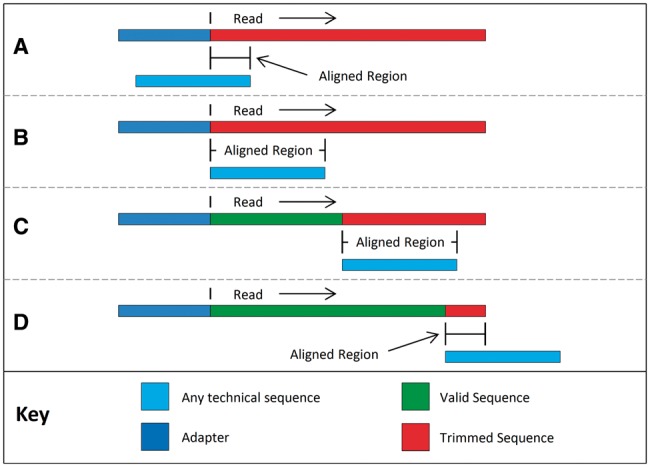
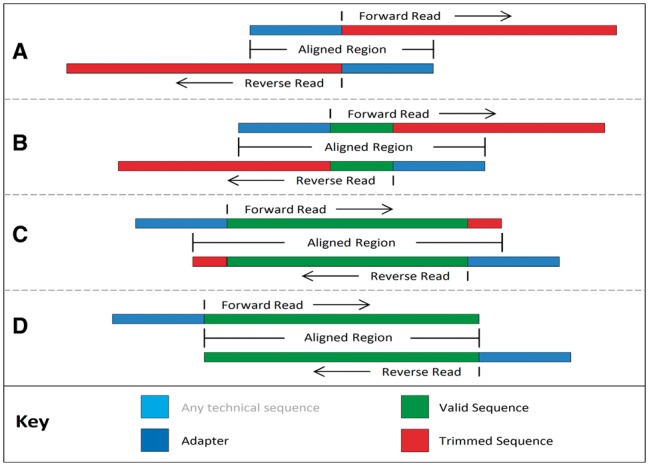
“2.1.3 Alignment detection and scoring The algorithmic approach used for technical sequence alignments is somewhat unusual, avoiding the precalculated indexes often used in NGS alignments (Li and Homer, 2010).”
MethodInfluentialThe Newick utilities: high-throughput phylogenetic tree processing in the U nix shell
Junier, T., & Zdobnov, E. M. (2010) · Bioinformatics · doi:10.1093/bioinformatics/btq243 · Cited by 788 · cited 1×
“In other domains, this can be achieved using a shell pipeline to combine multiple tools as required, e.g. in Newick (Junier and Zdobnov, 2010).”
MethodAdapterRemoval: easy cleaning of next-generation sequencing reads
Lindgreen, S. (2012) · BMC Research Notes · doi:10.1186/1756-0500-5-337 · Cited by 620 · cited 7×
“In this scenario, AdapterRemoval performed particularly well, reflecting its relative strength in removing technical sequences.”
BackgroundMethodInfluentialThe NGS WikiBook: a dynamic collaborative online training effort with long-term sustainability
Li, J., Bolser, D. M., Manske, M., Giorgi, F. M., Vyahhi, N., Usadel, B., Clavijo, B., Chan, T., Wong, N., Zerbino, D. R., et al. (2013) · Briefings in Bioinformatics · doi:10.1093/bib/bbt045 · Cited by 6 · cited 1×
“Nonetheless, it is not trivial to precisely identify such sequences, including partial adapter sequences, while leaving valid sequence data intact (Li et al ., 2013).”
BackgroundSelf-citation
Cited by
Items 601–700 of 1,762
Early Regenerative Capacity in the Porcine Heart
Ye, L., D’Agostino, G., Loo, S. J., Wang, C. X., Su, L. P., Tan, S. H., Tee, G. Z., Pua, C. J., Pena, E. M., Cheng, R. B., et al. (2018) · Circulation · doi:10.1161/circulationaha.117.031542 · Cited by 255
Wu, X., Rensing, C., Han, D., Xiao, K.-Q., Dai, Y., Tang, Z., Liesack, W., Peng, J., Cui, Z., & Zhang, F. (2022) · mSystems · doi:10.1128/msystems.01107-21 · Cited by 244
Zones, J. M., Blaby, I. K., Merchant, S., & Umen, J. (2015) · PubMed · doi:10.1105/tpc.15.00498 · Cited by 263
Genomic analysis of 38 Legionella species identifies large and diverse effector repertoires
Burstein, D., Amaro, F., Zusman, T., Lifshitz, Z., Cohen, O., Gilbert, J. A., Pupko, T., Shuman, H. A., & Segal, G. (2016) · Nature Genetics · doi:10.1038/ng.3481 · Cited by 269
A Consensus Genome-scale Reconstruction of Chinese Hamster Ovary Cell Metabolism
Hefzi, H., Ang, K. S., Hanscho, M., Bordbar, A., Ruckerbauer, D., Lakshmanan, M., Orellana, C. A., Baycin-Hizal, D., Huang, Y., Ley, D., et al. (2016) · Cell Systems · doi:10.1016/j.cels.2016.10.020 · Cited by 255
“REAGENT or RESOURCE SOURCE IDENTIFIER Critical Commercial Assays QIAGEN’s RNeasy Mini Kit QIAGEN #74104 TruSeq Stranded mRNA Sample prep kit with 96 dual indexes Illumina RS-122-2103 Deposited Data Raw RNA-Seq data This paper GEO: GSE77800 Global model of C. griseus metabolism This paper http://bigg.ucsd.edu; http://C…”
Crowl, J. T., Heeg, M., Ferry, A., Milner, J. J., Omilusik, K. D., Toma, C., He, Z., Chang, J. T., & Goldrath, A. W. (2022) · Nature Immunology · doi:10.1038/s41590-022-01229-8 · Cited by 253
Human iPSC Glial Mouse Chimeras Reveal Glial Contributions to Schizophrenia
Windrem, M. S., Osipovitch, M., Liu, Z., Bates, J., Chandler-Militello, D., Zou, L., Munir, J., Schanz, S., McCoy, K., Miller, R. H., et al. (2017) · Cell Stem Cell · doi:10.1016/j.stem.2017.06.012 · Cited by 257
“…N/A Leica Metamorph AF v2 Leica Biosystems N/A Leica Application Suite X Leica Biosystems N/A FlowJo TreeStar N/A Trimmomatic (version 0.32) Bolger et al. (2014) http://www.usadellab.org/cms/? page=trimmomatic Subread (version 1.4.6-p3) Liao et al. (2013)…”
BackgroundInfluentialRhodes, J., Abdolrasouli, A., Dunne, K., Sewell, T. R., Zhang, Y., Ballard, E., Brackin, A. P., van Rhijn, N., Chown, H., Tsitsopoulou, A., et al. (2022) · Nature Microbiology · doi:10.1038/s41564-022-01091-2 · Cited by 244
TRITEX: chromosome-scale sequence assembly of Triticeae genomes with open-source tools
Monat, C., Padmarasu, S., Lux, T., Wicker, T., Gundlach, H., Himmelbach, A., Ens, J., Li, C., Muehlbauer, G. J., Schulman, A. H., et al. (2019) · Genome Biology · doi:10.1186/s13059-019-1899-5 · Cited by 251
“Other tools may use standard task, for example, Trimmomatic [69] instead of cutadapt [29] for read trimming or Bloocoo [70] instead of BFC [26] for error correction.”
MethodOrigin and evolution of qingke barley in Tibet
Zeng, X., Guo, Y., Xu, Q., Mascher, M., Guo, G., Li, S., Mao, L., Liu, Q., Xia, Z., Zhou, J., et al. (2018) · Nature Communications · doi:10.1038/s41467-018-07920-5 · Cited by 247
Male Sterility in Maize after Transient Heat Stress during the Tetrad Stage of Pollen Development
Begcy, K., Nosenko, T., Zhou, L.-Z., Fragner, L., Weckwerth, W., & Dresselhaus, T. (2019) · Plant Physiology · doi:10.1104/pp.19.00707 · Cited by 247
Zhang, S.-J., Zeng, Y.-H., Zhu, J.-M., Cai, Z.-H., & Zhou, J. (2022) · Journal of Hazardous Materials · doi:10.1016/j.jhazmat.2021.126780 · Cited by 257
Commensal microbiota from patients with inflammatory bowel disease produce genotoxic metabolites
Cao, Y., Oh, J., Xue, M., Huh, W. J., Wang, J., Gonzalez-Hernandez, J. A., Rice, T. A., Martin, A. L., Song, D., Crawford, J. M., et al. (2022) · Science · doi:10.1126/science.abm3233 · Cited by 247
The gene cortex controls mimicry and crypsis in butterflies and moths
Nadeau, N. J., Pardo-Diaz, C., Whibley, A., Supple, M. A., Saenko, S. V., Wallbank, R. W. R., Wu, G. C., Maroja, L., Ferguson, L., Hanly, J. J., et al. (2016) · Nature · doi:10.1038/nature17961 · Cited by 264
Han, S.-J., Glatman Zaretsky, A., Andrade-Oliveira, V., Collins, N., Dzutsev, A., Shaik, J., Morais da Fonseca, D., Harrison, O. J., Tamoutounour, S., Byrd, A. L., et al. (2017) · Immunity · doi:10.1016/j.immuni.2017.11.009 · Cited by 249
Cytlak, U., Resteu, A., Pagan, S., Green, K., Milne, P., Maisuria, S., McDonald, D., Hulme, G., Filby, A., Carpenter, B., et al. (2020) · Immunity · doi:10.1016/j.immuni.2020.07.003 · Cited by 244
Systematic comparison and assessment of RNA-seq procedures for gene expression quantitative analysis
Corchete, L. A., Rojas, E. A., Alonso-López, D., De Las Rivas, J., Gutiérrez, N. C., & Burguillo, F. J. (2020) · Scientific Reports · doi:10.1038/s41598-020-76881-x · Cited by 244
Ng, S. C., Xu, Z., Mak, J. W. Y., Yang, K., Liu, Q., Zuo, T., Tang, W., Lau, L., Lui, R. N., Wong, S. H., et al. (2022) · Gut · doi:10.1136/gutjnl-2020-323617 · Cited by 249
Faecal virome transplantation decreases symptoms of type 2 diabetes and obesity in a murine model
Rasmussen, T. S., Mentzel, C. M. J., Kot, W., Castro-Mejía, J. L., Zuffa, S., Swann, J. R., Hansen, L. H., Vogensen, F. K., Hansen, A. K., & Nielsen, D. S. (2020) · Gut · doi:10.1136/gutjnl-2019-320005 · Cited by 255
Hu, J., Adar, S., Selby, C. P., Lieb, J. D., & Sancar, A. (2015) · Genes & Development · doi:10.1101/gad.261271.115 · Cited by 255
A genetic network mediating the control of bud break in hybrid aspen
Singh, R. K., Maurya, J. P., Azeez, A., Miskolczi, P., Tylewicz, S., Stojkovič, K., Delhomme, N., Busov, V., & Bhalerao, R. P. (2018) · Nature Communications · doi:10.1038/s41467-018-06696-y · Cited by 248
Transient Osmotic Perturbation Causes Long-Term Alteration to the Gut Microbiota
Tropini, C., Moss, E. L., Merrill, B. D., Ng, K. M., Higginbottom, S. K., Casavant, E. P., Gonzalez, C. G., Fremin, B., Bouley, D. M., Elias, J. E., et al. (2018) · Cell · doi:10.1016/j.cell.2018.05.008 · Cited by 257
Single-cell transcriptomic analysis of tissue-resident memory T cells in human lung cancer
Clarke, J., Panwar, B., Madrigal, A., Singh, D., Gujar, R., Wood, O., Chee, S. J., Eschweiler, S., King, E. V., Awad, A. S., et al. (2019) · Journal of Experimental Medicine · doi:10.1084/jem.20190249 · Cited by 256
The forebrain synaptic transcriptome is organized by clocks but its proteome is driven by sleep
Noya, S. B., Colameo, D., Brüning, F., Spinnler, A., Mircsof, D., Opitz, L., Mann, M., Tyagarajan, S. K., Robles, M. S., & Brown, S. A. (2019) · Science · doi:10.1126/science.aav2642 · Cited by 250
Restraining Lysosomal Activity Preserves Hematopoietic Stem Cell Quiescence and Potency
Liang, R., Arif, T., Kalmykova, S., Kasianov, A., Lin, M., Menon, V., Qiu, J., Bernitz, J. M., Moore, K., Lin, F., et al. (2020) · Cell Stem Cell · doi:10.1016/j.stem.2020.01.013 · Cited by 254
Prevalent, protective, and convergent IgG recognition of SARS-CoV-2 non-RBD spike epitopes
Voss, W. N., Hou, Y. J., Johnson, N. V., Delidakis, G., Kim, J. E., Javanmardi, K., Horton, A. P., Bartzoka, F., Paresi, C. J., Tanno, Y., et al. (2021) · Science · doi:10.1126/science.abg5268 · Cited by 260
Illumina-based RiboMethSeq approach for mapping of 2′-O-Me residues in RNA
Marchand, V., Blanloeil-Oillo, F., Helm, M., & Motorin, Y. (2016) · Nucleic Acids Research · doi:10.1093/nar/gkw547 · Cited by 248
Zhou, T., Zheng, Y., Sun, L., Badea, S. R., Jin, Y., Liu, Y., Rolfe, A. J., Sun, H., Wang, X., Cheng, Z., et al. (2019) · Nature Neuroscience · doi:10.1038/s41593-018-0324-9 · Cited by 248
Sacco, K., Castagnoli, R., Vakkilainen, S., Liu, C., Delmonte, O. M., Oguz, C., Kaplan, I. M., Alehashemi, S., Burbelo, P. D., Bhuyan, F., et al. (2022) · Nature Medicine · doi:10.1038/s41591-022-01724-3 · Cited by 247
Molecular Anatomy of the Developing Human Retina
Hoshino, A., Ratnapriya, R., Brooks, M. J., Chaitankar, V., Wilken, M. S., Zhang, C., Starostik, M. R., Gieser, L., La Torre, A., Nishio, M., et al. (2017) · Developmental Cell · doi:10.1016/j.devcel.2017.10.029 · Cited by 251
YTHDF2 inhibition potentiates radiotherapy antitumor efficacy
Wang, L., Dou, X., Chen, S., Yu, X., Huang, X., Zhang, L., Chen, Y., Wang, J., Yang, K., Bugno, J., et al. (2023) · Cancer Cell · doi:10.1016/j.ccell.2023.04.019 · Cited by 246
McLoughlin, A. G., Wytinck, N., Walker, P. L., Girard, I. J., Rashid, K. Y., de Kievit, T., Fernando, W. G. D., Whyard, S., & Belmonte, M. F. (2018) · Scientific Reports · doi:10.1038/s41598-018-25434-4 · Cited by 241
Estrada-de los Santos, P., Palmer, M., Chávez-Ramírez, B., Beukes, C., Steenkamp, E. T., Briscoe, L., Khan, N., Maluk, M., Lafos, M., Humm, E., et al. (2018) · Genes · doi:10.3390/genes9080389 · Cited by 247
Bile Acids Are Substrates for Amine N-Acyl Transferase Activity by Bile Salt Hydrolase
Patterson, A., Rimal, B., Collins, S., Granda, M., Koo, I., Solanka, S., Hoque, N., Gentry, E., Yan, T., Bisanz, J., et al. (2022) · doi:10.21203/rs.3.rs-2050120/v1 · Cited by 252
PTPN2 regulates the generation of exhausted CD8+ T cell subpopulations and restrains tumor immunity
LaFleur, M. W., Nguyen, T. H., Coxe, M. A., Miller, B. C., Yates, K. B., Gillis, J. E., Sen, D. R., Gaudiano, E. F., Al Abosy, R., Freeman, G. J., et al. (2019) · Nature Immunology · doi:10.1038/s41590-019-0480-4 · Cited by 245
ADAR1 prevents autoinflammation by suppressing spontaneous ZBP1 activation
de Reuver, R., Verdonck, S., Dierick, E., Nemegeer, J., Hessmann, E., Ahmad, S., Jans, M., Blancke, G., Van Nieuwerburgh, F., Botzki, A., et al. (2022) · Nature · doi:10.1038/s41586-022-04974-w · Cited by 245
Carlson, J., Erickson, J., Hess, J., Gould, T., & Slavin, J. (2017) · Nutrients · doi:10.3390/nu9121361 · Cited by 246
Bactopia: a Flexible Pipeline for Complete Analysis of Bacterial Genomes
Petit, R. A., & Read, T. D. (2020) · mSystems · doi:10.1128/msystems.00190-20 · Cited by 244
Impact of sequencing depth on the characterization of the microbiome and resistome
Zaheer, R., Noyes, N., Ortega Polo, R., Cook, S. R., Marinier, E., Van Domselaar, G., Belk, K. E., Morley, P. S., & McAllister, T. A. (2018) · Scientific Reports · doi:10.1038/s41598-018-24280-8 · Cited by 245
Harper, L. R., Lawson Handley, L., Hahn, C., Boonham, N., Rees, H. C., Gough, K. C., Lewis, E., Adams, I. P., Brotherton, P., Phillips, S., et al. (2018) · Ecology and Evolution · doi:10.1002/ece3.4013 · Cited by 245
Variation in cis-regulation of a NAC transcription factor contributes to drought tolerance in wheat
Mao, H., Li, S., Chen, B., Jian, C., Mei, F., Zhang, Y., Li, F., Chen, N., Li, T., Du, L., et al. (2022) · Molecular Plant · doi:10.1016/j.molp.2021.11.007 · Cited by 240
Hu, G., Feng, J., Xiang, X., Wang, J., Salojärvi, J., Liu, C., Wu, Z., Zhang, J., Liang, X., Jiang, Z., et al. (2022) · Nature Genetics · doi:10.1038/s41588-021-00971-3 · Cited by 244
Advances in DNA metabarcoding for food and wildlife forensic species identification
Staats, M., Arulandhu, A. J., Gravendeel, B., Holst-Jensen, A., Scholtens, I., Peelen, T., Prins, T. W., & Kok, E. (2016) · Analytical and Bioanalytical Chemistry · doi:10.1007/s00216-016-9595-8 · Cited by 241
Engineering natural microbiomes toward enhanced bioremediation by microbiome modeling
Ruan, Z., Chen, K., Cao, W., Meng, L., Yang, B., Xu, M., Xing, Y., Li, P., Freilich, S., Chen, C., et al. (2024) · Nature Communications · doi:10.1038/s41467-024-49098-z · Cited by 242
“36) 103 .”
Su, W., Han, H. H., Wang, Y., Zhang, B., Zhou, B., Cheng, Y., Rumandla, A., Gurrapu, S., Chakraborty, G., Su, J., et al. (2019) · Cancer Cell · doi:10.1016/j.ccell.2019.06.009 · Cited by 242
Purines enrich root-associated Pseudomonas and improve wild soybean growth under salt stress
Zheng, Y., Cao, X., Zhou, Y., Ma, S., Wang, Y., Li, Z., Zhao, D., Yang, Y., Zhang, H., Meng, C., et al. (2024) · Nature Communications · doi:10.1038/s41467-024-47773-9 · Cited by 228
Collado-Torres, L., Burke, E. E., Peterson, A., Shin, J., Straub, R. E., Rajpurohit, A., Semick, S. A., Ulrich, W. S., Price, A. J., Valencia, C., et al. (2019) · Neuron · doi:10.1016/j.neuron.2019.05.013 · Cited by 242
MaxDIA enables library-based and library-free data-independent acquisition proteomics
Sinitcyn, P., Hamzeiy, H., Salinas Soto, F., Itzhak, D., McCarthy, F., Wichmann, C., Steger, M., Ohmayer, U., Distler, U., Kaspar-Schoenefeld, S., et al. (2021) · Nature Biotechnology · doi:10.1038/s41587-021-00968-7 · Cited by 244
Vollmers, J., Wiegand, S., & Kaster, A.-K. (2017) · PLoS ONE · doi:10.1371/journal.pone.0169662 · Cited by 240
Repeated replacement of an intrabacterial symbiont in the tripartite nested mealybug symbiosis
Husnik, F., & McCutcheon, J. P. (2016) · Proceedings of the National Academy of Sciences · doi:10.1073/pnas.1603910113 · Cited by 252
“Adapter clipping and quality filtering was carried out in the Trimmomatic package (Bolger et al. 2014) using default settings.”
MethodInference and reconstruction of the heimdallarchaeial ancestry of eukaryotes
Eme, L., Tamarit, D., Caceres, E. F., Stairs, C. W., De Anda, V., Schön, M. E., Seitz, K. W., Dombrowski, N., Lewis, W. H., Homa, F., et al. (2023) · Nature · doi:10.1038/s41586-023-06186-2 · Cited by 240
“Trimmomatic (v.0.36) 61 was used to trim low-quality regions and adapter sequences from raw reads (parameters: ILLUMINACLIP:TruSeq3-PE-2.fa:2:30:10, LEADING:20, SLIDINGWINDOW:4:20, MINLEN:50).”
InfluentialInfection trains the host for microbiota-enhanced resistance to pathogens
Stacy, A., Andrade-Oliveira, V., McCulloch, J. A., Hild, B., Oh, J. H., Perez-Chaparro, P. J., Sim, C. K., Lim, A. I., Link, V. M., Enamorado, M., et al. (2021) · Cell · doi:10.1016/j.cell.2020.12.011 · Cited by 239
“Briefly, sequencing reads were processed using Trimmomatic (Bolger et al., 2014); host-derived reads were filtered using Bowtie 2 (Langmead and Salzberg, 2012); microbiota-derived reads were assembled into contigs using Megahit (Li et al., 2015); genes within contigs were predicted and annotated with EC numbers using…”
Transmission of human-associated microbiota along family and social networks
Brito, I. L., Gurry, T., Zhao, S., Huang, K., Young, S. K., Shea, T. P., Naisilisili, W., Jenkins, A. P., Jupiter, S. D., Gevers, D., et al. (2019) · Nature Microbiology · doi:10.1038/s41564-019-0409-6 · Cited by 246
Caenorhabditis elegans is a useful model for anthelmintic discovery
Burns, A. R., Luciani, G. M., Musso, G., Bagg, R., Yeo, M., Zhang, Y., Rajendran, L., Glavin, J., Hunter, R., Redman, E., et al. (2015) · Nature Communications · doi:10.1038/ncomms8485 · Cited by 239
Krug, B., De Jay, N., Harutyunyan, A. S., Deshmukh, S., Marchione, D. M., Guilhamon, P., Bertrand, K. C., Mikael, L. G., McConechy, M. K., Chen, C. C. L., et al. (2019) · Cancer Cell · doi:10.1016/j.ccell.2019.04.004 · Cited by 239
Long Noncoding RNA MANTIS Facilitates Endothelial Angiogenic Function
Leisegang, M. S., Fork, C., Josipovic, I., Richter, F. M., Preussner, J., Hu, J., Miller, M. J., Epah, J., Hofmann, P., Günther, S., et al. (2017) · Circulation · doi:10.1161/circulationaha.116.026991 · Cited by 240
Insulin resistance in cavefish as an adaptation to a nutrient-limited environment
Riddle, M. R., Aspiras, A. C., Gaudenz, K., Peuß, R., Sung, J. Y., Martineau, B., Peavey, M., Box, A. C., Tabin, J. A., McGaugh, S., et al. (2018) · Nature · doi:10.1038/nature26136 · Cited by 238
TERMINAL FLOWER 1-FD complex target genes and competition with FLOWERING LOCUS T
Zhu, Y., Klasfeld, S., Jeong, C. W., Jin, R., Goto, K., Yamaguchi, N., & Wagner, D. (2020) · Nature Communications · doi:10.1038/s41467-020-18782-1 · Cited by 238
Successional action of Bacteroidota and Firmicutes in decomposing straw polymers in a paddy soil
Huang, J., Gao, K., Yang, L., & Lu, Y. (2023) · Environmental Microbiome · doi:10.1186/s40793-023-00533-6 · Cited by 228
Derbyshire, M., Denton-Giles, M., Hegedus, D., Seifbarghy, S., Rollins, J., van Kan, J., Seidl, M. F., Faino, L., Mbengue, M., Navaud, O., et al. (2017) · Genome Biology and Evolution · doi:10.1093/gbe/evx030 · Cited by 236
Ubiquitination of DNA Damage-Stalled RNAPII Promotes Transcription-Coupled Repair
Nakazawa, Y., Hara, Y., Oka, Y., Komine, O., van den Heuvel, D., Guo, C., Daigaku, Y., Isono, M., He, Y., Shimada, M., et al. (2020) · Cell · doi:10.1016/j.cell.2020.02.010 · Cited by 236
Barrett, C. F., Baker, W. J., Comer, J. R., Conran, J. G., Lahmeyer, S. C., Leebens‐Mack, J. H., Li, J., Lim, G. S., Mayfield‐Jones, D. R., Perez, L., et al. (2016) · New Phytologist · doi:10.1111/nph.13617 · Cited by 236
The phyllosphere microbiome shifts toward combating melanose pathogen
Li, P.-D., Zhu, Z.-R., Zhang, Y., Xu, J., Wang, H., Wang, Z., & Li, H. (2022) · Microbiome · doi:10.1186/s40168-022-01234-x · Cited by 235
Schmitt, M., Schewe, M., Sacchetti, A., Feijtel, D., van de Geer, W. S., Teeuwssen, M., Sleddens, H. F., Joosten, R., van Royen, M. E., van de Werken, H. J. G., et al. (2018) · Cell Reports · doi:10.1016/j.celrep.2018.07.085 · Cited by 235
Singhania, A., Verma, R., Graham, C. M., Lee, J., Tran, T., Richardson, M., Lecine, P., Leissner, P., Berry, M. P. R., Wilkinson, R. J., et al. (2018) · Nature Communications · doi:10.1038/s41467-018-04579-w · Cited by 233
Conte, M. A., Gammerdinger, W. J., Bartie, K. L., Penman, D. J., & Kocher, T. D. (2017) · BMC Genomics · doi:10.1186/s12864-017-3723-5 · Cited by 234
Zhang, S., Dolgalev, I., Zhang, T., Ran, H., Levine, D. A., & Neel, B. G. (2019) · Nature Communications · doi:10.1038/s41467-019-13116-2 · Cited by 240
Lee, J. W. J., Plichta, D., Hogstrom, L., Borren, N. Z., Lau, H., Gregory, S. M., Tan, W., Khalili, H., Clish, C., Vlamakis, H., et al. (2021) · Cell Host & Microbe · doi:10.1016/j.chom.2021.06.019 · Cited by 228
Multi-locus Analyses Reveal Four Giraffe Species Instead of One
Fennessy, J., Bidon, T., Reuss, F., Kumar, V., Elkan, P., Nilsson, M. A., Vamberger, M., Fritz, U., & Janke, A. (2016) · Current Biology · doi:10.1016/j.cub.2016.07.036 · Cited by 235
Chen, Z., Omori, Y., Koren, S., Shirokiya, T., Kuroda, T., Miyamoto, A., Wada, H., Fujiyama, A., Toyoda, A., Zhang, S., et al. (2019) · Science Advances · doi:10.1126/sciadv.aav0547 · Cited by 233
Cheng, H., Liu, J., Wen, J., Nie, X., Xu, L., Chen, N., Li, Z., Wang, Q., Zheng, Z., Li, M., et al. (2019) · Genome Biology · doi:10.1186/s13059-019-1744-x · Cited by 246
scSLAM-seq reveals core features of transcription dynamics in single cells
Erhard, F., Baptista, M. A. P., Krammer, T., Hennig, T., Lange, M., Arampatzi, P., Jürges, C. S., Theis, F. J., Saliba, A.-E., & Dölken, L. (2019) · Nature · doi:10.1038/s41586-019-1369-y · Cited by 233
Stilling, R. M., Ryan, F. J., Hoban, A. E., Shanahan, F., Clarke, G., Claesson, M. J., Dinan, T. G., & Cryan, J. F. (2015) · Brain Behavior and Immunity · doi:10.1016/j.bbi.2015.07.009 · Cited by 233
CRISPR/Cas9-Derived Mutations Both Inhibit HIV-1 Replication and Accelerate Viral Escape
Wang, Z., Pan, Q., Gendron, P., Zhu, W., Guo, F., Cen, S., Wainberg, M. A., & Liang, C. (2016) · Cell Reports · doi:10.1016/j.celrep.2016.03.042 · Cited by 231
“32) (Bolger et al., 2014).”
He, J., Chu, Y., Li, J., Meng, Q., Liu, Y., Jin, J., Wang, Y., Wang, J., Huang, B., Shi, L., et al. (2022) · Science Advances · doi:10.1126/sciadv.abm1511 · Cited by 228
Palomo, A., Jane Fowler, S., Gülay, A., Rasmussen, S., Sicheritz-Ponten, T., & Smets, B. F. (2016) · The ISME Journal · doi:10.1038/ismej.2016.63 · Cited by 232
“22 (Bolger et al., 2014) was used to remove adapters and trim the reads (threshold quality =15; minimum Metagenomic analysis of rapid gravity sand filter A Palomo et al”
MethodHou, J., Liu, W., Wang, B., Wang, Q., Luo, Y., & Franks, A. E. (2015) · Chemosphere · doi:10.1016/j.chemosphere.2015.07.025 · Cited by 227
“Sequence reads were trimmed by Trimmomatic (Bolger et al., 2014); after trimming, reads were assembled by Flash software (Magoč and Salzberg, 2011) for further analysis by MOTHUR 1.”
MethodInfluentialMicrodiversification in genome-streamlined ubiquitous freshwater Actinobacteria
Neuenschwander, S. M., Ghai, R., Pernthaler, J., & Salcher, M. M. (2018) · The ISME Journal · doi:10.1038/ismej.2017.156 · Cited by 243
High-Throughput CRISPR/Cas9 Mutagenesis Streamlines Trait Gene Identification in Maize
Liu, H.-J., Jian, L., Xu, J., Zhang, Q., Zhang, M., Jin, M., Peng, Y., Yan, J., Han, B., Liu, J., et al. (2020) · The Plant Cell · doi:10.1105/tpc.19.00934 · Cited by 236
Truncated stathmin-2 is a marker of TDP-43 pathology in frontotemporal dementia
Prudencio, M., Humphrey, J., Pickles, S., Brown, A.-L., Hill, S. E., Kachergus, J. M., Shi, J., Heckman, M. G., Spiegel, M. R., Cook, C., et al. (2020) · Journal of Clinical Investigation · doi:10.1172/jci139741 · Cited by 231
“36) (54), all samples were aligned to the hg38 build (GRCh38.”
BackgroundLoss of Nuclear TDP-43 Is Associated with Decondensation of LINE Retrotransposons
Liu, E. Y., Russ, J., Cali, C. P., Phan, J. M., Amlie-Wolf, A., & Lee, E. B. (2019) · Cell Reports · doi:10.1016/j.celrep.2019.04.003 · Cited by 231
“Nextera paired-end adaptor sequences were removed from reads using Trimmomatic in single end mode (Version 0.36 with option -phred33, seedMismatches = 2, palindromeClipThreshold = 30, simpleClipThreshold = 10 and option MINLEN:36; (Bolger et al., 2014)).”
BackgroundInfluentialMicrobial community assembly and evolution in subseafloor sediment
Starnawski, P., Bataillon, T., Ettema, T. J. G., Jochum, L. M., Schreiber, L., Chen, X., Lever, M. A., Polz, M. F., Jørgensen, B. B., Schramm, A., et al. (2017) · Proceedings of the National Academy of Sciences · doi:10.1073/pnas.1614190114 · Cited by 230
Context specificity of the EMT transcriptional response
Cook, D. P., & Vanderhyden, B. C. (2020) · Nature Communications · doi:10.1038/s41467-020-16066-2 · Cited by 240
He, L., Huang, H., Bradai, M., Zhao, C., You, Y., Ma, J., Zhao, L., Lozano-Durán, R., & Zhu, J.-K. (2022) · Nature Communications · doi:10.1038/s41467-022-28940-2 · Cited by 230
“Fordata analysis, reads containing adapters and low-quality reads ( q 20) were trimmed using cutadapt 110 and Trimmomatic 111 , respectively, and clean reads that were shorter than 45nt were discarded.”
Anthony, W. E., Wang, B., Sukhum, K. V., D’Souza, A. W., Hink, T., Cass, C., Seiler, S., Reske, K. A., Coon, C., Dubberke, E. R., et al. (2022) · Cell Reports · doi:10.1016/j.celrep.2022.110649 · Cited by 220
Short, A. K., Fennell, K. A., Perreau, V. M., Fox, A., O’Bryan, M. K., Kim, J. H., Bredy, T. W., Pang, T. Y., & Hannan, A. J. (2016) · Translational Psychiatry · doi:10.1038/tp.2016.109 · Cited by 230
VirusDetect: An automated pipeline for efficient virus discovery using deep sequencing of small RNAs
Zheng, Y., Gao, S., Padmanabhan, C., Li, R., Galvez, M., Gutierrez, D., Fuentes, S., Ling, K.-S., Kreuze, J., & Fei, Z. (2017) · Virology · doi:10.1016/j.virol.2016.10.017 · Cited by 230
Metatranscriptome of human faecal microbial communities in a cohort of adult men
Abu-Ali, G. S., Mehta, R. S., Lloyd-Price, J., Mallick, H., Branck, T., Ivey, K. L., Drew, D. A., DuLong, C., Rimm, E., Izard, J., et al. (2018) · Nature Microbiology · doi:10.1038/s41564-017-0084-4 · Cited by 233
Cultivation and functional characterization of 79 planctomycetes uncovers their unique biology
Wiegand, S., Jogler, M., Boedeker, C., Pinto, D., Vollmers, J., Rivas-Marín, E., Kohn, T., Peeters, S. H., Heuer, A., Rast, P., et al. (2019) · Nature Microbiology · doi:10.1038/s41564-019-0588-1 · Cited by 230
Zhang, F., Wan, Y., Zuo, T., Yeoh, Y. K., Liu, Q., Zhang, L., Zhan, H., Lu, W., Xu, W., Lui, G. C. Y., et al. (2022) · Gastroenterology · doi:10.1053/j.gastro.2021.10.013 · Cited by 234
“0%) Duration of hospitalization 24 (4-46) Symptoms at admission, n (%) Fever 35 (53.”
BackgroundSenescence Rewires Microenvironment Sensing to Facilitate Antitumor Immunity
Chen, H.-A., Ho, Y.-J., Mezzadra, R., Adrover, J. M., Smolkin, R., Zhu, C., Woess, K., Bernstein, N., Schmitt, G., Fong, L., et al. (2023) · Cancer Discovery · doi:10.1158/2159-8290.cd-22-0528 · Cited by 230
Legume rhizodeposition promotes nitrogen fixation by soil microbiota under crop diversification
Qiao, M., Sun, R., Wang, Z., Dumack, K., Xie, X., Dai, C., Wang, E., Zhou, J., Sun, B., Peng, X., et al. (2024) · Nature Communications · doi:10.1038/s41467-024-47159-x · Cited by 211
Zinkernagel, M. S., Zysset-Burri, D. C., Keller, I., Berger, L. E., Leichtle, A. B., Largiadèr, C. R., Fiedler, G. M., & Wolf, S. (2017) · Scientific Reports · doi:10.1038/srep40826 · Cited by 229
Neoantigen identification strategies enable personalized immunotherapy in refractory solid tumors
Chen, F., Zou, Z., Du, J., Su, S., Shao, J., Meng, F., Yang, J., Xu, Q., Ding, N., Yang, Y., et al. (2019) · Journal of Clinical Investigation · doi:10.1172/jci99538 · Cited by 229
“Trimmomatic was used for sequencing data quality control (59).”
MethodRan, J.-H., Shen, T.-T., Wang, M.-M., & Wang, X.-Q. (2018) · Proceedings of the Royal Society B: Biological Sciences · doi:10.1098/rspb.2018.1012 · Cited by 229
Xu, G., Chhangawala, S., Cocco, E., Razavi, P., Cai, Y., Otto, J. E., Ferrando, L., Selenica, P., Ladewig, E., Chan, C., et al. (2020) · Nature Genetics · doi:10.1038/s41588-019-0554-0 · Cited by 229
Loy, A., Pfann, C., Steinberger, M., Hanson, B., Herp, S., Brugiroux, S., Gomes Neto, J. C., Boekschoten, M. V., Schwab, C., Urich, T., et al. (2017) · mSystems · doi:10.1128/msystems.00171-16 · Cited by 226
Babb, P. L., Lahens, N. F., Correa-Garhwal, S. M., Nicholson, D. N., Kim, E. J., Hogenesch, J. B., Kuntner, M., Higgins, L., Hayashi, C. Y., Agnarsson, I., et al. (2017) · Nature Genetics · doi:10.1038/ng.3852 · Cited by 231
Deconstructing Olfactory Stem Cell Trajectories at Single-Cell Resolution
Fletcher, R. B., Das, D., Gadye, L., Street, K. N., Baudhuin, A., Wagner, A., Cole, M. B., Flores, Q., Choi, Y. G., Yosef, N., et al. (2017) · Cell Stem Cell · doi:10.1016/j.stem.2017.04.003 · Cited by 238
Wang, L., Tang, W., Hu, Y., Zhang, Y., Sun, J., Guo, X., Lu, H., Yang, Y., Fang, C., Niu, X., et al. (2019) · The Plant Journal · doi:10.1111/tpj.14330 · Cited by 228
Metadata
- Authors
- Bolger, A. M., Lohse, M., & Usadel, B.
- Affiliations
- Forschungszentrum Jülich (DE)
- 1 Department Metabolic Networks, Max Planck Institute of Molecular Plant Physiology, Am Mühlenberg 1, 14476 Golm, 2 Institut für Biologie I, RWTH Aachen, Worringer Weg 3, 52074 Aachen and 3 Institute of Bio- and Geosciences: Plant Sciences, Forschungszentrum Jülich, Leo-Brandt-Straße, 52425 Jülich, Germany
- ORCID
- Lohse, Marc
- Venue
- Bioinformatics
- Publisher
- Oxford University Press (OUP)
- Published
- 2014-04-01
- Volume
- 30
- Issue
- 15
- Pages
- 2114-2120
- ISSN
- 1367-4803 (ISSN-L)
- 1367-4811
- PMC
- PMC4103590
- OpenAlex
- W2131271579
- Cited by
- 65,548
- References
- 10
- Citations by year
- 2026: 6288 · 2025: 8170 · 2024: 8808 · 2023: 7878 · 2022: 8075 · 2021: 8021 · 2020: 6222 · 2019: 4586 · 2018: 3142 · 2017: 2251 · 2016: 1351 · 2015: 585 · 2014: 99
- FWCI
- 582.94
- Type
- journal article
- Language
- en
- Open access
- hybrid
- doi.org
- Locations
- Bioinformatics (publishedVersion, cc-by)
- Europe PMC (PubMed Central) (publishedVersion, cc-by)
- PubMed Central (publishedVersion, cc-by)
- PubMed (publishedVersion)
- Max Planck Digital Library (submittedVersion)
- RWTH Publications (RWTH Aachen) (submittedVersion)
- MPG.PuRe (Max Planck Society) (submittedVersion)
- Funders
- Bundesministerium für Bildung und Forschung
- Bundesministerium für Verbraucherschutz, Ernährung und Landwirtschaft
- Topics
- Life Sciences › Biochemistry, Genetics and Molecular Biology › Molecular Biology › Genomics and Phylogenetic Studies
- Physical Sciences › Mathematics › Theoretical Computer Science › Algorithms and Data Compression
- Life Sciences › Biochemistry, Genetics and Molecular Biology › Molecular Biology › Genetics, Bioinformatics, and Biomedical Research
- Keywords
- Trimmomatic, read preprocessing, sequence trimming, paired-end reads, Illumina sequencing, next-generation sequencing, reference-free analysis, bioinformatics software
- MeSH terms
- Software, Computational Biology, Databases, Genetic, High-Throughput Nucleotide Sequencing
About these checks
Registry, retraction, Cites and statistics results are computed, not judged, with one exception: a printed reference that no index lists is read once by a model before it counts as a citation error. Claims are extracted by a model and kept only when their quote appears verbatim in the text; each cited source is then checked, with a model’s help, for whether it says what the claim relies on. Those verdicts can be wrong — read the claim’s quote and the cited source before relying on one.
Statistics and arithmetic are recomputed, not judged.
Confidence bands are shown only for fields calibrated on our annotated test set. None is calibrated yet, so no band is shown.
What counts as a claim ›How we measure confidence ›How we check this ›
Are you an author, or do you see a problem with this page? Request a review
Data sources
Bibliographic data: Semantic Scholar, OpenAlex, Crossref.
Contains information from the Semantic Scholar Academic Graph Datasets, made available under the ODC Attribution License (ODC-BY 1.0).
Semantic Scholar’s data is described in: Kinney, R., et al. (2023). The Semantic Scholar Open Data Platform. arXiv:2301.10140.
