

Trimmomatic: a flexible trimmer for Illumina sequence data
Open accessThe DOI matches its Crossref record; 10 of the 10 references it cites were found in a registry or an index.
Abstract
Motivation: Although many next-generation sequencing (NGS) read preprocessing tools already existed, we could not find any tool or combination of tools that met our requirements in terms of flexibility, correct handling of paired-end data and high performance. We have developed Trimmomatic as a more flexible and efficient preprocessing tool, which could correctly handle paired-end data. Results: The value of NGS read preprocessing is demonstrated for both reference-based and reference-free tasks. Trimmomatic is shown to produce output that is at least competitive with, and in many cases superior to, that produced by other tools, in all scenarios tested. Availability and implementation: Trimmomatic is licensed under GPL V3. It is cross-platform (Java 1.5+ required) and available at http://www.usadellab.org/cms/index.php?page=trimmomatic Contact: usadel@bio1.rwth-aachen.de Supplementary information: Supplementary data are available at Bioinformatics online.
Overview
The claims and statistics of this paper haven’t been checked yet.
Free: it reads the open-access text and checks the first 5 claims that cite a source we can check. Create a free account to check every claim.
Integrity signals
Registry
Cites
Statistics
Figures
Verification
Claims the paper makes
The claims and statistics of this paper haven’t been checked yet.
Free: it reads the open-access text and checks the first 5 claims that cite a source we can check. Create a free account to check every claim.
Self-check
Percentages, sums and reported differences re-computed from the paper’s own numbers.
The self-check needs the paper’s full text.
Citations
Cites
Fast and accurate short read alignment with Burrows-Wheeler transform
Li, H., & Durbin, R. (2009) · Bioinformatics · doi:10.1093/bioinformatics/btp324 · Cited by 58,607
Fast gapped-read alignment with Bowtie 2
Langmead, B., & Salzberg, S. L. (2012) · Nature Methods · doi:10.1038/nmeth.1923 · Cited by 56,400 · cited 1×
“To illustrate the value of data preprocessing, we evaluated two different scenarios: reference-based alignment using Bowtie 2 (Langmead and Salzberg, 2012) and BWA (Li and Durbin, 2009) against the Escherichia coli K-12/MG1655 reference (NCBI sequence NC_000913.”
MethodCutadapt removes adapter sequences from high-throughput sequencing reads
Martin, M. (2011) · EMBnet.journal · doi:10.14806/ej.17.1.200 · Cited by 33,889
Velvet: Algorithms for de novo short read assembly using de Bruijn graphs
Zerbino, D. R., & Birney, E. (2008) · Genome Research · doi:10.1101/gr.074492.107 · Cited by 9,491 · cited 2×
“2), and de novo assembly using Velvet (Zerbino and Birney, 2008), on public E.”
MethodNext-Generation DNA Sequencing Methods
Mardis, E. R. (2008) · Annual Review of Genomics and Human Genetics · doi:10.1146/annurev.genom.9.081307.164359 · Cited by 2,369 · cited 1×
“Furthermore, given the rate with which NGS sequence data are currently being produced (Mardis, 2008), the additional burden of sequence preprocessing must be kept relatively modest so as to avoid adding undue overhead to the bioinformatics pipeline.”
BackgroundComparison of Sequencing Utility Programs
Aronesty, E. (2013) · The Open Bioinformatics Journal · doi:10.2174/1875036201307010001 · Cited by 1,150 · cited 3×
“com/najoshi/), which fully support paired-end data and EA-Utils (Aronesty, 2013), which maintains read pairing but loses singletons (reads whose mate has been filtered).”
BackgroundMethodA survey of sequence alignment algorithms for next-generation sequencing
Li, H., & Homer, N. (2010) · Briefings in Bioinformatics · doi:10.1093/bib/bbq015 · Cited by 875 · cited 2×
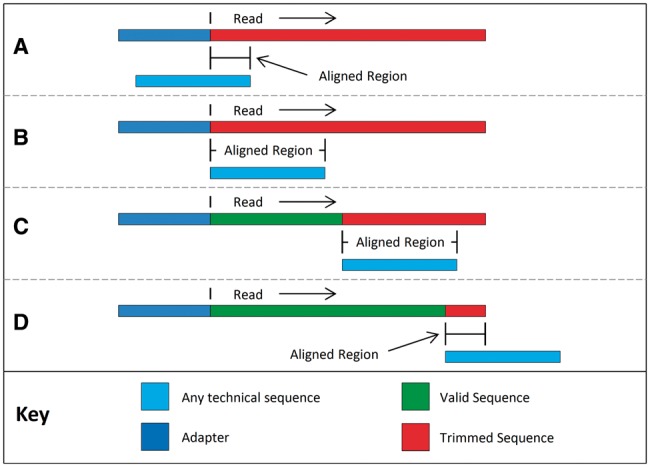
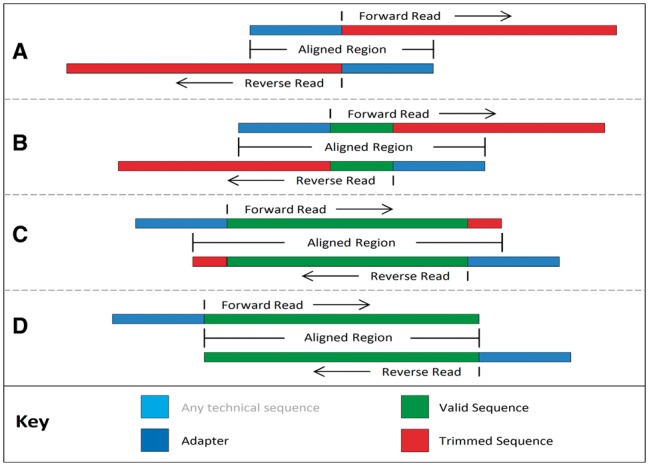
“2.1.3 Alignment detection and scoring The algorithmic approach used for technical sequence alignments is somewhat unusual, avoiding the precalculated indexes often used in NGS alignments (Li and Homer, 2010).”
MethodInfluentialThe Newick utilities: high-throughput phylogenetic tree processing in the U nix shell
Junier, T., & Zdobnov, E. M. (2010) · Bioinformatics · doi:10.1093/bioinformatics/btq243 · Cited by 788 · cited 1×
“In other domains, this can be achieved using a shell pipeline to combine multiple tools as required, e.g. in Newick (Junier and Zdobnov, 2010).”
MethodAdapterRemoval: easy cleaning of next-generation sequencing reads
Lindgreen, S. (2012) · BMC Research Notes · doi:10.1186/1756-0500-5-337 · Cited by 620 · cited 7×
“In this scenario, AdapterRemoval performed particularly well, reflecting its relative strength in removing technical sequences.”
BackgroundMethodInfluentialThe NGS WikiBook: a dynamic collaborative online training effort with long-term sustainability
Li, J., Bolser, D. M., Manske, M., Giorgi, F. M., Vyahhi, N., Usadel, B., Clavijo, B., Chan, T., Wong, N., Zerbino, D. R., et al. (2013) · Briefings in Bioinformatics · doi:10.1093/bib/bbt045 · Cited by 6 · cited 1×
“Nonetheless, it is not trivial to precisely identify such sequences, including partial adapter sequences, while leaving valid sequence data intact (Li et al ., 2013).”
BackgroundSelf-citation
Cited by
Items 1,701–1,762 of 1,762
Hybrid adaptation is hampered by Haldane’s sieve
Bautista, C., Gagnon-Arsenault, I., Utrobina, M., Fijarczyk, A., Bendixsen, D. P., Stelkens, R., & Landry, C. R. (2024) · Nature Communications · doi:10.1038/s41467-024-54105-4 · Cited by 7
Chlamydiae as symbionts of photosynthetic dinoflagellates
Maire, J., Collingro, A., Tandon, K., Jameson, V. J., Judd, L. M., Horn, M., Blackall, L. L., & van Oppen, M. J. H. (2024) · The ISME Journal · doi:10.1093/ismejo/wrae139 · Cited by 7
Coulon, A., Rabiller, F., Takalo, M., Roy, A., Pelletier, A., Martiskainen, H., Siedlecki-Wullich, D., Lannette-Weimann, N., Majerníková, N., Grenon, A., et al. (2026) · Nature Genetics · doi:10.1038/s41588-026-02709-5 · Cited by 7
Chlamydiae as symbionts of photosynthetic dinoflagellates
Maire, J., Collingro, A., Tandon, K., Jameson, V. J., Judd, L. M., Horn, M., Blackall, L. L., & van Oppen, M. J. H. (2023) · doi:10.1101/2023.12.18.572253 · Cited by 7
Zhang, B., Zhong, W., Yang, B., Li, Y., Duan, S., Huang, J., & Mao, Y. (2022) · Bioengineered · doi:10.1080/21655979.2022.2040872 · Cited by 6
“Firstly, we used Trimmomatic to process raw data (raw reads) of fastq format [28].”
MethodBrain microRNAs differentially expressed in age-related cerebral pathologies
Luo, T., Vattathil, S. M., Lori, A., Schneider, J. A., Bennett, D. A., Wingo, T. S., & Wingo, A. P. (2025) · Neurobiology of Aging · doi:10.1016/j.neurobiolaging.2025.03.014 · Cited by 6
Repeatable phenotypic but not genetic response to selection on body size in the black soldier fly
Generalovic, T. N., Zhou, W., Zhao, L. C., Leonard, S., Warren, I. A., Pipan, M., & Jiggins, C. D. (2025) · doi:10.1101/2025.02.25.640052 · Cited by 6
Nies, F., Wein, T., Hanke, D. M., Springstein, B. L., Alcorta, J., Taubenheim, C., & Dagan, T. (2023) · Environmental Microbiology Reports · doi:10.1111/1758-2229.13203 · Cited by 5
A Pilot Detection and Associate Study of Gene Presence-Absence Variation in Holstein Cattle
Boschiero, C., Neupane, M., Yang, L., Schroeder, S. G., Tuo, W., Ma, L., Baldwin, R. L., Van Tassell, C. P., & Liu, G. E. (2024) · Animals · doi:10.3390/ani14131921 · Cited by 5
“Clean reads were obtained by removing adaptors and low-quality reads with Trimmomatic (version 0.38) [36] using the following parameters: TruSeq3-PE.fa:2:30:10, LEADING:3, TRAILING:3, SLIDINGWINDOW:4:15, and MINLEN:36.”
MethodInfluentialThe Seven Methods for the Evaluation of Nutritional Status—ABCDEFG: Narrative Review
Zambrano-Villacres, R., Arteaga-Pazmiño, C., Guevara Castillo, W. D., Herrera-Fontana, M. E., Domínguez Brito, L. D., Becerra Granados, L. M., Recoba-Obregón, P. E., Rodríguez-Veintimilla, D., Bressi, V., Andrade-Molina, D., et al. (2026) · Applied Sciences · doi:10.3390/app16020845 · Cited by 5
(2023) · doi:10.1002/pro.4576 · Cited by 5
Liu, H.-S., Wang, W.-H., Song, Y.-F., Yang, Y., Zhang, D.-Y., Bai, W.-N., & Zhang, B.-W. (2025) · Current Biology · doi:10.1016/j.cub.2025.09.017 · Cited by 5
Mechanisms of life cycle simplification in African trypanosomes
Oldrieve, G. R., Venter, F., Cayla, M., Verney, M., Hébert, L., Geerts, M., Van Reet, N., & Matthews, K. R. (2024) · Nature Communications · doi:10.1038/s41467-024-54555-w · Cited by 5
Draft Genome Sequence of the Strict Anaerobe Clostridium homopropionicum LuHBu1 (DSM 5847)
Beck, M. H., Poehlein, A., Bengelsdorf, F. R., Schiel-Bengelsdorf, B., Daniel, R., & Dürre, P. (2015) · Genome Announcements · doi:10.1128/genomea.01112-15 · Cited by 5
Dynamic co-evolution of transposable elements and the piRNA pathway in African cichlid fishes
Almeida, M. V., Blumer, M., Yuan, C. U., Sierra, P., Price, J. L., Quah, F. X., Friman, A., Dallaire, A., Vernaz, G., Putman, A. L. K., et al. (2024) · doi:10.1101/2024.04.01.587621 · Cited by 5
Bouderka, F., López-García, P., Deschamps, P., Zhou, Y., Krupovic, M., Gutiérrez-Preciado, A., Ciobanu, M., Bertolino, P., David, G., Moreira, D., et al. (2026) · mBio · doi:10.1128/mbio.00025-26 · Cited by 5
“Quality check and trimming of the reads were done with FastQC and Trimmomatic (MAXINFO:40:0.8, MINLEN:30 LEADING:20, TRAILING:20) (58, 59), respectively.”
InfluentialThe hybrid history of zebrafish
McCluskey, B. M., Batzel, P., & Postlethwait, J. H. (2025) · G3: Genes, Genomes, Genetics · doi:10.1093/g3journal/jkae299 · Cited by 5
Genomic insights into metabolic flux in hummingbirds
Gershman, A., Hauck, Q., Dick, M., Jamison, J. M., Tassia, M., Agirrezabala, X., Muhammad, S., Ali, R., Workman, R. E., Valle, M., et al. (2023) · Genome Research · doi:10.1101/gr.276779.122 · Cited by 5
Climacosa, F. M. M., Anlacan, V. M. M., Gordovez, F. J. A., Reyes, J. C. B., Tabios, I. K. B., Manalo, R. V. M., Cruz, J. M. C., Asis, J. L. B., Razal, R. B., Abaca, M. J. M., et al. (2024) · BMJ Open · doi:10.1136/bmjopen-2023-078660 · Cited by 5
Sola-Sevilla, N., Garmendia-Berges, M., Aleixo, M., Mera-Delgado, M., Solas, M., Tordera, R. M., García-Carracedo, L., Expósito, S., Anaya-Cubero, E., Fernández-Irigoyen, J., et al. (2025) · Brain, Behavior, and Immunity · doi:10.1016/j.bbi.2025.06.016 · Cited by 5
Leawtrakun, J., Aesomnuk, W., Khanthong, S., Dumhai, R., Songtoasesakul, D., Phosuwan, S., Nuanpirom, J., Charoensawan, V., Siangliw, J. L., Ruanjaichon, V., et al. (2024) · Agronomy · doi:10.3390/agronomy14050929 · Cited by 5
Uzuner Odongo, D., İlgün, A., Bozkurt, F. B., & Çakır, T. (2025) · Communications Biology · doi:10.1038/s42003-025-07941-z · Cited by 4
“The FASTQ fi les were subjected to FastQC tool (version 0.11.9) 15 for quality control, and low-quality reads, short reads and adapter sequences were trimmed by Trimmomatic (version 0.39) 16 .”
InfluentialTakahashi, H., Kakioka, R., & Nagano, A. J. (2023) · Aquaculture Reports · doi:10.1016/j.aqrep.2023.101650 · Cited by 4
Valderrama‐Martín, J. M., Ortigosa, F., Aledo, J. C., Ávila, C., Cánovas, F. M., & Cañas, R. A. (2023) · The Plant Journal · doi:10.1111/tpj.16113 · Cited by 4
(2025) · doi:10.1016/j.yjsbx.2025.100142 · Cited by 4
Esquerra‐Ruvira, B., Baquedano, I., Ruiz, R., Fernandez, A., Montoliu, L., & Mojica, F. J. M. (2023) · Microbial Biotechnology · doi:10.1111/1751-7915.14266 · Cited by 4
tRNA modification landscapes in streptococci: shared losses and clade-specific adaptations
Tsui, H.-C. T., Chan, C.-K., Yuan, Y., Elias, R., Sun, J., Marchand, V., Jaroch, M., Sun, G., Manzoor, I., Kutchuashvili, A., et al. (2026) · Open Biology · doi:10.1098/rsob.250445 · Cited by 4
Esquerra-Ruvira, B., Baquedano, I., Ruiz, R., Fernandez, A., Montoliu, L., & Mojica, F. J. (2022) · doi:10.1101/2022.10.31.514646 · Cited by 4
Type 1 interferon perturbates clonal competition by reshaping human blood development
Lama, C., Isakov, D., Rosenberg, S., Quijada-Álamo, M., Saurty-Seerunghen, M. S., Moein, S., Nozais, M., Abera, T.-A., Sakaguchi, O., Totwani, M., et al. (2026) · Nature Genetics · doi:10.1038/s41588-026-02751-3 · Cited by 3
Coulon, A., Rabiller, F., Takalo, M., Roy, A., Pelletier, A., Martiskainen, H., Siedlecki-Wullich, D., Lannette-Weimann, N., Majerníková, N., Grenon, A., et al. (2024) · doi:10.1101/2024.04.29.591575 · Cited by 3
Vaparanta, K., Merilahti, J. A. M., Ojala, V. K., & Elenius, K. (2024) · Molecular & Cellular Proteomics · doi:10.1016/j.mcpro.2024.100780 · Cited by 3
(2020) · doi:10.1101/2020.06.29.177527 · Cited by 3
(2020) · doi:10.1101/2020.12.14.422673 · Cited by 3
Pawar, A. S., Somers, P., Alex, A., Grana, J., Feist, V. K., George, S. S., Jalnapurkar, S. S., Antony, C., Verner, R., White-Brown, S. K., et al. (2025) · Genes & Development · doi:10.1101/gad.352602.125 · Cited by 3
Antimicrobial activity of iron-depriving pyoverdines against human opportunistic pathogens
Vollenweider, V., Rehm, K., Chepkirui, C., Pérez-Berlanga, M., Polymenidou, M., Piel, J., Bigler, L., & Kümmerli, R. (2024) · eLife · doi:10.7554/elife.92493.3 · Cited by 3
Lyapina, I., Ganaeva, D., Rogozhin, E. A., Ryabukhina, E. V., Ryazantsev, D. Y., Lazarev, V., Alieva, S. E., Mamaeva, A., & Fesenko, I. (2025) · Physiologia Plantarum · doi:10.1111/ppl.70147 · Cited by 3
Conserved pathway for homarine catabolism in environmental bacteria
Ferrer-González, F. X., Heal, K. R., Sacks, J. S., Romero-Maysonet, Y., Finch, A. H., Carlson, L. T., Coe, L. S. Y., Bartolek, Z., Luthy, C. B., Gaffney, M. P., et al. (2026) · Nature Microbiology · doi:10.1038/s41564-026-02313-7 · Cited by 3
Drzewicka, K., Głuchowska, K. M., Mlącki, M., Hofman, B., Tuszyńska, I., Ryan, T. A. J., Piwowar, K., Wilczyński, B., Dymkowska, D., Grzybowski, M. M., et al. (2025) · Frontiers in Immunology · doi:10.3389/fimmu.2025.1544973 · Cited by 3
Yamashita, A., Ignatenko, O., Nguyen, M., Lambert, R., Watt, K., Daneault, C., Robillard-Frayne, I., Topisirovic, I., Rosiers, C. D., & McBride, H. M. (2023) · Biology Direct · doi:10.1186/s13062-023-00416-3 · Cited by 3
(2024) · doi:10.1101/2024.05.13.593875 · Cited by 3
Zhao, G., Lyu, J., Veniaminova, N. A., Zarnowski, R., Mattos, E., Johnson, C. J., Quintanilla, D., Hautau, H., Hold, L. A., Xu, B., et al. (2025) · doi:10.1101/2025.02.13.637978 · Cited by 2
Varella-Branco, E., Shephard, E., Toledo, V. H. C., Ramos, I. C., Lacerda, E. C. M., Carvalho, L. L. M., Fiuza, M. A., Paschalidis, M., Costa, C. I. S., Girardi, A. C. S., et al. (2026) · Molecular Psychiatry · doi:10.1038/s41380-025-03433-y · Cited by 2
“Sequencing on the NovaSeq platform (Illumina) generated 150 bp paired end reads, which were trimmed with Trimmomatic[30] and aligned to the GRCh38.p13 genome using STAR with optimized parameters [31].”
Lister, K. C., Wong, C., Uttam, S., Parisien, M., Stecum, P., Brown, N., Cai, W., Ho-Tieng, D., Hooshmandi, M., Gu, N., et al. (2026) · eLife · doi:10.7554/elife.100451 · Cited by 2
Revised evolutionary relationships within Brachycera and the early origin of bicoid in flies
Mulhair, P. O., Pennati, A., Herrera-Ubeda, C., & Holland, P. W. H. (2025) · Current Biology · doi:10.1016/j.cub.2025.09.051 · Cited by 2
Wallau, G. D. L., Barbier, E., Machado, L. C., da Silva, A. F., Dias, Y. J. M., Dezordi, F. Z., Tomazatos, A., Horváth, B., Lins, R. D., Bernard, E., et al. (2025) · Virus Evolution · doi:10.1093/ve/veaf094 · Cited by 2
“Raw sequences were filtered for quality (Phred score ≥ 20) and length (minimum 50 bases) and trimmed using Trimmomatic 0.39 to remove polyclonal and low-quality reads (Bolger et al. 2014).”
InfluentialHybrid adaptation is hampered by Haldane’s sieve
Bautista, C., Gagnon-Arsenault, I., Utrobina, M., Fijarczyk, A., Bendixsen, D. P., Stelkens, R., & Landry, C. R. (2023) · doi:10.1101/2023.12.15.571924 · Cited by 2
Li, Z., Wang, Z., Chen, Z., Voegeli, H., Lichtman, J. H., Smith, P., Liu, J., DeWan, A. T., & Hoh, J. (2023) · BMC Genomics · doi:10.1186/s12864-023-09390-6 · Cited by 2
“39 [38] while keeping reads with at least 50 bp after the trimming.”
BackgroundNishigori, M., Hirata, S., Kosako, H., Nolte, H., Riemer, J., Langer, T., & Koshiba, T. (2025) · doi:10.1101/2025.05.19.654756 · Cited by 2
Revised evolutionary relationships within Brachycera and the early origin of bicoid in flies
Mulhair, P. O., Pennati, A., Herrera-Ubeda, C., & Holland, P. W. H. (2025) · doi:10.1101/2025.07.22.666104 · Cited by 2
Duenser, A., Singh, P., Lecaudey, L. A., Sturmbauer, C., Albertson, C., Gessl, W., & Ahi, E. P. (2022) · bioRxiv · doi:10.1101/2022.01.13.476207 · Cited by 1
“3.9) (Bolger et al. 2014).”
InfluentialSachdev, V., van Loon, N. M., Kingma, J., Ottenhoff, R., Tan, J. M. E., van den Berg, M., Duijst, S., Jongejan, A., Levels, J. H. M., Rensen, P. C. N., et al. (2026) · Molecular Metabolism · doi:10.1016/j.molmet.2026.102379 · Cited by 1
“36 [39] and aligned to the genome (Ensembl v93) using HISAT2 (v2.”
Ets, L., Ilves, H., Juhe, L., Ilmjärv, T., Puiggené, Ò., Nikel, P. I., & Kivisaar, M. (2026) · Journal of Bacteriology · doi:10.1128/jb.00479-25 · Cited by 1
Li, X., He, Z., Liu, A., Meng, F., Zhang, X., Li, N., Liu, H., Lu, Y., Wu, Z., Fan, H., et al. (2026) · Communications Biology · doi:10.1038/s42003-026-09523-z · Cited by 1
Han, J. W., Yang, J. Y., Kim, Y., An, S., Yoo, E., Park, I. H., Lee, S.-W., Lee, H.-J., Lee, T. G., Jung, W. H., et al. (2026) · Molecular Therapy: Nucleic Acids · doi:10.1016/j.omtn.2026.103101 · Cited by 1
(2023) · doi:10.1158/2159-8290.22531505
Residues neighboring an SH3-binding motif participate in the interaction in vivo
Jordan, D. F., Dubé, A. K., Dionne, U., Bradley, D., & Landry, C. R. (2025) · GENETICS · doi:10.1093/genetics/iyaf153
Cao, Q., Suri, G., Cheng, S., Liu, Y., Liu, J., Wen, S., Zhong, M., Hao, J., Yao, S., Yang, Y., et al. (2026) · Nature Communications · doi:10.1038/s41467-026-78673-9
(2025) · doi:10.1126/sciadv.ady2859
REC protein family expansion by the emergence of a new signaling pathway
Garber, M. E., Frank, V., Kazakov, A. E., Incha, M. R., Nava, A. A., Zhang, H., Valencia, L. E., Keasling, J. D., Rajeev, L., & Mukhopadhyay, A. (2023) · mBio · doi:10.1128/mbio.02622-23
Lavie, O., Smadga, A., Elharar, I., Moshe, U., Faigenboim, A., Levy, M., Ravid, J., Spitzer-Rimon, B., & Eshed Williams, L. (2026) · BMC Plant Biology · doi:10.1186/s12870-026-08639-y
Magrangeas, F., Cherkaoui, M., Bessonneau-Gaborit, V., Derrien, J., Chevalier, C., Guérin-Charbonnel, C., Diamond, B., Samur, M. K., (IFM), I. F. D. M., Hulin, C., et al. (2026) · Nature Medicine · doi:10.1038/s41591-026-04692-0
Residues Neighboring an SH3-Binding Motif Participate in the Interaction In Vivo
Jordan, D. F., Dubé, A. K., Dionne, U., Bradley, D., & Landry, C. R. (2024) · doi:10.1101/2024.05.13.593936
Metadata
- Authors
- Bolger, A. M., Lohse, M., & Usadel, B.
- Affiliations
- Forschungszentrum Jülich (DE)
- 1 Department Metabolic Networks, Max Planck Institute of Molecular Plant Physiology, Am Mühlenberg 1, 14476 Golm, 2 Institut für Biologie I, RWTH Aachen, Worringer Weg 3, 52074 Aachen and 3 Institute of Bio- and Geosciences: Plant Sciences, Forschungszentrum Jülich, Leo-Brandt-Straße, 52425 Jülich, Germany
- ORCID
- Lohse, Marc
- Venue
- Bioinformatics
- Publisher
- Oxford University Press (OUP)
- Published
- 2014-04-01
- Volume
- 30
- Issue
- 15
- Pages
- 2114-2120
- ISSN
- 1367-4803 (ISSN-L)
- 1367-4811
- PMC
- PMC4103590
- OpenAlex
- W2131271579
- Cited by
- 65,548
- References
- 10
- Citations by year
- 2026: 6288 · 2025: 8170 · 2024: 8808 · 2023: 7878 · 2022: 8075 · 2021: 8021 · 2020: 6222 · 2019: 4586 · 2018: 3142 · 2017: 2251 · 2016: 1351 · 2015: 585 · 2014: 99
- FWCI
- 582.94
- Type
- journal article
- Language
- en
- Open access
- hybrid
- doi.org
- Locations
- Bioinformatics (publishedVersion, cc-by)
- Europe PMC (PubMed Central) (publishedVersion, cc-by)
- PubMed Central (publishedVersion, cc-by)
- PubMed (publishedVersion)
- Max Planck Digital Library (submittedVersion)
- RWTH Publications (RWTH Aachen) (submittedVersion)
- MPG.PuRe (Max Planck Society) (submittedVersion)
- Funders
- Bundesministerium für Bildung und Forschung
- Bundesministerium für Verbraucherschutz, Ernährung und Landwirtschaft
- Topics
- Life Sciences › Biochemistry, Genetics and Molecular Biology › Molecular Biology › Genomics and Phylogenetic Studies
- Physical Sciences › Mathematics › Theoretical Computer Science › Algorithms and Data Compression
- Life Sciences › Biochemistry, Genetics and Molecular Biology › Molecular Biology › Genetics, Bioinformatics, and Biomedical Research
- Keywords
- Trimmomatic, read preprocessing, sequence trimming, paired-end reads, Illumina sequencing, next-generation sequencing, reference-free analysis, bioinformatics software
- MeSH terms
- Software, Computational Biology, Databases, Genetic, High-Throughput Nucleotide Sequencing
About these checks
Registry, retraction, Cites and statistics results are computed, not judged, with one exception: a printed reference that no index lists is read once by a model before it counts as a citation error. Claims are extracted by a model and kept only when their quote appears verbatim in the text; each cited source is then checked, with a model’s help, for whether it says what the claim relies on. Those verdicts can be wrong — read the claim’s quote and the cited source before relying on one.
Statistics and arithmetic are recomputed, not judged.
Confidence bands are shown only for fields calibrated on our annotated test set. None is calibrated yet, so no band is shown.
What counts as a claim ›How we measure confidence ›How we check this ›
Are you an author, or do you see a problem with this page? Request a review
Data sources
Bibliographic data: Semantic Scholar, OpenAlex, Crossref.
Contains information from the Semantic Scholar Academic Graph Datasets, made available under the ODC Attribution License (ODC-BY 1.0).
Semantic Scholar’s data is described in: Kinney, R., et al. (2023). The Semantic Scholar Open Data Platform. arXiv:2301.10140.
