

The DOI matches its Crossref record; 54 of the 54 references it cites were found in a registry or an index.
Human Amygdala Sensitivity to the Pupil Size of Others
Open accessAbstract
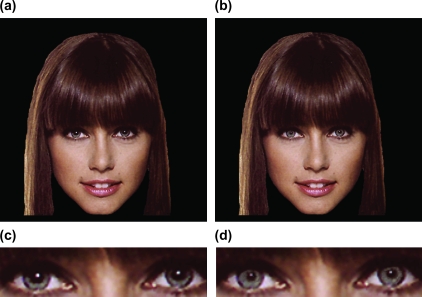
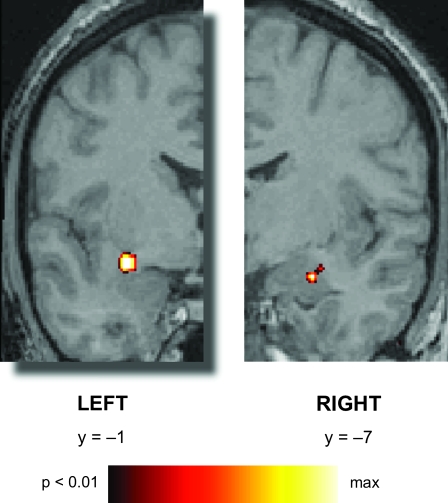
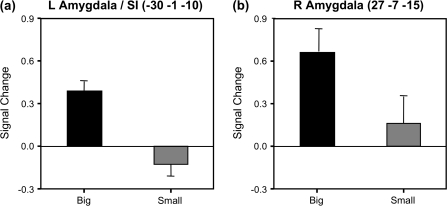
Stimulation of the amygdala produces pupil dilation in animal and human subjects. The present study examined whether the amygdala is sensitive to variations in the pupil size of others. Male subjects underwent event-related functional magnetic resonance imaging while passively viewing unfamiliar female faces whose pupils were either unaltered (natural variations in large and small pupils) or altered to be larger or smaller than their original size. Results revealed that the right amygdala and left amygdala/substantia innominata were sensitive to the pupil size of others, exhibiting increased activity for faces with relatively large pupils. Upon debrief, no subject reported being aware that the pupils had been manipulated. These results suggest a function for the amygdala in the detection of changes in pupil size, an index of arousal and/or interest on the part of a conspecific, even in the absence of explicit knowledge.
Overview
The claims and statistics of this paper haven’t been checked yet.
Run the check — free, no account needed. It reads the open-access text and checks the sources it cites.
Integrity signals
Registry
Cites
Statistics
Figures
Verification
Claims the paper makes
The claims and statistics of this paper haven’t been checked yet.
Run the check — free, no account needed. It reads the open-access text and checks the sources it cites.
Claims other papers make about this one
Each is checked against this paper’s own text: does it say what the citing paper says it does?
The source backs part of the claim, not all of it — or backs it for a different population, condition or comparison.
In the citing paper
“For example, people with large pupils are commonly rated as more attractive and activate neural responses in the amygdala [35,36], and a recent study demonstrates that human participants evaluate those with dilating pupils as more friendly, attractive and trustworthy and behave more cooperatively with them in the trust game [37].”
From Are dark-eyed dogs favoured by humans? Domestication as a potential driver of iris colour difference between dogs and wolves (2023) · cites this paper as [36]
Experimental — accuracy not yet measuredThe source backs part of the claim, not all of it — or backs it for a different population, condition or comparison.
In the citing paper
“humans have a cognitive tendency to perceive emotional arousal based on iris–pupil contrast and make inferences about a person's personality [33–37].”
From Are dark-eyed dogs favoured by humans? Domestication as a potential driver of iris colour difference between dogs and wolves (2023) · cites this paper as [36]
Experimental — accuracy not yet measuredIn the citing paper
“Seeing others' dilated pupils also causes significantly higher amygdala activation than viewing undilated pupils, an effect that nonetheless appears to be unrelated to subjective reports of attractiveness (Demos et al., 2008;Amemiya and Ohtomo, 2012).”
From Oxytocin enhances pupil dilation and sensitivity to 'hidden' emotional expressions (2013) · cites this paper as Demos et al., 2008
Self-check
Percentages, sums and reported differences re-computed from the paper’s own numbers.
The self-check needs the paper’s full text.
Citations
Cites
Co-Planar Stereotaxic Atlas of the Human Brain
Talairach, J., & Tournoux, P. (1988) · Medical Entomology and Zoology · Cited by 11,798
Co-planar stereotaxic atlas of the human brain
Laitinen, L. (1989) · Clinical Neurology and Neurosurgery · doi:10.1016/0303-8467(89)90128-5 · Cited by 7,565
The amygdala: vigilance and emotion
Davis, M., & Whalen, P. J. (2001) · Molecular Psychiatry · doi:10.1038/sj.mp.4000812 · Cited by 2,882
Self-citationCohen, J., MacWhinney, B., Flatt, M., & Provost, J. (1993) · Behavior Research Methods, Instruments, & Computers · doi:10.3758/bf03204507 · Cited by 2,802
Whalen, P. J., Rauch, S. L., Etcoff, N. L., McInerney, S. C., Lee, M. B., & Jenike, M. A. (1998) · The Journal of Neuroscience · doi:10.1523/jneurosci.18-01-00411.1998 · Cited by 2,205
Self-citationA differential neural response in the human amygdala to fearful and happy facial expressions
Morris, J. S., Frith, C. D., Perrett, D. I., Rowland, D., Young, A. W., Calder, A. J., & Dolan, R. J. (1996) · Nature · doi:10.1038/383812a0 · Cited by 2,013
Emotion and Cognition: Insights from Studies of the Human Amygdala
Phelps, E. A. (2006) · Annual Review of Psychology · doi:10.1146/annurev.psych.56.091103.070234 · Cited by 1,798 · cited 2×
“In this way, amygdala activity potentiates neuronal responses in sensory cortical regions that may, in turn, facilitate subsequent information processing (Amaral et al. 1992; Kapp et al. 1992; Whalen 1998; Morris et al. 2001; Pessoa et al. 2006; Phelps 2006 ).”
BackgroundResponse and Habituation of the Human Amygdala during Visual Processing of Facial Expression
Breiter, H. C., Etcoff, N. L., Whalen, P. J., Kennedy, W. A., Rauch, S. L., Buckner, R. L., Strauss, M. M., Hyman, S. E., & Rosen, B. R. (1996) · Neuron · doi:10.1016/s0896-6273(00)80219-6 · Cited by 1,711
Self-citationThe amygdala: Neurobiological aspects of emotion, memory, and mental dysfunction.
Aggleton, J. P. (1992) · Wiley-Liss eBooks · Cited by 1,536
LaBar, K. S., Gatenby, J. C., Gore, J. C., LeDoux, J. E., & Phelps, E. A. (1998) · Neuron · doi:10.1016/s0896-6273(00)80475-4 · Cited by 1,402
Research works printed but not linked: 1
- Amaral, 1992, Anatomical organization of the primate amygdaloid complex, 1
Cited by
Sorted by citations
Fear, faces, and the human amygdala
Adolphs, R. (2008) · Current Opinion in Neurobiology · doi:10.1016/j.conb.2008.06.006 · Cited by 502
Arousal Effects on Pupil Size, Heart Rate, and Skin Conductance in an Emotional Face Task
Wang, C., Baird, T., Huang, J. C. H., Coutinho, J., Brien, D. C., & Munoz, D. P. (2018) · Frontiers in Neurology · doi:10.3389/fneur.2018.01029 · Cited by 340
Looser, C. E., & Wheatley, T. P. (2010) · Psychological Science · doi:10.1177/0956797610388044 · Cited by 233
Eye tracking and visual attention to threating stimuli in veterans of the Iraq war
Kimble, M. O., Fleming, K., Bandy, C., Kim, J., & Zambetti, A. (2010) · Journal of Anxiety Disorders · doi:10.1016/j.janxdis.2009.12.006 · Cited by 156
Oxytocin enhances pupil dilation and sensitivity to 'hidden' emotional expressions
Leknes, S., Wessberg, J., Ellingsen, D.-M., Chelnokova, O., Olausson, H., & Laeng, B. (2013) · Social Cognitive and Affective Neuroscience · doi:10.1093/scan/nss062 · Cited by 151
Pupil Mimicry Correlates With Trust in In-Group Partners With Dilating Pupils
Kret, M. E., Fischer, A. H., & Dreu, C. K. W. D. (2015) · Psychological Science · doi:10.1177/0956797615588306 · Cited by 155
Emotional face processing in schizophrenia
Morris, R. W., Weickert, C. S., & Loughland, C. M. (2009) · Current Opinion in Psychiatry · doi:10.1097/yco.0b013e328324f895 · Cited by 139
The bivalent side of the nucleus accumbens
Levita, L., Hare, T. A., Voss, H. U., Glover, G., Ballon, D. J., & Casey, B. J. (2009) · NeuroImage · doi:10.1016/j.neuroimage.2008.09.039 · Cited by 117
Kret, M. E. (2015) · Frontiers in Psychology · doi:10.3389/fpsyg.2015.00711 · Cited by 117
A review of neuroimaging studies of race-related prejudice: does amygdala response reflect threat?
Chekroud, A. M., Everett, J. A. C., Bridge, H., & Hewstone, M. (2014) · Frontiers in Human Neuroscience · doi:10.3389/fnhum.2014.00179 · Cited by 121
The Pupil as Marker of Cognitive Processes
Einhäuser, W. (2016) · Cognitive science and technology · doi:10.1007/978-981-10-0213-7_7 · Cited by 117
Eye tracking and physiological reactivity to threatening stimuli in posttraumatic stress disorder
Felmingham, K. L., Rennie, C., Manor, B., & Bryant, R. A. (2011) · Journal of Anxiety Disorders · doi:10.1016/j.janxdis.2011.02.010 · Cited by 101
Kret (2014) · doi:10.1371/journal.pone.0104886 · Cited by 98
Regional Response Differences Across the Human Amygdaloid Complex during Social Conditioning
Davis, F. C., Johnstone, T., Mazzulla, E. C., Oler, J. A., & Whalen, P. J. (2009) · Cerebral Cortex · doi:10.1093/cercor/bhp126 · Cited by 106
Self-citationHyde, L. W., Shaw, D. S., & Hariri, A. R. (2013) · Developmental Review · doi:10.1016/j.dr.2013.06.001 · Cited by 103
Pupil mimicry promotes trust through the theory-of-mind network
Prochazkova, E., Prochazkova, L., Rojek-Giffin, M., Scholte, H. S., Dreu, C. K. W. D., & Kret, M. E. (2018) · Proceedings of the National Academy of Sciences · doi:10.1073/pnas.1803916115 · Cited by 101
Farzin, F., Rivera, S. M., & Hessl, D. R. (2009) · Journal of Autism and Developmental Disorders · doi:10.1007/s10803-009-0744-1 · Cited by 83
Kret, M. E., Pichon, S., Grèzes, J., & de Gelder, B. (2011) · Frontiers in Psychology · doi:10.3389/fpsyg.2011.00003 · Cited by 86
The human amygdala plays a stimulus specific role in the detection of novelty
Balderston, N. L., Schultz, D. H., & Helmstetter, F. J. (2011) · NeuroImage · doi:10.1016/j.neuroimage.2011.01.034 · Cited by 82
The role of pupil size in communication. Is there room for learning?
Kret, M. E. (2018) · Cognition and Emotion · doi:10.1080/02699931.2017.1370417 · Cited by 74
Neuroscience and facial expressions of emotion: the role of amygdala-prefrontal interactions
Whalen, P. J., Raila, H., Bennett, R., Mattek, A., Brown, A., Taylor, J., van Tieghem, M., Tanner, A., Miner, M., & Palmer, A. (2013) · Emotion Review · doi:10.1177/1754073912457231 · Cited by 64
Self-citationHadders‐Algra, M. (2021) · Neuroscience & Biobehavioral Reviews · doi:10.1016/j.neubiorev.2021.11.042 · Cited by 66
Hyde, L. W., Shaw, D. S., Murray, L., Gard, A. M., Hariri, A. R., & Forbes, E. E. (2015) · Clinical Psychological Science · doi:10.1177/2167702615614511 · Cited by 54
Patient-Clinician Eye Contact: Social Neuroscience and Art of Clinical Engagement
MacDonald, K. S. (2009) · Postgraduate Medicine · doi:10.3810/pgm.2009.07.2039 · Cited by 54
Culture, gaze and the neural processing of fear expressions
Adams, R. B., Franklin, R. G., Rule, N. O., Freeman, J. B., Kveraga, K., Hadjikhani, N., Yoshikawa, S., & Ambady, N. (2010) · Social Cognitive and Affective Neuroscience · doi:10.1093/scan/nsp047 · Cited by 47
Trust Measurement in Human-Autonomy Teams: Development of a Conceptual Toolkit
Krausman, A., Neubauer, C. E., Forster, D. E., Lakhmani, S. G., Baker, A. L., Fitzhugh, S. M., Gremillion, G. M., Wright, J. L., Metcalfe, J. S., & Schaefer, K. E. (2022) · ACM Transactions on Human-Robot Interaction · doi:10.1145/3530874 · Cited by 49
Hariri, A. R., & Whalen, P. J. (2011) · F1000 Biology Reports · doi:10.3410/b3-2 · Cited by 51
Self-citationEffect of Intensity of Dynamic Exercise on Pupil Diameter in Humans
Hayashi, N., Someya, N., & Fukuba, Y. (2010) · Journal of PHYSIOLOGICAL ANTHROPOLOGY · doi:10.2114/jpa2.29.119 · Cited by 45
The power of pupil size in establishing trust and reciprocity.
Kret, M. E., & De Dreu, C. K. W. (2019) · Journal of Experimental Psychology: General · doi:10.1037/xge0000508 · Cited by 44
Miller, E. J., Foo, Y. Z., Mewton, P., & Dawel, A. (2023) · Computers in Human Behavior Reports · doi:10.1016/j.chbr.2023.100283 · Cited by 48
Dynamic pupillary exchange engages brain regions encoding social salience
Harrison, N. A., Gray, M. A., & Critchley, H. (2008) · Social Neuroscience · doi:10.1080/17470910802553508 · Cited by 46
Neural correlates to seen gaze-direction and head orientation in the macaque monkey amygdala
Tazumi, T., Hori, E., Maior, R. S., Ono, T., & Nishijo, H. (2010) · Neuroscience · doi:10.1016/j.neuroscience.2010.04.028 · Cited by 39
Martínez-Soto, J., Suárez, L. A. D. L. F., Gonzáles-Santos, L., & Barrios, F. A. (2019) · IBRO Reports · doi:10.1016/j.ibror.2019.07.1722 · Cited by 37
The face is central to primate multicomponent signals
Waller, B. M., Kavanagh, E., Micheletta, J., Clark, P. R., & Whitehouse, J. (2022) · International Journal of Primatology · doi:10.1007/s10764-021-00260-0 · Cited by 37
Pupil mimicry and trust – Implication for depression
Wehebrink, K. S., Koelkebeck, K., Piest, S., Dreu, C. K. W. D., & Kret, M. E. (2017) · Journal of Psychiatric Research · doi:10.1016/j.jpsychires.2017.11.007 · Cited by 39
Effect of the observed pupil size on the amygdala of the beholders
Amemiya, S., & Ohtomo, K. (2011) · Social Cognitive and Affective Neuroscience · doi:10.1093/scan/nsr013 · Cited by 33
The volatility of the amygdala response to masked fearful eyes
Straube, T., Dietrich, C., Mothes‐Lasch, M., Mentzel, H., & Miltner, W. H. R. (2010) · Human Brain Mapping · doi:10.1002/hbm.20960 · Cited by 33
Schiffer, B., Pawliczek, C. M., Müller, B. W., Gizewski, E. R., & Walter, H. (2013) · PLoS ONE · doi:10.1371/journal.pone.0060278 · Cited by 36
How Socially Relevant Visual Characteristics of Avatars Influence Impression Formation
Weibel, D., Stricker, D., Wissmath, B., & Mast, F. W. (2010) · Journal of Media Psychology Theories Methods and Applications · doi:10.1027/1864-1105/a000005 · Cited by 31
Pupil to pupil: The effect of a partner's pupil size on (dis)honest behavior
van Breen, J. A., Dreu, C. K. W. D., & Kret, M. E. (2017) · Journal of Experimental Social Psychology · doi:10.1016/j.jesp.2017.09.009 · Cited by 33
Pupil Mimicry is the Result of Brightness Perception of the Iris and Pupil
Derksen, M., van Alphen, J., Schaap, S., Mathôt, S., & Naber, M. (2018) · Journal of Cognition · doi:10.5334/joc.34 · Cited by 32
Feature-based representations of emotional facial expressions in the human amygdala
Åhs, F., Davis, C. F., Gorka, A. X., & Hariri, A. R. (2013) · Social Cognitive and Affective Neuroscience · doi:10.1093/scan/nst112 · Cited by 34
The Effect of Threat on Novelty Evoked Amygdala Responses
Balderston, N. L., Schultz, D. H., & Helmstetter, F. J. (2013) · PLoS ONE · doi:10.1371/journal.pone.0063220 · Cited by 26
Emotive response to a hybrid-face robot and translation to consumer social robots
Wairagkar, M., Lima, M. R., Bazo, D., Craig, R., Weissbart, H., Etoundi, A. C., Reichenbach, T., Iyengar, P., Vaswani, S., James, C., et al. (2022) · IEEE Internet of Things Journal · doi:10.1109/jiot.2021.3097592 · Cited by 24
Judging a Book by its Cover: The Unconscious Influence of Pupil Size on Consumer Choice
Wiseman, R. J., & Watt, C. A. (2010) · Perception · doi:10.1068/p6834 · Cited by 22
Neural signals in amygdala predict implicit prejudice toward an ethnic outgroup
Izuma, K., Aoki, R., Shibata, K., & Nakahara, K. (2019) · NeuroImage · doi:10.1016/j.neuroimage.2019.01.019 · Cited by 24
Lee, I.-S., Yoon, S.-S., Lee, S.-H., Lee, H., Park, H.-J., Wallraven, C., & Chae, Y. (2013) · Autonomic Neuroscience · doi:10.1016/j.autneu.2013.06.009 · Cited by 20
Pupillary contagion is independent of the emotional expression of the face.
Carsten, T., Desmet, C., Krebs, R. M., & Braß, M. (2018) · Emotion · doi:10.1037/emo0000503 · Cited by 19
The Neuroscience of Face Processing and Identification in Eyewitnesses and Offenders
Werner, N.-S., Kühnel, S., & Markowitsch, H. J. (2013) · Frontiers in Behavioral Neuroscience · doi:10.3389/fnbeh.2013.00189 · Cited by 24
Infants’ brain responses to pupillary changes in others are affected by race
Kelsey, C. M., Krol, K. M., Kret, M. E., & Großmann, T. (2019) · Scientific Reports · doi:10.1038/s41598-019-40661-z · Cited by 19
The Implicit Realm in Couples Therapy: Improving Right Hemisphere Affect-Regulating Capabilities
Lapides, F. (2010) · Clinical Social Work Journal · doi:10.1007/s10615-010-0278-1 · Cited by 17
- 1 - Analysis of the role of social support - cognitive psychology and emotional process approach
Heydari, M., Xiaohu, Z., Saeidi, M., Lai, K. K., Shang, Y., & Yuxi, Z. (2020) · European Journal of Translational Myology · doi:10.4081/ejtm.2020.8975 · Cited by 18
Exploring the Uncanny Valley to Find the Edge of Play.
Eberle, S. G. (2009) · American journal of play · Cited by 13
Amygdala activation to fearful faces under attentional load
Mothes‐Lasch, M., Mentzel, H., Miltner, W. H. R., & Straube, T. (2012) · Behavioural Brain Research · doi:10.1016/j.bbr.2012.09.033 · Cited by 13
Naber, M., Stoll, J., Wolfgang Einhäuser, A., & Carter, O. L. (2013) · PLoS ONE · doi:10.1371/journal.pone.0073302 · Cited by 11
Neural Substrates of Social Perception
Adolphs, R., & Birmingham, E. (2011) · Oxford University Press eBooks · doi:10.1093/oxfordhb/9780199559053.013.0029 · Cited by 10
Burt, A. L., Hugrass, L., Frith-Belvedere, T., & Crewther, D. P. (2017) · Frontiers in Human Neuroscience · doi:10.3389/fnhum.2017.00495 · Cited by 10
Konno, A., Aoki, H., Suzuki, E., Furuta, S., & Ueda, S. (2023) · Royal Society Open Science · doi:10.1098/rsos.230854 · Cited by 7
Unconscious pupillometry: An effect of “attentional contagion” in the absence of visual awareness.
Colombatto, C., & Scholl, B. J. (2021) · Journal of Experimental Psychology General · doi:10.1037/xge0000927 · Cited by 7
Pupillary Correlates of Emotion and Cognition: A Computational Model
Balkenius, C., Fawcett, C. A., Falck‐Ytter, T., Gredebäck, G., & Johansson, B. (2019) · International IEEE/EMBS Conference on Neural Engineering · doi:10.1109/ner.2019.8717091 · Cited by 7
Beauty is in the iris: Constricted pupils (enlarged irises) enhance attractiveness
Cossu, M., Trupia, M. G., & Estes, Z. (2024) · Cognition · doi:10.1016/j.cognition.2024.105842 · Cited by 5
Yong, M. H., Lim, X. L., & Schaefer, A. (2020) · Neuroscience Letters · doi:10.1016/j.neulet.2020.134759 · Cited by 5
Mattavelli, S., Brambilla, M., & Kret, M. E. (2022) · Social Cognition · doi:10.1521/soco.2022.40.1.88 · Cited by 7
Memory for incidentally perceived social cues: Effects on person judgment
Pawling, R., Kirkham, A. J., Tipper, S. P., & Over, H. (2016) · British Journal of Psychology · doi:10.1111/bjop.12182 · Cited by 6
Is the avatar scared? Pupil as a perceptual cue
Dong, Y., Jörg, S., & Jain, E. (2022) · Computer Animation and Virtual Worlds · doi:10.1002/cav.2040 · Cited by 4
Kret, M. E., Sinke, C. B. A., & de Gelder, B. (2010) · Springer eBooks · doi:10.1007/978-1-4419-6953-8_16 · Cited by 4
Interpersonal Pupillometry: The Pupil as an Indicator of Emotion and Its Utility as a Social Cue
Cash, D. K., Pazos, L. A., & Russell, T. D. (2024) · Springer eBooks · doi:10.1007/978-3-031-54896-3_11 · Cited by 3
Pupil contagion variation with gaze, arousal, and autistic traits
Galazka, M. A., Thorsson, M., Kleberg, J. L., Hadjikhani, N. K., & Johnels, J. Å. (2024) · Scientific Reports · doi:10.1038/s41598-024-68670-7 · Cited by 4
Boer, J., Boonstra, N., Kronenberg, L. M., Stekelenburg, R., & Sizoo, B. B. (2024) · International Journal of Environmental Research and Public Health · doi:10.3390/ijerph21081092 · Cited by 3
The effect of eyelid constriction on perceptions of mating strategy: Beware of the squinty-eyed guy!
Kruger, D. J., & Piglowski, J. S. (2011) · Personality and Individual Differences · doi:10.1016/j.paid.2011.11.027 · Cited by 3
Puviani, L., Rama, S., & Vitetta, G. M. (2016) · Frontiers in Psychiatry · doi:10.3389/fpsyt.2016.00190 · Cited by 5
Relationship between facial attractiveness and pupil diameter in young adults
Carvalho, S. Q. D. C., de Andrade, M. J. O., & dos Santos, N. A. (2019) · Psico · doi:10.15448/1980-8623.2019.2.30033 · Cited by 3
Effects of pupil area on impression formation in pupil expression media
SEJIMA, Y., KAWAMOTO, H., Sato, Y., & Watanabe, T. (2021) · Transactions of the JSME (in Japanese) · doi:10.1299/transjsme.21-00187 · Cited by 2
Marques, J. I., Leite, P. G., Furtado, D. A., & de Oliveira, A. G. (2021) · Brazilian Journal of Poultry Science · doi:10.1590/1806-9061-2020-1409 · Cited by 2
Working Implicitly in Couples Therapy: Improving Right Hemisphere Affect-Regulating Capabilities
Lapides, F. (2014) · Smith College Studies in Social Work · doi:10.1080/00377317.2014.923695 · Cited by 2
Watier, N. N., Healy, C., & Armstrong, H. A. (2016) · Perceptual and Motor Skills · doi:10.1177/0031512516685191 · Cited by 2
Lack of blinding in a cloud of unknowing: What remains of antidepressants’ effectiveness?
Mommaerts, J.-L. (2022) · Psychiatry Research · doi:10.1016/j.psychres.2022.114609 · Cited by 2
Attention Towards Pupil Size in Humans and Bonobos (Pan paniscus)
Zijlstra, T. W., van Berlo, E., & Kret, M. E. (2022) · Affective Science · doi:10.1007/s42761-022-00146-1 · Cited by 2
Can the recognition of emotional expressions be enhanced by manipulating facial skin color?
Zak, M., Laeng, B., & Simon-Liedtke, J. T. (2015) · Colour and Visual Computing Symposium (CVCS) · doi:10.1109/cvcs.2015.7274897 · Cited by 1
Brain–Pupil Coupling Revealed Through Deep Learning of Intracranial Recordings
Li, V., Wong, S. M., Suresh, H., Warsi, N. M., Coleman, S. C., Mithani, K., Alhasan, H. A., Gouveia, F. V., Jain, P., Ochi, A., et al. (2025) · Human Brain Mapping · doi:10.1002/hbm.70438 · Cited by 1
Handlung zwischen Automatismus, Bauchgefühl und Erinnerung
Markowitsch, H. J., & Staniloiu, A. (2017) · Springer eBooks · doi:10.1007/978-3-658-16891-9_5 · Cited by 1
Urbach-Wiethe disease in a young patient without apparent amygdala calcification
Markowitsch, H. J., Staniloiu, A., & Kordon, A. (2023) · Neuropsychologia · doi:10.1016/j.neuropsychologia.2023.108505 · Cited by 1
The impact of reactive attachment disorder on adoptive family functioning
Vasquez, M. L. (2014) · doi:10.17077/etd.xdhcqe8m · Cited by 1
Raafat, R. (2015) · UCL Discovery (University College London) · Cited by 1
A model of the neural basis of predecisional processes
Taber‐Thomas, B. C. (2011) · doi:10.17077/etd.ekwc19m1
Amygdala and subcortical vision: recognition of threat and fear
Usunoff, K. G., Schmitt, O., Lazarov, N., Itzev, D. E., Rolfs, A., & Wree, A. (2008) · Biomedical Reviews · doi:10.14748/bmr.v19.56
Contextual Modulation of Attentional Control Mechanisms : A Pupillometry Study
Skaftnes, C. S. (2012) · NORA - Norwegian Open Research Archives
Heterogeneity in time-space synaesthesia: Implications for attention cued paradigms
Tønnesen, S. (2013) · NORA - Norwegian Open Research Archives
Markowitsch, H. J., & Schreier, M. M. (2019) · Springer eBooks · doi:10.1007/978-3-662-58265-7_2
Eye and lips in artistic profiles.
Costa, M., & Bonetti, L. (2020) · Psychology of Aesthetics Creativity and the Arts · doi:10.1037/aca0000360
The fearful face and beyond: fMRI studies of the human amygdala
Hardee, J. E. (2009) · doi:10.33915/etd.2933
Seeing Better? On Ethical Values and Emotions
McCormick, P. J. (2016) · Aither · doi:10.5507/aither.2016.007
EMOTIONAL DISTURBANCES IN URBACH-WIETHE DISEASE WITHOUT VISIBLE AMYGDALA DAMAGE
(2023) · Psychological applications and trends · doi:10.36315/2023inpact013
Postle, B. R. (2020) · Wiley eBooks · doi:10.1002/9781394266982.ch18
Azzouni, J. (2025) · doi:10.1093/9780197790151.001.0001
Azzouni, J. (2025) · doi:10.1093/9780197790151.003.0006
Belief Is Metacognitive; Knowledge Needn’t Be
Azzouni, J. (2025) · doi:10.1093/9780197790151.005.0001
Azzouni, J. (2025) · doi:10.1093/9780197790151.003.0001
Metadata
- Authors
- Demos, K. E., Kelley, W. M., Ryan, S. L., Davis, F. C., & Whalen, P. J.
- Affiliations
- Dartmouth College (US)
- Corresponding author
- Demos, K.E.
- ORCID
- Demos, K.E.
- Venue
- Cerebral Cortex
- Publisher
- Oxford University Press (OUP)
- Published
- 2008-03-27
- Volume
- 18
- Issue
- 12
- Pages
- 2729-2734
- ISSN
- 1047-3211 (ISSN-L)
- 1460-2199
- PMC
- PMC2583162
- OpenAlex
- W2119582005
- Cited by
- 112
- References
- 53
- Citations by year
- 2026: 1 · 2025: 14 · 2024: 4 · 2023: 4 · 2022: 6 · 2021: 5 · 2020: 6 · 2019: 7 · 2018: 4 · 2017: 5 · 2016: 5 · 2015: 5 · 2014: 4 · 2013: 9 · 2012: 4
- FWCI
- 5.01
- Type
- journal article
- Language
- en
- Open access
- hybrid
- doi.org
- Licence
- cc-by-nc
- Locations
- Cerebral Cortex (publishedVersion, cc-by-nc)
- PubMed Central (publishedVersion, cc-by-nc)
- PubMed (publishedVersion)
- HighWire Press Open Archive (submittedVersion)
- Funders
- Dartmouth College
- U.S. Public Health Service (080716, 069315)
- National Institute of Mental Health (R01MH080716, 080716, 069315)
- Topics
- Life Sciences › Neuroscience › Cognitive Neuroscience › Face Recognition and Perception
- Social Sciences › Psychology › Experimental and Cognitive Psychology › Evolutionary Psychology and Human Behavior
- Life Sciences › Neuroscience › Cognitive Neuroscience › Memory and Neural Mechanisms
- Keywords
- amygdala, pupil size, social perception, facial expressions, arousal detection, substantia innominata, face perception, unconscious processes, pupillometry
- MeSH terms
- Adolescent, Amygdala, Arousal, Cues, Facial Expression, Female, Humans, Functional Laterality, Male, Pupil, Visual Acuity, Visual Perception, Knowledge, Young Adult
About these checks
Registry, retraction, Cites and statistics results are computed, not judged, with one exception: a printed reference that no index lists is read once by a model before it counts as a citation error. Claims are extracted by a model and kept only when their quote appears verbatim in the text; each cited source is then checked, with a model’s help, for whether it says what the claim relies on. Those verdicts can be wrong — read the claim’s quote and the cited source before relying on one.
Statistics and arithmetic are recomputed, not judged.
Confidence bands are shown only for fields calibrated on our annotated test set. None is calibrated yet, so no band is shown.
What counts as a claim ›How we measure confidence ›How we check this ›
Are you an author, or do you see a problem with this page? Request a review
