

Empiric antibacterial therapy and community-onset bacterial coinfection in patients hospitalized with coronavirus disease 2019 (COVID-19): a multi-hospital cohort study.
Open accessThe DOI matches its Crossref record; 27 of the 28 references it cites were found in a registry or an index.
Abstract
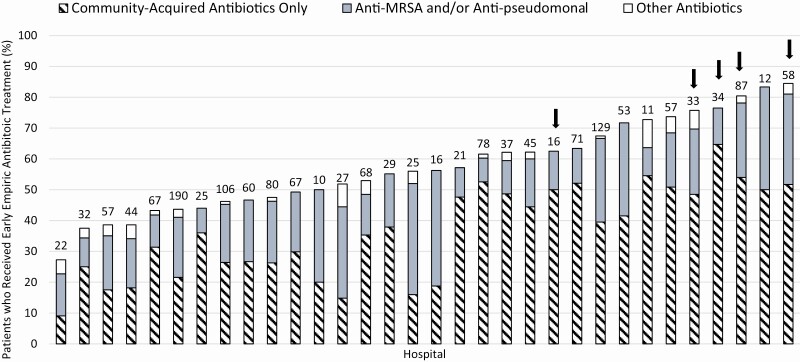
Background: Antibacterials may be initiated out of concern for bacterial coinfection in coronavirus disease 2019 (COVID-19). We determined prevalence and predictors of empiric antibacterial therapy and community-onset bacterial coinfections in hospitalized patients with COVID-19. Methods: A randomly sampled cohort of 1705 patients hospitalized with COVID-19 in 38 Michigan hospitals between 3/13/2020 and 6/18/2020. Data were collected on early (within 2 days of hospitalization) empiric antibacterial therapy and community-onset bacterial coinfections (positive microbiologic test ≤3 days). Poisson generalized estimating equation models were used to assess predictors. Results: Of 1705 patients with COVID-19, 56.6% were prescribed early empiric antibacterial therapy; 3.5% (59/1705) had a confirmed community-onset bacterial infection. Across hospitals, early empiric antibacterial use varied from 27% to 84%. Patients were more likely to receive early empiric antibacterial therapy if they were older (adjusted rate ratio [ARR]: 1.04 [1.00–1.08] per 10 years); had a lower body mass index (ARR: 0.99 [0.99–1.00] per kg/m2), more severe illness (eg, severe sepsis; ARR: 1.16 [1.07–1.27]), a lobar infiltrate (ARR: 1.21 [1.04–1.42]); or were admitted to a for-profit hospital (ARR: 1.30 [1.15–1.47]). Over time, COVID-19 test turnaround time (returned ≤1 day in March [54.2%, 461/850] vs April [85.2%, 628/737], P < .001) and empiric antibacterial use (ARR: 0.71 [0.63–0.81] April vs March) decreased. Conclusions: The prevalence of confirmed community-onset bacterial coinfections was low. Despite this, half of patients received early empiric antibacterial therapy. Antibacterial use varied widely by hospital. Reducing COVID-19 test turnaround time and supporting stewardship could improve antibacterial use.
Overview
The claims and statistics of this paper haven’t been checked yet.
Free: it reads the open-access text and checks the first 5 claims that cite a source we can check. Create a free account to check every claim.
Integrity signals
Registry
Cites
Statistics
Figures
Verification
Claims the paper makes
The claims and statistics of this paper haven’t been checked yet.
Free: it reads the open-access text and checks the first 5 claims that cite a source we can check. Create a free account to check every claim.
Claims other papers make about this one
Each is checked against this paper’s own text: does it say what the citing paper says it does?
In the citing paper
“a discharge diagnosis of COVID-19, because COVID-19 patients were frequently prescribed unnecessary antibiotics and this could distort trends in broad-spectrum antimicrobial utilization”
From Trends in empiric broad-Spectrum antibiotic use for suspected community-onset Sepsis in US hospitals (2024) · cites this paper as [25]
Self-check
Percentages, sums and reported differences re-computed from the paper’s own numbers.
The self-check needs the paper’s full text.
Citations
Cites
1 retracted
Gautret, P., Lagier, J.-C., Parola, P., Hoang, V. T., Meddeb, L., Mailhe, M., Doudier, B., Courjon, J., Giordanengo, V., Vieira, V. E., et al. (2020) · International Journal of Antimicrobial Agents · doi:10.1016/j.ijantimicag.2020.105949 · Cited by 5,288 · cited 1×
“Azithromycin in the absence of other antibacterial treatment was not included as many MI-COVID19 hospitals recommended its use as COVID19–specific therapy [18].”
MethodRetractedClinical characteristics of coronavirus disease 2019 in China
Guan, W.-J., Ni, Z.-Y., Hu, Y., Liang, W.-H., Ou, C.-Q., He, J.-X., Liu, L., Shan, H., Lei, C.-L., Hui, D. S. C., et al. (2020) · New England Journal of Medicine · doi:10.1056/nejmoa2002032 · Cited by 30,246
Chen, N., Zhou, M., Dong, X., Qu, J., Gong, F., Han, Y., Qiu, Y., Wang, J., Liu, Y., Wei, Y., et al. (2020) · The Lancet · doi:10.1016/s0140-6736(20)30211-7 · Cited by 21,415 · cited 1×
“Specifically, patients with COVID-19 are often started empirically on antibacterials when first hospitalized [2, 11].”
BackgroundWu, Z., & McGoogan, J. M. (2020) · JAMA · doi:10.1001/jama.2020.2648 · Cited by 17,016
COVID-19: consider cytokine storm syndromes and immunosuppression
Mehta, P., McAuley, D. F., Brown, M., Sanchez, E., Tattersall, R. S., & Manson, J. J. (2020) · The Lancet · doi:10.1016/s0140-6736(20)30628-0 · Cited by 9,664 · cited 1×
“15 decompensation.(24) Further studies are needed to aid clinicians in distinguishing the two.”
A Modified Poisson Regression Approach to Prospective Studies with Binary Data
Zou, G. (2004) · American Journal of Epidemiology · doi:10.1093/aje/kwh090 · Cited by 9,615
Metlay, J. P., Waterer, G. W., Long, A. C., Anzueto, A., Brozek, J., Crothers, K., Cooley, L. A., Dean, N. C., Fine, M. J., Flanders, S. A., et al. (2019) · American Journal of Respiratory and Critical Care Medicine · doi:10.1164/rccm.201908-1581st · Cited by 3,657 · cited 2×
“Includes patients who received antibacterials recommended for empiric communityacquired pneumonia (CAP) treatment in 2019 CAP guidelines [17] (ie, ampicillin/sulbactam, cefotaxime, ceftriaxone, moxifloxacin, levofloxacin, ceftaroline) and did not receive empiric anti-MRSA or anti-pseudomonal coverage.”
BackgroundSelf-citationRawson, T. M., Moore, L. S. P., Zhu, N., Ranganathan, N., Skolimowska, K., Gilchrist, M., Satta, G., Cooke, G., & Holmes, A. (2020) · Clinical Infectious Diseases · doi:10.1093/cid/ciaa530 · Cited by 1,662 · cited 2×
“Similar to other studies [4, 9, 11, 20], we found that patients hospitalized with COVID-19 were often treated with early empiric antibacterials.”
BackgroundResultCo-infections in people with COVID-19: a systematic review and meta-analysis.
Lansbury, L., Lim, B., Baskaran, V., & Lim, W. S. (2020) · Journal of Infection · doi:10.1016/j.jinf.2020.05.046 · Cited by 1,619 · cited 1×
“However, patients with COVID-19 may be at risk for concomitant bacterial infections that would require antibacterial treatment.(4) Data on bacterial co-infections are sparse and variable, with reports of co-infections occurring in 3-30% of patients with COVID-19.”
BackgroundLangford, B. J., So, M., Raybardhan, S., Leung, V., Westwood, D., MacFadden, D. R., Soucy, J.-P. R., & Daneman, N. (2020) · Clinical Microbiology and Infection · doi:10.1016/j.cmi.2020.07.016 · Cited by 1,569 · cited 1×
“Similar to other studies [4, 9, 11, 20], we found that patients hospitalized with COVID-19 were often treated with early empiric antibacterials.”
Result
Research works printed but not linked: 1
- Vaughn VM, Gandhi T, Conlon A, Chopra V, Malani AN, Flanders SA. The association of antibiotic stewardship with fluoroquinolone prescribing in Michigan hospitals: a multi-hospital cohort study. Clin Infect Dis 2019; 69: 1269– 77. 30759198 PMC6763628 · DOI
Cited by
Items 101–200 of 395
Pons, S., Frapy, E., Sérémé, Y., Gaultier, C., Lebreton, F., Kropec, A., Danilchanka, O., Schlemmer, L., Schrimpf, C., Allain, M., et al. (2023) · EBioMedicine · doi:10.1016/j.ebiom.2023.104439 · Cited by 25
Patel, T. S., Sati, H. F., Lessa, F. C., Patel, P., Srinivasan, A., Hicks, L. A., Neuhauser, M. M., Tong, D., van der Heijden, M., Carvalho, S. C. A., et al. (2023) · The Lancet Microbe · doi:10.1016/s2666-5247(23)00256-2 · Cited by 25
Self-citationClinical care for severe acute respiratory infection: toolkit: COVID-19 adaptation
Paraguassu, É. C., & Lacerda, J. D. P. (2022) · Brazilian Journal of Implantology and Health Sciences · doi:10.36557/2674-8169.2022v4n3p48-330 · Cited by 24
Antimicrobial Resistance in Patients with COVID-19: A Systematic Review and Meta-AnalysisPreprint
Langford, B. J., So, M., Simeonova, M., Leung, V., Lo, J., Kan, T., Raybardhan, S., Sapin, M. E., Mponponsuo, K., Farrell, A., et al. (2022) · SSRN Electronic Journal · doi:10.2139/ssrn.4099404 · Cited by 22
Learning From Mistakes: The Role of Phages in Pandemics
Alsaadi, A., Beamud, B., Easwaran, M., Abdelrahman, F. I., El‐Shibiny, A., Alghoribi, M. F., & Domingo‐Calap, P. (2021) · Frontiers in Microbiology · doi:10.3389/fmicb.2021.653107 · Cited by 22
Winders, H. R., Bailey, P., Kohn, J. E., Faulkner-Fennell, C., Utley, S., Lantz, E., Sarbacker, L., Justo, J. A., Bookstaver, P. B., Weissman, S., et al. (2021) · International Journal of Antimicrobial Agents · doi:10.1016/j.ijantimicag.2021.106453 · Cited by 23
Rothe, K., Lahmer, T., Rasch, S., Schneider, J., Spinner, C. D., Wallnöfer, F., Wurst, M., Schmid, R. M., Waschulzik, B., Fuest, K. E., et al. (2021) · Multidisciplinary Respiratory Medicine · doi:10.4081/mrm.2021.793 · Cited by 22
Life-Threatening Complications of Influenza vs Coronavirus Disease 2019 (COVID-19) in US Children
Halasa, N., Spieker, A. J., Young, C. C., Olson, S. M., Newhams, M. M., Amarin, J. Z., Moffitt, K. L., Nakamura, M., Levy, E. R., Soma, V. L., et al. (2022) · Clinical Infectious Diseases · doi:10.1093/cid/ciac477 · Cited by 24
Khan, S., Bond, S. E., Bakhit, M., Hasan, S. S., Sadeq, A. A., Conway, B. R., & Aldeyab, M. A. (2022) · Antibiotics · doi:10.3390/antibiotics11111600 · Cited by 26
COVID-19 and Outpatient Antibiotic Prescriptions in the United States: A County-Level Analysis
Hamilton, A., Poleon, S., Cherian, J. P., Cosgrove, S. E., Laxminarayan, R., & Klein, E. Y. (2023) · Open Forum Infectious Diseases · doi:10.1093/ofid/ofad096 · Cited by 24
Petty, L. A., Flanders, S. A., Vaughn, V. M., Ratz, D., O’Malley, M., Malani, A. N., Washer, L., Kim, T., Kocher, K. E., Kaatz, S., et al. (2021) · Infection Control and Hospital Epidemiology · doi:10.1017/ice.2021.341 · Cited by 23
Self-citationPredictors of respiratory bacterial co-infection in hospitalized COVID-19 patients
Bolker, A., Coe, K. E., Smith, J. M., Stevenson, K., Wang, S., & Reed, E. E. (2021) · Diagnostic Microbiology and Infectious Disease · doi:10.1016/j.diagmicrobio.2021.115558 · Cited by 22
“Another study found that patients who were older, presented with more severe illness, or were admitted to a for-profit hospital were more likely to receive early empiric antimicrobial therapy (Vaughn et al., 2021).”
Floridia, M., Giuliano, M., Monaco, M., Palmieri, L., Noce, C. L., Palamara, A. T., Pantosti, A., Brusaferro, S., Onder, G., Palmieri, L., et al. (2022) · Antimicrobial Resistance and Infection Control · doi:10.1186/s13756-022-01113-y · Cited by 20
Coinfections and Superinfections Associated with COVID-19 in Colombia: A Narrative Review
Dueñas, D., Daza-Arana, J. E., & Liscano, Y. (2023) · Medicina · doi:10.3390/medicina59071336 · Cited by 24
“In addition, it is important to know more information about the prevalence of coinfections in the community [82], and hospital-acquired or healthcare-associated infections need to be continuously monitored and controlled.”
BackgroundEarly empiric antibiotic use in COVID-19 patients: results from the international VIRUS registry
Sili, U., Tekin, A., Bilgin, H., Khan, S. A., Domecq, J. P., Vadgaonkar, G., Segu, S., Rijhwani, P., Raju, U., Surapaneni, K. M., et al. (2023) · International Journal of Infectious Diseases · doi:10.1016/j.ijid.2023.12.006 · Cited by 20
Sanikhani, R., Akbari, M., Hosseinzadeh, M., Siavash, M., Badmasti, F., & Solgi, H. (2024) · BMC Microbiology · doi:10.1186/s12866-024-03207-6 · Cited by 20
“Similar to other studies [21], we found that patients were often treated with early empiric antibacterial.”
ResultGharamti, A. A., Mei, F., Jankousky, K. C., Huang, J., Hyson, P. R., Chastain, D. B., Fan, J., Osae, S. P., Zhang, W. W., Montoya, J. G., et al. (2021) · Open Forum Infectious Diseases · doi:10.1093/ofid/ofab124 · Cited by 21
Álvarez, C., Valderrama, S., & Rodriguez-Morales, A. J. (2021) · Antibiotics · doi:10.3390/antibiotics10030328 · Cited by 20
Laethem, J. V., Wuyts, S. C. M., Laere, S. V., Koulalis, J. S., Colman, M. G., Moretti, M., Seyler, L., Waele, E. D., Piérard, D., Lacor, P., et al. (2021) · Internal and Emergency Medicine · doi:10.1007/s11739-021-02790-0 · Cited by 25
Llor, C., Ouchi, D., Giner‐Soriano, M., García-Sangenís, A., Bjerrum, L., & Morros, R. (2021) · Antibiotics · doi:10.3390/antibiotics10111364 · Cited by 23
“Bacterial superinfections in these patients have been postulated and this explains why three quarters of patients with COVID-19, especially during the first wave of the pandemic, received antibiotics empirically [5,6].”
BackgroundFuest, K. E., Erber, J., Berg-Johnson, W., Heim, M. H., Hoffmann, D., Kapfer, B., Kriescher, S., Ulm, B., Schmid, R. M., Rasch, S., et al. (2022) · Multidisciplinary Respiratory Medicine · doi:10.4081/mrm.2022.815 · Cited by 25
“Generally, respiratory viral infections such as SARS-CoV-2 depict a risk factor for bacterial or fungal co-infections that are mostly secondary infections, even without dexamethasone therapy, which increase disease severity and mortality as reported for COVID-19 patients [7,8].”
BackgroundGiannella, M., Rinaldi, M., Tesini, G., Gallo, M., Cipriani, V., Vatamanu, O., Campoli, C., Toschi, A., Ferraro, G., Horna, C. S., et al. (2022) · Infection · doi:10.1007/s15010-022-01801-2 · Cited by 21
“It is worth mentioning that this rate was similar among patients with and without eventually confirmed bacterial co-infection to stress the difficulties in identifying among patients hospitalized with COVID-19 those with a concomitant bacterial co-infection as several symptoms and signs overlap between the SARS-COV2 i…”
BackgroundResultZhong, Y., Ji, T., Qin, D., & Cheng, D. (2022) · Journal de Mycologie Médicale · doi:10.1016/j.mycmed.2022.101330 · Cited by 19
Liu, H. H., Yaron, D., Piraino, A. S., & Kapelusznik, L. (2021) · Annals of Clinical Microbiology and Antimicrobials · doi:10.1186/s12941-021-00472-5 · Cited by 26
Coronavirus disease 2019 (COVID-19) research agenda for healthcare epidemiology
Mody, L., Akinboyo, I., Babcock, H. M., Bischoff, W. E., Cheng, V. C., Chiotos, K., Claeys, K. C., Coffey, K., Diekema, D. J., Donskey, C. J., et al. (2021) · Infection Control and Hospital Epidemiology · doi:10.1017/ice.2021.25 · Cited by 18
Self-citationPapst, L., Luzzati, R., Carević, B., Tascini, C., Miksić, N. G., Palčevski, V. V., Djordjevic, Z. M., Simonetti, O., Sozio, E., Lukić, M., et al. (2022) · Antibiotics · doi:10.3390/antibiotics11020176 · Cited by 24
“as common pathogens, which were isolated mainly from respiratory, blood or urine cultures [4,6,8].”
BackgroundInfluentialGiannos, P., Triantafyllidis, K. K., Geropoulos, G., & Kechagias, K. S. (2022) · Frontiers in Neurology · doi:10.3389/fneur.2022.819624 · Cited by 20
Freire, M. P., de Assis, D. B., Tavares, B. D. M., Brito, V. O. C., Marinho, I. M., Lapchik, M. S., Guedes, A. R., Madalosso, G., de Oliveira, M. S., Pedroso-de-Lima, A. C., et al. (2023) · Clinics · doi:10.1016/j.clinsp.2023.100231 · Cited by 18
“5% had confirmed bacterial infections [22].”
Bhargava, A., RIEDERER, K. M., Sharma, M., Fukushima, E. A., Johnson, L., & Saravolatz, L. I. I. (2021) · American Journal of Infection Control · doi:10.1016/j.ajic.2021.08.010 · Cited by 17
mRNA- and Adenovirus-Based Vaccines against SARS-CoV-2 in HIV-Positive People
Garbuglia, A. R., Minosse, C., & Porto, P. D. (2022) · Viruses · doi:10.3390/v14040748 · Cited by 18
“Furthermore, in a cohort in New York, a higher rate of hospitalization and mortality was observed in PLWH with COVID-19 in comparison with HIV-negative people [91].”
BackgroundAntuori, A., Giménez, M., Linares, G., & Cardona, P.-J. (2023) · Scientific Reports · doi:10.1038/s41598-023-46692-x · Cited by 17
“Although these biomarkers may not have sufficient sensitivity, specificity, or a positive predictive value by themselves, they can be combined with other clinical and radiological features to rule out bacterial co-infection with a high negative predictive value 13, 14 .”
BackgroundWei, S., Wang, L., Lin, L., & Liu, X. (2023) · Virology Journal · doi:10.1186/s12985-023-02042-x · Cited by 20
“The vast majority (57–86%) of patients with COVID-19 receive empiric antibiotic therapy [2, 4, 11], which may not be required in most cases.”
BackgroundVaughn, V. M., Dunn, G. E., Horowitz, J. K., McLaughlin, E. S., & Gandhi, T. N. (2021) · Antimicrobial Stewardship & Healthcare Epidemiology · doi:10.1017/ash.2021.200 · Cited by 16
Self-citationSalehi, M., Khalili, H., Seifi, A., Davoudi, H., Darazam, I. A., Jahangard‐Rafsanjani, Z., Mohammadnejad, E., Heydari, B., Moghaddam, S. R. J., Tabarsi, P., et al. (2022) · Journal of Clinical Pharmacy and Therapeutics · doi:10.1111/jcpt.13761 · Cited by 22
“5%.(21) Similarly, the high rate of antibiotic use in our study was not in agreement with the frequency of the isolated microorganisms, and most of the prescriptions were empirical and not culture-based.”
ResultInfluentialOne Health approaches adapted in low resource settings to address antimicrobial resistance
Biswas, R., Debnath, C., Bandyopadhyay, S., & Samanta, I. (2022) · Science in One Health · doi:10.1016/j.soh.2023.100011 · Cited by 24
“In a multi-hospital cohort study, nearly two-thirds of COVID-19 patients received antibiotics empirically, although only 3.5% had a con fi rmed bacterial infection [39].”
InfluentialJorda, A., Gabler, C., Blaschke, A., Wölfl‐Duchek, M., Gelbenegger, G., Nussbaumer-Pröll, A. K., Radtke, C., Zeitlinger, M. A., & Bergmann, F. (2023) · Infection · doi:10.1007/s15010-023-02063-2 · Cited by 19
“Nevertheless, the use of empiric antimicrobial treatment remains high and unstand-ardized [10, 11].”
BackgroundMurray, H. C., Muleme, M., Cooper, D., McNamara, B. J., Hussain, M. A., Bartolo, C., O'Brien, D. P., & Athan, E. (2024) · International Journal of Infectious Diseases · doi:10.1016/j.ijid.2024.107078 · Cited by 21
Zhang, S., Xiao, J., Li, Y., Li, W., Li, Y., Pang, M., Yan, M., Han, H., Cui, Y., Zhang, X., et al. (2025) · Frontiers in Microbiology · doi:10.3389/fmicb.2024.1519906 · Cited by 22
Jampani, M., & Chandy, S. J. (2021) · Health Science Reports · doi:10.1002/hsr2.459 · Cited by 16
“The brief analysis done with Google search trends suggests that coherent approaches are needed to understand and tackle the possibility of COVID-19-associated antimicrobial consumption and its impact on infectious disease patterns so as to prevent a future catastrophe through the faceless pandemic of AMR.”
InfluentialProfile of Co-Infection Prevalence and Antibiotics Use among COVID-19 Patients
Greco, R., Panetta, V., Rocca, M. T. D., Durante, A., Caprio, G. D., & Maggi, P. (2022) · Pathogens · doi:10.3390/pathogens11111250 · Cited by 20
“In fact, a common combination of antibiotics with broad-spectrum coverage (either the amoxicillin/clavulanate or piperacillin/tazobactam combination) was used [22].”
MethodAntimicrobial Stewardship in a Pandemic: Picking Up the Pieces
Furukawa, D., & Graber, C. J. (2020) · Clinical Infectious Diseases · doi:10.1093/cid/ciaa1273 · Cited by 19
COVID-19 Autopsies Reveal Underreporting of SARS-CoV-2 Infection and Scarcity of Co-infections
Schwab, N., Nienhold, R., Henkel, M., Baschong, A., Graber, A., Frank, A., Mensah, N., Koike, J., Hernach, C., Sachs, M., et al. (2022) · Frontiers in Medicine · doi:10.3389/fmed.2022.868954 · Cited by 17
Community-acquired bacterial coinfections and COVID-19
Patton, M. J., Gaggar, A., Might, M., Erdmann, N. B., Orihuela, C. J., & Harrod, K. S. (2023) · Physiological Reviews · doi:10.1152/physrev.00010.2023 · Cited by 19
Antibiotic therapy for bacterial pneumonia
Kato, H. (2024) · Journal of Pharmaceutical Health Care and Sciences · doi:10.1186/s40780-024-00367-5 · Cited by 22
“Of patients hospitalized with viral pneumonia, 56.6% have been reported to be treated with early empirical antibiotics [60].”
BackgroundInfluentialUrinary Tract Infections in Hospitalized COVID-19 Patients, What’s Up, Doc?
Díaz‐Pollán, B., Guedez-López, G. V., Clemente, P. M. G., Jiménez-González, M., Bujalance, S. G., & Mirá, M. R. G.-G. (2022) · Journal of Clinical Medicine · doi:10.3390/jcm11071815 · Cited by 15
“81% in our study) in COVID-19 patients because the large series in the SARS-COV-2 pandemic did not specifically analyse this type of infection [7,8,12,27] or the UTI definitions used were different according to the author.”
BackgroundLingscheid, T., Lippert, L. J., Hillus, D., Kruis, T., Thibeault, C., Helbig, E. T., Tober‐Lau, P., Pfäfflin, F., Müller-Redetzky, H., Witzenrath, M., et al. (2022) · Infection · doi:10.1007/s15010-022-01796-w · Cited by 16
Boeriu, A. M., Roman, A., Dobru, D. E., Stoian, M., Voidăzan, S. T., & Fofiu, C. (2022) · Diagnostics · doi:10.3390/diagnostics12123196 · Cited by 16
“Antibiotic usage was increased during the pandemic, even in the absence of a microbiological confirmation of bacterial infection [41,42].”
BackgroundZyoud, S. H. (2023) · Journal of Health Population and Nutrition · doi:10.1186/s41043-023-00386-2 · Cited by 20
“[43] “Empiric Antibacterial Therapy and Community-onset Bacterial Coinfection in Patients Hospitalized with Coronavirus Disease 2019 (COVID-19): A Multi-hospital Cohort Study” 2021 Clinical Infectious Diseases 153”
BackgroundWallemacq, S., Danwang, C., Scohy, A., Belkhir, L., Greef, J. D., Kabamba, B., & Yombi, J. C. (2022) · Journal of Infection and Chemotherapy · doi:10.1016/j.jiac.2022.07.012 · Cited by 14
Castro, M. G., Ubiergo, L., Vicino, M., Cuevas, G., & Argarañá, M. F. (2022) · Iberoamerican Journal of Medicine · doi:10.53986/ibjm.2022.0020 · Cited by 17
“However, estimates of antibiotic administration reached approximately 70% [2], with predominance of broad-spectrum antibiotics.”
BackgroundAguilar-Llanos, E., Carrera-Pacheco, S. E., González‐Pastor, R., Zúñiga-Miranda, J., Rodríguez-Pólit, C., Romero-Benavides, J. C., & Heredia‐Moya, J. (2022) · International Electronic Conference on Synthetic Organic Chemistry (ECSOC) · doi:10.3390/ecsoc-26-13684 · Cited by 14
Guo, F. Q., & Yang, X. (2021) · Infection and Drug Resistance · doi:10.2147/idr.s325496 · Cited by 14
Kalasikam, M., Jimenez‐Truque, N., Kloek, A. T., & Banerjee, R. (2025) · BMC Pediatrics · doi:10.1186/s12887-025-06165-8 · Cited by 13
“Several studies have found that although there were low rates of bacterial co-infection in adults hospitalized with COVID-19, up to 75% received antibiotics [7, 8].”
Weidmann, M. D., Berry, G. J., Zucker, J. E., Huang, S., Sobieszczyk, M. E., & Green, D. A. (2022) · Journal of Clinical Microbiology · doi:10.1128/jcm.00174-22 · Cited by 12
MacFadden, D. R., Maxwell, C. J., Bowdish, D. M. E., Bronskill, S. E., Brooks, J., Brown, K. A., Burrows, L. L., Clarke, A., Langford, B. J., Leung, E., et al. (2023) · Clinical Infectious Diseases · doi:10.1093/cid/ciad190 · Cited by 14
Raoofi, R., Namavari, N., Rahmanian, V., & Dousthaghi, M. H. (2023) · Health Science Reports · doi:10.1002/hsr2.1153 · Cited by 12
The Dark Side of Nosocomial Infections in Critically Ill COVID-19 Patients
Biondo, C., Ponzo, E., Midiri, A., Ostone, G. B., & Mancuso, G. (2023) · Life · doi:10.3390/life13061408 · Cited by 13
“Another multi-centre retrospective cohort study conducted by Vaughn and colleagues on COVID-19 cases in the USA showed that the majority of patients received empirical antibacterial therapy even though no bacterial infection was present at the time of admission [54].”
BackgroundToyos‐Rodríguez, C., Valero‐Calvo, D., & de la Escosura‐Muñiz, A. (2022) · Analytical and Bioanalytical Chemistry · doi:10.1007/s00216-022-04449-x · Cited by 12
Hackman, H. K., Annison, L., Arhin, R. E., Osei‐Adjei, G., Otu, P., Hayford, E. A., Annison, S., & Borteih, B. B. (2024) · PLoS ONE · doi:10.1371/journal.pone.0305602 · Cited by 11
Bogdanová, K., Doubravská, L., Vágnerová, I., Hricová, K., Pudová, V., Röderová, M., Papajk, J., Uvízl, R., Langová, K., & Kolář, M. (2021) · Life · doi:10.3390/life11111127 · Cited by 13
C-reactive protein-guided use of procalcitonin in COVID-19
Houghton, R., Moore, N. A., Williams, R. J., El-Bakri, F., Peters, J., Mori, M., Vernet, G., Lynch, J. L., Lewis, H., Tavener, M., et al. (2021) · JAC-Antimicrobial Resistance · doi:10.1093/jacamr/dlab180 · Cited by 12
Moffitt, K. L., Nakamura, M. M., Young, C. C., Newhams, M. M., Halasa, N., Reed, J. N., Fitzgerald, J. C., Spinella, P. C., Soma, V. L., Walker, T. C., et al. (2023) · Open Forum Infectious Diseases · doi:10.1093/ofid/ofad122 · Cited by 12
Aguilera‐Alonso, D., Epalza, C., Sanz-Santaeufemia, F. J., Grasa, C. D., Villanueva-Medina, S., Melendo, S., Cervantes, E., Urretavizcaya-Martinez, M., Pino, R., Gómez, M. N., et al. (2022) · Journal of the Pediatric Infectious Diseases Society · doi:10.1093/jpids/piac003 · Cited by 11
“A higher rate has also been described in adults (55%-85%) [7, 8], which is likely explained by the greater severity of SARS-CoV-2 infection in adults than in children.”
BackgroundElucidating the role of procalcitonin as a biomarker in hospitalized COVID-19 patients
Cowman, K., Rossi, J., Gendlina, I., Guo, Y., Liu, S., Szymczak, W. A., Forest, S. K., Wolgast, L. R., Orner, E. P., Bao, H., et al. (2022) · Diagnostic Microbiology and Infectious Disease · doi:10.1016/j.diagmicrobio.2022.115721 · Cited by 13
“This likely explains the relatively high proportion (9%) of our study participants who had a co-infection, compared to other studies demonstrating a lower prevalence of coinfection between 3% and 8% [1,3,4].”
BackgroundMethodResultInfluentialEpidemiology of Gram-negative bacteria during coronavirus disease 2019. What is the real pandemic?
Brink, A. J., Richards, G. A., Tootla, H. D., & Prentice, E. (2022) · Current Opinion in Infectious Diseases · doi:10.1097/qco.0000000000000864 · Cited by 12
Frequency and Significance of Coinfection in Patients with COVID-19 at Hospital Admission
Ishiguro, T., Kobayashi, Y., Shimizu, Y., Uemura, Y., Isono, T., Takano, K., Nishida, T., Kobayashi, Y., Hosoda, C., Takaku, Y., et al. (2021) · Internal Medicine · doi:10.2169/internalmedicine.8021-21 · Cited by 11
Pulmonary bacterial infections in adult patients hospitalized for COVID-19 in standard wards
Husain, M., Valayer, S., Poey, N., Rondinaud, E., d’Humières, C., Visseaux, B., Lariven, S., Lescure, F.-X., & Deconinck, L. (2021) · Infectious Diseases Now · doi:10.1016/j.idnow.2021.12.001 · Cited by 14
Patel, T. S., McGovern, O. L., Mahon, G., Osuka, H., Boszczowski, Í., Munita, J. M., Garzón, M. I., Salomão, M. C., Nascimento, G. M., Tavares, B. D. M., et al. (2023) · Clinical Infectious Diseases · doi:10.1093/cid/ciad261 · Cited by 15
Doubravská, L., Sedláková, M. H., Fišerová, K., Klementová, O., Turek, R., Langová, K., & Kolář, M. (2024) · Antibiotics · doi:10.3390/antibiotics13020192 · Cited by 12
“…has notable strengths in terms of clear population and subgroup definitions, it is crucial to bear in mind the limitations inherent in its mono-centric design, the limited number of participants in certain groups, and the absence of investigation into yeast or viral infections other than COVID-19.”
BackgroundSarmiento-Tovar, A. A., Prada-Rubio, S. J., Gonzalez-Ronseria, J., Coy-Barrera, E. D., & Díaz, L. E. (2024) · Fermentation · doi:10.3390/fermentation10100529 · Cited by 14
The Impact of COVID-19 on the Epidemiology of Carbapenem Resistance
Sakagianni, A., Koufopoulou, C., Koufopoulos, P., Feretzakis, G., & Koumaki, V. (2025) · Antibiotics · doi:10.3390/antibiotics14090916 · Cited by 15
“Hospitals were overwhelmed, antimicrobial stew-ardship programs (ASPs) were disrupted, and empirical antibiotic prescribing increased dramatically—even in cases where bacterial co-infection was unlikely [6,7].”
Empirical Antibiotic Prescribing in Adult COVID-19 Inpatients over Two Years in Mexico
Murillo‐Zamora, E., Trujillo, X., Huerta, M., Mendoza‐Cano, O., Guzmán-Esquivel, J., Guzmán-Solórzano, J. A., Ochoa-Castro, M. R., Ortega-Macías, A. G., Zepeda-Anaya, A. L., de Oca, V. R.-M., et al. (2022) · Antibiotics · doi:10.3390/antibiotics11060764 · Cited by 10
“In general, the observed frequency of empirical antibiotic prescribing in hospitalized patients in our analysis was lower than in others previously published in economically developed populations (which ranged from 57%–60%) [13,14].”
BackgroundResultNa, Y. S., Baek, A.-R., Baek, M. S., Kim, W., Kim, J. H., Lee, B. Y., Seong, G. M., & Lee, S. (2022) · The Korean Journal of Internal Medicine · doi:10.3904/kjim.2022.084 · Cited by 10
“Several studies report that bacterial co-infection in patients hospitalized with COVID-19 was low, although more than half of the patients received empirical antibiotics at the time of admission [9,10].”
Stevens, R. W., Jensen, K. L., Kooda, K. J., Mara, K. C., O’Horo, J. C., & Shah, A. (2021) · JAC-Antimicrobial Resistance · doi:10.1093/jacamr/dlab170 · Cited by 10
Ticinesi, A., Tuttolomondo, D., Nouvenne, A., Parise, A., Cerundolo, N., Prati, B., Zanichelli, I., Guerra, A., Gaibazzi, N., & Meschi, T. (2022) · Antibiotics · doi:10.3390/antibiotics11070941 · Cited by 11
“However, antibiotic treatment is still part of the clinical management of severe COVID-19, especially in patients showing multiple pulmonary infiltrates on chest imaging or marked elevation of serum inflammation indexes suggesting the presence of a high risk of bacterial superinfection [2,19].”
BackgroundSolanky, D., McGovern, O. L., Edwards, J. R., Mahon, G., Patel, T. S., Lessa, F. C., Hicks, L. A., & Patel, P. (2023) · Clinical Infectious Diseases · doi:10.1093/cid/ciad183 · Cited by 13
Self-citationDrewett, G. P., Smibert, O. C., Holmes, N. E., & Trubiano, J. A. (2021) · Infection Control and Hospital Epidemiology · doi:10.1017/ice.2021.28 · Cited by 9
Antibiotics Used for COVID-19 In-Patients from an Infectious Disease Ward
Sturza, F., Guță, Ș.-D., & Popescu, G.-A. (2023) · Antibiotics · doi:10.3390/antibiotics12010150 · Cited by 11
“), along with using laboratory and imaging (leukocytosis, elevated procalcitonin, positive blood cultures and radiological findings suggestive of bacterial infections) [12,13].”
BackgroundWang, M., Li, W., Wang, H., & Song, P. (2024) · Antimicrobial Resistance and Infection Control · doi:10.1186/s13756-024-01392-7 · Cited by 11
“Two multicenter cohort studies [10, 11] showed that the proportions of bacterial coinfection were lower than 10%, while the proportions of early empirical antibiotics were as high as 60%.”
BackgroundImpact of COVID-19 on antimicrobial stewardship activities in Italy: a region-wide assessment
Vicentini, C., Corcione, S., Moro, G. L., Mara, A., Rosa, F. G. D., Zotti, C. M., on behalf of the collaborating group “Unità Prevenzione Rischio Infettivo (UPRI), R. P., Bert, F., Bolla, C., Blengini, V., et al. (2024) · Antimicrobial Resistance and Infection Control · doi:10.1186/s13756-024-01407-3 · Cited by 9
Doubravská, L., Sedláková, M. H., Fišerová, K., Pudová, V., Urbánek, K., Petrželová, J., Röderová, M., Langová, K., Mezerová, K., Kučová, P., et al. (2022) · Antibiotics · doi:10.3390/antibiotics11060783 · Cited by 11
Community antibiotic prescriptions during COVID-19 era: a population-based cohort study among adults
Gottesman, B., Low, M., Netzer, D., Almog, R., & Chowers, M. (2022) · Clinical Microbiology and Infection · doi:10.1016/j.cmi.2022.02.035 · Cited by 8
“Reports from hospitals around the world described increased antibiotic use, which was driven mainly by severe COVID-19 cases [1,2].”
Antibiotic Use Among Hospitalized Patients With COVID-19 in the United States, March 2020–June 2022
Kim, C., Wolford, H. M., Baggs, J. M., Reddy, S. C., Hicks, L. A., Neuhauser, M. M., & Kabbani, S. (2023) · Open Forum Infectious Diseases · doi:10.1093/ofid/ofad503 · Cited by 8
COVID-19: Questions of Antimicrobial Resistance
Dutta, S., & Haque, M. (2021) · Bangladesh Journal of Medical Science · doi:10.3329/bjms.v20i2.51527 · Cited by 8
COVID-19-Associated Acute Brain Dysfunction Related to Sepsis
Tong, D., Zhou, Y. T., & Wang, Y. W. (2021) · Journal of Clinical Medicine Research · doi:10.14740/jocmr4437 · Cited by 8
Guisado-Gil, A. B., Cantalejo, R. S. B., Villegas, R., Gil-Navarro, M. V., Valencia, R., Peñalva, G., & Cisneros, J. M. (2022) · Clinical Microbiology and Infection · doi:10.1016/j.cmi.2021.12.022 · Cited by 9
Lai, H., Hsu, Y., Lin, C., Wei, H., Chen, J.-A., Low, Y.-Y., Chiu, Y., Lin, H., & Hwang, K. (2023) · Frontiers in Medicine · doi:10.3389/fmed.2023.1178041 · Cited by 11
Wang, S., Tang, Y., Ma, Y., Wang, S., Zhang, R., Xie, Q., Cai, W., Duan, J., & Yin, D. (2025) · BMC Infectious Diseases · doi:10.1186/s12879-025-12131-7 · Cited by 8
Hasona, I. F., Awad, A., Younis, G., & MOHAMED, W. Z. (2026) · Microorganisms · doi:10.3390/microorganisms14020444 · Cited by 13
Sweeney, D. A., & Malhotra, A. (2021) · Current Opinion in Critical Care · doi:10.1097/mcc.0000000000000863 · Cited by 7
Corella, M. F. C., Nieblas, J. O. R., Iruretagoyena, D. A. R., & Acevedo, G. N. H. (2023) · Microbiology Research · doi:10.3390/microbiolres14040111 · Cited by 7
Therapeutic Options for Coronavirus Disease 2019 (COVID-19): Where Are We Now?
Golnabi, E. Y., Sanders, J. M., Johns, M. L., Lin, K., Ortwine, J. K., Wei, W., Mang, N. S., & Cutrell, J. B. (2021) · Current Infectious Disease Reports · doi:10.1007/s11908-021-00769-8 · Cited by 8
Decreased survival in children inpatients with COVID-19 and antibiotic prescription
Murillo‐Zamora, E., Trujillo, X., Huerta, M., Ríos‐Silva, M., Lugo-Radillo, A., & Mendoza‐Cano, O. (2022) · BMC Infectious Diseases · doi:10.1186/s12879-022-07516-x · Cited by 7
Tan, M. S., Gómez-Lumbreras, A., Zapata, L. V., & Malone, D. C. (2022) · Rheumatology International · doi:10.1007/s00296-022-05201-5 · Cited by 7
Computer-aided design of a cyclic di-AMP synthesizing enzyme CdaA inhibitor
Neumann, P., Kloskowski, P., & Ficner, R. (2023) · microLife · doi:10.1093/femsml/uqad021 · Cited by 6
Laethem, J. V., Wuyts, S. C. M., Laere, S. V., Dirkx, S., Seyler, L., Mertens, R., Ilsen, B., Lacor, P., Piérard, D., & Allard, S. D. (2021) · Infectious Diseases and Therapy · doi:10.1007/s40121-021-00535-2 · Cited by 9
Improving Antimicrobial Stewardship in Critically-Ill Patients with COVID-19
Stevenson, D. R., Sahemey, M., Morales, J. C., Martin-Lazaro, J. F., Buchanan, R., & Wani, R. S. (2020) · Clinical Infectious Diseases · doi:10.1093/cid/ciaa1559 · Cited by 7
Candidemia and Severe Coronavirus Disease 2019: Which Risk Factors Are Modifiable?
McCarty, T. P. (2021) · Clinical Infectious Diseases · doi:10.1093/cid/ciab635 · Cited by 8
“Yet bacterial co-infections with COVID at the time of admission are rare [11, 12].”
BackgroundOveruse of antibiotics: Can viral vaccinations help stem the tide?
Miller, L., Costelloe, C., Robotham, J. V., & Pouwels, K. B. (2020) · British Journal of Clinical Pharmacology · doi:10.1111/bcp.14651 · Cited by 4
Blood Inflammatory Markers and Cytokines in COVID‐19 Patients With Bacterial Coinfections
Bi, Q., Zhu, J., Zheng, J., Xu, Q., Chen, J., Zhang, L., & Mu, X. (2024) · Immunity Inflammation and Disease · doi:10.1002/iid3.70105 · Cited by 7
Metadata
- Authors
- Vaughn, V. M., Gandhi, T. N., Petty, L. A., Patel, P. K., Prescott, H. C., Malani, A. N., Ratz, D., McLaughlin, E., Chopra, V., & Flanders, S. A.
- Affiliations
- University of Michigan (US)
- Trinity Health Michigan (US)
- Corresponding author
- Vaughn, Valerie M
- ORCID
- Venue
- Clinical Infectious Diseases
- Publisher
- Oxford University Press (OUP)
- Published
- 2020-08-21
- Volume
- 72
- Issue
- 10
- Pages
- e533-e541
- ISSN
- 1058-4838 (ISSN-L)
- 1537-6591
- PMC
- PMC7499526
- OpenAlex
- W3081368778
- Cited by
- 396
- References
- 28
- Citations by year
- 2026: 19 · 2025: 15 · 2024: 42 · 2023: 90 · 2022: 111 · 2021: 103 · 2020: 14
- FWCI
- 10.43
- Type
- journal article
- Language
- en
- Open access
- hybrid
- doi.org
- Licence
- Locations
- Clinical Infectious Diseases (publishedVersion, cc-by-nc-nd)
- PubMed Central (publishedVersion, cc-by-nc-nd)
- PubMed (publishedVersion)
- Funders
- Agency for Healthcare Research and Quality
- Topics
- Health Sciences › Medicine › Infectious Diseases › COVID-19 Clinical Research Studies
- Health Sciences › Medicine › Infectious Diseases › Antibiotic Use and Resistance
- Health Sciences › Medicine › Critical Care and Intensive Care Medicine › Nosocomial Infections in ICU
- Keywords
- COVID-19 pandemic, SARS-CoV-2, bacterial co-infection, hospitalized patients, test turnaround time, hospital variation, for-profit hospitals, body mass index, severe sepsis, antibiotic prescribing, COVID-19 testing capacity, Michigan hospitals, Michigan
- MeSH terms
- COVID-19, SARS-CoV-2, Anti-Bacterial Agents, Hospitalization, Hospitals, Humans, Michigan, Cohort Studies, Coinfection
About these checks
Registry, retraction, Cites and statistics results are computed, not judged, with one exception: a printed reference that no index lists is read once by a model before it counts as a citation error. Claims are extracted by a model and kept only when their quote appears verbatim in the text; each cited source is then checked, with a model’s help, for whether it says what the claim relies on. Those verdicts can be wrong — read the claim’s quote and the cited source before relying on one.
Statistics and arithmetic are recomputed, not judged.
Confidence bands are shown only for fields calibrated on our annotated test set. None is calibrated yet, so no band is shown.
What counts as a claim ›How we measure confidence ›How we check this ›
Are you an author, or do you see a problem with this page? Request a review
Data sources
Bibliographic data: Semantic Scholar, OpenAlex, Crossref.
Contains information from the Semantic Scholar Academic Graph Datasets, made available under the ODC Attribution License (ODC-BY 1.0).
Semantic Scholar’s data is described in: Kinney, R., et al. (2023). The Semantic Scholar Open Data Platform. arXiv:2301.10140.
