

Empiric antibacterial therapy and community-onset bacterial coinfection in patients hospitalized with coronavirus disease 2019 (COVID-19): a multi-hospital cohort study.
Open accessThe DOI matches its Crossref record; 27 of the 28 references it cites were found in a registry or an index.
Abstract
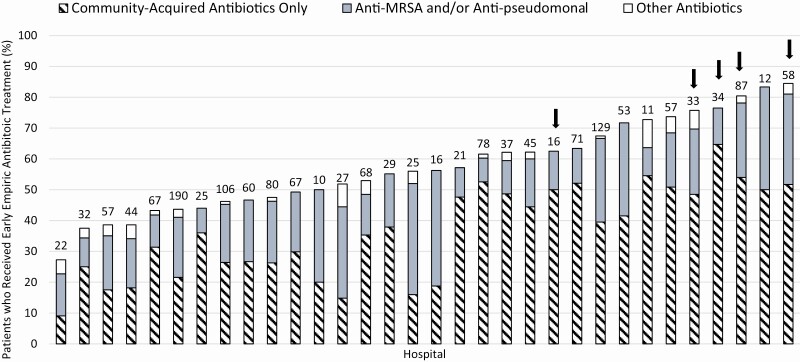
Background: Antibacterials may be initiated out of concern for bacterial coinfection in coronavirus disease 2019 (COVID-19). We determined prevalence and predictors of empiric antibacterial therapy and community-onset bacterial coinfections in hospitalized patients with COVID-19. Methods: A randomly sampled cohort of 1705 patients hospitalized with COVID-19 in 38 Michigan hospitals between 3/13/2020 and 6/18/2020. Data were collected on early (within 2 days of hospitalization) empiric antibacterial therapy and community-onset bacterial coinfections (positive microbiologic test ≤3 days). Poisson generalized estimating equation models were used to assess predictors. Results: Of 1705 patients with COVID-19, 56.6% were prescribed early empiric antibacterial therapy; 3.5% (59/1705) had a confirmed community-onset bacterial infection. Across hospitals, early empiric antibacterial use varied from 27% to 84%. Patients were more likely to receive early empiric antibacterial therapy if they were older (adjusted rate ratio [ARR]: 1.04 [1.00–1.08] per 10 years); had a lower body mass index (ARR: 0.99 [0.99–1.00] per kg/m2), more severe illness (eg, severe sepsis; ARR: 1.16 [1.07–1.27]), a lobar infiltrate (ARR: 1.21 [1.04–1.42]); or were admitted to a for-profit hospital (ARR: 1.30 [1.15–1.47]). Over time, COVID-19 test turnaround time (returned ≤1 day in March [54.2%, 461/850] vs April [85.2%, 628/737], P < .001) and empiric antibacterial use (ARR: 0.71 [0.63–0.81] April vs March) decreased. Conclusions: The prevalence of confirmed community-onset bacterial coinfections was low. Despite this, half of patients received early empiric antibacterial therapy. Antibacterial use varied widely by hospital. Reducing COVID-19 test turnaround time and supporting stewardship could improve antibacterial use.
Overview
The claims and statistics of this paper haven’t been checked yet.
Free: it reads the open-access text and checks the first 5 claims that cite a source we can check. Create a free account to check every claim.
Integrity signals
Registry
Cites
Statistics
Figures
Verification
Claims the paper makes
The claims and statistics of this paper haven’t been checked yet.
Free: it reads the open-access text and checks the first 5 claims that cite a source we can check. Create a free account to check every claim.
Claims other papers make about this one
Each is checked against this paper’s own text: does it say what the citing paper says it does?
In the citing paper
“a discharge diagnosis of COVID-19, because COVID-19 patients were frequently prescribed unnecessary antibiotics and this could distort trends in broad-spectrum antimicrobial utilization”
From Trends in empiric broad-Spectrum antibiotic use for suspected community-onset Sepsis in US hospitals (2024) · cites this paper as [25]
Self-check
Percentages, sums and reported differences re-computed from the paper’s own numbers.
The self-check needs the paper’s full text.
Citations
Cites
1 retracted
Gautret, P., Lagier, J.-C., Parola, P., Hoang, V. T., Meddeb, L., Mailhe, M., Doudier, B., Courjon, J., Giordanengo, V., Vieira, V. E., et al. (2020) · International Journal of Antimicrobial Agents · doi:10.1016/j.ijantimicag.2020.105949 · Cited by 5,288 · cited 1×
“Azithromycin in the absence of other antibacterial treatment was not included as many MI-COVID19 hospitals recommended its use as COVID19–specific therapy [18].”
MethodRetractedClinical characteristics of coronavirus disease 2019 in China
Guan, W.-J., Ni, Z.-Y., Hu, Y., Liang, W.-H., Ou, C.-Q., He, J.-X., Liu, L., Shan, H., Lei, C.-L., Hui, D. S. C., et al. (2020) · New England Journal of Medicine · doi:10.1056/nejmoa2002032 · Cited by 30,246
Chen, N., Zhou, M., Dong, X., Qu, J., Gong, F., Han, Y., Qiu, Y., Wang, J., Liu, Y., Wei, Y., et al. (2020) · The Lancet · doi:10.1016/s0140-6736(20)30211-7 · Cited by 21,415 · cited 1×
“Specifically, patients with COVID-19 are often started empirically on antibacterials when first hospitalized [2, 11].”
BackgroundWu, Z., & McGoogan, J. M. (2020) · JAMA · doi:10.1001/jama.2020.2648 · Cited by 17,016
COVID-19: consider cytokine storm syndromes and immunosuppression
Mehta, P., McAuley, D. F., Brown, M., Sanchez, E., Tattersall, R. S., & Manson, J. J. (2020) · The Lancet · doi:10.1016/s0140-6736(20)30628-0 · Cited by 9,664 · cited 1×
“15 decompensation.(24) Further studies are needed to aid clinicians in distinguishing the two.”
A Modified Poisson Regression Approach to Prospective Studies with Binary Data
Zou, G. (2004) · American Journal of Epidemiology · doi:10.1093/aje/kwh090 · Cited by 9,615
Metlay, J. P., Waterer, G. W., Long, A. C., Anzueto, A., Brozek, J., Crothers, K., Cooley, L. A., Dean, N. C., Fine, M. J., Flanders, S. A., et al. (2019) · American Journal of Respiratory and Critical Care Medicine · doi:10.1164/rccm.201908-1581st · Cited by 3,657 · cited 2×
“Includes patients who received antibacterials recommended for empiric communityacquired pneumonia (CAP) treatment in 2019 CAP guidelines [17] (ie, ampicillin/sulbactam, cefotaxime, ceftriaxone, moxifloxacin, levofloxacin, ceftaroline) and did not receive empiric anti-MRSA or anti-pseudomonal coverage.”
BackgroundSelf-citationRawson, T. M., Moore, L. S. P., Zhu, N., Ranganathan, N., Skolimowska, K., Gilchrist, M., Satta, G., Cooke, G., & Holmes, A. (2020) · Clinical Infectious Diseases · doi:10.1093/cid/ciaa530 · Cited by 1,662 · cited 2×
“Similar to other studies [4, 9, 11, 20], we found that patients hospitalized with COVID-19 were often treated with early empiric antibacterials.”
BackgroundResultCo-infections in people with COVID-19: a systematic review and meta-analysis.
Lansbury, L., Lim, B., Baskaran, V., & Lim, W. S. (2020) · Journal of Infection · doi:10.1016/j.jinf.2020.05.046 · Cited by 1,619 · cited 1×
“However, patients with COVID-19 may be at risk for concomitant bacterial infections that would require antibacterial treatment.(4) Data on bacterial co-infections are sparse and variable, with reports of co-infections occurring in 3-30% of patients with COVID-19.”
BackgroundLangford, B. J., So, M., Raybardhan, S., Leung, V., Westwood, D., MacFadden, D. R., Soucy, J.-P. R., & Daneman, N. (2020) · Clinical Microbiology and Infection · doi:10.1016/j.cmi.2020.07.016 · Cited by 1,569 · cited 1×
“Similar to other studies [4, 9, 11, 20], we found that patients hospitalized with COVID-19 were often treated with early empiric antibacterials.”
Result
Research works printed but not linked: 1
- Vaughn VM, Gandhi T, Conlon A, Chopra V, Malani AN, Flanders SA. The association of antibiotic stewardship with fluoroquinolone prescribing in Michigan hospitals: a multi-hospital cohort study. Clin Infect Dis 2019; 69: 1269– 77. 30759198 PMC6763628 · DOI
Cited by
Items 201–300 of 395
Swaminathan, L., Kaatz, S., Chubb, H. A., Kim, T., Ramesh, M. S., Fadel, R. A., Big, C., Jones, J., Flanders, S. A., & Prescott, H. C. (2022) · Infectious Diseases and Therapy · doi:10.1007/s40121-022-00615-x · Cited by 6
“Few patients in our cohort presented with bacterial co-infection, as reported in a separate study [31].”
ResultSelf-citationAntibiotic prescribing trends in the US during the first 11 months of the COVID-19 pandemic
Desai, K. R., Arora, P., Ghanekar, S., Johnson, K. E., & Harris, I. (2022) · Research in Social and Administrative Pharmacy · doi:10.1016/j.sapharm.2022.05.008 · Cited by 7
Conlon, A., Chopra, Z., Cahalan, S. E., Cinti, S. K., & Rao, K. K. (2022) · Infection Control and Hospital Epidemiology · doi:10.1017/ice.2022.262 · Cited by 7
Antimicrobial Stewardship (AMS) During COVID-19: Eyes and Ears on the AMS Team
Dort, B. A. V., Penm, J. H.-D., Ritchie, A., Gray, T. J., Ronnachit, A., & Baysari, M. T. (2023) · Studies in health technology and informatics · doi:10.3233/shti230370 · Cited by 6
Khan, S., Bond, S. E., Lee-Milner, J., Conway, B. R., Lattyak, W. J., & Aldeyab, M. A. (2023) · JAC-Antimicrobial Resistance · doi:10.1093/jacamr/dlae013 · Cited by 6
Drug Purchases’s analysis for COVID-19 treatment in Rio Grande do Sul
PAIM, N. A., & Gnatta, D. (2021) · Revista Brasileira de Farmácia Hospitalar e Serviços de Saúde · doi:10.30968/rbfhss.2021.122.0554 · Cited by 6
The Trend of Antibiotic Consumption After the COVID-19 Pandemic: Approach to Future Outbreaks
Elsafi, S. H., Almutairi, S., Alsulaimani, M. A., AlBahrani, S., Al-Maqati, T. N., Alanazi, W., Alanazi, M., Alamri, A., Alkhathami, M., Alshammari, R. A., et al. (2024) · Infection and Drug Resistance · doi:10.2147/idr.s460148 · Cited by 5
Jeverica, S., Barlič‐Maganja, D., Dernič, J., Golob, P., Stepišnik, A., Novak, B., Papst, L., Dodič, A. J., & Gasparini, M. (2024) · Antibiotics · doi:10.3390/antibiotics13111033 · Cited by 7
COVID-19 and antibiotic resistance: Parallel pandemics and different intercessions.
Mustapha, A., Nikau, J. I., & Isa, T. (2020) · Microbes and Infectious Diseases /Microbes and Infectious Diseases · doi:10.21608/mid.2020.49732.1087 · Cited by 7
Mental health outcomes after hospitalization with or without COVID-19
Spencer-Segal, J. L., Smith, C. A., Slavin, A. Z., Sampang, L., DiGiovine, D., Spencer, A. E., Zhang, Q., Horowitz, J. K., & Vaughn, V. M. (2021) · General Hospital Psychiatry · doi:10.1016/j.genhosppsych.2021.07.004 · Cited by 5
Self-citationTechnology Integration: A Best Practice Perspective
Lesisko, L. J., Wright, R. J., & O'Hern, B. (2010) · Cited by 8
Leon, W. A. M. G. –. D., & Buensalido, J. A. L. (2022) · Infection and Chemotherapy · doi:10.3947/ic.2022.0014 · Cited by 7
When to Use Antibiotics in COVID-19: A Proposal Based on Questions
Castell, C. R. D., Polanco-Guerra, C., Martínez‐Ávila, M. C., Hurtado, A. J. A., Yánez, T. R., Gutierrez-Ariza, J. C., & Rico-Fontalvo, J. E. (2022) · Cureus · doi:10.7759/cureus.27398 · Cited by 7
May, S. S., Veillette, J. J., Webb, B. J., Stenehjem, E. A., Throneberry, S. K., Gelman, S. S., Pirozzi, M., Stanfield, V. K., Waters, C. D., Grisel, N., et al. (2023) · Journal of Hospital Medicine · doi:10.1002/jhm.13118 · Cited by 5
Satjawattanavimol, S., Teerapuncharoen, K., Kaewlai, R., & Disayabutr, S. (2023) · Journal of Thoracic Disease · doi:10.21037/jtd-22-1681 · Cited by 4
Mevada, V. A., Patel, R. K., Dudhagara, P. R., Chaudhari, R., Vohra, M., Khan, V., Shyu, D. J. H., Chen, Y.-Y., & Zala, D. B. (2023) · Microorganisms · doi:10.3390/microorganisms11082030 · Cited by 5
“However, most studies show extensive empirical use in contrast to comparatively infrequent bacterial co-infection and secondary infections [54].”
BackgroundPandak, N., Sidairi, H. A., Al-Zakwani, I. S., Balushi, Z. Y. A., Chhetri, S., Ba’Omar, M., Lawati, S. A., Al-Abri, S., & Khamis, F. A. (2023) · Antibiotics · doi:10.3390/antibiotics12121665 · Cited by 6
“Although COVID-19 is a viral disease and antibiotics are indicated for bacterial, not viral, infections, many studies demonstrate that antibiotics are prescribed regardless to treat COVID-19 [5,6].”
BackgroundFabro, G. D., Venturini, S., Avolio, M., Basaglia, G., Callegari, A., Bramuzzo, I., Basso, B., Zanusso, C., Rizzo, A., Tonutti, G., et al. (2024) · JAC-Antimicrobial Resistance · doi:10.1093/jacamr/dlae072 · Cited by 7
Potential environmental and health risk when returning to normal amidst COVID-19 vaccination
Lancaster, E., & Lee, J. (2022) · Current Opinion in Environmental Science & Health · doi:10.1016/j.coesh.2022.100328 · Cited by 6
Weidmann, M. D., Berry, G. J., Green, D. A., & Wu, F. (2022) · Advances in Molecular Pathology · doi:10.1016/j.yamp.2022.07.003 · Cited by 8
Alsheikh, A. D. I., Abdalla, M. A., Abdullah, M., & Hasan, H. (2022) · International Journal of Microbiology · doi:10.1155/2022/9992881 · Cited by 6
Bauer, K. A. A., Puzniak, L., Yu, K. C., Klinker, K. P., Watts, J. A., Moise, P. A., Finelli, L., & Gupta, V. (2023) · BMC Infectious Diseases · doi:10.1186/s12879-023-08453-z · Cited by 6
Clinical and Virologic Characteristics and Outcomes of Coronavirus Disease 2019 at a Cancer Center
Yoke, L. H., Lee, J. M., Krantz, E. M., Morris, J. L., Marquis, S. R., Bhattacharyya, P., So, L., Riedo, F. X., Simmons, J. D., Khaki, A. R., et al. (2021) · Open Forum Infectious Diseases · doi:10.1093/ofid/ofab193 · Cited by 4
What we know and don’t know on SARS-CoV-2 and COVID-19
Silva-Ayarza, I., & Bachelet, V. C. (2021) · Medwave · doi:10.5867/medwave.2021.04.8198 · Cited by 7
Altered infective competence of the human gut microbiome in COVID-19Preprint
de Nies, L., Galata, V., Martin‐Gallausiaux, C., Despotović, M., Busi, S. B., Snoeck, C. J., Delacour, L., Budagavi, D. P., Laczny, C. C., Habier, J., et al. (2022) · bioRxiv (Cold Spring Harbor Laboratory) · doi:10.1101/2022.10.20.512999 · Cited by 5
Hara, G. L., Antik, A., Aguirre, S., Giuliano, C., García, D., Ochiuzzi, M. E., Kanenguiser, P., Prieto, N., Fernández, A., Neumann, G., et al. (2024) · International Journal of Antimicrobial Agents · doi:10.1016/j.ijantimicag.2024.107203 · Cited by 4
Dimaka, K., Karampatakis, T., Kachrimanidou, M., Katsifa, H., & Exindari, M. (2025) · Diagnostic Microbiology and Infectious Disease · doi:10.1016/j.diagmicrobio.2025.116710 · Cited by 4
Gutema, G., & Homa, G. (2022) · Cureus · doi:10.7759/cureus.21035 · Cited by 6
COVID-19 in Veterans: A Narrative Review
Chuang, Y.-C., Tsai, H.-W., Liu, S., Wu, M., & Liu, P. (2022) · Risk Management and Healthcare Policy · doi:10.2147/rmhp.s354814 · Cited by 4
“However, more than 50% of hospitalized patients received empiric antibiotic therapy without definitive identification of the pathogens.(54) Nevertheless, it is reasonable to prescribe antibacterial agents in severe clinical situations.”
BackgroundAhava, M. J., Kortela, E., Forsblom, E., Pätäri‐Sampo, A., Friberg, N., Meretoja, A., Kivivuori, S. M., Lappalainen, M., Kurkela, S., Järvinen, A., et al. (2022) · Scandinavian Journal of Infectious Diseases · doi:10.1080/23744235.2022.2138963 · Cited by 4
Tanzarella, E. S., Vargas, J., Menghini, M., Postorino, S., Pozzana, F., Vallecoccia, M. S., Matteis, F. L. D., Franchi, F., Infante, A., Larosa, L., et al. (2023) · Journal of Clinical Medicine · doi:10.3390/jcm12144688 · Cited by 4
“Despite that, broad-spectrum empiric antimicrobial therapy is widely prescribed [10], especially in the intensive care setting where the severity of clinical features and the poor outcomes of such critically ill patients often lead physicians to administer antibiotics without evidence of bacterial infection [11].”
BackgroundLorenzo, A. D., Campogiani, L., Iannetta, M., Iannazzo, R., Imeneo, A., Alessio, G., D’Aquila, V., Massa, B., Fato, I., Rindi, L. V., et al. (2023) · Antibiotics · doi:10.3390/antibiotics12091348 · Cited by 4
“Patients were more likely to receive empiric antibacterial therapy if they were older, had a lower body mass index, had more severe comorbidity (e.g., respiratory support, severe sepsis), had a lobar infiltrate, or higher inflammatory biomarkers [22].”
InfluentialYang, X.-C., Ding, Y., Song, S., Wang, W., Huang, S., Pang, X.-Y., Li, B., Yu, Y., Xia, Y., & Gao, W. (2024) · Biomaterials Science · doi:10.1039/d3bm01873c · Cited by 4
Management of severe covid-19: progress and promise
Lee, C. K., Linder, J. A., & Gates, K. L. (2021) · BMJ · doi:10.1136/bmj.n1147 · Cited by 4
Antimicrobial stewardship in patients with confirmed coronavirus disease 2019 (COVID-19)
Moore, S. E., Wilde, A. M., Bohn, B. C., Song, M., & Schulz, P. S. (2021) · Infection Control and Hospital Epidemiology · doi:10.1017/ice.2021.351 · Cited by 4
Inpatient and Outpatient Differences in Pediatric Patients with Laboratory-confirmed COVID-19
Spaulding, A. B., Watson, D., & Norton, L. E. (2021) · The Pediatric Infectious Disease Journal · doi:10.1097/inf.0000000000003359 · Cited by 4
Pandak, N., Khamis, F. A., Balushi, Z. Y. A., Chhetri, S., Lawati, A. A., Abouelhamd, H., Golchinheydari, S., Sidrah, A. K., Jahwari, S. K. A., & Dowaiki, S. A. (2022) · Oman Medical Journal · doi:10.5001/omj.2023.83 · Cited by 4
Laethem, J. V., Pierreux, J., Wuyts, S. C. M., Geyter, D. D., Allard, S. D., & Dauby, N. (2023) · Acta Clinica Belgica · doi:10.1080/17843286.2023.2167328 · Cited by 4
“However, a correction for multiple statistical testing was often missing [73,74].”
BackgroundOpportunities for Antimicrobial Stewardship Interventions Among Solid Organ Transplant Recipients
Stohs, E. J., & Gorsline, C. A. (2023) · Infectious Disease Clinics of North America · doi:10.1016/j.idc.2023.04.005 · Cited by 4
Lukose, L., Kaur, G., Mohammed Asif, M., Abraham, G. A., Khera, K., Subeesh, V., Castelino, R. L., Karanth, S., Kudru, C. U., Varma, M. D., et al. (2024) · Expert Review of Anti-infective Therapy · doi:10.1080/14787210.2024.2303019 · Cited by 4
“The rates of bacterial and secondary infections were higher in the study than many studies which reported an overall bacterial infection rate of approximately 7.0% (9,25,30–33).”
BackgroundResultInfluentialPaepe, A. D., Vlieghe, E., Brusselaers, N., Soentjens, P. H. P., Theunissen, C., Brosius, I., Grouwels, J., van Petersen, L., Tiggelen, H. V., Verbrugghe, W., et al. (2024) · Virology Journal · doi:10.1186/s12985-024-02360-8 · Cited by 4
“%) of documented early bacterial coin-fection [13–20].”
Wayne, M. T., Weng, W., O’Malley, M., Bozyk, P. D., Doshi, M., Flanders, S. A., McSparron, J. I., Sharma, P., Swaminathan, L., & Prescott, H. C. (2021) · Medicine · doi:10.1097/md.0000000000027265 · Cited by 6
Self-citationMina, S., & Azakir, B. (2022) · BAU Journal - Health and Wellbeing · doi:10.54729/ydel5984 · Cited by 3
Trujillo, C. H. S. (2021) · Infectio · doi:10.22354/in.v25i4.973 · Cited by 6
COVID-19 and MPXV: Twindemic Response and Dual Infections in Individuals in a US Metro
Khan, A., Erickson, T. A., & Carrillo, L. A. (2025) · Epidemiologia · doi:10.3390/epidemiologia7010003 · Cited by 3
Diamantis, S., Youbong, T. J., Strazzulla, A., Gantzer, L., Rouyer, M., Chakvetadze, E., Devatine, S., LeRoy, P. L., Lekens, B., & Matta, M. (2023) · International Journal of Antimicrobial Agents · doi:10.1016/j.ijantimicag.2023.106778 · Cited by 4
“[3] Vaughn VM, Gandhi TN, Petty LA, Patel PK, Prescott HC, Malani AN, et al.”
Perfileva, D. Y., Геннадьевич, М. А., Perfilev, V. Y., Boykov, V. A., Baranovskaya, S. V., Babeshina, M. A., & Сергеевна, С. А. (2023) · Pacific Medical Journal · doi:10.34215/1609-1175-2023-3-48-51 · Cited by 3
Shappell, C. N., Klompas, M., Chan, C., Chen, T., & Rhee, C. (2024) · Antimicrobial Stewardship & Healthcare Epidemiology · doi:10.1017/ash.2024.366 · Cited by 3
“Our results are consistent with other studies documenting reductions in antibiotic use for COVID-19 patients 8 – 10 but clarify that decreases occurred early in the pandemic and that usage has remained elevated and stable since then.”
ResultÖnal, U., & Akalın, H. (2021) · Balkan Medical Journal · doi:10.5152/balkanmedj.2021.20197 · Cited by 3
Fjelltveit, E. B., Cox, R. J., Kittang, B. R., Blomberg, B., Buanes, E. A., Group Bergen COVID-19 Research, Langeland, N., & Mohn, K. G.-I. (2021) · Scandinavian Journal of Infectious Diseases · doi:10.1080/23744235.2021.1974539 · Cited by 4
Diagnostic Accuracy of Procalcitonin upon Emergency Department Admission during SARS-CoV-2 Pandemic
Malinverni, S., Lazzaroni, S., Nuňez, M., Préseau, T., COTTON, F. J., Martiny, D., Bouazza, F.-Z., Collot, V., Konopnicki, D., Alard, S., et al. (2022) · Antibiotics · doi:10.3390/antibiotics11091141 · Cited by 3
“%) positive predictive values for bacterial pneumonia in a multicenter study investigating empiric antibacterial therapy for suspected SARS-CoV-2 CAP [16].”
BackgroundInfluentialÁlvarez, C., Valderrama, S., Silva, R., Siegler, I. H. D. L. H., Vega, F. A. V., Martínez-Vernaza, S., Blanco, T. O., Padilla, M., Mesa-Rubio, M. L., Pascagaza, L. C. C., et al. (2023) · Travel Medicine and Infectious Disease · doi:10.1016/j.tmaid.2023.102579 · Cited by 3
“This probably reflects the uncertainty regarding care strategies at the beginning of the pandemic and later on, a better understanding derived from data reported in the different cohorts in which the rate of bacterial coinfection was only between 3⋅5 and 8% [28,29], as opposed to the previous AH1N1 influenza pandemic…”
Park, H. S., McCracken, C. M., Lininger, N., Varley, C. D., Sikka, M. K., Evans, C., Villamagna, A. H., Makadia, J. T., & McGregor, J. C. (2023) · Infection Control and Hospital Epidemiology · doi:10.1017/ice.2023.27 · Cited by 3
Dey, P., Parai, D., Hossain, S. T., & Mukherjee, S. K. (2023) · Universitas Scientiarum · doi:10.11144/javeriana.sc282.taoc · Cited by 4
Antimicrobial use in patients with confirmed COVID-19 infection: a cross-sectional study
Dominguez, R., Domingo-Cereno, N., & Josue-Dominguez, R. (2023) · Western Pacific surveillance response journal · doi:10.5365/wpsar.2023.14.2.999 · Cited by 5
Photocatalyst Based on Nanostructured TiO2 with Improved Photocatalytic and Antibacterial Properties
Irodia, R., Ungureanu, C., Sătulu, V., & Mîndroiu, M. V. (2023) · Materials · doi:10.3390/ma16247509 · Cited by 4
The Impact of COVID-19 on the Tuberculosis Features in a Romanian Pneumology Hospital
Popovici, G.-C., Georgescu, C.-V., Vasile, C. I., Mihailov, O. M., Vasile, M.-C., & Arbune, M. (2024) · Journal of Multidisciplinary Healthcare · doi:10.2147/jmdh.s463859 · Cited by 6
“32 Demographic characteristics and risk factors such as alcohol and smoking did not influence the occurrence of COVID-19 co-infection.”
BackgroundDuan, Y., Ren, J., Wang, J., Wang, S., Zhang, R., Zhang, H., Hu, J., Deng, W., Li, W., & Chen, B. (2024) · Infection and Drug Resistance · doi:10.2147/idr.s470957 · Cited by 3
“11 The COVID-19 pandemic had resulted in a sharp rise in antibiotic usage.”
BackgroundInfluentialGenetics and humoral responses of the immune system to Aspergillus fumigatus
Sanya, D. R. A., Jayachandran, K., & Onésime, D. (2025) · Molecular Immunology · doi:10.1016/j.molimm.2025.06.007 · Cited by 3
Assessment of Antibiotic Resistance Pattern of Bacteria Prevalent during COVID-19 Pandemic
Aldhwaihi, K. A. A., Alsanad, S. M., Almutiri, A. H., & Aldoihi, S. A. (2021) · Journal of Pharmaceutical Research International · doi:10.9734/jpri/2021/v33i57a33975 · Cited by 3
“most often, which is contradictory to the results of our study [21,22].”
ResultCOVID-19 and antibacterial therapy in the inpatient settings: to whom, when, why?
Кароли, Н. А., Васильевна, А. А., Grigoryeva, E. V., Magdeeva, N. А., Nikitina, N. M., & Rebrov, A. P. (2021) · PULMONOLOGIYA · doi:10.18093/0869-0189-2021-31-6-701-709 · Cited by 4
Maki, K. R., Steiger, S. N., Su, Y., Boumiza, A., Tan, C. A., Kerpelev, M., Seo, S. K., & Cohen, N. (2022) · Infection Control and Hospital Epidemiology · doi:10.1017/ice.2022.129 · Cited by 3
Clinical presentation and outcomes of hospitalized children with COVID‐19 in Mexico City
Rodriguez, D. R. D., Urrutia, S., Gutierrez, G., & Cuevas, F. (2022) · Pediatric Pulmonology · doi:10.1002/ppul.26132 · Cited by 3
Puzniak, L., Bauer, K. A. A., Yu, K. C., Watts, J. A., Ai, C., & Gupta, V. (2023) · BMC Infectious Diseases · doi:10.1186/s12879-023-08042-0 · Cited by 4
Antimicrobial Stewardship in COVID-19 Patients: Those Who Sow Will Reap Even through Hard Times
Sibani, M., Canziani, L. M., Tonolli, C., Armellini, M., Carrara, E., Mazzaferri, F., Conti, M., SAVE Working Group, Mazzariol, A., Micheletto, C., et al. (2023) · Antibiotics · doi:10.3390/antibiotics12061009 · Cited by 3
When COVID-19 Strikes Your Hospital
Chopra, V. (2021) · Annals of Internal Medicine · doi:10.7326/m21-2681 · Cited by 3
Self-citationImpact of COVID-19 on antimicrobial resistance: revealing the hidden threats
Zaawari, A., Somireddy, H., & Khaliq, M. A. (2022) · International Journal of Scientific Reports · doi:10.18203/issn.2454-2156.intjscirep20221592 · Cited by 2
Ong, A. Q. W., Philo, S. E., Taylor, A., Hu, R., Meschke, J. S., & Fuhrmeister, E. R. (2024) · Environmental Science & Technology Letters · doi:10.1021/acs.estlett.4c00653 · Cited by 3
Henrich, T. J., Montgomery, C. P., Graf, J., Ismali, N., Mohandas, S., Suthar, M. S., Brim, H., Coffin, J. M., Pagaria, A., Rivera, J. G., et al. (2025) · eLife · doi:10.7554/elife.106308 · Cited by 2
“…of acute co-infections and are most commonly caused by S. aureus , coagulase-negative staphylococci, E. coli , Enterococcus faecalis , Acinetobacter spp., and Pseudomonas aeruginosa ( Petty et al., 2022 ; Vaughn et al., 2021 ; Karaba et al., 2021 ; Sepulveda et al., 2020 ; Khatri et al., 2021 ).”
Kim, T. (2026) · Journal of Korean Medical Science · doi:10.3346/jkms.2026.41.e72 · Cited by 2
“31 This suggests that factors other than medical evidence can influence antibiotic prescribing.”
Gupta, S., Klompas, M., McKenna, C. S., Agan, A. A., DelloStritto, L. K., Kalil, A. C., & Rhee, C. (2026) · Clinical Infectious Diseases · doi:10.1093/cid/ciag401 · Cited by 6
Miller, L. O. L., Kern, L. D. S., Martini, C. D. D. T., Miller, R. G., da Rosa, M. P., & Hartwig, D. D. (2022) · Research Society and Development · doi:10.33448/rsd-v11i1.25128 · Cited by 2
Infecciones bacterianas en pacientes internados por COVID-19 en Unidad de Paciente Crítico
Bravo, F., Galván, G., & Arancibia, J. M. (2022) · Revista chilena de infectología · doi:10.4067/s0716-10182022000200224 · Cited by 2
DeKerlegand, A., Johnston, E., Mellor, B., Schrack, M. R., & O’Neal, C. S. (2023) · Antibiotics · doi:10.3390/antibiotics12020253 · Cited by 2
“In one large multi-site retrospective review of adult inpatients with COVID-19, over 50% of patients had received empiric antibiotics; in 15% of overall study patients, the antibiotic regimens included anti-MRSA therapy [14].”
BackgroundThe Frequency and the character of bacterial infection in patients with COVID-19
Кароли, Н. А., & Rebrov, A. P. (2023) · South Russian Journal of Therapeutic Practice · doi:10.21886/2712-8156-2023-4-1-28-39 · Cited by 4
Anderson, S., Bennett, N. T., Aragon, L., Kennedy, K. F., & Boyd, S. (2023) · Antimicrobial Stewardship & Healthcare Epidemiology · doi:10.1017/ash.2023.462 · Cited by 2
dos Santos, A. L. F., Santana, L. A., & Novaes, M. R. C. G. (2023) · Revista Brasileira de Farmácia Hospitalar e Serviços de Saúde · doi:10.30968/rbfhss.2023.144.0968 · Cited by 2
“A prescrição empírica de antibióticos em pacientes hospitalizados com doença de coronavírus 2019 (COVID-19) foi um evento frequente desde o início da pandemia no final de 2019 31 .”
BackgroundAntimicrobial Use during the SARS-CoV-2 Pandemic in a Greek Tertiary University Hospital
Biros, D., Filippas-Ntekouan, S., Limperatou, D., Liontos, A., Matzaras, R., Tsarapatsani, K.-H., Kolios, N.-G., Pappa, C., Nasiou, M., Pargana, E., et al. (2024) · Microorganisms · doi:10.3390/microorganisms12030623 · Cited by 2
“In another study of 1705 COVID-19 patients [16], 56.6% received empiric antimicrobial treatment, while only 3.5% had confirmed bacterial infection.”
ResultInfluentialPractices of community pharmacists towards COVID-19 treatment in Vietnam: a simulated client study
Nguyen, H. Q., Duong, S. T.-T., Quan, P. B., Du, T. T., Trương, U. T. U., Nguyen, B. G. D., Nguyen, N. T. Q., & Nguyen, T.-D. (2026) · BMC Health Services Research · doi:10.1186/s12913-026-15395-0 · Cited by 2
Moore, S. E., Hebert, B., & Wilde, A. M. (2024) · Norton Healthcare Medical Journal · doi:10.59541/001c.118568 · Cited by 2
Rinawati, W., Machin, A., & Aryati, A. (2024) · Electronic Journal of General Medicine · doi:10.29333/ejgm/15022 · Cited by 2
“Diagnostic uncertainty caused by delays in the turnaround time for COVID-19 PCR testing may have contributed to antibiotic use [39].”
BackgroundWilliams, A., Repetto, E. C., Lebbie, I., Khalife, M., & Jensen, T. Ø. (2024) · Antimicrobial Stewardship & Healthcare Epidemiology · doi:10.1017/ash.2024.372 · Cited by 2
Antimicrobial Prescribing Patterns in GP Practices in Northern Ireland
Coleman, H. M., Clifford, E., Rajiah, K., Ali, N., Courtenay, A. J., Lowry, D., Jack, I. G., & Abuelhana, A. (2024) · Antibiotics · doi:10.3390/antibiotics13111050 · Cited by 2
Gestão democrática na educação infantil
do Nascimento, L. F., & Cavalcante, M. M. D. (2017) · Revista on line de Política e Gestão Educacional · doi:10.22633/rpge.v21.n1.2017.9991 · Cited by 7
Kodali, R. S., Umesh, S., Selvam, S., Kamath, D. Y., & Shobha, V. (2022) · Medicine · doi:10.1097/md.0000000000030975 · Cited by 2
“Bacterial infections were determined as per microbiologic and biochemical results.[20] Fungal infections were categorized based on microbiologic results, serologic assays, and radiologic assessment.”
MethodSECCION II. Definiciones operativas de casos de infección por SARS-CoV-2/COVID-19
Trujillo, C. H. S. (2021) · Infectio · doi:10.22354/in.v25i4.972 · Cited by 3
Cataño, J. C., Cardona‐Arias, J. A., Porras-Mancilla, J. P., & Tabares, M. (2022) · Current Clinical Microbiology Reports · doi:10.1007/s40588-022-00179-x · Cited by 2
Abad, C. L. R., Sandejas, J. C. M., Poblete, J. B., Malundo, A. F. G., Salamat, M. S. S., & Alejandria, M. M. (2022) · IJID Regions · doi:10.1016/j.ijregi.2022.07.003 · Cited by 3
Co-Infection in COVID-19 Pneumonia: Discussion Continues
Strelkova, D. A., Rachina, S. A., Klimenko, A. A., Yatsyshina, S. B., Cheboksarov, D. V., Cherkasova, T., Ramazanov, N., & Ananicheva, N. A. (2022) · Infection and Chemotherapy · doi:10.3947/ic.2022.0110 · Cited by 2
Chan, L., Gupta, S., Sacco, A. J., Kasule, S. N., Chaffin, H., Feller, F. F., Mi, L., Lim, E. S., & Seville, M. T. (2023) · Antimicrobial Stewardship & Healthcare Epidemiology · doi:10.1017/ash.2023.135 · Cited by 2
Local guidelines for drug treatment of patients with COVID-19
Јаnkovic, S., Pavlović, K., Vukićević, V., Gavrilović, J., Folić, M., Čanović, P., Marjanovic, R. R., Mojsilović, S., Stevanović, N., & Rošić, N. (2020) · Medicinski casopis · doi:10.5937/mckg54-29760 · Cited by 2
Murakami, S., Takamatsu, A., Akazawa, M., Goto, T., Miwa, T., Terayama, Y., & Honda, H. (2022) · Antimicrobial Stewardship & Healthcare Epidemiology · doi:10.1017/ash.2022.42 · Cited by 2
Guerini, I. S., Werlang, M. H. B., Wendt, G. W., Casaril, K. B. P. B., & Ferreto, L. E. D. (2022) · RECIMA21 - Revista Científica Multidisciplinar · doi:10.47820/recima21.v3i8.1814 · Cited by 2
Gutema, G., & Homa, G. (2021) · Preprints.org · doi:10.20944/preprints202105.0152.v1 · Cited by 2
Antimicrobial resistance: An unseen threat prowling behind the COVID-19 outbreak
Medhi, B., Mahalmani, V., Kumaravel, J., Jain, M., & Prakash, A. (2021) · Indian Journal of Pharmacology · doi:10.4103/ijp.ijp_430_21 · Cited by 3
“[11] The risk of hospital‑acquired infections (HAI) in COVID‑19 patients was found to be very high, with frequency up to 22% in COVID‑19 patients who are admitted, with even higher risk up to 48% in patients who are admitted to ICU.”
InfluentialOnorato, L., Calò, F., Maggi, P., Allegorico, E., Gentile, I., Sangiovanni, V., Esposito, V., Dell’Isola, C., Calabria, G., Pisapia, R., et al. (2023) · Antibiotics · doi:10.3390/antibiotics12071124 · Cited by 1
“5% prevalence of documented coinfections showed that older age, being admitted to hospital during the first months of the pandemic, and the need for supplemental oxygen therapy were independent predictors of early empiric antibiotic therapy [26].”
BackgroundRecio, M., López-Viñau, T., Gálvez-Soto, V., Cano, Á., Ruiz-Montero, R., Gutiérrez‐Gutiérrez, B., Gracia-Ahufinger, I., Peñalva, G., Marín-Sanz, J. A., Marín-Sanz, M., et al. (2025) · Antimicrobial Resistance and Infection Control · doi:10.1186/s13756-025-01614-6 · Cited by 1
Yan, M., Wang, N., Yang, L., Zhang, X. W., Zhang, Y., Xuan, W., Zhang, X., Liu, G., Wang, H., Qing, Y., et al. (2026) · Emerging Microbes & Infections · doi:10.1080/22221751.2026.2614734 · Cited by 2
Mateescu, D.-M., Toma, A.-O., Gavrilescu, D.-M., Ilie, A. C., Florescu, E., Roșca, O., Oancea, C. I., Iurciuc, S., Mureșan, C.-O., & Enache, A. (2026) · Antibiotics · doi:10.3390/antibiotics15030240 · Cited by 5
“Evidence-based recommendations further recommend short courses with early clinical and microbiologic reassessment when bacterial infection is not supported [22,23].”
InfluentialInfection à SARS-CoV-2 : connaissances au 15 avril 2021
Basille, D., & Andrejak, C. (2021) · Revue des Maladies Respiratoires · doi:10.1016/j.rmr.2021.04.014 · Cited by 3
Metadata
- Authors
- Vaughn, V. M., Gandhi, T. N., Petty, L. A., Patel, P. K., Prescott, H. C., Malani, A. N., Ratz, D., McLaughlin, E., Chopra, V., & Flanders, S. A.
- Affiliations
- University of Michigan (US)
- Trinity Health Michigan (US)
- Corresponding author
- Vaughn, Valerie M
- ORCID
- Venue
- Clinical Infectious Diseases
- Publisher
- Oxford University Press (OUP)
- Published
- 2020-08-21
- Volume
- 72
- Issue
- 10
- Pages
- e533-e541
- ISSN
- 1058-4838 (ISSN-L)
- 1537-6591
- PMC
- PMC7499526
- OpenAlex
- W3081368778
- Cited by
- 396
- References
- 28
- Citations by year
- 2026: 19 · 2025: 15 · 2024: 42 · 2023: 90 · 2022: 111 · 2021: 103 · 2020: 14
- FWCI
- 10.43
- Type
- journal article
- Language
- en
- Open access
- hybrid
- doi.org
- Licence
- Locations
- Clinical Infectious Diseases (publishedVersion, cc-by-nc-nd)
- PubMed Central (publishedVersion, cc-by-nc-nd)
- PubMed (publishedVersion)
- Funders
- Agency for Healthcare Research and Quality
- Topics
- Health Sciences › Medicine › Infectious Diseases › COVID-19 Clinical Research Studies
- Health Sciences › Medicine › Infectious Diseases › Antibiotic Use and Resistance
- Health Sciences › Medicine › Critical Care and Intensive Care Medicine › Nosocomial Infections in ICU
- Keywords
- COVID-19 pandemic, SARS-CoV-2, bacterial co-infection, hospitalized patients, test turnaround time, hospital variation, for-profit hospitals, body mass index, severe sepsis, antibiotic prescribing, COVID-19 testing capacity, Michigan hospitals, Michigan
- MeSH terms
- COVID-19, SARS-CoV-2, Anti-Bacterial Agents, Hospitalization, Hospitals, Humans, Michigan, Cohort Studies, Coinfection
About these checks
Registry, retraction, Cites and statistics results are computed, not judged, with one exception: a printed reference that no index lists is read once by a model before it counts as a citation error. Claims are extracted by a model and kept only when their quote appears verbatim in the text; each cited source is then checked, with a model’s help, for whether it says what the claim relies on. Those verdicts can be wrong — read the claim’s quote and the cited source before relying on one.
Statistics and arithmetic are recomputed, not judged.
Confidence bands are shown only for fields calibrated on our annotated test set. None is calibrated yet, so no band is shown.
What counts as a claim ›How we measure confidence ›How we check this ›
Are you an author, or do you see a problem with this page? Request a review
Data sources
Bibliographic data: Semantic Scholar, OpenAlex, Crossref.
Contains information from the Semantic Scholar Academic Graph Datasets, made available under the ODC Attribution License (ODC-BY 1.0).
Semantic Scholar’s data is described in: Kinney, R., et al. (2023). The Semantic Scholar Open Data Platform. arXiv:2301.10140.
