

Empiric antibacterial therapy and community-onset bacterial coinfection in patients hospitalized with coronavirus disease 2019 (COVID-19): a multi-hospital cohort study.
Open accessThe DOI matches its Crossref record; 27 of the 28 references it cites were found in a registry or an index.
Abstract
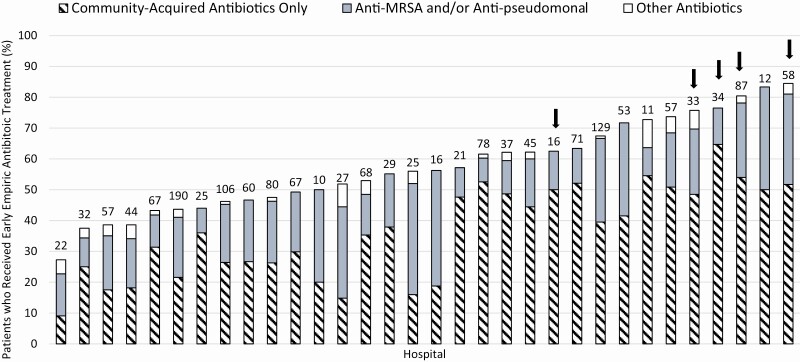
Background: Antibacterials may be initiated out of concern for bacterial coinfection in coronavirus disease 2019 (COVID-19). We determined prevalence and predictors of empiric antibacterial therapy and community-onset bacterial coinfections in hospitalized patients with COVID-19. Methods: A randomly sampled cohort of 1705 patients hospitalized with COVID-19 in 38 Michigan hospitals between 3/13/2020 and 6/18/2020. Data were collected on early (within 2 days of hospitalization) empiric antibacterial therapy and community-onset bacterial coinfections (positive microbiologic test ≤3 days). Poisson generalized estimating equation models were used to assess predictors. Results: Of 1705 patients with COVID-19, 56.6% were prescribed early empiric antibacterial therapy; 3.5% (59/1705) had a confirmed community-onset bacterial infection. Across hospitals, early empiric antibacterial use varied from 27% to 84%. Patients were more likely to receive early empiric antibacterial therapy if they were older (adjusted rate ratio [ARR]: 1.04 [1.00–1.08] per 10 years); had a lower body mass index (ARR: 0.99 [0.99–1.00] per kg/m2), more severe illness (eg, severe sepsis; ARR: 1.16 [1.07–1.27]), a lobar infiltrate (ARR: 1.21 [1.04–1.42]); or were admitted to a for-profit hospital (ARR: 1.30 [1.15–1.47]). Over time, COVID-19 test turnaround time (returned ≤1 day in March [54.2%, 461/850] vs April [85.2%, 628/737], P < .001) and empiric antibacterial use (ARR: 0.71 [0.63–0.81] April vs March) decreased. Conclusions: The prevalence of confirmed community-onset bacterial coinfections was low. Despite this, half of patients received early empiric antibacterial therapy. Antibacterial use varied widely by hospital. Reducing COVID-19 test turnaround time and supporting stewardship could improve antibacterial use.
Overview
The claims and statistics of this paper haven’t been checked yet.
Free: it reads the open-access text and checks the first 5 claims that cite a source we can check. Create a free account to check every claim.
Integrity signals
Registry
Cites
Statistics
Figures
Verification
Claims the paper makes
The claims and statistics of this paper haven’t been checked yet.
Free: it reads the open-access text and checks the first 5 claims that cite a source we can check. Create a free account to check every claim.
Claims other papers make about this one
Each is checked against this paper’s own text: does it say what the citing paper says it does?
In the citing paper
“a discharge diagnosis of COVID-19, because COVID-19 patients were frequently prescribed unnecessary antibiotics and this could distort trends in broad-spectrum antimicrobial utilization”
From Trends in empiric broad-Spectrum antibiotic use for suspected community-onset Sepsis in US hospitals (2024) · cites this paper as [25]
Self-check
Percentages, sums and reported differences re-computed from the paper’s own numbers.
The self-check needs the paper’s full text.
Citations
Cites
1 retracted
Gautret, P., Lagier, J.-C., Parola, P., Hoang, V. T., Meddeb, L., Mailhe, M., Doudier, B., Courjon, J., Giordanengo, V., Vieira, V. E., et al. (2020) · International Journal of Antimicrobial Agents · doi:10.1016/j.ijantimicag.2020.105949 · Cited by 5,288 · cited 1×
“Azithromycin in the absence of other antibacterial treatment was not included as many MI-COVID19 hospitals recommended its use as COVID19–specific therapy [18].”
MethodRetractedClinical characteristics of coronavirus disease 2019 in China
Guan, W.-J., Ni, Z.-Y., Hu, Y., Liang, W.-H., Ou, C.-Q., He, J.-X., Liu, L., Shan, H., Lei, C.-L., Hui, D. S. C., et al. (2020) · New England Journal of Medicine · doi:10.1056/nejmoa2002032 · Cited by 30,246
Chen, N., Zhou, M., Dong, X., Qu, J., Gong, F., Han, Y., Qiu, Y., Wang, J., Liu, Y., Wei, Y., et al. (2020) · The Lancet · doi:10.1016/s0140-6736(20)30211-7 · Cited by 21,415 · cited 1×
“Specifically, patients with COVID-19 are often started empirically on antibacterials when first hospitalized [2, 11].”
BackgroundWu, Z., & McGoogan, J. M. (2020) · JAMA · doi:10.1001/jama.2020.2648 · Cited by 17,016
COVID-19: consider cytokine storm syndromes and immunosuppression
Mehta, P., McAuley, D. F., Brown, M., Sanchez, E., Tattersall, R. S., & Manson, J. J. (2020) · The Lancet · doi:10.1016/s0140-6736(20)30628-0 · Cited by 9,664 · cited 1×
“15 decompensation.(24) Further studies are needed to aid clinicians in distinguishing the two.”
A Modified Poisson Regression Approach to Prospective Studies with Binary Data
Zou, G. (2004) · American Journal of Epidemiology · doi:10.1093/aje/kwh090 · Cited by 9,615
Metlay, J. P., Waterer, G. W., Long, A. C., Anzueto, A., Brozek, J., Crothers, K., Cooley, L. A., Dean, N. C., Fine, M. J., Flanders, S. A., et al. (2019) · American Journal of Respiratory and Critical Care Medicine · doi:10.1164/rccm.201908-1581st · Cited by 3,657 · cited 2×
“Includes patients who received antibacterials recommended for empiric communityacquired pneumonia (CAP) treatment in 2019 CAP guidelines [17] (ie, ampicillin/sulbactam, cefotaxime, ceftriaxone, moxifloxacin, levofloxacin, ceftaroline) and did not receive empiric anti-MRSA or anti-pseudomonal coverage.”
BackgroundSelf-citationRawson, T. M., Moore, L. S. P., Zhu, N., Ranganathan, N., Skolimowska, K., Gilchrist, M., Satta, G., Cooke, G., & Holmes, A. (2020) · Clinical Infectious Diseases · doi:10.1093/cid/ciaa530 · Cited by 1,662 · cited 2×
“Similar to other studies [4, 9, 11, 20], we found that patients hospitalized with COVID-19 were often treated with early empiric antibacterials.”
BackgroundResultCo-infections in people with COVID-19: a systematic review and meta-analysis.
Lansbury, L., Lim, B., Baskaran, V., & Lim, W. S. (2020) · Journal of Infection · doi:10.1016/j.jinf.2020.05.046 · Cited by 1,619 · cited 1×
“However, patients with COVID-19 may be at risk for concomitant bacterial infections that would require antibacterial treatment.(4) Data on bacterial co-infections are sparse and variable, with reports of co-infections occurring in 3-30% of patients with COVID-19.”
BackgroundLangford, B. J., So, M., Raybardhan, S., Leung, V., Westwood, D., MacFadden, D. R., Soucy, J.-P. R., & Daneman, N. (2020) · Clinical Microbiology and Infection · doi:10.1016/j.cmi.2020.07.016 · Cited by 1,569 · cited 1×
“Similar to other studies [4, 9, 11, 20], we found that patients hospitalized with COVID-19 were often treated with early empiric antibacterials.”
Result
Research works printed but not linked: 1
- Vaughn VM, Gandhi T, Conlon A, Chopra V, Malani AN, Flanders SA. The association of antibiotic stewardship with fluoroquinolone prescribing in Michigan hospitals: a multi-hospital cohort study. Clin Infect Dis 2019; 69: 1269– 77. 30759198 PMC6763628 · DOI
Cited by
Items 301–395 of 395
SECCION I. Antecedentes de infección por SARS-CoV-2/COVID-19
Trujillo, C. H. S. (2021) · Infectio · doi:10.22354/in.v25i4.971 · Cited by 4
PROBLEMS OF ANTIBIOTIC THERAPY IN KOVID-ASSOCIATED HOSPITAL PNEUMONIA
Savchenko, O. A., Подсевахіна, С. Л., Tkachenko, A. V., Myrnyi, D. P., Кацюба, Ю. В., & Мирна, А. І. (2022) · Modern medical technology · doi:10.34287/mmt.2(53).2022.6 · Cited by 2
Fratoni, A. J., Kois, A. K., Colmerauer, J. L., Linder, K. E., Nicolau, D. P., & Kuti, J. L. (2022) · Open Forum Infectious Diseases · doi:10.1093/ofid/ofac468 · Cited by 1
Co-infecciones presentes durante la pandemia por COVID-19: Revisión Sistemática
Espino-Solís, G. P., & Aizpuru, A. P. L. (2022) · TECNOCIENCIA CHIHUAHUA · doi:10.54167/tch.v16i2.974 · Cited by 1
Marina, P. F., Kaul, L., Mischer, N., & Richter, K. (2022) · Springer series on biofilms · doi:10.1007/978-3-031-10992-8_18 · Cited by 3
Application of new indicators to assess the quality of antimicrobial use in intensive care units
Rodríguez-Campos, E., Guisado-Gil, A. B., Peñalva, G., Fernández-Rubio, B., Aldabó, T., Hidalgo, L. H., Fernández-Delgado, E., Mejías-Trueba, M., Adriaensens-Pérez, M., Gascón, M. L., et al. (2023) · International Journal of Antimicrobial Agents · doi:10.1016/j.ijantimicag.2023.106865 · Cited by 1
Au, T. Y., Assavarittirong, C., Benjamin, S., & Wiśniewski, O. W. (2023) · Clinical and Experimental Medicine · doi:10.1007/s10238-023-01171-5 · Cited by 1
Development of Inpatient Stewardship Metrics
Moehring, R. W., & Vaughn, V. M. (2023) · Infectious Disease Clinics of North America · doi:10.1016/j.idc.2023.07.006 · Cited by 1
Self-citationSantos, C. A. Q., Tseng, M., Martinez, A. I., Shankaran, S., Hodgson, H. A., Ahmad, F. S., Zhang, H., Sievert, D. M., & Trick, W. E. (2023) · Infection Control and Hospital Epidemiology · doi:10.1017/ice.2023.180 · Cited by 1
Nie, B., Cheng, Y., & Hu, H. H. (2023) · Journal of Pediatric Infectious Diseases · doi:10.1055/s-0043-1776391 · Cited by 1
Hadano, Y., Ohwaki, K., Suyama, A., Miura, A., Fujii, S., Suzuki, Y., Tomoda, Y., & Awaya, Y. (2023) · Internal Medicine · doi:10.2169/internalmedicine.2868-23 · Cited by 1
“A previous study showed an increased use of antimicrobials in patients with COVID-19 requiring hospitalization during the pandemic in the United States (17, 18).”
BackgroundHow to Mitigate Community Harms of Antibacterial Resistance With Patient-Centered Care
Modlin, C. (2024) · The AMA Journal of Ethic · doi:10.1001/amajethics.2024.494 · Cited by 1
“15,17,18 While a proportion of these prescriptions were appropriate for select patients at increased risk of having a bacterial co-infection, such as patients requiring admission to intensive care, 19,20,21,22,23 the incidence of co-infection among these small but high-risk populations still did…”
Antimicrobial use before and during COVID-19: data from 108 Veterans Affairs medical centers
Goetz, M. B., Willson, T. M., Rubin, M. A., Stevens, V. W., & Graber, C. J. (2024) · Antimicrobial Stewardship & Healthcare Epidemiology · doi:10.1017/ash.2024.352 · Cited by 1
Alharbi, A., Nooraldeen, N., Mobarki, S. J., Alsury, L. N., Alhazmi, A., & Alqassimi, S. (2024) · International Journal of Statistics in Medical Research · doi:10.6000/1929-6029.2024.13.41 · Cited by 1
Caffrey, A. R., Appaneal, H. J., Lopes, V., Lavoie, T., Puzniak, L., Zasowski, E. J., Jódar, L., Arham, I. N., LaPlante, K. L., & McLaughlin, J. M. (2025) · Microbiology Spectrum · doi:10.1128/spectrum.03209-24 · Cited by 1
Xiao, X., Li, S., Zheng, Z., Ji, Y., Du, Q., Zuo, Y., Miao, Y., Yuan, Y., Zheng, H., Huang, F., et al. (2025) · Journal of Virology · doi:10.1128/jvi.02234-24 · Cited by 4
“Interestingly, although SARS-CoV-2 is a virus that typically warrants antiviral therapy, such as the use of Ritonavir or Remdesivir, etc (23), a significant number of COVID-19 patients have received antibiotic treatment regardless of whether they had a bacterial infection or not (24).”
Antibacterial use in the age of SARS-CoV-2
Angell, K. E., Lawler, J. V., Hewlett, A. L., Rupp, M. E., Bergman, S., Schooneveld, T. C. V., Broadhurst, M. J., & Brett‐Major, D. M. (2021) · JAC-Antimicrobial Resistance · doi:10.1093/jacamr/dlab073 · Cited by 1
Borges, M. A. S. B., Guilarde, A. O., Tomich, L. G. M. D. M., & Turchi, M. D. (2021) · The Brazilian Journal of Infectious Diseases · doi:10.1016/j.bjid.2021.101648 · Cited by 1
Vaughn, V. M., Ratz, D., McLaughlin, E. S., Horowitz, J. K., Flanders, S. A., Middleton, E. A., Grant, P., Kaatz, S. S., & Barnes, G. D. (2022) · Journal of the American Heart Association · doi:10.1161/jaha.122.025914 · Cited by 2
Self-citationLaethem, J. V., Piérard, D., & Allard, S. D. (2022) · Antibiotics · doi:10.3390/antibiotics11101446 · Cited by 1
“the good negative predictive value of low procalcitonin levels for bCSs [11,12], the use of”
BackgroundSARS-COV-2 Pandemic: How to Maintain a COVID-free Hospital
Bassanello, M., Coli, U., Tegon, A., Pasqualini, M. T., Farencena, A., Geretto, M., & D'Aquino, M. (2022) · Infectious diseases · doi:10.5772/intechopen.107060 · Cited by 2
Analysis of Antibiotic Usage in Critical COVID-19 Patients with Secondary Infections
Widyati, W., Harijono, P., & Tuba, S. (2022) · Journal of Biosciences and Medicines · doi:10.4236/jbm.2022.1012011 · Cited by 1
Tadano, Y., Akaishi, T., Suzuki, S., Ono, R., Saito, N., Arita, R., Kanno, T., Tanaka, J., Kikuchi, A., Ohsawa, M., et al. (2023) · The Tohoku Journal of Experimental Medicine · doi:10.1620/tjem.2023.j038 · Cited by 1
Castro, M. G., Colussi, A. F. G., Cena, G. R. M., Ubiergo, L., Vicino, M., Dotti, V., & Argarañá, M. F. (2023) · Actualizaciones en Sida e Infectología · doi:10.52226/revista.v31i112.151 · Cited by 1
Dawaher, J., Montesdeoca, R. S., Moscoso, S. X. A., Poma, W. C. B., & Vélez-Páez, J. L. (2023) · Investigación Clínica · doi:10.54817/ic.v64n3a08 · Cited by 1
Casalini, G., Pozza, G., Giacomelli, A., & Antinori, S. (2022) · Antimicrobial Agents and Chemotherapy · doi:10.1128/aac.02296-21 · Cited by 1
Exploring Cobalt Doping Methods for Enhancing Blue-TiO2 Catalyst EfficiencyPreprint
Irodia, R., Ungureanu, C., Sătulu, V., & Mîndroiu, M. V. (2023) · Preprints.org · doi:10.20944/preprints202307.0653.v1 · Cited by 1
The Impact of COVID-19 on the Tuberculosis Outcomes in a Pneumology Hospital from South-East RomaniaPreprint
Popovici, G.-C., Georgescu, C.-V., Vasile, C. I., Mihailov, O. M., Vasile, M.-C., & Arbune, M. (2024) · Preprints.org · doi:10.20944/preprints202401.1145.v1 · Cited by 1
The Post-hunter-gatherer Era Microbes Hypothesis for Chronic Inflammatory DiseasesPreprint
Waterhouse, J. C. (2020) · Authorea · doi:10.22541/au.160614799.98699073/v1
Arriola‐Montenegro, J., Arriola-Montenegro, L., Beas, R., & Díaz-Pardavé, C. (2021) · Acta Medica Philippina · doi:10.47895/amp.vi0.1807
Global health emergencies during the pandemic and their solutions
Şencan, İ., Bulut, D., Şencan, İ. H., & Ağalar, C. (2021) · TURKISH JOURNAL OF MEDICAL SCIENCES · doi:10.3906/sag-2106-183 · Cited by 4
ERS International Congress 2020 Virtual: highlights from the Respiratory Intensive Care Assembly
Rolland‐Debord, C., D’Haenens, A., Mendiluce, L., Spurr, L., Konda, S., Cherneva, R. V., Lhuillier, E., Heunks, L. M. A., & Patout, M. (2021) · ERJ Open Research · doi:10.1183/23120541.00214-2021
Bacterial coinfections with coronavirus disease 2019 (COVID-19)
Huang, G., Furukawa, D., Yang, B. D., Kim, B., & Jeng, A. (2021) · Antimicrobial Stewardship & Healthcare Epidemiology · doi:10.1017/ash.2021.187
Jacobs, A. C., Khosrowshahi, L., Risi, G., Beekmann, S. E., Polgreen, P. M., the COVID-19 Study Team, & Albrecht, M. (2022) · COVID · doi:10.3390/covid2050049
ANTIBIOTICS OVERUSE/ MISUSE IN COVID-19 AND HOW TO MITIGATE?
Mahmood, K. (2022) · Journal of Postgraduate Medical Institute · doi:10.54079/jpmi.36.2.3122
Sipahioğlu, H., Şahingöz, M., Sari, A. A., & Temel, Ş. (2022) · Kahramanmaraş Sütçü İmam Üniversitesi Tıp Fakültesi Dergisi · doi:10.17517/ksutfd.912188
COVID-19 observations from hospitalized patients in the Northern Emirates: A practice only preached
Qureshi, S., Kampani, D. D., Al-Qutbi, T., Mohamed, A., & Alfaresi, M. S. (2022) · Advances in Biomedical and Health Sciences · doi:10.4103/abhs.abhs_2_22
Bacterial Co-Infections in COVID-19 Positive Patients in a Tertiary Care Hospital in Southern Assam
Kurmi, D. A. (2022) · Journal of Medical Science And clinical Research · doi:10.18535/jmscr/v10i5.08
RANI, A. S., MADHAVI, P., & Chakradhar, T. (2022) · International Journal of Pharmacy and Pharmaceutical Sciences · doi:10.22159/ijpps.2022v14i10.45730
Antibiotic Stewardship (ABS) im Kontext schwerer Infektionen
Giesen, R., Biever, P. M., & Rieg, S. (2022) · Zeitschrift für Pneumologie · doi:10.1007/s10405-022-00475-9
Antimicrobial overuse in COVID-19 – reasons to remain vigilant as we approach the winter ‘twindemic’
Lowry, J., McEvoy, N. L., O'Connell, K., Burns, K., Dinesh, B., O’Donnell, S., Curley, G. F., & Fitzpatrick, F. (2022) · Journal of Hospital Infection · doi:10.1016/j.jhin.2022.10.006
“However, as the pandemic progressed, data indicated a low rate of bacterial infection in patients with COVID-19 [3], and guidelines recommended intensified AMS efforts targeting empiric antibiotic prescribing [4].”
BackgroundStrategy for Procalcitonin-Controlled Antimicrobial Therapy in the COVID-19 Pandemic
Zaytsev, A. A., Dronov, I. A., & Kondratieva, T. V. (2022) · Tuberculosis and lung diseases · doi:10.21292/2075-1230-2022-100-10-6-14
FEATURES OF THE USE OF ANTIBACTERIAL DRUGS IN PATIENTS WITH COVID-19
Kryukov, A. V., Kuznetsova, E. V., Ильдарович, Т. И., Vechorko, V., & Zhuravleva, M. V. (2022) · Problems of Social Hygiene Public Health and History of Medicine · doi:10.32687/0869-866x-2022-30-s1-1044-1049
Gut Microbiota in Coronavirus Disease 2019
Lau, H. C.-H., & Yu, J. Q. (2023) · Springer eBooks · doi:10.1007/978-981-19-4492-5_18 · Cited by 1
Is There a Need to Widely Prescribe Antibiotics in Patients with COVID-19?
Кароли, Н. А., & Rebrov, A. P. (2023) · Antibiot Khimioter = Antibiotics and Chemotherapy · doi:10.37489/0235-2990-2022-67-11-12-64-78
COVID-19 E COINFECÇÃO BACTERIANA
Teixeira, L. T. V., & Côrtes, P. P. D. R. (2023) · Revista Ibero-Americana de Humanidades, Ciências e Educação · doi:10.51891/rease.v9i2.8421
Diagnosis of bacterial infection in patients with COVID-19: is it a simple task? (literature review)
Кароли, Н. А., & Rebrov, A. P. (2023) · Bulletin of Siberian Medicine · doi:10.20538/1682-0363-2023-1-121-131 · Cited by 1
Afshar, Z. M., Sayad, B., Janbakhsh, A., Ebrahimpour, S., & Babazadeh, A. (2023) · Minerva Respiratory Medicine · doi:10.23736/s2784-8477.21.01940-4
PROCALCITONINA COMO HERRAMIENTA PARA EL MANEJO DE ANTIMICROBIANOS EN PACIENTES CON COVID-19
Lenardt, M. H., Cechinel, C., Rodrigues, J. A. M., Binotto, M. A., Zanata, I. D. L., Kraus, R., & Marques, D. M. D. S. (2023) · Cogitare Enfermagem · doi:10.1590/ce.v28i0.89834
PROCALCITONINA COMO FERRAMENTA DE GERENCIAMENTO DE ANTIMICROBIANOS EM PACIENTES COM COVID-19
Lenardt, M. H., Cechinel, C., Rodrigues, J. A. M., Binotto, M. A., Zanata, I. D. L., Kraus, R., & Marques, D. M. D. S. (2023) · Cogitare Enfermagem · doi:10.1590/ce.v28i0.85381 · Cited by 2
PROCALCITONIN AS ANTIMICROBIAL MANAGEMENT TOOL IN COVID-19 PATIENTS
Lenardt, M. H., Cechinel, C., Rodrigues, J. A. M., Binotto, M. A., Zanata, I. D. L., Kraus, R., & Marques, D. M. D. S. (2023) · Cogitare Enfermagem · doi:10.1590/ce.v28i0.89833
Bacterial Pneumonia in Patients with Sars-Cov-2 Omicron Infection: A Case Series
Gil, R., Keenan, L., & Dean, N. C. (2023) · Medical Research Archives · doi:10.18103/mra.v11i7.1.4011
COVID-19: secondary and superimposed bacterial infections
Abdul‐Mutakabbir, J. C., & Tan, K. K. (2023) · Elsevier eBooks · doi:10.1016/b978-0-323-91812-1.00009-3
Abstracts Criticare - IJCCM2023
(2023) · Indian Journal of Critical Care Medicine · doi:10.5005/ijccm-27-s1-s1
Vidal, P., Olmo, J. N.-D., Varela, A. I. T., Seoane, E., Abalde, F. E., Chapela, J. B., Sigwald, L. L., Fernández, D. E. S., Fernández‐Ugidos, P., & Carbajo, L. D. R. (2023) · Revista Española de Quimioterapia · doi:10.37201/req/060.2023
Blood inflammatory markers and cytokines in patients with COVID-19 and bacterial coinfectionsPreprint
Bi, Q., Zhu, J., Zheng, J., Xu, Q., Zhang, L., & Mu, X. (2023) · Research Square · doi:10.21203/rs.3.rs-3447577/v1
Abdelhamid, M., Jagarlamudi, V., & Abdelwahed, H. S. (2023) · Journal of emergency medicine, trauma & acute care · doi:10.5339/jemtac.2023.33
Mandagi, A. A., & Suba, B. (2023) · Nutrix Journal · doi:10.37771/nj.v7i2.1024
“Kedua studi tersebut berfokus pada tingkat peresepan, koinfeksi, dan faktor risiko yang terkait dengan peresepan antibiotik dalam 48 jam pertama masuk, sehingga berfokus pada risiko infeksi bakteri yang didapat dari masyarakat (Wei, Ortwine, Mang, dkk., 2020; Vaughn, Gandhi, Petty, dkk., 2021).”
BackgroundMANAJEMEN INTENSIF PERIPARTUM PADA PASIEN COVID-19
Apsari, R. K. F., Wisudarti, C. F. R., & Negara, A. Y. G. (2023) · Jurnal Komplikasi Anestesi · doi:10.22146/jka.v9i1.8521
Ecologic analysis of antimicrobial use in South Carolina hospitals during 2020–2022
Bailey, P., Chen, S., Al‐Hasan, M. N., Olatosi, B., Li, X., & Zhang, J. (2023) · Antimicrobial Stewardship & Healthcare Epidemiology · doi:10.1017/ash.2023.496
“22 Additionally, an Italian survey shows that there is significant variation in prescriber practices depending on their own prescribing habits, and ASP principles remain at risk of being overlooked due to personal preferences.”
BackgroundDuan, Y., Wang, J., Zhang, R., Zhang, H., Hu, J., Deng, W., Wang, S., Li, W., & Chen, B. (2023) · Research Square · doi:10.21203/rs.3.rs-3751132/v1
Sulayyim, H. J. A., Ismail, R., Hamid, A. A., & Ghafar, N. A. (2023) · Journal of Pharmaceutical Policy and Practice · doi:10.1080/20523211.2023.2290671
“At the beginning of the COVID-19 pandemic, guidelines were lacking, and empirical antibiotics were overused regardless of the proven secondary bacterial infection or severity of the disease (Karami et al., 2021; Cong et al., 2021; Vaughn et al., 2021; Townsend et al., 2020).”
BackgroundWinter, R., Sugianli, A. K., & Parwati, I. (2024) · INDONESIAN JOURNAL OF CLINICAL PATHOLOGY AND MEDICAL LABORATORY · doi:10.24293/ijcpml.v30i2.2113 · Cited by 1
Shah, D. M., Kargiwar, K., Almeida, C., Shah, H., Shalia, M. K., Rai, M. S., Bhutaka, N., Patel, M. B., Shaikh, A. H., & Parsani, M. C. I. (2024) · International Journal of Medical Science and Clinical Research Studies · doi:10.47191/ijmscrs/v4-i03-10
Oláh, C., Czakó, J., Godó, Z. A., Farkas, M., Papp, M., & Czabajszki, M. (2024) · Orvosi Hetilap · doi:10.1556/650.2024.32975
Antibioticoterapia empírica asociada a mortalidad en pacientes con sepsis por SARS-CoV-2
Cusicanqui, L. A. C., Mejía-Parra, J. L. J., Morales-Ramos, J. G., Sialer, A. L. M., Cavero-Reyes, Y., Aguilar–Gamboa, F. R., & Coico-Vega, M. M. (2024) · Revista Experiencia en Medicina del Hospital Regional Lambayeque · doi:10.37065/rem.v10i1.739
Prabil, A., Gandhi, M., & Vemuri, V. R. (2024) · Motaleat-e Tatbiqi-e Honar · doi:10.61186/jommid.12.1.76
Kopp, A., Diamantis, S., Chevret, S., Tazi, A., Burlacu, R., Kévorkian, J.-P., Julla, J., Molina, J., & Sellier, P. (2024) · Journal of Antimicrobial Chemotherapy · doi:10.1093/jac/dkae350
Factores de riesgo para infección adquirida en el hospital en COVID-19
Moran-Guel, E., Gómez‐López, M., & Delgado-Aguirre, H. (2024) · Medicina Crítica · doi:10.35366/117778
Covid-19 of the Ears, Nose, Throat, and Sinuses
Mittelstaedt, R., & Barshak, M. B. (2024) · Springer eBooks · doi:10.1007/978-3-031-68449-4_33
Pappas, M. A., Herzig, S. J., Auerbach, A. D., Deshpande, A., Blanchard, E. J., & Rothberg, M. B. (2025) · Antimicrobial Stewardship & Healthcare Epidemiology · doi:10.1017/ash.2025.10
Smith, H. J., & Modlin, C. (2025) · Clinical Infectious Diseases · doi:10.1093/cid/ciaf478 · Cited by 2
COVID-19 e antibioticoterapia: práticas hospitalares em uma unidade pública no Norte do Brasil
Hanate, L. S., Torres, L. M. D. S., Almeida, L. G. P., Correia, J. R., Mariano, S. M. B., dos Santos, V. D. S. M., Soares, R. M., Vieira, A. H., Pereira, R. J., & Pereira, A. D. (2025) · Caderno Pedagógico · doi:10.54033/cadpedv22n13-061
Floridia, M., Giuliano, M., Monaco, M., Palmieri, L., Noce, C. L., Palamara, A. T., Pantosti, A., Brusaferro, S., & Onder, G. (2022) · Figshare · doi:10.6084/m9.figshare.19817741
Wei, S., Wang, L., Lin, L., & Liu, X. (2023) · Figshare · doi:10.6084/m9.figshare.22790317
Puzniak, L., Bauer, K. A., Yu, K. C., Watts, J. A., Ai, C., & Gupta, V. (2024) · Figshare · doi:10.6084/m9.figshare.26571310
Paepe, A. D., Vlieghe, E., Brusselaers, N., Soentjens, P. H. P., Theunissen, C., Brosius, I., Grouwels, J., van Petersen, L., Tiggelen, H. V., Verbrugghe, W., et al. (2024) · Figshare · doi:10.6084/m9.figshare.26727421
Wei, S., Wang, L., Lin, L., & Liu, X. (2023) · Figshare · doi:10.6084/m9.figshare.22790320
Puzniak, L., Bauer, K. A., Yu, K. C., Watts, J. A., Ai, C., & Gupta, V. (2024) · Figshare · doi:10.6084/m9.figshare.26571313
Bauer, K. A., Puzniak, L., Yu, K. C., Klinker, K. P., Watts, J. A., Moise, P. A., Finelli, L., & Gupta, V. (2023) · Figshare · doi:10.6084/m9.figshare.23740479
Yarham, R., Dignam, C., & Toh, D. (2025) · Journal of Clinical Medicine · doi:10.3390/jcm15010239
“…bacterial coinfection (CABC) in adult patients admitted to non-intensive care wards with COVID-19 is approximately 3–12% [5–11]—far lower than antibiotic prescribing rates, which often exceed 50% and approached 100% in some regions during the early stages of the pandemic [2,5,6,9,12].”
Dempsey, L. F., Osuka, H., McGovern, O. L., Munita, J. M., Garzón, M. I., Boszczowski, Í., Peters, A., Spencer-Sandino, M., Salomão, M. C., Lessa, F. C., et al. (2026) · PLoS ONE · doi:10.1371/journal.pone.0343535
“[5,6].”
北山淳一, & 芝誠次 (2026) · Nihon Kyukyu Igakukai Zasshi Journal of Japanese Association for Acute Medicine · doi:10.1002/jja2.13112
PREPARATION OF BiOl/g-C 3 N 4 COMPOSITES WITH IMPROVED PHOTOCATALYTIC PERFORMANCE
Xu, Z., Li, D., MA, Z., Ji, S., & Han, C. (2026) · Surface Review and Letters · doi:10.1142/s0218625x26500538
Lima, V. P., & Romero, G. A. S. (2026) · Antimicrobial Stewardship & Healthcare Epidemiology · doi:10.1017/ash.2025.10289
Antibiotic prophylaxis: a sharp tool that could be blunted easily
Štefan, M., & Krůtová, M. (2026) · Clinical Microbiology and Infection · doi:10.1016/j.cmi.2026.04.018
Marzi, M., & Tunç, A. K. (2026) · Health Problems of Civilization · doi:10.29316/hpc/222484
“Meta-analyses demonstrated that confirmed bacterial co-infection rates generally remained below 10%, whereas antibiotic prescribing frequently exceeded 60% among hospitalized patients and was even higher in intensive care unit (ICU) settings [5,6].”
Cotet, I.-G., Mateescu, D.-M., Gavrilescu, D.-M., Constantinescu, F. E., Marginean, A., Margan, M.-M., Surducan, D. A., Folescu, R., Popa, M.-D., Precup, C. V., et al. (2026) · Microorganisms · doi:10.3390/microorganisms14061274
“These null findings align with the largest published meta-analyses on antibiotic use in COVID-19 [20,21] and extend them by providing individual-level multivariable evidence from a real-world, multi-wave Eastern European cohort where AMR burden is disproportionately high.”
InfluentialKöse, A., ERDEMCİ, L., Yaşar, Ş., Memişoğlu, F., Toplu, S. A., Eren, C., Yazlak, G., Tanrıverdi, E. S., Usta, S., & Ersoy, Y. (2026) · Infection Prevention in Practice · doi:10.1016/j.infpip.2026.100564
Frederiksen, L., Subedi, S., Choong, K., Anderson, J., & Baird, T. (2026) · PLoS ONE · doi:10.1371/journal.pone.0352344
“Coinfections have been reported in 2–45% of patients with COVID-19 internationally, with such a broad range attributable to highly diverse study populations [2,7–11].”
InfluentialLi, H., Chen, M., Zhang, T. C., Jia, C., Zhao, Y., Chen, T., Zheng, L., Zhao, J., Zhou, S., Shi, D., et al. (2026) · Eco-Environment & Health · doi:10.1016/j.eehl.2026.100264
“The coronavirus disease 2019 pandemic drastically aggravated this crisis via the excessive use of antibiotics [3].”
Bayram, S., Şimşek, F., Arabacı, Ç., & Ervatan, Z. (2026) · BMC Infectious Diseases · doi:10.1186/s12879-026-14069-w
“This sustained exposure potentially accelerated the clinical emergence and horizontal transmission of multidrug-resistant strains [11, 28, 29].”
Paules, C. I., Rubenstein, K. B., Tomashek, K. M., Bonnett, T., Rouphael, N., Wiley, Z., Ghazaryan, V., Rapaka, R. R., & Potter, G. E. (2026) · Open Forum Infectious Diseases · doi:10.1093/ofid/ofag503
Клинико-лабораторные особенности бактериальных осложнений COVID-19 у госпитализированных больных
Maslyakova, G. N., Алексеевна, Г. А., Shapieva, N. T., Алимова, Л. К., Sayfullin, R. F., Жидков, Л. С., Понежева, Ж. Б., & Ageykin, A. V. (2022) · Medical Opponent · doi:10.64831/2619-0001.2022.3.196569
Xia, C., Cheng, Z., Sun, Z., Hui-juan, B., & Jilu, S. (2026) · Frontiers in Cellular and Infection Microbiology · doi:10.3389/fcimb.2026.1940837
Metadata
- Authors
- Vaughn, V. M., Gandhi, T. N., Petty, L. A., Patel, P. K., Prescott, H. C., Malani, A. N., Ratz, D., McLaughlin, E., Chopra, V., & Flanders, S. A.
- Affiliations
- University of Michigan (US)
- Trinity Health Michigan (US)
- Corresponding author
- Vaughn, Valerie M
- ORCID
- Venue
- Clinical Infectious Diseases
- Publisher
- Oxford University Press (OUP)
- Published
- 2020-08-21
- Volume
- 72
- Issue
- 10
- Pages
- e533-e541
- ISSN
- 1058-4838 (ISSN-L)
- 1537-6591
- PMC
- PMC7499526
- OpenAlex
- W3081368778
- Cited by
- 396
- References
- 28
- Citations by year
- 2026: 19 · 2025: 15 · 2024: 42 · 2023: 90 · 2022: 111 · 2021: 103 · 2020: 14
- FWCI
- 10.43
- Type
- journal article
- Language
- en
- Open access
- hybrid
- doi.org
- Licence
- Locations
- Clinical Infectious Diseases (publishedVersion, cc-by-nc-nd)
- PubMed Central (publishedVersion, cc-by-nc-nd)
- PubMed (publishedVersion)
- Funders
- Agency for Healthcare Research and Quality
- Topics
- Health Sciences › Medicine › Infectious Diseases › COVID-19 Clinical Research Studies
- Health Sciences › Medicine › Infectious Diseases › Antibiotic Use and Resistance
- Health Sciences › Medicine › Critical Care and Intensive Care Medicine › Nosocomial Infections in ICU
- Keywords
- COVID-19 pandemic, SARS-CoV-2, bacterial co-infection, hospitalized patients, test turnaround time, hospital variation, for-profit hospitals, body mass index, severe sepsis, antibiotic prescribing, COVID-19 testing capacity, Michigan hospitals, Michigan
- MeSH terms
- COVID-19, SARS-CoV-2, Anti-Bacterial Agents, Hospitalization, Hospitals, Humans, Michigan, Cohort Studies, Coinfection
About these checks
Registry, retraction, Cites and statistics results are computed, not judged, with one exception: a printed reference that no index lists is read once by a model before it counts as a citation error. Claims are extracted by a model and kept only when their quote appears verbatim in the text; each cited source is then checked, with a model’s help, for whether it says what the claim relies on. Those verdicts can be wrong — read the claim’s quote and the cited source before relying on one.
Statistics and arithmetic are recomputed, not judged.
Confidence bands are shown only for fields calibrated on our annotated test set. None is calibrated yet, so no band is shown.
What counts as a claim ›How we measure confidence ›How we check this ›
Are you an author, or do you see a problem with this page? Request a review
Data sources
Bibliographic data: Semantic Scholar, OpenAlex, Crossref.
Contains information from the Semantic Scholar Academic Graph Datasets, made available under the ODC Attribution License (ODC-BY 1.0).
Semantic Scholar’s data is described in: Kinney, R., et al. (2023). The Semantic Scholar Open Data Platform. arXiv:2301.10140.
