

Empiric antibacterial therapy and community-onset bacterial coinfection in patients hospitalized with coronavirus disease 2019 (COVID-19): a multi-hospital cohort study.
Open accessThe DOI matches its Crossref record; 27 of the 28 references it cites were found in a registry or an index.
Abstract
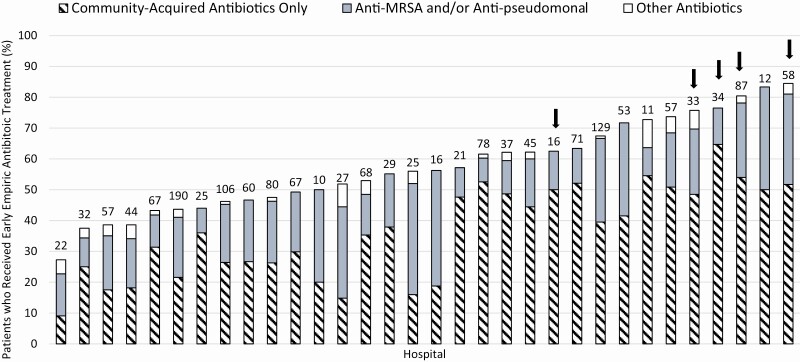
Background: Antibacterials may be initiated out of concern for bacterial coinfection in coronavirus disease 2019 (COVID-19). We determined prevalence and predictors of empiric antibacterial therapy and community-onset bacterial coinfections in hospitalized patients with COVID-19. Methods: A randomly sampled cohort of 1705 patients hospitalized with COVID-19 in 38 Michigan hospitals between 3/13/2020 and 6/18/2020. Data were collected on early (within 2 days of hospitalization) empiric antibacterial therapy and community-onset bacterial coinfections (positive microbiologic test ≤3 days). Poisson generalized estimating equation models were used to assess predictors. Results: Of 1705 patients with COVID-19, 56.6% were prescribed early empiric antibacterial therapy; 3.5% (59/1705) had a confirmed community-onset bacterial infection. Across hospitals, early empiric antibacterial use varied from 27% to 84%. Patients were more likely to receive early empiric antibacterial therapy if they were older (adjusted rate ratio [ARR]: 1.04 [1.00–1.08] per 10 years); had a lower body mass index (ARR: 0.99 [0.99–1.00] per kg/m2), more severe illness (eg, severe sepsis; ARR: 1.16 [1.07–1.27]), a lobar infiltrate (ARR: 1.21 [1.04–1.42]); or were admitted to a for-profit hospital (ARR: 1.30 [1.15–1.47]). Over time, COVID-19 test turnaround time (returned ≤1 day in March [54.2%, 461/850] vs April [85.2%, 628/737], P < .001) and empiric antibacterial use (ARR: 0.71 [0.63–0.81] April vs March) decreased. Conclusions: The prevalence of confirmed community-onset bacterial coinfections was low. Despite this, half of patients received early empiric antibacterial therapy. Antibacterial use varied widely by hospital. Reducing COVID-19 test turnaround time and supporting stewardship could improve antibacterial use.
Overview
The claims and statistics of this paper haven’t been checked yet.
Free: it reads the open-access text and checks the first 5 claims that cite a source we can check. Create a free account to check every claim.
Integrity signals
Registry
Cites
Statistics
Figures
Verification
Claims the paper makes
The claims and statistics of this paper haven’t been checked yet.
Free: it reads the open-access text and checks the first 5 claims that cite a source we can check. Create a free account to check every claim.
Claims other papers make about this one
Each is checked against this paper’s own text: does it say what the citing paper says it does?
In the citing paper
“a discharge diagnosis of COVID-19, because COVID-19 patients were frequently prescribed unnecessary antibiotics and this could distort trends in broad-spectrum antimicrobial utilization”
From Trends in empiric broad-Spectrum antibiotic use for suspected community-onset Sepsis in US hospitals (2024) · cites this paper as [25]
Self-check
Percentages, sums and reported differences re-computed from the paper’s own numbers.
The self-check needs the paper’s full text.
Citations
Cites
1 retracted
Gautret, P., Lagier, J.-C., Parola, P., Hoang, V. T., Meddeb, L., Mailhe, M., Doudier, B., Courjon, J., Giordanengo, V., Vieira, V. E., et al. (2020) · International Journal of Antimicrobial Agents · doi:10.1016/j.ijantimicag.2020.105949 · Cited by 5,288 · cited 1×
“Azithromycin in the absence of other antibacterial treatment was not included as many MI-COVID19 hospitals recommended its use as COVID19–specific therapy [18].”
MethodRetractedClinical characteristics of coronavirus disease 2019 in China
Guan, W.-J., Ni, Z.-Y., Hu, Y., Liang, W.-H., Ou, C.-Q., He, J.-X., Liu, L., Shan, H., Lei, C.-L., Hui, D. S. C., et al. (2020) · New England Journal of Medicine · doi:10.1056/nejmoa2002032 · Cited by 30,246
Chen, N., Zhou, M., Dong, X., Qu, J., Gong, F., Han, Y., Qiu, Y., Wang, J., Liu, Y., Wei, Y., et al. (2020) · The Lancet · doi:10.1016/s0140-6736(20)30211-7 · Cited by 21,415 · cited 1×
“Specifically, patients with COVID-19 are often started empirically on antibacterials when first hospitalized [2, 11].”
BackgroundWu, Z., & McGoogan, J. M. (2020) · JAMA · doi:10.1001/jama.2020.2648 · Cited by 17,016
COVID-19: consider cytokine storm syndromes and immunosuppression
Mehta, P., McAuley, D. F., Brown, M., Sanchez, E., Tattersall, R. S., & Manson, J. J. (2020) · The Lancet · doi:10.1016/s0140-6736(20)30628-0 · Cited by 9,664 · cited 1×
“15 decompensation.(24) Further studies are needed to aid clinicians in distinguishing the two.”
A Modified Poisson Regression Approach to Prospective Studies with Binary Data
Zou, G. (2004) · American Journal of Epidemiology · doi:10.1093/aje/kwh090 · Cited by 9,615
Metlay, J. P., Waterer, G. W., Long, A. C., Anzueto, A., Brozek, J., Crothers, K., Cooley, L. A., Dean, N. C., Fine, M. J., Flanders, S. A., et al. (2019) · American Journal of Respiratory and Critical Care Medicine · doi:10.1164/rccm.201908-1581st · Cited by 3,657 · cited 2×
“Includes patients who received antibacterials recommended for empiric communityacquired pneumonia (CAP) treatment in 2019 CAP guidelines [17] (ie, ampicillin/sulbactam, cefotaxime, ceftriaxone, moxifloxacin, levofloxacin, ceftaroline) and did not receive empiric anti-MRSA or anti-pseudomonal coverage.”
BackgroundSelf-citationRawson, T. M., Moore, L. S. P., Zhu, N., Ranganathan, N., Skolimowska, K., Gilchrist, M., Satta, G., Cooke, G., & Holmes, A. (2020) · Clinical Infectious Diseases · doi:10.1093/cid/ciaa530 · Cited by 1,662 · cited 2×
“Similar to other studies [4, 9, 11, 20], we found that patients hospitalized with COVID-19 were often treated with early empiric antibacterials.”
BackgroundResultCo-infections in people with COVID-19: a systematic review and meta-analysis.
Lansbury, L., Lim, B., Baskaran, V., & Lim, W. S. (2020) · Journal of Infection · doi:10.1016/j.jinf.2020.05.046 · Cited by 1,619 · cited 1×
“However, patients with COVID-19 may be at risk for concomitant bacterial infections that would require antibacterial treatment.(4) Data on bacterial co-infections are sparse and variable, with reports of co-infections occurring in 3-30% of patients with COVID-19.”
BackgroundLangford, B. J., So, M., Raybardhan, S., Leung, V., Westwood, D., MacFadden, D. R., Soucy, J.-P. R., & Daneman, N. (2020) · Clinical Microbiology and Infection · doi:10.1016/j.cmi.2020.07.016 · Cited by 1,569 · cited 1×
“Similar to other studies [4, 9, 11, 20], we found that patients hospitalized with COVID-19 were often treated with early empiric antibacterials.”
Result
Research works printed but not linked: 1
- Vaughn VM, Gandhi T, Conlon A, Chopra V, Malani AN, Flanders SA. The association of antibiotic stewardship with fluoroquinolone prescribing in Michigan hospitals: a multi-hospital cohort study. Clin Infect Dis 2019; 69: 1269– 77. 30759198 PMC6763628 · DOI
Cited by
Yeoh, Y. K., Zuo, T., Lui, G. C.-Y., Zhang, F., Liu, Q., Li, A. Y., Chung, A. C., Cheung, C. P., Tso, E. Y., Fung, K. S., et al. (2021) · Gut · doi:10.1136/gutjnl-2020-323020 · Cited by 1,317
Towards the sustainable discovery and development of new antibiotics
Miethke, M., Pieroni, M., Weber, T., Brönstrup, M., Hammann, P., Halby, L., Arimondo, P. B., Glaser, P., Aigle, B., Bode, H. B., et al. (2021) · Nature Reviews Chemistry · doi:10.1038/s41570-021-00313-1 · Cited by 1,151
Russell, C. D., Fairfield, C. J., Drake, T. M., Turtle, L., Seaton, R. A., Wootton, D. G., Sigfrid, L., Harrison, E. M., Docherty, A. B., de Silva, T. I., et al. (2021) · The Lancet Microbe · doi:10.1016/s2666-5247(21)00090-2 · Cited by 327
The role of co-infections and secondary infections in patients with COVID-19
Feldman, C., & Anderson, R. (2021) · Pneumonia · doi:10.1186/s41479-021-00083-w · Cited by 319
Bacterial Coinfections in Coronavirus Disease 2019
Westblade, L. F., Simon, M. S., & Satlin, M. J. (2021) · Trends in Microbiology · doi:10.1016/j.tim.2021.03.018 · Cited by 216
Bhimraj, A., Morgan, R. L., Shumaker, A. H., Baden, L. R., Cheng, V. C.-C., Edwards, K. M., Gallagher, J. C., Gandhi, R. T., Muller, W. J., Nakamura, M. M., et al. (2024) · Clinical Infectious Diseases · doi:10.1093/cid/ciac724 · Cited by 207
Community-Acquired Pneumonia: A Review
Vaughn, V. M., Dickson, R. P., Horowitz, J. K., & Flanders, S. A. (2024) · JAMA · doi:10.1001/jama.2024.14796 · Cited by 200
Self-citationEconomic Burden of COVID-19: A Systematic Review
Richards, F., Kodjamanova, P., Chen, X., Li, N., Atanasov, P., Bennetts, L., Patterson, B. J., Yektashenas, B., Mesa-Frias, M., Tronczynski, K., et al. (2022) · ClinicoEconomics and Outcomes Research · doi:10.2147/ceor.s338225 · Cited by 191
Antibiotics in treatment of COVID-19 complications: a review of frequency, indications, and efficacy
Chedid, M., Waked, R., Haddad, E., Chetata, N., Saliba, G., & Choucair, J. (2021) · Journal of Infection and Public Health · doi:10.1016/j.jiph.2021.02.001 · Cited by 182
Antimicrobial resistance in patients with COVID-19: a systematic review and meta-analysis
Langford, B. J., So, M., Simeonova, M., Leung, V., Lo, J., Kan, T., Raybardhan, S., Sapin, M. E., Mponponsuo, K., Farrell, A., et al. (2023) · The Lancet Microbe · doi:10.1016/s2666-5247(22)00355-x · Cited by 171
Karami, Z., Knoop, B. T., Dofferhoff, A. S. M., Blaauw, M. J. T., Janssen, N. A., van Apeldoorn, M., Kerckhoffs, A. P. M., van de Maat, J. S., Hoogerwerf, J. J., & ten Oever, J. (2021) · Infectious Diseases · doi:10.1080/23744235.2020.1839672 · Cited by 159
Rothe, K., Feihl, S., Schneider, J., Wallnöfer, F., Wurst, M., Lukas, M., Treiber, M., Lahmer, T., Heim, M. H., Dommasch, M., et al. (2020) · European Journal of Clinical Microbiology & Infectious Diseases · doi:10.1007/s10096-020-04063-8 · Cited by 173
Avershina, E., Shapovalova, V., & Shipulin, G. A. (2021) · Frontiers in Microbiology · doi:10.3389/fmicb.2021.707330 · Cited by 192
Karaba, S. M., Jones, G. F., Helsel, T., Smith, L., Avery, R. K., Dzintars, K., Salinas, A. B., Keller, S. C., Townsend, J., Klein, E. Y., et al. (2020) · Open Forum Infectious Diseases · doi:10.1093/ofid/ofaa578 · Cited by 143
Alshaikh, F. S., Sindi, O. N., Godman, B., Seaton, R. A., & Kurdi, A. B. (2022) · PLoS ONE · doi:10.1371/journal.pone.0272375 · Cited by 156
“Vaughn V,2021([51]) USA Retrospective Cohort Y Hospital Y Good 1705 885 (52) 64.”
BackgroundCalderón‐Parra, J., Muiño-Míguez, A., Estrada, A. D. B., Ramos, A., Múñez, E., Carracedo, E. F., Montes, J. T., Rubio‐Rivas, M., Arnalich, F., Pérez, J. L. B., et al. (2021) · PLoS ONE · doi:10.1371/journal.pone.0251340 · Cited by 137
C-reactive protein and procalcitonin for antimicrobial stewardship in COVID-19
Pink, I., Raupach, D., Fuge, J., Vonberg, R., Hoeper, M. M., Welte, T., & Rademacher, J. (2021) · Infection · doi:10.1007/s15010-021-01615-8 · Cited by 128
Bhatnagar, J., Gary, J. M., Reagan-Steiner, S., Estetter, L. B. C., Tong, S., Tao, Y., Denison, A. M., Lee, E. H., DeLeon-Carnes, M., Li, Y., et al. (2021) · The Journal of Infectious Diseases · doi:10.1093/infdis/jiab039 · Cited by 116
Kampmeier, S., Tönnies, H., Correa-Martínez, C. L., Mellmann, A., & Schwierzeck, V. (2020) · Antimicrobial Resistance and Infection Control · doi:10.1186/s13756-020-00820-8 · Cited by 121
Rodríguez‐Baño, J., Rossolini, G. M., Schultsz, C., Tacconelli, E., Murthy, S., Ohmagari, N., Holmes, A. H., Bachmann, T. T., Goossens, H., Cantón, R., et al. (2021) · Transactions of the Royal Society of Tropical Medicine and Hygiene · doi:10.1093/trstmh/trab048 · Cited by 122
Current Landscape of Methods to Evaluate Antimicrobial Activity of Natural Extracts
González‐Pastor, R., Carrera-Pacheco, S. E., Zúñiga-Miranda, J., Rodríguez-Pólit, C., Mayorga-Ramos, A., Guamán, L. P., & Barba‐Ostria, C. (2023) · Molecules · doi:10.3390/molecules28031068 · Cited by 160
Sender, V., Hentrich, K., & Henriques‐Normark, B. (2021) · Frontiers in Cellular and Infection Microbiology · doi:10.3389/fcimb.2021.643326 · Cited by 107
Zhu, N., Aylin, P. P., Rawson, T. M., Gilchrist, M. J., Majeed, A., & Holmes, A. H. (2021) · Clinical Microbiology and Infection · doi:10.1016/j.cmi.2021.02.007 · Cited by 102
“Initial data from hospitals with a high burden of COVID-19 indicate high rates of antibiotic prescribing despite relatively low detected rates of bacterial co-infections in COVID-19 [3,4].”
Qu, J., Cai, Z., Liu, Y., Duan, X., Han, S., Liu, J., Zhu, Y., Jiang, Z., Zhang, Y., Zhuo, C., et al. (2021) · Frontiers in Cellular and Infection Microbiology · doi:10.3389/fcimb.2021.641920 · Cited by 95
Nasir, N., Rehman, F., & Omair, S. F. (2021) · Journal of Medical Virology · doi:10.1002/jmv.27000 · Cited by 98
“6% patients received empirical antibiotics therapy[8].”
Antimicrobial consumption in patients with COVID-19: a systematic review and meta-analysis
Khan, S., Hasan, S. S., Bond, S. E., Conway, B. R., & Aldeyab, M. A. (2021) · Expert Review of Anti-infective Therapy · doi:10.1080/14787210.2022.2011719 · Cited by 97
Langford, B. J., So, M., Leung, V., Raybardhan, S., Lo, J., Kan, T., Leung, F., Westwood, D. J., Daneman, N., MacFadden, D. R., et al. (2021) · Clinical Microbiology and Infection · doi:10.1016/j.cmi.2021.11.008 · Cited by 96
Cong, W., Poudel, A. N., Alhusein, N., Wang, H., Yao, G., & Lambert, H. (2021) · Antibiotics · doi:10.3390/antibiotics10060745 · Cited by 98
Wu, H.-Y., Chang, P.-H., Chen, K., Lin, I., Hsih, W.-H., Tsai, W.-L., Chen, J.-A., & Lee, S. S. (2022) · Journal of Microbiology Immunology and Infection · doi:10.1016/j.jmii.2022.09.006 · Cited by 89
“06).(14) A skilled nursing facility was defined as one which provided high level of medical care by or under the direct supervision of licensed health professionals.”
Microbiota and COVID-19: Long-term and complex influencing factors
Gang, J., Wang, H., Xue, X., & Zhang, S. J. (2022) · Frontiers in Microbiology · doi:10.3389/fmicb.2022.963488 · Cited by 65
“Randomized data on COVID19 patients in 38 Michigan hospitals found that at least 50% of patients received early empiric antibiotic therapy (Vaughn et al., 2021).”
BackgroundBaghdadi, J. D., Coffey, K., Adediran, T. Y., Goodman, K. E., Pineles, L. L., Magder, L. S., O’Hara, L. M., Pineles, B. L., Nadimpalli, G., Morgan, D. J., et al. (2021) · Antimicrobial Agents and Chemotherapy · doi:10.1128/aac.01341-21 · Cited by 69
Trends in empiric broad-Spectrum antibiotic use for suspected community-onset Sepsis in US hospitals
Rhee, C., Chen, T., Kadri, S. S., Lawandi, A., Yek, C., Walker, M., Warner, S., Fram, D., Chen, H.-C., Shappell, C. N., et al. (2024) · JAMA Network Open · doi:10.1001/jamanetworkopen.2024.18923 · Cited by 58
The potential impact of the COVID-19 pandemic on antimicrobial resistance and antibiotic stewardship
Subramanya, S. H., Czyż, D. M., Acharya, K. P., & Humphreys, H. (2021) · VirusDisease · doi:10.1007/s13337-021-00695-2 · Cited by 66
Martínez-Guerra, B. A., González-Lara, M. F., de-León-Cividanes, N. A., Tamez-Torres, K. M., Román-Montes, C. M., Rajme‐López, S., Villalobos-Zapata, G. I., López-García, N. I., Martínez‐Gamboa, A., Sifuentes‐Osornio, J., et al. (2021) · Antibiotics · doi:10.3390/antibiotics10020182 · Cited by 54
Elsayed, A. A., Darwish, S. F., Zewail, M. B., Mohammed, M. K., Saeed, H., & Rabea, H. (2021) · International Journal of Clinical Practice · doi:10.1111/ijcp.14081 · Cited by 57
DeVoe, C., Segal, M. R., Wang, L., Stanley, K., Madera, S., Fan, J. P., Schouest, J. M., Graham-Ojo, R., Nichols, A. D., Prasad, P. A., et al. (2021) · Infection Control and Hospital Epidemiology · doi:10.1017/ice.2021.391 · Cited by 54
Witt, L. S., Howard-Anderson, J. R., Jacob, J. T., & Gottlieb, L. B. (2022) · JAC-Antimicrobial Resistance · doi:10.1093/jacamr/dlac130 · Cited by 66
Bork, J. T., Leekha, S., Claeys, K. C., Seung, H., Tripoli, M., Amoroso, A., & Heil, E. L. (2020) · Infection Control and Hospital Epidemiology · doi:10.1017/ice.2020.1360 · Cited by 80
Valencia, C. F., Pantoja, Ó. D. L., Castro, O. C., Sanko, A. A., & Olejua, P. A. (2021) · Scientific Reports · doi:10.1038/s41598-021-02078-5 · Cited by 56
Antibiotic Resistance: A Global Problem and the Need to Do More
Lessa, F. C., & Sievert, D. M. (2023) · Clinical Infectious Diseases · doi:10.1093/cid/ciad226 · Cited by 61
Antibiotics Prescribing in Intensive Care Settings during the COVID-19 Era: A Systematic Review
Abu-Rub, L. I., Abdelrahman, H. A., Johar, A.-R. A., Alhussain, H., Hadi, H. A., & Eltai, N. O. (2021) · Antibiotics · doi:10.3390/antibiotics10080935 · Cited by 57
“5% of the cases were confirmed with bacterial infection [63].”
BackgroundGerver, S. M., Guy, R. L., Wilson, K., Thelwall, S., Nsonwu, O., Rooney, G., Brown, C. S., Müller‐Pebody, B., Hope, R., & Hall, V. J. (2021) · Clinical Microbiology and Infection · doi:10.1016/j.cmi.2021.05.040 · Cited by 45
Meschiari, M., Onorato, L., Bacca, E., Orlando, G., Menozzi, M., Franceschini, E., Bedini, A., Cervo, A., Santoro, A., Sarti, M., et al. (2022) · Antibiotics · doi:10.3390/antibiotics11060826 · Cited by 57
Bloodstream Infections in Hospitalized Patients with COVID-19: A Systematic Review and Meta-Analysis
Ippolito, M., Simone, B., Filisina, C., Catalanotto, F. R., Catalisano, G., Marino, C., Misseri, G., Giarratano, A., & Cortegiani, A. (2021) · Microorganisms · doi:10.3390/microorganisms9102016 · Cited by 48
“Blood cultures were collected within a time interval of 48 h before and after the RT-PCR test Vaughn et al. (2020) [11] Multicenter retrospective observational study (USA) Both ICU and non-ICU 1705 hospitalized patients with COVID-19, Age y. 64.7 [53–76.7], Male 52% NA Community onset bacterial…”
BackgroundMethodInfluentialCalderón, M., Gysin, G., Gujjar, A., McMaster, A., King, L., Comandé, D., Hunter, E., & Payne, B. A. I. (2023) · BMC Infectious Diseases · doi:10.1186/s12879-022-07942-x · Cited by 60
“[13] described that of the patients who received empiric antibiotic therapy (N = 965), the Fig.”
BackgroundMason, C. Y., Kanitkar, T., Richardson, C., Lanzman, M., Stone, Z., Mahungu, T. W., Mack, D., Wey, E. Q., Lamb, L., Balakrishnan, I., et al. (2021) · Journal of Antimicrobial Chemotherapy · doi:10.1093/jac/dkaa563 · Cited by 58
Borek, A., Maitland, K., McLeod, M. C., Campbell, A., Hayhoe, B. W. J., Butler, C., Morrell, L., Roope, L. S. J., Holmes, A. H., Walker, A. S., et al. (2021) · Antibiotics · doi:10.3390/antibiotics10121531 · Cited by 46
Viral Coinfection among COVID‐19 Patient Groups: An Update Systematic Review and Meta‐Analysis
Malekifar, P., Pakzad, R., Shahbahrami, R., Zandi, M., Jafarpour, A., Rezayat, S. A., Akbarpour, S., Shabestari, A. N., Pakzad, I., Hesari, E., et al. (2021) · BioMed Research International · doi:10.1155/2021/5313832 · Cited by 47
Montrucchio, G. G., Corcione, S., Lupia, T., Shbaklo, N., Olivieri, C., Poggioli, M., Pagni, A., Colombo, D., Roasio, A., Bosso, S., et al. (2022) · Journal of Clinical Medicine · doi:10.3390/jcm11175208 · Cited by 53
“Other authors previously highlighted that, during the first wave of the COVID-19 pandemic, several factors could have favored the emergence and spread of antimicrobialresistant bacteria in hospitals [25], such as the overload of hospitalized patients, especially in intensive care, favoring patient-to-patient transmiss…”
BackgroundThe Complexity of Co-Infections in the Era of COVID-19
Cimolai, N. (2021) · SN Comprehensive Clinical Medicine · doi:10.1007/s42399-021-00913-4 · Cited by 44
Bloodstream infections in the COVID-19 era: results from an Italian multi-centre study
Pasquini, Z. A. I., Barocci, I., Brescini, L., Candelaresi, B., Castelletti, S., Iencinella, V., Mazzanti, S., Procaccini, G., Orsetti, E., Pallotta, F., et al. (2021) · International Journal of Infectious Diseases · doi:10.1016/j.ijid.2021.07.065 · Cited by 44
Alshaikh, F. S., Sindi, O. N., Godman, B., Seaton, R. A., & Kurdi, A. B. (2022) · medRxiv · doi:10.1101/2022.03.02.22271779 · Cited by 40
Exacerbation of antimicrobial resistance: another casualty of the COVID-19 pandemic?
Razzaque, M. S. (2020) · Expert Review of Anti-infective Therapy · doi:10.1080/14787210.2021.1865802 · Cited by 40
“5% of patients had a confirmed bacterial infection [6].”
BackgroundPuzniak, L., Finelli, L., Yu, K. C., Bauer, K. A. A., Moise, P. A., Anda, C. S. D., Vankeepuram, L., Sepassi, A., & Gupta, V. (2021) · BMC Infectious Diseases · doi:10.1186/s12879-021-05877-3 · Cited by 46
Lardaro, T., Wang, A. Z., Bucca, A. W., Croft, A., Glober, N., Holt, D. B., Musey, P. I., Peterson, K., Trigonis, R. A., Schaffer, J. T., et al. (2021) · Journal of Medical Virology · doi:10.1002/jmv.26795 · Cited by 37
Atallah, N. J., Warren, H. M., Roberts, M. B., Elshaboury, R. H., Bidell, M. R., Gandhi, R. G., Adamsick, M. L., Ibrahim, M. K., Sood, R., Eddine, S. B. Z., et al. (2022) · PLoS ONE · doi:10.1371/journal.pone.0262342 · Cited by 49
Yang, M., Özdemir, Z., Kim, H., Nah, S., Andris, E., Li, X., Wimmer, Z., & Yoon, J. (2022) · Advanced Healthcare Materials · doi:10.1002/adhm.202200529 · Cited by 41
Martin, A. J., Shulder, S., Dobrzynski, D., Quartuccio, K. S., & Pillinger, K. E. (2021) · Journal of Pharmacy Practice · doi:10.1177/08971900211030248 · Cited by 39
Zheng, Q., Wang, D., Lin, R., Lv, Q., & Wang, W. (2022) · Frontiers in Immunology · doi:10.3389/fimmu.2022.1013322 · Cited by 43
Galli, F., Bindo, F., Motos, A., Fernández‐Barat, L., Barbeta, E., Gabarrús, A., Ceccato, A., Bermejo-Martín, J. F., Ferrer, R., Riera, J., et al. (2023) · Intensive Care Medicine · doi:10.1007/s00134-023-07161-1 · Cited by 45
“First of all, the poor sensitivity and incomplete use of diagnostic tests, that represent a critical barrier to coinfection detection and antibiotic stewardship [41].”
BackgroundUse of Electronic Clinical Data to Track Incidence and Mortality for SARS-CoV-2–Associated Sepsis
Shappell, C. N., Klompas, M., Chan, C., Chen, T., Kanjilal, S., McKenna, C. S., & Rhee, C. (2023) · JAMA Network Open · doi:10.1001/jamanetworkopen.2023.35728 · Cited by 40
Advani, S. D., Sickbert-Bennett, E. E., Moehring, R. W., Cromer, A. L., Lokhnygina, Y. V., Dodds‐Ashley, E., Kalu, I. C., DiBiase, L., Weber, D. J., & Anderson, D. J. (2022) · Clinical Infectious Diseases · doi:10.1093/cid/ciac684 · Cited by 37
Pakzad, R., Malekifar, P., Shateri, Z., Zandi, M., Rezayat, S. A., Soleymani, M., Karimi, M. R., Ahmadi, S. E., Shahbahrami, R., Pakzad, I., et al. (2021) · Journal of Clinical Laboratory Analysis · doi:10.1002/jcla.24151 · Cited by 37
Secondary Bacterial Infection Rates Among Patients With COVID-19
Bahçeci, İ., Yıldız, İ. E., Duran, Ö. F., Soztanaci, U. S., Harbawi, Z. K., Şenol, F. F., & Demiral, G. (2022) · Cureus · doi:10.7759/cureus.22363 · Cited by 46
“8% received antimicrobial therapy effective against methicillin-resistant Staphylococcus aureus (MRSA) [20].”
BackgroundInfluentialRamzan, K., Shafiq, S., Raees, I., Mustafa, Z. U., Salman, M., Khan, A. H., Meyer, J. C., & Godman, B. (2022) · Antibiotics · doi:10.3390/antibiotics11060789 · Cited by 42
Human rhinoviruses prevailed among children in the setting of wearing face masks in Shanghai, 2020
Jia, R., Lu, L., Li, S., Liu, P., Xu, M., Cao, L., Su, L., & Xu, J. (2022) · BMC Infectious Diseases · doi:10.1186/s12879-022-07225-5 · Cited by 34
“In terms of the host’s factors, studies focusing on bacterial co-infections in COVID-19 patients found that advanced age and other comorbidities, such as chronic kidney disease, diabetes, and chronic heart disease, are associated with bacterial coinfections [42, 43].”
BackgroundPandey, M. K., May, A., Tan, L., Hughes, H. C., Jones, J. P., Harrison, W., Bradburn, S., Tyrrel, S., Muthuswamy, B., Berry, N., et al. (2022) · Critical Care · doi:10.1186/s13054-022-04026-9 · Cited by 35
Antibiotic misuse during COVID-19 Pandemic: A Recipe for Disaster
Garg, S. (2021) · Indian Journal of Critical Care Medicine · doi:10.5005/jp-journals-10071-23862 · Cited by 39
Sallam, M., Eid, H., Awamleh, N., Al‐Tammemi, A. B., Barakat, M. M., Athamneh, R. Y., Hallit, S. R., Harapan, H., & Mahafzah, A. M. (2022) · Tropical Medicine and Infectious Disease · doi:10.3390/tropicalmed7120411 · Cited by 36
Anugulruengkitt, S., Charoenpong, L., Kulthanmanusorn, A., Thienthong, V., Usayaporn, S., Kaewkhankhaeng, W., Rueangna, O., Sophonphan, J., Moolasart, V., Manosuthi, W., et al. (2022) · JAC-Antimicrobial Resistance · doi:10.1093/jacamr/dlac140 · Cited by 43
Influenza Activity in the US During the 2020-2021 Season
Uyeki, T. M., Wentworth, D. E., & Jernigan, D. B. (2021) · JAMA · doi:10.1001/jama.2021.6125 · Cited by 31
Asthma in patients with coronavirus disease 2019
Shi, L., Xu, J., Xiao, W., Wang, Y., Jin, Y., Chen, S., Duan, G., Yang, H., & Wang, Y. (2021) · Annals of Allergy Asthma & Immunology · doi:10.1016/j.anai.2021.02.013 · Cited by 33
Markovskaya, Y., Gavioli, E. M., Cusumano, J. A., & Glatt, A. E. (2022) · Antimicrobial Stewardship & Healthcare Epidemiology · doi:10.1017/ash.2022.253 · Cited by 38
Dubey, P., Thakur, B., Reddy, S., Martinez, C. A., Nurunnabi, M., Manuel, S. L., Chheda, S., Bracamontes, C., & Dwivedi, A. K. (2021) · BMC Pregnancy and Childbirth · doi:10.1186/s12884-021-03685-w · Cited by 31
“In a US study, more than half of the patients initially received antibiotics for the suspicion of bacterial infection, later in their stay, testing revealed that more than 96% of patients had the COVID-19 only and did not need antibiotics demonstrating their overuse [14].”
BackgroundProcalcitonin for individualizing antibiotic treatment: an update with a focus on COVID-19
Wolfisberg, S., Gregoriano, C., & Schüetz, P. (2021) · Critical Reviews in Clinical Laboratory Sciences · doi:10.1080/10408363.2021.1975637 · Cited by 35
Pfaller, M. A., Carvalhaes, C. G., DeVries, S. D., Rhomberg, P. R., & Castanheira, M. (2022) · Medical Mycology · doi:10.1093/mmy/myac028 · Cited by 37
Powell, N., Howard, P., Llewelyn, M., Szakmány, T., Albur, M., Bond, S. E., Euden, J., Brookes‐Howell, L., Dark, P. M., Hellyer, T. P., et al. (2021) · Antibiotics · doi:10.3390/antibiotics10050516 · Cited by 29
Guidelines for the Use of Procalcitonin for Rational Use of Antibiotics
Chaudhry, D., Sharma, A., Govil, D., Hadda, V., Jain, N., Tiwari, P., Samavedam, S., Dixit, S., Govindagoudar, M. B., Khilnani, G. C., et al. (2022) · Indian Journal of Critical Care Medicine · doi:10.5005/jp-journals-10071-24326 · Cited by 39
Uses of Procalcitonin as a Biomarker in Critical Care Medicine
Maves, R. C., & Enwezor, C. H. (2022) · Infectious Disease Clinics of North America · doi:10.1016/j.idc.2022.07.004 · Cited by 37
Santoso, P., Sung, M., Hartantri, Y., Andriyoko, B., Sugianli, A. K., Alisjahbana, B., Tjiam, J. S. L., Debora, J., Kusumawati, D., & Soeroto, A. Y. (2022) · International Journal of General Medicine · doi:10.2147/ijgm.s359959 · Cited by 37
Camargo, J. F., Mendoza, M. A., Lin, R. Y., Moroz, I. V., Anderson, A. D., Morris, M. I., Natori, Y., Natori, A., Raja, M. A., Lekakis, L. J., et al. (2021) · Transplant Infectious Disease · doi:10.1111/tid.13625 · Cited by 25
Nasa, P., Azoulay, É., Chakrabarti, A., Divatia, J. V., Jain, R., Rodrigues, C. S., Rosenthal, V., Alhazzani, W. A., Arabi, Y. M., Bakker, J., et al. (2021) · The Lancet Infectious Diseases · doi:10.1016/s1473-3099(21)00626-5 · Cited by 30
de Alencar, J. C. G., Gómez, L. M. G., Cortez, A. L., de Souza, H. P., Levin, A. S., & Salomão, M. C. (2022) · Frontiers in Medicine · doi:10.3389/fmed.2022.779516 · Cited by 27
Wu, H.-Y., Chang, P.-H., Huang, Y., Tsai, C.-S., Chen, K., Lin, I., Hsih, W.-H., Tsai, W.-L., Chen, J.-A., Yang, T.-L., et al. (2022) · Journal of Microbiology Immunology and Infection · doi:10.1016/j.jmii.2022.12.003 · Cited by 26
“Due to a low sensitivity and specificity, laboratory data cannot be used alone to diagnose a bacterial infection.(31,47) In contrast, these biomarkers may have a greater role in excluding bacterial infections.”
BackgroundGajić, I., Jovićević, M., Popadić, V., Trudić, A., Kabić, J., Kekić, D., Ilic, A., Klašnja, S., Hadnadjev, M., Popadic, D. J., et al. (2023) · Journal of Hospital Infection · doi:10.1016/j.jhin.2023.04.013 · Cited by 33
Did Clostridioides difficile testing and infection rates change during the COVID-19 pandemic?
Hawes, A. M., Desai, A. N., & Patel, P. (2021) · Anaerobe · doi:10.1016/j.anaerobe.2021.102384 · Cited by 25
Self-citationPuzniak, L., Bauer, K. A. A., Yu, K. C., Moise, P. A., Finelli, L., Ye, G., Anda, C. S. D., Vankeepuram, L., & Gupta, V. (2021) · Open Forum Infectious Diseases · doi:10.1093/ofid/ofab232 · Cited by 26
Race, Ethnicity, and 60-Day Outcomes After Hospitalization With COVID-19
Robinson‐Lane, S. G., Sutton, N. R., Chubb, H. A., Yeow, R. Y., Mazzara, N., DeMarco, K., Kim, T., & Chopra, V. (2021) · Journal of the American Medical Directors Association · doi:10.1016/j.jamda.2021.08.023 · Cited by 30
Self-citationCabral, S., Harris, A. D., Cosgrove, S. E., Magder, L. S., Tamma, P. D., & Goodman, K. E. (2023) · Clinical Infectious Diseases · doi:10.1093/cid/ciad077 · Cited by 34
Coenen, S., de la Court, J. R., Buis, D. T. P., Meijboom, L. J., Schade, R. P., Visser, C. E., van Hest, R. M., Kuijvenhoven, M. A., Prins, J. M., Nijman, S. F. M., et al. (2021) · Antimicrobial Resistance and Infection Control · doi:10.1186/s13756-021-01024-4 · Cited by 27
de Lusignan, S., Joy, M., Sherlock, J., Tripathy, M., van Hecke, O., Gbinigie, O. A., Williams, J., Butler, C., & Hobbs, R. F. (2021) · BJGP Open · doi:10.3399/bjgpo.2021.0087 · Cited by 26
Mutua, J. M., Njeru, J. M., & Musyoki, A. M. (2022) · BMC Infectious Diseases · doi:10.1186/s12879-022-07885-3 · Cited by 33
“%) community-onset of bacterial infections[17].”
BackgroundResultInfluentialHospital-acquired infections among adult patients admitted for coronavirus disease 2019 (COVID-19)
Smith, L., Karaba, S. M., Amoah, J., Jones, G. F., Avery, R. K., Dzintars, K., Helsel, T., Cosgrove, S. E., & Fabre, V. (2021) · Infection Control and Hospital Epidemiology · doi:10.1017/ice.2021.148 · Cited by 24
Miller, M. M., Schooneveld, T. C. V., Stohs, E. J., Marcelin, J. R., Alexander, B. T., Watkins, A. B., Creager, H. M., & Bergman, S. (2023) · Open Forum Infectious Diseases · doi:10.1093/ofid/ofad382 · Cited by 26
“First, it is known that antimicrobial overuse was common, especially early during the COVID-19 pandemic [19, 20].”
BackgroundMamun, A. A., Saatchi, A., Xie, M. W., Lishman, H., Blondel-Hill, E., Marra, F., & Patrick, D. M. (2021) · Open Forum Infectious Diseases · doi:10.1093/ofid/ofab185 · Cited by 24
Targeting the Gut Microbiota in Coronavirus Disease 2019: Hype or Hope?
Lau, H. C.-H., Ng, S. C., & Yu, J. Q. (2021) · Gastroenterology · doi:10.1053/j.gastro.2021.09.009 · Cited by 24
COVID-19 and C. auris: A Case-Control Study from a Tertiary Care Center in Lebanon
Allaw, F., Haddad, S. F., Habib, N., Moukarzel, P., Naji, N. S., Kanafani, Z. A., Ibrahim, A., Zahreddine, N. K., Spernovasilis, N. A., Poulakou, G., et al. (2022) · Microorganisms · doi:10.3390/microorganisms10051011 · Cited by 25
Gudipati, S., Zervos, M., & Herc, E. S. (2020) · Antibiotics · doi:10.3390/antibiotics9090599 · Cited by 25
SHEA statement on antibiotic stewardship in hospitals during public health emergencies
Barlam, T. F., Mohajer, M. A., Al‐Tawfiq, J. A., Auguste, A. J., Cunha, C. B., Forrest, G. N., Gross, A. E., Lee, R. A., Seo, S. K., Suh, K. N., et al. (2022) · Infection Control and Hospital Epidemiology · doi:10.1017/ice.2022.194 · Cited by 23
Bauer, K. A. A., Puzniak, L., Yu, K. C., Klinker, K. P., Watts, J. A., Moise, P. A., Finelli, L., Ai, C., & Gupta, V. (2022) · Open Forum Infectious Diseases · doi:10.1093/ofid/ofac537 · Cited by 23
Metadata
- Authors
- Vaughn, V. M., Gandhi, T. N., Petty, L. A., Patel, P. K., Prescott, H. C., Malani, A. N., Ratz, D., McLaughlin, E., Chopra, V., & Flanders, S. A.
- Affiliations
- University of Michigan (US)
- Trinity Health Michigan (US)
- Corresponding author
- Vaughn, Valerie M
- ORCID
- Venue
- Clinical Infectious Diseases
- Publisher
- Oxford University Press (OUP)
- Published
- 2020-08-21
- Volume
- 72
- Issue
- 10
- Pages
- e533-e541
- ISSN
- 1058-4838 (ISSN-L)
- 1537-6591
- PMC
- PMC7499526
- OpenAlex
- W3081368778
- Cited by
- 396
- References
- 28
- Citations by year
- 2026: 19 · 2025: 15 · 2024: 42 · 2023: 90 · 2022: 111 · 2021: 103 · 2020: 14
- FWCI
- 10.43
- Type
- journal article
- Language
- en
- Open access
- hybrid
- doi.org
- Licence
- Locations
- Clinical Infectious Diseases (publishedVersion, cc-by-nc-nd)
- PubMed Central (publishedVersion, cc-by-nc-nd)
- PubMed (publishedVersion)
- Funders
- Agency for Healthcare Research and Quality
- Topics
- Health Sciences › Medicine › Infectious Diseases › COVID-19 Clinical Research Studies
- Health Sciences › Medicine › Infectious Diseases › Antibiotic Use and Resistance
- Health Sciences › Medicine › Critical Care and Intensive Care Medicine › Nosocomial Infections in ICU
- Keywords
- COVID-19 pandemic, SARS-CoV-2, bacterial co-infection, hospitalized patients, test turnaround time, hospital variation, for-profit hospitals, body mass index, severe sepsis, antibiotic prescribing, COVID-19 testing capacity, Michigan hospitals, Michigan
- MeSH terms
- COVID-19, SARS-CoV-2, Anti-Bacterial Agents, Hospitalization, Hospitals, Humans, Michigan, Cohort Studies, Coinfection
About these checks
Registry, retraction, Cites and statistics results are computed, not judged, with one exception: a printed reference that no index lists is read once by a model before it counts as a citation error. Claims are extracted by a model and kept only when their quote appears verbatim in the text; each cited source is then checked, with a model’s help, for whether it says what the claim relies on. Those verdicts can be wrong — read the claim’s quote and the cited source before relying on one.
Statistics and arithmetic are recomputed, not judged.
Confidence bands are shown only for fields calibrated on our annotated test set. None is calibrated yet, so no band is shown.
What counts as a claim ›How we measure confidence ›How we check this ›
Are you an author, or do you see a problem with this page? Request a review
Data sources
Bibliographic data: Semantic Scholar, OpenAlex, Crossref.
Contains information from the Semantic Scholar Academic Graph Datasets, made available under the ODC Attribution License (ODC-BY 1.0).
Semantic Scholar’s data is described in: Kinney, R., et al. (2023). The Semantic Scholar Open Data Platform. arXiv:2301.10140.
