

Genome-wide association mapping of salinity tolerance in rice (Oryza sativa)
Open accessThe DOI matches its Crossref record; 81 of the 81 references it cites were found in a registry or an index.
Abstract
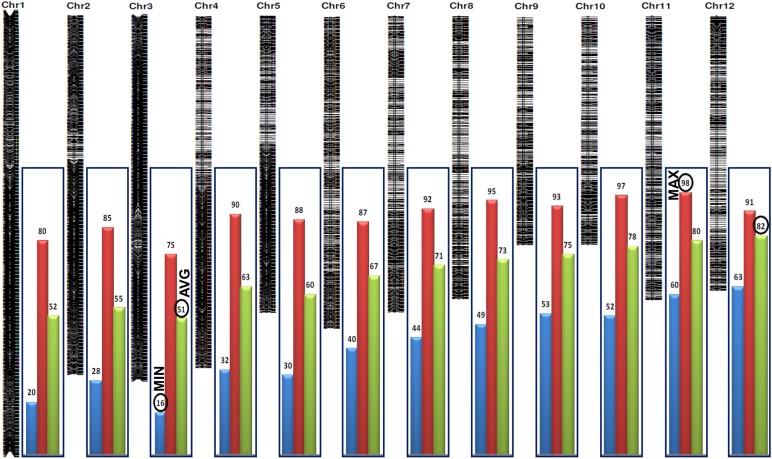
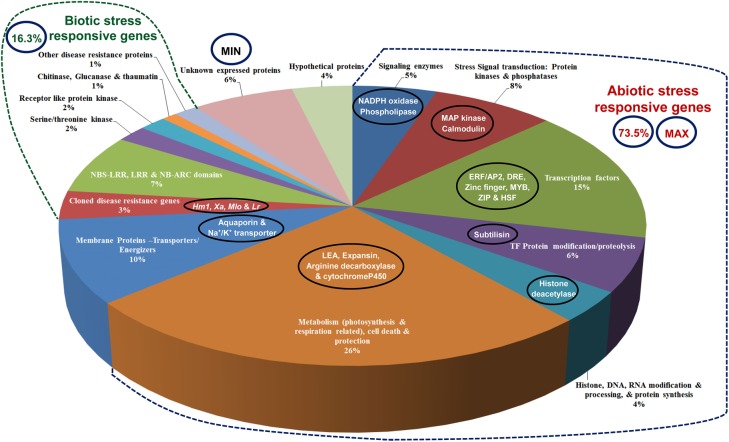
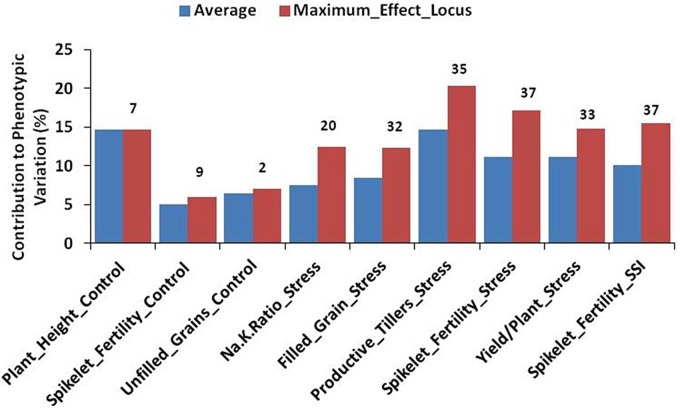
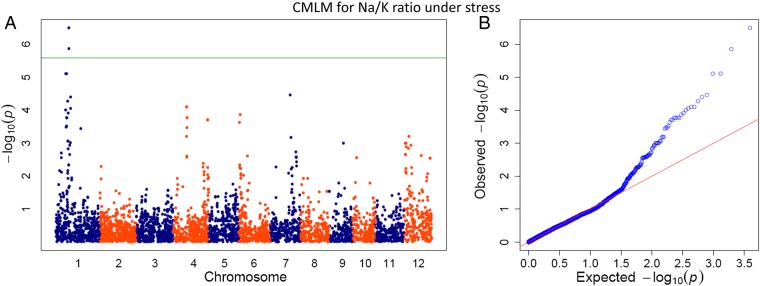
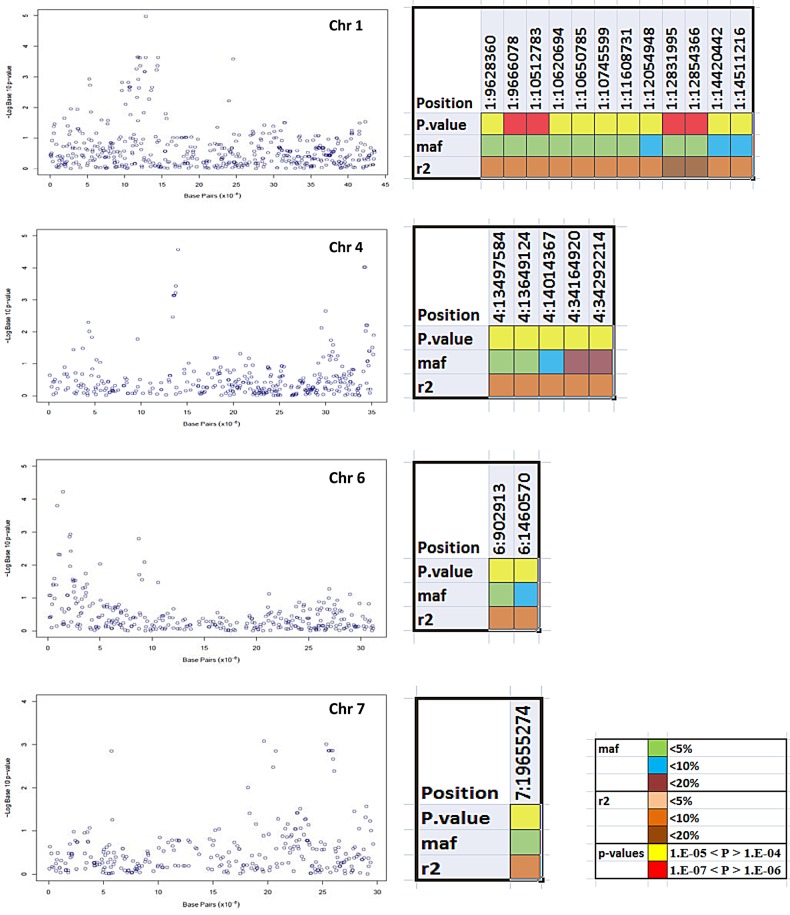
Salinity tolerance in rice is highly desirable to sustain production in areas rendered saline due to various reasons. It is a complex quantitative trait having different components, which can be dissected effectively by genome-wide association study (GWAS). Here, we implemented GWAS to identify loci controlling salinity tolerance in rice. A custom-designed array based on 6,000 single nucleotide polymorphisms (SNPs) in as many stress-responsive genes, distributed at an average physical interval of <100 kb on 12 rice chromosomes, was used to genotype 220 rice accessions using Infinium high-throughput assay. Genetic association was analysed with 12 different traits recorded on these accessions under field conditions at reproductive stage. We identified 20 SNPs (loci) significantly associated with Na(+)/K(+) ratio, and 44 SNPs with other traits observed under stress condition. The loci identified for various salinity indices through GWAS explained 5-18% of the phenotypic variance. The region harbouring Saltol, a major quantitative trait loci (QTLs) on chromosome 1 in rice, which is known to control salinity tolerance at seedling stage, was detected as a major association with Na(+)/K(+) ratio measured at reproductive stage in our study. In addition to Saltol, we also found GWAS peaks representing new QTLs on chromosomes 4, 6 and 7. The current association mapping panel contained mostly indica accessions that can serve as source of novel salt tolerance genes and alleles. The gene-based SNP array used in this study was found cost-effective and efficient in unveiling genomic regions/candidate genes regulating salinity stress tolerance in rice.
Overview
The claims and statistics of this paper haven’t been checked yet.
Free: it reads the open-access text and checks the first 5 claims that cite a source we can check. Create a free account to check every claim.
Integrity signals
Registry
Cites
Statistics
Figures
Verification
Claims the paper makes
The claims and statistics of this paper haven’t been checked yet.
Free: it reads the open-access text and checks the first 5 claims that cite a source we can check. Create a free account to check every claim.
Claims other papers make about this one
Each is checked against this paper’s own text: does it say what the citing paper says it does?
The source backs part of the claim, not all of it — or backs it for a different population, condition or comparison.
In the citing paper
“A novel QTL present on chromosome number 1 was reported and was called “Saltol” which is associated with salt tolerance at seedling stage [153].”
From Impact of Climate Change on Crops Adaptation and Strategies to Tackle Its Outcome: A Review (2019) · cites this paper as [153]
Experimental — accuracy not yet measured
Self-check
Percentages, sums and reported differences re-computed from the paper’s own numbers.
The self-check needs the paper’s full text.
Citations
Cites
Controlling the False Discovery Rate: A Practical and Powerful Approach to Multiple Testing
Benjamini, Y., & Hochberg, Y. (1995) · Journal of the Royal Statistical Society Series B: Statistical Methodology · doi:10.1111/j.2517-6161.1995.tb02031.x · Cited by 109,482
PLINK: a tool set for whole-genome association and population-based linkage analyses.
Purcell, S., Neale, B., Todd-Brown, K., Thomas, L., Ferreira, M. A. R., Bender, D., Maller, J., Sklar, P., de Bakker, P. I. W., Daly, M. J., et al. (2007) · The American Journal of Human Genetics · doi:10.1086/519795 · Cited by 34,089 · cited 2×
“For all pairs of SNPs, r2 was calculated using the --r2 --ld-window-kb 2,000 --ld-window 99999 --ld-window-r2 0 command in PLINK.45 The command was used to calculate LD association among SNP pairs to a distance of 2,000 kb.”
MethodInference of Population Structure Using Multilocus Genotype Data
Pritchard, J. K., Stephens, M., & Donnelly, P. (2000) · Genetics · doi:10.1093/genetics/155.2.945 · Cited by 33,908
genalex 6: genetic analysis in Excel. Population genetic software for teaching and research
PEAKALL, R., & SMOUSE, P. E. (2006) · Molecular Ecology Notes · doi:10.1111/j.1471-8286.2005.01155.x · Cited by 16,589
Pahlich, E., & Gerlitz, C. (1980) · Phytochemistry · doi:10.1016/0031-9422(80)85004-7 · Cited by 10,599
Principal components analysis corrects for stratification in genome-wide association studies
Price, A. L., Patterson, N. J., Plenge, R. M., Weinblatt, M. E., Shadick, N. A., & Reich, D. (2006) · Nature Genetics · doi:10.1038/ng1847 · Cited by 10,248
TASSEL: software for association mapping of complex traits in diverse samples
Bradbury, P. J., Zhang, Z., Kroon, D. E., Casstevens, T. M., Ramdoss, Y., & Buckler, E. S. (2007) · Bioinformatics · doi:10.1093/bioinformatics/btm308 · Cited by 7,759
The Structure of Haplotype Blocks in the Human Genome
Gabriel, S. B., Schaffner, S. F., Nguyen, H., Moore, J. M., Roy, J., Blumenstiel, B., Higgins, J., DeFelice, M., Lochner, A., Faggart, M., et al. (2002) · Science · doi:10.1126/science.1069424 · Cited by 5,863
Yu, J., Pressoir, G., Briggs, W. H., Vroh Bi, I., Yamasaki, M., Doebley, J. F., McMullen, M. D., Gaut, B. S., Nielsen, D. M., Holland, J. B., et al. (2006) · Nature Genetics · doi:10.1038/ng1702 · Cited by 4,133
Cold, salinity and drought stresses: An overview
Mahajan, S., & Tuteja, N. (2005) · Archives of Biochemistry and Biophysics · doi:10.1016/j.abb.2005.10.018 · Cited by 2,925
Research works printed but not linked: 11
- Blumwald E. Grover A. 2006, Salt tolerance, In: Plant biotechnology: current and future uses of genetically modified crops. John Wiley and Sons Ltd, UK, pp. 206– 24.
- 2000, Current Science, 78, 162
- 2010, PNAS, 107, 21611, 10.1073/pnas.1010179107 · DOI · Paper page
- To, 2006, Nature genetics, 38, 904, 10.1038/ng1847 · DOI · Paper page
- 2003, Annual review of plant biology, 54, 357, 10.1146/annurev.arplant.54.031902.134907 · DOI · Paper page
- 2011, Nature genetics, 44, 32, 10.1038/ng.1018 · DOI · Paper page
- 2009, PNAS, 106, 12273, 10.1073/pnas.0900992106 · DOI · Paper page
- Doyle J.J. Doyle J.L. 1987, A rapid DNA isolation procedure for small quantities of fresh leaf tissue, Phytochem. Bull., 19, 11– 15.
- 2012, PNAS, 109, 8872, 10.1073/pnas.1120813109 · DOI · Paper page
- 2013, Journal of genetics, 92, 433, 10.1007/s12041-013-0285-4 · DOI
- 2013, Journal of Experimental Botany, 64, 3099, 10.1093/jxb/ert182 · DOI
Cited by
Impact of Climate Change on Crops Adaptation and Strategies to Tackle Its Outcome: A Review
Raza, A., Razzaq, A., Mehmood, S. S., Zou, X., Zhang, X., Lv, Y., & Xu, J. (2019) · Plants · doi:10.3390/plants8020034 · Cited by 1,762
“Kumar et al. (2015) reported various genes regulating the salinity tolerance in rice by using infinium high-throughput SNPs arrays.”
BackgroundAtta, K., Mondal, S., Gorai, S., Singh, A. P., Kumari, A., Ghosh, T., Roy, A., Hembram, S., Gaikwad, D. J., Mondal, S., et al. (2023) · Frontiers in Plant Science · doi:10.3389/fpls.2023.1241736 · Cited by 523
Landrace Germplasm for Improving Yield and Abiotic Stress Adaptation
Dwivedi, S. L., Ceccarelli, S., Blair, M. W., Upadhyaya, H. D., Are, A. K., & Ortiz, R. (2016) · Trends in Plant Science · doi:10.1016/j.tplants.2015.10.012 · Cited by 422
“The SNPs associated with Na/K ratio were in complete linkage disequilibrium [81].”
BackgroundPlant abiotic stress challenges from the changing environment
Pereira, A. (2016) · Frontiers in Plant Science · doi:10.3389/fpls.2016.01123 · Cited by 338
Smart Engineering of Genetic Resources for Enhanced Salinity Tolerance in Crop Plants
Arzani, A., & Ashraf, M. (2016) · Critical Reviews in Plant Sciences · doi:10.1080/07352689.2016.1245056 · Cited by 286
“In rice, Kumar et al. (2015) implemented the GWA approach and detected 20 SNPs significantly linked with NaC/KC ratio.”
MethodAdvances in understanding salt tolerance in rice
Ganie, S. A., Molla, K. A., Henry, R. J., Bhat, K. V., & Mondal, T. K. (2019) · Theoretical and Applied Genetics · doi:10.1007/s00122-019-03301-8 · Cited by 244
Molecular mechanisms of salinity tolerance in rice
Chen, T., Shabala, S., Niu, Y., Chen, Z.-H., Shabala, L., Meinke, H., Venkataraman, G., Pareek, A., Xu, J., & Zhou, M. (2021) · The Crop Journal · doi:10.1016/j.cj.2021.03.005 · Cited by 239
Advances and Challenges in the Breeding of Salt-Tolerant Rice
Qin, H., Li, Y., & Huang, R. (2020) · International Journal of Molecular Sciences · doi:10.3390/ijms21218385 · Cited by 205
“and 44 SNPs associated with other traits observed under salt stress conditions [91].”
BackgroundTranslating knowledge about abiotic stress tolerance to breeding programmes
Gilliham, M., Able, J. A., & Roy, S. J. (2017) · The Plant Journal · doi:10.1111/tpj.13456 · Cited by 202
“Following the phenotyping of these rice lines, techniques such as Genome Wide Association Studies (GWAS) and QTL mapping can be used to identify genes underpinning novel traits in stress tolerance (Kumar et al., 2015).”
MethodImportance of Landraces in Cereal Breeding for Stress Tolerance
Marone, D., Russo, M. A., Mores, A., Ficco, D. B. M., Laidò, G., Mastrangelo, A. M., & Borrelli, G. M. (2021) · Plants · doi:10.3390/plants10071267 · Cited by 197
“Further researches revealed that Saltol1 is a complex locus, mapped on chromosome 1, with multiple Pokkali alleles regulating shoot Na+/K+ homeostasis [86,87].”
BackgroundGenome-wide association study of salt tolerance at the seed germination stage in rice
Shi, Y., Gao, L., Wu, Z., Zhang, X., Wang, M., Zhang, C.-S., Zhang, F., Zhou, Y., & Li, Z. (2017) · BMC Plant Biology · doi:10.1186/s12870-017-1044-0 · Cited by 179
“The SSI has been used to define the varieties or genotypes that show superior performance under stress and non-stress conditions in wheat [18] and rice [17, 19].”
BackgroundMethodLiu, C., Chen, K., Zhao, X., Wang, X., Shen, C., Zhu, Y., Dai, M., Qiu, X., Yang, R., Xing, D., et al. (2019) · Rice · doi:10.1186/s12284-019-0349-z · Cited by 145
Rice in Saline Soils: Physiology, Biochemistry, Genetics, and Management
Hussain, M., Ahmad, S., Hussain, S., Lal, R., Ul‐Allah, S., & Nawaz, A. (2017) · Advances in agronomy · doi:10.1016/bs.agron.2017.11.002 · Cited by 160
Genetic dissection of seed-iron and zinc concentrations in chickpea
Upadhyaya, H. D., Bajaj, D., Das, S., Kumar, V., Gowda, C. L. L., Sharma, S., Tyagi, A. K., & Parida, S. K. (2016) · Scientific Reports · doi:10.1038/srep24050 · Cited by 144
Self-citationKumar, P., Choudhary, M., Halder, T., Prakash, N. R., Singh, V. K., Vineeth, T. V., Sheoran, S., Ravikiran, K. T., Longmei, N., Rakshit, S., et al. (2022) · Heredity · doi:10.1038/s41437-022-00516-2 · Cited by 149
“2014) to identify genes related to abiotic stress tolerance (Kumar et al. 2015; Frouin et al. 2018; Gupta et al. 2020).”
BackgroundSelf-citationLeon, T. B. D., Linscombe, S. D., & Subudhi, P. K. (2016) · Rice · doi:10.1186/s12284-016-0125-2 · Cited by 127
“More recently, Kumar et al. (2015) applied the genome-wide association (GWAS) mapping on 220 rice varieties using a custom-designed array containing 6000 SNPs. Major association of Na+/K+ ratio still co-localized to the Saltol locus with additional QTLs on chromosome 4, 6, and 7.”
BackgroundBread Wheat With High Salinity and Sodicity Tolerance
Genc, Y., Taylor, J., Lyons, G. H., Li, Y., Cheong, J., Appelbee, M. J., Oldach, K., & Sutton, T. (2019) · Frontiers in Plant Science · doi:10.3389/fpls.2019.01280 · Cited by 130
The Application of Multi-Locus GWAS for the Detection of Salt-Tolerance Loci in Rice
Cui, Y., Zhang, F., & Zhou, Y. (2018) · Frontiers in Plant Science · doi:10.3389/fpls.2018.01464 · Cited by 148
Rice Improvement Through Genome-Based Functional Analysis and Molecular Breeding in India
Agarwal, P., Parida, S. K., Raghuvanshi, S., Kapoor, S., Khurana, P., Khurana, J. P., & Tyagi, A. K. (2016) · Rice · doi:10.1186/s12284-015-0073-2 · Cited by 126
“These efforts assisted in mining of novel natural/functional allelic variants, understanding of molecular diversity and domestication pattern, construction of high-density genetic linkage maps and apply genetic/association mapping to identify potential genomic loci associated with complex quantitative traits of agrono…”
BackgroundMethodInfluentialSelf-citationHigh Resolution Mapping of QTLs for Heat Tolerance in Rice Using a 5K SNP Array
Shanmugavadivel, P. S., V., A. M. S., Prakash, C., Ramkumar, M. K., Tiwari, R., Mohapatra, T., & Singh, N. K. (2017) · Rice · doi:10.1186/s12284-017-0167-0 · Cited by 121
“A customized array with 5246 SNPs in abiotic stress responsive genes of rice employing Illumina Infinium® II design probes and dual color channel assays (Infinium HD Assay Ultra, Illumina), was used for genotyping, following the manufacturer’s protocol (Kumar et al. 2015).”
BackgroundMethodSelf-citationGWAS and WGCNA uncover hub genes controlling salt tolerance in maize (Zea mays L.) seedlings
Ma, L., Zhang, M., Chen, J., Qing, C., He, S., Zou, C., Yuan, G., Yang, C., Peng, H., Pan, G., et al. (2021) · Theoretical and Applied Genetics · doi:10.1007/s00122-021-03897-w · Cited by 114
Li, D., Dossa, K., Zhang, Y., Wei, X., Wang, L., Zhang, Y., Liu, A., Zhou, R., & Zhang, X. (2018) · Genes · doi:10.3390/genes9020087 · Cited by 129
Potential Breeding Strategies for Improving Salt Tolerance in Crop Plants
Afzal, M., Hindawi, S. E. S., Alghamdi, S. S., Migdadi, H. H., Khan, M. A., Hasnain, M., Arslan, M., Rahman, M. H. U., & Sohaib, M. (2022) · Journal of Plant Growth Regulation · doi:10.1007/s00344-022-10797-w · Cited by 135
“The GWA approach was implemented in rice and 20 SNPs were identified that were significantly linked to the Na+/K+ ratio (Kumar et al. 2015).”
MethodQuantitative trait loci from identification to exploitation for crop improvement
Kumar, J., Gupta, D. S., Gupta, S., Dubey, S., Gupta, P., & Kumar, S. (2017) · Plant Cell Reports · doi:10.1007/s00299-017-2127-y · Cited by 132
Pradhan, S. K., Pandit, E., Pawar, S. C., Naveenkumar, R., Barik, S. R., Mohanty, S. P., Nayak, D. K., Ghritlahre, S. K., Rao, D. S., Reddy, J. N., et al. (2020) · BMC Plant Biology · doi:10.1186/s12870-020-2262-4 · Cited by 111
Singhal, R. K., Saha, D., Skalický, M., Mishra, U. N., Chauhan, J., Behera, L., Lenka, D., Chand, S., Kumar, V., Dey, P., et al. (2021) · Frontiers in Plant Science · doi:10.3389/fpls.2021.670369 · Cited by 124
Self-citationThree Rice NAC Transcription Factors Heteromerize and Are Associated with Seed Size
Mathew, I. E., Das, S., Mahto, A., & Agarwal, P. (2016) · Frontiers in Plant Science · doi:10.3389/fpls.2016.01638 · Cited by 104
Genome-Wide Scans for Delineation of Candidate Genes Regulating Seed-Protein Content in Chickpea
Upadhyaya, H. D., Bajaj, D., Narnoliya, L., Das, S., Kumar, V., Gowda, C. L. L., Sharma, S., Tyagi, A. K., & Parida, S. K. (2016) · Frontiers in Plant Science · doi:10.3389/fpls.2016.00302 · Cited by 111
“…of complex traits in diverse crop plants (Huang et al., 2010, 2012; Chen et al., 2014; Peng et al., 2014; Thudi et al., 2014; Yang et al., 2014; Kujur et al., 2015a; Kumar et al., 2015), the GWAS strategy can be deployed for understanding the complex genetic architecture of SPC trait in chickpea.”
BackgroundMethodSelf-citationWan, H., Chen, L., Guo, J., Li, Q., Wen, J., Yi, B., Ma, C., Tu, J., Fu, T., & Shen, J. (2017) · Frontiers in Plant Science · doi:10.3389/fpls.2017.00593 · Cited by 100
“Conventionally, QTL mapping uses biparental populations to dissect the genetic mechanisms of salt stress-related traits (Kumar et al., 2015), resulting in the discovery of salt tolerance-linked QTLs from several crops.”
BackgroundBack to the Wild: On a Quest for Donors Toward Salinity Tolerant Rice
Solis, C. A., Yong, M., Vinarao, R., Jena, K. K., Holford, P., Shabala, L., Zhou, M., Shabala, S. N., & Chen, Z. (2020) · Frontiers in Plant Science · doi:10.3389/fpls.2020.00323 · Cited by 104
Genomics Approaches For Improving Salinity Stress Tolerance in Crop Plants
Nongpiur, R. C., Singla-Pareek, S. L., & Pareek, A. (2016) · Current Genomics · doi:10.2174/1389202917666160331202517 · Cited by 104
“More recently, Kumar and colleagues [39] carried out genotyping and GWAS on 220 indica rice”
BackgroundDwivedi, S. L., Scheben, A., Edwards, D., Spillane, C., & Ortiz, R. O. (2017) · Frontiers in Plant Science · doi:10.3389/fpls.2017.01461 · Cited by 119
Introgressed Saltol QTL Lines Improves the Salinity Tolerance in Rice at Seedling Stage
Krishnamurthy, S. L., Pundir, P., Warraich, A. S., Rathor, S., Lokeshkumar, B. M., Singh, N. K., & Sharma, P. C. (2020) · Frontiers in Plant Science · doi:10.3389/fpls.2020.00833 · Cited by 103
“At reproductive stage, salinity tends to reduce the yield by affecting several yield contributing factors (Khatun et al., 1995; Grattan et al., 2002; Singh et al., 2004; Kumar et al., 2015; Krishnamurthy et al., 2015b).”
BackgroundSelf-citationLi, N., Zheng, H., Cui, J., Wang, J., Liu, H., Sun, J., Liu, T., Zhao, H., Lai, Y., & Zou, D. (2019) · Rice · doi:10.1186/s12284-019-0285-y · Cited by 123
Genome‐wide association studies to identify rice salt‐tolerance markers
Patishtan-Pérez, J., Hartley, T. N., Carvalho, R. F., & Maathuis, F. J. M. (2017) · Plant Cell & Environment · doi:10.1111/pce.12975 · Cited by 92
Ganapati, R. K., Naveed, S. A., Zafar, S., Wang, W., & Xu, J. (2022) · Rice Science · doi:10.1016/j.rsci.2022.05.002 · Cited by 107
Mapping of HKT1;5 Gene in Barley Using GWAS Approach and Its Implication in Salt Tolerance Mechanism
Hazzouri, K. M., Khraiwesh, B., Amiri, K. M. A., Pauli, D., Blake, T., Shahid, M., Mullath, S. K., Nelson, D., Mansour, A. L., Salehi-Ashtiani, K., et al. (2018) · Frontiers in Plant Science · doi:10.3389/fpls.2018.00156 · Cited by 91
“In addition to saltol, a major QTL, identified to control salinity tolerance at seedling stage, GWAS peaks representing new QTLs was found on chromosome 4, 6, and 7 (Kumar et al., 2015).”
BackgroundAdvanced Breeding Strategies and Future Perspectives of Salinity Tolerance in Rice
Haque, M. A., Rafii, M. Y., Yusoff, M. M., Ali, N. S., Oladosu, Y. A., Datta, D. R., Anisuzzaman, M., & Ikbal, M. F. (2021) · Agronomy · doi:10.3390/agronomy11081631 · Cited by 111
“QTLs for potassium and sodium absorption for improving salt tolerance in rice have been determined using AFLP, RFLP, and SSR [110].”
MethodInfluentialGlycosyltransferase OsUGT90A1 helps protect the plasma membrane during chilling stress in rice
Shi, Y., Phan, H., Liu, Y., Cao, S., Zhang, Z., Chu, C., & Schläppi, M. (2020) · Journal of Experimental Botany · doi:10.1093/jxb/eraa025 · Cited by 94
Leon, T. B. D., Linscombe, S. D., & Subudhi, P. K. (2017) · PLoS ONE · doi:10.1371/journal.pone.0175361 · Cited by 86
Volante, A., Tondelli, A., Aragona, M., Valente, M. T., Biselli, C., Desiderio, F., Bagnaresi, P., Matić, S., Gullino, M. L., Infantino, A., et al. (2017) · Rice · doi:10.1186/s12284-017-0168-z · Cited by 86
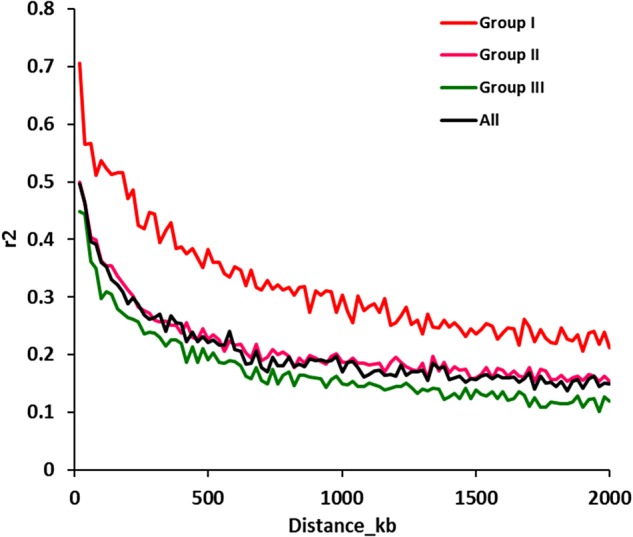
“However, higher LD values ranging from 600 kb up to 2 Mb were also observed in a number of cases for japonica and indica rice (Xu et al. 2011, Kumar et al. 2015); moreover, a germplasm collection of more related temperate japonica rice accessions recorded values of LD decay of 1250 kb (Biscarini et…”
BackgroundNaveed, S. A., Zhang, F., Zhang, J., Zheng, T., Meng, L., Pang, Y., Xu, J., & Li, Z. (2018) · Scientific Reports · doi:10.1038/s41598-018-24946-3 · Cited by 107
Tan, M., Liao, F., Hou, L., Wang, J., Wei, L., Jian, H., Xu, X., Li, J., & Liu, L. (2017) · Euphytica · doi:10.1007/s10681-016-1832-x · Cited by 94
“Therefore, association mapping has been widely used in plants such as maize, rice, potato, wheat, and barley (Yan et al. 2011; Kumar et al. 2015; Björn et al. 2008; Maccaferri et al. 2010; Long et al. 2013).”
MethodPaul, S., & Roychoudhury, A. (2017) · Plant Gene · doi:10.1016/j.plgene.2017.04.004 · Cited by 83
Lekklar, C., Pongpanich, M., Suriya-arunroj, D., Chinpongpanich, A., Tsai, H., Comai, L., Chadchawan, S., & Buaboocha, T. (2019) · BMC Genomics · doi:10.1186/s12864-018-5317-2 · Cited by 93
Li, X., Zheng, H., Wu, W., Liu, H., Wang, J., Jia, Y., Li, J., Yang, L., Lei, L., Zou, D., et al. (2020) · Rice · doi:10.1186/s12284-020-00412-5 · Cited by 99
Nayyeripasand, L., Garoosi, G. A., & Ahmadikhah, A. (2021) · Rice · doi:10.1186/s12284-020-00433-0 · Cited by 86
Genetic variation and association mapping for 12 agronomic traits in indica rice
Lu, Q., Zhang, M., Niu, X., Shan, W., Xu, Q. J., Feng, Y., Wang, C., Deng, H., Yuan, X., Yu, H., et al. (2015) · BMC Genomics · doi:10.1186/s12864-015-2245-2 · Cited by 88
“Subsequently, GWAS research has been implemented in crops such as rice [27–32], maize [33, 34], soybean [35, 36] and wheat [37].”
MethodLegume genomics and transcriptomics: From classic breeding to modern technologies
Afzal, M., Alghamdi, S. S., Migdadi, H. M., Khan, M. A., NURMANSYAH, N., Mirza, S. B., & El-Harty, E. H. (2019) · Saudi Journal of Biological Sciences · doi:10.1016/j.sjbs.2019.11.018 · Cited by 83
Chakraborty, K., Mondal, S., Ray, S., Samal, P., Pradhan, B., Chattopadhyay, K., Kar, M. K., Swain, P., & Sarkar, R. K. (2020) · Frontiers in Plant Science · doi:10.3389/fpls.2020.00265 · Cited by 83
Yu, J., Zhao, W., Tong, W., He, Q., Yoon, M.-Y., Li, F.-P., Choi, B., Heo, E.-B., Kim, K., & Park, Y. (2018) · International Journal of Molecular Sciences · doi:10.3390/ijms19103145 · Cited by 81
“The above results indicated that the candidate genes may play an essential role in salt tolerance mechanisms [34], which also indicated that salt tolerance genes are involved in ion pumps, calcium, the salt overly sensitive (SOS) pathway, mitogen-activated protein kinases (MAPK), glycine betaine, proline, and the reac…”
BackgroundInfluentialPrinciples and approaches of association mapping in plant breeding
Ibrahim, A., Zhang, L., Niyitanga, S., Afzal, M. Z., Xu, Y., Zhang, L., Zhang, L., & Qi, J. (2020) · Tropical Plant Biology · doi:10.1007/s12042-020-09261-4 · Cited by 98
Upadhyaya, H. D., Bajaj, D., Das, S., Saxena, M. S., Badoni, S., Kumar, V., Tripathi, S., Gowda, C. L. L., Sharma, S., Tyagi, A. K., et al. (2015) · Plant Molecular Biology · doi:10.1007/s11103-015-0377-z · Cited by 87
“To perform DF trait association mapping, the genome-wide and candidate gene-based SNP genotyping information were correlated with the DF phenotyping, population structure ancestry coefficient (Q matrix), kinship matrix (K) and PCA (P) data of 92 cultivated desi and kabuli accessions (Kujur et al. 2013, 2014; Kumar et…”
BackgroundMethodInfluentialSelf-citationKhan, S. U., Saeed, S., Khan, M. H. U., Fan, C., Ahmar, S., Arriagada, O., Shahzad, R., Branca, F., & Mora, F. (2021) · Biomolecules · doi:10.3390/biom11101516 · Cited by 72
Thingujam, D., Gouli, S., Cooray, S. P., Chandran, K. B., Givens, S., Renganathan, V. G., Tan, Z., Wang, Y., Patam, K., Greer, S. A., et al. (2025) · Plants · doi:10.3390/plants14172699 · Cited by 111
“Similarly, in rice, 20 SNP loci associated with the sodium-potassium ratio have been identified, showing phenotypic variation ranging from 5% to 8% and a key QTL on chromosome 1 that is involved in salinity tolerance, notably sodium and potassium homeostasis [102,103].”
Krishnamurthy, S. L., Sharma, P. C., Sharma, D. K., Ravikiran, K. T., Singh, Y. P., Mishra, V. K., Burman, D., Maji, B., Mandal, S., Sarangi, S. K., et al. (2017) · Scientific Reports · doi:10.1038/s41598-017-08532-7 · Cited by 74
Self-citationWang, S., Cao, M., Ma, X., Chen, W., Zhao, J., Sun, C., Tan, L., & Liu, F. (2017) · Frontiers in Plant Science · doi:10.3389/fpls.2017.01427 · Cited by 78
“Using a genome-wide association study for 220 rice accessions, 20 single nucleotide polymorphisms (SNPs) significantly associated with Na+/K+ ratio, and 44 SNPs with other traits observed under stress conditions were identified at the reproductive stage (Kumar et al., 2015).”
BackgroundChen, J., Chopra, R., Hayes, C., Morris, G., Marla, S., Burke, J., Xin, Z., & Burow, G. (2017) · The Plant Genome · doi:10.3835/plantgenome2016.09.0091 · Cited by 68
“These finding are comparable to previous reports in GWAS focusing on abiotic stress (Visioni et al., 2013; Kumar et al., 2015; Matsuda et al., 2015; Pace et al., 2015; Bac-Molenaar et al., 2016).”
ResultSalinity tolerance mechanisms and their breeding implications
Singh, M., Nara, U., Kumar, A., Choudhary, A., Singh, H., & Thapa, S. (2021) · Journal of Genetic Engineering and Biotechnology · doi:10.1186/s43141-021-00274-4 · Cited by 85
Kim, T., He, Q., Kim, K., Yoon, M.-Y., Ra, W.-H., Li, F. P., Tong, W., Yu, J., Oo, W. H., Choi, B., et al. (2016) · BMC Genomics · doi:10.1186/s12864-016-2734-y · Cited by 75
“GWAS has been implemented to efficiently identify candidate genes related to various useful agricultural traits in many crop species, including rice [19, 29].”
MethodPuram, V. R. R., Ontoy, J. C., Linscombe, S. D., & Subudhi, P. K. (2017) · Journal of Heredity · doi:10.1093/jhered/esx067 · Cited by 66
Wang, Y., Huang, L., Du, F., Wang, J., Zhao, X., Li, Z., Wang, W., Xu, J., & Fu, B. (2021) · Scientific Reports · doi:10.1038/s41598-021-84638-3 · Cited by 79
Pandit, E., Tasleem, S., Barik, S. R., Mohanty, D. P., Nayak, D. K., Mohanty, S. P., Das, S., & Pradhan, S. K. (2017) · Frontiers in Plant Science · doi:10.3389/fpls.2017.00552 · Cited by 65
“, 2015), salinity tolerance (Kumar et al., 2015), cold tolerance at germination and booting stages (Pan et al.”
BackgroundFrouin, J., Languillaume, A., Mas, J., Mieulet, D., Boisnard, A., Labeyrie, A., Bettembourg, M., Bureau, C., Lorenzini, E., Portefaix, M., et al. (2018) · PLoS ONE · doi:10.1371/journal.pone.0190964 · Cited by 77
Paul, S., & Roychoudhury, A. (2019) · Physiologia Plantarum · doi:10.1111/ppl.13021 · Cited by 64
Lu, Q., Zhang, M., Niu, X., Wang, C., Xu, Q. J., Feng, Y., Shan, W., Yuan, X., Yu, H., Wang, Y., et al. (2015) · Planta · doi:10.1007/s00425-015-2434-x · Cited by 62
“2014) and environmental stress responses (Cui et al. 2015; Kumar et al. 2015).”
BackgroundTa, K. N., Khong, N. G., Ha, T. L., Nguyen, D. T., Chung, D., HOANG, T. G., PHUNG, T. P. N., Bourrié, I., Courtois, B., Thi Thu Hoai, T. R. A. N., et al. (2018) · BMC Plant Biology · doi:10.1186/s12870-018-1504-1 · Cited by 61
Soren, K. R., Madugula, P., Kumar, N., Barmukh, R., Sengar, M. S., Bharadwaj, C., Sharma, P. C., Singh, S., BHANDARI, A., Singh, J., et al. (2020) · International Journal of Molecular Sciences · doi:10.3390/ijms21145058 · Cited by 64
“The genotype response to salt stress was expressed as the stress susceptibility index (SSI; [61]) and stress tolerance index (STI; [37]) using the formulae: SSI = (1 − Ys/Yp)/SI;SI = 1 − Ȳs/Ȳp [61] and stress tolerance index STI = Yp × Ys/Ȳp2 where Ys and Yp are the yield of genotypes evaluated under saline (stress…”
MethodSelf-citationDeciphering the Genetic Architecture of Cooked Rice Texture
Misra, G., Badoni, S., Domingo, C. J., Cuevas, R. P., Llorente, C., Mbanjo, E. G. N., & Sreenivasulu, N. (2018) · Frontiers in Plant Science · doi:10.3389/fpls.2018.01405 · Cited by 59
“Furthermore EMMA model corrects for confounding effects of subpopulation structure and relatedness between individuals (Kang et al., 2008; Kumar et al., 2015; Campbell et al., 2017).”
Multi-Omics and Integrative Approach towards Understanding Salinity Tolerance in Rice: A Review
Muthuramalingam, P., Jeyasri, R., Rakkammal, K., Satish, L., Shamili, S., Karthikeyan, A., Valliammai, A., Priya, A., Selvaraj, A., Gowri, P., et al. (2022) · Biology · doi:10.3390/biology11071022 · Cited by 66
“[153] used 220 rice accessions to perform a GWAS of 12 various salinity tolerance-related attributes at the reproduction stage.”
MethodUnderstanding of Plant Salt Tolerance Mechanisms and Application to Molecular Breeding
Zhou, Y., Chen, F., Wang, Y., Yun, C., Zou, X., Cheng, N., Zhang, W., Jing, Y., & Li, H. (2024) · International Journal of Molecular Sciences · doi:10.3390/ijms252010940 · Cited by 79
QTLian breeding for climate resilience in cereals: progress and prospects
Choudhary, M., Wani, S. H., Kumar, P., Bagaria, P. K., Rakshit, S., Roorkiwal, M., & Varshney, R. K. (2019) · Functional & Integrative Genomics · doi:10.1007/s10142-019-00684-1 · Cited by 67
Self-citationIntegrated Multi-Omics Perspective to Strengthen the Understanding of Salt Tolerance in Rice
Dai, L., Li, P., Li, Q., Leng, Y., Zeng, D., & Qian, Q. (2022) · International Journal of Molecular Sciences · doi:10.3390/ijms23095236 · Cited by 60
“The region containing Saltol, a major QTL for salt tolerance at the vegetative stage, was identified as a major association with Na+/K+ ratio determined at the reproductive stage, suggesting that Saltol is an important QTL for rice salt tolerance [47].”
BackgroundBajaj, D., Srivastava, R., Nath, M., Tripathi, S., Bharadwaj, C., Upadhyaya, H. D., Tyagi, A. K., & Parida, S. K. (2016) · Frontiers in Plant Science · doi:10.3389/fpls.2016.00450 · Cited by 61
“…association analysis, the CMLM (compressed mixed linear model) (P + K, K and Q + K) along with P3D (population parameters previously determined, Kang et al., 2010; Zhang et al., 2010) interfaces of GAPIT were employed following Kujur et al. (2013, 2014), Thudi et al. (2014) and Kumar et al. (2015).”
MethodSelf-citationBizimana, J. B., Luzi-Kihupi, A., Murori, R., & Singh, R. K. (2017) · Journal of Genetics · doi:10.1007/s12041-017-0803-x · Cited by 55
“However recent studies have used SNPs to identify robust markers for QTLs responsible for seedling stage salinity tolerance (Bimpong et al., 2014; Kumar et al., 2015).”
BackgroundSales, E., Viruel, J., Domingo, C., & Marqués, L. (2017) · PLoS ONE · doi:10.1371/journal.pone.0183416 · Cited by 67
Jahan, N., Zhang, Y., Lv, Y., Song, M., Zhao, C., Hu, H., Cui, Y., Wang, Z., Yang, S., Zhang, A., et al. (2019) · Plant Growth Regulation · doi:10.1007/s10725-019-00566-3 · Cited by 54
Chaudhary, M. T., Majeed, S., Rana, I. A., Ali, Z., Jia, Y., Du, X., Hinze, L. L., & Azhar, M. T. (2024) · BMC Plant Biology · doi:10.1186/s12870-023-04558-4 · Cited by 78
Translational genomics for plant breeding with the genome sequence explosion
Kang, Y. J., Lee, T., Lee, J., Shim, S., Jeong, H., Satyawan, D., Kim, M. Y., & Lee, S. (2015) · Plant Biotechnology Journal · doi:10.1111/pbi.12449 · Cited by 63
Genome-Wide Association Studies (GWAS) for Abiotic Stress Tolerance in Plants
Challa, S., & Neelapu, N. R. R. (2018) · Elsevier eBooks · doi:10.1016/b978-0-12-813066-7.00009-7 · Cited by 82
Sevanthi, A. M., Kandwal, P., Kale, P. B., Prakash, C., Ramkumar, M. K., Yadav, N., Mahato, A. K., Sureshkumar, V., Behera, M., Deshmukh, R. K., et al. (2018) · Frontiers in Plant Science · doi:10.3389/fpls.2018.01179 · Cited by 53
“Structural genomics in rice is well established with multifarious resources (IRGSP, 2005; 3000 rice genome project; Kumar et al., 2015; Singh et al., 2016; Mansueto et al., 2017; Sandhu et al., 2017), while only 2,000 genes have been functionally characterized in rice, indicating that progress in functional genomics i…”
BackgroundSelf-citationPradhan, S. K., Pandit, E., Pawar, S., Bharati, B., Chatopadhyay, K., Singh, S., Dash, P. K., & Reddy, J. N. (2019) · Molecular Genetics and Genomics · doi:10.1007/s00438-019-01556-w · Cited by 53
Wang, Y., Pang, Y., Chen, K., Zhai, L., Shen, C., Shu, W., & Xu, J. (2019) · The Crop Journal · doi:10.1016/j.cj.2019.05.001 · Cited by 51
Saradadevi, G. P., Das, D., Mangrauthia, S. K., Mohapatra, S., Chikkaputtaiah, C., Roorkiwal, M., Solanki, M., Sundaram, R. M., Neeraja, C. N., Sakhare, A. S., et al. (2021) · Biology · doi:10.3390/biology10121255 · Cited by 64
Ikram, M., Batool, M., Ullah, M., Khalid, B., El-Badri, A. M., Mohamed, I. A. A., Zhang, L., Kuai, J., Xu, Z., Zhao, J., et al. (2025) · Rice · doi:10.1186/s12284-025-00783-7 · Cited by 63
“Two novel genes ( LOC Os02g49700, LOC Os03g28300 ) and five previously identified genes ( OsMYB6, A strategy commonly used to increase salt tolerance in rice is illustrated by the fact that sodium ions are primarily sequestered in shoots (Kumar et al. 2015).”
Toward Integrated Multi-Omics Intervention: Rice Trait Improvement and Stress Management
Iqbal, Z., Iqbal, M. S., Khan, M. I. R., & Ansari, M. I. (2021) · Frontiers in Plant Science · doi:10.3389/fpls.2021.741419 · Cited by 63
Genetic basis of ion exclusion in salinity stressed wheat: implications in improving crop yield
Naeem, M. S., Iqbal, M., Shakeel, A., Ul‐Allah, S., Hussain, M., Rehman, A., Zafar, Z. U., Athar, H., & Ashraf, M. (2020) · Plant Growth Regulation · doi:10.1007/s10725-020-00659-4 · Cited by 53
Regional Association Analysis of MetaQTLs Delineates Candidate Grain Size Genes in Rice
Daware, A., Srivastava, R., SINGH, A. K., Parida, S. K., & Tyagi, A. K. (2017) · Frontiers in Plant Science · doi:10.3389/fpls.2017.00807 · Cited by 52
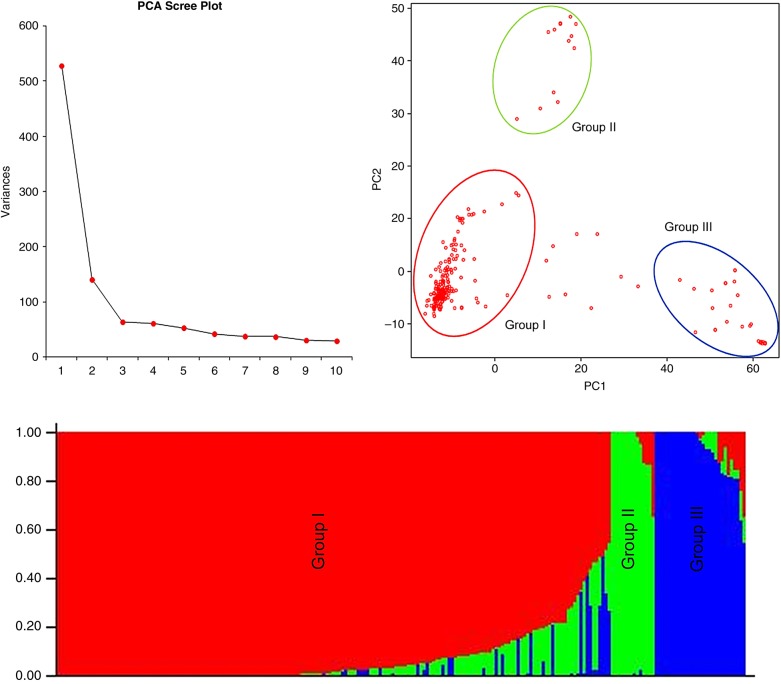
“…505 accessions (representing indica, japonica, and aus populations) were combined with their relative kinship matrix (K) and PCA [principal component (PC) analysis] information using P3D/compressed mixed linear model (CMLM) in GAPIT (Lipka et al., 2012; Kumar et al., 2015; Upadhyaya et al., 2015).”
MethodSelf-citationBasu, U., Upadhyaya, H. D., Srivastava, R., Daware, A., Malik, N., Sharma, A., Bajaj, D., Narnoliya, L., Thakro, V., Kujur, A., et al. (2019) · PLANT PHYSIOLOGY · doi:10.1104/pp.18.00934 · Cited by 46
Self-citationApplication of Genomic Big Data in Plant Breeding: Past, Present, and Future
Kim, K. D., Kang, Y., & Kim, C. (2020) · Plants · doi:10.3390/plants9111454 · Cited by 57
Das, S., Singh, M., Srivastava, R., Bajaj, D., Saxena, M. S., Rana, J. C., Bansal, K. C., Tyagi, A. K., & Parida, S. K. (2015) · DNA Research · doi:10.1093/dnares/dsv036 · Cited by 45
“A wider phenotypic variation for PN (5-229) with 14.”
BackgroundSelf-citationYu, J., Zao, W., He, Q., Kim, T.-S., & Park, Y. (2017) · Molecular Genetics and Genomics · doi:10.1007/s00438-017-1354-9 · Cited by 51
Volante, A., Desiderio, F., Tondelli, A., Perrini, R., Orasen, G., Biselli, C., Riccardi, P., Vattari, A., Cavalluzzo, D., Urso, S., et al. (2017) · Frontiers in Plant Science · doi:10.3389/fpls.2017.01862 · Cited by 61
“However, higher LD values were also previously observed in rice as ranging from 600 kb up to 2 Mb (Xu et al., 2011; Kumar et al., 2015).”
BackgroundChen, C., Norton, G. J., & Price, A. H. (2020) · Frontiers in Plant Science · doi:10.3389/fpls.2020.576479 · Cited by 51
“GWAS has been applied to salt stress tolerance in rice in 12 studies mostly using hydroponics (Kumar et al., 2015; Shi et al., 2017; Yu et al., 2017; Campbell et al., 2017; Batayeva et al., 2018; Cui et al., 2018; Frouin et al., 2018; Patishtan et al., 2018; Lekklar et al., 2019; Liu et al., 2019; Rohila et al., 2019;…”
MethodSevanthi, A. M., Sinha, S. K., Sureshkumar, V., Rani, M., Saini, M. R., Kumari, S., Kaushik, M., Prakash, C., Venkatesh, K., Singh, G. P., et al. (2021) · Rice · doi:10.1186/s12284-021-00487-8 · Cited by 45
Self-citationChakraborty, K., Chattaopadhyay, K., Nayak, L., Ray, S., Yeasmin, L., Jena, P., Gupta, S., Mohanty, S. K., Swain, P., & Sarkar, R. K. (2019) · Planta · doi:10.1007/s00425-019-03253-9 · Cited by 47
GWAS for Starch-Related Parameters in Japonica Rice (Oryza sativa L.)
Biselli, C., Volante, A., Desiderio, F., Tondelli, A., Gianinetti, A., Finocchiaro, F., Taddei, F., Gazza, L., Sgrulletta, D., Cattivelli, L., et al. (2019) · Plants · doi:10.3390/plants8080292 · Cited by 48
“However, similar or even higher LD values in rice populations were previously highlighted [51,52].”
BackgroundSun, B., Fu, C., Fan, Z., Chen, Y., Chen, W., Zhang, J., Jiang, L., Lv, S., Pan, D., & Li, C. (2019) · Rice · doi:10.1186/s12284-019-0360-4 · Cited by 50
A role for the OsHKT 2;1 sodium transporter in potassium use efficiency in rice
Hartley, T. N., Thomas, A., & Maathuis, F. J. M. (2019) · Journal of Experimental Botany · doi:10.1093/jxb/erz113 · Cited by 46
“, 2011) and salt (Kumar et al., 2015; Campbell et al., 2017; Patishtan et al., 2018), and were able to detect novel loci as well as gene candidates.”
BackgroundMethodPrakash, N. R., Lokeshkumar, B. M., Rathor, S., Warraich, A. S., Yadav, S. K., Vinaykumar, N. M., Dushynthkumar, B. M., Krishnamurthy, S. L., & Sharma, P. C. (2022) · Physiologia Plantarum · doi:10.1111/ppl.13629 · Cited by 46
Self-citation
Metadata
- Authors
- Kumar, V., Singh, A., Mithra, S. V. A., Krishnamurthy, S. L., Parida, S. K., Jain, S., Tiwari, K. K., Kumar, P., Rao, A. R., Sharma, S. K., Khurana, J. P., Singh, N. K., & Mohapatra, T.
- Affiliations
- National Research Centre on Plant Biotechnology (IN)
- Central Soil Salinity Research Institute (IN)
- Indian Agricultural Statistics Research Institute (IN)
- University of Delhi (IN)
- Corresponding author
- Mohapatra, T.
- ORCID
- Venue
- DNA Research
- Publisher
- Oxford University Press (OUP)
- Published
- 2015-01-27
- Volume
- 22
- Issue
- 2
- Pages
- 133-145
- ISSN
- 1340-2838 (ISSN-L)
- 1756-1663
- PMC
- PMC4401324
- OpenAlex
- W2153322520
- Cited by
- 328
- References
- 81
- Citations by year
- 2026: 21 · 2025: 9 · 2024: 24 · 2023: 17 · 2022: 46 · 2021: 51 · 2020: 33 · 2019: 33 · 2018: 26 · 2017: 30 · 2016: 25 · 2015: 12
- FWCI
- 21.31
- Type
- journal article
- Language
- en
- Open access
- gold
- doi.org
- Licence
- cc-by-nc
- Locations
- DNA Research (publishedVersion, cc-by-nc)
- Europe PMC (PubMed Central) (publishedVersion, cc-by-nc)
- PubMed Central (publishedVersion, cc-by-nc)
- PubMed (publishedVersion)
- Funders
- Indian Council of Agricultural Research
- Topics
- Life Sciences › Biochemistry, Genetics and Molecular Biology › Genetics › Genetic Mapping and Diversity in Plants and Animals
- Life Sciences › Agricultural and Biological Sciences › Plant Science › Plant Stress Responses and Tolerance
- Life Sciences › Agricultural and Biological Sciences › Plant Science › Rice Cultivation and Yield Improvement
- Keywords
- salt tolerance, rice, genome-wide association study, single nucleotide polymorphisms, quantitative trait loci, Na+/K+ ratio, salt stress, stress response genes, candidate genes
- MeSH terms
- Oryza, Multifactorial Inheritance, Polymorphism, Single Nucleotide, Chromosomes, Plant, Quantitative Trait Loci, Salt Tolerance, Genome-Wide Association Study
About these checks
Registry, retraction, Cites and statistics results are computed, not judged, with one exception: a printed reference that no index lists is read once by a model before it counts as a citation error. Claims are extracted by a model and kept only when their quote appears verbatim in the text; each cited source is then checked, with a model’s help, for whether it says what the claim relies on. Those verdicts can be wrong — read the claim’s quote and the cited source before relying on one.
Statistics and arithmetic are recomputed, not judged.
Confidence bands are shown only for fields calibrated on our annotated test set. None is calibrated yet, so no band is shown.
What counts as a claim ›How we measure confidence ›How we check this ›
Are you an author, or do you see a problem with this page? Request a review
Data sources
Bibliographic data: Semantic Scholar, OpenAlex, Crossref.
Contains information from the Semantic Scholar Academic Graph Datasets, made available under the ODC Attribution License (ODC-BY 1.0).
Semantic Scholar’s data is described in: Kinney, R., et al. (2023). The Semantic Scholar Open Data Platform. arXiv:2301.10140.
