

Triglyceride-rich lipoproteins and their remnants: metabolic insights, role in atherosclerotic cardiovascular disease, and emerging therapeutic strategies—a consensus statement from the European Atherosclerosis Society
Open accessThe DOI matches its Crossref record; 211 of the 212 references it cites were found in a registry or an index; 81 of the 214 sources its claims cite were checked for support.
Abstract
Recent advances in human genetics, together with a large body of epidemiologic, preclinical, and clinical trial results, provide strong support for a causal association between triglycerides (TG), TG-rich lipoproteins (TRL), and TRL remnants, and increased risk of myocardial infarction, ischaemic stroke, and aortic valve stenosis. These data also indicate that TRL and their remnants may contribute significantly to residual cardiovascular risk in patients on optimized low-density lipoprotein (LDL)-lowering therapy. This statement critically appraises current understanding of the structure, function, and metabolism of TRL, and their pathophysiological role in atherosclerotic cardiovascular disease (ASCVD). Key points are (i) a working definition of normo- and hypertriglyceridaemic states and their relation to risk of ASCVD, (ii) a conceptual framework for the generation of remnants due to dysregulation of TRL production, lipolysis, and remodelling, as well as clearance of remnant lipoproteins from the circulation, (iii) the pleiotropic proatherogenic actions of TRL and remnants at the arterial wall, (iv) challenges in defining, quantitating, and assessing the atherogenic properties of remnant particles, and (v) exploration of the relative atherogenicity of TRL and remnants compared to LDL. Assessment of these issues provides a foundation for evaluating approaches to effectively reduce levels of TRL and remnants by targeting either production, lipolysis, or hepatic clearance, or a combination of these mechanisms. This consensus statement updates current understanding in an integrated manner, thereby providing a platform for new therapeutic paradigms targeting TRL and their remnants, with the aim of reducing the risk of ASCVD.
Overview
CoChat Summary
TL;DR
This European Atherosclerosis Society consensus statement appraises evidence that triglyceride-rich lipoproteins (TRL) and their remnants are causally related to atherosclerotic cardiovascular disease (ASCVD), including myocardial infarction, ischaemic stroke, and aortic valve stenosis, and contribute to residual risk on optimized LDL-lowering therapy. It reviews TRL metabolism, remnant atherogenicity, measurement challenges, and emerging therapeutic strategies targeting production, lipolysis, or hepatic clearance.
Key findings
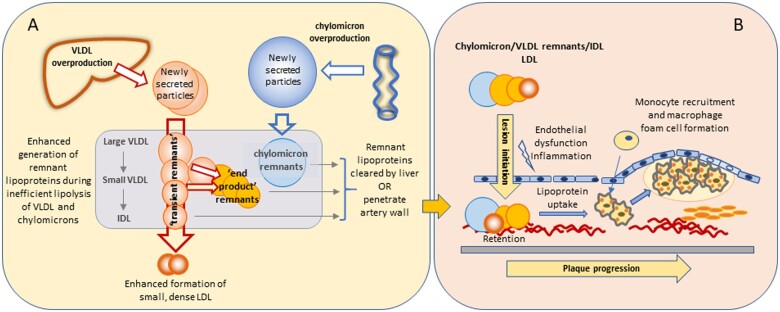
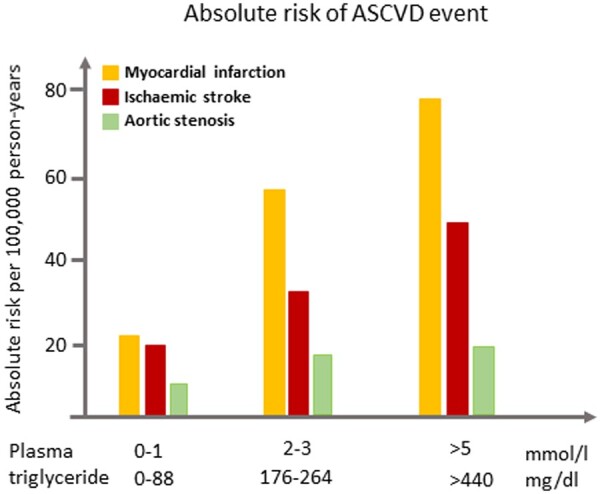
- Epidemiologic and genetic evidence supports a causal relationship between elevated plasma TG, TRL, and TRL remnants and ASCVD risk; the absolute risk increase is greatest for myocardial infarction (approximately four-fold at TG >5 mmol/L or >440 mg/dL vs. <1 mmol/L or <88 mg/dL), and less for ischaemic stroke and aortic stenosis.
- TRL and remnants accumulate at fasting TG levels >1.2 mmol/L (>100 mg/dL); ASCVD risk is considered clinically relevant at fasting TG >1.7 mmol/L (>150 mg/dL), while TG >10 mmol/L (>880 mg/dL) confers high pancreatitis risk.
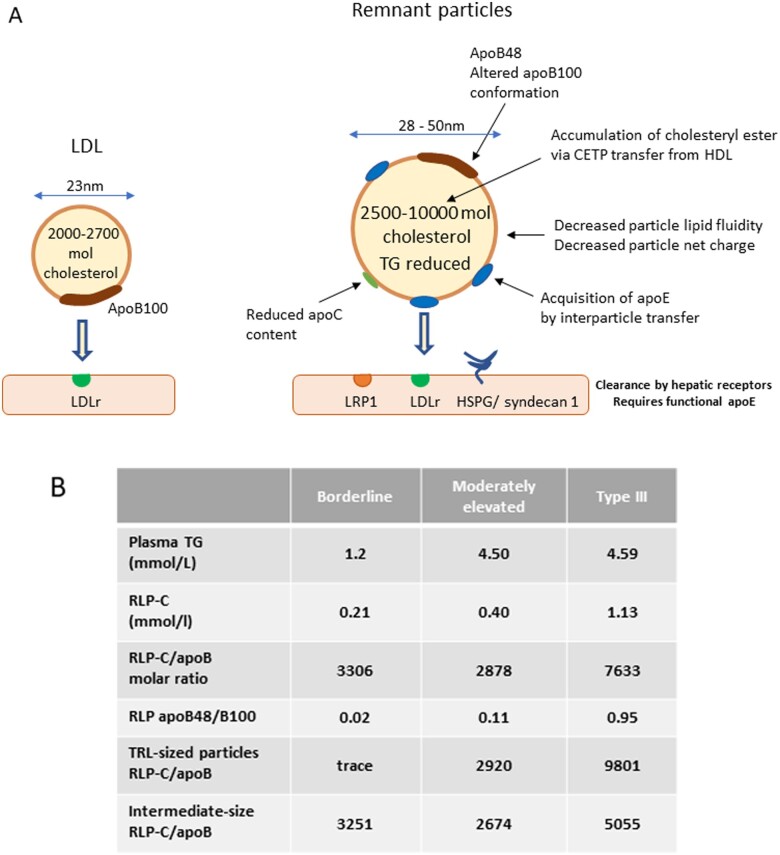
- Cholesterol-rich remnant particles can contain up to four-fold more cholesterol molecules than LDL (up to 10,000 vs. 2,000–2,700 cholesterol molecules per particle), are enriched in apoE and apoCIII, and are more potent inducers of macrophage foam cells than LDL on a per-particle basis.
- Therapeutic approaches include inhibiting lipoprotein production, reducing cholesteryl ester enrichment of remnants, stimulating lipolysis, and enhancing remnant clearance; however, no definitive measure captures the independent atherogenic potential of TRL and remnants, and randomized controlled trial evidence that lowering TG/TRL reduces ASCVD risk is limited.
Methods
- Consensus statement from a European Atherosclerosis Society Consensus Panel that met in London in January 2020 to critically appraise evidence on TRL and remnant definition, aetiology, metabolism, role in ASCVD, and clinical management.
- References (English language only) were identified through PubMed searches for articles published from 2000 using terms including “triglycerides,” “lipoprotein remnants,” “triglyceride-rich lipoproteins,” “cardiovascular disease,” “atherosclerosis,” “residual risk,” and “therapeutics,” plus reference-list searches.
- The paper is a narrative expert synthesis of epidemiologic, genetic, preclinical, and clinical trial evidence, not a systematic review or meta-analysis.
Limitations
- The paper states that there is no definitive measure capturing the independent atherogenic potential, structural and metabolic variability, or postprandial changes of TRL and remnants; defining remnants is difficult, and proposed TG cut-points are arbitrary though considered clinically useful.
- The paper states that there are no treatment goals for plasma TG or remnant abundance given limited randomized controlled trial evidence that lowering TG or TRL reduces ASCVD risk, and that determining the relative atherogenicity of TRL/remnants vs. LDL will require specific assays.
- Evident from the text: the search strategy was limited to English-language PubMed articles from 2000 onward plus reference lists, and the conclusions are consensus-based expert opinion rather than systematic quantitative synthesis.
Model-written summary. Check it against the paper before relying on it.
Integrity signals
Registry
Cites
Statistics
Figures
Verification
Claims the paper makes
33 Valid · 11 Not valid · 56 Not checked · 51 Own results and interpretations
Some cited sources support this claim and some don’t — read each source’s verdict below.
In the paper
“Recent advances in human genetics, together with a large body of epidemiologic, preclinical, and clinical trial results, provide strong support for a causal association between triglycerides (TG), TG-rich lipoproteins (TRL), and TRL remnants, and increased risk of myocardial infarction, ischaemic stroke, and aortic valve stenosis.”
§ Triglyceride-rich lipoproteins and their remnants: metabolic insights, role in atherosclerotic cardiovascular disease, and emerging therapeutic strategies—a consensus statement from the European Atherosclerosis Society > Abstract
What the sources say
- Partly supportedcites [1] Austin MA. Plasma triglyceride and coronary heart disease. Arterioscler Thromb 1991; 11: 2– 14. 1987999 sourceExperimental — accuracy not yet measured
Split into 2 atoms — 0 confirmed, 2 partially supported, 0 disputed, 0 misattributed, 0 unverifiable. Expand the claim to see per-atom verdicts.
- Partly supportedcites [2] Chapman MJ, Ginsberg HN, Amarenco P, Andreotti F, Borén J, Catapano AL, Descamps OS, Fisher E, Kovanen PT, Kuivenhoven JA, Lesnik P, Masana L, Nordestgaard BG, Ray KK, Reiner Z, Taskinen MR, Tokgözoglu L, Tybjærg-Hansen A, Watts GF; for the European Atherosclerosis Society Consensus Panel. Triglyceride-rich lipoproteins and high-density lipoprotein cholesterol in patients at high risk of cardiovascular disease: evidence and guidance for management. Eur Heart J 2011; 32: 1345– 1361. 21531743 PMC3105250 sourceExperimental — accuracy not yet measured
Split into 2 atoms — 0 confirmed, 2 partially supported, 0 disputed, 0 misattributed, 0 unverifiable. Expand the claim to see per-atom verdicts.
- Partly supportedcites [17] Nordestgaard BG. Triglyceride-rich lipoproteins and atherosclerotic cardiovascular disease: new insights from epidemiology, genetics, and biology. Circ Res 2016; 118: 547– 563. 26892957 sourceExperimental — accuracy not yet measured
Split into 2 atoms — 0 confirmed, 2 partially supported, 0 disputed, 0 misattributed, 0 unverifiable. Expand the claim to see per-atom verdicts.
- Disputedcites [19] Emerging Risk Factors Collaboration, Di Angelantonio E, Sarwar N, Perry P, Kaptoge S, Ray KK, Thompson A, Wood AM, Lewington S, Sattar N, Packard CJ, Collins R, Thompson SG, Danesh J. Major lipids, apolipoproteins, and risk of vascular disease. JAMA 2009; 302: 1993– 2000. 19903920 PMC3284229 sourceExperimental — accuracy not yet measured
Split into 2 atoms — 0 confirmed, 1 partially supported, 1 disputed, 0 misattributed, 0 unverifiable. Expand the claim to see per-atom verdicts.
Checked by a reasoning model — may be wrong.
- Partly supportedcites [20] Mach F, Baigent C, Catapano AL, Koskinas KC, Casula M, Badimon L, Chapman MJ, De Backer GG, Delgado V, Ference BA, Graham IM, Halliday A, Landmesser U, Mihaylova B, Pedersen TR, Riccardi G, Richter DJ, Sabatine MS, Taskinen MR, Tokgozoglu L, Wiklund O; ESC Scientific Document Group. 2019 ESC/EAS Guidelines for the management of dyslipidaemias: lipid modification to reduce cardiovascular risk. Eur Heart J 2020; 41: 111– 188. 31504418 sourceExperimental — accuracy not yet measured
Split into 2 atoms — 0 confirmed, 2 partially supported, 0 disputed, 0 misattributed, 0 unverifiable. Expand the claim to see per-atom verdicts.
- Not checked yetcites [24] Austin MA, Hokanson JE, Edwards KL. Hypertriglyceridemia as a cardiovascular risk factor. Am J Cardiol 1998; 81: 7B– 12B. 9526807 source
- Not checked yetcites [25] Nordestgaard BG, Varbo A. Triglycerides and cardiovascular disease. Lancet 2014; 384: 626– 635. 25131982 source
- Partly supportedcites [26] Ference BA, Kastelein JJP, Ray KK, Ginsberg HN, Chapman MJ, Packard CJ, Laufs U, Oliver-Williams C, Wood AM, Butterworth AS, Di Angelantonio E, Danesh J, Nicholls SJ, Bhatt DL, Sabatine MS, Catapano AL. Association of triglyceride-lowering LPL variants and LDL-C-lowering LDLR variants with risk of coronary heart disease. JAMA 2019; 321: 364– 373. 30694319 PMC6439767 sourceExperimental — accuracy not yet measured
Split into 2 atoms — 0 confirmed, 2 partially supported, 0 disputed, 0 misattributed, 0 unverifiable. Expand the claim to see per-atom verdicts.
- Not checked yetcites [27] Varbo A, Nordestgaard BG. Remnant cholesterol and risk of ischemic stroke in 112,512 individuals from the general population. Ann Neurol 2019; 85: 550– 559. 30723955 source
- Not checked yetcites [28] Kaltoft M, Langsted A, Nordestgaard BG. Triglycerides and remnant cholesterol associated with risk of aortic valve stenosis: Mendelian randomization in the Copenhagen General Population Study. Eur Heart J 2020; 41: 2288– 2299. 32267934 source
boostedstates a cause- Asserted: passes — The authors put it forward as true.
- Checkable: passes — It can be checked against evidence.
- Load-bearing: passes — The paper’s conclusions depend on it.
- Based: passes — The paper gives a reason why it holds.
- Partly supported
Some cited sources support this claim and some don’t — read each source’s verdict below.
In the paper
“Over the past three decades, epidemiologic and genetic evidence has accumulated to support the concept that elevated levels of plasma TG, TRL, and TRL remnants are causally related to an increased risk of ASCVD-related events—myocardial infarction (MI), stroke, and aortic valve stenosis—and all-cause mortality.1,2,17,19,20,24–28”
- Also stated in: § Triglycerides, triglyceride-rich lipoproteins, and remnants: definitions and clinical relevance · plain
“Accumulating evidence from epidemiologic and genetic studies is consistent with a causal relationship between ASCVD risk and elevated plasma levels of TG, TRL, and TRL remnants.”
§ Triglyceride-rich lipoproteins and their remnants: metabolic insights, role in atherosclerotic cardiovascular disease, and emerging therapeutic strategies—a consensus statement from the European Atherosclerosis Society > Search strategy > Triglycerides, triglyceride-rich lipoproteins, and remnants: definitions and clinical relevance
What the sources say
- Partly supportedcites [1] Austin MA. Plasma triglyceride and coronary heart disease. Arterioscler Thromb 1991; 11: 2– 14. 1987999 sourceExperimental — accuracy not yet measured
The Summary (pp. 10–11) reports an epidemiologic association between plasma triglycerides and coronary heart disease and discusses possible genetic susceptibility, including a trait associated with myocardial infarction risk. It also says the findings are not fully consistent and does not establish a causal relationship. The cited passages do not support the broader claims about triglyceride-rich lipoprotein remnants, stroke, aortic valve stenosis, or all-cause mortality. (LLM, conf=0.88)
- Partly supportedcites [2] Chapman MJ, Ginsberg HN, Amarenco P, Andreotti F, Borén J, Catapano AL, Descamps OS, Fisher E, Kovanen PT, Kuivenhoven JA, Lesnik P, Masana L, Nordestgaard BG, Ray KK, Reiner Z, Taskinen MR, Tokgözoglu L, Tybjærg-Hansen A, Watts GF; for the European Atherosclerosis Society Consensus Panel. Triglyceride-rich lipoproteins and high-density lipoprotein cholesterol in patients at high risk of cardiovascular disease: evidence and guidance for management. Eur Heart J 2011; 32: 1345– 1361. 21531743 PMC3105250 sourceExperimental — accuracy not yet measured
The Epidemiology section reports associations of markedly elevated triglycerides with myocardial infarction, ischaemic stroke, and total mortality, but notes that the stroke association disappeared after adjustment for other lipid factors. The Genetic studies section says an APOA5 analysis suggests a causal association between triglyceride-mediated pathways and coronary heart disease, while cautioning that genetic studies do not provide clear insights overall. The paper does not establish the claimed causal relationship for all listed outcomes or address aortic valve stenosis. (LLM, conf=0.88)
- Partly supportedcites [17] Nordestgaard BG. Triglyceride-rich lipoproteins and atherosclerotic cardiovascular disease: new insights from epidemiology, genetics, and biology. Circ Res 2016; 118: 547– 563. 26892957 sourceExperimental — accuracy not yet measured
Split into 2 atoms — 0 confirmed, 2 partially supported, 0 disputed, 0 misattributed, 0 unverifiable. Expand the claim to see per-atom verdicts.
- Disputedcites [19] Emerging Risk Factors Collaboration, Di Angelantonio E, Sarwar N, Perry P, Kaptoge S, Ray KK, Thompson A, Wood AM, Lewington S, Sattar N, Packard CJ, Collins R, Thompson SG, Danesh J. Major lipids, apolipoproteins, and risk of vascular disease. JAMA 2009; 302: 1993– 2000. 19903920 PMC3284229 sourceExperimental — accuracy not yet measured
The Results > Triglyceride section reports an initial association with coronary heart disease, but it becomes essentially null after adjustment for HDL-C and non-HDL-C; adjusted associations with stroke are also near null. This conflicts with attributing increased cardiovascular risk from elevated triglycerides to this paper as a causal conclusion. The paper does not assess triglyceride-rich remnants, aortic valve stenosis, or all-cause mortality in the cited findings. (LLM, conf=0.88)
Checked by a reasoning model — may be wrong.
- Partly supportedcites [20] Mach F, Baigent C, Catapano AL, Koskinas KC, Casula M, Badimon L, Chapman MJ, De Backer GG, Delgado V, Ference BA, Graham IM, Halliday A, Landmesser U, Mihaylova B, Pedersen TR, Riccardi G, Richter DJ, Sabatine MS, Taskinen MR, Tokgozoglu L, Wiklund O; ESC Scientific Document Group. 2019 ESC/EAS Guidelines for the management of dyslipidaemias: lipid modification to reduce cardiovascular risk. Eur Heart J 2020; 41: 111– 188. 31504418 sourceExperimental — accuracy not yet measured
Section 5.3.2 (page not provided) links triglyceride-rich lipoproteins and their remnants to ASCVD risk, but says their causal effect depends on ApoB-containing particle concentration rather than triglyceride content itself; it also cautions that the genetic evidence for triglycerides is difficult to interpret. The cited passages do not establish the claimed links to all-cause mortality or aortic valve stenosis. Section 9.7.3 instead associates aortic valve stenosis with LDL-C and lipoprotein(a). (LLM, conf=0.88)
- Not checked yetcites [24] Austin MA, Hokanson JE, Edwards KL. Hypertriglyceridemia as a cardiovascular risk factor. Am J Cardiol 1998; 81: 7B– 12B. 9526807 source
- Not checked yetcites [25] Nordestgaard BG, Varbo A. Triglycerides and cardiovascular disease. Lancet 2014; 384: 626– 635. 25131982 source
- Partly supportedcites [26] Ference BA, Kastelein JJP, Ray KK, Ginsberg HN, Chapman MJ, Packard CJ, Laufs U, Oliver-Williams C, Wood AM, Butterworth AS, Di Angelantonio E, Danesh J, Nicholls SJ, Bhatt DL, Sabatine MS, Catapano AL. Association of triglyceride-lowering LPL variants and LDL-C-lowering LDLR variants with risk of coronary heart disease. JAMA 2019; 321: 364– 373. 30694319 PMC6439767 sourceExperimental — accuracy not yet measured
The Discussion says triglyceride-rich remnant particles appear causally associated with cardiovascular disease risk, and Study Outcomes defines the measured coronary heart disease outcome to include myocardial infarction. The paper does not establish the claimed links to stroke, aortic valve stenosis, or all-cause mortality; its findings also focus on ApoB-containing particle concentration rather than triglyceride levels alone. The indexed passages provide section labels but no page numbers. (LLM, conf=0.88)
- Not checked yetcites [27] Varbo A, Nordestgaard BG. Remnant cholesterol and risk of ischemic stroke in 112,512 individuals from the general population. Ann Neurol 2019; 85: 550– 559. 30723955 source
- Not checked yetcites [28] Kaltoft M, Langsted A, Nordestgaard BG. Triglycerides and remnant cholesterol associated with risk of aortic valve stenosis: Mendelian randomization in the Copenhagen General Population Study. Eur Heart J 2020; 41: 2288– 2299. 32267934 source
plainstates a cause- Asserted: passes — The authors put it forward as true.
- Checkable: passes — It can be checked against evidence.
- Load-bearing: passes — The paper’s conclusions depend on it.
- Based: passes — The paper gives a reason why it holds.
- Also stated in: § Triglycerides, triglyceride-rich lipoproteins, and remnants: definitions and clinical relevance · plain
The sources with a verdict support this claim; the rest weren’t checked yet, have no full text we could read, or their verdicts aren’t rated yet.
In the paper
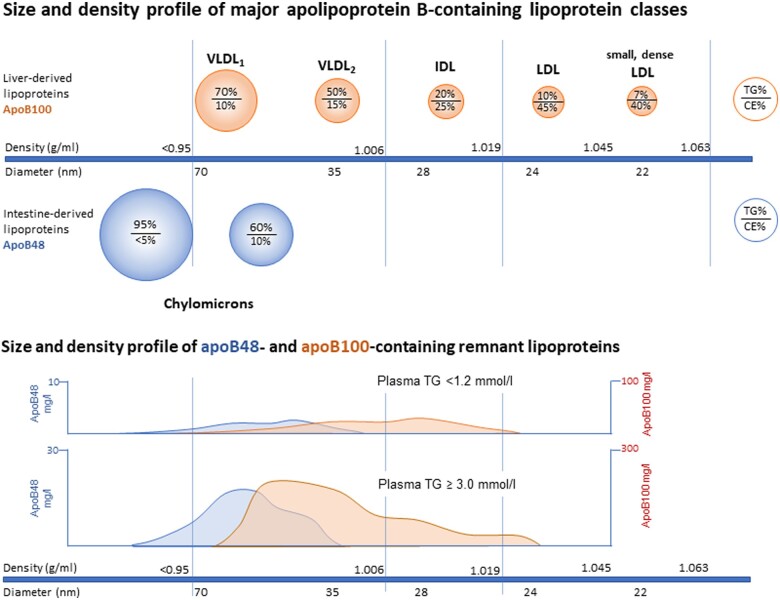
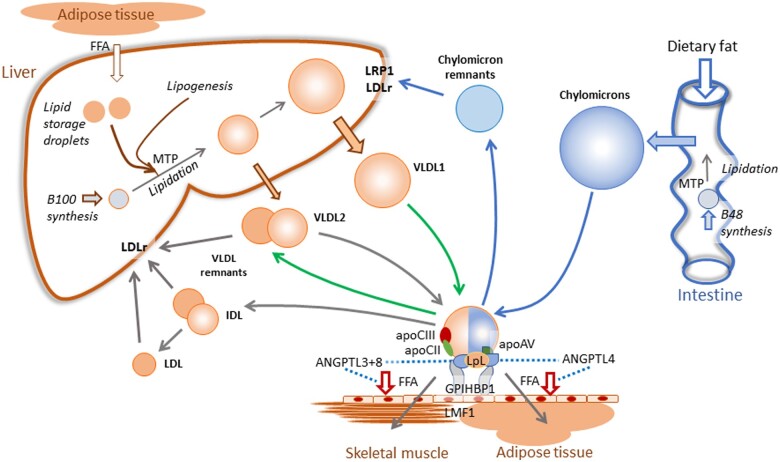
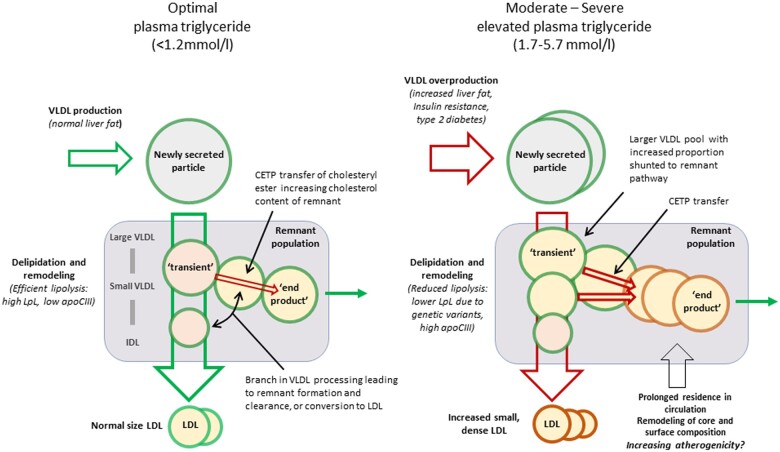
“In most people, remnant lipoproteins (and TRL in general) are highly heterogeneous (Figure 1).3,6–9”
§ Triglyceride-rich lipoproteins and their remnants: metabolic insights, role in atherosclerotic cardiovascular disease, and emerging therapeutic strategies—a consensus statement from the European Atherosclerosis Society > Search strategy > Triglycerides, triglyceride-rich lipoproteins, and remnants: definitions and clinical relevance
What the sources say
- Supportedcites [3] Björnson E, Packard CJ, Adiels M, Andersson L, Matikainen N, Söderlund S, Kahri J, Sihlbom C, Thorsell A, Zhou H, Taskinen MR, Borén J. Investigation of human apoB48 metabolism using a new, integrated non-steady-state model of apoB48 and apoB100 kinetics. J Intern Med 2019; 285: 562– 577. 30779243 PMC6849847 source
The Introduction (page unavailable) says TRLs comprise distinct fractions and that newly secreted particles and their remnants occur across the entire size and density range. The Discussion (page unavailable) reports apoB48-containing particles from chylomicrons through VLDL1 and VLDL2, with differing metabolic characteristics, and describes this as part of normal physiology. This supports the broad statement about heterogeneity, though the paper does not quantify the proportion of people. (LLM, conf=0.87)
- Not checked yetcites [6] Gotto AM, Pownall HJ, Havel RJ. Introduction to the plasma lipoproteins. Methods Enzymol 1986; 128: 3– 41. 3523141 source
- Not checked yetcites [7] Havel RJ, Triglyceride-rich lipoprotein remnants. In: Rifai N, Warnick G, Dominiczak M, eds. Handbook of Lipoprotein Testing. Washington DC: 25 AACC Press; 1997. p 451– 464.
- Not checked yetcites [8] Musliner TA, Giotas C, Krauss RM. Presence of multiple subpopulations of lipoproteins of intermediate density in normal subjects. Arteriosclerosis 1986; 6: 79– 87. 3942562 source
- Not checked yetcites [9] McNamara JR, Small DM, Li Z, Schaefer EJ. Differences in LDL subspecies involve alterations in lipid composition and conformational changes in apolipoprotein B. J Lipid Res 1996; 37: 1924– 1935. 8895058 source
plain- Asserted: passes — The authors put it forward as true.
- Checkable: passes — It can be checked against evidence.
- Load-bearing: passes — The paper’s conclusions depend on it.
- Based: passes — The paper gives a reason why it holds.
- Supported
The cited sources support only part of this claim — read each source’s verdict below.
In the paper
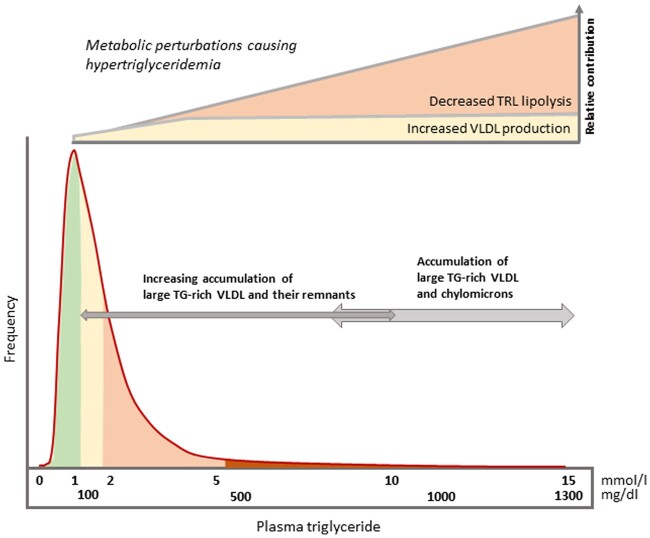
“it is less widely appreciated that fasting levels from as low as ∼1.2 mmol/L (∼100 mg/dL) can be associated with a cluster of metabolic abnormalities that include accumulation of TRL and remnants,14 as well as increased cardiovascular disease events15,16 (Figure 1).”
§ Triglyceride-rich lipoproteins and their remnants: metabolic insights, role in atherosclerotic cardiovascular disease, and emerging therapeutic strategies—a consensus statement from the European Atherosclerosis Society > Search strategy > Triglycerides, triglyceride-rich lipoproteins, and remnants: definitions and clinical relevance
What the sources say
- Partly supportedcites [14] Austin MA, King MC, Vranizan KM, Krauss RM. Atherogenic lipoprotein phenotype. A proposed genetic marker for coronary heart disease risk. Circulation 1990; 82: 495– 506. 2372896 sourceExperimental — accuracy not yet measured
Split into 2 atoms — 0 confirmed, 2 partially supported, 0 disputed, 0 misattributed, 0 unverifiable. Expand the claim to see per-atom verdicts.
- Partly supportedcites [15] Miller M, Seidler A, Moalemi A, Pearson TA. Normal triglyceride levels and coronary artery disease events: the Baltimore Coronary Observational Long-Term Study. J Am Coll Cardiol 1998; 31: 1252– 1257. 9581716 sourceExperimental — accuracy not yet measured
Split into 2 atoms — 1 confirmed, 1 partially supported, 0 disputed, 0 misattributed, 0 unverifiable. Expand the claim to see per-atom verdicts.
- Partly supportedcites [16] Lawler PR, Kotrri G, Koh M, Goodman SG, Farkouh ME, Lee DS, Austin PC, Udell JA, Ko DT. Real-world risk of cardiovascular outcomes associated with hypertriglyceridaemia among individuals with atherosclerotic cardiovascular disease and potential eligibility for emerging therapies. Eur Heart J 2020; 41: 86– 94. 31733058 sourceExperimental — accuracy not yet measured
Split into 2 atoms — 0 confirmed, 2 partially supported, 0 disputed, 0 misattributed, 0 unverifiable. Expand the claim to see per-atom verdicts.
plainstates an association- Asserted: passes — The authors put it forward as true.
- Checkable: passes — It can be checked against evidence.
- Load-bearing: passes — The paper’s conclusions depend on it.
- Based: passes — The paper gives a reason why it holds.
- Partly supported
The cited sources support only part of this claim — read each source’s verdict below.
In the paper
“Mendelian randomization studies focused on variants in the genes encoding apoAV, apoCIII, lipoprotein lipase (LpL) and the angiopoietin-like proteins 3, 4, and 8 (ANGPTL3, ANGPTL4, and ANGPTL8) have been highly informative.29–35”
§ Triglyceride-rich lipoproteins and their remnants: metabolic insights, role in atherosclerotic cardiovascular disease, and emerging therapeutic strategies—a consensus statement from the European Atherosclerosis Society > Search strategy > Triglycerides, triglyceride-rich lipoproteins, and remnants: definitions and clinical relevance
What the sources say
- Partly supportedcites [29] Do R, Stitziel NO, Won HH, Jørgensen AB, Duga S, Angelica Merlini P, Kiezun A, Farrall M, Goel A, Zuk O, Guella I, Asselta R, Lange LA, Peloso GM, Auer PLNHLBI Exome Sequencing Project Girelli D, Martinelli N, Farlow DN, DePristo MA, Roberts R, Stewart AF, Saleheen D, Danesh J, Epstein SE, Sivapalaratnam S, Hovingh GK, Kastelein JJ, Samani NJ, Schunkert H, Erdmann J, Shah SH, Kraus WE, Davies R, Nikpay M, Johansen CT, Wang J, Hegele RA, Hechter E, Marz W, Kleber ME, Huang J, Johnson AD, Li M, Burke GL, Gross M, Liu Y, Assimes TL, Heiss G, Lange EM, Folsom AR, Taylor HA, Olivieri O, Hamsten A, sourceExperimental — accuracy not yet measured
The Results passage labeled Abstract (page not provided) reports that rare APOA5 mutation carriers had a 2.2-fold higher MI/CAD risk, and the discussion there links APOA5, APOC3, and lipoprotein lipase variation to MI risk. This paper reports exome-sequencing association analyses, not a Mendelian randomization study, and the cited passages do not address ANGPTL3, ANGPTL4, or ANGPTL8. (LLM, conf=0.86)
- Supportedcites [30] Jørgensen AB, Frikke-Schmidt R, Nordestgaard BG, Tybjærg-Hansen A. Loss-of-function mutations in APOC3 and risk of ischemic vascular disease. N Engl J Med 2014; 371: 32– 41. 24941082 source
The cited paper supports the apoCIII portion of this multi-citation sentence. Its Abstract (page not provided) reports that APOC3 loss-of-function mutations were associated with lower triglyceride levels and reduced ischemic cardiovascular disease risk; the other genes are not attributed to this source individually. (LLM, conf=0.91)
- Supportedcites [31] Khera AV, Won HH, Peloso GM, O'Dushlaine C, Liu D, Stitziel NO, Natarajan P, Nomura A, Emdin CA, Gupta N, Borecki IB, Asselta R, Duga S, Merlini PA, Correa A, Kessler T, Wilson JG, Bown MJ, Hall AS, Braund PS, Carey DJ, Murray MF, Kirchner HL, Leader JB, Lavage DR, Manus JN, Hartzel DN, Samani NJ, Schunkert H, Marrugat J, Elosua R, McPherson R, Farrall M, Watkins H, Lander ES, Rader DJ, Danesh J, Ardissino D, Gabriel S, Willer C, Abecasis GR, Saleheen D, Dewey FE, Kathiresan S; Myocardial Infarction Genetics Consortium, DiscovEHR Study Group, CARDIoGRAM Exome Consortium, and Global Lipids Gene source
This source supports the lipoprotein lipase (LPL) portion of the sentence, which cites several studies for different genes. Its Methods (Statistical Analysis; page not indicated) describe an analysis using common LPL variants and a method equivalent to a cited Mendelian-randomization approach; the Discussion reports an association between those variants and coronary artery disease. It does not need to cover every gene listed alongside LPL. (LLM, conf=0.90)
- Partly supportedcites [32] Stitziel NO, Khera AV, Wang X, Bierhals AJ, Vourakis AC, Sperry AE, Natarajan P, Klarin D, Emdin CA, Zekavat SM, Nomura A, Erdmann J, Schunkert H, Samani NJ, Kraus WE, Shah SH, Yu B, Boerwinkle E, Rader DJ, Gupta N, Frossard PM, Rasheed A, Danesh J, Lander ES, Gabriel S, Saleheen D, Musunuru K, Kathiresan S; PROMIS and Myocardial Infarction Genetics Consortium Investigators. ANGPTL3 deficiency and protection against coronary artery disease. J Am Coll Cardiol 2017; 69: 2054– 2063. 28385496 PMC5404817 sourceExperimental — accuracy not yet measured
The Discussion (page not provided) places the paper’s ANGPTL3 findings alongside genetic evidence concerning APOA5, APOC3, ANGPTL4, and lipoprotein lipase activity. Our copy does not address ANGPTL8 or characterize the full set of studies as Mendelian randomization studies, so it supports only part of the attributed list. (LLM, conf=0.86)
- Supportedcites [33] Dewey FE, Gusarova V, O'Dushlaine C, Gottesman O, Trejos J, Hunt C, Van Hout CV, Habegger L, Buckler D, Lai KM, Leader JB, Murray MF, Ritchie MD, Kirchner HL, Ledbetter DH, Penn J, Lopez A, Borecki IB, Overton JD, Reid JG, Carey DJ, Murphy AJ, Yancopoulos GD, Baras A, Gromada J, Shuldiner AR. Inactivating variants in ANGPTL4 and risk of coronary artery disease. N Engl J Med 2016; 374: 1123– 1133. 26933753 PMC4900689 source
The Methods and Results report a study of ANGPTL4 variants, triglyceride levels, and coronary artery disease risk. This paper supports the ANGPTL4 example within the citing sentence’s group of genetic studies; the other genes are not being attributed to this citation alone. (LLM, conf=0.88)
- Supportedcites [34] Myocardial Infarction Genetics and CARDIoGRAM Exome Consortia Investigators; Stitziel NO, Stirrups KE, Masca NG, Erdmann J, Ferrario PG, König IR, Weeke PE, Webb TR, Auer PL, Schick UM, Lu Y, Zhang H, Dube MP, Goel A, Farrall M, Peloso GM, Won HH, Do R, van Iperen E, Kanoni S, Kruppa J, Mahajan A, Scott RA, Willenberg C, Braund PS, van Capelleveen JC, Doney AS, Donnelly LA, Asselta R, Merlini PA, Duga S, Marziliano N, Denny JC, Shaffer CM, El-Mokhtari NE, Franke A, Gottesman O, Heilmann S, Hengstenberg C, Hoffman P, Holmen OL, Hveem K, Jansson JH, Jöckel KH, Kessler T, Kriebel J, Laugwitz KL, source
The paper’s ANGPTL4 results and its section on coding variation in LPL report associations between variants in those genes and coronary artery disease. As one citation in a group, it supports the sentence’s reference to informative genetic-variant studies of ANGPTL4 and LPL. (LLM, conf=0.88)
- Partly supportedcites [35] Helkkula P, Kiiskinen T, Havulinna AS, Karjalainen J, Koskinen S, Salomaa V, Daly MJ, Palotie A, Surakka I, Ripatti S; FinnGen. ANGPTL8 protein-truncating variant associated with lower serum triglycerides and risk of coronary disease. PLoS Genet 2021; 17: e1009501. 33909604 PMC8109807 sourceExperimental — accuracy not yet measured
The Results (Primary analyses; page unavailable) examine ANGPTL8 and ANGPTL4 protein-truncating variants and their associations with lipid levels, so this paper fits the sentence’s broader point about informative genetic studies. But the Discussion (page unavailable) explicitly calls the study observational and says it cannot directly reveal causal effects; the copy does not support identifying this particular study as Mendelian randomization. (LLM, conf=0.86)
boosted- Asserted: passes — The authors put it forward as true.
- Checkable: passes — It can be checked against evidence.
- Load-bearing: passes — The paper’s conclusions depend on it.
- Based: passes — The paper gives a reason why it holds.
- Partly supported
66 more claims · 15 with their cited sources checked
Create a free account to see all 151 claims and to verify the 133 references still open.
- It may state two separate claims as one. 70
- Probably not a substantial claim. 16
Claims other papers make about this one
Each is checked against this paper’s own text: does it say what the citing paper says it does?
The cited source doesn’t support the claim as written.
In the citing paper
“The data from the PROMINENT trial are consistent with increased efficiency in conversion of triglyceride-rich lipoprotein remnants to LDL rather than their removal by the liver. 21”
From Triglyceride Lowering with Pemafibrate to Reduce Cardiovascular Risk (2022) · cites this paper as [21]
Checked by a reasoning model — may be wrong.
Experimental — accuracy not yet measuredThe cited source doesn’t support the claim as written.
In the citing paper
“yet highly effective therapies for reducing triglyceride levels are lacking. 5”
From Targeting APOC3 with Olezarsen in Moderate Hypertriglyceridemia (2025) · cites this paper as [5]
Checked by a reasoning model — may be wrong.
Experimental — accuracy not yet measuredThe source backs part of the claim, not all of it — or backs it for a different population, condition or comparison.
In the citing paper
“Hypertriglyceridemia is frequently identified in clinical practice, yet effective therapies are lacking. 5,17,18”
From Targeting APOC3 with Olezarsen in Moderate Hypertriglyceridemia (2025) · cites this paper as [5]
Experimental — accuracy not yet measuredThe source backs part of the claim, not all of it — or backs it for a different population, condition or comparison.
In the citing paper
“Though LDL is widely recognized as the dominant atherogenic factor, 149 the current analysis suggested that LDL‐C, a surrogate of LDL particle concentration, did not appear to be targeted by EPA and DHA in the treatment of dyslipidemia, an outcome in agreement with many published meta‐analysis results. 4 , 17 , 18 , 19”
From Association Between Omega-3 Fatty Acid Intake and Dyslipidemia: A Continuous Dose-Response Meta-Analysis of Randomized Controlled Trials (2023) · cites this paper as [4]
Experimental — accuracy not yet measuredThe cited source says what the claim attributes to it.
In the citing paper
“As a result of this process, CM are converted into chylomicron remnants, whereas VLDL particles are gradually transformed into intermediate-density lipoproteins (IDL) and, in part, into low-density lipoproteins (LDL) through further delipidation catalyzed by hepatic lipase [11].”
From Targeting triglycerides for cardiovascular risk reduction (2026) · cites this paper as [11]
2 more claims about this paper
Create a free account to see every claim other papers make about this one.
Self-check
Percentages, sums and reported differences re-computed from the paper’s own numbers.
Each contradiction between two passages listed here was confirmed by an independent check.
Rated minor: it would not touch a result — a value no result rests on, a p-value that stays on the same side of the significance level, or a conflict that is clerical, resolved elsewhere in the paper, or outside its own findings.
In the paper
§ Triglyceride-rich lipoproteins and their remnants: metabolic insights, role in atherosclerotic cardiovascular disease, and emerging therapeutic strategies—a consensus statement from the European Atherosclerosis Society > Search strategy > Triglycerides, triglyceride-rich lipoproteins, and remnants: definitions and clinical relevance
“Remnant lipoproteins are enriched in cholesterol (both free and esterified) and are depleted in apoC proteins and enriched in apoE (Figure 2).”
§ Triglyceride-rich lipoproteins and their remnants: metabolic insights, role in atherosclerotic cardiovascular disease, and emerging therapeutic strategies—a consensus statement from the European Atherosclerosis Society > Role of triglyceride-rich lipoproteins in atherosclerotic cardiovascular disease > How do triglyceride-rich lipoproteins and remnants exert atherogenic effects at the arterial wall?
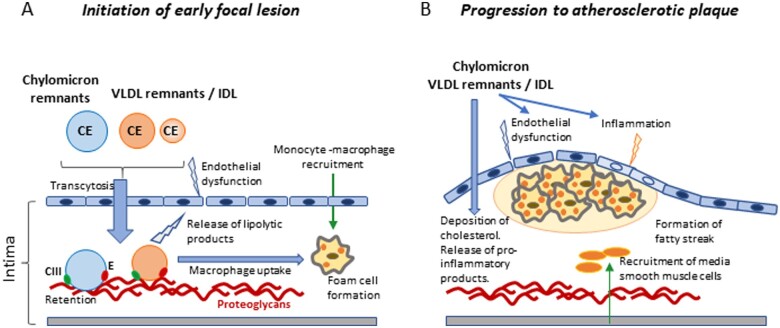
“The proteome of remnant particles is enriched in apoE and apoCIII”
Citations
Cites
Friedewald, W. T., Levy, R. I., & Fredrickson, D. S. (1972) · Clinical Chemistry · doi:10.1093/clinchem/18.6.499 · Cited by 32,423 · cited 2×
“66,153,154 Estimation of VLDL cholesterol concentration by nuclear magnetic resonance (NMR) spectroscopy analysis was recently proposed as a surrogate for remnant lipoproteins.”
BackgroundMach, F., Baigent, C., Catapano, A. L., Koskinas, K. C., Casula, M., Badimon, L., Chapman, M. J., De Backer, G. G., Delgado, V., Ference, B. A., et al. (2020) · European Heart Journal · doi:10.1093/eurheartj/ehz455 · Cited by 8,961
Self-citationGrundy, S. M., Stone, N. J., Bailey, A. L., Beam, C., Birtcher, K. K., Blumenthal, R. S., Braun, L. T., de Ferranti, S., Faiella-Tommasino, J., Forman, D. E., et al. (2019) · Circulation · doi:10.1161/cir.0000000000000625 · Cited by 6,185
Antihyperlipidemic and Biochemical Activities of Mcy Protein in Streptozotocin Induced Diabetic Rats
Marella, S., Maddirela, D. R., Badri, K. R., Jyothi Kumar, M. V., & Chippada, A. (2015) · Cellular Physiology and Biochemistry · doi:10.1159/000373954 · Cited by 5,938
Mach, F., Baigent, C., Catapano, A. L., Koskinas, K. C., Casula, M., Badimon, L., Chapman, M. J., De Backer, G. G., Delgado, V., Ference, B. A., et al. (2019) · Atherosclerosis · doi:10.1016/j.atherosclerosis.2019.08.014 · Cited by 4,854 · cited 3×
“13,20 Non-fasting TG is equivalent, if not superior, to fasting TG in assessing potential ASCVD risk.”
BackgroundSelf-citationNLRP3 inflammasomes are required for atherogenesis and activated by cholesterol crystals
Duewell, P., Kono, H., Rayner, K. J., Sirois, C. M., Vladimer, G., Bauernfeind, F. G., Abela, G. S., Franchi, L., Nuñez, G., Schnurr, M., et al. (2010) · Nature · doi:10.1038/nature08938 · Cited by 4,026
Ference, B. A., Ginsberg, H. N., Graham, I., Ray, K. K., Packard, C. J., Bruckert, E., Hegele, R. A., Krauss, R. M., Raal, F. J., Schunkert, H., et al. (2017) · European Heart Journal · doi:10.1093/eurheartj/ehx144 · Cited by 3,962 · cited 1×
“17,25,93,104,206”
Self-citationBrown, M. S., & Goldstein, J. L. (1997) · Cell · doi:10.1016/s0092-8674(00)80213-5 · Cited by 3,834
ESC/EAS Guidelines for the management of dyslipidaemias
Reiner, Ž., Catapano, A. L., De Backer, G., Graham, I., Taskinen, M.-R., Wiklund, O., Agewall, S., Alegria, E., Chapman, M. J., Durrington, P., et al. (2011) · European Heart Journal · doi:10.1093/eurheartj/ehr158 · Cited by 3,549
Self-citationCardiovascular Risk Reduction with Icosapent Ethyl for Hypertriglyceridemia
Bhatt, D. L., Steg, P. G., Miller, M., Brinton, E. A., Jacobson, T. A., Ketchum, S. B., Doyle, R. T., Juliano, R. A., Jiao, L., Granowitz, C., et al. (2019) · New England Journal of Medicine · doi:10.1056/nejmoa1812792 · Cited by 3,317 · cited 1×
“ASCVD risk, although it was suggested that only a modest part of this benefit was due to changes in TRL levels.(176) The lack of benefit in”
Background
Cited by
Items 501–600 of 1,001
Hypertriglyceridaemia: A practical approach for primary care
Lan, N. S. R., Nelson, A. J., Brett, T., Hespe, C. M., Watts, G. F., & Nicholls, S. J. (2025) · Australian Journal of General Practice · doi:10.31128/ajgp-01-25-7535 · Cited by 4
Pang, J., Li, S., Chan, D. C., SULLIVAN, D. R., Woodward, A.-M., & Watts, G. F. (2022) · Current Opinion in Endocrinology Diabetes and Obesity · doi:10.1097/med.0000000000000715 · Cited by 4
Liu, Z., Andraska, E., Akinbode, D., Mars, W. M., & Mota, R. I. (2022) · Current Pathobiology Reports · doi:10.1007/s40139-022-00231-x · Cited by 4
Chen, I.-J., Hsu, L.-T., Lin, T., & Chen, J. (2022) · Frontiers in Nutrition · doi:10.3389/fnut.2022.928910 · Cited by 4
Assessment of Lipid Balance Parameters after Laparoscopic Sleeve Gastrectomy in 1-Year Observation
Pawłuszewicz, P., Wojciak, P. A., Łukaszewicz, A., Chilmończyk, J., Ładny, J. R., Nadolny, K., & Hady, H. R. (2023) · Journal of Clinical Medicine · doi:10.3390/jcm12124079 · Cited by 4
Association between remnant cholesterol and progression of bioprosthetic valve degeneration
Li, Z., Zhang, B., Salaün, E., Côté, N., Mahjoub, H., Mathieu, P., Dahou, A., Zenses, A., Xu, Y., Pîbarot, P., et al. (2023) · European Heart Journal - Cardiovascular Imaging · doi:10.1093/ehjci/jead159 · Cited by 4
Dan, W., Wang, X., Wu, J., Gu, Y., Liu, S., Zhang, H., Chang, X., Shi, C., Yan, H., Xia, M., et al. (2023) · Clinica Chimica Acta · doi:10.1016/j.cca.2023.117558 · Cited by 4
Is there still a place for fenofibrate-statin combination therapy?
Farnier, M., Vrablík, M., & Catapano, A. L. (2023) · European Atherosclerosis Journal · doi:10.56095/eaj.v2i3.55 · Cited by 4
Self-citationYan, C., Guo, Y., & Cao, G. (2024) · International Journal of General Medicine · doi:10.2147/ijgm.s444169 · Cited by 4
“Previous studies have pointed out that the main cause of increased risk of chronic heart disease and death is TC, not TG. 32 Therefore, early administration of statin lipid-lowering drugs in clinical practice improves vascular endothelial function by controlling dyslipidemia and reduces clinical…”
BackgroundEmerging Lipid-Lowering Therapies: A Comprehensive Review of Novel Agents Targeting Hyperlipidemia
Uthirapathy, S. (2024) · Journal of Angiotherapy · doi:10.25163/angiotherapy.8109920 · Cited by 5
Pan, Z., Zaman, M. A., Kalsoom, S., & Zhang, Y. (2024) · Expert Review of Clinical Pharmacology · doi:10.1080/17512433.2024.2423724 · Cited by 4
“With the recent advances in human genetics and epidemiological and critical trials, the TRL remnants and their cholesterol components often referred to as remnant cholesterol have been recognized as significant contributors to cardiovascular diseases, even when LDL-C levels were controlled [11,12].”
Zhang, H., Zheng, X., Yan, Z., Guo, L., Zheng, Y., Zhang, D., & Ma, X. (2024) · Frontiers in Cardiovascular Medicine · doi:10.3389/fcvm.2024.1439699 · Cited by 4
Aaseth, J., Retterstøl, K., Rootwelt, H., & Farup, P. G. (2025) · Nutrients · doi:10.3390/nu17010189 · Cited by 4
A predictive model to assess the risk of developing hyperlipidemia in patients with type 2 diabetes
Ye, R., Huang, X., Yang, H., Pan, W., Wang, P., Men, J., Huang, D., & Wu, S. (2025) · PLoS ONE · doi:10.1371/journal.pone.0315781 · Cited by 4
“TG-rich lipoproteins contribute to the formation of small, dense LDL particles, which are more atherogenic and increase cardiovascular risk [38].”
Widmer, A., Mercante, M. G., & Silver, H. J. (2022) · Nutrients · doi:10.3390/nu14235106 · Cited by 4
“An elevated TG/HDL ratio has long been associated with having an atherogenic lipid profile and, more recently, with being in a state of insulin resistance [29,30].”
BackgroundMicroplastics, cardiometabolic risk, genetics and Alzheimer's disease
Watts, G. F., & Chan, D. C. (2022) · Current Opinion in Endocrinology Diabetes and Obesity · doi:10.1097/med.0000000000000718 · Cited by 4
Safarova, M. S., & Gupta, K. (2022) · Kansas Journal of Medicine · doi:10.17161/kjm.vol15.17006 · Cited by 4
Pharmacotherapy of Obesity and Metabolic Syndrome
Duan, D., & Ahima, R. S. (2023) · Springer eBooks · doi:10.1007/978-3-031-40116-9_44 · Cited by 4
Владиславович, Е. М., Кухарчук, В. В., Валентиновна, Б. Т., С., Г. В., В., С. И., А., С. А., А., С. А., И., Ш. И., А., З. П., Murataliev, T. M., et al. (2025) · Eurasian heart journal · Cited by 4
Evinacumab Therapy for Homozygous Familial Hypercholesterolemia
Toth, P. P. (2023) · JACC Advances · doi:10.1016/j.jacadv.2023.100646 · Cited by 4
Triglyceride/cholesteryl ester ratio shapes lipid droplet growth and protein identity
Elhan, H., Dumesnil, C., Zouiouich, M., Moulin, C., Čopič, A., Omrane, M., Feuillet, B., & Thiam, A. R. (2026) · The Journal of Cell Biology · doi:10.64898/2026.01.21.700800 · Cited by 4
Upadhyay, L. S. B., Rana, S., Kumar, A., Haritha, M. M., Manasa, B., & Bhagat, P. (2024) · Microchemical Journal · doi:10.1016/j.microc.2024.110363 · Cited by 3
Ishibashi, S., Arai, H., Yokote, K., Araki, E., Watanabe, M., Nakanishi, M., Makinose, Y., Suganami, H., Kurihara, Y., & Yamashita, S. (2024) · Journal of Atherosclerosis and Thrombosis · doi:10.5551/jat.64887 · Cited by 3
Zhang, T., Zhang, H., Gao, X., Peng, P., Chen, T., Zhang, X., Yang, J., Zheng, Y., Peng, Y., Ma, X., et al. (2025) · Diabetology & Metabolic Syndrome · doi:10.1186/s13098-025-01645-4 · Cited by 3
“However, despite controlling modifiable cardiovascular risk factors (mCRFs), CAD patients continue to face a persistent risk of cardiovascular events, known as residual cardiovascular risk [3, 4].”
The impact of remnant lipids on keloid formation: a causal analysis using mendelian randomization
Zhao, Z., Shen, G., Sun, H., Gong, J., & Hu, B. (2025) · Archives of Dermatological Research · doi:10.1007/s00403-025-03989-3 · Cited by 3
Srikanth, P., Shaik, K. M., Patibandla, V., Kumar, D., & Nandi, S. (2025) · Exploration of Endocrine and Metabolic Diseases · doi:10.37349/eemd.2025.101425 · Cited by 3
Choi, H., Oh, S. J., Jo, Y. H., Park, Y. H., Park, Y. H., Yang, T., Doh, J., Hong, Y. J., Ahn, K. T., Cho, J. M., et al. (2025) · Scientific Reports · doi:10.1038/s41598-025-00298-7 · Cited by 3
“ApoB is a major apolipoprotein present in all potentially atherogenic lipoprotein particles, and its concentration reflects the total number of LDL particles, making it a strong indicator of the adequacy of lipid-lowering therapy 25 .”
Larouche, M., Ballantyne, C. M., Dufour, J., Brisson, D., Given, B. D., & Gaudet, D. (2025) · JCEM Case Reports · doi:10.1210/jcemcr/luaf146 · Cited by 3
“Severe hypertriglyceridemia (HTG) is characterized by triglyceride (TG) levels > 500 mg/dL (SI: 5.7 mmol/L) (reference range, 150 mg/dL [SI: 1.7 mmol/L]) [1].”
InfluentialSelf-citationCholesterol Levels and Cardiovascular Outcomes Following Statin Initiation for Primary Prevention
Thompson, W., Jeong, I. J., Basque, S. R., Abdel-Qadir, H. M., Austin, P. C., Ko, D. T., Famiyeh, I., Chu, A., Fang, J., Odutayo, A., et al. (2025) · JACC Advances · doi:10.1016/j.jacadv.2025.101864 · Cited by 3
Nelson, J. R. (2025) · Cardiology Plus · doi:10.1097/cp9.0000000000000130 · Cited by 3
Zhang, Y., Jing, Z., Liu, Z., Lai, A., Tan, G., & Yan, B. P. (2025) · Scientific Reports · doi:10.1038/s41598-025-19856-0 · Cited by 4
“Small dense LDL is particularly atherogenic, and triglyceride-rich remnants and IDL contribute to residual risk through slow clearance and high cholesterol content 29,32 .”
Hou, D., Wang, Y., Zhai, S., Yang, X., Tang, Y., & Wu, D. (2025) · BMC Neurology · doi:10.1186/s12883-025-04444-6 · Cited by 3
Ye, Z., Cui, K., Yin, D., Zhu, C., Feng, L., Xie, E., Du, Y., Yang, M., & Dou, K. (2025) · Diabetes Research and Clinical Practice · doi:10.1016/j.diabres.2025.112979 · Cited by 3
Remnant cholesterol and kidney disease progression in type 2 diabetes: A retrospective cohort study
Mori, T., Yamamoto, Y., Hanai, K., Yamashige, Y., Murata, H., Shinozaki, T., & Nakagami, T. (2025) · Journal of clinical lipidology · doi:10.1016/j.jacl.2025.10.075 · Cited by 3
D’Erasmo, L., Tramontano, D., & Arca, M. (2025) · Current Opinion in Endocrinology Diabetes and Obesity · doi:10.1097/med.0000000000000941 · Cited by 3
Sattar, N. A. (2025) · Diabetes · doi:10.2337/dbi25-0025 · Cited by 3
Xiao, Q., Wang, M., Wang, S., Wang, L., & Ding, H. (2026) · Journal of Translational Medicine · doi:10.1186/s12967-025-07647-0 · Cited by 3
“ANGPTL3 functions not only as a metabolic regulator but also as an indirect amplifier of inflammation [3].”
InfluentialBouillet, B., Boulestreau, R., Aboyans, V., Béliard, S., Boccara, F., Cariou, B., Charrière, S., Moulin, P., Vergès, B. L., Valéro, R., et al. (2026) · Diabetes & Metabolism · doi:10.1016/j.diabet.2026.101725 · Cited by 3
Self-citationLipoprotein lipase DNA methylation in the adipose tissue of patients with persistent chylomicronemia
Larouche, M., Brisson, D., Laprise, C., & Gaudet, D. (2026) · Journal of clinical lipidology · doi:10.1016/j.jacl.2026.02.015 · Cited by 3
Self-citationNatsir, R., Halimah, E., Diantini, A., & Levita, J. (2026) · Therapeutics and Clinical Risk Management · doi:10.2147/tcrm.s593168 · Cited by 3
“21 In contrast to LDL, which represents the end-product of intravascular lipolysis, RC particles retain a heterogeneous composition of cholesterol, surface apolipoproteins (apoE, apoC-II/III), and residual TG, giving them metabolic properties that are highly sensitive to insulin action and hepatic…”
Djukanovic, L., Skiljevic, D. S., Nikolic, M. M., Malinić, M., Popadić, S., Radmili, O., Cvetić, V., Rajović, N., Milic, N. M., Savić, L., et al. (2026) · International Journal of Molecular Sciences · doi:10.3390/ijms27052353 · Cited by 3
“…to the European Atherosclerosis Society consensus statement, triglyceride-rich lipoproteins and their remnants have been implicated in atherosclerotic processes, representing a potential LDL-independent atherogenic pathway contributing to residual cardiovascular risk despite statin therapy [46].”
Jang, M., Park, J.-H., Lee, J. G., Yi, Y. H., Lee, S. H., Kim, G. L., Ra, Y.-J., Shin, M., & Tak, Y. J. (2026) · Archives of Gerontology and Geriatrics · doi:10.1016/j.archger.2026.106232 · Cited by 3
Bai, J., Cai, J., Huang, Z., Wang, J., He, B., Guo, L., Wu, L., Liu, D., Zhao, G., Xie, Q., et al. (2026) · Frontiers in Endocrinology · doi:10.3389/fendo.2026.1798735 · Cited by 3
Kelly, R. K., Harris, K., Muntner, P., & Woodward, M. (2026) · Journal of the American Heart Association · doi:10.1161/jaha.125.045533 · Cited by 3
Zhang, F., & Liao, Q. (2026) · Frontiers in Cardiovascular Medicine · doi:10.3389/fcvm.2026.1790509 · Cited by 3
“A central translational point is that triglyceride concentration and apoB-containing particle burden are related but not interchangeable (24, 44–46, 54, 55, 69–72).”
Hypertriglyceridaemia and its multifaceted mechanisms driving atherosclerotic cardiovascular disease
Li, X., Xu, L., Li, J., Luo, Y., Shen, H., & Zhang, D. (2026) · Lipids in Health and Disease · doi:10.1186/s12944-026-02983-6 · Cited by 3
“In September 2021, the European Atherosclerosis Society issued a consensus statement on TRLs and their remnants [20], noting that a wide range of epidemiological and genetic evidence strongly links elevated levels of triglycerides (TG), TRLs, and remnant particles to cardiovascular disease.”
InfluentialCentury of Progress on the Structure of APOB-100 in Atherogenic Lipoproteins
Coleman, B., Woollett, L. A., & Davidson, W. S. (2026) · Circulation Research · doi:10.1161/circresaha.126.328575 · Cited by 3
Morze, J., Björnson, E., Mi, M. Y., Adiels, M., Melloni, G. E. M., da Silva, G. R., Rynkiewicz, A., Marston, N., Guasch‐Ferré, M., Tsai, M. Y., et al. (2026) · European Heart Journal · doi:10.1093/eurheartj/ehag718 · Cited by 3
Self-citationRuan, W., Zhai, X., Guan, L., Wei, X., & Zhang, S. (2022) · PubMed · Cited by 3
Lin, K.-H., Amigó, N., Ortiz, P., Alonso, C., Smolensky, A. V., Parmar, D., Chalasani, N., & Gawrieh, S. (2024) · Clínica e Investigación en Arteriosclerosis (English Edition) · doi:10.1016/j.arteri.2024.04.004 · Cited by 3
El-Tantawy, H. M. (2025) · Egyptian Journal of Botany · doi:10.21608/ejbo.2024.309874.2954 · Cited by 3
“High TG contributes to metabolic syndrome and obesity, which in turn lead to atherosclerosis (Ginsberg et al., 2021).”
Luo, S., Yang, S., Li, P., Gu, N., Yang, D., Lu, Z., Lu, Z., Zhao, R., & Shi, B. (2025) · Journal of clinical lipidology · doi:10.1016/j.jacl.2025.03.010 · Cited by 3
Hua, J., Dong, J., Chen, Y., Li, H., & Chen, Q. (2025) · Journal of the American Heart Association · doi:10.1161/jaha.124.040211 · Cited by 4
“10,17,48 Additionally, a strong correlation has been established between the RC concentrations derived from both methods.”
Malick, W. A., Rosenson, R. S., Naidu, I., & Mechanick, J. I. (2025) · Springer eBooks · doi:10.1007/978-3-031-82888-1_5 · Cited by 3
周, 肖. (2025) · Advances in Clinical Medicine · doi:10.12677/acm.2025.1551428 · Cited by 3
Tran, H. H.-V., Thu, A., Twayana, A. R., Fuertes, A., Gonzalez, M., Basta, M., James, M., Mahadevaiah, A., Mehta, K. A., Islek, D., et al. (2025) · Cardiology in Review · doi:10.1097/crd.0000000000000976 · Cited by 3
Zambon, A., Gentile, L., Galimberti, F., Manzato, E., Giaccari, A., Sesti, G., Belfiore, A., Norata, G. D., Temporelli, P. L., Frulloni, L., et al. (2025) · Nutrition Metabolism and Cardiovascular Diseases · doi:10.1016/j.numecd.2025.104214 · Cited by 3
Self-citationLi, Q., Song, C., Zhou, H., Luo, Q., Li, J., & Chen, M. (2025) · Kidney Diseases · doi:10.1159/000547526 · Cited by 3
“However, calculated remnant cholesterol is widely recognized as a cost-effective and practical alternative in clinical assessment [44].”
Ogunniyi, K. E., Aghasili, C. C., Akinmoju, O. D., Olaiya, V. O., Abib, O. M., Odueke, A., Popoola, H. A., Onyenokwe, V., Onaolapo, D., Usman, A.-A. M., et al. (2025) · American Journal of Cardiovascular Drugs · doi:10.1007/s40256-025-00762-9 · Cited by 3
“The liver clears these remnants by binding to them through its remnant receptors, which recognize apo E and apo B48 on cholesterol remnants [75].”
InfluentialLiu, F., Yang, T., Qiao, X.-H., Zhao, P., Zhu, Z.-P., Yu, J., Zhao, J.-H., Luo, J.-M., & Sun, M. (2024) · Scientia Horticulturae · doi:10.1016/j.scienta.2024.113233 · Cited by 3
Lichtwald, A., Ittermann, T., Friedrich, N., Lange, A. E., Winter, T., Kolbe, C., Allenberg, H., Nauck, M. A., & Heckmann, M. (2024) · International Journal of Molecular Sciences · doi:10.3390/ijms25147552 · Cited by 3
“In contrast to adult metabolism, fetal HDL transports freshly synthesize the cholesterol from the liver to cells; additionally, HDL is the main fraction of the lipoproteins, whereas the LDL concentration is lower in the fetus than in adults [35,48].”
BackgroundWang, W., Liu, L., Qiu, W., Chen, C., Huang, Y., Cai, A., Nie, Z., Ou, Y., Zhu, Y., & Feng, Y. (2024) · Risk Management and Healthcare Policy · doi:10.2147/rmhp.s465135 · Cited by 3
“19,27 Previous studies have shown that a set of triglycerides rather than total triglycerides were risk predictors of cardiovascular diseases or related risk factors, 28,29 suggesting that the relevance between triglycerides and ischemic stroke may be inaccurately estimated by using total…”
BackgroundFrom Genetic Findings to new Intestinal Molecular Targets in Lipid Metabolism
May, C. L., Ducheix, S., Cariou, B., & Rimbert, A. (2025) · Current Atherosclerosis Reports · doi:10.1007/s11883-024-01264-w · Cited by 3
“This residual risk is particularly evident in patients with metabolic syndrome, characterized by visceral obesity, insulin resistance, and combined dyslipidemia, who present with elevated circulating TRLs levels [6, 7].”
Distinct lipoprotein contributions to valvular heart disease: Insights from genetic analysis
Luo, D., Björnson, E., Wang, X., Zhang, B., Xu, C., Guan, Y., Xiang, S., Borén, J., Hao, X., & Chen, J. (2025) · International Journal of Cardiology · doi:10.1016/j.ijcard.2025.133218 · Cited by 3
Self-citationRecruiting a transcription factor in the liver to prevent atherosclerosis
Attie, A. D. (2021) · Journal of Clinical Investigation · doi:10.1172/jci154677 · Cited by 3
Nave, A. H., Kaynak, N., Mai, K., Siegerink, B., Laufs, U., Heuschmann, P. U., Liman, T., Ebinger, M., & Endres, M. (2022) · Stroke · doi:10.1161/strokeaha.122.038732 · Cited by 3
Shi, H., & Wang, Z. (2022) · Translational Pediatrics · doi:10.21037/tp-22-15 · Cited by 3
“The contributing role of triglycerides and triglyceride-rich lipoproteins in atherosclerotic cardiovascular disease is supported by mutational analyses, genome-wide association studies, and Mendelian randomization studies (30,31).”
Atherogenic dyslipidaemia in type 2 diabetes mellitus: The PREDISAT study
Climent, E., Millán, J., Ascaso, J. F., Tembra, M. S., Morillas, C., Civeira, F., Bellón, J. M., Pedro‐Botet, J., & the Spanish Atherosclerosis Society Working Group on Atherogenic Dyslipidaemia (2023) · Lipids · doi:10.1002/lipd.12374 · Cited by 3
Production and Metabolism of Triglyceride-Rich Lipoproteins: Impact of Diabetes
Pirillo, A., Norata, G. D., & Catapano, A. L. (2023) · Contemporary diabetes · doi:10.1007/978-3-031-26681-2_7 · Cited by 3
Self-citationGlycerol and β-hydroxybutyrate: friends or foes?
Tokgözoğlu, L. S., Pirillo, A., & Catapano, A. L. (2023) · European Heart Journal · doi:10.1093/eurheartj/ehad368 · Cited by 3
Self-citationRNA interference-based therapies for atherosclerosis: Recent advances and future prospects
Parsamanesh, N., Poudineh, M., Siami, H., Butler, A. E., Almahmeed, W. A., & Sahebkar, A. (2023) · Progress in molecular biology and translational science · doi:10.1016/bs.pmbts.2023.12.009 · Cited by 3
Bases genéticas de las hipertrigliceridemias
Corbo, M. J. A., Muñiz-Grijalvo, O., Echevarría, A. B., & Díaz-Díaz, J. L. (2024) · Clínica e Investigación en Arteriosclerosis · doi:10.1016/j.arteri.2024.11.001 · Cited by 3
Lipoprotein profile and metabolic fine-mapping of genetic lipid risk lociPreprint
Suhre, K., AL-Ishaq, R. K., Belkadi, A., Habib, T., Halama, A., Stephan, N., Thareja, G., Zaghlool, S. B., Fauman, E. B., & Najafi-Shoushtari, S. H. (2022) · medRxiv · doi:10.1101/2022.06.12.22276286 · Cited by 3
Hou, Y., Zhao, J., Xu, W., Chen, L., Yang, J., Wang, Z., & Si, K. (2024) · Heliyon · doi:10.1016/j.heliyon.2024.e34089 · Cited by 2
“Aortic valve replacement, as the most commonly used treatment for CAVS, whether through open surgery or transcatheter intervention, has a high treatment cost of around 60,000 dollars [7].”
BackgroundKlose, G., Gouni‐Berthold, I., & März, W. (2023) · Die Innere Medizin · doi:10.1007/s00108-023-01524-y · Cited by 2
Non-HDL Estimation Methods: Advancing Cardiovascular Disease Prediction
Akbar, A. M., Jha, D., Ali, H., & Ahmad, T. (2023) · Indian Journal of Pharmacy Practice · doi:10.5530/ijopp.16.4.52 · Cited by 2
Hasan, A., Ahmed, G. M. S., Hady, B. M. A., Ahmed, I. H., Saghier, E. O. A. E., Sayed, M. F. M. E., Azel, L. H., Mohamed Marwa, A., Saleh, O. I., Taha, R. I., et al. (2023) · Bioactive Compounds in Health and Disease · doi:10.31989/bchd.v6i11.1235 · Cited by 2
“Atherogenesis is brought on by the artery wall macrophages consuming these tiny, dense lipoprotein particles [31].”
BackgroundAfanasieva, O. I., Arefieva, T. I., Tyurina, A. V., Filatova, A. Y., Razova, O. A., Klesareva, E., Radyukhina, N. V., Ruleva, N. Y., Владиславович, Е. М., & Pokrovsky, N. S. (2024) · Russian Cardiology Bulletin · doi:10.17116/cardiobulletin20241901129 · Cited by 2
Lipid metabolism disorders in patients with type 2 diabetes mellitus: focus on hypertriglyceridemia
Demidova, T. Y., & Омариевна, У. Ф. (2024) · FOCUS Endocrinology · doi:10.62751/2713-0177-2024-5-2-14 · Cited by 2
Metabolism and Clinical Significance of Triglycerides
Shihab, S. A., Mosleh, M., & Al-fahham, A. A. (2024) · INTERNATIONAL JOURNAL OF HEALTH & MEDICAL RESEARCH · doi:10.58806/ijhmr.2024.v3i11n01 · Cited by 2
Ferrocino, I., Ζουμποπούλου, Γ., Lali, D., Anastasiou, R., Agapaki, A., Κάζου, Μ., Konstantakis, E., Balafas, E., Kadoglou, N. P. E., Kostomitsopoulos, N. G., et al. (2025) · Beneficial Microbes · doi:10.1163/18762891-bja00064 · Cited by 2
Kazeminasab, F., Baharlooie, M., Bagheri, R., Rosenkranz, S. K., & Santos, H. O. (2025) · European Journal of Clinical Nutrition · doi:10.1038/s41430-025-01626-w · Cited by 2
“…we assessed blood pressure (BP) as the most common vascular parameter used in clinical settings and decision-making [30 – 33], CRP as a biomarker of endothelial dysfunction that partially re fl ects cardio-in fl ammation [34], and lipid pro fi le as a general cardiome-tabolic screening tool [35 – 38].”
Xu, J.-J., Yu, C., Zhou, X., Liu, Y., Zhang, Y., Dai, X., & Wang, J. (2025) · ACS Biomaterials Science & Engineering · doi:10.1021/acsbiomaterials.5c00014 · Cited by 2
Postprandial implications in cardiovascular disease and potential markers to develop new therapies
Tudorache, I. F., Barbarossa, D., Daraban, B. S., Rizzo, R., Esposito, F. M., Coronelli, M. M., & Catapano, A. L. (2025) · European Atherosclerosis Journal · doi:10.56095/eaj.v4i2.104 · Cited by 2
“This upregulation enhances leukocyte adhesion to the endothelium, thereby promoting atherogenesis and inflammation within vascular plaques [18, 53].”
Self-citationTwo Sides of Triglycerides in Atherogenesis: An Essential Contributor
Poznyak, A. V., Kozlov, S. G., Babayeva, G. A., Sukhorukov, V. N., & Orekhov, A. N. (2025) · Clinical Medicine Insights Cardiology · doi:10.1177/11795468241291640 · Cited by 2
Villaplana, V. D. S., López‐Yerena, A., Muñoz‐García, N., Vilahur, G., Badimón, L., & Padró, T. (2025) · Lipids in Health and Disease · doi:10.1186/s12944-025-02723-2 · Cited by 2
“The residual CVD risk has been related to alterations in the lipid metabolism, particularly in the triglyceride-rich lipoproteins (TRL) (VLDL, IDL) and the cholesterol they contain, known as remnant cholesterol (RC), which represents a major contributor [8, 9].”
Apolipoprotein A5 reduces clearance of VLDL by altering apolipoprotein E content
Tarapore, P., Swertfeger, D. K., Morris, J. C., He, Y., Sarkar, S., Melchior, J., SHAH, A. S., Liu, M., & Davidson, W. S. (2025) · Journal of Lipid Research · doi:10.1016/j.jlr.2025.100917 · Cited by 2
“APOE typically accumulates on VLDL particles as they shrink during systemic lipolysis, facilitating their binding to the LDL receptor (LDLr), LDLr-related protein 1, and hepatic cell surface heparan sulfate proteoglycans (HSPGs).”
Zhang, D., Li, L., Zhang, Y., Wang, P., Lei, L., Hu, Y., Zhou, C., Yang, S.-S., Liu, W., & Huang, X. (2025) · Journal of Translational Medicine · doi:10.1186/s12967-025-07241-4 · Cited by 2
“Triglycerides are primarily regulated through lipolysis and the metabolic pathway of very low-density lipoprotein (VLDL) and are closely related to lipolysis [30], leading to a negative correlation with fat content.”
Sampath-Kumar, R., Padilla, E., Wilkinson, M. J., Barba, D. T., Aramburo, N., Mahmud, E., Ben‐Yehuda, O., & Taub, P. R. (2025) · JACC Advances · doi:10.1016/j.jacadv.2025.102247 · Cited by 2
Panhuis, W. I. H., Thiemann, E., van Dijk, D. M. A. H., Been, B., Jarrett, K. E., Meurs, A., Kooijman, S., Hovingh, M. V., Modder, M., van Os, B. W., et al. (2025) · Science Advances · doi:10.1126/sciadv.adx3794 · Cited by 2
Xu, Y., Liu, M., Yang, W., Zhang, W., Fan, H., Xu, Y., Zhou, J., & Yuan, Z. (2025) · Frontiers in Cardiovascular Medicine · doi:10.3389/fcvm.2025.1597749 · Cited by 2
Sun, X., Kang, J.-P., Lv, H., Wu, C., & Liu, X. (2025) · Postgraduate Medical Journal · doi:10.1093/postmj/qgaf185 · Cited by 2
Kessler, A. S., Baum, S. J., Kutrieb, E., Vera‐Llonch, M., Wu, H., Weycker, D. A., Respress, J. L., & Soffer, D. E. (2025) · American Journal of Preventive Cardiology · doi:10.1016/j.ajpc.2025.101356 · Cited by 2
“To reduce TG levels and lower the risks of ASCVD and AP, guidelines and consensus statements promulgated by US and European medical associations recommend identification and treatment of secondary causes, lifestyle modifications and, if appropriate, use of lipid-lowering medicine [1,2].”
Zhang, B., Loaiza, N., Rimbert, A., Oldoni, F., Blauw, L. L., Rensen, P. C. N., Martinez, L. O., Robert, J., von Eckardstein, A., Wolters, J. C., et al. (2025) · Cardiovascular Research · doi:10.1093/cvr/cvaf254 · Cited by 3
Jigoranu, A. R., Mitu, O., Costache, A. D., Oancea, A. F., Miftode, R.-Ş., Buburuz, A. M., Bazyani, A., Simion, P., Gavril, R. S., Cianga, P., et al. (2025) · Diagnostics · doi:10.3390/diagnostics15233002 · Cited by 2
“For this reason, there is a growing belief that non-HDL-C may be a better indicator for CV risk than LDL-C [16].”
Larouche, M., Brisson, D., Roy, N., Grenon, C., Poirier, P., Muhsin, M., & Gaudet, D. (2025) · JIMD Reports · doi:10.1002/jmd2.70052 · Cited by 2
“During that episode, TG levels rose up to 73 mmol/L (6636 mg/dL), approximately 43-fold above the upper limit of normal [4].”
Self-citationMahdavi‐Roshan, M., Nimptsch, K., Ghorbani, Z., Noormohammadi, M., Grafenauer, S., & Savarrakhsh, A. (2025) · Journal of Epidemiology and Global Health · doi:10.1007/s44197-025-00493-9 · Cited by 2
“…the cross-sectional design of this study necessitates confirmation through prospective longitudinal studies and controlled trials to verify these associations and establish targeted dietary guidelines for high-risk individuals. while diminishing the protective effects of HDL-C [ 54, 64 , 66 ].”
Huang, X., Liu, W., Liu, Q., & Huang, L. (2025) · Renal Failure · doi:10.1080/0886022x.2025.2598937 · Cited by 2
The Liver at the Crossroads: Orchestrating Lipoprotein Dynamics and Lipid Homeostasis
Winterfeldt, K., & Siddiqi, S. A. (2026) · Livers · doi:10.3390/livers6010006 · Cited by 3
“Major suggestions for managing atherosclerosis once again involve drastic lifestyle changes focusing on weight loss [123,202,222–228].”
Marine n-3 fatty acid treatment for carotid plaques in patients with type 2 diabetes
Zhuang, P., Liu, X., Jia, W. N., Zheng, W., Wan, X., Chen, W., Gu, J., Li, Y., Lan, X., Li, H., et al. (2026) · Cardiovascular Diabetology · doi:10.1186/s12933-026-03082-7 · Cited by 2
“NMR analysis revealed that high-dose fish oil shifted lipoprotein particle distribution towards a cardioprotective profile with reduced remnant cholesterol, LDL-1-TG, HDL-4-TG, and HDL-3-TG [53].”
Influential
Metadata
- Authors
- Ginsberg, H. N., Packard, C. J., Chapman, M. J., Borén, J., Aguilar-Salinas, C. A., Averna, M., Ference, B. A., Gaudet, D., Hegele, R. A., Kersten, S., Lewis, G. F., Lichtenstein, A. H., Moulin, P., Nordestgaard, B. G., Remaley, A. T., Staels, B., Stroes, E. S. G., Taskinen, M.-R., Tokgözoğlu, L. S., Tybjaerg-Hansen, A., Stock, J. K., & Catapano, A. L.
- Affiliations
- Columbia University (US)
- University of Glasgow (GB)
- Inserm (FR)
- Sahlgrenska University Hospital (SE)
- Instituto Nacional de Ciencias Médicas y Nutrición Salvador Zubirán (MX)
- University of Palermo (IT)
- University of Cambridge (GB)
- Université de Montréal (CA)
- Western University (CA)
- Wageningen University & Research (NL)
- University of Toronto (CA)
- Tufts University (US)
- University of Copenhagen (DK)
- National Institutes of Health (US)
- Amsterdam UMC Location University of Amsterdam (NL)
- University of Helsinki (FI)
- Hacettepe University (TR)
- Department of Clinical Biochemistry, Blegdamsvej 9, Rigshospitalet , Copenhagen 2100, Denmark
- European Atherosclerosis Society (SE)
- University of Milan (IT)
- Corresponding author
- Ginsberg, Henry N
- ORCID
- Ginsberg, Henry N
- Packard, Chris J
- Chapman, M John
- Borén, Jan
- Aguilar-Salinas, Carlos A
- Averna, Maurizio
- Gaudet, Daniel
- Hegele, Robert A
- Kersten, Sander
- Lewis, Gary F
- Lichtenstein, Alice H
- Moulin, Philippe
- Nordestgaard, Børge G
- Remaley, Alan T
- Staels, Bart
- Stroes, Erik S G
- Taskinen, Marja-Riitta
- Tokgözoğlu, Lale S
- Catapano, Alberico L
- Venue
- European Heart Journal
- Publisher
- Oxford University Press (OUP)
- Published
- 2021-09-02
- Volume
- 42
- Issue
- 47
- Pages
- 4791-4806
- ISSN
- 0195-668X (ISSN-L)
- 1522-9645
- PMC
- PMC8670783
- OpenAlex
- W3197326839
- Cited by
- 979
- References
- 212
- Citations by year
- 2026: 253 · 2025: 237 · 2024: 206 · 2023: 164 · 2022: 108 · 2021: 10
- FWCI
- 81.79
- Type
- journal article
- Language
- en
- Open access
- hybrid
- doi.org
- Licence
- Locations
- European Heart Journal (publishedVersion, other-oa)
- PubMed Central (publishedVersion, cc-by-nc)
- PubMed (publishedVersion)
- Research at the University of Copenhagen (University of Copenhagen) (publishedVersion, cc-by-nc)
- Socio-Environmental Systems Modeling (submittedVersion, cc-by-nc)
- HAL (submittedVersion, cc-by-nc)
- Työväentutkimus Vuosikirja (submittedVersion)
- Nova Science Publishers (Nova Science Publishers, Inc.) (submittedVersion)
- LillOA (Université de Lille (University Of Lille)) (submittedVersion, other-oa)
- Data Archiving and Networked Services (DANS) (submittedVersion, cc-by-nc)
- Funders
- The European Atherosclerosis Society Consensus Panel
- Topics
- Health Sciences › Medicine › Cardiology and Cardiovascular Medicine › Lipid metabolism and disorders
- Health Sciences › Medicine › Cardiology and Cardiovascular Medicine › Lipoproteins and Cardiovascular Health
- Health Sciences › Medicine › Endocrinology, Diabetes and Metabolism › Diabetes, Cardiovascular Risks, and Lipoproteins
- Keywords
- triglyceride-rich lipoproteins, remnant lipoproteins, atherosclerotic cardiovascular disease, hypertriglyceridemia, residual cardiovascular risk, lipolysis, atherogenicity, LDL-C lowering therapy, therapeutic target, myocardial infarction, ischemic stroke, aortic stenosis
- MeSH terms
- Cardiovascular Diseases, Brain Ischemia, Humans, Lipoproteins, Triglycerides, Stroke, Atherosclerosis
About these checks
Registry, retraction, Cites and statistics results are computed, not judged, with one exception: a printed reference that no index lists is read once by a model before it counts as a citation error. Claims are extracted by a model and kept only when their quote appears verbatim in the text; each cited source is then checked, with a model’s help, for whether it says what the claim relies on. Those verdicts can be wrong — read the claim’s quote and the cited source before relying on one.
The claim verdicts this report counts are experimental: their accuracy is not yet measured.
A language model drew the claims from the paper on 2026-10-04, under version 3 of the claim definition (model deepseek-v4.1-flash, prompt extract-v3).
A second model labelled each claim on 2026-10-04 (model jev-1.13-20260917, definition revision gold-guideline-v0.2).
Cited sources are checked with a language model’s help (gpt-6-sol).
Statistics and arithmetic are recomputed, not judged.
Confidence bands are shown only for fields calibrated on our annotated test set. None is calibrated yet, so no band is shown.
What counts as a claim ›How we measure confidence ›How we check this ›
Are you an author, or do you see a problem with this page? Request a review
Data sources
Bibliographic data: Semantic Scholar, OpenAlex, Crossref.
Contains information from the Semantic Scholar Academic Graph Datasets, made available under the ODC Attribution License (ODC-BY 1.0).
Semantic Scholar’s data is described in: Kinney, R., et al. (2023). The Semantic Scholar Open Data Platform. arXiv:2301.10140.
