

Triglyceride-rich lipoproteins and their remnants: metabolic insights, role in atherosclerotic cardiovascular disease, and emerging therapeutic strategies—a consensus statement from the European Atherosclerosis Society
Open accessThe DOI matches its Crossref record; 211 of the 212 references it cites were found in a registry or an index; 81 of the 214 sources its claims cite were checked for support.
Abstract
Recent advances in human genetics, together with a large body of epidemiologic, preclinical, and clinical trial results, provide strong support for a causal association between triglycerides (TG), TG-rich lipoproteins (TRL), and TRL remnants, and increased risk of myocardial infarction, ischaemic stroke, and aortic valve stenosis. These data also indicate that TRL and their remnants may contribute significantly to residual cardiovascular risk in patients on optimized low-density lipoprotein (LDL)-lowering therapy. This statement critically appraises current understanding of the structure, function, and metabolism of TRL, and their pathophysiological role in atherosclerotic cardiovascular disease (ASCVD). Key points are (i) a working definition of normo- and hypertriglyceridaemic states and their relation to risk of ASCVD, (ii) a conceptual framework for the generation of remnants due to dysregulation of TRL production, lipolysis, and remodelling, as well as clearance of remnant lipoproteins from the circulation, (iii) the pleiotropic proatherogenic actions of TRL and remnants at the arterial wall, (iv) challenges in defining, quantitating, and assessing the atherogenic properties of remnant particles, and (v) exploration of the relative atherogenicity of TRL and remnants compared to LDL. Assessment of these issues provides a foundation for evaluating approaches to effectively reduce levels of TRL and remnants by targeting either production, lipolysis, or hepatic clearance, or a combination of these mechanisms. This consensus statement updates current understanding in an integrated manner, thereby providing a platform for new therapeutic paradigms targeting TRL and their remnants, with the aim of reducing the risk of ASCVD.
Overview
CoChat Summary
TL;DR
This European Atherosclerosis Society consensus statement appraises evidence that triglyceride-rich lipoproteins (TRL) and their remnants are causally related to atherosclerotic cardiovascular disease (ASCVD), including myocardial infarction, ischaemic stroke, and aortic valve stenosis, and contribute to residual risk on optimized LDL-lowering therapy. It reviews TRL metabolism, remnant atherogenicity, measurement challenges, and emerging therapeutic strategies targeting production, lipolysis, or hepatic clearance.
Key findings
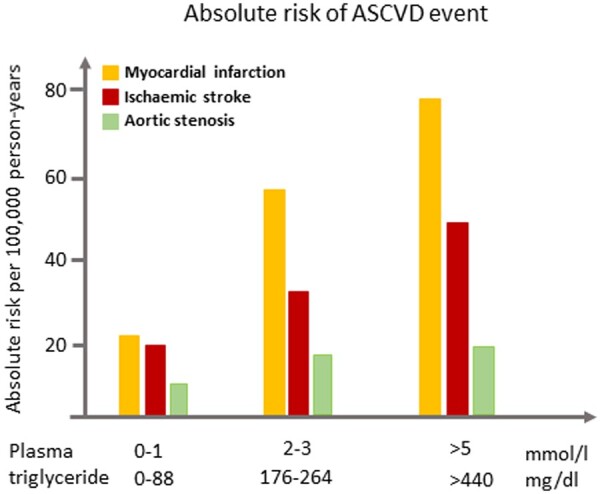
- Epidemiologic and genetic evidence supports a causal relationship between elevated plasma TG, TRL, and TRL remnants and ASCVD risk; the absolute risk increase is greatest for myocardial infarction (approximately four-fold at TG >5 mmol/L or >440 mg/dL vs. <1 mmol/L or <88 mg/dL), and less for ischaemic stroke and aortic stenosis.
- TRL and remnants accumulate at fasting TG levels >1.2 mmol/L (>100 mg/dL); ASCVD risk is considered clinically relevant at fasting TG >1.7 mmol/L (>150 mg/dL), while TG >10 mmol/L (>880 mg/dL) confers high pancreatitis risk.
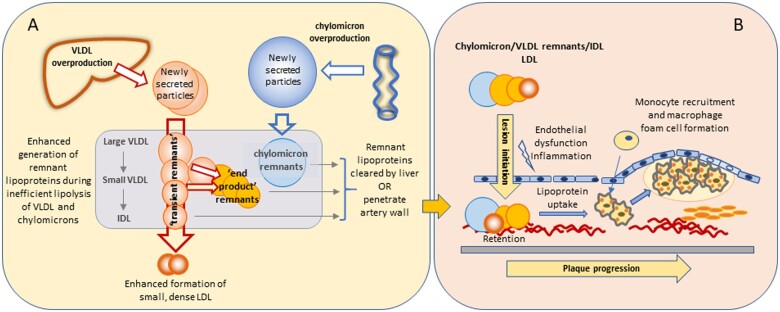
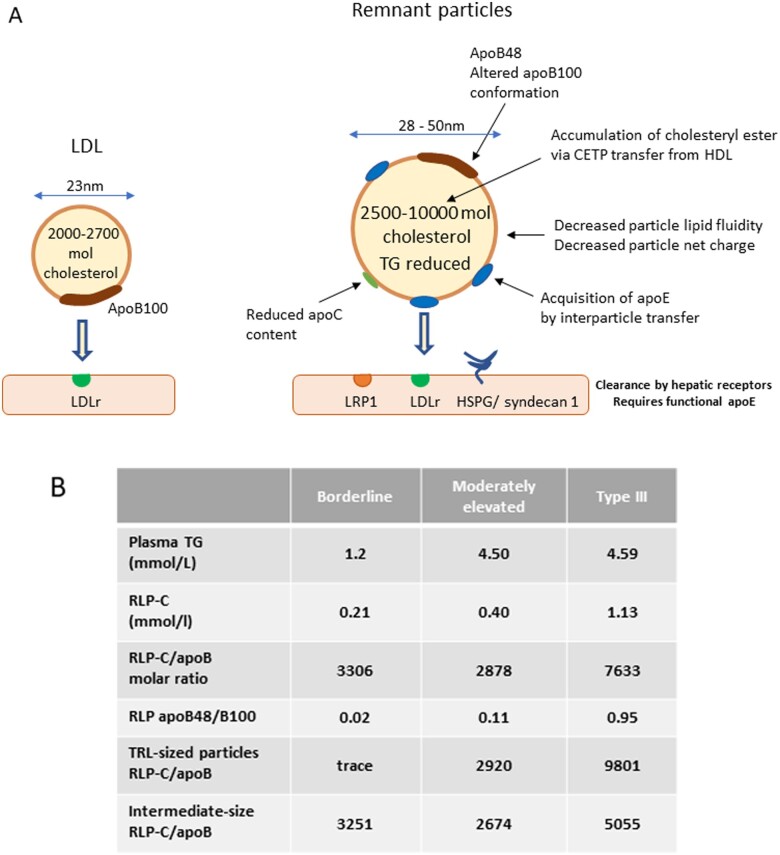
- Cholesterol-rich remnant particles can contain up to four-fold more cholesterol molecules than LDL (up to 10,000 vs. 2,000–2,700 cholesterol molecules per particle), are enriched in apoE and apoCIII, and are more potent inducers of macrophage foam cells than LDL on a per-particle basis.
- Therapeutic approaches include inhibiting lipoprotein production, reducing cholesteryl ester enrichment of remnants, stimulating lipolysis, and enhancing remnant clearance; however, no definitive measure captures the independent atherogenic potential of TRL and remnants, and randomized controlled trial evidence that lowering TG/TRL reduces ASCVD risk is limited.
Methods
- Consensus statement from a European Atherosclerosis Society Consensus Panel that met in London in January 2020 to critically appraise evidence on TRL and remnant definition, aetiology, metabolism, role in ASCVD, and clinical management.
- References (English language only) were identified through PubMed searches for articles published from 2000 using terms including “triglycerides,” “lipoprotein remnants,” “triglyceride-rich lipoproteins,” “cardiovascular disease,” “atherosclerosis,” “residual risk,” and “therapeutics,” plus reference-list searches.
- The paper is a narrative expert synthesis of epidemiologic, genetic, preclinical, and clinical trial evidence, not a systematic review or meta-analysis.
Limitations
- The paper states that there is no definitive measure capturing the independent atherogenic potential, structural and metabolic variability, or postprandial changes of TRL and remnants; defining remnants is difficult, and proposed TG cut-points are arbitrary though considered clinically useful.
- The paper states that there are no treatment goals for plasma TG or remnant abundance given limited randomized controlled trial evidence that lowering TG or TRL reduces ASCVD risk, and that determining the relative atherogenicity of TRL/remnants vs. LDL will require specific assays.
- Evident from the text: the search strategy was limited to English-language PubMed articles from 2000 onward plus reference lists, and the conclusions are consensus-based expert opinion rather than systematic quantitative synthesis.
Model-written summary. Check it against the paper before relying on it.
Integrity signals
Registry
Cites
Statistics
Figures
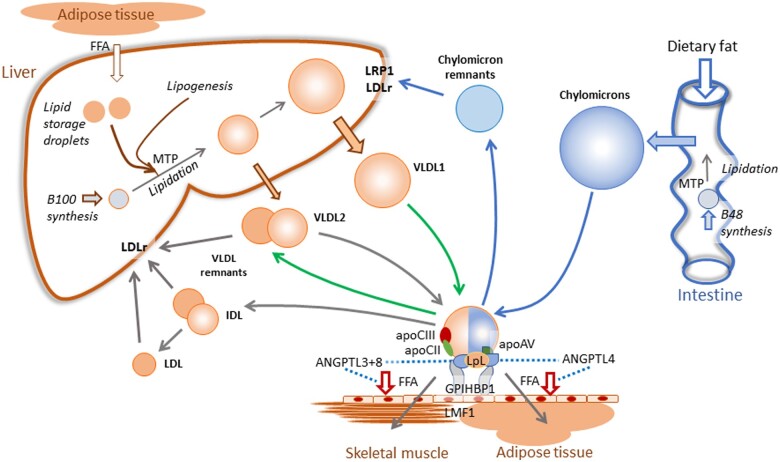
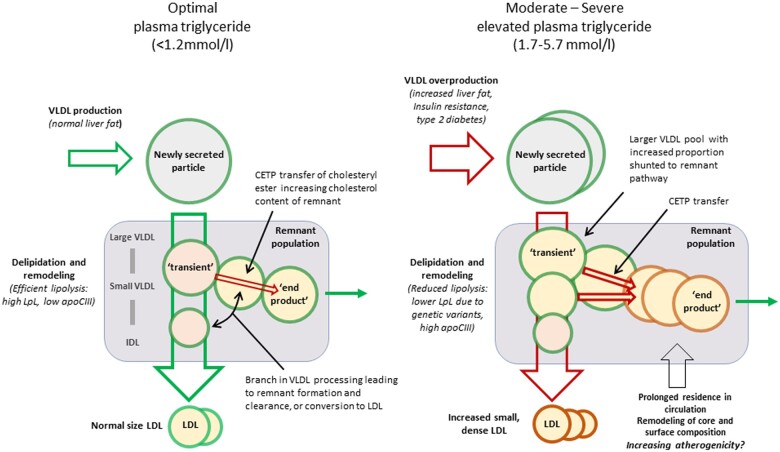
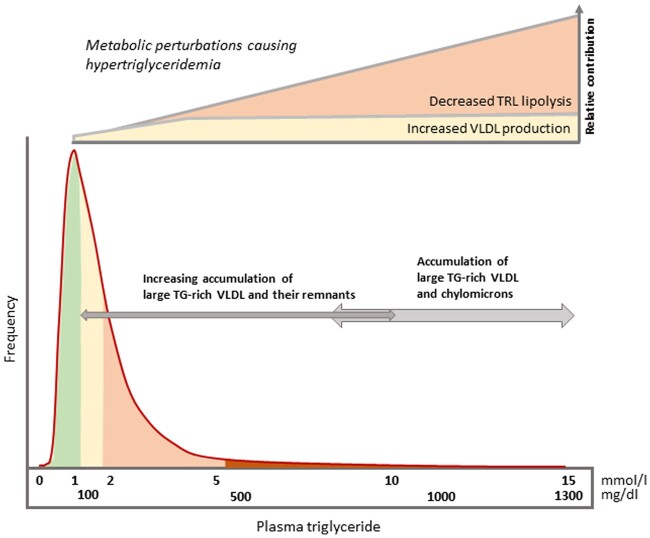
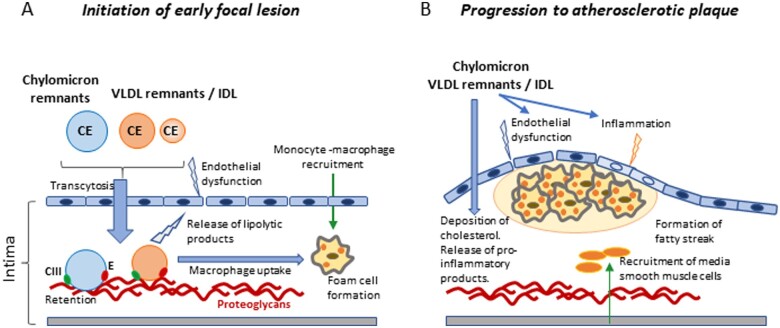
Verification
Claims the paper makes
33 Valid · 11 Not valid · 56 Not checked · 51 Own results and interpretations
Some cited sources support this claim and some don’t — read each source’s verdict below.
In the paper
“Recent advances in human genetics, together with a large body of epidemiologic, preclinical, and clinical trial results, provide strong support for a causal association between triglycerides (TG), TG-rich lipoproteins (TRL), and TRL remnants, and increased risk of myocardial infarction, ischaemic stroke, and aortic valve stenosis.”
§ Triglyceride-rich lipoproteins and their remnants: metabolic insights, role in atherosclerotic cardiovascular disease, and emerging therapeutic strategies—a consensus statement from the European Atherosclerosis Society > Abstract
What the sources say
- Partly supportedcites [1] Austin MA. Plasma triglyceride and coronary heart disease. Arterioscler Thromb 1991; 11: 2– 14. 1987999 sourceExperimental — accuracy not yet measured
Split into 2 atoms — 0 confirmed, 2 partially supported, 0 disputed, 0 misattributed, 0 unverifiable. Expand the claim to see per-atom verdicts.
- Partly supportedcites [2] Chapman MJ, Ginsberg HN, Amarenco P, Andreotti F, Borén J, Catapano AL, Descamps OS, Fisher E, Kovanen PT, Kuivenhoven JA, Lesnik P, Masana L, Nordestgaard BG, Ray KK, Reiner Z, Taskinen MR, Tokgözoglu L, Tybjærg-Hansen A, Watts GF; for the European Atherosclerosis Society Consensus Panel. Triglyceride-rich lipoproteins and high-density lipoprotein cholesterol in patients at high risk of cardiovascular disease: evidence and guidance for management. Eur Heart J 2011; 32: 1345– 1361. 21531743 PMC3105250 sourceExperimental — accuracy not yet measured
Split into 2 atoms — 0 confirmed, 2 partially supported, 0 disputed, 0 misattributed, 0 unverifiable. Expand the claim to see per-atom verdicts.
- Partly supportedcites [17] Nordestgaard BG. Triglyceride-rich lipoproteins and atherosclerotic cardiovascular disease: new insights from epidemiology, genetics, and biology. Circ Res 2016; 118: 547– 563. 26892957 sourceExperimental — accuracy not yet measured
Split into 2 atoms — 0 confirmed, 2 partially supported, 0 disputed, 0 misattributed, 0 unverifiable. Expand the claim to see per-atom verdicts.
- Disputedcites [19] Emerging Risk Factors Collaboration, Di Angelantonio E, Sarwar N, Perry P, Kaptoge S, Ray KK, Thompson A, Wood AM, Lewington S, Sattar N, Packard CJ, Collins R, Thompson SG, Danesh J. Major lipids, apolipoproteins, and risk of vascular disease. JAMA 2009; 302: 1993– 2000. 19903920 PMC3284229 sourceExperimental — accuracy not yet measured
Split into 2 atoms — 0 confirmed, 1 partially supported, 1 disputed, 0 misattributed, 0 unverifiable. Expand the claim to see per-atom verdicts.
Checked by a reasoning model — may be wrong.
- Partly supportedcites [20] Mach F, Baigent C, Catapano AL, Koskinas KC, Casula M, Badimon L, Chapman MJ, De Backer GG, Delgado V, Ference BA, Graham IM, Halliday A, Landmesser U, Mihaylova B, Pedersen TR, Riccardi G, Richter DJ, Sabatine MS, Taskinen MR, Tokgozoglu L, Wiklund O; ESC Scientific Document Group. 2019 ESC/EAS Guidelines for the management of dyslipidaemias: lipid modification to reduce cardiovascular risk. Eur Heart J 2020; 41: 111– 188. 31504418 sourceExperimental — accuracy not yet measured
Split into 2 atoms — 0 confirmed, 2 partially supported, 0 disputed, 0 misattributed, 0 unverifiable. Expand the claim to see per-atom verdicts.
- Not checked yetcites [24] Austin MA, Hokanson JE, Edwards KL. Hypertriglyceridemia as a cardiovascular risk factor. Am J Cardiol 1998; 81: 7B– 12B. 9526807 source
- Not checked yetcites [25] Nordestgaard BG, Varbo A. Triglycerides and cardiovascular disease. Lancet 2014; 384: 626– 635. 25131982 source
- Partly supportedcites [26] Ference BA, Kastelein JJP, Ray KK, Ginsberg HN, Chapman MJ, Packard CJ, Laufs U, Oliver-Williams C, Wood AM, Butterworth AS, Di Angelantonio E, Danesh J, Nicholls SJ, Bhatt DL, Sabatine MS, Catapano AL. Association of triglyceride-lowering LPL variants and LDL-C-lowering LDLR variants with risk of coronary heart disease. JAMA 2019; 321: 364– 373. 30694319 PMC6439767 sourceExperimental — accuracy not yet measured
Split into 2 atoms — 0 confirmed, 2 partially supported, 0 disputed, 0 misattributed, 0 unverifiable. Expand the claim to see per-atom verdicts.
- Not checked yetcites [27] Varbo A, Nordestgaard BG. Remnant cholesterol and risk of ischemic stroke in 112,512 individuals from the general population. Ann Neurol 2019; 85: 550– 559. 30723955 source
- Not checked yetcites [28] Kaltoft M, Langsted A, Nordestgaard BG. Triglycerides and remnant cholesterol associated with risk of aortic valve stenosis: Mendelian randomization in the Copenhagen General Population Study. Eur Heart J 2020; 41: 2288– 2299. 32267934 source
boostedstates a cause- Asserted: passes — The authors put it forward as true.
- Checkable: passes — It can be checked against evidence.
- Load-bearing: passes — The paper’s conclusions depend on it.
- Based: passes — The paper gives a reason why it holds.
- Partly supported
Some cited sources support this claim and some don’t — read each source’s verdict below.
In the paper
“Over the past three decades, epidemiologic and genetic evidence has accumulated to support the concept that elevated levels of plasma TG, TRL, and TRL remnants are causally related to an increased risk of ASCVD-related events—myocardial infarction (MI), stroke, and aortic valve stenosis—and all-cause mortality.1,2,17,19,20,24–28”
- Also stated in: § Triglycerides, triglyceride-rich lipoproteins, and remnants: definitions and clinical relevance · plain
“Accumulating evidence from epidemiologic and genetic studies is consistent with a causal relationship between ASCVD risk and elevated plasma levels of TG, TRL, and TRL remnants.”
§ Triglyceride-rich lipoproteins and their remnants: metabolic insights, role in atherosclerotic cardiovascular disease, and emerging therapeutic strategies—a consensus statement from the European Atherosclerosis Society > Search strategy > Triglycerides, triglyceride-rich lipoproteins, and remnants: definitions and clinical relevance
What the sources say
- Partly supportedcites [1] Austin MA. Plasma triglyceride and coronary heart disease. Arterioscler Thromb 1991; 11: 2– 14. 1987999 sourceExperimental — accuracy not yet measured
The Summary (pp. 10–11) reports an epidemiologic association between plasma triglycerides and coronary heart disease and discusses possible genetic susceptibility, including a trait associated with myocardial infarction risk. It also says the findings are not fully consistent and does not establish a causal relationship. The cited passages do not support the broader claims about triglyceride-rich lipoprotein remnants, stroke, aortic valve stenosis, or all-cause mortality. (LLM, conf=0.88)
- Partly supportedcites [2] Chapman MJ, Ginsberg HN, Amarenco P, Andreotti F, Borén J, Catapano AL, Descamps OS, Fisher E, Kovanen PT, Kuivenhoven JA, Lesnik P, Masana L, Nordestgaard BG, Ray KK, Reiner Z, Taskinen MR, Tokgözoglu L, Tybjærg-Hansen A, Watts GF; for the European Atherosclerosis Society Consensus Panel. Triglyceride-rich lipoproteins and high-density lipoprotein cholesterol in patients at high risk of cardiovascular disease: evidence and guidance for management. Eur Heart J 2011; 32: 1345– 1361. 21531743 PMC3105250 sourceExperimental — accuracy not yet measured
The Epidemiology section reports associations of markedly elevated triglycerides with myocardial infarction, ischaemic stroke, and total mortality, but notes that the stroke association disappeared after adjustment for other lipid factors. The Genetic studies section says an APOA5 analysis suggests a causal association between triglyceride-mediated pathways and coronary heart disease, while cautioning that genetic studies do not provide clear insights overall. The paper does not establish the claimed causal relationship for all listed outcomes or address aortic valve stenosis. (LLM, conf=0.88)
- Partly supportedcites [17] Nordestgaard BG. Triglyceride-rich lipoproteins and atherosclerotic cardiovascular disease: new insights from epidemiology, genetics, and biology. Circ Res 2016; 118: 547– 563. 26892957 sourceExperimental — accuracy not yet measured
Split into 2 atoms — 0 confirmed, 2 partially supported, 0 disputed, 0 misattributed, 0 unverifiable. Expand the claim to see per-atom verdicts.
- Disputedcites [19] Emerging Risk Factors Collaboration, Di Angelantonio E, Sarwar N, Perry P, Kaptoge S, Ray KK, Thompson A, Wood AM, Lewington S, Sattar N, Packard CJ, Collins R, Thompson SG, Danesh J. Major lipids, apolipoproteins, and risk of vascular disease. JAMA 2009; 302: 1993– 2000. 19903920 PMC3284229 sourceExperimental — accuracy not yet measured
The Results > Triglyceride section reports an initial association with coronary heart disease, but it becomes essentially null after adjustment for HDL-C and non-HDL-C; adjusted associations with stroke are also near null. This conflicts with attributing increased cardiovascular risk from elevated triglycerides to this paper as a causal conclusion. The paper does not assess triglyceride-rich remnants, aortic valve stenosis, or all-cause mortality in the cited findings. (LLM, conf=0.88)
Checked by a reasoning model — may be wrong.
- Partly supportedcites [20] Mach F, Baigent C, Catapano AL, Koskinas KC, Casula M, Badimon L, Chapman MJ, De Backer GG, Delgado V, Ference BA, Graham IM, Halliday A, Landmesser U, Mihaylova B, Pedersen TR, Riccardi G, Richter DJ, Sabatine MS, Taskinen MR, Tokgozoglu L, Wiklund O; ESC Scientific Document Group. 2019 ESC/EAS Guidelines for the management of dyslipidaemias: lipid modification to reduce cardiovascular risk. Eur Heart J 2020; 41: 111– 188. 31504418 sourceExperimental — accuracy not yet measured
Section 5.3.2 (page not provided) links triglyceride-rich lipoproteins and their remnants to ASCVD risk, but says their causal effect depends on ApoB-containing particle concentration rather than triglyceride content itself; it also cautions that the genetic evidence for triglycerides is difficult to interpret. The cited passages do not establish the claimed links to all-cause mortality or aortic valve stenosis. Section 9.7.3 instead associates aortic valve stenosis with LDL-C and lipoprotein(a). (LLM, conf=0.88)
- Not checked yetcites [24] Austin MA, Hokanson JE, Edwards KL. Hypertriglyceridemia as a cardiovascular risk factor. Am J Cardiol 1998; 81: 7B– 12B. 9526807 source
- Not checked yetcites [25] Nordestgaard BG, Varbo A. Triglycerides and cardiovascular disease. Lancet 2014; 384: 626– 635. 25131982 source
- Partly supportedcites [26] Ference BA, Kastelein JJP, Ray KK, Ginsberg HN, Chapman MJ, Packard CJ, Laufs U, Oliver-Williams C, Wood AM, Butterworth AS, Di Angelantonio E, Danesh J, Nicholls SJ, Bhatt DL, Sabatine MS, Catapano AL. Association of triglyceride-lowering LPL variants and LDL-C-lowering LDLR variants with risk of coronary heart disease. JAMA 2019; 321: 364– 373. 30694319 PMC6439767 sourceExperimental — accuracy not yet measured
The Discussion says triglyceride-rich remnant particles appear causally associated with cardiovascular disease risk, and Study Outcomes defines the measured coronary heart disease outcome to include myocardial infarction. The paper does not establish the claimed links to stroke, aortic valve stenosis, or all-cause mortality; its findings also focus on ApoB-containing particle concentration rather than triglyceride levels alone. The indexed passages provide section labels but no page numbers. (LLM, conf=0.88)
- Not checked yetcites [27] Varbo A, Nordestgaard BG. Remnant cholesterol and risk of ischemic stroke in 112,512 individuals from the general population. Ann Neurol 2019; 85: 550– 559. 30723955 source
- Not checked yetcites [28] Kaltoft M, Langsted A, Nordestgaard BG. Triglycerides and remnant cholesterol associated with risk of aortic valve stenosis: Mendelian randomization in the Copenhagen General Population Study. Eur Heart J 2020; 41: 2288– 2299. 32267934 source
plainstates a cause- Asserted: passes — The authors put it forward as true.
- Checkable: passes — It can be checked against evidence.
- Load-bearing: passes — The paper’s conclusions depend on it.
- Based: passes — The paper gives a reason why it holds.
- Also stated in: § Triglycerides, triglyceride-rich lipoproteins, and remnants: definitions and clinical relevance · plain
The sources with a verdict support this claim; the rest weren’t checked yet, have no full text we could read, or their verdicts aren’t rated yet.
In the paper
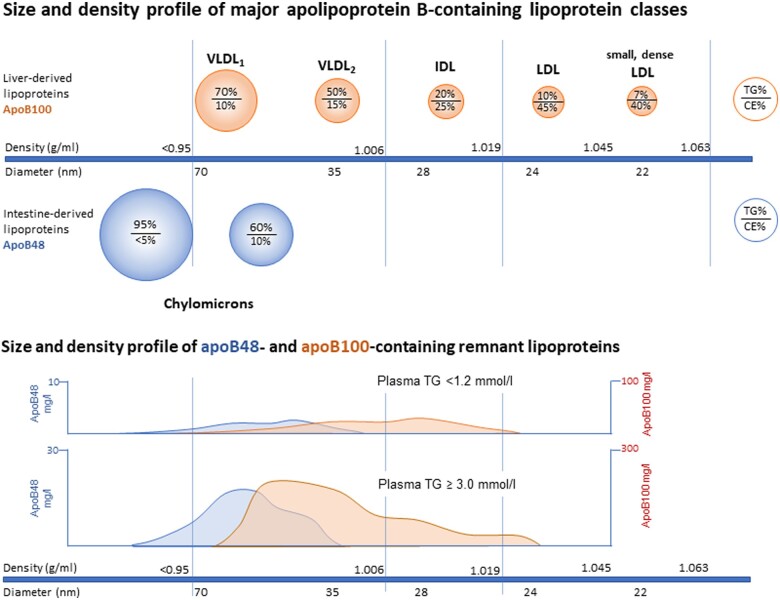
“In most people, remnant lipoproteins (and TRL in general) are highly heterogeneous (Figure 1).3,6–9”
§ Triglyceride-rich lipoproteins and their remnants: metabolic insights, role in atherosclerotic cardiovascular disease, and emerging therapeutic strategies—a consensus statement from the European Atherosclerosis Society > Search strategy > Triglycerides, triglyceride-rich lipoproteins, and remnants: definitions and clinical relevance
What the sources say
- Supportedcites [3] Björnson E, Packard CJ, Adiels M, Andersson L, Matikainen N, Söderlund S, Kahri J, Sihlbom C, Thorsell A, Zhou H, Taskinen MR, Borén J. Investigation of human apoB48 metabolism using a new, integrated non-steady-state model of apoB48 and apoB100 kinetics. J Intern Med 2019; 285: 562– 577. 30779243 PMC6849847 source
The Introduction (page unavailable) says TRLs comprise distinct fractions and that newly secreted particles and their remnants occur across the entire size and density range. The Discussion (page unavailable) reports apoB48-containing particles from chylomicrons through VLDL1 and VLDL2, with differing metabolic characteristics, and describes this as part of normal physiology. This supports the broad statement about heterogeneity, though the paper does not quantify the proportion of people. (LLM, conf=0.87)
- Not checked yetcites [6] Gotto AM, Pownall HJ, Havel RJ. Introduction to the plasma lipoproteins. Methods Enzymol 1986; 128: 3– 41. 3523141 source
- Not checked yetcites [7] Havel RJ, Triglyceride-rich lipoprotein remnants. In: Rifai N, Warnick G, Dominiczak M, eds. Handbook of Lipoprotein Testing. Washington DC: 25 AACC Press; 1997. p 451– 464.
- Not checked yetcites [8] Musliner TA, Giotas C, Krauss RM. Presence of multiple subpopulations of lipoproteins of intermediate density in normal subjects. Arteriosclerosis 1986; 6: 79– 87. 3942562 source
- Not checked yetcites [9] McNamara JR, Small DM, Li Z, Schaefer EJ. Differences in LDL subspecies involve alterations in lipid composition and conformational changes in apolipoprotein B. J Lipid Res 1996; 37: 1924– 1935. 8895058 source
plain- Asserted: passes — The authors put it forward as true.
- Checkable: passes — It can be checked against evidence.
- Load-bearing: passes — The paper’s conclusions depend on it.
- Based: passes — The paper gives a reason why it holds.
- Supported
The cited sources support only part of this claim — read each source’s verdict below.
In the paper
“it is less widely appreciated that fasting levels from as low as ∼1.2 mmol/L (∼100 mg/dL) can be associated with a cluster of metabolic abnormalities that include accumulation of TRL and remnants,14 as well as increased cardiovascular disease events15,16 (Figure 1).”
§ Triglyceride-rich lipoproteins and their remnants: metabolic insights, role in atherosclerotic cardiovascular disease, and emerging therapeutic strategies—a consensus statement from the European Atherosclerosis Society > Search strategy > Triglycerides, triglyceride-rich lipoproteins, and remnants: definitions and clinical relevance
What the sources say
- Partly supportedcites [14] Austin MA, King MC, Vranizan KM, Krauss RM. Atherogenic lipoprotein phenotype. A proposed genetic marker for coronary heart disease risk. Circulation 1990; 82: 495– 506. 2372896 sourceExperimental — accuracy not yet measured
Split into 2 atoms — 0 confirmed, 2 partially supported, 0 disputed, 0 misattributed, 0 unverifiable. Expand the claim to see per-atom verdicts.
- Partly supportedcites [15] Miller M, Seidler A, Moalemi A, Pearson TA. Normal triglyceride levels and coronary artery disease events: the Baltimore Coronary Observational Long-Term Study. J Am Coll Cardiol 1998; 31: 1252– 1257. 9581716 sourceExperimental — accuracy not yet measured
Split into 2 atoms — 1 confirmed, 1 partially supported, 0 disputed, 0 misattributed, 0 unverifiable. Expand the claim to see per-atom verdicts.
- Partly supportedcites [16] Lawler PR, Kotrri G, Koh M, Goodman SG, Farkouh ME, Lee DS, Austin PC, Udell JA, Ko DT. Real-world risk of cardiovascular outcomes associated with hypertriglyceridaemia among individuals with atherosclerotic cardiovascular disease and potential eligibility for emerging therapies. Eur Heart J 2020; 41: 86– 94. 31733058 sourceExperimental — accuracy not yet measured
Split into 2 atoms — 0 confirmed, 2 partially supported, 0 disputed, 0 misattributed, 0 unverifiable. Expand the claim to see per-atom verdicts.
plainstates an association- Asserted: passes — The authors put it forward as true.
- Checkable: passes — It can be checked against evidence.
- Load-bearing: passes — The paper’s conclusions depend on it.
- Based: passes — The paper gives a reason why it holds.
- Partly supported
The cited sources support only part of this claim — read each source’s verdict below.
In the paper
“Mendelian randomization studies focused on variants in the genes encoding apoAV, apoCIII, lipoprotein lipase (LpL) and the angiopoietin-like proteins 3, 4, and 8 (ANGPTL3, ANGPTL4, and ANGPTL8) have been highly informative.29–35”
§ Triglyceride-rich lipoproteins and their remnants: metabolic insights, role in atherosclerotic cardiovascular disease, and emerging therapeutic strategies—a consensus statement from the European Atherosclerosis Society > Search strategy > Triglycerides, triglyceride-rich lipoproteins, and remnants: definitions and clinical relevance
What the sources say
- Partly supportedcites [29] Do R, Stitziel NO, Won HH, Jørgensen AB, Duga S, Angelica Merlini P, Kiezun A, Farrall M, Goel A, Zuk O, Guella I, Asselta R, Lange LA, Peloso GM, Auer PLNHLBI Exome Sequencing Project Girelli D, Martinelli N, Farlow DN, DePristo MA, Roberts R, Stewart AF, Saleheen D, Danesh J, Epstein SE, Sivapalaratnam S, Hovingh GK, Kastelein JJ, Samani NJ, Schunkert H, Erdmann J, Shah SH, Kraus WE, Davies R, Nikpay M, Johansen CT, Wang J, Hegele RA, Hechter E, Marz W, Kleber ME, Huang J, Johnson AD, Li M, Burke GL, Gross M, Liu Y, Assimes TL, Heiss G, Lange EM, Folsom AR, Taylor HA, Olivieri O, Hamsten A, sourceExperimental — accuracy not yet measured
The Results passage labeled Abstract (page not provided) reports that rare APOA5 mutation carriers had a 2.2-fold higher MI/CAD risk, and the discussion there links APOA5, APOC3, and lipoprotein lipase variation to MI risk. This paper reports exome-sequencing association analyses, not a Mendelian randomization study, and the cited passages do not address ANGPTL3, ANGPTL4, or ANGPTL8. (LLM, conf=0.86)
- Supportedcites [30] Jørgensen AB, Frikke-Schmidt R, Nordestgaard BG, Tybjærg-Hansen A. Loss-of-function mutations in APOC3 and risk of ischemic vascular disease. N Engl J Med 2014; 371: 32– 41. 24941082 source
The cited paper supports the apoCIII portion of this multi-citation sentence. Its Abstract (page not provided) reports that APOC3 loss-of-function mutations were associated with lower triglyceride levels and reduced ischemic cardiovascular disease risk; the other genes are not attributed to this source individually. (LLM, conf=0.91)
- Supportedcites [31] Khera AV, Won HH, Peloso GM, O'Dushlaine C, Liu D, Stitziel NO, Natarajan P, Nomura A, Emdin CA, Gupta N, Borecki IB, Asselta R, Duga S, Merlini PA, Correa A, Kessler T, Wilson JG, Bown MJ, Hall AS, Braund PS, Carey DJ, Murray MF, Kirchner HL, Leader JB, Lavage DR, Manus JN, Hartzel DN, Samani NJ, Schunkert H, Marrugat J, Elosua R, McPherson R, Farrall M, Watkins H, Lander ES, Rader DJ, Danesh J, Ardissino D, Gabriel S, Willer C, Abecasis GR, Saleheen D, Dewey FE, Kathiresan S; Myocardial Infarction Genetics Consortium, DiscovEHR Study Group, CARDIoGRAM Exome Consortium, and Global Lipids Gene source
This source supports the lipoprotein lipase (LPL) portion of the sentence, which cites several studies for different genes. Its Methods (Statistical Analysis; page not indicated) describe an analysis using common LPL variants and a method equivalent to a cited Mendelian-randomization approach; the Discussion reports an association between those variants and coronary artery disease. It does not need to cover every gene listed alongside LPL. (LLM, conf=0.90)
- Partly supportedcites [32] Stitziel NO, Khera AV, Wang X, Bierhals AJ, Vourakis AC, Sperry AE, Natarajan P, Klarin D, Emdin CA, Zekavat SM, Nomura A, Erdmann J, Schunkert H, Samani NJ, Kraus WE, Shah SH, Yu B, Boerwinkle E, Rader DJ, Gupta N, Frossard PM, Rasheed A, Danesh J, Lander ES, Gabriel S, Saleheen D, Musunuru K, Kathiresan S; PROMIS and Myocardial Infarction Genetics Consortium Investigators. ANGPTL3 deficiency and protection against coronary artery disease. J Am Coll Cardiol 2017; 69: 2054– 2063. 28385496 PMC5404817 sourceExperimental — accuracy not yet measured
The Discussion (page not provided) places the paper’s ANGPTL3 findings alongside genetic evidence concerning APOA5, APOC3, ANGPTL4, and lipoprotein lipase activity. Our copy does not address ANGPTL8 or characterize the full set of studies as Mendelian randomization studies, so it supports only part of the attributed list. (LLM, conf=0.86)
- Supportedcites [33] Dewey FE, Gusarova V, O'Dushlaine C, Gottesman O, Trejos J, Hunt C, Van Hout CV, Habegger L, Buckler D, Lai KM, Leader JB, Murray MF, Ritchie MD, Kirchner HL, Ledbetter DH, Penn J, Lopez A, Borecki IB, Overton JD, Reid JG, Carey DJ, Murphy AJ, Yancopoulos GD, Baras A, Gromada J, Shuldiner AR. Inactivating variants in ANGPTL4 and risk of coronary artery disease. N Engl J Med 2016; 374: 1123– 1133. 26933753 PMC4900689 source
The Methods and Results report a study of ANGPTL4 variants, triglyceride levels, and coronary artery disease risk. This paper supports the ANGPTL4 example within the citing sentence’s group of genetic studies; the other genes are not being attributed to this citation alone. (LLM, conf=0.88)
- Supportedcites [34] Myocardial Infarction Genetics and CARDIoGRAM Exome Consortia Investigators; Stitziel NO, Stirrups KE, Masca NG, Erdmann J, Ferrario PG, König IR, Weeke PE, Webb TR, Auer PL, Schick UM, Lu Y, Zhang H, Dube MP, Goel A, Farrall M, Peloso GM, Won HH, Do R, van Iperen E, Kanoni S, Kruppa J, Mahajan A, Scott RA, Willenberg C, Braund PS, van Capelleveen JC, Doney AS, Donnelly LA, Asselta R, Merlini PA, Duga S, Marziliano N, Denny JC, Shaffer CM, El-Mokhtari NE, Franke A, Gottesman O, Heilmann S, Hengstenberg C, Hoffman P, Holmen OL, Hveem K, Jansson JH, Jöckel KH, Kessler T, Kriebel J, Laugwitz KL, source
The paper’s ANGPTL4 results and its section on coding variation in LPL report associations between variants in those genes and coronary artery disease. As one citation in a group, it supports the sentence’s reference to informative genetic-variant studies of ANGPTL4 and LPL. (LLM, conf=0.88)
- Partly supportedcites [35] Helkkula P, Kiiskinen T, Havulinna AS, Karjalainen J, Koskinen S, Salomaa V, Daly MJ, Palotie A, Surakka I, Ripatti S; FinnGen. ANGPTL8 protein-truncating variant associated with lower serum triglycerides and risk of coronary disease. PLoS Genet 2021; 17: e1009501. 33909604 PMC8109807 sourceExperimental — accuracy not yet measured
The Results (Primary analyses; page unavailable) examine ANGPTL8 and ANGPTL4 protein-truncating variants and their associations with lipid levels, so this paper fits the sentence’s broader point about informative genetic studies. But the Discussion (page unavailable) explicitly calls the study observational and says it cannot directly reveal causal effects; the copy does not support identifying this particular study as Mendelian randomization. (LLM, conf=0.86)
boosted- Asserted: passes — The authors put it forward as true.
- Checkable: passes — It can be checked against evidence.
- Load-bearing: passes — The paper’s conclusions depend on it.
- Based: passes — The paper gives a reason why it holds.
- Partly supported
66 more claims · 15 with their cited sources checked
Create a free account to see all 151 claims and to verify the 133 references still open.
- It may state two separate claims as one. 70
- Probably not a substantial claim. 16
Claims other papers make about this one
Each is checked against this paper’s own text: does it say what the citing paper says it does?
The cited source doesn’t support the claim as written.
In the citing paper
“The data from the PROMINENT trial are consistent with increased efficiency in conversion of triglyceride-rich lipoprotein remnants to LDL rather than their removal by the liver. 21”
From Triglyceride Lowering with Pemafibrate to Reduce Cardiovascular Risk (2022) · cites this paper as [21]
Checked by a reasoning model — may be wrong.
Experimental — accuracy not yet measuredThe cited source doesn’t support the claim as written.
In the citing paper
“yet highly effective therapies for reducing triglyceride levels are lacking. 5”
From Targeting APOC3 with Olezarsen in Moderate Hypertriglyceridemia (2025) · cites this paper as [5]
Checked by a reasoning model — may be wrong.
Experimental — accuracy not yet measuredThe source backs part of the claim, not all of it — or backs it for a different population, condition or comparison.
In the citing paper
“Hypertriglyceridemia is frequently identified in clinical practice, yet effective therapies are lacking. 5,17,18”
From Targeting APOC3 with Olezarsen in Moderate Hypertriglyceridemia (2025) · cites this paper as [5]
Experimental — accuracy not yet measuredThe source backs part of the claim, not all of it — or backs it for a different population, condition or comparison.
In the citing paper
“Though LDL is widely recognized as the dominant atherogenic factor, 149 the current analysis suggested that LDL‐C, a surrogate of LDL particle concentration, did not appear to be targeted by EPA and DHA in the treatment of dyslipidemia, an outcome in agreement with many published meta‐analysis results. 4 , 17 , 18 , 19”
From Association Between Omega-3 Fatty Acid Intake and Dyslipidemia: A Continuous Dose-Response Meta-Analysis of Randomized Controlled Trials (2023) · cites this paper as [4]
Experimental — accuracy not yet measuredThe cited source says what the claim attributes to it.
In the citing paper
“As a result of this process, CM are converted into chylomicron remnants, whereas VLDL particles are gradually transformed into intermediate-density lipoproteins (IDL) and, in part, into low-density lipoproteins (LDL) through further delipidation catalyzed by hepatic lipase [11].”
From Targeting triglycerides for cardiovascular risk reduction (2026) · cites this paper as [11]
2 more claims about this paper
Create a free account to see every claim other papers make about this one.
Self-check
Percentages, sums and reported differences re-computed from the paper’s own numbers.
Each contradiction between two passages listed here was confirmed by an independent check.
Rated minor: it would not touch a result — a value no result rests on, a p-value that stays on the same side of the significance level, or a conflict that is clerical, resolved elsewhere in the paper, or outside its own findings.
In the paper
§ Triglyceride-rich lipoproteins and their remnants: metabolic insights, role in atherosclerotic cardiovascular disease, and emerging therapeutic strategies—a consensus statement from the European Atherosclerosis Society > Search strategy > Triglycerides, triglyceride-rich lipoproteins, and remnants: definitions and clinical relevance
“Remnant lipoproteins are enriched in cholesterol (both free and esterified) and are depleted in apoC proteins and enriched in apoE (Figure 2).”
§ Triglyceride-rich lipoproteins and their remnants: metabolic insights, role in atherosclerotic cardiovascular disease, and emerging therapeutic strategies—a consensus statement from the European Atherosclerosis Society > Role of triglyceride-rich lipoproteins in atherosclerotic cardiovascular disease > How do triglyceride-rich lipoproteins and remnants exert atherogenic effects at the arterial wall?
“The proteome of remnant particles is enriched in apoE and apoCIII”
Citations
Cites
Friedewald, W. T., Levy, R. I., & Fredrickson, D. S. (1972) · Clinical Chemistry · doi:10.1093/clinchem/18.6.499 · Cited by 32,423 · cited 2×
“66,153,154 Estimation of VLDL cholesterol concentration by nuclear magnetic resonance (NMR) spectroscopy analysis was recently proposed as a surrogate for remnant lipoproteins.”
BackgroundMach, F., Baigent, C., Catapano, A. L., Koskinas, K. C., Casula, M., Badimon, L., Chapman, M. J., De Backer, G. G., Delgado, V., Ference, B. A., et al. (2020) · European Heart Journal · doi:10.1093/eurheartj/ehz455 · Cited by 8,961
Self-citationGrundy, S. M., Stone, N. J., Bailey, A. L., Beam, C., Birtcher, K. K., Blumenthal, R. S., Braun, L. T., de Ferranti, S., Faiella-Tommasino, J., Forman, D. E., et al. (2019) · Circulation · doi:10.1161/cir.0000000000000625 · Cited by 6,185
Antihyperlipidemic and Biochemical Activities of Mcy Protein in Streptozotocin Induced Diabetic Rats
Marella, S., Maddirela, D. R., Badri, K. R., Jyothi Kumar, M. V., & Chippada, A. (2015) · Cellular Physiology and Biochemistry · doi:10.1159/000373954 · Cited by 5,938
Mach, F., Baigent, C., Catapano, A. L., Koskinas, K. C., Casula, M., Badimon, L., Chapman, M. J., De Backer, G. G., Delgado, V., Ference, B. A., et al. (2019) · Atherosclerosis · doi:10.1016/j.atherosclerosis.2019.08.014 · Cited by 4,854 · cited 3×
“13,20 Non-fasting TG is equivalent, if not superior, to fasting TG in assessing potential ASCVD risk.”
BackgroundSelf-citationNLRP3 inflammasomes are required for atherogenesis and activated by cholesterol crystals
Duewell, P., Kono, H., Rayner, K. J., Sirois, C. M., Vladimer, G., Bauernfeind, F. G., Abela, G. S., Franchi, L., Nuñez, G., Schnurr, M., et al. (2010) · Nature · doi:10.1038/nature08938 · Cited by 4,026
Ference, B. A., Ginsberg, H. N., Graham, I., Ray, K. K., Packard, C. J., Bruckert, E., Hegele, R. A., Krauss, R. M., Raal, F. J., Schunkert, H., et al. (2017) · European Heart Journal · doi:10.1093/eurheartj/ehx144 · Cited by 3,962 · cited 1×
“17,25,93,104,206”
Self-citationBrown, M. S., & Goldstein, J. L. (1997) · Cell · doi:10.1016/s0092-8674(00)80213-5 · Cited by 3,834
ESC/EAS Guidelines for the management of dyslipidaemias
Reiner, Ž., Catapano, A. L., De Backer, G., Graham, I., Taskinen, M.-R., Wiklund, O., Agewall, S., Alegria, E., Chapman, M. J., Durrington, P., et al. (2011) · European Heart Journal · doi:10.1093/eurheartj/ehr158 · Cited by 3,549
Self-citationCardiovascular Risk Reduction with Icosapent Ethyl for Hypertriglyceridemia
Bhatt, D. L., Steg, P. G., Miller, M., Brinton, E. A., Jacobson, T. A., Ketchum, S. B., Doyle, R. T., Juliano, R. A., Jiao, L., Granowitz, C., et al. (2019) · New England Journal of Medicine · doi:10.1056/nejmoa1812792 · Cited by 3,317 · cited 1×
“ASCVD risk, although it was suggested that only a modest part of this benefit was due to changes in TRL levels.(176) The lack of benefit in”
Background
Cited by
Items 801–900 of 1,001
Research Progress on Residual Cholesterol and Cardiovascular Disease Risk
唐, 安. (2024) · Advances in Clinical Medicine · doi:10.12677/acm.2024.14123209
Xuan, Q., Li, Q., Lu, Y., Du, X., Ma, X., Xu, Y., & Sun, Q. (2025) · Research Square · doi:10.21203/rs.3.rs-5738378/v1
Research Progress on Residual Cholesterol in Cardiovascular Diseases
姚, 璐. (2025) · Advances in Clinical Medicine · doi:10.12677/acm.2025.151109
Elvita, A., Desmawati, D., & Lipoeto, N. I. (2025) · World Journal of Advanced Research and Reviews · doi:10.30574/wjarr.2025.25.1.0181
“…at higher levels increase lipoprotein lipase gene expression and lipoprotein lipase activity in skeletal muscle during fasting and in adipose tissue primarily during fed states, adiponectin may directly induce lipoprotein lipase expression and activation in skeletal muscle and adipose tissue(33).”
Etude du lien entre la MASLD et l'athérosclérose : implication du récepteur nucléaire PPARα
Henry, D. (2024) · theses.fr (ABES) · doi:10.70675/573969cdz9f43z407fz8775zbacc66020c5a
Анатольевич, С. А., Meshkov, A. N., & Владиславович, Е. М. (2024) · Russian Journal of Cardiology · doi:10.15829/1560-4071-2025-6179
Khalil, A. A., Naseem, C., Hadi, N. U., Shah, A. U., Ullah, S. A., Iqbal, J., & Ayub, A. (2025) · Indus journal of bioscience research. · doi:10.70749/ijbr.v3i2.720
The Importance of Hypertriglyceridemia: Risk of Atherosclerosis and Available Treatments
Hegele, R. A. (2025) · Canadian Cardiology Today · doi:10.58931/cct.2025.113
Self-citationTang, Y., Song, B., Hidru, T. H., Yang, Y., Liu, F., Li, J., Li, C., Wen, Y., Yang, Z., Chen, Y., et al. (2025) · Frontiers in Cardiovascular Medicine · doi:10.3389/fcvm.2025.1569904
Fettstoffwechselstörungen: Hypertriglyzeridämie und Lipoprotein(a)-Erhöhung im Fokus
Parhofer, K. G. (2025) · Die Diabetologie · doi:10.1007/s11428-025-01300-6
“1 ; [3]).”
Mănescu, I. B., Pál, K., & Dobreanu, M. (2025) · Revista română de medicină de laborator · doi:10.2478/rrlm-2025-0014
Tratamiento de la hipertrigliceridemia para la reducción del riesgo cardiovascular
Guijarro, C. (2025) · Clínica e Investigación en Arteriosclerosis · doi:10.1016/j.arteri.2025.500816
Treatment of hypertriglyceridemia to reduce cardiovascular risk
Guijarro, C. (2025) · Clínica e Investigación en Arteriosclerosis (English Edition) · doi:10.1016/j.artere.2025.500816
Sbrana, F., Pino, B. D., Corciulo, C., Bigazzi, F., & Sampietro, T. (2025) · Endocrine · doi:10.1007/s12020-025-04334-4
“Chylomicronemia Syndrome (CS) represents a group of lipid disorders characterized by the accumulation of chylomicrons in the plasma due to impaired lipolytic clearance [1].”
The Role of Apolipoprotein A and Apolipoprotein B as Biomarkers in Cardiovascular Diseases
Michkate, B. M. B., Marzouki, C., Mahmoud, M., & Benbella, I. (2025) · Scholars International Journal of Biochemistry · doi:10.36348/sijb.2025.v08i02.006
Zuo, Y., Chen, L., He, M., Du, J., & Tang, W. (2025) · Journal of clinical lipidology · doi:10.1016/j.jacl.2025.06.024
Josipović, J., Jelaković, A., Morić, B. V., Prelević, V., Mirošević, G., Bulj, N., Pećin, I., Matijaca, H., Ivanko, I., Gabrić, I. D., et al. (2025) · Rad Hrvatske akademije znanosti i umjetnosti Medicinske znanosti · doi:10.21857/m8vqrt3gp9
The association between gallstones and cardiovascular disease: evidence from the latest NHANES dataPreprint
Zhong, Z., Che, D., Zhang, Y., Xiong, Y., & Zhang, X. (2025) · Research Square · doi:10.21203/rs.3.rs-7094894/v1
Raza, M. Z. A., Siddique, A., Zia, S. A., Mohyuddin, T., Chahudhary, A. A., & Altaf, F. (2024) · Pakistan Journal of Medical and Health Sciences · doi:10.53350/pjmhs02024181430
Does Pemafibrate Lower Low-Density Lipoprotein-Cholesterol?
Fujioka, Y. (2025) · Journal of Atherosclerosis and Thrombosis · doi:10.5551/jat.ed289
“…pemafibrate promotes the metabolism of triglyceride-rich lipoproteins to LDL by TG degradation, resulting in the reduction of atherogenic remnants 5-8 ) and transient elevation of Many readers are still wondering why the PROMINENT study could not reveal a significant effect on ASCVD prevention.”
Hirano, T., Takeda, Y., Sakuma, I., Hiramitsu, S., Okada, M., Ueda, S., & Sakurai, M. (2025) · Journal of Atherosclerosis and Thrombosis · doi:10.5551/jat.65870
Lipid profile indicators and their ratios in patients with non-ST elevation acute coronary syndrome
Khalilov, S. J. (2025) · Russian Cardiology Bulletin · doi:10.17116/cardiobulletin20252003148
Apolipoproteins and cardiovascular diseases
Kaur, A., Saha, S., Ujjainiya, R., Ray, A., Basak, T., & Sengupta, S. (2025) · Elsevier eBooks · doi:10.1016/b978-0-443-19116-9.00032-4
Новый патогенный генетический вариант в гене LPL у пациентки компаунд-гетерозиготы с хиломикронемией
Prus, Y. A., Нозадзе, Д. Н., Васильев, П. А., Ivanova, O. N., Захарова, Е. Ю., & Sergienko, I. V. (2025) · Атеросклероз и дислипидемии · doi:10.34687/2219-8202.jad.2025.03.0008
Qie, R., Liu, H., Liu, Y., Guo, X., Chen, Q., Xu, H., Wang, X., Wang, H., Kang, R., Cheng, C., et al. (2025) · American Journal of Preventive Medicine · doi:10.1016/j.amepre.2025.108140
Andrade, L. J. D. O., de Oliveira, G. C. M., & de Oliveira, L. M. (2025) · bioRxiv (Cold Spring Harbor Laboratory) · doi:10.1101/2025.10.18.683254
“3 The interplay between HDL-C and Tg is biologically significant, as HDL particles undergo dynamic remodeling in the presence of elevated Tg levels.”
Анатольевна, К. О., Kravchenko, E. S., Naryzhnaya, N. V., Кологривова, И. В., Анатольевна, Х. О., Евтушенко, В. В., Rebrova, N. V., & Суслова, Т. Е. (2025) · Kardiologiia · doi:10.18087/cardio.2025.9.n2987
Reviewing the Basics of Atherosclerosis
Martinez, T. L. D. R. (2022) · Open Journal of Cardiology & Heart Diseases · doi:10.31031/ojchd.2022.03.000573
Ob’edkova, N. Y., Mal, G. S., & Tsukanova, Y. A. (2025) · Современные проблемы науки и образования · doi:10.17513/spno.34303
Shu, X.-L., Xie, J.-L., Li, X., Wang, G., & Tang, J. (2025) · World Journal of Microbiology and Biotechnology · doi:10.1007/s11274-025-04558-6
“This provides new insights into the role of S. anginosus in CVD.”
InfluentialAlterations of lipoprotein subfractions in GH-deficient adults
Ratku, B., Lőrincz, H., Csiha, S., Bíró, L., Erdei, A., Berta, E., Ujvárosy, D., Bodor, M., Nagy, E. V., Szabó, Z., et al. (2025) · Frontiers in Endocrinology · doi:10.3389/fendo.2025.1696426
Cumaoğlu, M. O., Vural, A., Dolanbay, T., Özgüner, H., & Avcuoglu, E. (2025) · Medicine · doi:10.1097/md.0000000000045744
Beyond cardiovascular disease: remnant cholesterol as a novel risk factor for osteoarthritis
Xie, R., Chen, Z., Zhang, G., & Zhao, W. (2025) · Frontiers in Nutrition · doi:10.3389/fnut.2025.1692833 · Cited by 1
Briggs, O. N., Abiola, S. A., & Elechi-Amadi, K. N. (2025) · Asian Journal of Research in Biochemistry · doi:10.9734/ajrb/2025/v15i6450
Hypertriglyceridemia-Associated Pancreatitis: Throwing More Fat on the Fire
Şentürk, H. (2025) · Digestive Diseases and Sciences · doi:10.1007/s10620-025-09522-w
“Hypertriglyceridemia, a well-established risk factor for a cardiovascular disease [1], can also cause acute pancreatitis [2] when > 880 mg/dl, although this threshold is somewhat controversial [3], with some suggesting that 500 mg/dl should be used.”
InfluentialBouillet, B., Boulestreau, R., Aboyans, V., Béliard, S., Boccara, F., Cariou, B., Charrière, S., Moulin, P., Vergès, B. L., Valéro, R., et al. (2025) · Annales d Endocrinologie · doi:10.1016/j.ando.2025.102471
Self-citationCardiovascular siRNA therapeutics: A global clinical trial landscape analysis
Yan, H., Zha, H., Chen, J., Wang, Z., & Pei, L. (2025) · European Journal of Internal Medicine · doi:10.1016/j.ejim.2025.106596
Application of metabolomics methods as an occupational risk assessment tool (literature review)
Orlova, O. I., Уколов, А. И., & Radilov, A. S. (2025) · Toxicological Review · doi:10.47470/0869-7922-2025-33-5-337-346
Beyond BMI: Metabolic Signatures of Obstructive Coronary Artery Disease in a Sudanese Cohort
Elhakeem, R. F., Lutfi, M. F., Abdrabo, A. A., Ali, A. B., & Sukkar, M. Y. (2025) · Journal of Clinical Medicine · doi:10.3390/jcm14238345
“However, the relationship between lipid parameters and body composition, particularly in non-obese patients, remains complex and may vary with ethnicity, metabolic phenotype, and disease stage [4,9,17–23].”
InfluentialGeng, J., Zhang, G., Dong, J., Tian, H., & Lou, Z. (2025) · Frontiers in Nutrition · doi:10.3389/fnut.2025.1705061
Lu, X., Liang, H., Zhou, X., Wu, Y., Sha, L., & Lei, H. (2025) · Diabetes Metabolic Syndrome and Obesity · doi:10.2147/dmso.s563873
“30 In metabolic disorders like hypertriglyceridemia and nonalcoholic fatty liver disease, hepatic fatty acid oxidation may induce hypoxia-inducible factor 1-alpha, which transcriptionally activates xanthine dehydrogenase and cytoplasmic 5’-nucleotidase II within the uric acid synthesis pathway,…”
Darouei, B., Tabesh, F., Amani‐Beni, R., Nouri, F., Zarepur, E., Sadeghi, M., Mohammadifard, N., & Sarrafzadegan, N. (2025) · Nutrition Metabolism and Cardiovascular Diseases · doi:10.1016/j.numecd.2025.104516
Kokina, B., Lapsovs, M., Roze, R., Lāce, B., Ērglis, A., & Trušinskis, K. (2025) · Frontiers in Cardiovascular Medicine · doi:10.3389/fcvm.2025.1622667
Özsoy, Ö. D., Uzgur, S., Hunç, F., Eskiocak, S., Altaner, Ş., Olğaç, S., & Gökmen, S. S. (2026) · Revista română de medicină de laborator · doi:10.2478/rrlm-2026-0015
(2025) · Frontiers research topics · doi:10.3389/978-2-8325-6979-5
Mansell, T., Liu, R., Nuotio, J., MacKechnie, G. P. D., Lange, K., Liu, M., Mensah, F. K., Ala‐Korpela, M., Raitakari, O. T., Lehtimäki, T. J., et al. (2025) · medRxiv · doi:10.64898/2025.12.01.25341421
Remnant Cholesterol as a Predictor of Target-Vessel Failure in Patients With In-Stent Restenosis
Kong, X.-H., Lv, Z.-H., Wang, Y.-F., Sun, Y.-D., Xu, T., You, W., Meng, P.-N., Wu, X., Wu, Z., Jia, H.-B., et al. (2025) · Reviews in Cardiovascular Medicine · doi:10.31083/rcm43867
“Similar to LDL-C, these particles can enter the arterial endothelial layers and participate in the initiation and advancement of atherosclerosis [30].”
Мамалыга, М. Л. (2025) · Clinical Physiology of Circulation · doi:10.24022/1814-6910-2025-22-1-5-20
Guo, H., Xian, W., Ye, Y., Peng, H., Li, Y., Zhang, H., Wang, S., Hou, T., Tan, Y., Qin, Y., et al. (2025) · Food Science and Human Wellness · doi:10.26599/fshw.2025.9250899
Jung, H. N., Huh, J. H., Roh, E., Han, K.-D., Kang, J. G., Lee, S. J., & Ihm, S.-H. (2024) · Figshare · doi:10.6084/m9.figshare.25971670
Zhang, S., Cao, C., Han, Y., Hu, H., & Zheng, X. (2024) · Figshare · doi:10.6084/m9.figshare.26713430
Hong, S., Kim, K.-S., Han, K., & Park, C.-Y. (2024) · Figshare · doi:10.6084/m9.figshare.26333226
Huang, K. C., Yin, S., Xiao, Y., Wang, J., Cui, J., Wang, J., & Bai, Y. (2024) · Figshare · doi:10.6084/m9.figshare.25271926
Huang, K., Yin, S., Xiao, Y., Wang, J., Cui, J., Wang, J., & Bai, Y. (2024) · Figshare · doi:10.6084/m9.figshare.25271884
Kristensen, F. P. B., Christensen, D. H., Mortensen, M. B., Mæng, M., Kahlert, J. A., Sørensen, H. T., & Thomsen, R. W. (2024) · Figshare · doi:10.6084/m9.figshare.26606815
Lin, Z., He, X., Lin, M., & Chen, L. (2024) · Figshare · doi:10.6084/m9.figshare.24455023
Bay, B., Fuh, M. M., Rohde, J. S., Worthmann, A., Goßling, A., Arnold, N., Koester, L., Lorenz, T., Blaum, C. M., Kirchhof, P., et al. (2024) · Figshare · doi:10.6084/m9.figshare.26113000
Lin, Z., He, X., Lin, M., & Chen, L. (2023) · Figshare · doi:10.6084/m9.figshare.24454989
Shi, J., Liu, T., Liu, C., Zhang, H., Ruan, G., Xie, H., Lin, S., Zheng, X., Chen, Y., Zhang, Q., et al. (2024) · Figshare · doi:10.6084/m9.figshare.26709626
Wu, Y., Wei, Q., Li, H., Yang, H., Wu, Y., Yu, Y., Chen, Q., He, B., & Chen, F. (2023) · Figshare · doi:10.6084/m9.figshare.24202521
Liang, S., Wang, C., Zhang, J. U. N. Y. A. N., Liu, Z., Bai, Y., Chen, Z., Huang, H., & He, Y. (2023) · Figshare · doi:10.6084/m9.figshare.23639914
Diabetes Exacerbates Atherosclerosis via Inflammasome- and APOC3-Dependent Pathways
Hsu, C.-C. (2023) · ResearchWorks at the University of Washington (University of Washington)
Rodríguez, S. G. (2023) · RIO (Universidad Pablo de Olavide)
Lauzière, A. (2023) · Papyrus : Institutional Repository (Université de Montréal) · doi:10.71781/27194
Positron emission tomography imaging of disease activity in atherosclerosis
Virta, J. (2024) · UTUPub (University of Turku)
The role of innate immune memory in cardiovascular risk
Tuijl, J. V. (2025) · Radboud Repository (Radboud University)
Correlation Between Vitamin D, Alkaline Phosphatase, and Lipid Profile in Type 2 Diabetes
Alhussary, D. N., & Mohialdeen, S. K. (2026) · Ninevah University Journal of Medical Sciences · doi:10.64554/nujms.2025.1.1.1
“This results in triglyceride-enriched LDL and HDL, which are prone to hydrolysis, leading to small dense LDL and dysfunctional HDL particles [44].”
Proteomics of Human Lipoproteins in Cardiovascular Diseases
Banfi, C. (2026) · Wiley eBooks · doi:10.1002/9781394211166.ch7
Roh, E., Heo, J. H., Han, K., & Kang, J. G. (2026) · Diabetes & Metabolism Journal · doi:10.4093/dmj.2025.1052
“…as total cholesterol minus low-density lipoprotein cholesterol (LDL-C) and high-density lipoprotein cholesterol [2], primarily reflects cholesterol carried within triglyceride-rich lipoproteins and their remnants, including very-low-density lipoproteins and intermediate-density lipoproteins [3].”
Ge, X., Wang, J., Du, J., Li, W., Xi, L., Jiang, X., Peng, W., Wang, X., Guo, X., & Huang, S. (2026) · Journal of Endocrinological Investigation · doi:10.1007/s40618-025-02791-2
Qi, W., Jiang, F., Bai, S.-B., Zhang, Y., Fang, Z.-H., Zhou, Y.-S., Chen, R. R., Zhang, Z.-H., Wang, L., Li, W., et al. (2026) · Frontiers in Cardiovascular Medicine · doi:10.3389/fcvm.2025.1638134
“This expert consensus did not provide literature references for the TRL-C reference range, which may be inferred from lipid studies in Western populations or calculated based on the normal reference ranges of TC, HDL-C, and LDL-C.”
InfluentialGu, T., Liu, J., Qi, Z., Zhang, Y., Hu, S., Zhang, Z., Xue, Z., Liu, T., & Chen, K. Y. (2026) · Lipids in Health and Disease · doi:10.1186/s12944-025-02844-8
“Emerging hypotheses suggest that hypertriglyceridemia (HTG) is independently associated with increased risks of atherosclerotic cardiovascular disease (ASCVD) and acute myocardial infarction (AMI), regardless of fasting status [10, 11].”
Ratio-Driven Lipoprotein Mapping Refines Genetic Pathways of Cardiometabolic RiskPreprint
Najafi-Shoushtari, S. H., Suhre, K., Subramanian, M., Modder, M., Krumm, C., Ansari, A., He, H., Rashid, F., AL-Ishaq, R. K., Belkadi, A., et al. (2026) · Research Square · doi:10.21203/rs.3.rs-8475327/v1
Genetic instruments and drug prediction: will APOC3 silencing reduce cardiovascular end points?
Hegele, R. A. (2026) · European Journal of Preventive Cardiology · doi:10.1093/eurjpc/zwag018
Self-citationWieczorek, E., Feliksiak, M., Kuchta, A., Jankowski, M., & Ćwiklińska, A. (2026) · International Journal of Molecular Sciences · doi:10.3390/ijms27020556
“However, recent studies increasingly indicate that not only HTG resulting from an increased TG concentration in TRL but also elevated number of TRL particles and alterations in their composition—occurring even in the absence of HTG—may contribute to the development of atherosclerosis and CVD [3].”
InfluentialArif, A., Karungi, I., Stevens, C. A. T., Elshorbagy, A. K., & Ray, K. K. (2026) · Atherosclerosis · doi:10.1016/j.atherosclerosis.2026.120644
Song, S., & Yen, C. E. (2026) · Cellular and Molecular Gastroenterology and Hepatology · doi:10.1016/j.jcmgh.2026.101727
Moonen, B., Bolkaerts, L., Poelmans, K., Wouters, F., Kuipers, K., Guns, J., Verberk, S. G. S., Wolfs, E., Jansen, Y., Döring, Y., et al. (2026) · bioRxiv (Cold Spring Harbor Laboratory) · doi:10.64898/2026.01.22.701034
Self-citationXiao, Z., Duan, Y., Yang, Y., Wang, F., Wang, B., & Liu, A. (2026) · Neurosurgical Review · doi:10.1007/s10143-025-04095-8
Бойцов, С. А., Владиславович, Е. М., Gurevich, V. S., Marchenkova, L. A., Sergienko, I. V., Tkacheva, O. N., Kotovskaya, Y. U. V., Mkhitaryan, E. A., Vasenina, E. E., Orlova, Y. A., et al. (2026) · Russian Journal of Cardiology · doi:10.15829/1560-4071-2025-6678
“При высоком уровне ТГ-богатых частиц в циркулирующей крови белки переноса эфира ХС обменивают эфиры ХС в ЛНП и липопротеиды высокой плотности (ЛВП) на час-тицы ТГ [21].”
Fujioka, Y., Tanaka, S.-I., Tsujino, T., Ishida, T., & Hirata, K. (2026) · Journal of Atherosclerosis and Thrombosis · doi:10.5551/jat.66073
Siribelli, A., Capra, N., Lolatto, R., Bertoni, C., Borjesson, R. P., Muccini, C., Spagnuolo, V., Morsica, G., Castagna, A., & Hasson, H. (2026) · HIV Medicine · doi:10.1111/hiv.70203
“Growing evidence [16, 17] in the general population implicates triglyceride-rich lipoproteins and their cholesterol content (remnant cholesterol) as emerging markers and potential mediators of atherosclerotic risk, which may be particularly relevant in the context of chronic HIV-related…”
The hidden burden of kidney damage in chylomicronemia syndromes
D’Erasmo, L., Tramontano, D., Costanzo, A. D., Bini, S., Pasquali, M., Commodari, D., Arizaj, I., Pecce, V., Cerbelli, B., Minicocci, I., et al. (2026) · Atherosclerosis · doi:10.1016/j.atherosclerosis.2025.120621
Self-citationJiang, Y., Chen, D. C., Huang, J., Chang, H., Zhang, H., Cai, Y., Fang, H., Han, Y., & Peng, X. (2026) · Frontiers in Cardiovascular Medicine · doi:10.3389/fcvm.2026.1708190
How to Evaluate and Reduce Micro- and/or Macrovascular Residual Risk?
Hermans, M. P., Lurquin, F. O., Ahn, S. A., Rousseau, M. F., & (R3i), O. B. O. T. R. R. R. I. (2026) · Springer eBooks · doi:10.1007/978-3-031-82232-2_24
Liu, Z., Yu, T., Zhao, Y., Sun, B., Liu, X., Fang, L., & Du, T. (2026) · Research Square · doi:10.21203/rs.3.rs-8266571/v1
New insights into the treatment of hyperlipidemia: An expert review
Tomlinson, B. (2026) · 童綜合醫學雜誌 · doi:10.4103/etmj.etmj-d-25-00051
Cherska, М. S., Tronko, M. D., Орленко, В. Л., SOKOLOVA, L. K., Большова, О. В., Zinych, О. В., Спринчук, Н., Dobrovynska, O. V., Кушнарьова, Н. М., & Павленко, О. (2024) · JOURNAL OF THE NATIONAL ACADEMY OF MEDICAL SCIENCES OF UKRAINE · doi:10.37621/jnamsu-2024-3-4-1
A Lifecourse Perspective on Polycystic Ovary Syndrome (PCOS): Bridging Gaps in Research and Practice
(2026) · Frontiers research topics · doi:10.3389/978-2-8325-7544-4
Triglyceride-rich lipoproteins, low-density lipoproteins, and risk of abdominal aortic aneurysmPreprint
Yuan, S., Björnson, E., Shakt, G. E., DiNatale, T., Lynch, J. A., Temel, R. E., Lu, H. S., Daugherty, A., Chang, K., Tsao, P. S., et al. (2026) · medRxiv · doi:10.64898/2026.02.22.26346555
“TRLs and their remnants may disproportionately provoke vascular inflammation and endothelial activation relative to LDL particles, including upregulation of adhesion molecules and cytokine responses triggered by TRLs and their lipolysis products (28).”
Mizutani, E., & Naito, M. (2026) · International Journal of Nutrition and Food Sciences · doi:10.11648/j.ijnfs.20261501.13
The future of triglyceride-regulating therapies and registries
Watts, G. F., & Chan, D. C. (2026) · Current Opinion in Endocrinology Diabetes and Obesity · doi:10.1097/med.0000000000000951
Hassan, A. A., Ibrahim, F. A., & Abdel-Rahman, M. S. (2025) · International Journal of Advanced Biochemistry Research · doi:10.33545/26174693.2025.v9.i7b.7587
Rosales-Rojas, A., Teis, A., Gil, P., Rossell, J., Pedraz-Petrozzi, B., Viladés, D., Sánchez‐Quesada, J. L., García‐Osuna, Á., Mauricio, D., Julve, J., et al. (2026) · Cardiovascular Diabetology · doi:10.1186/s12933-026-03105-3
“Remnant cholesterol (Rem-c) was calculated as follows: Total cholesterol – [HDL-c -LDL-c] [32].”
Liu, Y., Li, B., Lin, L., Chen, K., Zhang, B., Wang, W. J., Gu, W., Shen, J., & Mu, Y. (2026) · Endocrine · doi:10.1007/s12020-025-04500-8
ANGPTL3 Gene Editing: Promise and Prudence
Lorenzatti, A. J. (2026) · European Cardiology Review · doi:10.15420/ecr.2026.02
Metadata
- Authors
- Ginsberg, H. N., Packard, C. J., Chapman, M. J., Borén, J., Aguilar-Salinas, C. A., Averna, M., Ference, B. A., Gaudet, D., Hegele, R. A., Kersten, S., Lewis, G. F., Lichtenstein, A. H., Moulin, P., Nordestgaard, B. G., Remaley, A. T., Staels, B., Stroes, E. S. G., Taskinen, M.-R., Tokgözoğlu, L. S., Tybjaerg-Hansen, A., Stock, J. K., & Catapano, A. L.
- Affiliations
- Columbia University (US)
- University of Glasgow (GB)
- Inserm (FR)
- Sahlgrenska University Hospital (SE)
- Instituto Nacional de Ciencias Médicas y Nutrición Salvador Zubirán (MX)
- University of Palermo (IT)
- University of Cambridge (GB)
- Université de Montréal (CA)
- Western University (CA)
- Wageningen University & Research (NL)
- University of Toronto (CA)
- Tufts University (US)
- University of Copenhagen (DK)
- National Institutes of Health (US)
- Amsterdam UMC Location University of Amsterdam (NL)
- University of Helsinki (FI)
- Hacettepe University (TR)
- Department of Clinical Biochemistry, Blegdamsvej 9, Rigshospitalet , Copenhagen 2100, Denmark
- European Atherosclerosis Society (SE)
- University of Milan (IT)
- Corresponding author
- Ginsberg, Henry N
- ORCID
- Ginsberg, Henry N
- Packard, Chris J
- Chapman, M John
- Borén, Jan
- Aguilar-Salinas, Carlos A
- Averna, Maurizio
- Gaudet, Daniel
- Hegele, Robert A
- Kersten, Sander
- Lewis, Gary F
- Lichtenstein, Alice H
- Moulin, Philippe
- Nordestgaard, Børge G
- Remaley, Alan T
- Staels, Bart
- Stroes, Erik S G
- Taskinen, Marja-Riitta
- Tokgözoğlu, Lale S
- Catapano, Alberico L
- Venue
- European Heart Journal
- Publisher
- Oxford University Press (OUP)
- Published
- 2021-09-02
- Volume
- 42
- Issue
- 47
- Pages
- 4791-4806
- ISSN
- 0195-668X (ISSN-L)
- 1522-9645
- PMC
- PMC8670783
- OpenAlex
- W3197326839
- Cited by
- 979
- References
- 212
- Citations by year
- 2026: 253 · 2025: 237 · 2024: 206 · 2023: 164 · 2022: 108 · 2021: 10
- FWCI
- 81.79
- Type
- journal article
- Language
- en
- Open access
- hybrid
- doi.org
- Licence
- Locations
- European Heart Journal (publishedVersion, other-oa)
- PubMed Central (publishedVersion, cc-by-nc)
- PubMed (publishedVersion)
- Research at the University of Copenhagen (University of Copenhagen) (publishedVersion, cc-by-nc)
- Socio-Environmental Systems Modeling (submittedVersion, cc-by-nc)
- HAL (submittedVersion, cc-by-nc)
- Työväentutkimus Vuosikirja (submittedVersion)
- Nova Science Publishers (Nova Science Publishers, Inc.) (submittedVersion)
- LillOA (Université de Lille (University Of Lille)) (submittedVersion, other-oa)
- Data Archiving and Networked Services (DANS) (submittedVersion, cc-by-nc)
- Funders
- The European Atherosclerosis Society Consensus Panel
- Topics
- Health Sciences › Medicine › Cardiology and Cardiovascular Medicine › Lipid metabolism and disorders
- Health Sciences › Medicine › Cardiology and Cardiovascular Medicine › Lipoproteins and Cardiovascular Health
- Health Sciences › Medicine › Endocrinology, Diabetes and Metabolism › Diabetes, Cardiovascular Risks, and Lipoproteins
- Keywords
- triglyceride-rich lipoproteins, remnant lipoproteins, atherosclerotic cardiovascular disease, hypertriglyceridemia, residual cardiovascular risk, lipolysis, atherogenicity, LDL-C lowering therapy, therapeutic target, myocardial infarction, ischemic stroke, aortic stenosis
- MeSH terms
- Cardiovascular Diseases, Brain Ischemia, Humans, Lipoproteins, Triglycerides, Stroke, Atherosclerosis
About these checks
Registry, retraction, Cites and statistics results are computed, not judged, with one exception: a printed reference that no index lists is read once by a model before it counts as a citation error. Claims are extracted by a model and kept only when their quote appears verbatim in the text; each cited source is then checked, with a model’s help, for whether it says what the claim relies on. Those verdicts can be wrong — read the claim’s quote and the cited source before relying on one.
The claim verdicts this report counts are experimental: their accuracy is not yet measured.
A language model drew the claims from the paper on 2026-10-04, under version 3 of the claim definition (model deepseek-v4.1-flash, prompt extract-v3).
A second model labelled each claim on 2026-10-04 (model jev-1.13-20260917, definition revision gold-guideline-v0.2).
Cited sources are checked with a language model’s help (gpt-6-sol).
Statistics and arithmetic are recomputed, not judged.
Confidence bands are shown only for fields calibrated on our annotated test set. None is calibrated yet, so no band is shown.
What counts as a claim ›How we measure confidence ›How we check this ›
Are you an author, or do you see a problem with this page? Request a review
Data sources
Bibliographic data: Semantic Scholar, OpenAlex, Crossref.
Contains information from the Semantic Scholar Academic Graph Datasets, made available under the ODC Attribution License (ODC-BY 1.0).
Semantic Scholar’s data is described in: Kinney, R., et al. (2023). The Semantic Scholar Open Data Platform. arXiv:2301.10140.
