

HPS2-THRIVE randomized placebo-controlled trial in 25 673 high-risk patients of ER niacin/laropiprant: trial design, pre-specified muscle and liver outcomes, and reasons for stopping study treatment
Open accessThe DOI matches its Crossref record; 25 of the 25 references it cites were found in a registry or an index.
Abstract
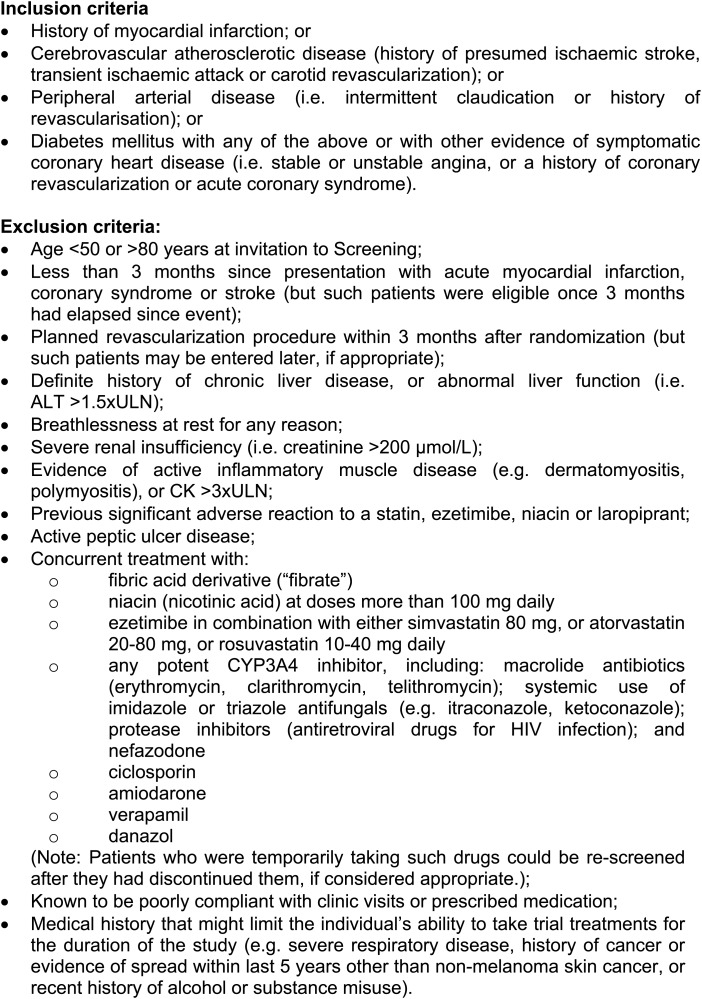
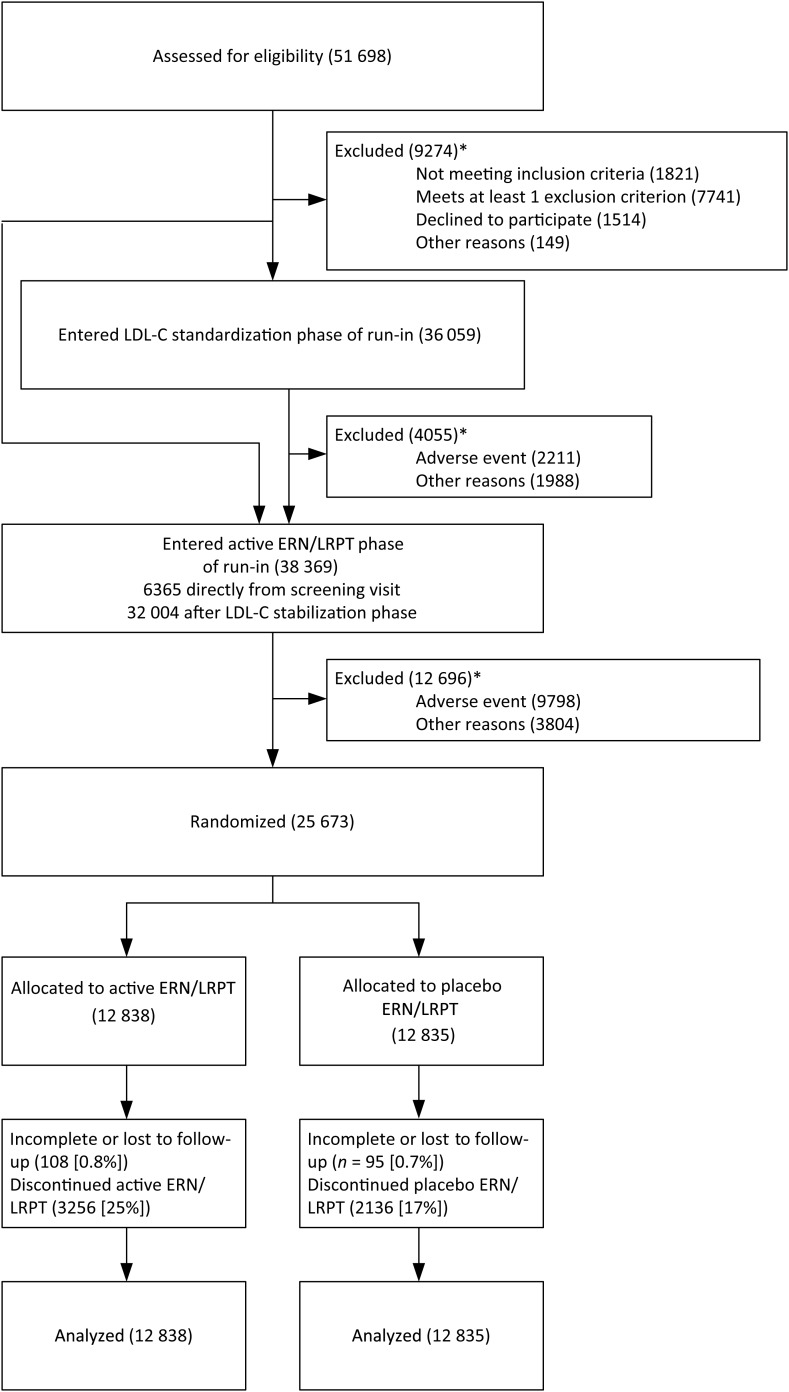
AIMS: Niacin has potentially favourable effects on lipids, but its effect on cardiovascular outcomes is uncertain. HPS2-THRIVE is a large randomized trial assessing the effects of extended release (ER) niacin in patients at high risk of vascular events. METHODS AND RESULTS: Prior to randomization, 42 424 patients with occlusive arterial disease were given simvastatin 40 mg plus, if required, ezetimibe 10 mg daily to standardize their low-density lipoprotein (LDL)-lowering therapy. The ability to remain compliant with ER niacin 2 g plus laropiprant 40 mg daily (ERN/LRPT) for ~1 month was then assessed in 38 369 patients and about one-third were excluded (mainly due to niacin side effects). A total of 25 673 patients were randomized between ERN/LRPT daily vs. placebo and were followed for a median of 3.9 years. By the end of the study, 25% of participants allocated ERN/LRPT vs. 17% allocated placebo had stopped their study treatment. The most common medical reasons for stopping ERN/LRPT were related to skin, gastrointestinal, diabetes, and musculoskeletal side effects. When added to statin-based LDL-lowering therapy, allocation to ERN/LRPT increased the risk of definite myopathy [75 (0.16%/year) vs. 17 (0.04%/year): risk ratio 4.4; 95% CI 2.6-7.5; P < 0.0001]; 7 vs. 5 were rhabdomyolysis. Any myopathy (definite or incipient) was more common among participants in China [138 (0.66%/year) vs. 27 (0.13%/year)] than among those in Europe [17 (0.07%/year) vs. 11 (0.04%/year)]. Consecutive alanine transaminase >3× upper limit of normal, in the absence of muscle damage, was seen in 48 (0.10%/year) ERN/LRPT vs. 30 (0.06%/year) placebo allocated participants. CONCLUSION: The risk of myopathy was increased by adding ERN/LRPT to simvastatin 40 mg daily (with or without ezetimibe), particularly in Chinese patients whose myopathy rates on simvastatin were higher. Despite the side effects of ERN/LRPT, among individuals who were able to tolerate it for ~1 month, three-quarters continued to take it for ~4 years.
Overview
The claims and statistics of this paper haven’t been checked yet.
Free: it reads the open-access text and checks the first 5 claims that cite a source we can check. Create a free account to check every claim.
Integrity signals
Registry
Cites
Statistics
Figures
Verification
Claims the paper makes
The claims and statistics of this paper haven’t been checked yet.
Free: it reads the open-access text and checks the first 5 claims that cite a source we can check. Create a free account to check every claim.
Claims other papers make about this one
Each is checked against this paper’s own text: does it say what the citing paper says it does?
The source backs part of the claim, not all of it — or backs it for a different population, condition or comparison.
In the citing paper
“Niacin also lowers LDL-C levels by 15–20%,49 but recent large randomized trials showed a significant excess of adverse effects and no significant CVD benefit when added to background statin treatment; therefore, niacin derivatives are no longer available for prescription in Europe.50,51”
From Statin-associated muscle symptoms: impact on statin therapy—European Atherosclerosis Society Consensus Panel Statement on Assessment, Aetiology and Management (2015) · cites this paper as [51]
Experimental — accuracy not yet measuredThe source backs part of the claim, not all of it — or backs it for a different population, condition or comparison.
In the citing paper
“outcome trials that have targeted HDL-C pharmacologically and have included patients with low HDL-C at baseline, have not demonstrated reduced CVD risk despite appreciable increases in HDL-C.5-10”
From Is Isolated Low High-Density Lipoprotein Cholesterol a Cardiovascular Disease Risk Factor?: New Insights From the Framingham Offspring Study (2016) · cites this paper as [8]
Experimental — accuracy not yet measuredThe source backs part of the claim, not all of it — or backs it for a different population, condition or comparison.
In the citing paper
“In contrast, recent studies have failed to demonstrate that high HDL-C acquired naturally or pharmacologically, is associated with reduced CVD risk.5-11,18”
From Is Isolated Low High-Density Lipoprotein Cholesterol a Cardiovascular Disease Risk Factor?: New Insights From the Framingham Offspring Study (2016) · cites this paper as [8]
Experimental — accuracy not yet measuredThe source backs part of the claim, not all of it — or backs it for a different population, condition or comparison.
In the citing paper
“Prior CV outcome studies that administered therapies with TG‐lowering effects (niacin or fenofibrate) on top of statin therapy did not reach their primary endpoints.”
From Rationale and design of REDUCE‐IT : Reduction of Cardiovascular Events with Icosapent Ethyl–Intervention Trial (2017) · cites this paper as [12]
Experimental — accuracy not yet measuredThe source backs part of the claim, not all of it — or backs it for a different population, condition or comparison.
In the citing paper
“Benefits in outcome studies appear limited to subgroups with high TG and low HDL-C, highlighting the complexity of translating TG reduction into ASCVD risk reduction [61, 74–77].”
From Targeting Triglycerides in Cardiovascular Disease Prevention: Evidence, Mechanisms, and Emerging Therapies (2026) · cites this paper as [77]
Experimental — accuracy not yet measured
3 more claims about this paper
Create a free account to see every claim other papers make about this one.
Self-check
Percentages, sums and reported differences re-computed from the paper’s own numbers.
The self-check needs the paper’s full text.
Citations
Cites
European Guidelines on cardiovascular disease prevention in clinical practice (version 2012)
Authors/Task Force Members:, Perk, J., De Backer, G., Gohlke, H., Graham, I., Reiner, Ž., Verschuren, M., Albus, C., Benlian, P., Boysen, G., et al. (2012) · European Heart Journal · doi:10.1093/eurheartj/ehs092 · Cited by 8,490
Self-citationCholesterol Treatment Trialists' (CTT) Collaboration (2010) · The Lancet · doi:10.1016/s0140-6736(10)61350-5 · Cited by 6,550
Authors/Task Force Members, Graham, I., Atar, D., Borch-Johnsen, K., Boysen, G., Burell, G., Cifkova, R., Dallongeville, J., De Backer, G., Ebrahim, S., et al. (2007) · European Heart Journal · doi:10.1093/eurheartj/ehm316 · Cited by 3,753
Self-citationNiacin in Patients with Low HDL Cholesterol Levels Receiving Intensive Statin Therapy
The AIM-HIGH Investigators (2011) · New England Journal of Medicine · doi:10.1056/nejmoa1107579 · Cited by 2,911
Major lipids, apolipoproteins, and risk of vascular disease
The Emerging Risk Factors Collaboration* (2009) · JAMA · doi:10.1001/jama.2009.1619 · Cited by 2,731
SLCO1B1 Variants and Statin-Induced Myopathy — A Genomewide Study
(2008) · New England Journal of Medicine · doi:10.1056/nejmoa0801936 · Cited by 2,043
Clofibrate and Niacin in Coronary Heart Disease
(1975) · JAMA: The Journal of the American Medical Association · doi:10.1001/jama.1975.03240160024021 · Cited by 1,747
Genetic Variants Associated with Lp(a) Lipoprotein Level and Coronary Disease
Clarke, R., Peden, J. F., Hopewell, J. C., Kyriakou, T., Goel, A., Heath, S. C., Parish, S., Barlera, S., Franzosi, M. G., Rust, S., et al. (2009) · New England Journal of Medicine · doi:10.1056/nejmoa0902604 · Cited by 1,671 · cited 1×
“There is also evidence for a causal association between Lp(a) and CHD, with lower Lp(a) associated with lower CHD risk.(7) Niacin does, therefore, have multiple effects on lipid metabolism which might be beneficial.”
BackgroundSelf-citationGraham (2007) · doi:10.1097/01.hjr.0000277983.23934.c9 · Cited by 1,647
The safety of statins in clinical practice
Armitage, J. (2007) · The Lancet · doi:10.1016/s0140-6736(07)60716-8 · Cited by 833 · cited 1×
“Niacin does not inhibit cytochrome P450 3A4 or interfere with statin-glucuronidation, but it has been found to increase simvastatin blood concentrations by about one-third,(24) and statin-induced myopathy is known to be associated with higher blood statin levels.(25) Asian subjects are also recognized to have higher b…”
BackgroundSelf-citation
Research works printed but not linked: 4
- The Emerging Risk Factors Collaboration, 2009, JAMA, 302, 1993, 10.1001/jama.2009.1619 · DOI · Paper page
- 2011, New England Journal of Medicine, 365, 2255, 10.1056/nejmoa1107579 · DOI · Paper page
- 2008, New England Journal of Medicine, 359, 789, 10.1056/nejmoa0801936 · DOI · Paper page
- 2007, The American journal of cardiology, 99, S22, 10.1016/j.amjcard.2006.11.018 · DOI · Paper page
Cited by
Items 301–400 of 685
Update in Cardiology: Vascular Risk and Cardiac Rehabilitation
Galve, E., Alegría, E., Cordero, A., Fácila, L., de Bobadilla, J. F., Lluís-Ganella, C., Mazón, P., Zarzosa, C. D. P., & González‐Juanatey, J. R. (2014) · Revista Española de Cardiología (English Edition) · doi:10.1016/j.rec.2013.09.019 · Cited by 23
Katz, P. M., Leiter, L. A., Mellbin, L., & Rydén, L. (2014) · Diabetes and Vascular Disease Research · doi:10.1177/1479164114546854 · Cited by 22
Kächele, M., Hennige, A. M., Machann, J., Hieronimus, A., Lamprinou, A., Machicao, F. E., Schick, F., Fritsche, A., Stefan, N., Nürnberg, B., et al. (2015) · PLoS ONE · doi:10.1371/journal.pone.0144494 · Cited by 21
Izuhara, M., Ono, K., Shiomi, H., Morimoto, T., Furukawa, Y., Nakagawa, Y., Shizuta, S., Tada, T., Tazaki, J., Horie, T., et al. (2015) · Atherosclerosis · doi:10.1016/j.atherosclerosis.2015.05.010 · Cited by 22
Tonkin, A. M., & Byrnes, A. (2014) · F1000Prime Reports · doi:10.12703/p6-17 · Cited by 32
Fernandes, V., Santos, M. J., & Pérez, A. (2016) · Endocrinología y Nutrición · doi:10.1016/j.endonu.2016.01.001 · Cited by 23
Liu, X., Wang, T., Li, Y., Shi, M., Li, H.-M., Yuan, H., Mo, Z.-W., Chen, J., Zhang, B., Chen, Y., et al. (2017) · Biochemical and Biophysical Research Communications · doi:10.1016/j.bbrc.2017.04.082 · Cited by 20
Self-citationStatin Safety in Chinese: A Population-Based Study of Older Adults
Li, D. Q., Kim, R. B., McArthur, E., Fleet, J. L., Hegele, R. A., Shah, B. R., Weir, M. A., Molnar, A. O., Dixon, S. N., Tu, J. V., et al. (2016) · PLoS ONE · doi:10.1371/journal.pone.0150990 · Cited by 19
Yusuf, J., Yadav, N. K., Mukhopadhyay, S., Goyal, A., Mehta, V., Trehan, V. K., & Tyagi, S. (2014) · Indian Heart Journal · doi:10.1016/j.ihj.2014.03.002 · Cited by 21
“though it was not effective in reducing clinical end points as reported recently.(42,43) But to answer the question as to whether reduction of Lp(a) per se reduces risk of future adverse coronary events there is a need to develop a drug which selectively decreases Lp(a) only without effect on other lipid factors like…”
ResultRole of Glitazars in atherogenic dyslipidemia and diabetes: Two birds with one stone?
Munigoti, S. P., & Harinarayan, C. (2014) · Indian Journal of Endocrinology and Metabolism · doi:10.4103/2230-8210.131134 · Cited by 22
la Paz, S. M., Naranjo, M. C., López, S., Abia, R., Muriana, F. J. G., & Bermúdez, B. (2016) · Food & Function · doi:10.1039/c6fo00381h · Cited by 19
Zhou, L., Liu, X., Wang, Z.-Q., Li, Y., Shi, M., Xu, Z., Ou, Z., Li, H.-M., Cheng, T.-P., Jian, Y., et al. (2018) · Journal of Cardiovascular Pharmacology · doi:10.1097/fjc.0000000000000611 · Cited by 19
Li, G., Xu, Q., Han, K., Yan, W., & Huang, C. (2020) · Bioscience Reports · doi:10.1042/bsr20201349 · Cited by 19
Are non-ST-segment elevation myocardial infarctions missing in China?
Murugiah, K., Wang, Y., Nuti, S. V., Li, X., Li, J., Zheng, X., Downing, N. S., Desai, N. R., Masoudi, F. A., Spertus, J. A., et al. (2017) · European Heart Journal - Quality of Care and Clinical Outcomes · doi:10.1093/ehjqcco/qcx025 · Cited by 19
Self-citationPrevalence of poor lipid control in patients with premature coronary artery disease
Martínez‐Sánchez, F. D., Galarza, E. J., Posadas‐Romero, C., Medina-Urrutia Aida, X., Martínez-Alvarado, M. R., Osorio‐Alonso, H., & Juárez-Rojas, J. G. (2020) · Nutrition Metabolism and Cardiovascular Diseases · doi:10.1016/j.numecd.2020.04.030 · Cited by 18
Lorkowski, S. W., & Smith, J. D. (2022) · Biomedicines · doi:10.3390/biomedicines10010128 · Cited by 18
Kei, A. A., Tellis, C. C., Liberopoulos, E. N., Tselepis, A. D., & Elisaf, M. (2014) · Cardiovascular Therapeutics · doi:10.1111/1755-5922.12072 · Cited by 18
Intravenous Curcumin Mitigates Atherosclerosis Progression in Cholesterol-Fed Rabbits
Momtazi‐Borojeni, A. A., Zabihi, N. A., Bagheri, R. K., Majeed, M. A., Jamialahmadi, T., & Sahebkar, A. (2021) · Advances in experimental medicine and biology · doi:10.1007/978-3-030-64872-5_5 · Cited by 17
Is Lipoprotein(a) Ready for Prime-Time Use in the Clinic?
Ellis, K. L., & Watts, G. F. (2018) · Cardiology Clinics · doi:10.1016/j.ccl.2017.12.010 · Cited by 17
SPPARM alpha: the Lazarus effect
Fruchart, J., & Santos, R. D. (2019) · Current Opinion in Lipidology · doi:10.1097/mol.0000000000000640 · Cited by 19
Xu, J., Qian, H., Huang, P., Xu, J., Xiong, Y., Jiang, W., Xu, Y., Leng, W., Li, X., Chen, G.-H., et al. (2019) · Regenerative Medicine · doi:10.2217/rme-2019-0024 · Cited by 20
Self-citationA Current Approach to Statin Intolerance
Tompkins, R. O., Schwartzbard, A. Z., Gianos, E., Fisher, E. A. A., & WEINTRAUB, H. S. (2014) · Clinical Pharmacology & Therapeutics · doi:10.1038/clpt.2014.84 · Cited by 19
Pharmacogenomics of statin therapy: any new insights in efficacy or safety?
Hopewell, J. C., Reith, C. A., & Armitage, J. (2014) · Current Opinion in Lipidology · doi:10.1097/mol.0000000000000125 · Cited by 18
Self-citationZheng, W., Zhang, Y.-J., Bu, X.-T., Guo, X.-Z., Hu, D., Li, Z., & Sun, J. (2017) · Medicine · doi:10.1097/md.0000000000008555 · Cited by 17
Chang, C., Lin, X.-R., Lin, Y.-L., Fang, W.-H., Lin, S., Chang, S., & Kao, J. (2018) · PLoS ONE · doi:10.1371/journal.pone.0192740 · Cited by 17
Pedro‐Botet, J., Ascaso, J. F., Blasco, M., Brea, Á., Rodríguez, Á. D., Hernández‐Mijares, A., Pintó, X., & Millán, J. (2020) · Clínica e Investigación en Arteriosclerosis · doi:10.1016/j.arteri.2019.12.003 · Cited by 19
Joint Associations of APOC3 and LDL-C–Lowering Variants With the Risk of Coronary Heart Disease
Wang, W., Li, R. P., Song, Z., Huang, N., Huang, T., Hua, X., & Tang, Y.-D. (2025) · JAMA Cardiology · doi:10.1001/jamacardio.2025.0195 · Cited by 16
Li, D. X., Liu, L., Yang, S., Xing, Y., Pan, L., Zhao, R., Zhao, Y., Huang, G., & Wu, M. (2021) · Evidence-based Complementary and Alternative Medicine · doi:10.1155/2021/5569666 · Cited by 17
“However, the long-term risk of drug dependence and residual CHD remains an unanswered question [6].”
BackgroundLiu, Y., Zhao, J., Gao, Y., Chen, W., Johnston, S. C., Bath, P. M., Amarenco, P., Yan, H., Wang, X., Yang, Y., et al. (2024) · JAMA Network Open · doi:10.1001/jamanetworkopen.2024.31938 · Cited by 17
Atherogenic Dyslipidemia and Combination Pharmacotherapy in Diabetes: Recent Clinical Trials
Hamilton, S. J., & Watts, G. F. (2013) · The Review of Diabetic Studies · doi:10.1900/rds.2013.10.191 · Cited by 17
Pharmacological interventions in human HDL metabolism
Balder, J.-W., Staels, B., & Kuivenhoven, J. A. (2013) · Current Opinion in Lipidology · doi:10.1097/mol.0000000000000018 · Cited by 17
Immune-Inflammation in Atherosclerosis: A New Twist in an Old Tale
Talepoor, A. G., Fouladseresht, H., Khosropanah, S., & Doroudchi, M. (2019) · Endocrine Metabolic & Immune Disorders - Drug Targets · doi:10.2174/1871530319666191016095725 · Cited by 16
Very low HDL levels: clinical assessment and management
Bonilha, I., Luchiari, B., Nadruz, W., & Sposito, A. C. (2023) · Archives of Endocrinology and Metabolism · doi:10.20945/2359-3997000000585 · Cited by 22
Atherogenic dyslipidemia: prevalence and management in lipid clinics
Pedro‐Botet, J., Roux, J. A. F., Mostaza, J. M., Pintó, X., de la Cruz, J. J., & Banegas, J. R. (2014) · Revista Clínica Española (English Edition) · doi:10.1016/j.rceng.2014.06.001 · Cited by 18
Li, L., Zhang, M., Su, F., Yang, L., Shen, Y., Shen, J., & Zhang, D. (2015) · Lipids in Health and Disease · doi:10.1186/s12944-015-0004-7 · Cited by 17
Wang, Y., Nichol, M. B., Yan, B. P.-Y., Wu, J., Tomlinson, B., & Lee, V. W. Y. (2019) · BMJ Open · doi:10.1136/bmjopen-2018-024937 · Cited by 16
Treatment of homozygous familial hypercholesterolemia
France, M. W., Schofield, J. D., Kwok, S., & Soran, H. (2014) · Clinical Lipidology · doi:10.2217/clp.13.79 · Cited by 17
Cheng, Q., Sun, J., Zhong, H., Wang, Z., Liu, C., Zhou, S., & Deng, J. (2024) · Frontiers in Pharmacology · doi:10.3389/fphar.2024.1393333 · Cited by 18
Screening for and Management of Elevated Lp(a)
Boffa, M. B., & Koschinsky, M. L. (2013) · Current Cardiology Reports · doi:10.1007/s11886-013-0417-8 · Cited by 17
Cenarro, A., Puzo, J., Ferrando, J., Mateo‐Gállego, R., Bea, A. M., Calmarza, P., Jarauta, E., & Civeira, F. (2013) · Metabolism · doi:10.1016/j.metabol.2013.10.014 · Cited by 16
Yang, Y.-L., Hu, M., Chang, M., & Tomlinson, B. (2013) · Journal of Clinical Pharmacy and Therapeutics · doi:10.1111/jcpt.12096 · Cited by 15
Biomedical Advances in ABCA1 Transporter: From Bench to Bedside
Choi, H. Y., Choi, S., Iatan, I., Ruel, I. L., & Genest, J. J. (2023) · Biomedicines · doi:10.3390/biomedicines11020561 · Cited by 16
“Adding niacin to statin-treated patients did not reduce the risk of major adverse cardiovascular events but increased the risk of serious adverse events [50].”
BackgroundJavaheri, A., Molina, M. R., Zamani, P. L., Rodrigues, A., Novak, E. L., Chambers, S. V., Stutman, P., Maslanek, W., Williams, M., Lilly, S. M., et al. (2016) · The Journal of Heart and Lung Transplantation · doi:10.1016/j.healun.2016.06.022 · Cited by 16
Managing the lipid profile of coronary heart disease patients
Drakopoulou, M. I., Toutouzas, K. P., Stathogiannis, K. E., Synetos, A. G., Trantalis, G., & Tousoulis, D. M. (2016) · Expert Review of Cardiovascular Therapy · doi:10.1080/14779072.2016.1221341 · Cited by 16
Lyubarova, R., Robinson, J. G., Miller, M., Simmons, D. L., Xu, P., Abramson, B. L., Elam, M. B., Brown, T. M., McBride, R., Fleg, J. L., et al. (2017) · Journal of Clinical Lipidology · doi:10.1016/j.jacl.2017.06.017 · Cited by 15
Practical Considerations for the Use of Subcutaneous Treatment in the Management of Dyslipidaemia
Boccara, F., Dent, R. E., Ruilope, L. M., & Valensi, P. E. (2017) · Advances in Therapy · doi:10.1007/s12325-017-0586-8 · Cited by 15
“While non-statin therapies were deemed not to be justified at the time these guidelines were written, due to their benefit-risk profile, this was principally based on evidence from niacin in the AIM-HIGH [119] and HPS-2 THRIVE [120] trials, and fibrates in ACCORD-Lipid [121] and Field [122].”
MethodBaum, S. J., & Scholz, K. P. (2019) · Clinical Cardiology · doi:10.1002/clc.23220 · Cited by 16
Zhang, Y., Zhang, Y., Zhang, B., Chen, Z., Wei, Y., Chen, P., Chang, C. C., Liu, G., Chen, K., Ding, J., et al. (2022) · Clinical Therapeutics · doi:10.1016/j.clinthera.2022.04.010 · Cited by 14
Self-citationLipid-Lowering Therapy in Patients 75 Years and Older: Clinical Priority or Superfluous Therapy?
Phan, B. A. P., & Bittner, V. (2014) · Progress in Cardiovascular Diseases · doi:10.1016/j.pcad.2014.03.005 · Cited by 16
Niacin Reverses Migratory Macrophage Foam Cell Arrest Mediated by oxLDL In Vitro
Huang, H., Pirkko, K., Fendler, M., Schröttle, A., Czihal, M., Hoffmann, U., & Kuhlencordt, P. (2014) · PLoS ONE · doi:10.1371/journal.pone.0114643 · Cited by 16
Pedoman Tatalaksana Dislipidemia PERKI 2013
Erwinanto, E., Santoso, A., Putranto, J. N., Tedjasukmana, P., Suryawan, R., Rifqi, S., & Kasiman, S. (2015) · Indonesian Journal of Cardiology · doi:10.30701/ijc.v34i4.385 · Cited by 18
Gomaraschi, M., Ossoli, A., Adorni, M. P., Damonte, E., Niesor, E. J., Veglia, F., Franceschini, G., Benghozi, R., & Calabresi, L. (2015) · Vascular Pharmacology · doi:10.1016/j.vph.2015.06.014 · Cited by 15
McKenney, J. M., Bays, H. E., Gleim, G. W., Mitchel, Y., Kuznetsova, O., Sapre, A., Sirah, W., & Maccubbin, D. (2015) · Journal of clinical lipidology · doi:10.1016/j.jacl.2015.02.006 · Cited by 13
Self-citationIs HPS2-THRIVE the death knell for niacin?
Toth, P. P., Murthy, A., Sidhu, M. S., & Boden, W. E. (2015) · Journal of clinical lipidology · doi:10.1016/j.jacl.2015.01.008 · Cited by 13
The Ebbs and Flows in the Development of Cholesterol-Lowering Drugs: Prospects for the Future
Hajhosseiny, R., Sabir, I. N., Khavandi, K., & Wierzbicki, A. S. (2014) · Clinical Pharmacology & Therapeutics · doi:10.1038/clpt.2014.76 · Cited by 14
Treatment options for low high-density lipoproteins
Hafiane, A., Kellett, S., & Genest, J. J. (2014) · Current Opinion in Endocrinology Diabetes and Obesity · doi:10.1097/med.0000000000000049 · Cited by 15
Kwon, W. Y., Suh, G. J., Kim, K. S., Jung, Y. S., Kim, S. H., Lee, A. R., You, K. M., & Park, M. J. (2018) · Critical Care Medicine · doi:10.1097/ccm.0000000000003198 · Cited by 13
Wei, Y., Guo, H., The, E., Che, W., Shen, J., Hou, L., Zhao, S., Ye, P., Li, G., Wang, D., et al. (2015) · International Journal of Cardiology · doi:10.1016/j.ijcard.2015.01.024 · Cited by 14
Libby, P. (2016) · JACC Basic to Translational Science · doi:10.1016/j.jacbts.2016.08.007 · Cited by 13
HDL: To Treat or Not To Treat?
Pirillo, A., Tibolla, G., Norata, G. D., & Catapano, A. L. (2014) · Current Atherosclerosis Reports · doi:10.1007/s11883-014-0429-x · Cited by 12
Farnier, M., Chen, E., Johnson‐Levonas, A. O., Sisk, C. M., & Mitchel, Y. (2014) · Vascular Health and Risk Management · doi:10.2147/vhrm.s58694 · Cited by 12
Self-citationHan, S., Yang, W.-H., Yin, J., Tao, H., & Zhang, L. (2019) · American Journal of Cardiovascular Drugs · doi:10.1007/s40256-018-00317-1 · Cited by 12
Li, H., Xu, X., Lu, L., Sun, R., Guo, Q., Chen, Q., Wang, J., He, Z., & Zhang, Y. (2021) · European Journal of Clinical Pharmacology · doi:10.1007/s00228-021-03113-0 · Cited by 13
Lv, X., Liu, X., Peng, Y., Li, W., Wang, J., Chen, X., Lei, J., Tang, C., Luo, S., Mai, W., et al. (2024) · Journal of Stroke and Cerebrovascular Diseases · doi:10.1016/j.jstrokecerebrovasdis.2024.107647 · Cited by 13
A simple and effective approach for the treatment of dyslipidemia using anionic nanoliposomes
Sahebkar, A., Badiee, A., Ghayour‐Mobarhan, M., Goldouzian, S. R., & Jaafari, M. R. (2014) · Colloids and Surfaces B Biointerfaces · doi:10.1016/j.colsurfb.2014.07.045 · Cited by 14
High-Density Lipoproteins and Coronary Artery Disease: A Single-Center Cohort Study
Schaffer, A., Verdoia, M., Barbieri, L., Aprami, T. M., Suryapranata, H., Marino, P. N., & Luca, G. D. (2013) · Angiology · doi:10.1177/0003319713502253 · Cited by 14
Pang, J., Chan, D. C., Hamilton, S. J., Tenneti, V. S., Watts, G. F., & Barrett, P. H. R. (2015) · Diabetes Obesity and Metabolism · doi:10.1111/dom.12622 · Cited by 12
Exploring the Management of Statin Intolerant Patients: 2016 and Beyond
Katsiki, N., Athyros, V. G., & Karagiannis, A. I. (2016) · Current Vascular Pharmacology · doi:10.2174/1570161114666160226150028 · Cited by 12
Icosapent Ethyl: Niche Drug or for the Masses?
Bazarbashi, N., & Miller, M. J. (2020) · Current Cardiology Reports · doi:10.1007/s11886-020-01356-4 · Cited by 12
Dislipidemia y riesgo vascular. Una revisión basada en nuevas evidencias
Pallarés‐Carratalá, V., Fuster, V. P., & Rocati, D. V. G. (2015) · Medicina de Familia SEMERGEN · doi:10.1016/j.semerg.2014.10.015 · Cited by 31
El papel de la dislipemia aterogénica en las guías de práctica clínica
Pedro‐Botet, J., Mantilla, T., Rodríguez, Á. D., Brea-Hernando, Á., González‐Santos, P., Hernández‐Mijares, A., Pintó, X., & Núñez-Cortés, J. M. (2016) · Clínica e Investigación en Arteriosclerosis · doi:10.1016/j.arteri.2015.12.004 · Cited by 18
ADVERSE EFFECTS AND SIDE EFFECTS ON VITAMIN THERAPY: A REVIEW
Korah, M. C., Pv, J. R., P, R. R., Behanan, A., Paul, E. P., & Sivakumar, T. (2017) · Asian Journal of Pharmaceutical and Clinical Research · doi:10.22159/ajpcr.2017.v10i5.17014 · Cited by 17
Wang, M., Liu, J., Bellows, B. K., Qi, Y., Sun, J., Liu, J., Moran, A. E., & Zhao, D. H. (2020) · Global Heart · doi:10.5334/gh.830 · Cited by 12
Fazio, S., & Linton, M. F. (2013) · Circulation Research · doi:10.1161/circresaha.113.301832 · Cited by 13
Dislipidemia aterogénica y riesgo residual. Estado de la cuestión en 2014
Núñez-Cortés, J. M., Pedro‐Botet, J., & Pintó, X. (2014) · Clínica e Investigación en Arteriosclerosis · doi:10.1016/j.arteri.2014.09.004 · Cited by 21
Al-Hijji, M. A., Martin, S. S., Joshi, P. H., & Jones, S. R. (2013) · The American Journal of Cardiology · doi:10.1016/j.amjcard.2013.07.030 · Cited by 11
HDL as a Causal Factor in Atherosclerosis: Insights from Human Genetics
Brunham, L. R. (2016) · Current Atherosclerosis Reports · doi:10.1007/s11883-016-0623-0 · Cited by 12
Pharmacokinetics and Genetic Factors of Atorvastatin in Healthy Korean Subjects
Kim, S., Seo, J. D., Yun, Y., Kim, H., Kim, T., Lee, T., Lee, T.-R., Lee, J. H., Cho, E., & Ki, C. (2022) · Frontiers in Genetics · doi:10.3389/fgene.2022.836970 · Cited by 11
Effect of hypolipidemic treatment on glycemic profile in patients with mixed dyslipidemia
Kei, A. A., Liberopoulos, E., & Elisaf, M. (2013) · World Journal of Diabetes · doi:10.4239/wjd.v4.i6.365 · Cited by 11
Zhang, L., Li, J., Li, X., Nasir, K., Zhang, H., Wu, Y., Hu, S., Wang, Q., Downing, N. S., Desai, N. R., et al. (2016) · PLoS ONE · doi:10.1371/journal.pone.0150806 · Cited by 11
Self-citationToplak, H., Ludvik, B. H., Lechleitner, M., Dieplinger, H., Föger, B., Paulweber, B., Weber, T., Watschinger, B., Horn, S., Wascher, T. C., et al. (2016) · Wiener klinische Wochenschrift · doi:10.1007/s00508-016-0993-x · Cited by 15
Changes in triglyceride, HDL-C, and non-HDL-C levels in patients with acute coronary syndrome
Koncsos, P., Fülöp, P., Juhász, I., Bíró, K., Márk, L., Simonyi, G., & Paragh, G. (2016) · Wiener klinische Wochenschrift · doi:10.1007/s00508-016-1035-4 · Cited by 11
Yan, P., Tan, E. K., Choo, J. C. J., Liew, C., Lau, T., & Waters, D. D. (2016) · Singapore Medical Journal · doi:10.11622/smedj.2016118 · Cited by 12
Efficacy of Laropiprant in Minimizing Brain Injury Following Experimental Intracerebral Hemorrhage
Ahmad, A. S., Mendes, M. S., Hernandez, D., & Doré, S. (2017) · Scientific Reports · doi:10.1038/s41598-017-09994-5 · Cited by 11
Chan, J. C. M., Ng, M., Wong, R. S. M., & Tomlinson, B. (2019) · Journal of Clinical Pharmacy and Therapeutics · doi:10.1111/jcpt.12805 · Cited by 17
The role of high‐density lipoproteins in antitumor drug delivery
Sarhadi, S., Ganjali, S., Pirro, M., & Sahebkar, A. (2019) · IUBMB Life · doi:10.1002/iub.2105 · Cited by 11
Bazarbashi, N., & Miller, M. J. (2020) · Expert Review of Cardiovascular Therapy · doi:10.1080/14779072.2020.1749596 · Cited by 11
“patients with normal or elevated TG [33,34].”
Liao, J., Yang, L., Zhou, L., Zhao, H., Qi, X., Cui, Y., & Ouyang, D. (2022) · Frontiers in Pharmacology · doi:10.3389/fphar.2022.755469 · Cited by 11
Xie, G., Myint, P. K., Sun, Y., Li, X., Wu, T., Gao, R.-L., & Wu, Y. (2022) · BMJ Open · doi:10.1136/bmjopen-2021-056236 · Cited by 12
Schuchardt, M., Tölle, M., & van der Giet, M. (2015) · Handbook of Experimental Pharmacology · doi:10.1007/978-3-319-09665-0_13 · Cited by 11
HDL from apoA1 transgenic mice expressing the 4WF isoform is resistant to oxidative loss of function
Berisha, S. Z., Brubaker, G., Kasumov, T., Hung, K. T., DiBello, P. M., Huang, Y. R., Li, L., Willard, B. B., Pollard, K. A., Nagy, L. E., et al. (2015) · Journal of Lipid Research · doi:10.1194/jlr.m056754 · Cited by 11
Wu, N., Guo, Y., Ye, P., Chen, H., Li, Y., Hua, Q., Zhu, C., Gao, Y., Qing, P., Li, X., et al. (2016) · IJC Metabolic & Endocrine · doi:10.1016/j.ijcme.2016.11.002 · Cited by 12
Self-citationChronic kidney disease and dyslipidaemia
Pascual, V., Serrano, A., Pedro-botet, J., Ascaso, J., Barrios, V., Millán, J., Pinto, X., & Cases, A. (2017) · Clínica e Investigación en Arteriosclerosis (English Edition) · doi:10.1016/j.artere.2016.04.001 · Cited by 4
Dyslipidemia in Chronic Kidney Disease
Streja, E., & Streja, D. A. (2022) · Wiley eBooks · doi:10.1002/9781119105954.ch34 · Cited by 12
Is HDL a prognostic biomarker for coronary atherosclerosis?
Παπαγεωργίου, Ν., & Tousoulis, D. (2014) · International Journal of Cardiology · doi:10.1016/j.ijcard.2014.04.227 · Cited by 11
Liu, Y., Li, D., Chai, M., Cong, H., Cong, X., Dai, J., Du, R., Gao, M., Guo, J., Guo, Y., et al. (2020) · Authorea · doi:10.11909/j.issn.1671-5411.2021.04.005 · Cited by 11
Self-citationTsui, L., Wang, D., Fan, C., Huang, Y., Zhang, Z., Fang, Z., & Xie, W. (2025) · European Journal of Hospital Pharmacy · doi:10.1136/ejhpharm-2024-004352 · Cited by 10
“14 15 These findings highlighted the importance of considering ethnic-specific responses to statin therapies and related treatments.”
InfluentialZhang, L., He, G., Huo, X., Ji, R., Tian, A., Pu, B., Lei, L., Li, J., & Peng, Y. (2023) · ESC Heart Failure · doi:10.1002/ehf2.14328 · Cited by 10
Self-citationSu, Q., Liu, Y., Zhang, G., Xu, L., Wang, M., Mei, S., Garon, G., Wu, Y., Lv, Q., & Ma, C. (2023) · Advances in Therapy · doi:10.1007/s12325-023-02666-z · Cited by 13
“Statin intolerance (e.g., liver dysfunction and myopathy) was more frequently reported in Chinese patients than in European patients [17], which might be attributed to the different statin pharmacokinetics between Asians and Caucasian, leading to higher plasma concentrations over time in Asians…”
BackgroundChen, C., Wei, F., Dong, Y., & Liu, C. (2024) · Cardiovascular Drugs and Therapy · doi:10.1007/s10557-024-07587-9 · Cited by 10
“In the HPS2-THRIVE study, compared with European patients, Chinese patients had lower LDL-C levels but more frequent adverse liver and muscle reactions when receiving medium-intensity statin therapy, as the increase in rate of liver enzymes was 10 times higher than European patients [30].”
Metadata
- Authors
- HPS2-THRIVE Collaborative Group, Haynes, R., Jiang, L., Hopewell, J. C., Li, J., Chen, F., Parish, S., Landray, M. J., Collins, R., Armitage, J., Collins, R., Armitage, J., Baigent, C., Chen, Z., Landray, M., Chen, Y., Jiang, L., Pedersen, T., Landray, M., Bowman, L., Chen, F., Hill, M., Haynes, R., Knott, C., Rahimi, K., Tobert, J., Sleight, P., Simpson, D., Parish, S., Baxter, A., Lay, M., Bray, C., Wincott, E., Leijenhorst, G., Skattebol, A., Moen, G., Mitchel, Y., Kuznetsova, O., MacMahon, S., Kjekshus, J., Hill, C., Lam, T. H., Sandercock, P., Peto, R., & Hopewell, J. C.
- Affiliations
- Chinese Academy of Medical Sciences & Peking Union Medical College (CN)
- ORCID
- Venue
- European Heart Journal
- Publisher
- Oxford University Press (OUP)
- Published
- 2013-02-26
- Volume
- 34
- Issue
- 17
- Pages
- 1279-1291
- ISSN
- 0195-668X (ISSN-L)
- 1522-9645
- PMC
- PMC3640201
- OpenAlex
- W2410405995
- Cited by
- 676
- References
- 25
- Citations by year
- 2026: 16 · 2025: 22 · 2024: 19 · 2023: 23 · 2022: 37 · 2021: 27 · 2020: 25 · 2019: 40 · 2018: 32 · 2017: 34 · 2016: 66 · 2015: 98 · 2014: 140 · 2013: 94
- FWCI
- 130.88
- Type
- journal article
- Language
- en
- Open access
- hybrid
- doi.org
- Licence
- cc-by-nc
- Locations
- European Heart Journal (publishedVersion, cc-by-nc)
- Europe PMC (PubMed Central) (publishedVersion, cc-by-nc)
- PubMed Central (publishedVersion, cc-by-nc)
- PubMed (publishedVersion)
- HighWire Press Open Archive (submittedVersion)
- Funders
- Cancer Research UK
- National Institute for Health and Care Research (CDF-2013-06-012)
- British Heart Foundation (RE/08/004)
- University of Oxford (RE/08/004)
- BHF Centre of Research Excellence, Oxford (RE/08/004)
- Medical Research Council (MC_EX_G0801669)
- Topics
- Health Sciences › Medicine › Cardiology and Cardiovascular Medicine › Lipoproteins and Cardiovascular Health
- Health Sciences › Medicine › Cardiology and Cardiovascular Medicine › Blood Pressure and Hypertension Studies
- Health Sciences › Medicine › Surgery › Peripheral Artery Disease Management
- Keywords
- extended-release niacin, laropiprant, rhabdomyolysis, liver enzymes, alanine aminotransferase, statin therapy, ezetimibe, arterial occlusive disease, cardiovascular risk, adverse drug reactions, treatment discontinuation, lipid-lowering therapy
- MeSH terms
- Hypolipidemic Agents, Arterial Occlusive Diseases, Delayed-Action Preparations, Drug Therapy, Combination, Female, Humans, Indoles, Male, Middle Aged, Muscular Diseases, Myocardial Infarction, Niacin, Myocardial Reperfusion, Death, Sudden, Cardiac, Simvastatin, Stroke, Chemical and Drug Induced Liver Injury
About these checks
Registry, retraction, Cites and statistics results are computed, not judged, with one exception: a printed reference that no index lists is read once by a model before it counts as a citation error. Claims are extracted by a model and kept only when their quote appears verbatim in the text; each cited source is then checked, with a model’s help, for whether it says what the claim relies on. Those verdicts can be wrong — read the claim’s quote and the cited source before relying on one.
Statistics and arithmetic are recomputed, not judged.
Confidence bands are shown only for fields calibrated on our annotated test set. None is calibrated yet, so no band is shown.
What counts as a claim ›How we measure confidence ›How we check this ›
Are you an author, or do you see a problem with this page? Request a review
Data sources
Bibliographic data: Semantic Scholar, OpenAlex, Crossref.
Contains information from the Semantic Scholar Academic Graph Datasets, made available under the ODC Attribution License (ODC-BY 1.0).
Semantic Scholar’s data is described in: Kinney, R., et al. (2023). The Semantic Scholar Open Data Platform. arXiv:2301.10140.
