

HPS2-THRIVE randomized placebo-controlled trial in 25 673 high-risk patients of ER niacin/laropiprant: trial design, pre-specified muscle and liver outcomes, and reasons for stopping study treatment
Open accessThe DOI matches its Crossref record; 25 of the 25 references it cites were found in a registry or an index.
Abstract
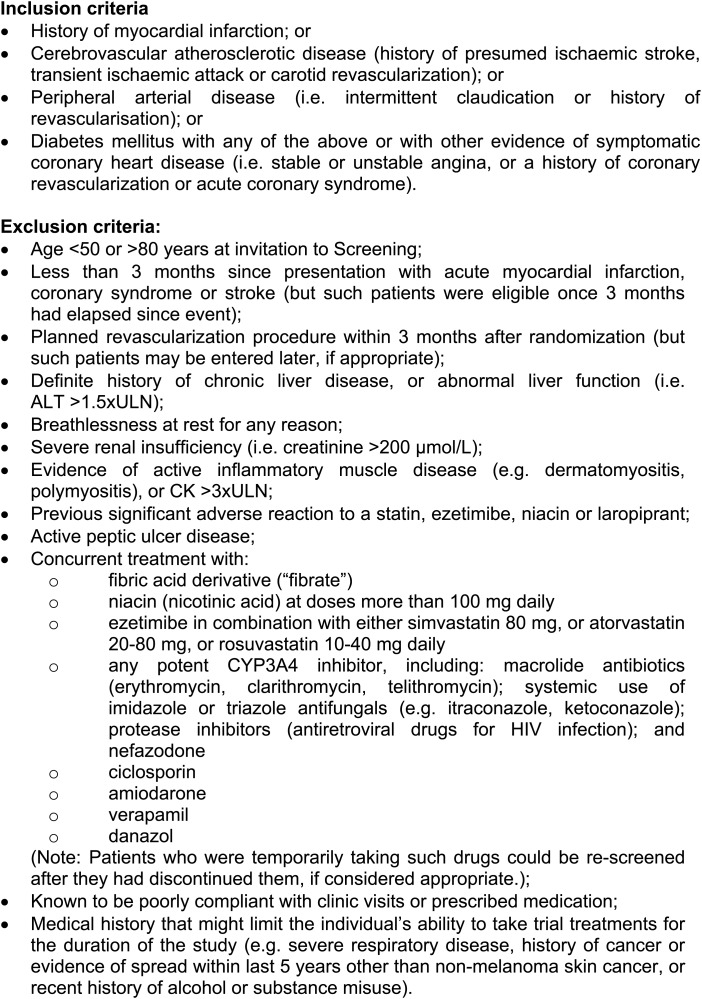
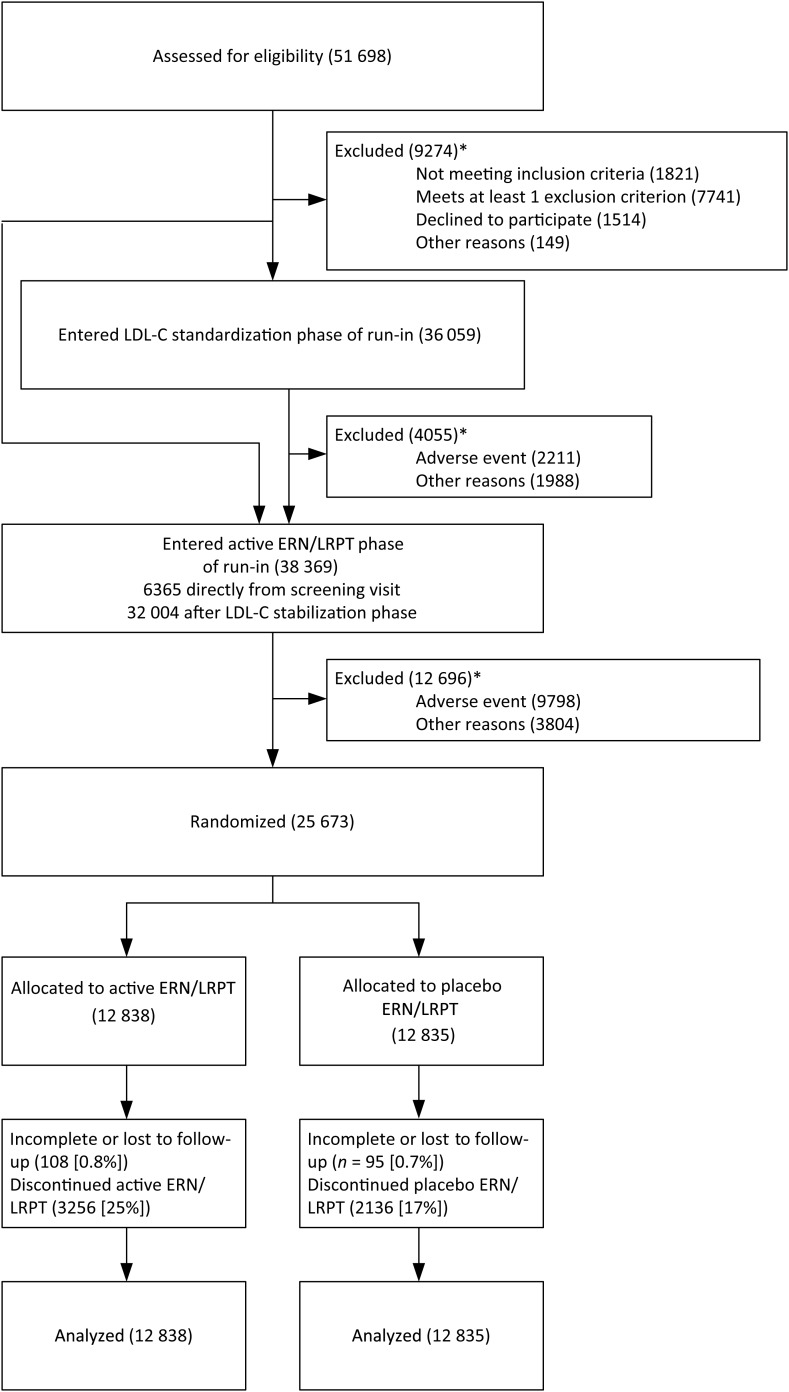
AIMS: Niacin has potentially favourable effects on lipids, but its effect on cardiovascular outcomes is uncertain. HPS2-THRIVE is a large randomized trial assessing the effects of extended release (ER) niacin in patients at high risk of vascular events. METHODS AND RESULTS: Prior to randomization, 42 424 patients with occlusive arterial disease were given simvastatin 40 mg plus, if required, ezetimibe 10 mg daily to standardize their low-density lipoprotein (LDL)-lowering therapy. The ability to remain compliant with ER niacin 2 g plus laropiprant 40 mg daily (ERN/LRPT) for ~1 month was then assessed in 38 369 patients and about one-third were excluded (mainly due to niacin side effects). A total of 25 673 patients were randomized between ERN/LRPT daily vs. placebo and were followed for a median of 3.9 years. By the end of the study, 25% of participants allocated ERN/LRPT vs. 17% allocated placebo had stopped their study treatment. The most common medical reasons for stopping ERN/LRPT were related to skin, gastrointestinal, diabetes, and musculoskeletal side effects. When added to statin-based LDL-lowering therapy, allocation to ERN/LRPT increased the risk of definite myopathy [75 (0.16%/year) vs. 17 (0.04%/year): risk ratio 4.4; 95% CI 2.6-7.5; P < 0.0001]; 7 vs. 5 were rhabdomyolysis. Any myopathy (definite or incipient) was more common among participants in China [138 (0.66%/year) vs. 27 (0.13%/year)] than among those in Europe [17 (0.07%/year) vs. 11 (0.04%/year)]. Consecutive alanine transaminase >3× upper limit of normal, in the absence of muscle damage, was seen in 48 (0.10%/year) ERN/LRPT vs. 30 (0.06%/year) placebo allocated participants. CONCLUSION: The risk of myopathy was increased by adding ERN/LRPT to simvastatin 40 mg daily (with or without ezetimibe), particularly in Chinese patients whose myopathy rates on simvastatin were higher. Despite the side effects of ERN/LRPT, among individuals who were able to tolerate it for ~1 month, three-quarters continued to take it for ~4 years.
Overview
The claims and statistics of this paper haven’t been checked yet.
Free: it reads the open-access text and checks the first 5 claims that cite a source we can check. Create a free account to check every claim.
Integrity signals
Registry
Cites
Statistics
Figures
Verification
Claims the paper makes
The claims and statistics of this paper haven’t been checked yet.
Free: it reads the open-access text and checks the first 5 claims that cite a source we can check. Create a free account to check every claim.
Claims other papers make about this one
Each is checked against this paper’s own text: does it say what the citing paper says it does?
The source backs part of the claim, not all of it — or backs it for a different population, condition or comparison.
In the citing paper
“Niacin also lowers LDL-C levels by 15–20%,49 but recent large randomized trials showed a significant excess of adverse effects and no significant CVD benefit when added to background statin treatment; therefore, niacin derivatives are no longer available for prescription in Europe.50,51”
From Statin-associated muscle symptoms: impact on statin therapy—European Atherosclerosis Society Consensus Panel Statement on Assessment, Aetiology and Management (2015) · cites this paper as [51]
Experimental — accuracy not yet measuredThe source backs part of the claim, not all of it — or backs it for a different population, condition or comparison.
In the citing paper
“outcome trials that have targeted HDL-C pharmacologically and have included patients with low HDL-C at baseline, have not demonstrated reduced CVD risk despite appreciable increases in HDL-C.5-10”
From Is Isolated Low High-Density Lipoprotein Cholesterol a Cardiovascular Disease Risk Factor?: New Insights From the Framingham Offspring Study (2016) · cites this paper as [8]
Experimental — accuracy not yet measuredThe source backs part of the claim, not all of it — or backs it for a different population, condition or comparison.
In the citing paper
“In contrast, recent studies have failed to demonstrate that high HDL-C acquired naturally or pharmacologically, is associated with reduced CVD risk.5-11,18”
From Is Isolated Low High-Density Lipoprotein Cholesterol a Cardiovascular Disease Risk Factor?: New Insights From the Framingham Offspring Study (2016) · cites this paper as [8]
Experimental — accuracy not yet measuredThe source backs part of the claim, not all of it — or backs it for a different population, condition or comparison.
In the citing paper
“Prior CV outcome studies that administered therapies with TG‐lowering effects (niacin or fenofibrate) on top of statin therapy did not reach their primary endpoints.”
From Rationale and design of REDUCE‐IT : Reduction of Cardiovascular Events with Icosapent Ethyl–Intervention Trial (2017) · cites this paper as [12]
Experimental — accuracy not yet measuredThe source backs part of the claim, not all of it — or backs it for a different population, condition or comparison.
In the citing paper
“Benefits in outcome studies appear limited to subgroups with high TG and low HDL-C, highlighting the complexity of translating TG reduction into ASCVD risk reduction [61, 74–77].”
From Targeting Triglycerides in Cardiovascular Disease Prevention: Evidence, Mechanisms, and Emerging Therapies (2026) · cites this paper as [77]
Experimental — accuracy not yet measured
3 more claims about this paper
Create a free account to see every claim other papers make about this one.
Self-check
Percentages, sums and reported differences re-computed from the paper’s own numbers.
The self-check needs the paper’s full text.
Citations
Cites
European Guidelines on cardiovascular disease prevention in clinical practice (version 2012)
Authors/Task Force Members:, Perk, J., De Backer, G., Gohlke, H., Graham, I., Reiner, Ž., Verschuren, M., Albus, C., Benlian, P., Boysen, G., et al. (2012) · European Heart Journal · doi:10.1093/eurheartj/ehs092 · Cited by 8,490
Self-citationCholesterol Treatment Trialists' (CTT) Collaboration (2010) · The Lancet · doi:10.1016/s0140-6736(10)61350-5 · Cited by 6,550
Authors/Task Force Members, Graham, I., Atar, D., Borch-Johnsen, K., Boysen, G., Burell, G., Cifkova, R., Dallongeville, J., De Backer, G., Ebrahim, S., et al. (2007) · European Heart Journal · doi:10.1093/eurheartj/ehm316 · Cited by 3,753
Self-citationNiacin in Patients with Low HDL Cholesterol Levels Receiving Intensive Statin Therapy
The AIM-HIGH Investigators (2011) · New England Journal of Medicine · doi:10.1056/nejmoa1107579 · Cited by 2,911
Major lipids, apolipoproteins, and risk of vascular disease
The Emerging Risk Factors Collaboration* (2009) · JAMA · doi:10.1001/jama.2009.1619 · Cited by 2,731
SLCO1B1 Variants and Statin-Induced Myopathy — A Genomewide Study
(2008) · New England Journal of Medicine · doi:10.1056/nejmoa0801936 · Cited by 2,043
Clofibrate and Niacin in Coronary Heart Disease
(1975) · JAMA: The Journal of the American Medical Association · doi:10.1001/jama.1975.03240160024021 · Cited by 1,747
Genetic Variants Associated with Lp(a) Lipoprotein Level and Coronary Disease
Clarke, R., Peden, J. F., Hopewell, J. C., Kyriakou, T., Goel, A., Heath, S. C., Parish, S., Barlera, S., Franzosi, M. G., Rust, S., et al. (2009) · New England Journal of Medicine · doi:10.1056/nejmoa0902604 · Cited by 1,671 · cited 1×
“There is also evidence for a causal association between Lp(a) and CHD, with lower Lp(a) associated with lower CHD risk.(7) Niacin does, therefore, have multiple effects on lipid metabolism which might be beneficial.”
BackgroundSelf-citationGraham (2007) · doi:10.1097/01.hjr.0000277983.23934.c9 · Cited by 1,647
The safety of statins in clinical practice
Armitage, J. (2007) · The Lancet · doi:10.1016/s0140-6736(07)60716-8 · Cited by 833 · cited 1×
“Niacin does not inhibit cytochrome P450 3A4 or interfere with statin-glucuronidation, but it has been found to increase simvastatin blood concentrations by about one-third,(24) and statin-induced myopathy is known to be associated with higher blood statin levels.(25) Asian subjects are also recognized to have higher b…”
BackgroundSelf-citation
Research works printed but not linked: 4
- The Emerging Risk Factors Collaboration, 2009, JAMA, 302, 1993, 10.1001/jama.2009.1619 · DOI · Paper page
- 2011, New England Journal of Medicine, 365, 2255, 10.1056/nejmoa1107579 · DOI · Paper page
- 2008, New England Journal of Medicine, 359, 789, 10.1056/nejmoa0801936 · DOI · Paper page
- 2007, The American journal of cardiology, 99, S22, 10.1016/j.amjcard.2006.11.018 · DOI · Paper page
Cited by
Items 201–300 of 685
Dai, W., Long, J., Cheng, Y., Chen, Y., & Zhao, S. (2018) · Scientific Reports · doi:10.1038/s41598-018-25835-5 · Cited by 36
Self-citationNovel Pharmacological Therapies for the Management of Hyperlipoproteinemia(a)
Kosmas, C. E., Bousvarou, M. D., Papakonstantinou, E. J., Tsamoulis, D., Koulopoulos, A., Uceta, R. E., Guzman, E., & Rallidis, L. S. (2023) · International Journal of Molecular Sciences · doi:10.3390/ijms241713622 · Cited by 41
Targeting LDL: Is lower better and is it safe?
Stein, E. A., & Raal, F. J. (2013) · Best Practice & Research Clinical Endocrinology & Metabolism · doi:10.1016/j.beem.2013.10.010 · Cited by 39
McCarty, M. F., & DiNicolantonio, J. J. (2013) · Nutrition · doi:10.1016/j.nut.2013.12.010 · Cited by 37
Diabetic Dyslipidemia: From Evolving Pathophysiological Insight to Emerging Therapeutic Targets
Ng, D. S. (2013) · Canadian Journal of Diabetes · doi:10.1016/j.jcjd.2013.07.062 · Cited by 38
PCSK9 in cholesterol metabolism: from bench to bedside
Reiss, A. B., Shah, N. B., Muhieddine, D., Zhen, J., Yudkevich, J., Kasselman, L. J., & DeLeon, J. R. (2018) · Clinical Science · doi:10.1042/cs20180190 · Cited by 39
ApoA-I Infusion Therapies Following Acute Coronary Syndrome: Past, Present, and Future
Kalaycı, A., Gibson, C. M., Ridker, P. M., Wright, S. D., Kingwell, B. A., Korjian, S., Chi, G., Lee, J., Tricoci, P., Kazmi, S. H. A., et al. (2022) · Current Atherosclerosis Reports · doi:10.1007/s11883-022-01025-7 · Cited by 38
Hughes-Large, J. M., Pang, D., Robson, D. L., Chan, P., Toma, J., & Borradaile, N. M. (2014) · Atherosclerosis · doi:10.1016/j.atherosclerosis.2014.10.090 · Cited by 39
Pang, J., Chan, D. C., Hamilton, S. J., Tenneti, V. S., Watts, G. F., & Barrett, P. H. R. (2013) · Arteriosclerosis Thrombosis and Vascular Biology · doi:10.1161/atvbaha.113.302019 · Cited by 35
Novel Therapies Focused on the High-Density Lipoprotein Particle
van Capelleveen, J. C., Brewer, H. B., Kastelein, J. J. P., & Hovingh, G. K. (2014) · Circulation Research · doi:10.1161/circresaha.114.301804 · Cited by 41
High Density Lipoprotein: A Therapeutic Target in Type 2 Diabetes
Barter, P. J. (2013) · Endocrinology and Metabolism · doi:10.3803/enm.2013.28.3.169 · Cited by 37
Atherosclerosis: Recent trials, new targets and future directions
Ladeiras‐Lopes, R., Agewall, S., Tawakol, A. A., Staels, B., Stein, E. A., Mentz, R. J., Leite-Moreira, A. F., Zannad, F. M., & Köenig, W. (2015) · International Journal of Cardiology · doi:10.1016/j.ijcard.2015.05.013 · Cited by 39
Lipoprotein(a) in postmenopausal women: assessment of cardiovascular risk and therapeutic options
Anagnostis, P. G., Karras, S. Ν., Lambrinoudaki, I. V., Stevenson, J. C., & Goulis, D. G. (2016) · International Journal of Clinical Practice · doi:10.1111/ijcp.12903 · Cited by 36
Thirty-Day Hospital Readmission After Acute Myocardial Infarction in China
Li, J., Dharmarajan, K., Bai, X., Masoudi, F. A., Spertus, J. A., Li, X., Zheng, X., Zhang, H., Yan, X., Dreyer, R. P., et al. (2019) · Circulation Cardiovascular Quality and Outcomes · doi:10.1161/circoutcomes.119.005628 · Cited by 36
Self-citationGao, Y., Pan, Y., Han, S., Chen, W., Jing, J., Wang, C., Yang, Y., Wang, T., Meng, X., Zhao, X., et al. (2023) · Stroke and Vascular Neurology · doi:10.1136/svn-2022-002084 · Cited by 34
Chan, S. L., Jin, S., Loh, M. C. S., & Brunham, L. R. (2015) · Pharmacogenomics · doi:10.2217/pgs.15.54 · Cited by 35
Progress in the care of common inherited atherogenic disorders of apolipoprotein B metabolism
Ellis, K. L., Hooper, A. J., Burnett, J. R., & Watts, G. F. (2016) · Nature Reviews Endocrinology · doi:10.1038/nrendo.2016.69 · Cited by 35
Gao, Y., Bai, X., Lu, J., Zhang, L., Yan, X., Huang, X., Dai, H., Wang, Y., Hou, L., Wang, S., et al. (2021) · Frontiers in Cardiovascular Medicine · doi:10.3389/fcvm.2021.779282 · Cited by 36
Self-citationEffects of HDL-modifiers on cardiovascular outcomes: A meta-analysis of randomized trials
Verdoia, M., Schaffer, A., Suryapranata, H., & Luca, G. D. (2014) · Nutrition Metabolism and Cardiovascular Diseases · doi:10.1016/j.numecd.2014.09.003 · Cited by 35
New cholesterol guidelines: Worth the wait?
Raymond, C. E., Cho, L., Rocco, M. B., & Hazen, S. L. (2014) · Cleveland Clinic Journal of Medicine · doi:10.3949/ccjm.81a.13161 · Cited by 40
Cooper, D. L., Murrell, D. E., Roane, D. S., & Harirforoosh, S. (2015) · International Journal of Pharmaceutics · doi:10.1016/j.ijpharm.2015.05.024 · Cited by 37
High-Density Lipoprotein Subspecies in Health and Human Disease: Focus on Type 2 Diabetes
Davidson, W. S., & SHAH, A. S. (2019) · Methodist DeBakey Cardiovascular Journal · doi:10.14797/mdcj-15-1-55 · Cited by 33
The Role of Selected lncRNAs in Lipid Metabolism and Cardiovascular Disease Risk
Gluba-Brzózka, A., Franczyk, B., Rysz-Górzyńska, A., Olszewski, R., & Rysz, J. (2024) · International Journal of Molecular Sciences · doi:10.3390/ijms25179244 · Cited by 34
“This highlights the importance of HDL’s biological activities or functions over its plasma levels in pathological conditions [23,48–50].”
BackgroundDallmeier, D., & Köenig, W. (2014) · Best Practice & Research Clinical Endocrinology & Metabolism · doi:10.1016/j.beem.2014.01.003 · Cited by 39
Clinician's Guide to the Updated ABCs of Cardiovascular Disease Prevention
Kohli, P., Whelton, S. P., Hsu, S., Yancy, C. W., Stone, N. J., Chrispin, J., Gilotra, N. A., Houston, B. A., Ashen, M. D., Martin, S. S., et al. (2014) · Journal of the American Heart Association · doi:10.1161/jaha.114.001098 · Cited by 36
“In 2 trials evaluating its benefit as an addition to statin therapy, it did not result in incremental benefit despite incremental lowering of LDL-C and non-HDL-C levels.(122,123) These disappointing results suggest a more limited role of these agents for those already on higher intensity statin therapy.”
ResultGordillo‐Marañón, M., Zwierzyna, M., Charoen, P., Drenos, F., Chopade, S., Shah, T., Engmann, J., Casas, J. P., Chaturvedi, N., Papacosta, O., et al. (2021) · Nature Communications · doi:10.1038/s41467-021-25731-z · Cited by 35
Therapeutic Potential of Emerging NAD+-Increasing Strategies for Cardiovascular Diseases
Rotllán, N., Camacho, M., Tondo, M., Diarte‐Añazco, E. M. G., Canyelles, M., Méndez‐Lara, K. A., Benítez, S., Alonso, N., Mauricio, D., Escolá‐Gil, J. C., et al. (2021) · Antioxidants · doi:10.3390/antiox10121939 · Cited by 35
Major Pathophysiological Correlations of Rosacea: A Complete Clinical Appraisal
Vemuri, R., Gundamaraju, R., Sekaran, S. D., & Manikam, R. (2015) · International Journal of Medical Sciences · doi:10.7150/ijms.10608 · Cited by 38
“Sci. 2015, Vol. 12 http://www.medsci.org 392 Table 2: List of drugs under trials Type Investigational Drug Intended Actions Clinical trial phase Dosage form References Erythematotelangiectatic rosacea Laropiprant Human prostaglandin D2 receptor-1 Early phase Topical [52] (On hold) Aganirsen Antisense oligonucleotide E…”
BackgroundTargeting Gastrointestinal Transport Proteins to Control Hyperphosphatemia in Chronic Kidney Disease
Fouque, D. P., Vervloet, M. G., & Ketteler, M. (2018) · Drugs · doi:10.1007/s40265-018-0950-2 · Cited by 32
HDL Hypothesis: Where Do We Stand Now?
Tariq, S. M., Sidhu, M. S., Toth, P. P., & Boden, W. E. (2014) · Current Atherosclerosis Reports · doi:10.1007/s11883-014-0398-0 · Cited by 31
Recaticimab Monotherapy for Nonfamilial Hypercholesterolemia and Mixed Hyperlipemia
Xu, M., Wang, Z., Zhang, Y., Liu, Y., Huang, R., Han, X., Yao, Z., Sun, J., Tian, F., Hu, X., et al. (2024) · Journal of the American College of Cardiology · doi:10.1016/j.jacc.2024.07.035 · Cited by 31
Lipoprotein apheresis: an update
Julius, U., Fischer, S., Schatz, U., Hohenstein, B., & Bornstein, S. R. (2013) · Clinical Lipidology · doi:10.2217/clp.13.68 · Cited by 31
Dislipemia aterogénica: prevalencia y control en las unidades de lípidos
Pedro‐Botet, J., Roux, J. A. F., Mostaza, J. M., Pintó, X., de la Cruz, J. J., & Banegas, J. R. (2014) · Revista Clínica Española · doi:10.1016/j.rce.2014.06.001 · Cited by 34
Changing Perspectives on HDL: From Simple Quantity Measurements to Functional Quality Assessment
Thakkar, H., Vincent, V., Sen, A., Singh, A., & Roy, A. (2021) · Journal of Lipids · doi:10.1155/2021/5585521 · Cited by 35
“[7] HPS2-THRIVE Collaborative Group, “HPS2-THRIVE randomized placebo-controlled trial in 25 673 high-risk patients of ER niacin/laropiprant: trial design, pre-specified muscle and liver outcomes, and reasons for stopping study treatment,” European Heart Journal, vol.”
BackgroundHaynes, R., Valdés‐Márquez, E., Hopewell, J. C., Chen, F., Li, J., Parish, S., Landray, M., Armitage, J., Haynes, R., Valdés‐Márquez, E., et al. (2019) · Clinical Therapeutics · doi:10.1016/j.clinthera.2019.06.012 · Cited by 31
Self-citationTargeting PCSK9 for Therapeutic Gains
Shapiro, M. D., Fazio, S., & Tavori, H. (2015) · Current Atherosclerosis Reports · doi:10.1007/s11883-015-0499-4 · Cited by 28
Padala, S. K., Sidhu, M. S., & Boden, W. E. (2016) · Springer eBooks · doi:10.1007/978-3-642-37393-0_70-2 · Cited by 30
Examining the paradox of high high-density lipoprotein and elevated cardiovascular risk
Singh, K., & Rohatgi, A. K. (2018) · Journal of Thoracic Disease · doi:10.21037/jtd.2017.12.97 · Cited by 30
Brunner, G., Yang, E. Y., Kumar, A., Sun, W., Virani, S. S., Negi, S., Murray, T. O., Lin, P. H., Hoogeveen, R. C., Chen, C., et al. (2013) · Atherosclerosis · doi:10.1016/j.atherosclerosis.2013.09.034 · Cited by 30
“Treatment of HDL to Reduce the Incidence of Vascular Events (HPS2-THRIVE) was a large international trial that did not show any benefit in the reduction of major vascular events in more than 25,000 coronary heart disease patients randomized to either extended-release niacin/laropiprant plus statin therapy or statin th…”
BackgroundDyslipidemia in Patients with Chronic and End-Stage Kidney Disease
Omran, J., Al‐Dadah, A., & Dellsperger, K. C. (2013) · Cardiorenal Medicine · doi:10.1159/000351985 · Cited by 36
Familial combined hyperlipidemia: from molecular insights to tailored therapy
van Greevenbroek, M. M. J., Stalenhoef, A. F. H., Graaf, J. D., & Brouwers, M. C. G. J. (2014) · Current Opinion in Lipidology · doi:10.1097/mol.0000000000000068 · Cited by 34
Zhao, S., Murugiah, K., Li, N., Li, X., Xu, Z., Li, J., Chen, C., Mao, H., Downing, N. S., Krumholz, H. M., et al. (2017) · Chinese Medical Journal · doi:10.4103/0366-6999.202733 · Cited by 41
“It is widely appreciated that there are important differences in the pathophysiology and epidemiology of diseases between Western and other populations.[8,9] China is in the midst of an epidemic of AMI and it is important to validate findings from Western populations to accurately inform practice in China.”
Self-citationSecondary prevention of cardiovascular disease in China
Lu, J., Zhang, L., Lu, Y., Su, M., Li, X., Liu, J., Zhang, H., Nasir, K., Masoudi, F. A., Krumholz, H. M., et al. (2020) · Heart · doi:10.1136/heartjnl-2019-315884 · Cited by 36
Self-citationAbdel‐Razek, O., Sadananda, S. N., Li, X., Cermakova, L., Frohlich, J. J., & Brunham, L. R. (2017) · Journal of clinical lipidology · doi:10.1016/j.jacl.2017.10.010 · Cited by 30
Menopausal hormone treatment cardiovascular disease: another look at an unresolved conundrum
Harman, S. M. (2014) · Fertility and Sterility · doi:10.1016/j.fertnstert.2014.02.042 · Cited by 29
Xu, M., Zhu, X., Wu, J., Zhang, Y., Zhao, D., Wang, X., Ding, Y., Cao, Y., Li, C., Hu, W. M., et al. (2022) · BMC Medicine · doi:10.1186/s12916-021-02208-w · Cited by 30
“Until December 2020, the European Commission approved inclisiran (a small interfering RNA Table 4 Pharmacokinetic parameters for recaticimab 75 mg Q4W (N=10) 150 mg Q4W (N=17) 150 mg Q8W (N=10) 300 mg Q8W (N=15) 300 mg Q12W (N=10) 450 mg Q12W (N=20) After first dose Tmax (day) 9.0 (3.9, 14.0) 9.0 (6.0, 20.9) 7.0 (4.0,…”
BackgroundInfluentialEffects of Established Hypolipidemic Drugs on HDL Concentration, Subclass Distribution, and Function
Gomaraschi, M., Adorni, M. P., Banach, M., Bernini, F., Franceschini, G., & Calabresi, L. (2014) · Handbook of experimental pharmacology · doi:10.1007/978-3-319-09665-0_19 · Cited by 29
Perioperative Rosuvastatin in Cardiac Surgery
Casadei, B., Collins, R., & Zheng, Z. (2016) · New England Journal of Medicine · doi:10.1056/nejmc1608082 · Cited by 28
Self-citationNiacin: a long history, but a questionable future
Ginsberg, H. N., & Reyes‐Soffer, G. (2013) · Current Opinion in Lipidology · doi:10.1097/mol.0000000000000017 · Cited by 27
Taguchi, K., Fukusaki, E., & Bamba, T. (2014) · Mass Spectrometry · doi:10.5702/massspectrometry.a0029 · Cited by 27
Vanags, L. Z., Wong, N. K. P., Nicholls, S. J., & Bursill, C. A. (2018) · Arteriosclerosis Thrombosis and Vascular Biology · doi:10.1161/atvbaha.118.310788 · Cited by 27
Zhang, Y., Suo, Y., Yang, L., Zhang, X., Yu, Q., Zeng, M., Zhang, W., Jiang, X., & Wang, Y. (2022) · Cardiology Research and Practice · doi:10.1155/2022/8729003 · Cited by 29
“/e HPS2THRIVE study showed that the incidence of adverse reactions was higher in Chinese population than in Europe and United States for the same dose of statin [18].”
BackgroundNo evidence to support high-intensity statin in Chinese patients with coronary heart disease
Dai, W., Huang, X., & Zhao, S. (2015) · International Journal of Cardiology · doi:10.1016/j.ijcard.2015.11.164 · Cited by 27
Kwon, W. Y., Suh, G. J., Kim, K. S., Jung, Y. S., Kim, S. H., Kim, J. S., & You, K. M. (2015) · Critical Care Medicine · doi:10.1097/ccm.0000000000001422 · Cited by 29
Boyer, M., Mitchell, P. L., Poirier, P., Alméras, N., Tremblay, A., Bergeron, J., Després, J., & Arsenault, B. J. (2018) · American Journal of Physiology-Endocrinology and Metabolism · doi:10.1152/ajpendo.00127.2018 · Cited by 28
Karanth, S., Tran, V. M., Kuberan, B., & Schlegel, A. (2013) · Disease Models & Mechanisms · doi:10.1242/dmm.013425 · Cited by 28
Apolipoprotein A-I and Cholesterol Efflux: The Good, the Bad, and the Modified
Javaheri, A., & Rader, D. J. (2014) · Circulation Research · doi:10.1161/circresaha.114.303974 · Cited by 29
Current Treatment of Dyslipidemia: Evolving Roles of Non-Statin and Newer Drugs
KONES, R. J., & Rumana, U. (2015) · Drugs · doi:10.1007/s40265-015-0429-3 · Cited by 28
Zambon, A., Zhao, X.-Q., Brown, B. G., & Brunzell, J. D. (2014) · The American Journal of Cardiology · doi:10.1016/j.amjcard.2014.01.426 · Cited by 26
Wang, F., Ye, P., Hu, D., Min, Y., Zhao, S., Wang, Y., Mu, Y., Yan, X., Li, Z., Wei, Y., et al. (2014) · Atherosclerosis · doi:10.1016/j.atherosclerosis.2014.08.023 · Cited by 26
Self-citationThe bumpy road to evidence: why many research findings are lost in translation
Lüscher, T. F. (2013) · European Heart Journal · doi:10.1093/eurheartj/eht396 · Cited by 29
Abdel-Ghany, R. H., Rabia, I., El-Ahwany, E. G., SABER, S., GAMAL, R., NAGY, F., MAHMOUD, O., Hamad, R. S., & BARAKAT, W. (2015) · Journal of the Egyptian Society of Parasitology · doi:10.21608/jesp.2015.96281 · Cited by 26
Franchini, M., Capuzzo, E., & Liumbruno, G. M. (2016) · Europe PMC (PubMed Central) · doi:10.2450/2015.0163-15 · Cited by 28
Recent Updates of Lipoprotein(a) and Cardiovascular Disease
Liu, T., Yoon, W.-S., & Lee, S. R. (2021) · Chonnam Medical Journal · doi:10.4068/cmj.2021.57.1.36 · Cited by 26
Atherosclerotic Cardiovascular Disease Risk and Lipid-Lowering Therapy Requirement in China
Bi, L., Yi, J., Wu, C., Hu, S., Zhang, X., Lu, J., Liu, J., Zhang, H., Yang, Y., Cui, J., et al. (2022) · Frontiers in Cardiovascular Medicine · doi:10.3389/fcvm.2022.839571 · Cited by 25
Liu, Z., Joerg, H., Hao, H., Xu, J., Hu, S., Li, B., Sang, C., Xia, J., Chu, Y., & Xu, D. (2016) · Annals of Pharmacotherapy · doi:10.1177/1060028016654722 · Cited by 27
Vanags, L. Z., Tan, J. T. M., Galougahi, K. K., Schaefer, A., Wise, S. G., Murphy, A. J., Ali, Z. A., & Bursill, C. A. (2018) · JACC Basic to Translational Science · doi:10.1016/j.jacbts.2017.11.006 · Cited by 25
Worldwide Dyslipidemia Guidelines
Bartłomiejczyk, M. A., Penson, P. E., & Banach, M. (2019) · Current Cardiovascular Risk Reports · doi:10.1007/s12170-019-0597-x · Cited by 26
Origin and therapy for hypertriglyceridaemia in type 2 diabetes
Pang, J., Chan, D. C., & Watts, G. F. (2014) · World Journal of Diabetes · doi:10.4239/wjd.v5.i2.165 · Cited by 26
High-density lipoprotein cholesterol raising: does it matter?
Schofield, J. D., France, M. W., Ammori, B. J., Liu, Y., & Soran, H. (2013) · Current Opinion in Cardiology · doi:10.1097/hco.0b013e328362210d · Cited by 30
Familial hypercholesterolemia in Southeast and East Asia
Jackson, C. L., Zordok, M., & Kullo, I. J. (2021) · American Journal of Preventive Cardiology · doi:10.1016/j.ajpc.2021.100157 · Cited by 27
The Role of Advanced Lipid Testing in the Prediction of Cardiovascular Disease
Chandra, A., & Rohatgi, A. K. (2014) · Current Atherosclerosis Reports · doi:10.1007/s11883-013-0394-9 · Cited by 25
Dai, W., Zhang, Z., & Zhao, S. (2018) · Lipids in Health and Disease · doi:10.1186/s12944-018-0923-1 · Cited by 26
Alsayed, N., Almahmeed, W. A., Alnouri, F., Al-Waili, K., Sabbour, H. M., Sulaiman, K., Zubaid, M., Ray, K. K., & Al‐Rasadi, K. (2021) · Atherosclerosis · doi:10.1016/j.atherosclerosis.2021.11.022 · Cited by 25
Temas de actualidad en cardiología: riesgo vascular y rehabilitación cardiaca
Galve, E., Alegría, E., Cordero, A., Fácila, L., de Bobadilla, J. F., Lluís-Ganella, C., Mazón, P., Zarzosa, C. D. P., & González‐Juanatey, J. R. (2014) · Revista Española de Cardiología · doi:10.1016/j.recesp.2013.09.021 · Cited by 32
Aggarwal, R., Bhatt, D. L., Steg, P. G., Miller, M. J., Brinton, E. A., Dunbar, R. L., Ketchum, S. B., Tardif, J., Martens, F. M. A. C., Ballantyne, C. M., et al. (2025) · Journal of the American Heart Association · doi:10.1161/jaha.124.038656 · Cited by 23
Li, J., Dreyer, R. P., Li, X., Du, X. Y., Downing, N. S., Li, L., Zhang, H., Feng, F., Guan, W., Xu, X. J., et al. (2015) · Chinese Medical Journal · doi:10.4103/0366-6999.172596 · Cited by 24
Self-citationGasbarrino, K., Hafiane, A., Gianopoulos, I., Zheng, H., Mantzoros, C. S., & Daskalopoulou, S. S. (2022) · Metabolism · doi:10.1016/j.metabol.2022.155381 · Cited by 24
Masana, L., Cabré, A., Heras, M., Amigó, N., Correig, X., Martínez‐Hervás, S., Real, J. T., Ascaso, J. F., Quesada, H., Julve, J., et al. (2014) · Atherosclerosis · doi:10.1016/j.atherosclerosis.2014.12.006 · Cited by 25
Rodríguez, F., Olufade, T. O., Heithoff, K. A., Friedman, H. S., Navaratnam, P., & Foody, J. M. (2014) · The American Journal of Cardiology · doi:10.1016/j.amjcard.2014.10.021 · Cited by 25
Consensus clinical recommendations for the management of plasma lipid disorders in the Middle East
Sayed, N., Waili, K. A., Alawadi, F., Al-Ghamdi, S. M. G., Almahmeed, W. A., Alnouri, F., Rukhaimi, M. A., Al‐Rasadi, K., Awan, Z. A., Farghaly, M., et al. (2016) · International Journal of Cardiology · doi:10.1016/j.ijcard.2016.09.081 · Cited by 23
Kroon, T., Baccega, T., Olsén, A., Gabrielsson, J., & Oakes, N. D. (2016) · Journal of Lipid Research · doi:10.1194/jlr.m068395 · Cited by 27
Primary prevention of cardiovascular disease in older adults in China
Yong, J., Lin, D., & Tan, X. (2017) · World Journal of Clinical Cases · doi:10.12998/wjcc.v5.i9.349 · Cited by 27
Cuevas, A. M., & Alonso, R. (2016) · Revista Médica Clínica Las Condes · doi:10.1016/j.rmclc.2016.04.004 · Cited by 45
Activation of HCAR2 by Niacin: Benefits Beyond Lipid Lowering
Tuteja, S. (2019) · Pharmacogenomics · doi:10.2217/pgs-2019-0092 · Cited by 22
Analysis of Lipoprotein Subfractions in Chinese Han Patients with Stable Coronary Artery Disease
Xu, R., Zhang, Y., Ye, P., Chen, H., Li, Y., Hua, Q., Guo, Y., Li, X., Li, S., Dong, Q., et al. (2015) · Heart Lung and Circulation · doi:10.1016/j.hlc.2015.05.002 · Cited by 25
Self-citationZoungas, S., Curtis, A. J., McNeil, J. J., & Tonkin, A. M. (2014) · Clinical Pharmacology & Therapeutics · doi:10.1038/clpt.2014.86 · Cited by 26
Niesor, E. J. (2015) · Biology · doi:10.3390/biology4010017 · Cited by 27
[Chronic kidney disease and dyslipidaemia].
Pascual, V., Serrano, A., Pedro-botet, J., Ascaso, J., Barrios, V., Millán, J., Pinto, X., & Cases, A. (2017) · Clínica e Investigación en Arteriosclerosis · doi:10.1016/j.arteri.2016.07.004 · Cited by 15
Lowering of lipoprotein(a) level under niacin treatment is dependent on apolipoprotein(a) phenotype
Artemeva, N., Safarova, M. S., Владиславович, Е. М., Afanasieva, O. I., Dmitrieva, O. A., & Pokrovsky, S. N. (2015) · Atherosclerosis Supplements · doi:10.1016/j.atherosclerosissup.2015.02.008 · Cited by 21
The thyroid receptor β modulator GC-1 reduces atherosclerosis in ApoE deficient mice
Kannisto, K., Rehnmark, S., Slätis, K., Webb, P., Larsson, L., Gåfvels, M. E., Eggertsen, G., & Parini, P. (2014) · Atherosclerosis · doi:10.1016/j.atherosclerosis.2014.09.035 · Cited by 23
Rosenson, R. S., Davidson, M. H., Le, N., Burkle, J., & Pourfarzib, R. (2015) · Cardiovascular Drugs and Therapy · doi:10.1007/s10557-014-6567-0 · Cited by 23
Wu, Y., Fan, Z., Tian, Y., Liu, S., & Liu, S. (2018) · Lipids in Health and Disease · doi:10.1186/s12944-018-0732-6 · Cited by 25
“But trails aimed at increasing HDL-C failed to improve CVD outcomes [1, 2], raising the question whether HDL-C is the best biomarker for assessing the relationship between HDL and CVD risk.”
BackgroundYang, H. M., Li, N., Zhou, Y., Xiao, Z., Tian, H., Hu, M., & Li, S. (2020) · Drug Design Development and Therapy · doi:10.2147/dddt.s213968 · Cited by 24
Landmesser, U. (2013) · European Heart Journal · doi:10.1093/eurheartj/eht064 · Cited by 21
LDL-Cholesterol: Standards of Treatment 2016: A German Perspective
März, W., Scharnagl, H., Gouni‐Berthold, I., Silbernagel, G., Dressel, A., Grammer, T. B., Landmesser, U., Dieplinger, H., Windler, E., & Laufs, U. (2016) · American Journal of Cardiovascular Drugs · doi:10.1007/s40256-016-0179-y · Cited by 22
New and Emerging Biomarkers in Cardiovascular Disease
Cahill, L. E., Bertoia, M. L., Aroner, S. A., Mukamal, K. J., & Jensen, M. K. (2015) · Current Diabetes Reports · doi:10.1007/s11892-015-0661-y · Cited by 22
Temas de actualidad en cardiología: riesgo vascular y rehabilitación cardiaca
Galve, E., Castro, A., Cordero, A., Dalmau, R., Fácila, L., García-Romero, A., Mazón, P., Sanmartín, M., & Garcia, A. A. (2012) · Revista Española de Cardiología · doi:10.1016/j.recesp.2012.10.009 · Cited by 22
Current Phase II proprotein convertase subtilisin/kexin 9 inhibitor therapies for dyslipidemia
Lee, P., & Hegele, R. A. (2013) · Expert Opinion on Investigational Drugs · doi:10.1517/13543784.2013.822485 · Cited by 20
Lipid-lowering agents in the management of nonalcoholic fatty liver disease
Τζιόμαλος, Κ. (2014) · World Journal of Hepatology · doi:10.4254/wjh.v6.i10.738 · Cited by 21
Metadata
- Authors
- HPS2-THRIVE Collaborative Group, Haynes, R., Jiang, L., Hopewell, J. C., Li, J., Chen, F., Parish, S., Landray, M. J., Collins, R., Armitage, J., Collins, R., Armitage, J., Baigent, C., Chen, Z., Landray, M., Chen, Y., Jiang, L., Pedersen, T., Landray, M., Bowman, L., Chen, F., Hill, M., Haynes, R., Knott, C., Rahimi, K., Tobert, J., Sleight, P., Simpson, D., Parish, S., Baxter, A., Lay, M., Bray, C., Wincott, E., Leijenhorst, G., Skattebol, A., Moen, G., Mitchel, Y., Kuznetsova, O., MacMahon, S., Kjekshus, J., Hill, C., Lam, T. H., Sandercock, P., Peto, R., & Hopewell, J. C.
- Affiliations
- Chinese Academy of Medical Sciences & Peking Union Medical College (CN)
- ORCID
- Venue
- European Heart Journal
- Publisher
- Oxford University Press (OUP)
- Published
- 2013-02-26
- Volume
- 34
- Issue
- 17
- Pages
- 1279-1291
- ISSN
- 0195-668X (ISSN-L)
- 1522-9645
- PMC
- PMC3640201
- OpenAlex
- W2410405995
- Cited by
- 676
- References
- 25
- Citations by year
- 2026: 16 · 2025: 22 · 2024: 19 · 2023: 23 · 2022: 37 · 2021: 27 · 2020: 25 · 2019: 40 · 2018: 32 · 2017: 34 · 2016: 66 · 2015: 98 · 2014: 140 · 2013: 94
- FWCI
- 130.88
- Type
- journal article
- Language
- en
- Open access
- hybrid
- doi.org
- Licence
- cc-by-nc
- Locations
- European Heart Journal (publishedVersion, cc-by-nc)
- Europe PMC (PubMed Central) (publishedVersion, cc-by-nc)
- PubMed Central (publishedVersion, cc-by-nc)
- PubMed (publishedVersion)
- HighWire Press Open Archive (submittedVersion)
- Funders
- Cancer Research UK
- National Institute for Health and Care Research (CDF-2013-06-012)
- British Heart Foundation (RE/08/004)
- University of Oxford (RE/08/004)
- BHF Centre of Research Excellence, Oxford (RE/08/004)
- Medical Research Council (MC_EX_G0801669)
- Topics
- Health Sciences › Medicine › Cardiology and Cardiovascular Medicine › Lipoproteins and Cardiovascular Health
- Health Sciences › Medicine › Cardiology and Cardiovascular Medicine › Blood Pressure and Hypertension Studies
- Health Sciences › Medicine › Surgery › Peripheral Artery Disease Management
- Keywords
- extended-release niacin, laropiprant, rhabdomyolysis, liver enzymes, alanine aminotransferase, statin therapy, ezetimibe, arterial occlusive disease, cardiovascular risk, adverse drug reactions, treatment discontinuation, lipid-lowering therapy
- MeSH terms
- Hypolipidemic Agents, Arterial Occlusive Diseases, Delayed-Action Preparations, Drug Therapy, Combination, Female, Humans, Indoles, Male, Middle Aged, Muscular Diseases, Myocardial Infarction, Niacin, Myocardial Reperfusion, Death, Sudden, Cardiac, Simvastatin, Stroke, Chemical and Drug Induced Liver Injury
About these checks
Registry, retraction, Cites and statistics results are computed, not judged, with one exception: a printed reference that no index lists is read once by a model before it counts as a citation error. Claims are extracted by a model and kept only when their quote appears verbatim in the text; each cited source is then checked, with a model’s help, for whether it says what the claim relies on. Those verdicts can be wrong — read the claim’s quote and the cited source before relying on one.
Statistics and arithmetic are recomputed, not judged.
Confidence bands are shown only for fields calibrated on our annotated test set. None is calibrated yet, so no band is shown.
What counts as a claim ›How we measure confidence ›How we check this ›
Are you an author, or do you see a problem with this page? Request a review
Data sources
Bibliographic data: Semantic Scholar, OpenAlex, Crossref.
Contains information from the Semantic Scholar Academic Graph Datasets, made available under the ODC Attribution License (ODC-BY 1.0).
Semantic Scholar’s data is described in: Kinney, R., et al. (2023). The Semantic Scholar Open Data Platform. arXiv:2301.10140.
