

HPS2-THRIVE randomized placebo-controlled trial in 25 673 high-risk patients of ER niacin/laropiprant: trial design, pre-specified muscle and liver outcomes, and reasons for stopping study treatment
Open accessThe DOI matches its Crossref record; 25 of the 25 references it cites were found in a registry or an index.
Abstract
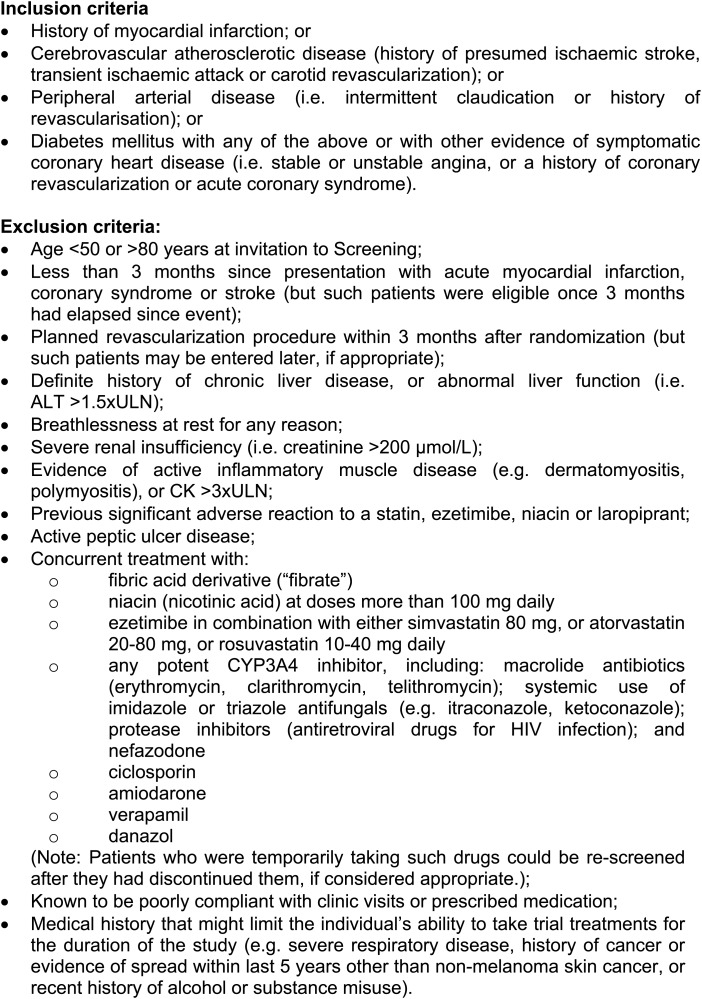
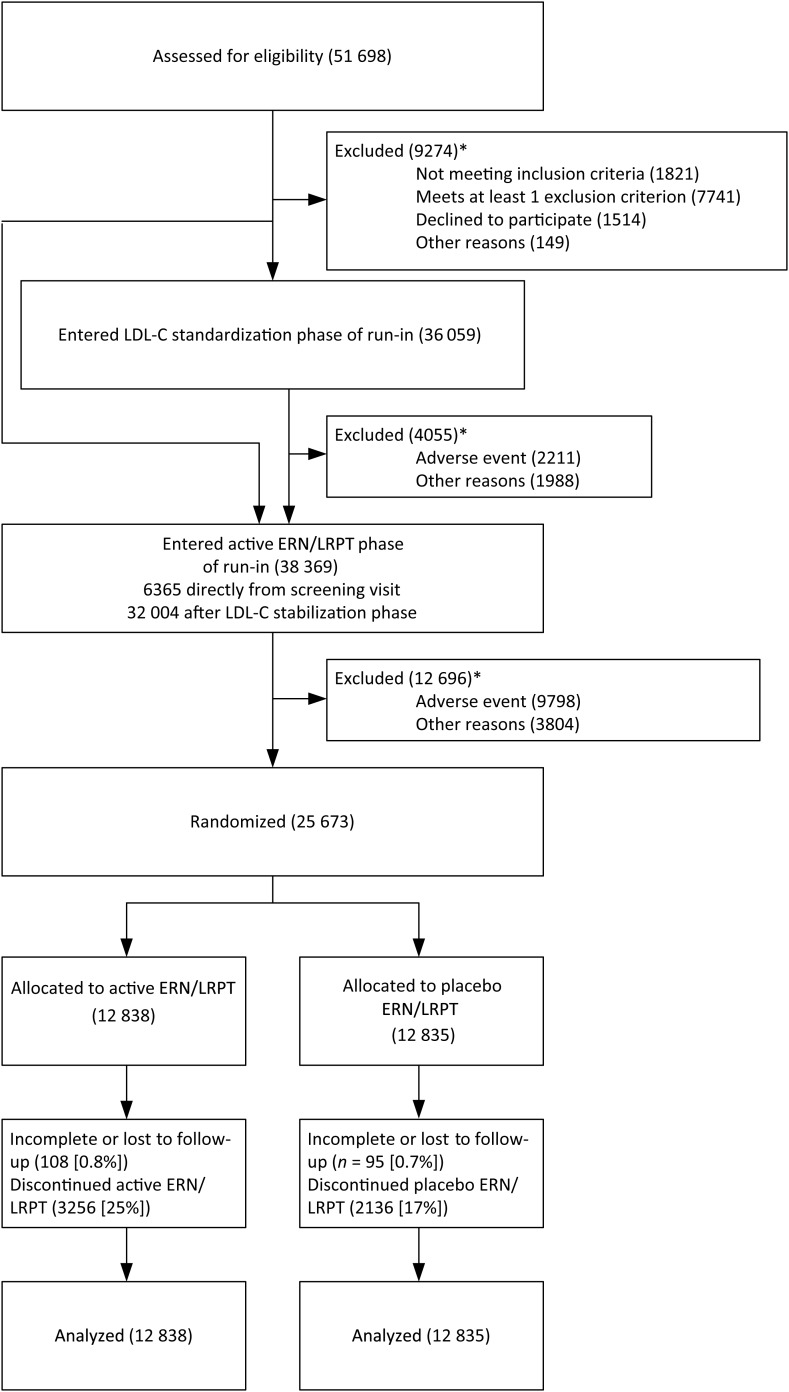
AIMS: Niacin has potentially favourable effects on lipids, but its effect on cardiovascular outcomes is uncertain. HPS2-THRIVE is a large randomized trial assessing the effects of extended release (ER) niacin in patients at high risk of vascular events. METHODS AND RESULTS: Prior to randomization, 42 424 patients with occlusive arterial disease were given simvastatin 40 mg plus, if required, ezetimibe 10 mg daily to standardize their low-density lipoprotein (LDL)-lowering therapy. The ability to remain compliant with ER niacin 2 g plus laropiprant 40 mg daily (ERN/LRPT) for ~1 month was then assessed in 38 369 patients and about one-third were excluded (mainly due to niacin side effects). A total of 25 673 patients were randomized between ERN/LRPT daily vs. placebo and were followed for a median of 3.9 years. By the end of the study, 25% of participants allocated ERN/LRPT vs. 17% allocated placebo had stopped their study treatment. The most common medical reasons for stopping ERN/LRPT were related to skin, gastrointestinal, diabetes, and musculoskeletal side effects. When added to statin-based LDL-lowering therapy, allocation to ERN/LRPT increased the risk of definite myopathy [75 (0.16%/year) vs. 17 (0.04%/year): risk ratio 4.4; 95% CI 2.6-7.5; P < 0.0001]; 7 vs. 5 were rhabdomyolysis. Any myopathy (definite or incipient) was more common among participants in China [138 (0.66%/year) vs. 27 (0.13%/year)] than among those in Europe [17 (0.07%/year) vs. 11 (0.04%/year)]. Consecutive alanine transaminase >3× upper limit of normal, in the absence of muscle damage, was seen in 48 (0.10%/year) ERN/LRPT vs. 30 (0.06%/year) placebo allocated participants. CONCLUSION: The risk of myopathy was increased by adding ERN/LRPT to simvastatin 40 mg daily (with or without ezetimibe), particularly in Chinese patients whose myopathy rates on simvastatin were higher. Despite the side effects of ERN/LRPT, among individuals who were able to tolerate it for ~1 month, three-quarters continued to take it for ~4 years.
Overview
The claims and statistics of this paper haven’t been checked yet.
Free: it reads the open-access text and checks the first 5 claims that cite a source we can check. Create a free account to check every claim.
Integrity signals
Registry
Cites
Statistics
Figures
Verification
Claims the paper makes
The claims and statistics of this paper haven’t been checked yet.
Free: it reads the open-access text and checks the first 5 claims that cite a source we can check. Create a free account to check every claim.
Claims other papers make about this one
Each is checked against this paper’s own text: does it say what the citing paper says it does?
The source backs part of the claim, not all of it — or backs it for a different population, condition or comparison.
In the citing paper
“Niacin also lowers LDL-C levels by 15–20%,49 but recent large randomized trials showed a significant excess of adverse effects and no significant CVD benefit when added to background statin treatment; therefore, niacin derivatives are no longer available for prescription in Europe.50,51”
From Statin-associated muscle symptoms: impact on statin therapy—European Atherosclerosis Society Consensus Panel Statement on Assessment, Aetiology and Management (2015) · cites this paper as [51]
Experimental — accuracy not yet measuredThe source backs part of the claim, not all of it — or backs it for a different population, condition or comparison.
In the citing paper
“outcome trials that have targeted HDL-C pharmacologically and have included patients with low HDL-C at baseline, have not demonstrated reduced CVD risk despite appreciable increases in HDL-C.5-10”
From Is Isolated Low High-Density Lipoprotein Cholesterol a Cardiovascular Disease Risk Factor?: New Insights From the Framingham Offspring Study (2016) · cites this paper as [8]
Experimental — accuracy not yet measuredThe source backs part of the claim, not all of it — or backs it for a different population, condition or comparison.
In the citing paper
“In contrast, recent studies have failed to demonstrate that high HDL-C acquired naturally or pharmacologically, is associated with reduced CVD risk.5-11,18”
From Is Isolated Low High-Density Lipoprotein Cholesterol a Cardiovascular Disease Risk Factor?: New Insights From the Framingham Offspring Study (2016) · cites this paper as [8]
Experimental — accuracy not yet measuredThe source backs part of the claim, not all of it — or backs it for a different population, condition or comparison.
In the citing paper
“Prior CV outcome studies that administered therapies with TG‐lowering effects (niacin or fenofibrate) on top of statin therapy did not reach their primary endpoints.”
From Rationale and design of REDUCE‐IT : Reduction of Cardiovascular Events with Icosapent Ethyl–Intervention Trial (2017) · cites this paper as [12]
Experimental — accuracy not yet measuredThe source backs part of the claim, not all of it — or backs it for a different population, condition or comparison.
In the citing paper
“Benefits in outcome studies appear limited to subgroups with high TG and low HDL-C, highlighting the complexity of translating TG reduction into ASCVD risk reduction [61, 74–77].”
From Targeting Triglycerides in Cardiovascular Disease Prevention: Evidence, Mechanisms, and Emerging Therapies (2026) · cites this paper as [77]
Experimental — accuracy not yet measured
3 more claims about this paper
Create a free account to see every claim other papers make about this one.
Self-check
Percentages, sums and reported differences re-computed from the paper’s own numbers.
The self-check needs the paper’s full text.
Citations
Cites
European Guidelines on cardiovascular disease prevention in clinical practice (version 2012)
Authors/Task Force Members:, Perk, J., De Backer, G., Gohlke, H., Graham, I., Reiner, Ž., Verschuren, M., Albus, C., Benlian, P., Boysen, G., et al. (2012) · European Heart Journal · doi:10.1093/eurheartj/ehs092 · Cited by 8,490
Self-citationCholesterol Treatment Trialists' (CTT) Collaboration (2010) · The Lancet · doi:10.1016/s0140-6736(10)61350-5 · Cited by 6,550
Authors/Task Force Members, Graham, I., Atar, D., Borch-Johnsen, K., Boysen, G., Burell, G., Cifkova, R., Dallongeville, J., De Backer, G., Ebrahim, S., et al. (2007) · European Heart Journal · doi:10.1093/eurheartj/ehm316 · Cited by 3,753
Self-citationNiacin in Patients with Low HDL Cholesterol Levels Receiving Intensive Statin Therapy
The AIM-HIGH Investigators (2011) · New England Journal of Medicine · doi:10.1056/nejmoa1107579 · Cited by 2,911
Major lipids, apolipoproteins, and risk of vascular disease
The Emerging Risk Factors Collaboration* (2009) · JAMA · doi:10.1001/jama.2009.1619 · Cited by 2,731
SLCO1B1 Variants and Statin-Induced Myopathy — A Genomewide Study
(2008) · New England Journal of Medicine · doi:10.1056/nejmoa0801936 · Cited by 2,043
Clofibrate and Niacin in Coronary Heart Disease
(1975) · JAMA: The Journal of the American Medical Association · doi:10.1001/jama.1975.03240160024021 · Cited by 1,747
Genetic Variants Associated with Lp(a) Lipoprotein Level and Coronary Disease
Clarke, R., Peden, J. F., Hopewell, J. C., Kyriakou, T., Goel, A., Heath, S. C., Parish, S., Barlera, S., Franzosi, M. G., Rust, S., et al. (2009) · New England Journal of Medicine · doi:10.1056/nejmoa0902604 · Cited by 1,671 · cited 1×
“There is also evidence for a causal association between Lp(a) and CHD, with lower Lp(a) associated with lower CHD risk.(7) Niacin does, therefore, have multiple effects on lipid metabolism which might be beneficial.”
BackgroundSelf-citationGraham (2007) · doi:10.1097/01.hjr.0000277983.23934.c9 · Cited by 1,647
The safety of statins in clinical practice
Armitage, J. (2007) · The Lancet · doi:10.1016/s0140-6736(07)60716-8 · Cited by 833 · cited 1×
“Niacin does not inhibit cytochrome P450 3A4 or interfere with statin-glucuronidation, but it has been found to increase simvastatin blood concentrations by about one-third,(24) and statin-induced myopathy is known to be associated with higher blood statin levels.(25) Asian subjects are also recognized to have higher b…”
BackgroundSelf-citation
Research works printed but not linked: 4
- The Emerging Risk Factors Collaboration, 2009, JAMA, 302, 1993, 10.1001/jama.2009.1619 · DOI · Paper page
- 2011, New England Journal of Medicine, 365, 2255, 10.1056/nejmoa1107579 · DOI · Paper page
- 2008, New England Journal of Medicine, 359, 789, 10.1056/nejmoa0801936 · DOI · Paper page
- 2007, The American journal of cardiology, 99, S22, 10.1016/j.amjcard.2006.11.018 · DOI · Paper page
Cited by
Items 501–600 of 685
Reiner, Ž. (2015) · Kardiologia Polska · doi:10.5603/kp.2015.0121 · Cited by 5
Baracho, N. C. D. V., Nunes, L. A. S., Silva, K. T. D. P. E., Marques, T. F., Santos, A. L. R. D., & Marcelino, A. R. (1970) · REVISTA CIÊNCIAS EM SAÚDE · doi:10.21876/rcsfmit.v4i3.224 · Cited by 5
China may hold answers to addressing cardiovascular disease epidemic
Chazal, R. A. (2016) · Journal of Translational Internal Medicine · doi:10.1515/jtim-2016-0003 · Cited by 4
Boyer, M., Lévesque, V., Poirier, P., Marette, A., Mitchell, P. L., Mora, S., Mathieu, P., Després, J., Larose, É., & Arsenault, B. J. (2018) · Journal of the American Heart Association · doi:10.1161/jaha.118.008681 · Cited by 5
“3 – 7 This has led some to hypothesize that simply raising HDL-C levels may not be suf fi cient, especially if HDL functional properties such as their ability to remove excess cholesterol from peripheral tissues, also known as cholesterol ef fl ux capacities (CECs), are not concomitantly improved.”
Pedro‐Botet, J., Ascaso, J. F., Blasco, M., Brea, Á., Díaz, Á., Hernández‐Mijares, A., Pintó, X., & Millán, J. (2020) · Clínica e Investigación en Arteriosclerosis (English Edition) · doi:10.1016/j.artere.2019.12.001 · Cited by 7
Li, G., Yan, P., Zhao, Y., Li, S., Xue, Y., Xiang, Y., Liu, X., Li, J., & Sun, Q. (2021) · Frontiers in Neurology · doi:10.3389/fneur.2021.629644 · Cited by 4
Self-citationChung, J., Kim, H., Lim, W., Seo, J.-B., Zo, J., Kim, M., & Kim, S. (2023) · Scientific Reports · doi:10.1038/s41598-023-42277-w · Cited by 6
Failure to THRIVE: the end for niacin?
Wierzbicki, A. S. (2013) · Nature Reviews Cardiology · doi:10.1038/nrcardio.2013.48 · Cited by 4
Acute high-density lipoprotein therapies
Duong, M., Bartolo, B. A. D., & Nicholls, S. J. (2015) · Current Opinion in Lipidology · doi:10.1097/mol.0000000000000235 · Cited by 4
“Subsequent studies revealed that niacin induced flushing results from prostanoid receptor activation in the epidermis [24].”
BackgroundLi, S., Shi, C., Liu, X., Li, Y., Li, S., Song, B., & Xu, Y. (2019) · Journal of Stroke and Cerebrovascular Diseases · doi:10.1016/j.jstrokecerebrovasdis.2019.04.013 · Cited by 4
High-Density Lipoprotein and Residual Cardiovascular Risk
Genest, J. J. (2013) · Journal of the American College of Cardiology · doi:10.1016/j.jacc.2013.05.087 · Cited by 4
Nicotinic Acid: Current Status in Lipid Management and Cardiovascular Disease Prevention
Whayne, T. F. (2013) · Angiology · doi:10.1177/0003319713505897 · Cited by 4
Blood-Pressure and Cholesterol Lowering in the HOPE-3 Trial.
Lonn, E., Jung, H., & Yusuf, S. (2016) · PubMed · doi:10.1056/nejmc1608916 · Cited by 3
Cost-utility analysis of PCSK9 inhibitors for hypercholesterolemia: a Chinese healthcare perspective
Hu, D., Deng, X., Feng, M., Zhang, X., He, Q., Wang, T., & Feng, Z. (2025) · Frontiers in Pharmacology · doi:10.3389/fphar.2025.1708701 · Cited by 4
Xu, H., Li, B., Zhang, L., Ding, L., & Tian, P. (2025) · Heart Rhythm · doi:10.1016/j.hrthm.2025.11.021 · Cited by 3
Maafi, F., Li, B., Gebhard, C., Brodeur, M. R., Nachar, W., Villeneuve, L. R., Lesage, F., Rhainds, D., Rhéaume, É., & Tardif, J. (2017) · Atherosclerosis · doi:10.1016/j.atherosclerosis.2017.01.026 · Cited by 3
Thompson, P. L., Thompson, A., & Judkins, C. (2014) · The Medical Journal of Australia · doi:10.5694/mja14.01155 · Cited by 5
Lipid-lowing pharmacogenomics in Chinese patients
Hu, M., & Tomlinson, B. (2013) · Expert Review of Cardiovascular Therapy · doi:10.1586/14779072.2013.814839 · Cited by 3
Niacin’s effect on cardiovascular risk: Have we finally learned our lesson?
Nicholls, S. J. (2014) · Cleveland Clinic Journal of Medicine · doi:10.3949/ccjm.81a.13067 · Cited by 3
Kudinov, V. A., Zakharova, T. S., Torkhovskaya, T. I., Ipatova, O. M., & Archakov, A. I. (2018) · Biochemistry (Moscow) Supplement Series B Biomedical Chemistry · doi:10.1134/s1990750818020075 · Cited by 3
Feldman, J. M., Frishman, W. H., & Aronow, W. S. (2024) · Cardiology in Review · doi:10.1097/crd.0000000000000776 · Cited by 3
Shen, T., Luo, R., Jiang, H., Bao, H., Jiang, L., & Cheng, X. (2025) · Lipids in Health and Disease · doi:10.1186/s12944-025-02514-9 · Cited by 3
“Poor tolerance to high-dose statins and side effects, along with treatment discontinuation or de-escalation due to perceived health improvements or safety concerns, contribute to the decline in LLT usage during follow-up [30].”
Self-citationKoschinsky, M. L., Boffa, M. B., & Marcovina, S. M. (2015) · Elsevier eBooks · doi:10.1016/b978-0-323-28786-9.00010-4 · Cited by 5
Ethnicity and coronary artery disease: the role of high-density lipoprotein – a change in paradigm
Bravo‐Jaimes, K., & Velarde, G. (2015) · Expert Review of Cardiovascular Therapy · doi:10.1586/14779072.2015.1065178 · Cited by 3
“Moreover, two more contemporary clinical trials (AIM-HIGH and HPS2-THRIVE) that targeted increases in HDL levels with niacin in patients with residual cardiovascular risk (previously treated with statins) have failed to show benefit on cardiovascular outcomes [36,37].”
BackgroundType 2 Diabetes Mellitus and Dyslipidemia
Cederberg, H., & Laakso, M. (2015) · Contemporary Endocrinology · doi:10.1007/978-1-60761-424-1_6 · Cited by 4
Corral, P., & Schreier, L. E. (2013) · Clínica e Investigación en Arteriosclerosis · doi:10.1016/j.arteri.2013.08.002 · Cited by 5
Statin intolerance: diagnosis, treatment and alternative therapies
Naderi, S., & Cho, L. (2014) · Clinical Lipidology · doi:10.2217/clp.14.23 · Cited by 3
deGoma, E. M., Salavati, A., Shinohara, R. T., Saboury, B., Pollan, L. J., Schoen, M. A., Torigian, D. A., Mohler, E. R., Dunbar, R. L., Litt, H. I., et al. (2015) · Academic Radiology · doi:10.1016/j.acra.2014.12.015 · Cited by 3
The Assessment and Management of Coronary Artery Disease in Patients with HIV
Holloway, C. J. (2014) · Journal of AIDS & Clinical Research · doi:10.4172/2155-6113.1000283 · Cited by 5
The unresolved mystery of high-density lipoprotein: time for a paradigm shift?
Enkhmaa, B., Anuurad, E., & Berglund, L. (2016) · Translational research · doi:10.1016/j.trsl.2016.03.004 · Cited by 3
PCSK9 inhibition: A promise fulfilled?
Solaru, K. W., Mohan, C., & Rocco, M. B. (2016) · Cleveland Clinic Journal of Medicine · doi:10.3949/ccjm.83.s2.05 · Cited by 5
Combination Therapy for Dyslipidemia
Davidson, D., Wilkinson, M. J., & Davidson, M. H. (2015) · Elsevier eBooks · doi:10.1016/b978-0-323-28786-9.00027-x · Cited by 3
Niacin: Risk Benefits and Role in Treating Dyslipidemias
Guyton, J. R., Campbell, K. B., & Lakey, W. C. (2015) · Contemporary Endocrinology · doi:10.1007/978-1-60761-424-1_26 · Cited by 4
The EHJ: the first years and the future
Lüscher, T. F. (2014) · European Heart Journal · doi:10.1093/eurheartj/ehu426 · Cited by 3
Optimizing nicotinic acid delivery for durable antilipolysis and improved metabolic control
Kroon, T. (2016) · Epsilon Open Archive (Sveriges lantbruksuniversitet biblioteket (Swedish University of Agricultural Sciences)) · Cited by 3
HDL and Heart Failure Regulation
Ventura, H. O., Lavie, C. J., & Mehra, M. R. (2019) · Journal of the American College of Cardiology · doi:10.1016/j.jacc.2018.11.011 · Cited by 3
Mills, J., Connolly, S. B., Conway, B. R., Ross, M., Breen, S., & Frizelle, D. (2020) · Wiley eBooks · doi:10.1002/9781119071006.ch7 · Cited by 3
Improving the odds: ezetimibe and cardiovascular disease
Viljoen, A., & Wierzbicki, A. S. (2015) · International Journal of Clinical Practice · doi:10.1111/ijcp.12613 · Cited by 2
Sun, Z., Zhang, H., Ding, Y., Yu, C., Sun, D., Pang, Y., Pei, P., Yang, L., Chen, Y., Du, H., et al. (2025) · BMC Medicine · doi:10.1186/s12916-025-04222-8 · Cited by 2
Self-citationTratamiento combinado: pautas, indicaciones y perfil de seguridad
Muñiz-Grijalvo, O., & Ortiz, J. V. (2013) · Clínica e Investigación en Arteriosclerosis · doi:10.1016/j.arteri.2013.06.003 · Cited by 5
Lipoproteins and Cardiovascular Disease Risk
Dhingra, R., & Vasan, R. S. (2015) · Contemporary Endocrinology · doi:10.1007/978-1-60761-424-1_4 · Cited by 2
Therapie von Fettstoffwechselstörungen
Custodis, F., & Laufs, U. (2014) · Herz · doi:10.1007/s00059-013-4013-x · Cited by 2
Safety Considerations of Pharmacological Treatment
Kim, K., & Choi, S. H. (2021) · Stroke revisited · doi:10.1007/978-981-16-3923-4_17 · Cited by 2
Wu, Y., Li, F., Wang, Y., Hu, T., & Gao, H. (2021) · Frontiers in Neurology · doi:10.3389/fneur.2021.693397 · Cited by 2
He, G., Zhang, L., Huo, X., Wang, Q., Hu, D., Huang, X., Ge, J., Wu, Y., & Li, J. (2022) · Frontiers in Cardiovascular Medicine · doi:10.3389/fcvm.2022.835465 · Cited by 2
Self-citationTomlinson, B., & Chow, E. (2024) · Hong Kong Medical Journal · doi:10.12809/hkmj2311348 · Cited by 3
Fan, T., Yan, Y., Lü, Q., Li, J., & Chen, H. (2024) · Transplantation Proceedings · doi:10.1016/j.transproceed.2024.05.015 · Cited by 2
Self-citationChen, S., Liu, F., Li, J., Liang, F., Li, J., Cao, J., Liu, D., Huang, K., Li, H., Lu, X., et al. (2025) · Chronic Diseases and Translational Medicine · doi:10.1002/cdt3.70005 · Cited by 2
Self-citationPadala, S. K., Sidhu, M. S., & Boden, W. E. (2015) · Springer eBooks · doi:10.1007/978-3-642-37078-6_70 · Cited by 4
Prevention of Cardiovascular Disease in Older Adults
Fleg, J. L., & WENGER, N. K. (2014) · Springer eBooks · doi:10.1007/978-3-642-37078-6_57 · Cited by 2
Hypertriglyceridemia in an outpatient department – Significance as an atherosclerotic risk factor
Scholz, M., Tselmin, S., Fischer, S., & Julius, U. (2015) · Atherosclerosis Supplements · doi:10.1016/j.atherosclerosissup.2015.02.011 · Cited by 2
Nesan, D., & Ng, D. S. (2014) · Critical Reviews in Clinical Laboratory Sciences · doi:10.3109/10408363.2014.937523 · Cited by 2
Beltramello, G., Manicardi, V., Mazzuoli, F., & Rivellese, A. A. (2013) · Acta Diabetologica · doi:10.1007/s00592-013-0508-4 · Cited by 2
Pharmacological lipid lowering for prevention of cardiovascular disease in older adults
Wiklund, O., Pirazzi, C., & Romeo, S. (2013) · Clinical Practice · doi:10.2217/cpr.13.83 · Cited by 2
Lüscher, T. F. (2015) · European Heart Journal · doi:10.1093/eurheartj/ehv003 · Cited by 2
What do we know about lipoprotein(a)?
Cybulska, B., & Kłosiewicz−Latoszek, L. (2015) · Kardiologia Polska · doi:10.5603/kp.a2014.0244 · Cited by 2
Oral Administration of Sustained Release Niacin Inhibits Platelet Aggregation
Norgard, N. B., Bacon, N. R., & Agosti, M. (2016) · Current Clinical Pharmacology · doi:10.2174/1574884711666151214104315 · Cited by 2
Selenium and Niacin for Sepsis Therapy: The Sum Is Greater Than Its Parts*
Chen, J., & Thiemermann, C. (2016) · Critical Care Medicine · doi:10.1097/ccm.0000000000001493 · Cited by 2
Vitamin B3 impairs reverse cholesterol transport in Apolipoprotein E-deficient mice
Méndez‐Lara, K. A., Santos, D., Farré, N., Nan, M. N., Pallarès, V., Pérez, A., Alonso, N., Escolá‐Gil, J. C., Blanco‐Vaca, F., & Julve, J. (2019) · Clínica e Investigación en Arteriosclerosis · doi:10.1016/j.arteri.2019.04.001 · Cited by 3
Genetic Disorders of HDL Metabolism
Lilley, J. S., Linton, M. F., & Fazio, S. (2015) · Contemporary Endocrinology · doi:10.1007/978-1-60761-424-1_12 · Cited by 2
Heating Up the Cutaneous Flushing Response
Offermanns, S. (2014) · Arteriosclerosis Thrombosis and Vascular Biology · doi:10.1161/atvbaha.114.303742 · Cited by 2
The Editor's Roundtable: Hypertriglyceridemia
Friedewald, V. E., Ballantyne, C. M., Bays, H. E., & Jones, P. H. (2013) · The American Journal of Cardiology · doi:10.1016/j.amjcard.2013.07.033 · Cited by 2
Stone, N. J., Merz, C. N. B., Watson, K. E., & Smith, S. C. (2015) · Journal of the American College of Cardiology · doi:10.1016/j.jacc.2014.12.072 · Cited by 2
Tomlinson, B., Hu, M., Zhang, Y., Liu, Z.-M., & Chan, P. (2016) · International Journal of Cardiology · doi:10.1016/j.ijcard.2016.02.047 · Cited by 2
Maleki, M., & Hosseini, Z. (2021) · Elsevier eBooks · doi:10.1016/b978-0-323-80915-3.00012-0 · Cited by 1
Zhao, D. H., & Yao, C. (2022) · Korean Circulation Journal · doi:10.4070/kcj.2022.0100 · Cited by 1
Clinical Update on the Intersection of Lipoprotein(a) and Calcific Valve Disease
Ashley, S. C., Kachhy, E., Brown, K. A., Prescott, M. E., Kelsey, M. D., McGarrah, R. W., Pagidipati, N. J., & Shah, N. P. (2025) · Current Cardiovascular Risk Reports · doi:10.1007/s12170-025-00765-w · Cited by 1
“Niacin decreases Lp(a) by 20%; however, CV outcomes trials have not shown a significant decrease in CV events with niacin in general [ 34 , 35] and niacin has not been studied specifically in calcific valve disease [ 22 ].”
Jiang, L., Wang, Y., Gao, Y., Johnston, S. C., Amarenco, P., Bath, P. M., Yan, H., Wang, X., Yang, Y., Wang, T., et al. (2025) · Journal of clinical lipidology · doi:10.1016/j.jacl.2025.05.016 · Cited by 1
Self-citationThe PCSK9 Inhibitors: A Lipid-lowering Therapy to Treat Atherosclerotic Cardiovascular Diseases
Priyanka, F., Durga, F., Affan, M., & Venjhraj, F. (2025) · Nature Cell and Science · doi:10.61474/ncs.2024.00056 · Cited by 1
Zhao, X., Wu, S., Wang, Z., Zhou, L., Zhang, P., Xu, H., Yu, M., Qi, Z., Xu, L., Dai, N., et al. (2026) · BMC Medicine · doi:10.1186/s12916-026-04616-2 · Cited by 1
“Because of ethnic differences and intolerance [35–38], MIS, but not HIS, was recommended in China according to Chinese guidelines [13, 27, 28, 39].”
Awashra, A., AbuBaha, M., Istetieh, K., Sandouka, D., Aldwaik, S. A., Abubaha, B., Saife, S., Emara, A., Zahran, A., Elgendy, M. S., et al. (2026) · Nutrition & Metabolism · doi:10.1186/s12986-026-01125-0 · Cited by 2
“Also, recent randomized controlled studies (AIM-HIGH, HPS2-THRIVE) showed no benefit of decreasing cardiovascular risks with increased adverse effects like flushing, hepatotoxicity, insulin resistance, and gout [182, 183].”
Natto Red Yeast Rice Supplement Regulates Lipid Profiles
Liu, F., Chen, S., Liang, F., Li, J., Huang, K., Sun, Y., Wang, Q., Wu, S., Ma, M., Yu, L., et al. (2026) · JACC Asia · doi:10.1016/j.jacasi.2026.03.019 · Cited by 1
Self-citationMyśliwiec, A., Leksa, D., Bartusik‐Aebisher, D., & Aebisher, D. (2026) · Journal of Applied Biomedicine · doi:10.32725/jab.2026.007 · Cited by 1
Niacin and microvascular endothelial cell response to fatty acid excess and hypoxia
Pang, D. (2014) · Scholarship@Western (Western University) · Cited by 1
Combination Therapy with Statins
Singh, A., & Davidson, M. H. (2014) · Endocrinology and Metabolism Clinics of North America · doi:10.1016/j.ecl.2014.08.005 · Cited by 2
Bajnok, L. (2014) · Orvosi Hetilap · doi:10.1556/oh.2014.29797 · Cited by 1
Peña, Á. A. G., Múñoz, Ó., Fernández, D., Higuera, A. M., Ruiz, Á. J., Montoya, P. A., Toro, J. M., Arteaga, J. M., Villamizar, A. M., Sánchez, G., et al. (2015) · Revista Colombiana de Cardiología · doi:10.1016/j.rccar.2015.04.004 · Cited by 1
Guijarro, C., & García-Díaz, J. D. D. (2013) · Clínica e Investigación en Arteriosclerosis · doi:10.1016/j.arteri.2013.05.004 · Cited by 2
Figueiredo, V. N., Vendrame, F., Colontoni, B. A., Quinaglia, T., Matos‐Souza, J. R., Moura, F. A., Coelho, O. R., de Faria, E. C., & Sposito, A. C. (2014) · Clinical Therapeutics · doi:10.1016/j.clinthera.2014.03.012 · Cited by 1
Health Care Guideline Lipid Management in Adults
Woolley, T. W., Groen, S., Kofron, P. M., Leslie, S., Myers, C. D., Needham, R. H., Peters, J., Reddan, J. G., & Sorge, L. A. (2013) · Cited by 1
Moyad, M. A. (2014) · Springer eBooks · doi:10.1007/978-1-4614-8492-9_6 · Cited by 1
Risikofaktormanagement bei KHK: Was ist evidenzbasiert?
Winzer, E. B., & Schuler, G. C. (2013) · CardioVasc · doi:10.1007/s15027-013-0167-y · Cited by 2
Statins and Mipomersen: Mechanisms of Action and Patient Tolerability
Pang, J., Chan, D. C., & Watts, G. F. (2015) · Springer eBooks · doi:10.1007/978-3-319-20433-8_7 · Cited by 1
Advances in Hypercholesterolemia
Pirillo, A., Norata, G. D., & Catapano, A. L. (2016) · Elsevier eBooks · doi:10.1016/b978-0-12-409547-2.12435-7 · Cited by 3
Kardiovaskulär wirksame Therapie bei Patienten mit Diabetes mellitus
Rosner, S., & Köenig, W. (2017) · Der Diabetologe · doi:10.1007/s11428-016-0176-4 · Cited by 1
Therapies Targeting HDLc Levels and HDL Function
Vitali, C., & Cuchel, M. (2017) · Elsevier eBooks · doi:10.1016/b978-0-12-812513-7.00012-4 · Cited by 2
Kudinov, V. A., Zakharova, T. S., Torkhovskaya, T. I., Ipatova, O. M., & Archakov, A. I. (2018) · Biomeditsinskaya Khimiya · doi:10.18097/pbmc20186401066 · Cited by 1
The Role of Niacin in the Management of Dyslipidemia†
Keenan, J. M. (2019) · Journal of clinical lipidology · doi:10.1016/j.jacl.2019.04.052 · Cited by 1
Thyroid, Lipids, and Risk of Atherosclerosis
Brenta, G., & Schreier, L. E. (2020) · Springer eBooks · doi:10.1007/978-3-030-36871-5_19 · Cited by 2
Soares, M. Q., Reis, J. S., Soares, A. N., de Melo, C. M., & de Souza, M. R. C. P. (2020) · HU Revista · doi:10.34019/1982-8047.2020.v46.27730 · Cited by 1
Hyperglycemia Secondary to Nondiabetic Conditions and Therapies
Lebovitz, H. E. (2015) · Elsevier eBooks · doi:10.1016/b978-0-323-18907-1.00042-1 · Cited by 1
Klose, G., & Schwabe, U. (2015) · Springer eBooks · doi:10.1007/978-3-662-47186-9_29 · Cited by 1
Fernandes, V., Santos, M. J., & Pérez, A. (2016) · Endocrinología y Nutrición (English Edition) · doi:10.1016/j.endoen.2016.05.002 · Cited by 1
Shi, H., Tang, Z., Liu, T., Zhang, X., Wang, Y., Li, J., Dong, C., Chen, W., Hou, R., Si, G., et al. (2022) · Evidence-based Complementary and Alternative Medicine · doi:10.1155/2022/9096940 · Cited by 1
“Although the use of antiplatelet agents and statins has signifcantly reduced the incidence of adverse cardiovascular events, drug dependence and residue as well as the long-term risk of coronary heart disease remain unresolved issues [7].”
BackgroundSelf-citationLibby, P. (2015) · Elsevier eBooks · doi:10.1016/b978-0-323-28786-9.00005-0 · Cited by 1
Guyton, J. R., McGovern, M. E., & Carlson, L. A. (2015) · Elsevier eBooks · doi:10.1016/b978-0-323-28786-9.00024-4 · Cited by 1
Reyes‐Soffer, G., & Ginsberg, H. N. (2015) · Elsevier eBooks · doi:10.1016/b978-0-323-28786-9.00035-9 · Cited by 1
Keenan, J. M. (2024) · Medical Research Archives · doi:10.18103/mra.v12i7.5521 · Cited by 1
Lipid and lipoprotein metabolism, hypolipidemic agents, and therapeutic goals
Reyes‐Soffer, G., & Ginsberg, H. N. (2015) · Wiley eBooks · doi:10.1002/9781118387658.ch17 · Cited by 1
Metadata
- Authors
- HPS2-THRIVE Collaborative Group, Haynes, R., Jiang, L., Hopewell, J. C., Li, J., Chen, F., Parish, S., Landray, M. J., Collins, R., Armitage, J., Collins, R., Armitage, J., Baigent, C., Chen, Z., Landray, M., Chen, Y., Jiang, L., Pedersen, T., Landray, M., Bowman, L., Chen, F., Hill, M., Haynes, R., Knott, C., Rahimi, K., Tobert, J., Sleight, P., Simpson, D., Parish, S., Baxter, A., Lay, M., Bray, C., Wincott, E., Leijenhorst, G., Skattebol, A., Moen, G., Mitchel, Y., Kuznetsova, O., MacMahon, S., Kjekshus, J., Hill, C., Lam, T. H., Sandercock, P., Peto, R., & Hopewell, J. C.
- Affiliations
- Chinese Academy of Medical Sciences & Peking Union Medical College (CN)
- ORCID
- Venue
- European Heart Journal
- Publisher
- Oxford University Press (OUP)
- Published
- 2013-02-26
- Volume
- 34
- Issue
- 17
- Pages
- 1279-1291
- ISSN
- 0195-668X (ISSN-L)
- 1522-9645
- PMC
- PMC3640201
- OpenAlex
- W2410405995
- Cited by
- 676
- References
- 25
- Citations by year
- 2026: 16 · 2025: 22 · 2024: 19 · 2023: 23 · 2022: 37 · 2021: 27 · 2020: 25 · 2019: 40 · 2018: 32 · 2017: 34 · 2016: 66 · 2015: 98 · 2014: 140 · 2013: 94
- FWCI
- 130.88
- Type
- journal article
- Language
- en
- Open access
- hybrid
- doi.org
- Licence
- cc-by-nc
- Locations
- European Heart Journal (publishedVersion, cc-by-nc)
- Europe PMC (PubMed Central) (publishedVersion, cc-by-nc)
- PubMed Central (publishedVersion, cc-by-nc)
- PubMed (publishedVersion)
- HighWire Press Open Archive (submittedVersion)
- Funders
- Cancer Research UK
- National Institute for Health and Care Research (CDF-2013-06-012)
- British Heart Foundation (RE/08/004)
- University of Oxford (RE/08/004)
- BHF Centre of Research Excellence, Oxford (RE/08/004)
- Medical Research Council (MC_EX_G0801669)
- Topics
- Health Sciences › Medicine › Cardiology and Cardiovascular Medicine › Lipoproteins and Cardiovascular Health
- Health Sciences › Medicine › Cardiology and Cardiovascular Medicine › Blood Pressure and Hypertension Studies
- Health Sciences › Medicine › Surgery › Peripheral Artery Disease Management
- Keywords
- extended-release niacin, laropiprant, rhabdomyolysis, liver enzymes, alanine aminotransferase, statin therapy, ezetimibe, arterial occlusive disease, cardiovascular risk, adverse drug reactions, treatment discontinuation, lipid-lowering therapy
- MeSH terms
- Hypolipidemic Agents, Arterial Occlusive Diseases, Delayed-Action Preparations, Drug Therapy, Combination, Female, Humans, Indoles, Male, Middle Aged, Muscular Diseases, Myocardial Infarction, Niacin, Myocardial Reperfusion, Death, Sudden, Cardiac, Simvastatin, Stroke, Chemical and Drug Induced Liver Injury
About these checks
Registry, retraction, Cites and statistics results are computed, not judged, with one exception: a printed reference that no index lists is read once by a model before it counts as a citation error. Claims are extracted by a model and kept only when their quote appears verbatim in the text; each cited source is then checked, with a model’s help, for whether it says what the claim relies on. Those verdicts can be wrong — read the claim’s quote and the cited source before relying on one.
Statistics and arithmetic are recomputed, not judged.
Confidence bands are shown only for fields calibrated on our annotated test set. None is calibrated yet, so no band is shown.
What counts as a claim ›How we measure confidence ›How we check this ›
Are you an author, or do you see a problem with this page? Request a review
Data sources
Bibliographic data: Semantic Scholar, OpenAlex, Crossref.
Contains information from the Semantic Scholar Academic Graph Datasets, made available under the ODC Attribution License (ODC-BY 1.0).
Semantic Scholar’s data is described in: Kinney, R., et al. (2023). The Semantic Scholar Open Data Platform. arXiv:2301.10140.
