

HPS2-THRIVE randomized placebo-controlled trial in 25 673 high-risk patients of ER niacin/laropiprant: trial design, pre-specified muscle and liver outcomes, and reasons for stopping study treatment
Open accessThe DOI matches its Crossref record; 25 of the 25 references it cites were found in a registry or an index.
Abstract
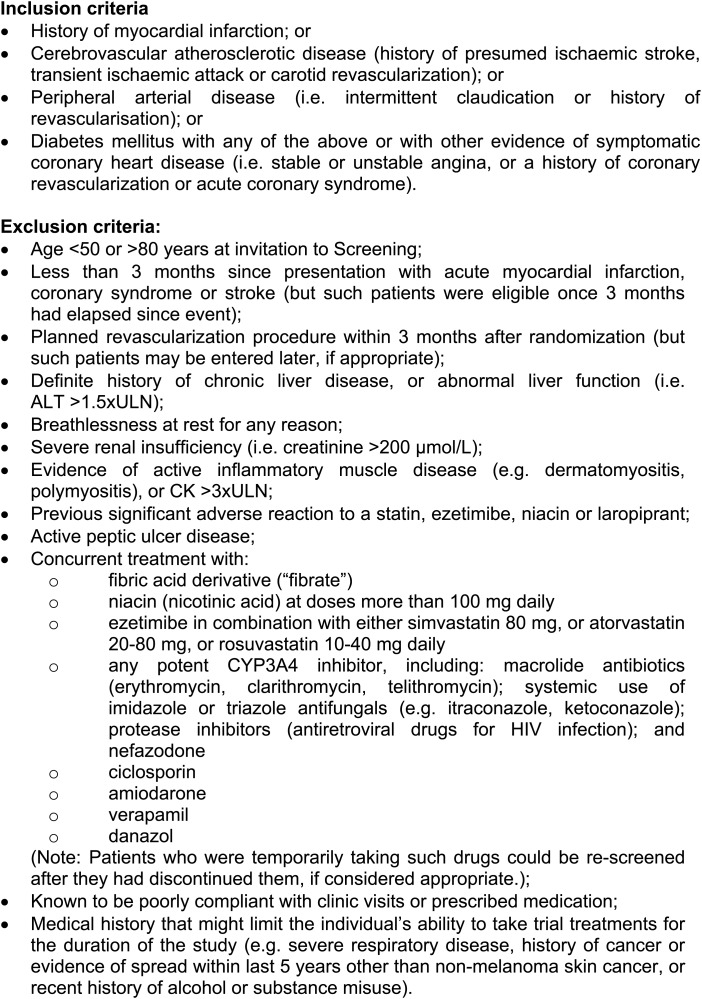
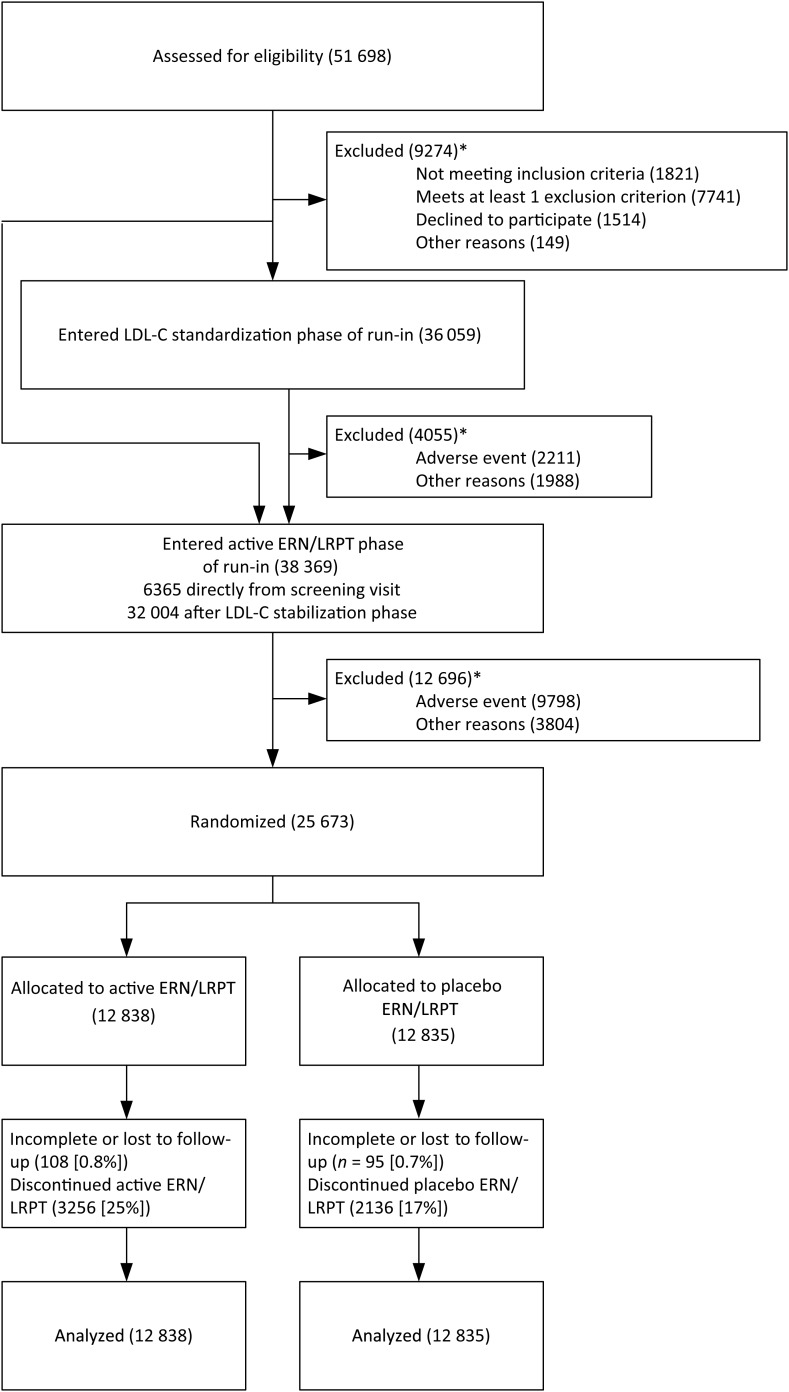
AIMS: Niacin has potentially favourable effects on lipids, but its effect on cardiovascular outcomes is uncertain. HPS2-THRIVE is a large randomized trial assessing the effects of extended release (ER) niacin in patients at high risk of vascular events. METHODS AND RESULTS: Prior to randomization, 42 424 patients with occlusive arterial disease were given simvastatin 40 mg plus, if required, ezetimibe 10 mg daily to standardize their low-density lipoprotein (LDL)-lowering therapy. The ability to remain compliant with ER niacin 2 g plus laropiprant 40 mg daily (ERN/LRPT) for ~1 month was then assessed in 38 369 patients and about one-third were excluded (mainly due to niacin side effects). A total of 25 673 patients were randomized between ERN/LRPT daily vs. placebo and were followed for a median of 3.9 years. By the end of the study, 25% of participants allocated ERN/LRPT vs. 17% allocated placebo had stopped their study treatment. The most common medical reasons for stopping ERN/LRPT were related to skin, gastrointestinal, diabetes, and musculoskeletal side effects. When added to statin-based LDL-lowering therapy, allocation to ERN/LRPT increased the risk of definite myopathy [75 (0.16%/year) vs. 17 (0.04%/year): risk ratio 4.4; 95% CI 2.6-7.5; P < 0.0001]; 7 vs. 5 were rhabdomyolysis. Any myopathy (definite or incipient) was more common among participants in China [138 (0.66%/year) vs. 27 (0.13%/year)] than among those in Europe [17 (0.07%/year) vs. 11 (0.04%/year)]. Consecutive alanine transaminase >3× upper limit of normal, in the absence of muscle damage, was seen in 48 (0.10%/year) ERN/LRPT vs. 30 (0.06%/year) placebo allocated participants. CONCLUSION: The risk of myopathy was increased by adding ERN/LRPT to simvastatin 40 mg daily (with or without ezetimibe), particularly in Chinese patients whose myopathy rates on simvastatin were higher. Despite the side effects of ERN/LRPT, among individuals who were able to tolerate it for ~1 month, three-quarters continued to take it for ~4 years.
Overview
The claims and statistics of this paper haven’t been checked yet.
Free: it reads the open-access text and checks the first 5 claims that cite a source we can check. Create a free account to check every claim.
Integrity signals
Registry
Cites
Statistics
Figures
Verification
Claims the paper makes
The claims and statistics of this paper haven’t been checked yet.
Free: it reads the open-access text and checks the first 5 claims that cite a source we can check. Create a free account to check every claim.
Claims other papers make about this one
Each is checked against this paper’s own text: does it say what the citing paper says it does?
The source backs part of the claim, not all of it — or backs it for a different population, condition or comparison.
In the citing paper
“Niacin also lowers LDL-C levels by 15–20%,49 but recent large randomized trials showed a significant excess of adverse effects and no significant CVD benefit when added to background statin treatment; therefore, niacin derivatives are no longer available for prescription in Europe.50,51”
From Statin-associated muscle symptoms: impact on statin therapy—European Atherosclerosis Society Consensus Panel Statement on Assessment, Aetiology and Management (2015) · cites this paper as [51]
Experimental — accuracy not yet measuredThe source backs part of the claim, not all of it — or backs it for a different population, condition or comparison.
In the citing paper
“outcome trials that have targeted HDL-C pharmacologically and have included patients with low HDL-C at baseline, have not demonstrated reduced CVD risk despite appreciable increases in HDL-C.5-10”
From Is Isolated Low High-Density Lipoprotein Cholesterol a Cardiovascular Disease Risk Factor?: New Insights From the Framingham Offspring Study (2016) · cites this paper as [8]
Experimental — accuracy not yet measuredThe source backs part of the claim, not all of it — or backs it for a different population, condition or comparison.
In the citing paper
“In contrast, recent studies have failed to demonstrate that high HDL-C acquired naturally or pharmacologically, is associated with reduced CVD risk.5-11,18”
From Is Isolated Low High-Density Lipoprotein Cholesterol a Cardiovascular Disease Risk Factor?: New Insights From the Framingham Offspring Study (2016) · cites this paper as [8]
Experimental — accuracy not yet measuredThe source backs part of the claim, not all of it — or backs it for a different population, condition or comparison.
In the citing paper
“Prior CV outcome studies that administered therapies with TG‐lowering effects (niacin or fenofibrate) on top of statin therapy did not reach their primary endpoints.”
From Rationale and design of REDUCE‐IT : Reduction of Cardiovascular Events with Icosapent Ethyl–Intervention Trial (2017) · cites this paper as [12]
Experimental — accuracy not yet measuredThe source backs part of the claim, not all of it — or backs it for a different population, condition or comparison.
In the citing paper
“Benefits in outcome studies appear limited to subgroups with high TG and low HDL-C, highlighting the complexity of translating TG reduction into ASCVD risk reduction [61, 74–77].”
From Targeting Triglycerides in Cardiovascular Disease Prevention: Evidence, Mechanisms, and Emerging Therapies (2026) · cites this paper as [77]
Experimental — accuracy not yet measured
3 more claims about this paper
Create a free account to see every claim other papers make about this one.
Self-check
Percentages, sums and reported differences re-computed from the paper’s own numbers.
The self-check needs the paper’s full text.
Citations
Cites
European Guidelines on cardiovascular disease prevention in clinical practice (version 2012)
Authors/Task Force Members:, Perk, J., De Backer, G., Gohlke, H., Graham, I., Reiner, Ž., Verschuren, M., Albus, C., Benlian, P., Boysen, G., et al. (2012) · European Heart Journal · doi:10.1093/eurheartj/ehs092 · Cited by 8,490
Self-citationCholesterol Treatment Trialists' (CTT) Collaboration (2010) · The Lancet · doi:10.1016/s0140-6736(10)61350-5 · Cited by 6,550
Authors/Task Force Members, Graham, I., Atar, D., Borch-Johnsen, K., Boysen, G., Burell, G., Cifkova, R., Dallongeville, J., De Backer, G., Ebrahim, S., et al. (2007) · European Heart Journal · doi:10.1093/eurheartj/ehm316 · Cited by 3,753
Self-citationNiacin in Patients with Low HDL Cholesterol Levels Receiving Intensive Statin Therapy
The AIM-HIGH Investigators (2011) · New England Journal of Medicine · doi:10.1056/nejmoa1107579 · Cited by 2,911
Major lipids, apolipoproteins, and risk of vascular disease
The Emerging Risk Factors Collaboration* (2009) · JAMA · doi:10.1001/jama.2009.1619 · Cited by 2,731
SLCO1B1 Variants and Statin-Induced Myopathy — A Genomewide Study
(2008) · New England Journal of Medicine · doi:10.1056/nejmoa0801936 · Cited by 2,043
Clofibrate and Niacin in Coronary Heart Disease
(1975) · JAMA: The Journal of the American Medical Association · doi:10.1001/jama.1975.03240160024021 · Cited by 1,747
Genetic Variants Associated with Lp(a) Lipoprotein Level and Coronary Disease
Clarke, R., Peden, J. F., Hopewell, J. C., Kyriakou, T., Goel, A., Heath, S. C., Parish, S., Barlera, S., Franzosi, M. G., Rust, S., et al. (2009) · New England Journal of Medicine · doi:10.1056/nejmoa0902604 · Cited by 1,671 · cited 1×
“There is also evidence for a causal association between Lp(a) and CHD, with lower Lp(a) associated with lower CHD risk.(7) Niacin does, therefore, have multiple effects on lipid metabolism which might be beneficial.”
BackgroundSelf-citationGraham (2007) · doi:10.1097/01.hjr.0000277983.23934.c9 · Cited by 1,647
The safety of statins in clinical practice
Armitage, J. (2007) · The Lancet · doi:10.1016/s0140-6736(07)60716-8 · Cited by 833 · cited 1×
“Niacin does not inhibit cytochrome P450 3A4 or interfere with statin-glucuronidation, but it has been found to increase simvastatin blood concentrations by about one-third,(24) and statin-induced myopathy is known to be associated with higher blood statin levels.(25) Asian subjects are also recognized to have higher b…”
BackgroundSelf-citation
Research works printed but not linked: 4
- The Emerging Risk Factors Collaboration, 2009, JAMA, 302, 1993, 10.1001/jama.2009.1619 · DOI · Paper page
- 2011, New England Journal of Medicine, 365, 2255, 10.1056/nejmoa1107579 · DOI · Paper page
- 2008, New England Journal of Medicine, 359, 789, 10.1056/nejmoa0801936 · DOI · Paper page
- 2007, The American journal of cardiology, 99, S22, 10.1016/j.amjcard.2006.11.018 · DOI · Paper page
Cited by
Items 601–685 of 685
Molecular investigation of familial hypercholesterolaemia: from gene to genome
Faiz, F. (2014) · UWA Profiles and Research Repository (University of Western Australia)
Kindermann, L. (2014) · Universitätsbibliothek der FU Berlin Hochschulschriftenstelle u. Dokumentenserver · doi:10.17169/refubium-10852
“[73] Haynes R, Jiang L, Hopewell JC et al.”
BackgroundInfluentialPrinciples of Primary and Secondary Prevention of Cardiovascular Disease
Eapen, D. J., Ghasemzadeh, N., Bellam, N., Bhatia, N. K., Valiani, K., Shen, J., VanDam, R. J., Flueckiger, P. B., Molloy, D. L., Kay, J., et al. (2015) · Springer eBooks · doi:10.1007/978-3-642-37078-6_53 · Cited by 1
La guía europea de dislipemia. Fortalezas y debilidades
Alegría-Ezquerra, E., Alegría‐Barrero, E., & Alegría-Barrero, A. (2015) · Revista Española de Cardiología Suplementos · doi:10.1016/s1131-3587(15)70119-6
New Treatment Approaches for Dyslipidemia and its Management
Vorsanger, M., & Underberg, J. A. (2013) · Current Cardiovascular Risk Reports · doi:10.1007/s12170-013-0333-x
Can cholesterol be defined as just ‘good’ or ‘bad’?
Cowan, H. (2014) · British Journal of Cardiac Nursing · doi:10.12968/bjca.2014.9.10.515
Pharmacological lipid modification therapy following stroke: an update
Mistri, A. K. (2014) · Clinical Lipidology · doi:10.2217/clp.13.81
Prolonged combination lipid therapy is associated with reduced carotid intima-media thickness
Dai, H., Xue-feng, G., & Xiao, Z. (2014) · Journal of clinical lipidology · doi:10.1016/j.jacl.2014.11.004
Rees, A. (2014) · The British Journal of Diabetes · doi:10.15277/bjdvd.2014.003
Dislipemia aterógena: una entidad que no debe pasar inadvertida
Pérez‐Jiménez, F. (2014) · Revista Clínica Española · doi:10.1016/j.rce.2014.07.005
Klose, G., & Hambrecht, R. (2013) · Der Kardiologe · doi:10.1007/s12181-013-0505-4
The Mystery of High-density Lipoprotein: Quantity or Quality? Update on Therapeutic Strategies.
Katsi, V. K., Kallistratos, M. S., Pavlidis, A. N., Karpettas, N., Skoumas, I., Pavleros, N., Manolis, A. J., Pitsavos, C. S., Tousoulis, D., Stefanadis, C., et al. (2015) · PubMed
A Review of Common Drug-Drug and Food-Drug Interactions Associated with Cardiovascular Medications
Kho, R., Kim, S., Lee, S., & Tsu, L. V. (2014) · Chapman University Digital Commons (Chapman University)
Aronow, W. S. (2013) · doi:10.2217/fmeb2013.13.81
Белов, В. В., & Menshchikov, A. A. (2015) · CARDIOVASCULAR THERAPY AND PREVENTION · doi:10.15829/1728-8800-2015-3-60-64
Lower is better: ezetimibe and PCSK9 inhibition join the mainstream of lipid‑lowering therapy
Wójcik, C. (2016) · Reviews in Health Care · doi:10.7175/rhc.v7i1.1263
Risikofaktorenmanagement bei koronarer Herzerkrankung: Was ist evidenzbasiert?
Winzer, E. B., & Schuler, G. C. (2014) · Herz · doi:10.1007/s00059-014-4108-z
Gouni‐Berthold, I. (2016) · CardioVasc · doi:10.1007/s15027-016-1033-5 · Cited by 1
Interventions to increase apolipoprotein A-I transcription in HepG2 cells
van der Krieken (2017) · Research Publications (Maastricht University) · doi:10.26481/dis.20170330svdk
Dyslipidemia: current management and the challenge of residual cardiovascular risk reduction
Rockoff, A., Kamanna, V. S., & Kashyap, M. L. (2013) · doi:10.2217/fmeb2013.13.88
Fettstoffwechsel; Lipidsenker - Pharmakotherapie bei Fettstoffwechselstörungen
Keller, C. (2013) · Elsevier eBooks · doi:10.1016/b978-3-437-42523-3.00025-7 · Cited by 1
Santoso, A. (2015) · Indonesian Journal of Cardiology · doi:10.30701/ijc.v35i3.423
Woudberg, N. J. (2017) · Open University of Cape Town (University of Cape Town) · Cited by 2
Maleki, M., & Hosseini, Z. (2017) · Elsevier eBooks · doi:10.1016/b978-0-323-51149-0.00016-x
The role of fix-dose combination therapy: from hypertension to dyslipidaemia
Szyndler, A., Filipiak, K. J., & Narkiewicz, K. (2013) · Kardiologia Polska · doi:10.5603/kp.2013.0083
Tavoni, T. M. (2019) · Digital Library of Theses and Dissertations (Universidade de São Paulo) · doi:10.11606/t.9.2019.tde-08032019-181032
Peters, K. M. (2019) · Scholarship@Western (Western University) · Cited by 1
Heart damage vs liver damage due to energy drinks consumption in Holtzman rats
García-Villacorta, J., Eustaquio-Cosme, J., Esparza–Varas, A. L., González-Angulo, L. T., Flores-Quiñones, G., Floriano, M. A., Gallegos-Ortiz, S., Cruz-Araujo, J. D. L., García-Moreno, J., Cueva, F. E., et al. (2019) · Revista Médica de Trujillo · doi:10.17268/rmt.2019.v14i03.05
The New ACC/AHA Cholesterol Guideline: A Significant Change with Significant Implications
Nijjar, P. S., Miedema, M. D., & Duprez, D. A. (2014)
Primärprävention des Hirnschlags
Scutelnic, A., Streit, S., Sarıkaya, H., Jung, S., & Heldner, M. R. (2020) · Praxis · doi:10.1024/1661-8157/a003395
Hwang, Y. (2021) · Stroke revisited · doi:10.1007/978-981-16-3923-4_9
Chen, D., Feng, H., Li, Y., & Huang, J. (2021) · Research Square · doi:10.21203/rs.3.rs-965115/v1
Chen, D., Feng, H., Li, Y., & Huang, J. (2021) · Research Square · doi:10.21203/rs.3.rs-1037189/v1
High-density lipoprotein cholesterol — friend or enemy?
Murzakhanova, A. F., OSLOPOV, V. N., Sergienko, K. S., Khazova, E. V., & OSLOPOVA, J. V. (2022) · Kazan medical journal · doi:10.17816/kmj2022-79
Padala, S. K., Sidhu, M. S., & Boden, W. E. (2014) · Springer eBooks · doi:10.1007/978-3-642-37393-0_70-1
(2013) · Circulation · doi:10.1161/cir.0b013e3182a3672b
Lucchi, T. A. (2022) · Wiley eBooks · doi:10.1002/9781119484288.ch31
Excessive adverse events with niacin/laropiprant
(2013) · Reactions Weekly · doi:10.1007/s40278-013-1862-2
Klose, G., & Schwabe, U. (2018) · Springer eBooks · doi:10.1007/978-3-662-57386-0_32
Schaefer, E. J. (2014) · Current Opinion in Lipidology · doi:10.1097/mol.0000000000000082
Principles of Primary and Secondary Prevention of Cardiovascular Disease
Eapen, D. J., Ghasemzadeh, N., Bellam, N., Bhatia, N. K., Valiani, K., Shen, J., VanDam, R. J., Flueckiger, P., Molloy, D. L., Kay, J., et al. (2014) · Springer eBooks · doi:10.1007/978-3-642-37393-0_53-1
Klose, G., & Schwabe, U. (2013) · Springer eBooks · doi:10.1007/978-3-642-37124-0_31 · Cited by 2
Klose, G., & Schwabe, U. (2016) · Springer eBooks · doi:10.1007/978-3-662-50351-5_32 · Cited by 2
Klose, G., & Schwabe, U. (2014) · Springer eBooks · doi:10.1007/978-3-662-43487-1_30
Cowan, H. (2018) · British Journal of Cardiac Nursing · doi:10.12968/bjca.2018.13.7.320
Klose, G., & Schwabe, U. (2017) · Springer eBooks · doi:10.1007/978-3-662-54630-7_32
Vitamin B3 impairs reverse cholesterol transport in Apolipoprotein E-deficient mice
Méndez‐Lara, K. A., Santos, D., Farré, N., Nan, M. N., Pallarès, V., Pérez, A., Alonso, N., Escolá‐Gil, J. C., Blanco‐Vaca, F., & Julve, J. (2019) · Clínica e Investigación en Arteriosclerosis (English Edition) · doi:10.1016/j.artere.2019.11.005
(2014) · Drug and Therapeutics Bulletin · doi:10.1136/dtb.2014.1.0227
(2013) · European Heart Journal · doi:10.1093/eurheartj/eht255
Triglyceride-Rich Lipoproteins
Bazarbashi, N., & Miller, M. J. (2022) · Contemporary cardiology · doi:10.1007/978-3-030-98824-1_12
Sumathy, T., Maheshkumar, V. P., & Jaikumar, S. (2022) · International Journal of Life Science and Pharma Research · doi:10.22376/ijpbs/lpr.2022.12.5.p205-214 · Cited by 1
Clinical and metabolic features of diabetic encephalopathy
Иванович, Г. В., Privalova, M. A., Garan, T. A., & Гулак, Д. А. (2022) · HERALD of North-Western State Medical University named after I I Mechnikov · doi:10.17816/mechnikov108788
ULTRASOUND ASSESSMENT OF A1 AND A2 PULLEY ENTHESIS WITH ANATOMICAL AND HISTOLOGICAL CORRELATION
Coronel, L., Miguel, M. I., Blasi, J., Marsal, S., D’Agostino, M. A., & Möller, I. (2023) · Annals of the Rheumatic Diseases · doi:10.1136/annrheumdis-2023-eular.3169 · Cited by 1
Research Progress of PCSK9 Inhibitors in Lipid-Lowering Therapy
宫, 喜. (2023) · Advances in Clinical Medicine · doi:10.12677/acm.2023.1381874
Benyaminov, F., & Sinha, A. G. (2023) · Contemporary Endocrinology · doi:10.1007/978-3-031-44648-1_14
Sumathy, T., P, M. V., & Jaikumar, S. (2024) · doi:10.53555//jaz.v45i3.3749
Sumathy, T., Maheshkumar, V. P., & Jaikumar, S. (2024) · Journal Of Advanced Zoology · doi:10.53555/jaz.v45i3.3749
Lavie, C. J., & WENGER, N. K. (2015) · Elsevier eBooks · doi:10.1016/b978-0-323-28786-9.00036-0
Impact of Rare and Common Genetic Variants on Lipoprotein Metabolism
Motazacker, M. M., Kastelein, J. J. P., & Kuivenhoven, J. A. (2015) · Elsevier eBooks · doi:10.1016/b978-0-323-28786-9.00006-2
Noninvasive Imaging Modalities and Atherosclerosis
Nambi, V., & Ballantyne, C. M. (2015) · Elsevier eBooks · doi:10.1016/b978-0-323-28786-9.00033-5
Dantas, G. H. M., Reis, R. A., Nunes, R. D. A. M., Neves, E. B., da Silva, G. C. P. S. M., Lopes, G. C., & Vale, R. G. D. S. (2024) · Muscles Ligaments and Tendons Journal · doi:10.32098/mltj.02.2024.05
“However, CK is the first substance of muscular origin to increase and the first to contribute to kidney damage, which can trigger nephrotoxic acute kidney injury (5-7).”
BackgroundTaradeh, M. (2023) · theses.fr (ABES) · doi:10.70675/8cb53537z2270z4c15zb7b0za5a5fecc4fe3 · Cited by 2
A Novel Supplement Regimen for Healthy Aging: A Case Series
Keenan, J. (2024) · Medical Research Archives · doi:10.18103/mra.v12i10.5830
Estudios de prevención cardiovascular en población con hipertrigliceridemia
Muñiz-Grijalvo, O. (2025) · Clínica e Investigación en Arteriosclerosis · doi:10.1016/j.arteri.2025.500819
Cardiovascular prevention studies in a population with hypertriglyceridemia
Muñiz-Grijalvo, O. (2025) · Clínica e Investigación en Arteriosclerosis (English Edition) · doi:10.1016/j.artere.2025.500819
Clerc, A., Puricel, S., Faucherre, Y., Magnin, J., Lehmann, S., Garín, D., Ferry, C., Meier, P., Togni, M., & Cook, S. (2025) · Journal of Interventional Cardiology · doi:10.1155/joic/5030966
“Tis aligns with intervention studies such as AIM-HIGH [48] and HPS2-THRIVE [49] which tested therapies to raise HDL-C levels (such as niacin and CETP inhibitors) but did not show a reduction in cardio-vascular events.”
Bhatti, M. A., Mazhar, R., Farhan, H., Mustafa, M., Altaf, E., Akhtar, K., Tahir, M. U., Shafique, M. U., Amin, A., Zafar, J., et al. (2025) · Research Square · doi:10.21203/rs.3.rs-7622964/v1
Non-Statin Treatment of Dyslipidemia
Goldberg, S. J. (2015) · Springer eBooks · doi:10.1007/978-3-319-11161-2_12
Xu, M., Zhu, X., Wu, J., Zhang, Y., Zhao, D., Wang, X., Ding, Y., Cao, Y., Li, C., Hu, W., et al. (2022) · Figshare · doi:10.6084/m9.figshare.18585562
郭统帅, Chu, C., Wang, Y., He, M., Jia, H., Sun, Y., Wang, D., Liu, Y., Huo, Y., & Mu, J. (2023) · Figshare · doi:10.6084/m9.figshare.23614218
Overview of the Study of Lipoprotein(a) in Atherosclerotic Cardiovascular Disease
王, 然. (2026) · Advances in Clinical Medicine · doi:10.12677/acm.2026.161286
Chen, Z., Ma, S., Zhang, J., Zhang, R., Zhou, M., Li, C., Chen, Y., Wang, H., & He, Y. (2026) · BMJ Open · doi:10.1136/bmjopen-2025-112947
“32 33 36 To address this gap, recent studies have evaluated the early use of PCSK9i.”
Self-citationClinical Assessment of Anti-Atherogenic Function of HighDensity Lipoprotein (HDL)
Ma, F. (2018) · theses.fr (ABES) · doi:10.70675/aec01babza8edz47a2zb4d4zc7c3be00b185
Bhatti, M. I., Safiullah, M., Qadri, M., Butt, A. A., & Ahmed, R. (2026) · American Journal of Cardiovascular Drugs · doi:10.1007/s40256-026-00797-6
Liu, M., Zhang, X., Feng, M., He, Q., & Feng, Z. (2026) · PLoS ONE · doi:10.1371/journal.pone.0350294
Ma, S., Li, R., Liu, Z., Xiao, H., & 英俊岐 (2026) · Journal of Biochemical and Molecular Toxicology · doi:10.1002/jbt.70923
“However, many patients still have a high residual risk of cardiovascular events [4].”
Dixit, C., Paliwal, D., Mondal, R., Thakur, A., & Rahaman, S. A. (2026) · BENTHAM SCIENCE PUBLISHERS eBooks · doi:10.2174/9798898814328126010005
Li, F., Wang, Y., Wang, G., Chen, J., & Huang, S. (2026) · Aging Cell · doi:10.1111/acel.70658
Hypertriglyceridemia: Causes, Consequences, Diagnosis, and Management
Qi, S., Chen, W., Chen, K., Yang, S., Wang, S., Ni, T., Xu, D., Mao, E., Chen, E., & Chen, Y. (2026) · MedComm · doi:10.1002/mco2.70956
“It can cause flushing, hepatotoxicity, worsening glycemic control, and elevated uric acid levels [ 390, 391 ].”
Self-citationA Look At Non-Statin Lipid-Lowering Pharmacological Therapy
Vedernikov, A., Михайлович, М. Е., Vedernikova, S. A., & Vyalkina, Y. A. (2026) · The Russian Archives of Internal Medicine · doi:10.33396/2226-6704-2026-16-5-325-335
Aggarwal, R., Bursill, C. A., Figtree, G. A., HOCKING, S. L., Mason, R. P., Michos, E. D., Miller, M. J., Nelson, A. J., Nicholls, S. J., Rye, K., et al. (2026) · Nature Reviews Cardiology · doi:10.1038/s41569-026-01358-9
Non-statin Therapies for CKD with Dyslipidemia
Mucsi, I. (2014) · Springer eBooks · doi:10.1007/978-1-4939-0515-7_9
Metadata
- Authors
- HPS2-THRIVE Collaborative Group, Haynes, R., Jiang, L., Hopewell, J. C., Li, J., Chen, F., Parish, S., Landray, M. J., Collins, R., Armitage, J., Collins, R., Armitage, J., Baigent, C., Chen, Z., Landray, M., Chen, Y., Jiang, L., Pedersen, T., Landray, M., Bowman, L., Chen, F., Hill, M., Haynes, R., Knott, C., Rahimi, K., Tobert, J., Sleight, P., Simpson, D., Parish, S., Baxter, A., Lay, M., Bray, C., Wincott, E., Leijenhorst, G., Skattebol, A., Moen, G., Mitchel, Y., Kuznetsova, O., MacMahon, S., Kjekshus, J., Hill, C., Lam, T. H., Sandercock, P., Peto, R., & Hopewell, J. C.
- Affiliations
- Chinese Academy of Medical Sciences & Peking Union Medical College (CN)
- ORCID
- Venue
- European Heart Journal
- Publisher
- Oxford University Press (OUP)
- Published
- 2013-02-26
- Volume
- 34
- Issue
- 17
- Pages
- 1279-1291
- ISSN
- 0195-668X (ISSN-L)
- 1522-9645
- PMC
- PMC3640201
- OpenAlex
- W2410405995
- Cited by
- 676
- References
- 25
- Citations by year
- 2026: 16 · 2025: 22 · 2024: 19 · 2023: 23 · 2022: 37 · 2021: 27 · 2020: 25 · 2019: 40 · 2018: 32 · 2017: 34 · 2016: 66 · 2015: 98 · 2014: 140 · 2013: 94
- FWCI
- 130.88
- Type
- journal article
- Language
- en
- Open access
- hybrid
- doi.org
- Licence
- cc-by-nc
- Locations
- European Heart Journal (publishedVersion, cc-by-nc)
- Europe PMC (PubMed Central) (publishedVersion, cc-by-nc)
- PubMed Central (publishedVersion, cc-by-nc)
- PubMed (publishedVersion)
- HighWire Press Open Archive (submittedVersion)
- Funders
- Cancer Research UK
- National Institute for Health and Care Research (CDF-2013-06-012)
- British Heart Foundation (RE/08/004)
- University of Oxford (RE/08/004)
- BHF Centre of Research Excellence, Oxford (RE/08/004)
- Medical Research Council (MC_EX_G0801669)
- Topics
- Health Sciences › Medicine › Cardiology and Cardiovascular Medicine › Lipoproteins and Cardiovascular Health
- Health Sciences › Medicine › Cardiology and Cardiovascular Medicine › Blood Pressure and Hypertension Studies
- Health Sciences › Medicine › Surgery › Peripheral Artery Disease Management
- Keywords
- extended-release niacin, laropiprant, rhabdomyolysis, liver enzymes, alanine aminotransferase, statin therapy, ezetimibe, arterial occlusive disease, cardiovascular risk, adverse drug reactions, treatment discontinuation, lipid-lowering therapy
- MeSH terms
- Hypolipidemic Agents, Arterial Occlusive Diseases, Delayed-Action Preparations, Drug Therapy, Combination, Female, Humans, Indoles, Male, Middle Aged, Muscular Diseases, Myocardial Infarction, Niacin, Myocardial Reperfusion, Death, Sudden, Cardiac, Simvastatin, Stroke, Chemical and Drug Induced Liver Injury
About these checks
Registry, retraction, Cites and statistics results are computed, not judged, with one exception: a printed reference that no index lists is read once by a model before it counts as a citation error. Claims are extracted by a model and kept only when their quote appears verbatim in the text; each cited source is then checked, with a model’s help, for whether it says what the claim relies on. Those verdicts can be wrong — read the claim’s quote and the cited source before relying on one.
Statistics and arithmetic are recomputed, not judged.
Confidence bands are shown only for fields calibrated on our annotated test set. None is calibrated yet, so no band is shown.
What counts as a claim ›How we measure confidence ›How we check this ›
Are you an author, or do you see a problem with this page? Request a review
Data sources
Bibliographic data: Semantic Scholar, OpenAlex, Crossref.
Contains information from the Semantic Scholar Academic Graph Datasets, made available under the ODC Attribution License (ODC-BY 1.0).
Semantic Scholar’s data is described in: Kinney, R., et al. (2023). The Semantic Scholar Open Data Platform. arXiv:2301.10140.
